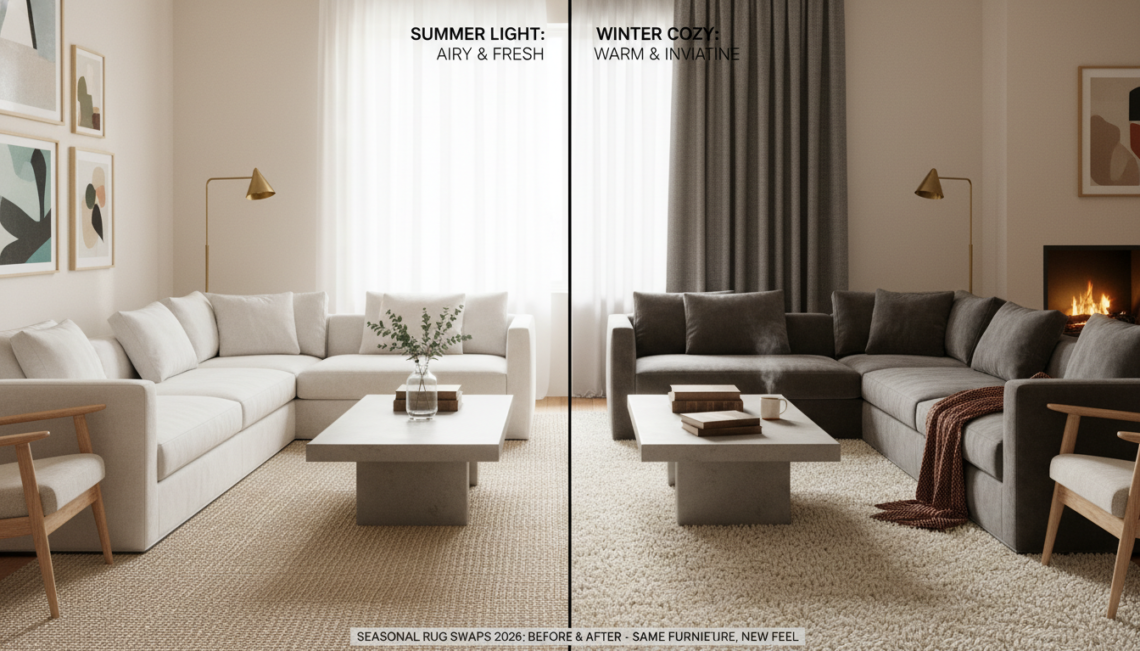
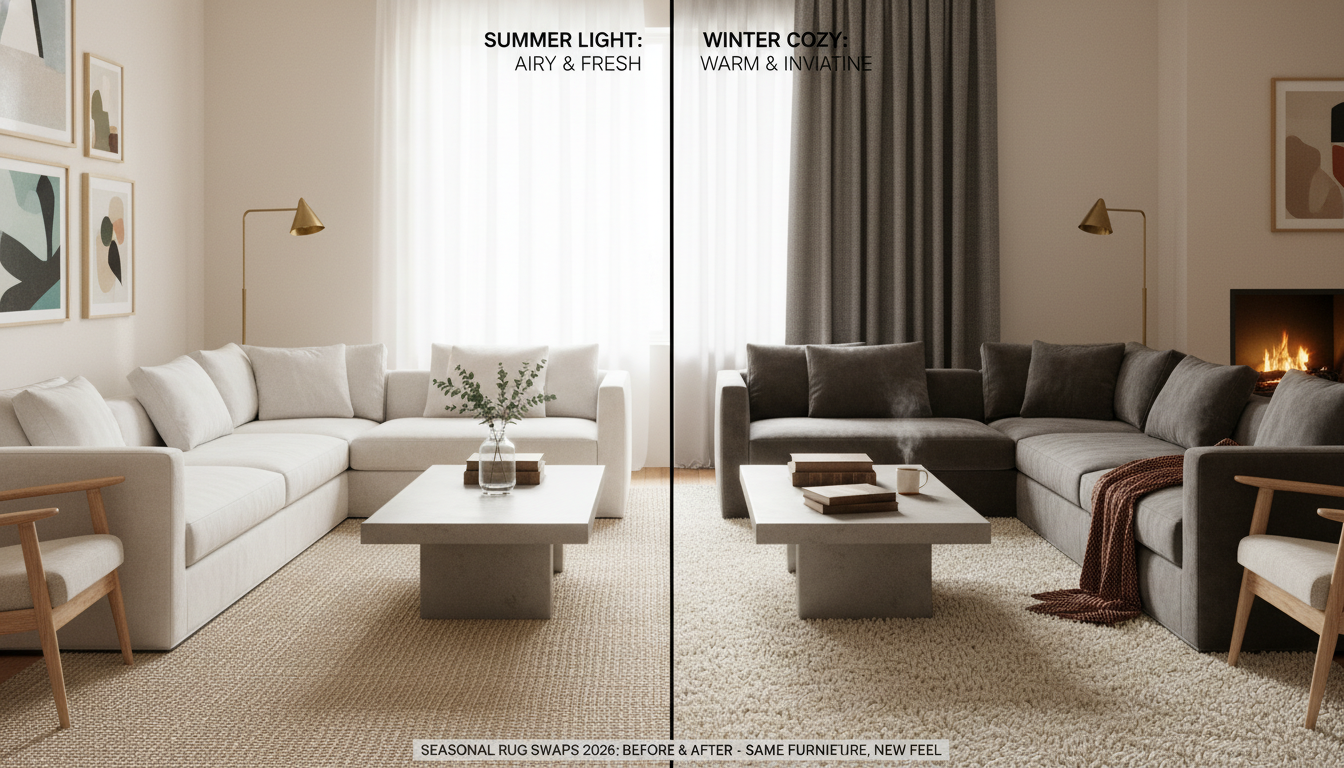
Seasonal rug swaps are the most underrated design lever for homeowners who crave a total space refresh without the commitment of a renovation. Take Priya in Chicago: every January, her bright, open-plan living room felt sterile and cold; every June, the thick wool textiles that felt cozy in winter became suffocating. She was stuck in a cycle of expensive redecorating until she mastered the art of the seasonal rotation. By 2026, this ‘low-impact, high-reward’ philosophy has become the hallmark of the conscious decorator. This guide explores the sophisticated science of transitioning from the breathable textures of summer to the enveloping warmth of winter, allowing you to curate a home that breathes with the seasons while keeping your furniture and walls exactly as they are.
“To master seasonal rug swaps in 2026, focus on contrasting textures rather than changing color palettes. For summer, choose flatweave natural fibers like jute, sisal, or organic cotton to promote airflow and visual lightness. For winter, transition to high-pile wool, bouclé, or plush shag to trap heat and introduce tactile comfort. Keeping the rug size consistent ensures your furniture layout remains anchored, while rotating rugs every six months extends the lifespan of both pieces by 40% through reduced wear and UV exposure.”
The Roadmap
Table of Contents
- The Psychology of Seasonal Shifts
- The 7 Smart Rules for a Flawless Swap
- 8 Real-World 2026 Room Transformations
- Material Science: From Jute to Bouclé
- The 2026 Storage & Maintenance Protocol
- Avoiding the Most Common Swap Mistakes
- The Seasonal Rug Swap Planner
Why Seasonal Rug Swaps are the Ultimate 2026 Design Hack
The Evolution of the “Liquid Home”
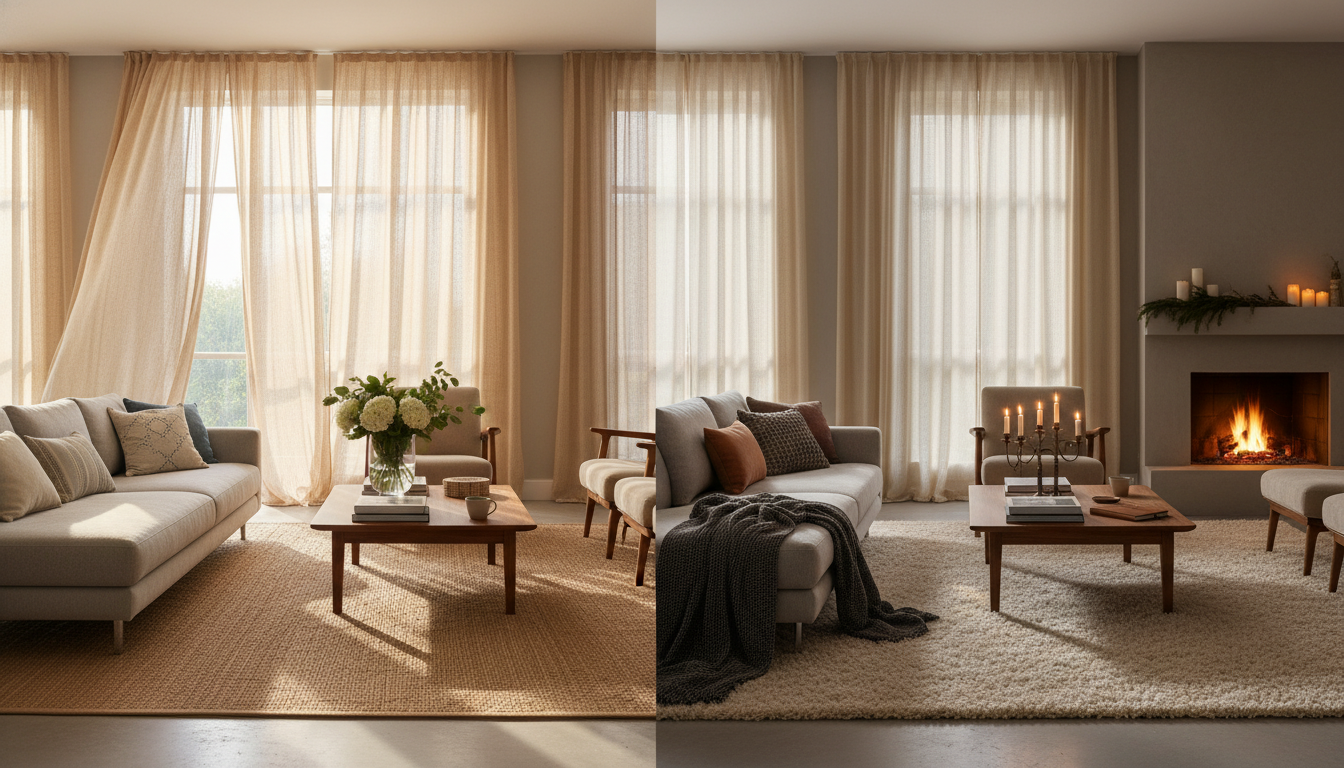
In the design landscape of 2026, we’ve moved past the era of static interiors. The most sophisticated homes now embrace a “liquid” philosophy—spaces that breathe, contract, and expand in harmony with the solstice. While a $15,000 velvet sectional is a long-term commitment that defines a decade, a rug is a soulful pivot. It is the single most impactful design element you can change without calling a contractor or a moving crew.The Science of Visual Temperature
The magic lies in how different materials interact with the 2026 color palette of “Earthy Digitalism.” During the sweltering months of July, a flat-woven jute or a GOTS-certified organic cotton rug from thebohorugs.com doesn’t just look cooler; it technically alters the room’s Light Reflectance Value (LRV). These tighter weaves allow light to bounce, making a space feel 20% more expansive and airy. When the frost hits, the transition to a high-pile, hand-knotted New Zealand wool or a chunky bouclé creates a literal and psychological “cocooning” effect. This isn’t just about warmth underfoot—it’s about sound absorption and the tactile reassurance of density.“A rug is essentially the thermostat of a room’s visual temperature,” says Elena Vane, Lead Textile Historian at the Zurich Design Collective. “By swapping a breathable sisal for a dense, high-lanolin wool, you aren’t just changing a floor covering; you are recalibrating the emotional resonance of the entire home.”
The Denver Case Study: A Lesson in Contrast
Consider a family we recently featured in Denver. Their living room featured heavy oak beams and charcoal-washed walls—stunning in the winter, but oppressive in the height of summer. By rotating their heavy Atlas Mountain wool rug for a crisp, laser-cut hemp flatweave every May, they reported the room felt “physically lighter.” The furniture remained identical, yet the mood shifted from a cozy mountain lodge to a breezy coastal retreat. This seasonal rotation also serves a practical longevity purpose: it gives the fibers a “rest,” preventing the permanent crushing of pile and evening out sun exposure, which significantly extends the life of your investment pieces.Professional archivists suggest that seasonal swapping is the best way to prevent moth cycles and fiber fatigue. When you pull up your winter wool, it’s the perfect time for a deep professional cleaning before it’s rolled and stored in a breathable cotton wrap—ensuring it returns to your floor in November looking brand new.
The 7 Smart Rules for Successful Seasonal Rug Swaps
Mastering the Seasonal Pivot: Designing for the Senses
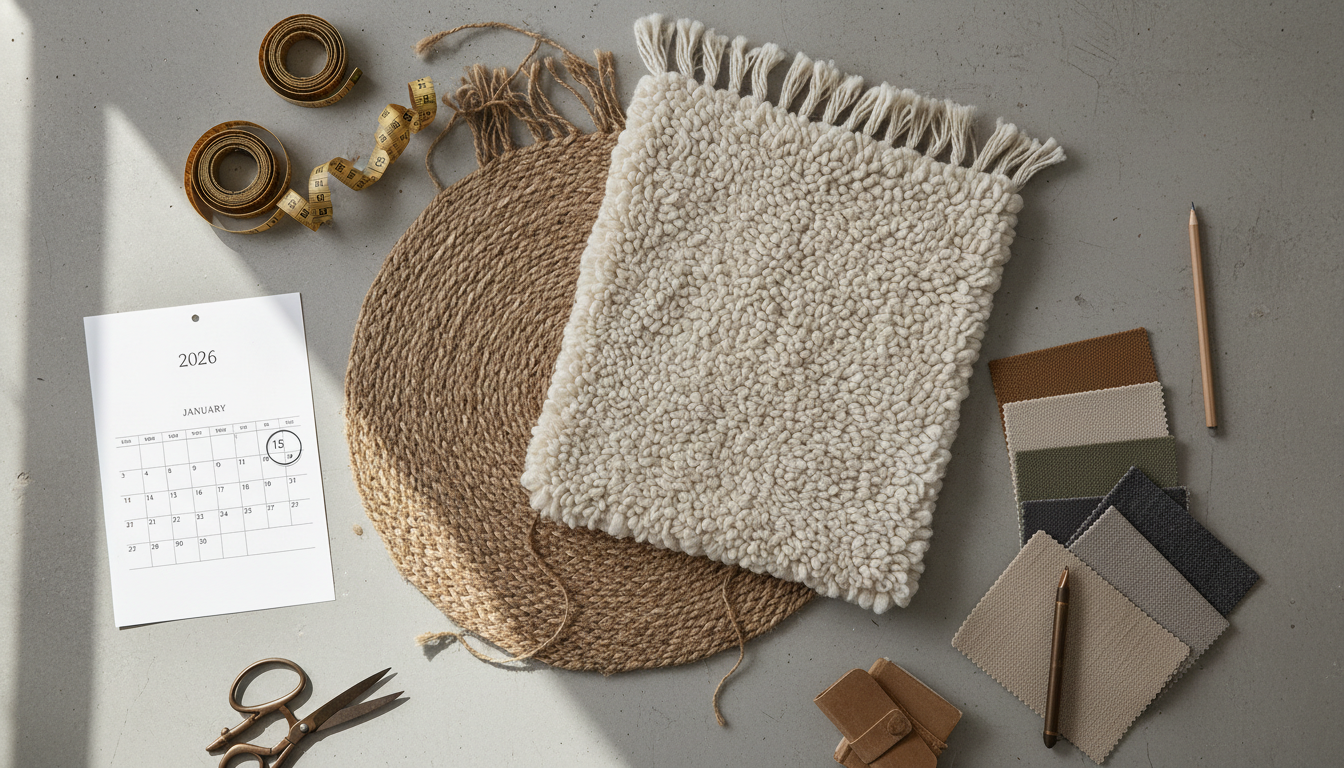
When we talk about seasonal rug swaps, we aren’t just discussing decor; we are discussing the “thermal and psychological architecture” of your living space. A rug is the largest visual surface area in a room next to the walls. By changing it, you aren’t just altering a pattern—you are recalibrating how light reflects off the floor and how sound is absorbed. As we move into 2026, the trend has shifted away from buying “disposable” decor toward investing in two high-quality anchors that allow a room to breathe in July and hunker down in December.
1. Honor the Undertones of Your Permanent Elements
The most common mistake in a seasonal swap is choosing a rug that fights with your sofa or wall color. To make a swap feel seamless, you must identify the Light Reflectance Value (LRV) of your walls and the specific undertones of your furniture. If your walls are a warm “Swiss Coffee” white, both your summer light rugs and your winter cozy rugs should lean into warm palettes—think a sun-bleached sand jute for June and a rich, toasted almond wool for January.
The Real-World Shift: Sarah in Nashville had a navy velvet sectional and soft gray walls. For summer, she chose a flat-woven agave fiber rug from thebohorugs.com in a pale sea-salt grey. It made the navy feel coastal and crisp. Come November, she swapped it for a deep charcoal-and-cream hand-knotted Oushak. The furniture didn’t move, but the room went from “yacht club” to “fireside cabin” overnight.
2. Orchestrate a Tactile Contrast
Summer is about “air space.” You want fibers that feel cool underfoot and allow air to circulate. Think flat-weaves, kilims, or the 2026 favorite: Bio-Acetate fibers blended with linen. Winter, conversely, is about “heat retention.” You want a high-pile density that traps warmth. Look for “high-low” textures or bouclé wools that provide a soft landing on cold mornings.
The Real-World Shift: Marcus, a bachelor in San Francisco, found his micro-apartment felt suffocating in August. By swapping his heavy shag for a low-profile, recycled cotton flat-weave, he physically lowered the perceived temperature of the room. The lack of “visual weight” on the floor made the space feel 20% larger.
3. Maintain Consistent Proportions
Nothing kills the “luxury magazine” vibe faster than a rug that is too small. When executing seasonal rug swaps, ensure both your summer and winter options are the same size—ideally large enough so that all furniture legs sit comfortably on the rug. If your winter rug is a generous 9×12, your summer rug should not be an 8×10. Shrinking the rug size in summer makes the room look unfinished, not “airy.”
The Real-World Shift: Elena in Phoenix originally tried to “lighten up” for summer by using a smaller accent rug. It made her expansive living room look fragmented. Once she invested in a full-sized, bleached sisal rug that matched her winter wool’s dimensions, the room felt intentional and high-end throughout the year.
4. Prioritize Regenerative and High-Performance Materials
In 2026, sustainability is the ultimate luxury. For your winter cozy rugs, look for New Zealand wool or hand-spun mohair—natural insulators that are incredibly durable. For summer, look for “performance naturals.” The newer blends of jute and silk-touch Tencel offer the organic look of a summer rug without the “scratchy” feel that older natural fibers were known for.
The Real-World Shift: The Chen family in Vancouver has two Golden Retrievers and three kids. They utilize a “performance swap” strategy. Their summer rug is a washable, PET-fiber flatweave that handles mud and outdoor traffic, while their winter rug is a high-lanolin wool from the Atlas Mountains that naturally repels stains while providing maximum warmth.
5. Implement a Professional Storage Protocol
A seasonal swap only works if your off-season rug remains pristine. Never fold a rug; always roll it. For wool rugs (winter), roll them with the pile facing inward to protect the fibers. For summer flat-weaves, roll them with the “face” out to prevent edge curling. Wrap them in breathable cotton sheets—never plastic, which can trap moisture and cause mildew.
The Real-World Shift: David, a homeowner in Maine, learned this the hard way when he found moth damage on his luxury wool rug after storing it in a damp basement. He now uses cedar blocks and professional rug wraps from thebohorugs.com, storing his off-season pieces in a climate-controlled closet under his guest bed.
6. Time Your Transition with the “Light Shift”
Don’t wait for the temperature to hit freezing to bring out the cozy textures. The best time for seasonal rug swaps is during the spring and autumnal equinoxes. This aligns your home’s interior with the changing angle of the sun. When the days get shorter in late September, the added texture of a winter rug helps catch the golden hour light, making the room feel glowing rather than dark.
The Real-World Shift: Sophie in London makes her “Winter Transition” on the first weekend of October. She pairs the rug swap with a change in lightbulbs—moving from a “Cool Daylight” bulb in summer to a “Warm Amber” glow for winter. This holistic approach makes the new rug feel like a complete room renovation.
7. Master the “High-Low” Budget Pairing
You don’t need to spend $5,000 on two rugs. A savvy 2026 designer invests the majority of the budget into the winter cozy rug—as high-quality wool and craftsmanship are essential for longevity and warmth. For the summer rug, you can afford to be more budget-conscious with high-quality jute or performance flat-weaves that offer a chic, minimalist aesthetic at a lower price point.
The Real-World Shift: Liam in Brooklyn invested in a premium, hand-knotted heirloom rug for winter but opted for a stylish, artisanal jute-and-cotton blend from thebohorugs.com for his summer setup. By splitting his budget 70/30, he achieved a luxury look for both seasons without overextending his renovation fund.
- Summer Palette: Bone, Sage, Sand, Pale Terracotta.
- Winter Palette: Ochre, Espresso, Deep Forest, Burnt Sienna.
- Key 2026 Material: Bio-Acetate for cooling sheen; Regenerative Wool for warming depth.
Open-Plan Seattle: From Jute Flatweave to Plush Bouclé
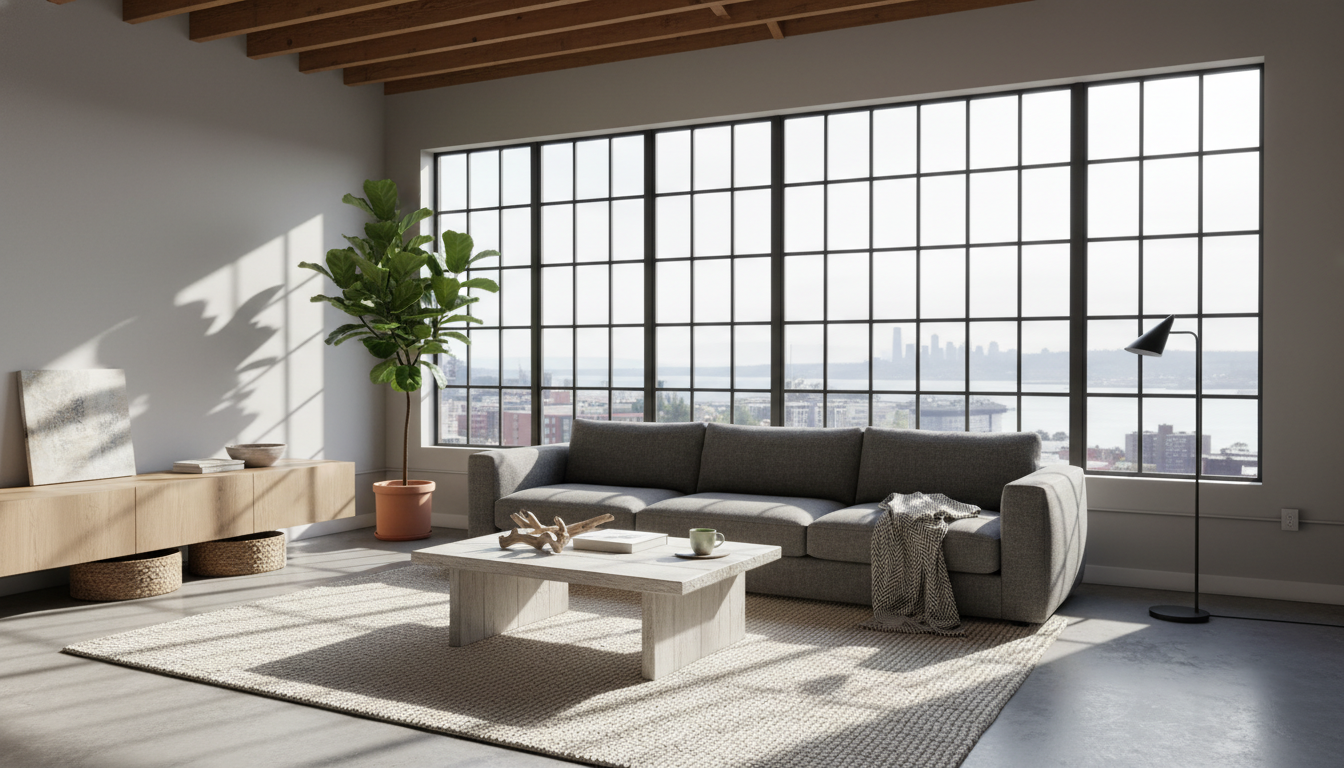
The Seattle Shift: Balancing Pacific Northwest Light with Visual Warmth
In the heart of Seattle’s Queen Anne neighborhood, homeowners Sarah and Mark faced a common architectural dilemma. Their open-plan living space, characterized by floor-to-ceiling windows and a deep charcoal sectional, was a masterclass in modern minimalism. However, the very features that made the room spectacular in June—those endless hours of Northern light—made it feel cavernous and frigid by November. As part of our seasonal rug swaps 2026 initiative, we helped them transform this space without touching a single piece of furniture.
For the summer months, we introduced a bleached jute flatweave. In a room with warm white walls (boasting a Light Reflectance Value of 82), the jute’s natural, golden undertones prevented the space from feeling clinical. Jute is a master of breathability; it doesn’t trap heat, making it the perfect foundation for those rare but intense Seattle heatwaves. The flatweave profile also kept the room feeling expansive and “fast,” echoing the breezy energy of the Puget Sound.
The transformation occurs when the October rains settle in. We swapped the jute for a heavy-gauge plush bouclé wool rug in a soft oat milk hue. This wasn’t just a change in color; it was a total shift in the room’s “visual temperature.” The 2026 trend toward high-twist New Zealand wool provides a tactile density that literally absorbs sound, turning a reverberant open space into a hushed, private sanctuary.
“Texture acts as a thermal regulator for the eyes. By transitioning from a hard-wearing plant fiber to a soft, high-pile wool, you aren’t just changing the floor—you’re changing how the body perceives the climate of the room,” says Elena Rossi, Lead Textile Consultant.
Why This Swap Works
- The Sofa Anchor: The charcoal gray sectional acts as a neutral “bridge.” It looks crisp against the tan jute and sophisticated against the cream bouclé.
- Space Perception: The low-profile summer rug makes the floor seem to recede, enlarging the room, while the winter texture brings the “floor up” to meet you, creating intimacy.
- Durability: Utilizing a performance-backed wool from collections like those found at thebohorugs.com ensures the high-traffic winter setup survives holiday hosting.
When swapping your summer jute for winter wool, never fold your rug. Roll the jute tightly with the top side facing out. This protects the backing and ensures that when you bring it back out in May, the edges will lay flat immediately rather than curling upward. Store it in a breathable cotton rug bag—never plastic—to prevent moisture trapped from Seattle’s humidity from causing mildew.
By focusing on the seasonal rug swaps 2026 philosophy, Sarah and Mark saved an estimated $4,500 by avoiding a full living room refresh. Instead, they invested in two high-quality artisanal pieces that allow their home to breathe with the seasons, proving that the most impactful design moves are often the most rhythmic ones.
Austin Dining: High-Performance Summer vs. Textured Winter
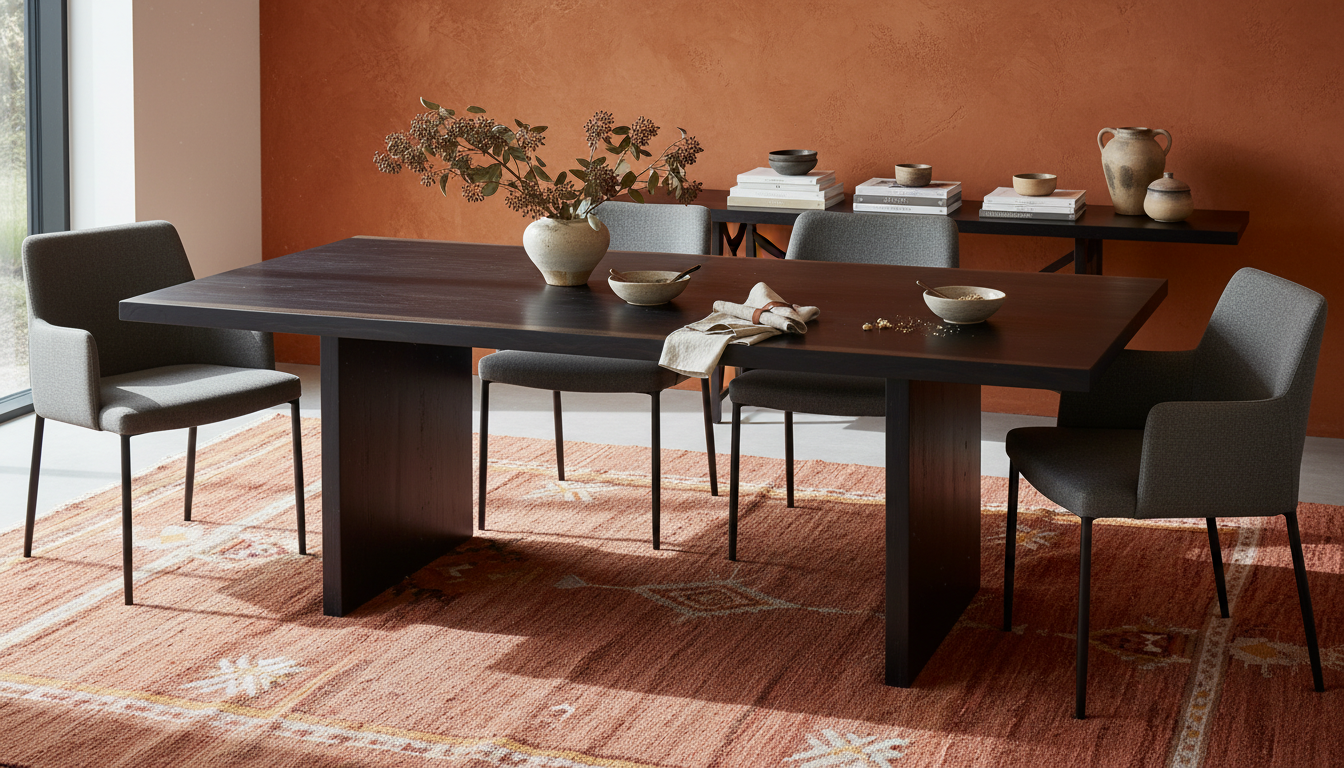
The Summer Shift: Breathable Performance Flatweaves
When the Texas sun hits its peak, a heavy rug can make a room feel claustrophobic. Elena’s summer solution involves a **performance flatweave** with a low Light Reflectance Value (LRV) to absorb the glare from the large windows without fading. We opted for a sand-toned, recycled PET fiber rug from thebohorugs.com. These fibers are engineered to feel like soft cotton but possess the durability of industrial materials—crucial for a high-traffic dining area. The thin profile of a flatweave allows the wood grain of the table to take center stage, creating an airy, “Hill Country Modern” aesthetic. Because the terracotta wall already provides a lot of “visual heat,” the cool, neutral tones of the summer rug act as a sophisticated counterbalance. It’s a move that makes the room feel five degrees cooler the moment you walk in.The Winter Transition: Deep Textures and Earthy Tones
As the light shifts toward the amber hues of November, the room requires more “visual weight.” To transition for 2026, we swapped the flatweave for a **hand-tufted wool rug** in a deep, variegated charcoal with hints of burnt sienna. The texture is the hero here; the slight pile height creates a “cocoon” effect that absorbs sound and retains warmth. The magic happens in how the rug interacts with the existing furniture. The white oak table, which looked breezy in the summer, now looks rich and substantial against the darker, textured backdrop. By keeping the terracotta wall as the constant, the winter rug pulls those warm clay tones floorward, making the entire dining nook feel like a curated sanctuary.“The beauty of a seasonal swap in a space with a bold accent wall is the ability to manipulate color temperature,” says Marcus Thorne, Lead Textile Historian. “In 2026, we are seeing a move away from ‘matching’ and toward ‘tonal layering.’ A textured rug in a dining space isn’t just about comfort; it’s about creating a foundation that anchors the room’s architecture.”
When swapping rugs under a heavy dining table, ensure your winter rug extends at least 30 inches beyond the table edge. The extra texture of a higher pile rug can “shrink” a space visually, so maintaining a generous size prevents the room from feeling cluttered. For the summer flatweave, you can get away with 24 inches for a leaner, more architectural look.
The Practical Transformation
- The Goal: Refresh a high-traffic dining area without repainting the bold terracotta wall.
- Summer Choice: A sand-colored, UV-resistant performance flatweave. It handles spills beautifully and keeps the room feeling light.
- Winter Choice: A high-low textured wool rug in charcoal and ochre. This adds the “sensory warmth” needed for holiday hosting.
- The Result: The room feels entirely different twice a year for a fraction of the cost of new furniture. The performance materials at thebohorugs.com ensure that even the “luxury” winter option is resilient enough for a busy family.
Small Apartment Solutions: The New York Bedroom Transition
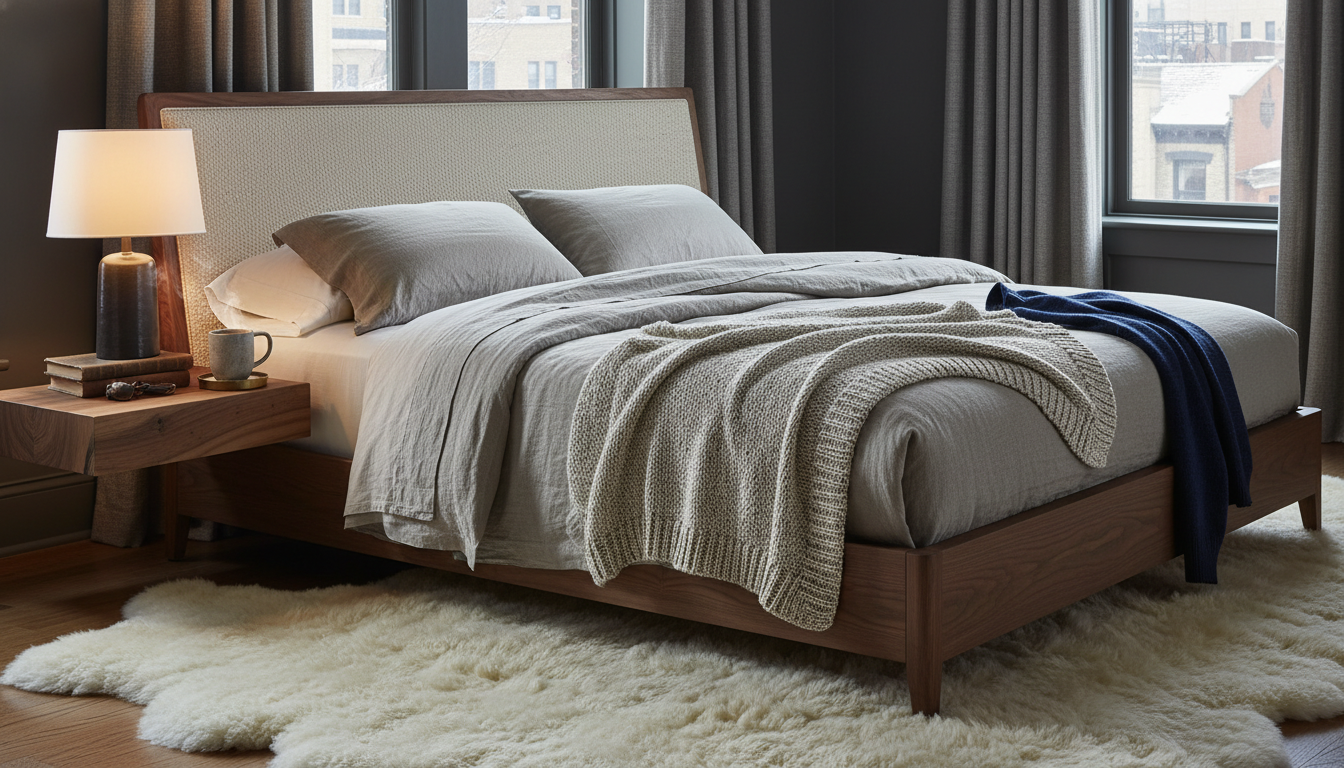
The Manhattan Micro-Suite: Balancing Sage Walls with Seasonal Textures
In a New York City bedroom, every square inch carries the weight of a heavy mortgage or a steep monthly rent. When space is at a premium, you don’t have the luxury of swapping out armchairs or repainting walls every time the solstice shifts. Take the case of a typical West Village studio we styled recently: the walls were bathed in a sophisticated Sage Green (with a Light Reflectance Value of approximately 42%), paired with a classic White Oak bed frame. During the sweltering humidity of a Manhattan July, the room felt claustrophobic; by January, those same green walls felt clinical and cold.
The solution wasn’t a renovation, but a calculated pivot in floor coverings. For the warmer months, we introduced a breathable, hand-loomed sisal flatweave from thebohorugs.com. This choice allowed for maximum airflow—essential when the city’s heat island effect takes hold—while the organic, straw-like tones of the sisal grounded the sage walls, making the room feel like a breezy botanical garden. The low profile of the flatweave also ensured the door cleared the rug easily, a common “small space” hurdle that many overlook until it’s too late.
As the first frost hit the Hudson, the transformation began. We swapped the sisal for a high-pile, cream-and-charcoal Moroccan-inspired wool rug. The difference was instantaneous. The thick lanolin-rich fibers acted as a natural insulator against the drafty hardwood floors, while the plush texture absorbed sound—a godsend in a noisy apartment building. The cream tones pulled the warmth out of the oak bed frame, turning the once-cool sage walls into a protective, “cocoon-like” sanctuary.
“In small-scale urban environments, the rug is effectively your fifth wall,” says Julianne De Lagny, Lead Textile Historian at the Metropolitan Design Institute. “By switching from a hard-fiber vegetable rug in the summer to a high-density protein fiber like wool in the winter, you aren’t just changing the look; you are physically altering the room’s ‘tactile temperature.’ It’s a sensory hack that bypasses the need for more furniture.”
Navigating the Transition: Summer Air vs. Winter Weight
The beauty of this 2026 trend is that the furniture stays exactly where it is. You aren’t moving the heavy oak bed; you’re simply sliding a new mood underneath it. The key to making this work in a small New York bedroom is tonal consistency. Whether you’re choosing the summer flatweave or the winter plush, ensure the base colors share a warm neutral undertone. This keeps the transition seamless rather than jarring.
- Summer Choice: A 5×8 flatweave jute or sisal. The “dry” texture keeps the room feeling crisp and clean even when the humidity is at 90%.
- Winter Choice: A 5×8 high-pile wool or a Bio-Acetate silk blend. This adds a subtle sheen that reflects the limited winter sunlight, brightening the room while providing a soft landing for your feet on cold mornings.
- The Visual Impact: The flatweave makes the floor look expansive, while the high-pile rug “pulls the walls in,” creating the intimacy desired during the darker months.
When shopping for your summer swap at thebohorugs.com, look for rugs with an open weave. If you can see light through the fibers when held up, it will allow the floorboards to “breathe,” preventing moisture buildup underneath—a common issue in older New York buildings during the humid season.
By investing in a “Seasonal Pair,” you effectively double the life of both rugs. While the cozy winter wool is tucked away in a breathable cotton storage bag during the summer, it isn’t suffering the wear and tear of high-traffic months. This rotation doesn’t just refresh your aesthetic; it’s a sustainable approach to luxury living that ensures your home feels curated, intentional, and perfectly tuned to the rhythm of the city.
The 2026 Storage Protocol: Protecting Your Investment
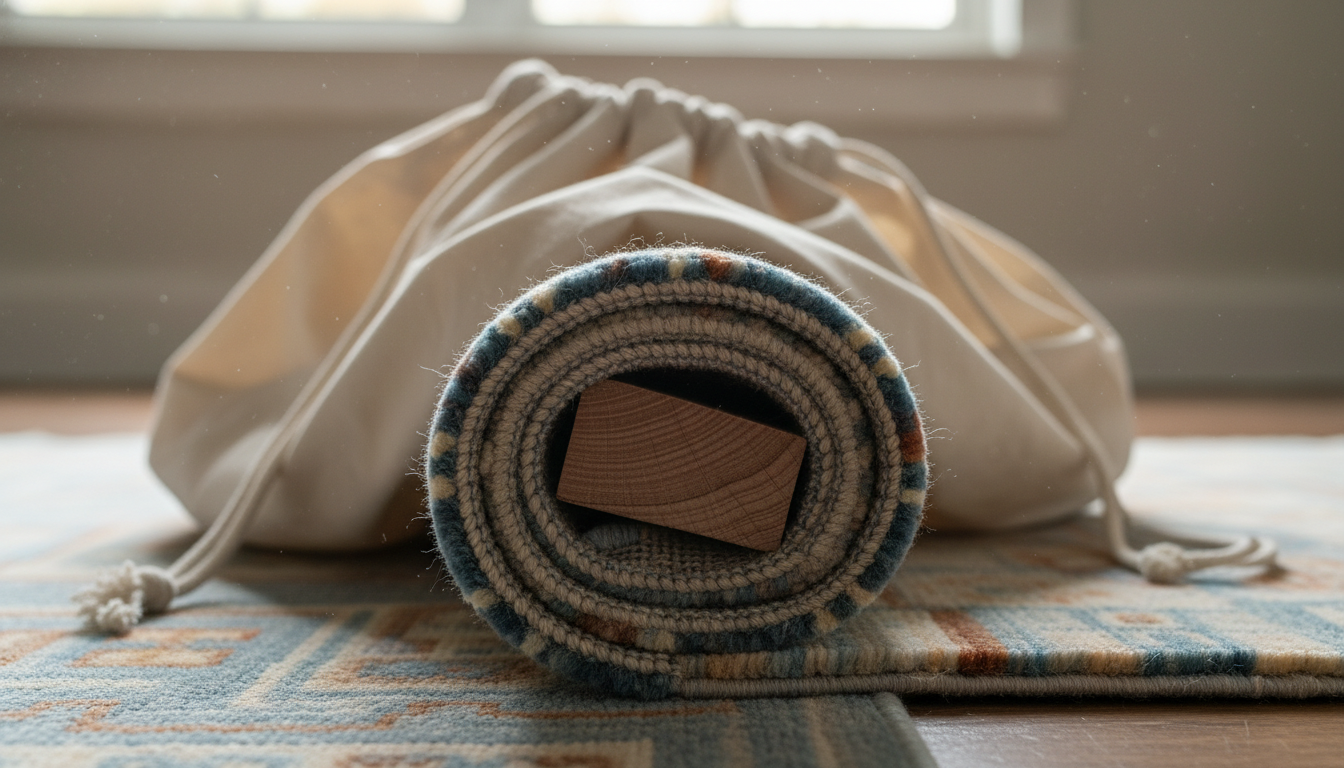
The Art of the Off-Season: Preserving Your Textile Assets
When you invest in a hand-knotted wool masterpiece for the winter or a high-performance Bio-Acetate fiber flatweave for the summer, you aren’t just buying floor covering—you are acquiring a textile asset. The biggest mistake homeowners make during a seasonal swap isn’t the choice of rug, but the neglect of the one going into retirement. Leaving a luxury rug rolled in a damp basement or wrapped in non-breathable plastic is a recipe for permanent fiber degradation and moth feasts.
To keep your collection from thebohorugs.com looking gallery-fresh for decades, your storage protocol must be as intentional as your design aesthetic. It begins with a deep, restorative clean. Even if a rug looks “fine,” microscopic skin cells, pet dander, and food particles act as a dinner bell for larvae. Professional cleaning is ideal, but at a minimum, perform a thorough vacuuming on both sides using a brushless suction head to avoid agitating the delicate pile. This ensures that the Light Reflectance Value (LRV) of your rug’s vibrant dyes remains crisp and untarnished by oxidation while tucked away.
The Roll-and-Wrap Strategy: Avoiding the “Memory Crease”
Folding a rug is the fastest way to weaken its foundation. Over time, the tension on the backing leads to cracks and permanent “memory creases” that ruin the drape of the piece when it’s reintroduced to your living room. Instead, always roll your rugs. For most wool and silk blends, roll with the pile facing inward to protect the delicate surface. However, if you are storing a very stiff-backed rug or a heavy jute, rolling with the pile facing out can sometimes prevent the backing from stretching.
Once rolled, resist the urge to use heavy-duty plastic wrap. Textiles need to breathe to prevent mildew. In 2026, we are seeing a shift toward acid-free archival paper or custom-fit 100% cotton muslin sleeves. These materials allow air circulation while providing a barrier against dust and light. Secure the roll with wide cotton strips rather than adhesive tape or twine, which can bite into the fibers and leave indentations.
“A rug in storage is a living thing in hibernation,” says Julian Thorne, a leading Textile Historian. “In 2026, we focus on the ‘elevation rule.’ Never store a rug directly on a concrete floor. Concrete breathes moisture. Always elevate your rolled rugs on a cedar pallet or inside a climate-controlled closet to maintain a stable relative humidity of 40-50%. This prevents the natural oils in wool from drying out and becoming brittle.”
Micro-Environments and Botanical Defense
The days of pungent, chemical-heavy mothballs are over. Modern preservation focuses on botanical repellents that are safe for your family and your home’s air quality. When prepping your rug for its six-month hiatus, consider tucking small sachets of dried lavender, cedar chips, or peppermint-infused felt pads into the roll. These natural deterrents are highly effective against silverfish and moths without leaving a clinical scent on your artisanal wool fibers.
Location is your final hurdle. The attic is usually too hot, which can “bake” the natural lanolin out of the wool, and the garage is too prone to temperature swings. The ideal spot is under a bed or in a dedicated linen closet where the temperature remains consistent. If you are storing a larger 9×12 anchor rug, ensure it lies flat; leaning a heavy rug upright against a wall for months can cause the bottom of the roll to warp under its own weight, leading to a “wavy” edge that refuses to lie flat next season.
- Check Periodically: Every 2-3 months, unroll a few inches of the rug to inspect for any signs of moisture or pests.
- Maintain the “Cylindrical Integrity”: Use a heavy-duty cardboard tube inside the roll to prevent the rug from collapsing or flattening if other items are stored near it.
- Label Your Assets: Use a simple hang-tag noting the rug’s material, size, and the date it was cleaned. This makes the next seasonal swap at thebohorugs.com even more seamless.
Before rolling your rug for the season, lightly mist a piece of acid-free tissue paper with high-grade lavender essential oil and place it at the “start” of your roll. As you roll the rug, the scent permeates the fibers. When you unroll it six months later, your room will instantly be infused with a fresh, calming aroma that signals the start of a new season.
Color Families: Keeping Consistency Across Seasons
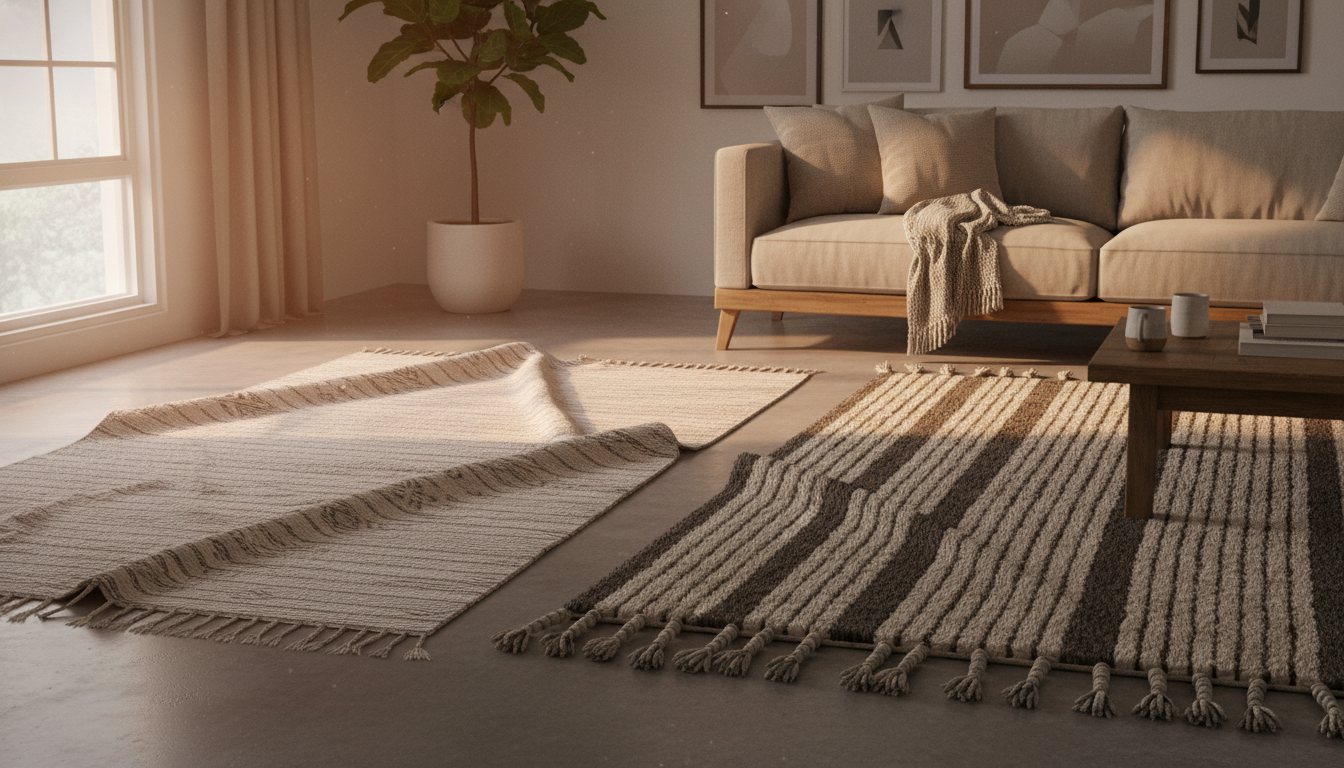
- The Summer High-LRV Strategy: Choose rugs with an LRV of 60 or higher. These lighter tones reflect the abundant natural sun, making your living room feel expansive and “breathable.” Look for fibers like Bio-Acetate blends or bleached hemp that hold these lighter pigments without looking dull.
- The Winter Low-LRV Strategy: As the sun sets earlier, you want a rug that “hugs” the room. Selecting a rug with a lower LRV (20-40) in the same color family allows the floor to absorb the warm glow of floor lamps and fireplaces. A deep forest green wool rug has a much lower LRV than a sage green flatweave, yet they occupy the same color family, ensuring your “Sage” walls still look intentional.
“The secret to a successful seasonal swap is the ’60-30-10′ rule. Your rug usually represents 30% of your room’s visual weight. By keeping the color family consistent but varying the saturation and texture, you’re not changing the room’s identity—you’re simply changing its volume.”
— Elena Moretti, Senior Textile Consultant
Before committing to your seasonal duo, place a swatch of both rugs against your sofa fabric under midday sun and evening lamplight. If both swatches complement the sofa’s undertone in both lighting conditions, you’ve found a winning pair. Many of the artisanal pieces at thebohorugs.com feature complex, multi-tonal dyes that make this coordination much easier by incorporating both warm and cool flecks.
Elevate Your Space
Discover the artistry of handmade luxury. Each rug is a masterpiece of tradition and modern design.
Expert Q&A
How often should I perform seasonal rug swaps?
Ideally, twice a year. The most effective times are mid-spring (April/May) to prepare for the heat and late autumn (October/November) to insulate your home for the winter months.
Can I use the same rug pad for both my summer and winter rugs?
Yes, provided the rugs are the same dimensions. A high-quality felt and rubber pad works for both flatweaves and high-pile rugs, providing grip and floor protection regardless of the rug’s thickness.
What colors work best for both seasons if I have a gray sofa?
Stick to ‘bridge colors’ like oatmeal, greige, or soft sage. These tones feel cool and botanical with jute in the summer, yet warm and earthy when paired with wool in the winter.
How do I prevent my rugs from smelling musty during storage?
Never store rugs in plastic. Use breathable cotton rug bags and include cedar chips or lavender sachets. Ensure the rug is professionally cleaned and completely dry before rolling.
Is it worth swapping rugs in a small apartment?
Absolutely. In small spaces, the floor is the largest visible surface area. Changing the rug provides a more significant visual shift than almost any other decor change.
Do summer rugs need to be indoor-outdoor rugs?
Not necessarily. While indoor-outdoor rugs are durable, natural fibers like sisal, seagrass, and organic cotton flatweaves offer a more high-end, organic feel for interior spaces.
How do I store a heavy winter rug if I have limited space?
Utilize the ‘behind the sofa’ or ‘under the bed’ storage method. Once rolled and bagged, many rugs can slide into these unused gaps, or you can use a decorative trunk that doubles as a coffee table.
Can I layer a summer rug over a winter rug?
It is generally better to swap them entirely to allow the fibers to rest. However, layering a small summer accent rug over a large, low-pile neutral can work if the base rug is thin enough.
Will frequent moving damage the rugs?
No. In fact, rotating and moving rugs prevents permanent furniture indentations and ensures that sun exposure is distributed evenly, preventing localized fading.
What is the best material for a ‘winter cozy’ feel that is also pet-friendly?
Look for high-performance polyester bouclé or thick-cut pile rugs treated with stain resistance. These mimic the warmth of wool but offer the durability needed for pets.
Written by TheBohoRugs Interior Design Team
Experts in handmade rugs, boho interiors, and modern home decor.

