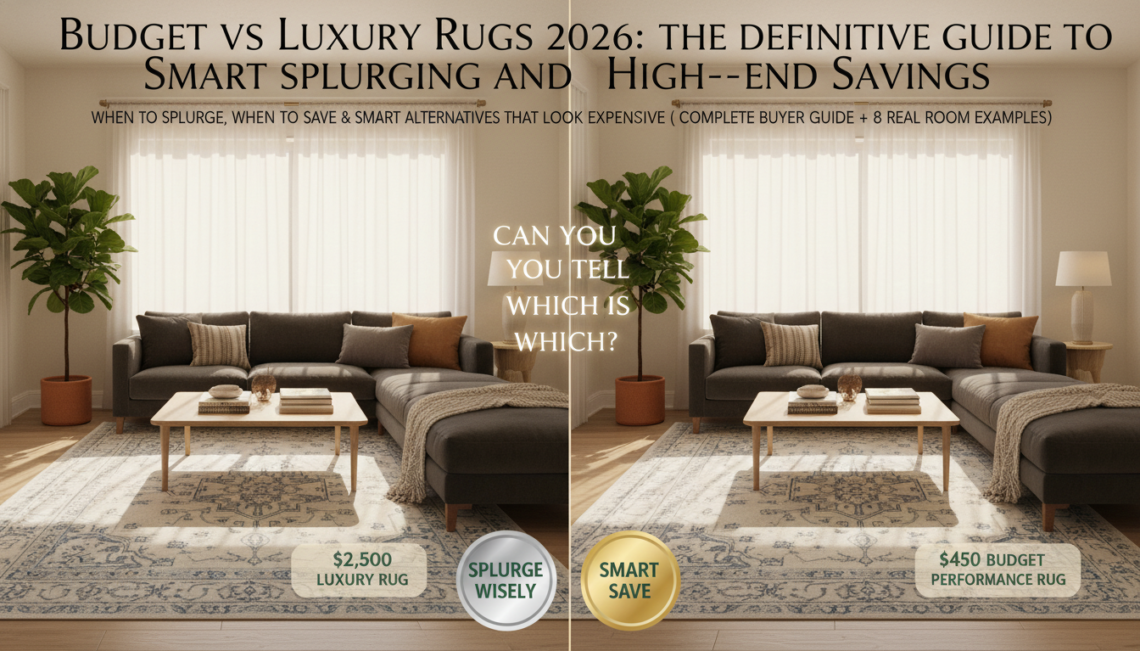
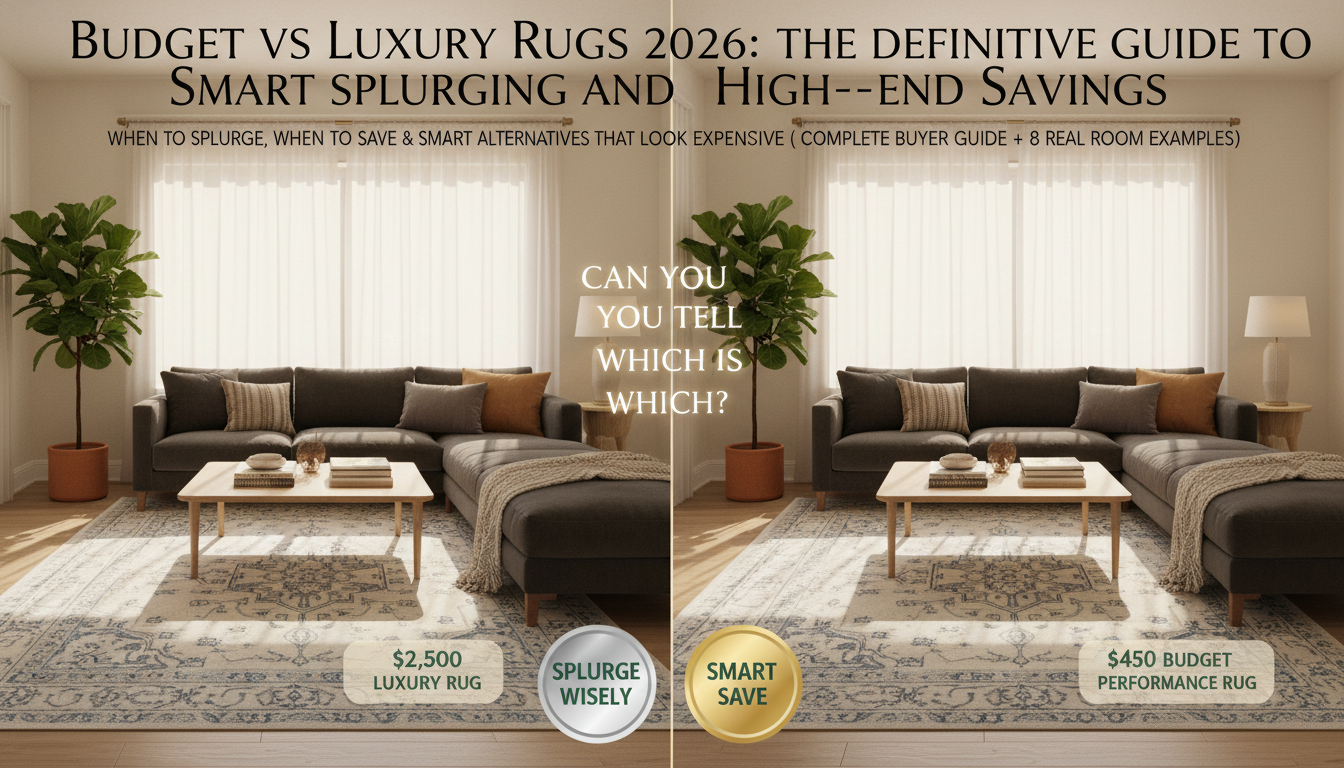
Budget vs Luxury rug shopping in 2026 has become a high-stakes psychological minefield where a $400 high-performance textile often outshines a $4,000 heirloom in the eyes of a modern, busy family. Consider Emma in Boston, who invested $2,800 in a hand-knotted silk-blend masterpiece for her sun-drenched living room, only to watch her toddler and a glass of organic grape juice transform it into an expensive tragedy within six months. Meanwhile, her neighbor opted for a $399 tech-integrated performance rug that, two years and three pets later, still looks like it was plucked from a Fifth Avenue showroom. The 2026 market has effectively blurred the lines between ‘cheap’ and ‘chic,’ making price a secondary indicator of true value. This guide demystifies the artisanal craft and synthetic engineering of the new decade, providing you with a rigorous framework to decide where your hard-earned money generates the most aesthetic and functional impact.
“Choosing between budget vs luxury rugs in 2026 depends on ‘Cost-Per-Year’ and room traffic. Splurge on luxury (hand-knotted wool/silk) for low-traffic sanctuaries like master bedrooms or formal studies where longevity spans 20+ years. Save with high-end performance rugs ($300-$800) for high-traffic zones like living rooms, kitchens, and entryways where cleanability and UV resistance are paramount. Look for ‘Performance-Luxe’ blends that mimic the luster of natural fibers without the fragility.”
The Roadmap
Table of Contents
- The 2026 Rug Paradigm: Why Price is No Longer the Only Metric
- Material Science: Heritage Natural Fibers vs. Advanced Performance Synthetics
- The 8 Golden Rules: When to Splurge and When to Save
- 8 Real-World Room Examples: Decision Logic in Action
- The 2026 Rug Value Decision Matrix: A Tiered Breakdown
- The Designer’s Secret: Making Budget Rugs Look Bespoke
- Long-Term ROI: Calculating Your Rug’s True Cost
The 2026 Rug Paradigm: Why Price is No Longer the Only Metric
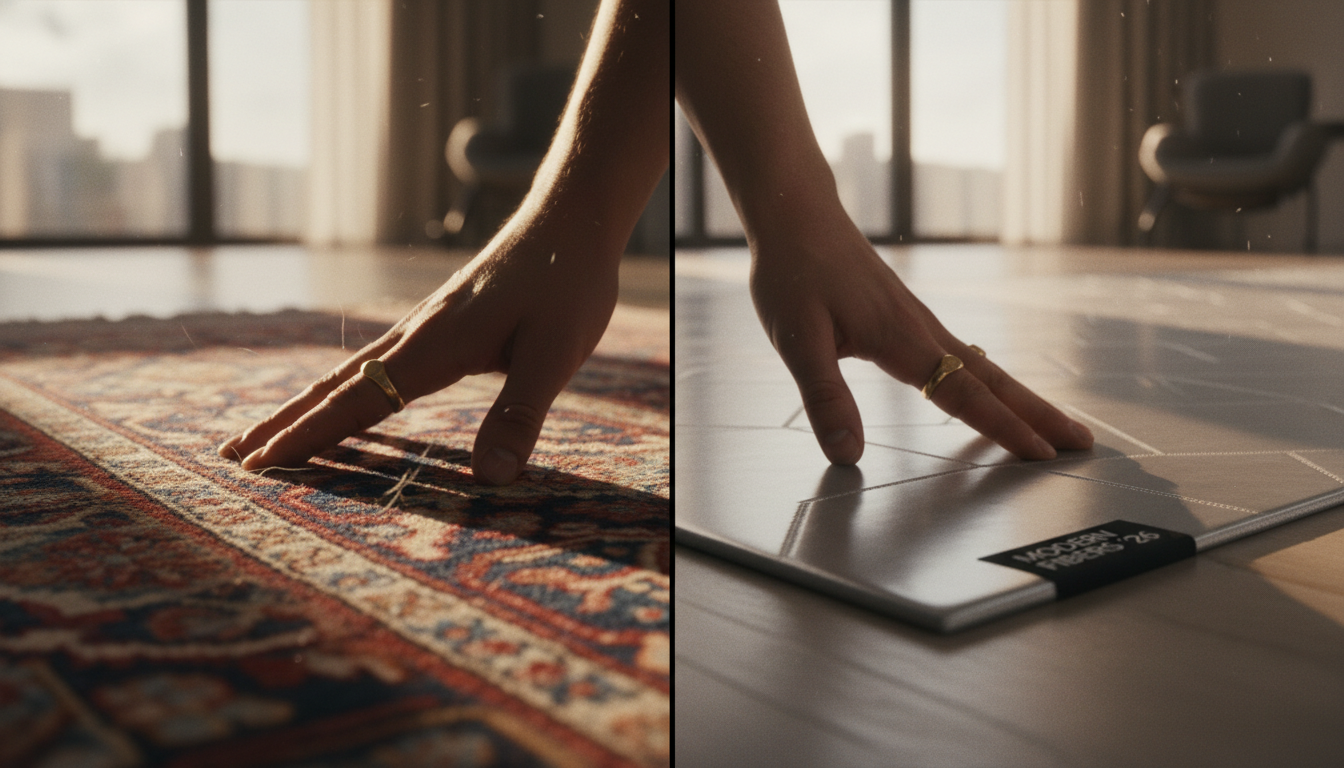
Beyond the Price Tag: The New Definition of Value
The design landscape in 2026 has undergone a quiet revolution. We’ve moved past the era where a high price tag was the only reliable indicator of quality. Today, luxury is defined by intentionality—matching a rug’s construction to the specific “micro-climate” of your room. While a hand-knotted wool piece from the Atlas Mountains remains the gold standard for tactile heritage, the technological leap in Bio-Acetate fibers and recycled performance polymers has narrowed the aesthetic gap to a sliver. “In previous decades, a budget rug was a compromise you could see from across the room,” says Elena Vance, Lead Textile Historian. “In 2026, the ‘budget’ category has been swallowed by ‘high-performance.’ You’re no longer paying for a look; you’re paying for the labor-intensity of the weave and the longevity of natural proteins.”The Toronto Shift: A Case Study in Performance
Consider a family in Toronto who recently navigated this divide. They initially invested $1,800 in a plush, mid-tier wool rug for their sun-drenched lounge. Within eighteen months, high-traffic patterns and an unfortunate incident with their rescue dog left the natural fibers permanently shadowed. They pivoted to a $329 washable performance rug from thebohorugs.com that mimicked the low-pile sheen of distressed silk. Two years later, the rug remains vibrant, even under the harsh Light Reflectance Value (LRV) of their Sage Green walls. Their guests frequently mistake it for a boutique vintage find.The 2026 Material Evolution
The visual difference between a machine-loomed “smart-fiber” rug and a traditional investment piece often comes down to the irregularity of the edge and the depth of the dye.- Heritage Luxury: Focuses on organic dyes and hand-spun wool that develops a “patina” over decades.
- 2026 Smart Budget: Utilizes high-twist heat-set fibers that resist crushing and reflect light in a way that mimics natural lanolin.
If the rug is for a room where you’ll rarely sit on the floor—like a formal dining room—prioritize the Eye Test (visual texture and pattern precision). Save your “splurge” for the master bedroom, where the Touch Test (the physical sensation of natural wool against bare feet) provides a daily ROI that synthetic fibers simply cannot replicate.
Material Science: Heritage Natural Fibers vs. Advanced Performance Synthetics
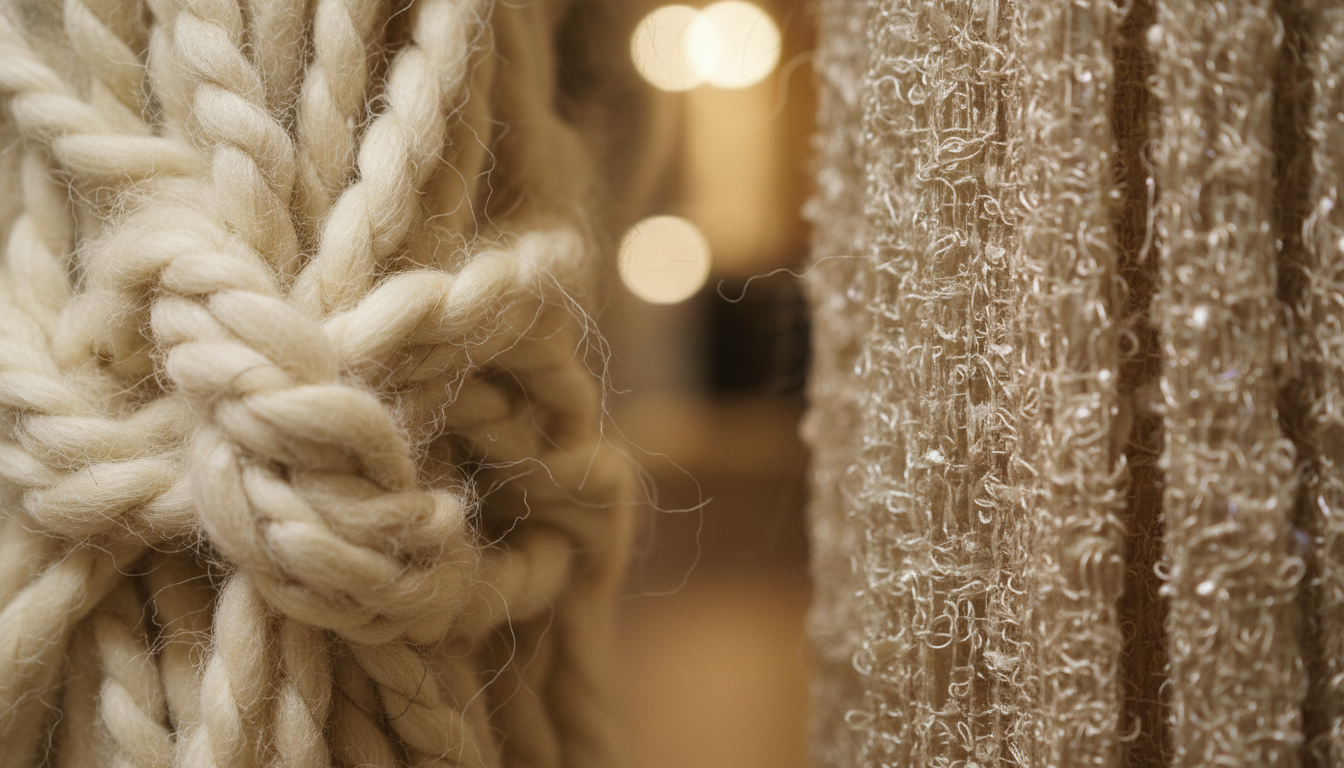
The Sensory Debate: Natural Patina vs. High-Tech Resilience
When you step onto a rug, your feet are the first to tell you the truth about the price tag. In 2026, the gap between “budget” and “luxury” isn’t always visible to the naked eye, but it is deeply felt in the Material Science. Choosing between heritage natural fibers and advanced performance synthetics isn’t just a matter of your bank account—it’s about how you intend to live on that floor.
For those seeking the ultimate splurge, nothing replaces the biological intelligence of New Zealand wool or the shimmering Light Reflectance Values (LRV) of hand-spun silk. These fibers don’t just sit in a room; they age with it. High-end wool contains natural lanolin, making it inherently stain-resistant and capable of bouncing back after being crushed by a heavy mahogany sideboard. If you are sourcing for a low-traffic sanctuary, a piece featuring hand-knotted techniques from the Atlas Mountains offers a tactile soul that machines simply cannot replicate.
However, 2026 has ushered in a revolution for the budget-conscious: the rise of Bio-Acetate and recycled PET blends. These aren’t the “plastic-feeling” rugs of a decade ago. Advanced manufacturing now allows these fibers to mimic the irregular, organic luster of silk. If you have a household defined by muddy paws and spilled Cabernet, a performance synthetic is often the “smarter luxury.” These rugs offer a high-end aesthetic that complements your curated furniture while providing a “wash-and-wear” peace of mind.
“The 2026 shift toward Bio-Acetate fibers has been a game-changer for interior designers. We can now achieve that soft, Sage Green glow—traditionally only found in expensive vegetable-dyed silks—within a price point that allows a young family to actually live in their living room without fear.”
— Julian Thorne, Textile Historian and Lead Curator
At thebohorugs.com, we’ve observed that the most successful 2026 interiors often mix these worlds. You might choose a budget-friendly, high-performance runner for a high-traffic hallway but reserve the investment for a 100% organic wool rug in the master suite where bare feet appreciate the luxury the most.
- Heritage Wool & Silk: Best for “forever” rooms, low-traffic areas, and those who appreciate a natural patina that improves with age.
- Advanced Performance Synthetics: The “Budget vs Luxury” winner for dining rooms and playrooms, offering 90% of the visual impact at 20% of the cost.
- The 2026 Hybrid: Look for wool-blend rugs that incorporate small percentages of nylon for added durability without sacrificing the organic feel.
To tell if a budget rug truly looks expensive, check the pile density. A luxury look requires a high “point count.” Fold the rug sample back; if you see too much of the “grin” (the backing peeking through), it will look sparse under studio lighting. The best affordable rugs that look expensive in 2026 use multi-tonal yarns to hide this gap and mimic the depth of natural dyes.
The 8 Golden Rules: When to Splurge and When to Save
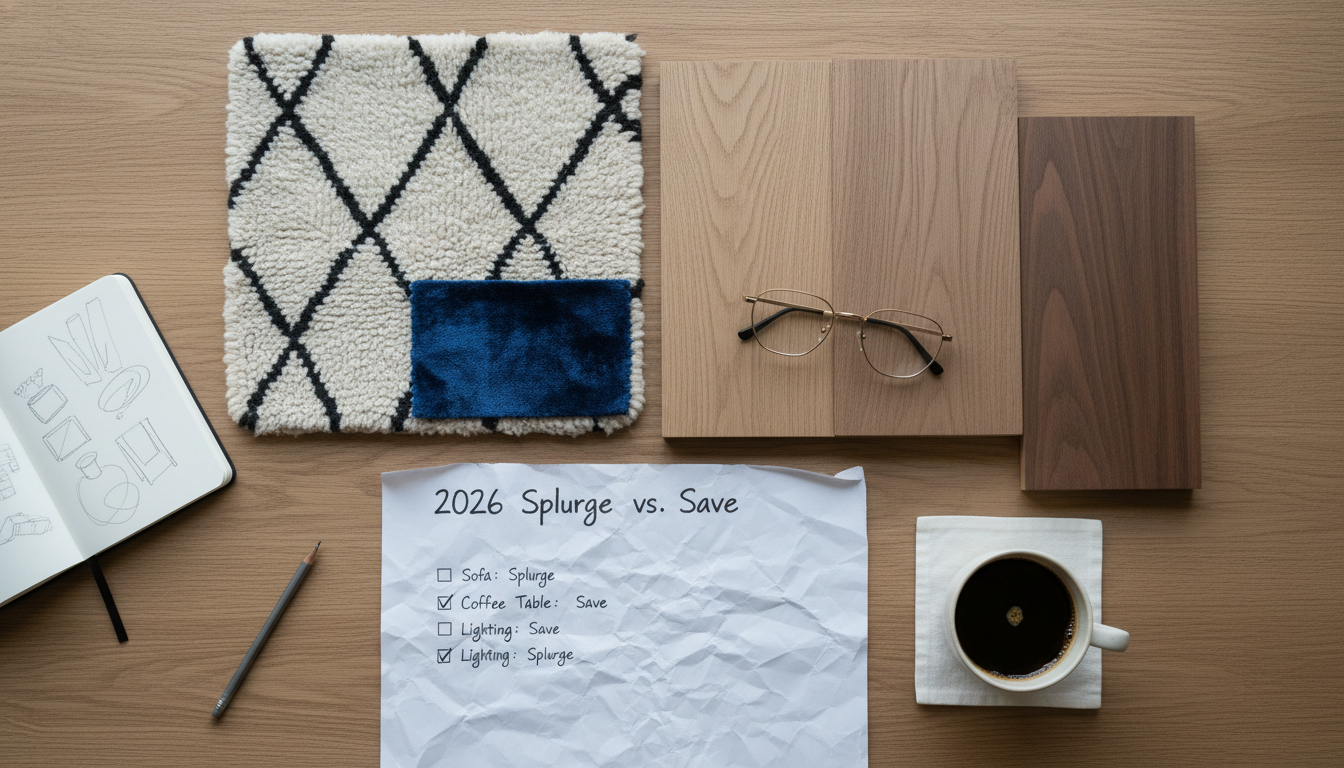
1. The High-Traffic Paradox: Spend Where You Rest, Save Where You Step
In 2026, the most common design mistake isn’t buying a cheap rug—it’s buying an expensive one for the wrong room. We often feel the urge to “show off” a luxury piece in the entryway or living room because that’s where guests congregate. However, the smartest designers are flipping the script.
Think of your home in terms of “friction zones.” Your entryway and main living area endure the friction of grit, spilled wine, and heavy footfall. This is where you save. A high-end performance rug from thebohorugs.com can offer the visual depth of a vintage find without the heart-stopping panic when a glass of Malbec tips over. Save the true splurge—the delicate hand-knotted silks or high-pile Moroccan wools—for the primary bedroom. This is a low-friction zone where you are barefoot 90% of the time, allowing you to actually feel the investment underfoot.
The Real-World Shift: A couple in London recently splurged on a $4,500 hand-knotted Persian for their formal dining room. While it felt counterintuitive, they only use the room ten times a year. Five years later, the rug looks untouched, whereas their previous “budget” dining rug had to be replaced twice due to chair-slide wear. By splurging on a low-use, high-impact area, they actually saved money in the long-run replacement cycle.
2. Material Science: Natural Luster vs. The 2026 Bio-Acetate Revolution
The “Budget vs Luxury” debate used to be simple: Wool was good, polyester was bad. In 2026, that binary is dead. While natural wool remains the gold standard for its “bounce back” ability and inherent lanolin (which naturally repels stains), a new player has entered the luxury-at-a-discount space: Bio-Acetate fibers.
These fibers are engineered to mimic the Light Reflectance Value (LRV) of genuine silk or mercerized cotton. If you are looking at a rug in a moody Sage Green, a Bio-Acetate blend will capture the light with a sophisticated shimmer that looks identical to a $5,000 boutique piece, but at a third of the cost. Splurge on wool for longevity; save with high-end synthetics for that specific, trendy “silk-glow” look in guest rooms or home offices.
3. Construction Integrity: The “Imperfection Premium”
When you pay for a luxury rug, you aren’t just paying for the thread; you’re paying for the “knots per square inch” (KPSI) and the soul of the maker. Machine-made rugs have become incredibly sophisticated, but they are “perfectly” uniform. This perfection is actually a giveaway of a budget price point.
Luxury hand-knotted rugs carry slight variations in color (abrash) and texture. If your furniture consists of sleek, modern lines, a hand-knotted rug provides the necessary “organic tension” to make the room feel curated rather than “ordered from a catalog.” If you can’t afford hand-knotted for the whole house, choose one “Anchor Piece” for the living room and use high-quality power-loomed options elsewhere.
Pro Tip: Look for “hand-tufted” rugs as a middle ground. They offer more weight than machine-made options but cost significantly less than true hand-knotted heritage pieces.
4. The Cost-Per-Year Calculation
Instead of looking at the price tag, look at the “Exit Date.” A $300 rug that looks “tired” after eighteen months costs you $200 a year. A $2,500 hand-knotted wool rug from an artisanal collection that lasts thirty years costs you roughly $83 a year.
In 2026, the “splurge” is often the more frugal choice for “forever homes.” However, if you are in a rental or your style evolves every two years, the budget rug is the smarter financial move. Don’t trap yourself into a “luxury” investment you’ll feel guilty about replacing when your tastes change.
5. Maintenance Reality: The “Hidden Tax” of Luxury
True luxury rugs often require specialized care. A vintage silk Oushak cannot be tackled with a store-bought carpet cleaner. Before you splurge, ask yourself: Am I willing to pay the ‘hidden tax’ of professional cleaning?
For pet owners, the “Save” category is almost always the “Win” category. A family in Austin recently shared their experience: they replaced an $1,800 wool rug that had been “claimed” by their rescue dog with a $400 performance rug from thebohorugs.com. The performance rug can be hosed off in the driveway. To them, the ability to live without anxiety was more “luxurious” than the thread count of the wool.
6. Aesthetic Longevity: Trends vs. The Timeless Palette
Splurge on neutrals; save on trends. If you’re eyeing a rug with a bold, 2026-specific geometric pattern or a “Color of the Year” pop, go for the budget version. These styles are visually loud and often have a shorter “style shelf life.”
Conversely, if you are looking for a classic Persian motif or a subtle earthy texture that complements your existing walnut furniture and cream-colored walls, this is the time to invest. A high-quality neutral rug is a chameleon; it will survive three sofa changes and two different wall paint colors.
7. Allergies & The Health Splurge
In 2026, luxury is increasingly defined by what *isn’t* in the product. Budget rugs often use synthetic glues and VOC-emitting backings that can affect indoor air quality. If you have severe allergies or young children crawling on the floor, the “splurge” is a health decision. Natural wool is hypoallergenic and even helps filter toxins from the air. In this case, you aren’t just paying for the look—you’re paying for a non-toxic environment.
8. The “Sweet Spot” Strategy: The $300–$800 Range
There is a diminishing return on rug quality. The jump from a $150 rug to a $600 rug is massive—you’ll see better materials, heavier backings, and more intricate designs. However, the jump from an $800 rug to a $1,500 rug is often more about branding and retail markup than tangible quality.
The “Smart Buyer” of 2026 lives in this $300–$800 sweet spot. This is where you find “Performance Luxury”—rugs that use high-end construction techniques but leverage modern logistics to keep prices accessible. It’s the range where thebohorugs.com excels, offering that “interior designer” look without the four-figure invoice.
8 Real-World Room Examples: Decision Logic in Action
Theory is fine for textbooks, but in the world of high-end interior design, the “right” choice is always dictated by the floor beneath your feet and the life lived upon it. To demystify the price-to-performance ratio for 2026, we’ve curated eight real-world scenarios where homeowners faced the ultimate rug dilemma. These aren’t just rooms; they are blueprints for how to allocate your design budget without sacrificing a shred of style.
1. The “High-Traffic Illusion” in a Brooklyn Studio
The Situation: Maya, a creative director in New York, lives in a 650-square-foot rental with light-drenched white walls and a charcoal velvet sofa. She has a high-energy rescue dog and a penchant for hosting red-wine happy hours.
The Choice: Budget ($429 Performance Rug). Maya opted for a silk-touch poly-blend with a 2026-gen 3D printed vintage pattern. From eye level, the rug mimics the erratic, beautiful abrash of an antique Persian. Because the room is small, the rug is the “anchor,” but it takes a beating. Spending $2,000 on wool here would have led to constant anxiety over spills. By choosing a high-performance synthetic from thebohorugs.com, she achieved the “old money” aesthetic with a material that can be spot-cleaned with a simple water-and-vinegar solution.
2. The Legacy Dining Room in Suburban Chicago
The Situation: The Hendersons have a formal dining room featuring a heavy dark oak table and walls painted in a deep Navy (LRV of 5). This room is the heart of holiday gatherings but sits empty 300 days a year.
The Choice: Luxury ($4,500 Hand-Knotted Wool & Silk). This was a clear “splurge” moment. Because the room sees low daily foot traffic, the risk of wear is minimal. They chose a 120-line hand-knotted Oushak. The natural lanolin in the wool provides a subtle luster that complements the dark wood, while the hand-knotted fringe adds a layer of “textural honesty” that machine-made rugs simply cannot replicate. In a room this formal, a budget rug would have looked thin and out of place against the heavy furniture.
3. The “Chaos-Proof” Playroom in Melbourne
The Situation: A family of five with three toddlers needed a soft surface for a sunroom that transitions into a backyard play area. The style? “Scandi-Boho” with plenty of natural wood and sage green accents.
The Choice: Smart Budget ($350 Washable Performance). In 2026, the technology in washable rugs has moved beyond thin “mats” to include integrated cushioning. They chose a rug with a distressed geometric pattern that hides crumbs and paint stains. The decision logic here was simple: the lifespan of a rug in a playroom is naturally shorter. Investing in luxury wool here would be a “sunken cost” the moment the first bottle of glitter glue tips over.
4. The Biophilic Master Suite in Seattle
The Situation: A couple wanted their bedroom to feel like a high-end spa. They used “Mushroom” paint tones and organic linen bedding, needing a rug that felt like walking on a cloud.
The Choice: Mid-Tier Luxury ($1,200 New Zealand Wool). They didn’t go for the $5,000 antique, but they didn’t settle for synthetic. New Zealand wool is prized for its long fibers and exceptional softness. By choosing a high-pile, undyed wool rug, they tapped into the 2026 “Quiet Luxury” trend. The rug regulates humidity in the damp Seattle climate and provides a tactile experience that synthetics can’t match when your bare feet hit the floor at 6:00 AM.
“We are seeing a massive shift toward tactile intelligence,” says Elena Vance, Lead Designer at a top Manhattan firm. “In private spaces like bedrooms, the ‘luxury’ isn’t for the guests to see; it’s for the homeowner to feel. That’s where the investment pays off in daily wellness.”
5. The Sun-Drenched Family Room in Austin
The Situation: A modern home with floor-to-ceiling windows and direct Texas sun. The furniture is a mix of leather and mid-century teak.
The Choice: High-Value Performance ($750 UV-Stabilized Blend). Natural wool can fade significantly in direct UV light if not treated. The owners chose a high-density, power-loomed rug made from UV-stabilized Bio-Acetate. It has the weight and “thud” of a luxury rug but won’t develop “sun shadows” where the sofa sits. It’s the “sweet spot” of rug buying: looks like an investment, performs like a workhorse.
6. The Rental Entryway in London
The Situation: A narrow, high-traffic hallway in a Victorian conversion with original tile and “Pigeon Grey” walls. The tenant wanted to protect the floors and add warmth without losing a security deposit.
The Choice: Budget ($180 Jute & Sisal Runner). Entryways are “grit zones.” Mud, salt, and rain are the enemies of luxury textiles. A chunky, hand-woven jute runner provides a rugged, organic texture that hides dirt perfectly. It elevates the space by adding a “naturalist” layer, but if it gets ruined after two winters, it’s easily replaceable. This is the ultimate “Save” zone.
7. The Open-Plan Kitchen in London
The Situation: A sleek, modern kitchen that opens into a breakfast nook. Hardwood floors and marble countertops made the space feel “clunky” and loud.
The Choice: Budget-Performance ($290 Recycled PET Flatweave). Flatweaves are the unsung heroes of the kitchen. Because they have no pile, chairs slide over them easily, and crumbs don’t get trapped. By choosing a rug made from recycled PET (plastic bottles), the homeowner got a rug that feels like soft cotton but can literally be hosed off in the garden. It complements the “industrial chic” furniture perfectly while remaining entirely practical.
8. The “Curated Mix” Living Room in Los Angeles
The Situation: A luxury minimalist home that needed to look “expensive but effortless.” The owners had a massive 12×15 space to fill.
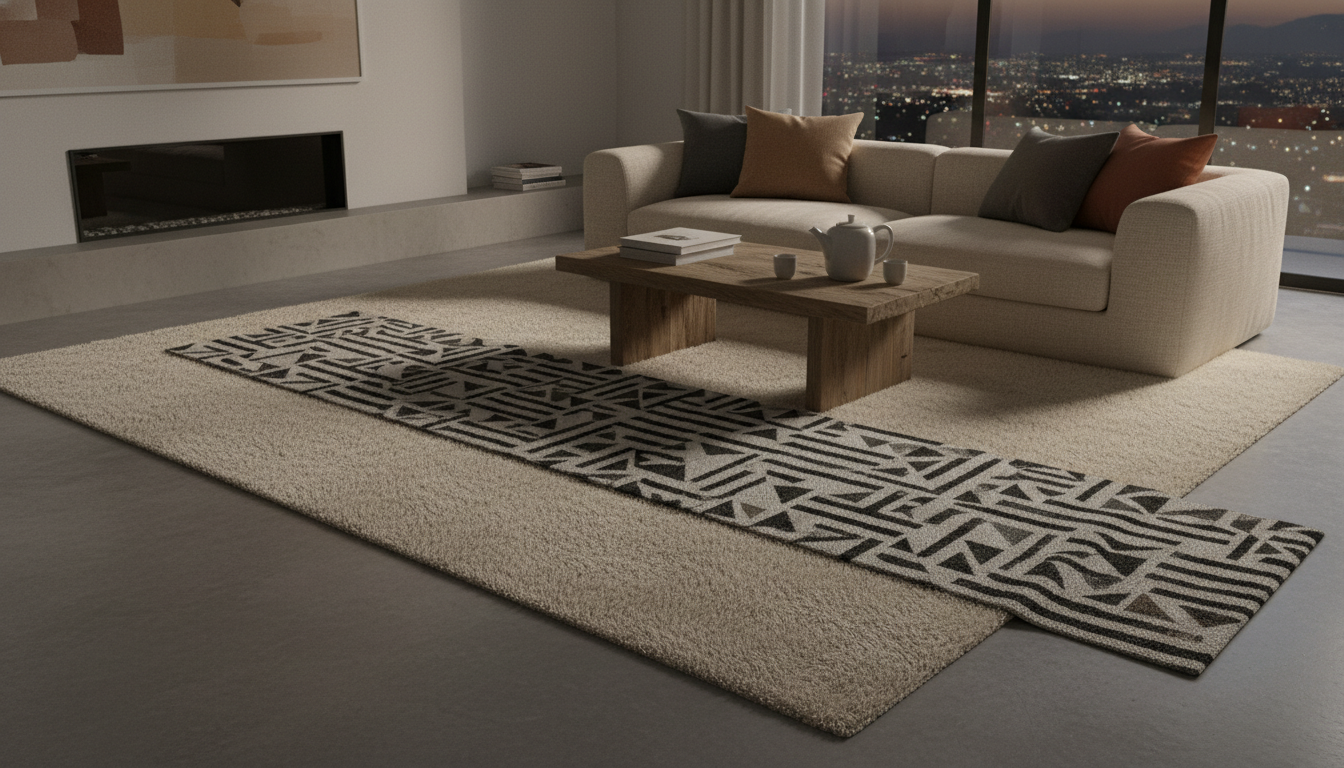
The Choice: The Strategic Hybrid. Filling a 12×15 space with a hand-knotted silk rug could easily cost $15,000. Instead, they used the “Layering Hack.” They bought a budget-friendly, oversized natural seagrass rug ($600) to cover the majority of the floor. They then layered a smaller, luxury 5×8 hand-knotted Moroccan rug ($1,400) from thebohorugs.com on top, positioned under the coffee table. The result? The entire room feels curated and expensive, but they saved over $10,000 by being smart about where the “luxury” was placed.
The Decision Logic Recap
- Splurge: When the tactile experience is the priority (Bedrooms) or when the room is a “showpiece” with low traffic (Formal Dining).
- Save: When the rug is in the “line of fire” (Kitchens, Mudrooms, Playrooms) or when you need to cover massive square footage (use layering!).
- The 2026 Sweet Spot: Look for “Performance Luxury”—rugs priced between $600 and $900 that use advanced fiber tech to mimic the look of $3,000 wool.
The 2026 Rug Value Decision Matrix
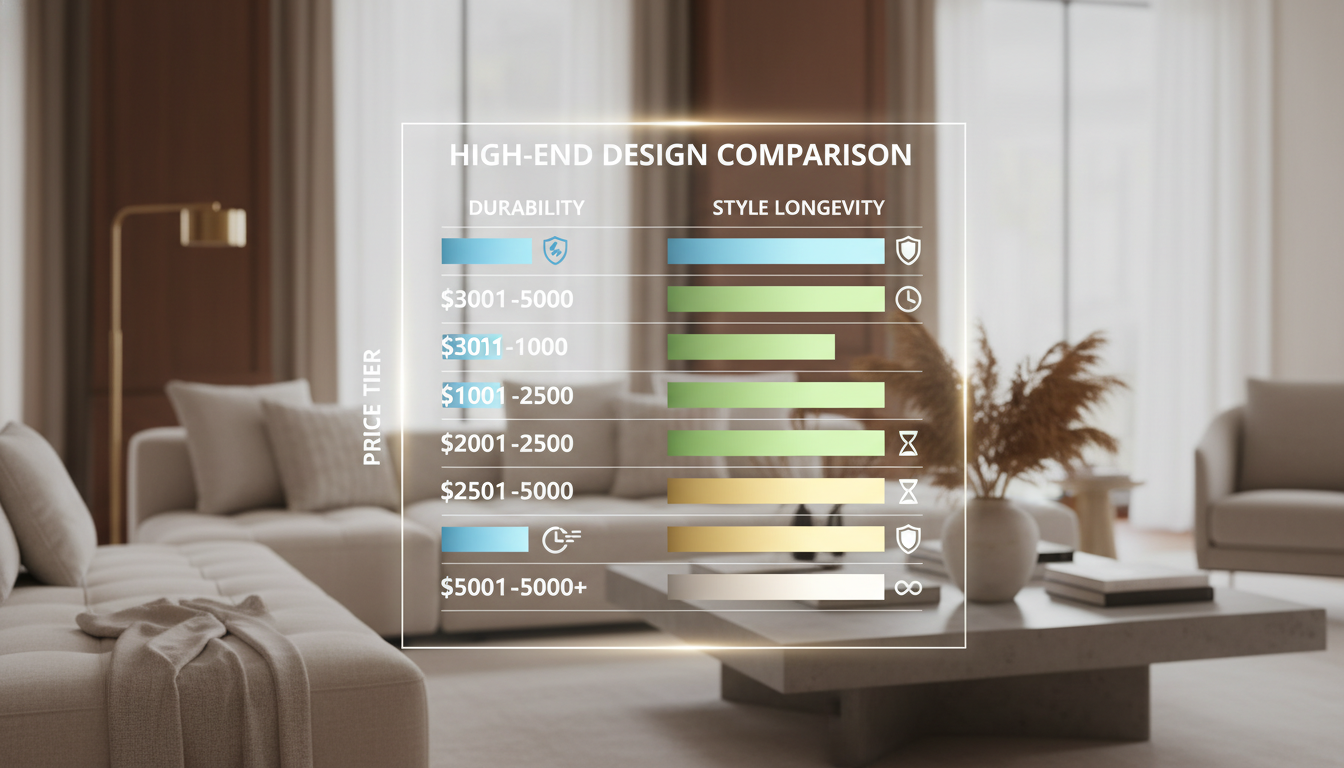
| Price Tier | Best Use Case | Expected Lifespan | The “Look” Factor |
|---|---|---|---|
| The Entry ($0–$300) | Playrooms, mudrooms, high-spill zones. | 2–4 Years | Crisp patterns; lacks tactile depth. |
| The Sweet Spot ($300–$800) | Living rooms, main traffic arteries. | 5–10 Years | Mimics hand-tufted wool with precision. |
| The Premium ($800–$2,000) | Master bedrooms, formal dining rooms. | 15–25 Years | Natural luster (silk/wool blends); artisan edges. |
| The Heirloom ($2,000+) | “Legacy” rooms with low-UV exposure. | 50+ Years | Unique character; 100+ knots per square inch. |
Decoding the 2026 Value Shift
We are seeing a definitive move toward textural intelligence. Julian Thorne, Lead Textile Strategist at the London Design Institute, notes: “In 2026, the ‘luxury’ label is moving away from purely price and toward provenance. A hand-loomed rug from the Atlas Mountains carries a soul that a machine cannot replicate, but for a high-traffic kitchen, the new carbon-neutral synthetic blends offer a visual sophistication we’ve never seen before.” At thebohorugs.com, the focus remains on bridge-tier pieces that offer the irregular, organic charm of artisanal weaving while utilizing modern dyeing techniques that resist fading from high-LRV sunlight.To test if a budget rug is a “smart save” or just “cheap,” fold a corner back. If you see large gaps between the fiber rows (the “grin”), it will flatten within months. A high-value alternative—even if synthetic—should have a dense, tight backing that mimics the structural integrity of a hand-knotted base.
The Designer’s Secret: Making Budget Rugs Look Bespoke
The Art of the “High-Low” Illusion
In the world of high-end interiors, the most seasoned designers rarely furnish a room exclusively with five-figure items. The real magic happens in the “high-low” mix—knowing how to pair a bespoke velvet sofa with a rug that costs less than the throw pillows but looks like it was commissioned in a boutique studio. By 2026, the gap between “cheap” and “attainable luxury” has narrowed, thanks to advancements in Bio-Acetate fibers and 1,200-point machine looms that mimic the intentional irregularities of hand-knotted pieces.
To make a budget-friendly rug feel like a custom investment, you have to look beyond the price tag and focus on the tactile narrative of the room. A rug that feels thin or slides underfoot will always betray its price. Conversely, a performance rug with a sophisticated “broken” pattern—designed to look like an antique Oushak with natural wear—can easily pass for a heritage find when styled with conviction.
The Secret is Underneath: The Invisible Luxury
If you want a $500 rug to feel like a $5,000 masterpiece, you must invest in what no one sees: the pad. Most homeowners view rug pads as a utility to prevent slipping, but in luxury design, they are a tool for architectural weight. A cheap, thin rug lacks the “thud” factor of a heavy wool piece. To fix this, designers use a dual-felt rubber pad (at least 1/2 inch thick). This adds a plush, grounding density that mimics the heavy handle of a high-knot-count rug from the Atlas Mountains.
- Weight Matters: A heavy pad eliminates the “clicking” sound of footsteps on hard floors, a common giveaway of lightweight synthetic rugs.
- Edge Control: Use professional-grade rug tape on the corners to ensure the rug lays perfectly flat against the floor. Any curling or “rippling” is an immediate signal of a lower-tier product.
- Furniture Anchoring: Ensure at least the front legs of all major furniture pieces sit on the rug. This creates a “zoned” luxury feel that makes the rug look like it was sized specifically for the architecture of the space.
“When selecting a budget rug, always check the Light Reflectance Value (LRV) of your wall paint. A common mistake is choosing a synthetic rug with a high-sheen finish against a matte, low-LRV wall like Stone Gray or Deep Forest. This contrast makes the rug look ‘plastic.’ To elevate an affordable rug, match the sheen of the rug fibers to the finish of your walls. If your walls are flat or eggshell, opt for matte fibers like recycled PET or cotton blends found at thebohorugs.com, which absorb light rather than bouncing it back harshly.”
— Julianne Voss, Lead Textile Consultant
Texture Over Pattern: Choosing the Right “Fake”
The most common mistake when shopping the budget tier is choosing a rug with a high-definition, printed “oriental” pattern. These often look flat and pixelated in person. Instead, savvy buyers in 2026 are looking for high-low pile construction and tonal variations. Rugs that use space-dyed yarns create a “stria” effect—the subtle color shifting found in expensive hand-dyed wool.
Look for rugs that incorporate recycled silk or Bio-Acetate. These materials have the cool-to-the-touch feel and elegant luster of genuine silk but are durable enough for a high-traffic family room in Austin or London. When these fibers are woven into a neutral, textured pattern—think a subtle chevron or an organic “waterfall” motif—they complement high-end furniture by providing a sophisticated, understated backdrop rather than competing for attention with a loud, low-quality print.
The Layering Trick: The “Designer Sandbox”
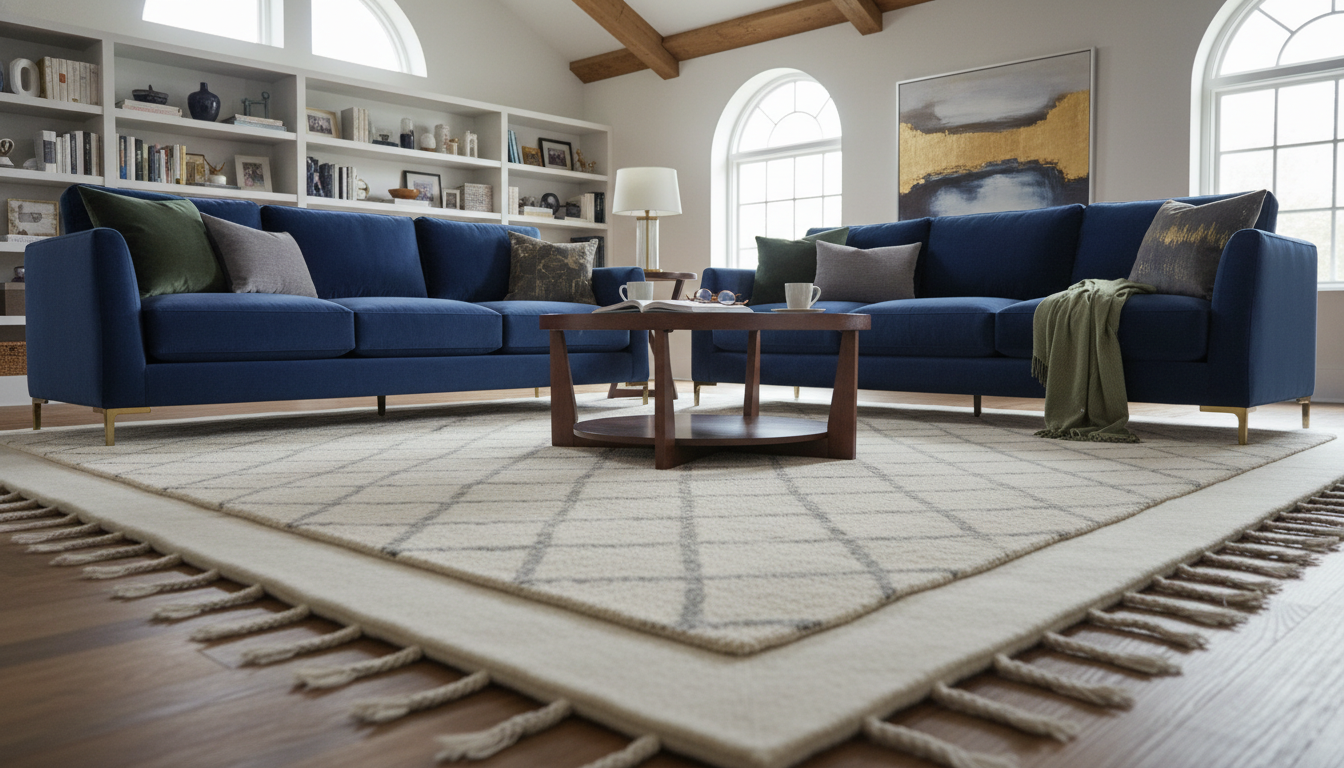
One of the most effective ways to use a budget rug without sacrificing a luxury aesthetic is the double-layer technique. Designers often start with a large, inexpensive natural fiber base—like a chunky jute or sisal rug—and layer a smaller, higher-quality (or even a high-end “lookalike”) rug on top. This provides several benefits:
- Scale on a Budget: You can buy a massive 10×14 jute rug for a fraction of the cost of a large wool rug, then place a 5×8 luxury performance piece in the center to “hero” the seating area.
- Framing: The border of the natural fiber rug acts as a frame, making the top rug look like a deliberate, curated piece of art.
- Visual Depth: The contrast between the rugged texture of the jute and the softer top layer adds the kind of multi-dimensional layering found in 5-star hotel lobbies and architectural digests.
For those aiming for a cohesive look, sourcing artisanal-inspired top layers from thebohorugs.com allows you to get that hand-knotted aesthetic while the jute base handles the heavy lifting of covering floor space. It’s the ultimate smart-spending hack for 2026: you aren’t just buying a rug; you’re engineering an atmosphere.
Elevate Your Space
Discover the artistry of handmade luxury. Each rug is a masterpiece of tradition and modern design.
Expert Q&A
Are luxury hand-knotted rugs really worth the investment in 2026?
Yes, but only if the ‘Total Cost of Ownership’ makes sense. A hand-knotted wool rug can last 50-80 years, whereas a budget machine-made rug typically lasts 3-5 years. In a low-traffic bedroom, the luxury rug becomes an heirloom; in a muddy mudroom, it’s a liability.
What is the ‘sweet spot’ price range for budget rugs that look expensive?
For 2026, the $450–$850 range for an 8×10 rug is the sweet spot. At this price point, you move away from ‘disposable’ plastics into high-density power-loomed fibers and ‘Performance-Luxe’ materials that mimic wool remarkably well.
Can guests really tell the difference between a $500 and a $5,000 rug?
Visually, the gap has closed significantly. However, the difference is felt underfoot—the weight, the rebound of the fibers, and the lack of a chemical smell. A luxury rug also develops a ‘patina’ over time, while a cheap one simply wears out.
Should I buy luxury for bedrooms and budget for living rooms?
Actually, many designers recommend the opposite. Use luxury in the master bedroom for that daily tactile comfort. In the living room, where spills and high traffic are inevitable, a high-end performance rug offers peace of mind without sacrificing the aesthetic.
How can I make a $300 rug look like a $3,000 designer piece?
The secret is the ‘Over-Sized Pad’ and ‘Layering.’ Use a thick, premium 1/2-inch felt rug pad to add weight and sound dampening. Layering a smaller budget-friendly patterned rug over a large, neutral natural jute rug also creates a high-end, curated look.
Is wool always considered luxury?
Not necessarily. Hand-knotted New Zealand wool is luxury. However, machine-tufted, low-grade wool can shed excessively and feel scratchy. In 2026, a high-quality synthetic often outperforms low-grade wool in both feel and appearance.
What are the best sustainable budget alternatives in 2026?
Look for PET (recycled plastic bottles) rugs. The 2026 iterations are incredibly soft, UV-resistant, and sustainable, offering a luxury look for a fraction of the price while being environmentally responsible.
When is it a mistake to save money on a rug?
Never save on the size. A small luxury rug looks ‘cheaper’ than a large budget rug. If your budget is tight, buy the larger, more affordable rug to ensure all furniture legs sit on the textile—this is the cardinal rule of high-end design.
Do luxury rugs hold their resale value?
Genuine hand-knotted Persian, Oushak, or Tabriz rugs can appreciate or hold value as art pieces. Machine-made rugs, regardless of their initial price, have virtually zero resale value once used.
What should I look for in a performance rug to ensure it doesn’t look ‘plastic’?
Check the ‘Point Count’ and ‘Pile Height.’ A higher point count (density) and a matte finish—avoiding high-gloss synthetics—ensure the rug absorbs light like natural wool rather than reflecting it like cheap plastic.
Written by TheBohoRugs Interior Design Team
Experts in handmade rugs, boho interiors, and modern home decor.
