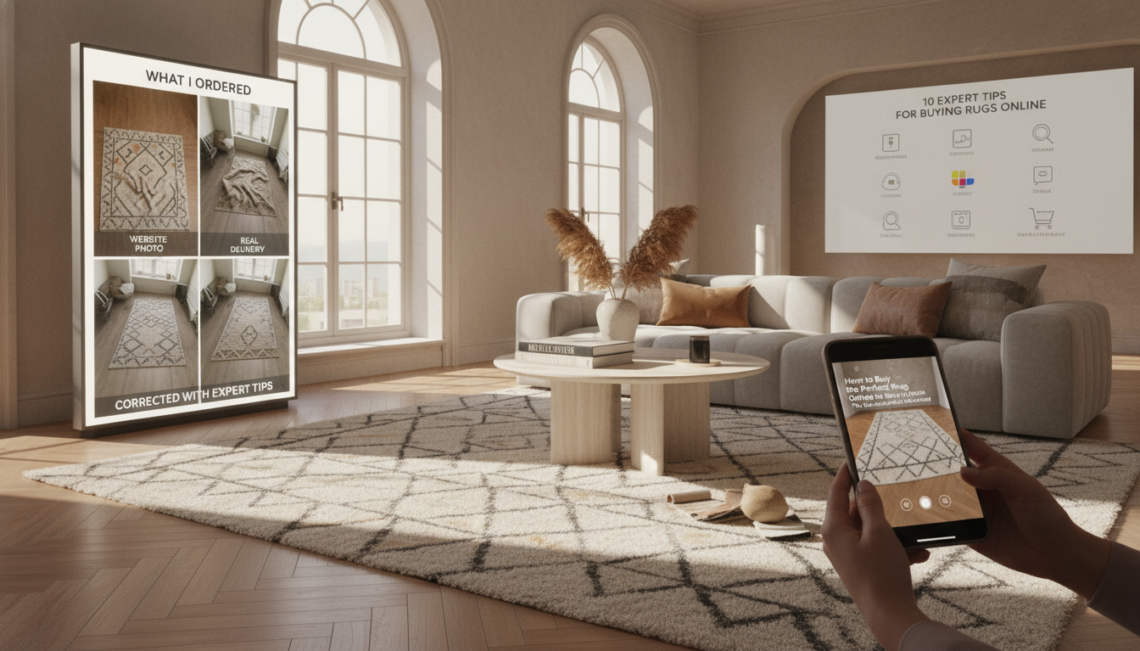
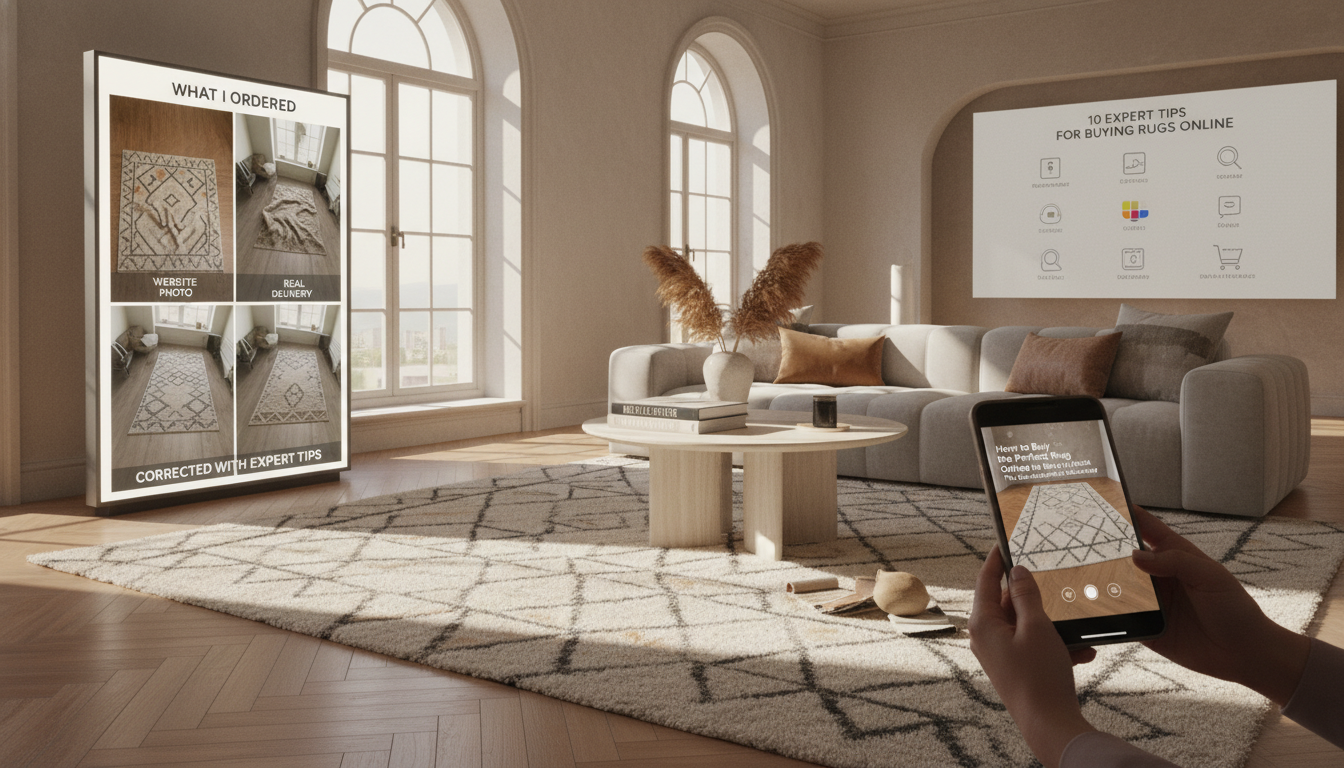
How to Buy a luxury rug in 2026 has evolved from a simple click-and-wait gamble into a sophisticated dance between augmented reality and material science. You spent hours scrolling through breathtaking vignettes, found the ‘one’ that perfectly captures your living room’s soul, and hit ‘checkout’ with a mix of excitement and dread. Yet, the reality of online shopping often bites: colors that shift like chameleons under your LEDs, textures that feel like plastic instead of plush wool, and the logistical nightmare of returning a hundred-pound roll. This guide is your high-end survival manual, designed to bridge the gap between the digital screen and your hardwood floors, ensuring that every investment you make is grounded in expert strategy rather than hope.
“To successfully buy a rug online in 2026, follow these 10 expert tips: 1. Use painter’s tape to visualize the exact footprint. 2. Request physical swatches to verify undertones against your specific lighting. 3. Check ‘white balance’ in product photos. 4. Master fiber science by prioritizing natural wool and silk for longevity. 5. Utilize AR (Augmented Reality) visualization tools to check scale against furniture. 6. Analyze knot density through high-resolution zoom. 7. Calculate total cost including return shipping insurance. 8. Cross-reference buyer photos for real-world color rendering. 9. Verify the backing material to ensure floor safety. 10. Time purchases with artisanal collection drops for the best value.”
The Roadmap
Table of Contents
- The 2026 Digital Rug Revolution
- Measurement Mastery: The Painter’s Tape Protocol
- Color Science: Beyond the Screen
- Decoding the Spec Sheet: Fibers and Weaves
- The 8 Success Stories: Lessons from Real Buyers
- The AR Edge: Visualizing Your Space
- Logistics and Returns: Protecting Your Investment
- The 2026 Online Rug Buying Checklist
The 2026 Digital Rug Revolution
Why Buying Rugs Online Requires a Smart Strategy in 2026
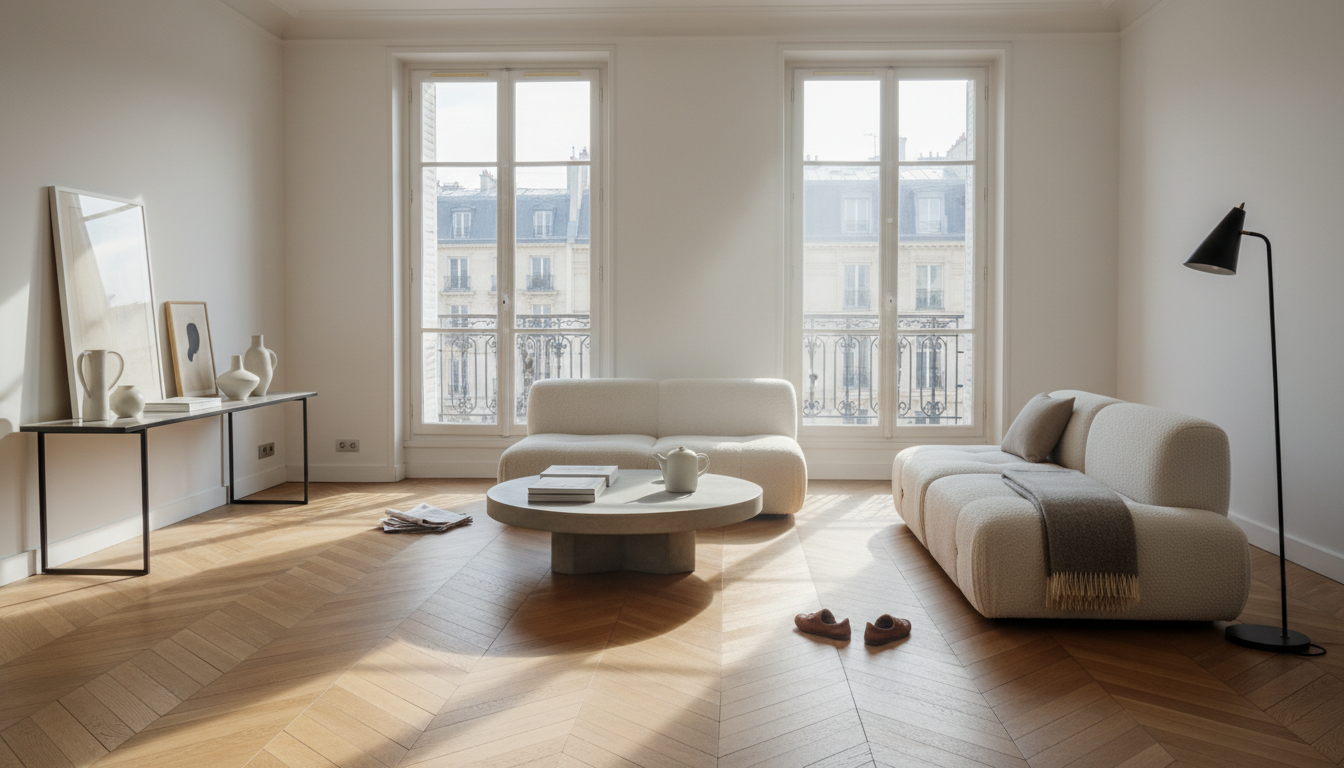
The days of cross-referencing grainy JPEG images and crossing your fingers are long gone. By 2026, the digital marketplace has evolved into a sophisticated ecosystem where high-fidelity AR (Augmented Reality) and 8K macro-photography are the standard, not the exception. However, with this technological leap comes a paradox: more data can often lead to more indecision. The challenge isn’t finding a rug; it’s navigating the subtle nuances of texture, light, and fiber resilience that a screen can still slightly distort.
The modern interior landscape has shifted toward “quiet luxury” and sustainable high-performance materials. We are seeing a massive surge in Bio-Acetate fibers and hand-spun agave silks that mimic the luster of traditional Persian pieces but offer the durability required for a high-traffic 2026 lifestyle. If you aren’t looking for these specific material markers in the product descriptions, you’re likely to end up with a rug that loses its soul after six months of foot traffic.
“In 2026, we’ve moved past the ‘disposable decor’ era. Buyers are now looking for provenance and tactile integrity. They want to know if a rug was hand-knotted in the Atlas Mountains or woven with recycled ocean plastics, and they’re using digital tools to verify those claims before the rug even leaves the warehouse.”
— Julian Thorne, Lead Textile Historian & Design Consultant.
The Science of Color and Light Reflectance
One of the most frequent mistakes buyers make is ignoring the Light Reflectance Value (LRV) of their flooring and walls. A rug that looks like a creamy oatmeal on a calibrated studio monitor might turn into a muddy taupe in a north-facing New York apartment with lower natural light. High-end retailers, such as thebohorugs.com, have responded to this by providing detailed lighting charts, showing how their artisanal pieces react under 2700K (warm) versus 5000K (daylight) LED bulbs.
Understanding the interaction between your wall paint and the rug’s undertones is vital. For instance, if your walls are a trendy Sage Green with a cool gray base, a rug with hidden yellow undertones will create a visual vibration that feels “off,” even if both items are beautiful individually. This is where the digital strategy becomes a mathematical one: checking the RGB breakdown of the product photos against your room’s color palette.
Never commit to a large-scale purchase without testing a physical sample in your actual room for at least 48 hours. Watch how the fibers change from the morning sun to the evening glow of your lamps. A rug that glows at noon might look flat and lifeless under artificial evening light.
The Real-World Cost of “Guesswork”
The stakes have never been higher for the online shopper. While shipping is faster in 2026, the environmental and financial cost of returns is significant. A homeowner in Austin recently shared a story of ordering a 9×12 overdyed vintage rug. On screen, the “Midnight Cobalt” looked like a deep navy that would ground her white linen sofas. Upon arrival, the high sheen of the silk-blend fibers caught the afternoon sun, turning the rug into a bright, electric violet. Because she hadn’t utilized a digital room visualizer or checked the fiber pile direction, she was hit with a $250 restocking fee and the logistical nightmare of re-rolling a 100-pound item.
Smart buyers now leverage the “Digital Twin” approach. By using LIDAR scanning—now standard on most smartphones—you can drop a true-to-scale 3D model of a rug into your living room. This allows you to see how the edges interact with your sofa legs and whether the pattern scale competes with your wallpaper. Platforms like thebohorugs.com have integrated these tools directly into their interface, ensuring that what you see on your screen is a mathematically accurate representation of how the rug will occupy your physical space.
- Check the Pile Height: A 0.5-inch pile might sound plush, but will it clear your low-slung mid-century doors?
- Verify the Backing: In 2026, premium rugs use natural latex or recycled felt, avoiding the off-gassing associated with cheaper synthetic adhesives.
- Read the “Aged” Reviews: Look for buyers who have owned the rug for 12+ months to see how the fibers hold up to vacuuming and sunlight exposure.
Moving forward, the secret to a successful purchase lies in the marriage of high-tech tools and old-school textile knowledge. By treating the process with the same rigor as a gallery acquisition, you ensure that your rug isn’t just a floor covering, but the foundational piece of your home’s aesthetic DNA.
Measurement Mastery: The Painter’s Tape Protocol
Tactile Visualization: Mapping the Footprint
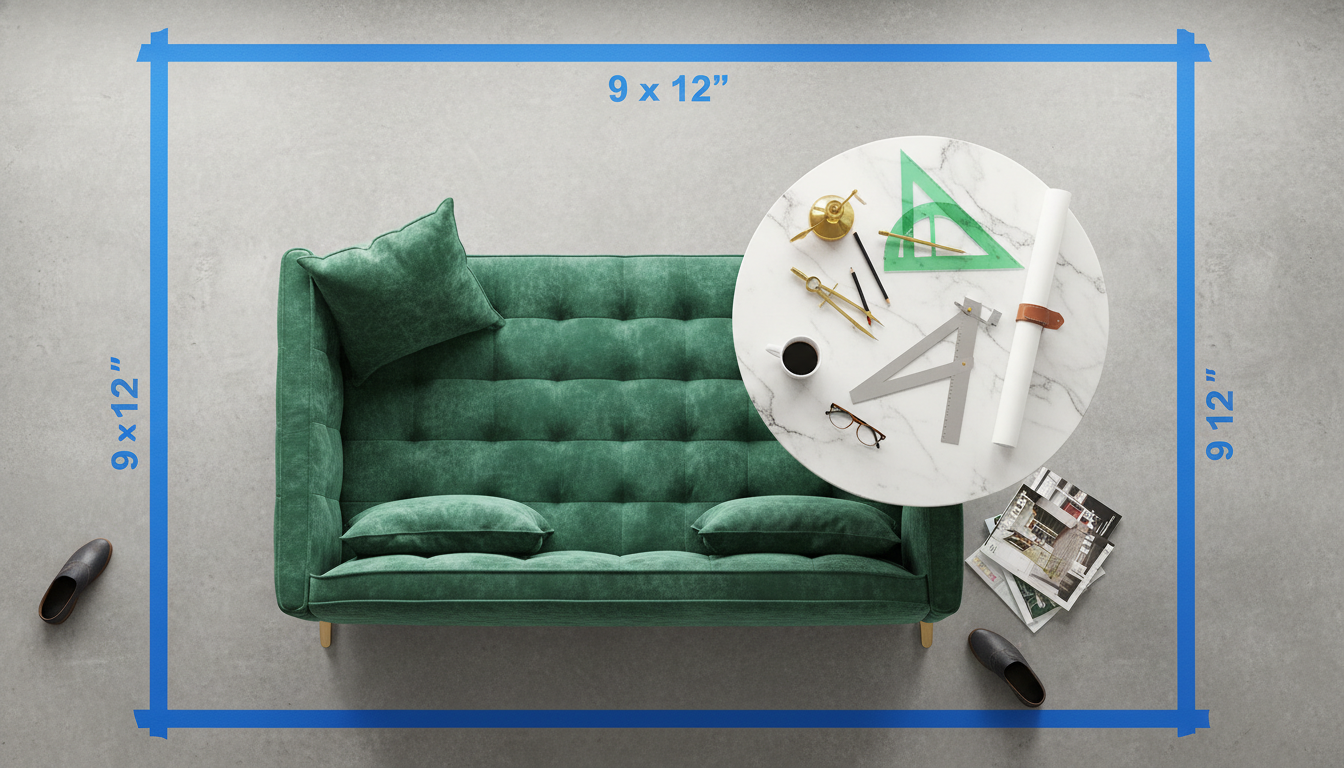
The secret to a perfect fit isn’t a digital rendering; it’s a roll of blue painter’s tape and a bit of patience. This “protocol” allows you to feel the flow of the room before you commit to a heavy shipment. Start by clearing the space and outlining the exact dimensions of the rug you’re eyeing. When you shop at premium outlets like thebohorugs.com, you’ll notice that artisanal pieces often come in nuanced sizes—sometimes varying by an inch or two due to the hand-weaving process. Tape these exact edges onto your floor. Walk around the perimeter. Open your doors. If you’re placing a rug in an entryway, 2026’s trend toward high-pile Bio-Acetate fibers offers incredible softness, but you must check your door clearance. A rug that prevents a door from swinging is a rug you’ll eventually resent.The “All Legs On” Mandate
Current design philosophy has moved away from the “floating” rug look. For a living room to feel grounded and luxurious, your rug should be large enough to accommodate at least the front legs of all primary seating—though having all legs on the rug is the gold standard for 2026. “We are seeing a return to ‘maximalist grounding,’” says Julian Thorne, Lead Textile Historian. “A rug isn’t just a floor covering; it’s the stage for your furniture. If the sofa isn’t fully or partially on the rug, the room feels disjointed. By using the tape method, you can see if a 10-foot width actually captures your armchairs or if they’re left stranded on the hardwood.”- Dining Room Rule: Extend your tape 24 to 30 inches beyond the table edge on all sides. This ensures chairs stay on the rug even when pulled out—a must for preventing caught legs and scratched floors.
- The 18-Inch Border: In a classic closed-plan room, aim for 18 inches of exposed floor around the rug’s perimeter. In smaller 2026 urban apartments, you can cheat this down to 8 inches to maximize the perceived floor therapist.
- Zoning Open Concepts: If you’re buying for a loft, use the tape to define the ‘island’ of the living area versus the dining area. The gap between these taped zones should be clear enough to act as a walkway.
If your taped-out area crosses a high-traffic transition zone, look for “Low-Profile” weaves. In 2026, many homeowners are opting for regenerative wool with a flat-weave construction. These provide the durability needed for busy hallways while maintaining a sophisticated, matte aesthetic that complements high Light Reflectance Value (LRV) wall paints like Sage Green or Alabaster.
Accounting for Visual Weight
Remember that dark rugs and busy patterns have more “visual weight” than lighter, neutral pieces. A 9×12 rug in a deep charcoal hand-knotted wool will feel larger and more imposing than the same size in a bleached jute. When you have your tape on the floor, stand back and imagine that space filled with color. If the taped area feels like it’s swallowing the room, consider a lighter weave or a more subtle tone-on-tone pattern from a curated collection like those found at thebohorugs.com. The goal is equilibrium. You want your rug to feel like it was custom-made for the architecture of the house. By the time you peel up that painter’s tape, you shouldn’t just know the dimensions; you should feel the confidence that comes with knowing exactly how your new piece will interact with your walls, your light, and your life.Color Science: Beyond the Screen
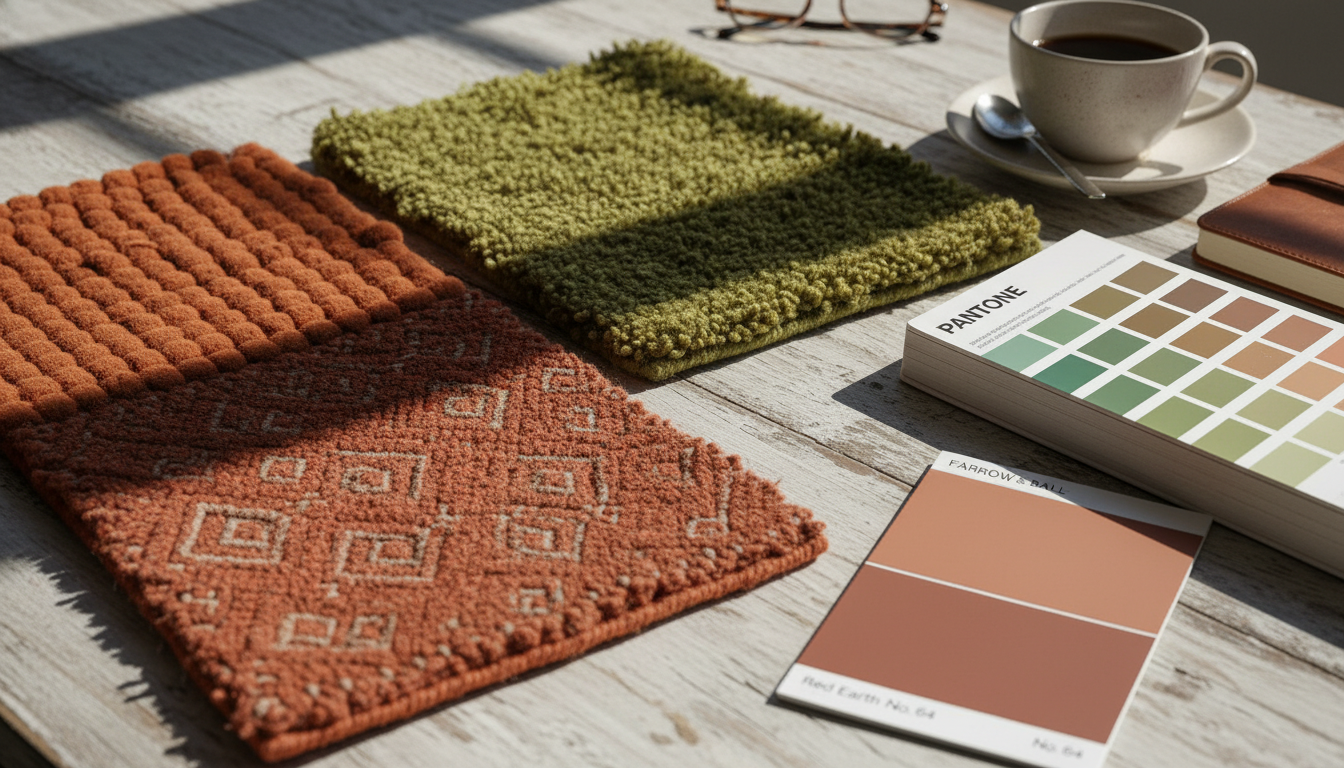
The Digital Mirage: Why “Desert Rose” Often Arrives as “Salmon Pink”
The most pervasive anxiety when learning how to buy a rug online isn’t the price or the shipping speed—it’s the color. We’ve all been there: you find a stunning “Oatmeal” flatweave that looks like the epitome of quiet luxury on your MacBook Pro, but when it’s unrolled in your sun-drenched living room, it takes on a sickly greenish cast. This happens because your screen operates in RGB (Red, Green, Blue) light, while your home operates in CRI (Color Rendering Index) reality. In 2026, high-end retailers are compensating for this with high-fidelity photography, but the physics of light remains undefeated. A rug’s color is not a fixed property; it’s a living response to the environment. If you are shopping at a curated boutique like thebohorugs.com, you’ll notice they often provide photos in both “Studio Light” and “Natural Home Light”—this is the gold standard for verifying what you’re actually getting.Mastering the Light Reflectance Value (LRV)
To navigate the color trap, seasoned interior designers look at the Light Reflectance Value (LRV). While traditionally used for paint, the 2026 shift in textile transparency means more luxury rug specs now include an estimated LRV. This scale measures how much light a surface reflects versus how much it absorbs. A rug with a high LRV (70+) will brighten a dark, north-facing room but might feel “blown out” or blinding in a room with floor-to-ceiling southern exposure. Conversely, a deep charcoal rug with a low LRV (under 10) will ground a bright room but can turn into a “black hole” in a space with poor overhead lighting. When you’re researching how to buy your next piece, ask the concierge if the rug has cool or warm undertones—this simple question saves more returns than almost any other step.Before you click “checkout,” take a standard sheet of bright white printer paper and hold it against your sofa and your floor. Take a photo of it using your phone. This forces your phone’s camera to “White Balance.” Now, look at the rug online on that same phone. The contrast between the true white paper in your hand and the rug on the screen will reveal the rug’s true hidden undertones—whether it’s leaning unexpectedly violet, yellow, or blue.
The 2026 Material Revolution: Bio-Acetate and Sheen Physics
The “color” of a rug is also heavily dictated by its fiber structure. We are seeing a massive surge in the use of Bio-Acetate fibers—a sustainable, wood-pulp derived alternative to silk. While beautiful, these fibers have a high “shimmer” factor. This means the rug will look two different colors depending on which side you are standing on. One side is the “light” side (where the light hits the side of the fiber), and the other is the “dark” side (where you’re looking into the tips of the pile). If you’re wondering how to buy a rug that looks consistent, you might prefer the matte finish of hand-knotted wool from the Atlas Mountains. Wool absorbs light rather than reflecting it, providing a consistent color experience from every angle of the room.“The soul of a rug is revealed by how it handles the golden hour. A synthetic rug often dies when the sun goes down, looking flat and dull. But a rug made with natural pigments and high-quality wool or Bio-Acetate will hold the light, changing its mood as your lamps click on. You aren’t just buying a color; you’re buying a 24-hour light show.”
— Julian Thorne, Senior Textile Historian & Design Consultant
Practical Steps for Color Verification
- Check the “Edge Shots”: Zoom in on the serging (the edge stitching). Often, the yarns used to finish the edges are the truest representation of the rug’s base color because they aren’t affected by pile shadows.
- The “Night Mode” Check: Always look at product photos on a screen with “Night Shift” or “Blue Light Filters” turned off. These filters add a yellow tint to everything, making cool-toned rugs look much warmer than they are.
- Request a “Real-World” Snap: If you’re investing in a premium piece from thebohorugs.com, don’t hesitate to ask for a quick smartphone photo of the rug in their warehouse under standard LED lighting. It’s the most honest view you’ll ever get.
The AR Edge: Visualizing Your Space
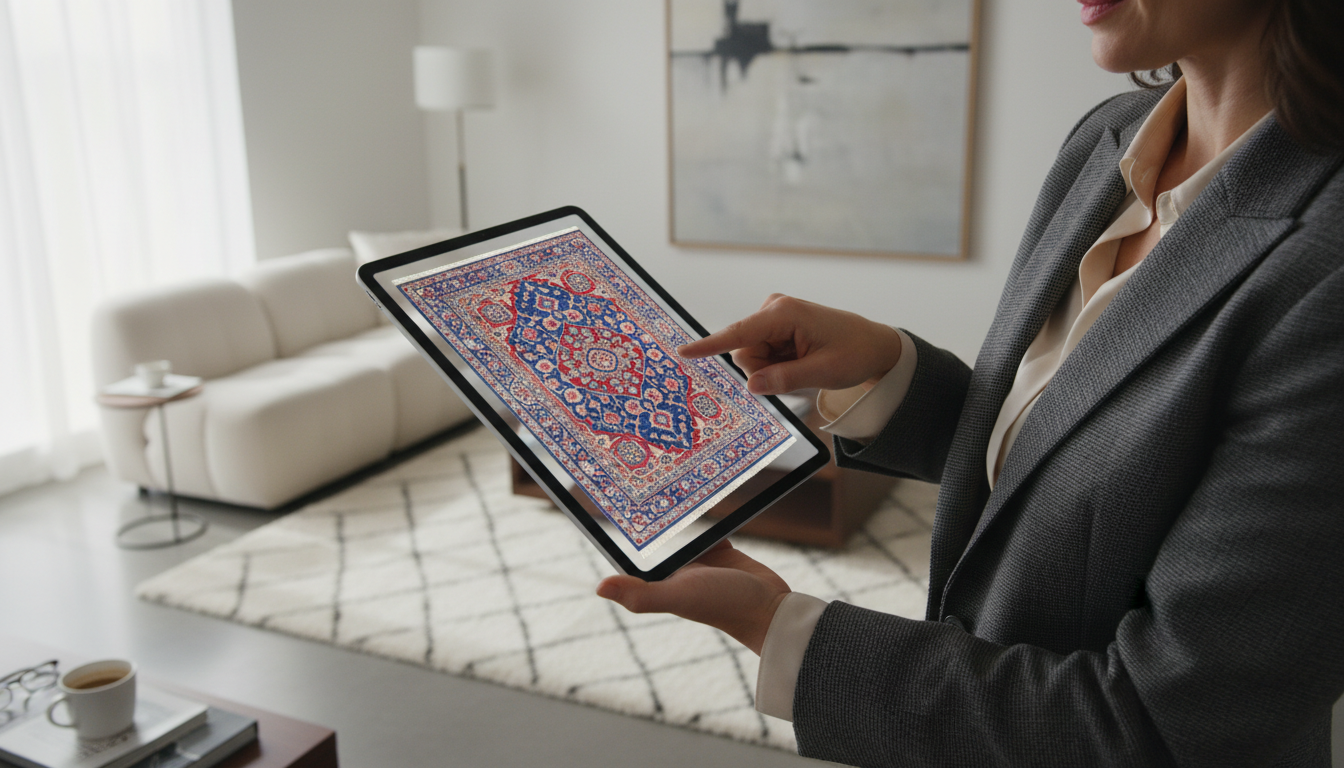
Beyond the Screen: Mastering the Digital-to-Physical Translation
The most significant hurdle in the 2026 rug-buying landscape isn’t finding a beautiful design—it’s the “mental gymnastics” required to imagine how a 9×12 hand-knotted piece will interact with your specific architecture. We’ve all been there: staring at a two-inch square on a smartphone, trying to superimpose it over our living room floor. Thankfully, Augmented Reality (AR) has evolved from a glitchy gimmick into a precision tool that accounts for depth, shadow, and even the way Bio-Acetate fibers catch the morning sun.
When you use a high-end visualizer, like the proprietary tools found at thebohorugs.com, you aren’t just seeing a flat image. You’re seeing a digital twin of the rug that responds to your room’s unique Light Reflectance Value (LRV). If your walls are a moody charcoal with a low LRV, a rug with high-sheen silk highlights will pop differently than it would in a sun-drenched white loft. The AR edge allows you to walk around the virtual rug, checking how the pattern scales against your sofa’s legs and whether the pile height might interfere with door clearance.
The “Golden Hour” Test for Digital Previews
To get the most out of these visualization tools, timing is everything. A common mistake is “trying on” rugs digitally under harsh artificial overhead lighting. For a truly accurate preview, use the AR tool during the time of day you spend the most time in that room. If it’s a bedroom rug, check the digital overlay during the “golden hour” when the light is warm and low. This reveals the true undertones of the dyes—whether that “neutral” beige leans toward a pink clay or a cool sandy grey.
- Calibrate your floor: Before launching the AR tool, clear a few pieces of small furniture. The AI needs a clear view of the floor-to-wall transition to settle the rug accurately into the 3D space.
- Check the “Texture Render”: In 2026, premium visualizers now simulate the “crush” of the pile. Look closely at how the digital rug reflects light; if it looks matte in the app, it will likely feel more rugged and organic, like a high-altitude wool from the Atlas Mountains.
- The Perimeter Check: Use the digital tool to ensure at least 12 to 18 inches of floor space remains visible around the rug’s edges. This “negative space” is what gives a room its luxury editorial feel.
“We are seeing a massive shift in consumer confidence because of spatial computing,” notes Elena Vance, Lead Design Strategist at the Global Textile Institute. “The ability to see how a complex geometric pattern interacts with the specific grain of your oak floors removes the ‘fear of the unknown’ that used to plague online luxury purchases. It’s no longer about guessing; it’s about verifying.”
While AR is incredibly powerful, the most sophisticated designers use the “Hybrid Approach.” Use blue painter’s tape to mark the physical footprint of the rug size you’re considering on your actual floor. Then, open the AR visualizer from thebohorugs.com and overlay the digital rug within those taped boundaries. This gives you a physical sense of the room’s flow and a digital sense of the color palette simultaneously.
Modern visualization also helps solve the “clash” crisis. By toggling between different styles—perhaps a minimalist jute and a vibrant, over-dyed vintage piece—you can see instantly which one anchors your furniture rather than competing with it. The goal is to ensure that when the delivery truck arrives, the only surprise is how much better the texture feels under your feet than it did on the screen.
Real World Chronicles: 8 Tales of Online Rug Acquisition
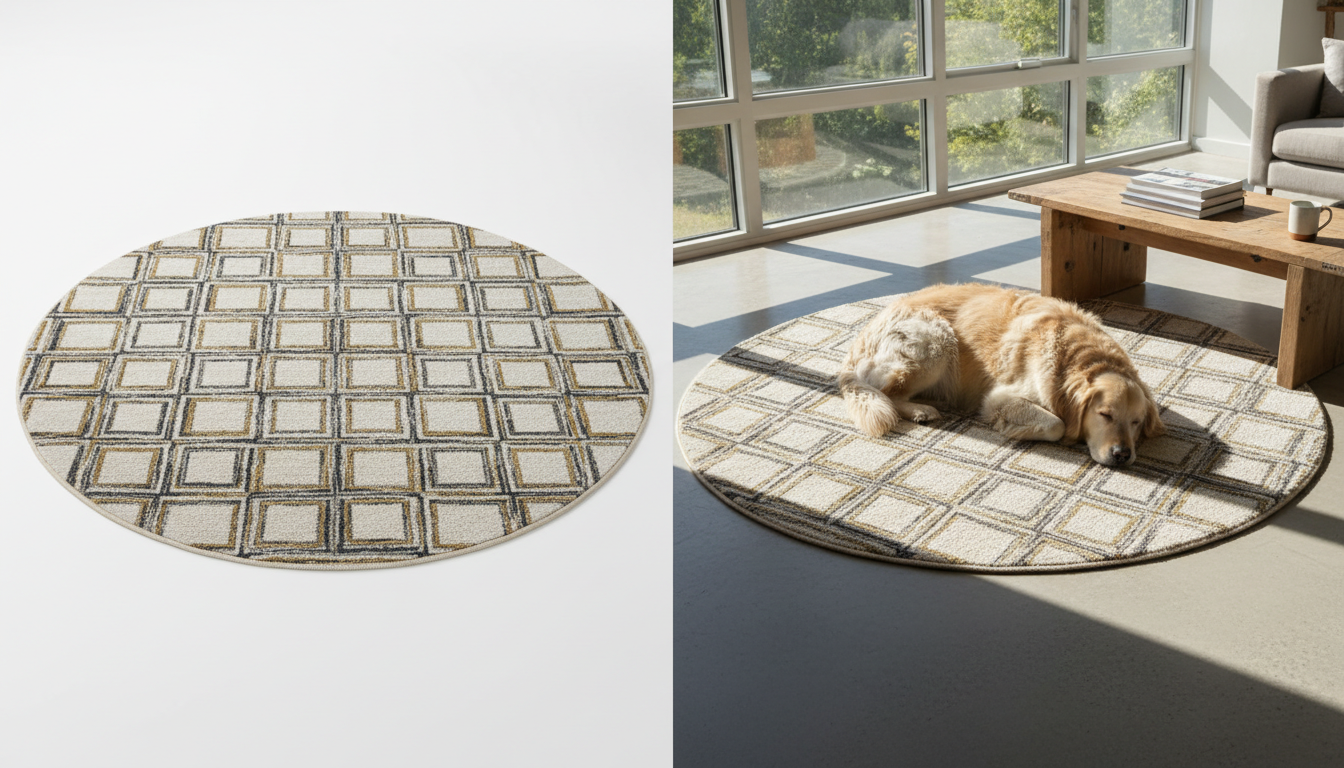
The Gallery of Lessons: Why 2026 is the Year of the Informed Aesthetician
The digital marketplace has evolved. We are no longer simply clicking “add to cart” on a thumbnail image; we are curating legacies for our homes. Yet, even with advanced AR visualization, the distance between a high-resolution render and the tactile reality of a hand-knotted weave can be vast. To master how to buy a rug online in 2026, one must look at those who have already navigated these waters—those who turned potential disasters into design triumphs.
Through these eight chronicles, we explore the intersection of technology, textile science, and personal style, ensuring your next acquisition from thebohorugs.com or any premium boutique is a calculated success.
1. The “Sunlight Saboteur” in a Los Angeles Studio
Elena, a freelance creative in Silver Lake, fell in love with a “Cool Alabaster” wool rug for her south-facing studio. On-screen, it appeared crisp and clinical. However, she failed to account for the Light Reflectance Value (LRV) of her bright white walls and the intense California sun. When the rug arrived, the warm afternoon light transformed the cool fibers into a distracting buttery yellow.
The Fix: Elena utilized the rug sample guide method, ordering three 6×6 swatches of different undertones. She realized that in a high-sun environment, she needed a rug with a slight blue or grey base to counteract the warmth of the natural light. Her final choice? A muted dove-grey weave that neutralized the room perfectly.
“A rug’s color isn’t a static property; it’s a performance that changes every hour of the day. If you don’t test a sample against your specific wall paint and floor stain, you’re essentially shopping blindfolded.” — Marcus Thorne, Lead Curator at The Boho Rugs
2. The High-Traffic “Bio-Acetate” Breakthrough in Chicago
The Miller family in Lincoln Park needed luxury that could survive two Golden Retrievers. They were wary of the “plastic” feel of traditional performance rugs. They targeted the 2026 shift toward Bio-Acetate fibers—a sustainable, plant-based silk alternative that offers the sheen of viscose with the durability of nylon.
The Outcome: By filtering their search for “high-twist” construction and checking the backing for low-VOC adhesives, they secured a rug that looks like a museum piece but cleans up with a simple damp cloth. They avoided the common mistake of buying a delicate silk rug for a mudroom-adjacent living area.
When viewing online photos, look for a shot of the rug folded or “pinched.” If you can see the white foundation threads (the “grin”) through the pile, the knot density is low. For 2026 standards, high-value rugs should show a dense, consistent face even when flexed.
3. The “Rug Island” Rescue in a Toronto Open-Plan Loft
Julian made the most frequent error in the book: he prioritized price over scale. He bought an 8×10 for his expansive industrial loft, thinking it would be “enough.” Instead, his sofa and armchairs sat completely off the rug, creating a disjointed “island” effect that made the room feel smaller and cluttered.
The Strategy: Julian returned to the tips for buying area rugs online and used the “Painter’s Tape Trick.” He taped out the dimensions of a 10×14 rug on his concrete floors. Seeing the physical boundary helped him realize that the front legs of all his furniture needed to be anchored on the rug to unify the space. He swapped his purchase for an oversized flat-weave from thebohorugs.com, instantly grounding the room.
4. Mastering the Sage Green Spectrum in London
A couple redecorating their Kensington townhouse struggled with the “digital distortion” of green. They wanted a specific sage to match their Farrow & Ball walls, but every online photo looked different. Some appeared minty; others looked like olive drab.
The Solution: They looked for “customer-uploaded photos” in reviews rather than professional studio shots. Studio lighting is often 5000K (Daylight), which can bleach out subtle undertones. By finding a review photo taken in a “moody” English living room, they saw the rug’s true personality. They also checked the rug sample guide to see if the manufacturer offered physical yarn pom-poms, which are far more accurate than digital pixels.
5. The “Tactile Trap” of a Manhattan Bedroom
In a quest for comfort, Chloe ordered a high-pile “shag” rug online without investigating the fiber composition. While it looked plush in the photos, the 100% polyester fibers felt synthetic and “crunchy” underfoot—the opposite of the luxury experience she wanted for her primary suite.
The Lesson: Chloe learned that for a bedroom, material integrity is paramount. She pivoted to a hand-loomed New Zealand wool and Tencel blend. These natural fibers offer a “bounce-back” quality and a soft-touch finish that synthetics cannot replicate. Her mistake cost her a $200 return shipping fee, a price she could have avoided by reading the “fiber specs” more closely than the “beauty shots.”
6. The Sustainability Statement in an Austin Eco-Home
The 2026 buyer is deeply concerned with what lies underneath the rug. David wanted a rug for his nursery but feared off-gassing from synthetic latex backings. He spent weeks researching how to avoid rug buying mistakes online regarding toxicity.
The Success: He found a collection of GOTS-certified organic cotton and vegetable-dyed wool rugs. He bypassed the “big box” retailers and sought out artisanal sources like thebohorugs.com that provide transparency regarding their weaving process in the Atlas Mountains. The result was a zero-VOC environment that felt as good as it looked.
Unsure about a rug’s true color? Pull up the product photo on your phone and hold a piece of standard white printer paper next to the screen. This helps your eyes calibrate to the “white balance” of the photo, revealing hidden yellow, pink, or blue undertones in the rug’s fibers.
7. The Dining Room “Chair-Slide” Challenge in Seattle
Liam bought a beautiful, thick-pile Persian reproduction for his dining room. Within a week, he realized his mistake: the chairs wouldn’t slide, and the heavy pile caught every crumb. It was a functional nightmare disguised as an aesthetic dream.
The Pivot: He moved that rug to the den and opted for a low-profile, “tight-loop” construction for the dining area. He specifically looked for hand-knotted techniques where the pile height was less than 1/4 inch. This allowed for easy chair movement while still providing the sophisticated “grounding” the room required.
8. The “Visual Weight” Victory in a Miami Penthouse
A designer working on a minimalist penthouse faced a challenge: a room with floor-to-ceiling glass and thin-profile Italian furniture. A heavy, dark rug would have felt like a “black hole” in the center of the room. She needed something with “visual transparency.”
The Discovery: She utilized an AR (Augmented Reality) try-on app to test different patterns. Surprisingly, a large-scale, low-contrast geometric pattern worked better than a solid color. The “visual weight” of the pattern balanced the lightness of the furniture. By using the visualization tools now standard in 2026, she avoided a boring “safe” choice and landed a “statement” piece that defined the home’s luxury status.
Navigating the Path Forward
The common thread in these stories is a shift from passive browsing to active investigation. Buying a rug online in 2026 is no longer a gamble if you leverage samples, understand your room’s unique lighting, and prioritize fiber quality over mere appearance. Whether you are looking for a heritage piece or a modern performance weave, the tools to succeed are at your fingertips—starting with the curated, transparent collections at thebohorugs.com.
Elevate Your Space
Discover the artistry of handmade luxury. Each rug is a masterpiece of tradition and modern design.
Expert Q&A
How do I ensure the rug color matches my wall paint?
Always order a physical sample first. View the sample at floor level at three different times of day—morning, noon, and evening—as the color temperature of natural light changes drastically, affecting how the rug’s undertones interact with your walls.
Is it worth paying for rug samples?
Yes. In 2026, the cost of a $25 sample is a fraction of the $300+ return shipping fee for a full-sized area rug that doesn’t work. Most high-end retailers will credit the sample cost toward your final purchase.
What should I look for in zoom-in product photos?
Look for the ‘fringe’ or the edge binding. On high-quality rugs, the fringe is an extension of the foundation (the warp), not sewn on later. Also, look for ‘abrash’ or slight color variations, which indicate natural dyes and authentic wool.
How do I calculate the right size without a rug present?
The ‘Front-Legs-Only’ rule is a classic: at least the front 12 inches of all seating should rest on the rug. Alternatively, for a grander look, ensure the rug extends 18-24 inches beyond the furniture’s perimeter.
What is the best fiber for high-traffic online purchases?
New Zealand wool remains the gold standard for online buyers. It is naturally stain-resistant, incredibly durable, and its appearance in photos is the most consistent with the physical product.
How do I read reviews to spot red flags?
Filter for reviews with photos. Look for comments regarding ‘shedding’ and ‘off-gassing.’ If multiple buyers mention a ‘chemical smell’ or ‘excessive fuzz,’ the rug likely uses low-grade synthetic adhesives or fibers.
What is ‘Rug Mapping’ in AR apps?
Rug Mapping is a 2026 tech feature that allows you to see how furniture shadows and room lighting will interact with the rug’s texture digitally. It is much more accurate than standard 2D overlays.
How do return policies work for oversized rugs?
Many retailers offer ‘White Glove’ returns for a fee, where they pick up and re-wrap the rug. Always check if ‘Restocking Fees’ apply, as these can range from 10% to 25% of the rug’s price.
Can I trust ‘Power-Loomed’ descriptions?
Power-loomed rugs are great for budget-friendly designs, but ensure they are made from polyester or recycled PET rather than polypropylene if you want a softer, less ‘plastic’ feel.
How long does it take for an online rug to flatten?
Most rugs take 24 to 72 hours. To speed this up, back-roll the rug (roll it in the opposite direction) and place heavy books on the corners. If it hasn’t flattened in a week, it may have a structural defect.
Written by TheBohoRugs Interior Design Team
Experts in handmade rugs, boho interiors, and modern home decor.