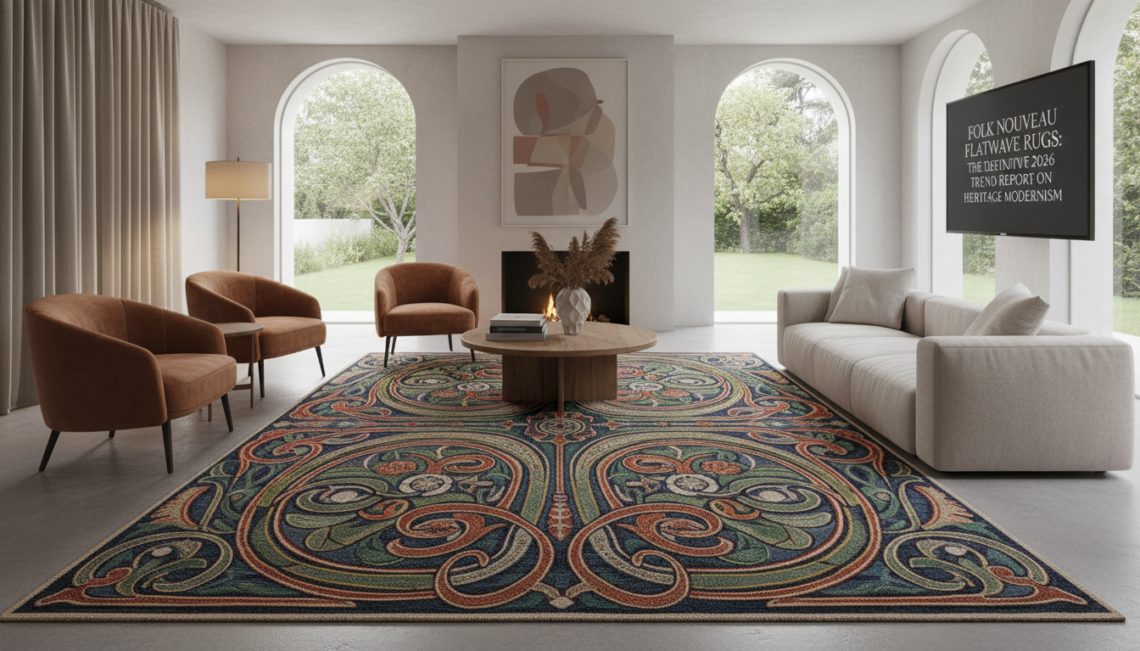
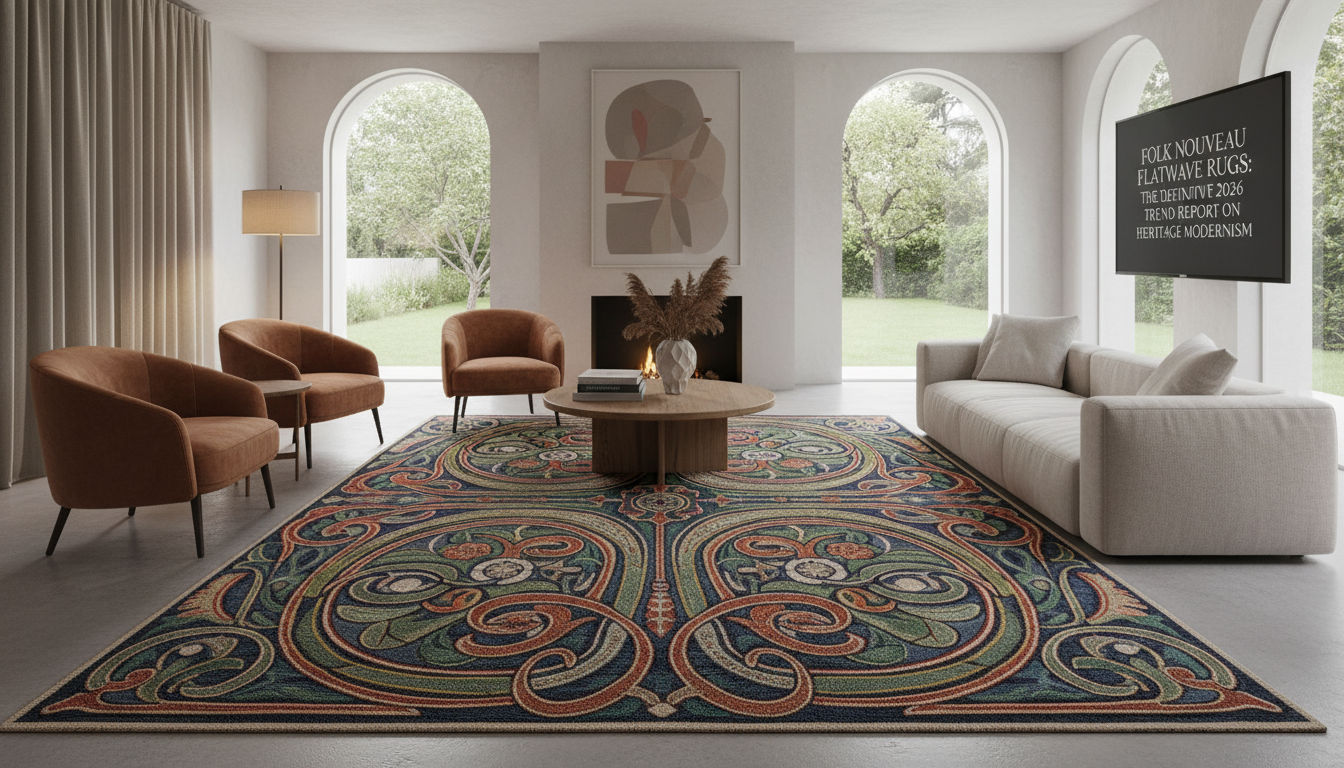
As we pivot away from the clinical minimalism of previous years, 2026 marks a profound return to artisanal storytelling. At the heart of this movement are Folk Nouveau flatweave rugs—textiles that marry the raw, geometric honesty of traditional folk art with the fluid, organic ornamentation of the Art Nouveau period. This trend report examines how these pieces transcend mere floor coverings, acting as historical narratives woven into the very fabric of contemporary living, ultimately redefining ‘Art for the Floor’.
“Folk Nouveau flatweave rugs are a 2026 interior design trend characterized by the fusion of traditional ethnic motifs and the sinuous, nature-inspired lines of Art Nouveau. These rugs are distinguished by their low-pile, hand-woven construction, utilizing high-quality wool or hemp to create durable, expressive floor art that anchors modern spaces with heritage and warmth.”
The Roadmap
Table of Contents
- The Evolution of the Aesthetic: From Heritage Craft to Modern Luxury
- Defining Characteristics of the 2026 Folk Nouveau Palette
- The Materiality of Flatweaves: Why Durability Meets Design
- Styling Folk Nouveau in Maximalist and Minimalist Spaces
- The Sustainability Factor: Artisanal Production and Low Impact
- Folk Nouveau vs. Traditional Kelims: Understanding the Nuances
- Integrating ‘Art for the Floor’ in Open-Plan Architecture
- The Investment Value: Why Heritage Rugs are the Antidote to Fast Decor
The Evolution of the Aesthetic: From Heritage Craft to Modern Luxury
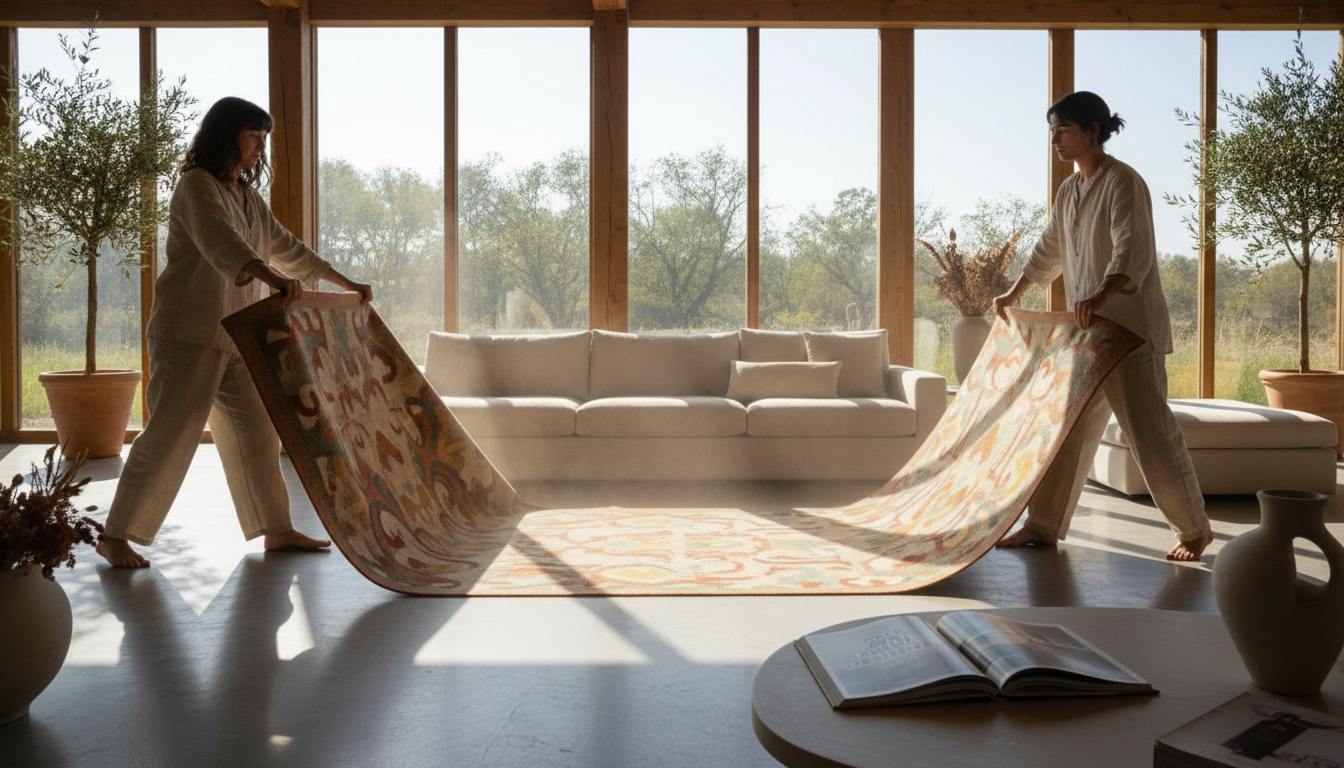
The Symbiosis of Ancestral Motifs and Organic Fluidity
As we approach 2026, the interior design landscape is distancing itself from the clinical austerity of “minimalist chic” in favor of spaces that pulse with historical narrative. At the heart of this movement is a reimagining of the loom, where the structured geometry of traditional kilims merges with the sinuous, botanical lines of the Art Nouveau era.
The visual language of Folk Nouveau flatweave rugs is defined by this delicate tension. We are seeing a departure from the rigid diamonds of the past; instead, 2026’s most coveted pieces feature “living” borders—asymmetrical vines and soft floral abstractions that appear to grow across the floor, grounded by the earthy, tactile durability of a classic flatweave construction.
The 2026 Materiality: Luxury in the Raw
True luxury is no longer measured by the height of a pile, but by the integrity of the fiber. The 2026 evolution of this aesthetic prioritizes “low-intervention” textiles. Designers are increasingly sourcing pieces that utilize hand-spun highland wool and non-toxic, botanical dyes to achieve a muted, sun-drenched patina from day one.
Specific artisanal details to watch for in the coming seasons include:
- Oxidized Wool: Creating subtle high-low textures without adding bulk.
- Lanolin-Rich Finishes: Providing a natural luster and inherent stain resistance.
- Exposed Selvedges: Highlighting the hand-loomed nature of the piece as a mark of authenticity.
For those seeking to anchor their interiors with these specific characteristics, curated collections like those found at thebohorugs.com exemplify this shift toward high-craft, heritage-driven flooring that bridges the gap between ancient technique and contemporary silhouette.
Curating the Modern Heirloom
The resurgence of Folk Nouveau flatweave rugs signals a broader cultural shift toward “cluttercore” refinement—a way to embrace maximalist storytelling without sacrificing the clean lines of modern architecture. These rugs serve as the primary “character piece” in a room, offering a chromatic depth that monochromatic carpets simply cannot replicate.
- The Mixed-Media Layer: Designers are now layering these flatweaves over oversized jute or sisal bases to add warmth to expansive loft spaces.
- The Vertical Transition: Due to their lightweight nature and intricate storytelling, these rugs are increasingly appearing as textile art installations on walls.
- The Palette Shift: Expect a move toward “Heirloom Pigments”—deep terracotta, bruised plum, and sage green—replacing the stark neons and pastels of previous years.
Ultimately, the evolution into Folk Nouveau is about permanence. It is an investment in a textile that feels as though it was inherited rather than purchased, providing a soulful foundation for the 2026 home that honors the hands of the weaver as much as the eye of the architect.
Defining Characteristics of the 2026 Folk Nouveau Palette
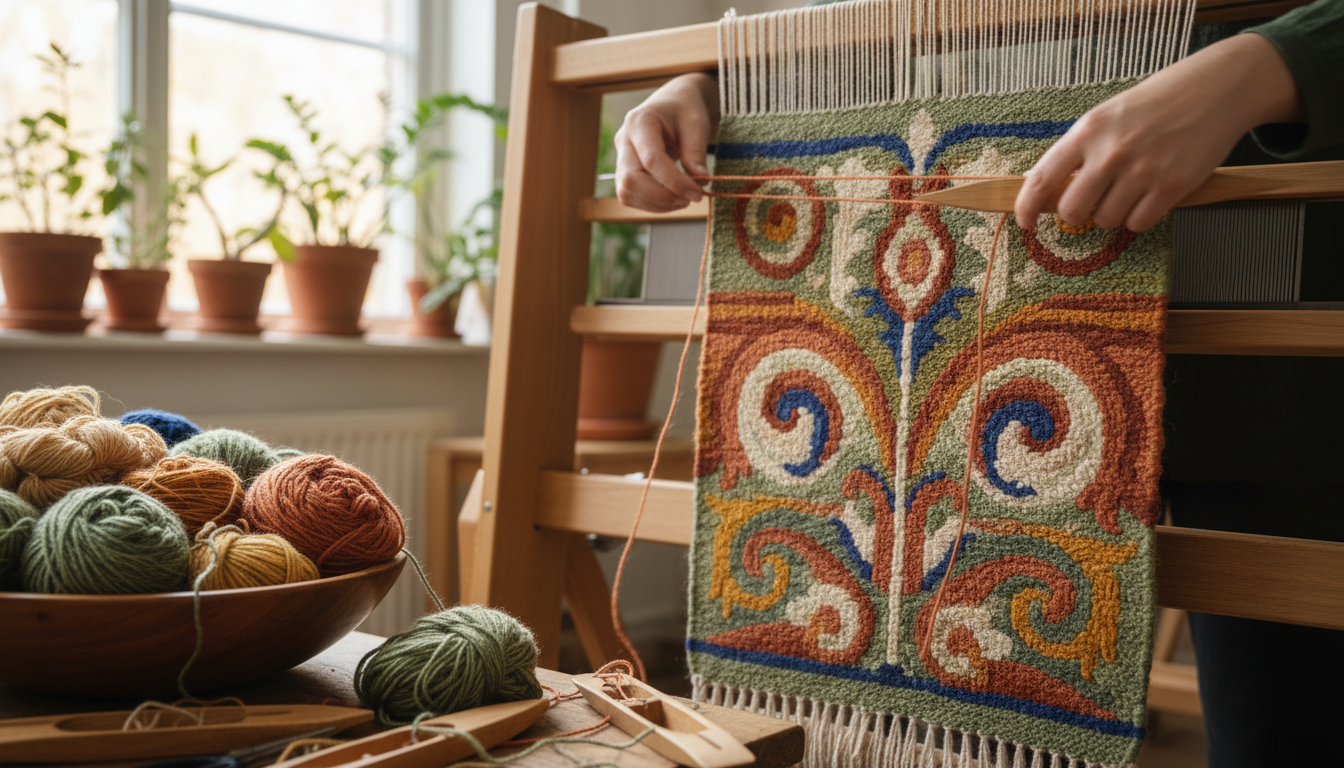
The Return of the Saturated Earth
As we approach 2026, the interior design landscape is shedding the clinical minimalism of previous years in favor of a “grounded maximalism.” The color story of Folk Nouveau flatweave rugs is anchored in what historians call the “Pigment Palette”—colors derived from the earth itself, rather than synthetic replications.
Expect to see a dominance of Madder Root red, a hue that feels lived-in and oxidized rather than jarringly bright. This is paired with “Saffron Dust” and “Raw Umber,” creating a foundation that feels both ancient and intentionally curated. These rugs act as the visual weight of a room, providing a sophisticated warmth that complements the organic textures of mid-century modern furniture.
Chromatic Sophistication: The 2026 Contrast Rules
The 2026 iteration of Folk Nouveau moves away from the high-contrast black-and-white motifs of the past decade. Instead, designers are leaning into tonal depth and “analogous layering.” The charm of these rugs lies in their ability to mix historically disparate shades into a cohesive, high-fashion textile.
- Forest & Fern: Deep, mossy greens layered against sage backdrops to mimic the forest floor.
- Oxidized Indigo: A shift from navy to a weathered, grey-blue that evokes antique linens.
- Burnt Cinnabar: A muted, brownish-red that provides a bridge between wood tones and textile accents.
The Nuance of Undyed Fibers
Perhaps the most defining characteristic of the 2026 palette is the intentional use of negative space through undyed wool. In high-end Folk Nouveau flatweave rugs, the “background” is rarely a flat white; it is a symphony of oatmeal, cream, and charcoal sourced directly from the sheep’s fleece.
This commitment to raw materials is a hallmark of the artisanal collections found at thebohorugs.com, where the natural variegation of the wool—known as abrash—is celebrated as a design feature rather than a flaw. This technique adds a rhythmic, painterly quality to the flatweave, ensuring no two pieces are identical.
Three Emerging Color Pairings for 2026
- Terracotta and Teal: A sophisticated nod to Mediterranean folk art, balancing warmth with cool, intellectual depth.
- Mustard and Slate: A reimagining of 1970s heritage, stripped of its kitsch and refined for the modern estate.
- Dusty Rose and Olive: A soft, botanical pairing that brings a sense of the “English Cottage” into a structured, architectural environment.
By prioritizing these nuanced, pigment-rich tones, Folk Nouveau flatweave rugs offer more than just floor covering; they serve as a historical anchor. In an era of digital saturation, these hand-loomed treasures from thebohorugs.com provide a tactile connection to the heritage of craftsmanship, making them the definitive investment piece for the 2026 season.
The Materiality of Flatweaves: Why Durability Meets Design
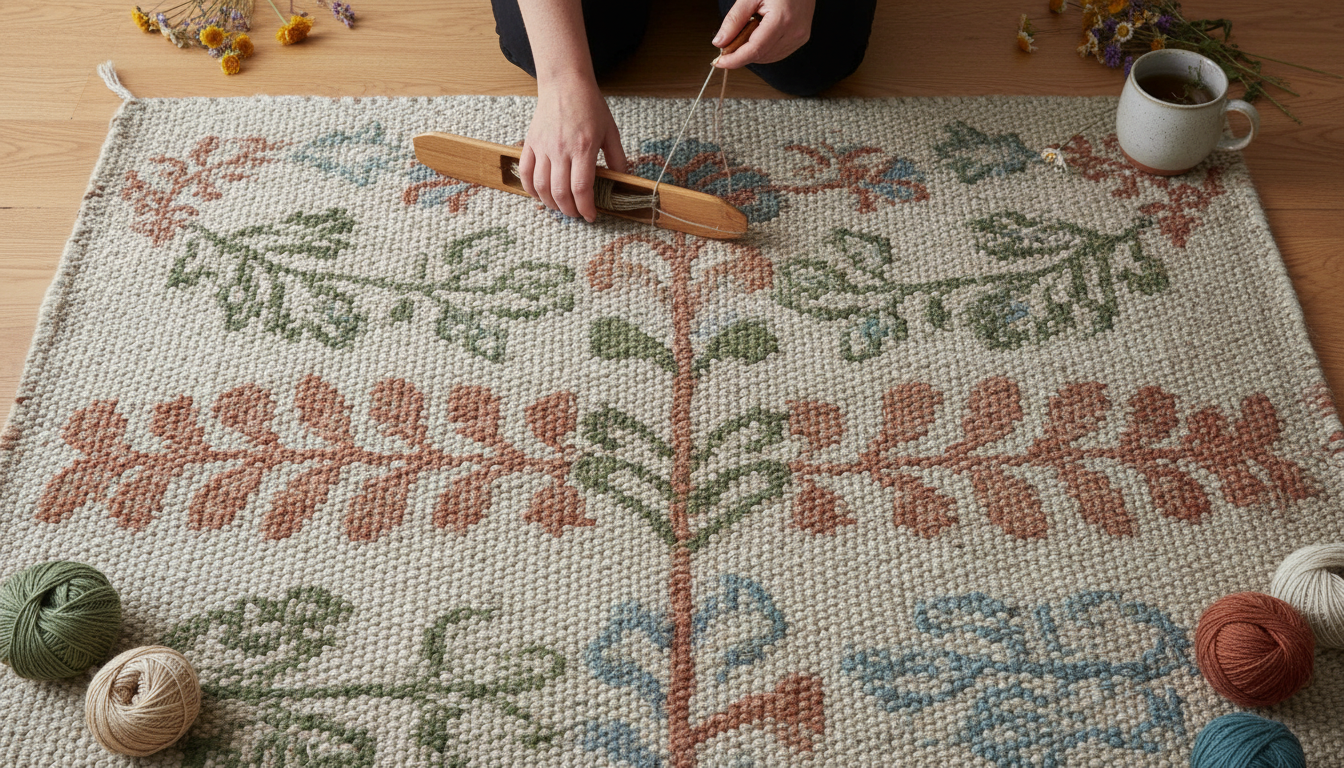
The Architecture of the Loom: Structural Integrity as Art
In the evolving landscape of 2026 interior design, the allure of the flatweave lies in its structural honesty. Unlike tufted alternatives that rely on adhesive backings, Folk Nouveau flatweave rugs are defined by a dual-sided construction where the warp and weft are inextricably linked.
This “honest weave” ensures that the rug remains breathable and incredibly resilient. By eliminating the pile, these pieces sidestep the crushing and matting that often plague high-traffic zones, offering a sleek, architectural silhouette that anchors a room without overwhelming it.
2026 Material Forecast: High-Altitude Wool and Organic Pigments
As we move toward a more conscious “slow design” movement, the industry is seeing a pivot toward hyper-localized material sourcing. The most coveted Folk Nouveau flatweave rugs entering the market in 2026 prioritize the following material innovations:
- Hand-Spun High-Altitude Wool: Rich in natural lanolin, this fiber provides a built-in stain resistance that synthetic treatments cannot replicate.
- Linen-Silk Blends: For a more refined editorial look, designers are incorporating Belgian linen into the weft to add a crisp, matte contrast to the luster of wool.
- Botanical Vat-Dyeing: Expect a palette of “terroir colors”—deep madder root reds and oxidized indigo—that age gracefully rather than fading under UV exposure.
Resilience as a Design Statement
There is a quiet sophistication in a rug that can withstand the rigors of a modern household while maintaining the aesthetic pedigree of a gallery piece. The density of the weave in premium Folk Nouveau flatweave rugs acts as a safeguard against the common wear and tear of urban living.
Collectors are increasingly turning to curated sources like thebohorugs.com to find pieces that balance this utilitarian durability with the intricate, story-driven patterns of the Folk Nouveau movement. These rugs are not merely floor coverings; they are legacy textiles meant to be passed down.
How to Identify an Heirloom-Quality Flatweave
To ensure your selection meets the rigorous standards of the 2026 heritage trend, look for specific markers of artisanal craftsmanship that differentiate a mass-produced item from a true work of art:
- The Tension Test: A high-quality flatweave should feel firm and heavy, not flimsy or prone to curling at the edges.
- The Selvedge Finish: Hand-finished edges (the sides of the rug) indicate a weaver’s attention to detail and prevent unravelling over decades of use.
- Visual Depth: Look for “abrash,” or subtle variations in color within the weave, which confirms the use of hand-dyed natural fibers rather than uniform synthetic dyes.
By prioritizing the materiality of the weave, you are investing in a design element that marries the whimsy of heritage folk art with the endurance required for the modern home.
Styling Folk Nouveau in Maximalist and Minimalist Spaces
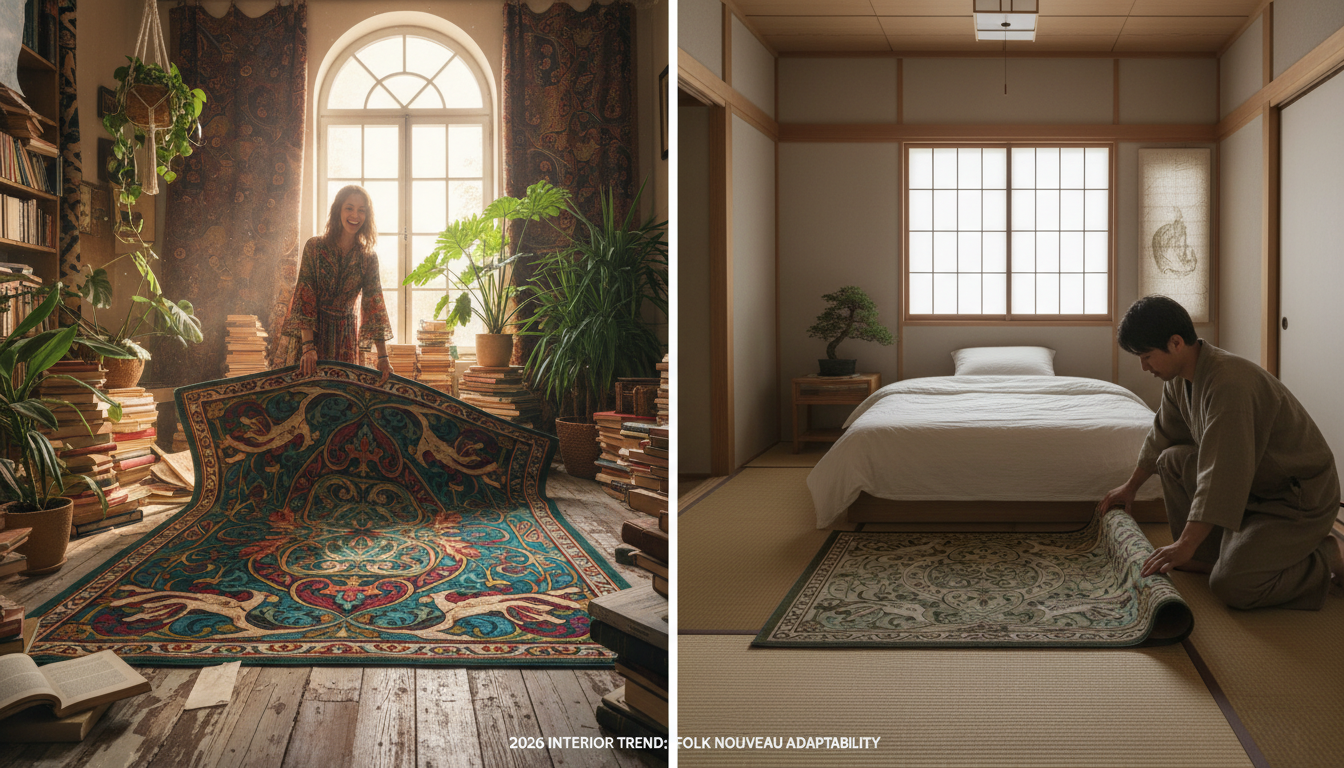
The Curated Silence: Folk Nouveau in Minimalist Enclaves
In the minimalist landscapes of 2026, the trend moves away from sterile austerity toward “Soulful Essentialism.” Here, Folk Nouveau flatweave rugs act as the singular protagonist of a room. Rather than competing with decor, the rug provides a geometric anchor that breaks the visual silence of monochromatic palettes.
For the minimalist, the appeal lies in the “calculated imperfection” of the weave. We are seeing a shift toward biomorphic folk patterns—think abstracted vine motifs or stylized avian silhouettes—set against stark, architectural backgrounds. The flatweave’s low profile ensures the transition from polished concrete or light oak remains seamless and unobstructed.
- The “Hero” Placement: Position a large-scale Folk Nouveau piece beneath a glass-topped dining table to allow the intricate central medallion to remain visible.
- The Palette: Opt for “New Neutrals” like desaturated terracotta, sage, or deep indigo to provide a sophisticated pop against white or greige walls.
- Negative Space: Ensure at least 18 inches of floor visibility around the rug to let the heritage patterns “breathe” within the modern context.
The Patterned Pulse: Orchestrating Maximalist Harmony
Maximalism in 2026 is no longer about clutter; it is about “Layered Provenance.” Designers are utilizing Folk Nouveau flatweave rugs as a foundational layer to bridge the gap between contemporary art and vintage furniture. The inherent symmetry of Folk Nouveau motifs provides a sense of order amidst a riot of color and texture.
The magic of these rugs lies in their versatility for pattern-clashing. Because flatweaves lack a heavy pile, they are the ideal candidates for the “Rug-on-Rug” technique. Placing a vibrant, storied flatweave over a larger, neutral jute or sisal base adds immediate depth and a sense of curated history to the space.
High-end curators, such as thebohorugs.com, highlight how these artisanal pieces offer a tactile counterpoint to digital-heavy lifestyles. By sourcing rugs that emphasize hand-dyed wool and traditional looms, maximalists can create rooms that feel like a private gallery of global heritage.
2026 Prediction: The Vertical Transition
We anticipate a significant movement toward utilizing Folk Nouveau flatweave rugs as textile art for walls. As homeowners seek to improve acoustic softening without sacrificing style, these lightweight weaves are being hung as “modern tapestries.” This transition highlights the intricate linework of Folk Nouveau that often gets lost underfoot.
- Headboard Alternative: Draping a narrow runner or small area rug behind a low-profile bed to add warmth and a focal point.
- The Gallery Wall: Integrating smaller 2×3 flatweaves into a larger collection of framed oil paintings and sculptural sconces.
- Furniture Draping: Using smaller, supple flatweaves as heavy throws over structural leather sofas to soften the industrial aesthetic.
Whether you are stripping back to the essentials or building a storied sanctuary, these rugs offer a rare combination of historical weight and contemporary lightness. The key for 2026 is to treat the weave not just as a floor covering, but as a piece of functional fine art.
The Sustainability Factor: Artisanal Production and Low Impact
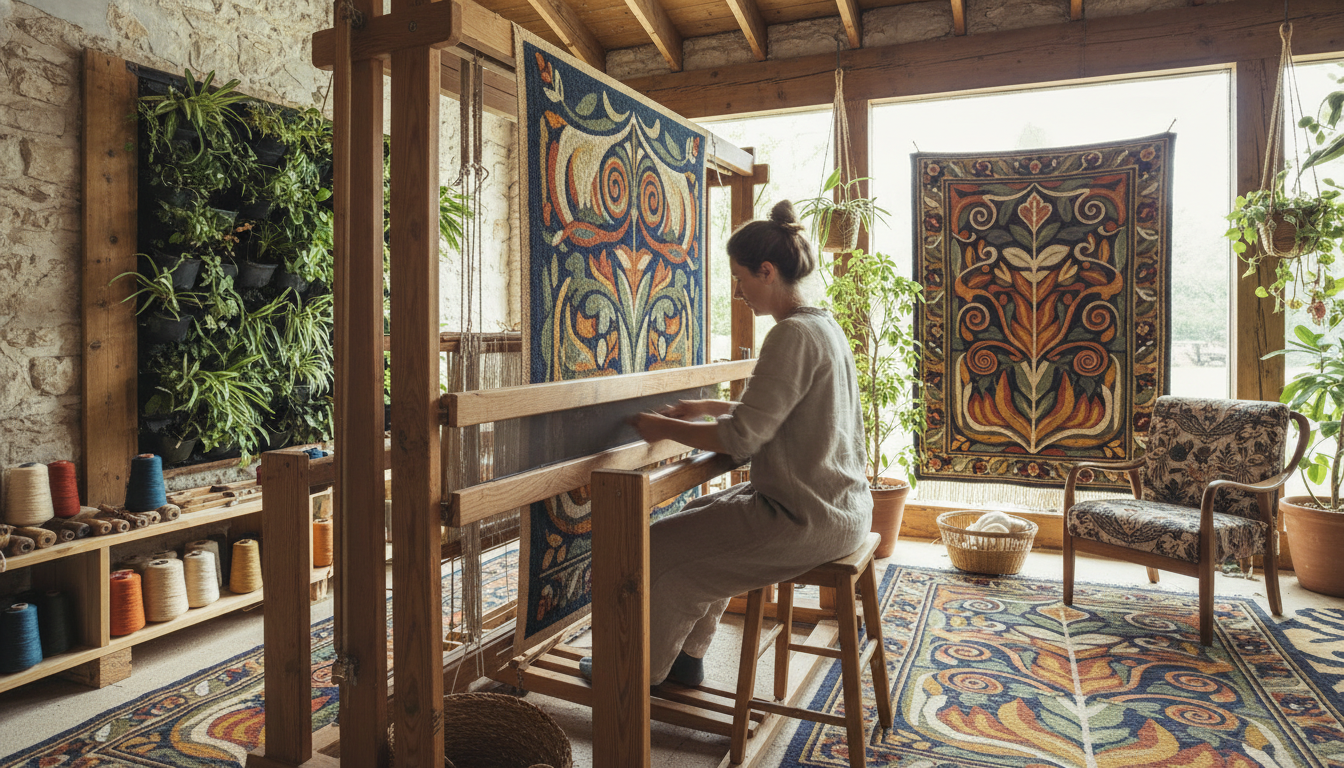
The Ethics of Elegance: Why Flatweaves Define the New Conscious Home
In an era defined by the “Quiet Luxury” evolution, 2026 marks a decisive shift toward hyper-traceability. Folk Nouveau flatweave rugs represent the pinnacle of this movement, offering a rare intersection of avant-garde design and ancestral technique. These are not merely decorative objects; they are carbon-sequestering artifacts that reject the planned obsolescence of the fast-homeware industry.
The sustainability of these pieces is rooted in their structural simplicity. By utilizing a warp-and-weft technique that eliminates the need for synthetic glues or heavy latex backings, the production process remains remarkably clean. This technical restraint is what allows the intricate, botanical motifs of the Folk Nouveau movement to breathe, unencumbered by industrial chemicals.
Hand-Loomed Heritage and the Low-Impact Mandate
As we look toward 2026, the luxury market is moving away from mass-manufactured “distressed” aesthetics in favor of genuine patina. Folk Nouveau flatweave rugs are traditionally crafted on vertical or horizontal hand-looms, a process that requires zero electricity and produces virtually no waste. Every scrap of wool or cotton is often repurposed into smaller textiles or repairs.
Key artisanal practices defining the 2026 sustainability standards include:
- Botanical Pigment Libraries: The use of pomegranate skins, madder root, and indigo to achieve the muted, earth-toned palettes characteristic of the Nouveau revival.
- Solar-Dried Fibers: Utilizing natural UV exposure to set dyes, reducing the energy consumption typical of industrial drying kilns.
- Hand-Spun Provenance: High-twist yarns that provide natural durability, ensuring the rug remains an heirloom piece rather than a disposable asset.
The 2026 Forecast: Hyper-Regionalism and Traceable Threads
The upcoming design season will see a surge in “Hyper-Regionalism,” where the value of a textile is tied to the specific village or collective that produced it. Designers are increasingly sourcing from specialized curators like thebohorugs.com, where the connection between the weaver’s workshop and the final interior space is transparent and celebrated.
We predict that the most coveted Folk Nouveau flatweave rugs of 2026 will feature “living finishes”—organic wools that retain their natural lanolin. This not only provides a built-in stain resistance, negating the need for toxic topical treatments, but also offers a tactile, sensory experience that machine-made replicas simply cannot simulate.
A Circular Investment for the Modern Interior
Unlike tufted rugs that eventually crumble and end up in landfills, a high-quality flatweave is fully biodegradable. Its longevity is its greatest environmental contribution; these rugs are designed to be flipped, washed, and passed down through generations. In the 2026 home, sustainability is no longer a buzzword—it is the very fiber of the floor we walk upon.
For those seeking to anchor their space with a piece that balances environmental integrity with high-concept design, the curated selections at thebohorugs.com provide a blueprint for the future of ethical luxury. By choosing artisanal heritage over industrial speed, the modern collector ensures that their home reflects a commitment to both aesthetic beauty and the preservation of global craft traditions.
Folk Nouveau vs. Traditional Kelims: Understanding the Nuances
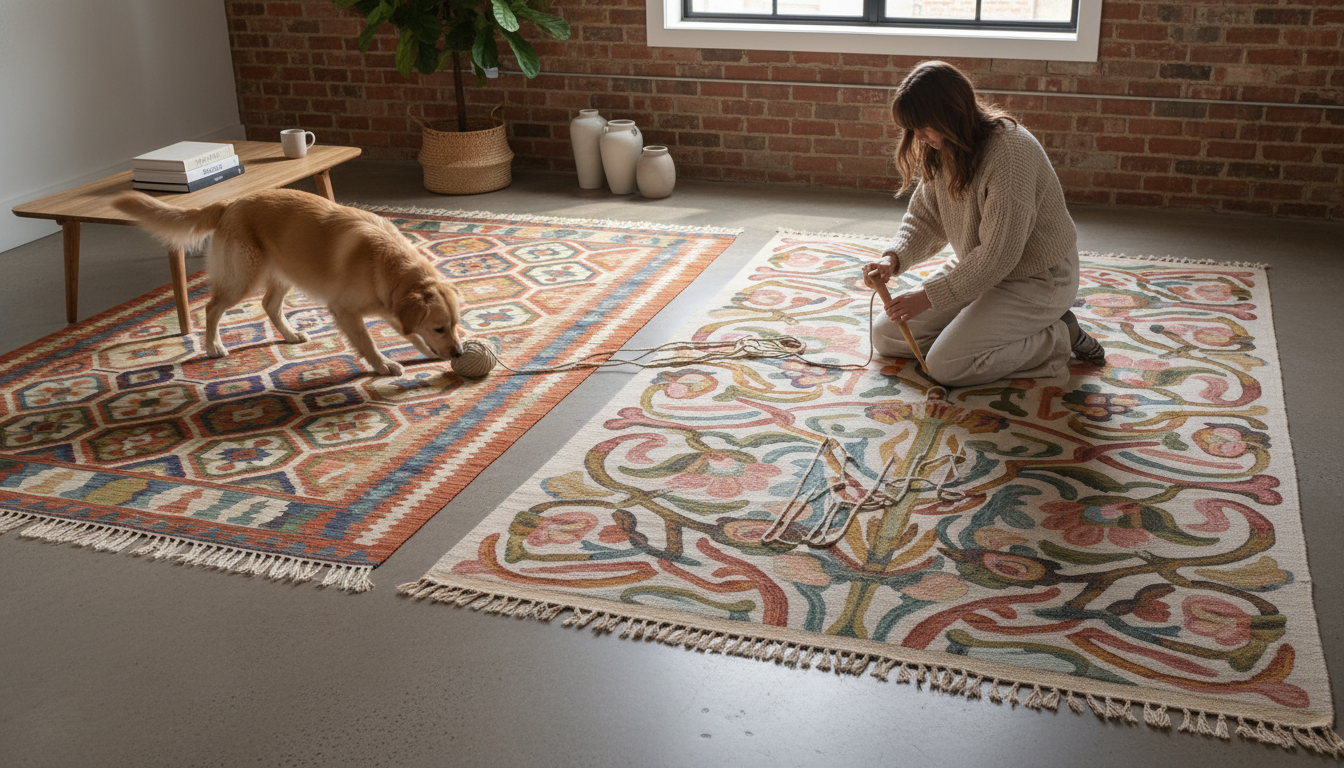
The Shift from Geometric Rigidity to Botanical Fluidity
While the traditional Kelim is defined by its sharp, angular motifs and tribal symbolism, the 2026 movement toward Folk Nouveau flatweave rugs introduces a softer, more lyrical vocabulary. This evolution marks a departure from the strict diamonds and “elibelinde” patterns of Anatolian history, favoring instead the sinuous, organic lines once championed by the Art Nouveau movement.
In these new-age textiles, the “slit-weave” technique is pushed to its artistic limit. Rather than building blocks of color, weavers are creating “painted” effects—large-scale stylized florals and asymmetric vines that appear to grow across the floor. It is a synthesis of nomadic durability and Parisian salon elegance, making it the definitive choice for the modern maximalist.
Decoding the 2026 Palette: From Earth Tones to Mineral Pigments
The distinction between heritage weaves and the Folk Nouveau aesthetic is perhaps most visible in the color story. While classic Kelims often lean into high-contrast primary reds, deep indigos, and charred blacks, the 2026 trend embraces a “desaturated luxury” palette.
- Mineral-Washed Sage: Replacing the vibrant greens of the past with a dusty, sophisticated herb tone.
- Terracotta and Ochre: Utilizing natural madders to create warmth without the aggression of bright scarlet.
- Chalky Plaster: A move toward off-white backgrounds that allow the intricate linework of Folk Nouveau flatweave rugs to take center stage.
This shift reflects a broader interior design desire for “quiet heritage”—pieces that feel centuries old but possess a tonal restraint suitable for contemporary architecture. Curated collections, such as those found at thebohorugs.com, highlight this balance by sourcing pieces where the vegetable dyes have been masterfully aged to achieve this muted, high-end finish.
Structural Nuances: Texture and Weight
Traditional Kelims are often valued for their rustic, slightly coarse handle—a testament to their utilitarian origins. In contrast, the 2026 iteration of the Folk Nouveau trend focuses on a “tapestry-grade” handle. These rugs are woven with a higher knot density and often utilize high-twist wool or silk-blends to give the surface a subtle luster.
- Thread Profile: Look for “worsted” wools that offer a smoother finish than the carded wool used in tribal flatweaves.
- Visual Weight: Folk Nouveau pieces often feature “negative space,” a design luxury rarely seen in the crowded compositions of traditional village rugs.
- Edge Finishing: Expect to see bespoke fringe detailing or whip-stitched selvedges that lean into a more tailored, editorial look.
The result is a textile that feels less like a floor covering and more like a curated artifact. As we look toward the 2026 design season, the appeal of Folk Nouveau flatweave rugs lies in their ability to honor the loom’s history while speaking the language of modern fluidism. They are not merely rugs; they are the storied foundations of a well-lived home.
Integrating ‘Art for the Floor’ in Open-Plan Architecture
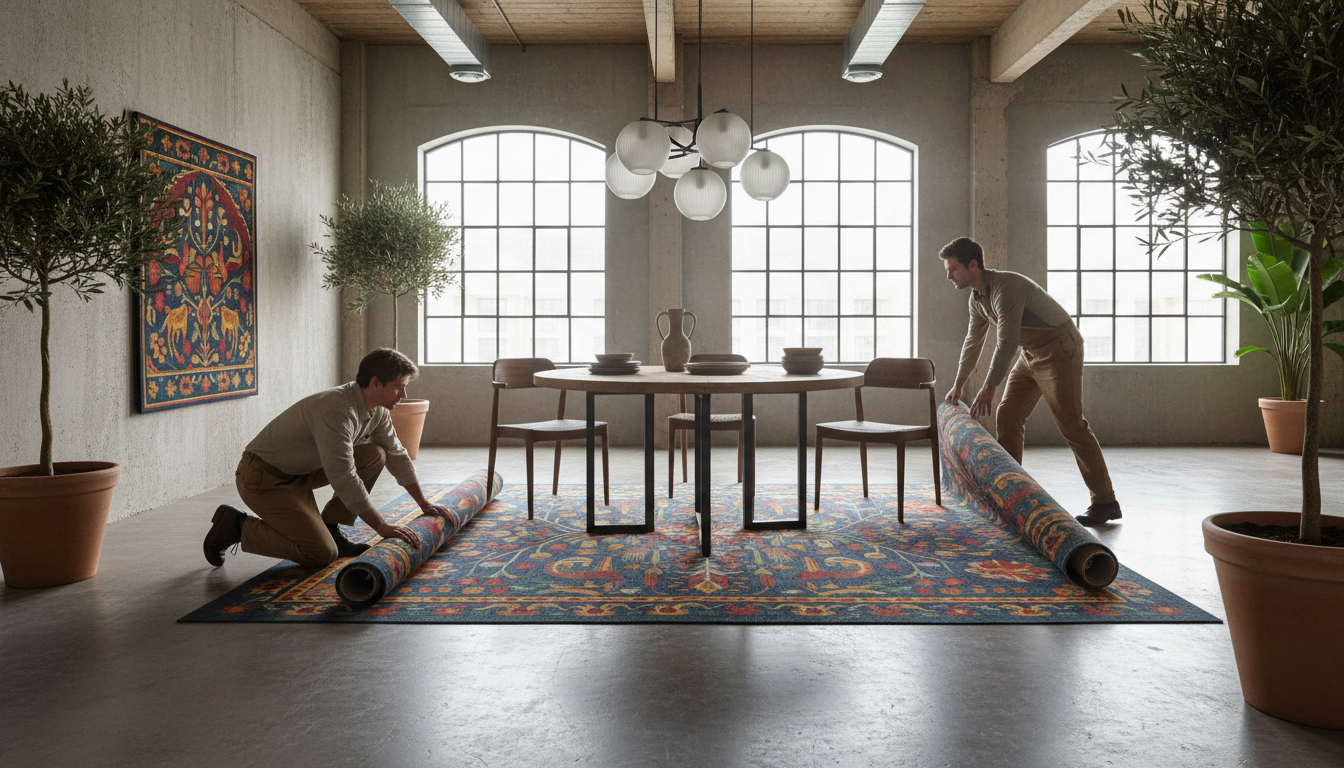
The Shift from Open Voids to Curated Vignettes
As we approach 2026, the architectural obsession with “boundless” living is undergoing a sophisticated recalibration. The cold, echoes of industrial open-plan layouts are being replaced by “Sensory Brutalism”—a style that demands warmth, narrative, and tactile grounding.
Folk Nouveau flatweave rugs have emerged as the primary tool for designers to define these expansive spaces. Unlike high-pile carpets that can feel heavy or dated, the low profile of a flatweave offers a crisp, intentional boundary that guides the eye without disrupting the architectural flow.
These pieces function as horizontal tapestries, bridging the gap between the structural rigidity of steel and glass and the human need for artisanal connection. They are no longer mere accessories; they are the “connective tissue” of the modern home.
Zoning with Narrative Geometry
In 2026, the “rug-on-rug” layering trend is evolving into a more precise science of color-blocking. Designers are using the intricate, botanical-meets-geometric patterns of Folk Nouveau to designate specific “mood zones” within a single great room.
- The Social Anchor: Using a large-scale Folk Nouveau motif to center a conversation pit, creating a sense of enclosure in a room with 20-foot ceilings.
- The Transitional Path: Employing narrow, high-contrast runners to act as “internal corridors” that direct foot traffic away from lounge areas.
- The Textural Contrast: Placing a hand-loomed flatweave atop polished concrete or reclaimed white oak to highlight the floor’s raw materiality.
The 2026 Materiality: Raw Wool and Natural Pigmentation
Predictive trends for the upcoming seasons suggest a rejection of synthetic “performance” fabrics in favor of heirloom-quality fibers. The most sought-after Folk Nouveau flatweave rugs are characterized by their use of hand-spun, high-lanolin wool which offers a natural luster and inherent stain resistance.
Color palettes are shifting away from the “Millennial Gray” era into what historians call “Earthly Opulence.” We are seeing a rise in vegetable-dyed ochres, deep madder reds, and woad blues—shades that feel pulled directly from a 19th-century botanical illustration.
For collectors looking to invest in this movement, sourcing via specialized curators like thebohorugs.com ensures access to authentic loom-work that maintains the integrity of traditional weaving techniques while meeting contemporary scale requirements.
Guidelines for Integrating Heritage Patterns
Integrating these bold, narrative textiles into a minimalist space requires a disciplined approach to balance. To master the look, consider the following structural rules:
- Scale the Motif: In large rooms, opt for oversized “macro-folk” patterns. Small, busy prints can disappear or feel cluttered in high-volume architecture.
- Honor the Negative Space: Allow at least 18 inches of exposed flooring around the perimeter of the rug to maintain the “island” effect essential to open-plan aesthetics.
- Coordinate, Don’t Match: Pull a secondary color from the rug’s weave to use in architectural accents, such as a velvet chair or a piece of ceramic art, rather than matching the primary hue exactly.
This resurgence of the flatweave marks a return to “slow design.” By treating the floor as a canvas for heritage storytelling, homeowners can transform a vacant floor plan into a residence that feels both historically anchored and radically modern.
The Investment Value: Why Heritage Rugs are the Antidote to Fast Decor
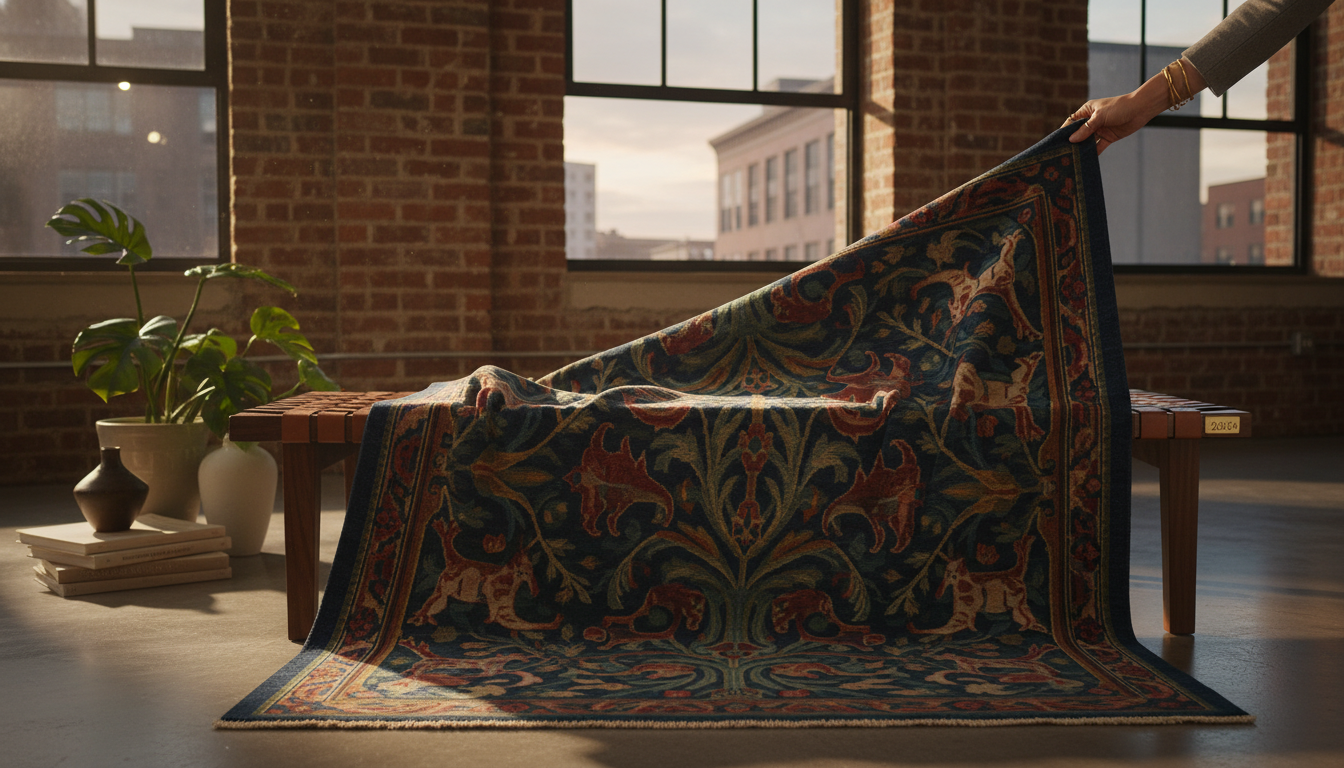
The Pivot Toward Provenance
As we approach 2026, the interior design landscape is witnessing a definitive rejection of “ultra-fast” home goods. The shift is moving away from mass-produced synthetics toward objects with a pulse—pieces that carry the weight of history and the hand of the maker.
The enduring allure of Folk Nouveau flatweave rugs lies in their ability to bridge the gap between ancestral storytelling and contemporary minimalism. Unlike their machine-made counterparts, these textiles are not mere floor coverings; they are woven chronicles that appreciate in cultural and aesthetic value over time.
Longevity as the New Luxury Metric
In the high-end market, durability is no longer just a functional requirement—it is a sustainability mandate. Experts predict that by 2026, “cost-per-use” will be the primary metric for discerning collectors. High-quality heritage rugs offer a lifecycle that spans decades rather than seasons.
- Structural Integrity: Hand-spun wool fibers possess natural lanolin, making them inherently stain-resistant and more resilient than nylon or polyester.
- Artistic Resale: Authentic flatweaves often maintain or increase their value in the secondary vintage market, functioning as a “liquid” interior asset.
- Adaptability: The low profile of a flatweave allows it to transition seamlessly between rooms, from high-traffic galleries to intimate bedrooms.
The 2026 Aesthetic Forecast: Maximalist Storytelling
While the previous decade was defined by “Scandi-neutrality,” the upcoming year celebrates the “Storied Home.” This trend prioritizes patterns that evoke emotion and curiosity. Investing in Folk Nouveau flatweave rugs is a hedge against the ephemeral, as these designs rely on geometric archetypes that have remained relevant for centuries.
We are seeing a particular interest in “New Heritage” palettes—terracotta, deep indigo, and moss green—which ground a room in a way that grey-scale minimalism simply cannot. For those seeking pieces that meet these rigorous artisanal standards, sourcing through specialized curators like thebohorugs.com ensures the rug possesses the requisite weave density and dye quality to last a lifetime.
Future-Proofing Through Craft
The investment value of heritage textiles is inextricably linked to the scarcity of the skill required to produce them. As manual weaving becomes a rarer craft, the demand for authentic Folk Nouveau flatweave rugs is expected to surge among the global design elite.
- Natural Dye Maturity: Unlike chemical pigments, vegetable-dyed wool develops a sophisticated patina, growing more beautiful with sun exposure and age.
- Carbon Footprint: A single heritage rug replaces the need for five or six synthetic rugs over a lifetime, aligning with the 2026 “Zero-Waste Interior” movement.
- Tactile Heritage: The slight irregularities in a hand-loomed piece provide a sensory richness that cannot be replicated by algorithms or robotics.
Ultimately, choosing a heritage flatweave is an act of curatorial rebellion. It is a decision to prioritize the soul of a space over the convenience of the click, ensuring that your home remains as compelling in twenty years as it is today.
Elevate Your Space
Discover the artistry of handmade luxury. Each rug is a masterpiece of tradition and modern design.
Expert Q&A
What exactly are Folk Nouveau flatweave rugs?
They are hand-woven floor coverings that blend traditional folk craftsmanship with the organic, flowing aesthetic of Art Nouveau.
How do these rugs differ from standard flatweaves?
Folk Nouveau variants focus on botanical, sinuous motifs rather than the strictly geometric or tribal patterns found in standard flatweaves.
Is the Folk Nouveau trend expected to last beyond 2026?
Yes, its foundation in heritage craft and high-quality materials ensures it remains a timeless ‘slow design’ staple.
What materials are typically used in these rugs?
Premium wool, organic hemp, and occasionally silk highlights are used to ensure durability and texture.
Are Folk Nouveau flatweave rugs suitable for high-traffic areas?
Absolutely. Their flat-woven nature makes them incredibly resilient and less prone to crushing than pile rugs.
Which color palettes are trending for 2026?
Expect ‘New Earth’ tones: muted sages, burnt sienna, deep indigo, and dusty ochre.
How should I clean a Folk Nouveau flatweave?
Regular vacuuming without a beater bar and professional cold-water cleaning for significant stains are recommended.
Can I use these rugs with underfloor heating?
Yes, flatweaves are excellent for underfloor heating as they allow heat to pass through more efficiently than thick pile rugs.
Are they pet-friendly?
Flatweaves are pet-friendly because they lack loops that claws can snag, though natural wool is the best choice for easy cleaning.
Do I need a rug pad for a flatweave?
A high-quality rug pad is essential to prevent slipping and to add a layer of cushioning to the low-profile weave.
Where are these rugs typically produced?
Most authentic pieces are sourced from artisanal hubs in Turkey, India, and the Balkans where weaving traditions are preserved.
How do I distinguish a handmade Folk Nouveau rug from a machine-made one?
Look for slight irregularities in the weave and a design that is mirrored perfectly on the back of the rug.
Can these rugs be used as wall art?
Yes, their lightweight nature and intricate ‘Art for the Floor’ designs make them stunning wall tapestries.
What furniture styles pair best with Folk Nouveau?
Mid-century modern, Scandinavian, and contemporary Japandi styles complement the organic lines perfectly.
Are Folk Nouveau flatweave rugs eco-friendly?
Generally yes, as they rely on natural fibers and traditional, non-industrial weaving processes.
Do they work in minimalist interiors?
Yes, they provide a singular point of warmth and character without the bulk of a heavy carpet.
How long does it take to weave one by hand?
Depending on size and complexity, a standard 8×10 rug can take anywhere from three to six months to complete.
What is the price range for an authentic piece?
Prices vary based on size and material, but expect to invest between $800 and $4,000 for a genuine artisanal piece.
Are there custom design options available?
Many boutique rug houses like TheBohoRugs offer bespoke services to tailor the Folk Nouveau patterns to your space.
Is the design reversible?
Many flatweaves are reversible, though Folk Nouveau designs with intricate botanical details may have a designated ‘face’.
How do I prevent the edges from curling?
A proper rug pad and occasionally using rug weights or blocking can keep the edges perfectly flat.
Are they hypoallergenic?
Wool and hemp are naturally resistant to dust mites and mold, making them a good choice for allergy sufferers.
What is the cultural significance of the ‘Folk’ element?
It honors the regional storytelling and symbolic motifs of rural weaving communities across the globe.
How does Art Nouveau influence the design?
Through the introduction of whiplash curves, floral abstraction, and a rejection of rigid industrial symmetry.
Can I layer a flatweave over carpet?
Yes, though you must use a specific rug-to-carpet pad to prevent ‘creeping’ or bunching.
What sizes are most common for this trend?
Over-sized 9×12 rugs are trending for 2026 to create cohesive, grounded living environments.
Does direct sunlight fade the natural dyes?
Natural dyes have good lightfastness but will develop a beautiful ‘patina’ or slight fade over decades of direct sun.
Are Folk Nouveau rugs considered ‘Quiet Luxury’?
Absolutely; they signal a refined, educated taste that prioritizes craft over conspicuous branding.
How do they handle moisture?
Wool and hemp naturally wick moisture, but they should not be used in damp bathrooms to avoid mildew.
Why is ‘Art for the Floor’ the catchphrase for 2026?
Because it reflects the shift toward viewing home decor as a curated gallery of artisanal mastery rather than disposable utility.
Written by TheBohoRugs Interior Design Team
Experts in handmade rugs, boho interiors, and modern home decor.