

Here is the definitive truth about modern interiors: a designer rug without a calculated lighting plan is like a canvas kept in the dark. As we look toward 2026, the industry is shifting away from static, bright overhead lights toward a philosophy of ‘kinetic layering’ where light becomes a tactile tool to enhance fiber depth. The most sophisticated homes now treat rugs as 3D landscapes rather than 2D floor coverings, using specific kelvin temperatures and beam angles to pull out the hidden nuances of hand-knotted wool and sustainable bouclé. This guide explores the synergy of illumination and textile, ensuring your investment rug truly glows.
“To make your rug the focal point of a room in 2026, implement a layered lighting strategy: use warm 2700K-3000K bulbs to highlight organic tones, position floor lamps at 45-degree angles to reveal pile texture, and integrate dimmable LED strips for an ethereal floor-level glow. This combination accentuates the shadows within the weave, adding luxury and depth to your space.”
The Roadmap
Table of Contents
- The Golden Glow: Warm Beige and Brass Accents
- Minimalist Depth: Greige Rugs with Layered LED
- Earthbound Embers: Terracotta and Candlelight
- Biophilic Serenity: Sage Green and Natural Light
- Moody Masterpieces: Deep Charcoal and Directional Spotlights
- The Ethereal Ivory: Bright Ambient Layers
- Organic Industrialism: Olive Green and Track Lighting
- Romantic Softness: Dusty Rose and Diffused Glow
- The Cocoon Effect: Chocolate Brown and Warm Filaments
- Dynamic Textures: Neutral Piles with Smart Scenarios
- Technical Guide: Choosing Your Color Temperature
- Designer Checklist for Light and Shadow
The Golden Glow: Warm Beige Rugs and Golden Floor Lamps
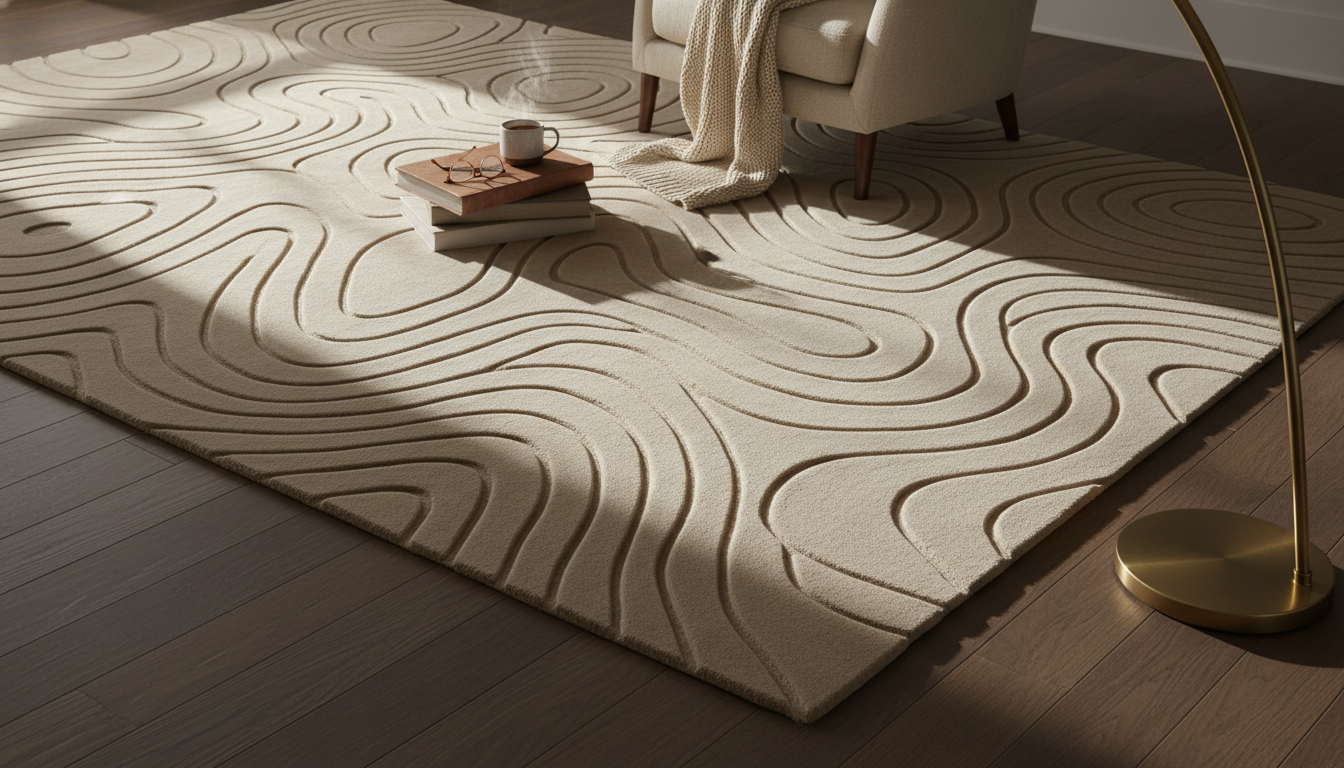
The Art of Tactile Minimalism: Why Texture Needs Direction
In the design landscape of 2026, we are seeing a definitive pivot away from “flat” minimalism toward what experts call Raw Luxe. This aesthetic relies heavily on high-relief textures—think hand-sculpted bouclé wool and unbleached organic fibers that feel as good as they look. However, a common grievance among homeowners is that a premium warm oat or sand-colored rug can look surprisingly dull once it leaves the showroom. The culprit? Static, overhead lighting that flattens the pile and washes out the subtle tonal variations of the wool.
To truly activate the three-dimensional quality of a rug from an artisanal source like thebohorugs.com, you must treat light as a directional tool. By utilizing golden-toned floor lamps positioned at varying heights, you create “micro-shadows” within the rug’s weave. These shadows are what give a room depth and that elusive, high-end editorial feel.
“Lighting is the final thread in the weaving process. Without a warm, directional glow to catch the peak of a high-low pile, you’re only seeing half of the rug’s design,” says Julianne Voss, Director of Textile Innovation.
The 2700K Rule: Mastering the Golden Hour Indoors
When styling a beige or light camel rug, the technical specifications of your bulbs are non-negotiable. For 2026, the trend is moving away from the starkness of “Daylight” bulbs toward a more cinematic, 2700K warm-spectrum illumination. This temperature mimics the “Golden Hour,” enriching the natural yellow and red undertones found in high-quality wool without making the fibers look “dirty” or “muddy.”
- Embrace the Arched Silhouette: Use a tall, brass arched floor lamp to suspend light directly over the center of the rug. This creates a focal “pool” of light that draws the eye and defines the seating area.
- Layer with Mid-Height Sconces: Don’t let the floor lamp work alone. Adding wall-mounted sconces at eye level helps bridge the gap between the ceiling and the floor, ensuring the light feels atmospheric rather than clinical.
- The Power of the Tripod: If your rug features a heavy texture, like a sculpted high-low pile, a tripod lamp with a textured linen shade provides a soft, diffused glow that prevents harsh glare on the fiber’s surface.
What to Avoid: The “Hospital Glow” Pitfall
The most frequent mistake in luxury interiors is the use of cool-toned LEDs (4000K or higher) in a space featuring warm neutrals. These bulbs effectively “kill” the warmth of a beige rug, turning a sophisticated oat hue into a sterile, bluish-grey. Similarly, relying solely on recessed “can” lights from the ceiling is a recipe for a flat room; this vertical light source creates no shadows, meaning your rug’s intricate hand-knotted details disappear entirely. Avoid dark, light-absorbing wall colors in these setups—opt for creamy taupes or off-whites that allow the golden light to bounce back onto the floor.
When selecting your rug, consider its Light Reflectance Value (LRV). Lighter beige rugs have a higher LRV, meaning they reflect more light into the room. To create a 2026 “cocoon” effect, use a rug with a lower-sheen matte wool and pair it with a brass reflector lamp. This forces the light to focus on the texture rather than bouncing off the surface, highlighting the craftsmanship of every individual knot.
Pro-Styling for Maximum Drama
If you want your living space to look like a curated gallery, introduce a small, hidden uplight behind a sofa or a large potted plant. When this light grazes the edge of a sculpted rug from thebohorugs.com, it casts elongated shadows across the floor, emphasizing the height of the pile. To double the impact, place a floor-to-ceiling mirror opposite your golden floor lamps. This doesn’t just make the room feel larger; it doubles the “glow” and ensures the rug’s texture is visible from every angle in the room.
Minimalist Depth: Greige Piles with Layered LED and Pendants
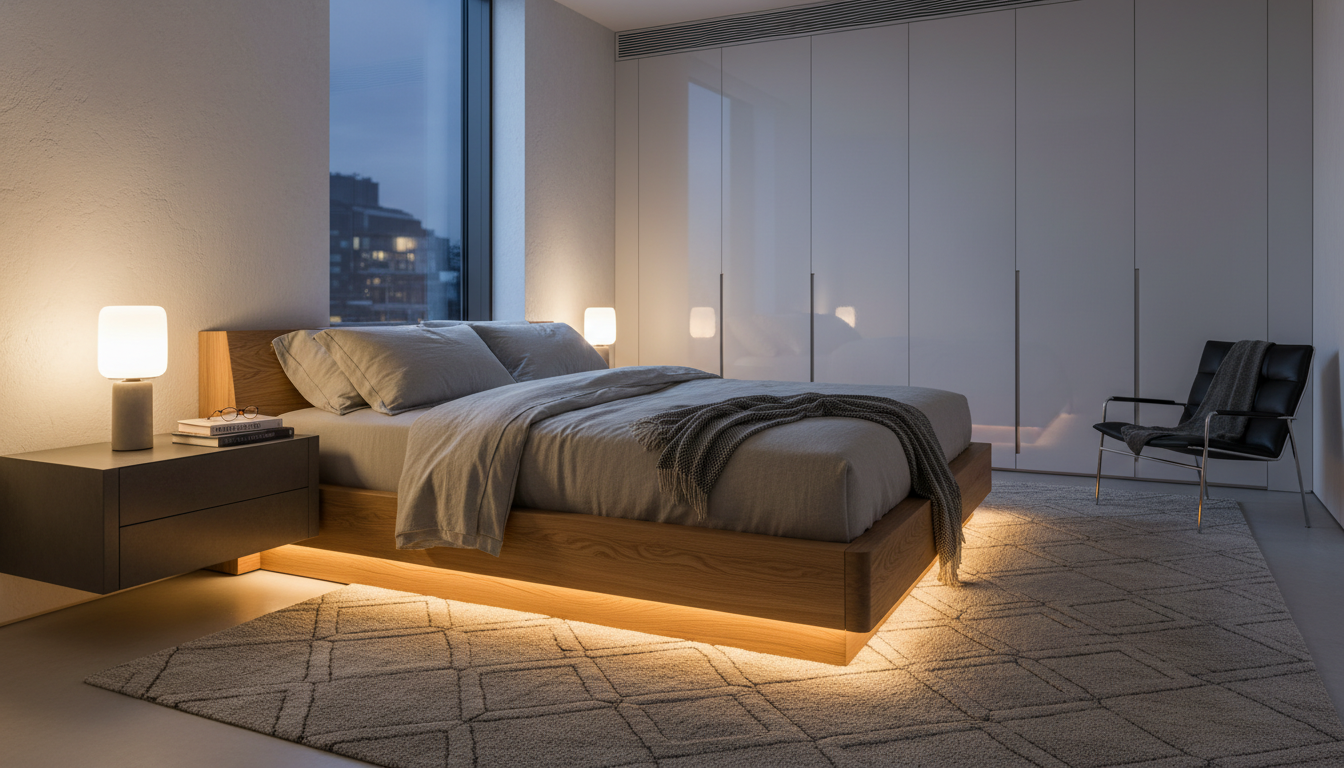
The Art of the ‘Floating’ Floor
One of the most effective ways to showcase a premium rug is to treat it like a gallery installation. By installing dimmable, warm-white LED strips under the perimeter of a bed frame or a low-slung sofa, you create a “floating” effect. This indirect light grazes the surface of the rug at a shallow angle, casting long, micro-shadows across the fibers. If you are sourcing an artisanal piece—perhaps a hand-loomed wool rug from thebohorugs.com—this technique reveals the organic “abrash” or slight color variations that make natural fibers so desirable.Mastering the Kelvin Scale
When dealing with greige, the temperature of your bulbs is non-negotiable. “Greige is a chameleon,” notes Julian Thorne, a leading Textile Historian and consultant for luxury residential projects. “It lives or dies by the Color Rendering Index (CI) of the lights around it. If you use standard 4000K office lighting, the rug looks sterile. To bring out the ‘greige’ soul, you need 3000K. It’s the sweet spot that keeps the grey crisp while pulling the hidden warmth from the beige undertones.”Curating the Visual Weight
While the LEDs do the heavy lifting for texture, modern pendants provide the “jewelry” for the room. A statement pendant hung at a slightly lower-than-average height creates a focal point that draws the eye down toward the rug’s pattern. Opt for fixtures in matte black or brushed brass; the high-contrast finish against a soft greige rug creates a grounded, sophisticated anchor for the entire space.- The Must-Do: Prioritize 3000K bulbs. This specific warmth ensures your greige rug doesn’t skew blue or yellow, maintaining that “Quiet Luxury” aesthetic.
- The Technique: Layer your light. Use the pendants for ambient mood and the hidden LEDs for “texture-tasking” to define the rug’s boundaries.
- The Palette: Keep walls in a tonal match. A wall with a Light Reflectance Value (LRV) similar to the rug (typically between 50 and 65) creates a seamless, expansive feel in smaller rooms.
- What to Avoid: Steer clear of shiny chrome or silver fixtures. In a minimalist greige setting, these can feel dated and overly cold. Natural, tactile materials like ceramic or wood-veneer lighting are far more current.
In 2026, we are seeing a significant trend toward light fixtures made from Bio-Acetate and recycled resins. When these semi-translucent materials are paired with a greige rug, they diffuse light in a way that mimics a hazy morning. For the ultimate luxury experience, pair a recycled-glass pendant with a rug that features a 15% silk or viscose shimmer to catch those soft, refracted rays.
Earthbound Embers: Terracotta Tones and Brass Table Lamps
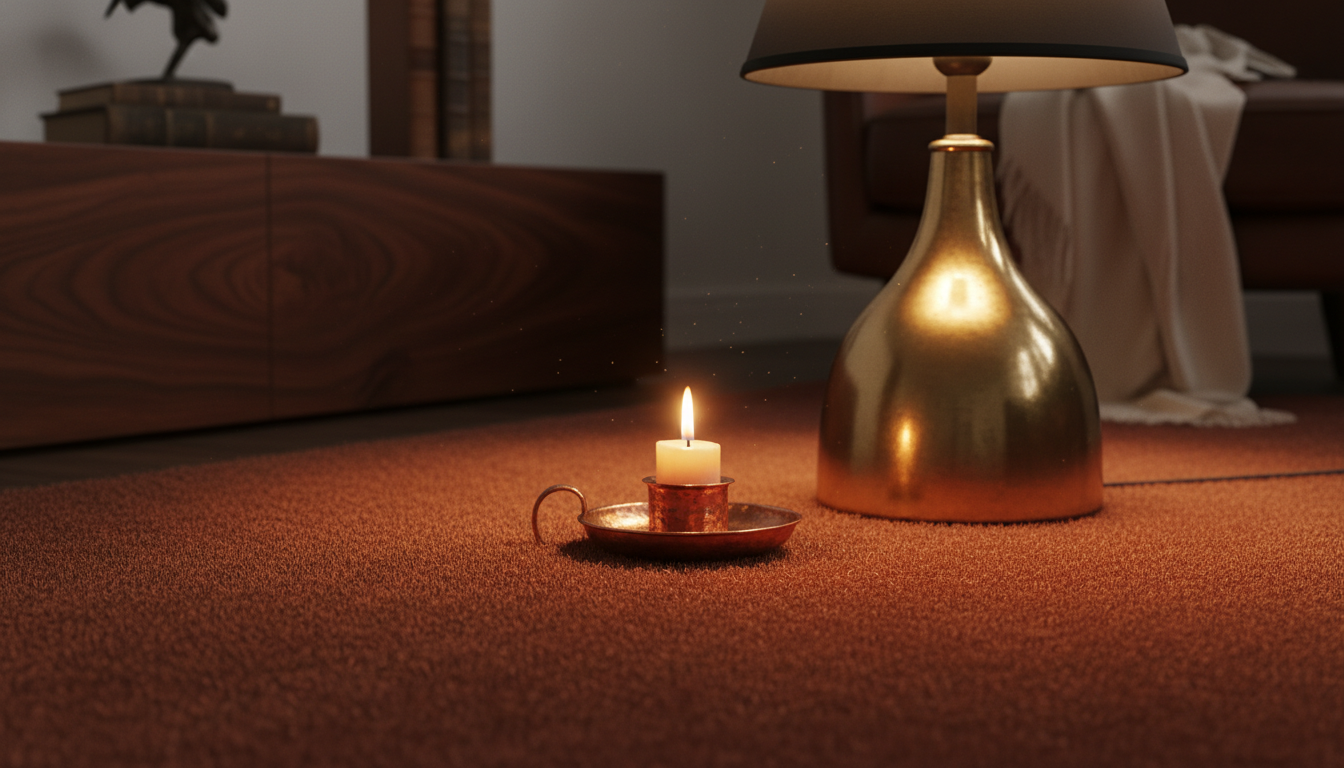
The New Mediterranean: Grounding the Room in Clay and Gold
As we move into 2026, the design world is witnessing a decisive shift away from clinical minimalism toward what we call the “Heritage Hearth” aesthetic. At the center of this movement is the terracotta rug—a piece that acts less like a floor covering and more like a foundation of raw, mineral warmth. When you source a hand-knotted piece, perhaps one using the high-twist wool techniques synonymous with artisanal collections at thebohorugs.com, you aren’t just buying a color; you’re buying a tactile history.
The challenge with these deep, sun-baked hues is their Light Reflectance Value (LRV). Terracotta pigments, particularly those derived from ochre-heavy dyes, tend to absorb light rather than bounce it. To keep the space from feeling heavy, the lighting must be intentional. This is where brass table lamps become non-negotiable. The yellow undertones of the brass act as a bridge between the rug’s earthen red and the ambient light of the room, creating a glow that feels internal rather than applied.
“Terracotta is a living color. It breathes. By pairing it with unlacquered brass, you’re creating a dialogue between the matte texture of the wool and the reflective ‘living finish’ of the metal. It’s the closest you can get to the feeling of a sunset inside a room.”
— Julian Thorne, Lead Textile Historian
The Execution: Master the Glow
To pull this look off with 2026 sophistication, you need to abandon the idea of “brightening” the room and instead focus on “warming” it. The goal is a cocoon, not a showroom.
- The Must-Dos: Deploy a series of staggered brass table lamps with 2700K warm-dim bulbs. These mimic the Kelvin scale of a fading afternoon sun. Pair the rug with dark walnut or charred oak furniture; the deep wood grain pulls the richness out of the terracotta fibers, making the rug feel more expensive and grounded.
- What to Avoid: Steer clear of “Daylight” LED bulbs or cool-toned 4000K lighting. These will turn your sophisticated clay rug into a muddy, flat orange. Likewise, avoid blonde woods like ash or bleached pine, which can make the rug feel overly rustic rather than curated and luxury.
The Extra Layer: Elevating the Atmosphere
If you want to truly push the boundaries of this setup, focus on the interplay of shadow. A single brass floor mirror placed opposite your primary light source will catch the flicker of candlelight and project it back onto the rug’s surface, highlighting the subtle variations in the pile. For a truly editorial touch, choose lampshades in a heavy linen or even a subtle terracotta silk to unify the color story from the floor to the eye line.
In 2026, top-tier designers are looking at the Light Reflectance Value (LRV) of their textiles. A typical terracotta rug has an LRV of roughly 10–15, meaning it reflects very little light. To compensate without washing out the color, use “directional pools.” Instead of one big light, use three small ones. This creates “peaks and valleys” of light across the rug, which emphasizes the craftsmanship and weave of a premium artisanal rug.
The secret to this combination is lean into the drama of the dark. By using brass as your primary metallic, you introduce a sense of “quiet luxury” that feels timeless yet perfectly aligned with the 2026 trend toward organic, earth-driven interiors.
Biophilic Serenity: Sage Green and Filtered Natural Light
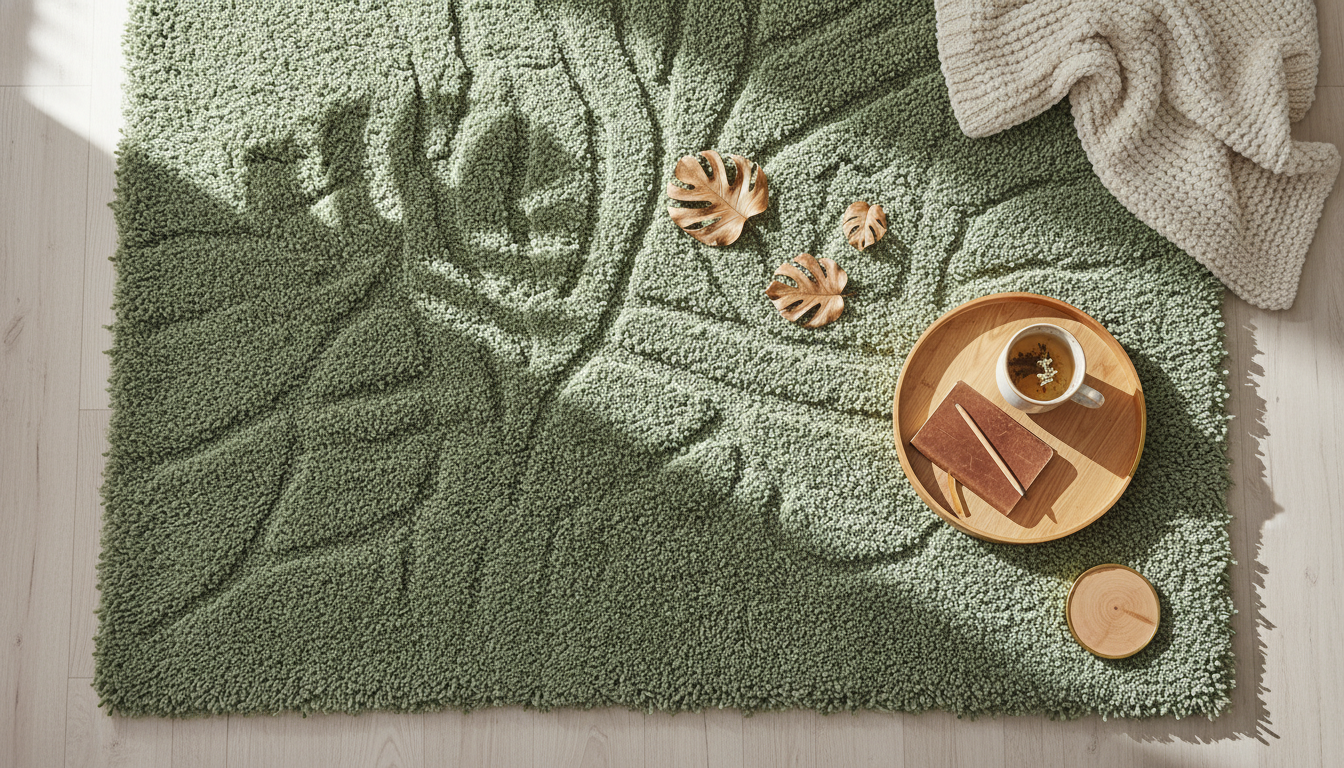
The Restorative Power of Moss and Mist
As we move into 2026, the interior design world is witnessing a profound shift toward “Restorative Minimalism.” Leading this movement is the sage green rug—a piece that acts less like a floor covering and more like a living forest floor. Unlike the high-contrast palettes of previous years, the new sage aesthetic relies on biophilic harmony, where the rug’s texture is revealed through the choreography of moving shadows and filtered sun.
The secret to mastering this look lies in understanding the Light Reflectance Value (LRV) of sage. Most high-end sage textiles sit at an LRV of approximately 42, meaning they hit a “sweet spot” that neither absorbs all light nor reflects it harshly. When you source a hand-loomed piece from thebohorugs.com, particularly those utilizing the 2026-forward shift toward Bio-Acetate fibers or high-low wool piles, the rug actually changes personality as the sun tracks across the sky. In the morning, it feels crisp and botanical; by dusk, it deepens into a moody, velvet olive.
“Sage is the ultimate chameleon of the textile world. By pairing it with diffused natural light, you aren’t just decorating a room; you’re creating a micro-climate of calm. It’s about capturing that ‘golden hour’ feeling all day long.”
— Elena Vance, Principal Colorist at Studio Veridian
Designing with the Sun: The “Dappled” Technique
To truly make a sage green rug the star, you must treat your windows as primary light fixtures. The goal is to create dappled light, mimicking the way sunlight filters through a canopy of trees. This emphasizes the architectural “high-low” shearing found in premium artisanal rugs, casting tiny, soft shadows within the pile itself.
- The Sheer Strategy: Replace heavy drapes with linen sheers. This softens the incoming light, preventing the green pigments from looking “washed out” and instead highlighting the subtle tonal shifts in the yarn.
- The Rattan Connection: Use furniture with open weaves—like rattan or cane—to cast intricate shadow patterns onto the rug surface. This adds an extra layer of visual “texture” that costs nothing but looks incredibly expensive.
- Evening Transition: Once the sun sets, transition to soft-focus corner uplights. Positioned behind a large-leaf plant like a Monstera or a Fiddle Leaf Fig, these lights project organic silhouettes across the rug, maintaining the biophilic vibe into the night.
Avoiding the “Hospital Green” Trap
The most common mistake when styling sage is the use of “cool” artificial light. Standard 4000K or 5000K LED bulbs can strip the warmth from green fibers, making them look clinical or grey. To keep the space feeling like a luxury sanctuary, always opt for Warm White bulbs (2700K to 3000K). This brings out the yellow undertones in the sage, ensuring the room feels cozy rather than cold.
For 2026, designers are prioritizing sculpted piles. If your rug has a 3D effect—where some wool is cut shorter than others—place your evening light sources at a low angle. A floor lamp that sits just 12 inches off the ground will rake light across the rug, creating dramatic micro-shadows that make a neutral sage rug look like a piece of contemporary art.
When you are ready to anchor your sanctuary, exploring the curated textures at thebohorugs.com will provide that essential foundation. Look for rugs that feature hand-knotted techniques from the Atlas Mountains; the organic “imperfections” in these weaves are specifically designed to catch the light in ways that machine-made rugs simply cannot replicate.
Moody Masterpieces: Charcoal Grey and Directional Accent Lighting
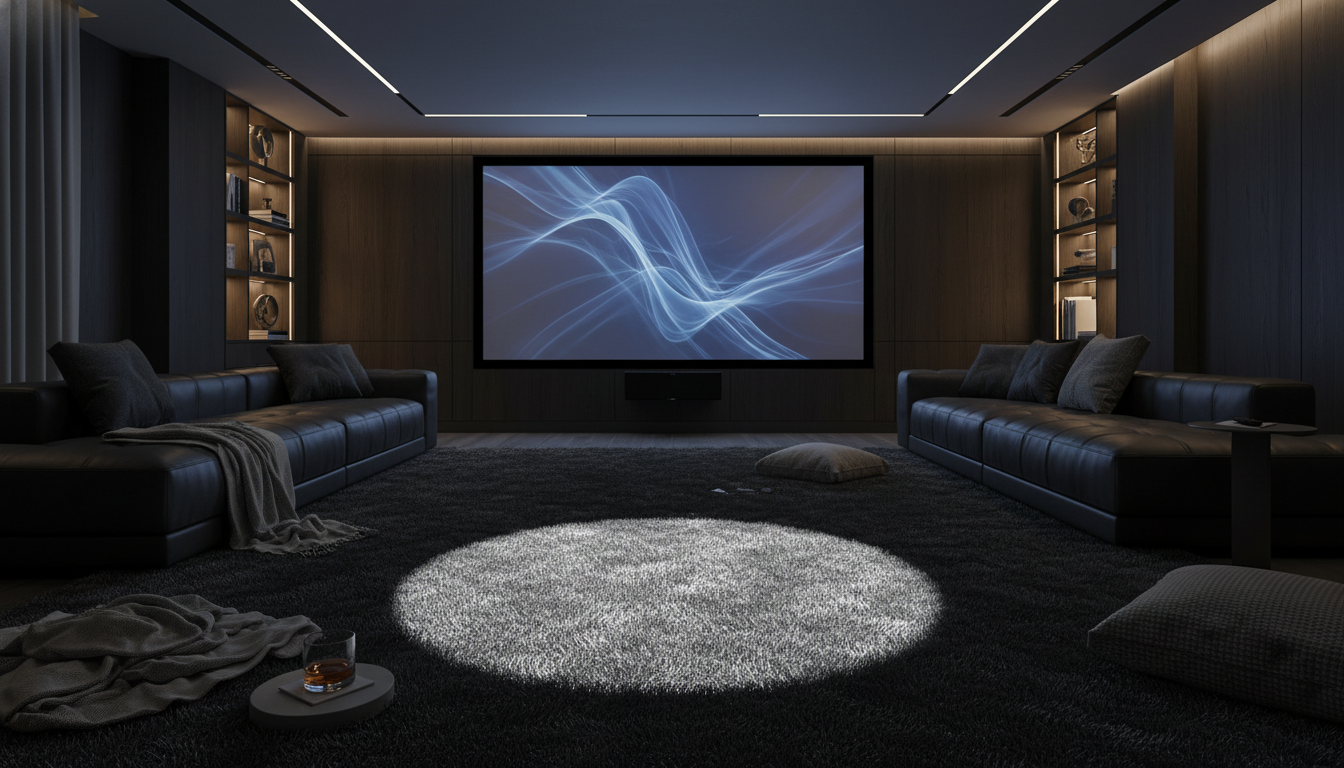
The Allure of the Obsidian Floor
There is a common misconception in high-end residential design that dark rugs shrink a room. In reality, a deep charcoal or ink-grey rug acts as an anchor, providing a visual weight that allows everything else to float. For 2026, we are seeing a pivot toward high-pile charcoal wools and sculpted “relief” patterns that mimic the charred textures of Shou Sugi Ban wood. However, because these deep tones have a Light Reflectance Value (LRV) often falling below 10, they effectively “absorb” light. Without a intentional lighting strategy, your investment becomes a shadow rather than a statement.
To bring out the architectural depth of a charcoal rug, you must treat the floor like a gallery piece. Natural light is rarely enough; the real magic happens after sunset when we can manipulate the shadows. By using directional accent lighting, you highlight the subtle shifts in the “soot” and “graphite” yarns, revealing the intricate hand-knotted craftsmanship that defines a premium piece from thebohorugs.com.
“The secret to a moody palette isn’t darkness—it’s the contrast of light within that darkness,” says Julian Thorne, Lead Interior Strategist. “When you graze a deep charcoal rug with a warm 2700K spotlight, you aren’t just seeing grey; you’re seeing the silver-blue undertones of the fiber and the physical topography of the weave. It transforms the rug from a flat surface into a landscape.”
Mastering the Directional Wash
To execute this look, move away from the “flood” mentality of overhead canisters. You want pools of light, not a deluge. Focus on these specific placements to create a cinematic atmosphere:
- The Grazing Technique: Position adjustable, dimmable spotlights or high-end picture lights to hit the rug at an angle. This creates long, soft shadows in the pile, emphasizing a plush texture.
- Warm Minimalism: Opt for warm white or “mushroom” toned walls. This prevents the charcoal from feeling cold and clinical, providing a soft backdrop that bounces light back onto the rug’s surface.
- Material Contrast: Pair the rug with rich walnut or matte black furniture. The wood grain provides a natural warmth that complements the “stony” feel of charcoal grey.
Strategic Pitfalls to Sidestep
The most frequent error in dark-room design is the use of cool-toned LEDs. Anything above 3500K will make a charcoal rug look like wet asphalt or industrial concrete. Stick to warm-spectrum bulbs to ensure the space feels like a sanctuary rather than a basement. Likewise, avoid “flat” lighting; if the entire room is evenly lit, the rug loses its mystery. You want the perimeter of the room to fall away into shadow, keeping the focus on the textured center.
For the most luxurious charcoal finish, look for rugs blending New Zealand wool with a touch of botanical silk. The wool provides the matte “moody” base, while the silk fibers catch directional light, creating a “shimmer” effect that mimics moonlight on water. This dual-reflectivity is the hallmark of a high-value interior.
Elevating the Drama
If you want to push the aesthetic further, incorporate integrated LED strip lighting beneath a floating bed frame or a low-slung Italian sofa. This creates a “halo” effect around the furniture, making the charcoal rug feel like it’s glowing from within. Finish the look with a single, bold piece of oversized art and a dedicated narrow-beam spotlight to tie the vertical and horizontal planes together. When the light hits the rug just right, the deep grey becomes the most vibrant color in the room.
The Ethereal Ivory: Bone Cream Rugs and Bright Ambient Layers
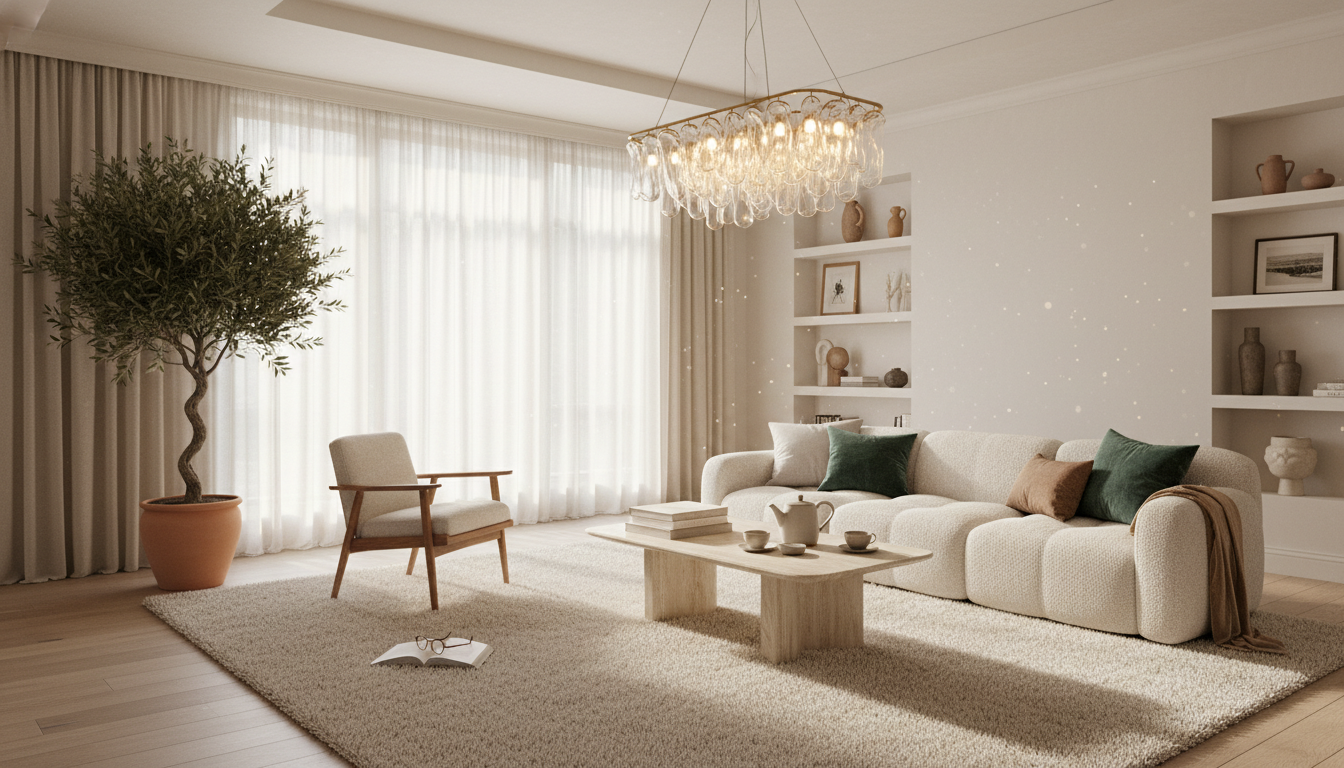
The Secret to Sustaining the “Cloud” Effect
The ivory rug is the ultimate expression of quiet luxury—a foundational piece that suggests an air of effortless maintenance and high-brow minimalism. However, in the design world of 2026, we are moving away from the flat, “hospital-white” aesthetics of the past. The goal now is to achieve what we call the Ethereal Glow. This requires a bone cream or ivory rug with a high-low relief or sculpted pile, often crafted from undyed New Zealand wool or sustainable Bio-Acetate fibers that catch the light at varying angles.
Because ivory rugs possess a high Light Reflectance Value (LRV)—often bouncing back up to 85% of visible light—they can easily become “blown out” or look two-dimensional under a single, harsh light source. To prevent your floor from looking like a sterile void, you must treat the rug as a reflective canvas. This is where bright ambient layering becomes your most powerful tool.
“The challenge with a monochromatic ivory palette isn’t the color; it’s the lack of shadow. By layering light at three different heights, you introduce depth to the fibers, making the rug feel like a living, breathing part of the architecture.”
— Elena Vance, Lead Textile Consultant at The Nordic Atelier
Mastering the Layered Glow
To make an ivory rug truly sing, the lighting must be intentional. You aren’t just trying to see; you are trying to sculpt. Start by sourcing a premium artisanal piece—perhaps a hand-knotted wool rug from thebohorugs.com—where the natural variations in the yarn provide built-in micro-shadows. Then, apply these lighting layers:
- The Ambient Layer: Use recessed ceiling lights or a central chandelier with 3000K bulbs. This temperature is the “Goldilocks” zone—warm enough to feel cozy but crisp enough to keep the ivory from looking yellow or dingy.
- The Mid-Level Layer: Place table lamps with linen shades on sideboards or end tables. The fabric of the shade diffuses the light downward, creating a soft pool of illumination that highlights the rug’s texture without over-brightening the room.
- The Reflective Layer: Position a large, floor-to-ceiling mirror opposite your primary light source. This doubles the ambient light and creates a sense of infinite space, a hallmark of 2026’s “Air-Centric” design movement.
The Essentials of an Ivory Setup
The Must-Dos:
- Embrace Organic Textures: Choose rugs with a visible grain or “high-low” pile. The physical height difference in the wool creates natural shadows when hit by angled light.
- Coordinate Your Undertones: Ensure your wall color (ideally a soft “Swiss Coffee” or “Alabaster”) matches the undertone of the rug to prevent the floor from looking “dirty” by comparison.
- Use Dimmers: Every light source must be dimmable to allow the room to transition from a bright, energetic morning space to a soft, moonlit evening retreat.
What to Avoid:
- Yellow-Toned Bulbs: Avoid 2400K–2700K bulbs here; they will turn your elegant bone cream rug into a muddy custard color.
- Dark Heavy Furniture: Bulky, dark espresso or black furniture can “anchor” the room too heavily, breaking the ethereal flow you’ve worked to create. Opt for light oak, bleached walnut, or lucite.
- The “Single Source” Mistake: Relying solely on a bright overhead light will flatten the rug’s texture, making even a high-end investment piece look like basic carpeting.
In 2026, we are seeing a surge in rugs that blend wool with vegan silk (bamboo or banana silk). These fibers have a natural sheen. If you are using a rug from thebohorugs.com that features these lustrous accents, position a floor lamp at a 45-degree angle to the pile. This “raking light” will make the silk threads shimmer like liquid metal against the matte wool base.
By treating your ivory rug as a stage for light to play upon, you transform a simple neutral room into a sophisticated sanctuary. The interplay of 3000K ambient light against a sculpted bone cream surface creates a visual softness that is both tactile and timeless.
Organic Industrialism: Olive Green and Mixed Track Lighting
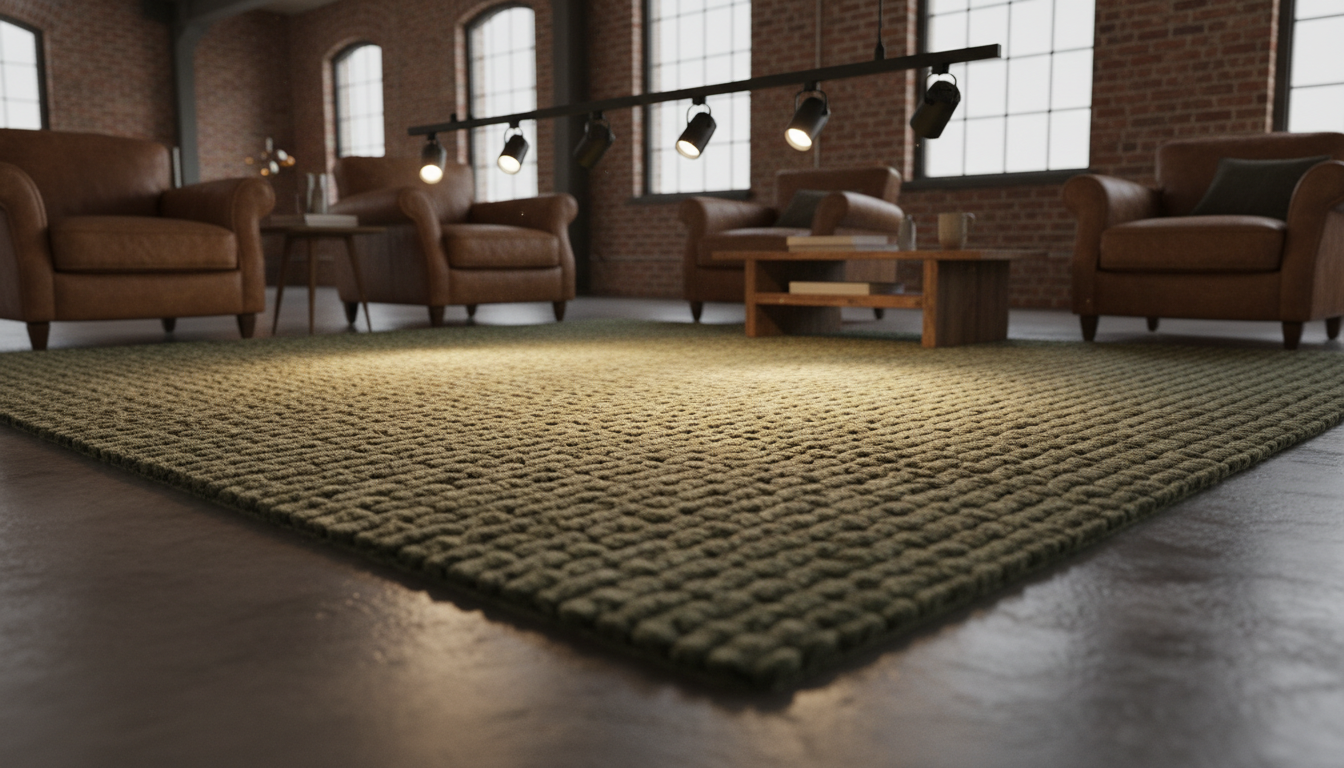
The New Earth-Tone Utility: Olive Green Meets Architectural Light
There is a specific kind of magic that happens when the raw, exposed elements of industrial architecture meet the grounding, mossy depths of an olive green rug. For 2026, we are seeing a pivot away from the cold, sterile greys of previous decades toward what designers are calling “Organic Industrialism.” This aesthetic relies on the rug to act as a living meadow within a framework of steel and glass. An olive rug, particularly one crafted from high-twist, GOTS-certified wool or a heavy jute blend, carries a Light Reflectance Value (LRV) of roughly 15 to 22. This means it doesn’t just sit on the floor; it absorbs and softens the high-intensity light common in modern lofts and open-plan spaces.
To pull this off, you need to abandon the idea that track lighting is purely functional. In this setup, we use low-profile, matte black track heads fitted with 3000K bulbs to create “hot spots” of interest across the rug’s surface. When you angle a beam across a hand-loomed olive textile—such as the artisanal pieces found at thebohorugs.com—you reveal the microscopic highs and lows of the pile, turning a flat floor into a landscape of shadows and highlights.
“Olive is the only neutral that feels like a primary color. When you hit a deep moss or forest olive with a directional 3000K beam, you aren’t just seeing green; you’re seeing the history of the dye and the tension of the weave.”
— Julian Thorne, Lead Textile Curator
Mastering the Mixed-Light Ecosystem
The secret to preventing this look from feeling like a cold gallery space is the “Mixed-Light” approach. You want the precision of industrial tracks balanced by the unpredictable, soft wash of natural daylight. During the morning hours, let the sun filter through sheer linen drapes to pull out the yellow undertones of the olive rug. As dusk falls, transition to your track system and perhaps a singular, oversized rattan floor lamp to bridge the gap between “factory” and “forest.”
- Must Do: Use dimmable, narrow-flood bulbs (25-degree beam angle) in your track heads to create “pools” of light on the rug rather than a uniform wash.
- Must Do: Pair the rug with reclaimed wood or blackened steel furniture to lean into the 2026 “raw luxury” trend.
- What to Avoid: Steer clear of “Daylight” bulbs (5000K+). They will strip the warmth from the olive green, making it look muddy or sickly rather than lush and organic.
- What to Avoid: Minimalist, flat-weave synthetic rugs. This look requires the “grit” of natural fibers—think hemp, wool, or silk-touch viscose—to catch the light effectively.
To achieve that high-end editorial shadow play, ensure your track lighting is mounted at least 18 inches away from the wall, angled at 30 degrees toward the rug. This specific geometry emphasizes the “sculptural” nature of 2026 rug trends, especially if you are using a rug with a variable pile height or “carved” detailing.
For those looking to add a layer of sophistication, consider the “Shadow Play” technique. Position a large-leaf plant, like a Monstera or a Fiddle Leaf Fig, between your primary track light and the rug. The resulting silhouette cast onto the olive surface creates a dynamic, ever-changing pattern that mimics a forest floor, perfectly capturing the essence of organic industrialism. This combination works best in rooms with high ceilings where the verticality of the light can truly be appreciated against the horizontal grounding of a premium, hand-knotted olive foundation.
Romantic Softness: Dusty Rose and Diffused Low-Level Glow
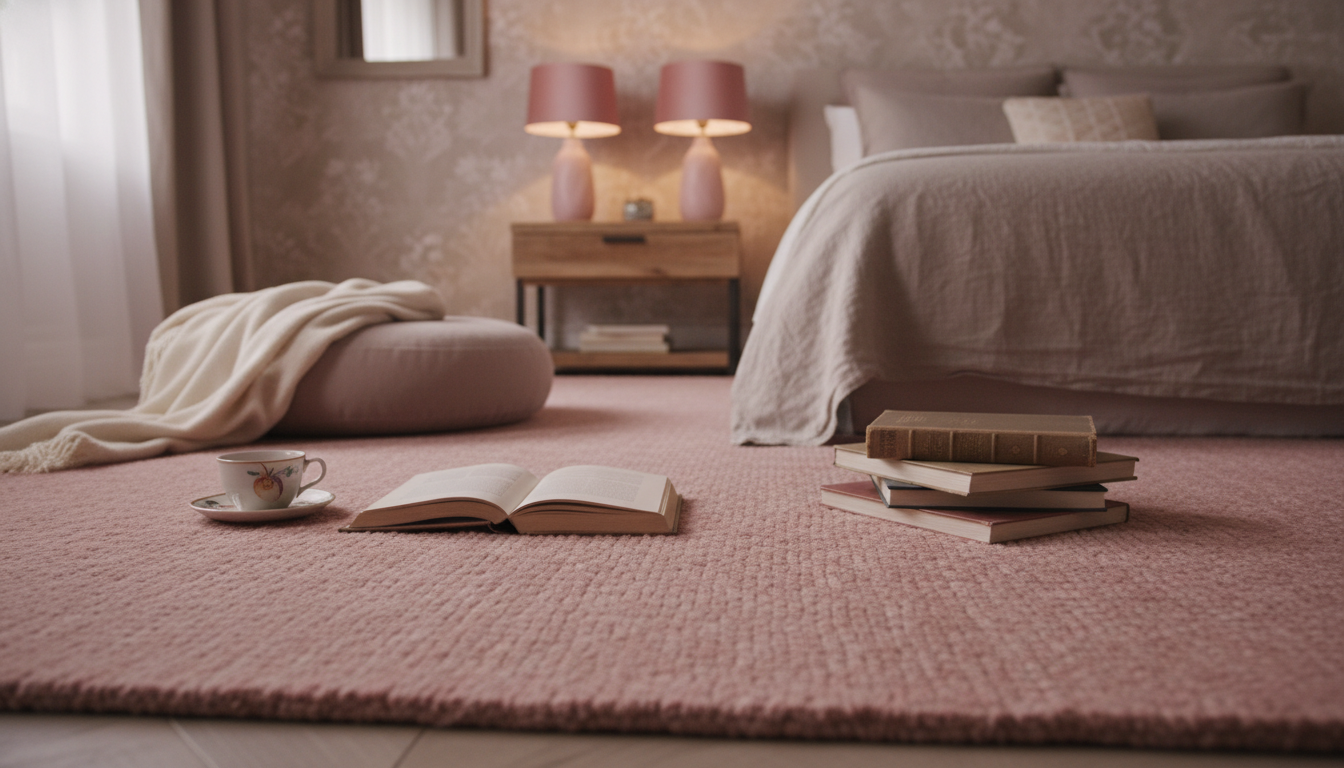
The Allure of the Mineral Palette: Rose Quartz Fibers and Incandescent Warmth
As we move into 2026, the design world is pivoting away from the “Millennial Pink” of the past decade, opting instead for what textile historians are calling “Mineral Rose.” This isn’t a sugary, synthetic shade; it is an earthy, sophisticated hue reminiscent of sun-bleached terracotta and crushed Himalayan salt. When you source a hand-knotted wool piece—particularly those utilizing traditional vegetable dyes found at thebohorugs.com—the rug responds to light with a physical depth that machine-made alternatives simply cannot replicate.
The secret to mastering this look lies in the Light Reflectance Value (LRV). A classic dusty rose rug typically sits at an LRV of approximately 38, meaning it strikes a perfect balance: it absorbs enough light to feel grounded and intimate, while reflecting just enough to prevent the space from feeling subterranean. To maximize this, we move away from “functional” lighting and toward “emotive” illumination.
“The 2026 aesthetic is defined by ‘Sensory-First Design.’ By pairing a high-pile dusty rose rug with low-frequency, warm-spectrum lighting, we aren’t just decorating a room; we are regulating the occupant’s circadian rhythm through color therapy.”
— Julianne Sterling, Lead Designer at Vanguard Interiors
The Art of the Diffused Glow
In a romantic bedroom or a refined lounge, the goal is to eliminate harsh shadows. To achieve this, your lighting must be diffused. Forget the clear glass Edison bulbs of years past; 2026 is the year of the frosted opal globe and the pleated silk shade. When light passes through these materials, it hits the pink-toned fibers of the rug at an angle, catching the “bloom” of the wool and creating a soft, velvet-like sheen across the floor.
- The 2200K Rule: Stick to ultra-warm “candlelight” LED bulbs. Anything higher than 3000K will turn your sophisticated rose rug into a sterile, cold violet.
- Low-Level Layering: Position your light sources no higher than 36 inches from the floor. Think weighted floor lamps with heavy linen shades and small, portable “table pebbles” tucked into corners.
- Tonal Symmetry: Use warm off-white or “bone” walls. Pure white walls will bounce too much light, washing out the rug’s delicate pigments.
To add a layer of “editorial drama” to your space, place a single low-wattage uplight behind a leafy plant like a Ficus Burgundy. The interaction between the deep green leaves and the dusty rose rug creates a complementary color contrast that feels organic and high-end. This creates “visual texture” on the rug without needing a busy pattern.
What to Avoid in the Romantic Suite
The most common mistake when styling these softer palettes is the use of overhead “can” lighting. Recessed ceiling lights cast vertical shadows that flatten the texture of a rug, making a premium hand-woven piece look like basic wall-to-wall carpeting. If you have built-in overheads, keep them on a dimmer at no more than 20% capacity. Similarly, avoid cool-toned metals like chrome or brushed nickel. These materials act as “visual ice,” clashing with the warmth of the rose fibers. Instead, lean into the unlacquered brass or champagne gold fixtures often seen in the curated collections at thebohorugs.com to maintain a cohesive, sun-drenched atmosphere.
For those looking to push the boundaries of the trend, consider the addition of Bio-Acetate lamp bases. These semi-translucent materials catch the reflected pink light from the floor and glow from within, acting as a bridge between your furniture and your flooring. It’s these small, tactile details that transform a simple bedroom into a sanctuary of 2026-era luxury.
The Cocoon Effect: Chocolate Brown and Warm Filaments
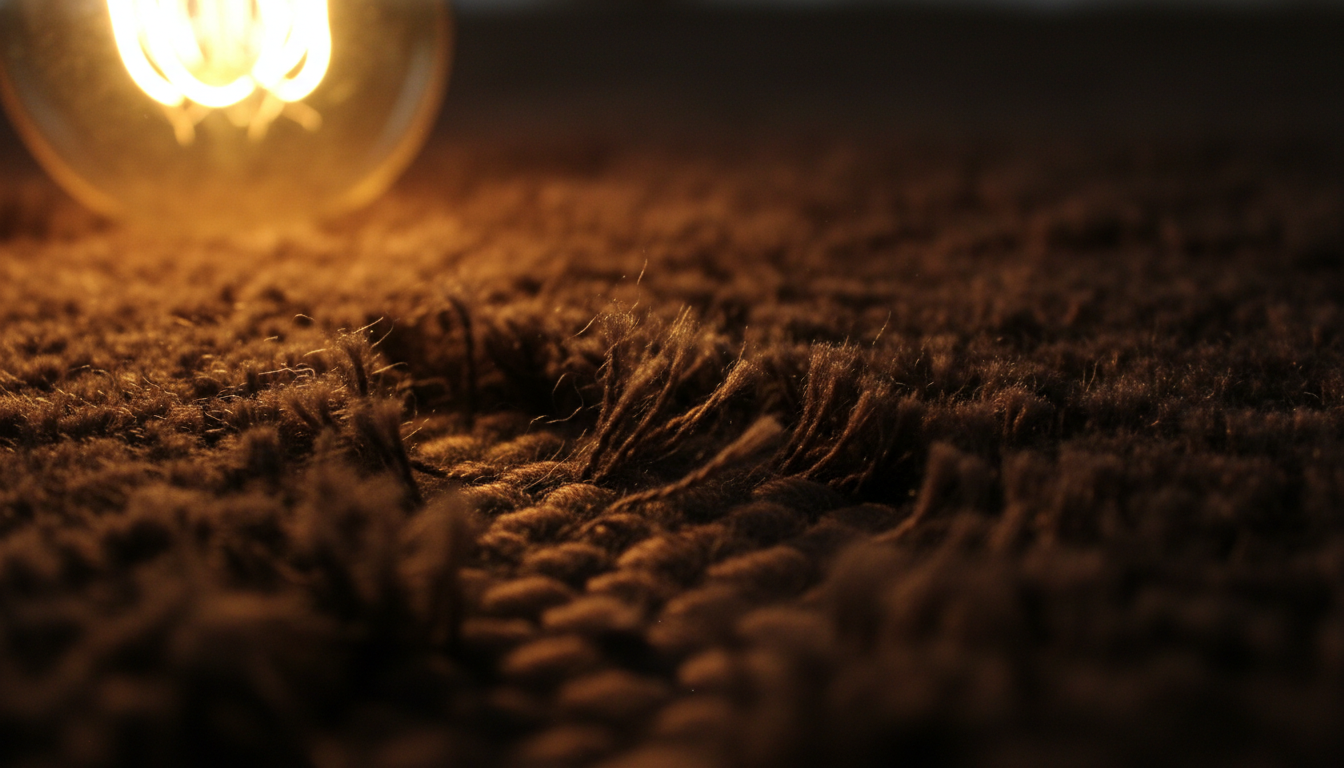
“The chocolate brown palette is the ultimate luxury because it demands intentionality. In 2026, we are seeing a return to the ‘Gentleman’s Club’ aesthetic—think heavy textures and amber light—which requires a rug that acts as a dark, plush stage for the furniture to dance upon,” notes Julian Thorne, a leading Textile Historian and curator.
The Anatomy of the Glow: Must-Do Rules
To achieve this atmospheric depth, the lighting must be as layered as the rug’s weave.- Embrace the Low-Kelvin Spectrum: Stick strictly to 2500K–2700K bulbs. This “candlelight” temperature pulls the red and gold undertones out of a chocolate rug, preventing it from looking muddy or flat.
- The Rule of Three Heights: Place floor lamps with heavy linen shades to cast light downward, table lamps at seated eye level, and low-profile uplights tucked behind a lounge chair to graze the rug’s surface.
- Material Synergy: Pair these dark textiles with rich walnut furniture or aged brass. The way a warm filament reflects off a brass leg onto a dark pile creates a localized “halo” that defines the space.
Pitfalls of the Dark Palette
One of the most common mistakes is attempting to “brighten” a dark room with high-intensity overhead lighting. Standard 4000K “daylight” bulbs will make a sophisticated chocolate rug look like cold, damp earth. Avoid recessed ceiling lights that point straight down; they create harsh glares on the furniture and leave the rug in a ghostly, unflattering shadow. If the room feels too dark, don’t add more light—add more **reflective surfaces**. A large, gilt-framed mirror propped against the wall will bounce the existing warm light across the rug fibers without washing them out.Expert Insight: The Texture Play
To truly highlight the craftsmanship of a premium rug, position a small, shielded LED uplight at a 15-degree angle to the pile. This creates “micro-shadows” within the weave, emphasizing the height of the yarn—particularly effective on the artisanal textures found at thebohorugs.com. This technique transforms a flat floor covering into a three-dimensional sculpture.
Elevating the Ambiance
To push the luxury even further, consider the “Extra” elements that define a 2026 interior. A faux fur throw draped over a nearby ottoman creates a tactile contrast against a chocolate wool rug. When hit by the golden flicker of a nearby candle or a dimmable Edison bulb, the interplay of textures—the matte wool versus the slight sheen of the fur—creates a sensory experience that feels both curated and incredibly cozy. This isn’t just a styling choice; it’s a way to anchor the room’s energy, turning a master bedroom or a private library into a true sanctuary.Dynamic Textures: Neutral High-Low Piles with Smart Dynamic Scenarios
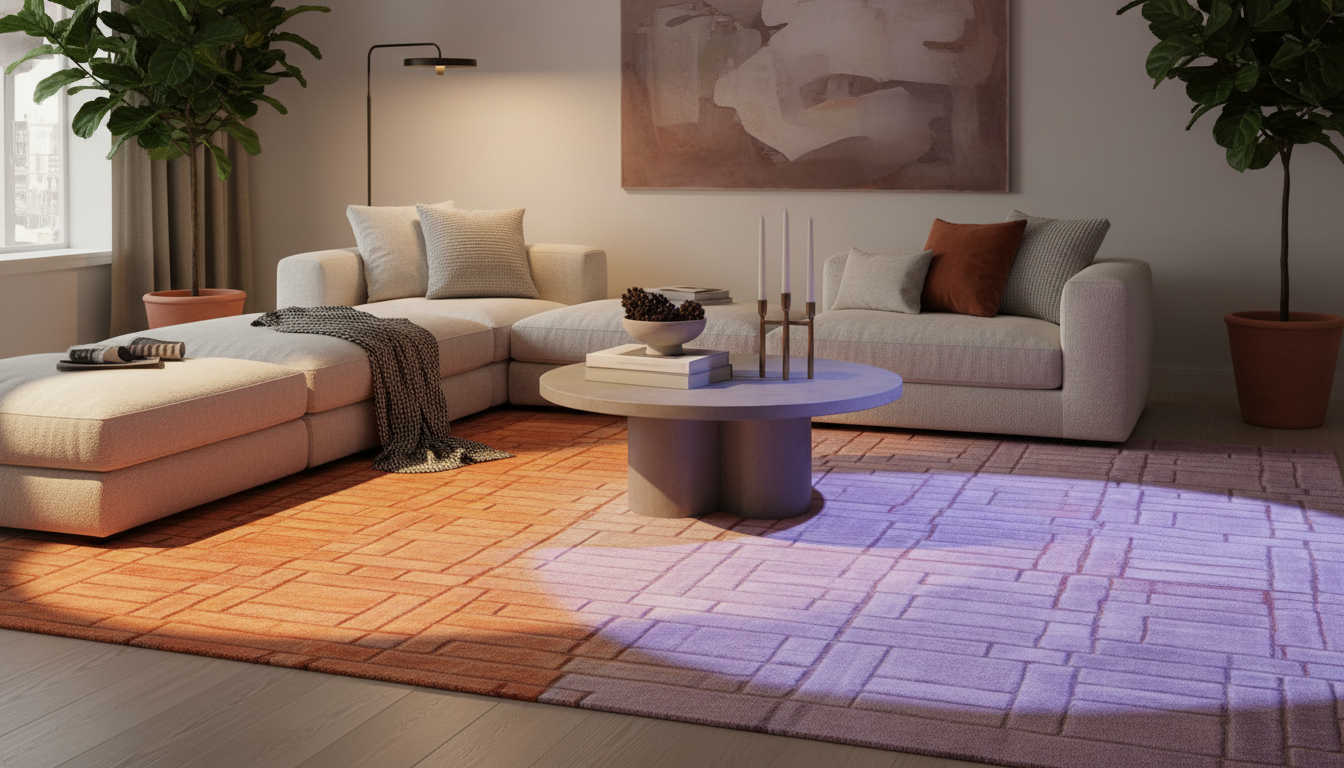
The Sculptural Power of Shadow and Smart Illumination
For 2026, the industry is moving away from flat, one-dimensional surfaces toward what designers are calling “Sculptural Minimalism.” A neutral high-low pile rug—often blending matte wool with shimmering tencel or silk highlights—isn’t just a floor covering; it’s a topographical map for light to play across. These rugs rely on Light Reflectance Value (LRV) fluctuations within the weave to create depth. When you pair this tactile complexity with smart, dynamic lighting, the room begins to breathe, shifting its character as the sun sets.
The magic happens when you move beyond static switches. By utilizing Human Centric Lighting (HCL) systems, you can program your space to accentuate the rug’s architecture. In the morning, a cool 4000K “Dawn” setting might catch the raised ridges of a cream-on-beige wool rug, making the pattern pop with crisp clarity. By 8 PM, your “Cinema” scene can transition to a warm 2200K glow, casting long, dramatic shadows into the “valleys” of the rug’s pile, turning a simple living space into a moody, high-end lounge.
“We are seeing a massive shift toward rugs that act as sundials. A high-low pile neutral rug from a collection like those at thebohorugs.com doesn’t just sit there; it interacts with the light. As the Kelvin temperature of your smart bulbs shifts, the shadows within the rug’s topography change, effectively giving you a new room every four hours.”
— Julian Thorne, Lead Textile Consultant at the London Design Institute
The Rulebook for Smart Dynamic Scenarios
- Embrace the “Raking” Technique: Position smart-enabled floor lamps or low-profile uplights at an angle rather than directly overhead. This “rakes” the light across the rug, emphasizing the height difference between the high and low piles.
- Layer Your Smart Scenes: Don’t just dim the lights. Use smart bulbs to create zones. A warm spotlight on a reading chair paired with a dim, amber-hued LED strip along the baseboards will make a neutral rug feel incredibly luxurious.
- The 2026 Fiber Secret: Look for rugs featuring Bio-Acetate or recycled PET accents mixed with traditional wool. These materials have a higher luster than wool and will catch the “smart” color transitions more vividly.
To truly make a neutral high-low pile rug the star, avoid “flat” white light. A common mistake is using 5000K (Daylight) bulbs, which wash out the subtle texture. For the most sophisticated result, stick to a smart range between 2000K and 3500K. This allows the shadows to remain soft rather than harsh, highlighting the craftsmanship of a hand-tufted piece.
Navigating the Pitfalls of Modern Tech
It’s easy to get carried away with the novelty of color-changing LEDs. While a purple or green light might be fun for a moment, it often makes high-quality natural fibers look synthetic and cheap. Stay within the spectrum of “warm to cool whites” to maintain an editorial, luxury aesthetic. Another frequent misstep is ignoring the Light Absorption Rate of the rug’s “low” sections. If the recessed parts of your rug are a darker charcoal or deep sand, they will swallow light. You’ll need slightly more lumens than you think to prevent the rug from looking like a “black hole” in the center of the room.
If you are looking to anchor your room with a piece designed for this kind of light play, the curated textures at thebohorugs.com offer the perfect canvas for a sophisticated smart-lighting setup. Their focus on artisanal, high-low textures ensures that even the most neutral palette feels rich, layered, and intentionally designed.
Elevate Your Space
Discover the artistry of handmade luxury. Each rug is a masterpiece of tradition and modern design.
Expert Q&A
What is the best color temperature for neutral rugs?
For neutral rugs like beige or oat, 2700K (Warm White) is ideal as it pulls out the golden undertones. For greige or cool grey, 3000K provides a cleaner, more modern look without appearing too blue.
How do I use lighting to show off rug texture?
Use ‘grazing’ light. Place a floor lamp or low-profile spotlight at a low angle so the light travels across the surface of the rug rather than directly down on it, creating shadows that define the pile.
Does LED lighting damage natural rug fibers?
Generally, no. LED lights produce very little heat and almost no UV radiation compared to halogen or incandescent bulbs, making them the safest choice for delicate wool and silk rugs.
How can I avoid my rug looking ‘flat’ under lights?
Avoid single overhead light sources. Create depth by using three layers of light: ambient (ceiling), task (floor lamps), and accent (spotlights or LED strips).
Should I use cool white light on a blue rug?
Yes, blue and cool-toned rugs benefit from 3500K to 4000K lighting, which keeps the colors crisp and prevents them from looking muddy or greenish under yellow light.
What is the benefit of CRI in rug lighting?
Color Rendering Index (CRI) measures how accurately a light source reveals colors. For high-end rugs, choose bulbs with a CRI of 90 or higher to ensure the dyes look as the artist intended.
Can I use smart bulbs to enhance rug patterns?
Absolutely. Smart bulbs allow you to adjust the temperature and intensity throughout the day, matching the rug’s appearance to the changing natural light in the room.
Is it better to have floor lamps on or off the rug?
Placing floor lamps on the rug helps ground the furniture grouping, but ensure the lamp base is stable and not crushing the pile. Using a rug pad helps distribute the weight.
How do shadows affect the look of a patterned rug?
In 2026 design trends, shadows are used intentionally. Sharp shadows can highlight a geometric pattern, while soft, diffused shadows are better for busy, floral, or oriental patterns.
Can I use uplighting for rugs?
Uplighting placed behind furniture can cast a gentle glow onto the edges of a rug, creating a ‘halo’ effect that makes the rug appear to float, perfect for plush or shaggy textures.
What is the ‘Golden Hour’ effect for rugs?
This is achieved by using 2400K-2700K lighting at a 30-degree angle, mimicking natural sunset. It is exceptionally flattering for terracotta, rust, and gold-toned rugs.
Does rug material affect light reflection?
Yes. Silk and viscose rugs reflect light highly, often appearing different colors from different angles (the ‘shimmer’ effect). Wool absorbs more light, resulting in a matte, deep color profile.
Written by TheBohoRugs Interior Design Team
Experts in handmade rugs, boho interiors, and modern home decor.
