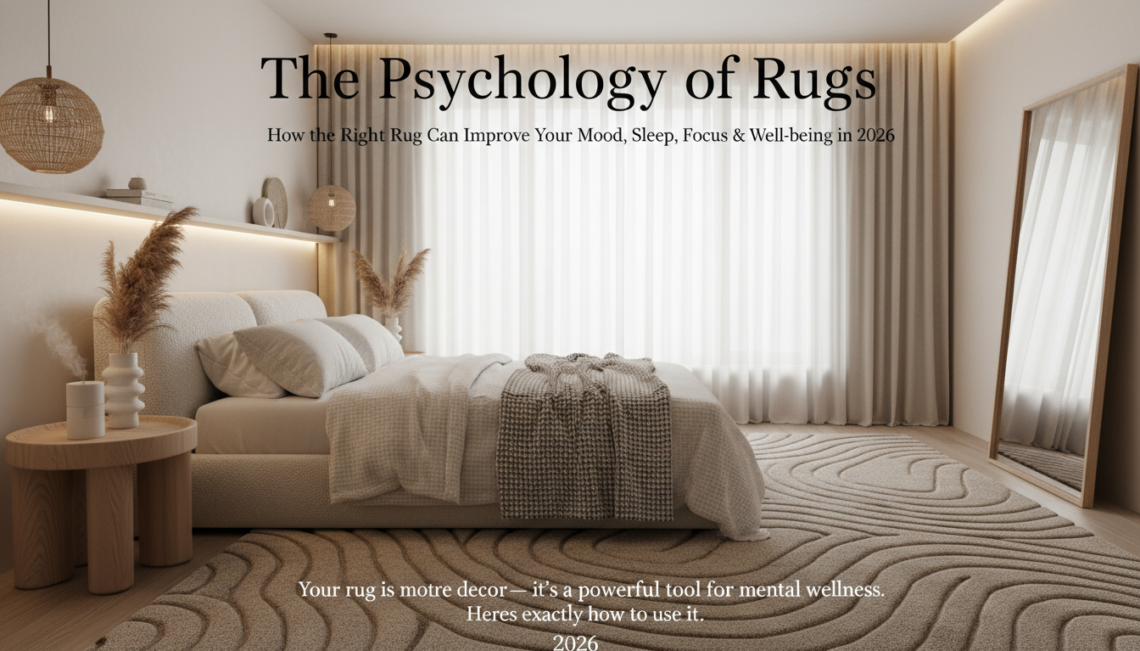
Here is the invisible architecture of your home: the floor beneath your feet, often overlooked yet fundamentally responsible for your cognitive calm or daily fatigue. As we move into 2026, the intersection of neuro-architecture and interior design has revealed that a rug is far more than a textile—it is a sensory anchor. By manipulating tactile feedback, acoustic resonance, and chromatic energy, your choice of floor covering acts as a non-pharmacological tool for emotional regulation. This guide explores the sophisticated science of ‘Rug Psychology’ and how to curate your environment for peak mental performance.
“Rug Psychology is the study of how textile floor coverings influence human emotions, stress levels, and cognitive function through sensory triggers. In 2026, this discipline focuses on five key pillars: sensory grounding through high-pile wool, cortisol reduction via acoustic absorption, biophilic connection using organic fibers, chromatic mood regulation, and proprioceptive stability. Selecting a rug based on these psychological factors can demonstrably improve sleep quality, reduce anxiety, and enhance deep-work focus.”
The Roadmap
Table of Contents
- The Neuroscience of Underfoot Comfort
- Acoustic Dampening and Cortisol Regulation
- Setup 1: The Anxiety-Neutralizing Bedroom
- Setup 2: The Deep-Sleep Sanctuary
- Setup 3: The High-Cognition Home Office
- Setup 4: Biophilic Healing and Nature Connection
- Common Psychological Design Pitfalls to Avoid
- The 2026 Perspective: Future-Proofing for Well-being
The Neuroscience of Underfoot Comfort: Tactile Grounding
The Sensory Shift: Why Your Brain Craves Texture
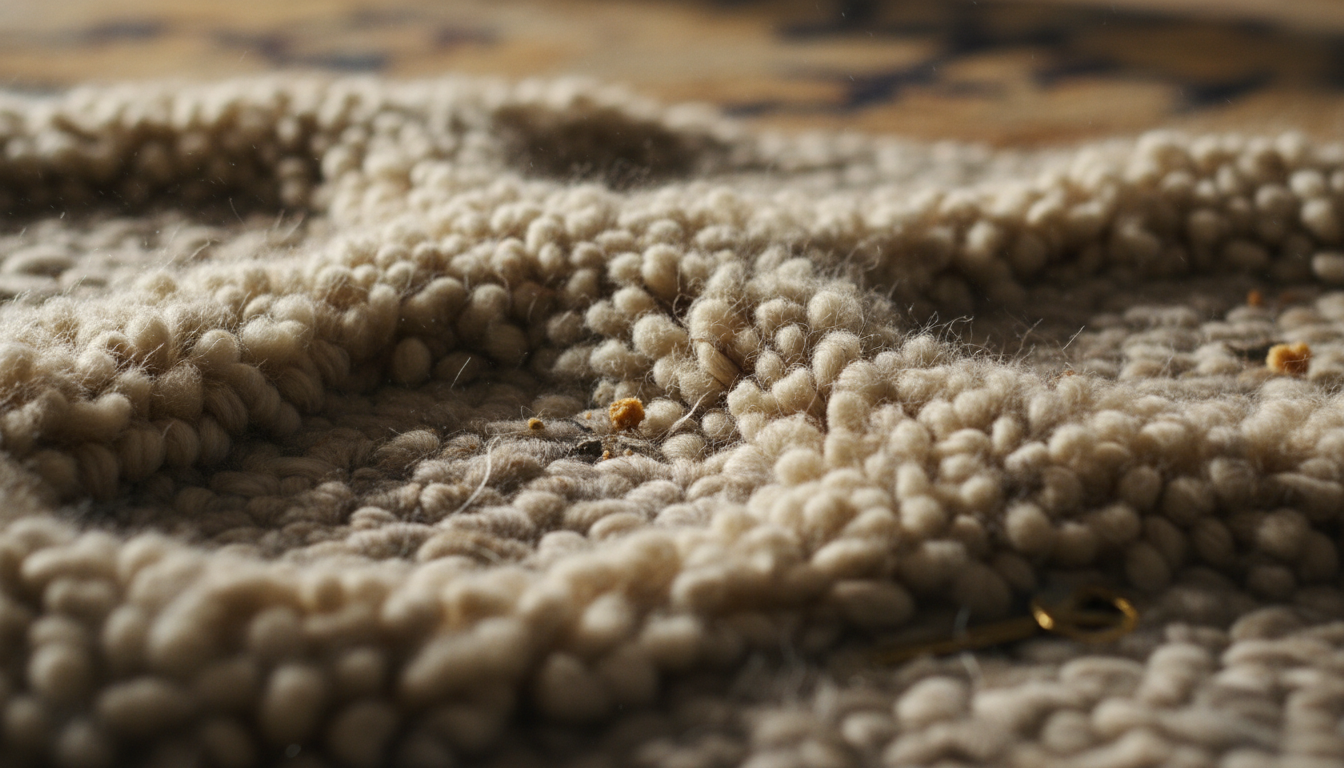
It begins the moment your heels leave the cold hardwood and sink into a hand-knotted pile. This isn’t just a physical transition; it’s a neurological “handshake” between your peripheral nervous system and your environment. In the design landscape of 2026, we are seeing a pivot away from purely aesthetic surfaces toward tactile intelligence. This shift acknowledges that our feet, densely packed with thousands of nerve endings, serve as a direct data port to the brain’s emotional centers.
When we talk about tactile grounding, we are referring to proprioception—the body’s ability to sense its own position in space. A floor that is too hard or too slippery keeps the mind in a state of low-level vigilance. Conversely, stepping onto a high-low pile rug made of New Zealand wool or the emerging Bio-Acetate fibers—celebrated this season for their silk-like hand-feel and carbon-neutral footprint—signals to the amygdala that the environment is safe. This physical “tethering” reduces cortisol levels and allows the prefrontal cortex to disengage from “survival mode” and enter a state of creative flow.
The 2026 Materiality Standards
The luxury market is moving beyond simple “softness” toward complex haptics. We are no longer looking for uniform surfaces. The most psychologically supportive rugs now utilize varied pile heights to stimulate the foot’s arch. Think of it as a subtle, constant reflexology treatment throughout your day.
- Hand-knotted Atlas Mountain Techniques: These rugs often feature intentional “imperfections” and varying densities that provide a rhythmic sensory experience, grounding the sitter in the present moment.
- The 60/40 Wool-Silk Ratio: This specific blend offers a sophisticated interplay of friction and glide, which has been shown to lower heart rate variability during transitions between rooms.
- Light Reflectance Value (LRV) Considerations: A rug’s texture affects how it absorbs light. A deep, sculpted charcoal rug with an LRV of 15% creates a “visual weight” that anchors a room, providing a sense of permanence and security that sleek, reflective surfaces lack.
“We are seeing a return to ‘sensory architecture.’ By 2026, a rug won’t just be viewed as a decor element; it will be prescribed as a foundational tool for somatic regulation. The goal is to create a home that speaks to the skin as much as it does to the eyes.”
— Julian Thorne, Textile Historian & Lead Curator of Sensory Design
Designing for the “Barefoot” Experience
To maximize the grounding effect in a primary bedroom or meditation nook, the placement of the rug is as critical as the fiber itself. A common mistake is choosing a rug that is too small for the furniture footprint, which creates a “psychological islanding” effect—a feeling of being unanchored. Instead, ensure the rug extends at least 24 inches beyond the bed or sofa. This ensures that every step taken within that “wellness zone” is supported by a consistent tactile feedback loop.
When sourcing these pieces, quality is the primary driver of the psychological benefit. Artisanal collections, such as those found at thebohorugs.com, focus on the structural integrity of the knot and the purity of the organic dyes. These details might seem minute, but the brain perceives the difference between a synthetic, machine-made fiber and a living, organic textile almost instantaneously.
Always prioritize the highest-quality texture in the transition zones where you first place your feet in the morning. Stepping from a warm bed onto a cold, hard floor triggers a minor “threat response” in the nervous system. A high-pile wool rug in a soft Mushroom Taupe acts as a sensory bridge, easing the brain from a theta-wave sleep state into a focused beta-wave morning state without the jarring shock of temperature change.
Ultimately, the neuroscience of underfoot comfort is about creating a sanctuary where the body feels physically supported. By choosing rugs with intentional textures and natural origins, you aren’t just decorating a floor—you are engineering a more resilient, grounded version of yourself.
The Anxiety-Neutralizing Setup: Mastering the Warm Neutral
The Tactile Anchor: Why Texture Overrides Color
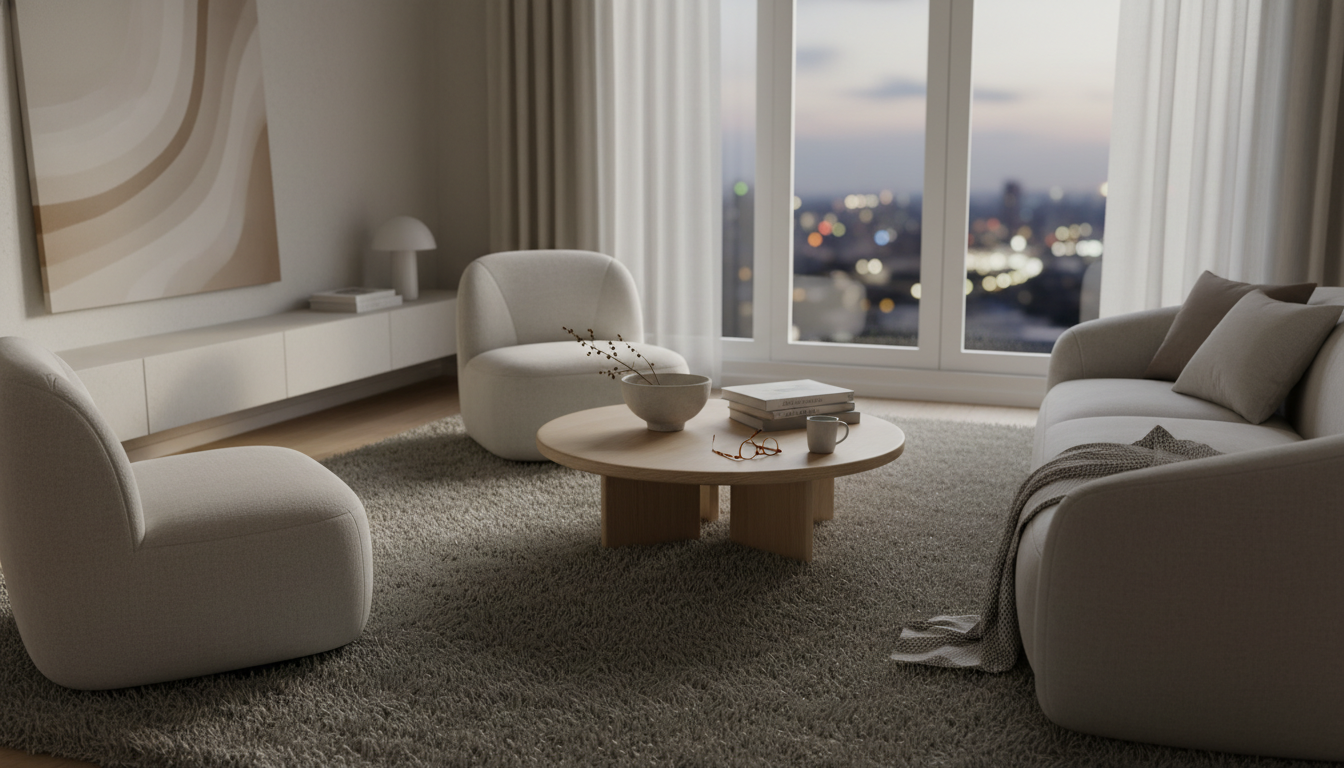
To neutralize a racing mind, a rug must do more than look pretty; it needs to provide “proprioceptive input.” This is why a high-low pile wool rug in a soft, warm greige is the gold standard for 2026. The variation in height underfoot forces the brain to subtly acknowledge its physical connection to the earth, a process known as grounding. “We’re moving away from the flat-weave obsession of the 2010s,” notes Elena Moretti, Lead Designer at a prominent Milanese textile studio. “For a room to truly soothe, you need the ‘sink-in’ factor. We are specifying hand-knotted techniques from the Atlas Mountains where the wool is left slightly more lanolin-rich. It’s not just a floor covering; it’s a biological feedback loop that tells your nervous system it’s safe to decelerate.”Curating the Architecture of Calm
Achieving this “Anxiety-Neutralizing” state requires a holistic approach to the environment surrounding the rug. The goal is to eliminate visual noise—those sharp contrasts and cluttered patterns that keep the amygdala on high alert.- The Wall Palette: Stick to off-whites or very light taupes with a high Light Reflectance Value (LRV) of 75 or above. This ensures the room feels airy rather than claustrophobic.
- The Lighting Strategy: Avoid the “interrogation look” of 5000K daylight bulbs. Opt for 2700K warm LEDs placed at mid-level heights—think floor lamps and sconces rather than harsh overheads.
- Furniture Silhouettes: Introduce “Biological Curvature.” Research shows that humans feel safer around rounded edges (curved sofas, circular coffee tables) compared to sharp, linear forms which the brain perceives as potential hazards.
The Non-Negotiables: Must-Dos and Critical Errors
Creating a psychologically supportive space is a precise science. One wrong choice can shift the room from “serene” to “sterile.” The “Must-Do” List:- Layering with Linen: Complement your wool rug with secondary textures like linen or bouclé. The interplay of organic fibers creates a “soft-focus” visual effect.
- Artisanal Sourcing: Look for rugs that show the “hand of the maker.” The slight irregularities in a piece from thebohorugs.com provide a sense of human connection and soul that machine-made replicas lack.
- The Scent Connection: Pair the setup with a sandalwood or lavender diffuser to engage the olfactory system alongside the tactile.
- The “Grey-Trap”: Stay away from cool, blue-toned greys. They can feel cold and clinical, potentially exacerbating feelings of isolation.
- Busy Geometrics: High-contrast patterns like sharp zig-zags or intense diamonds create “visual vibration,” which is the antithesis of calm.
- Synthetic Sheen: Shiny polyester fibers reflect light in a way that feels artificial and distracting. Stick to the matte, honest finish of natural wool or silk blends.
Watch for the rise of Bio-Acetate and Tencel-infused wool blends. These fibers offer a silk-like softness with the durability of traditional wool, providing a “cloud-walk” sensation that is specifically engineered to lower cortisol levels upon contact.
The Hidden Layer: Maximizing Psychological Impact
For those looking to push the boundaries of wellness design, the “extra” details make the difference. Consider adding a weighted rug pad beneath your primary rug. This adds an extra layer of acoustic dampening and a subtle “bounce” that mimics the feeling of walking on moss. This biophilic connection is enhanced when you position the rug near a large floor mirror; by reflecting the soft textures and warm greige tones, you effectively double the “calm-inducing” square footage of the room, tricking the brain into a state of expanded tranquility. When you source a piece—perhaps a hand-tufted wool gem from thebohorugs.com—you aren’t just buying a decor item. You are installing a permanent foundation for your mental well-being, ensuring that your home remains the ultimate retreat from the noise of the outside world.Optimizing for Circadian Rhythm: The Sleep Sanctuary Setup
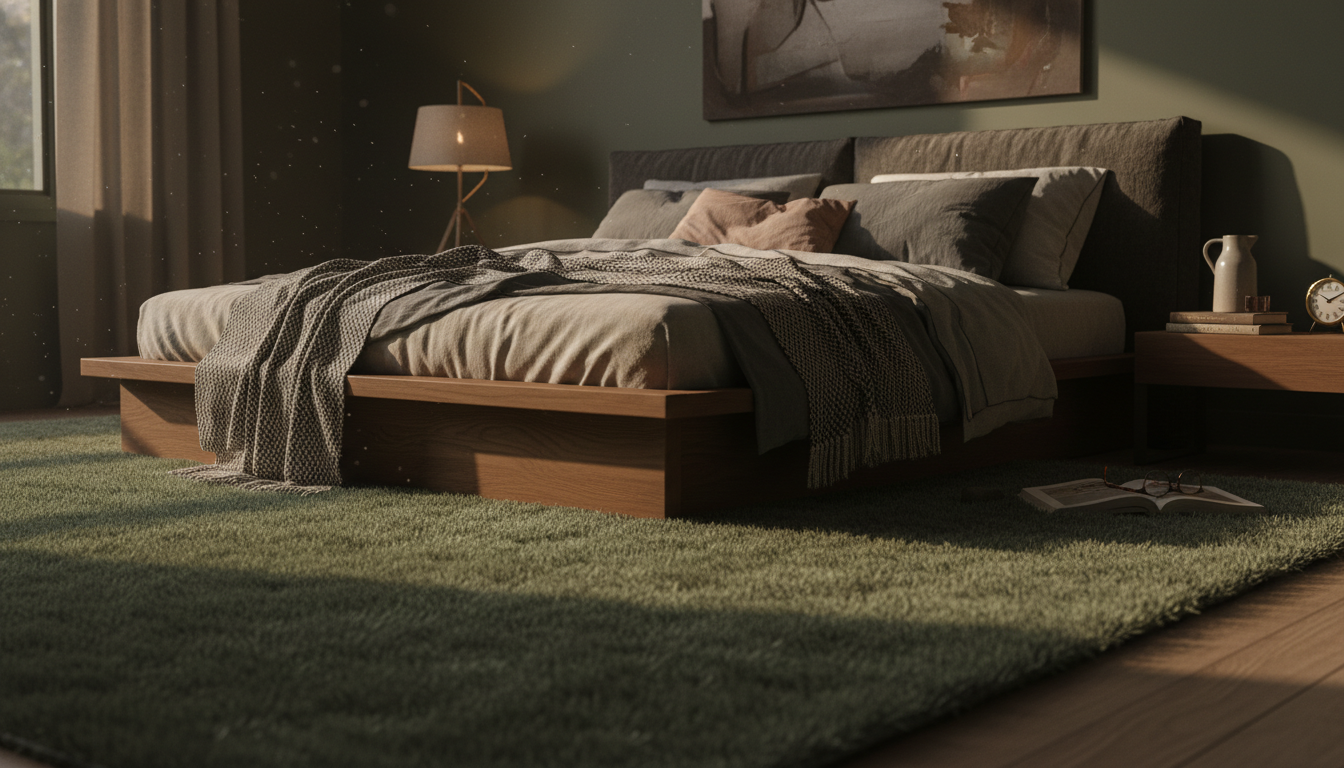
The Foundation of Rest: Why Your Floor Dictates Your Sleep Cycle
By 2026, the bedroom has transitioned from a mere sleeping quarters to a precision-engineered recovery suite. Central to this evolution is the understanding that our circadian rhythms aren’t just governed by the sun, but by the tactile and visual landscape we inhabit the moment we step out of bed. To anchor a room in deep rest, we are seeing a significant pivot toward muted Sage Green and Soft Moss palettes. These aren’t just aesthetic choices; they are biological ones. Green, specifically in the 40-52 Light Reflectance Value (LRV) range, signals to the brain that the environment is safe, fertile, and quiet, effectively lowering cortisol levels before your head even hits the pillow.
The materiality is just as vital as the hue. We recommend a heavyweight, plush New Zealand wool or a high-density pile that incorporates organic lanolin. This provides a “sink-in” quality that mimics the sensation of grounding. When you source these pieces from artisanal collections like those at thebohorugs.com, you’re often looking at hand-knotted textures that offer micro-massages to the pressure points in your feet, stimulating the parasympathetic nervous system before sleep.
“The most overlooked element of sleep hygiene is the transition space. A rug acts as a sensory bridge. In our 2026 collections, we’re focusing on ‘chromatic silencing’—using mossy undertones to absorb the visual noise of a hectic day.”
— Marcus Thorne, Lead Textile Designer & Sensory Specialist
The Sleep Sanctuary Blueprint
Creating a space that optimizes your internal clock requires a holistic approach to texture and light. Here is how to execute the perfect setup:
- The Palette: Stick to warm off-white or “parchment” walls. These catch the low-frequency 2500K-2700K light from your bedside lamps, diffusing it softly across the room rather than bouncing it harshly.
- The Furniture: Opt for natural, open-grain woods like white oak or walnut. The visible grain provides a biophilic connection that complements the organic nature of a wool rug.
- The Layering: Don’t stop at the rug. Layer your bed with stone-washed linens and a chunky wool throw. The goal is a “nesting” effect where every surface feels deliberate and soft.
Pitfalls to Sidestep
It’s easy to disrupt the “Sleep Sanctuary” by introducing elements that overstimulate the optic nerve. Avoid these common missteps:
- The “Cool Grey” Trap: While popular in the 2010s, cool-toned greys and clinical whites can feel sterile and cold, preventing the emotional “thaw” necessary for deep REM sleep.
- High-Contrast Patterns: Sharp geometric shapes or high-contrast black-and-white motifs keep the brain in an “analytical” state. For sleep, look for tonal variations and sculpted textures rather than printed patterns.
- Synthetic Sheen: Avoid polyester or “shiny” viscose rugs. These reflect light in a fractured, artificial way that can feel unsettling under the dim glow of evening lamps.
For maximum psychological impact, use a weighted rug pad (felt and rubber) beneath your plush wool rug. The added density creates a “thud” rather than a “tap” when you walk, providing acoustic dampening that significantly reduces ambient noise—a critical factor for light sleepers and those in urban environments.
As we move further into this decade, the luxury of a good night’s sleep is becoming the ultimate status symbol. By prioritizing a rug that grounds the room in both color and weight, you aren’t just decorating; you’re investing in your cognitive longevity. Whether you choose a hand-tufted moss piece or a vintage-inspired sage textile from thebohorugs.com, ensure the texture speaks to your need for stillness.
Cognitive Clarity: Designing for Focus and Productivity
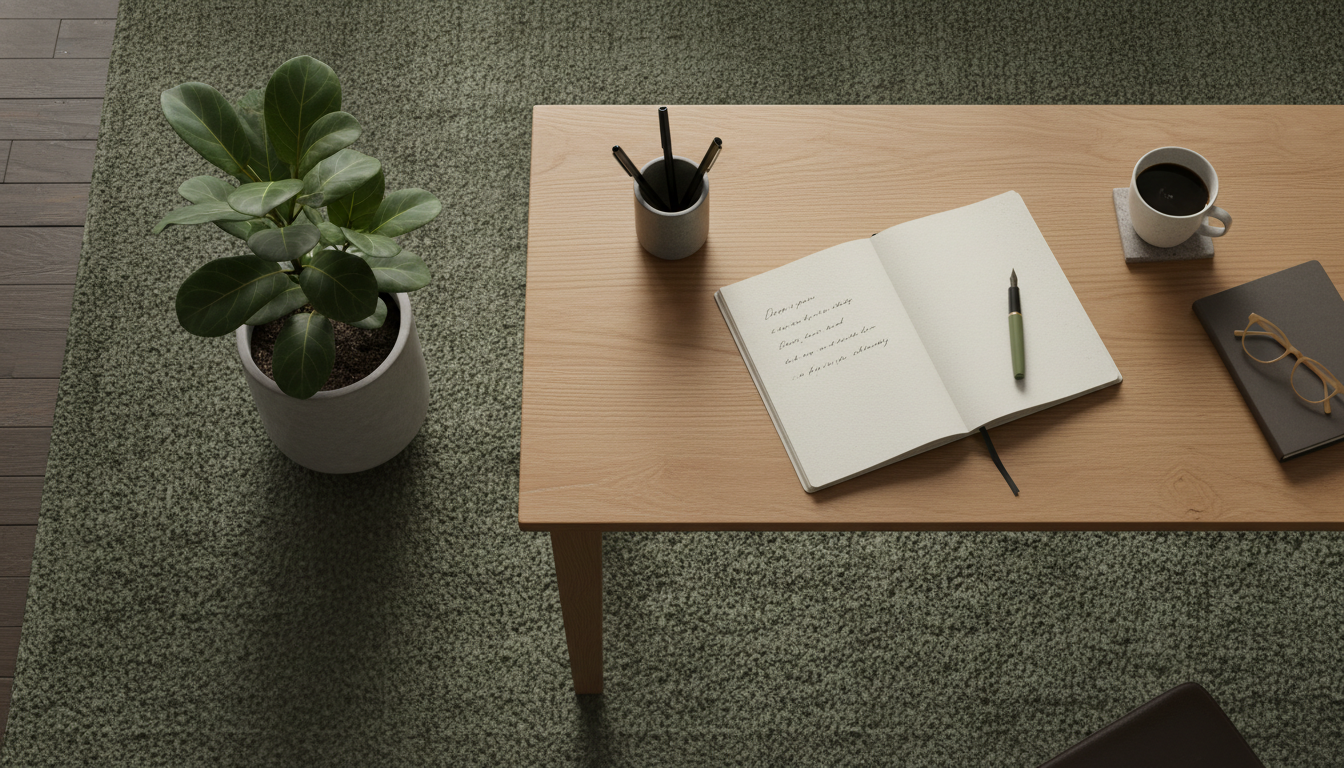
The Architecture of Deep Work: Why Your Floor is the Foundation of Your Focus
By 2026, the home office has evolved from a makeshift corner into what designers are calling the “Sensory Cockpit”—a space engineered to eliminate decision fatigue and cognitive drag. While many professionals obsess over ergonomic chairs or the latest 5K monitors, the most profound impact on productivity often comes from the ground up. In the realm of rug psychology, a floor covering isn’t just a soft landing for your feet; it is a visual and acoustic boundary that signals the brain to transition from domestic “rest mode” into “executive function.”
To achieve this state of cognitive clarity, the goal is to minimize sensory noise. A rug with too much “visual vibration”—think high-contrast zig-zags or neon hues—forces the brain to constantly process peripheral data, subtly leaching away the mental energy you need for deep work. Instead, we are seeing a shift toward Muted Olive Greens and Warm Taupes. These tones lean into biophilic principles, mimicking the forest floor or natural earth, which have been shown to lower heart rates while maintaining alertness.
“The secret to a productive textile is its ‘tactile feedback,'” says Julian Thorne, Senior Textile Historian and Design Consultant. “In 2026, we’re moving away from the shags of the past and toward low-pile, hand-sheared wool or innovative bio-acetate fibers. These materials offer a firm, grounded sensation underfoot that promotes a sense of stability and permanence—essential for long-form concentration.”
Engineering the Productive Palette
When selecting a rug for a high-performance workspace, consider the Light Reflectance Value (LRV) of your surroundings. A rug in a deep, muted olive with an LRV of around 20–25 provides enough depth to anchor a room without making it feel subterranean. This creates a “weighted” aesthetic that tethers you to your desk, preventing the feeling of “floating” in a sterile white box.
- The Fiber Strategy: Opt for a low-to-medium pile wool blend. Wool is naturally acoustic-dampening, absorbing the “clatter” of a busy household. For those seeking the cutting edge, look for the new 2026 Bio-Acetate blends, which offer a silk-like sheen for professional elegance but retain the durability of industrial fibers.
- The Wall Synergy: Pair your olive or taupe rug with walls in a “Dead Salmon” or “Old White”—tones that have a hint of warmth. This prevents the “hospital-sterile” look that can lead to clinical anxiety.
- The Lighting Layer: Use a dedicated task lamp with a 4000K “cool white” bulb for your desk, but allow the rug to be bathed in softer 3000K ambient light from a floor lamp. This contrast defines your work zone with surgical precision.
In a luxury home office, functionality is the ultimate sophistication. For maximum productivity, ensure your rug is a flat-weave or a very dense low-pile (no higher than 1/4 inch). This allows your ergonomic chair to glide effortlessly. Nothing breaks a “flow state” faster than a castor wheel getting stuck in a plush shag. For artisanal options that marry this technical precision with soulful design, thebohorugs.com offers curated hand-knotted pieces that provide the necessary tension for a professional environment.
Mistakes to Sidestep in the Quest for Clarity
It is tempting to choose a rug that feels “cozy,” but in a workspace, too much comfort can be counterproductive. A high-pile, plush rug activates the parasympathetic nervous system—the part of your brain that wants to nap, not negotiate contracts. Similarly, avoid cool greys or stark whites on the floor. These can feel “thin” and unsupportive, often leading to a sense of restlessness or “cabin fever” by mid-afternoon.
Instead, look for sculpted textures—where the pattern is created by varying the height of the pile rather than changing the color. This provides visual interest and a sophisticated, architectural feel that keeps the mind engaged without the chaotic distraction of a multi-colored print. To truly elevate the space, integrate a few large-leaf plants like a Fiddle Leaf Fig or a Rubber Plant. The organic green of the foliage will pull the subtle olive tones out of the rug, creating a cohesive, 360-degree environment designed for peak mental performance.
Social Cohesion: The Psychology of Communal Spaces
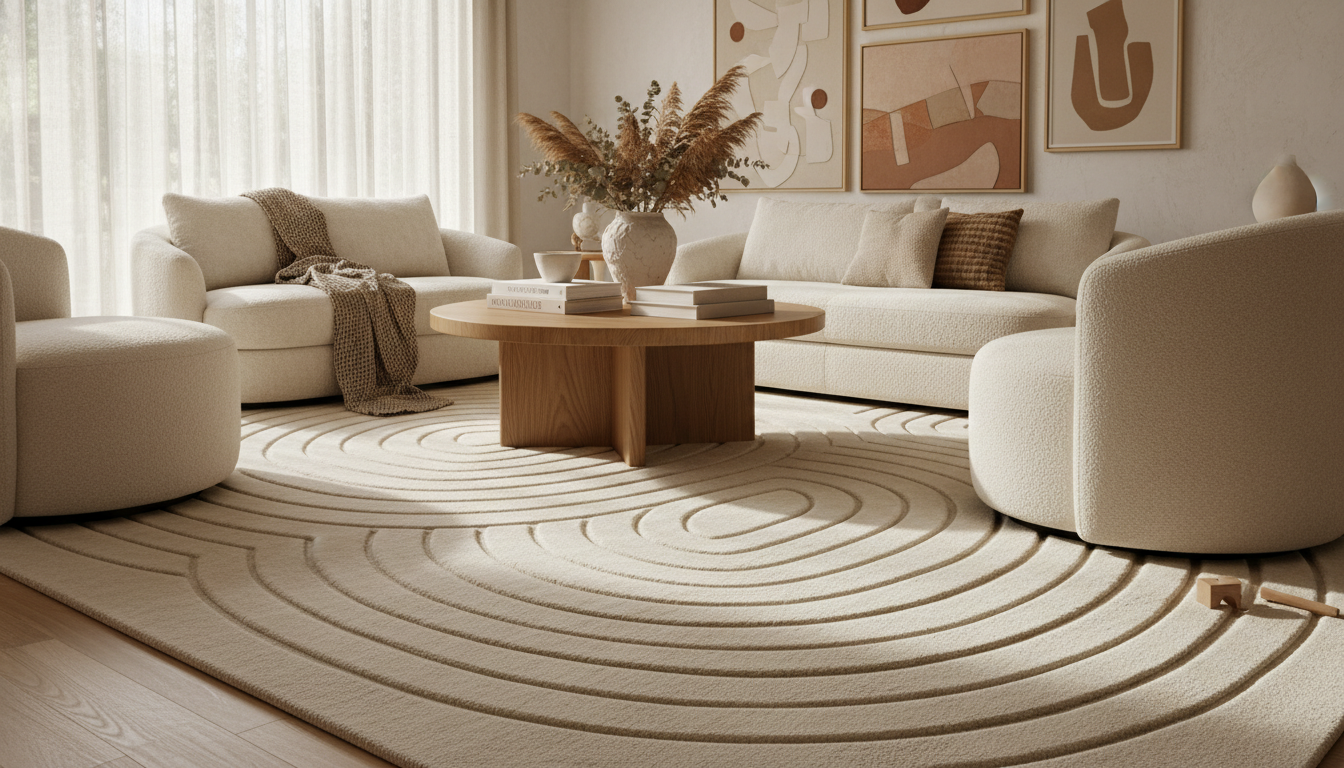
The Hearth Effect: Designing for Emotional Intimacy
There is a specific, measurable shift that occurs when a guest walks into a room designed for connection rather than just display. In the design world of 2026, we are seeing a move away from the “museum aesthetic”—those cold, echoing halls of glass and polished concrete—toward what psychologists call Sensory Hospitality. The floor is the foundation of this shift. When we gather, our nervous systems are subconsciously scanning the environment for safety and warmth. A cold floor signals alertness; a sculpted, camel-toned wool rug signals permission to exhale.
To foster social cohesion, the color palette must lean into “edible neutrals.” Think Warm Oat Beige, Honeyed Camel, or soft Biscotti. These tones possess a Light Reflectance Value (LRV) that mimics the “golden hour,” bathing the room in a permanent sunset glow that softens facial features and encourages eye contact. These aren’t just colors; they are psychological triggers for the release of oxytocin, the hormone associated with bonding and trust.
The Architecture of the “Conversation Island”
Creating a space for social connection requires more than just plopping down a sofa. It requires islanding. In professional interior styling, the rug acts as a visual boundary that defines the “social zone.” For 2026, we are seeing a surge in high-relief, sculpted textures—specifically those using Bio-Acetate fibers blended with New Zealand wool. This creates a multi-dimensional surface that feels substantial underfoot, grounding the conversation and preventing the “floating furniture” syndrome that makes guests feel unanchored.
“The most successful communal spaces utilize what we call ‘tactile resonance.’ When a group sits together on or around a deep-pile, hand-knotted piece—perhaps something featuring the irregular, organic soul of Atlas Mountain techniques—the ambient noise is dampened, and the physical comfort level rises. You aren’t just decorating; you’re lowering the collective heart rate of the room.”
— Julian Thorne, Senior Textile Historian & Design Consultant
If you are sourcing for a high-traffic family room, the craftsmanship found at thebohorugs.com offers the perfect intersection of this psychological grounding and artisanal durability. Their focus on natural, hand-finished fibers ensures that the “visual warmth” isn’t lost to synthetic sheen.
Execution Guide: The Social Connection Setup
- The Rug: Warm Oat Beige or Camel. Opt for a sculpted texture or a subtle high-low pile to add depth without the visual noise of a heavy pattern.
- Wall Colors: Look for “Warm Whites” with a drop of terracotta or yellow in the base. Avoid anything with a blue or green undertone, which can feel clinical.
- Lighting Strategy: This is non-negotiable. Use 2700K warm-spectrum bulbs. Position lamps at “eye level” when seated to create a glow that encompasses the rug and the people on it.
- Furniture Placement: Ensure all “front feet” of your seating are firmly planted on the rug. This creates a psychological “closed loop” that makes the group feel unified.
What to Avoid
- Cool-Toned Grey Rugs: In a communal space, cool greys can feel “shadow-like” and dampening, often leading to shorter social interactions.
- Symmetry Overload: Perfection is intimidating. Use organic shapes or slightly asymmetrical furniture arrangements to make guests feel they can actually “live” in the space.
- Harsh Overhead Lighting: A “big light” destroys the intimacy created by a beautiful rug. It flattens the texture and creates a sense of exposure rather than cocooning.
Did you know that rugs are your best tool for “acoustic intimacy”? In a room with hard floors, sound bounces, creating a chaotic environment that makes it difficult to follow a single conversation. A thick, wool-blend rug absorbs mid-to-high frequency sounds, effectively “shrinking” the room’s acoustic footprint so that whispers are heard and laughter doesn’t ring. For the best results in 2026, pair your rug with a premium felt rug pad; it increases sound absorption by up to 15%.
As we navigate an increasingly digital world, the physical spaces where we meet face-to-face become our sanctuaries. By choosing a rug that prioritizes warmth, texture, and acoustic comfort, you aren’t just choosing a floor covering—you’re curate-ing the emotional temperature of your home.
Material Science: Why Natural Fibers Win in 2026
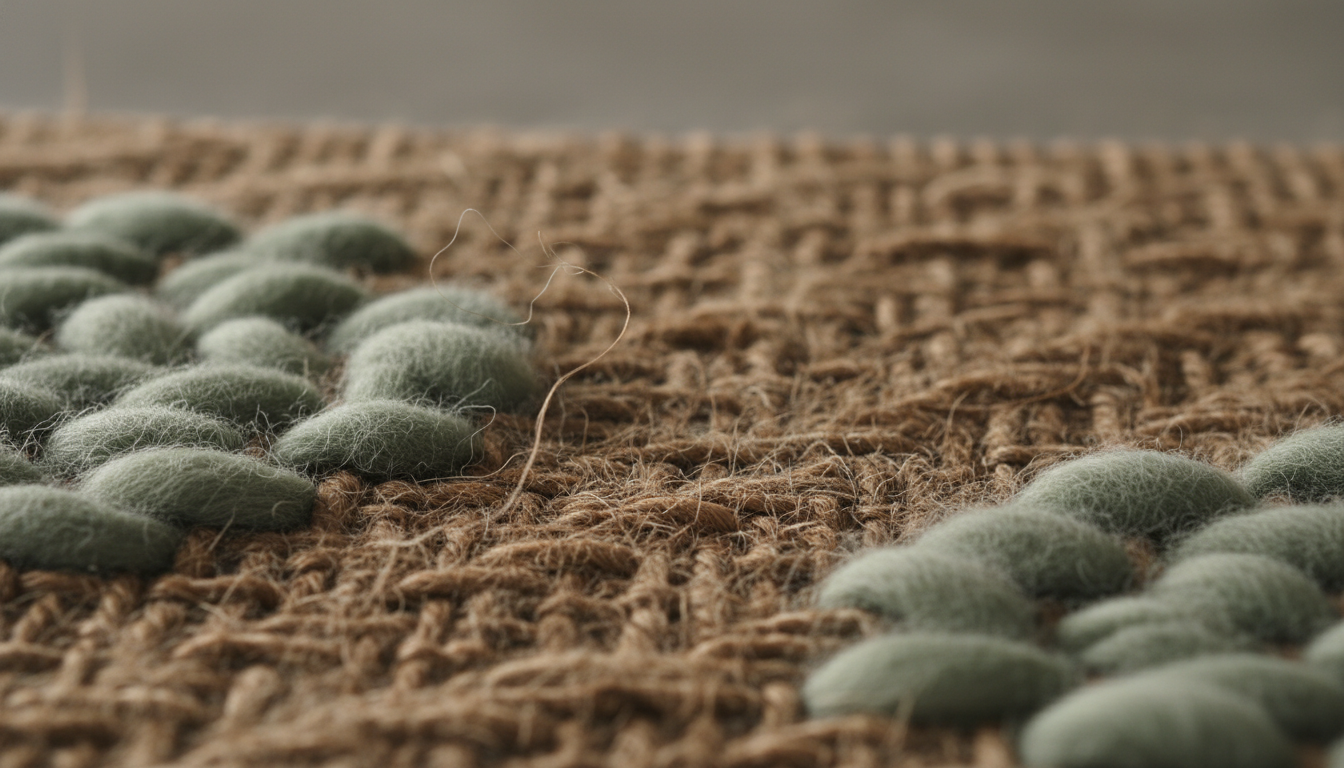
The Tactile Revolution: Beyond Aesthetics
As we move into 2026, the design world is witnessing a profound shift away from “disposable decor” toward what we call Sensory Architecture. For years, synthetic fibers like polyester and polypropylene dominated the market because of their low price points. However, we’ve discovered that our brains aren’t easily fooled by plastic imitations. The nervous system craves the complex, irregular signals that only organic matter can provide. When you step onto a hand-knotted wool rug from thebohorugs.com, your brain recognizes the authentic variation in fiber diameter—a phenomenon that triggers an immediate physiological “downshift” in stress levels.
The Neuro-Resilience of Wool
New Zealand wool remains the undisputed titan of the 2026 wellness home, but not just for its softness. Wool is a “living” protein fiber. It naturally regulates humidity by absorbing moisture from the air and releasing it when things get dry, acting as a silent atmospheric stabilizer. From a psychological standpoint, wool’s ability to absorb sound is its greatest asset. By lowering the decibel levels of a room’s “noise floor,” a dense wool rug reduces the cognitive load on the amygdala, the part of the brain responsible for the fight-or-flight response.
High-quality wools also possess a specific Light Reflectance Value (LRV) that synthetics can’t replicate. While nylon reflects light in a harsh, specular way that can feel clinical, the microscopic scales of a wool fiber diffuse light, creating a soft, matte glow that tells the eye—and the mind—that the environment is safe and restful.
“We are seeing a massive pivot toward ‘primitive’ materials like undyed wool and hand-spun jute. In 2026, luxury is defined by the absence of chemicals. When a client chooses a rug crafted with traditional hand-knotted techniques from the Atlas Mountains, they aren’t just buying a floor covering; they are reclaiming a tactile connection to the earth that modern life has stripped away.”
— Julian Thorne, Senior Textile Historian & Design Consultant
The Rise of Bio-Acetate and Regenerative Silks
Innovation hasn’t stopped at traditional fibers. The 2026 landscape is embracing Bio-Acetate fibers and Eucalyptus-based silks. These materials offer the shimmering elegance of traditional silk but with a much higher durability profile. Psychologically, these “cool” fibers are essential for high-focus areas like home offices. Their sleek texture provides a crisp, clarifying sensory input that differs from the cozy, cocooning effect of high-pile wool, making them perfect for those seeking mental clarity and a “fresh start” aesthetic.
- Authentic Grounding: Natural fibers like jute and hemp provide high tactile feedback, which improves proprioception—your brain’s awareness of your body in space—helping to reduce feelings of dissociation or anxiety.
- Air Quality & Mood: Unlike synthetics, which can off-gas Volatile Organic Compounds (VOCs), organic rugs act as natural filters, trapping dust and allergens until they can be vacuumed away, leading to better respiratory health and improved sleep quality.
- The Longevity Loop: The knowledge that a rug is biodegradable and ethically sourced from thebohorugs.com contributes to “eco-optimism,” a psychological state of well-being derived from making sustainable consumer choices.
To maximize the psychological benefits of your space, aim for an 80% natural fiber base. In 2026, we recommend layering a low-profile jute rug under a plush, hand-tufted wool piece. This creates a “sensory landscape” for your feet that prevents sensory habituation, keeping your brain engaged and grounded throughout the day.
The Sound of Silence
One of the most overlooked aspects of material science is acoustic dampening. Hardwood and tile floors bounce sound waves, creating a “chatter” that the subconscious mind must constantly process. A thick, organic fiber rug serves as a literal mute button for the chaos of modern life. By choosing materials with high density and natural elasticity, you aren’t just decorating a room; you are engineering a sanctuary of silence that allows for deeper focus and more restorative rest.
Elevate Your Space
Discover the artistry of handmade luxury. Each rug is a masterpiece of tradition and modern design.
Expert Q&A
How does a rug actually reduce stress levels?
Rugs reduce stress by dampening ambient noise (echo), which lowers the auditory load on the brain, and by providing tactile comfort that triggers the release of oxytocin when walking barefoot.
Can rug color really affect my sleep quality?
Yes, cooler tones like muted greens and blues lower the heart rate and body temperature, signaling the brain to produce melatonin more efficiently compared to high-contrast or bright red rugs.
What rug material is best for anxiety?
High-pile natural wool is superior for anxiety because of its ‘high-low’ tactile variation and the organic presence of lanolin, which creates a grounding, safe sensory experience.
Why is ‘grounding’ important in interior design?
Grounding refers to the physical and visual stability a rug provides, which helps the brain perceive a space as secure, reducing the ‘fight or flight’ response in high-stress individuals.
Is there a specific rug for increasing productivity?
Low-to-medium pile rugs in muted earth tones like olive or taupe are best for focus as they provide comfort without being overly distracting or inducing sleepiness.
How do rugs help with acoustic wellness?
Rugs absorb mid-to-high frequency sound waves that bounce off hard surfaces, significantly reducing the ‘clatter’ that causes subconscious irritation and mental fatigue.
What rug patterns should I avoid for a calm home?
Avoid high-contrast geometric patterns with sharp angles, as these can create visual noise and keep the brain in a state of high alert.
Should I choose a rug based on the 2026 biophilic trend?
Absolutely. Biophilic rugs—those mimicking natural textures and colors—lower cortisol levels and improve cognitive recovery after a long workday.
Can a rug help with depression?
While not a cure, warm-toned rugs in soft blush or terracotta can stimulate gentle joy and emotional warmth, making a space feel more supportive and less isolating.
What is the best rug size for mental comfort?
A rug that is large enough to touch all major pieces of furniture creates a sense of enclosure and ‘oneness,’ which the brain interprets as harmony and order.
Is synthetic fiber bad for mental health?
Synthetic fibers often lack the depth of texture and acoustic benefits of natural fibers, and the off-gassing of VOCs can negatively impact air quality and physical well-being.
How often should I clean my rug for ‘mental clarity’?
Regular maintenance prevents the buildup of dust and allergens that can cause physical discomfort, which indirectly impacts your mental state and focus.
Written by TheBohoRugs Interior Design Team
Experts in handmade rugs, boho interiors, and modern home decor.
