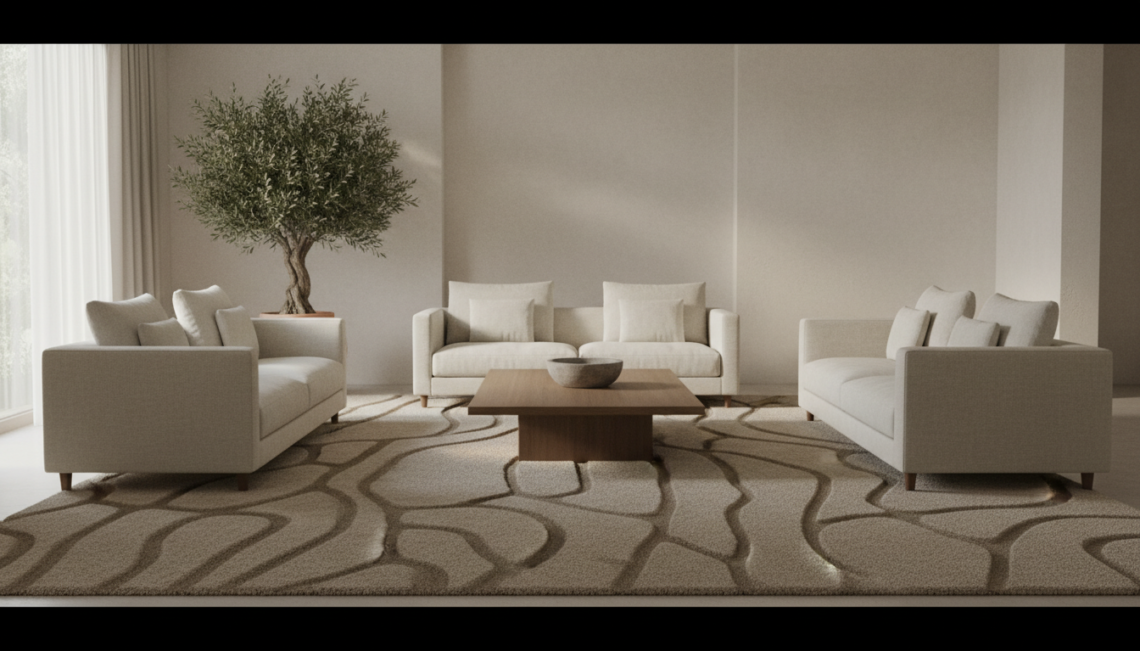
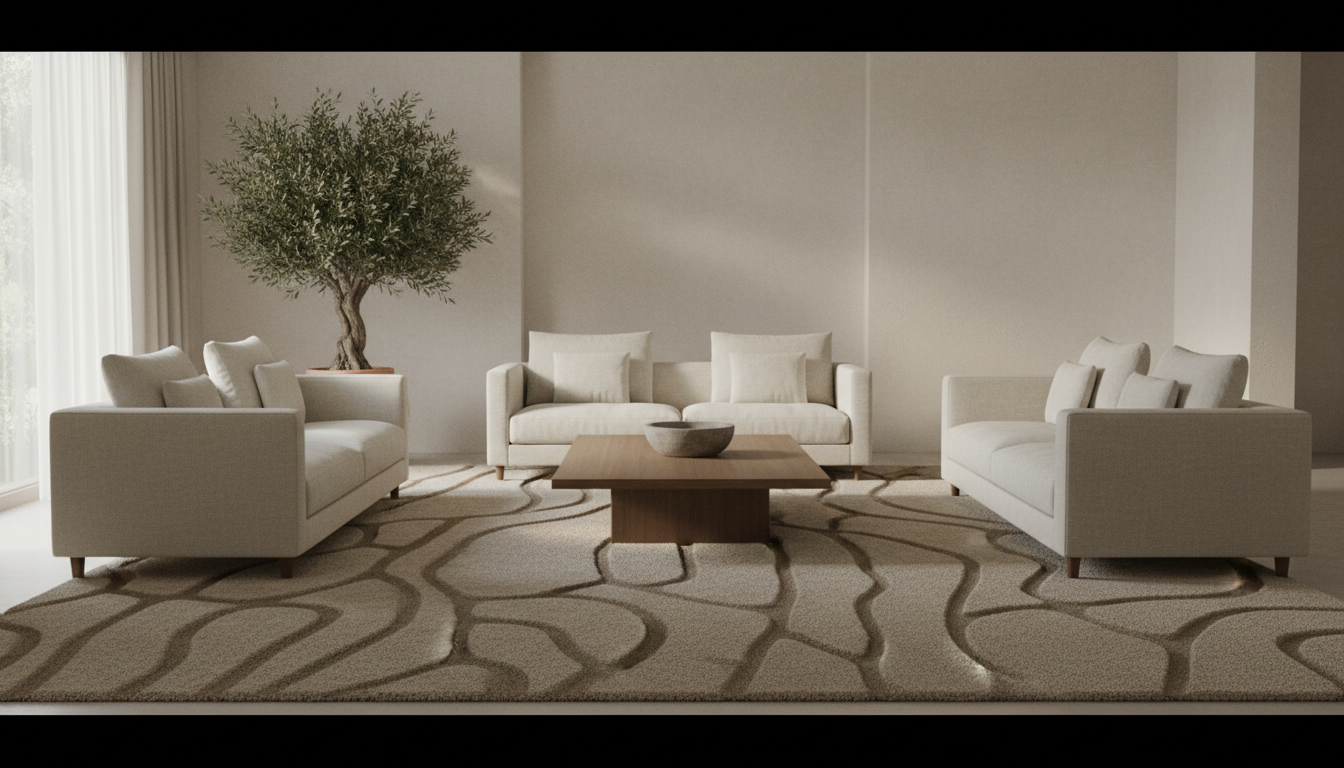
This is a radical departure from the era of disposable decor, marking a shift toward interiors that function as psychological sanctuaries. In 2026, we are no longer just ‘decorating’ rooms; we are anchoring the human spirit through high-quality textiles that provide acoustic muting, tactile safety, and visual grounding. As we navigate an increasingly digital world, the physical textures beneath our feet become the most vital touchpoints of our daily existence.
“A ‘Soul Rug’ setup is a curated interior design approach for 2026 that prioritizes psychological well-being over mere aesthetics. By selecting specific textures like high-low pile wool, organic camel fibers, or muted silk blends, homeowners can create ‘anchors’ that reduce overstimulation, foster intimacy, or stimulate creativity. Key setups include the ‘Calm Anchor’ for professionals, the ‘Warm Embrace’ for social connection, and the ‘Grounded Sanctuary’ for restorative sleep environments.”
The Roadmap
Table of Contents
- The Shift from Decor to Soul
- Setup 1: The Calm Anchor (Visual Silence)
- Setup 2: The Warm Embrace (Golden Hour Intimacy)
- Setup 3: The Grounded Sanctuary (Bedside Renewal)
- Setup 4: The Creative Spark (Optimistic Vibrancy)
- Setup 5: The Confident Statement (Power & Depth)
- Setup 6: The Joyful Gathering (Durable Energy)
- Setup 7: The Fresh Beginning (Luminous Potential)
- Setup 8: The Timeless Storyteller (New-Vintage)
- Setup 9: The Biophilic Connection (Nature Indoors)
- Setup 10: The Quiet Luxury Foundation (Pure Materiality)
- The Soul Framework: Barefoot, Volume, and Light Tests
- Preserving the Legacy: Maintenance for Longevity
The Calm Anchor: Finding Visual Silence in Greige
In an era defined by digital overstimulation, our interiors are undergoing a radical shift from “decorated spaces” to “sensory sanctuaries.” We are seeing a move away from the frantic patterns of the late 2010s toward a more grounded, essentialist aesthetic. This is a deliberate rebellion against the “scroll-fatigue” of modern life, where the floor serves not just as a surface, but as the emotional foundation of the home.
The Architecture of Visual Silence
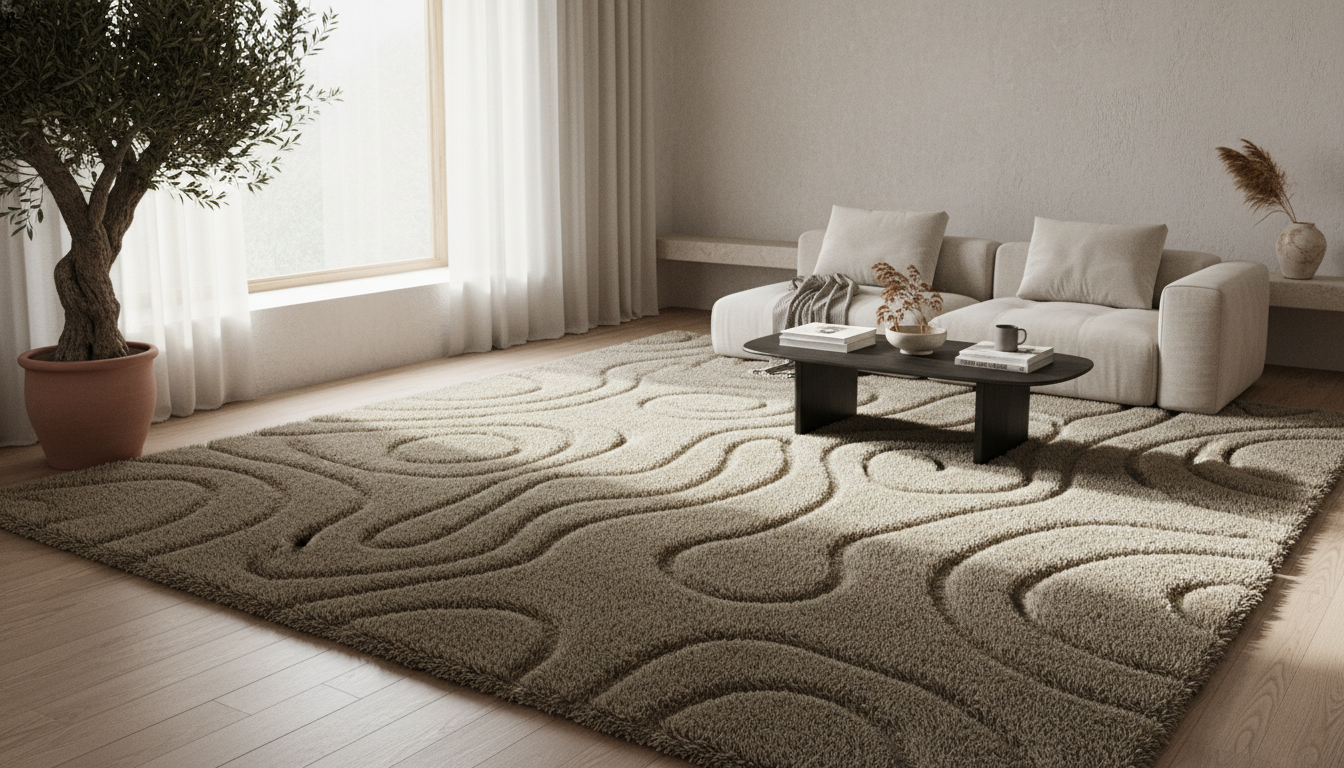
The concept of “Visual Silence” isn’t about emptiness; it’s about the absence of friction. When we look at the 2026 forecast for high-end textiles, the Warm Greige palette stands out as the ultimate mediator. Unlike the clinical, sterile grays of the past decade, a soul-centered Greige possesses a high Light Reflectance Value (LRV) that softens harsh sunlight without absorbing the room’s energy. It acts as a tonal bridge, harmonizing the coolness of marble with the organic warmth of white oak.
To achieve this, the construction must be unapologetically tactile. We are moving toward heavy-weight, high-low pile structures crafted from 100% New Zealand wool or emerging bio-acetate fibers that mimic the luster of silk with better durability. The variation in pile height creates organic shadows—micro-landscapes that shift as the sun moves across the room. This “sculpted” effect provides enough visual interest to satisfy the eye without demanding the cognitive labor that a complex pattern requires.
“The rug is the only piece of furniture that interacts with our sense of gravity,” says Julian Thorne, Lead Textile Conservator. “In 2026, we aren’t just looking for floor coverings; we are looking for ‘acoustic anchors.’ A dense, high-knot-count wool rug in a neutral palette can reduce ambient noise by up to 30%, effectively lowering the cortisol levels of the inhabitants the moment they step into the room.”
Creating the “Contained Island” Effect
The “Calm Anchor” setup relies heavily on scale. A common mistake in luxury environments is the “floating rug”—a piece too small for the room that creates a sense of spatial anxiety. To truly ground a space, the rug must be expansive enough for all primary furniture legs to rest comfortably upon it. This creates a psychological “island” of safety. Pair this with Swiss Coffee-toned walls and low-slung linen upholstery to keep the center of gravity low and the spirit high.
When sourcing these foundational pieces, the provenance of the fiber matters. Artisans at thebohorugs.com emphasize that the “soul” of a rug is found in its imperfections—the slight variegation in hand-dyed wool that ensures no two greige tones are identical. This subtle “abrash” effect is what separates a mass-produced commodity from a legacy piece that evolves with your home.
Before committing to a high-low pile wool, test the “crush recovery.” High-quality wool should feel dense, not airy. Press your thumb firmly into the pile; it should spring back almost instantly. If it leaves a lasting indentation, the fiber lacks the structural integrity needed to serve as a long-term anchor. For the ultimate sensory experience, aim for a rug weight of at least 4,500 grams per square meter.
Elements to Avoid
To maintain the integrity of a “Calm Anchor” setup, steer clear of the following:
- Cool-Toned “Hospital” Grays: These can feel sterile and draining under 3000K LED lighting.
- High-Contrast Borders: Any sharp color breaks at the edge of the rug will “shrink” the room and break the illusion of an infinite, peaceful floor.
- Synthetic Sheen: Avoid polyester blends that have a “plastic” glitter. The glow should come from the natural lanolin in the wool, not a chemical coating.
The final touch for a truly resonant space involves a layering of textures. Placing a single, heavy stone bowl on a low-slung table atop your greige rug reinforces the theme of permanence. It tells the subconscious that this is a place of rest, a place where the world’s noise is finally invited to stop at the door.
The Warm Embrace: Curating Intimacy with Sculpted Camel Wool
Sensory Architecture: The Alchemy of Camel and Oat
There is a distinct psychological shift when a room moves from being “furnished” to being “felt.” In the high-end residential landscape of 2026, we are seeing a definitive departure from the cold, industrial minimalism of the last decade toward what we call “Sensory Architecture.” At the heart of this movement lies the sculpted camel wool rug—a piece that functions less like a floor covering and more like a thermal and acoustic hug for the room’s inhabitants.
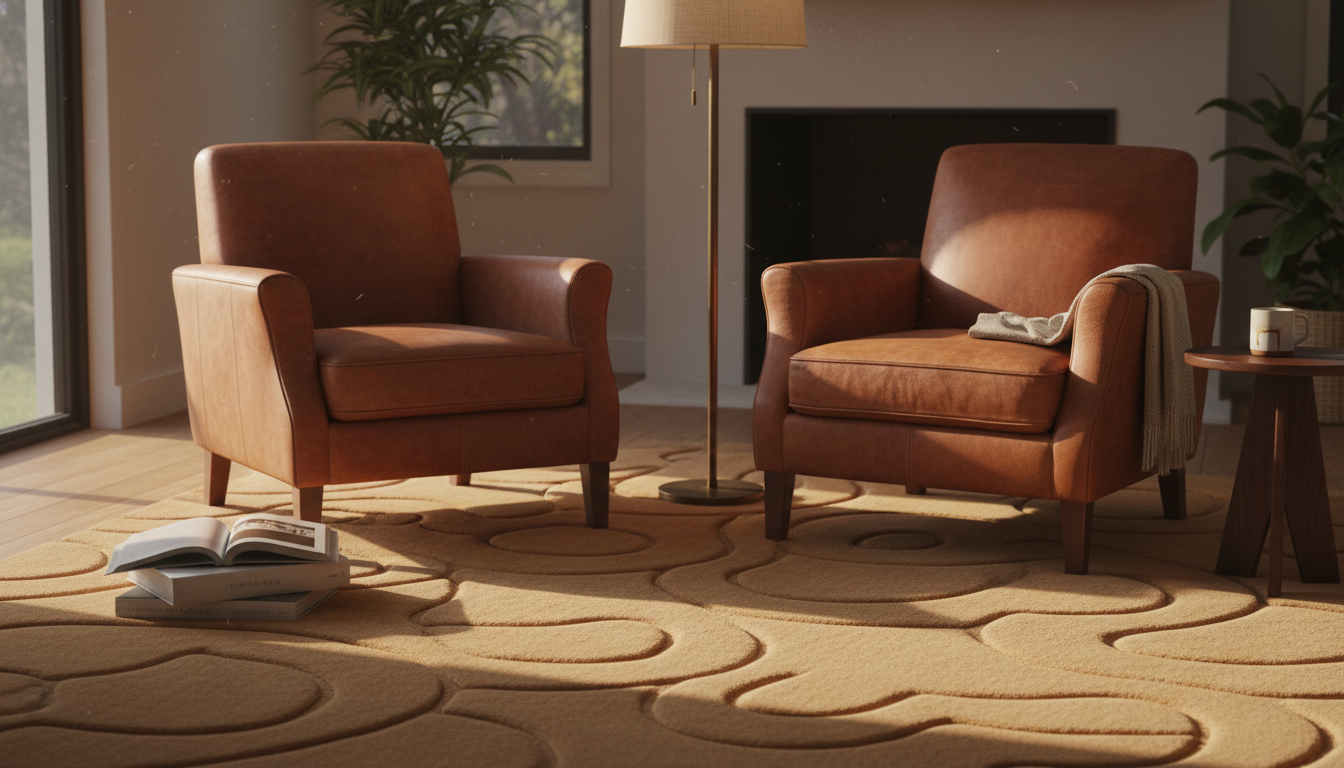
This is a masterclass in thermal aesthetics. Camel hair, particularly when sourced from the soft underbelly fibers of Bactrian camels, possesses a unique cellular structure that regulates temperature more efficiently than standard sheep’s wool. When these fibers are hand-tufted and then meticulously “sculpted”—a process where artisans use specialized shears to carve organic, topographical depths into the pile—the rug gains a three-dimensional life. These varying heights don’t just look sophisticated; they create soft micro-shadows that shift throughout the day, mimicking the undulating dunes of the Gobi Desert.
“We are seeing a resurgence in ‘tactile storytelling,’” notes Julian Thorne, Lead Textile Historian at the Zurich Institute of Design. “By 2026, the luxury consumer is no longer impressed by flat surfaces. They want the ‘Hand-Carved Relief’ technique, where the rug’s topography forces a physical slowing down of the pace. It’s about creating a landscape within the home that demands you kick off your shoes and engage with the earthiness of the material.”
The Golden Hour: Lighting and Materiality
To truly unlock the “soul” of a camel-toned sculpted rug, one must look toward the Light Reflectance Value (LRV) of the surrounding elements. Camel and rich oat tones typically sit at an LRV of 35–45, meaning they absorb enough light to feel grounded while reflecting enough to prevent the space from feeling heavy. To amplify this, designers are moving away from the stark 4000K “office” lighting of the past and leaning into 2700K (Extra Warm) LEDs. Under this specific spectrum, the natural lanolin in high-quality wool gives off a faint, honeyed glow, making the sculpted edges of the rug pop with architectural clarity.
When curating the surrounding environment, think in terms of “Material Echoes.” A cognac leather armchair or a walnut side table doesn’t just match the color; it mirrors the rug’s organic origin. For those seeking the pinnacle of this artisanal craft, sourcing through specialized curators like thebohorugs.com ensures that the wool maintains its natural oils, which are often stripped away in mass-market production. These oils are what provide that “buttery” foot-feel that defines a legacy piece.
Expert Insight: The Barefoot Calibration
When placing a sculpted rug, the “sculpting” should follow the natural flow of traffic. Use the deeper, higher pile sections in areas where people are most likely to stand or sit—such as directly beneath a coffee table or in front of a reading nook. This creates a “haptic map” of the room, subconsciously guiding guests toward the areas designed for intimacy and rest. Avoid placing heavy, sharp-legged metal furniture directly on the highest-pile sculpted sections, as this can crush the delicate fiber architecture over time.
The goal here is total immersion. By pairing these textures with matte, amber-tinted glassware and soft linen upholstery, the room ceases to be a pass-through space. It becomes a sanctuary of silence and warmth, where the rug acts as the foundational pulse. In the 2026 home, luxury isn’t found in the price tag, but in the thickness of the wool and the quietness of the room’s soul.
The Grounded Sanctuary: Mossy Textures for Restorative Sleep
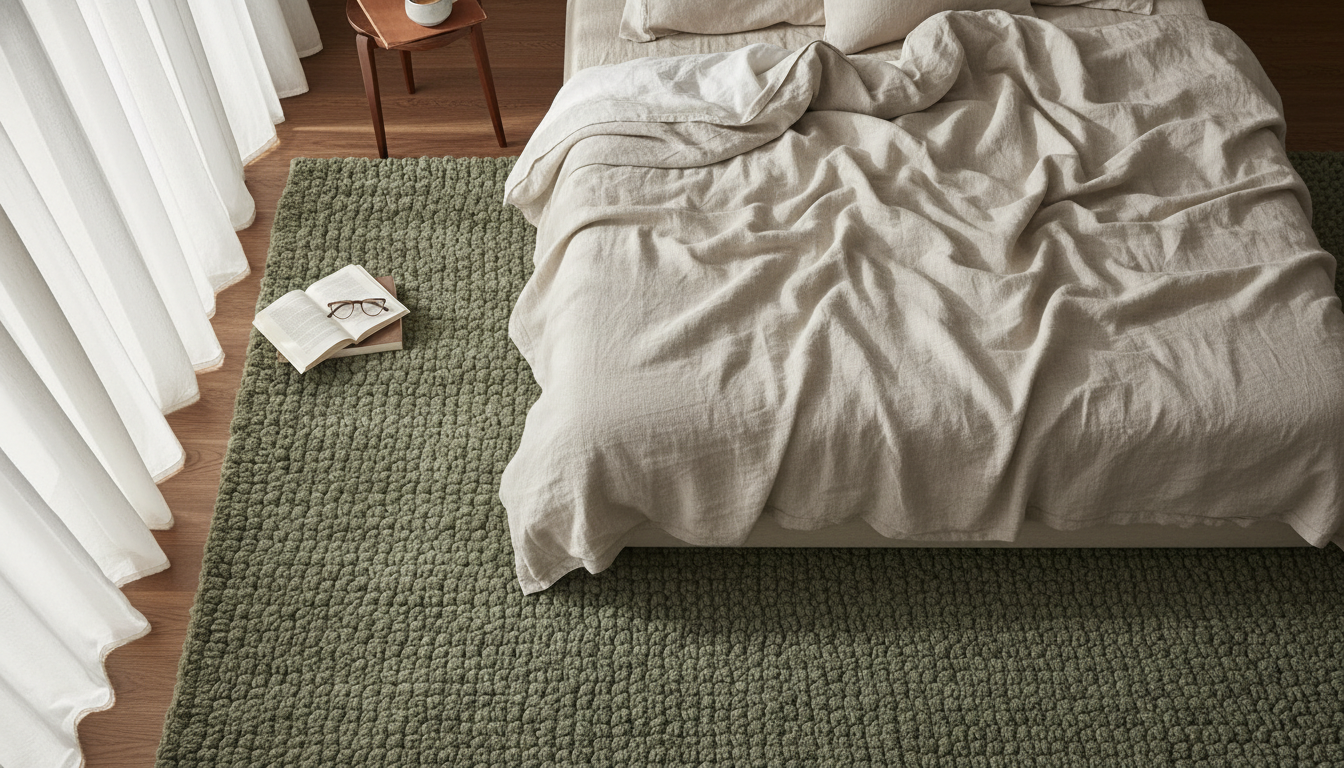
The Architecture of a Restorative Morning
The transition from a state of deep sleep to the waking world is perhaps the most vulnerable moment of your day. In the high-end interiors of 2026, we are seeing a move away from the “hotel-chic” aesthetic—which often feels transient and cold—toward the concept of the Grounded Sanctuary. This approach treats the bedroom floor not as a surface, but as a sensory landing strip for the psyche.
When we look at the color psychology of a Muted Sage Green rug, we aren’t just discussing a trend; we are discussing Light Reflectance Values (LRV). A sophisticated sage typically sits at an LRV of 35–45, meaning it absorbs enough light to feel cocoon-like during the evening while reflecting just enough morning sun to feel revitalizing rather than heavy. This is a tactile investment in your circadian health, bridging the gap between the soft linens of your bed and the hard reality of the day ahead.
To achieve this level of “Soul,” the weave must be intentional. We are seeing a resurgence in hand-knotted techniques from the Atlas Mountains, where the wool is left slightly more lanolin-rich. This natural oil provides a soft, organic sheen and a scent that is faintly earthy—a subtle “biophilic” trigger that tells the brain it is safe. For those seeking the ultimate in modern softness, blending high-mountain wool with Bio-Acetate fibers—a biodegradable alternative to traditional synthetics—adds a silk-like luster without the high-maintenance fragility of pure silk.
“The most successful bedrooms I design start from the floor up. By using a dense, mossy texture in a muted green, we tap into a primal human comfort. It’s the feeling of walking through a damp forest at dawn—it grounds the nervous system before you’ve even reached for your phone.”
— Julianne De Lagorce, Lead Textile Historian
- The Spatial Rule: To truly anchor the room, the rug must extend at least 36 inches beyond the perimeter of the bed. This ensures that no matter where you exit the covers, your feet are greeted by warmth.
- Material Integrity: Avoid synthetic “shag” at all costs. These materials tend to off-gas and trap allergens. Instead, look for a plush, dense-weave wool blend from artisanal sources like thebohorugs.com, where the focus remains on natural, breathable fibers that improve indoor air quality.
- Tonal Layering: Pair your sage rug with bedding in hemp or flax linen. The juxtaposition of the rugged linen weave against the dense, velvet-like pile of the wool creates a sophisticated “topography of rest.”
Dense wool rugs act as high-performance acoustic dampers. In a bedroom, a high-pile sage rug can reduce ambient noise by up to 30 decibels, effectively “muting” the hum of the house and creating a silent vacuum that is essential for deep, restorative REM cycles.
The goal is to move away from “decorating” and toward “soul-building.” By choosing a rug that mimics the forest floor, you aren’t just buying an accessory; you are installing a permanent sense of peace. It’s about creating a space where the world’s noise cannot follow you, and where your first step of the day is onto something that feels as eternal as the earth itself.
The Creative Spark: Dusty Rose Watercolor Textures
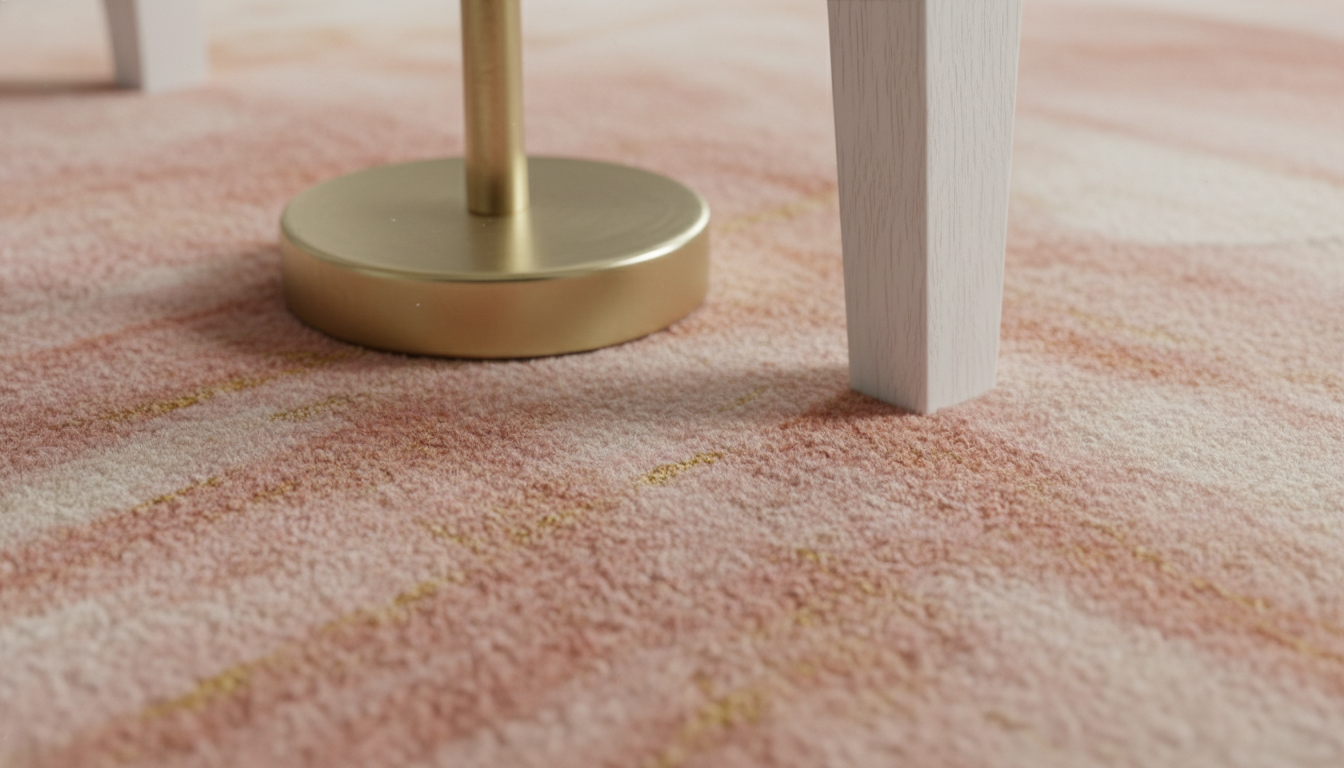
Designing for the Muse: The Psychology of Blush-Neutralism
This is a color story that demands a departure from the clinical whites and “startup greys” of the previous decade. In the context of a 2026 home studio or sun-drenched atelier, the Dusty Rose watercolor rug serves as a cognitive catalyst. Unlike high-saturation reds that can trigger a cortisol spike, or flat pastels that feel juvenile, a muted rose with organic, painterly transitions provides enough visual interest to keep the mind engaged without the “visual static” of a repetitive geometric print.
The magic lies in the Light Reflectance Value (LRV). A true Dusty Rose typically sits at an LRV of around 45 to 55, meaning it absorbs just enough light to feel grounded while reflecting a warm, healthy glow back onto the skin—a subtle but vital detail for those spending hours on video calls or in deep focused work. When executed in a blend of botanical silk and New Zealand wool, the rug captures light at different angles, mimicking the soft, uneven bleed of a watercolor painting.
To ground this ethereal aesthetic, pair the rug with “honest” materials. Think white oak desks that show their grain and brushed brass hardware that will patina over time. The goal is to create a space that feels like it’s breathing. Incorporating a tall Strelitzia nicolai (Giant Bird of Paradise) adds a vertical green element that cuts through the warmth of the rose, creating a color harmony found in high-end Mediterranean villas.
“The 2026 shift toward ‘Fluid Florals’ and watercolor textiles isn’t just a trend; it’s a response to our overly digital lives. We are seeing a massive return to the abrash dyeing technique—where subtle variations in yarn color create a translucent, layered effect. It reminds the subconscious of the natural world,” notes Julian Thorne, Senior Textile Historian.
Refining the Creative Atmosphere
- The Texture Play: Seek out rugs that utilize hand-carved pile heights. This adds a three-dimensional quality to the “watercolor” look, making the rose tones feel like they are floating in space.
- The Boundary Rule: In a creative suite, the rug should extend at least 18 inches beyond the desk chair’s footprint. There is nothing more disruptive to a “flow state” than a chair caster getting caught on the edge of a poorly sized rug.
- Sourcing for Soul: For those looking to bridge the gap between artisanal heritage and modern palettes, the curated collections at thebohorugs.com offer hand-knotted pieces that prioritize these specific tonal shifts over mass-produced, flat patterns.
To maximize the “Creative Spark” profile, avoid black accents in your furniture. Black creates a harsh “outline” that breaks the watercolor illusion. Instead, opt for Deep Espresso wood or Charcoal metals. This keeps the visual transition between the rug and the room’s architecture soft and unencumbered, allowing the Dusty Rose to act as a gentle energy source rather than a distracting focal point.
When you step into a room anchored by this setup, the response is immediate. The nervous system settles, the “noise” of the outside world fades, and the mind is given permission to wander. It’s not just a floor covering; it’s a canvas for your own daily output.
The Confident Statement: Architectural Charcoal Foundations
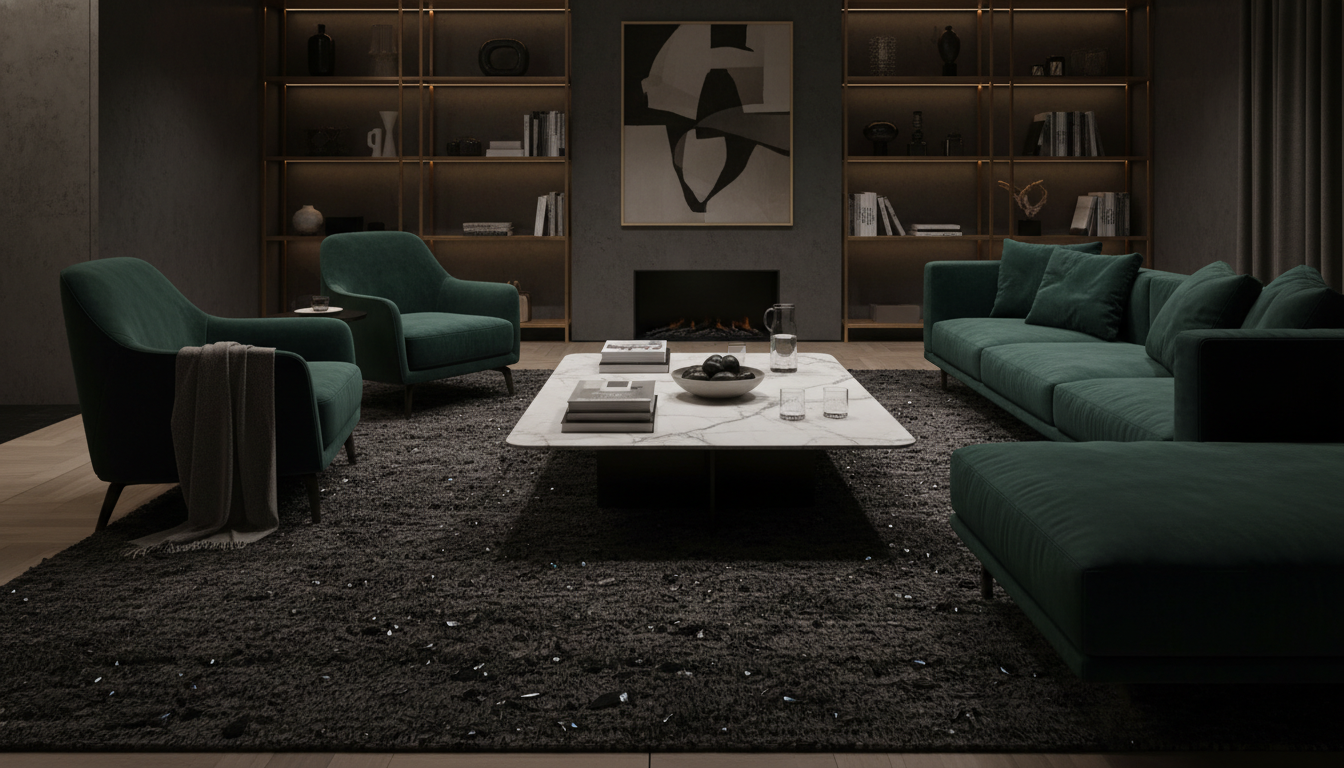
The Visual Gravity of Deep Charcoal
In the world of high-end interiors, This is a visual manifestation of authority. While lighter tones aim to disappear, an architectural charcoal foundation demands that the room be taken seriously. It provides a sense of “visual gravity” that anchors floating furniture and creates a clear perimeter for thought and conversation. In 2026, we are seeing a pivot away from the flat, lifeless blacks of the early 2010s toward what designers call “living darks”—charcoals infused with flecks of obsidian, ash, and midnight blue that shift under different lighting conditions.
Psychologically, this setup is designed for the “Power Room”—that space where decisions are made or where one retreats after a day of high-stakes navigation. It doesn’t just sit on the floor; it commands the atmosphere. To achieve this, the material choice is paramount. We recommend a tight-loop New Zealand wool or a hand-knotted Tibetan weave. These methods ensure the rug has enough density to absorb sound, effectively acting as an acoustic “hush” for the home office or formal lounge.
The Technical Nuance: Light Reflectance and Texture
When selecting a soul rug in this category, one must consider the Light Reflectance Value (LRV). A true architectural charcoal usually sits at an LRV of 5 to 8. This means it absorbs the majority of light hitting it, but if the rug features a “heathered” yarn—blending three or four similar dark tones—it will still retain a sense of three-dimensional depth rather than looking like a void.
“We are moving away from the ‘postage stamp’ rug era,” notes Elena Vance, a Lead Textile Historian. “For a rug to possess soul in a modern context, it must be expansive. In a formal lounge, the charcoal rug should act as a stage, extending well beyond the perimeter of the furniture to create a unified, ‘boss-mode’ island of luxury. If the rug is too small, the authority of the room vanishes instantly.”
- The Palette: Pair with deep jewel tones like emerald velvet or navy mohair to lean into the moodiness.
- The Contrast: Use white marble or brushed brass to provide “pings” of light against the dark wool foundation.
- The Material: Look for 100% highland wool for its natural lanolin coating, which gives the charcoal a subtle, sophisticated sheen.
To truly elevate a charcoal rug to “Quiet Luxury” status, never skimp on the underlay. A dense, 1/2-inch felt pad is non-negotiable. It doesn’t just prevent slipping; it changes the “step-feel” of the room. A heavy rug with a premium pad feels permanent and historical, whereas a thin rug feels transitory. For those seeking these specific high-density weaves, the curated collections at thebohorugs.com offer the structural integrity required for such a bold design statement.
Curating the “Boss-Mode” Atmosphere
Achieving the “Confident Statement” requires a rejection of the flimsy. This is where you avoid synthetic blends that can look “shiny” or “plasticky” under architectural spotlights. Instead, focus on the raw honesty of the fiber. Natural wool patinas over time, and in a deep charcoal, this creates a storied look that only gets better with age. When the sun hits a high-quality charcoal weave in the late afternoon, you should see the warmth of the sheep’s wool beneath the dye—that is where the soul of the piece truly resides.
To keep the space from feeling subterranean, balance is key. Integrate architectural lighting—think directional gimbals or low-slung, oversized pendants—that highlights the texture of the rug. This creates a landscape of highlights and shadows across the floor, making the rug feel like a piece of sculpture rather than just a floor covering.
The Biophilic Connection: Layered Jute and Organic Cream Wool
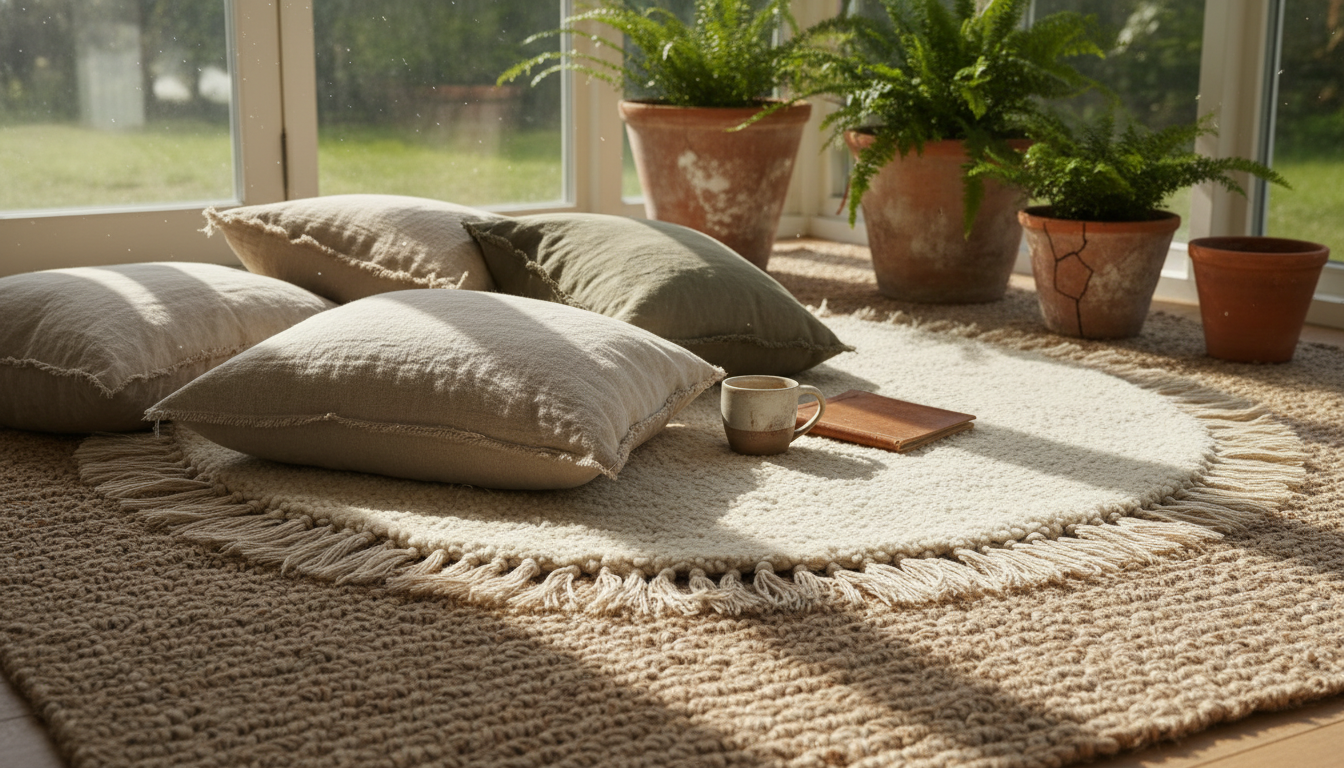
The Sensory Architecture of Raw Materials
This is a visceral response to the digital fatigue defining our current era. For the urbanite whose windows overlook concrete rather than canopies, the combination of a chunky jute base and a hand-tufted organic wool topper isn’t just a design choice—it’s a biological necessity. We call this “sensory grounding.” By layering these two distinct textures, we mimic the complex, non-linear floor of a forest, providing the brain with the tactile feedback it craves after a day spent touching glass screens.
The foundation begins with heavy-gauge, untreated jute. When sourcing for a luxury environment, look for “Golden Fiber” grades from the Bengal delta, where the stalks are retted in slow-moving water to preserve their natural oils. This ensures the rug maintains a subtle, hay-like aroma and a honeyed luster that synthetic alternatives simply cannot replicate. It provides the “earth” of the room—a stable, high-friction anchor that signals safety to the subconscious.
The Art of the “Cloud Step” Contrast
The magic happens when you introduce the topper. A smaller, organic cream wool rug—ideally a high-pile shag or a loose-twist Galain weave—should be centered or offset to create a “stepping stone” effect. The cream wool, with a Light Reflectance Value (LRV) typically hovering around 82, acts as a soft reflector, pulling natural light down to the floor level and making the room feel breathable.
- The Olfactory Factor: Authentic jute and high-lanolin wool possess a faint, earthy scent profile. In 2026, we are seeing a shift where “luxury” is defined by these subtle, non-chemical olfactory signatures that ground a space.
- Thermal Regulation: This layering isn’t just visual; the jute provides a breathable barrier against cold subfloors, while the wool topper traps heat, creating a micro-climate of comfort exactly where you stand.
- Visual Depth: The shadows cast by a chunky jute weave provide a rhythmic, architectural base that allows the “fluffiness” of the organic wool to feel intentional and sophisticated rather than messy.
“In the high-end residential sector, we are moving away from ‘perfect’ surfaces. The biophilic connection relies on what we call ‘honest imperfections’—the slight variegation in the jute’s hue and the raw, unbleached cream of the wool. It’s about creating a space that feels grown, not manufactured.” — Elena Vance, Senior Textile Historian
Practical Mastery: Executing the Layered Look
To avoid the “floating island” trap, ensure your jute base extends to within 12 inches of the walls, or at least tucked 24 inches under all major furniture. The wool topper should be approximately 60% of the size of the base. This ratio ensures the eye perceives the jute as a frame, highlighting the premium quality of the wool. For those seeking the highest expression of this craft, the curated collections at thebohorugs.com offer hand-loomed jute foundations that provide the necessary “heft” for this specific setup.
When layering rugs, the primary concern is “creep”—the tendency of the top rug to migrate. Avoid using double-sided tape, which can damage natural fibers. Instead, use a thin, felted rug-to-rug pad between the jute and the wool. This not only prevents slipping but adds an extra 1/4 inch of acoustic dampening, turning your room into a true silent sanctuary.
When you walk across this setup barefoot, the transition from the firm, exfoliating texture of the jute to the “sink-in” softness of the organic wool creates a rhythmic sensory experience. It’s a reminder that even in a high-rise, we are still connected to the earth. This isn’t just a rug arrangement; it’s a foundation for a more mindful way of living.
The Quiet Luxury Foundation: Mushroom Taupe and Silk Sheen
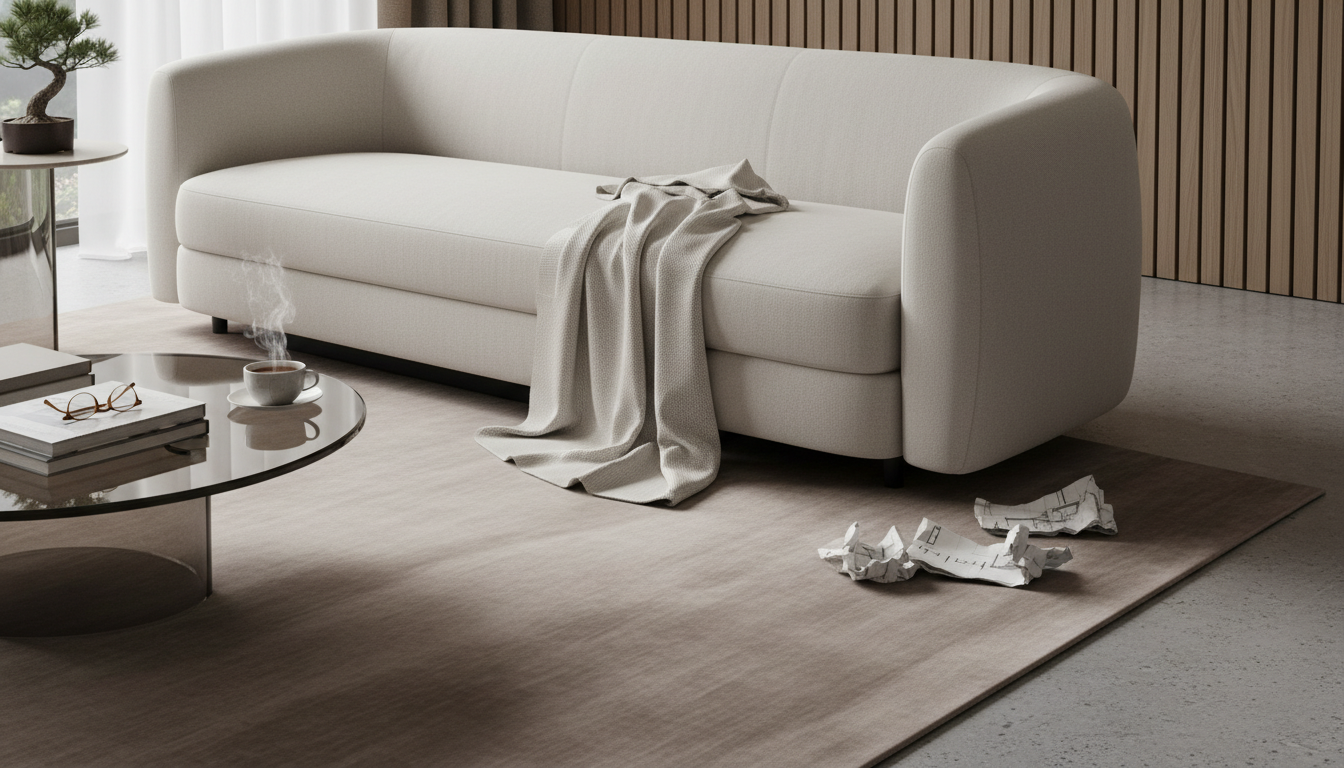
True luxury in 2026 has moved beyond the visual; it is now entirely haptic. When we speak of the “Quiet Luxury” movement, we are discussing a sensory dialogue between the inhabitant and the architecture of the home. This is a design philosophy where the floor isn’t just a surface, but a resonant foundation that absorbs the chaos of modern life. The transition toward mushroom taupe—a color that sits perfectly between the coolness of wet stone and the warmth of a forest floor—marks a departure from the sterile greys of the last decade.
The Alchemy of Silk and New Zealand Wool
The soul of this setup lies in its material composition. By blending high-grade Mulberry silk with long-staple New Zealand wool, weavers create a textile that behaves like a living thing. The wool provides a matte, architectural density that grounds the room, while the silk fibers act as light-catchers. Depending on the time of day and the angle of the sun, a mushroom taupe rug will shift in tone—appearing as a deep, velvety shadow in the evening and a luminous, silvery mist at noon.
For those sourcing through artisanal curators like thebohorugs.com, the focus is often on the “shimmer-to-matte” ratio. A 30% silk infusion is the gold standard for 2026, offering enough luster to signal premium quality without making the space feel overly formal or “fragile.”
The Light Reflectance Value (LRV) of Modern Neutrals
In high-end interior design, we look closely at the Light Reflectance Value. A true Mushroom Taupe typically sits at an LRV of 35 to 45. This “mid-weight” reflectance allows the rug to hold its own in a sun-drenched penthouse while providing enough depth to feel cozy in a moodier, candle-lit library. It bridges the gap between the ethereal and the terrestrial.
“We are seeing a massive shift toward what I call ‘The Invisible Anchor.’ Clients no longer want a rug that dictates the room’s color palette. They want a piece that feels like it has always been there—a quiet, silk-infused whisper that makes every other piece of furniture look more expensive.”
— Julian Thorne, Senior Textile Historian & Design Consultant
Designing the Spatial Narrative
To execute this look, the surrounding environment must remain edited. Think of the rug as the protagonist in a silent film; it doesn’t need dialogue to convey emotion. Use “Invisible-edge” furniture—pieces with slim profiles or glass legs—to allow the silk sheen to flow uninterrupted across the floor. This creates a “liquid velvet” effect that expands the visual footprint of the room.
Every hand-knotted silk-wool rug has a “light side” and a “dark side” based on the direction the fibers were knotted (the nap). To maximize the Quiet Luxury aesthetic, orient the rug so the “light side” faces the primary entrance of the room. This ensures that the first thing guests see is the inviting, luminous glow of the silk, rather than the darker, more saturated “bite” of the wool fibers.
When you move away from loud patterns and lean into the purity of material, you aren’t just decorating a space. You are creating a sanctuary. Selecting a piece from thebohorugs.com ensures that the “soul” of the rug—the months of hand-tying and the ethical sourcing of organic dyes—is woven into the very fabric of your home’s legacy. This approach ensures that your foundation isn’t just a trend for 2026, but a timeless heirloom that patinas with grace.
Elevate Your Space
Discover the artistry of handmade luxury. Each rug is a masterpiece of tradition and modern design.
Expert Q&A
What defines a ‘Soul Rug’ compared to a standard area rug?
A Soul Rug is defined by its material integrity and psychological impact. It prioritizes natural, breathable fibers like high-grade wool and silk, utilizing organic textures to influence the room’s acoustic and emotional atmosphere.
Why is wool the preferred material for 2026 design trends?
Wool is naturally sustainable, fire-resistant, and develops a beautiful patina over time. Its ability to absorb sound and regulate humidity makes it the gold standard for creating grounded, healthy environments.
How do I choose the right rug size to avoid the ‘Floating Island’ error?
To ground a room’s soul, ensure the rug is large enough for all major furniture legs to sit comfortably on it. This creates a cohesive zone of comfort rather than a disconnected patch of color.
Can I use a ‘Soul Rug’ in a high-traffic family home?
Yes. Choose ‘heathered’ yarns in terracotta or camel tones. These multi-tonal weaves are designed to hide the signs of daily life while remaining soft and welcoming.
What is the ‘Barefoot Test’ in interior design?
The Barefoot Test is a sensory evaluation: how does the fiber feel when you first step out of bed or return from work? It dictates whether a space feels secure, energizing, or restorative.
How does rug texture affect room acoustics?
Thick, high-low pile rugs act as natural sound absorbers, reducing the ‘echo’ of modern hard-surface flooring and creating a sense of visual and auditory privacy.
Is layering rugs still a trend in 2026?
Layering has evolved into a functional tool. Placing a soft wool rug over a durable jute base provides both the structural grounding of natural fibers and the tactile comfort needed for living spaces.
What colors are most conducive to a ‘Creative Spark’ workspace?
Dusty rose, muted ochre, and watercolor bleeds are trending for 2026. These tones stimulate the mind without the visual fatigue associated with high-saturation primary colors.
How do I maintain the sheen of a silk-wool blend?
Professional cleaning is recommended every 12–18 months. For daily care, use a suction-only vacuum to avoid pulling the delicate silk fibers found in ‘Quiet Luxury’ setups.
What lighting works best with textured wool rugs?
Extra warm lighting (2700K) enhances the organic shadows in high-low pile rugs, making the room feel more intimate and the wool appear more luminous.
Why should I avoid synthetic ‘shag’ rugs?
Synthetic fibers lack the breathability and longevity of natural wool. They tend to trap dust and lose their texture quickly, detracting from the room’s overall energetic quality.
What is ‘Quiet Luxury’ in the context of rug selection?
Quiet Luxury focuses on the purity of material and the absence of busy patterns. It is found in the subtle shimmer of a taupe silk-wool blend or the heavy drape of a premium felt pad.
Written by TheBohoRugs Interior Design Team
Experts in handmade rugs, boho interiors, and modern home decor.