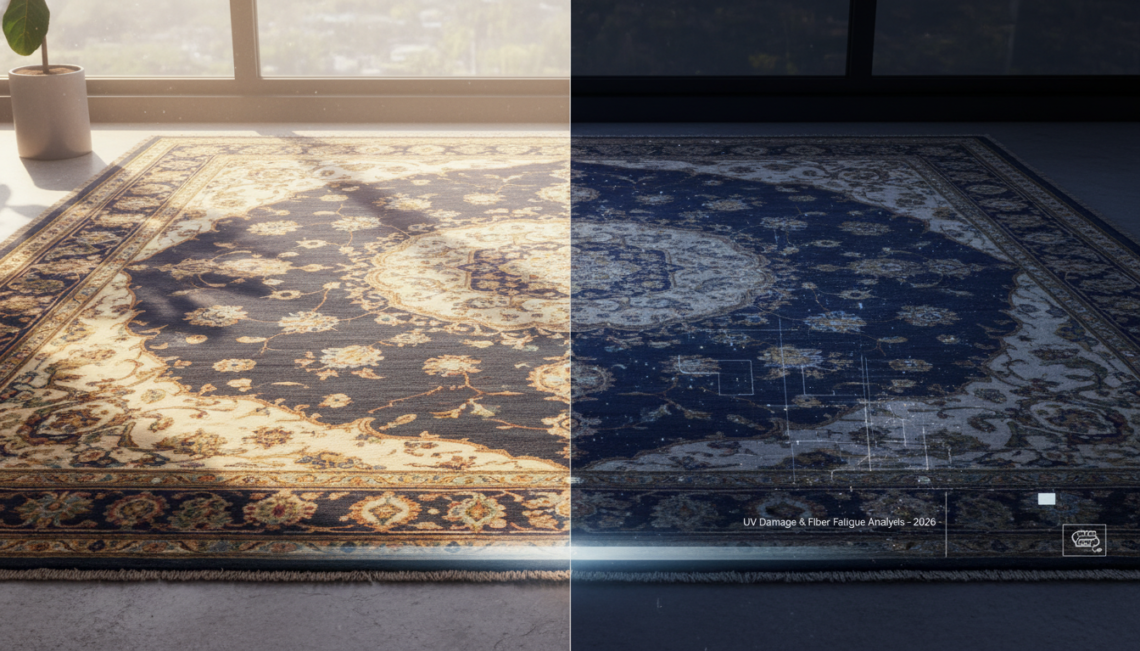
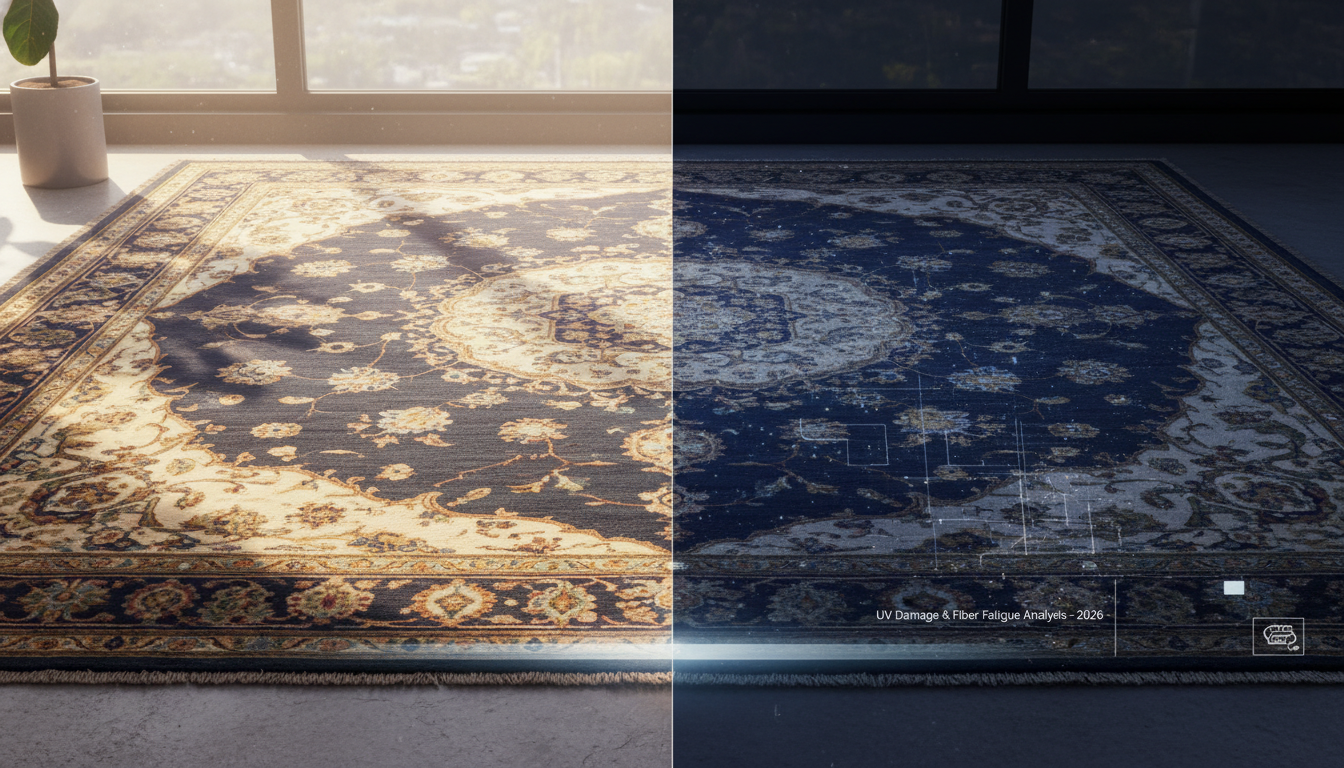
Unearthing a **New Blog Topic** that shifts your perspective on interior design begins with the realization that your rug is not a static object, but a living ecosystem enduring a silent, microscopic war every single day. While we obsess over the curation of our walls and the silhouettes of our furniture, our rugs are quietly battling UV photodegradation, fiber-shearing dust migration, and the physics of pile fatigue. In the luxury landscape of 2026, true sophistication is no longer just about the initial acquisition; it is defined by a scientific understanding of how to preserve these textile investments against the invisible forces that threaten to dismantle their beauty from the inside out.
“To protect high-end rugs from invisible damage in 2026, homeowners must address four primary threats: UV-induced photodegradation, fiber crush through pile fatigue, deep-seated dust migration, and humidity-driven material breakdown. Longevity is achieved through a combination of rotating rugs every six months to distribute light and traffic, utilizing dual-density rug pads to absorb structural stress, and implementing professional deep-cleaning schedules that remove abrasive grit from the rug’s foundation, preventing the fibers from being cut at the base during foot traffic.”
The Roadmap
Table of Contents
- The Invisible War: Daily Micro-Degradation
- Photodegradation: The Molecular Impact of UV Light
- Pile Fatigue: Why Your Rug Loses Its Resilience
- Dust Migration: The Silent Sandpaper Effect
- Room Scenarios: Tailoring Protection to Your Space
- The 2026 Maintenance Blueprint for Heirloom Preservation
- The Future of Textiles: Self-Healing and UV-Resistant Fibers
The Invisible War: Daily Micro-Degradation
The Quiet Erosion of the Loom
When you close the door to your living room at night, the space feels static, a curated tableau of stillness. Yet, beneath the surface of your favorite hand-knotted piece, a relentless series of physical and chemical reactions is unfolding. In the design world of 2026, we’ve moved past treating floor coverings as mere “decor.” We now recognize them as living textiles that exist in a state of permanent environmental flux. This isn’t just about wear and tear; it’s about the slow, microscopic degradation that happens when your back is turned.
The Molecular Breakdown of Color
Light is perhaps the most deceptive of all design elements. While we crave those floor-to-ceiling windows to highlight a rug’s Light Reflectance Value (LRV)—especially those trending 2026 palettes of desaturated ochre and sage—that same light is a catalyst for photodegradation. Photons from UV rays act like tiny projectiles, literally smashing into the chemical bonds of the dyes. Even if you’ve invested in high-end bio-acetate blends or traditional vegetable dyes from the Atlas Mountains, the sun never stops its work. This isn’t just a fade; it’s a structural weakening of the fiber’s cuticle, leaving it brittle and prone to shedding.
The “Sandpaper Effect” Beneath the Pile
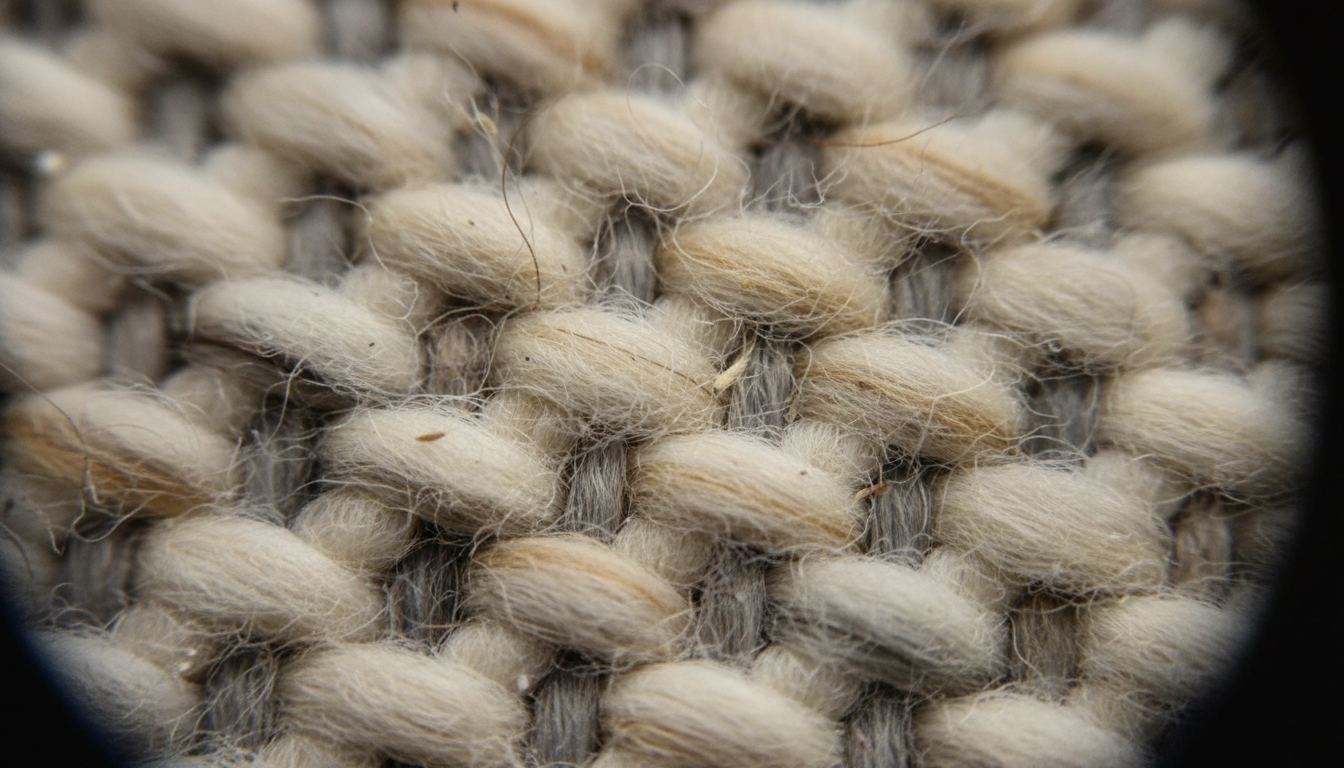
The most significant damage isn’t what happens on top of the rug, but what migrates to the bottom. Every time someone walks across the room, microscopic silica particles—essentially tiny shards of glass—are driven deep into the foundation. As these particles settle against the warp and weft, the pressure of your footsteps creates a mechanical shearing action.
Think of it as sandpaper rubbing against silk or wool from the inside out. This internal friction is why rugs often develop “bald spots” that seemingly appear overnight, despite the surface looking clean. At thebohorugs.com, the focus remains on artisanal construction precisely because these traditional knotting techniques allow for better “breathability,” letting those fine dust particles be vacuumed away before they can begin their destructive work.
“In 2026, we are seeing a shift in how we value longevity. We no longer look for rugs that just look good on day one. We look for ‘fiber integrity.’ A rug is a structural entity; its invisible life—the way it handles the compression of its pile and the oxidation of its dyes—is the true measure of its luxury status.”
— Julian Thorne, Lead Textile Historian & Conservationist
Atmospheric Thirst and Fiber Fatigue
Rugs are hygroscopic; they “breathe” the moisture in your home. In a humid coastal apartment, a wool rug can hold a surprising percentage of its weight in water without feeling damp. However, this constant swelling and shrinking of the fibers leads to fiber fatigue. Over time, the natural elasticity of premium wool—its “memory”—begins to fail. This is why high-traffic zones in a minimalist office might lose their loft, resulting in a flattened, lifeless texture that no longer bounces back after a professional cleaning.
- The UV Variable: South-facing windows can accelerate dye breakdown by up to 40% more than northern exposures.
- Static Attraction: Low humidity creates static electricity, which turns your rug into a magnet for pollutants and dander, accelerating deep-fiber contamination.
- The Compression Cycle: Synthetic fibers often “shatter” under pressure, whereas high-quality wool coils, like those found in the curated collections at thebohorugs.com, are designed by nature to resist this daily micro-crushing.
To combat “asymmetrical aging,” design professionals now recommend a 180-degree rotation every six months, regardless of visible wear. This ensures that the photodegradation and compression zones are distributed evenly across the rug’s surface, effectively doubling its aesthetic lifespan and maintaining the uniform integrity of the pile.
Understanding this hidden life changes the way we interact with our interiors. It shifts the narrative from passive ownership to active stewardship. By acknowledging that your rug is constantly responding to light, weight, and air, you can implement the subtle shifts in care—like utilizing high-grade UV window films or investing in density-tested rug pads—that preserve these hand-crafted masterpieces for the next generation.
Photodegradation: The Molecular Impact of UV Light
The Spectral Assault: When Photons Meet Pigment
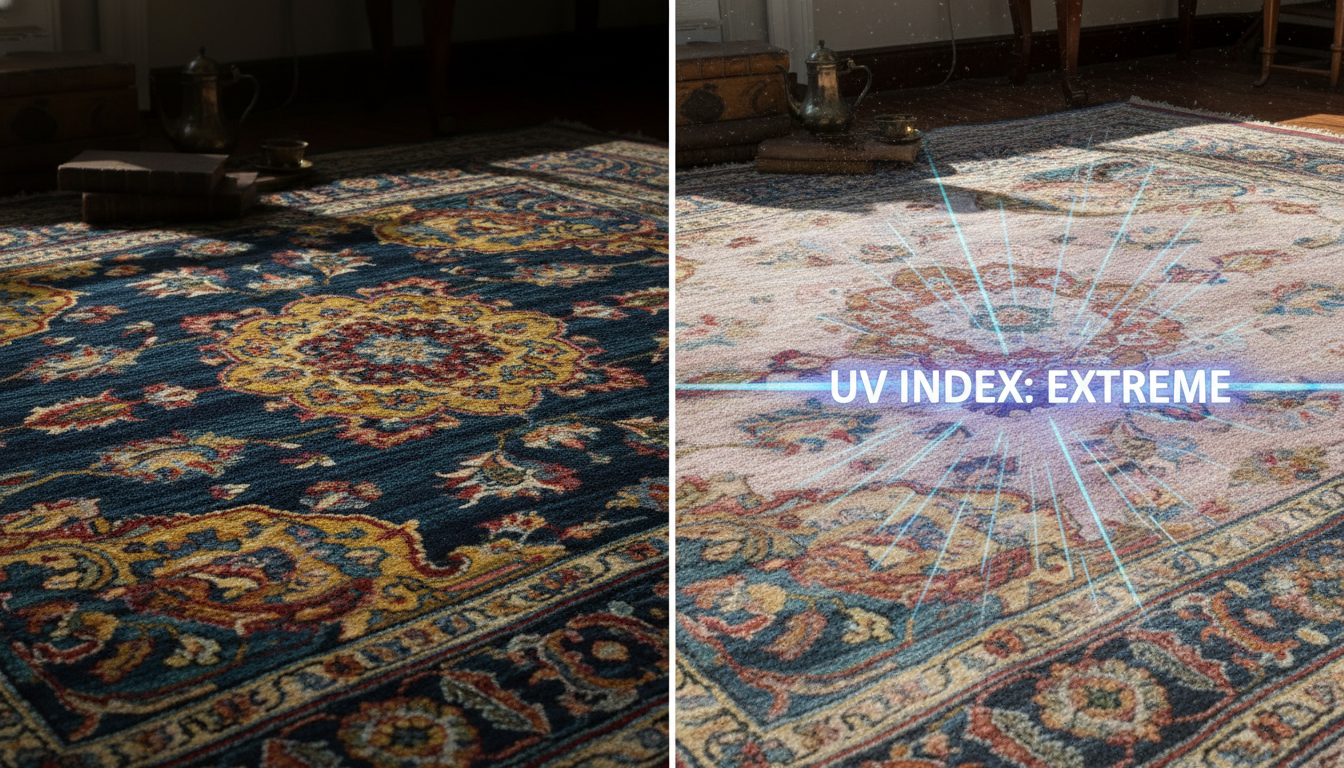
To the naked eye, the morning sun streaming across a living room is the height of interior bliss. Yet, at a molecular level, this light is a relentless bombardment. High-energy ultraviolet (UV) photons act like microscopic scalpels, slicing through the chemical bonds of the dyes and the protein structures of the fibers themselves. This process, known as **photodegradation**, doesn’t just dull the color; it fundamentally alters the rug’s structural integrity. By 2026, the design world has moved past seeing “fading” as a mere aesthetic shift—we now recognize it as **molecular scarring**. While synthetic fibers often undergo a brittle “chalking” effect under heavy UV exposure, natural materials like those found in the artisanal collections at thebohorugs.com handle this stress differently. High-lanolin wool, particularly the hand-spun varieties from high-altitude regions like the Atlas Mountains, possesses a natural lipid barrier that offers a sacrificial layer against UV rays. However, even these resilient fibers have a breaking point where the **Light Reflectance Value (LRV)** of the room can accelerate the breakdown of the fiber’s “cuticle,” leading to shedding and a dry, “crunchy” texture.The ‘Ghosting’ Effect and Chromophore Breakdown
The science centers on the **chromophores**—the parts of the dye molecule responsible for color. UV radiation excites these molecules to the point that their chemical bonds fail. What remains is “ghosting,” where the intricate patterns of a Persian or tribal rug seem to drift away, leaving behind a brittle, straw-like foundation. In the current 2026 landscape, we are seeing a significant shift toward Photo-Stable Pigments and Bio-Acetate fiber blends that are engineered to dissipate this energy as heat rather than allowing it to break the molecular chain.“We often mistake UV damage for simple wear, but it is actually a slow-motion chemical fire,” notes Elena Richter, Lead Textile Archivist. “When a rug loses its vibrancy, it is losing its soul. The fiber becomes hydro-phobic, refusing to take in moisture or conditioning treatments, making the damage irreversible if you don’t intervene at the photon level.”
Strategic Defense in the Modern Interior
Managing this invisible war requires more than just pulling the shades. Design-forward homes in 2026 are increasingly utilizing Spectrally Selective window films that block 99% of UV while allowing visible light to illuminate the space. This allows for the “museum-grade” preservation of investment pieces without living in a darkened room. Equally important is the understanding of **Reflected UV**. Sunlight bouncing off a polished marble floor or a glass coffee table can attack a rug from angles you might not expect, leading to uneven “striping” of the pile. When sourcing hand-knotted pieces from thebohorugs.com, the density of the knotting actually works in your favor; a tighter weave protects the delicate foundation threads from being “sun-bleached” from the inside out, a common failure in lower-quality machine-made alternatives.To ensure your rug ages with the grace of a fine wine rather than a weathered sail, implement the 180-degree rotation every six months. This doesn’t just balance foot traffic; it ensures that the “light-load” is distributed across the entire surface area. In rooms with South-facing windows, consider rugs with a higher Lanolin Saturation Index, as these organic oils act as a natural SPF for the wool fibers, significantly slowing the rate of photodegradation compared to dry, processed yarns.
- Check your LRV: Higher Light Reflectance Values in wall paint (like stark whites) can actually increase the UV bounce-back onto your floor coverings.
- The Indigo Advantage: Natural Indigo dyes, frequently used in premium artisanal rugs, have shown a higher molecular resistance to UV-induced fading than many modern synthetic “hot” pinks or neon oranges.
- Humidity Matters: A bone-dry rug is more susceptible to UV breakage. Maintaining a room humidity of 40-50% keeps the fibers supple enough to resist the “baking” effect of the sun.
Pile Fatigue: Why Your Rug Loses Its Resilience
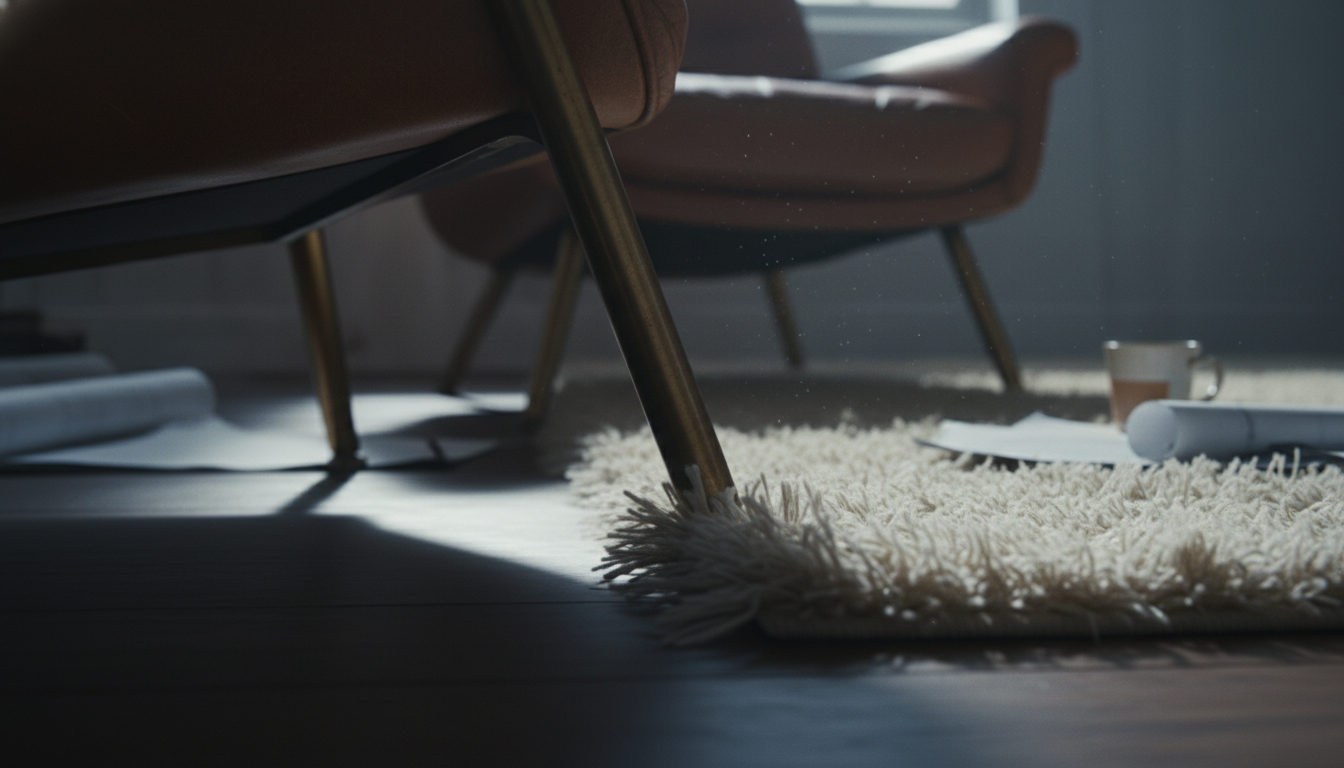
The Architecture of the Underfoot: Why Fibers Lose Their Bounce
When we curate a space, we often obsess over the visual weight of a room, yet we rarely consider the physical pressure exerted on our flooring. Every time you cross your living room, you are subjecting your rug to a localized tectonic event. Under the weight of a human step, fibers are compressed, twisted, and stretched. While a high-quality rug is designed to handle this, pile fatigue sets in when the internal cellular structure of the fiber—the very thing that gives a rug its “loft”—begins to collapse under the stress of repetitive impact.
By 2026, the design world has moved toward “Responsive Textiles,” but the physics of a hand-knotted piece remain grounded in tradition. Whether it’s a high-twist wool from the Atlas Mountains or a modern Bio-Acetate blend, the resilience of your rug depends on its “recovery coefficient.” When fibers stay compressed for too long, they lose their ability to trap air, which is why high-traffic “lanes” eventually look darker and feel thinner than the rest of the piece.
Wool’s Natural Memory vs. Synthetic Limitations
There is a biological reason why seasoned designers point clients toward natural proteins. Wool fibers are shaped like microscopic coiled springs; they possess a natural crimp that allows them to be stretched up to 30% beyond their original length and still snap back. Synthetic fibers, while often more stain-resistant, tend to be “plastic” in the literal sense. Once a synthetic fiber is crushed, the deformation is often permanent because the material lacks the disulfide bonds that give wool its structural memory.
As we look at the sustainable luxury trends of the mid-2020s, the shift back to artisanal techniques is as much about performance as it is about aesthetics. A rug from thebohorugs.com, for instance, relies on these heritage wool-grading standards to ensure that even after years of hosting dinner parties, the pile retains that signature “spring-back” quality that defines a premium investment.
“The soul of a rug lives in its ability to bounce back. A flat rug is essentially a dead rug; the microscopic air gaps that provide thermal insulation and acoustic dampening disappear once the pile is permanently crushed. In the industry, we call this the ‘point of no return’ for the fiber’s integrity.”
— Julian Thorne, Senior Textile Historian
Strategies to Reverse the Crush
Preventing pile fatigue isn’t just about walking softly; it’s about managing the distribution of weight. If you’ve ever moved a heavy mahogany sideboard only to find deep, permanent divots in the rug beneath, you’ve witnessed extreme pile fatigue. To combat this, the 2026 maintenance standard suggests a three-pronged approach:
- Strategic Rotation: Every six months, rotate your rug 180 degrees. This ensures that “traffic lanes” aren’t etched into the same spot year after year, allowing compressed fibers a “rest period” to naturally decompress.
- The Steam-and-Lift Method: For localized furniture crushing, a professional-grade steamer can re-introduce moisture to the fiber’s core, swelling the cells and encouraging them to stand upright again.
- High-Density Padding: A rug pad isn’t just for grip; it acts as a shock absorber. A premium 1/4-inch felt pad absorbs the kinetic energy of a footfall before it can fully crush the rug’s foundation against the subfloor.
Did you know that “faded” spots in high-traffic areas are often not color loss at all? When fibers are crushed flat, they reflect light differently than fibers standing upright. This change in the Light Reflectance Value (LRV) creates a shadow effect that looks like dirt or wear. Before assuming your rug is stained, try a professional counter-pile brushing to see if the “color” returns once the fibers are vertical.
The longevity of a room’s design depends on these invisible structural details. By choosing rugs with high-twist counts and natural resilience, you aren’t just buying a floor covering; you are investing in a piece of functional art that can withstand the silent, daily rigors of a life well-lived.
Dust Migration: The Silent Sandpaper Effect
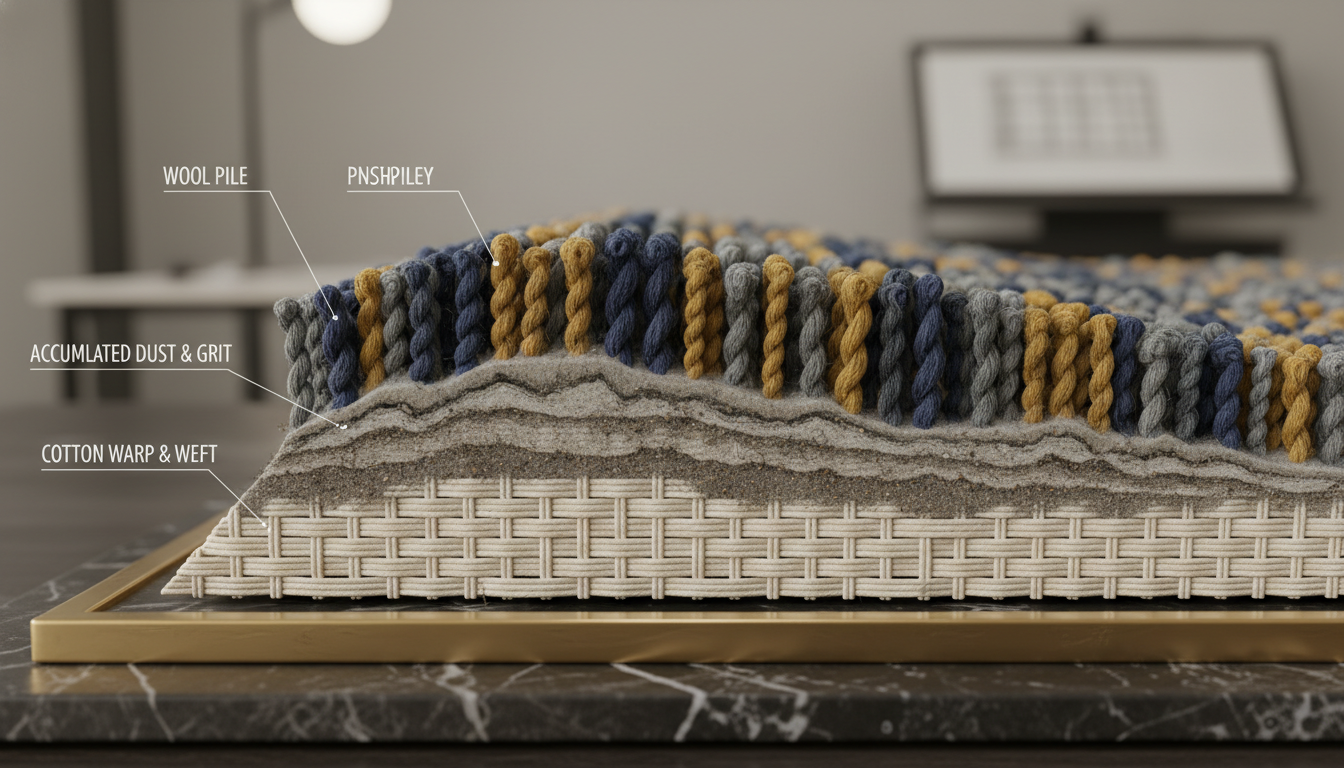
The Mechanics of Micro-Abrasion
While UV rays attack your rug from above, an even more insidious process is occurring at the foundation. Most homeowners view dust as a superficial nuisance—a gray film to be whisked away by a Friday morning vacuuming. However, under a microscope, household dust isn’t just “fluff”; it is a jagged cocktail of silica, microscopic outdoor grit, and skin cells. When these particles settle deep into the throat of a rug, they don’t just sit there. Every time you walk across the room, your body weight acts as a literal hammer, driving these sharp particles against the delicate fibers. This is what conservators call the “Sandpaper Effect.” As you move, the grit grinds against the base of the wool or silk, slowly sawing through the protein bonds of the yarn. By the time you notice “shedding” or a thinning pile, the structural integrity of the knot has already been compromised from the inside out. In the high-end market of 2026, we are seeing a significant move toward High-Twist Highland Wool and Bio-Acetate blends, specifically because their tighter molecular structure offers a higher resistance to this internal friction.The Gravity Trap: Why Surface Cleaning Fails
Standard suction often fails to reach the “danger zone”—the bottom 20% of the pile where the most damage occurs. This is particularly true for the dense, hand-knotted textures found at thebohorugs.com, where the craftsmanship is so tight that it can actually trap particulates more effectively than looser, machine-made alternatives. The weight of the dust also plays a role. Heavier particles like fine sand migrate downward due to vibration and gravity, becoming lodged in the weft and warp. If left unchecked, this buildup can actually stretch the foundation of the rug, leading to those frustrating ripples or “waves” that no amount of professional stretching can fully cure. We are seeing designers now specify Light Reflectance Values (LRV) not just for walls, but for rugs; a rug that has lost its “glow” hasn’t just faded—it is often choked by a layer of deep-seated particulate matter that absorbs light rather than reflecting it.“We often mistake fiber loss for natural aging, but in 80% of heirloom restorations, the culprit isn’t age—it’s neglect of the foundation. Think of dust as microscopic glass shards; if you don’t remove them, they will eventually win the war against even the finest hand-spun wool.”
— Dr. Elena Vance, Textile Pathologist and Conservation Consultant
Modern Defense Against Deep Contamination
To combat this, the 2026 standard for rug care has shifted away from aggressive “beater bar” vacuums, which can actually exacerbate fiber fatigue. Instead, the focus is on high-velocity airflow and sonic vibration.- The Vibration Technique: Periodically “exercising” the rug by turning it face down on a clean floor and gently vacuuming the back. This vibrates the deep-seated grit out of the foundation and onto the floor.
- Density over Height: Choosing rugs with a higher knots-per-square-inch (KPSI). While it sounds counterintuitive, a denser weave actually prevents grit from migrating as deep into the core as a shaggy or loose-pile rug.
- Atmospheric Management: Using HEPA-rated air filtration in rooms with south-facing windows to catch particulates before they ever touch the floor.
Not sure if your rug is suffering from deep dust migration? Dampen a white microfiber cloth and press it firmly into the base of the pile for 30 seconds. If the cloth comes up with a greyish, gritty residue—even if the surface looks pristine—the sandpaper effect is already in motion. At this stage, a professional “full-immersion” wash is the only way to reset the fiber’s lifespan.
Room Scenarios: Tailoring Protection to Your Space
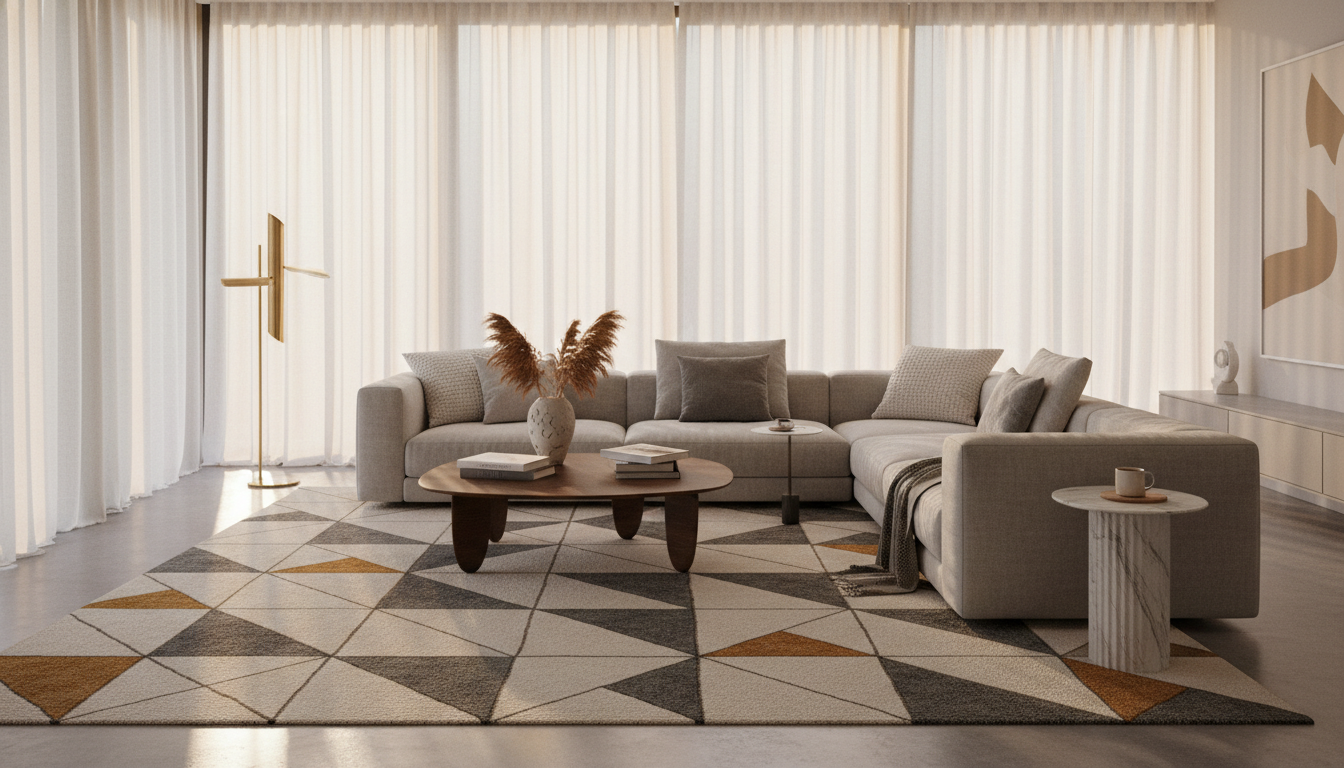
- Must Do: Use a high-quality felt-and-rubber pad. This creates a “shock absorber” effect, preventing the fibers from being crushed against the hard floor.
- What to Avoid: Standard “beater bar” vacuums. On artisanal rugs, these aggressive rotating brushes can fray the “S-twist” of the yarn, leading to premature fuzzing.
The Sun-Drenched Master Suite: Fighting Photodegradation
South-facing windows are a luxury for the soul but a death sentence for organic dyes. Even the most stable pigments have a Light Reflectance Value (LRV) threshold. When UV photons hit the rug, they break the chemical bonds of the dye in a process called photodegradation. By the time you notice a “softening” of the color, the fiber’s structural protein—keratin—has already begun to weaken.- Must Do: Rotate the rug 180 degrees every six months. This ensures that the inevitable “sun-kissed” fading happens uniformly, which can actually add a desirable “antique” patina rather than a jarring tan line.
- Extra for Longevity: Invest in museum-grade window films that block 99% of UV rays without altering the room’s natural light levels.
The Coastal Retreat: Humidity and Cellular Swelling
If you’re decorating a seaside villa or a humid tropical apartment, your rug is essentially “breathing” the salt-heavy air. Natural fibers like jute and even certain 2026-era Bio-Acetate blends are hygroscopic—they absorb moisture from the atmosphere. This can lead to “fiber swelling,” where the rug loses its shape and develops ripples, or worse, dry rot in the cotton foundation.- Must Do: Maintain a consistent indoor humidity level between 40% and 60%. Dehumidifiers are the unsung heroes of rug preservation in coastal climates.
- What to Avoid: Placing a rug directly on a concrete slab in a humid environment. Concrete “sweats,” trapping moisture in the rug’s backing and inviting fungal growth.
The Modern Home Office: Caster Wheels and Compression
The rise of the high-end home office has introduced a new villain: the caster wheel. The concentrated pressure of a desk chair creates a “point load” that can permanently collapse the pile of even the sturdiest rug. Once the fibers are crushed flat, they reflect light differently, creating those unsightly “dark spots.”- Must Do: Switch to “soft-surface” casters made of high-density polyurethane, or place a discreet, tempered glass chair mat over your rug to distribute the weight.
- What to Avoid: Leaving heavy furniture in the exact same spot for years. Use furniture cups to spread the weight of heavy oak desks.
The Gallery Space: Protecting the Heirloom Investment
For those who treat their floors as a canvas—featuring rare hand-knotted techniques from the Atlas Mountains or vintage silk finds—the goal is preservation over performance. In these low-traffic, high-value spaces, the primary enemy is stagnation. Dust migration happens even in empty rooms as gravity pulls fine particulates deep into the rug’s “well.”- Must Do: Annual professional air-dusting. Unlike traditional washing, this process uses controlled air pressure to “vibrate” the dust out of the foundation before it can settle and harden.
- Expert Strategy: Use a “sacrificial” entry mat at every door leading to the gallery. Capturing 80% of exterior soil before it reaches your investment piece is the most cost-effective preservation strategy available in 2026.
The 2026 Maintenance Blueprint for Heirloom Preservation
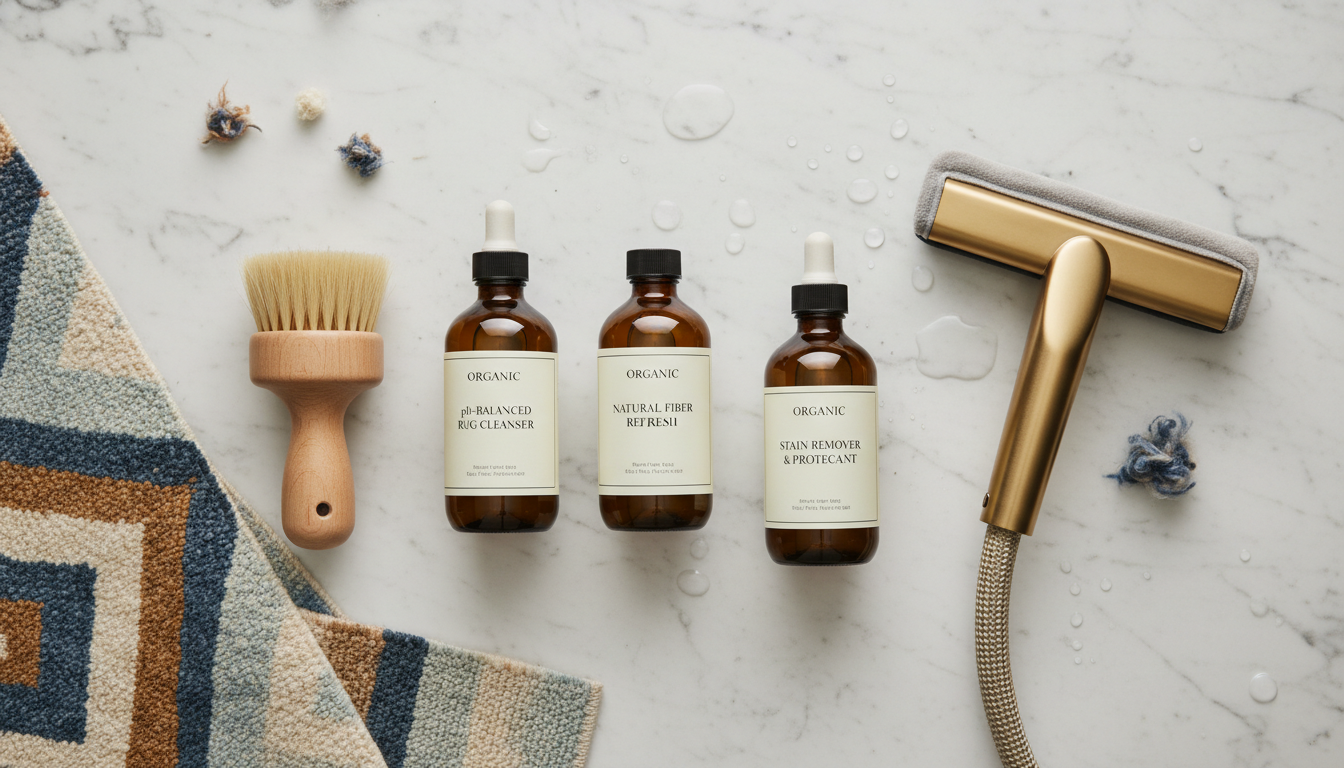
Beyond Utility: The New Ethos of Textile Stewardship
By 2026, the design world has firmly pivoted away from the “disposable aesthetic.” We are seeing a profound return to stewardship, where the value of a rug is measured not just by its initial impact, but by its ability to age gracefully over thirty years. Whether you’ve invested in a hand-knotted masterpiece from the Atlas Mountains or a contemporary piece utilizing Bio-Acetate fibers, preservation is no longer about frantic spot-cleaning—it is about managing the microscopic environment of your home.
The modern blueprint for longevity treats the rug as a living entity. This means moving beyond the occasional vacuum and understanding how Light Reflectance Values (LRV) in your room dictate the “tanning” process of natural dyes. When we curate spaces with pieces from thebohorugs.com, we aren’t just placing wool on a floor; we are initiating a decades-long relationship with a textile that reacts to every photon and footprint.
The Rotational Rhythm and Photodegradation
The most sophisticated collectors have adopted a “Solar Calibration” schedule. UV damage is cumulative and often irreversible once the core of the fiber is breached. In 2026, we focus on 180-degree rotations every six months, regardless of whether the room feels “sunny.” This ensures that the “pile lean”—the natural direction in which fibers lay—doesn’t become permanently set in a way that creates “shading” or uneven wear patterns.
Natural fibers like high-altitude Tibetan wool contain lanolin, which acts as a built-in shield. However, even this organic defense can be compromised by the high-LRV environments common in minimalist glass-walled architecture. Utilizing smart window films that block 99% of UV rays while maintaining a high Visible Light Transmittance (VLT) is the invisible gold standard for protecting heirloom dyes.
“We are seeing a renaissance in ‘Slow Maintenance.’ An heirloom rug is essentially a carbon-sequestering piece of art. When you maintain the integrity of the lanolin coating in the wool, you aren’t just keeping it clean; you are preserving the fiber’s cellular elasticity.”
— Julian Thorne, Senior Textile Historian
The Science of Sonic Extraction and Micron-Level Care
The old-school approach of high-heat steam cleaning is increasingly viewed as an archival sin. Instead, the 2026 standard leans toward sonic vibration extraction. This method addresses “Dust Migration”—the process where microscopic grit settles at the very base of the knots, acting like tiny saws that cut the warp and weft as you walk over them. Removing this grit without saturating the rug in moisture is the key to preventing “Dry Rot” in the foundation.
- Atmospheric Calibration: Maintain a consistent humidity level between 40% and 55%. Wool is hygroscopic; it breathes. Extremes in either direction lead to brittle fibers or fungal spores.
- The Underlayment Factor: Use a felt-and-rubber hybrid pad. Avoid cheap PVC pads which can off-gas and chemically bond to both your rug and your hardwood floors.
- Fiber-Specific Grooming: Use a velvet brush or a soft-bristle rake to reset the pile after heavy traffic, preventing “fiber fatigue” in high-use zones.
To check the health of your rug’s fibers, rub a small, inconspicuous section of the wool between your fingers for ten seconds. If your skin feels slightly waxy or smooth, the lanolin—the rug’s lifeblood—is still intact. If it feels parched or “papery,” the rug is dehydrated and requires a professional lanolin-replenishing wash to prevent the wool from shattering underfoot.
Investing in a high-quality piece from thebohorugs.com provides the perfect foundation for this level of care. Because these rugs are crafted with artisanal integrity, they respond beautifully to professional maintenance, gaining a “patina of use” that machine-made alternatives simply cannot replicate. In the end, the secret to a rug that lasts for generations is simple: respect the biology of the fiber as much as the beauty of the pattern.
Elevate Your Space
Discover the artistry of handmade luxury. Each rug is a masterpiece of tradition and modern design.
Expert Q&A
What is the most common cause of rug damage that owners overlook?
Dust migration is the most overlooked threat; particles settle at the foundation and act like sandpaper, shearing fibers from the base every time you walk across the rug.
How often should I rotate my rug to prevent UV fading?
In 2026, experts recommend a 180-degree rotation every six months, though rugs in south-facing rooms may require quarterly rotation.
Can UV damage be reversed once it occurs?
True photodegradation is a permanent chemical change to the dyes, though professional re-dyeing can sometimes mask the appearance of fading.
Are synthetic fibers more resistant to UV than natural fibers?
High-end solution-dyed acrylics are very resistant, but traditional synthetics like polyester can actually degrade and become brittle faster than wool under intense UV exposure.
What role does a rug pad play in longevity?
A quality pad acts as a shock absorber, preventing the foundation of the rug from being crushed between the hard floor and foot traffic, which preserves the structural integrity of the knots.
How does humidity affect rug fibers?
Excessive humidity can weaken natural fibers like silk and wool, leading to dry rot or mold, while extremely low humidity can make fibers brittle and prone to breaking.
What is ‘fiber fatigue’ exactly?
Fiber fatigue occurs when the natural proteins in wool or silk lose their elasticity due to repeated compression and lack of moisture, preventing the pile from ‘springing back’ after weight is removed.
Is vacuuming too much bad for my rug?
Only if you use an aggressive beater bar; in 2026, the standard is high-suction, low-abrasion HEPA vacuuming twice weekly to prevent dust migration without fraying the pile.
Can window films really stop rug fading?
Yes, modern museum-grade UV-filtering window films can block up to 99% of harmful rays, significantly extending the life of your rug’s color palette.
What are self-healing fibers in rug design?
These are emerging 2026 textile innovations where fibers are treated with polymers that react to heat or moisture to re-align and ‘repair’ minor structural crush or abrasions.
How do I identify deep-seated dust migration?
The ‘fold test’ is best: fold a corner of the rug back; if you see light-colored grit or fine dust at the very base of the knots, migration has occurred and professional cleaning is needed.
Why is wool considered the gold standard for longevity?
Wool fibers have a natural crimp and lanolin coating, providing inherent resilience against crushing and a natural protective barrier against liquid penetration.
Written by TheBohoRugs Interior Design Team
Experts in handmade rugs, boho interiors, and modern home decor.