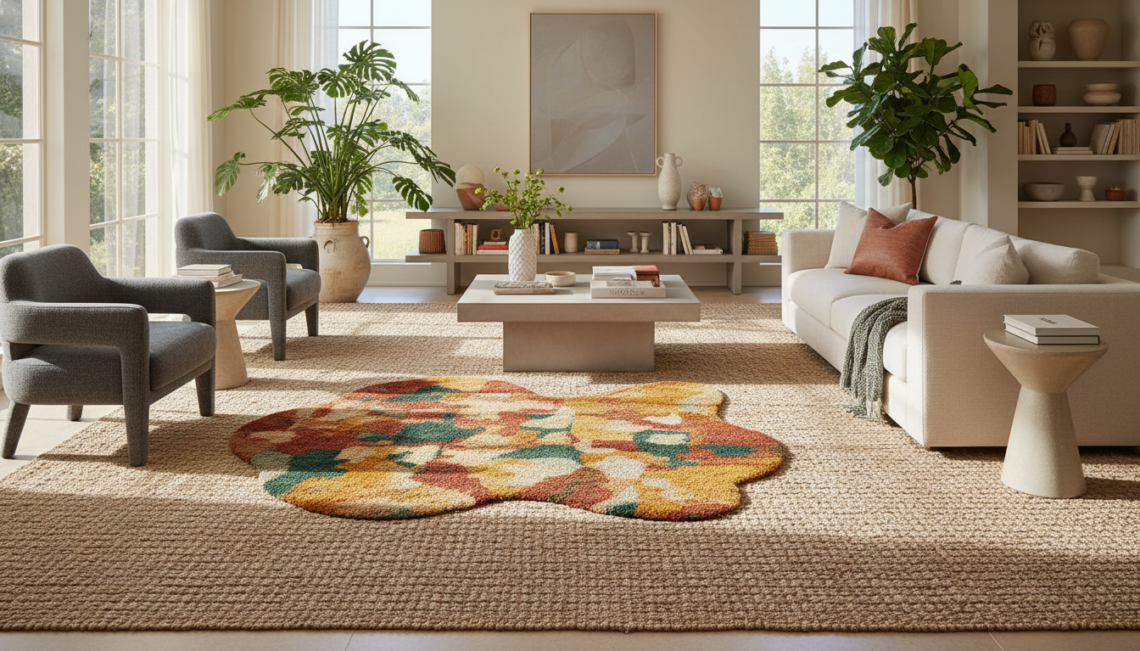
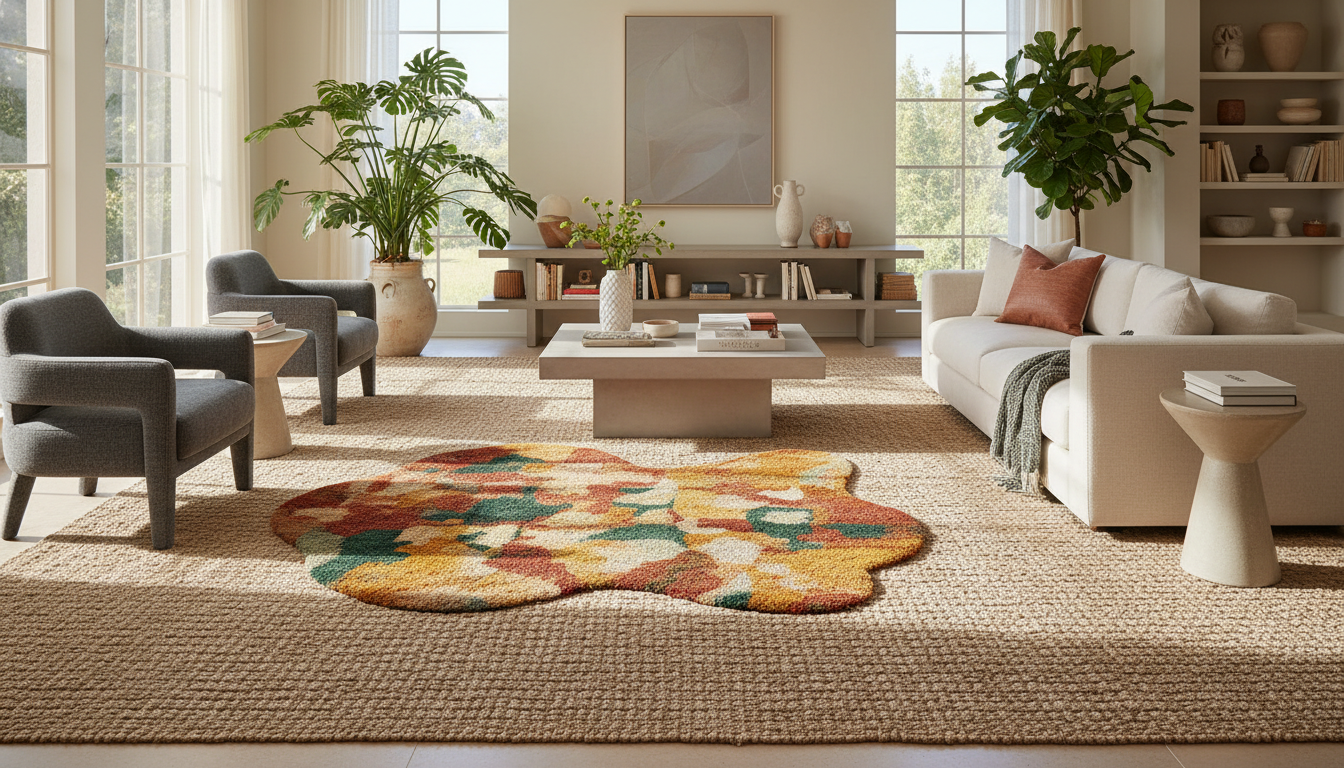
New Blog Topic: While the minimalist trends of the early 2020s favored the ‘less is more’ philosophy, 2026 signals a definitive return to maximalist comfort and architectural complexity. This shift finds its most potent expression in the floor plan, where the single-rug approach is being replaced by intentional, multi-dimensional layering. By stacking textures, contrasting pile heights, and mixing artisanal materials, designers are creating sensory-rich environments that feel both anchored and effortlessly curated. This isn’t merely about placing one rug on top of another; it is a calculated interplay of geometry and material science that grounds a room with a level of sophistication a single textile simply cannot provide.
“To master rug layering in 2026, follow the ’12-to-24-inch reveal’ rule: ensure your bottom foundation rug is large enough to show a substantial border around the top statement piece. Successful layering pairs a flat-weave foundation, like organic jute or sisal, with a textured topper such as a hand-knotted wool or high-pile shag. This technique adds visual depth, improves room acoustics, and allows for the protection of delicate vintage pieces while defining functional zones within open-concept living spaces.”
The Roadmap
Table of Contents
- The 2026 Layering Evolution
- The Golden Ratios: Mastering the Reveal Rule
- Material Science: Pairing Sustainable Fibers
- Technique 1: The Jute Foundation & Statement Wool Topper
- Technique 2: High-Low Textural Drama
- Technique 3: The Bedroom Sanctuary Layout
- Technique 4: Maximalist Color Mixing
- Technique 5: Protecting Investment Antiques
- Maintaining Your Layered Landscape
- The Rug Layering Decision Framework
The 2026 Evolution: From Single Surface to Dimensional Canvas
A Shift Toward Tactile Architecture
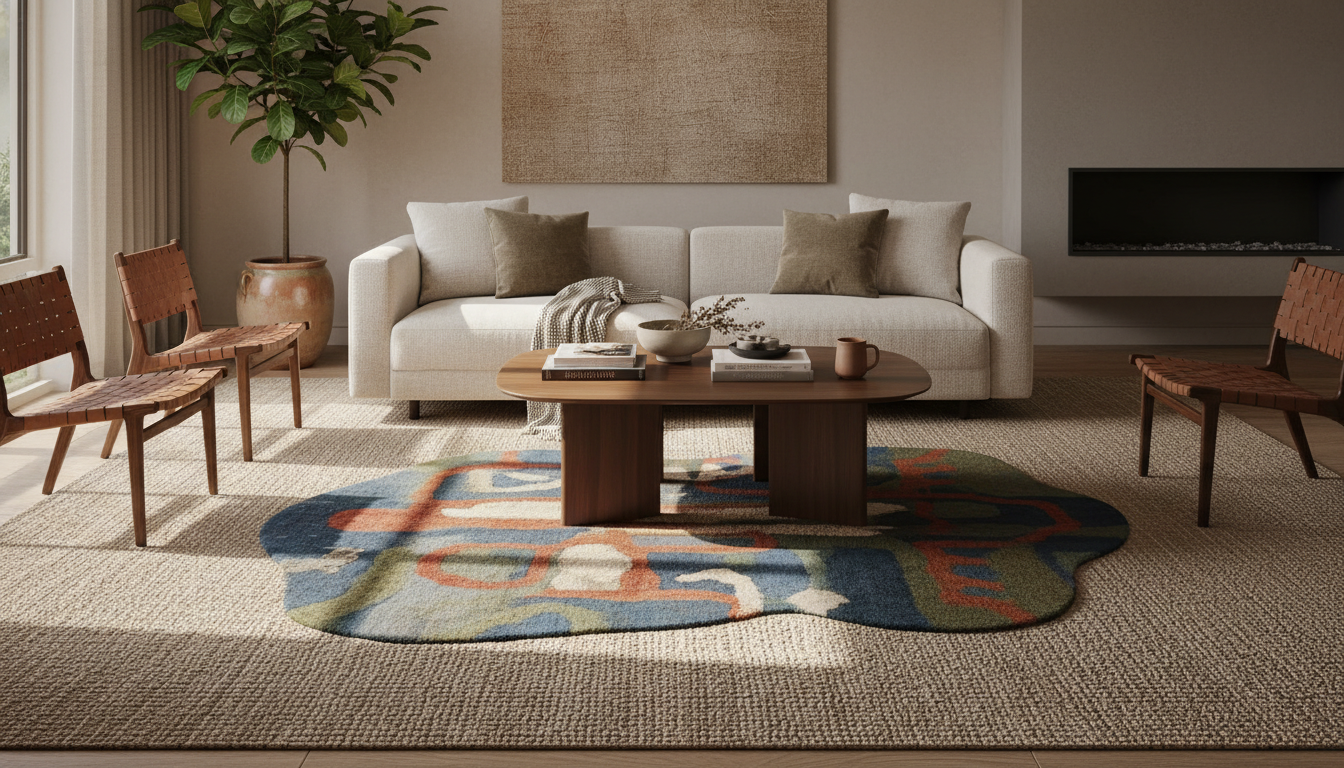
For the better part of the last decade, interior design leaned heavily into a “less is more” clinical minimalism. However, as we move through 2026, the design pendulum has swung decisively toward tactile architecture. We are no longer treating floors as mere functional surfaces; we are treating them as a dimensional canvas. The era of the “floating rug” in the center of a room is fading, replaced by a sophisticated layering technique that prioritizes sensory richness over sterile perfection.
This evolution is fueled by a collective desire for homes that feel curated rather than “staged.” When you layer a vintage, hand-knotted piece from the Atlas Mountains over a sprawling, high-twist jute foundation, you aren’t just decorating—you are building a narrative. The 2026 aesthetic is defined by the interplay between the raw and the refined. We’re seeing a surge in Bio-Acetate fibers and carbon-neutral hemp blends being used for base layers, providing a sustainable, matte backdrop that allows the intricate sheen of a top-layer silk or wool rug to truly pop.
The technical brilliance of this approach lies in how it manipulates Light Reflectance Values (LRV). Designers are now selecting base rugs in deep, light-absorbing charcoals or earth-toned ochres (with an LRV of 10-15) to act as a “shadow gap,” which makes the vibrant, higher-LRV patterns of a smaller topper rug appear almost three-dimensional. This technique creates an immediate sense of warmth and permanence that a single rug simply cannot achieve.
“The most compelling rooms of 2026 treat the floor as the fifth wall. By layering, we create visual gravity. It’s the difference between a house that looks finished and a home that feels lived-in. We often source foundational flat-weaves from artisanal collectives like thebohorugs.com because their organic irregularities provide the perfect ‘imperfect’ base for a high-luxury statement piece.”
— Julian Thorne, Lead Textile Historian at The Design Collective
The Geometry of Comfort
The move toward dimensionality also addresses the practical challenges of modern open-plan living. In 2026, we use layering to “zone” a room without the need for physical partitions. A large, neutral foundation defines the living area, while a smaller, plush sheepskin or a geometric kilim layered at an angle signals a sub-zone—perhaps a reading nook or a conversation corner. This creates a visual hierarchy that guides the eye through the space.
Beyond the aesthetics, the acoustic benefits of double-layering cannot be overstated. In an age of floor-to-ceiling glass and hard-surface flooring, the combined density of a 10mm wool topper over a 6mm sisal base significantly reduces ambient echo, transforming a cavernous room into an intimate sanctuary. It’s a holistic approach to design where the tactile, the visual, and the acoustic intersect.
To master the 2026 look, follow the 18-inch reveal rule. Your base rug should extend roughly 12 to 24 inches beyond the perimeter of the top rug. Any less, and the layering looks like a mistake; any more, and the top rug loses its connection to the furniture. For a truly avant-garde feel, try offset layering—placing the top rug slightly off-center to create a sense of movement and “curated chaos.”
When selecting your materials, prioritize contrast over coordination. The most successful pairings in the current landscape involve a high-contrast “material dialogue”—think a rugged, coarse-woven sea-grass rug paired with a buttery-soft, low-pile mohair. It’s this specific tension between textures that marks the transition from basic styling to true interior artistry. For those beginning this journey, exploring the hand-picked collections at thebohorugs.com offers a gateway into the types of authentic, soul-filled pieces that serve as the heartbeat of this layered movement.
The Golden Ratios: Proportions and the Reveal Rule
The Geometry of the Reveal: Mastering Visual Breathing Room
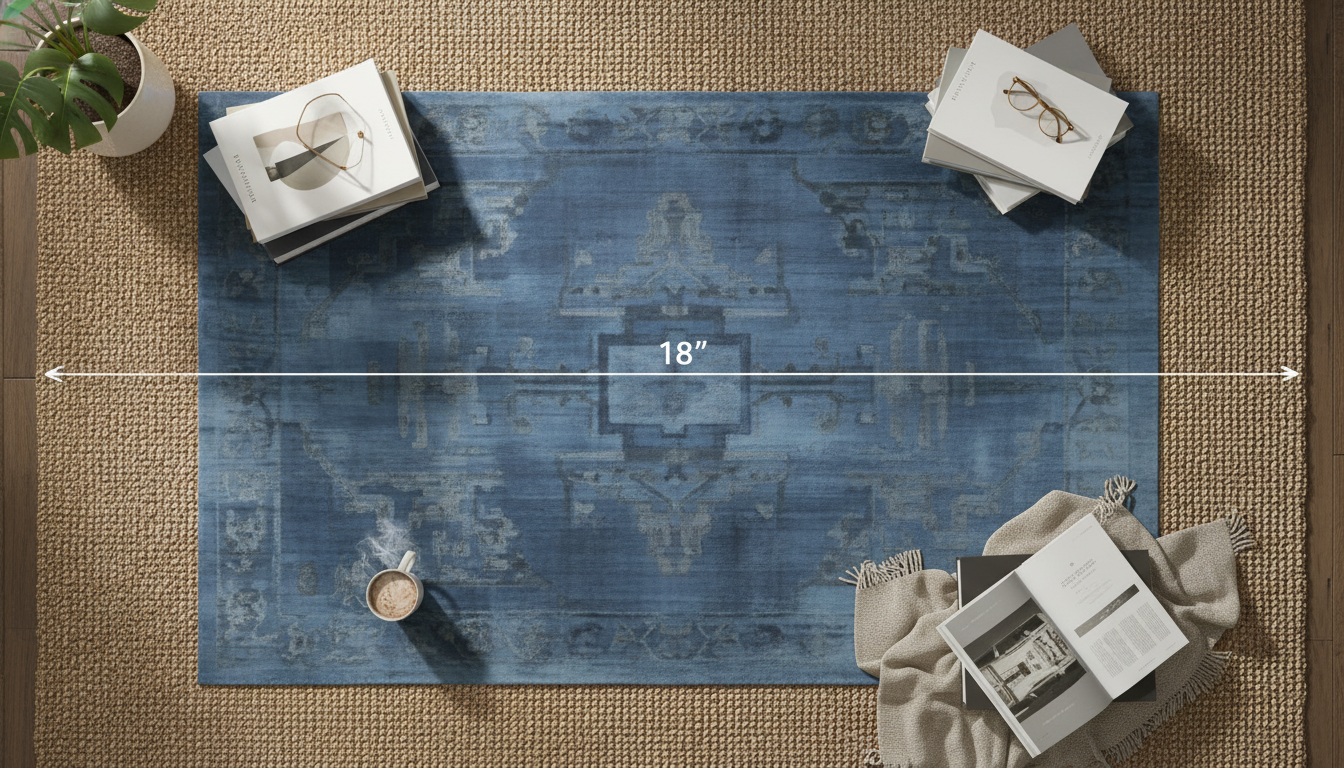
Design in 2026 has moved away from the “more is more” chaos of previous years, pivoting instead toward a disciplined layering technique that prioritizes intentionality. The secret to a space that feels curated rather than cluttered lies in the “Reveal Rule.” This isn’t just about overlapping textiles; it’s about the precise mathematical relationship between the base and the topper.
To achieve a sophisticated architectural anchor, your base rug—ideally a high-durability material like a chunky jute or a low-pile hand-spun wool from the Atlas Mountains—should extend 12 to 18 inches beyond the edge of the top rug on all sides. In larger grand-scale living rooms, you can push this reveal to 24 inches. This border acts as a visual frame, providing a transition for the eye that prevents the top rug from looking like a floating island in a sea of floorboards.
When selecting your layers, consider the Light Reflectance Value (LRV) of your base. A base rug with a lower LRV, such as a deep charcoal or a scorched earth terracotta, provides a grounded stage for a more vibrant, high-sheen topper made of Bio-Acetate fibers—the 2026 breakout sustainable alternative to silk. The contrast in light absorption creates a 3D effect that single-rug installations simply cannot replicate.
A foolproof designer secret for 2026 is the 2:3 ratio. If your base rug is an 8×10, your top rug should ideally be a 5×7 or a 6×9. This ensures enough of the foundational texture is visible to justify the layering, while keeping the top rug large enough to comfortably host your primary furniture pieces.
The Dialogue Between Textures and Tones
The transition between your layers should feel like a conversation. If you’re sourcing a vintage piece from thebohorugs.com, you’re often dealing with intricate patterns and aged vegetable dyes. These storied pieces demand a “quiet” foundation. A common mistake is pairing two rugs of the same pile height; this leads to a “tripping hazard” aesthetic that feels heavy and clumsy.
Instead, look for a High-Low Contrast. A flat-weave kilim or a thin, distressed antique rug sits beautifully atop a plush, tufted neutral base. This creates a tactile landscape that invites bare feet and softens the acoustics of modern open-plan living. When the proportions are correct, the rugs don’t just sit on the floor—they define the room’s soul.
“In the current design climate, we are seeing rugs treated as the fifth wall,” notes Saskia Thorne, Lead Textile Curator. “The 2026 aesthetic is about the tension between the raw and the refined. By leaving a generous reveal of a rugged, natural-fiber base around a sophisticated hand-knotted topper, you create a sense of history and depth that feels both ancient and incredibly modern.”
- The Centering Principle: Always align the top rug with the central axis of the primary furniture piece (like a sofa or bed), not necessarily the center of the base rug.
- Organic Offsetting: For a more avant-garde 2026 look, try an asymmetrical offset, leaving a 30-inch reveal on one side and only 6 inches on the other to lead the eye toward a focal point like a fireplace or a floor-to-ceiling window.
- The Grip Factor: Never skip the thin, professional-grade rug pad between the two layers. This prevents the “creeping” effect that can ruin your perfect proportions over time.
Whether you are pulling from a collection of heirlooms or investing in new artisanal pieces from thebohorugs.com, remember that the reveal is your most powerful tool. It is the negative space that allows the beauty of your textiles to actually breathe.
Sustainable Foundations: The Rise of Organic Hemp and Jute
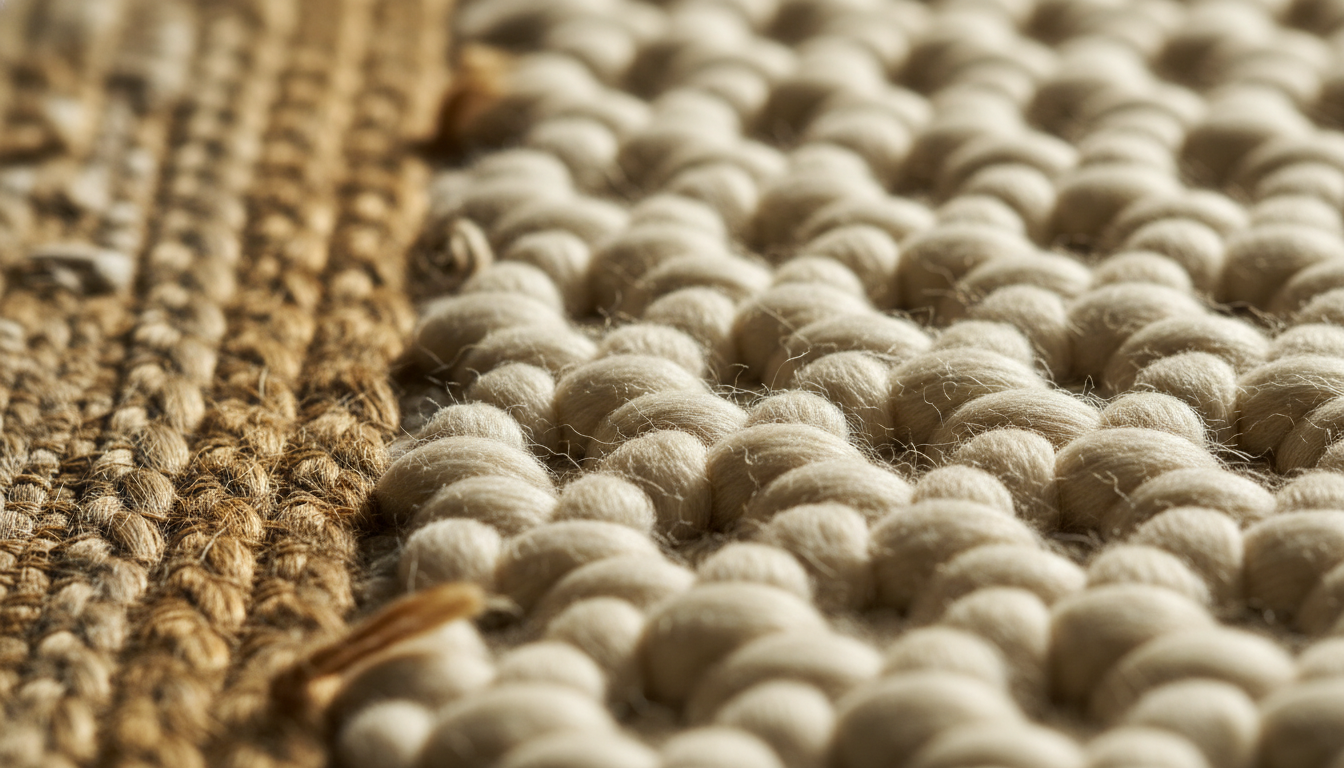
The Tactile Shift Toward Regenerative Aesthetics
As we move deeper into 2026, the luxury design landscape has pivoted away from the sterile perfection of synthetic fibers, favoring instead what we call “Regenerative Aesthetics.” At the heart of this movement is a return to the earth. Organic hemp and high-grade jute are no longer relegated to casual sunrooms or coastal cottages; they have become the indispensable foundation for sophisticated rug layering. These fibers provide a raw, honest counterpoint to the more delicate, high-sheen toppers—such as the increasingly popular Bio-Acetate silks—that define modern luxury.
The allure of a hand-woven hemp base lies in its structural integrity and its nuanced color profile. Unlike mass-produced alternatives, the 2026 iterations of these rugs often undergo low-impact sun bleaching or enzymatic softening, resulting in a Light Reflectance Value (LRV) that perfectly complements the “Quiet Luxury” palettes of sage green, oatmeal, and toasted terracotta. When you anchor a room with an oversized, chunky-knit jute piece from thebohorugs.com, you aren’t just placing a rug; you are establishing a grounding frequency for the entire space.
“The most compelling interiors today prioritize a ‘tension of textures.’ By using a rugged, sun-drenched hemp as your canvas, you create a stage where a more intricate, hand-knotted wool piece from the Atlas Mountains can truly breathe and tell its story.”
— Julian Thorne, Principal Textile Historian
Engineering the Base Layer: Durability Meets Design
Choosing the right organic foundation involves more than just selecting a neutral tone. To master the art of layering, you must consider the mechanical grip and height of the base. A flat-weave hemp rug offers the ideal surface tension to prevent the “sliding effect” often seen when layering lighter textiles. This season, we are seeing a preference for “Double-Weft” constructions which provide a substantial 0.5-inch profile, offering a satisfying weight underfoot that mimics the architectural presence of a permanent floor treatment.
- Material Synergy: Pair the coarse, matte finish of jute with a high-pile Moroccan shag or a “sculpted” 3D wool rug to maximize depth.
- The Tonal Anchor: Use hemp in its undyed, natural state to bridge the gap between dark hardwood floors and vibrant, multi-colored statement rugs.
- Longevity: These organic fibers are naturally anti-static and hypoallergenic, making them the superior choice for high-traffic zones where you still want to maintain a high-design edge.
To ensure your layered composition feels intentional rather than accidental, aim for a 12-to-18-inch “reveal” of your organic base rug. This creates a frame that grounds the furniture grouping. If you’re working with a particularly vibrant top layer, a bleached jute base with a high LRV (around 65-70) will act as a natural light reflector, preventing the room from feeling visually heavy or claustrophobic.
Integrating these sustainable foundations allows for a fluid design evolution. As seasons change, the organic base remains a constant, reliable element, while the smaller, more expressive top layers—perhaps a vintage Oushak or a modern geometric piece from thebohorugs.com—can be rotated to reflect a new mood or a shift in the light. This approach doesn’t just look better; it’s a more conscious way to curate a home that feels collected, rather than simply decorated.
High-Low Drama: Using Sculptural Piles for Visual Depth
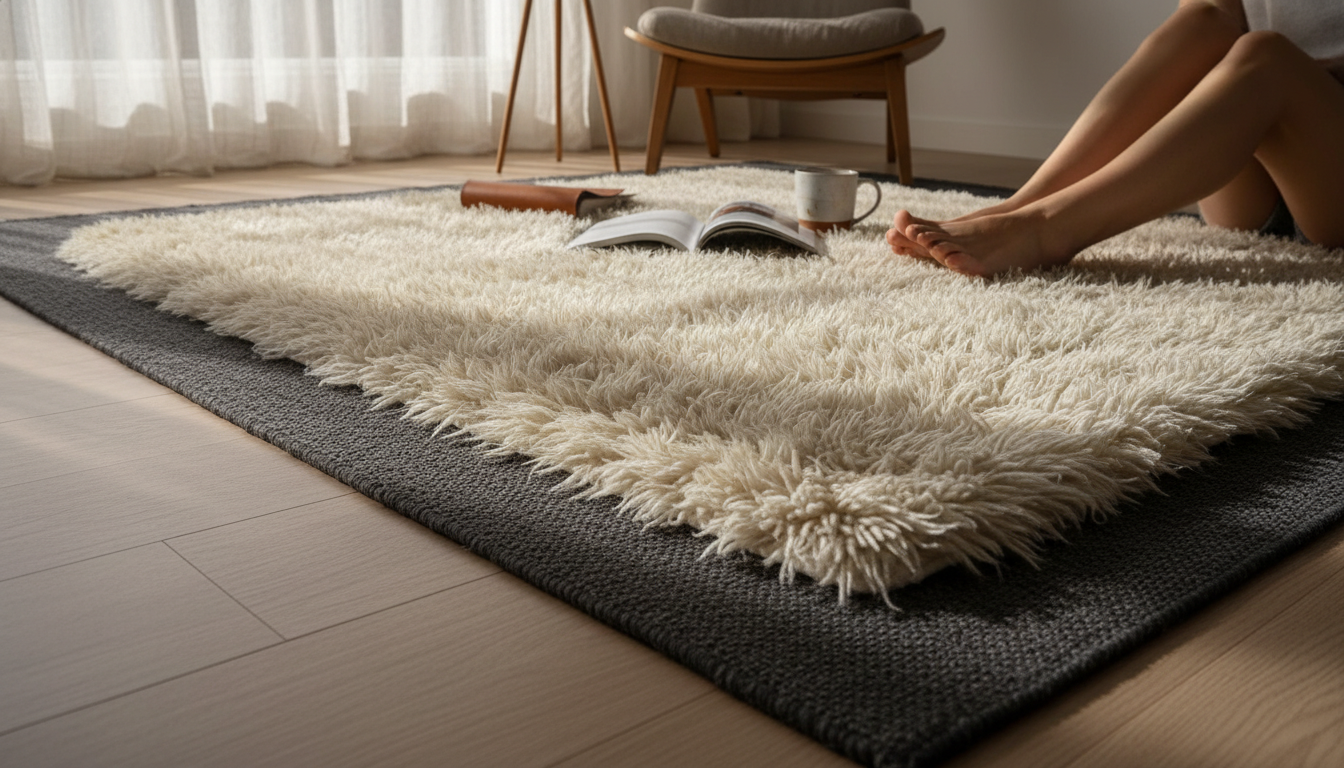
The Tactile Revolution: Beyond the Flat-Weave
If the design movements of previous years were defined by “Quiet Luxury” and minimalist flat-weaves, 2026 marks a decisive return to sensory maximalism. We are seeing a move toward the three-dimensional floor—a concept where the rug isn’t just a pattern, but a landscape. By layering a sculpted, high-pile rug over a tight, low-profile foundation, you create a topographical interest that changes throughout the day as the sun moves across the room.
The magic happens in the shadow play. When you place a hand-carved New Zealand wool rug atop a dense, flat-woven sisal or a low-profile jute, the varying heights create micro-shadows. This interaction lowers the Light Reflectance Value (LRV) of the floor’s surface, making a large, cavernous living room feel instantly more intimate and grounded. Designers are increasingly opting for “Bio-Acetate” silk blends in the top layer to catch the light, contrasting sharply against the matte, organic grit of the base layer.
Mastering the “Topographical” Look
Achieving this look requires more than just stacking two rugs; it’s about the deliberate tension between the “rough” and the “refined.” For a sophisticated 2026 aesthetic, consider these combinations:
- The Sculpted Minimalist: A cream-on-cream 3D tufted rug with organic, wave-like carvings placed over a charcoal-toned flat-weave.
- The Neo-Vintage: A plush, high-pile Moroccan-inspired piece from thebohorugs.com layered over a vintage-washed, low-pile Chenille base.
- The Architectural Edge: Geometric high-low piles where the “low” sections are sheared down to the warp, exposing the structural soul of the rug against a smooth leather or wood floor.
“In 2026, we are treating the floor as a fifth wall. The shadow cast by a 20mm pile height against a 5mm base layer provides a sense of architectural permanence that a single-dimension rug simply cannot replicate.”
— Julianne Thorne, Senior Textile Curator & Interior Historian
When selecting your pieces, pay close attention to the fiber memory. High-low drama is most effective when the yarns have the resilience to stand upright. Look for high-twist wools or “S-Twist” constructions that resist crushing. This ensures your sculptural “peaks” don’t become permanent “valleys” under the weight of a coffee table.
To ensure the layering looks intentional rather than accidental, aim for a minimum height differential of 15mm between your base and your top layer. Use a thin, high-grip rubberized pad between the two rugs—not for cushion, but to prevent the top “sculptural” piece from “creeping” or rippling, which can break the visual illusion of a single, integrated architectural element. For the most avant-garde results, explore the artisanal collections at thebohorugs.com, focusing on pieces with varied pile heights and hand-sheared edges.
This technique isn’t just for aesthetics; it’s a functional masterstroke for open-plan living. By using a high-pile sculptural rug to “island” your seating area over a wall-to-wall flat-weave, you create a sensory boundary. The moment your feet transition from the firm base to the plush, carved top layer, your brain registers a shift from “transit space” to “relaxation zone.” It is interior design as psychology, using texture to dictate the mood of the home.
The Bedroom Sanctuary: Zonal Comfort Strategies
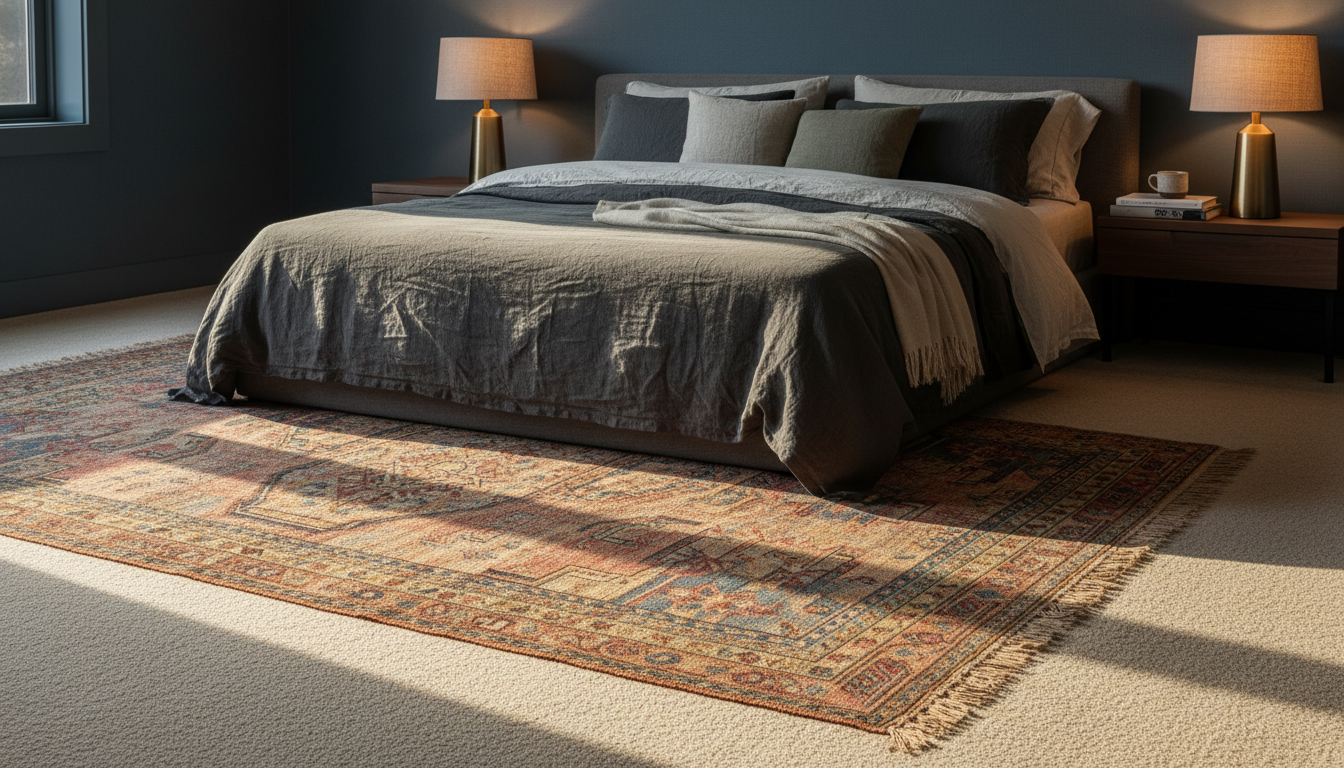
Beyond the Perimeter: Redefining Sleep Space through Tactile Mindfulness
In 2026, the primary suite has transcended its role as a mere place to sleep, evolving into what designers now call a “sensory cocoon.” The most effective tool for achieving this isn’t the lighting or the linens—it’s the intentional choreography of fibers beneath your feet. We are seeing a move away from the massive, wall-to-wall single rug in favor of Zonal Layering, a technique that uses varied pile heights to signal the transition from the “active” dressing area to the “passive” sleep zone.
The foundation of a 2026 sanctuary often starts with a low-profile, high-twist New Zealand wool base. This provides a durable, acoustic-dampening anchor that extends at least 24 inches beyond the bed frame. On top, designers are layering smaller, ultra-luxe accents like recycled mulberry silk or bio-acetate blends. These materials offer a shimmering Light Reflectance Value (LRV) that catches morning sunbeams, creating a visual “halo” around the bed. For those seeking an grounded aesthetic, sourcing a hand-knotted piece from thebohorugs.com ensures that the top layer brings that essential “collected” feel rather than looking like a mass-produced after-thought.
“The psychology of the bedroom relies on the softening of hard edges. By layering a plush, high-pile Moroccan shag over a flat-weave jute or low-pile wool, you aren’t just decorating; you’re creating a physiological ‘landing strip’ that triggers the parasympathetic nervous system the moment your feet hit the floor.”
— Elena Vance, Lead Textile Consultant at Maison & Objet
The 18-Inch Reveal and the Power of Asymmetry
The 2026 approach to bedroom proportions has ditched the rigid symmetry of the past decade. Instead of centering a smaller rug perfectly atop a larger one, try an asymmetrical offset. Slide a secondary rug—perhaps a vintage Oushak or a contemporary geometric—two-thirds of the way under the bed, favoring the side you most frequently exit. This creates a curated, lived-in luxury that feels effortless.
- Material Play: Contrast a matte, charcoal wool base with a high-luster Tencel topper to add dimension without visual clutter.
- The Palette: We are seeing a surge in “Earthy Serenity”—think Sage Green (specifically those with an LRV of 42 to keep the room grounded) paired with oatmeal or sand-toned foundations.
- Furniture Integration: Ensure your nightstands sit entirely on the bottom layer to avoid the “wobbly table” syndrome that ruins a high-end aesthetic.
Beyond aesthetics, layering rugs in the bedroom serves a technical purpose. In 2026’s sustainable home designs, double-layering acts as a high-performance thermal insulator. By trapping a layer of air between a dense base rug and a breathable topper, you can increase floor-level heat retention by up to 15%, allowing for a lower thermostat setting during winter months without sacrificing comfort.
When selecting your accent layer, look for “living finishes.” Rugs from thebohorugs.com that feature organic dyes and hand-spun textures provide a soulful contrast to the clean lines of modern European bed frames. This juxtaposition of the artisanal and the architectural is exactly what defines the sophisticated bedroom of the mid-2020s. It’s no longer about filling a space; it’s about layering a narrative of comfort and curated taste.
Maximalist Mastery: Mixing Patterns and Heritage Weaves
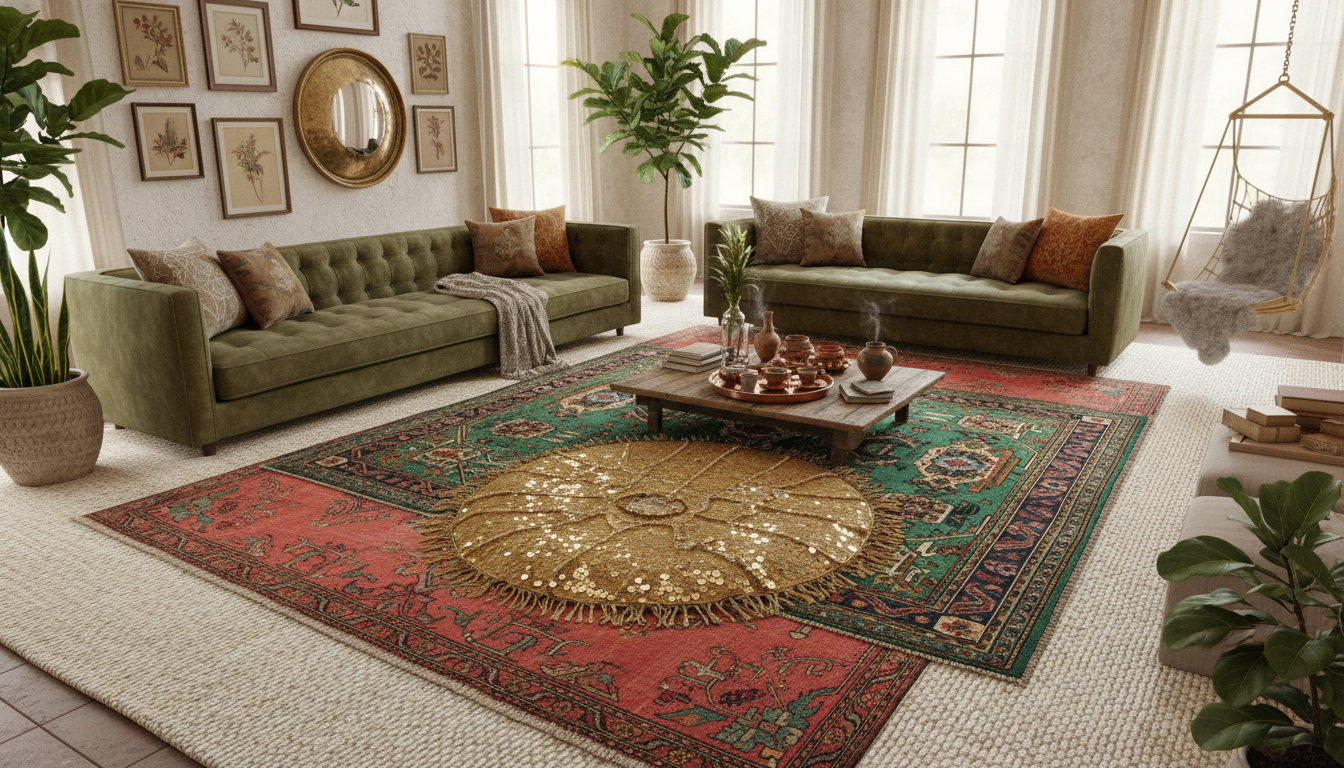
The design landscape of 2026 has moved decisively away from the sterile “quiet luxury” of years past, pivoting toward a more soulful, narrative-driven aesthetic. This shift is most visible on the floor, where the “More is More” philosophy is being executed with surgical precision. It is no longer about simply filling a room; it is about a curated collision of histories. By layering disparate patterns and heritage weaves, you aren’t just decorating—you are building a tactile archive of global craftsmanship.
The Secret of Scale: Bridging the Visual Gap
The most common pitfall in pattern-on-pattern layering is visual fatigue. To avoid a room that feels vibratingly chaotic, the eye requires a hierarchy of scale. We are seeing a major trend in asymmetrical staggering, where a large-scale, low-contrast geometric base—perhaps a high-twist New Zealand wool flatweave—serves as the canvas for a smaller, intricately detailed hand-knotted tribal piece from the Atlas Mountains.
The key is ensuring the top layer possesses enough Light Reflectance Value (LRV) contrast to pop against the foundation. For instance, a base rug in a muted “Earthen Umber” (a 2026 color staple) allows the vibrant, vegetable-dyed crimsons of a vintage runner to command attention without overwhelming the senses.
“The most successful maximalist spaces aren’t accidental; they are a calculated play of history and geometry. In 2026, we are seeing a resurgence of the Ghiordes knot combined with modern bio-acetate fibers, creating a sheen that plays beautifully against the matte finish of traditional kilims.”
— Julian Thorne, Senior Textile Historian
Curating the Color Bridge
To make a Persian floral sing alongside a bold ikat or a contemporary linear design, you need a “color bridge.” This is a singular, recurring hue—often a deep Sage Green or a burnt Ochre—that exists in both pieces. This shared DNA anchors the room, making the layering feel intentional rather than haphazard.
- Play with Pile Heights: Place a low-profile, heritage-inspired rug from thebohorugs.com over a chunky, oversized loops to create a 3D effect that feels incredible underfoot.
- Respect the Border: If your base rug has a heavy, dark border, ensure the top rug is small enough to leave at least 18 inches of that border exposed. This creates a “frame” that grounds the entire furniture arrangement.
- Embrace the Patina: Don’t be afraid to layer a perfectly preserved modern piece over an antique rug with “beautiful wear.” The contrast between the new and the aged adds an immediate sense of 2026-style “collected” personality.
Expert Insight: The 2026 “Fiber Fusion”
When layering patterns, consider the directional light of the room. 2026’s premium rugs often incorporate Bio-Acetate fibers for a silk-like luster. If your top layer has this high-sheen finish, position it at a 45-degree angle to the primary light source. This accentuates the pattern’s depth and prevents the colors from looking “washed out” when viewed from the main seating area.
As we move deeper into this decade, the most admired homes will be those that tell a story through their layers. By mixing a contemporary aesthetic with the timeless soul of artisanal weaving, you create a space that feels both cutting-edge and profoundly permanent. For those looking to source these conversational pieces, exploring the curated collections at thebohorugs.com is a perfect starting point for finding that “hero” top layer.
The Science of Stability: Preventing Movement and Fiber Friction
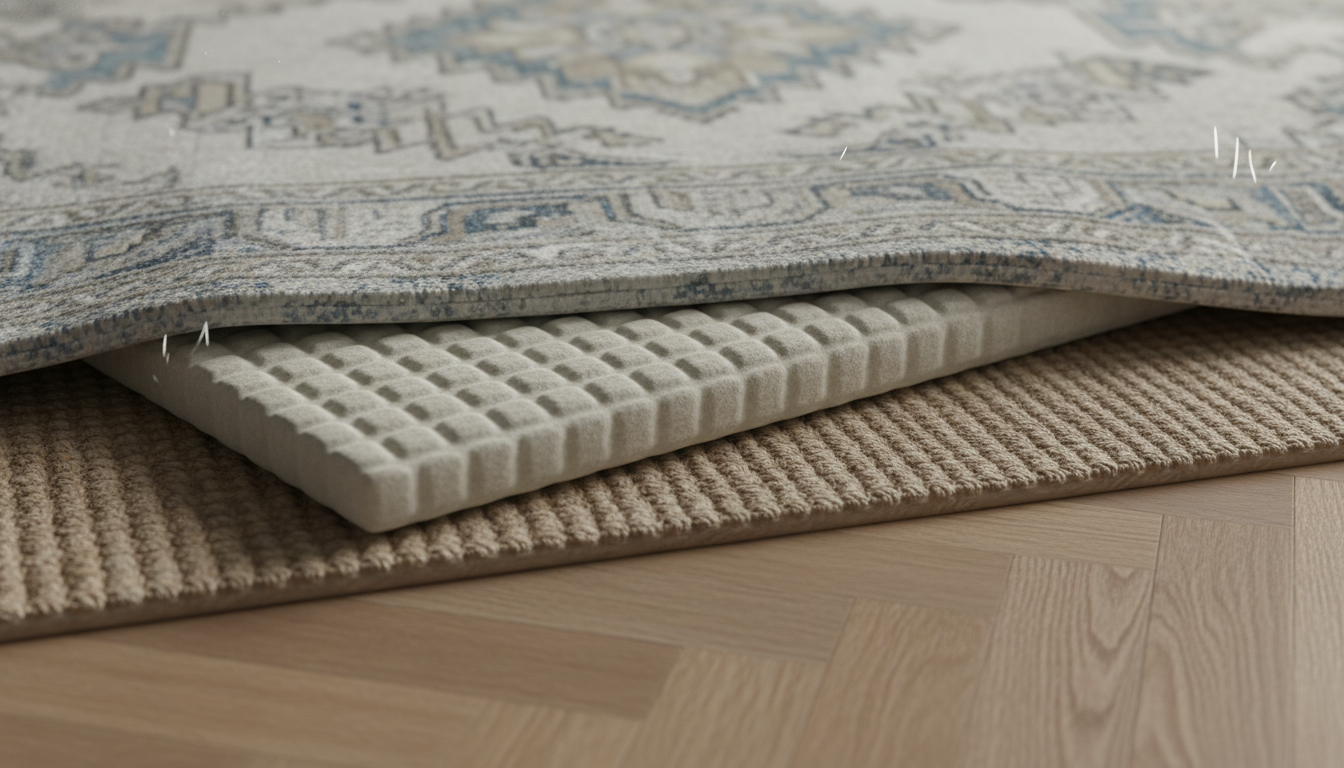
The Physics of the Perfect Foundation
When we discuss the “editorial look” of a layered floor, we often focus on the visual weight or the way a vintage Oushak sits atop a sprawling jute. However, the true luxury of this technique lies in its stability. Nothing breaks the spell of a curated room faster than a buckling top layer or the dangerous “sliding effect” common in poorly executed pairings. In 2026, we are seeing a move toward high-performance grip technology that respects the delicate nature of high-end fibers like Bio-Acetate and botanical silks.
The primary antagonist in rug layering is friction. When two rugs interact, their fibers rub against one another with every footfall. If the base rug is a coarse natural fiber—like a heavy-gauge sisal—it can act as an abrasive, slowly wearing down the knots of a more delicate topper. To mitigate this, professional installers now favor low-profile recycled felt pads. These aren’t your standard hardware store varieties; these are 1/8-inch dense cushions that provide a “grip-to-grip” surface, locking the rugs together while allowing the fibers to breathe.
Managing Shear Stress and Pile Direction
A secret often kept by high-end stagers is the “nap alignment.” Every hand-knotted rug, especially those sourced from the Atlas Mountains or the looms of thebohorugs.com, has a distinct pile direction. When layering, if the nap of the top rug opposes the nap of the base, the rugs will naturally want to “crawl” or shift out of alignment over time. By aligning the pile direction of both pieces, you create a cohesive unit that resists movement. This is particularly vital in high-traffic zones where Light Reflectance Values (LRV) are high; any slight bunching will cast a shadow that highlights the instability, ruining the seamless aesthetic.
“The longevity of a layered floor is determined by what you don’t see. We look for a ‘marriage of textures’ where the friction coefficient is neutralized by a stabilizer that doesn’t off-gas or damage the lanolin in the wool.”
— Julian Thorne, Senior Textile Conservator
- The Mesh Method: For thin flatweaves, use a polyester scrim coated with a high-friction resin. It provides grip without adding bulk.
- The Perimeter Rule: Ensure your top rug has at least 18 inches of “breathing room” from the edge of the base rug to prevent the edges from catching and curling.
- Weight Distribution: Anchor the corners of the top layer under the front legs of a sofa or a heavy marble coffee table to provide a physical “lock.”
Avoid the temptation of double-sided carpet tape, which can leave a permanent residue on your investment pieces. Instead, look for pressure-sensitive micro-suction pads. These 2026-standard stabilizers use thousands of microscopic suction cups to grip the surface of the base rug without any adhesives, making it easy to swap out your top layer for seasonal refreshes from thebohorugs.com without damaging either piece.
Choosing the right stabilizer also impacts the acoustics of the room. A well-stabilized layered rug setup acts as a sophisticated sound dampener, absorbing mid-range frequencies that a single rug would miss. This creates that “vaulted silence” often found in luxury hotel suites—a feeling of absolute permanence and calm that only comes when every element of the room is perfectly, and safely, in its place.
Seasonal Flexibility: Swapping Toppers for a New Mood
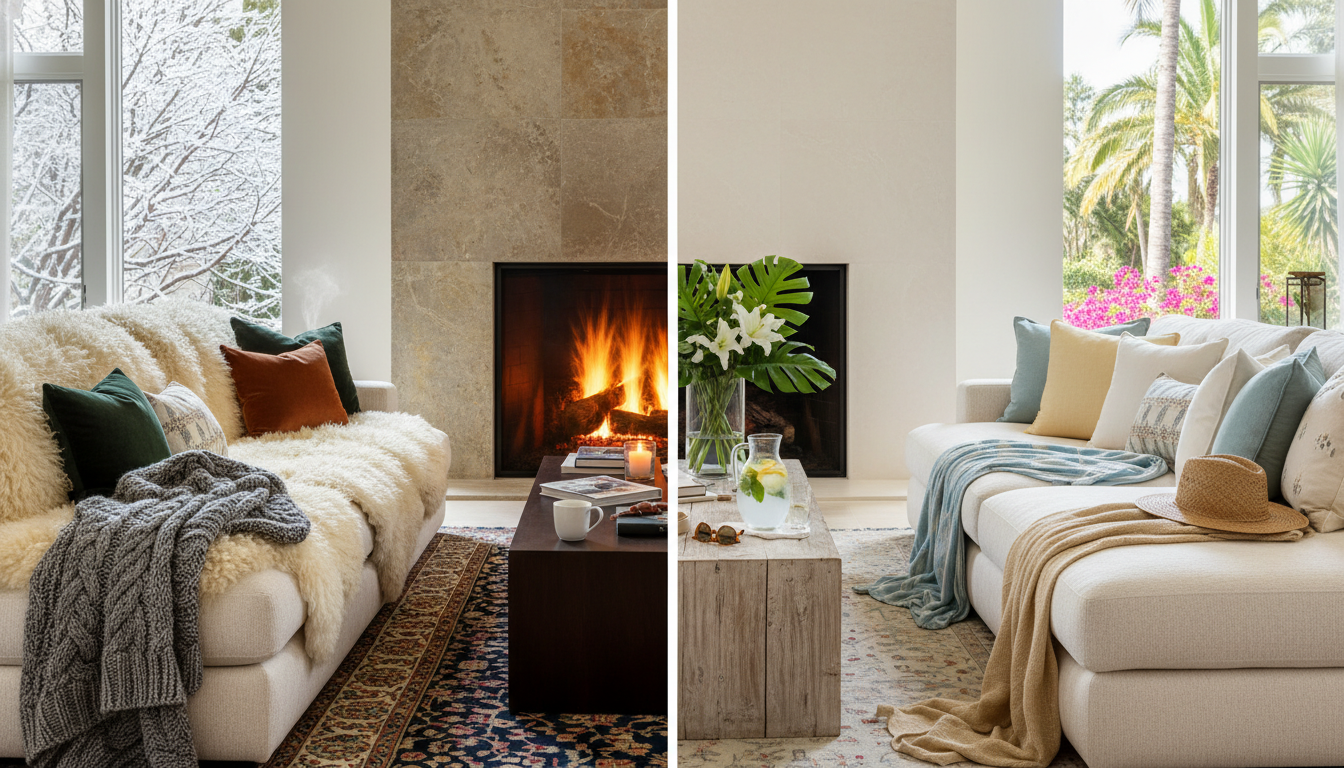
The Curated Rotation: Designing for the Temporal Home
In the design landscape of 2026, we are witnessing a definitive move away from the “static room.” Modern luxury is no longer about a finished product that remains frozen for a decade; instead, it centers on adaptable elegance. By treating your foundation rug—typically a high-durability 12mm jute or a low-profile sisal—as a permanent canvas, you gain the freedom to rotate “topper” rugs that reflect the shifting light and emotional needs of the seasons.
The psychological impact of this flexibility is profound. During the winter months, the design narrative focuses on Tactile Wellness. We see a surge in the use of high-pile, hand-knotted mohair or regenerative wools sourced from the Atlas Mountains. These materials have a naturally high “thermal mass,” physically and visually warming a space. When the solstice shifts, these heavy textures are swapped for lightweight, flat-weave kilims or rugs infused with Bio-Acetate fibers—a 2026 favorite for its silk-like sheen and cooling properties underfoot.
“The most sophisticated homes I visit aren’t the ones that stay the same year-round,” notes Julian Thorne, Lead Curator at the International Textile Collective. “They are the homes that breathe. Swapping a deep-pile ochre rug for a crisp, pale indigo flat-weave doesn’t just change the color palette; it recalibrates the room’s entire energy, shifting the Light Reflectance Value (LRV) to maximize the airy feel of a summer morning.”
The Seasonal Switch: From Hibernation to High Sun
To master this technique without overwhelming your storage closet, focus on two distinct “mood profiles”:
- The Winter Edit: Focus on weight and depth. Think deep forest greens or terracotta tones with a Light Reflectance Value (LRV) below 15. These colors absorb light, creating an intimate, cocoon-like atmosphere. Look for rugs with a “lived-in” patina, such as the authentic vintage finds at thebohorugs.com, which add immediate soul to a cold room.
- The Summer Edit: Transition to breathable luxury. This is the moment for undyed wools, organic cotton blends, and linen-weave toppers. Stick to a “Cool Neutral” palette—sand, sea-salt, and sage—to reflect natural light and create the illusion of more physical space.
This rotation also serves a practical purpose: it extends the lifespan of your investment pieces. By resting your heavy wool rugs during the high-traffic, high-UV summer months, you prevent fiber fatigue and sun-bleaching. When sourcing these interchangeable layers, the artisanal collections at thebohorugs.com provide the perfect variety of textures that stack beautifully without adding unnecessary bulk or “trip hazards” at the edges.
Keep a high-quality rug pad specifically for your smaller topper rugs. When swapping seasons, roll the outgoing rug with the pile facing inward to prevent dust settling into the foundation. For the incoming rug, use a handheld steamer to gently release any “storage creases” before placing it over your base. This ensures the transition looks intentional and professionally styled rather than temporary.
Elevate Your Space
Discover the artistry of handmade luxury. Each rug is a masterpiece of tradition and modern design.
Expert Q&A
Can I layer two rugs of the same texture?
While possible, layering two identical textures often lacks the visual impact intended. For 2026, the trend is ‘Contrast over Consistency’—aim to pair a rough natural fiber with a soft, plush pile.
Does rug layering create a tripping hazard?
It can if not executed correctly. Use ultra-thin, high-grip rug pads between layers and ensure the top rug isn’t too thick in high-traffic hallways.
How do I choose the right size for the base rug?
The base rug should ideally touch all major furniture legs in a grouping, acting as a boundary for the entire ‘zone’ before the decorative top rug is added.
Is it okay to layer a rug over wall-to-wall carpeting?
Absolutely. This is a primary technique in 2026 for adding personality to rentals or neutral carpeted rooms. Use a specialized ‘carpet-on-carpet’ pad to prevent rippling.
Can I use two patterned rugs together?
Yes, provided they share at least one common color and vary in scale—pair a large-scale floral or geometric with a small-scale micro-pattern.
What is the ‘Reveal Rule’ in rug layering?
The reveal rule suggests leaving 12 to 24 inches of the bottom rug visible to create a frame that highlights the top rug’s design.
How do I vacuum layered rugs?
Vacuum each layer separately. For the top rug, use a handheld attachment or turn off the beater bar to avoid pulling the edges where it sits on the base layer.
Are round rugs suitable for layering?
Round rugs are excellent for breaking up the linear nature of a room. Try layering a round sheepskin or hide rug over a large rectangular jute base.
What materials are best for the foundation layer?
Durable, flat-weave materials like sisal, jute, seagrass, or low-profile wool are the gold standard for foundations in 2026.
Does layering help with soundproofing?
Yes, adding a second layer of textile significantly increases sound absorption, making it ideal for urban apartments or homes with high ceilings.
Should the top rug be centered?
Not necessarily. Off-center or diagonal layering is a hallmark of the ‘collected’ look, particularly when using hide rugs or smaller vintage pieces.
How do I prevent the top rug from ‘walking’ or shifting?
A double-sided rug tape designed for textiles or a thin silicone-grip pad placed specifically under the top rug’s corners is the most effective solution.
Written by TheBohoRugs Interior Design Team
Experts in handmade rugs, boho interiors, and modern home decor.