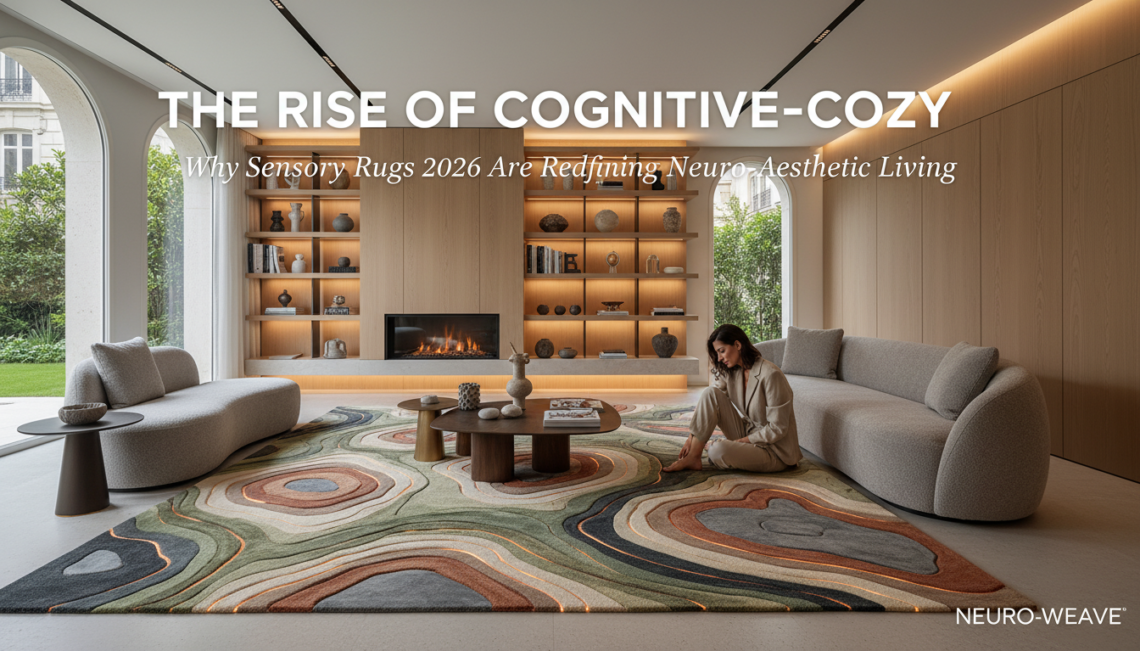
In the evolving landscape of interior design, the home is shifting from a visual showcase to a multisensory sanctuary. As we look toward 2026, the ‘Cognitive-Cozy’ movement takes center stage, prioritizing neuro-aesthetic principles that harmonize the mind through touch. At the heart of this revolution are sensory rugs 2026—tactile, 3D-woven masterpieces that function as art for the floor while providing the neurological grounding needed in an increasingly digital world. This report explores how these hyper-textured foundations are no longer mere accessories but essential tools for cognitive well-being.
“Sensory rugs 2026 represent a shift toward neuro-aesthetic design, utilizing high-relief 3D weaves, varied pile heights, and mixed-material textures to stimulate tactile receptors. These rugs are engineered to reduce cortisol levels and enhance cognitive relaxation, making them a cornerstone of the ‘Cognitive-Cozy’ home trend where the floor becomes a functional tool for mental wellness and spatial grounding.”
The Roadmap
Table of Contents
- The Neuro-Aesthetic Shift: From Visual to Visceral
- Decoding the 3D Weave: The Architecture of Tactile Rugs
- Materials of the Future: Integrating Sustainable Fibers for Sensory Depth
- The Color of Calm: Chromotherapy Meets Textural Complexity
- Zonal Design: Using Sensory Rugs to Define Cognitive Spaces
- Bio-Mimicry on the Floor: Bringing Earth’s Textures Indoors
- The Science of Softness: How Texture Influences Mental Wellbeing
- Curating the Collection: Investing in Art for the Floor as a Longevity Strategy
The Neuro-Aesthetic Shift: From Visual to Visceral
Proprioception and the Power of the Underfoot
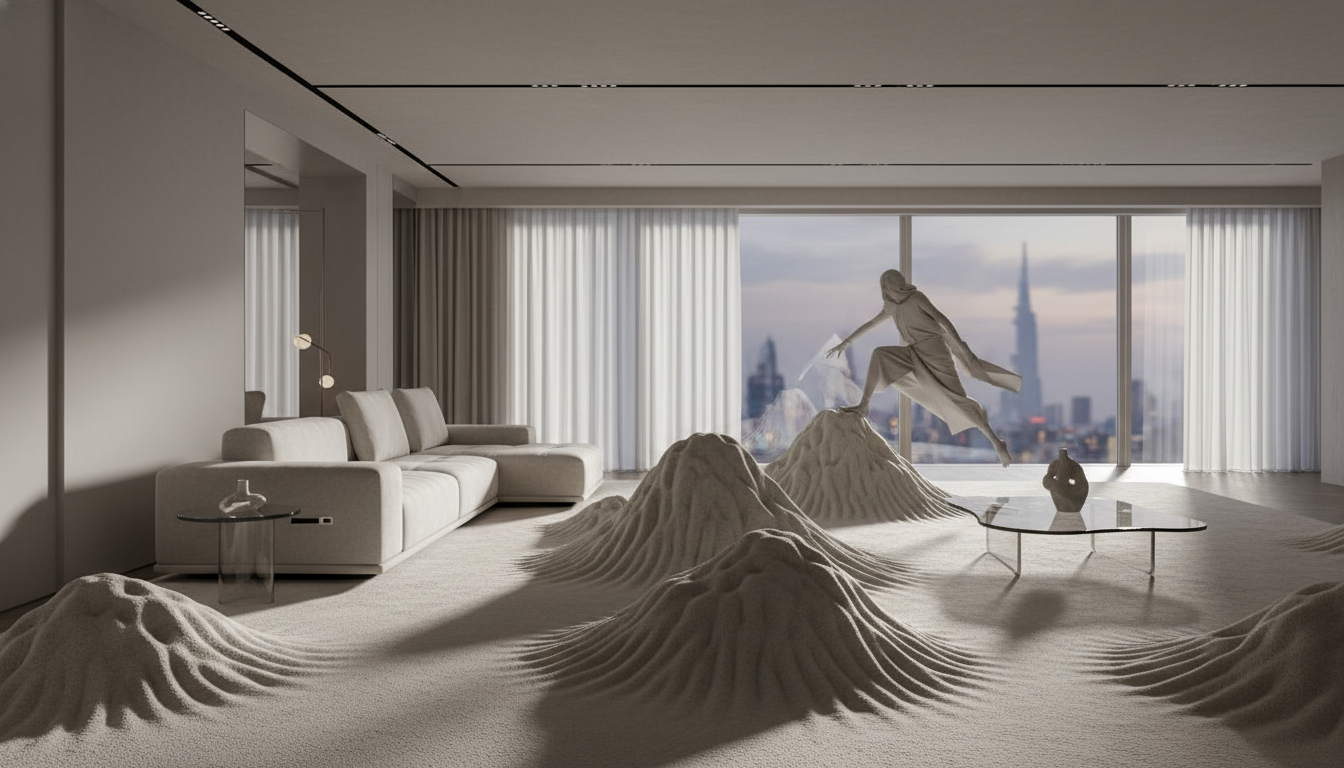
The era of flat-weave minimalism is undergoing a quiet, textural rebellion. As we look toward the interior landscapes of the mid-2020s, the home is no longer a gallery to be observed through a screen, but an immersive sanctuary designed for the nervous system. The emergence of sensory rugs 2026 represents a pivot from “Instagrammable” aesthetics to somatosensory depth.
Neuro-aesthetics—the scientific study of how design impacts the brain—suggests that our feet are among our most powerful sensory gateways. By introducing varied pile heights and irregular 3D topographies, these rugs provide constant, subtle “micro-grounding” moments throughout the day. This tactile feedback loop helps lower cortisol levels, offering a physical tether in an increasingly digital world.
The 2026 Tactile Taxonomy: Beyond Simple Softness
The trend for sensory rugs 2026 moves beyond the generic plushness of previous decades. Instead, we are seeing a move toward “Cognitive-Cozy” compositions that mimic the uneven, healing terrains of the natural world. Designers are focusing on three specific tactile profiles:
- Topographical Weaves: Rugs that mirror the variance of forest floors or riverbeds, using varying tensions to create “valleys” and “peaks” that massage the arches of the feet.
- Kinetic Fibers: The integration of raw silk against coarse Himalayan wool, creating a temperature and texture contrast that stimulates sensory processing.
- Hyper-Relief Geometry: Deeply carved 3D patterns that encourage “mindful walking,” a practice of focusing on the physical sensation of movement to reduce anxiety.
Material Integrity and the Artisanal Connection
High-end interiors are rejecting synthetic, flat fibers in favor of materials that possess “energetic weight.” Authenticity is the ultimate luxury in a neuro-aesthetic home. This shift has led discerning homeowners to seek out authentic, hand-knotted pieces that retain the soul of the maker.
Leading the charge in this tactile movement, thebohorugs.com has become a primary resource for those seeking artisanal 3D weaves that bridge the gap between traditional craft and modern neurological wellness. These pieces are not merely floor coverings; they are functional art designed to re-engage our sense of touch.
Predicting the Shift: Why Texture is the New Color
By 2026, we predict that “tactile zoning” will replace traditional open-plan layouts. Instead of using walls to define spaces, homeowners will use sensory rugs 2026 to create “sensory islands.” A high-relief, wool-and-jute blend might define a high-focus home office, while a multi-level silk shag signals a transition into a restorative “no-tech” lounge.
This visceral approach to design acknowledges a fundamental truth: we do not just inhabit rooms; we feel them. As we move further into the decade, the most prestigious homes will be those that prioritize how a space settles the mind, rather than just how it catches the eye.
Decoding the 3D Weave: The Architecture of Tactile Rugs
The Shift from Visual to Haptic Luxury
In the evolving landscape of interior design, the visual dominance of the last decade is surrendering to the sense of touch. As we approach a new era of “Cognitive-Cozy,” the floor is being reimagined not as a flat surface, but as a textured topography designed to ground the nervous system. The emergence of sensory rugs 2026 marks a pivot toward neuro-aesthetic living, where the home environment serves as a proactive tool for stress regulation.
Designers are moving away from the uniform density of traditional machine-made carpets. Instead, the focus has shifted to variable elevations that mirror the irregularities of the natural world. This architectural approach to weaving creates a rhythmic dialogue between the foot and the fiber, stimulating pressure points that signal the brain to downregulate from the digital noise of modern life.
Engineering the Micro-Massage: 3D Weave Techniques
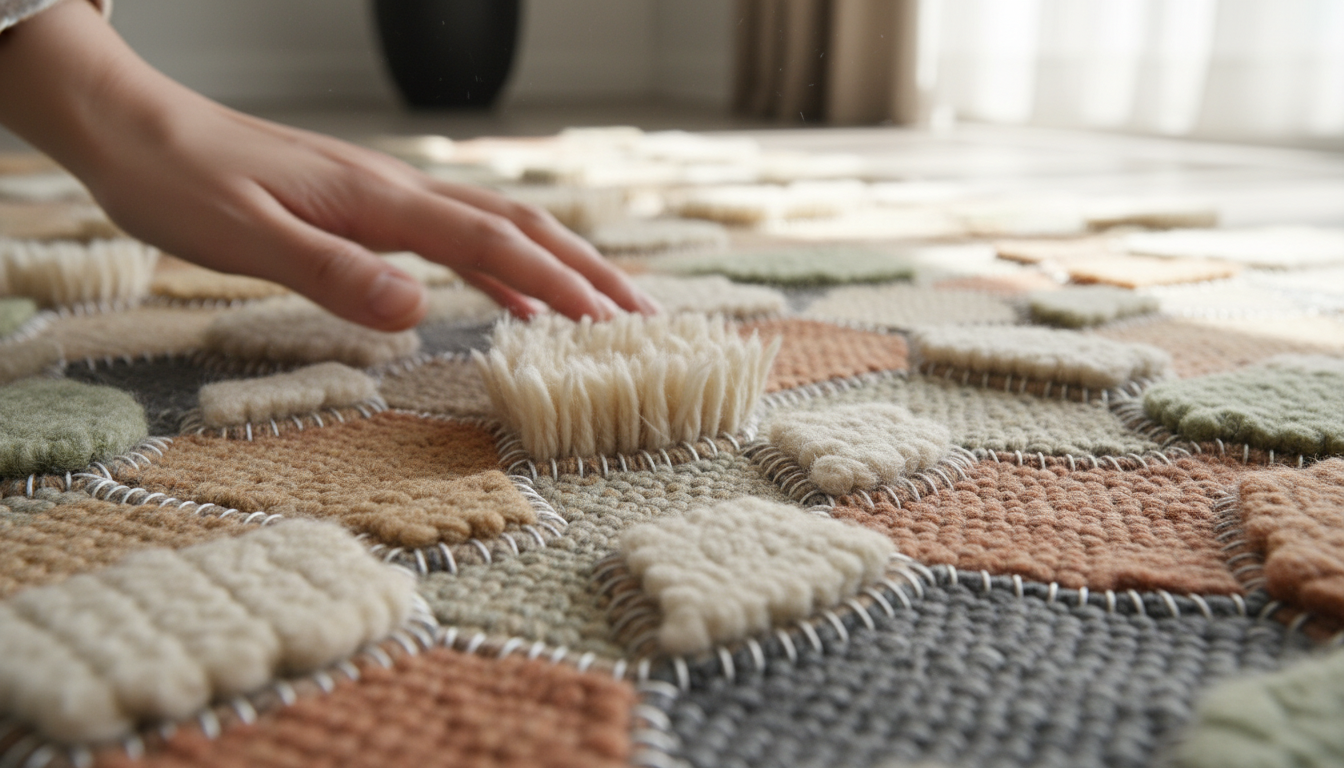
The 2026 aesthetic is defined by “The Ridge and the Relief”—a sophisticated weaving technique that utilizes contrasting yarn tensions to create structural depth. Unlike the “shag” trends of the past, these 3D weaves are calculated and intentional. By blending high-twist wool with soft, recycled silk accents, artisans create a landscape that offers a literal micro-massage with every step.
- Relief-Carving: Hand-sheared channels that guide the foot, providing a grounding “trail” through high-traffic living spaces.
- Variable Tension: Using different loom tensions to create undulating surfaces that mimic the sensation of walking on moss or forest floors.
- Hybrid Materiality: The integration of rugged jute against plush New Zealand wool to provide a sensory contrast that heightens proprioceptive awareness.
Curated collections, such as those found at thebohorugs.com, are already showcasing how these artisanal techniques bridge the gap between high-end craftsmanship and the functional needs of a neuro-aesthetic home.
The Neuro-Aesthetic Palette of 2026
Beyond the physical structure, the color theory of sensory rugs 2026 is deeply rooted in biophilia. We are seeing a departure from high-contrast patterns in favor of “chromatic textures”—where the shadow play of the 3D weave provides the visual interest rather than the pigment itself. This reduction in visual clutter allows the brain to focus entirely on the haptic experience.
Leading designers are predicting a surge in “monochrome depth,” utilizing various shades of undyed wool to celebrate the raw, honest quality of the material. This movement emphasizes the importance of knowing where our tactile environments originate, favoring small-batch production that prioritizes the integrity of the fiber over mass-market uniformity.
Three Elements of a Cognitive-Cozy Foundation
- Acoustic Dampening: High-low 3D weaves naturally break up sound waves, creating a “quiet zone” that is essential for sensory processing.
- Tactile Anchoring: Placing a sensory rug in transition zones—like the side of a bed or under a desk—provides a consistent touchpoint for daily grounding rituals.
- Adaptive Comfort: The use of thermal-regulating fibers like alpaca and wool ensures the rug remains a sensory delight across all seasons.
As we curate our spaces for 2026 and beyond, the investment is no longer just in a decorative object, but in a functional piece of wellness architecture. By selecting rugs that challenge our sense of touch, we transform our homes into sanctuaries of cognitive restoration.
Materials of the Future: Integrating Sustainable Fibers for Sensory Depth
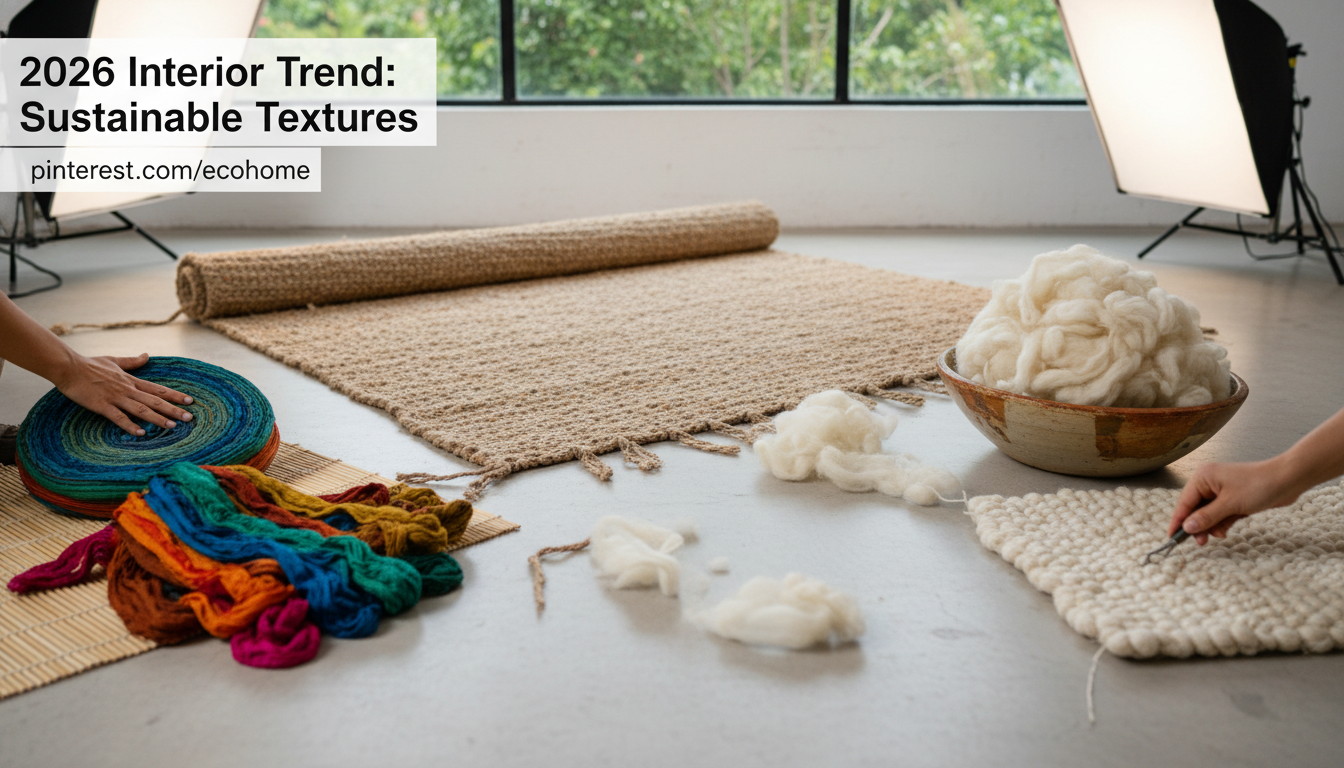
The New Vanguard of Bio-Synthetic Blends
As we transition into a new era of interior consciousness, the materials beneath our feet are undergoing a radical molecular shift. By 2026, the industry is moving beyond standard wools toward bio-fabricated fibers that offer unprecedented haptic feedback.
We are seeing the emergence of mycelium-based “leather” yarns and algae-derived silks interwoven with traditional fibers. These materials don’t just occupy space; they regulate it, providing natural acoustic damping and a microbial resistance that makes the home a literal sanctuary.
The defining feature of sensory rugs 2026 is this departure from synthetic uniformity. In its place, we find “living” textures—blends that respond to changes in humidity and touch, creating a floor covering that feels less like a static object and more like a biological extension of the room.
The Return of High-Twist Himalayan Nettle
Architectural Digest-level interiors are increasingly turning toward ancient, high-tensile fibers for their grounding properties. Himalayan nettle and raw, un-dyed hemp are being utilized in high-twist formats to create “micro-massaging” surfaces.
These fibers are intentionally left in their semi-raw state to preserve the natural irregularities of the plant. When woven into 3D structures, they provide a tactile resistance that stimulates the nerve endings in the feet—a core tenet of the neuro-aesthetic movement.
- Himalayan Nettle: Provides a cool-to-the-touch, exfoliating sensation for high-traffic zones.
- High-Pile Mohair: Strategically placed in “soft zones” to trigger oxytocin release through plushness.
- Recycled Sari Silks: Used as “tactile accents” to provide a slippery, cooling contrast to matte wool bases.
Sculpting with Density: The Physics of Haptic Landscapes
The 3D weave is no longer just a visual trick of light and shadow; it is a calculated landscape. Designers are now using varying pile heights—ranging from 5mm to 35mm—within a single piece to map out “sensory pathways” across a room.
By integrating these varying densities, sensory rugs 2026 serve as a form of “interior grounding.” Walking from a dense, flat-weave border into a plush, tufted center forces the body to register a change in environment, subtly pulling the mind back into the present moment.
For those seeking to curate this level of tactile intelligence, artisanal houses like thebohorugs.com are leading the charge. By blending heritage craftsmanship with contemporary 3D-weaving techniques, they offer the structural depth required for a truly neuro-aesthetic floor plan.
The 2026 Material Forecast
- Conductive Wool Blends: Infused with carbon-neutral fibers that help dissipate static electricity, further reducing “environmental noise.”
- Pebble-Weave Tech: A specific tufting technique that mimics the feeling of walking on river stones, designed for home offices to maintain alertness.
- Monochromatic Depth: Using fiber texture rather than color to create visual interest, allowing the nervous system to rest without overstimulation.
This shift represents the end of the “disposable rug” era. As we prioritize the marriage of sustainability and sensory health, the rug becomes the most important piece of furniture in the room—a foundational layer of wellness that grounds the modern, high-tech home in the visceral reality of the earth.
The Color of Calm: Chromotherapy Meets Textural Complexity
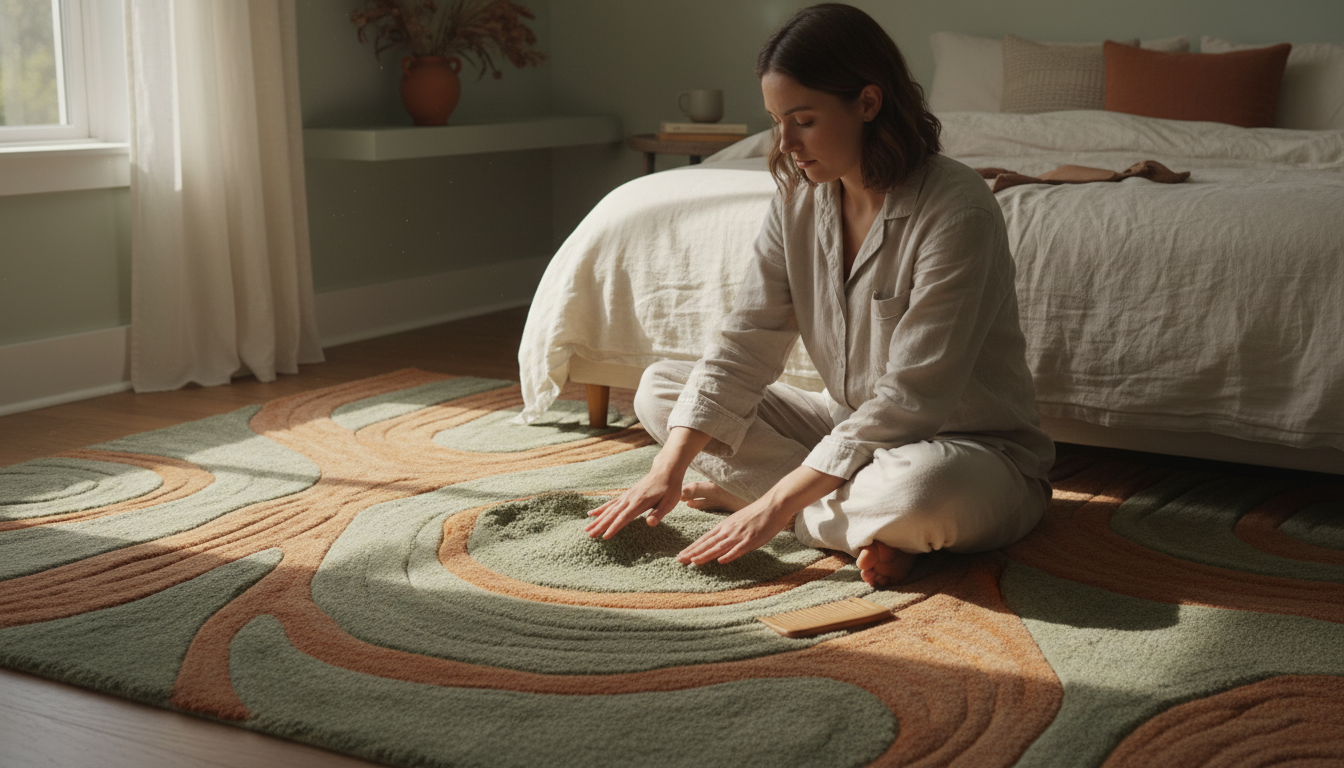
The Synesthesia of Surface
As we approach the mid-decade, the interior design landscape is undergoing a profound “sensory pivot.” No longer content with mere visual harmony, the avant-garde home of the future prioritizes sensory rugs 2026 as the foundation of neuro-aesthetic living. This shift moves beyond the two-dimensional, treating the floor as a topographic map designed to soothe the overstimulated mind.
The convergence of chromotherapy—the science of light and color—with advanced 3D weaving creates a “cognitive-cozy” effect. By varying pile heights and tension, designers are manipulating how light hits a surface, essentially creating “living” colors that shift in intensity as you move through a room. This isn’t just decoration; it is an architectural intervention for the nervous system.
Topographic Tints: Navigating the 2026 Palette
The 2026 color story departs from the high-saturation “dopamine decor” of previous years. Instead, it embraces what curators at thebohorugs.com identify as “grounded luminescence.” These are shades that respond to the body’s circadian rhythms while providing tactile feedback through intricate 3D weaves.
- Bio-Digital Ochre: A warm, sun-drenched tone that utilizes high-and-low loop constructions to mimic the sensation of walking on sand dunes.
- Obsidian Moss: A deep, restorative green that uses velvet-cut piles to absorb sound and light, creating a “quiet zone” in open-plan spaces.
- Atmospheric Lilac: A cool, desaturated purple woven with reflective silk-blends to lower heart rates during evening hours.
The Architecture of the Underfoot
What sets sensory rugs 2026 apart is the intentional use of “tactile friction.” High-end artisanal weavers are now employing heritage techniques—such as those found in the premium collections at thebohorugs.com—to create varied resistance underfoot. This physical feedback signals the brain to “ground” itself, transitioning the dweller from the digital world back into the physical body.
The complexity of these weaves serves a dual purpose. Visually, the 3D ridges create micro-shadows that add a sense of movement to a room. Physically, the variance in texture—from coarse wool knots to plush botanical silks—acts as a passive form of reflexology. In 2026, the most luxurious homes won’t just look expensive; they will feel restorative at every pressure point.
Designing for the Parasympathetic System
To master the neuro-aesthetic home, one must understand the relationship between depth and calm. The rise of the cognitive-cozy aesthetic is a direct response to the “flatness” of our digital lives. By integrating 3D weaves that require our feet to “read” the floor, we re-engage our spatial awareness.
- Zone-Mapping: Using different textural densities to define spaces of rest versus spaces of movement.
- Light-Harvesting: Choosing rugs with 3D “peaks” that catch the golden hour light to extend the feeling of natural warmth.
- Acoustic Softening: High-pile sensory weaves act as natural soundproofing, reducing the “echo-chamber” effect of modern glass-heavy architecture.
Zonal Design: Using Sensory Rugs to Define Cognitive Spaces
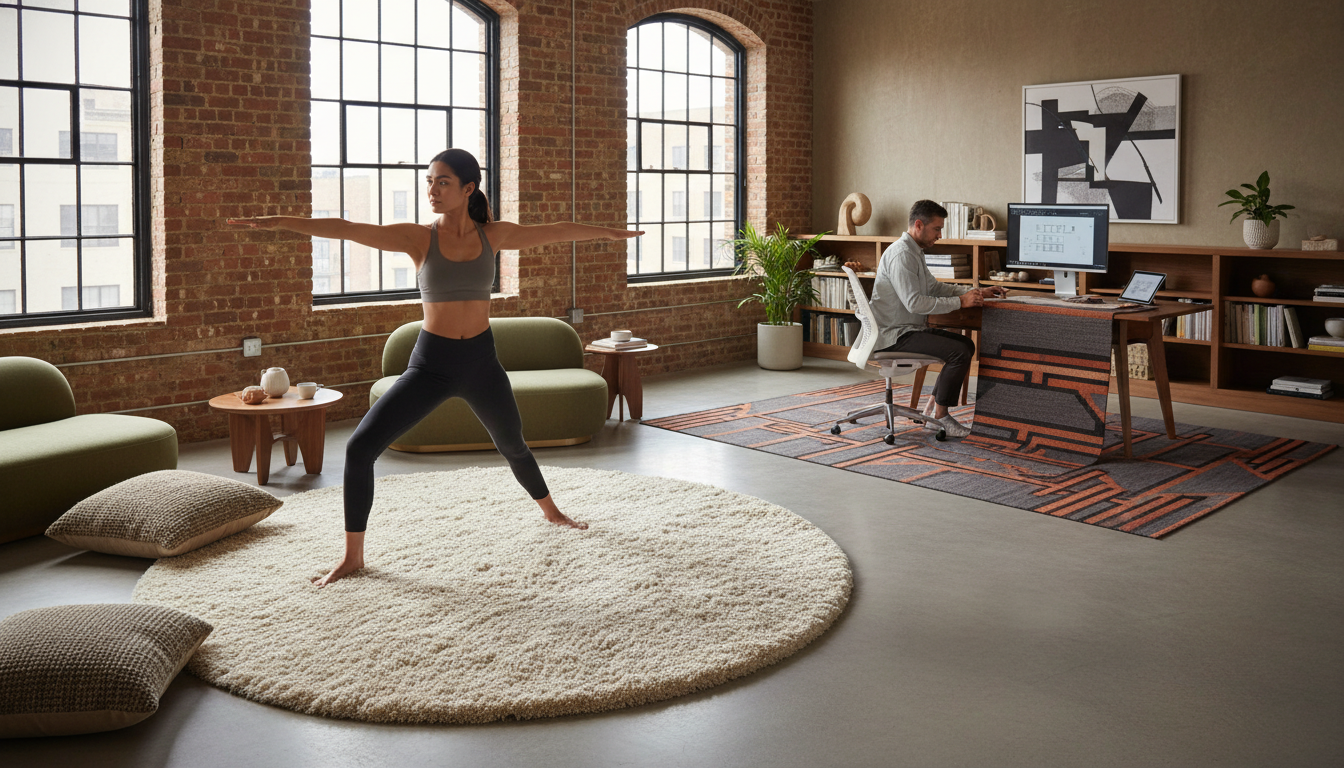
The Cartography of Neuro-Aesthetics
In the expansive open-plan layouts of the mid-2020s, visual boundaries often felt thin and ineffective. By 2026, designers are pivoting toward “haptic cartography”—the practice of using floor textures to signal brain states. This transition marks the end of the rug as a mere accessory and its rebirth as a cognitive tool.
The strategic placement of sensory rugs 2026 allows for the creation of invisible “mood corridors.” By varying pile heights and fiber densities, a home can be mapped to trigger specific neurological responses, transitioning a resident from the high-alert state of a home office to the parasympathetic rest of a reading nook without ever looking at a wall.
The “High-Relief” Focus Zone
For professional environments, the 2026 trend favors “active textures.” These aren’t the plush, sinking piles of the past, but rather structured, high-contrast 3D weaves that provide grounding feedback to the feet during deep-work sessions.
Studies in neuro-architecture suggest that subtle tactile stimulation can alleviate “digital fatigue.” Leading designers are sourcing pieces from artisanal collections like thebohorugs.com, where the interplay of raised wool and flat-woven jute creates a rhythmic sensory landscape that keeps the mind tethered to the present moment.
- Serrated Geometrics: Sharp, defined ridges that promote alertness.
- Variable Resistance: Zones within the rug that vary in firmness to encourage micro-movements of the feet.
- Cool-Touch Fibers: The integration of silk or tencel in work zones to maintain a lower sensory temperature.
Designing for the Circadian Flow
The most sophisticated homes of 2026 use a “gradient of softness” to mirror the human circadian rhythm. As one moves toward the primary suite, the architecture of the sensory rugs 2026 shifts from the rigid and stimulating to the organic and restorative.
This “zonal softening” involves 3D weaves that mimic natural topographies—think of the irregular, soothing patterns of moss or wind-swept sand. These pieces act as a physical “off-switch” for the nervous system, signaling to the brain that it has entered a zone of safety and recovery.
- The Threshold Reset: A high-texture entry rug to “wipe away” the sensory noise of the outside world.
- The Transitional Path: Mid-pile runners that offer a consistent, rhythmic tactile pulse through hallways.
- The Deep-Sink Core: High-density, multi-layered wool structures in relaxation zones for maximum grounding.
The Materiality of Mindfulness
Quality remains the ultimate luxury in 2026. The move toward “Cognitive-Cozy” spaces rejects synthetic, flat-packed alternatives in favor of rugs that possess “soul.” This is found in the slight irregularities of hand-knotted wool and the raw, honest texture of undyed fibers.
When selecting pieces for a neuro-aesthetic home, the focus is on longevity and bio-compatibility. By prioritizing artisanal craft—such as the heritage-informed weaves found at thebohorugs.com—homeowners ensure that their sensory environment is not just a trend, but a sustainable pillar of their daily mental well-being.
Bio-Mimicry on the Floor: Bringing Earth’s Textures Indoors
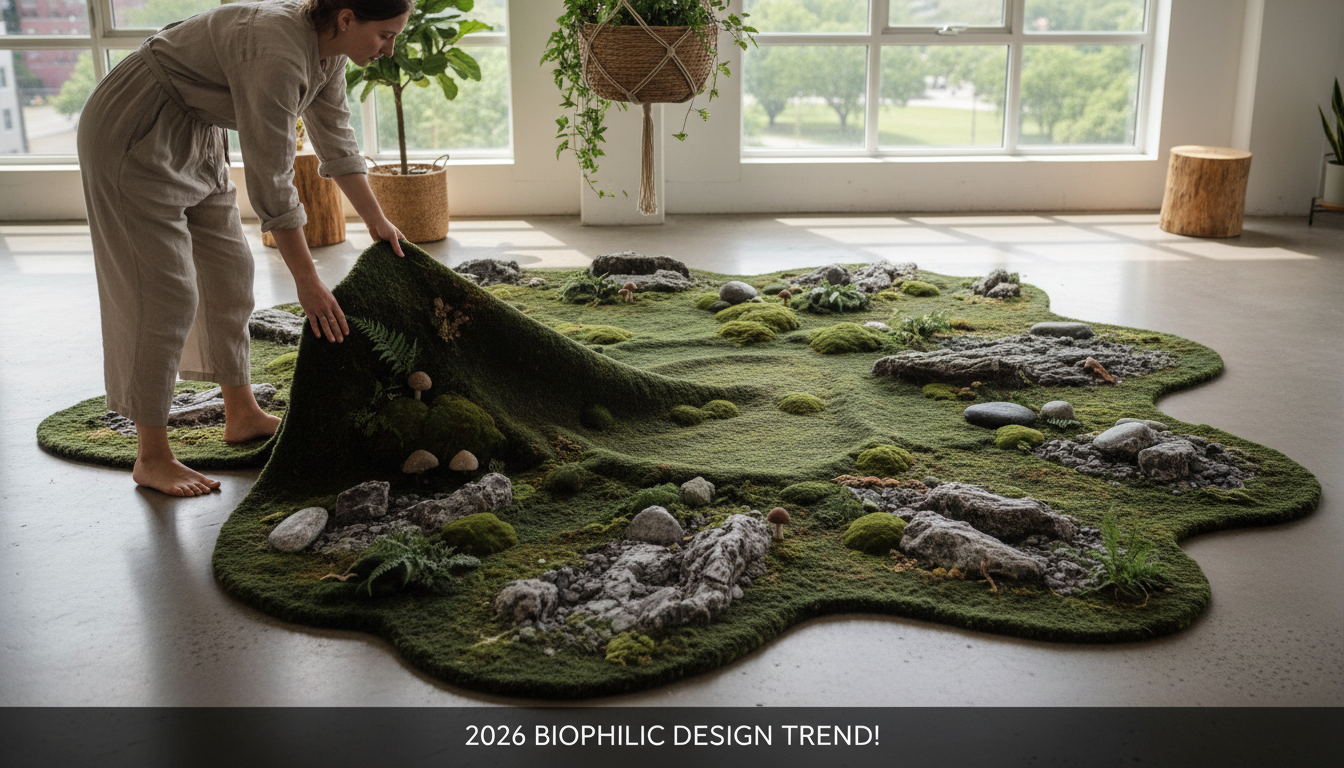
The Neurological Appeal of Grounded Topography
The interior design landscape of the mid-2020s has shifted its gaze from the purely visual to the profoundly haptic. We are witnessing a transition where floors are no longer treated as flat, two-dimensional planes, but as “cognitive canvases” designed to stimulate our primal connection to the earth.
By 2026, the demand for sensory rugs 2026 is projected to dominate the luxury market, driven by a collective desire to counteract the digital exhaustion of our screen-heavy lives. These are not merely floor coverings; they are topographical maps of the natural world, engineered to provide neurological feedback through every step.
Experts at thebohorugs.com suggest that the secret lies in the intentional “irregularity” of the weave. Unlike the uniform piles of the past, these artisanal pieces utilize variable heights to mimic the grounding sensation of walking barefoot across a forest floor or a sun-warmed riverbed.
Three-Dimensional Weaving: The New Standard for Neuro-Aesthetic Homes
The rise of bio-mimicry in textile design has introduced revolutionary techniques that go beyond traditional loom-work. For the sensory rugs 2026 movement, we are seeing a move toward “Sculptural Pile Variation,” a method that treats wool and silk as medium-density foam for the feet.
- Variable-Depth Knotting: High-low piles that alternate between 5mm and 25mm to stimulate the mechanoreceptors in the soles of the feet.
- Fractal Patterning: Designs that replicate the non-repeating geometry of nature, known to lower cortisol levels and improve focus.
- Kinetic Resilience: Fibers that provide a slight “rebound,” offering a subtle aerobic benefit and reducing joint strain during standing tasks.
This “unpaving” of the home creates a rhythmic tactile experience. When the brain encounters these organic variations, it triggers a state of soft fascination—a restorative psychological mode that allows the nervous system to recalibrate after hours of cognitive load.
Sustainable Biomimetics: Materiality in 2026
The 2026 aesthetic is defined by “The Raw and The Refined.” Materials are being sourced not just for their durability, but for their ability to age like natural landscapes. We are seeing a surge in undyed, high-lanolin wools and hand-spun nettle fibers that offer a gritty, earthen texture that synthetic alternatives simply cannot replicate.
These sensory rugs 2026 collections often incorporate elements that change under different lighting and pressure. For instance, a rug might feature “Living Moss” weaves—deep emerald wools structured in dense, tufted clusters that provide the same cooling sensation as real greenery.
As we curate our sanctuaries for the future, the goal is “tactile transcendence.” By introducing the unpredictable textures of the wild into the controlled environment of the home, we satisfy a biological craving for the complex, the textured, and the real.
The Science of Softness: How Texture Influences Mental Wellbeing
The Haptic Turn: Beyond Visual Minimalism
As we move toward a post-minimalist era, the design world is witnessing a seismic shift from “look” to “feel.” In 2026, the home is no longer a gallery for the eyes but a sanctuary for the nervous system. This evolution has birthed the “Cognitive-Cozy” movement, where the tactile intelligence of a space is prioritized over its color palette.
Central to this movement are sensory rugs 2026, which utilize intricate 3D weaving techniques to bridge the gap between interior design and neuro-psychology. By integrating varying pile heights and fiber densities, these pieces act as a physical anchor in an increasingly digital and intangible world.
The Somatosensory Connection: Why 3D Weaves Matter
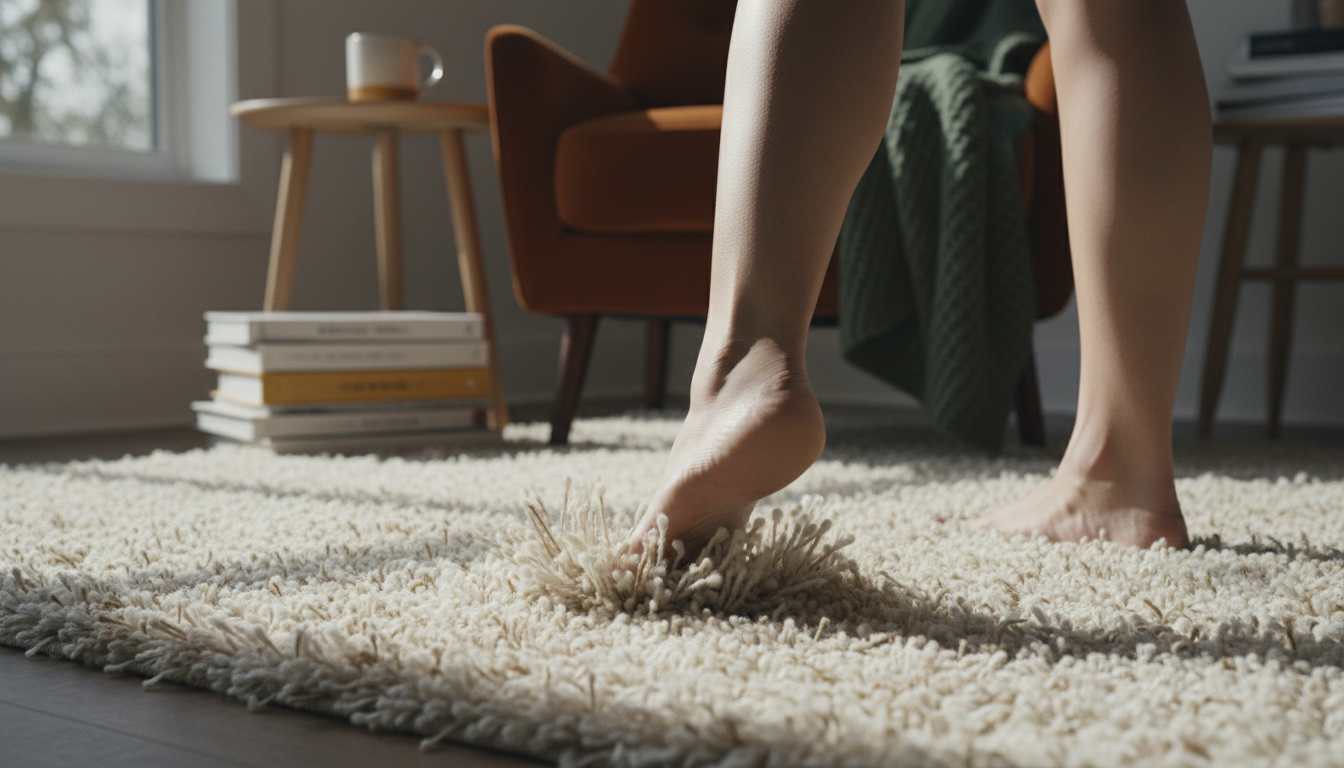
Neurological research suggests that the soles of our feet are among the most sensitive areas of the body, dense with mechanoreceptors. When we transition across a rug with a multi-dimensional weave, we engage in a process called “passive grounding.”
High-low textures stimulate these receptors, sending signals to the brain that lower cortisol levels and encourage parasympathetic nervous system activation. This is why the curated collections at thebohorugs.com have become a staple for designers seeking to create “recovery rooms”—spaces specifically engineered to alleviate the sensory overload of modern life through artisanal craftsmanship.
Key Features of the 2026 Tactile Landscape
The next generation of floor coverings goes beyond the simple shag or flatweave. We are seeing a move toward “topographical textiles” that mimic the therapeutic irregularities of the natural world.
- Zonal Topography: Rugs designed with “islands” of high-density wool surrounded by recessed silk channels to guide movement and focus.
- Bio-Adaptive Fibers: The use of untreated New Zealand wools and raw jute that maintain their natural lanolins, offering a waxy, skin-calming texture.
- Micro-Massaging Weaves: Intricate “popcorn” stitches and looped bouclés that provide subtle reflexology-style stimulation during daily transitions.
Predicting the “Cognitive-Cozy” Aesthetic
The rise of sensory rugs 2026 reflects a broader societal need for intentionality. We are seeing a shift away from synthetic, mass-produced surfaces toward “honest” materials that age gracefully and offer a rich sensory narrative.
For the discerning homeowner, the goal is “Haptic Harmony.” This involves layering textures—pairing a rugged, hand-knotted base from thebohorugs.com with sleek, modernist furniture—to create a tension that is both visually sophisticated and mentally restorative. In 2026, luxury isn’t defined by the price per square foot, but by the depth of the sensory experience a room provides.
Curating the Collection: Investing in Art for the Floor as a Longevity Strategy
In the high-stakes world of interior curation, the focus for the upcoming season is shifting from the ocular to the haptic. We are no longer merely looking at our spaces; we are feeling them. The emergence of sensory rugs 2026 represents a pivot toward “slow-design,” where the floor serves as a topographical landscape for cognitive relief.
Investing in these tactile 3D weaves is less about following a trend and more about securing a blue-chip asset for the home. As digital fatigue reaches its zenith, the demand for “grounding” textures has transformed the humble rug into a sophisticated tool for nervous system regulation.
The New Blue-Chip Asset: Topographical Relief
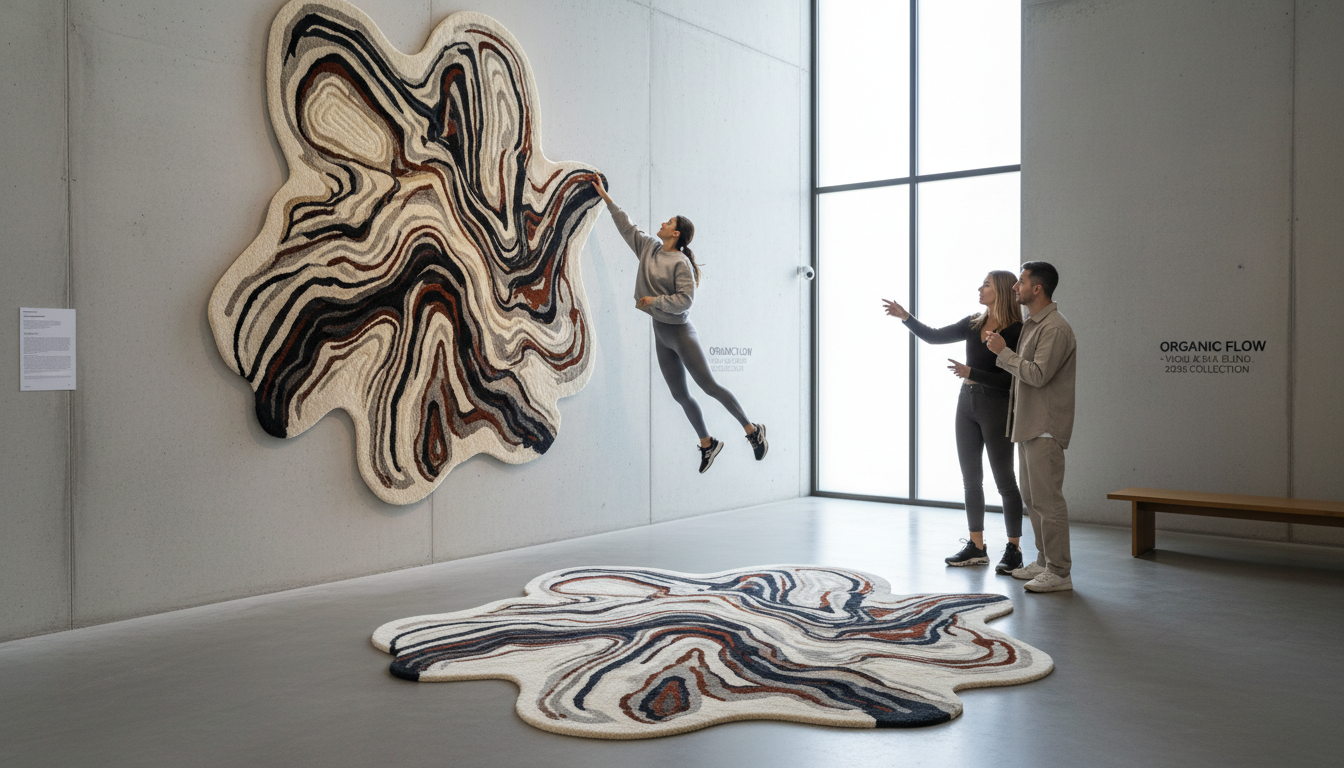
By 2026, the distinction between fine art and floor covering will blur entirely. Designers are moving away from flat-weave minimalism toward hyper-tactile, high-low piles that mimic the natural irregularities of the earth. These “sensory landscapes” are designed to stimulate the brain’s somatosensory cortex.
For the discerning collector, the value lies in the complexity of the weave. A rug that incorporates variable pile heights—ranging from 5mm to 25mm—creates a rhythmic physical experience underfoot. This isn’t just a design choice; it is a longevity strategy for a home that evolves with the resident’s psychological needs.
- Kinesthetic Mapping: Rugs that feature “organic interruptions” in texture help delineate zones in open-concept living.
- Acoustic Softening: High-density 3D weaves act as natural sound baffles, essential for the quiet luxury aesthetic of 2026.
- The “Foot-Feel” Factor: Collectors are increasingly prioritizing sensory rugs 2026 for their ability to lower cortisol levels through tactile feedback.
Future-Proofing Through Material Integrity
Longevity in the 2026 market is defined by material authenticity. To achieve the “Cognitive-Cozy” effect, one must look beyond synthetic fibers. The market is seeing a resurgence of un-dyed wools, raw silks, and cactus fibers—materials that age with a distinct patina and maintain their structural “bounce” over decades.
When curating a collection, the goal is to find pieces that offer a narrative. Artisanal platforms like thebohorugs.com have become essential resources for those seeking hand-knotted textures that bridge the gap between ancient craftsmanship and modern neuro-aesthetic theory.
3 Strategic Considerations for the 2026 Collector
- The Gradient of Touch: Look for rugs that transition between materials, such as a matte wool base with raised silk accents. This provides a “sensory map” that guides movement through a room.
- Undyed Narratives: Sustainability is no longer a buzzword but a baseline. The most valuable sensory rugs 2026 will feature the natural variations of sheep’s wool, offering a visual and tactile depth that chemical dyes cannot replicate.
- Scale and Relief: In larger rooms, opt for “macro-textures”—large-scale 3D patterns that provide a bold architectural statement while maintaining a soft, grounding presence.
Ultimately, the move toward tactile 3D weaves is a rebellion against the “flatness” of the digital age. By treating the floor as a canvas for sensory exploration, homeowners are creating environments that don’t just look expensive—they feel restorative. This shift marks the transition of the rug from a decorative afterthought to the very foundation of a longevity-focused lifestyle.
Elevate Your Space
Discover the artistry of handmade luxury. Each rug is a masterpiece of tradition and modern design.
Expert Q&A
What exactly are sensory rugs 2026?
Sensory rugs 2026 refer to a new generation of floor coverings designed with neuro-aesthetic principles, featuring varying pile heights, 3D textures, and mixed materials to stimulate tactile senses.
How do 3D weaves differ from traditional rugs?
Traditional rugs are often flat or have uniform pile heights; 3D weaves use architectural carving and varying knot densities to create physical depth and shadows.
What is ‘Cognitive-Cozy’ design?
Cognitive-Cozy is a design philosophy that focuses on how physical environments—especially textures—affect mental state, aimng to reduce anxiety and improve focus.
Can sensory rugs help with stress relief?
Yes, tactile stimulation through the feet and hands can lower cortisol levels and trigger the parasympathetic nervous system, promoting relaxation.
Are these rugs suitable for high-traffic areas?
Many sensory rugs in 2026 are engineered with durable hybrid fibers like New Zealand wool and Tencel, making them resilient even with complex textures.
What colors are trending for sensory rugs in 2026?
Expect a shift toward ‘grounded pigments’—soft sages, terracotta, muted ochre, and deep oceanic blues that complement the tactile nature of the weave.
How do you clean a 3D textured rug?
Professional cleaning is recommended for deep-pile 3D rugs, though regular vacuuming with a suction-only setting preserves the integrity of the varied heights.
What materials are best for a neuro-aesthetic home?
Natural materials like organic wool, silk, hemp, and jute are preferred for their authentic tactile feedback and non-toxic properties.
Are sensory rugs good for children with sensory processing needs?
Absolutely; the varied textures provide essential ‘grounding’ feedback that can be highly therapeutic for children with ADHD or autism.
How do sensory rugs incorporate biophilic design?
They often mimic natural patterns such as moss, river stones, or sand dunes, reinforcing our evolutionary connection to the outdoors.
Is ‘Art for the Floor’ a real investment trend?
Yes, high-end 3D rugs are increasingly viewed as collectible art pieces that hold value due to their craftsmanship and unique design.
Can I use sensory rugs in a home office?
Yes, using a sensory rug under a desk can help with ‘foot fidgeting’ and improve concentration during long work hours.
What is the lifespan of a 2026 sensory rug?
With proper care, high-quality wool-based sensory rugs can last 20 to 50 years, making them a sustainable choice.
Do these rugs require a special rug pad?
A high-quality felt pad is recommended to provide extra cushioning and prevent the structural 3D weave from flattening over time.
How does lighting affect the look of a 3D rug?
Low-angle lighting is best, as it emphasizes the shadows created by the varying pile heights, enhancing the visual depth.
Can sensory rugs improve acoustics?
The varied surface area and density of 3D rugs are exceptional at absorbing sound waves, making them perfect for noisy open-plan homes.
Are there hypoallergenic sensory rug options?
Yes, opting for short-loop wool or synthetic microbial fibers ensures sensory benefits without trapping excessive allergens.
What is the ‘Tactile-First’ approach to decorating?
It means choosing decor based on how it feels against the skin before considering its visual impact, a key tenet for 2026.
Why is 2026 seeing a rise in this trend?
As digital fatigue reaches its peak, homeowners are seeking physical, tangible experiences within their living spaces to reconnect with reality.
Do 3D rugs work in small apartments?
Yes, they add character and ‘zones’ without the need for physical walls, making small spaces feel more intentional.
Can these rugs be customized?
Many boutique manufacturers now offer custom 3D mapping where you can choose the specific ‘topography’ of your rug pile.
What makes a rug ‘neuro-aesthetic’?
It must satisfy the brain’s need for pattern, texture, and organic irregularity, which reduces the ‘visual noise’ of a room.
Are sensory rugs pet-friendly?
While pets love the comfort, it is best to choose low-loop 3D designs to prevent claws from snagging the intricate weaves.
What is the difference between shag and 3D sensory rugs?
Shag is uniform and long; 3D sensory rugs feature curated sections of varying heights, textures, and even different materials in one piece.
How do I style a 3D rug with modern furniture?
Keep furniture lines clean and simple (minimalist) to allow the ‘art for the floor’ to be the focal point of the room.
Are these rugs more expensive?
Due to the complexity of the weaving process and the volume of material required for 3D effects, they are typically priced at a premium.
Is sustainability a factor in sensory rugs 2026?
Yes, the 2026 market prioritizes biodegradable fibers and ethical labor, as well-being extends to the planet as well.
Can I hang a sensory rug on the wall?
Yes, many homeowners use them as acoustic wall tapestries because their 3D nature provides incredible visual and sound-dampening benefits.
What should I look for when buying a sensory rug?
Check for fiber density, the variation in pile heights (at least 5mm difference), and the presence of natural materials like wool.
Will 3D rugs go out of style?
The shift toward wellness-based design is a long-term movement, suggesting that sensory rugs will remain relevant for decades as functional art.
Written by TheBohoRugs Interior Design Team
Experts in handmade rugs, boho interiors, and modern home decor.
