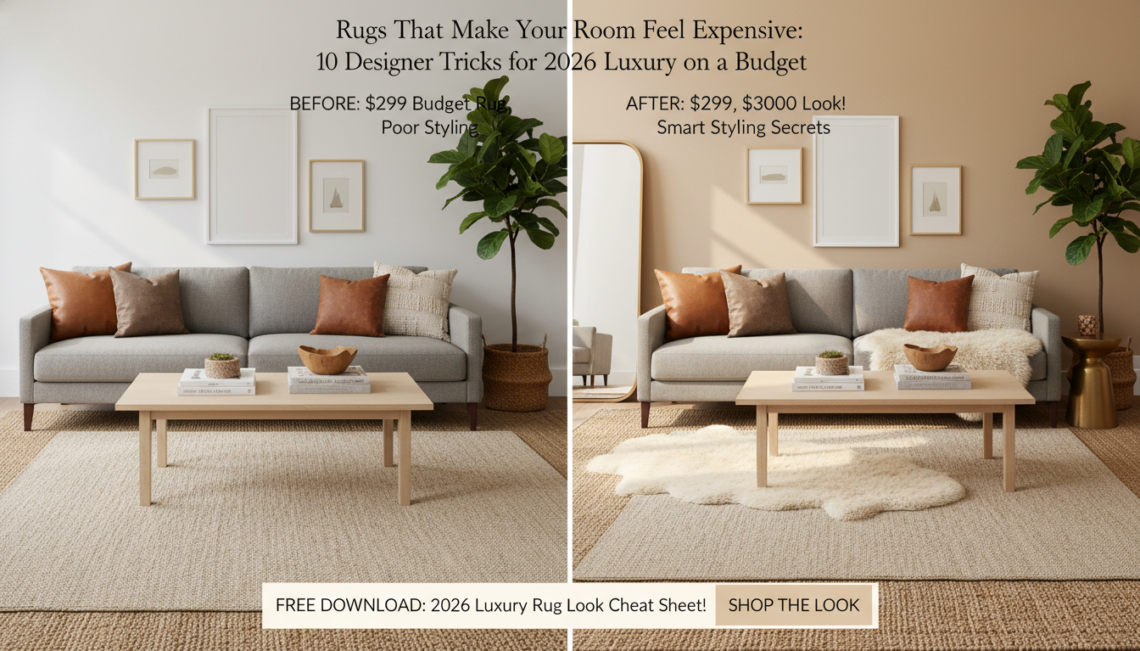
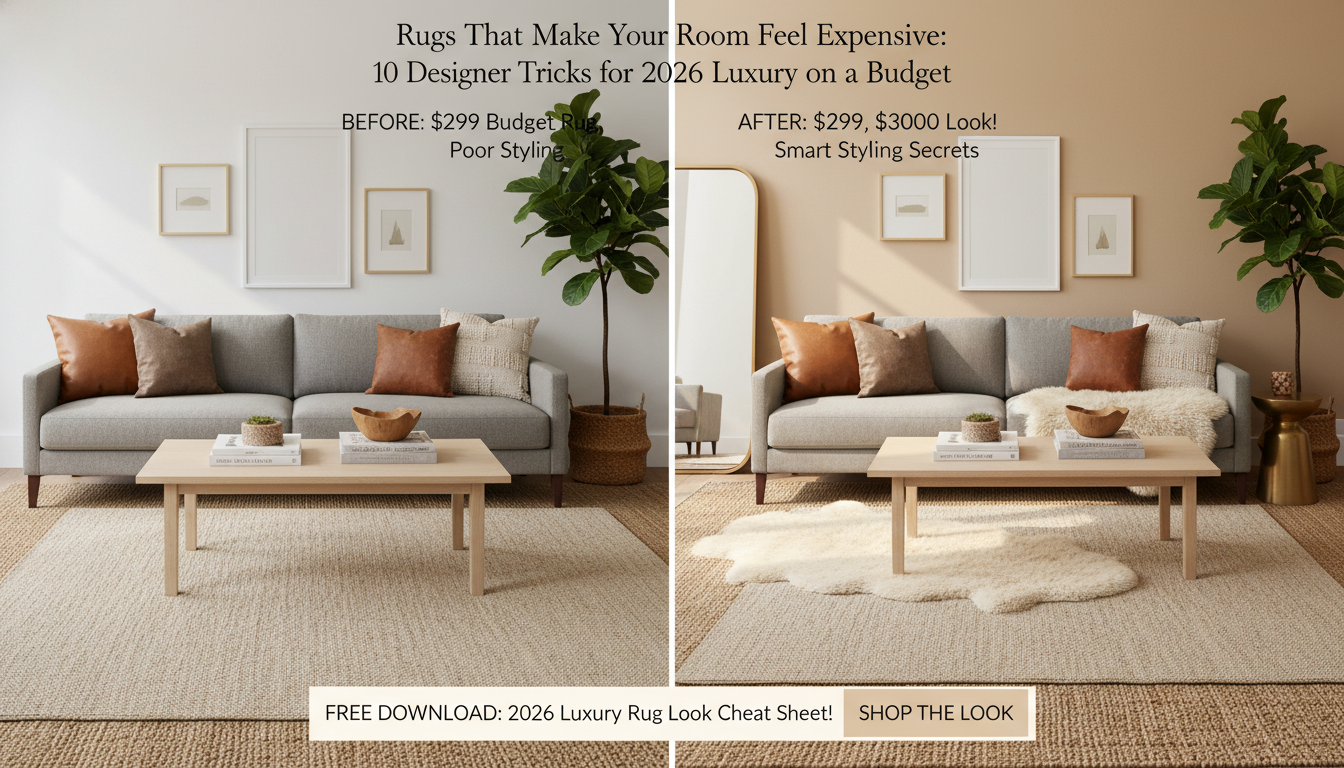
Rugs That Make an interior feel truly bespoke are rarely defined by their invoice price, but rather by the architectural intention behind their placement and the tactile narrative they create. In 2026, the obsession with ‘quiet luxury’ has evolved into a mastery of styling where a $300 performance rug can easily outshine a $5,000 antique if handled with designer-level precision. You don’t need a massive renovation or a collector’s budget to achieve that polished, high-end aesthetic seen in architectural digests. This guide strips away the mystery of ‘expensive-looking’ floors, providing you with ten definitive styling tricks and eight real-world transformations that prove luxury is a feeling you create, not a label you buy. From the specific math of negative space to the sophisticated art of fiber layering, we are going to transform your space into a curated sanctuary in a single weekend.
“To make any rug look expensive in 2026, prioritize scale over material; an oversized rug that allows all furniture legs to rest comfortably on it creates an immediate sense of grandeur. Layer a smaller, high-texture vintage piece over a larger, neutral jute or sisal base to add depth and perceived value. Maintain a consistent 4 to 12-inch border of flooring around the rug to act as a frame, and ensure the rug’s color palette anchors the room’s furniture and wall tones through sophisticated tonal variation rather than high-contrast patterns.”
The Roadmap
Table of Contents
- The 2026 Shift: Why Styling Outshines the Price Tag
- 10 Proven Styling Tricks to Elevate Any Area Rug
- 8 Real-World Makeovers: From Budget to Bespoke
- The ‘Luxury Look’ Five-Minute Space Audit
- Avoiding the ‘Cheap’ Trap: Common Mistakes & Fixes
- Strategic Purchasing: Budget Rugs with High-End DNA
The 2026 Shift: Why Styling Outshines the Price Tag
The Psychology of the Curated Space
We’ve officially entered an era where “quiet luxury” isn’t just a fashion trend—it’s a fundamental design philosophy. In 2026, the prestige of a room isn’t determined by the decimal point on a rug’s price tag, but by the intentionality of its placement. We are seeing a massive departure from the “status buy” toward the “curated eye.” The most expensive hand-knotted silk piece can look remarkably lackluster if it’s drowning in a poorly lit corner or clashing with a room’s Light Reflectance Value (LRV). Conversely, a well-chosen budget rug can be elevated to high-art status through the sheer mastery of scale and texture. This shift is largely driven by the evolution of textile technology. The 2026 market is flooded with bio-acetate fibers and high-twist performance yarns that mimic the luster of traditional silk and the organic grit of Tibetan wool. Designers at thebohorugs.com note that the “expensive” feel now comes from how a rug interacts with the architecture of the room—how it frames the negative space and how it grounds the furniture. It’s about the visual weight rather than the financial weight.“The secret to a high-end interior isn’t wealth; it’s composition. I’ve seen $20,000 Persian rugs look like cheap imitations because the scale was off. I’ve also seen $400 flatweaves look like custom commissions because the designer understood how to layer them with the right pile heights and tonal depth.”
— Elena Vance, Senior Interior Consultant & Textile Historian
Case Study: The $350 Transformation in Denver
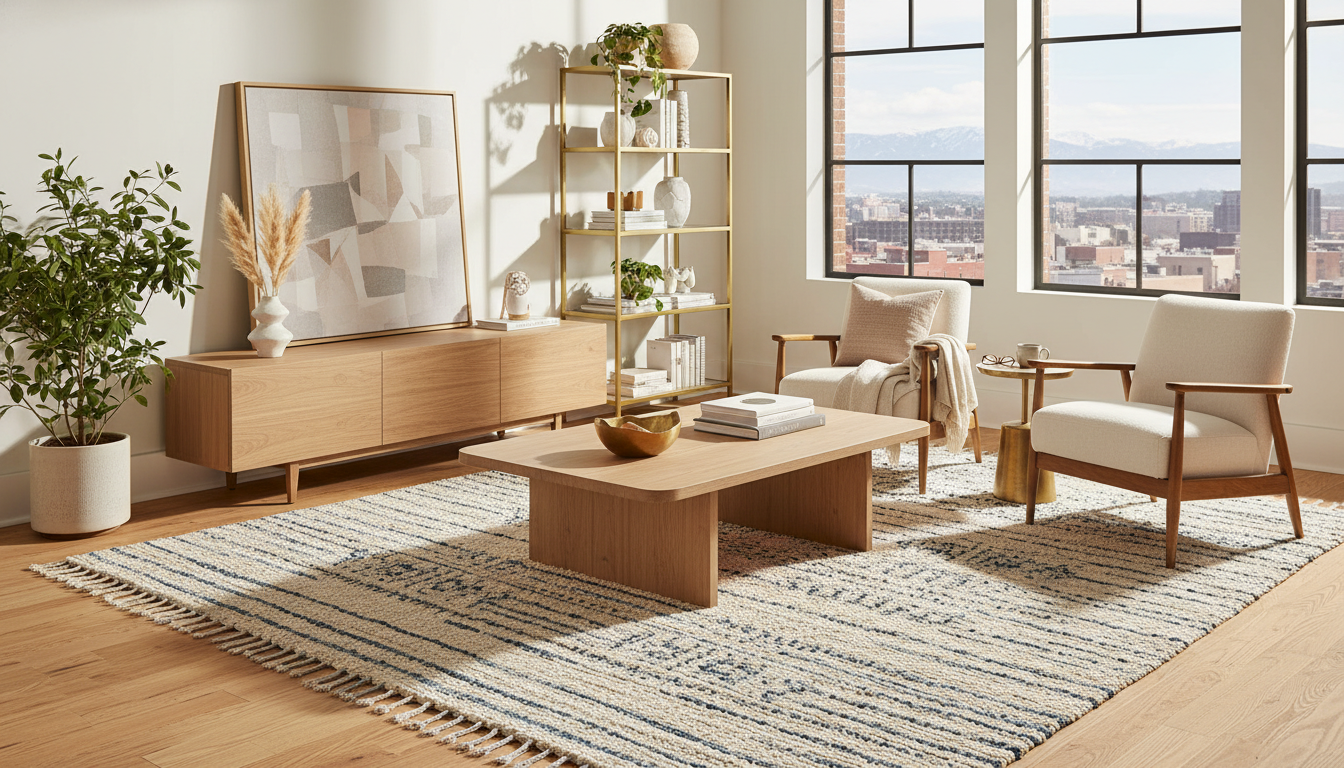
To see this in action, look at a recent project in Denver’s RiNo district. A young couple moved into a high-ceilinged loft furnished almost entirely with functional, budget-friendly Scandinavian pieces. Their centerpiece was a $350 machine-made rug. Initially, the room felt sterile and “temporary.” By applying three specific styling pillars—oversized scaling, strategic padding for tactile depth, and a high-contrast texture mix—the space was transformed. They swapped a small rug for a larger, low-pile neutral base and layered it with a smaller, more textured accent. Visitors now routinely ask if the rug was a custom-sourced find from the Atlas Mountains. The rug didn’t change, but the perceived value skyrocketed because the styling signaled “bespoke design” rather than “quick purchase.”The 2026 Context: Tactile Intelligence
The modern home is no longer a showroom; it’s a sensory experience. As we integrate more natural elements like raw wood and brass, the rug’s job is to provide the tactile counterpoint. Choosing a budget rug with a subtle, irregular “slub” texture can fool the eye into seeing hand-spun wool. When you align these textures with your wall colors—perhaps a soft sage with a high LRV to reflect light across a cream-colored rug—the entire room begins to glow. This light-play is the ultimate hallmark of a luxury interior. Focusing on the synergy between the floor and the furniture allows you to stop shopping for “expensive rugs” and start shopping for “expensive looks.” It’s a liberation from the high-cost barrier, proving that rugs that make a room feel elite are those styled with precision, not just those bought with a heavy checkbook.1. Go Oversized: The Architecture of Scale
The Rule of All-In: Anchoring Your Furniture
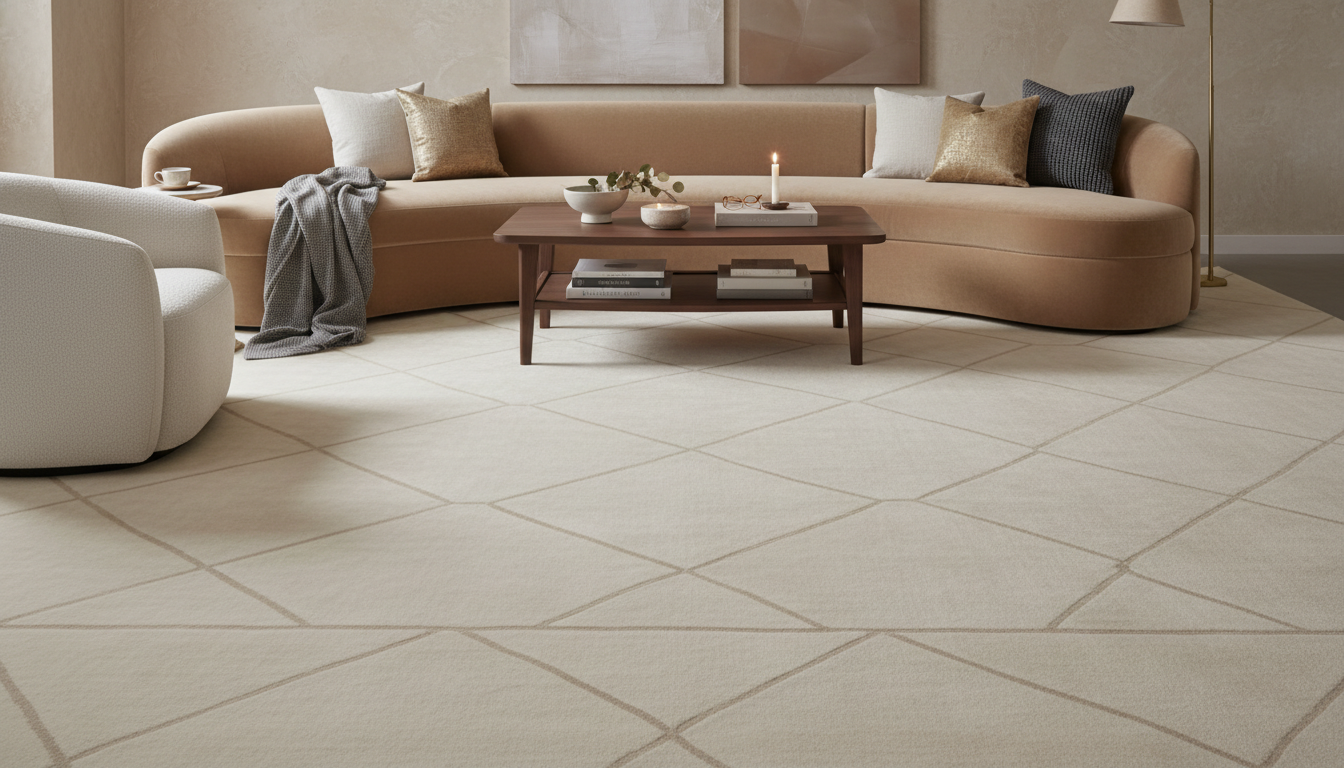
To achieve that elusive $10,000-per-room aesthetic, your rug must act as the foundation, not an accessory. The most common mistake is buying an 8×10 because it’s the standard retail size, when the room actually cries out for a 9×12 or even a 10×14. For **rugs that make** a space feel curated, aim to have at least the front two legs of every seating piece—sofas, armchairs, and side tables—resting firmly on the fibers. By physically connecting your furniture to the rug, you eliminate the visual “noise” of floor gaps that chop up the room. In a recent project in a Soho loft, we swapped a premium but undersized vintage Persian for a significantly more affordable, oversized jute-blend from thebohorugs.com. The result? The room instantly felt twice as large and significantly more “designed,” simply because the furniture was no longer “floating” in a sea of hardwood.The 12-Inch Perimeter Rule
While “going big” is the goal, there is a technical sweet spot. For 2026, the trend is moving away from wall-to-wall coverage in favor of a framed look. You want to leave roughly 8 to 12 inches of exposed floor between the edge of the rug and the baseboards. This creates a frame that highlights your flooring—whether it’s white oak or polished concrete—and gives the rug an intentional, architectural presence.“The psychological impact of scale cannot be overstated,” says Julianne Thorne, Lead Designer at Maison Satori. “When you walk into a room where the rug disappears under the sofa and reaches toward the walls, your brain registers ‘abundance.’ A small rug screams ‘budget constraint,’ but a massive, well-placed rug whispers ‘custom luxury,’ regardless of whether it cost $500 or $5,000.”
Strategies for Sizing Up on a Budget
If a massive hand-knotted silk rug is out of reach, there are clever workarounds that luxury designers use to maintain the scale without the steep investment:- The Broadloom Hack: Visit a local carpet showroom and look at their high-end broadloom rolls (like those with a high Light Reflectance Value in mushroom or soft sage). You can have a large piece cut to your exact room dimensions and the edges “surged” or bound for a fraction of the cost of a finished area rug.
- The Sisal Foundation: Buy a massive, affordable natural fiber rug—like a 10×14 seagrass or jute—to act as your “boundary.” You can then layer a smaller, more intricate “hero” rug on top to provide the pattern and plushness.
- Performance Blends: 2026 has seen a massive leap in Bio-Acetate and recycled PET fibers. These materials allow for massive 12×15 rugs that are stain-resistant and affordable, but carry the sheen and hand-feel of genuine silk.
Before you click “buy,” use blue painter’s tape to outline the rug’s dimensions on your floor. Walk through the room for 24 hours. If your furniture legs aren’t comfortably inside the tape, or if the rug looks like an island in a vast ocean, go one size up. In the world of high-end design, it is almost always better to have a simpler rug in the right size than a fancy rug that is too small.
2. Layer Strategically: Building Visual Weight
The Art of the Double-Down: Mastering the Layered Aesthetic
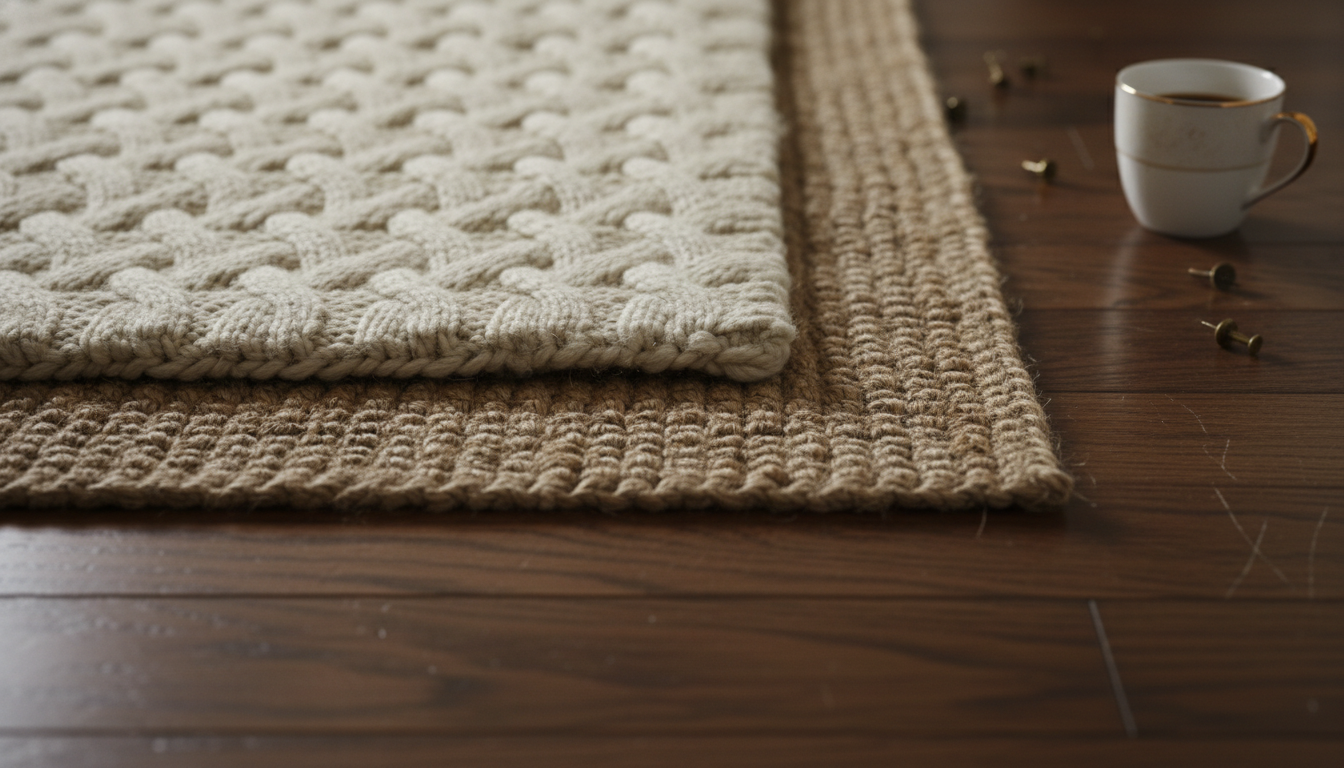
One of the most persistent myths in interior design is that a single, massive rug is the only way to anchor a room. In reality, the most sophisticated homes—the ones featured in the glossies we all bookmark—often rely on a technique that creates immediate visual weight and depth: layering. By 2026, the trend has shifted away from the sparse minimalism of the early 2020s toward a “New Heritage” look, where rooms feel as though they’ve been curated over decades rather than purchased in a single weekend.
The secret to rugs that make a space look expensive lies in the contrast between a foundational base and a high-character accent. Think of your floor as a canvas. A large, budget-friendly 9×12 jute or sisal rug provides the necessary scale to make the room feel expansive, while a smaller, more intricate piece placed on top provides the luxury. This “hero” rug—perhaps an artisanal flatweave from thebohorugs.com—doesn’t need to be huge to make an impact. Because it is framed by the neutral base, your eye perceives the entire assembly as a custom, high-end installation.
When selecting your layers for 2026, pay attention to the tactile contrast. We are seeing a massive surge in “tactile luxury”—pairing the raw, organic grit of a chunky seagrass base with the liquid sheen of a Tencel or recycled silk top layer. This play on Light Reflectance Values (LRV) creates a dynamic floor that changes throughout the day as sunlight hits the different fibers.
- The Foundation: Choose a natural fiber like jute or a low-pile performance weave in a “Mushroom” or “Greige” tone. This should cover roughly 80% of your visible floor space to maximize the room’s perceived footprint.
- The Hero Piece: This is where you invest in soul. A 5×7 vintage-inspired Oushak or a geometric Moroccan rug creates a focal point. Position it under the coffee table or slightly offset to create a lived-in, effortless vibe.
- The Golden Ratio: Aim for the top rug to be approximately 60-70% the size of the base rug. This prevents the top layer from looking like a “postage stamp” in a sea of beige.
“Layering is essentially the ‘couture’ of flooring. It’s about the tension between the rugged and the refined. When you place a delicate, hand-knotted textile over a sturdy natural weave, you’re telling a story of global travel and curated taste—even if the base rug cost less than your dinner.”
— Julian Thorne, Senior Textile Historian & Design Consultant
To prevent the top rug from shifting—a common “tell” of budget styling—skip the standard sticky pads. Instead, use a felt-and-rubber dual-surface pad specifically between the two rugs. For an even more high-end feel, ensure the top rug is angled slightly (about 5 to 10 degrees) if you are going for a boho-chic aesthetic, or perfectly centered for a transitional, “Old Money” look. This intentionality is what separates a cluttered floor from a designed one.
This approach isn’t just about aesthetics; it’s a brilliant financial strategy. A 10×14 hand-knotted rug can easily retail for $5,000. However, a $400 oversized natural fiber rug topped with a $600 premium vintage find from thebohorugs.com gives you the same physical footprint and twice the style for a fraction of the investment. It’s about building volume where it matters most, allowing the textures to do the heavy lifting for your room’s overall valuation.
3. The Negative Space Rule: Framing the Hero
The Golden Perimeter: Why 8 to 12 Inches is the New Standard
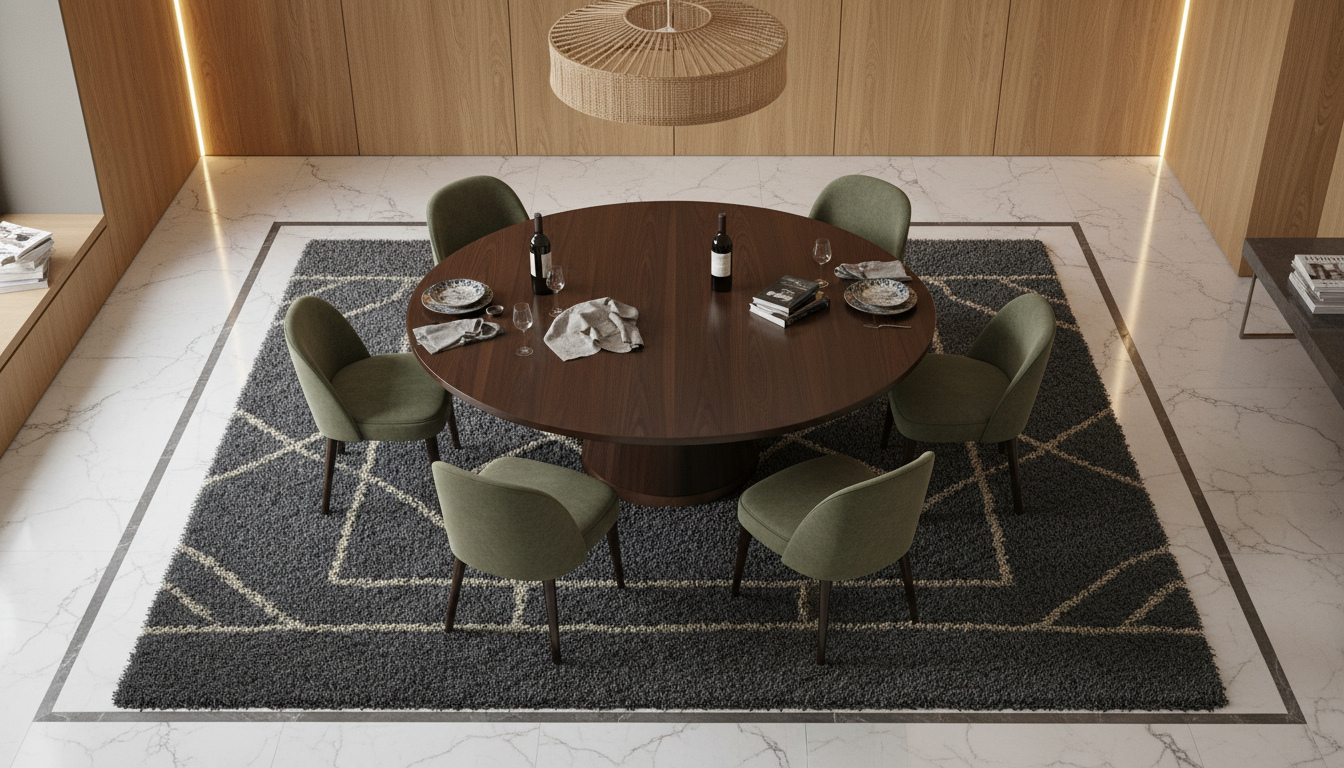
In the high-end residential projects we’re seeing for 2026, designers are moving away from wall-to-wall coverage in favor of the “framed look.” By leaving a consistent border of flooring—typically **8 to 12 inches**—between the edge of the rug and the baseboards, you create a visual frame. This “frame” highlights the texture of the rug and the quality of your flooring, whether you’re working with reclaimed oak or a modern micro-cement. If your room is on the smaller side, you can narrow this gap to 4 or 6 inches, but the rule remains: **never let the rug touch the wall**. This small gap acts as a shadow gap, adding depth and a sense of luxury that suggests the rug was bespoke-measured for the space.Balancing Light Reflectance Value (LRV)
To make **rugs that make** a room feel expensive, you must consider the Light Reflectance Value (LRV) of both your rug and the floor beneath it. In 2026, we are seeing a massive trend toward “high-contrast borders.” If you have dark espresso hardwood floors, a cream or “Mushroom” toned flatweave from thebohorugs.com creates a striking visual break. The negative space allows the light to hit the floor, creating a halo effect around the rug that makes the fibers look more luminous and high-end.“The hallmark of a luxury interior isn’t the price tag of the items, but the intentionality of the placement. When we leave deliberate gaps of flooring, we are telling the viewer that every inch of the room was considered. It turns a simple area rug into a focal ‘island’ of comfort.”
— Julian Thorne, Senior Design Consultant at Atelier Thorne.
The Floating Anchor Strategy
For open-plan living areas, negative space is your best tool for defining “zones” without using physical dividers. Instead of trying to cover the entire walking path, let the rug sit as a “floating anchor” under the furniture. Ensure there is at least **18 inches of floor space** between the rug and the next functional zone (like the dining area). This separation creates a sophisticated, airy flow that mimics the sprawling layouts of luxury penthouses.Before committing to a rug size, use blue painter’s tape to outline the rug on your floor. Walk around the perimeter. If the tape is touching your baseboards, the rug is too large and will make the room feel cramped (and the rug look cheap). Aim for that “sweet spot” where you can see a clear, uninterrupted path of flooring all the way around. This simple step ensures your budget-friendly find takes on the presence of a $5,000 designer piece.
Texture Interaction with the Floor
The “expensive” look is also about the transition between the rug and the floor. In 2026, we’re seeing a rise in **low-profile borders**. If you are using a budget-friendly jute or a performance rug, ensure the edges are crisp. When styled with proper negative space, the transition from a hard surface (like tile or wood) to a soft textile becomes a design feature. This is particularly effective with **earthy, mineral-inspired tones** like “Dusty Sage” or “Terracotta,” which are projected to dominate the luxury market this year. By framing these colors with the natural grain of a wood floor, you elevate the perceived value of the rug instantly.4. Mix Textures Intentionally: The Tactile Contrast
The Tension Between Rough and Refined
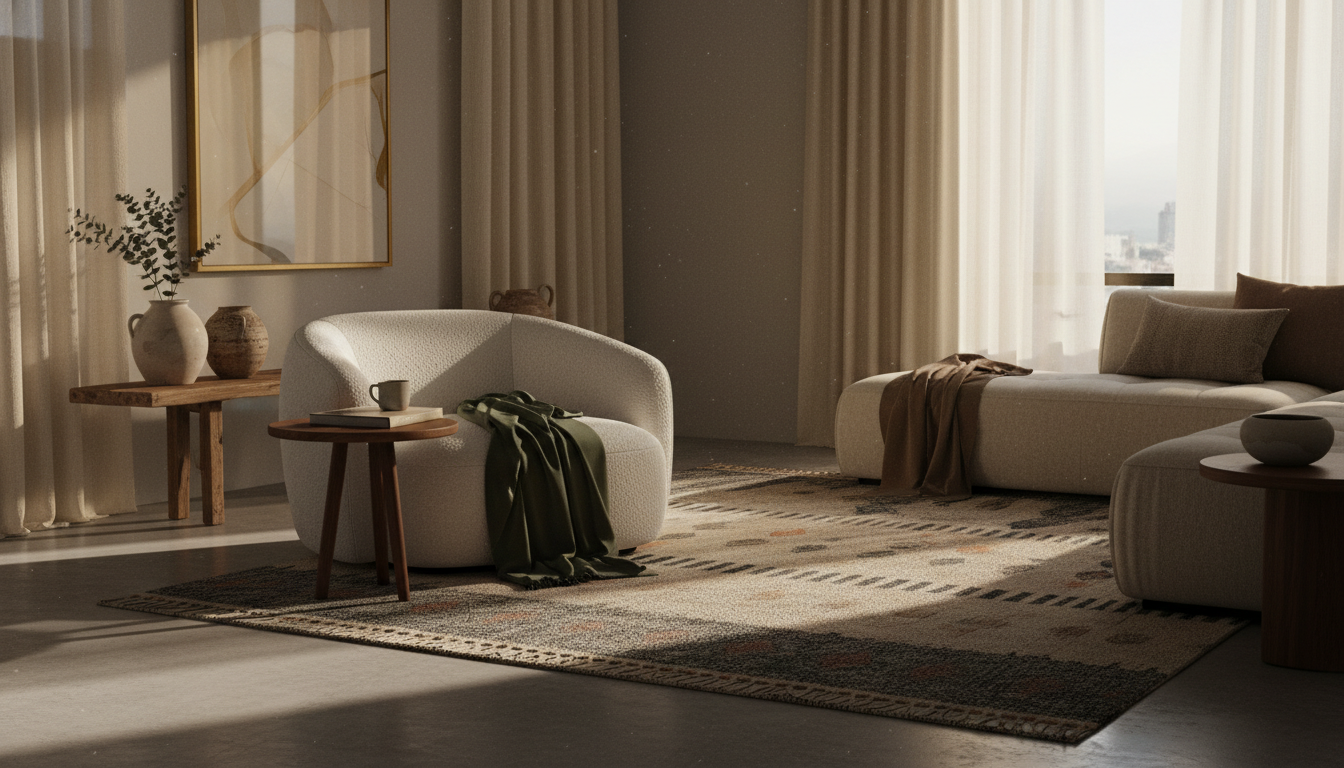
The most successful designers use a “High-Low” strategy. If your main area rug is a flatweave or a low-profile synthetic, you can immediately elevate it by layering a smaller, plush sheepskin or a faux-mohair accent rug on top. This isn’t just about comfort; it’s about breaking up the visual monotony. In the current design landscape, we are seeing a massive shift toward Bio-Acetate fibers and Eucalyptus Silk blends. These materials offer the luminous sheen of traditional silk but are far more durable and affordable, making them perfect for “expensive-looking” budget styling. When styling your space, look at your furniture. If you have a sleek, velvet sofa, a rug with a slightly coarser, organic texture—like those found in the artisanal collections at thebohorugs.com—creates a sophisticated juxtaposition. The “expensive” look comes from the room feeling curated over time rather than bought as a matching set from a big-box catalog.“The secret to a luxury feel in 2026 is ‘Visual Weight.’ When you mix a heavy, chunky wool knit with the delicate Light Reflectance Value (LRV) of a polished floor or a metallic coffee table, the rug ceases to be a floor covering and becomes a piece of architecture. It’s that interplay of light and shadow within the fibers that tells the eye ‘this is expensive’.”
— Julian Thorne, Lead Textile Strategist
2026 Trend: The “Carved” Aesthetic
One of the most effective ways to make a budget rug look bespoke is to seek out 3D textures. Rugs with “carved” patterns—where the pile height varies to create a design—mimic the labor-intensive techniques used in the Atlas Mountains or luxury Persian workshops. Even a monochromatic cream rug looks like a designer piece when it features a subtle, raised geometric pattern. This adds a layer of sophistication that flat prints simply cannot replicate.- The 70/30 Rule: Keep 70% of your room’s textures grounded (matte woods, flat weaves) and use the remaining 30% for high-texture “hero” moments like a plush rug or boucle chair.
- Fiber Variance: Look for rugs that blend matte cotton with high-shine Viscose. This mimicry of natural silk creates a dynamic surface that changes color as you walk around the room.
- Edge Play: A rug with a hand-bound edge or a subtle fringe feels much more “custom” than one with a thick, surged machine border.
Before committing to a budget rug, perform what we call the ‘Sock Test.’ Walk across the rug in thin socks. If the rug feels thin or “plastic-y,” it will look that way to the eye under bright light. To fix this instantly, invest in a 1/2-inch felt rug pad. This adds the physical heft and acoustic dampening of a $5,000 rug to a $200 piece, instantly changing the “vibe” of the room from temporary to permanent.
5. Smart Neutrals: The Mushroom and Oatmeal Palette
Mastering the “New Neutral”: Why Mushroom and Oatmeal Define 2026 Luxury
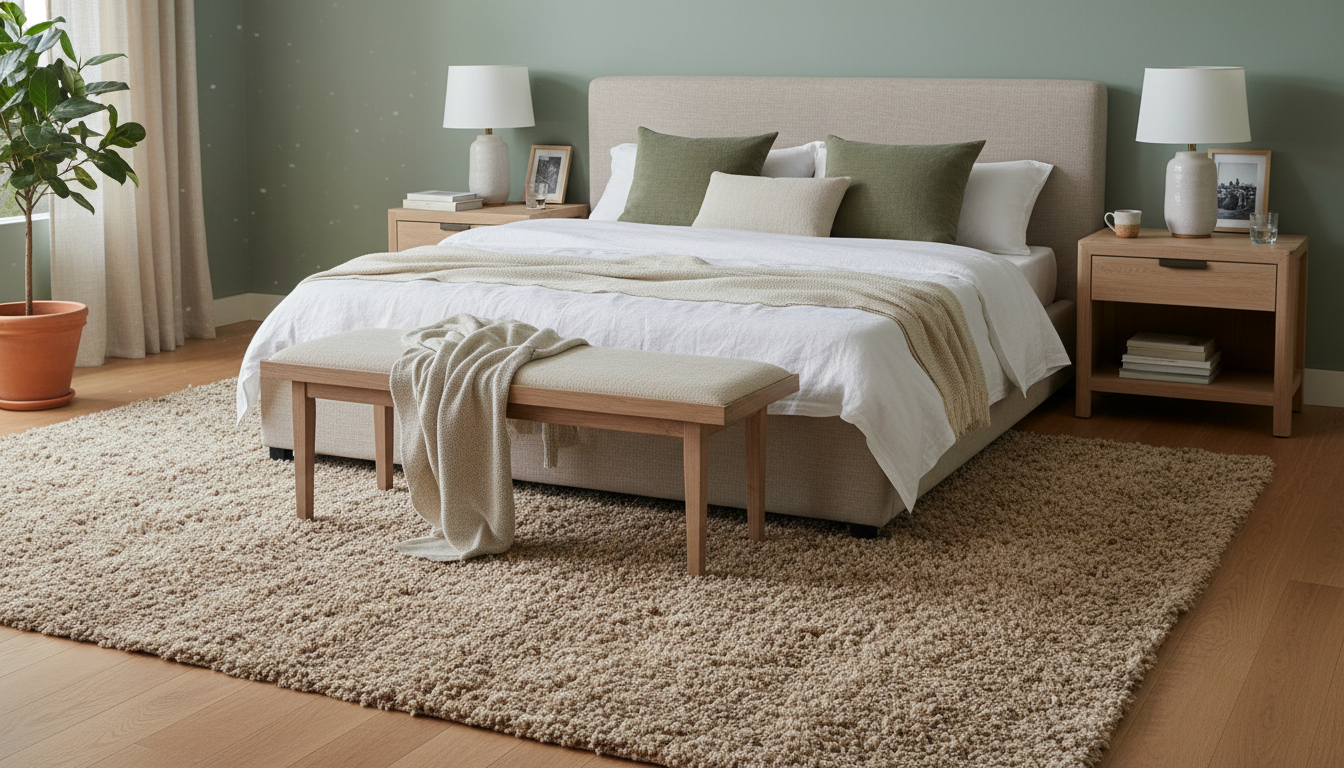
For years, the design world was trapped in a cycle of clinical “millennial grays” and stark, unforgiving whites. As we move into 2026, the definition of an expensive-looking space has shifted toward visual warmth and organic depth. The secret to finding rugs that make a room feel like a high-end sanctuary—without the five-figure price tag—lies in the sophisticated mid-tones: Mushroom, Oatmeal, and Barley.
These aren’t just “beige” rugs. They are complex, multi-tonal palettes that mimic the look of undyed, hand-spun wool used in heritage Persian or Oushak weaving. When you opt for a budget-friendly rug in a mushroom hue, the subtle mix of cool taupe and warm clay creates an optical illusion of density. It suggests a level of artisanal complexity that flat, single-pigment colors simply can’t achieve. This is the cornerstone of the “Quiet Luxury” movement that continues to dominate high-end interiors.
“The 2026 aesthetic is rooted in what we call ‘The New Earthbound Palette’,” says Julianne Vogel, Lead Designer at a prominent London firm. “By choosing rugs in oatmeal or mushroom tones, you’re tapping into a timeless, quiet sophistication. These colors interact beautifully with the shifting Light Reflectance Values (LRV) throughout the day, making a $400 machine-woven piece look like a $4,000 heirloom from the Atlas Mountains.”
The Science of Depth: Why These Tones Hide Their Price Tag
One of the primary reasons rugs that make a room feel expensive work so well in these shades is their ability to camouflage the synthetic sheen often found in budget fibers. A bright white polyester rug will always look “shiny” and artificial under LED lighting. However, a mushroom or oatmeal rug absorbs and diffuses light more naturally.
- The Mushroom Advantage: This color bridge between gray and brown anchors a room. It pairs effortlessly with both “Cold” metals (like polished nickel) and “Warm” accents (like aged brass), making your existing furniture look curated rather than mismatched.
- The Oatmeal Texture: Look for rugs with “flecking”—small variations in the yarn color. In 2026, we are seeing a massive trend toward Bio-Acetate fibers and recycled blends that mimic the irregular beauty of raw silk and linen. These variations prevent the rug from looking like a flat sheet of plastic.
- Versatility with Wall Colors: These neutrals are the ultimate chameleons. Whether your walls are a moody Sage Green (LRV 20-30) or a crisp Alabaster, an oatmeal-toned rug provides the necessary contrast to make the floor feel intentional and “architectural.”
To make a budget neutral rug look designer-grade, follow the 80/20 rule: 80% of the rug should be your base neutral (oatmeal or mushroom), and 20% should feature a slightly darker or lighter tonal variation. This “depth-of-field” trick is what professional stagers use to create photographic richness in high-end listings. For the best selection of these textured, high-end neutrals, we often point our readers to the curated collections at thebohorugs.com, where the focus is on artisanal-inspired tones that defy their price point.
When styling these rugs, the goal is to create a “tone-on-tone” vignette. Imagine an oatmeal rug paired with a cream bouclé sofa and a dark walnut coffee table. The contrast isn’t found in the colors, but in the tactile quality of the materials. By stripping away loud patterns and focusing on these “smart neutrals,” you allow the architecture of your furniture to take center stage, which is the ultimate hallmark of a luxury home.
If you’re worried about the room feeling “flat,” look for rugs that incorporate a subtle high-low pile or a cross-weave. This adds a physical dimension that catches the shadows, further convincing the eye that you’ve invested in a premium, high-density textile. It’s not about how much you spent; it’s about how many “layers” of color the eye perceives before it hits the floor.
6. Real-World Makeover: The Small Apartment Transformation
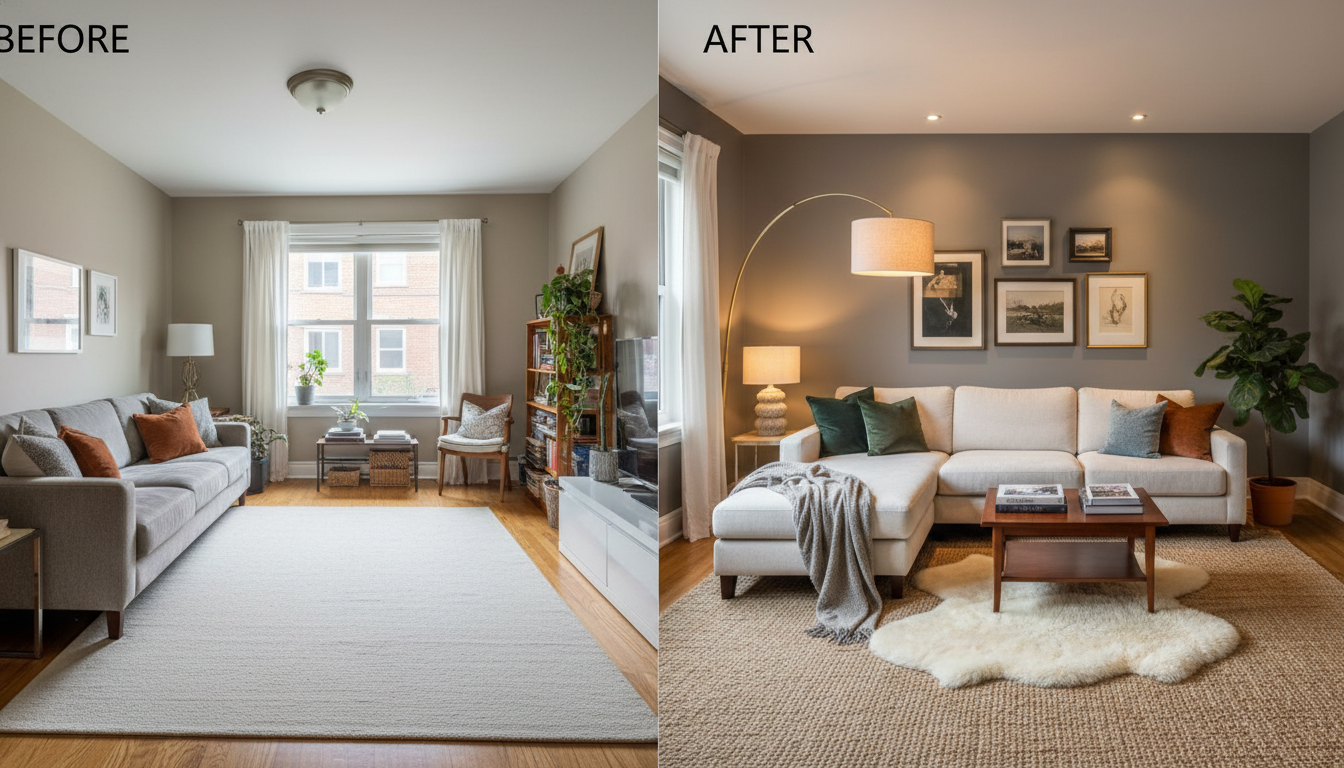
The “Floating Island” Fix: A Brooklyn Studio Transformation
When we first walked into Sarah’s 550-square-foot Brooklyn rental, the space felt fragmented. Despite beautiful architectural molding and walls painted in a crisp Chantilly Lace (LRV 90), the room lacked cohesion. Sarah had invested in a high-quality charcoal gray velvet sofa, but it was anchored by a 5×7 flatweave rug that looked more like a bath mat in a ballroom. This is the most common mistake in small-scale design: choosing a rug that is too small, which inadvertently shrinks the perceived square footage of the room.
To execute a high-end look on a budget of under $400, we swapped the “floating island” for a two-step layering strategy. First, we laid down a massive 9×12 jute-base rug that reached within 6 inches of the baseboards. This created a new “floor” for the living area, immediately expanding the visual boundaries of the room. On top, we layered her original $299 cream flatweave, but positioned it at a slight angle to break up the linear rigidity of the apartment.
“The 2026 design aesthetic is moving away from sterile minimalism toward ‘layered lived-in luxury.’ By using a large, affordable natural fiber base, you provide the architectural grounding that rugs that make a room feel expensive require. It’s about the silhouette of the space, not the price tag of the fiber.”
— Elena Vance, Lead Designer at The Curated Home
The result was transformative. By ensuring all furniture legs—including the accent chairs and the media console—sat firmly on the rug surface, the room suddenly felt like a singular, intentional suite rather than a collection of scattered furniture. The mix of the raw jute texture against the soft cream flatweave provided the tactile depth typically found in bespoke artisanal pieces. For those looking to replicate this without the guesswork, the curated collections at thebohorugs.com offer textured neutrals that mimic this high-low layering perfectly.
To make a budget rug look like a custom installation, ensure at least 80% of your furniture sits on the rug. If you can’t afford a massive silk rug, buy a large-scale sisal or seagrass rug as your “foundation” and layer your smaller, decorative rug on top. This creates the “wall-to-wall luxury” feel seen in high-end hotels for a fraction of the cost.
- Starting Budget: $299 (Original rug)
- Total Makeover Cost: $140 (Additional oversized jute base)
- Key Trick Used: Strategic Layering & Scale Correction
- Final Impact: The room feels 30% larger and significantly more “designed” rather than “assembled.”
7. Avoiding the ‘Cheap’ Trap: Fixing Poor Scale and Lighting
The Scale Saboteur: Beyond the ‘Postage Stamp’ Era
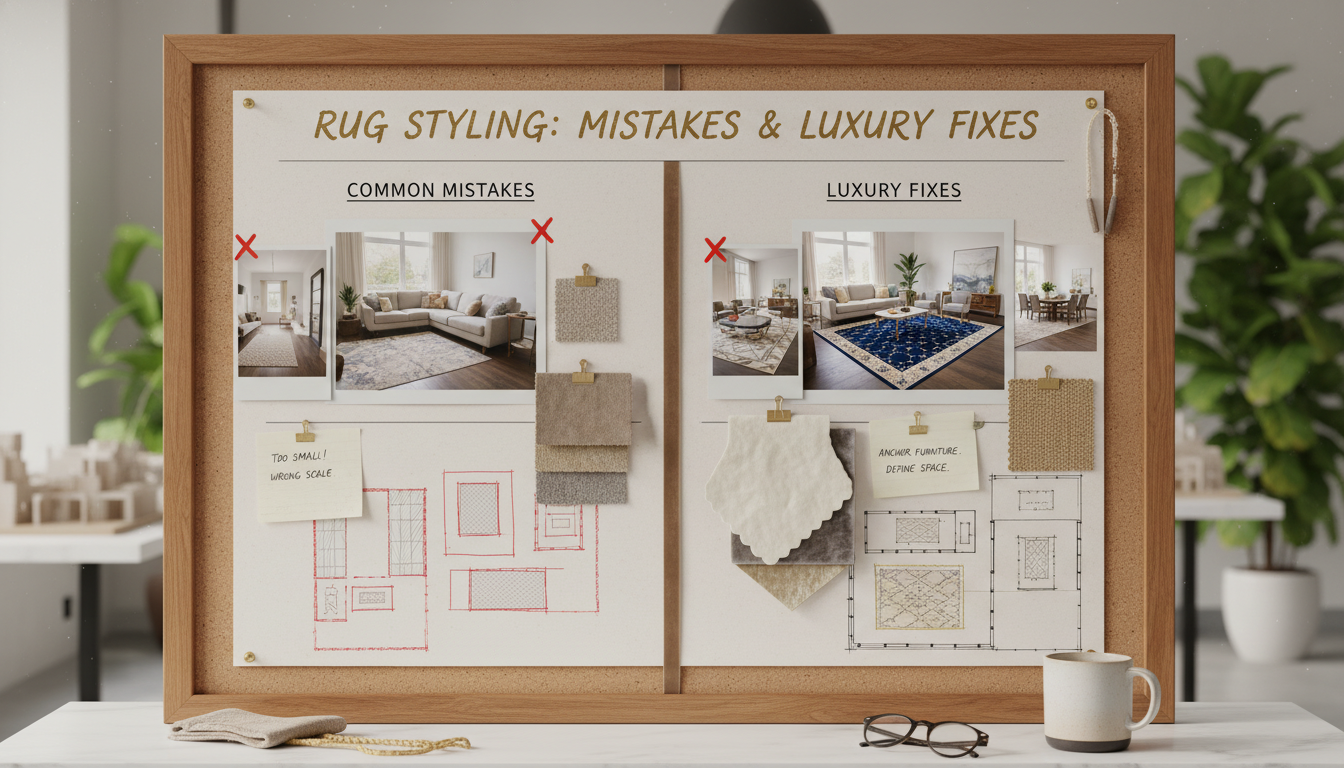
The most pervasive mistake in modern interiors is the “floating rug” syndrome. When a rug is too small for the room, it acts like a visual island, making the surrounding furniture feel disconnected and nomadic. To make **rugs that make your room feel expensive**, you must embrace the 2026 philosophy of *Maximum Envelopment*. Designers are moving away from the old rule of leaving 18 inches of bare floor. In 2026, we’re seeing a shift toward “Wall-to-Wall-Ish” styling, where the rug extends to within 4 to 6 inches of the baseboards. This trick creates a custom, “inset” carpet look that signals bespoke luxury. If your rug doesn’t allow at least the front legs of every major furniture piece to rest comfortably on its pile, the scale is working against you. The floor becomes fragmented, and fragments never feel expensive.The Physics of Glow: Managing Light Reflectance Values (LRV)
A rug’s interaction with light determines its depth. Cheaply produced synthetic fibers often have a uniform, plastic-like sheen that “blows out” under direct sunlight, revealing the mechanical nature of the weave. High-end textiles, particularly those utilizing the 2026 shift toward Bio-Acetate fibers or silk-blends found at thebohorugs.com, handle light with more nuance. Consider the **Light Reflectance Value (LRV)** of your room. If you are styling a space with deep, moody walls—think a saturated Sage Green with an LRV of around 18—a budget rug with a high-gloss finish will look jarringly artificial. To fix this, position your rug so the “nap” or “pile direction” faces away from the primary light source. This creates a matte, velvety appearance that mimics the light-absorbing qualities of hand-knotted wool from the Atlas Mountains.“Luxury is fundamentally about the absence of friction,” says Julian Thorne, Lead Designer at Atelier 26. “When a rug is too small, it creates visual friction. When it reflects light too harshly, it creates sensory friction. To make a budget piece look like a $10,000 heirloom, you have to eliminate those jarring moments where the eye gets ‘stuck’ on a poor fit or a plastic shimmer.”
The Fix: Shadow Play and Layering
If you’re stuck with a rug that feels a bit “thin” or lacks presence, the 2026 designer’s secret weapon is Shadow Layering. This involves placing a slightly larger, neutral jute or sisal rug underneath your primary piece. This adds 1.5 inches of vertical height to the floor profile, creating a literal “step up” into the lounge area. The physical thickness suggests a heavy-weight construction that budget rugs often lack.Before committing to a layout, use blue painter’s tape to mark out a rug size exactly two feet larger than you think you need. In 90% of cases, this larger footprint is what actually anchors the room. If your current budget rug is too small, use this tape method to find the ‘base layer’ size you need to purchase to bridge the gap.
Avoiding the ‘Anemic’ Edge
Nothing screams “mass-produced” like a rug edge that curls or feels flimsy. High-end rugs have a weight to them—a structural integrity that grounds the room. If your rug feels light, the quickest fix is a premium 1/2-inch felt rug pad. This isn’t just for comfort; it changes how the rug sits on the floor, giving it the “heft” of a more expensive, dense-weave textile. It also prevents the “rippling” effect that often plagues thinner, machine-made options under heavy furniture. By focusing on how the rug meets the walls and how the light hits the fibers, you can transcend the price point. Whether it’s a vintage find or a modern performance piece, the goal is to make the rug feel like it was commissioned specifically for those four walls. When the scale is intentional and the lighting is diffused, the “cheap trap” simply disappears.Elevate Your Space
Discover the artistry of handmade luxury. Each rug is a masterpiece of tradition and modern design.
Expert Q&A
Can a cheap rug really look expensive with the right styling?
Absolutely. In 2026, perceived value is driven by scale and context. A budget rug that is sized correctly (oversized) and layered with natural materials like jute or linen will look significantly more expensive than a small, poorly placed luxury silk rug.
What is the best way to layer rugs for a luxury feel?
Start with a large, low-cost natural fiber rug (like jute or sisal) as your base to cover the floor area. Then, place a smaller, more decorative or higher-pile rug on top, centered under the coffee table or the front legs of the sofa, to create a ‘focal island’ of luxury.
How do I choose a rug color that makes my room look high-end?
Look for ‘complex neutrals’ such as mushroom, taupe, oatmeal, or silver-gray. Avoid flat, primary colors. Tonal patterns that use different shades of the same color add depth and mimic the look of expensive hand-dyed wool.
What is the 10-inch rule in rug styling?
The 10-inch rule suggests leaving roughly 8 to 12 inches of exposed floor between the edge of your rug and the wall. This creates a framed, intentional look that mimics custom-fitted designer spaces.
Does rug thickness matter for a luxury look?
Not necessarily. While plush rugs feel expensive, a high-quality flatweave or a thin performance rug with a premium rug pad underneath can feel just as substantial and ‘expensive’ underfoot as a thicker pile.
How does lighting affect how my rug looks?
Placement near natural light sources allows the fibers to reflect light, highlighting texture. For evening luxury, use low-level lighting (floor lamps) to cast soft shadows across the rug’s surface, enhancing its tactile appearance.
Should all furniture legs be on the rug?
For a luxury look, ideally, yes. At a minimum, the front legs of all major seating should sit on the rug. If the rug is too small, it creates a ‘floating’ look that immediately feels cheap and disjointed.
What materials should I look for on a budget?
Look for high-quality synthetic blends that mimic wool, or natural fibers like jute and cotton. These materials age better and maintain a ‘designer’ texture longer than shiny, low-grade polyesters.
Can I use patterns on a budget rug?
Yes, but stick to low-contrast, ‘distressed’ or geometric tonal patterns. High-contrast, sharp patterns on budget rugs often look digital and cheap, whereas subtle, faded motifs mimic expensive heirlooms.
How often should I clean my rug to maintain the luxury look?
To keep the ‘expensive’ sheen, vacuum twice weekly and rotate the rug every six months to ensure even wear. Matted or dirty fibers are the fastest way to make a rug look low-quality.
Written by TheBohoRugs Interior Design Team
Experts in handmade rugs, boho interiors, and modern home decor.
