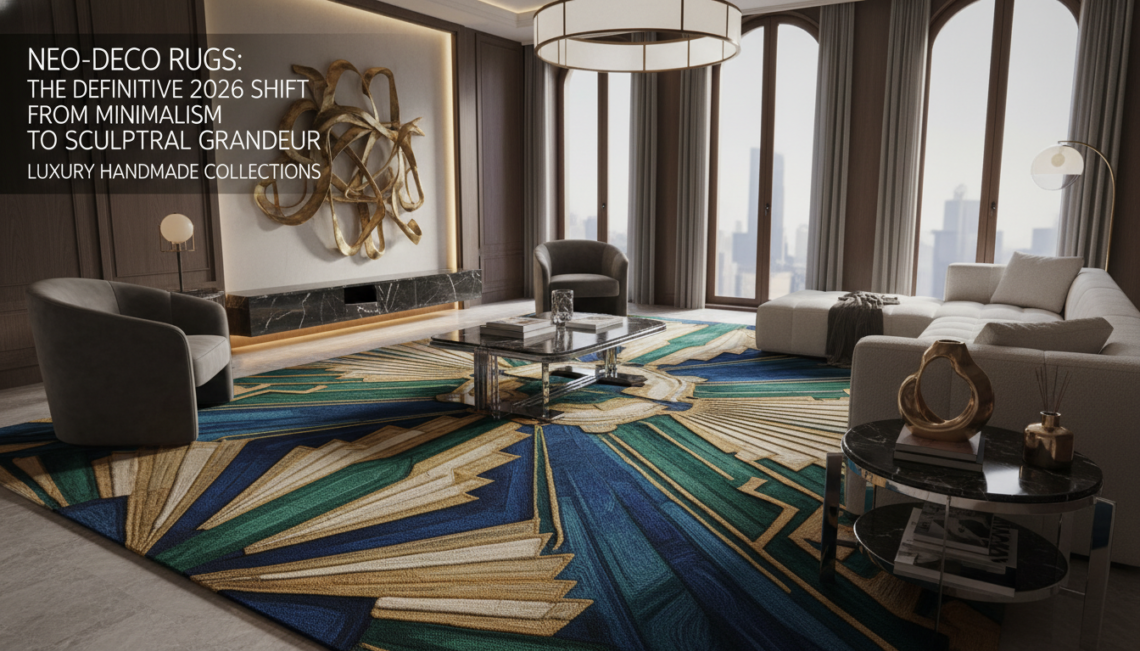
The era of the ‘quiet’ rug is coming to a close. After years dominated by the muted, often antiseptic constraints of Scandinavian minimalism, the interior design world is pivoting toward a movement of unapologetic character. Enter ‘Neo-Deco.’ This 2026 trend report explores the emergence of Neo-Deco rugs—artisan-crafted floor coverings that resurrect the geometric rigor of the 1920s while infusing them with contemporary material science and 21st-century sculptural depth. These are not merely accessories; they are foundational architectural elements that treat the floor as a gallery space.
“Neo-Deco rugs are the primary evolution of the Art Deco movement for 2026, characterized by high-low textural contrasts, metallic-infused tonal weaves, and strict sculptural symmetry. Unlike traditional Art Deco, Neo-Deco rugs utilize sustainable fibers like tencel and recycled silk to create a ‘liquid’ luster, moving away from flat patterns toward 3D-effect floor art that anchors maximalist and transitional interior spaces.”
The Roadmap
Table of Contents
- The Great Aesthetic Pivot: Beyond Minimalism
- Defining the Neo-Deco Aesthetic in 2026
- Sculptural Symmetry: The Architecture of the Floor
- Metallic Tonal Weaves: The Alchemy of Modern Rug-Making
- Artisanal Craftsmanship vs. Mass Production
- Color Theory: From Earthy Ochres to Midnight Chromes
- Styling Neo-Deco Rugs in Contemporary Contexts
- The Future of Floor Art: Investment and Longevity
The Great Aesthetic Pivot: Beyond Minimalism
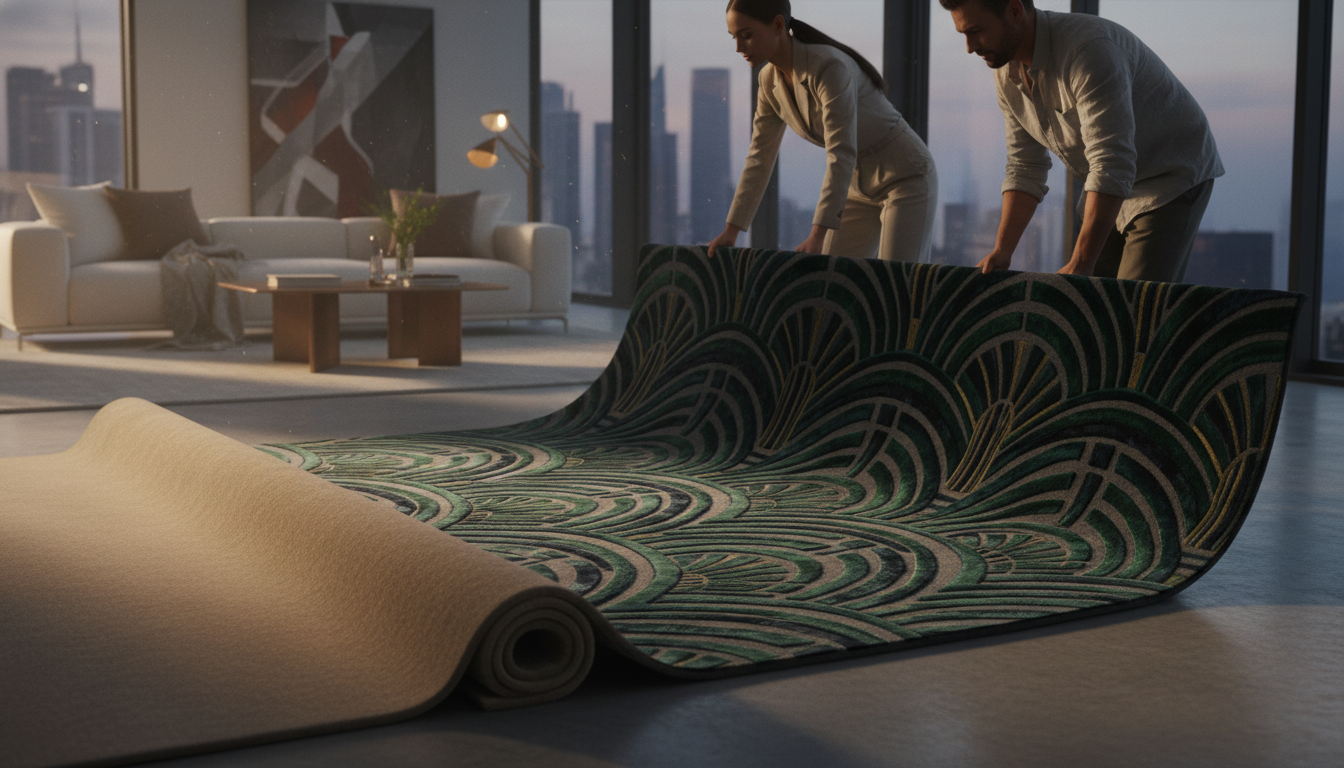
After a decade dominated by the muted stillness of Scandi-minimalism and the clinical “beige-core” aesthetic, the design world is pivoting toward a more assertive, architectural confidence. By 2026, the industry expects a definitive departure from the formless shapes of the past toward the structured opulence of Neo-Deco rugs.
This movement isn’t merely a revival of the Roaring Twenties; it is a sophisticated evolution. Where the original Art Deco movement focused on rigid industrialism, this new era prioritizes “sculptural symmetry”—a blend of hard geometric lines softened by organic, high-pile textures and hand-carved depths.
The Architectural Silhouette: Reclaiming Symmetry
The hallmark of the 2026 interior is the rug as an anchor of order rather than a background element. Designers are moving away from the asymmetric “organic” blobs of the early 2020s, favoring instead the balanced visual weight that Neo-Deco rugs provide to high-ceilinged residential spaces.
- Sunken Relief Techniques: Artisans are utilizing varying pile heights to create three-dimensional patterns that change with the room’s lighting.
- Framed Composition: Unlike the borderless designs of minimalism, Neo-Deco pieces often feature weighted borders that ground furniture arrangements.
- Fractal Geometry: Moving beyond simple triangles to complex, interlocking motifs that mirror contemporary urban architecture.
The Metallic Tonal Weave: A New Chromatic Language
If minimalism was the era of matte flax and flat wool, 2026 is the era of the “luminescent weave.” The industry is seeing a surge in demand for rugs that incorporate light-reflective fibers to mimic the patina of oxidized metals. These aren’t flashy tinsel-like additions, but rather sophisticated, tonal infusions.
Artisanal platforms like thebohorugs.com have noted a shift toward these high-value materials, where hand-spun botanical silks and tencel are blended with New Zealand wool to create a subtle, metallic shimmer. This “metallic tonal” approach allows a rug to behave like a piece of jewelry for the floor, reflecting ambient light without overwhelming the room’s color palette.
Why 2026 is the Year of the Sculptural Floor
The transition toward these complex textiles is driven by a collective desire for “legacy interiors”—spaces filled with items that feel intentionally crafted rather than mass-produced. The rise of Neo-Deco rugs reflects three specific cultural shifts in high-end design:
- The Death of ‘Quiet Luxury’: Homeowners are now looking for “Loud Sophistication,” where the craftsmanship is visible and tactile.
- The Hybrid Home: As homes continue to serve as multifunctional galleries, the rug must provide acoustic dampening through thickness while maintaining a professional, structured look.
- The Return of the Master Artisan: Buyers are gravitating toward hand-knotted pieces that require weeks of meticulous carving, a service championed by boutique curators like thebohorugs.com.
In the coming seasons, expect to see the “flat” aesthetic disappear in favor of these deep-pile, architecturally-informed masterpieces. The floor is no longer just a surface; it is the most significant structural statement in the modern home.
Defining the Neo-Deco Aesthetic in 2026
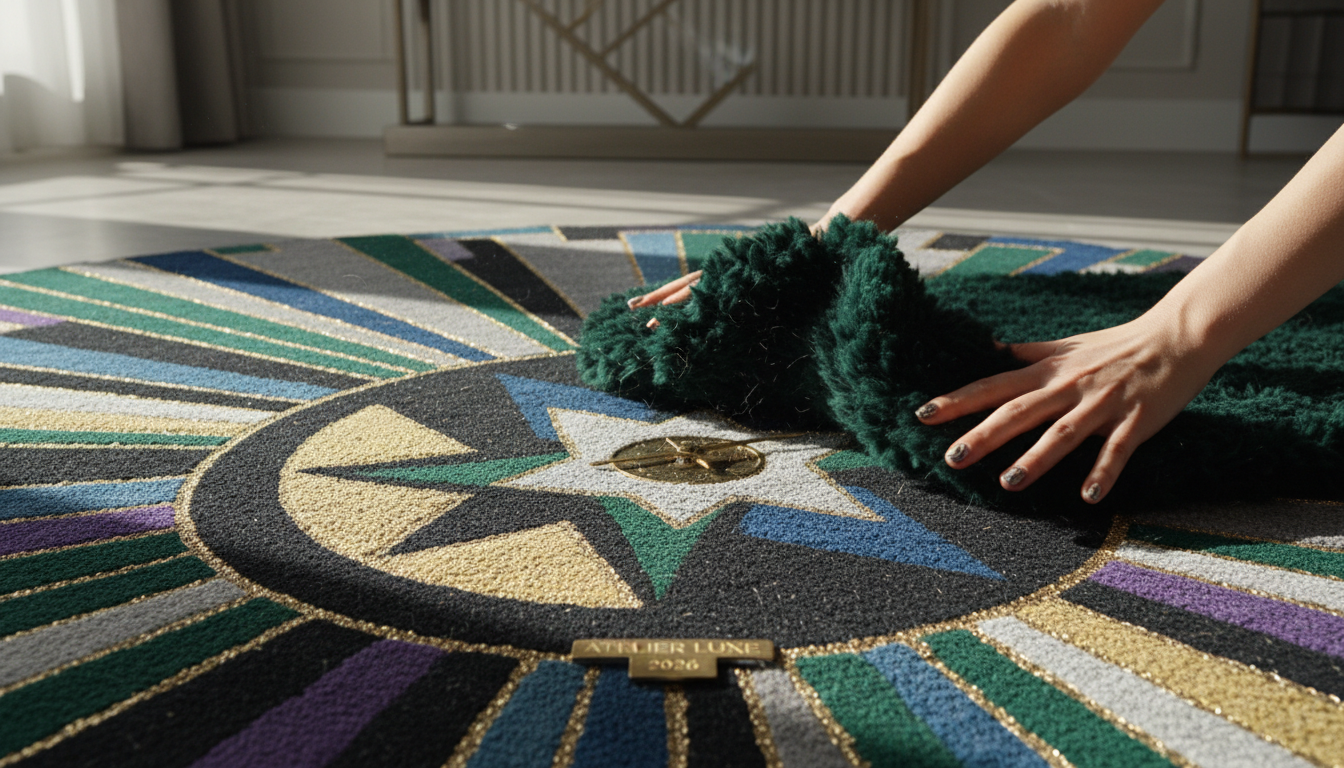
Architectural Rigor Meets the Softened Edge
As we move into 2026, the interior design landscape is witnessing a definitive pivot away from the “quiet luxury” of amorphous shapes and flat-weave minimalism. In its place, a more structured, confident aesthetic has emerged. The resurgence of Neo-Deco rugs marks a return to architectural rigor, where the floor is no longer a neutral backdrop but a primary structural element of the room.
Unlike the original Art Deco movement of the 1920s, which favored high-contrast glamor, the 2026 iteration focuses on “sculptural symmetry.” This involves complex, geometric patterns that are physically carved into the rug’s pile. By utilizing varying heights of silk and wool, designers are creating 3D topographies that play with shadow and light throughout the day.
The 2026 Palette: Metallic Tonalism
The color theory driving this movement has evolved. We are seeing a departure from high-gloss golds in favor of “metallic tonalism.” This approach integrates ultra-fine threads of copper, pewter, and muted bronze directly into the weave, resulting in a luster that feels organic rather than applied.
- Pewter & Sage: A cool-toned evolution of the traditional green palette, offering a grounded, executive feel.
- Oxidized Copper: Deep teals blended with warm metallic fibers that shift color based on the viewer’s angle.
- Champagne Monochromes: Utilizing Neo-Deco rugs in single-color formats where the pattern is defined solely by texture and sheen.
The Intersection of Craft and Tech
What distinguishes the 2026 artisanal rug from its predecessors is the precision of the “weighted weave.” Artisans are now blending ancient hand-knotting techniques with modern tension-mapping to ensure that large-scale geometric patterns remain perfectly symmetrical over decades of use.
For those looking to anchor a room in this new era of design, sourcing is paramount. Collections found at thebohorugs.com exemplify this shift, offering hand-knotted pieces that prioritize the heavy, luxurious drape and architectural precision required for a true Neo-Deco space.
Key Elements of the Neo-Deco Aesthetic
- Radial Symmetry: Patterns that radiate from a central point, drawing the eye to furniture groupings.
- High-Low Pile Depth: A physical 2mm to 5mm difference between the pattern and the ground, creating a tactile experience.
- Border Emphasis: A return to wide, ornate borders that frame a room like a piece of fine art.
Ultimately, 2026 is the year of the “statement foundation.” By opting for Neo-Deco rugs, homeowners are embracing a sense of permanence and curated maximalism. It is a sophisticated rebellion against the disposable, a move toward rugs that function as functional tapestries for the modern floor.
Sculptural Symmetry: The Architecture of the Floor
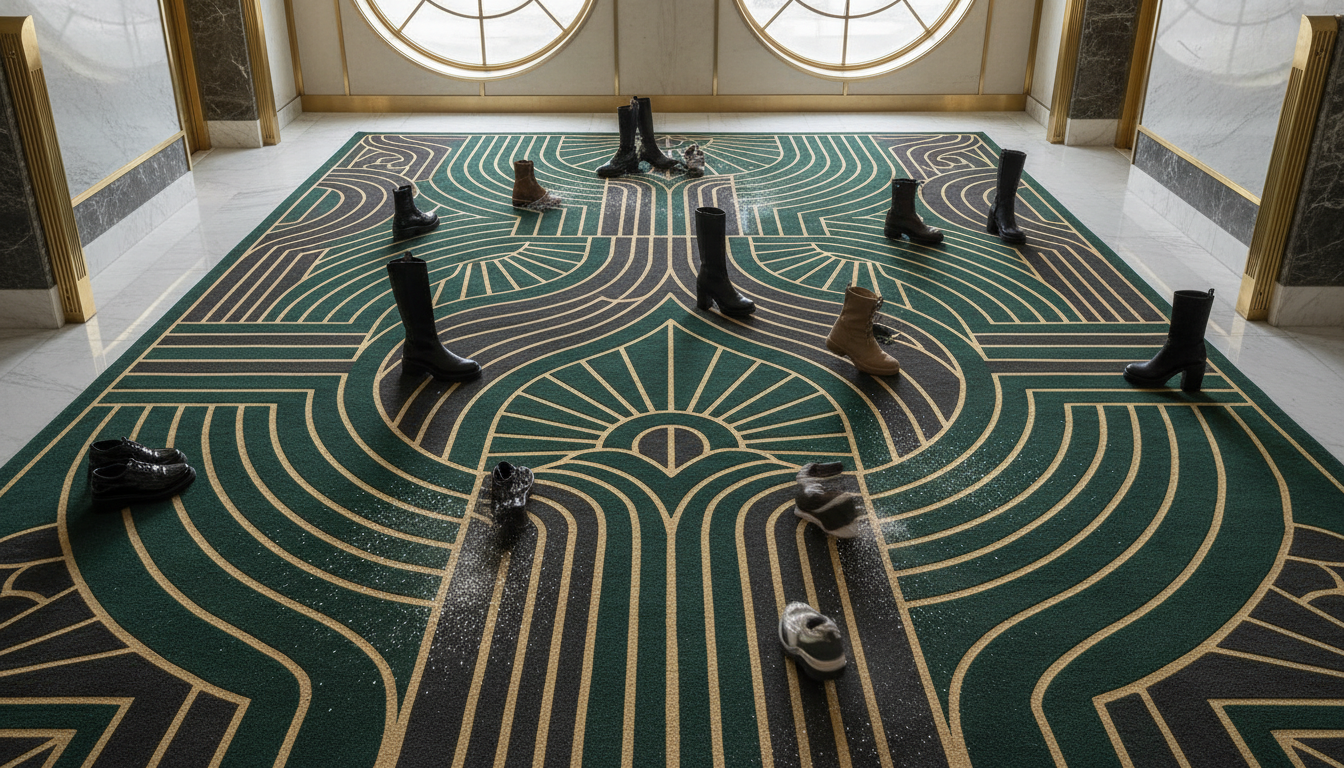
The Transition from Organic Softness to Tectonic Rigor
For the past decade, interior design has been dominated by “soft minimalism”—a sea of organic shapes and flat, unchallenging textures. However, as we approach 2026, the pendulum is swinging toward a more disciplined, structural aesthetic. The floor is no longer a neutral backdrop; it has become the room’s foundation of gravity.
The emergence of Neo-Deco rugs signals a return to the architectural confidence of the early 20th century, stripped of its historical kitsch. We are seeing a move toward “tectonic” floor coverings where the pattern is not merely printed or dyed, but physically carved into the pile to create a sense of permanent, immovable luxury.
Designers are increasingly sourcing these pieces from specialized curators like thebohorugs.com, where the focus remains on artisanal hand-knotting that can support such intricate, high-relief construction. These rugs act as the “anchor” for rooms that value symmetry and sophisticated visual weight.
3D Topography: Beyond the Flat Weave
One of the most significant shifts for 2026 is the obsession with pile depth as a design tool. In the Neo-Deco movement, the interplay of light and shadow is achieved through varying heights of wool and silk, creating a bas-relief effect that mimics limestone or marble moldings.
- High-Low Architectural Carving: Precise geometric lines are hand-sheared into the wool to create “trenches” that catch shadows, defining the room’s flow without the need for high-contrast colors.
- Radial Symmetry: Unlike the abstract, asymmetrical patterns of previous years, the new look focuses on central focal points and repeating mathematical motifs that provide a sense of psychological order.
- The “Ziggurat” Effect: Stepped borders and tiered patterns that reference Art Deco skyscrapers, lending a vertical energy to a horizontal surface.
The Metallic Tonalism of 2026
Color palettes for Neo-Deco rugs are evolving away from “earthy” ochres and moving toward “oxidized” elegance. We are seeing a rise in metallic tonalism—the use of high-luster fibers like bamboo silk or tencel to mimic the sheen of antique bronze, tarnished silver, and brushed champagne gold.
This isn’t about “glitter” or overt shine; it is about “chromatic depth.” By blending matte New Zealand wool with shimmering silk accents, artisans create a floor that changes personality as the sun moves across the room. This kinetic quality makes these rugs the centerpiece of modern luxury lofts and executive suites.
How to Anchor the Neo-Deco Aesthetic
- Prioritize Proportion: In 2026, the “rug-under-the-front-legs” rule is dead. To achieve true sculptural symmetry, the rug must extend to the room’s perimeter, acting as a wall-to-wall architectural statement.
- Monochrome Complexity: Choose a single-color rug that relies entirely on texture and pile height for its pattern. This allows the Neo-Deco rugs to feel modern rather than retro.
- Material Integrity: Look for pieces that utilize “fat” wool yarns. These provide the structural integrity required to hold the sharp edges of a geometric design over decades of use.
As we look toward the mid-2020s, the message from the design elite is clear: the floor is the new ceiling. By investing in the structural clarity of the Neo-Deco movement, homeowners are moving away from disposable trends and toward a form of interior architecture that is both timeless and transformative.
Metallic Tonal Weaves: The Alchemy of Modern Rug-Making
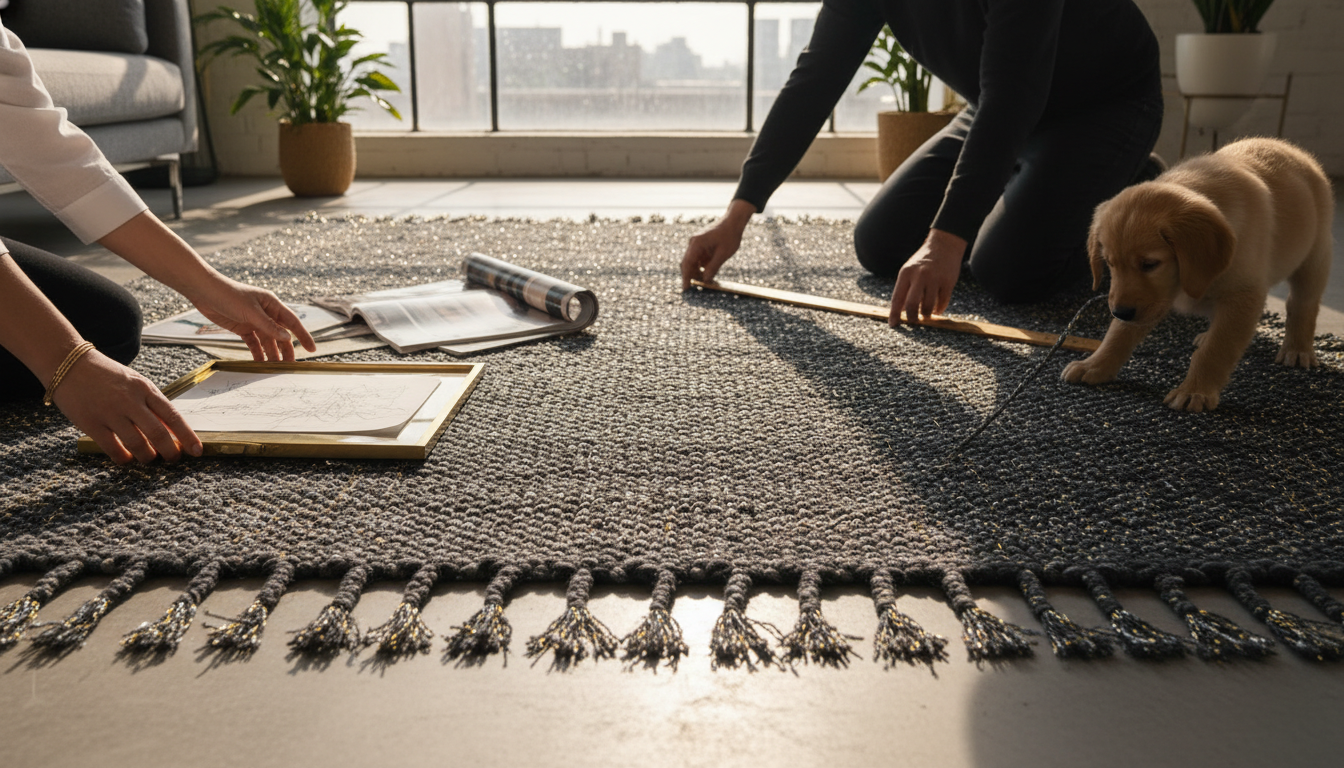
The era of the “safe” beige interior is yielding to a more disciplined opulence. As we look toward 2026, the design world is witnessing a departure from flat, matte textiles in favor of surfaces that respond to the movement of light. This shift is most evident in the evolution of Neo-Deco rugs, where the traditional symmetry of the 1920s is being reimagined through advanced metallurgical weaving techniques.
The Metallurgical Renaissance: Weaving Light into Fiber
Modern luxury is no longer defined by the rarity of the material alone, but by how that material performs under architectural lighting. The 2026 aesthetic favors “living” floors—rugs that shift in hue as the sun moves across a room. This is achieved by blending high-twist New Zealand wool with hyper-reflective filaments.
Unlike the gaudy gilding of the past, these metallic tonal weaves use a “submerged” technique. Silver, champagne, and oxidized copper threads are buried within the pile, revealing themselves only when viewed from specific angles. This creates a shimmering chiaroscuro effect that brings a visceral depth to Neo-Deco rugs, making the floor feel like a structural element rather than a mere accessory.
The 2026 Material Palette
To achieve this sculptural symmetry, master weavers are moving beyond standard silk. The upcoming season highlights three specific material innovations that are defining the high-end market:
- Reflective Bamboo Silk: Offers a high-gloss finish that mimics the look of liquid mercury, perfect for grounding heavy velvet furniture.
- Lurex-Infused Botanical Yarn: A sustainable alternative to traditional metallic threads, providing a subtle, moonlit glow to geometric patterns.
- High-Low Relief Carving: Artisans are hand-shearing the wool around metallic accents to create a three-dimensional “sunburst” effect typical of the Deco era.
Sculptural Symmetry Meets Smart Lighting
As smart home lighting becomes more sophisticated, the demand for “responsive” décor has surged. Designers are now commissioning Neo-Deco rugs specifically to interact with tunable LED systems. A rug that appears as a muted charcoal in the morning can transform into a glowing grid of bronze by evening, matching the warmth of circadian lighting.
For those seeking to anchor their space with these light-bending masterpieces, curators like thebohorugs.com are bridging the gap between heritage craftsmanship and these futuristic tonal requirements. Their latest collections emphasize the balance between the rigid geometry of the machine age and the soft, organic irregularities of hand-knotted textiles.
Predicting the “Jeweled Floor” Trend
Why is this happening now? The industry is seeing a “re-glamorization” of the home. After years of utilitarian minimalism, there is a collective craving for interiors that feel intentional and celebratory. The 2026 obsession with metallic tonal weaves is a nod to the “Jazz Age” resilience, updated for a generation that values tactile technology.
- Tonal Layering: Expect to see monochromatic rooms where the only contrast comes from the textural shimmer of the rug.
- Mixed Metals: The old rule of not mixing silver and gold is gone; Neo-Deco designs are embracing “tritone” weaves.
- Architectural Alignment: Rugs are being used to mirror the ceiling coffers or window mullions, creating a sense of total “Gesamtkunstwerk” (a total work of art).
Ultimately, the rise of these sculptural, metallic pieces signifies a return to the rug as a focal point. We are no longer just covering floors; we are installing horizontal art that celebrates the intersection of ancient weaving and modern alchemy.
Artisanal Craftsmanship vs. Mass Production
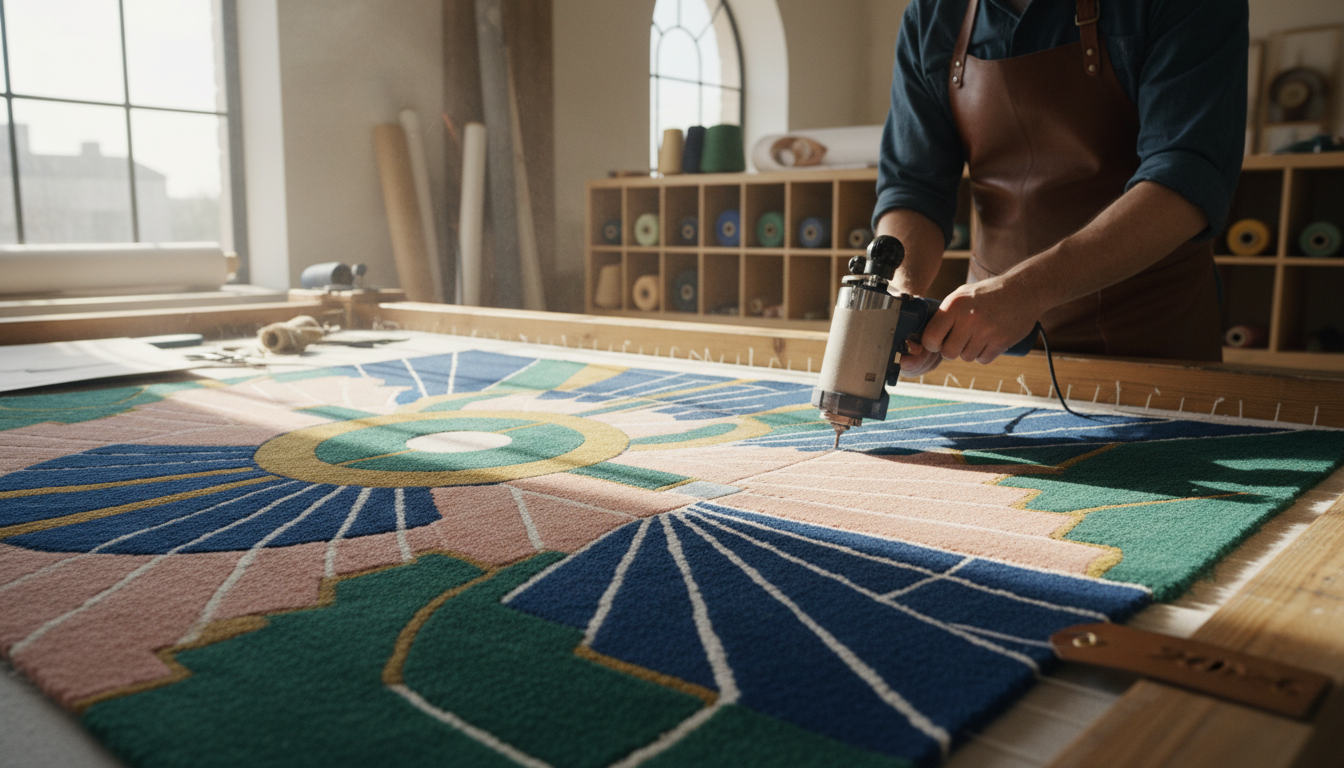
The Human Imperative: Why Hand-Knotted Integrity Wins
As we approach 2026, the design world is witnessing a quiet revolution—a rejection of the sterile, flat-weave minimalism that dominated the early 2020s. In its place, Neo-Deco rugs are emerging as the definitive “investment textile,” favoring the deliberate irregularities of human touch over the cold precision of automated looms.
Mass production often relies on synthetic fibers and chemical dyes that lack depth, resulting in a floor covering that feels two-dimensional. Conversely, artisanal craftsmanship utilizes the high-low pile technique, where hand-shearing creates a sculptural topography that mimics the architectural grandeur of the 1920s.
The allure of Neo-Deco rugs lies in their structural honesty. When a rug is hand-knotted, the tension of every thread reflects the weaver’s expertise, ensuring a lifespan that outlasts the fleeting cycles of fast-interior trends. This is not merely decor; it is a legacy piece designed to withstand the tectonic shifts of the luxury market.
The 2026 Palette: Oxidized Metals and High-Relief Piles
Predictions for the 2026 season indicate a move toward “tectonic opulence.” Artisans are increasingly blending New Zealand wool with botanical silk and metallic-toned lurex to achieve a shimmering, oxidized finish. This creates a visual friction that mass-produced alternatives simply cannot replicate.
Standard retail offerings struggle to maintain the crisp, geometric symmetry required for this aesthetic without looking plasticized. True Neo-Deco rugs, such as the curated collections found at thebohorugs.com, utilize natural luster to create “living” shadows that shift as the light moves throughout the room.
- Symmetry vs. Rigidity: Artisanal rugs offer “organic symmetry,” where slight variations in the weave add warmth, whereas machine-made versions feel unnaturally static.
- Material Complexity: 2026 focuses on “Metallic Tonal Weaves”—think copper, champagne, and gunmetal threads woven into deep charcoal or forest green wool bases.
- Sustainability of Longevity: High-end artisanal rugs are biodegradable and repairable, aligning with the 2026 consumer’s demand for radical environmental transparency.
Investment over Convenience: The New Luxury Standard
The shift toward Neo-Deco reflects a broader cultural craving for “soulful architecture” within the home. A machine-made rug is a placeholder; a hand-crafted Neo-Deco piece is an anchor. In 2026, the discerning collector looks for the “weaver’s signature”—the subtle nuance in a curve or a gradient that signals a piece is one-of-a-kind.
By prioritizing traditional techniques, designers are able to experiment with 3D-sculpting within the rug itself. This involves varying the pile height to create recessed “channels” of metallic silk, a hallmark of the Neo-Deco rugs movement that provides a sensory experience as much as a visual one. In an era of digital saturation, the tactile depth of an artisanal rug offers a necessary grounding element for the modern sanctuary.
Color Theory: From Earthy Ochres to Midnight Chromes
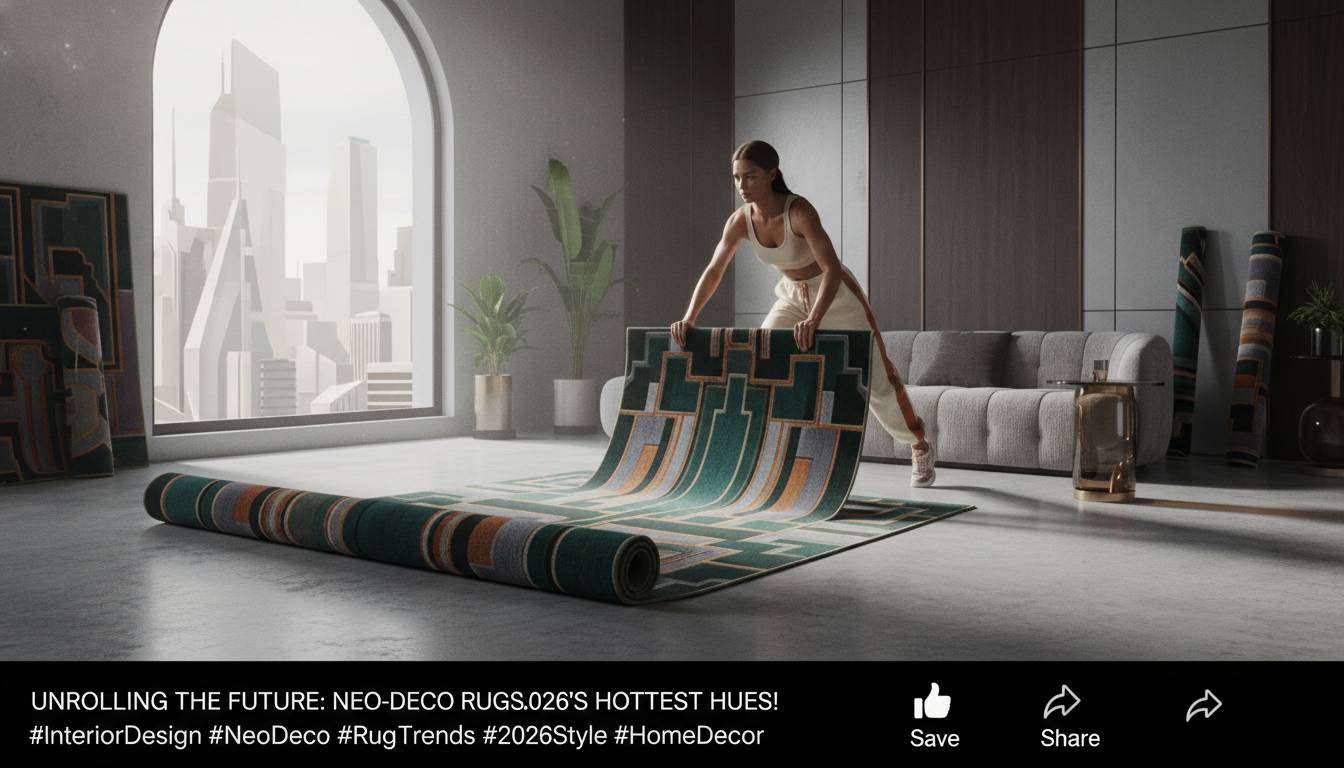
The New Neutrals: Oxidized Pigments and Sun-Drenched Earth
The aesthetic landscape of 2026 signals a definitive departure from the “greige” era. In its place, we are seeing a resurgence of high-saturation earth tones that feel ancient yet urgent. Designers are favoring pigments that mimic the oxidation of natural minerals—think burnt saffron, deep ochre, and baked terracotta.
These warmer hues provide a necessary counterbalance to the rigid geometry often found in Neo-Deco rugs. By utilizing hand-spun wool that retains its natural lanolin, these rugs capture light in a way that synthetic fibers cannot, creating a “living” color that shifts as the sun moves across the room.
When sourcing for editorial-grade interiors, look for these specific 2026 palettes:
- Oxidized Amber: A deep, translucent orange that pairs beautifully with dark walnut furniture.
- Raw Sienna: A grounded, clay-like tone that serves as a sophisticated alternative to traditional beige.
- Dried Sage: A desaturated green that bridges the gap between the organic world and structured Deco patterns.
Midnight Chromes: The Luminous Intersection of Silk and Shadow
The most provocative shift for the upcoming season is the integration of “Midnight Chromes.” This trend utilizes metallic tonal weaves—often achieved through a blend of high-grade silk or mercerized cotton—set against a backdrop of obsidian, charcoal, or deep navy.
In Neo-Deco rugs, this technique creates a “liquid metal” effect. The metallic threads are not gaudy or glittered; rather, they offer a subtle, moonlit sheen that emphasizes the sculptural, high-low pile heights. It is a nod to the machine-age glamour of the 1920s, reimagined with the quiet luxury of the 2020s.
According to curators at thebohorugs.com, the key to mastering this look is contrast. A rug featuring a matte wool base with shimmering silk linework adds a three-dimensional quality to the floor, turning a flat surface into a piece of architectural art.
The 2026 Color Pairing Guide
To successfully integrate these artisanal pieces into a contemporary home, consider the following color pairings that are set to dominate the design circuit:
- The Industrialist: Gunmetal Grey paired with Bronze silk inlays for a masculine, high-contrast finish.
- The Mediterranean Modernist: Terracotta wool accented by Ivory symmetry to create a warm, inviting focal point.
- The Nocturne: Deep Emerald and Gold weaves that evoke the opulence of Gatsby-era lounges but with a minimalist, geometric restraint.
As we move toward 2026, the floor is no longer an afterthought. Whether through the warmth of sun-scorched earth or the cool precision of metallic weaves, these artisanal floor coverings are the primary drivers of a room’s atmosphere, proving that the future of luxury is both symmetrical and deeply pigmented.
Styling Neo-Deco Rugs in Contemporary Contexts
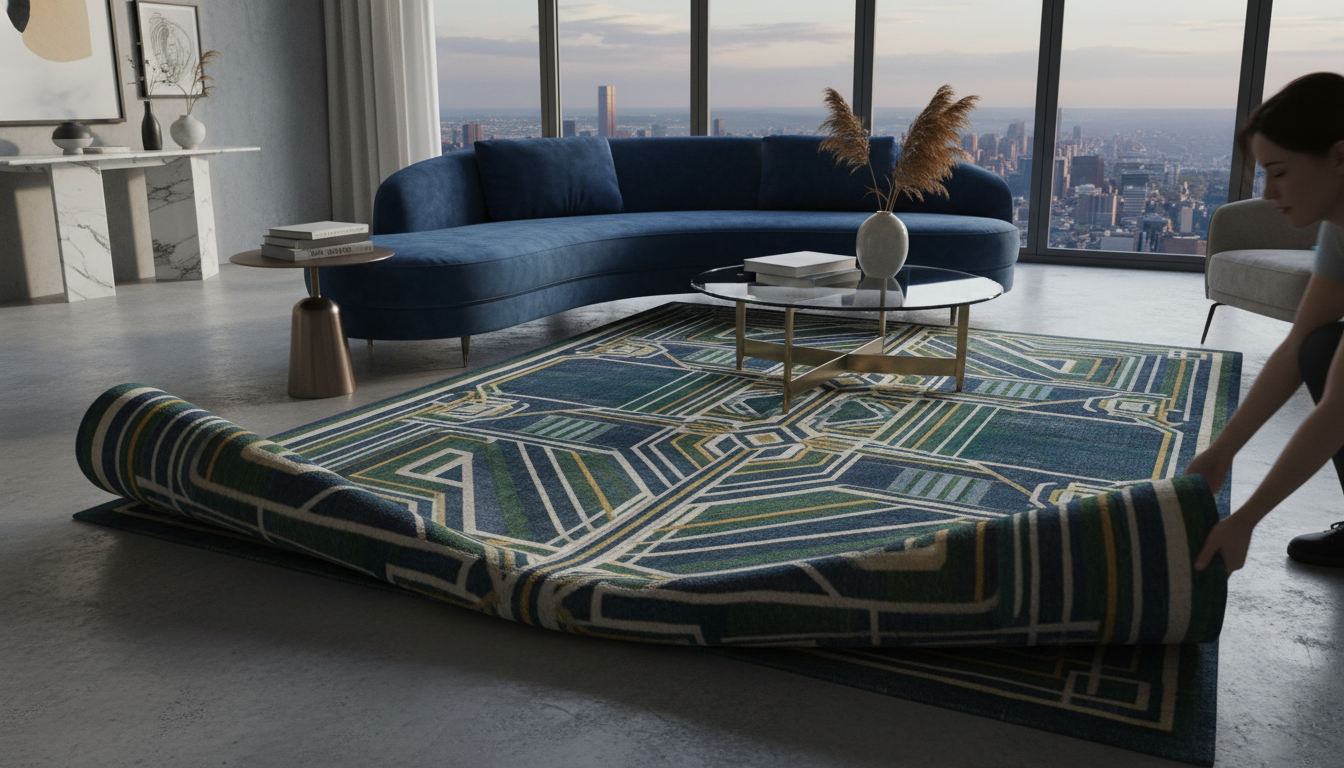
The Architectural Anchor: Defining Space with Sculptural Symmetry
As we transition into 2026, the interior design landscape is shedding the skin of “quiet luxury” in favor of a more assertive, structured aesthetic. The centerpiece of this movement is the return of curated geometry. Unlike the flat, monochromatic textures of the previous decade, Neo-Deco rugs introduce a tactile depth through varying pile heights and hand-carved relief work.
To style these pieces effectively, designers are treating the floor as a fifth wall. Instead of blending into the background, these rugs serve as the structural foundation of a room, dictating the flow of movement through bold, radial patterns and stepped borders reminiscent of 1920s skyscrapers.
Metallic Tonal Weaves: The 2026 Light-Reflective Palette
One of the most significant shifts for the upcoming season is the integration of “luminous industrialism.” This involves weaving metallic-toned silk or high-shine Tencel into traditional matte wool bases. When styling Neo-Deco rugs, the goal is to capture shifting natural light throughout the day, creating a dynamic floor surface that evolves from morning to dusk.
- Bronze and Obsidian: Pair these with dark walnut furniture to create a grounded, masculine lounge feel.
- Silver-Infused Sage: Ideal for softening glass-heavy contemporary architecture without losing the “edge” of modernism.
- Copper and Terracotta: A warmer take on the trend that bridges the gap between industrial structure and organic comfort.
Juxtaposing Softness with Rigidity
The secret to modernizing this high-glamour look lies in the contrast. While the rug provides the rigid symmetry, the surrounding furniture should lean toward biomorphic, rounded forms. Consider a curved mohair sofa positioned atop a rug with sharp, interlocking hexagonal patterns. This tension between the “soft” and the “structured” is the hallmark of the 2026 interior.
For those seeking to source investment-grade pieces that embody this shift, collections at thebohorugs.com offer the necessary artisanal nuance. Their focus on hand-knotted precision ensures that the sculptural elements of the rug maintain their integrity even in high-traffic contemporary spaces.
Curating the Transition: Three Essential Styling Rules
- Mind the Overlap: Ensure that at least the front legs of all seating furniture rest on the rug to unify the geometric “zone.”
- Monochromatic Layering: Select a rug that shares a color family with your wall treatment but differs in sheen. The metallic weave of the rug will provide the necessary visual separation.
- Scale Up: In 2026, small rugs are out. Neo-Deco rugs demand a grand scale to allow their intricate, symmetrical patterns to breathe and repeat naturally across the floor.
Ultimately, the rise of this trend marks a return to intentionality. We are moving away from “safe” design and toward environments that celebrate craftsmanship, light-play, and the enduring power of a well-placed line.
The Future of Floor Art: Investment and Longevity
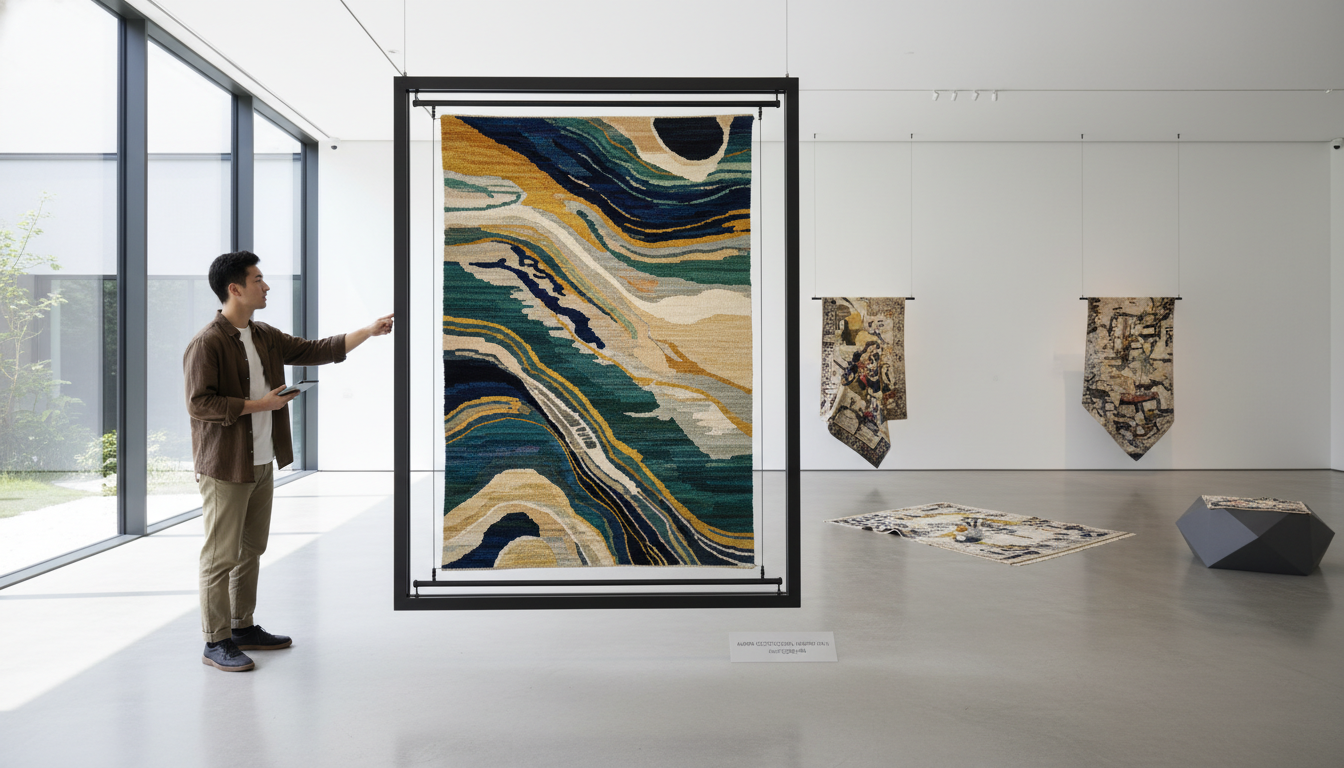
Beyond the Ephemeral: The Appreciation of Textile Assets
As we approach 2026, the interior design landscape is undergoing a profound structural shift. The “fast furniture” era is receding, replaced by a desire for heirloom-quality pieces that command a room. Collectors are no longer viewing floor coverings as secondary accents but as the primary architectural foundation of a space.
The resurgence of Neo-Deco rugs signals a move toward “expressive legacy” pieces. Unlike the flat, monochromatic textures of the early 2020s, these rugs offer a topographical experience. They function as soft architecture, utilizing high-low pile heights to create shadows and depth that change with the day’s natural light.
Investing in this aesthetic is an exercise in longevity. High-end designers are increasingly sourcing from specialized purveyors like thebohorugs.com, where the focus on hand-knotted integrity ensures the piece appreciates in aesthetic value. A well-constructed artisanal rug doesn’t just endure foot traffic; it develops a patina of history that synthetic alternatives cannot replicate.
Engineering Dimension: Sculptural Weaving and Metallic Infusions
The 2026 forecast highlights a departure from chaotic patterns in favor of “sculptural symmetry.” This involves precise, geometric rhythms that echo the Art Deco era but are softened by modern, organic color palettes. The technical execution of Neo-Deco rugs is where the true investment value lies, specifically through the integration of innovative materials.
- Metallic Tonal Weaves: Expect to see subtle infusions of silver and bronze lurex or botanical silks that catch the light without the garishness of traditional tinsel.
- Three-Dimensional Shearing: Artisans are using varied fiber lengths to create “carved” borders, giving the rug a weight and presence that grounds a minimalist room.
- New Zealand Wool & Bamboo Silk Blends: This combination provides a matte-and-shine contrast that defines the 2026 look—durable enough for high-traffic galleries yet soft enough for private sanctuaries.
This technical sophistication ensures that Neo-Deco rugs remain relevant beyond seasonal trends. By prioritizing structural complexity over fleeting color fads, these pieces maintain their visual impact within evolving interior styles, from brutalist modernism to the refined “new classic” aesthetic.
The Sustainability of Craftsmanship
Longevity is the ultimate form of sustainability. In 2026, the discerning consumer recognizes that a hand-knotted rug is a lifetime acquisition. The labor-intensive process of artisanal weaving creates a density of knots that prevents shedding and maintains the crispness of geometric patterns for decades.
- Resource Respect: Natural dyes and ethically sourced fibers reduce the chemical footprint of a home.
- Restoration Potential: Unlike machine-made rugs, artisanal weaves can be professionally restored, ensuring the “floor art” survives through generations.
- Carbon Footprint: By investing in one high-value piece rather than replacing synthetic rugs every three years, homeowners contribute to a slower, more intentional consumption cycle.
Ultimately, the rise of this movement is a testament to the enduring power of human touch. As we move further into a digital age, the tactile, weighted presence of a masterfully woven rug provides a necessary sensory grounding. Choosing a piece from a dedicated source like thebohorugs.com ensures that your environment is not just decorated, but curated for a long-term future.
Elevate Your Space
Discover the artistry of handmade luxury. Each rug is a masterpiece of tradition and modern design.
Expert Q&A
What defines Neo-Deco rugs compared to traditional Art Deco?
Neo-Deco rugs emphasize 3D sculptural textures and mixed-material sustainability, whereas traditional Art Deco relied on flat geometric patterns and standard wool.
Are Neo-Deco rugs suitable for minimalist homes?
Yes, they serve as a ‘maximalist anchor’ that adds depth and architectural interest to otherwise clean, minimalist spaces.
What materials are used in 2026 Neo-Deco rug trends?
The 2026 trends focus on hand-spun New Zealand wool, botanical silk, tencel, and recycled metallic fibers.
How do metallic tonal weaves work in rugs?
Lustrous fibers like viscose or silk are blended with wool to create a subtle shimmer that changes based on the light and viewing angle.
Can Neo-Deco rugs work in small rooms?
Absolutely; their symmetrical patterns can actually help organize a small space and make it feel more architecturally intentional.
How do I clean a rug with high-low pile heights?
Regular vacuuming with a suction-only setting is recommended to avoid damaging the delicate sculptural fibers.
What are the trending colors for Neo-Deco rugs in 2026?
Expect to see ‘Midnight Chrome,’ ‘Oxblood Red,’ ‘Deep Ochre,’ and ‘Forest Malachite.’
Is symmetry a requirement for Neo-Deco design?
While symmetry is a hallmark, ‘dynamic asymmetry’ that follows geometric rules is also a key feature of the Neo-Deco movement.
Are these rugs handmade?
The finest Neo-Deco examples are hand-knotted or hand-tufted by artisans to achieve the necessary sculptural depth.
Why is the design world moving away from minimalism?
There is a growing desire for ‘soulful’ spaces that reflect personal identity and craftsmanship over mass-produced uniformity.
How do Neo-Deco rugs influence room acoustics?
Their varying pile heights and high density make them exceptional at sound dampening compared to flat-weave rugs.
Can I layer a Neo-Deco rug over carpet?
It is possible, but they perform best on hard surfaces where their sculptural edges can be fully appreciated.
What furniture pairs best with Neo-Deco rugs?
Curved ‘bouclé’ sofas and furniture with brass or chrome accents complement the geometric nature of the rugs.
Are Neo-Deco rugs considered sustainable?
When crafted with natural dyes and renewable fibers like wool and silk, they are a very sustainable interior choice.
What is ‘Sculptural Symmetry’ in rug design?
It refers to using varying pile heights to create physical 3D patterns that are perfectly balanced across the rug’s surface.
Do Neo-Deco rugs show footprints?
Due to the silk and metallic blends, they may show subtle ‘shading,’ which is considered a desirable trait of luxury fibers.
How long does it take to weave a Neo-Deco rug?
A hand-knotted 8×10 rug can take anywhere from 4 to 7 months depending on the complexity of the sculptural elements.
What is the lifespan of an artisanal Neo-Deco rug?
With proper care, these investment-grade pieces can last 50 years or more, becoming modern heirlooms.
Is the Neo-Deco trend just a fad?
Designers view it as a ‘correction’ toward quality and character, suggesting it will have long-term staying power in luxury design.
Can these rugs be used in high-traffic areas?
Wool-heavy Neo-Deco rugs are very durable, but those with high silk content should be reserved for low-traffic areas like bedrooms.
How does the ‘metallic’ effect look in natural light?
It creates a dynamic ‘glow’ that shifts from morning to evening, adding a sense of movement to the floor.
What is the difference between hand-tufted and hand-knotted Neo-Deco rugs?
Hand-knotted rugs are more durable and valuable, while hand-tufting allows for more extreme 3D sculptural variations.
Does Neo-Deco design include floral motifs?
Rarely; it favors stylized, geometric, and architectural motifs over traditional organic or floral patterns.
Are there budget-friendly Neo-Deco options?
Machine-made versions exist, but they often lack the physical 3D depth and metallic luster of artisanal pieces.
What rug size is best for a Neo-Deco statement?
Larger sizes (9×12 and up) allow the complex geometric patterns to scale properly without feeling cramped.
Do I need a rug pad for a heavy Neo-Deco rug?
Yes, a high-quality pad prevents the rug from sliding and protects the structural integrity of the weave.
Can I use Neo-Deco rugs in an office?
Yes, they add a professional sense of order and luxury that works well with modern office furniture.
Are the dyes used in these rugs safe?
Most artisanal brands use vegetable or low-impact synthetic dyes that are non-toxic and eco-friendly.
What is the ‘High-Low’ technique?
It involves shearing different sections of the rug at different heights to create a physical relief pattern.
Where can I buy authentic Neo-Deco rugs?
Look for specialized luxury retailers like TheBohoRugs that focus on artisanal, small-batch production.
Written by TheBohoRugs Interior Design Team
Experts in handmade rugs, boho interiors, and modern home decor.
