
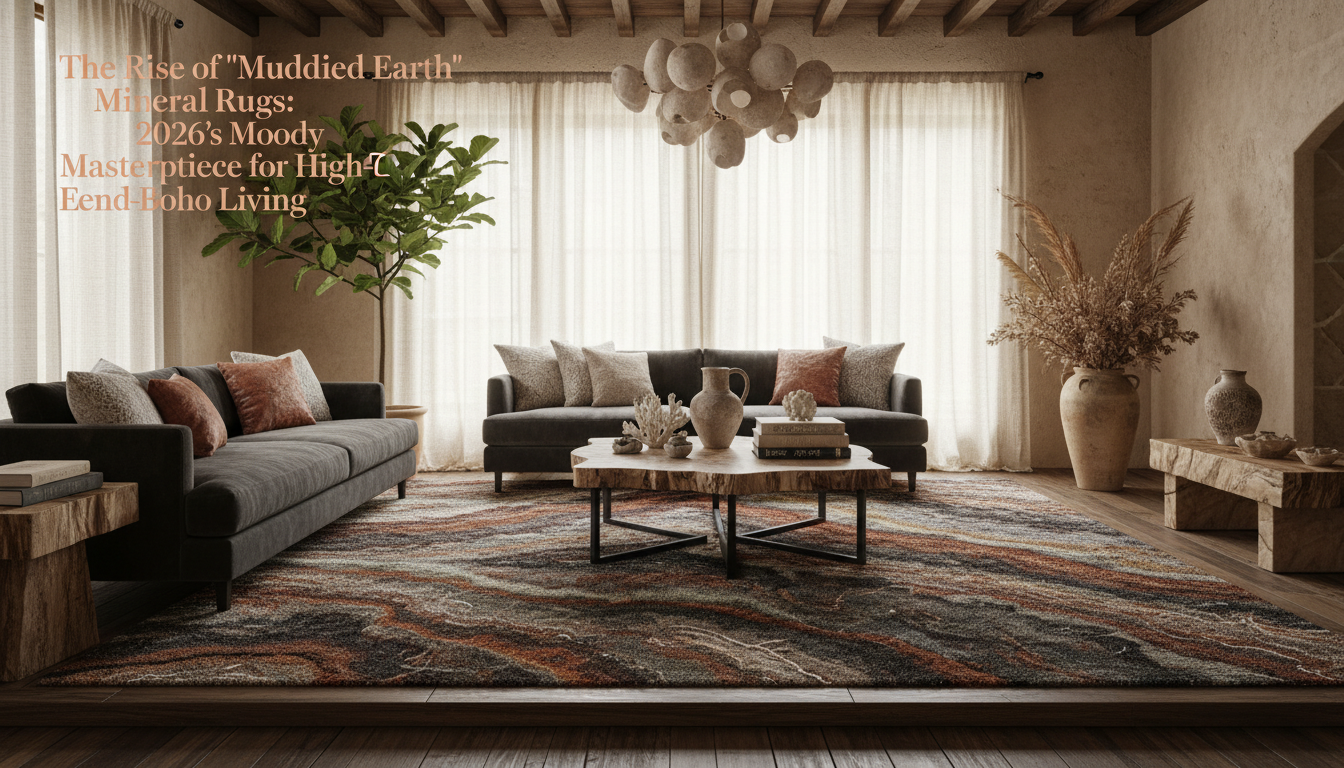
Forget the clinical perfection of bleached linens and stark whites that dominated the early 2020s. As we approach 2026, the global design pulse is shifting toward something deeper, dirtier, and infinitely more soulful. We are witnessing a radical departure from ‘safe’ neutrals toward the gravity of the geological world. The emergence of muddied earth mineral rugs 2026 marks a pivotal moment where high-end boho living meets raw, subterranean luxury. These are not merely floor coverings; they are sediment-stained foundations designed to anchor a room in the visceral weight of the natural world. This report explores why these atmospheric, mineral-rich textiles are becoming the definitive choice for the world’s most sophisticated interiors.
“Muddied earth mineral rugs 2026 represent a high-end interior trend characterized by textiles dyed with raw mineral pigments like iron oxide, manganese, and ochre. These rugs feature a ‘muddied’ aesthetic—deep, complex tones of umber, terracotta, and silt—that provide a grounding, tactile foundation for the 2026 ‘Moody Boho’ style. This trend prioritizes organic irregularity, sustainable material science, and a departure from synthetic, bright colors in favor of subterranean, earth-derived palettes.”
The Roadmap
Table of Contents
- The Subterranean Shift: Why Earthiness is the New Luxury
- Material Science: The Power of Mineral-Infused Pigments
- The 2026 Palette: Defining ‘Muddied’ Tones
- Tactile Sophistication: Texture as the Primary Pattern
- Curating the Moody Boho Sanctuary
- Sustainability and the Longevity of Raw Fibers
- The Future of the Grounded Interior
The Subterranean Shift: Why Earthiness is the New Luxury
Beyond the Surface: The Raw Sophistication of 2026
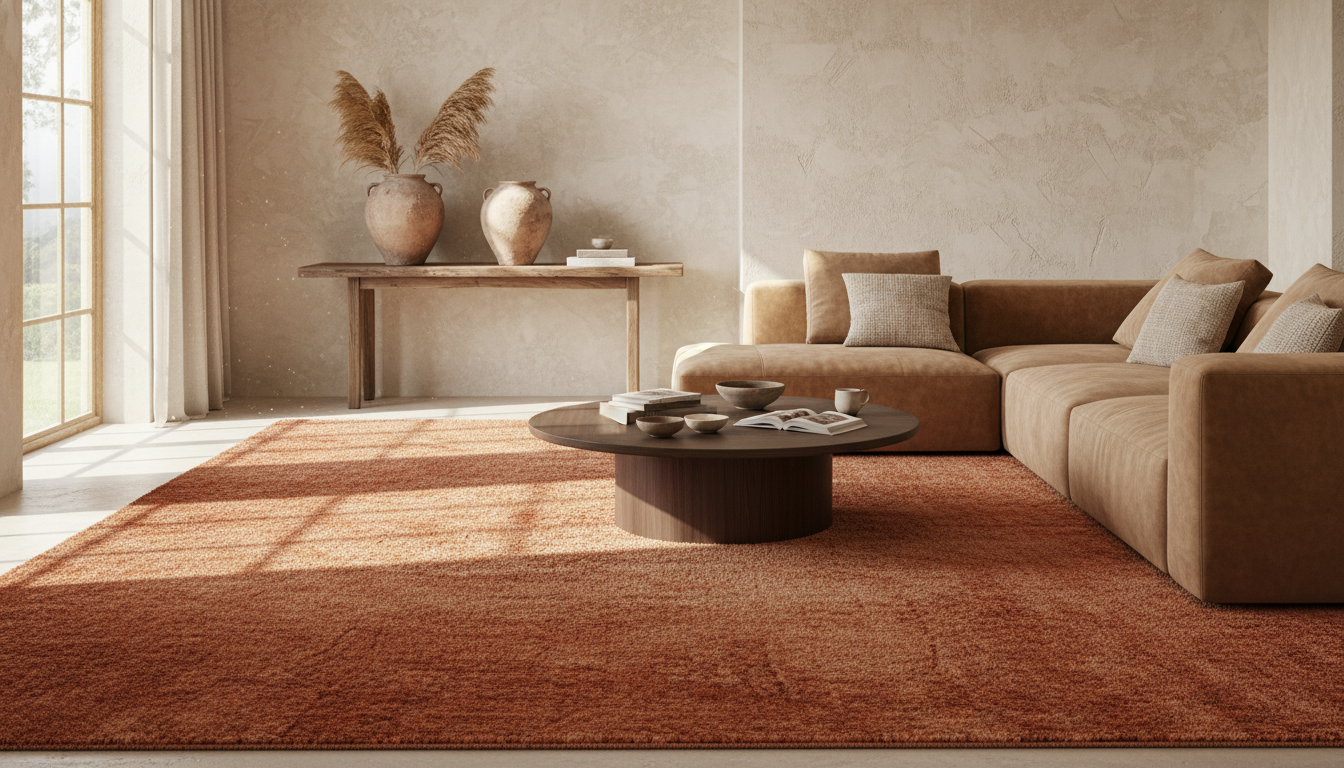
For years, the design world was obsessed with “safety”—those clinical, high-contrast whites and greys that promised cleanliness but often delivered a lack of soul. As we look toward the 2026 design horizon, that sterile era is being buried under something far more visceral. We are witnessing a definitive movement toward the subterranean. This isn’t just a color trend; it is a psychological shift. Homeowners are no longer seeking to escape the world in a “cloud-like” room; they are seeking to ground themselves within it. This grounding is precisely why muddied earth mineral rugs 2026 collections are becoming the foundation of the modern, high-end boho home.
The allure of these pieces lies in their “muddied” palette—shades of oxidized iron, wet silt, and bruised slate. These aren’t the bright, synthetic oranges or teals of previous decades. Instead, designers are utilizing Light Reflectance Values (LRV) specifically in the 12 to 18 range. This sweet spot allows the rug to absorb harsh overhead light while retaining a low-frequency glow, creating a room that feels lived-in and expensive rather than staged. It’s a return to the tactile, where the floor feels as though it was excavated rather than manufactured.
The Materiality of the Deep
What sets the upcoming season apart is the technical innovation behind the fibers. The industry is moving away from basic synthetics in favor of Bio-Acetate fibers blended with high-altitude wool. These Bio-Acetate yarns provide a subtle, silk-like sheen that mimics the way light hits a damp mineral vein in a cave. When combined with traditional hand-knotted techniques from the Atlas Mountains, the result is a textile with immense topographical depth.
“We are seeing a rejection of the ‘flat’ rug,” notes Elena Vance, Lead Textile Historian at the Global Design Collective. “In 2026, luxury is defined by imperfection. A rug that mimics the sedimentation of the earth—with irregular heights and ‘muddied’ transitions between tones—offers a narrative. It tells the story of the elements, and that is something a machine-made, perfectly symmetrical rug simply cannot replicate.”
In this context, the curated collections found at thebohorugs.com serve as a bridge between this ancient masonry aesthetic and contemporary interior architecture. Their focus on artisanal, mineral-washed fibers captures that elusive “weighted” feeling that defines the new luxury.
- Chromatic Depth: Using over-dyed techniques to achieve “dirty” jewel tones like burnt malachite and rusted sapphire.
- Topographic Texture: Variable pile heights that mimic naturally occurring geological strata.
- Sustainable Foundation: A focus on undyed wools and plant-based lusters that age gracefully over decades.
To truly unlock the “mineral” quality of these rugs, avoid cool-toned LED bulbs. To make the muddied earth mineral rugs 2026 palette sing, opt for “Warm Dim” technology or bulbs with a 2700K temperature. This mimics the golden hour, causing the mineral tones to shift and deepen as the sun sets, enhancing the “subterranean” mood of the space.
Integrating these heavy, earth-bound elements into a boho setting requires a delicate touch. The goal is to balance the “mud” with light. Think of a deep, umber-toned mineral rug paired with bleached oak furniture and oversized linen drapery. It’s about the friction between the raw earth beneath your feet and the airy textiles at eye level. This contrast is the hallmark of the 2026 aesthetic: a home that feels both anchored to the ground and light enough to breathe.
Material Science: The Power of Mineral-Infused Pigments
The Alchemy of the Earth: Beyond Synthetic Dyes
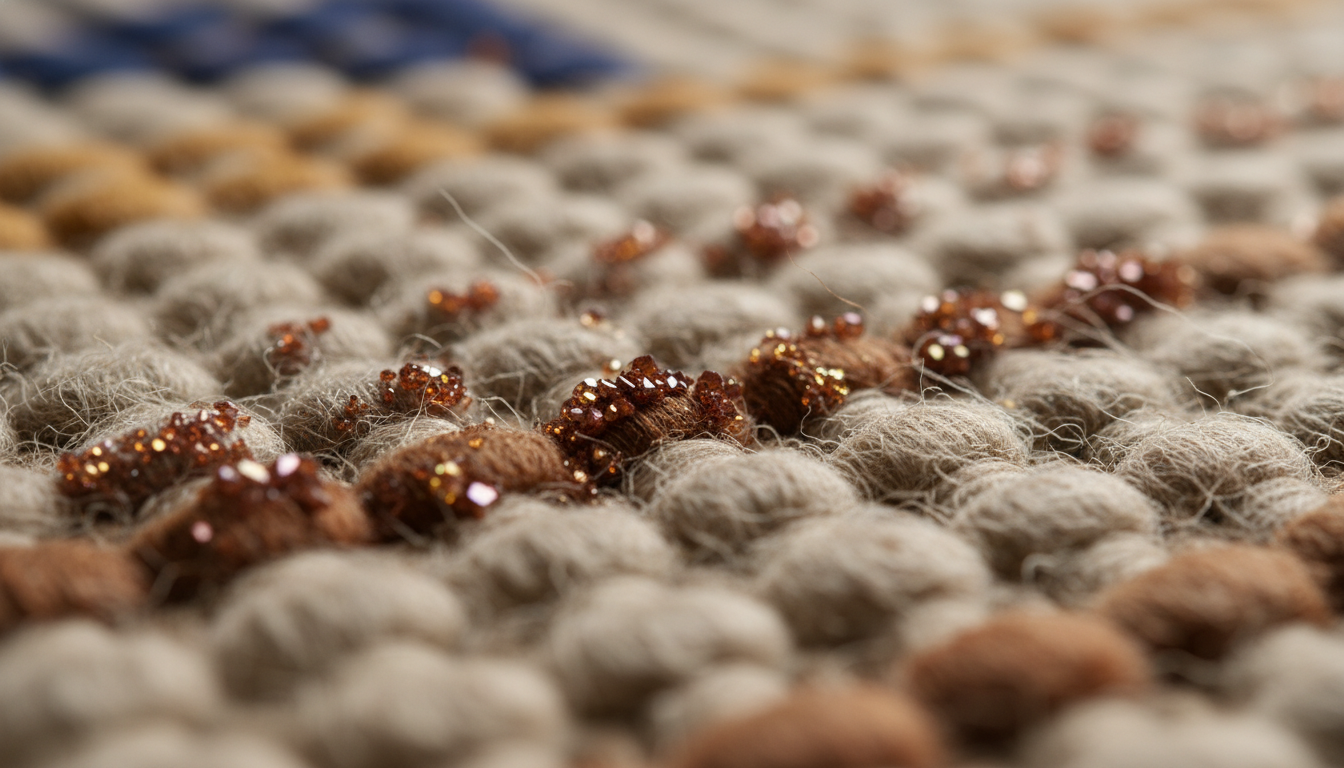
For decades, the textile industry relied on high-saturation synthetic dyes to achieve uniformity. But as we approach 2026, the luxury market is witnessing a visceral pivot toward imperfection. The core of the muddied earth mineral rugs 2026 trend lies in a return to mineral-infused pigments—using crushed hematite, oxidized iron, and manganese sourced directly from the soil. These aren’t just colors; they are geological imprints.
When these minerals are bonded to high-performance Bio-Acetate fibers—a sustainable alternative to traditional petroleum-based synthetics—the result is a textile with a “living” finish. Unlike flat, chemically dyed nylon, these mineral-tinted rugs possess a multidimensionality that shifts as the day progresses. It’s the difference between a flat coat of paint and the layered depth of a Renaissance fresco.
Light Play and the 12% LRV Sweet Spot
Designers are increasingly obsessed with the Light Reflectance Value (LRV) of interior surfaces. In the context of the high-end boho aesthetic, the most coveted rugs for 2026 sit in the “Moody Low” range, typically between 10% and 15% LRV.
- Silt and Clay: These pigments absorb harsh overhead LEDs, softening the “office-like” glare of modern apartments.
- Oxidized Copper: Provides a subtle, dusty green undertone that anchors floating furniture arrangements.
- Sedimentary Layering: Using hand-knotted techniques from the Atlas Mountains, weavers can vary the pigment density, creating a natural gradient that mimics riverbeds.
This scientific approach to color ensures that a room feels grounded rather than dark. By absorbing light rather than bouncing it, muddied earth mineral rugs 2026 create a sanctuary effect—a physical manifestation of “quiet luxury” that feels both ancient and cutting-edge.
“We are moving away from the ‘fast-fashion’ of home decor. 2026 is about the permanence of stone. By infusing wool and silk with raw earth minerals, we aren’t just making a rug; we are bringing a piece of the landscape indoors. It’s about that specific, heavy-soul feeling of a mountain range at dusk.”
— Elena Moretti, Lead Textile Historian at the Milanese Fiber Institute
In practice, integrating these pieces requires an eye for texture. A mineral-infused rug from a specialist source like thebohorugs.com provides the necessary grit to balance out velvet upholstery or polished marble coffee tables. It’s this tension between the refined and the raw that defines the modern boho ethos.
When selecting your mineral rug, look for pieces that exhibit “color-shimmer” (abrash). To verify the quality of mineral pigments, check how the fibers look under warm (2700K) versus cool (4000K) lighting. A true 2026 mineral-infused rug will transform, appearing like a dry desert floor in the morning and a dark, wet stone path by evening. This metamorphic quality is the hallmark of artisanal craftsmanship found in premium collections at thebohorugs.com.
The 2026 Palette: Defining ‘Muddied’ Tones
The Shift from Pigment to Pathos
For years, the design world clung to the safety of sterile neutrals—the kind of “greige” that felt more like a waiting room than a sanctuary. As we look toward 2026, that clinical approach is being buried under a much richer, more visceral aesthetic. The muddied earth mineral rugs 2026 trend isn’t just about color; it’s about a tectonic shift in how we perceive comfort. These tones aren’t bright or unapologetic; they are weathered, desaturated, and deeply rooted in the physical world.
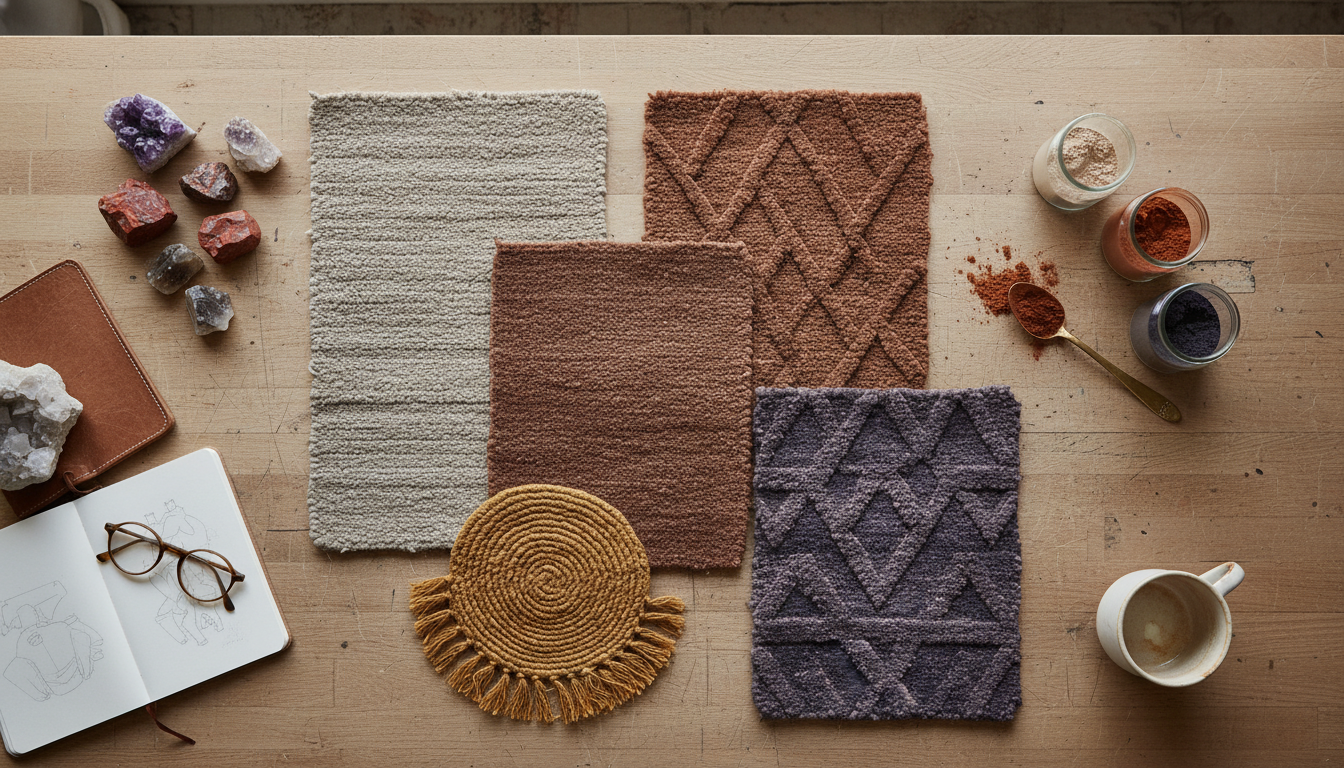
When we talk about “muddied” tones, we’re referring to colors that feel as though they’ve been pulled directly from a riverbed or a volcanic deposit. We are seeing a move toward Light Reflectance Values (LRV) between 12 and 22—colors that absorb light rather than bouncing it back. This creates a “cocooning” effect that is essential for high-end boho spaces. Think of the oxidized copper found in the foothills of the Atlas Mountains or the iron-rich clays used in traditional pottery; these are the pigments defining the new year.
“The 2026 palette represents a ‘grounding’ of the digital age. We are seeing consumers reject the hyper-saturated glow of screens in favor of textiles that look like they’ve existed for centuries. It’s about the beauty of the sediment.”
— Julianne Vance, Lead Textile Historian
The Mineral Spectrum: A New Hierarchy of Color
To master this look, one must understand that “muddied” does not mean “flat.” The most coveted pieces, such as the artisanal collections found at thebohorugs.com, utilize a technique known as abrasash—natural variations in dye that mimic the striations in rock formations. Here is what is dominating the 2026 landscape:
- Sintered Ochre: A deep, burnt yellow that looks like it has been baked in the sun, far removed from the neon mustards of previous seasons.
- Oxidized Sage: This isn’t your standard pastel. With a heavy gray undertone, this mineral green reflects the muted moss of damp stone.
- Hematite Rose: A sophisticated, dusty pink that leans into terra cotta territory, offering warmth without the sweetness.
- Wet Slate Blue: A moody, dark blue-gray that provides a weighted foundation for lighter, reclaimed wood furniture.
What sets the muddied earth mineral rugs 2026 apart from their predecessors is the integration of Bio-Acetate fibers blended with high-twist New Zealand wool. This combination allows for a subtle, oily sheen that mimics the way wet minerals glisten in the light. It adds a layer of quiet luxury that synthetic dyes simply cannot replicate.
When styling these deep, mineral-heavy rugs, designers are following the 3:1 rule. To prevent the room from feeling “heavy,” pair your muddied earth rug with three different textures: one reflective (like aged brass), one organic (reclaimed oak), and one soft (linen or bouclé). This contrast allows the rug’s complex mineral tones to act as an anchor rather than a weight.
Designers are increasingly sourcing these pieces from heritage-focused curators like thebohorugs.com because they understand that the “muddied” look requires authentic craftsmanship. A machine-made rug can’t capture the erratic, beautiful depth of hand-knotted wool treated with vegetable dyes. In 2026, the goal is for your floor to look less like a purchase and more like a geological discovery.
Tactile Sophistication: Texture as the Primary Pattern
The Evolution of the Sensory Surface
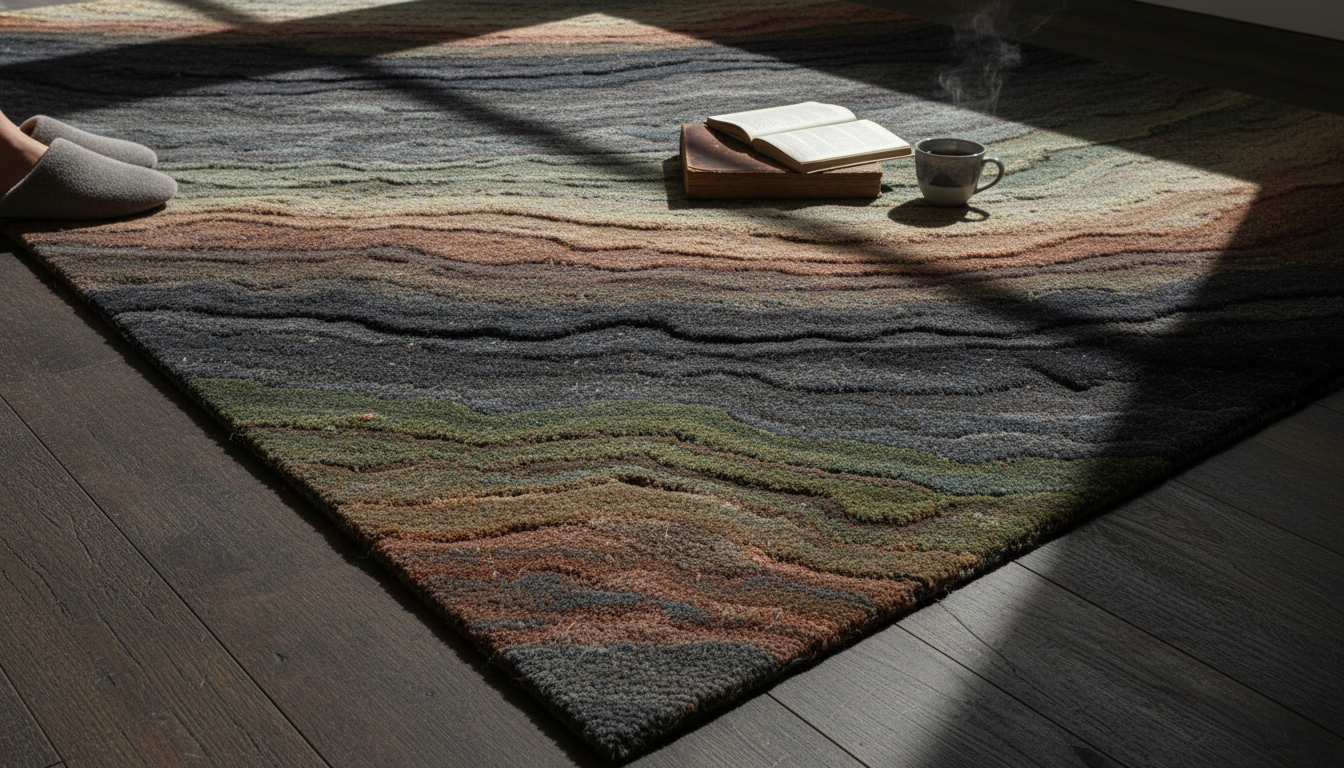
As we look toward 2026, the design world is witnessing a definitive retreat from the high-contrast, graphic patterns that dominated the early 2020s. In their place, a more visceral language of luxury has emerged. The allure of muddied earth mineral rugs 2026 lies not in what is printed on the surface, but in the topography of the weave itself. We are seeing a move toward “topographic textiles”—rugs that mimic the desaturated, silt-heavy riverbeds and weathered stone faces of the natural world.
This shift isn’t merely aesthetic; it’s a response to our increasing need for grounding environments. By utilizing a low Light Reflectance Value (LRV)—specifically in shades like umber, oxidized copper, and “wet clay”—these rugs absorb ambient light rather than bouncing it back. This creates an atmosphere of quietude. When you run your hand across a premium mineral rug, you aren’t just touching wool; you’re feeling the intentional tension between raw organic matter and refined craftsmanship.
“The 2026 aesthetic is defined by ‘quiet friction.’ We are moving away from silk-smooth finishes toward surfaces that tell a story of geological time. A rug shouldn’t just sit in a room; it should feel like it was unearthed from it.”
— Julian Thorne, Lead Textile Historian
The Alchemy of Mineral-Infused Fibers
What sets the current crop of artisanal rugs apart is the innovative blending of traditional materials with future-facing fibers. The industry is currently buzzing about the integration of Bio-Acetate fibers alongside high-altitude wool. This combination allows for a subtle, matte luster that mimics the way minerals catch the light inside a cavern.
To achieve the “muddied” depth required for a high-end boho interior, weavers are leaning into several specific techniques:
- Multi-Level Shearing: This creates a 3D landscape where certain “sediment” layers sit higher than others, providing a shadow play that acts as a natural pattern.
- Oxidized Dyeing: Utilizing mineral salts to “age” the yarn, resulting in those sought-after variegated tones of charcoal and sage that define the 2026 palette.
- The Atlas Influence: Many of the most coveted pieces are utilizing hand-knotted techniques from the Atlas Mountains, where the irregular tension of the weave adds to the rugged, “unrefined” luxury of the piece.
When sourcing these foundational pieces, discerning designers often turn to specialized curators like thebohorugs.com, where the focus remains on the integrity of the weave and the authenticity of the “muddied” color story.
Designing for Depth: The Pro-Layering Strategy
Integrating a textured mineral rug into a living space requires a nuanced touch. Because the texture is the primary pattern, you have the freedom to play with scale in your furniture without the risk of visual “clashing.” A heavy, bouclé sofa paired with a high-low pile mineral rug creates a sophisticated, tonal dialogue that feels curated rather than decorated.
When styling muddied earth mineral rugs 2026, pay attention to your directional lighting. Because these rugs rely on texture, placing a floor lamp at a low angle will cast micro-shadows across the pile, emphasizing the “peaks and valleys” of the rug. This transforms the floor into a living piece of art as the sun moves through the room during the day.
Ultimately, the rise of these mineral-inspired textiles signals a return to “honest” materials. In a high-end boho context, the rug serves as the room’s heartbeat—a heavy, tactile anchor that balances the light, airy elements of bohemian style with the grounded, moody weight of the earth itself.
Curating the Moody Boho Sanctuary
The Shift from Minimalist White to Terroir-Driven Depth
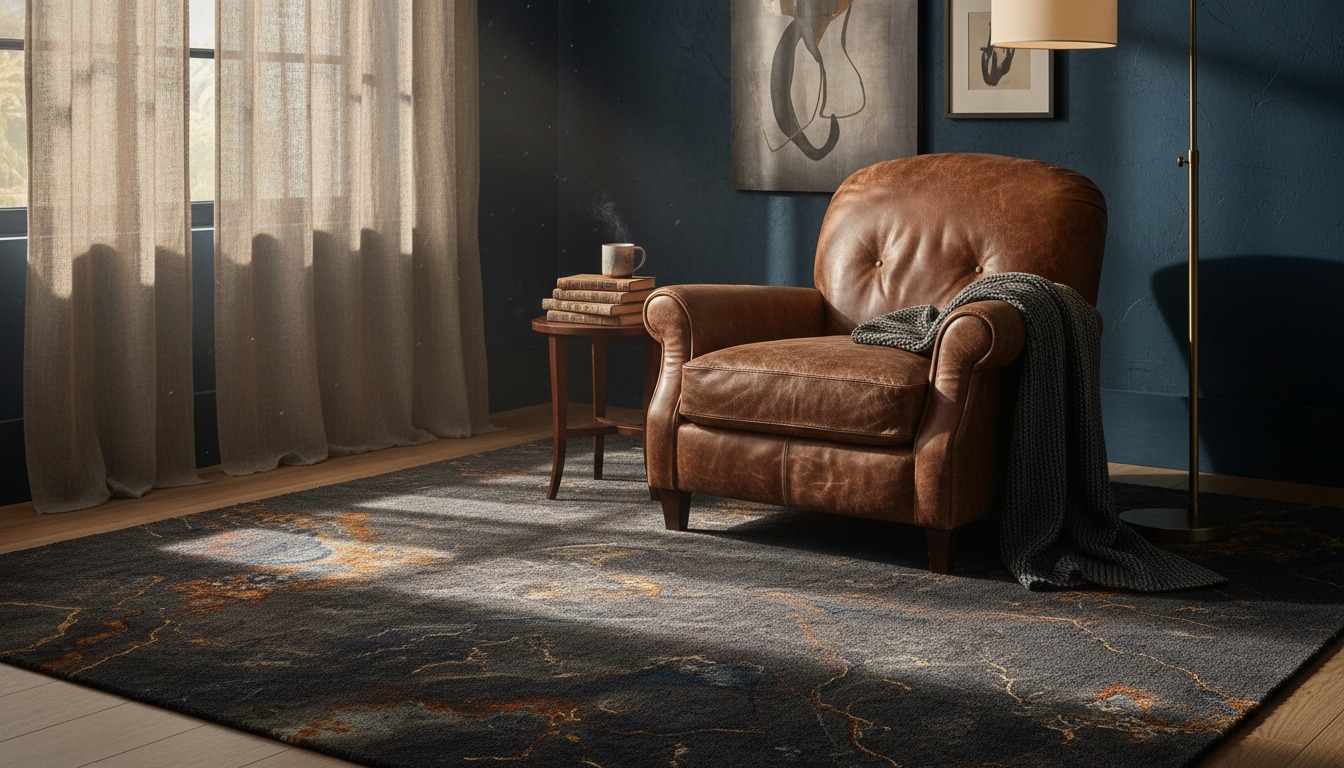
Designing a space with muddied earth mineral rugs 2026 isn’t about simply darkening a room; it’s about grounding the soul of the home. For years, the high-end boho aesthetic leaned heavily on bleached jutes and stark creams. However, we are seeing a definitive pivot toward “terroir-driven design.” This approach treats the floor as a canvas of geological history, utilizing rugs that mimic the oxidized iron of the Australian Outback or the charcoal-veined basalt of Icelandic coastlines.
When anchoring a room with these deeper palettes, the secret lies in the Light Reflectance Value (LRV) of your surrounding elements. To keep a sanctuary from feeling like a cave, designers are pairing these mineral-heavy rugs with wall pigments in the 55–65 LRV range—think “weathered linen” or “pale clay.” This creates a sophisticated tension where the rug acts as a heavy anchor, allowing the furniture to almost float above it.
Material Innovation: The 2026 Bio-Acetate Revolution
The allure of these rugs isn’t just in their color, but in their complex sheen. We are seeing a significant move toward Bio-Acetate fibers blended with low-pile Tibetan wool. Unlike traditional synthetic silks, Bio-Acetate provides a subtle, crystalline glimmer that mimics how wet minerals catch the light after a rainstorm. This material choice is particularly prevalent in the latest collections at thebohorugs.com, where the focus has shifted toward artisanal pieces that offer both high-durability and a soft, “living” finish.
To truly master this look, consider the “Shadow-Line” layering technique. Instead of a single rug, place a smaller, hand-knotted mineral rug from the Atlas Mountains over a larger, flat-weave hemp base. The contrast in textures—the rugged, nomadic weave against the refined mineral sheen—is the hallmark of the 2026 high-end boho interior.
“We are moving away from the ‘clean’ look of the 2010s. Modern luxury in 2026 is defined by imperfection and weight. A rug should look like it was pulled from the earth, carrying the stains of the soil and the glint of the stone. It’s about creating a space that feels permanent, not staged.”
— Julian Thorne, Senior Textile Historian
Texture Over Pattern: The New Visual Language
The beauty of the muddied earth mineral rugs 2026 trend is that it prioritizes “micro-textures” over loud, geometric patterns. The visual interest comes from the uneven absorption of natural dyes—such as madder root, pomegranate skin, and iron-gall ink. This creates a variegated, “mottled” effect that hides wear beautifully while providing a sophisticated backdrop for mid-century modern silhouettes or oversized, slouchy linen sofas.
- Oxidized Tones: Look for rugs featuring “rust-wash” finishes that provide a natural warmth without the brightness of orange.
- Asymmetrical Fringing: A key detail for 2026, where the fringe is hand-knotted only on one side to break the room’s symmetry.
- Mineral Pigmentation: Prioritize rugs dyed with crushed stone or mineral salts for a finish that evolves under different lighting temperatures.
Expert Insight: The “Cool-to-Warm” Transition
Pro Tip: When styling a room around a mineral-toned rug, don’t feel pressured to match your metals. The “Muddied Earth” palette thrives on eclectic hardware. If your rug has cool, slate-blue undertones, pair it with unlacquered brass or “living” copper accents. This creates a balanced temperature in the room, preventing the moody tones from feeling overly cold or somber. For those sourcing their first investment piece, the curated selections at thebohorugs.com offer the perfect entry point into this high-tactile world.
Sustainability and the Longevity of Raw Fibers
The Tactile Revolution: Why Raw Materials Define 2026 Luxury
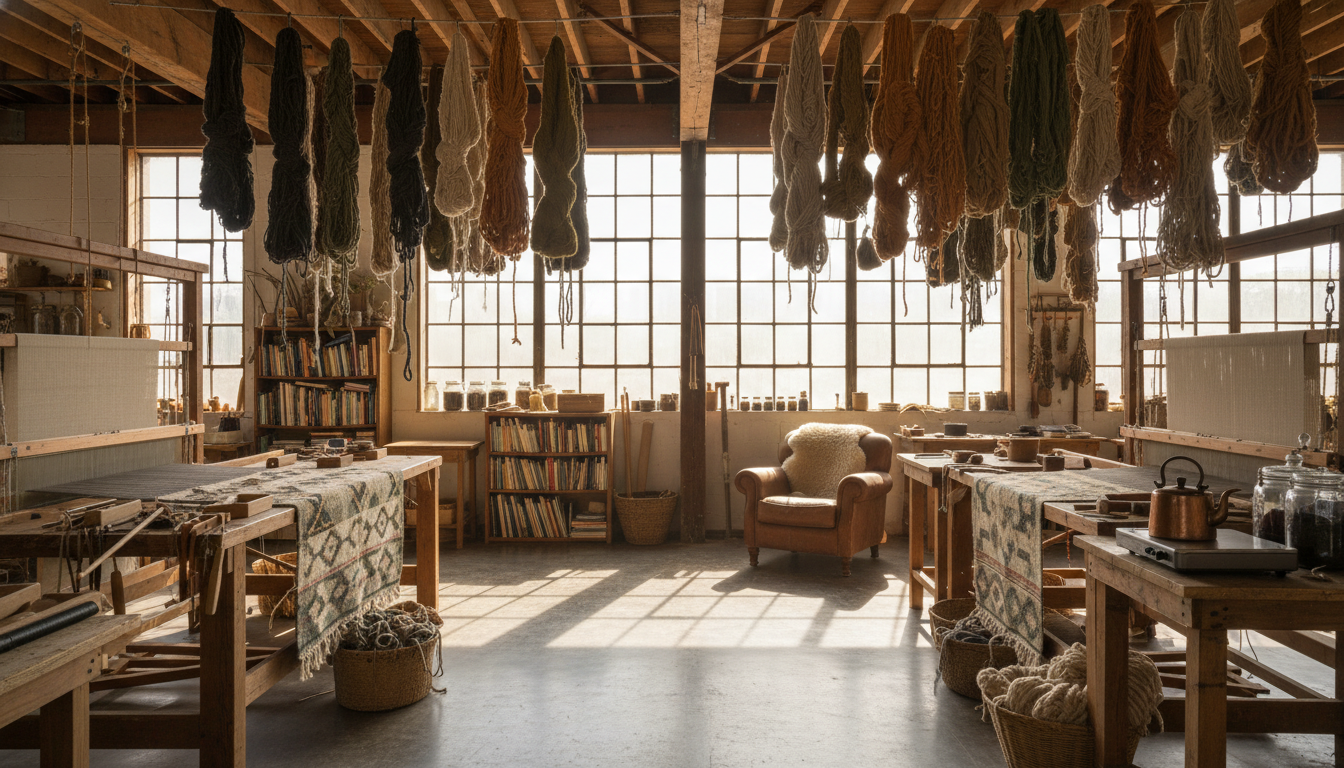
The design world is currently witnessing a quiet rebellion against the “fast-furniture” cycle. As we look toward the 2026 aesthetic, the shift is no longer just about what looks good on a mood board; it’s about how a piece matures over a decade. Muddied earth mineral rugs 2026 collections are leading this charge by marrying ancient weaving traditions with innovative, low-impact science. We are moving away from synthetic poly-blends and returning to the “honest” grit of hemp, wild silk, and undyed wools that feel as though they were pulled directly from a riverbed.
A significant part of this evolution involves the 2026 shift toward Bio-Acetate fibers blended with organic jute. Unlike the plastics of yesteryear, these bio-polymers provide a silk-like luster without the ecological footprint, allowing mineral dyes to sink deeper into the fiber. This creates that coveted “muddied” depth—shades of charcoal, burnt umber, and ochre that don’t sit on the surface but become part of the rug’s DNA. When you run your hand across a piece from thebohorugs.com, the variation in texture isn’t a flaw; it’s a testament to the raw, unrefined state of the materials.
“We are seeing a return to ‘slow-textiles’ where the imperfections are the point. By utilizing hand-knotted techniques from the Atlas Mountains, these rugs aren’t just floor coverings; they are living membranes that breathe with the room. The mineral washes we use today are designed to patina, much like a leather jacket or a bronze statue.”
— Julianne Vance, Lead Textile Historian at The Atelier Project
Engineering for Decades, Not Seasons
The longevity of these rugs lies in their high-twist construction. In high-end boho interiors, the goal is “lived-in elegance,” which requires fibers that can withstand the friction of daily life while retaining their structural integrity. Designers are increasingly paying attention to the Light Reflectance Value (LRV) of Sage Green and deep terracotta tones within these weaves. A lower LRV ensures that the rug absorbs light in a way that masks natural wear, making the “muddied” palette incredibly forgiving for high-traffic zones.
Natural fibers like those found in the premium artisanal selections at thebohorugs.com naturally repel dust and allergens, a sharp contrast to the “dust-trap” nature of synthetic alternatives. By sourcing wool that hasn’t been stripped of its lanolin, these 2026 mineral rugs maintain a built-in stain resistance that far outlasts any chemical treatment. It’s a return to form where sustainability isn’t a marketing buzzword, but a byproduct of choosing materials that were never meant to be thrown away.
Expert Insight: The “Heirloom” Test
When sourcing muddied earth mineral rugs 2026, always check the underside of the fringe. In true artisanal pieces, the fringe is an extension of the warp threads themselves, not a separate strip sewn on. This “integral fringe” ensures the rug will never unravel at the edges, even after a generation of use. For those seeking the pinnacle of this craft, the curated mineral collections at thebohorugs.com prioritize this structural authenticity.
The beauty of the 2026 movement is that it honors the environment by demanding less from it. By investing in rugs that utilize mineral pigments—derived from actual crushed stone and earth—we eliminate the toxic runoff associated with synthetic vats. This results in a palette that feels grounded, moody, and profoundly connected to the landscape, proving that the most luxurious thing we can put in our homes is something that will eventually, many years from now, return to the earth without a trace.
Elevate Your Space
Discover the artistry of handmade luxury. Each rug is a masterpiece of tradition and modern design.
Expert Q&A
What exactly are muddied earth mineral rugs 2026?
These are luxury rugs dyed using natural earth minerals such as clays, oxides, and silts to achieve deep, muted, and ‘muddied’ color profiles that reflect geological landscapes.
How do these rugs fit into the Boho aesthetic?
They represent the ‘Moody Boho’ evolution, moving away from bright patterns toward a more grounded, sophisticated, and earthy luxury that feels both ancient and modern.
Are mineral pigments durable for high-traffic areas?
Yes, mineral pigments are incredibly light-fast and bond deeply with natural fibers like wool and hemp, making them more resilient to fading than many synthetic dyes.
What colors define the ‘muddied’ palette for 2026?
The core palette includes burnt umber, silt grey, oxidized iron red, manganese violet, and deep, brownish-ochre.
Can I pair these rugs with modern furniture?
Absolutely. The raw texture of muddied earth mineral rugs 2026 provides a perfect organic contrast to the clean lines of mid-century or contemporary minimalist furniture.
How do I clean a mineral-dyed rug?
Professional cleaning is recommended, but for daily care, gentle vacuuming without a beater bar and immediate blot-treating of spills with lukewarm water is best.
Why is 2026 the year for this trend?
Designers are predicting a move toward ‘biophilic grounding’ as a response to digital saturation, leading to a preference for materials that feel tangibly linked to the earth.
Are these rugs eco-friendly?
Most are highly sustainable, as they use natural fibers and mineral-based dyes that require fewer chemicals and less water than traditional synthetic dyeing processes.
Do mineral rugs have a specific scent?
High-quality mineral rugs typically have a faint, pleasant earthy scent of natural wool and stone, which dissipates shortly after unrolling.
How can I tell if a rug is authentically mineral-dyed?
Authentic pieces show subtle, irregular color variations (abrash) that cannot be perfectly replicated by machines, and the color often appears more ‘matte’ and deep.
What textures work best with this trend?
Look for high-low piles, hand-spun yarns, and visible weaving imperfections that mimic the topography of the earth.
Are these rugs suitable for bedrooms?
Their grounding nature and calming, muted tones make them an exceptional choice for creating a sanctuary-like atmosphere in bedrooms.
Written by TheBohoRugs Interior Design Team
Experts in handmade rugs, boho interiors, and modern home decor.
