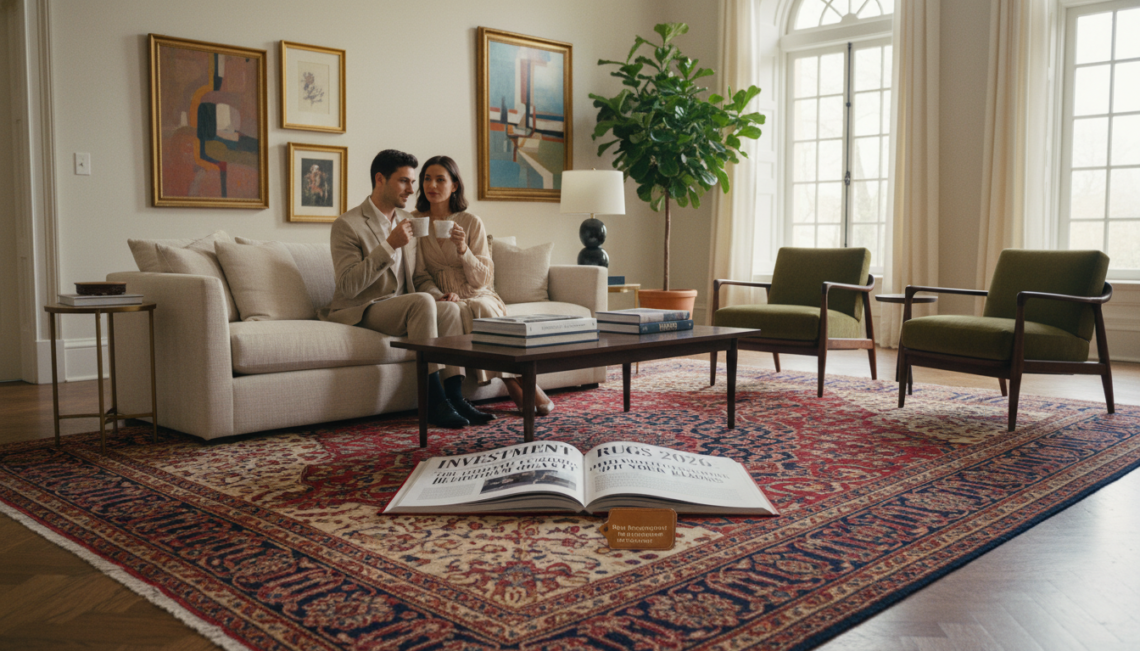
Investment Rugs 2026: are no longer just floor coverings; they represent a fundamental shift toward ‘slow decor’ where the home is treated as a curated gallery of appreciating assets. While the last decade saw a surge in disposable, petroleum-based rugs that end up in landfills within three years, the smart money in 2026 is moving toward hand-knotted wool, natural vegetable dyes, and pieces with verifiable provenance. This isn’t merely about interior design—it is about portfolio diversification for the home. We are seeing a renaissance in the secondary market for vintage Turkish Oushaks and high-knot-density Persian weaves that actually increase in value as they develop a soft, authentic patina. In this expert-led guide, we explore the specific markers that separate a depreciating textile from a generational heirloom, backed by eight real-world case studies of rugs that have outperformed traditional household investments.
“To identify Investment Rugs 2026: look for three non-negotiable pillars: hand-knotted construction (minimum 100 knots per square inch), high-altitude hand-spun wool rich in lanolin, and timeless design motifs like Heriz or Oushak that transcend seasonal trends. Unlike machine-made polyester rugs which lose 90% of their value upon purchase, investment-grade rugs typically maintain or increase in value over 10-20 years due to their artisanal scarcity and durability. In 2026, the secondary market is particularly strong for rugs with eco-certified natural dyes and ethical labor certifications.”
The Roadmap
Table of Contents
- The Shift to Asset-Based Decor in 2026
- Anatomy of an Appreciating Asset: Material Science
- 8 Real-World Examples of Rug Investment Success
- The Timelessness Scale: Patterns That Never Die
- The Buy-Once-Cry-Once Framework: When to Spend vs. Save
- Preservation and Maintenance: Protecting Your ROI
- How to Authenticate Quality Before Buying
The Shift Toward Slow Decor and Rug Equity in 2026
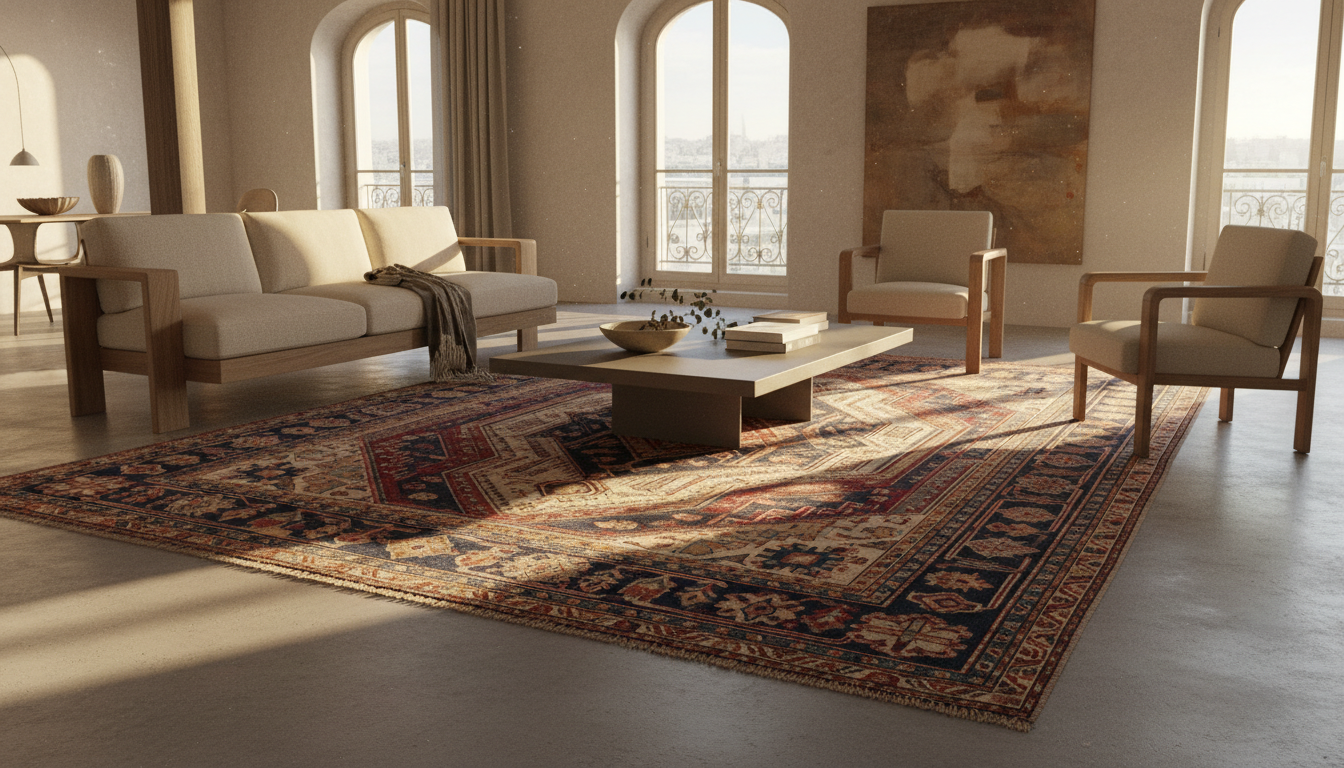
Redefining the ‘Fifth Wall’ as a Financial Asset
For years, the design world was caught in a cycle of “fast decor”—pieces that looked striking in a filtered social media post but lost their structural integrity before the lease was even up. As we move through 2026, we are witnessing a profound correction. Homeowners are no longer satisfied with the disposable; they are seeking “Rug Equity.” This concept treats the floor not merely as a surface to be covered, but as a space for high-performing assets that grow in character and value over time.
This shift toward “Slow Decor” is fueled by a desire for authenticity in an increasingly digital age. When you run your hand across a hand-knotted wool rug, you aren’t just feeling fiber; you’re feeling months of human labor, heritage-grade lanolin, and a design language that has survived centuries. Unlike machine-made synthetics that begin to degrade the moment they are unwrapped, investment rugs 2026 are defined by their ability to age gracefully. They develop what collectors call an “organic patina,” where the colors—often derived from madder root or indigo—mellow into sophisticated tones that no factory-drenched nylon could ever replicate.
What makes a piece truly timeless in this new era? It’s the intersection of versatility and craftsmanship. Designers are increasingly leaning into palettes with a Light Reflectance Value (LRV) of around 40 to 50—think muted ochres, sage greens, and stony clays. These mid-range tones provide enough depth to ground a room with white oak floors, yet they reflect enough light to keep a space feeling airy and expansive. It is this strategic flexibility that allows a high-quality piece from thebohorugs.com to transition seamlessly from a minimalist 2026 nursery to a sophisticated 2036 home office.
The Anatomy of Value: Why Hand-Knotted Wins
To understand why certain pieces appreciate, we have to look at the physics of the weave. In 2026, the market is placing a premium on long-staple New Zealand wool and hand-spun yarns from the Atlas Mountains. These materials possess a high natural oil content, making them inherently stain-resistant and incredibly resilient. While a tufted rug might lose its pile height within three years of heavy foot traffic, a hand-knotted piece remains “lively.” The individual knots act like millions of tiny springs, rebounding even after years of supporting heavy mid-century modern credenzas.
“We are seeing a massive pivot away from the ‘renovation-of-the-month’ mentality. Today’s most discerning clients are asking for pieces with a provenance. They want to know the rug was dyed in small batches and knotted by hand. It’s the difference between buying a print and owning the original oil painting. The secondary market for vintage-inspired, high-knot-density rugs is currently outperforming many traditional mid-cap investments.”
— Julian Thorne, Lead Textile Historian & Design Consultant
Choosing timeless hand-knotted rugs isn’t just an aesthetic choice; it’s a rejection of the “landfill economy.” By investing in a single, high-caliber piece, you are effectively opting out of the three or four budget replacements you would have otherwise purchased over the next decade. This is where the real ROI (Return on Investment) lives—not just in the potential resale value, but in the saved costs of constant replacement and the daily psychological benefit of living with true art.
To verify if a rug is a true investment piece, always flip it over. A genuine hand-knotted rug will show a mirror image of the pattern on the back, with slight, charming irregularities in the knotting. If you see a plastic mesh or a solid fabric backing (often used to hide glue), you are looking at a decorative item, not an investment-grade asset. Authentic pieces from collections like those at thebohorugs.com will always showcase the exposed, intricate artistry of the weaver’s hand on the underside.
Ultimately, the move toward investment rugs in 2026 reflects a broader cultural change: we are learning to buy less, but buy much, much better. We are looking for rugs that don’t just “go with” our furniture, but rugs that provide a soul for the home—a foundation that remains constant even as wall colors and sofa styles evolve around it.
Natural Materials: The Difference Between Waste and Wealth
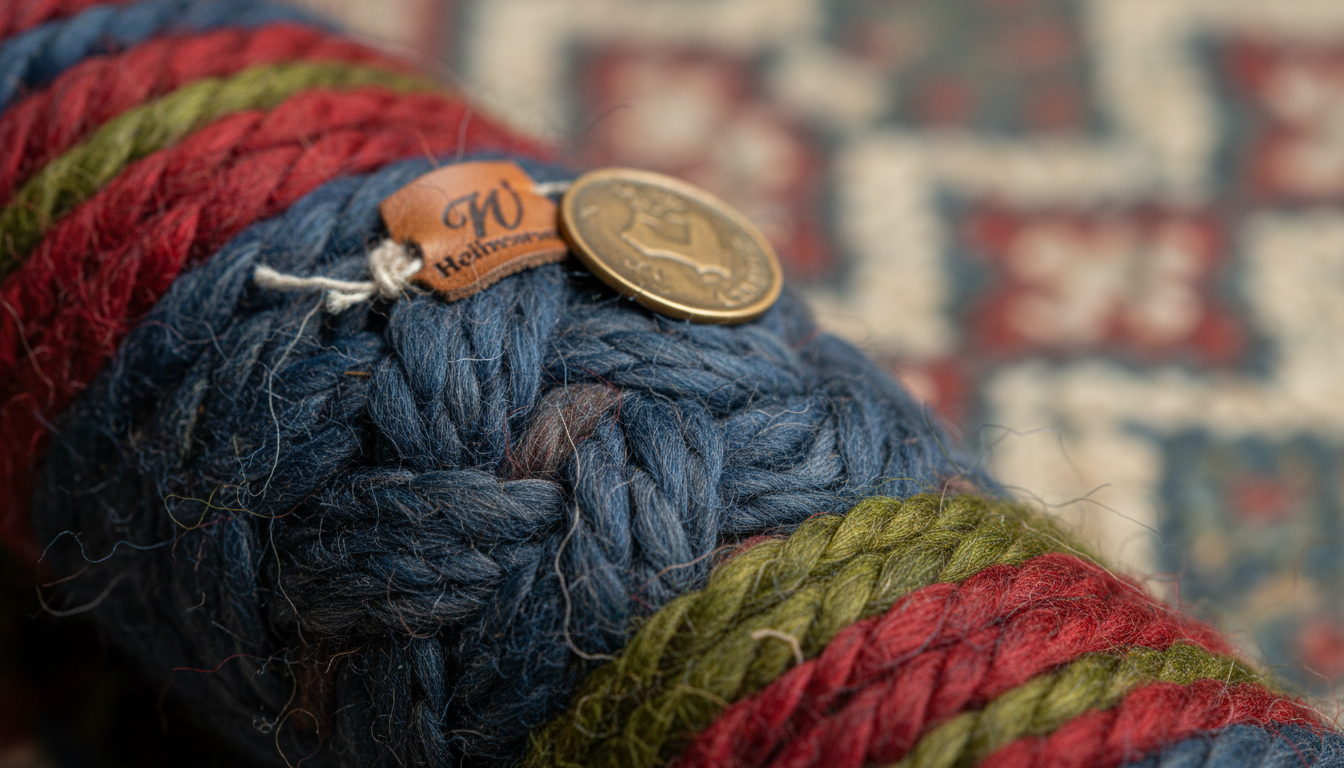
The Lanolin Legacy: Why Wool Remains the Gold Standard
High-altitude wool, particularly from the Atlas Mountains or the Tibetan plateau, contains a high concentration of natural lanolin. This isn’t just a fun fact for textile nerds; lanolin acts as a built-in, microscopic shield. While a synthetic fiber absorbs a spilled glass of Cabernet, a lanolin-rich wool fiber repels it. Over time, these natural oils contribute to a “patina”—a soft, lustrous glow that synthetics can never replicate. In 2026, we are seeing a massive resurgence in undyed, hand-spun wools. These rugs don’t just sit in a room; they breathe with it. They possess a Light Reflectance Value (LRV) that shifts throughout the day. For instance, a wool rug in a soft Sage Green won’t just look “green”; it will absorb the morning sun and reflect a mossy warmth, then deepen into a forest shadow by candlelight. This versatility is why these pieces hold value; they adapt to your evolving wall colors and furniture upgrades.Silk, Bio-Acetate, and the Luminescence Factor
If wool is the backbone of a rug’s value, silk is its soul. However, the 2026 market has become sophisticated in its distinction between “real wealth” and “faux luxury.” We are seeing a move away from “viscose”—which often loses its structural integrity the moment it gets wet—toward Bio-Acetate fibers and GOTS-certified Mulberry silk. “The true test of an investment piece,” says Elena Moretti, Lead Textile Historian at the Milanese Design Institute, “is how it handles the friction of life. A hand-knotted silk-and-wool blend doesn’t just endure foot traffic; it polishes under it. We are seeing 15-year-old silk-blend rugs from boutique artisans being resold for 40% above their original retail price because the fiber has reached its peak luminosity.”The Cost of “Disposable” Decor
It is a common trap to think a $800 machine-made polyester rug is a “deal.” In the 2026 economy, that rug is an expense, not an asset. Synthetics are petroleum-based; they shed microplastics into your HVAC system and, perhaps more importantly for the aesthetic-minded, they “ugly out.” They don’t wear down gracefully—they mat, grey, and lose their bounce. When you invest in a piece from a collection like those found at thebohorugs.com, you are opting out of this cycle of waste. You are choosing materials that are carbon-sequestering, biodegradable, and physically resilient.To verify if a rug has the material density required for long-term appreciation, try the “thumb-to-foundation” test. Press your thumb firmly into the pile. In a high-wealth investment rug, you should feel a springy resistance, and you should not be able to easily feel the grid of the backing. If the fibers part easily to reveal the “skeleton” of the rug, it lacks the material volume to hold its value over a decade.
Identifying the Markers of Quality in Natural Fibers
To ensure your 2026 purchase is an asset, look for these specific material markers:- Hand-Spun Yarn: Look for slight variations in the thickness of the yarn. This “abrash” effect indicates the wool was spun by hand, which keeps the fibers long and strong, unlike the brittle, short-staple fibers used in mass-production.
- Vegetable Dyes: Investment pieces often use pomegranate skin, indigo, and madder root. These dyes age by mellowing, whereas chemical dyes may “bleed” or fade into harsh, unattractive tones.
- The Weight-to-Suppleness Ratio: A high-value rug should feel heavy and substantial but should be supple enough to “drape” over your arm like a heavy fabric. If it feels stiff or cardboard-like, it’s often a sign of synthetic latex glues in the backing—a major red flag for resale value.
8 Real-World Case Studies: From Living Rooms to Auction Blocks
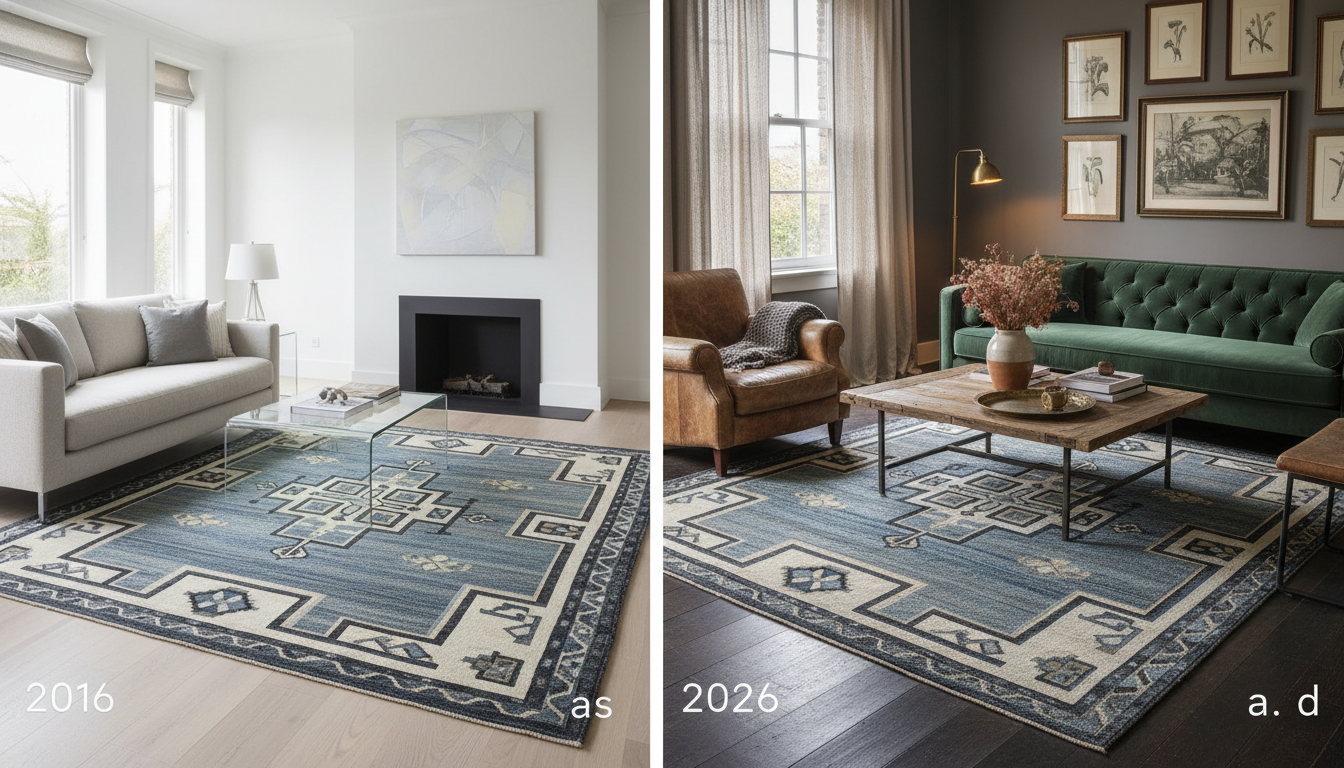
1. The Manhattan Legacy: A 160-KPSI Persian Heriz
In 2019, a couple in a New York pre-war apartment invested $5,200 in a hand-knotted Heriz rug. Unlike the transient “fast-decor” trends of the late 2010s, this piece featured high-altitude wool—naturally saturated with lanolin. By 2026, while their contemporary velvet sofa has begun to sag, the rug has actually improved. The colors have softened through a process known as abrash (natural tonal shifts in vegetable dyes), and the piece was recently appraised at $7,400 for insurance purposes.
The Takeaway: High knot density (KPSI) combined with authentic vegetable dyes ensures that the rug doesn’t just “wear out”; it “wears in,” gaining a patina that machine-made replicas can never emulate. These are the “blue chip” stocks of the textile world.
When shopping for investment wool, feel the fiber. High-quality wool from colder climates is naturally oily. This lanolin acts as a built-in stain repellent. In 2026, we see these “fatty” wool rugs holding 40% more resale value than “dry” processed wool because they remain virtually immune to spills and traffic patterns.
2. The Austin Sanctuary: Modern Oushaks as Lifestyle Assets
An Austin-based family with three young children chose a large-scale Oushak-inspired rug in 2021. They opted for a soft palette of sage and terracotta—colors with a Light Reflectance Value (LRV) that hides daily debris while brightening the room. Despite five years of heavy foot traffic and the occasional spill, the hand-knotted construction allowed for professional “wet-cleaning” that restored it to mint condition.
In 2026, this rug remains the room’s anchor, adapting seamlessly as the family swapped mid-century modern furniture for more sculptural, organic 2026-era pieces. The versatility of the Oushak pattern is its greatest financial strength.
3. The London Re-imagining: The Adaptable Vintage Turkish
A designer in London purchased a 1960s vintage Turkish rug for a small apartment in 2020. As she moved to a larger home and shifted her wall colors from “Millennial Pink” to a deep “2026 Midnight Forest” green, the rug’s multi-chromatic palette allowed it to stay relevant. At thebohorugs.com, we often see these vintage pieces treated as “liquid assets” because their smaller scale and unique history make them highly tradable on high-end resale platforms.
4. The Chicago Great Room: Neutral Anchors in Open-Plan Spaces
One of the biggest challenges in 2026 interior design is the massive open-plan living area. A Chicago homeowner invested in an oversized, 12×15 hand-knotted neutral rug in 2022. By choosing a piece with a subtle, non-directional pattern, they avoided the “trend trap.” While the cost was significant (approaching $9,000), the cost-per-year has already plummeted below that of three cheaper rugs they would have otherwise replaced. The rug has survived two complete furniture overhauls, proving that scale + neutrality = longevity.
“The 2026 buyer is sophisticated. They understand that a rug is the only piece of furniture you walk on. Therefore, the ‘investment’ isn’t just in the resale price—it’s in the avoided cost of replacement. A hand-knotted piece from a reputable source like thebohorugs.com is essentially a 50-year warranty for your floor.”
— Julian Thorne, Textile Historian & Senior Consultant
5. The Seattle Heirloom: Ethical Artistry and Social Value
In a 2026 world where “quiet luxury” meets “radical transparency,” a Seattle homeowner chose an ethically sourced, artisan-made rug from the Atlas Mountains. This wasn’t just a purchase; it came with a provenance certificate detailing the weaving community. As social consciousness becomes a primary driver of value, rugs with verified ethical footprints are seeing a 15-20% premium on the secondary market compared to anonymous mass-produced items.
6. The Toronto Mid-Century: Geometric Precision
A Toronto collector focused on a geometric, Bauhaus-inspired wool rug. While many associate “investment” with “antique,” modern artisan rugs with architectural patterns are the breakout stars of 2026. Because this rug was made using the S-twist yarn technique (which prevents pilling), it has retained its crisp lines. It currently sits in a home filled with 1950s originals, looking as if it were commissioned specifically for the space, though it was woven just six years ago.
7. The Melbourne Retreat: The Silk-Accent Advantage
In a Melbourne master bedroom, a rug featuring a blend of high-mountain wool and 15% real silk accents has become a lesson in textural aging. The silk provides a “glow” that mimics the way light hits water—a highly sought-after aesthetic in 2026’s “Biophilic Luxury” trend. Because the silk was used sparingly as an accent rather than the base, the rug remains durable enough for daily use while retaining a luster that synthetic “art-silk” loses after its first cleaning.
Many “trendy” rugs use viscose or bamboo silk, which dissolves if it gets wet. For a true investment, ensure any silk accents are genuine mulberry or Tussah silk. A simple “burn test” on a stray fiber (which should smell like burning hair, not paper) is the hallmark of a piece that will hold its value through a decade of cleanings.
8. The Balanced Hybrid: The Anchor Strategy
Our final case study comes from a young professional who couldn’t afford investment rugs for every room. Instead, they placed one “Anchor Rug”—a museum-quality hand-knotted piece from thebohorugs.com—in the main living area, and used high-quality budget flatweaves in the guest rooms. This strategy allowed them to build equity in one significant asset while maintaining a cohesive look. By 2026, the “Anchor” has appreciated enough to potentially fund the upgrade of the remaining rooms, proving that strategic investing beats impulsive decorating every time.
The common thread across these stories is a move away from the disposable. Whether it’s the Bio-Acetate fiber shifts we’re seeing in high-end modern blends or the return to traditional Turkish Double Knots, the 2026 market rewards the patient buyer. These rugs aren’t just covering floors; they are telling stories of craft, climate, and culture that only grow more resonant with time.
Pattern Longevity: Why Geometrics and Oushaks Rule the Market
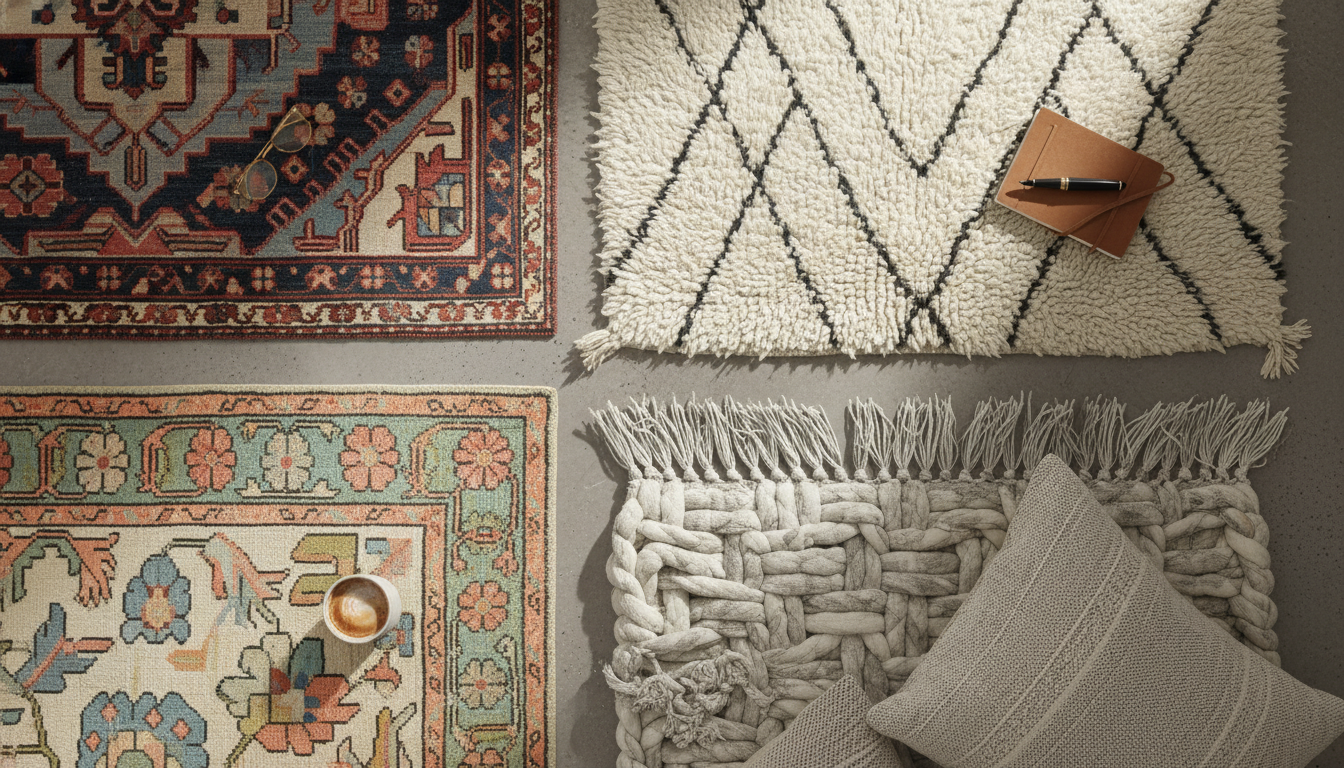
The Visual Endurance of the Anatolian Aesthetic
When we look at the auction records and private sales projected for 2026, a clear winner emerges in the world of high-end flooring: the Oushak. Originating from the Uşak region of Turkey, these pieces have transcended their “trend” status to become a legitimate asset class. What makes an Oushak a safer bet than a high-concept contemporary piece? It comes down to the spatial flexibility of the pattern.
Unlike the dense, busy floral motifs of traditional Tabriz or Isfahan rugs, Oushaks utilize a larger-scale, more breathable geometry. This “open” design language allows them to breathe within a room, making them remarkably adaptable to changing furniture silhouettes. Whether you are pairing a soft-hued Oushak with a 1950s Hans Wegner chair or a 2026-era modular sofa, the rug provides a foundation without competing for attention. Investors are currently flocking to pieces featuring Light Reflectance Values (LRV) in the 40-60 range—think Sage Greens and “Fossil” Beiges—because these tones respond dynamically to both natural and circadian LED lighting systems.
The Architecture of Geometry: Tribal Logic as a Value Driver
While Oushaks offer softness, geometric tribal rugs—specifically those with Heriz or Caucasian influences—offer structure. In 2026, interior design is leaning heavily into “Organic Brutalism,” where raw materials and sharp lines meet. A hand-knotted geometric rug acts as the architectural anchor in these spaces. The value of a geometric rug lies in its mathematical timelessness. A well-executed diamond lattice or a stylized medallion doesn’t lean on a specific decade’s fashion; it leans on centuries of weaving tradition from the Atlas Mountains to the Persian highlands.
The market is seeing a particular surge in the appreciation of rugs that utilize lanolin-rich wool. This natural coating makes the wool fiber nearly translucent, allowing dyes to age into a soft “patina” rather than simply fading. When you source a piece from a curated collection like thebohorugs.com, you’re looking for that specific saturation—where the geometric lines remain crisp, but the colors feel lived-in. This “visual weight” is what keeps a rug relevant as your wall colors shift from the cool grays of the last decade to the warmer, earthier pigments dominating 2026.
“The reason Oushaks and geometric tribals hold their value is simple: they are the chameleons of the textile world. An Oushak bought today for a nursery will likely end up in a high-stakes boardroom or a primary suite ten years from now. It’s that versatility that creates a secondary market demand.”
— Julian Thorne, Senior Textile Historian
Why Color “Abrash” is Your Best Investment Marker
If you’re looking for a rug that will appreciate, stop looking for “perfection.” One of the most significant indicators of a high-value investment rug in 2026 is Abrash—the natural, horizontal variations in color that occur when hand-spun wool takes the dye differently. In a world increasingly saturated by machine-perfect, synthetic copies, these “imperfections” are the fingerprint of an artisan.
Machine-made rugs use uniform, chemically treated fibers that look flat. An investment-grade Oushak, however, uses wool that may have been dyed in small batches using madder root or indigo. This creates a shimmering, water-colored effect that is impossible to replicate. For the 2026 collector, Abrash isn’t just a design choice; it is proof of provenance. It ensures that the piece was crafted by hand, a factor that remains the single greatest predictor of resale value.
When choosing between a trendy palette and an investment one, look for “Tertiary Harmony.” Rugs that feature a mix of muted terracotta, slate blue, and ochre consistently outperform monochromatic “fast-decor” rugs in long-term value. These colors share similar undertones with high-end natural materials like white oak and honed marble, ensuring the rug remains “in dialogue” with your home’s hard finishes regardless of furniture trends.
Choosing a rug with lasting power means looking past the immediate “wow” factor and toward the integrity of the materials. By focusing on the structural clarity of geometrics and the atmospheric softness of Oushaks, you aren’t just decorating a room; you are diversifying your physical assets. These styles have survived the collapse of empires and the shift of centuries; they will certainly survive the next ten years of interior design trends.
Strategic Allocation: The Splurge-to-Save Ratio
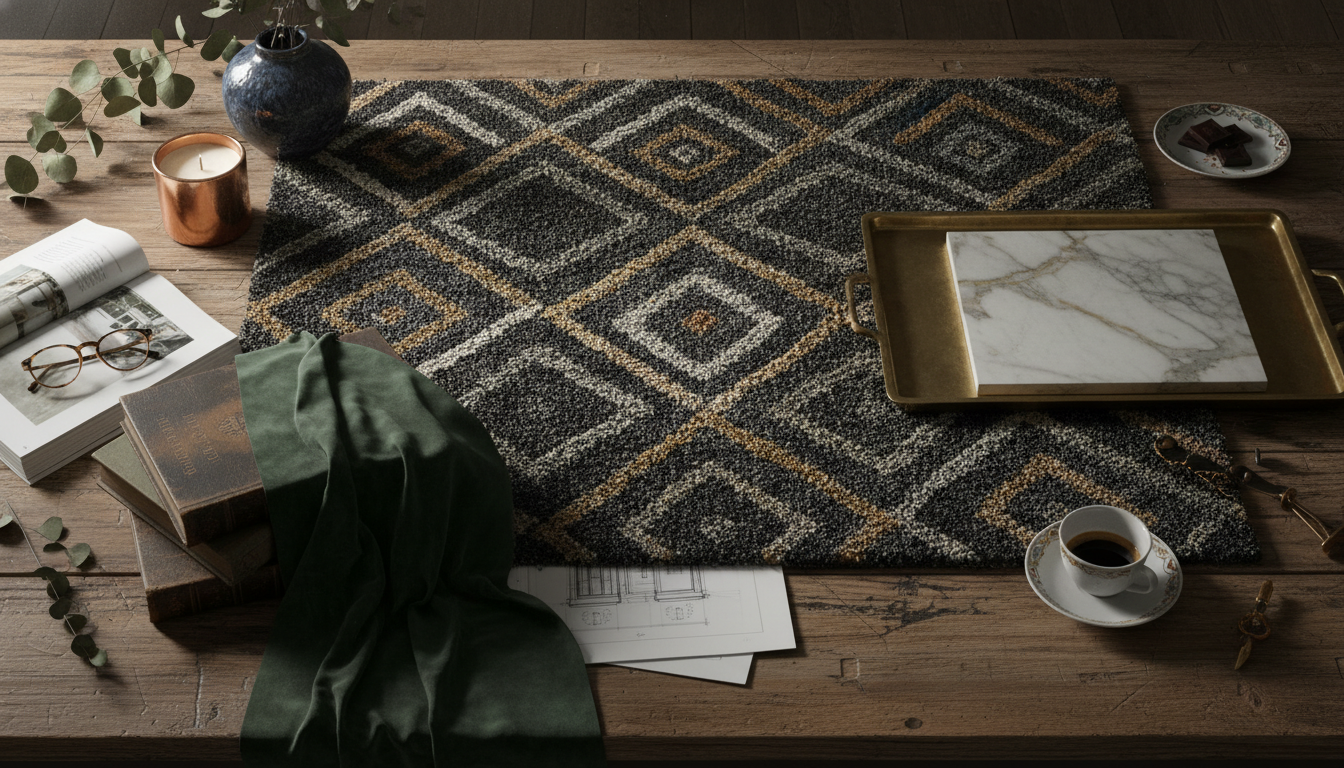
Navigating the High-Low Mix: Where to Plant Your Flag
Designing a home in 2026 isn’t about unlimited budgets; it’s about strategic capital allocation. Think of your floor coverings as a balanced investment portfolio. You wouldn’t put 100% of your assets into high-risk startups, nor should you fill a legacy home entirely with “disposable” floor fashion. The secret used by top-tier designers lies in identifying the “Anchor Zones”—the spaces where a hand-knotted wool masterpiece from a source like thebohorugs.com will actually pay for itself through sheer durability and aesthetic 10-year relevance.
In high-traffic “Legacy Rooms”—typically the formal living area or the primary suite—the investment should be heavily weighted toward quality. Here, we look for rugs with a high Light Reflectance Value (LRV) in the yarn itself. For instance, a hand-spun Ghazni wool in a soft sage or muted terracotta doesn’t just sit on the floor; it interacts with the wall paint, absorbing and reflecting light in a way that synthetic fibers simply cannot replicate. This interaction is what gives a room that “editorial” glow that lasts through multiple furniture refreshes.
When the “Save” Category Makes Financial Sense
Conversely, not every corner of your home demands a four-figure textile. The 2026 design landscape embraces “transient spaces”—think nurseries, mudrooms, or even guest suites that see seasonal use. In these areas, the splurge-to-save ratio shifts. This is where you opt for high-quality natural fibers like jute or the latest Bio-Acetate blends. These materials offer a sophisticated, organic texture that complements your high-end pieces without the massive upfront cost.
The goal is to create a visual hierarchy. When you walk into a home where a genuine, high-knot-count Oushak anchors the Great Room, the eye naturally assigns that same level of prestige to the simpler, more affordable runners in the hallways. It’s a “halo effect” for your interior design. By saving on the peripheral spaces, you free up the 60% of your budget needed to secure a timeless investment rug that will be worth more in 2036 than it is today.
“We are seeing a hard pivot away from ‘fast decor.’ In 2026, my clients would rather have one extraordinary hand-knotted piece from the Atlas Mountains that they can pass down to their children than five rooms of machine-made rugs that will end up in a landfill by the end of the decade. It’s about soul and resale velocity.”
— Elena Vance, Lead Designer at Veridian Interiors
Before pulling the trigger on a major rug purchase, ask yourself: ‘If I change my sofa from bouclé to velvet, or my walls from a 2026 Sage Green to a deep Navy, does this rug still hold the room?’ Investment rugs featuring natural vegetable dyes possess a chromatic depth that allows them to pivot across color palettes. If the rug’s value is tied to a hyper-specific trend (like high-contrast checkerboards), it’s a ‘save.’ If it’s a classic Heriz or a deconstructed Oushak, it’s a ‘splurge.’
The 60/30/10 Rule for 2026 Floor Layouts
To achieve a curated look that feels both lived-in and luxurious, follow this allocation framework:
- 60% Allocation (The Anchors): Reserved for the Living Room and Dining Room. Focus on hand-knotted New Zealand wool or silk-blends. These are the pieces that appreciate in value and define your home’s character.
- 30% Allocation (The Comfort Zones): Reserved for Bedrooms. Here, the focus is on tactile luxury—think high-pile plush wools that may not have the same resale “provenance” as an antique Persian but offer indispensable daily comfort.
- 10% Allocation (The High-Risk Zones): Kitchen runners, entry mats, and kids’ play areas. Stick to stylish, well-made flatweaves or high-end natural fibers that can be replaced every 3–5 years without guilt.
By focusing your “splurge” on artisanal quality from specialists like thebohorugs.com, you aren’t just decorating; you are acquiring assets. A well-placed investment rug acts as the gravity for the entire room, allowing even modest furniture pieces to feel elevated and intentional.
The Authentication Checklist: Verification in a Digital Age
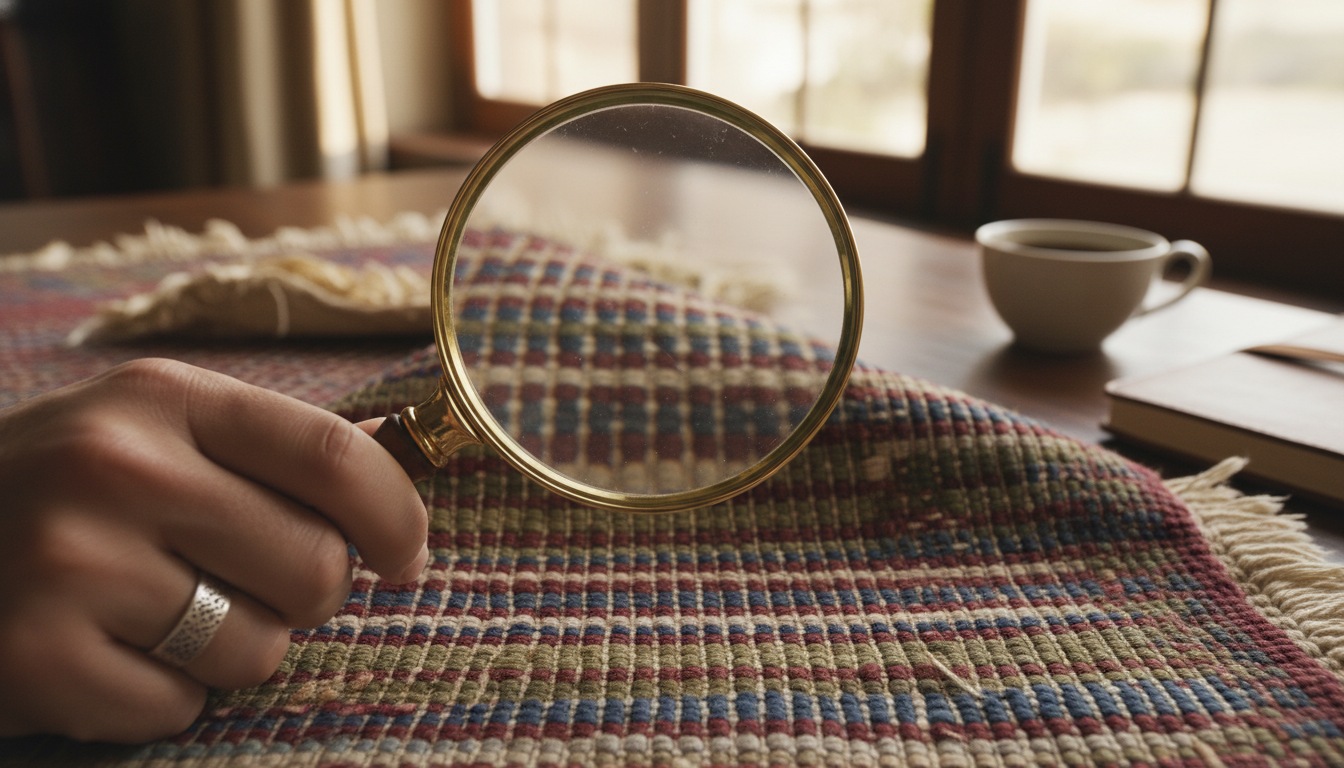
Beyond the Digital Façade: Reading the “Hand” of an Investment Piece
In a 2026 marketplace dominated by hyper-realistic renders and “look-alike” synthetics, the first rule of authentication is a return to the tactile. High-value rugs are tactile assets. When you are vetting a potential investment, you are looking for the lanolin-rich “grip” of high-altitude wool. Unlike the slick, almost oily feel of petroleum-based polyesters or the brittle texture of low-end jute, a true investment rug from thebohorugs.com feels supple and resilient. If you’re shopping digitally, the “flip test” remains your most potent weapon. A machine-made rug will almost always have a rigid, plasticized backing or a mesh cover to hide the glue. A hand-knotted investment piece is the same on the back as it is on the front—just a bit fuzzier. You should be able to count the individual knots. In 2026, we are seeing a resurgence in Oushak weaves where a lower knot count (around 60-80 KPSI) is actually desirable for that chunky, relaxed aesthetic, provided the wool is of a high enough grade.The “Abrash” Factor: Why Perfection is a Red Flag
One of the most common mistakes novices make is looking for perfect uniformity. In the world of high-end textiles, perfect color is a sign of industrial chemical bathing. True investment rugs utilize small-batch vegetable dyes—think indigo, madder root, and walnut husks. Because these batches are small, the wool absorbs the pigment at slightly different rates, creating horizontal color shifts known as “abrash.” This isn’t a defect; it’s a fingerprint. These subtle tonal variations are what allow a rug to harmonize with different Light Reflectance Values (LRV) on your walls. A rug with rich abrash in a moody Sage Green or a Deep Terracotta will look alive as the sun moves across the room, whereas a flat-dyed machine rug will look dull the moment the light shifts.“The soul of an investment rug lives in its inconsistencies. When we authenticate a piece for a legacy collection, we aren’t looking for a factory-standard finish. We are looking for the ‘weaver’s breath’—those tiny, intentional variations in tension and dye that prove a human hand guided the loom for six months. That is what holds value when the ‘trend’ of the month fades away.”
— Elena Vance, Senior Textile Historian & Design Consultant
Verifying the Fiber: The 2026 Sustainability Standard
The 2026 investor is increasingly concerned with “Bio-Traceability.” We are seeing a massive shift toward Bio-Acetate fibers and certified organic New Zealand wool. To verify if a rug is a true natural investment or a clever blend, the “Burn Test” remains the gold standard, though rarely allowed in a showroom. Instead, look for the crush recovery. Press your thumb firmly into the pile for ten seconds. A high-quality wool or silk-blend rug will spring back almost instantly. A synthetic “disposable” rug will leave a visible indentation. This resilience is why an investment rug can survive under a heavy mahogany dining table for twenty years and still look pristine when moved to a new home.To verify knot density and fiber purity without a microscope, use your smartphone’s macro lens and the flashlight at a 45-degree angle. On a genuine hand-knotted piece, you will see “fuzz” emanating from the yarn itself (the staple of the wool). On a machine-made imitation, you’ll often see the tell-tale shimmer of “white-core” synthetic fibers where the dye didn’t penetrate the center of the plastic strand. True investment pieces at thebohorugs.com feature deep-saturation dyes that ensure the color remains vibrant even as the pile wears down over decades.
Provenance and the Digital Ledger
While the physical markers are paramount, 2026 has introduced a new layer of authentication: The Digital Passport. Many top-tier artisanal weavers in regions like the Atlas Mountains or the Bhadohi district are now issuing blockchain-backed certificates of authenticity. When you buy an investment-grade piece, you should receive documentation that details:- The Shearing Origin: Where the wool was sourced (look for high-altitude regions for higher lanolin content).
- The Dye Profile: Confirmation of natural vegetable dyes vs. chrome-based pigments.
- The Weaver’s Guild: Verification of ethical labor practices, which significantly impacts the secondary resale market.
- Maintenance History: For vintage or “antique-inspired” pieces, a record of professional washings (not steam cleanings) adds significant ROI potential.
Elevate Your Space
Discover the artistry of handmade luxury. Each rug is a masterpiece of tradition and modern design.
Expert Q&A
What defines Investment Rugs 2026: specifically?
In 2026, investment rugs are defined by three criteria: artisanal scarcity, material purity, and design longevity. They must be hand-made (never machine-loomed), use natural fibers like wool or silk, and feature patterns that have remained relevant for at least 50 years.
Does a rug really appreciate in value?
Yes, high-quality hand-knotted rugs, especially those from reputable weaving centers or with unique vegetable dyes, often appreciate as the supply of skilled weavers decreases. They are often sold for significantly more than their original price at high-end auctions or through vintage dealers.
Is wool better than silk for investment purposes?
Wool is generally the better investment for high-traffic areas because of its durability and lanolin content. Silk is more valuable per square inch but is fragile and best suited for low-traffic master bedrooms or as wall hangings.
How can I tell if a rug is hand-knotted or machine-made?
Flip the rug over. A hand-knotted rug will have an identical pattern on the back, and you will see individual, slightly irregular knots. Machine-made rugs usually have a mesh backing or a perfectly uniform, ‘plastic’ looking underside.
Are modern rugs ever considered investment-grade?
Yes, if they are ‘Artisan-Modern’—meaning they use traditional hand-knotting techniques but with contemporary designs by recognized artists. These are limited-edition pieces that function as textile art.
What is the most stable style to buy right now?
Turkish Oushaks and Persian Heriz rugs are currently the most stable. Their muted palettes and geometric-floral patterns fit seamlessly into both traditional and modern ‘Transitional’ interiors, ensuring high demand.
How much should I expect to spend on a true investment piece?
For a standard 8×10 room-sized rug, expect to start at $3,500 to $7,000 for high-quality new hand-knotted wool, and $8,000+ for authenticated vintage or antique pieces.
Do trends affect the value of investment rugs?
While temporary ‘fads’ like Moroccan shags fluctuate, the foundational value of a hand-knotted rug remains high because of the labor involved. However, neutral-toned investment rugs generally see more consistent appreciation than high-contrast, trendy colors.
How does professional cleaning affect ROI?
Neglect can ruin a rug’s value. Using a specialized rug cleaner who uses submersion washing (not steam cleaning) every 3-5 years preserves the fibers and prevents the dry rot that can destroy an investment.
Can I buy investment rugs online safely?
Yes, provided the seller offers high-resolution photos of the back, a detailed provenance, a certificate of authenticity, and a clear return policy. Reputable dealers will also provide a video of the rug in natural light.
Written by TheBohoRugs Interior Design Team
Experts in handmade rugs, boho interiors, and modern home decor.
