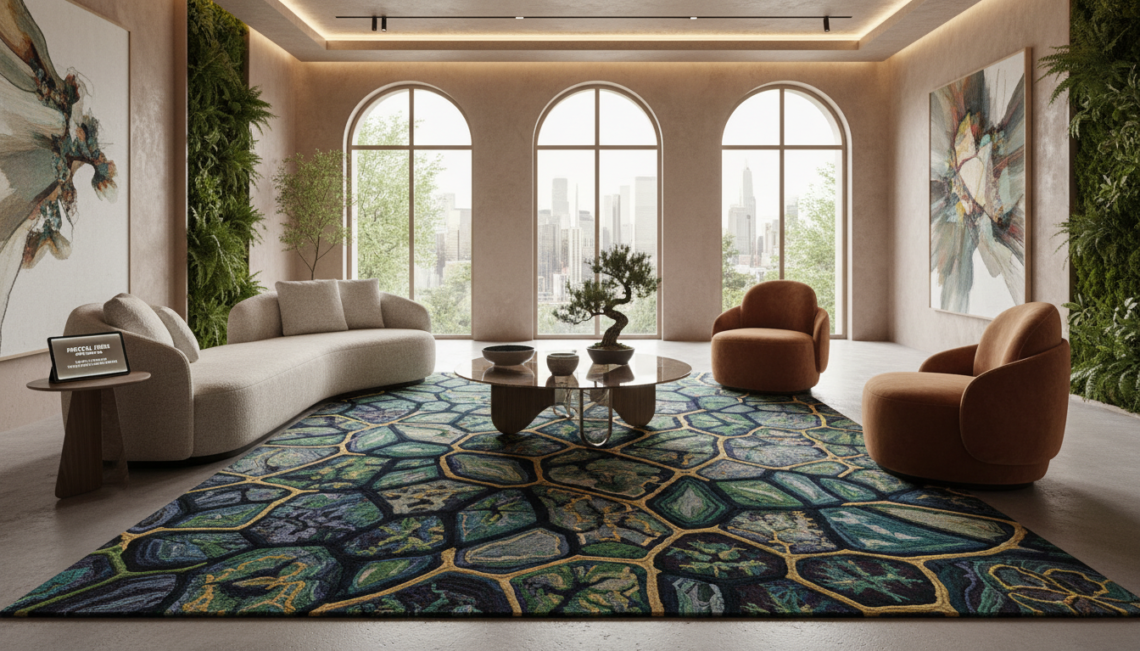
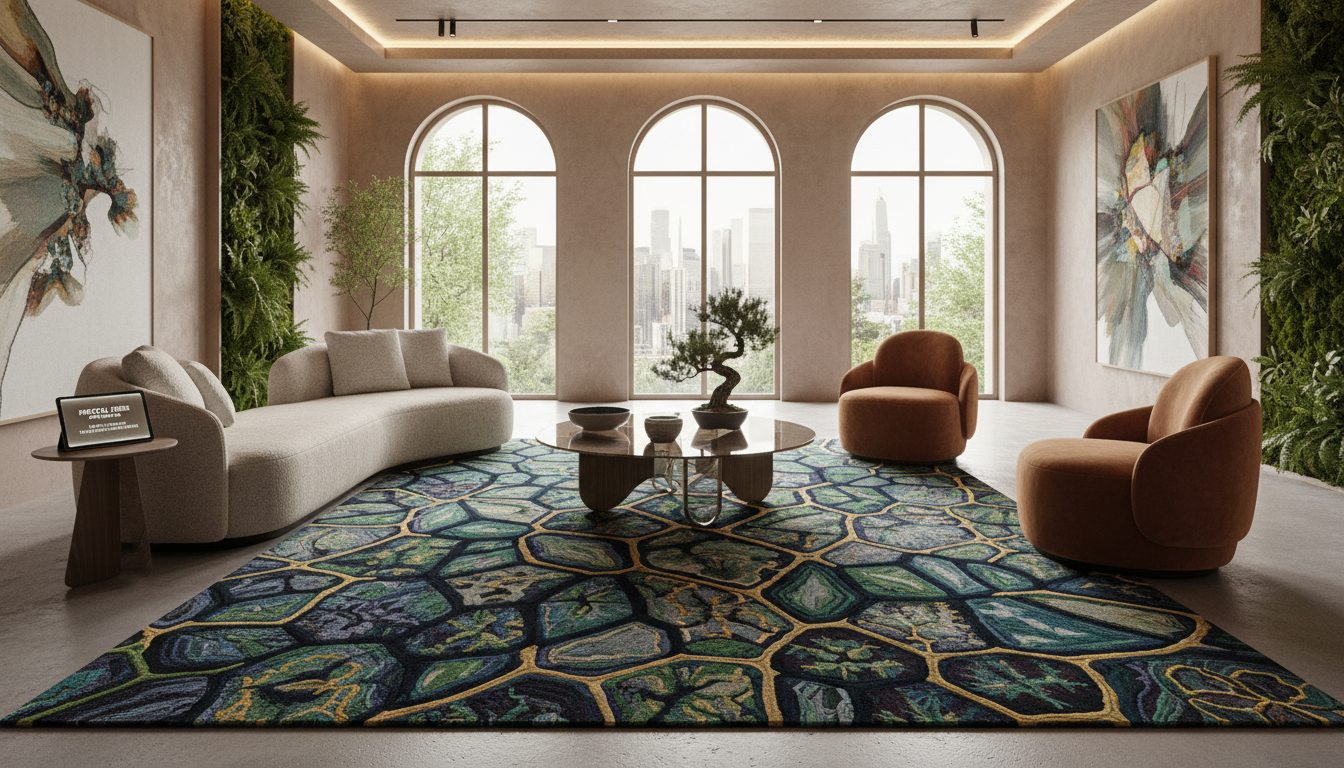
As we approach 2026, the interior design landscape is shifting from static minimalism toward a more profound, scientifically backed movement known as neuro-aesthetics. At the epicenter of this evolution are fractal pattern rugs 2026, which leverage the mathematical beauty of nature’s self-similar patterns to create environments that soothe the nervous system. These are not merely floor coverings; they are sophisticated ‘Art for the Floor’ that bridge the gap between high-end computational design and the primal human need for biophilic connection. This report explores how these intricate fiber works are redefining luxury by grounding modern sanctuaries in the complex, rhythmic geometry of the natural world.
“Fractal pattern rugs 2026 represent a leading trend in interior design that focuses on ‘neuro-aesthetics’—the study of how visual patterns impact brain health. Characterized by self-similar, repeating mathematical geometries found in nature (like ferns, coastlines, and clouds), these rugs are crafted from sustainable fibers like wool, silk, and mycelium. They are designed to reduce cortisol levels and enhance cognitive focus by providing a visual landscape that feels both complex and inherently familiar to the human eye.”
The Roadmap
Table of Contents
- The Rise of Mathematical Organicism in 2026
- The Neuro-Aesthetic Science Behind Fractal Geometry
- Sustainable Fiber Innovations: Merging Tech and Nature
- The 2026 Color Palette: Earthy Iridescence and Deep Moss
- Spatial Anchoring: Using Fractals to Define Modern Open Plans
- Biophilic Algorithms: From Digital Design to Hand-Tufted Reality
- Curating the Room: Balancing Complexity with Quietude
- The Future of Collectible Rug Art: Limited Edition Fractals
The Rise of Mathematical Organicism in 2026
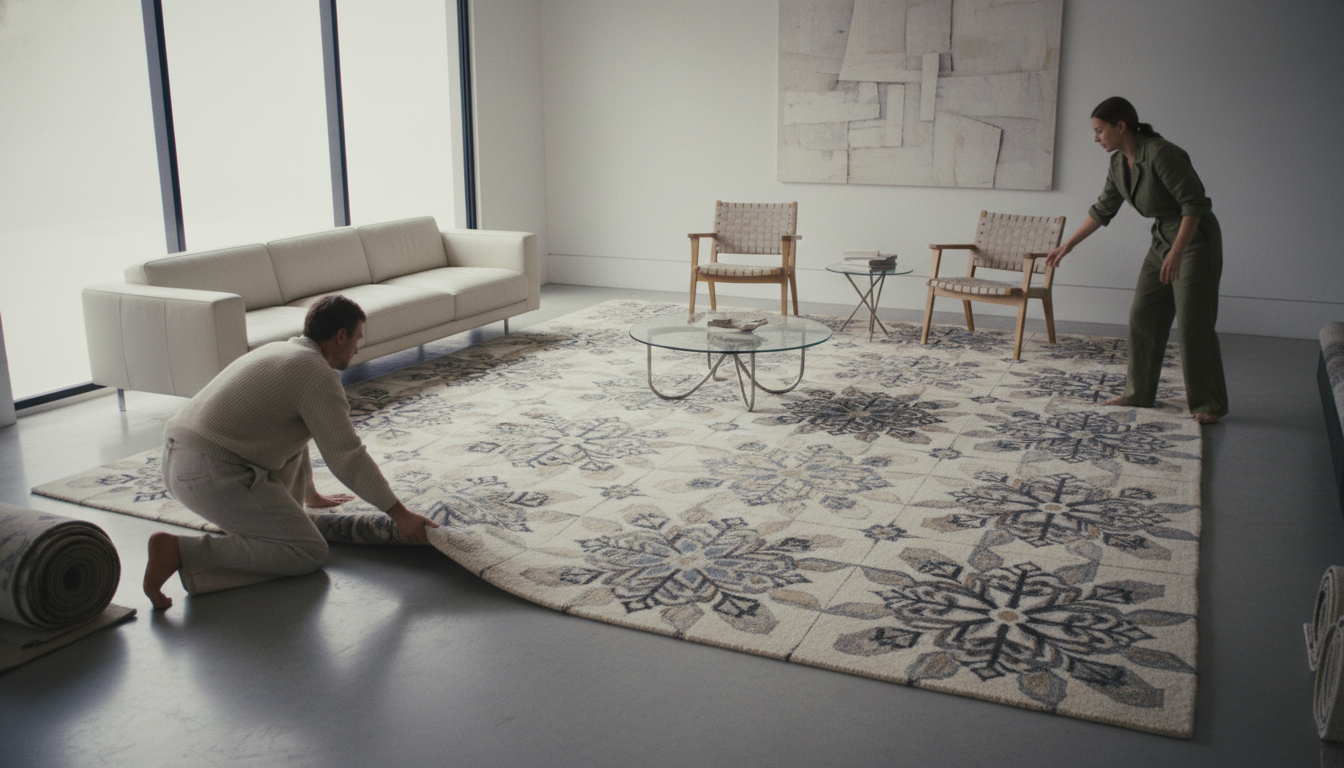
The Convergence of Algorithm and Loom
As we approach the mid-decade mark, the interior design landscape is shedding its obsession with sterile minimalism in favor of mathematical organicism. This movement represents a sophisticated fusion of digital precision and raw, biological forms. The 2026 aesthetic is defined by the realization that our living spaces should mirror the complex geometry of the natural world.
At the center of this shift are fractal pattern rugs 2026, which serve as the foundational anchor for the “neuro-aesthetic” home. Unlike the repetitive, mechanical grids of the past, these designs utilize self-similar patterns—shapes that repeat at every scale—to create a sense of infinite depth. It is a visual language that feels simultaneously futuristic and ancient.
For the discerning collector, these pieces represent more than just floor coverings; they are tactile manifestations of the “Golden Ratio.” By incorporating these non-linear geometries, designers are creating environments that feel evolved rather than manufactured, grounding the high-tech home in high-concept artistry.
The Neuro-Aesthetic Blueprint for Modern Living
The rise of fractal pattern rugs 2026 is deeply rooted in the science of neuro-aesthetics—the study of how the brain responds to visual harmony. Research suggests that human eyes are hardwired to process fractal dimensions found in nature, such as those in ferns or coastlines, leading to a 60% reduction in physiological stress levels.
In 2026, the luxury market is prioritizing “Restorative Complexity” through several key design elements:
- Adaptive Asymmetry: Rugs that eschew traditional borders, allowing the fractal “growth” to bleed naturally into the surrounding floor space.
- Chromatographic Gradients: Utilizing natural vegetable dyes to create subtle color shifts that follow the mathematical density of the pattern.
- Topographical Weaving: High-low pile heights that mimic the 3D terrain of the natural world, turning the rug into a sensory landscape.
By integrating these specific elements, homeowners are no longer just decorating; they are engineering their environments for cognitive clarity and emotional equilibrium.
Materiality Meets Mathematical Precision
True luxury in the coming year is defined by the marriage of complex mathematics and artisanal sustainability. The most coveted fractal pattern rugs 2026 are those that utilize “slow-fiber” techniques—hand-knotted wool, raw silk, and refined hemp—to translate digital algorithms into heirloom-quality textiles.
Ethical sourcing is the cornerstone of this trend. We see a significant move toward small-batch production where the integrity of the fiber remains uncompromised. Artisanal platforms like thebohorugs.com have become essential resources for those seeking pieces that balance this rigorous mathematical precision with the soul of traditional craftsmanship.
As we curate the homes of tomorrow, the focus is on “Quiet Complexity.” A fractal rug provides a visual anchor that is busy enough to intrigue the mind but organized enough to soothe the spirit. It is the ultimate expression of the 2026 home: a space that is as intellectually stimulating as it is deeply, fundamentally grounding.
The Neuro-Aesthetic Science Behind Fractal Geometry
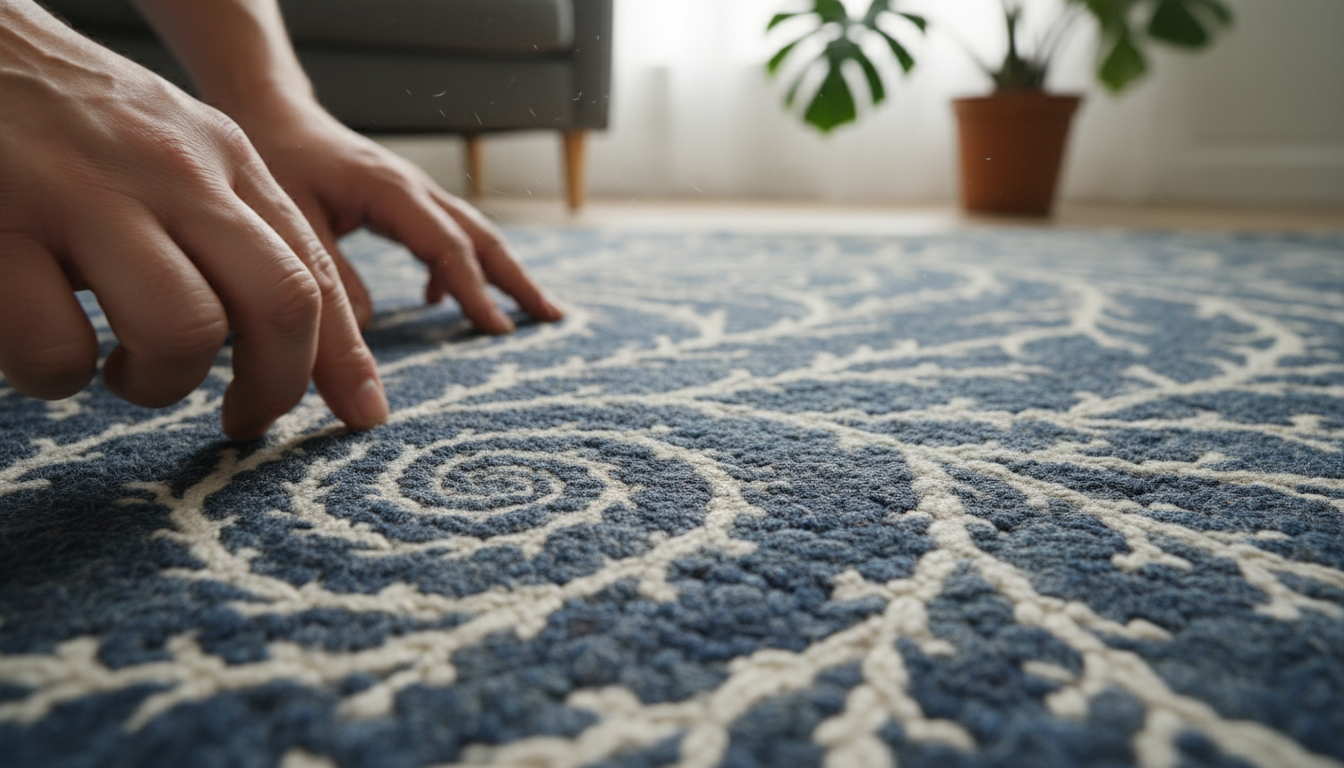
The Biological Resonance of Self-Similarity
In the evolving landscape of interior design, the shift toward neuro-aesthetic living is no longer a luxury—it is a physiological necessity. At the heart of this movement lies the concept of “fractal fluency,” a term coined by physicists to describe the human brain’s innate ability to process self-similar patterns with effortless ease.
Our visual systems evolved in environments dominated by fractal geometry—the branching of trees, the veins of a leaf, and the jagged edges of a coastline. Research suggests that viewing these patterns can reduce stress levels by up to 60%, a finding that is currently revolutionizing the textile industry.
As we look toward the curated interiors of the near future, fractal pattern rugs 2026 represent more than a floor covering; they serve as a cognitive “reset” button. By mimicking the mathematical complexity of nature, these pieces provide a grounding point that aligns our internal biology with the built environment.
Predictive Textures: 2026’s “Infinite” Weaves
The upcoming season marks a departure from static, repetitive motifs. The 2026 trend focuses on “algorithmic hand-crafting,” where the precision of generative design meets the soul of artisanal fiber work. These rugs utilize varying pile heights and fiber tensions to create 3D topographies that change with the light.
Leading designers are moving away from the stark, synthetic symmetries of the 2010s. Instead, fractal pattern rugs 2026 utilize high-performance natural fibers—such as hand-spun New Zealand wool and sustainable eucalyptus silk—to create textures that feel as though they are breathing. These materials allow for a “shimmer effect,” where the fractal’s complexity is revealed only through the interaction of shadow and movement.
For the discerning collector, brands like thebohorugs.com are already pioneering this fusion of heritage techniques and neuro-centric aesthetics, offering pieces that act as meditative anchors in high-traffic spaces.
Key Characteristics of the 2026 Neuro-Aesthetic Rug
- The D-Value Balance: Designers are targeting a fractal dimension (D) between 1.3 and 1.5, the specific range found in nature that triggers the brain’s alpha-wave relaxation response.
- Subtractive Colorways: Expect monochromatic palettes where the pattern is defined by texture rather than hue—think “sandstone on limestone” or “charcoal on obsidian.”
- Organic Irregularity: Unlike mass-produced patterns, fractal pattern rugs 2026 embrace “controlled imperfection,” where the weave subtly evolves across the length of the rug, preventing the eye from reaching a point of visual boredom.
Designing for Cognitive Equilibrium
The integration of fractal geometry into the home is a sophisticated response to our increasingly digital existence. In an era of pixelated screens and rigid urban grids, the fluid complexity of these rugs provides a necessary organic counterpoint. When sourcing fractal pattern rugs 2026, the goal is to create a space that feels discovered rather than decorated.
By placing these intricate, nature-mirroring pieces in living rooms or home offices, homeowners can cultivate an environment that fosters deep work and creative clarity. It is a marriage of science and soul—a testament to how the patterns of the universe can be woven into the very fabric of our daily lives.
Sustainable Fiber Innovations: Merging Tech and Nature
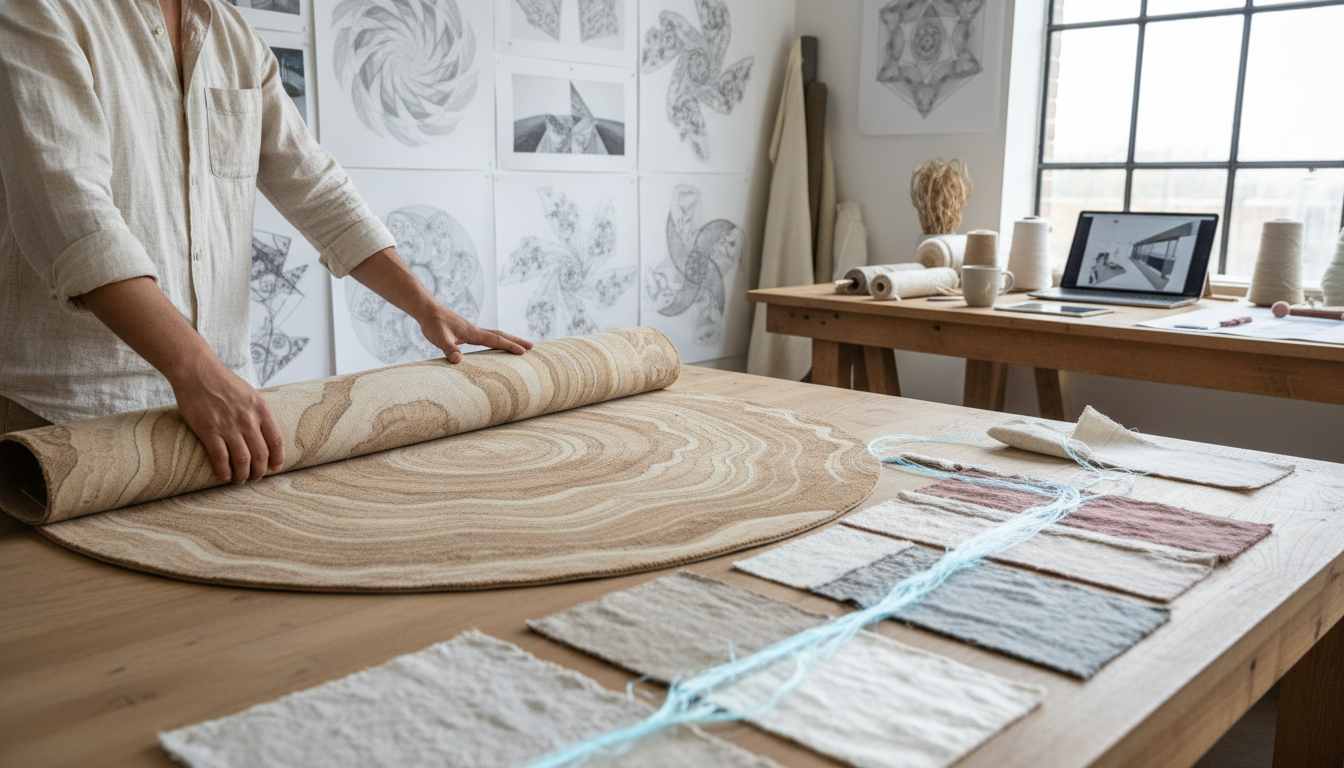
The Renaissance of Bio-Digital Weaving
As we approach the mid-decade, the interior design landscape is shedding its obsession with clinical minimalism in favor of “organic complexity.” The emergence of fractal pattern rugs 2026 represents a pivotal shift where computational geometry meets raw, tactile earthiness. This isn’t merely about aesthetic appeal; it is about a sophisticated fusion of algorithmic precision and high-performance sustainable fibers.
By 2026, the industry is moving beyond standard wool and silk. We are seeing the rise of bio-synthetic hybrids—materials like lab-grown collagen fibers and “spider silk” proteins—that allow for microscopic detailing. These innovations enable designers to replicate the infinite self-similarity of nature with a resolution previously impossible on a loom.
For those seeking to ground their space in this movement, collections at thebohorugs.com illustrate how artisanal craftsmanship is adapting to these complex mathematical blueprints, ensuring that every knot contributes to a larger, neuro-aesthetic harmony.
Three Material Breakthroughs Defining 2026
- Regenerative Kelp Fibers: A carbon-sequestering powerhouse, these fibers offer a cool-to-the-touch luster that mimics the iridescence of forest floors, perfect for the intricate gradients found in fractal designs.
- Mycelium-Infused Backing: Moving away from toxic adhesives, the next generation of luxury rugs utilizes fungal networks to create a flexible, biodegradable structural base that enhances indoor air quality.
- Pineapple Silk (Piñatex) Highlights: Used to create the “high” in high-low pile heights, this waste-derived fiber provides the metallic sheen necessary to make geometric fractals pop under architectural lighting.
3D Topography and the Neuro-Aesthetic Surface
The 2026 trend isn’t just visual; it is deeply haptic. Advanced 3D tufting technology now allows for “topographical weaving,” where the rug mimics the varying elevations of a mossy landscape or a crystalline formation. This tactile feedback is essential for the modern home, acting as a sensory “grounding wire” for residents overstimulated by digital interfaces.
Designers are utilizing fractal pattern rugs 2026 to solve the “large room” dilemma. Because fractals are scale-invariant—meaning they look as detailed from three inches away as they do from thirty feet—they provide a sense of visual density without cluttering the floor plan. This creates a psychological sense of “ordered chaos” that mirrors the soothing environments of old-growth forests.
Investments in these pieces are increasingly seen as “legacy acquisitions.” By marrying carbon-negative manufacturing with timeless mathematical truths, the rugs of 2026 are designed to age with the house, proving that the most advanced technology is often the one that brings us closest to the natural world.
The 2026 Color Palette: Earthy Iridescence and Deep Moss
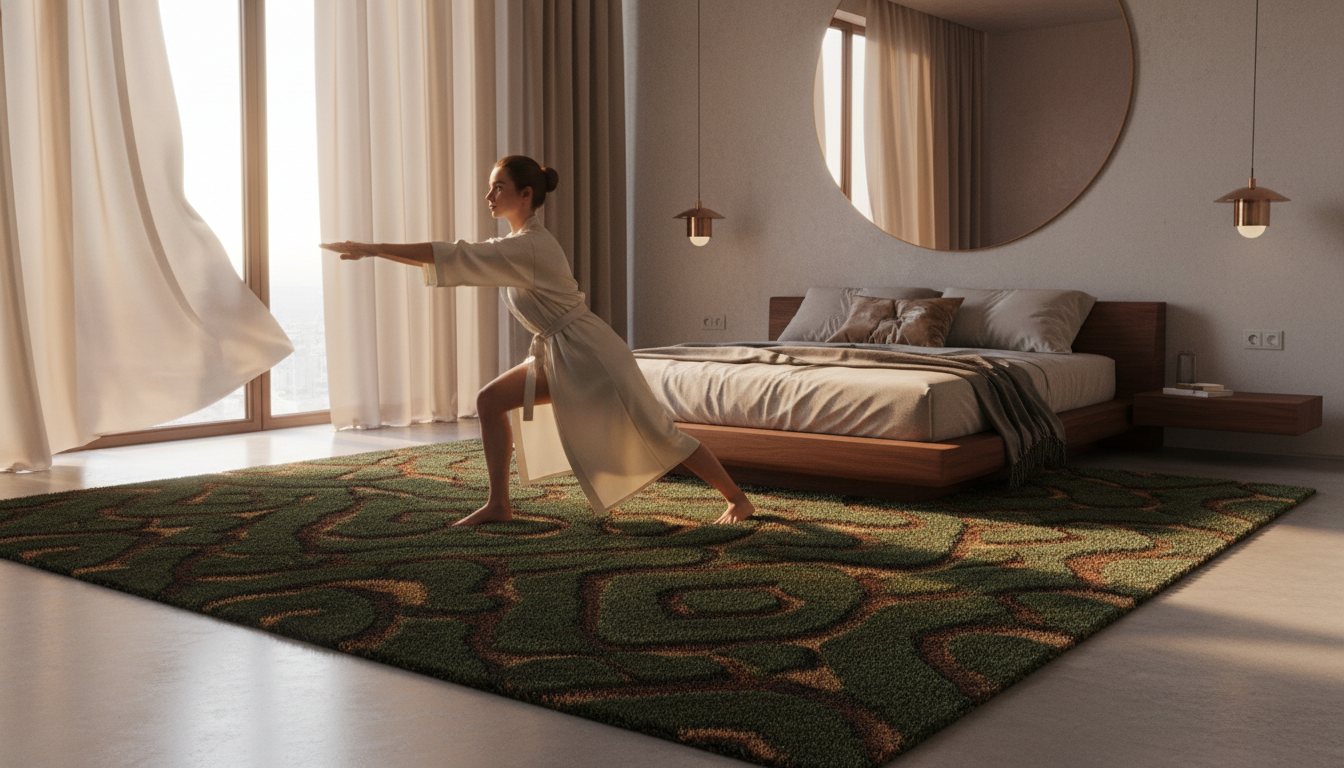
Beyond Beige: The Shift Toward Chromatic Complexity
As we approach the mid-decade mark, the interior design landscape is shedding its reliance on flat, safe neutrals. The 2026 aesthetic is defined by a “Quiet Maximalism”—a sophisticated layering of texture and geometry that speaks to the subconscious. At the heart of this movement is a specific chromatic evolution that prioritizes visual depth over simplicity.
The defining characteristic of fractal pattern rugs 2026 is the departure from static colors. Instead, we are seeing a move toward “living” hues that change depending on the time of day and the angle of the light. This is not merely about color choice; it is about how light interacts with the varying heights of hand-tufted fibers to create a sense of movement.
The “Deep Moss” Foundation and Biophilic Grounding
Deep Moss is the new anchor of the 2026 home. Unlike the lighter sages of previous seasons, this is a saturated, forest-floor green that provides a heavy visual weight. It mimics the density of ancient ecosystems, providing a psychological “grounding” effect that is essential to the neuro-aesthetic home.
When applied to complex geometric weaves, this colorway creates a meditative environment. Leading design houses, including artisanal curators like thebohorugs.com, are increasingly utilizing high-twist wool and organic silks to achieve this specific depth. The result is a floor covering that feels less like a furniture piece and more like a reclaimed piece of the natural world.
Earthy Iridescence: The Alchemic Touch
If Deep Moss provides the base, “Earthy Iridescence” provides the soul. This 2026 trend introduces metallic-adjacent fibers—such as bamboo silk or Tencel—woven sparingly into matte wool fractal patterns. The effect mimics the shimmer of oxidized copper, oil on water, or the iridescent wing of a forest beetle.
- Oxidized Copper Accents: Teal-leaning greens mixed with burnt orange highlights.
- Living Humus: A rich, dark soil brown that reveals hidden flecks of violet under direct sunlight.
- Ethereal Lichen: A muted, silvery-green that acts as a bridge between the mossy depths and the iridescence.
Designing for the Neuro-Aesthetic Eye
The human brain is biologically wired to find comfort in fractals—patterns that repeat at different scales. By combining these geometries with a sophisticated palette, fractal pattern rugs 2026 serve as a tool for cognitive restoration. It is a design strategy that treats the home as a sanctuary for the senses rather than just a gallery of objects.
To master this look, designers are layering these rugs against raw materials like blackened steel, reclaimed oak, and fluted stone. The interplay between the organic complexity of the rug and the starkness of the architecture creates a tension that is both modern and timelessly resonant.
Spatial Anchoring: Using Fractals to Define Modern Open Plans
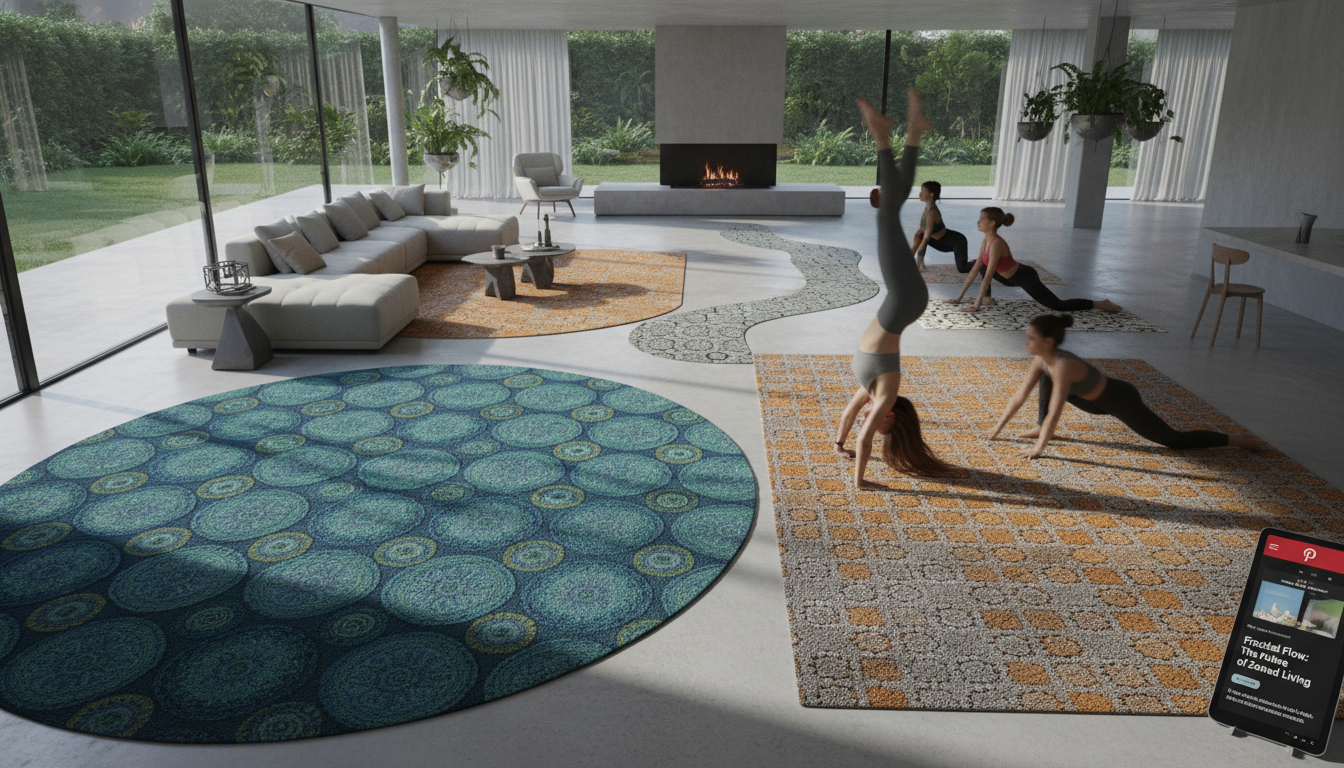
The Geometry of Flow: Creating Destinations Within the Void
In the fluid, boundary-less architecture of the mid-2020s, the challenge is no longer about dividing space, but about defining its purpose without physical barriers. The emergence of fractal pattern rugs 2026 signals a departure from rigid minimalism toward what designers call “biological order.”
Unlike standard geometric prints, fractals provide a sense of “visual satiety.” In an expansive open-concept living area, these self-similar patterns act as a gravitational pull, grounding furniture clusters in a way that feels organic rather than forced. By mirroring the complexity of a coastline or a leaf’s vein structure, these rugs satisfy the brain’s innate need for pattern recognition.
For the discerning homeowner, selecting a piece from curated collections like those found at thebohorugs.com allows for this spatial anchoring to feel artisanal rather than industrial. In 2026, the trend is moving away from synthetic repetitions toward hand-tufted irregularities that mimic the “ordered chaos” of the natural world.
The “Scale Shift” Strategy for 2026
Designers are moving beyond the traditional 8×10 placement. To master the neuro-aesthetic home, professionals are employing a “Scale Shift” technique that utilizes the mathematical nature of fractals to manipulate perceived room dimensions.
- Macro-Fractals: Large-scale, expansive patterns used in grand foyers to suggest infinite space and high-end tectonic luxury.
- Micro-Fractals: Dense, intricate repeating motifs used in “contemplative zones” or reading nooks to lower the viewer’s heart rate and increase focus.
- Variable Density: Rugs that transition from high-detail centers to minimalist edges, guiding the eye toward specific architectural features.
Materiality Meets Mathematics: The Fiber Evolution
By integrating fractal pattern rugs 2026 into high-traffic communal areas, the industry is witnessing a marriage of high-tech design and primitive fibers. The trend for 2026 specifically highlights “Tactile Fractals”—where the pattern isn’t just printed, but carved into the pile height of the rug.
We are seeing a resurgence of undyed wool, toasted jute, and agave fibers. These materials provide a “matte” grounding that prevents complex patterns from feeling overwhelming. When the mathematics of a fractal meets the raw, haptic feedback of natural fiber, the rug ceases to be a mere accessory and becomes a permanent anchor for the home’s cognitive environment.
When curating these spaces, interior architects are increasingly choosing fractal pattern rugs 2026 that prioritize hand-knotted sustainability. This ensures that the complexity of the design is matched by the longevity of the craftsmanship, a hallmark of the premium offerings at thebohorugs.com.
Predicting the “Cognitive Zone” Trend
Looking ahead to late 2026, we predict the rise of the “Cognitive Zone”—a designated area within the home designed specifically for deep work and mental restoration. Fractal rugs will be the centerpiece of these zones, serving as a visual “white noise” that helps filter out the distractions of modern digital life.
The key to executing this trend lies in tonal restraint. The most sophisticated 2026 interiors will avoid high-contrast colorways in favor of “chromatic depth”—using shades of the same hue to let the fractal structure provide the drama. This subtle approach ensures the rug provides a sense of sanctuary without disrupting the architectural serenity of the modern home.
Biophilic Algorithms: From Digital Design to Hand-Tufted Reality
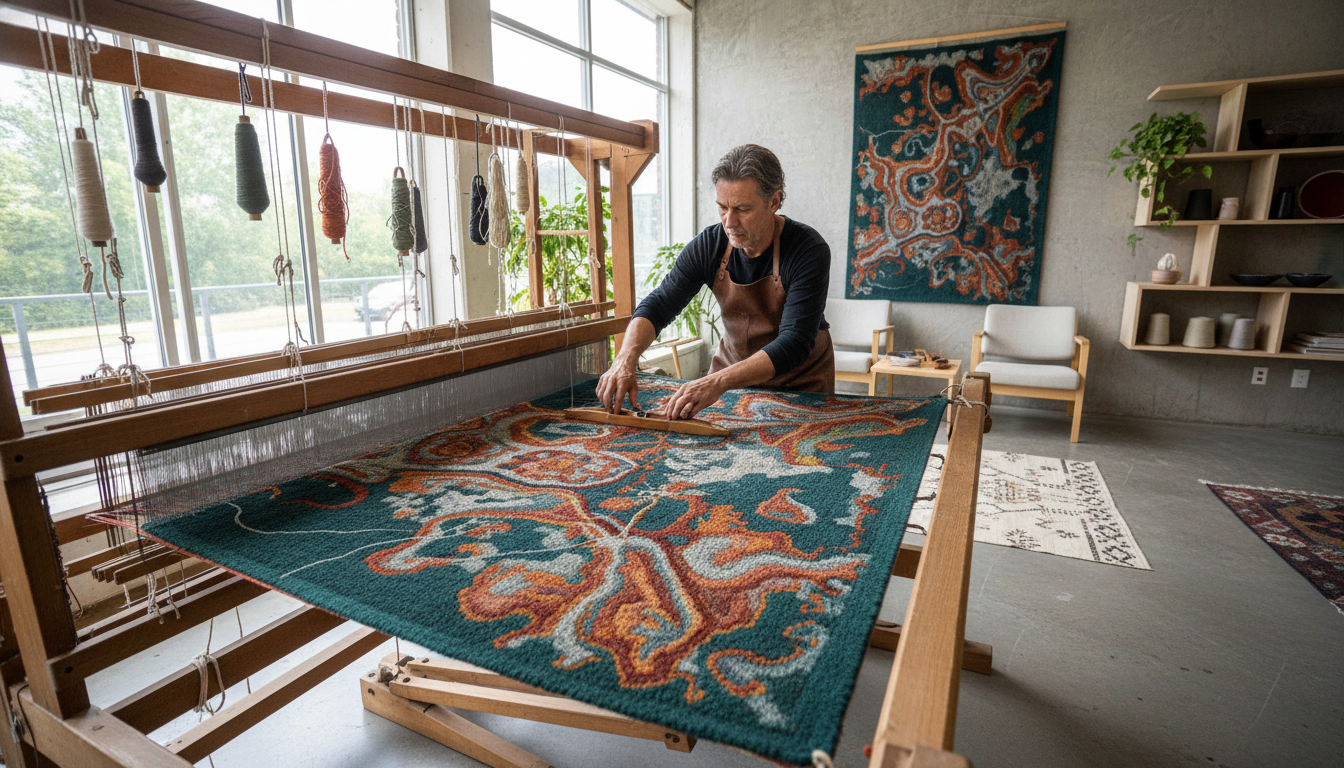
The Mathematics of Serenity
By 2026, the interior design world is pivoting away from the rigid, sterile minimalism of the past decade toward a concept known as “fractal fluency.” This shift is less about decoration and more about biological resonance. As we spend 90% of our time indoors, our brains crave the visual complexity found in the natural world.
The rise of fractal pattern rugs 2026 represents a sophisticated marriage between parametric software and ancient weaving techniques. These pieces don’t just sit on a floor; they act as a grounding force, utilizing self-similar patterns—like those found in Romanesco broccoli or crystalline structures—to lower cortisol levels through subliminal recognition.
Unlike the high-contrast geometries of the 2010s, the 2026 aesthetic favors “recursive subtlety.” This means the patterns repeat at different scales, creating a visual depth that invites the eye to wander without becoming overwhelmed. It is a calculated chaos that mimics the forest floor.
Hyper-Textural Cartography
The innovation for 2026 lies in how these digital algorithms are translated into physical fibers. We are seeing a move toward “topographical tufting,” where the fractal design is dictated not just by color, but by varying pile heights and material contrasts.
- Mixed-Media Weaving: Expect to see matte New Zealand wool juxtaposed against shimmering mulberry silk to highlight the “veins” of a fractal branch.
- Organic Irregularity: Moving away from standard rectangles, these rugs often feature “live edges” that follow the natural perimeter of the pattern itself.
- Earth-Centric Palettes: Oxidized copper, deep lichen green, and sedimentary ochre replace the stark greys of previous seasons.
For those seeking to anchor a room in this neuro-aesthetic movement, sourcing is paramount. Leading curators such as thebohorugs.com are increasingly focusing on these intricate, high-concept designs, bridging the gap between traditional artisanal craftsmanship and the avant-garde demands of modern bio-responsive homes.
The Sustainability of the Infinite
As we look toward the mid-decade, the lifecycle of a rug is as important as its visual impact. The fractal pattern rugs 2026 trend is intrinsically linked to regenerative materials. Because fractals represent the infinite, the industry is responding with fibers that honor the Earth’s longevity.
- Pineapple and Agave Fibers: These are being used to create the sharp, structural lines required for complex fractal edges.
- Botanical Dyes: Utilizing microbial fermentation to create colors that shift slightly in different lights, mimicking natural photosynthesis.
- Zero-Waste Mapping: Using AI to map weaving patterns that eliminate yarn off-cuts during the tufting process.
The result is a floor covering that feels less like a product and more like an extension of the landscape. By choosing fractal pattern rugs 2026, homeowners are investing in a piece of functional art that balances the high-tech precision of the future with the primal, soothing geometry of our past.
Curating the Room: Balancing Complexity with Quietude
The Science of Visual Nutrition
In the evolving landscape of neuro-aesthetics, the rise of fractal pattern rugs 2026 signals a departure from static minimalism toward “visual nutrition.” These designs tap into the brain’s innate preference for self-similar patterns found in nature—from the branching of ancient oaks to the crystalline structure of snowflakes.
By introducing these mathematical echoes into a living space, the rug ceases to be a mere floor covering and becomes a cognitive anchor. The 2026 interior is less about “matching” and more about managing the viewer’s cortisol levels through sophisticated geometry.
The Art of Intentional Contrast
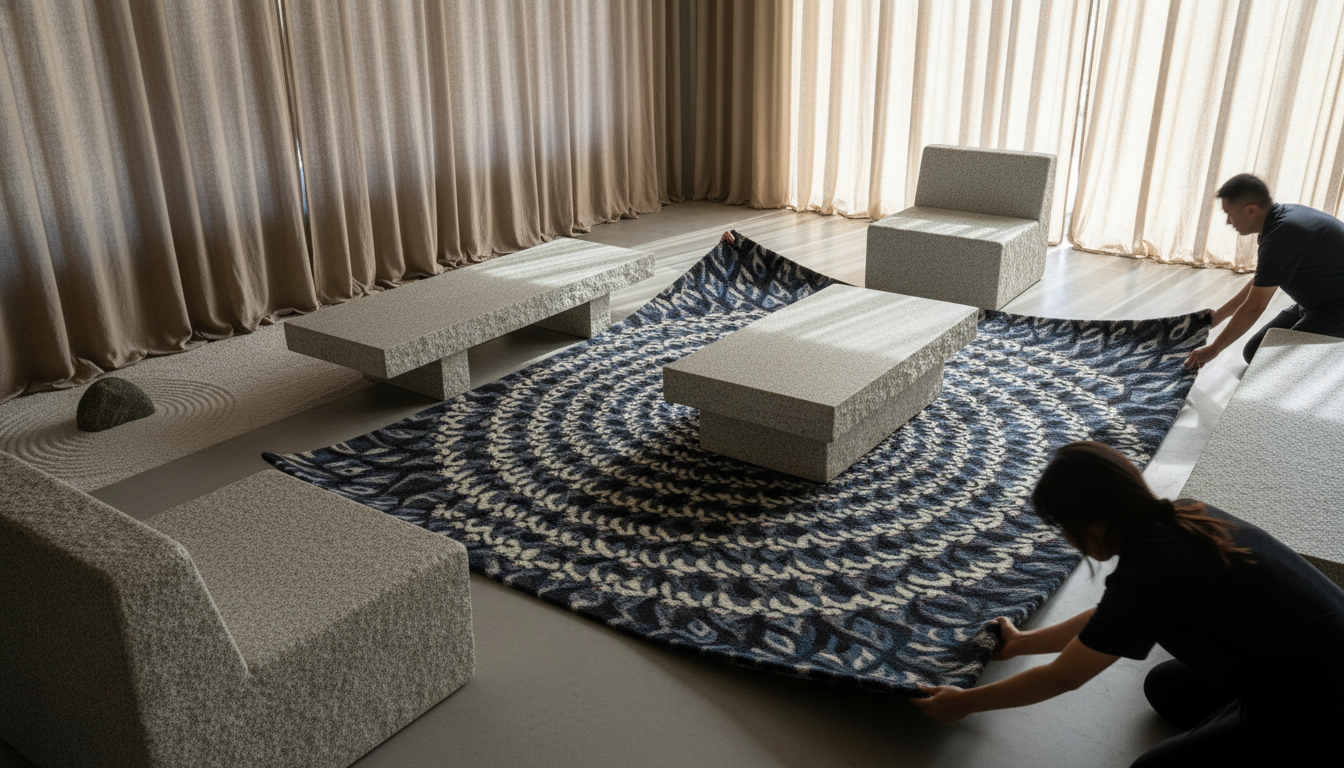
Integrating fractal pattern rugs 2026 into a high-end interior requires a disciplined approach to volume and void. Because the fractal is inherently “busy” in its infinite detail, the surrounding furniture must act as a visual palate cleanser. Designers are gravitating toward monolithic, low-profile sofas in un-dyed bouclés or smooth, sculptural resins.
To master this balance, consider the following curation principles for the upcoming season:
- Negative Space as a Luxury: Allow at least 18 inches of exposed flooring around the rug’s perimeter to let the pattern “breathe.”
- Monochromatic Layering: Select a rug where the fractal is rendered in tonal variations of a single hue, such as charcoal or sand, to provide depth without overstimulation.
- The Rule of Opposites: Pair the organic, jagged complexity of a Mandelbrot-inspired weave with the clean, hard lines of a Mid-century glass coffee table.
Tactile Intelligence and Fiber Choice
As we look toward the 2026 aesthetic, the value of a rug is increasingly measured by its “tactile intelligence.” It isn’t enough for the fractal to be seen; it must be felt through varying pile heights and fiber tensions. Artisanal hand-knotting techniques are being repurposed to create 3D topographic effects that mimic natural landscapes.
When sourcing pieces that bridge the gap between ancient craft and modern mathematics, collections like those at thebohorugs.com offer the necessary artisanal weight to anchor a high-concept room. Their emphasis on sustainable, premium fibers ensures that the intricate geometry remains grounded in organic warmth.
Predicting the 2026 Palette
The color stories defining fractal pattern rugs 2026 are moving away from the high-contrast neons of the past decade. Instead, we are seeing a shift toward “Earthen Tech”—a palette that combines digital precision with geological pigments.
- Oxidized Copper & Slate: A nod to the natural patinas found in urban environments.
- Raw Silk & Mycelium White: Utilizing light-reflective fibers to highlight the microscopic details of the fractal.
- Deep Ochre & Terracotta: Bringing a sense of historical permanence to a futuristic design trend.
Ultimately, curating a room around these complex patterns is an exercise in “Quietude.” It is about creating a sanctuary that mirrors the complexity of the natural world while providing the silence necessary for the modern mind to rest.
The Future of Collectible Rug Art: Limited Edition Fractals
The Alchemy of Algorithmic Weaving
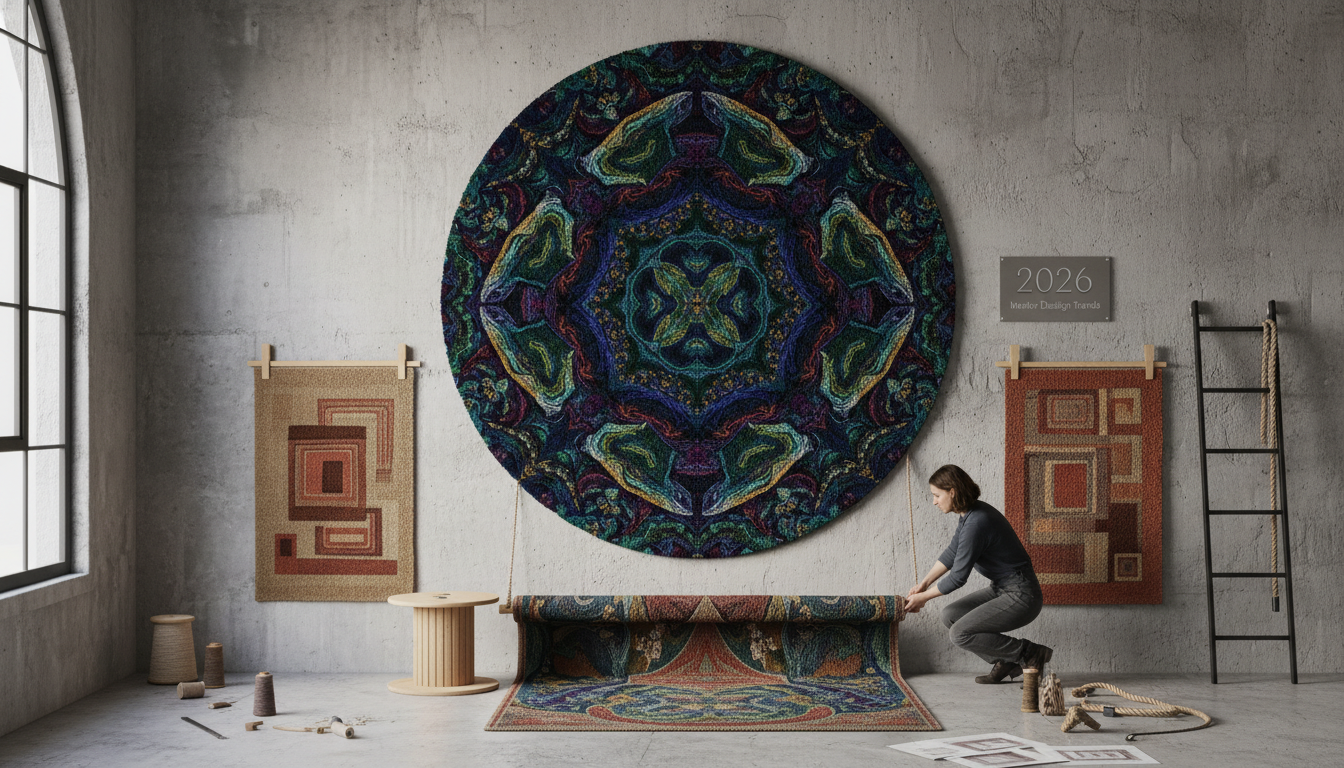
As the boundary between digital art and tactile sensation blurs, the 2026 interior landscape is shedding its transient skin. We are entering an era of “Functional Fine Art,” where the floor serves as a gallery space for complex mathematical beauty. Unlike the mass-produced geometries of the past decade, fractal pattern rugs 2026 are emerging as the ultimate status symbol for the neuro-aesthetic home.
Designers are now leveraging generative algorithms to create patterns that never repeat, mimicking the organic growth of frost crystals or coral reefs. This shift toward “unique-batch” production means that no two rugs are identical, satisfying the modern collector’s craving for exclusivity and artisanal depth.
Materials that Breathe: The 2026 Composition
The value of a collectible rug in 2026 is measured as much by its molecular makeup as its visual impact. We are seeing a move away from standard wool toward high-performance, bio-based fibers that enhance the fractal’s intricate linework. To understand the next evolution in fiber art, consider these emerging standards:
- Mycelium-Infused Silk: A carbon-negative fiber that offers a matte, velvet-like finish, perfect for highlighting high-contrast fractal borders.
- Upcycled Himalayan Nettle: Used by premium curators like thebohorugs.com to provide a raw, organic texture that grounds the precision of mathematical designs.
- Photo-Luminescent Threading: Subtle, light-reactive fibers that reveal hidden “sub-fractals” when the evening sun hits the room at a specific angle.
The Investment Landscape: Scarcity and Soul
Why is the design world pivoting so sharply toward these complex geometries? The answer lies in the “Fractal Fluency” theory—the idea that our brains are hardwired to find peace in self-repeating natural patterns. As urban environments become more chaotic, the home must become a sensory stabilizer.
For the savvy investor, fractal pattern rugs 2026 represent a hedge against the “disposable decor” movement. These are heirloom pieces, often accompanied by digital certificates of authenticity or NFTs that document the specific algorithm used in their creation. They are designed to be draped over minimalist furniture or hung as tapestries, transcending their utilitarian roots.
When sourcing these centerpieces, the focus has shifted toward heritage-backed platforms. Discriminating collectors are increasingly turning to specialists like thebohorugs.com, where the marriage of ancient hand-knotting techniques and avant-garde geometry ensures that each piece retains its value—both aesthetic and financial—for decades to come.
Elevate Your Space
Discover the artistry of handmade luxury. Each rug is a masterpiece of tradition and modern design.
Expert Q&A
What are fractal pattern rugs?
Fractal pattern rugs feature designs based on self-similar mathematical sequences found in nature, such as those seen in ferns, seashells, and lightning.
Why are fractal pattern rugs 2026 trending now?
The trend is driven by the rise of neuro-aesthetics, as people seek home environments that reduce stress through biophilic, organic geometries.
How do fractal rugs impact mental well-being?
Studies suggest that viewing fractal patterns can reduce cortisol levels and improve focus by mimicking the visual complexity of the natural world.
What materials are best for fractal rugs?
Natural fibers like New Zealand wool, botanical silk, and emerging sustainable options like mycelium or bamboo silk are preferred for 2026.
Can fractal rugs work in small rooms?
Yes, smaller-scale fractal patterns can add depth and movement to a compact space without overwhelming it.
What colors define the 2026 fractal rug trend?
The palette focuses on ‘Earthy Iridescence,’ featuring deep moss greens, terracotta, ochre, and shimmering metallic undertones.
How do I clean a high-end fiber fractal rug?
Professional cleaning is recommended for silk blends; for wool, regular vacuuming without a beater bar and prompt spot cleaning with pH-neutral solutions is best.
Are these rugs considered art?
Absolutely; in 2026, they are viewed as ‘Art for the Floor,’ often appreciating in value as collectible pieces of functional design.
How do I pair a fractal rug with furniture?
Pair them with minimalist, monolithic, or mid-century modern furniture to allow the rug’s complex pattern to be the focal point.
What is the ‘Neuro-Aesthetic’ movement?
It is a design philosophy that uses scientific research on how the brain perceives beauty to create interiors that enhance health and happiness.
Are fractal rugs suitable for high-traffic areas?
Wool-based fractal rugs are highly durable and resilient, making them excellent for living rooms and hallways.
Can I use fractal rugs in a minimalist home?
Yes, they provide the necessary visual interest and ‘organic warmth’ that prevents minimalist spaces from feeling cold or sterile.
What is a ‘self-similar’ pattern?
It is a pattern where the parts look like the whole, regardless of the scale at which you view them.
Do fractal rugs fade in sunlight?
High-quality rugs use UV-resistant dyes, but it is always best to use window treatments to protect natural fibers from prolonged direct exposure.
Are there 3D fractal rugs?
The 2026 trend includes rugs with varying pile heights to create a three-dimensional, tactile fractal experience.
Can fractal patterns help with acoustic dampening?
Yes, the dense fiber structure and irregular surface patterns of these rugs are excellent at absorbing sound.
How do I choose the right scale for my rug?
Larger rooms benefit from expansive, wide-scale fractals, while smaller rooms should stick to intricate, tight-knit patterns.
Is the fractal trend sustainable?
Most 2026 collections emphasize ‘slow design,’ using biodegradable fibers and ethical, artisan-led production methods.
Are fractal rugs custom-made?
Many high-end brands offer algorithmic customization, allowing you to generate a unique fractal pattern based on your specific spatial dimensions.
Where did the fractal rug trend originate?
It emerged from the intersection of generative digital art and the biophilic design movement in the early 2020s.
How do these rugs fit into ‘Maximalist’ decor?
They serve as a foundational layer, providing a structured complexity that can hold together a variety of colors and textures.
What are ‘Biophilic Algorithms’?
These are computer programs used by designers to replicate the growth patterns of nature to create organic-looking rug designs.
Are there pet-friendly fractal rugs?
Low-pile wool fractal rugs are excellent for pets as they are durable and the intricate patterns are great at disguising pet hair.
What is the lifespan of a luxury fiber rug?
A well-maintained hand-knotted wool or silk rug can last for 50 to 100 years, often becoming an heirloom.
Do fractal rugs work with traditional decor?
Yes, they can modernize a traditional space by introducing a sophisticated, contemporary interpretation of classic floral or geometric motifs.
What is the ‘Mandelbrot’ rug?
It is a specific type of fractal rug that features the iconic Mandelbrot set, a classic representation of mathematical beauty.
Are fractal rugs expensive?
Due to the complexity of the weave and the high quality of fibers, they are considered investment pieces.
Can I hang a fractal rug on the wall?
Yes, many 2026 designs are created specifically to be dual-purpose as floor coverings or wall-mounted tapestries.
How does the texture feel?
Depending on the fiber, they can range from the plush softness of wool to the cool, sleek sensation of botanical silk.
Why is ‘Grounding’ mentioned in the title?
Grounding refers to the feeling of stability and connection to nature that these organic, earth-inspired patterns provide to the inhabitants of a home.
Written by TheBohoRugs Interior Design Team
Experts in handmade rugs, boho interiors, and modern home decor.