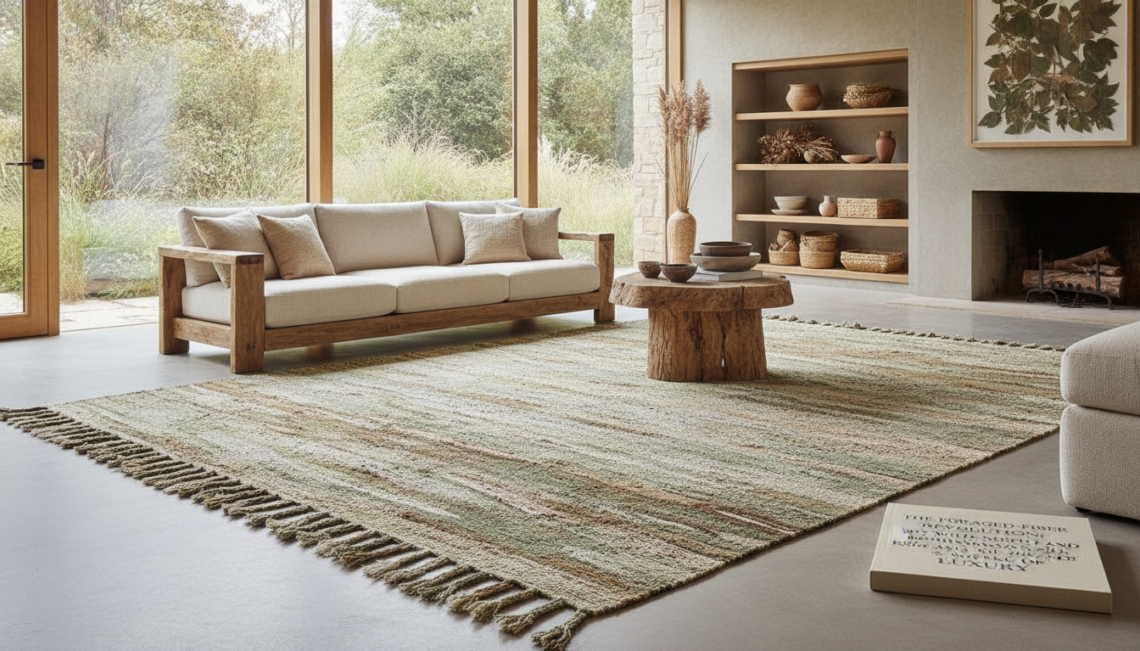
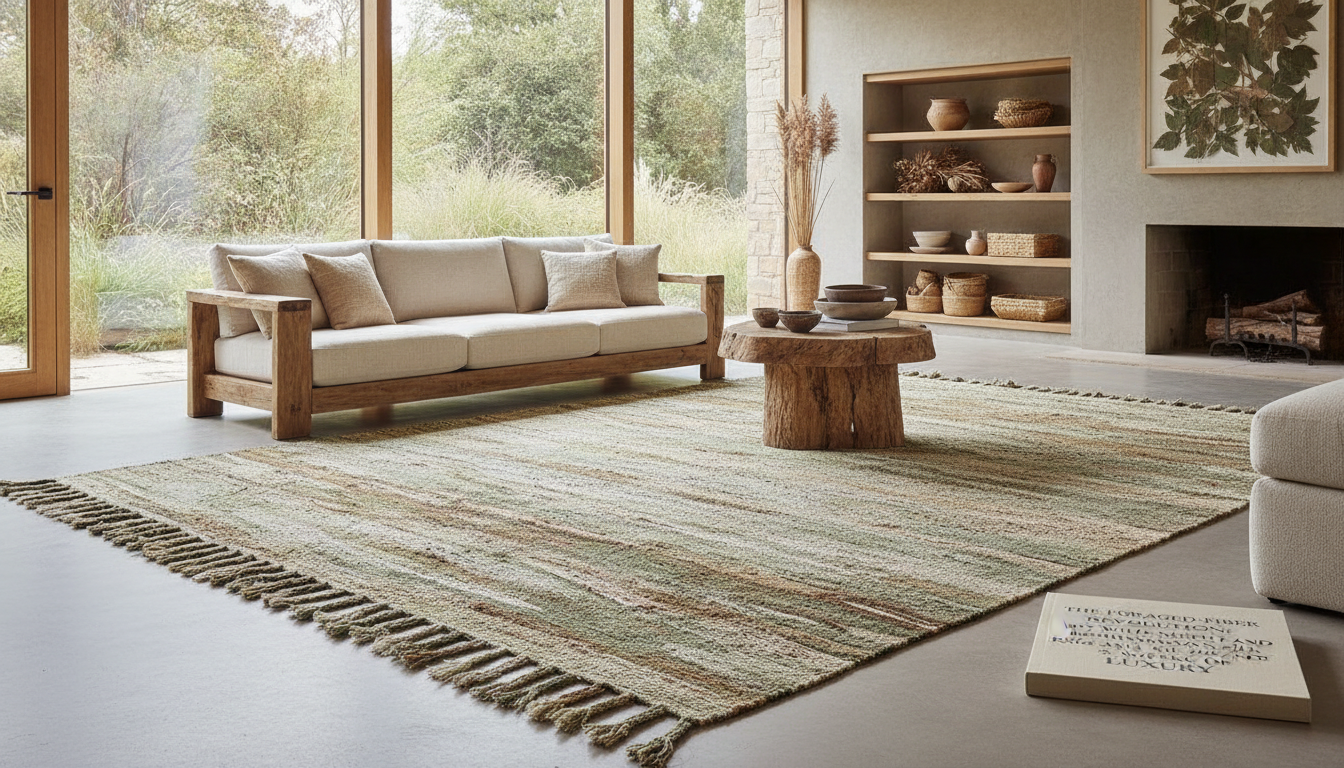
Forget factory-spun synthetics; the era of foraged fiber bohemian rugs has arrived to rewild our interiors with the raw, untamed elegance of the high Himalayas. As we shift toward 2026, the concept of ‘Rewilded Luxury’ is taking hold, replacing mass-produced minimalism with materials that have a heartbeat and a history. These foraged fibers, ranging from the rugged sting of wild Himalayan nettle to the iridescent sheen of recycled Himalayan silk, offer more than just a floor covering—they provide a tactile connection to the earth’s most remote landscapes.
“Foraged fiber bohemian rugs represent the 2026 pinnacle of sustainable interior design, utilizing wild-harvested materials like Himalayan nettle (Allo) and hand-spun silk. These rugs are categorized by their carbon-negative production, high-relief textures, and ‘rewilded’ aesthetic which prioritizes organic imperfections over machine-made precision. They are currently the leading choice for high-end eco-conscious homeowners seeking to blend primitive craftsmanship with modern luxury.”
The Roadmap
Table of Contents
- 1. The Raw Solarium: Wild-Nettle in a Glass-Walled Conservatory
- 2. Himalayan Luster: Recycled Silk in a Charcoal Minimalist Lounge
- 3. Wabi-Sabi Serenity: Silver Nettle Accents in a Zen Master Suite
- 4. Mediterranean Brutalist: Earthy Foraged Weaves on Polished Concrete
- 5. The Adaptive Loft: Oversized Foraged Fiber in an Industrial Space
- 6. Coastal Biophilia: Bleached Nettle Textures in a Driftwood Entryway
- 7. Alpine Luxe: High-Pile Wild Silk in a Timber-Framed Den
- 8. Nordic Ethos: Soft-Spun Nettle in a Scandi-Boho Nursery
- 9. The Curated Library: Jewel-Toned Himalayan Silk with Vintage Walnut
- 10. Monochrome Ethos: Sculptural Nettle in a Gallery-Inspired Living Room
1. The Raw Solarium: Wild-Nettle in a Glass-Walled Conservatory
1. The Raw Solarium: Wild-Nettle in a Glass-Walled Conservatory
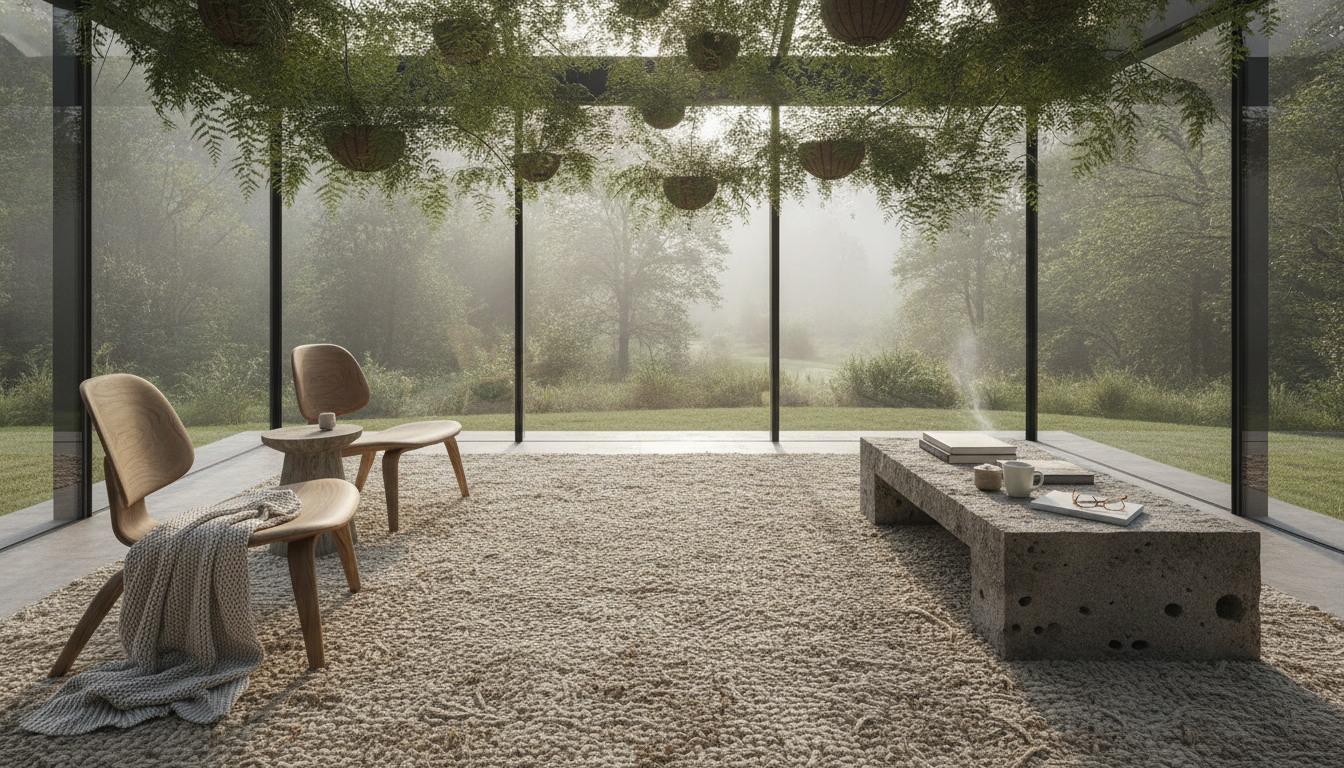
Morning light in a modern conservatory does more than simply illuminate; it interrogates every surface it touches, demanding a level of material integrity that only the natural world can provide. In this glass-encased sanctuary, the air feels diaphanous, yet the ground is anchored by a formidable presence: a sprawling, hand-woven rug crafted from raw, foraged Himalayan nettle. This isn’t merely a floor covering; it is the heartbeat of the “rewilded” luxury movement. These foraged fiber bohemian rugs possess a primal, oatmeal-hued grit that stands in defiant, beautiful contrast to the sharp, obsidian lines of contemporary architectural steel and floor-to-ceiling glazing.
The visual impact of the wild-nettle fiber is profoundly tactile. Unlike processed wool or synthetic blends, the nettle retains its botanical skeletal structure—tiny, irregular slubs and honey-colored variations that catch the low-angled sun, creating a landscape of micro-shadows across the floor. This rug acts as a bridge between the manicured interior and the untamed flora visible through the glass, softening the transition with its honest, unbleached palette. It grounds the room, providing a necessary organic counterweight to the transparency of the walls, ensuring the space feels like a home rather than a vitrine.
The Architecture of Organic Seating
To honor the ruggedness of the foraged weave, the furniture must speak the same vernacular of endurance and form. We have curated a pairing that emphasizes silhouette over ornamentation:
- Sculptural Reclaimed Teakwood: Two deep-seated lounge chairs, carved from salvaged Indonesian teak, offer a warm, matte patina that mirrors the golden undertones of the nettle. Their sweeping, hand-carved armrests provide a smooth, tactile reprieve from the rug’s coarse, exhilarating texture.
- The Monolithic Stone Table: A low-profile coffee table, honed from a single block of Tundra grey limestone, sits dead-center. Its cool, heavy presence anchors the airy fibers of the rug, creating a grounding point for the morning’s coffee or an evening’s architectural digest.
- Suspended Biophilia: To draw the eye upward and complete the “solarium” ethos, oversized Staghorn ferns are suspended in blackened heavy-gauge wire baskets. Their velvet fronds cast dappled shadows that dance across the rug’s oatmeal surface as the sun moves, blurring the lines between furniture and forest.
Color Dynamics and Atmospheric Tones
The palette of the Raw Solarium is intentionally restrained to allow the textures to perform. We lean into “New Neutrals”—a spectrum that ignores the clinical whites of the past decade in favor of colors with more soul and sediment. The foundation is the oatmeal of the nettle, supported by the charcoal of the window frames and the silvery-greys of the stone table. To breathe life into the scene, we introduce accents of “Veridian Moss” and “Dried Tobacco” through soft goods. Imagine a singular, heavy-knit throw in a deep forest green draped over the teak, or a small collection of clay vessels in earthy umber resting on the limestone. These tones don’t compete with the foraged fiber; they celebrate its wild, un-dyed origins, creating a space that feels quiet, curated, and fundamentally connected to the earth.
2. Himalayan Luster: Recycled Silk in a Charcoal Minimalist Lounge
The Alchemy of Light and Texture
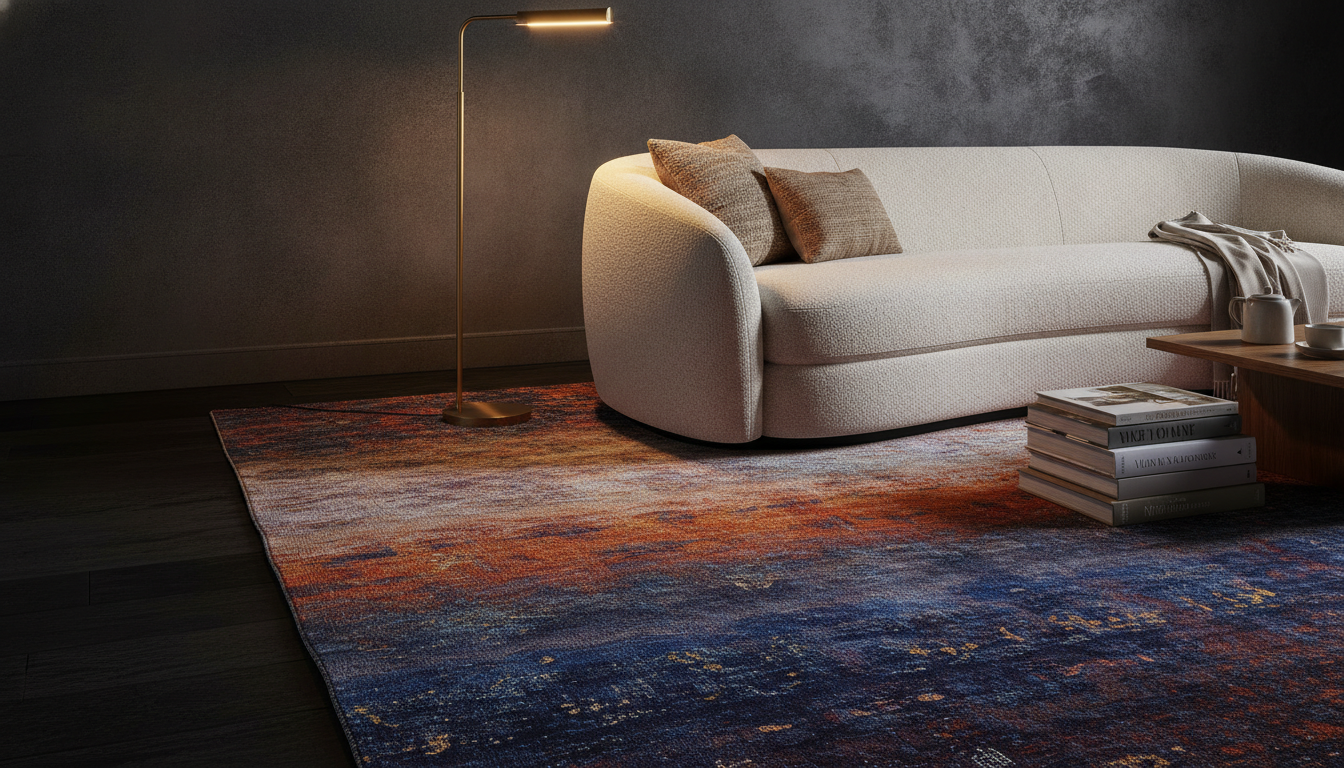
The interaction between the charcoal lime-wash and the shimmering silk creates a sophisticated tension that defines the minimalist lounge. While the walls provide a sense of architectural stillness, the rug introduces a fluid narrative. The deep indigo flecks within the weave mirror the shadows in the room’s corners, while the gold threads pick up the metallic accents of the lighting fixtures, weaving the entire layout into a singular, cohesive experience. To balance the intensity of the dark palette, the furniture must be chosen for its sculptural silhouette and tactile softness.Curating the Minimalist Lounge
To achieve this level of high-contrast elegance, the selection of companion pieces is critical. The goal is to create a space that feels curated rather than decorated, where each element pays homage to the rug’s complex texture.- The Anchor: A curved, low-profile sofa upholstered in a heavy, cream-colored bouclé. The nubby, plaster-like texture of the fabric provides a “visual palate cleanser” against the dark walls, while the rounded edges soften the room’s minimalist geometry.
- The Foundation: Polished ebony or blackened oak floorboards. The dark wood acts as a stage, allowing the vibrant colors of the Himalayan silk to “pop” with cinematic intensity.
- The Accents: Minimalist side tables crafted from honed travertine or silver-grey lava stone. These natural, porous materials ground the shimmer of the silk with a sense of earthiness.
- The Glow: Warm-toned metals are essential. Incorporate oversized brass floor lamps or blackened bronze sconces to emphasize the gold-spun threads within the rug’s pile.
3. Wabi-Sabi Serenity: Silver Nettle Accents in a Zen Master Suite
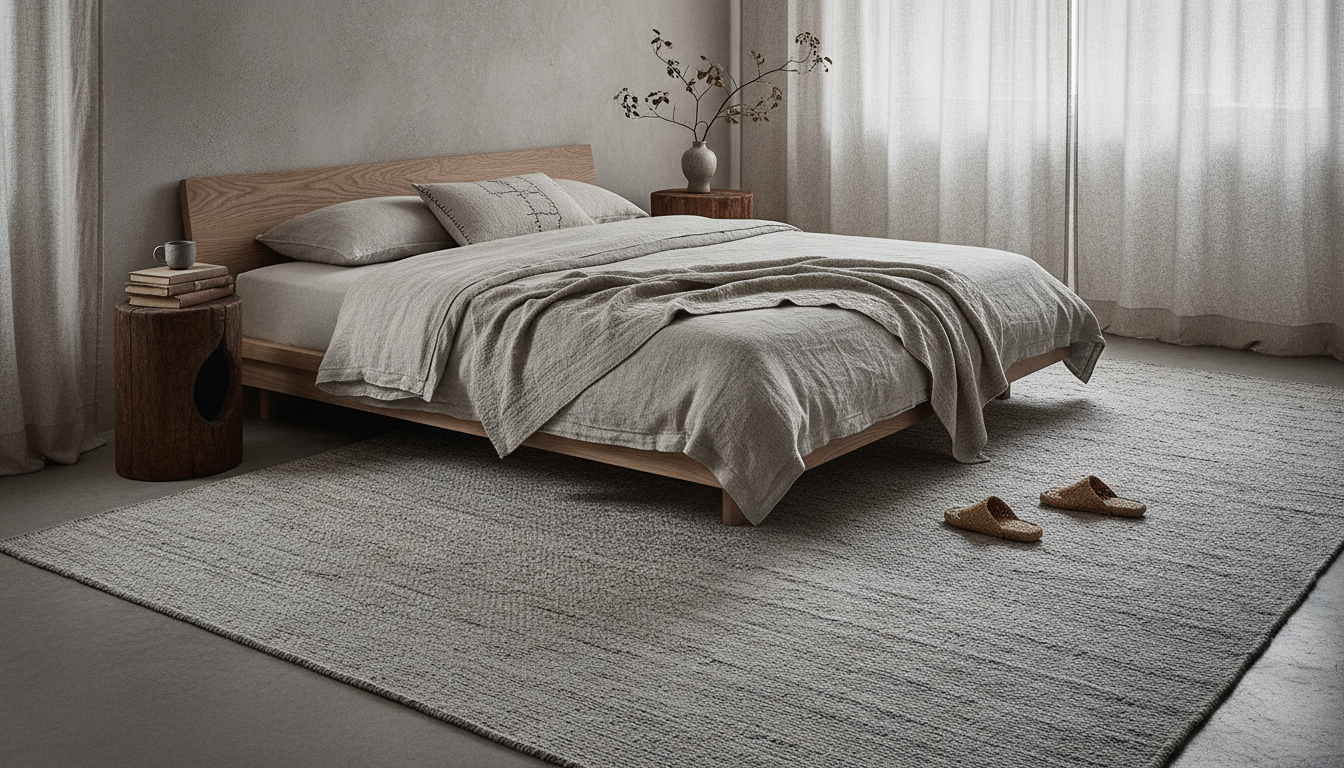
The Alchemy of Silver Nettle and Shadow
The first light of dawn filters through sheer, floor-to-ceiling scrims, casting a liquid glow across the Master Suite. It is here, in the quietude of a Zen-inspired sanctuary, that the silver-toned nettle rug reveals its true character. Unlike factory-spun textiles, these foraged fiber bohemian rugs possess an inherent vibration—a living texture that speaks of high-altitude wild harvests and the rugged landscapes of the Himalayas. The rug does not simply sit upon the floor; it anchors the room in a state of suspended animation. Its surface, characterized by intentional organic irregularities and a soft, moonlit luster, mirrors the Wabi-Sabi philosophy: finding profound beauty in the imperfect, the impermanent, and the incomplete.
Underfoot, the sensation is one of grounded luxury. The wild-harvested nettle fibers, stripped and spun by hand, offer a crisp, tactile resistance that softens over time, much like the smooth stones of a riverbed. In this master suite, the rug serves as a tonal bridge between the architecture and the air. The silver hue is not a flat metallic, but a multi-dimensional spectrum of sage, pewter, and bleached driftwood. As the light shifts throughout the day, the fibers catch the luminescence, creating a shimmering field of “living” grey that breathes alongside the occupant. This is rewilded luxury at its most contemplative, where the floor becomes a landscape for meditation.
Material Harmony: Ash, Linen, and Wild Weave
The architectural success of this space relies on a rigorous devotion to a restrained palette and high-integrity materials. To maintain the ethereal atmosphere, the furniture must feel as though it has grown out of the floor itself. A low-profile Japanese-style platform bed, crafted from pale, oil-rubbed ash wood, sits directly upon the silver nettle weave. The wood’s tight, linear grain provides a subtle geometric counterpoint to the rug’s wild, swirling slubs. This juxtaposition—the precision of the joinery versus the raw expression of the foraged fiber—is the heartbeat of modern Wabi-Sabi design.
Layering is kept to a minimum to allow the textures to speak. The bedding, a deliberate selection of raw Belgian linen in shades of oatmeal and bone, is left intentionally rumpled to catch the shadows. Beside the bed, a single, hand-carved wooden stool serves as a nightstand, its dark, textured surface offering a grounding focal point against the shimmering rug. There are no polished metals or synthetic glazes here; instead, the room celebrates the matte, the weathered, and the honest. The result is a space that feels less like a bedroom and more like a sanctuary where the outside world ceases to exist.
- The Foundation: A large-scale, flat-weave silver nettle rug featuring visible “weft-skips” and hand-spun knots that highlight its artisanal origin.
- The Bedding Palette: Heavyweight linens in stone, parchment, and charcoal to create a gradient of natural earth tones.
- Accent Materials: Reclaimed timber stools, matte ceramic vessels with a “crawl” glaze, and blackened steel slimline floor lamps.
- The Greenery: A single, architectural branch of dried Magnolia or a solitary Ginkgo leaf in a heavy stone vase to emphasize the Zen ethos.
- Lighting Dynamics: Diffused, low-level lighting that grazes the rug’s surface to emphasize its three-dimensional texture.
This design narrative is not about filling a room with objects, but about curating an experience of stillness. By choosing foraged fiber bohemian rugs as the central element, the space achieves a sense of “quiet luxury” that is both environmentally conscious and aesthetically transcendent. The silver nettle acts as a neutral but high-impact canvas, allowing the minimal furniture to feel monumental. It is a masterclass in the power of subtraction, where every element—from the grain of the ash wood to the slight fray of the linen—is chosen for its ability to age gracefully and tell a story of natural elegance.
4. Mediterranean Brutalist: Earthy Foraged Weaves on Polished Concrete
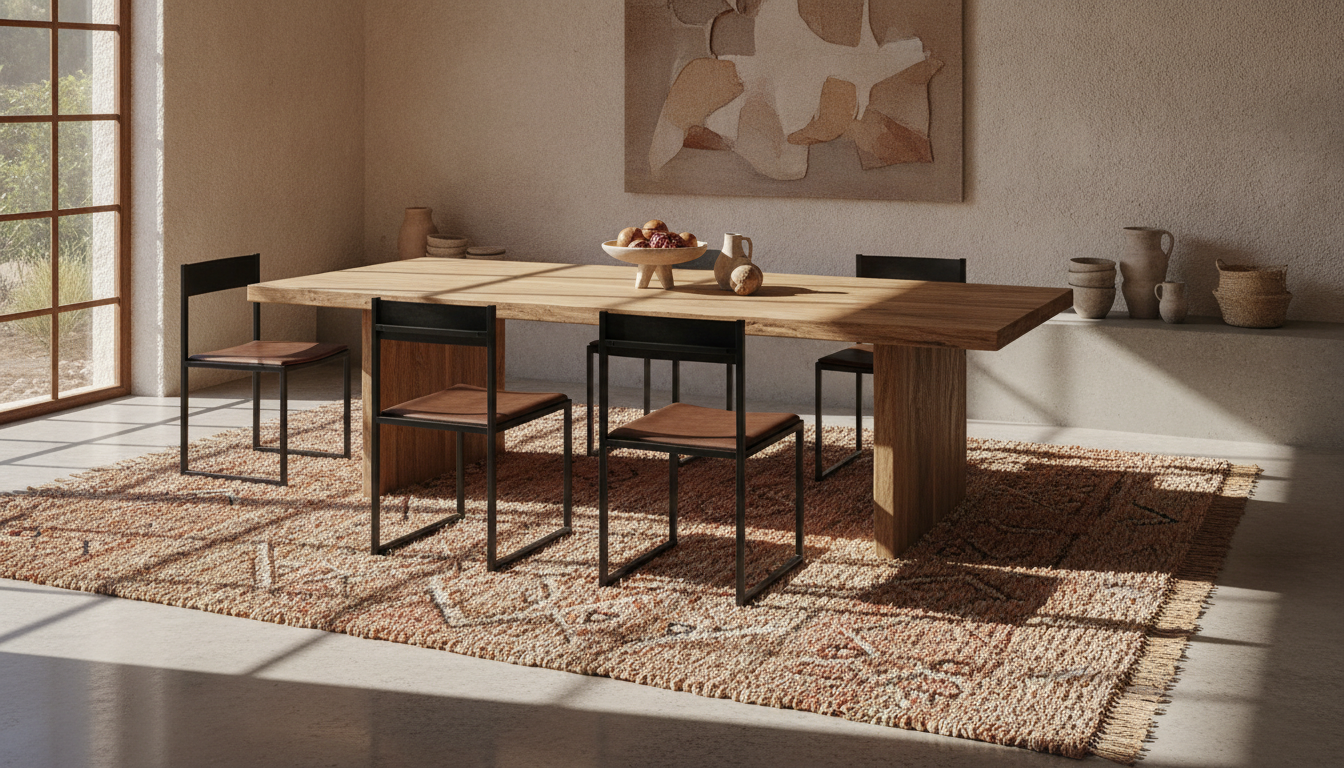
Mediterranean Brutalist: Earthy Foraged Weaves on Polished Concrete
The morning sun cuts a sharp, unforgiving diagonal across the room, slicing through the stillness of a Mediterranean villa reimagined through the lens of high-modernist grit. Here, the floor is an expanse of seamless, hand-poured polished concrete—cool to the touch, industrial in its soul, and unforgiving in its gray-scale minimalism. It is against this silent, stony canvas that the foraged fiber bohemian rug performs its most dramatic transformation. The rug, a dense, thick-pile masterpiece woven from wild Himalayan nettle and hand-spun silk, acts as the room’s thermal and visual hearth. It breaks the “cold” of the Brutalist architecture not with artificial softness, but with an organic, “rewilded” intensity that feels unearthed rather than manufactured.
In this curated dining environment, the color palette is a sophisticated homage to the sun-baked landscapes of the Cyclades and the Iberian Peninsula. The rug vibrates in shades of deep terracotta, scorched earth, and sun-baked clay, its variegated fibers catching the light to reveal subtle striations of copper and oxidized rust. Because foraged fibers like wild nettle possess a natural, irregular sheen and a “toothy” tactile quality, the rug creates a haptic bridge between the industrial polish of the floor and the raw, prehistoric energy of the furniture. The shadows cast by the midday sun become architectural elements themselves, tracing sharp geometric patterns across the rug’s high-low pile, emphasizing the three-dimensional nature of the weave.
The Architectural Coupling: Raw Oak and Matte Steel
To master this aesthetic, the furniture must possess a weight that anchors the space without cluttering the visual field. Centered upon the foraged weave is a heavy, raw-edge oak dining table, its surface scarred with natural knots and deep grain patterns that mirror the untamed textures of the rug below. This pairing is intentional; the organic irregularity of the timber speaks directly to the hand-processed nature of the nettle fibers. Surrounding the table, matte black steel chairs provide the necessary high-contrast silhouette. Their thin, skeletal frames slice through the warmth of the clay tones, offering a moment of modern precision that prevents the room from feeling too rustic or “earthy.”
The interplay of materials continues upward, where the walls—perhaps finished in a dusty, sand-colored lime wash—absorb the light rather than reflecting it, creating a soft-focus backdrop for the high-drama floor arrangement. The rug isn’t just a floor covering in this context; it is the catalyst for a “Rewilded Luxury” atmosphere, where the boundary between the wild outdoors and the sophisticated interior is masterfully blurred.
Design Elements for the Brutalist Palette
- The Foundation: Seamless polished concrete in a “smoke” or “charcoal” finish to provide a neutral, high-density base for the warm tones of the fiber.
- The Fiber Synergy: A blend of 70% wild nettle for structural durability and 30% Himalayan silk to introduce a subtle, metallic luster that mimics the way sun hits wet stone.
- Complementary Accents: Large-scale terracotta vessels, blackened bronze hardware, and oversized linen napkins in a “plaster” or “bone” hue.
- Lighting Dynamics: Low-slung, architectural pendants in patinated copper or blackened steel that concentrate light on the center of the table, allowing the rug’s outer edges to melt into the shadows of the concrete floor.
- Vegetal Interaction: A single, sculptural olive branch in a heavy stone vase, reinforcing the Mediterranean lineage without leaning into cliché.
5. The Adaptive Loft: Oversized Foraged Fiber in an Industrial Space
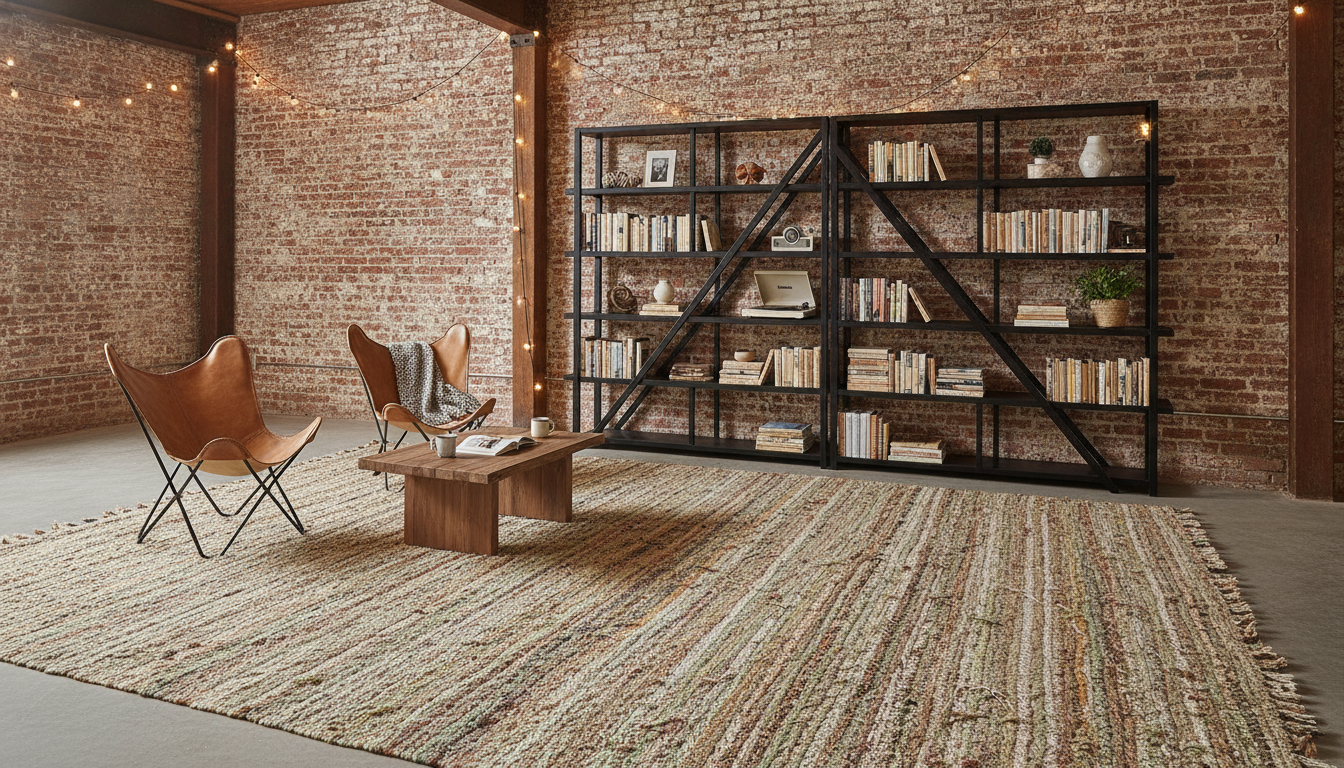
The Adaptive Loft: Oversized Foraged Fiber in an Industrial Space
There is a specific, resonant silence found only in a cavernous industrial loft, where the echoes of history are written into the soot-stained grain of exposed red brick and the soaring height of timber-beamed ceilings. In these expansive volumes, the primary challenge is never space, but soul. To anchor a room of such magnitude, one requires more than a mere floor covering; it demands a tectonic foundation. This is where the 12×15 foraged-fiber bohemian rug acts as a gravitational center. Woven from a rugged, variegated blend of wild Himalayan nettle and raw hemp, the rug serves as a textural bridge between the building’s gritty, manufacturing past and a refined, rewilded future.
The visual impact of the variegated weave is immediate and profound. Unlike machine-perfected textiles, these foraged fibers possess an inherent “slubby” character—intentional irregularities where the silver-grey of the nettle stalks meets the toasted-oat tones of sun-cured hemp. In the wide-shot cinematic perspective of the loft, this rug creates a “room within a room,” a defined sanctuary that softens the hard edges of the surrounding architecture. The organic, matte finish of the fiber provides a crucial counterpoint to the glossy patina of old brick and the cold, unyielding weight of black metal structural elements.
The Dialogue of Leather and Steel
To populate this sprawling textile landscape, we look toward furniture that balances transparency with weight. The choice of tan leather butterfly chairs is a masterstroke in adaptive styling; their cognac-hued skins echo the warm undertones of the hemp weave, while their slender frames prevent the seating area from feeling congested. Set against a massive, floor-to-ceiling black metal bookshelf, the rug’s pale, earthy palette prevents the dark cabinetry from overwhelming the room. The interplay of light is equally vital. Low-slung Edison bulbs, suspended at varying heights, cast an amber, honeyed glow that catches the micro-textures of the wild nettle, making the floor appear almost three-dimensional as the shadows settle into the deep, artisanal knots.
- The Foundation: A 12×15 oversized weave using a “double-pass” technique for maximum durability in high-traffic industrial zones.
- The Palette: A sophisticated blend of Carbon Black, Oxidized Iron, Cognac Leather, and the Raw Flaxen tones of foraged nettle.
- The Furniture Pairing: Low-profile silhouettes, such as reclaimed timber coffee tables or blackened steel stools, allow the rug’s intricate variegated pattern to remain the visual protagonist.
- The Natural Element: Pair this arrangement with oversized floor plants, such as a Fiddle Leaf Fig or an Olive Tree, to emphasize the “rewilded” ethos against the urban brick backdrop.
In this environment, luxury is redefined by the tactile sensation underfoot. There is a primal comfort in the slightly abrasive, yet surprisingly soft, crunch of nettle fiber—a reminder of the outdoors brought into the heart of the city. By choosing an oversized format, we eliminate the fragmented feel often found in lofts using smaller rugs. Here, the rug is the architecture. It absorbs the ambient noise of the city, grounds the loft’s soaring verticality, and transforms an industrial shell into a curated, breathable home where every fiber tells a story of the wild peaks from which it was harvested.
6. Coastal Biophilia: Bleached Nettle Textures in a Driftwood Entryway
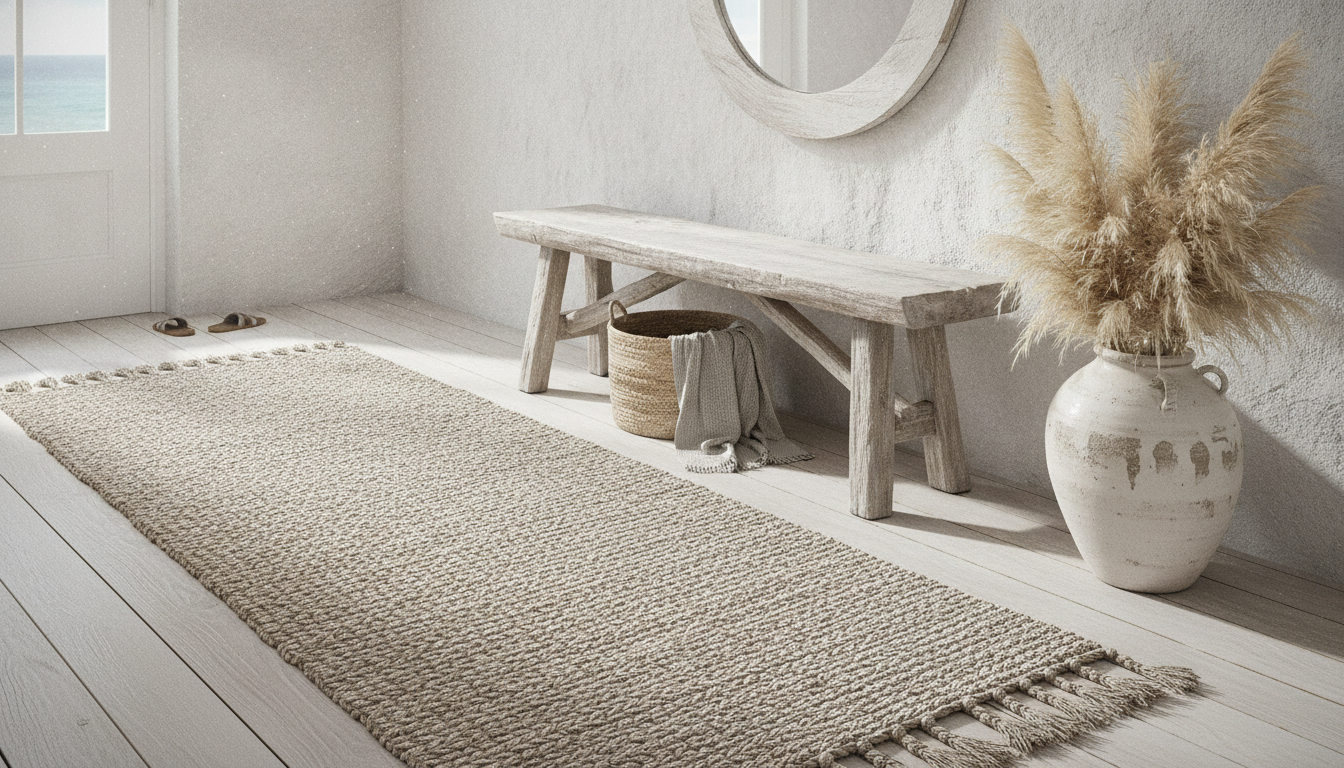
The Palette of the Tide
Achieving this level of rewilded luxury requires a disciplined commitment to a tonal, nature-inspired palette. The bleached wild-nettle rug acts as the “light source” for the floor, pulling brilliance into the darker corners of the foyer. To maintain the editorial aesthetic, pair these foraged fibers with the following hues and materials:
- Alabaster & Bone: Use these for wall treatments and large-scale ceramics to reflect natural light and enhance the rug’s bleached luminosity.
- Silvered Timber: Incorporate weathered grey woods—found in driftwood or reclaimed barn siding—to bridge the gap between the rug’s organic texture and the room’s structural elements.
- Warm Sandstone: Introduce small accents in Honed Crema Marfil or sandstone to add a subtle warmth that prevents the “salt-washed” look from feeling sterile.
- Oversized Glass: Clear, hand-blown glass vessels allow the eye to travel through the space without interrupting the visual flow of the nettle’s intricate weave.
Structural Harmony and Placement
In a coastal entryway, the foraged-fiber bohemian rug is the protagonist of the floor plan. The runner should be sized generously, leaving exactly six to eight inches of oak flooring visible on either side to create a framed, gallery-like effect. This “negative space” is crucial; it allows the hand-knotted edges of the nettle to breathe and emphasizes the craftsmanship of the weave. The driftwood bench should be positioned slightly off-center on the rug, breaking the symmetry and leaning into a Wabi-Sabi sensibility that feels curated rather than staged. By layering a low-profile, high-texture rug against the verticality of a white plaster wall and the organic silhouette of foraged furniture, the space achieves a state of “Coastal Brutalism”—where the power of the elements is celebrated through a lens of extreme luxury.
7. Alpine Luxe: High-Pile Wild Silk in a Timber-Framed Den
7. Alpine Luxe: High-Pile Wild Silk in a Timber-Framed Den
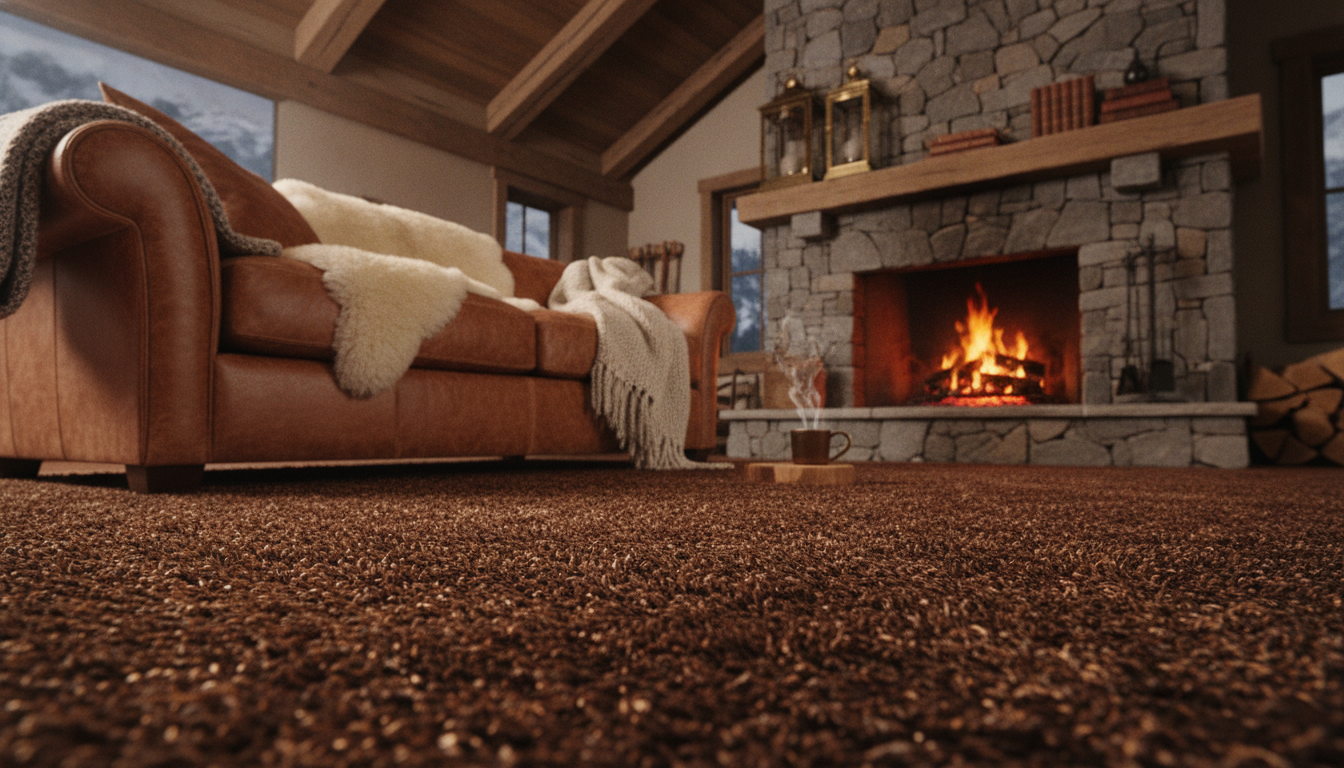
Shadows dance across the hand-hewn surface of massive Douglas fir ceiling beams, their dark, honeyed grain echoing the ancient strength of the mountains outside. In this sanctuary, the air carries the faint, nostalgic scent of cedarwood and embers, but the true soul of the room resides beneath your feet. A high-pile Himalayan silk rug, foraged and hand-knotted with an intentional, raw edge, serves as the room’s luminous heartbeat. Unlike the flat, machine-made textiles of the past, this wild silk foundation possesses a liquid-like kinesis; in the flickering light of a roaring stone fireplace, the deep chocolate and molten bronze fibers shift from matte shadows to shimmering highlights, mimicking the way sunlight hits a frozen alpine lake at dusk.
The architectural gravity of the heavy timber framing demands a floor covering of equal visual weight and tactile presence. This foraged-fiber masterpiece anchors the expansive den, providing a soft, indulgent counterpoint to the ruggedness of the dry-stack stone hearth and the structural iron hardware. The high-pile construction is not merely a stylistic choice but a functional embrace of the “rewilded” aesthetic—each strand of wild-harvested silk retains a slight, organic irregularity that feels remarkably sophisticated underfoot, bridging the gap between the untamed wilderness and the pinnacle of interior refinement.
The Material Dialogue: Cognac, Stone, and Silk
To master this look, the furniture must speak the same language of longevity and warmth. A low-slung, oversized sofa in rich cognac leather provides the primary seating, its buttery patina deepening the bronze undertones found within the rug’s weave. To elevate the sense of “alpine hygge,” layering is essential. Think beyond simple cushions; drape heavy, unbleached Icelandic sheepskins over the sofa’s edges, allowing the long, ivory wool to spill onto the chocolate silk of the rug. This creates a vertical-to-horizontal flow of texture that feels both curated and effortless.
The interaction between the fireplace and the rug is where the magic of Himalayan silk truly reveals itself. As the fire burns low, the bronze silk fibers catch the orange glow, creating a perimeter of warmth that seems to radiate from the floor itself. This is the 2026 evolution of bohemian luxury: a space that feels deeply grounded in earth-derived materials but is polished to a high-gloss, editorial finish.
Curated Design Elements for the Alpine Sanctuary
- The Primary Anchor: A 12×15 high-pile Himalayan silk rug in “Smoked Umber” or “Burnished Bronze,” featuring subtle, asymmetrical striations that suggest natural movement.
- Seating Architecture: A modular cognac leather pit-sectional with exposed baseball stitching to mirror the artisanal quality of the foraged fibers.
- Tactile Layers: Organic-shaped petrified wood side tables and a central coffee table crafted from a single, charred oak slab with a live edge.
- Metal Accents: Hand-forged blackened steel floor lamps with linen shades to provide soft, directional lighting that grazes the rug’s pile.
- Color Harmony: A palette of charcoal, deep mahogany, copper, and cream, punctuated by the natural variations in the foraged silk.
In this den, the “Bohemian” influence is found in the reverence for the raw material—the way the silk is gathered, spun, and dyed using local Himalayan minerals. It rejects the sterile perfection of synthetic luxury in favor of something more visceral. When the snow begins to fall outside the floor-to-ceiling windows, the high-pile silk acts as an insulating cocoon, transforming a high-ceilinged timber space into an intimate, high-stakes retreat where every texture invites a second touch.
8. Nordic Ethos: Soft-Spun Nettle in a Scandi-Boho Nursery
Architectural Textures & Furniture Synergy
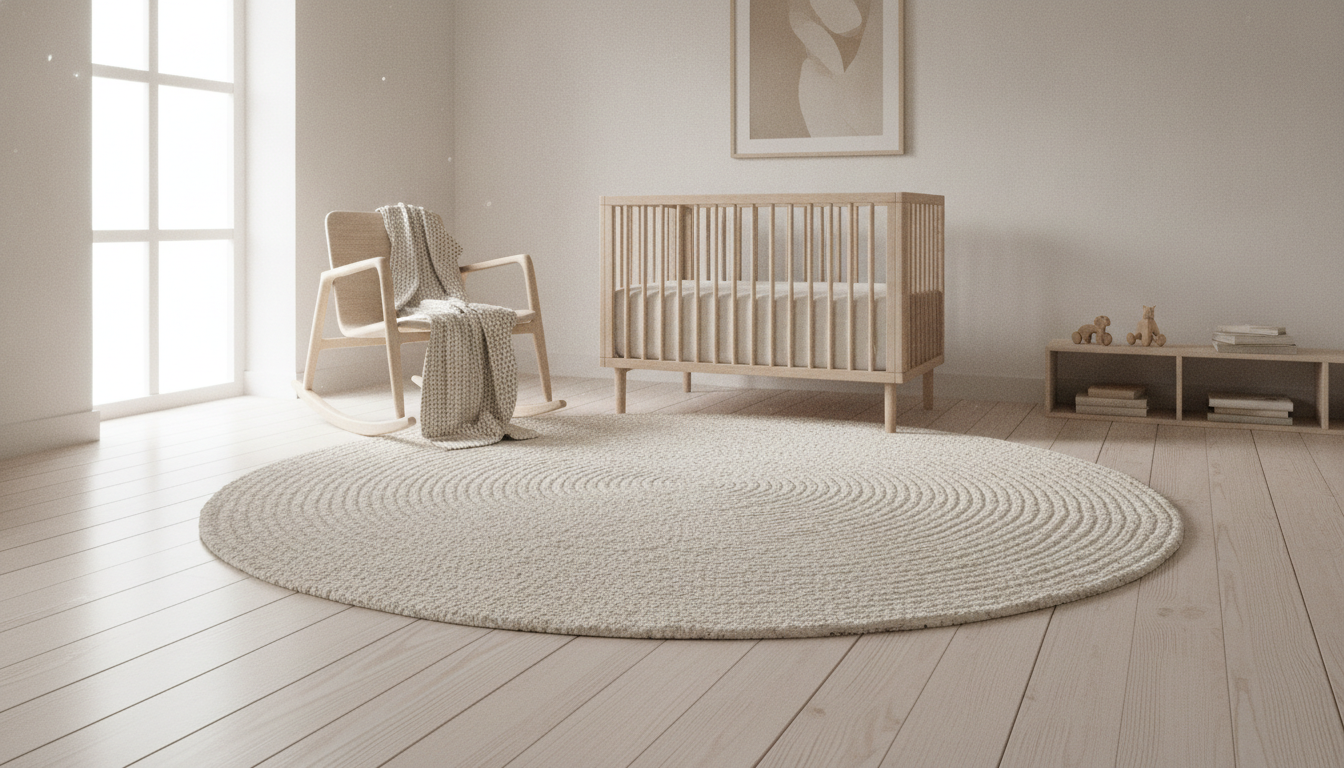
In a space so devoid of saturated color, the interplay of textures becomes the primary design language. The rug’s low-profile, hand-tufted pile provides a matte contrast to the silken grain of the birch wood crib. Nearby, a mid-century inspired rocking chair in a blanched oak finish stands as a testament to the Scandi-Boho fusion. To heighten the sensory experience, the chair is draped with a chunky knit wool throw in an oatmeal shade, creating a tiered landscape of whites and creams that prevents the room from feeling sterile. The rug’s ivory tone is carefully calibrated—it isn’t a bleached, synthetic white, but rather the color of unspun fleece, reflecting the natural variations found in wild-harvested fibers.
The Palette of Rewilded Minimalism
To master this specific look, the color palette must remain disciplined. The goal is to create a “cloud-like” atmosphere that feels both airy and incredibly expensive. The foraged fiber bohemian rug acts as the bridge between the architecture and the soft goods, harmonizing with the following elements:
- Primary Foundation: Polished ash or bleached pine flooring.
- Textural Accents: Nubby bouclé pillows in bone, felted wool storage bins, and matte ceramic lamps with linen shades.
- Organic Tones: Hints of pale honey from the natural wood joinery and the soft, desaturated green of a single potted olive tree in the corner.
- Metallic Finishes: If necessary, limit hardware to brushed nickel or matte white steel to maintain the coolness of the Scandi aesthetic.
The brilliance of the soft-spun nettle in this nursery setting lies in its inherent “rewilded” nature. It brings a piece of the high Himalayas into the modern home, stripped of its ruggedness but none of its soul. It invites a barefoot connection to the earth, offering a surface that is naturally hypoallergenic and anti-bacterial—essential for a nursery—while elevating the room to the standards of a high-end gallery. As the sun moves across the room, the slight luster of the nettle fibers catches the light, giving the floor a living, breathing quality that synthetic fibers can never replicate.
9. The Curated Library: Jewel-Toned Himalayan Silk with Vintage Walnut
The Curated Library: Jewel-Toned Himalayan Silk with Vintage Walnut
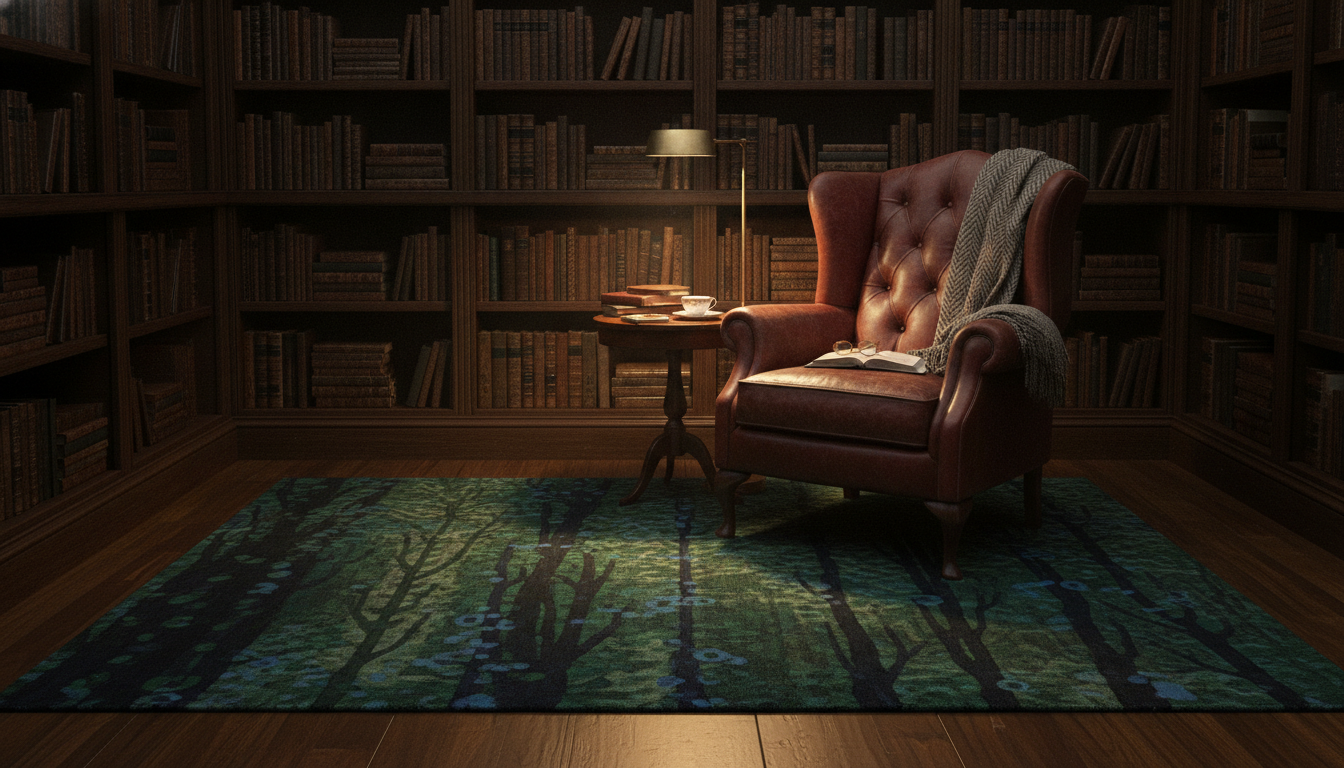
Shadows retreat into the deep recesses of floor-to-ceiling walnut bookshelves, where the scent of aged parchment and linseed oil hangs heavy in the air. In this sanctuary of intellect, the floor serves as the ultimate canvas for a masterpiece of tactile opulence. Centered within this architectural cathedral of wood is a foraged fiber bohemian rug, hand-knotted from reclaimed Himalayan silk. The rug does not merely sit upon the floor; it glows, vibrating with the intensity of deep emerald green and sapphire blue. These jewel tones, born from the labor-intensive process of gathering and re-spinning wild-harvested fibers, offer a prismatic depth that shifts as you move through the room. Under the focused beam of a vintage brass reading lamp, the silk’s natural luster creates a pool of liquid color, a stark and stunning contrast to the matte, somber weight of the dark timber surrounds.
The interaction between the architecture and the rug is one of profound balance. The rigid, vertical lines of the shelving units find their necessary softening in the organic, slightly irregular weave of the foraged silk. Because these fibers are gathered rather than industrially produced, they possess a “slubbed” texture—a rhythmic imperfection that catches the low-hanging light in a way that perfectly uniform materials never could. This creates a cinematic atmosphere, where the rug acts as a vibrant anchor for the room’s scholarly gravity. The deep sapphires in the weave pull the eye downward, grounding the soaring height of the library, while the emerald accents echo the quiet vitality of a private garden glimpsed through a nearby window.
The Alchemy of Saturation and Wood
To achieve this level of curated sophistication, the furniture must be as storied as the rug itself. A classic wingback chair, upholstered in a weathered oxblood red leather, provides the essential color counterpoint to the rug’s cool-toned base. The red and green exist in a state of high-design tension, softened only by the shared vintage patina of the materials. Beside it, a low-profile side table carved from a single block of petrified wood or dark-stained oak ensures the focus remains on the textile’s intricate sheen. The rug’s bohemian soul—rooted in the “rewilded” luxury of foraged materials—strips away the stuffiness often associated with traditional libraries, replacing it with a sense of adventurous, worldly elegance.
- The Primary Palette: Deep Emerald, Midnight Sapphire, and Forest Moss within the rug, contrasted against the warm, chocolate-hued grains of vintage Walnut.
- Textural Layering: Pair the high-sheen foraged silk with heavy, matte textures like full-grain oxblood leather, wool-mohair throw blankets, and solid brass hardware.
- Lighting Dynamics: Utilize warm-spectrum LED bulbs in hooded brass lamps to highlight the directional “nap” of the silk, creating highlights and shadows that mimic the movement of water.
- Furniture Alignment: Position the rug so that at least two legs of the wingback chair rest upon it, creating a defined “island” of comfort that separates the reading nook from the transitional walkway of the room.
As evening falls and the natural light wanes, the foraged fiber bohemian rug takes on a mystical quality. The emerald and sapphire tones deepen, almost merging with the shadows of the walnut eaves, yet the silk continues to catch the stray embers of the fireplace or the glow of the desk lamp. It is a testament to the power of rewilded luxury: the ability to take raw, foraged elements from the Himalayan slopes and refine them into a centerpiece that feels both ancient and avant-garde. This library is no longer just a room for books; it is a sensory experience defined by the intersection of nature’s wildness and man’s most sophisticated craft.
10. Monochrome Ethos: Sculptural Nettle in a Gallery-Inspired Living Room
Monochrome Ethos: Sculptural Nettle in a Gallery-Inspired Living Room
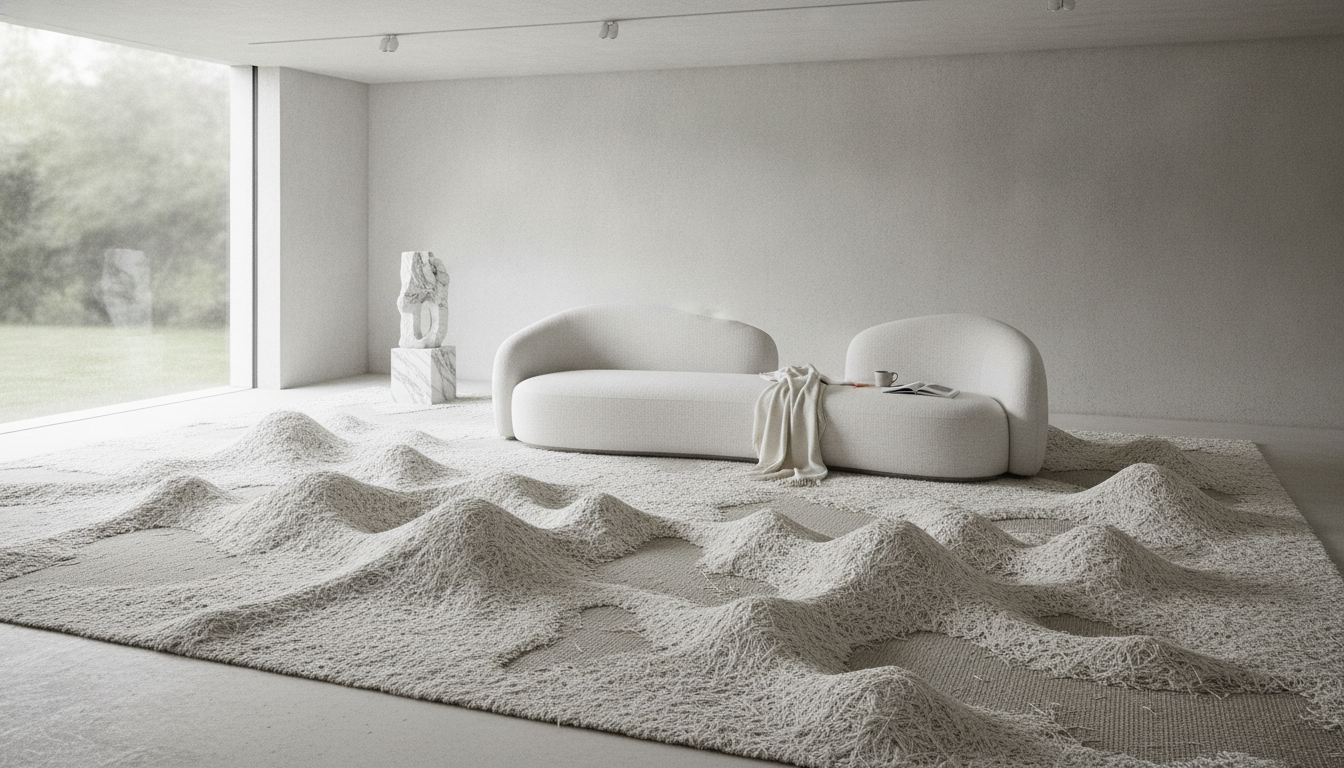
The air in the gallery-inspired living room remains perfectly still, a curated vacuum where the only movement is the slow, deliberate interplay of light across a landscape of carved fiber. At the heart of this sanctuary lies a masterpiece of “rewilded” luxury: a custom, high-relief rug crafted entirely from foraged wild nettle. Unlike traditional textiles that lay flat and obedient, this foraged-fiber bohemian rug is a tactile topography. Its surface is hand-carved into a series of undulating 3D peaks and valleys, mimicking the weathered ridges of a windswept limestone cliff. In this monochrome setting, the rug ceases to be a floor covering and ascends to the status of a foundational sculpture, grounding the room in a raw, primal elegance that defies the coldness of traditional minimalism.
The brilliance of the natural white nettle fiber lies in its matte, bone-like finish. While silk shimmers and wool absorbs, nettle possesses a unique structural integrity that allows for these extreme architectural carvings without losing its shape. The fibers are harvested from the wild, processed without caustic chemicals, and hand-spun to retain the slight, beautiful irregularities of the plant. Under the clinical, dramatic glow of recessed ceiling apertures, these irregularities create a chiaroscuro effect. The high-relief patterns cast long, soft shadows across the floor, giving the room a sense of rhythmic depth that evolves as the sun moves across the horizon or the dimmers are dialed down for an evening gala.
The Architecture of Silence: Furniture & Form
To honor the rug’s complex texture, the surrounding furnishings must embrace a philosophy of subtraction. The room is anchored by a singular, oversized organic-shaped sofa, upholstered in an alabaster heavy-weight bouclé or a matte plaster-colored linen. Its soft, serpentine curves offer a visual counterpoint to the sharp, geometric precision of the rug’s carved relief. Beside it, a lone abstract marble sculpture—perhaps a jagged monolith of Bianco Carrara or a smooth, porous piece of Turkish travertine—stands as a silent sentinel. There are no paintings on the walls; the architectural interest is focused entirely on the floor and the silhouette of the furniture, allowing the foraged-fiber bohemian rug to dictate the room’s narrative.
The color palette is a strict study in “The New White.” By layering different tones of chalk, parchment, bone, and smoke, the room avoids the sterility of a hospital and instead achieves the transcendent calm of a high-end art fair. The nettle’s natural, slightly off-white hue provides the necessary warmth to prevent the space from feeling unlived-in, offering a soft, earthy undertone that only wild-harvested fibers can provide.
Curated Design Elements for the Sculptural Nettle Space
- Primary Seating: A low-slung, multi-sectional sofa in a curved “kidney” silhouette, finished in ivory wool-blend bouclé to mirror the rug’s tactile richness.
- Structural Accents: A single, monumental coffee table carved from a solid block of matte-honed travertine or raw, sandblasted oak to introduce an element of petrified nature.
- Lighting Strategy: Directional, museum-grade track lighting with narrow-beam spreads to intensify the shadows within the rug’s high-relief carving.
- Wall Finish: Polished Tadelakt or a fine-grain lime wash in a pale “Oyster Shell” to provide a soft, velvet-like backdrop for the sculptural elements.
- Atmospheric Accents: A minimalist floor-to-ceiling pivot door in blackened steel to provide a sharp, masculine frame to the ethereal white-on-white composition.
Elevate Your Space
Discover the artistry of handmade luxury. Each rug is a masterpiece of tradition and modern design.
Expert Q&A
What exactly are foraged fiber bohemian rugs?
These are rugs made from materials harvested directly from the wild rather than farmed. Common materials include Himalayan nettle (Allo), which grows wild in the mountains, and wild-harvested silks. They are prized for their extreme durability and carbon-negative footprint.
Are wild-nettle rugs soft enough for bedrooms?
While raw nettle has a texture similar to jute or hemp, ‘soft-spun’ varieties are processed to be remarkably soft, making them suitable for bedrooms while retaining their organic, ‘rewilded’ appearance.
How do you clean Himalayan silk rugs?
Because foraged silk is a natural protein fiber, it should be professionally cleaned or spot-cleaned with a pH-neutral detergent. Avoid excessive water, as it can flatten the natural luster of the hand-spun silk.
Why is ‘Rewilded Luxury’ a trend for 2026?
Rewilded luxury focuses on bringing the raw, unrefined elements of nature back into the home. It moves away from the ‘perfect’ look of factory goods in favor of the unique textures and ‘flaws’ found in foraged materials.
Written by TheBohoRugs Interior Design Team
Experts in handmade rugs, boho interiors, and modern home decor.