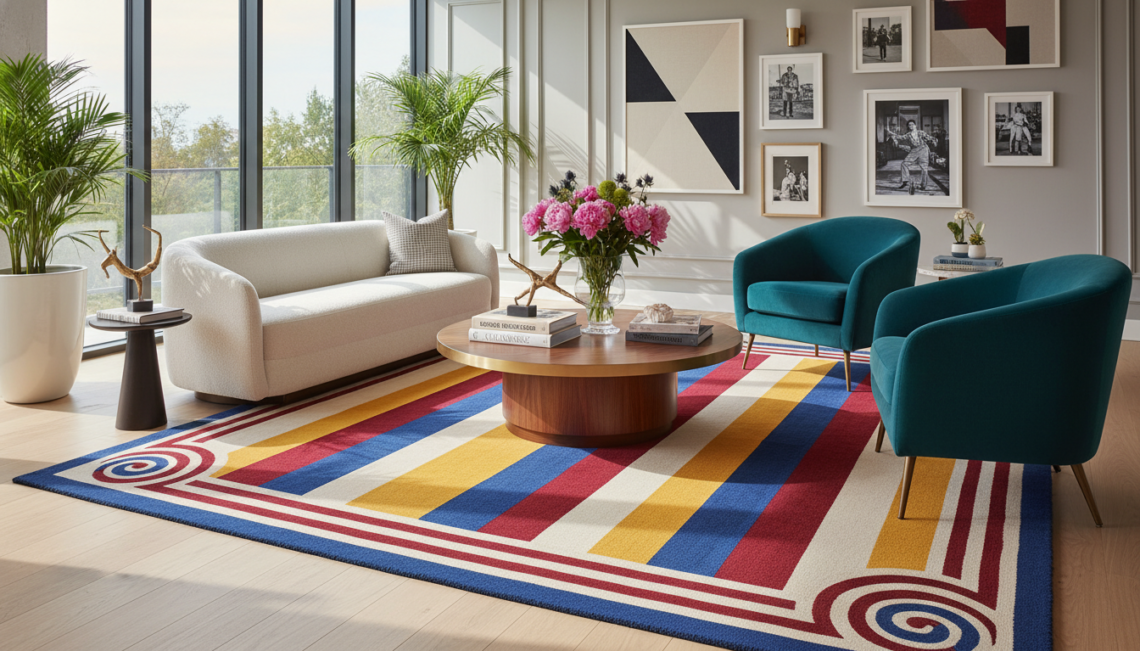
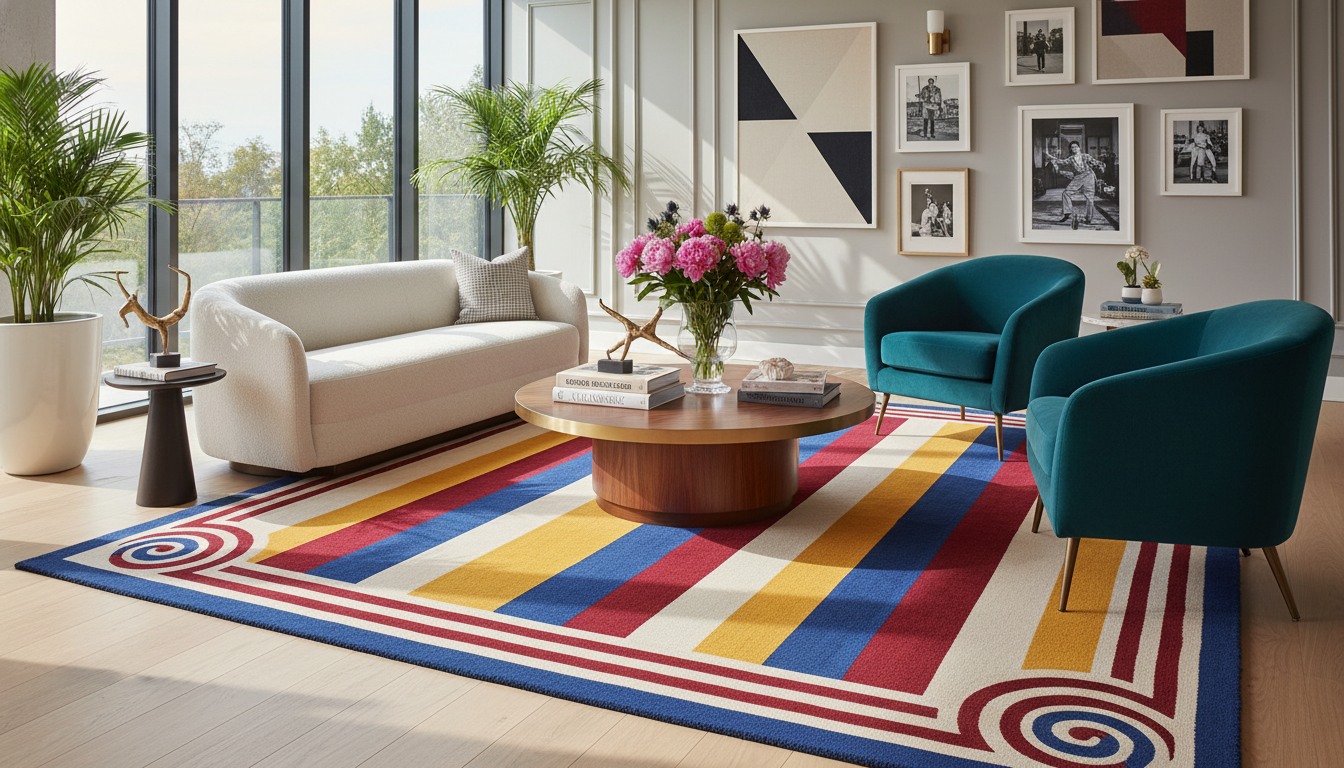
Forget the ‘sad beige’ era and the sanitized minimalism of decades past; 2026 marks the arrival of the home as a performance space. According to Pinterest Predicts, the ‘Circuscore’ aesthetic is no longer reserved for avant-garde galleries or children’s nurseries—it is maturing into a sophisticated, high-energy design movement. At its foundation lies the Circuscore rug: a daring mix of wide awning stripes, sculptural silhouettes, and a playful yet composed theatricality. This trend represents a radical departure from the organic neutrals we have seen lately, offering instead a joyful structure that feels both performative and profoundly livable. By embracing bold linear patterns and a sense of whimsy, homeowners are transforming static rooms into dynamic stages where every element plays a starring role. We are moving toward an age of interior escapism, where the floor provides the rhythmic heartbeat of the home.
“Circuscore rugs for 2026 are defined by graphic, high-contrast stripes, sculptural silhouettes, and theatrical motifs that balance playful energy with sophisticated composition. To style them, designers recommend using bold stripes as a structural anchor, pairing vibrant patterns with neutral-textured furniture to avoid visual chaos, and aligning the rug’s linear direction with the room’s architectural flow. This trend is driven by a desire for joy and personality, making it a primary choice for statement living rooms, creative home offices, and energetic dining spaces.”
The Roadmap
Table of Contents
- The Theatrical Awakening: Why 2026 Belongs to Circuscore
- The 7 Designer Rules for Styling Circuscore Rugs
- 8 Immersive Room Archetypes: Bringing the Circuscore Rug to Life
- Material Science: Why Performance Fibers Matter in Theatrical Design
- Trending Pairings: Color Stories for a Sophisticated Big Top
- The Longevity of a Statement: Maintenance for High-Energy Rugs
- Final Act: Embracing the Joy of Performative Interiors
The Theatrical Awakening: Why 2026 Belongs to Circuscore
The Anatomy of a Modern Circuscore Rug
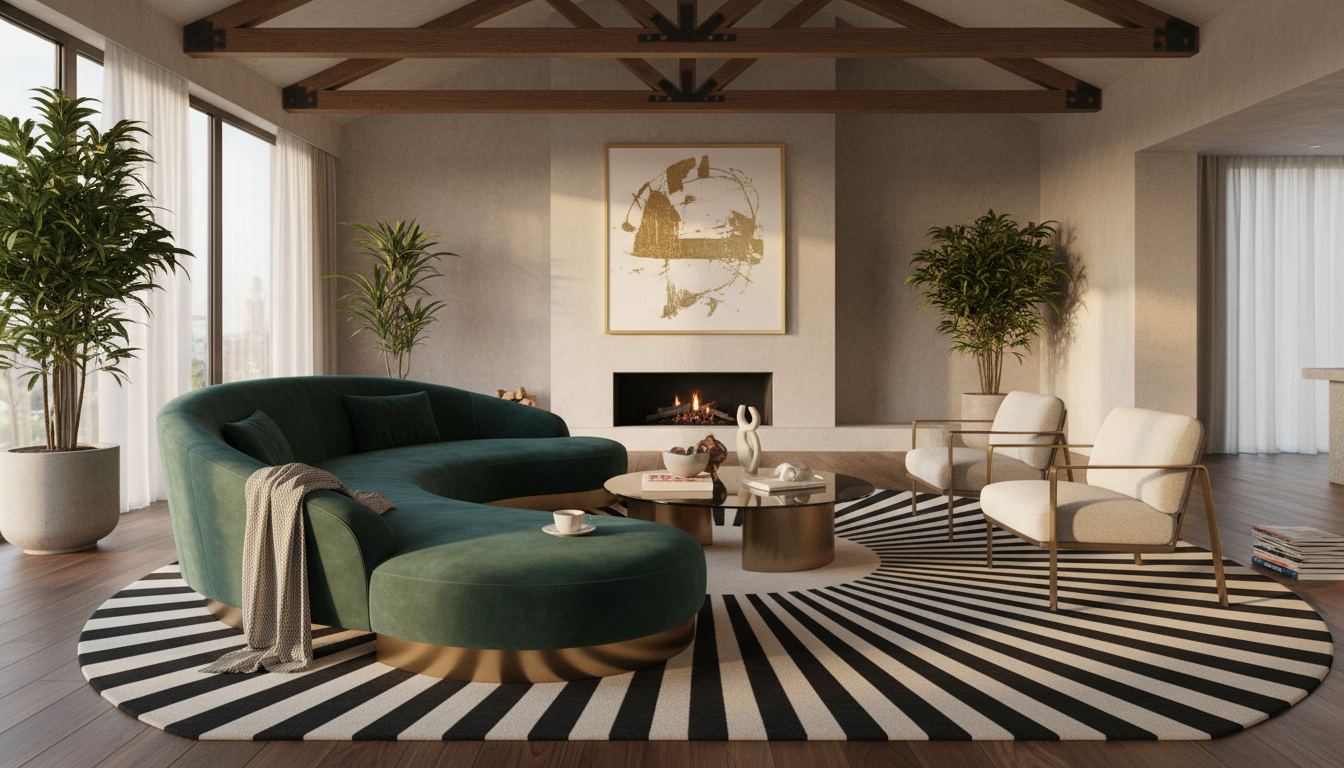
In this new era, a rug isn’t just a floor covering; it’s the “center ring” of the room. A true 2026 circuscore rug relies on **symmetrical tension**. We are seeing a move toward high-twist New Zealand wool blended with bio-acetate fibers for a subtle, theatrical sheen that catches the light during “golden hour.” These pieces often feature wide, 4-inch “cabana” stripes or radiating sunburst patterns that pull the eye toward the center of the space, creating an immediate sense of arrival. The color stories have matured, too. Instead of primary red and yellow, designers are opting for **Oxblood and Cream**, **Deep Petrol and Ochre**, or **Forest Green and Blush**. These combinations offer the same graphic punch as a vintage circus tent but with a refined Light Reflectance Value (LRV) that keeps the room feeling grounded and expensive.“Circuscore represents the ‘Theatrical Awakening’ of the modern interior,” says Elena Moretti, a leading Textile Historian. “In 2026, we are seeing a return to the ‘Grand Gesture.’ By using bold stripe rugs and playful patterns, homeowners are reclaiming their spaces from the beige-heavy aesthetics of the early 2020s. It’s about the thrill of the performance, but executed with the craftsmanship of a heritage heirloom.”
Why the Trend is Taking Center Stage Now
The rise of Circuscore is a direct response to our need for domestic escapism. As our world becomes increasingly digital, the physical home must offer a tactile, sensory experience. The bold linear patterns of circus-inspired rugs provide a sense of **visual order**, while their whimsical motifs offer an emotional release. This balance makes the trend uniquely livable. It provides the structured discipline of geometric design with the soulful, expressive energy found in artisanal collections like those at thebohorugs.com, where traditional weaving techniques meet avant-garde 2026 palettes.When styling circuscore rugs in 2026, use the “2:1 Ratio.” Pair one high-energy theatrical rug with two pieces of “quiet” furniture—such as a low-slung bouclé sofa or a matte walnut coffee table. This allows the rug to be the protagonist without the room feeling like a costume shop. Look for rugs with a weight of at least 2,500 GSM to ensure the bold stripes lay perfectly flat and maintain their architectural integrity.
The 7 Designer Rules for Styling Circuscore Rugs
1. Lead with Bold Stripes as Spatial Structure
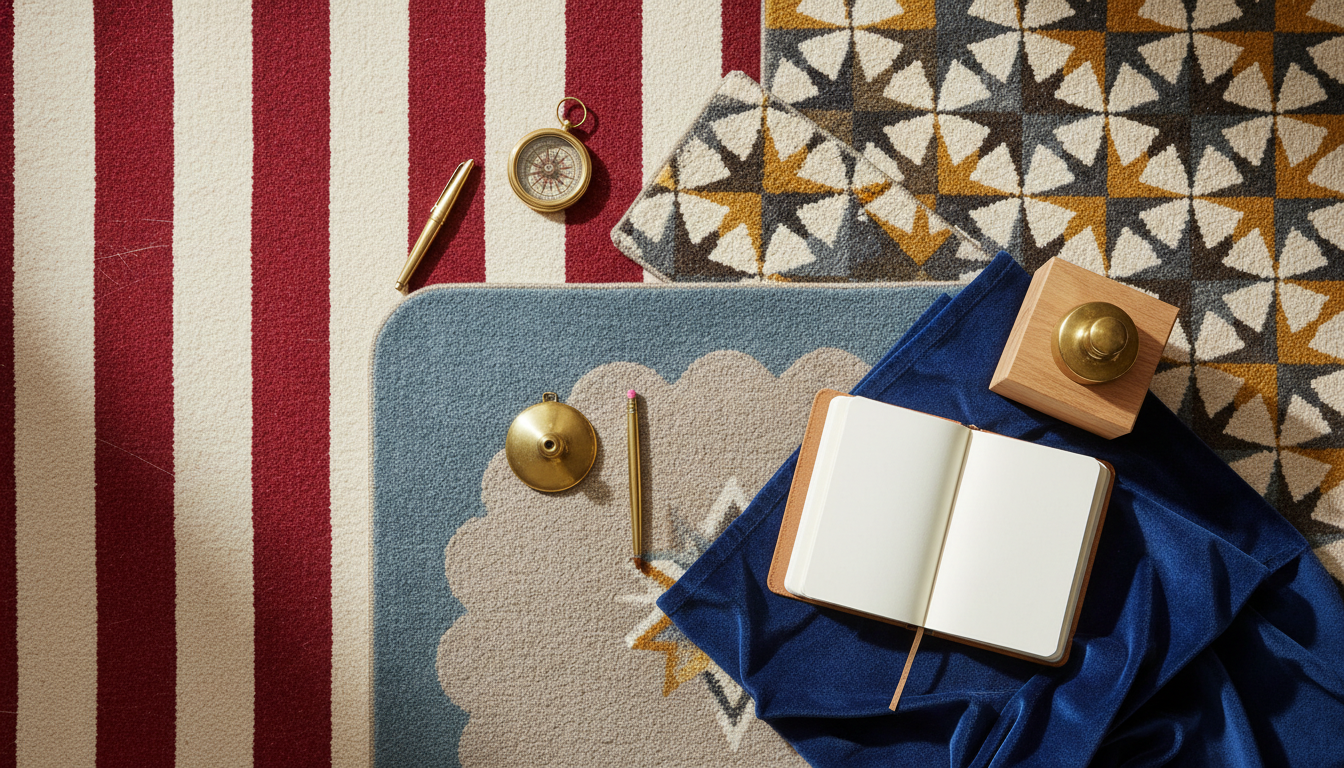
The backbone of the Circuscore movement is the classic awning stripe, but for 2026, we are seeing a shift toward **irregular widths and mixed directions.** A bold, wide-striped rug acts as a visual anchor that provides immediate structure to a room. Think of these lines as “architectural arrows.” When you place a striped rug from thebohorugs.com in a living space, the direction of the stripes dictates the room’s energy. Horizontal stripes will widen a narrow galley, while vertical lines leading away from the entrance create a sense of grand invitation. The key is the **10-inch rule.** Narrow stripes can feel frantic or “busy” in large areas. For a sophisticated Circuscore look, look for rugs with stripes at least 8 to 10 inches wide. This creates a bold, rhythmic pulse that feels intentional rather than accidental.2. Balance Playful Energy with Neutral Grounding
Circuscore rugs are inherently “loud,” so the surrounding elements must provide a soft place for the eye to land. Designers are currently obsessing over **Light Reflectance Values (LRV)** when pairing wall colors with these rugs. If you have a high-contrast black and cream striped rug, you want a wall color with an LRV of around 60—something like a “Soft Alabaster” or “Warm Greige”—to prevent the room from feeling too stark. Pair your theatrical floor covering with furniture that features **calm, monolithic silhouettes.** A curved, cream bouclé sofa or a heavy, minimalist oak coffee table provides the necessary “visual weight” to balance the kinetic energy of a circus-inspired pattern.Keep 70% of your room’s surfaces (walls, large furniture, window treatments) in solid, calming textures. Reserve the remaining 30% for the “theatre”—your Circuscore rug, a sculptural lamp, and perhaps a single piece of striped upholstery to create a cohesive narrative.
3. Use Scale to Command the Room
In 2026, we are moving away from the “postage stamp” rug. Circuscore is a maximalist trend at heart, which means the rug should ideally touch or sit under all major pieces of furniture in a grouping. A small, circus-inspired rug in the middle of a large room looks like a forgotten prop; a large-scale rug that extends 12 inches beyond the sofa creates a **defined “stage”** for your life. “The beauty of the 2026 Circuscore aesthetic lies in its scale,” says **Elena Rossi, a Lead Textile Historian.** “We are seeing a resurgence of the ‘Commendatore’ stripes—patterns that originated in early 20th-century Italian theatre. These aren’t just lines; they are bold, graphic statements that require physical space to breathe. When the scale is right, the rug doesn’t just sit in the room—it *is* the room.”4. Incorporate Theatrical Accents Mindfully
To lean into the “Core” of Circuscore, you need a few theatrical nods, but they must be executed in premium materials. Avoid anything plastic. Instead, look for **burnished brass, heavy velvets, and hand-blown glass.** A Circuscore rug featuring deep claret and bone stripes pairs beautifully with a brass-legged velvet armchair. This creates a “VIP Box” feel. The inclusion of **Bio-Acetate decor pieces**—a major 2026 material trend—adds a glossy, high-fashion finish that mimics the polished look of old-world circus trunks without the kitsch.5. Create Flow Through Geometric Directionality
Stripes are excellent tools for spatial psychology. If your home has an open-concept layout, use the direction of your Circuscore rug to **delineate different ‘acts’ within the house.** A rug with stripes running perpendicular to the kitchen island can “stop” the flow and create a dedicated dining zone. Many of the hand-knotted pieces found at thebohorugs.com utilize a blend of **New Zealand wool and silk highlights.** This mix doesn’t just add durability; it adds “sheen directionality.” Depending on where the light hits the rug, the stripes can appear to move and shift, adding a performative, dynamic element to the floor that changes throughout the day.6. Layer with Restraint for Tactile Depth
While Circuscore is bold, it doesn’t have to be flat. One of the most sophisticated ways to style these rugs is to **layer them over a larger, neutral base.** A high-contrast striped flat-weave layered over a chunky, oversized jute or a low-pile sisal rug provides a “frame” for the theatricality. This technique is particularly effective in bedrooms. A large, neutral wool rug provides the comfort, while a smaller, vibrant circus-tent patterned rug placed at the foot of the bed or slightly off-center provides the “pop” of personality. It grounds the whimsy in a foundation of organic texture.When choosing a Circuscore rug, check the fiber blend. For 2026, designers are looking for “luminosity.” A rug with 20% viscose or bamboo silk mixed with matte wool allows the patterns to catch the light, mimicking the spotlight effect of a classic Big Top.
7. Echo the Energy in Micro-Gestures
Cohesion is what separates a designer home from a cluttered one. Once your rug is in place, “echo” its energy in three small places elsewhere in the room. This doesn’t mean more stripes; it means **repeating the colors or the geometry.** If your rug has a scalloped border—a classic circus-tent motif—choose a lampshade with a similar curve or a decorative bowl with a fluted edge. If the rug features a “Deep Claret” stripe, find a piece of art that shares that exact tonal value. These small, rhythmic repetitions tell the brain that the “theatricality” of the rug is a deliberate design choice, creating a space that feels both exhilarating and expertly composed.Mastering the Scale: Rule 3 of Theatrical Floors
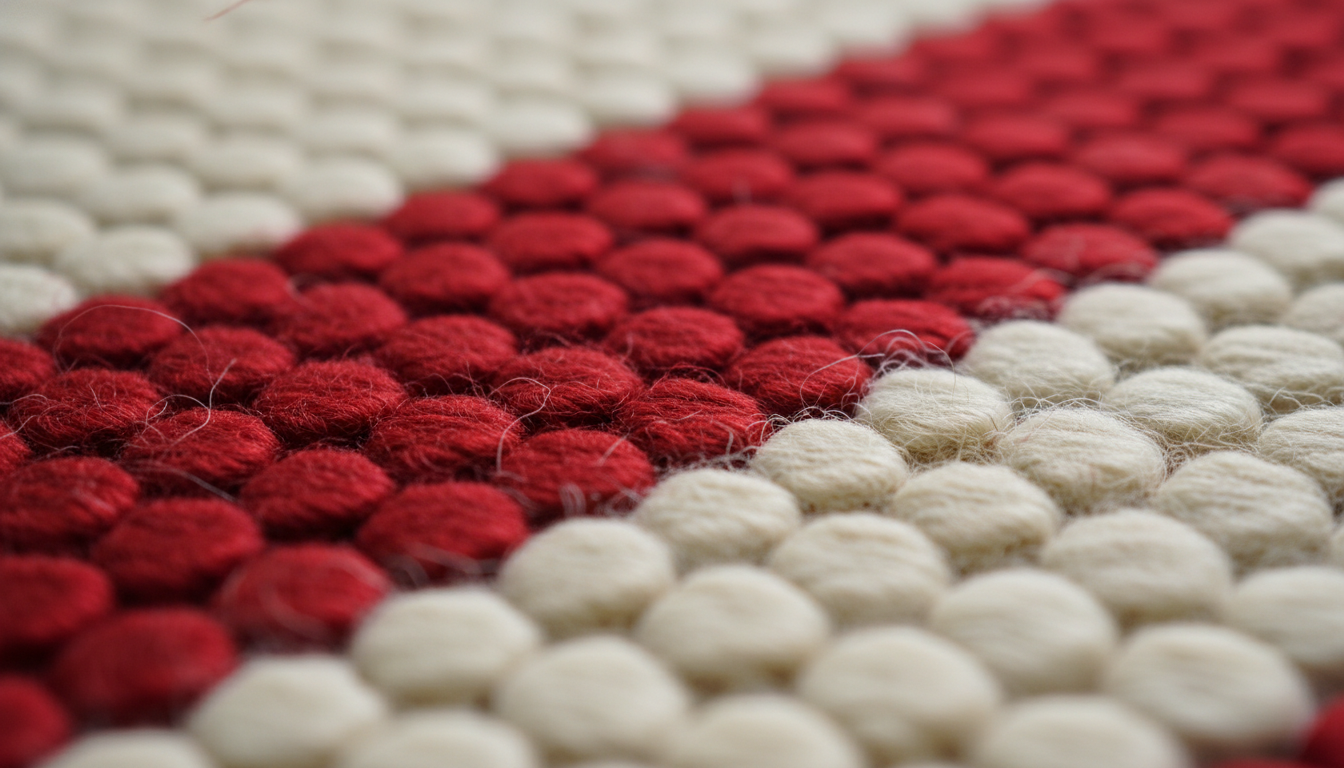
The Visual Weight of the Big Top: Wide Stripes vs. Micro-Patterns
In the theatrical world of 2026 interiors, scale is the invisible director of the room. When we look at the circuscore rugs 2026 movement, the width of a stripe or the diameter of a harlequin diamond dictates whether a space feels like a high-energy performance or a curated, intimate gallery. To master this, you have to look beyond the colors and examine the “rhythm” of the floor. Large-scale, wide-set stripes—think six to eight inches in width—create a sense of architectural permanence. These designs act as anchors for heavier furniture, such as a curved velvet sofa or a brutalist coffee table, preventing the furniture from “floating” aimlessly in the room.
On the other hand, micro-patterns and narrow, repetitive stripes offer a vibration of energy that works beautifully in transition spaces like hallways or breakfast nooks. For 2026, we are seeing a shift toward high-twist New Zealand wool blended with matte silk, where the scale of the pattern is used to highlight the Light Reflectance Value (LRV) of the yarn. A narrow stripe in a high-shine fiber can make a dim corridor feel expansive and kinetic, while a wide, matte-finish stripe in an earthy ochre provides a grounded, sophisticated foundation for a primary living suite.
“Scale is the difference between a room that feels like a costume and one that feels like a tailored suit,” says Julianne Vance, a Senior Textile Historian who consults on the latest 2026 collections. “In the Circuscore revival, we’re moving away from ‘clownish’ proportions and toward ‘theatrical’ ones. It’s about using bold stripe rugs 2026 enthusiasts love to elongate the floor plane, often utilizing asymmetrical scaling—where stripe widths vary within the same rug—to mimic the organic drape of a circus tent.”
Designing with Optical Illusions
The magic of circus inspired rugs lies in their ability to manipulate the perceived dimensions of a home. If you are working with a compact urban apartment, an oversized striped rug from thebohorugs.com can actually make the floor area appear larger by drawing the eye to the furthest perimeter. When the scale of the rug pattern is large, the brain perceives the room as having enough “heft” to support such a bold statement, effectively tricking the eye into seeing more square footage.
For those styling a theatrical home decor theme in 2026, consider the “Rule of Three” for pattern scales. Pair your primary Circuscore rug (large scale) with a secondary pattern in the upholstery (medium scale) and a tertiary texture in the drapery (small scale). This creates a sophisticated hierarchy of interest. We are seeing a particular interest in hand-tufted rugs with varied pile heights, where the stripes aren’t just colored, but physically embossed into the wool. This 3D scaling adds a layer of luxury that keeps the playful pattern firmly in the realm of high-end design.
When styling circuscore rugs, always align the direction of the stripes with the longest line of sight in the room to maximize the theatrical “runway” effect. If your room is perfectly square, placing a bold striped rug at a 45-degree angle creates a dynamic, diamond-shaped flow that breaks the boxy feel of the architecture—a signature move for 2026’s more adventurous maximalists.
Material Integrity in High-Impact Patterns
The success of a scaled pattern also depends heavily on the “read” of the fiber. In 2026, the industry is moving toward Bio-Acetate and recycled PET blends for performance-heavy Circuscore designs. These materials allow for razor-sharp definition between colors—essential for maintaining the integrity of a stripe. In artisanal, hand-knotted versions found at boutiques like The Boho Rugs, look for the Ghiordes knot technique, which provides the structural density required to keep large-scale patterns from looking blurred or “bleeding” at the edges. This precision ensures that even the most whimsical, playful pattern retains a sense of composure and luxury underfoot.
- Large-Scale Stripes: Best for open-concept living rooms and grounding heavy, sculptural furniture.
- Medium-Scale Harlequins: Ideal for dining rooms, where the pattern provides a rhythmic backdrop to chair legs.
- Micro-Stripes: Perfect for home offices to provide visual stimulation without being a distraction during deep work.
- Mixed-Scale Borders: A 2026 favorite, where a rug features a solid center with a highly theatrical, multi-stripe border for a “framed” stage look.
The 2026 Playbook: 8 Immersive Room Archetypes
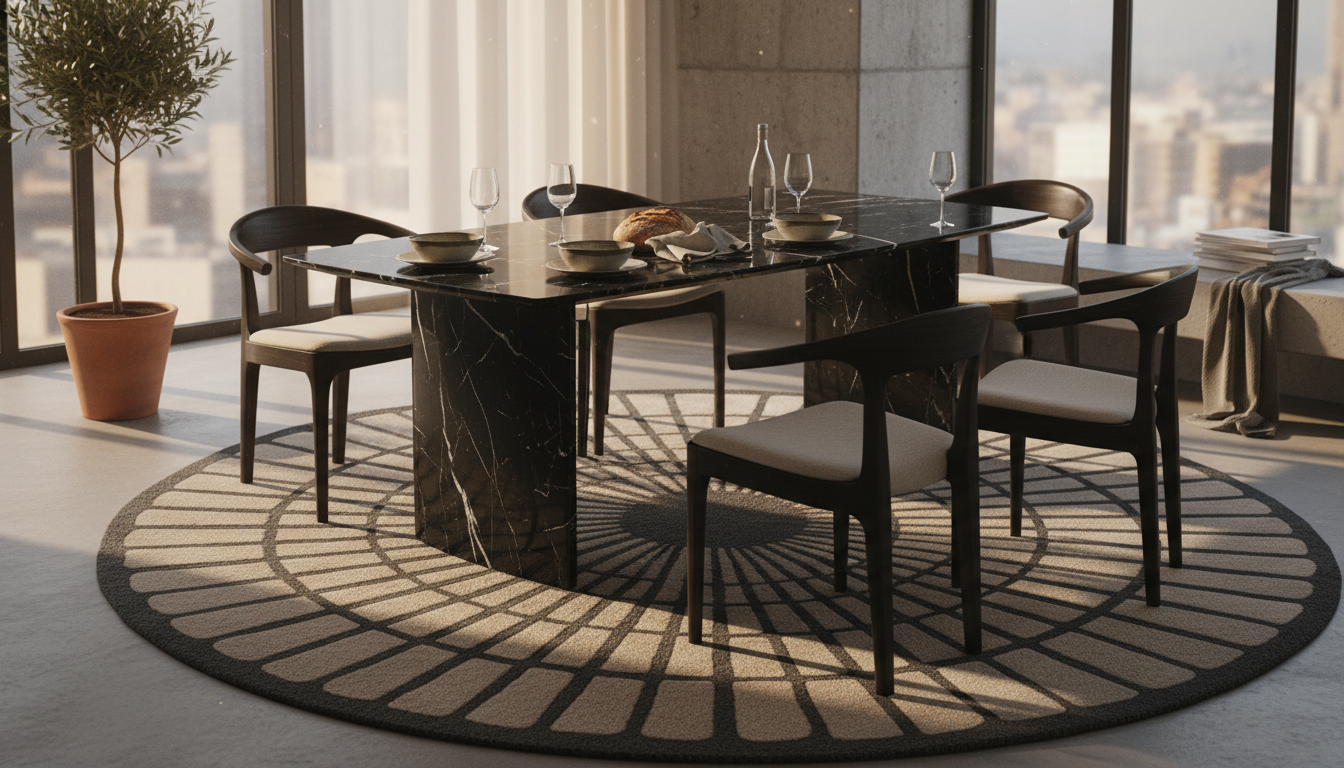
1. The Vibrant Family Living Room: Anchoring with Wide Tent Stripes
In the modern family hub, Circuscore shouldn’t feel like a costume; it should feel like an event. We’re seeing a shift toward awning-style stripes in sophisticated palettes like terracotta and cream or deep navy and sand. A large-scale striped rug from thebohorugs.com acts as a visual anchor, grounding eclectic furniture without the need for a busy gallery wall. The key here is the 12-inch stripe width—anything narrower can feel frenetic in a large space.
To keep the look refined, pair a hand-knotted wool rug with sculptural, low-profile sofas in neutral bouclé. The contrast between the rigid geometry underfoot and the soft, organic curves of the seating creates a balanced tension that feels curated, not accidental. “The 2026 living room is moving away from the ‘quiet luxury’ of beige-on-beige toward what I call ‘Structured Joy,'” says Julian Thorne, Lead Textile Curator. “A wide-stripe rug provides the architectural framework that allows a family’s life to happen colorfully on top of it.”
2. The Whimsical Kids Play Area: Durable Geometry
For children’s spaces, Circuscore is a natural fit, but 2026 is trading primary colors for more nuanced “dusty” palettes. Think mustard, sage green, and muted plum. A rug featuring radial patterns or concentric circles mimics the energy of a center ring, creating a literal stage for play. Because these areas see high traffic, look for New Zealand wool blends—the lanolin in the wool provides a natural stain resistance that outperforms synthetic fibers.
Placement is everything. Centering a circular circuscore rug in a square room creates a “room within a room” effect. It’s a design trick that encourages focus, making the rug the designated zone for imagination while the rest of the room remains organized and functional.
3. The Energetic Dining Space: Theatrical Symmetry
Dining rooms often suffer from being too static. A Circuscore rug with converging lines or a “starburst” motif brings a sense of movement to the floor. Imagine a dark oak pedestal table sitting atop a rug with cream and charcoal stripes that radiate outward. It draws the eye toward the center of the room, making the dining experience feel more communal and performative.
At thebohorugs.com, we recommend rugs with a tighter pile height (around 6-8mm) for dining areas to ensure chairs glide effortlessly. A flat-weave kilim with circus-inspired borders is also a fantastic choice for those who want the theatricality without the bulk of a plush rug. It’s about creating a backdrop that complements the meal, not competes with it.
4. The Creative Home Office: Directional Focus
Can a circus-inspired rug actually improve productivity? In 2026, designers say yes. Linear stripes possess an inherent “lead-in” quality. By aligning the stripes of a bold black-and-white rug to point toward your desk, you create a psychological runway that prepares the brain for deep work. It’s a trick used in high-end retail design to guide foot traffic, repurposed here to guide your attention.
To avoid visual fatigue, keep the desk and chair minimalist. A glass or acrylic desk allows the rug’s pattern to show through, maintaining the room’s energy without cluttering the visual field. This is where Bio-Acetate fibers are making a splash—they offer a silk-like sheen to the stripes, catching the light during afternoon Zoom calls and adding a layer of professional polish to the whimsy.
5. The Entryway: A Dramatic First Act
The foyer is the perfect place to experiment with the more “performative” side of Circuscore. Since guests only spend a few moments here, you can afford to be daring. A high-contrast runner with exaggerated vertical stripes creates an immediate sense of height and grandeur. It’s the “red carpet” of the 2020s, reimagined for the modern homeowner.
Pair this with a vintage brass coat rack or a sculptural bench to lean into the theatrical theme. The goal is to make a statement that says the home is a place of personality. If your entryway is narrow, vertical stripes will elongate the hall; if it’s wide, horizontal “ladder” stripes will make the space feel more cozy and grounded as soon as the door opens.
6. The Small Apartment: Visual Expansion via Verticality
One of the biggest misconceptions is that bold patterns overwhelm small spaces. On the contrary, Circuscore’s rhythmic repetition can trick the eye into seeing more square footage. In a studio or small one-bedroom, a rug with thin, pinstripe-style lines creates a sense of “infinite flow.”
Choose a rug from thebohorugs.com that features “broken stripes” or varying widths. This lack of perfect uniformity prevents the room from feeling like a cage and instead gives it a hand-crafted, artisanal vibe. When the rug extends under all your furniture pieces, it creates a unified “island” of design that makes the floor appear larger than it actually is.
7. The Theatrical Maximalist Lounge: Layering the Spectacle
For the “More is More” enthusiast, Circuscore is the ultimate playground. The 2026 approach to maximalism isn’t about clutter; it’s about curated layers. Start with a large, neutral jute rug as a base and layer a smaller, vibrant Circuscore rug on top at an angle. The contrast between the raw, earthy texture of the jute and the precise, colorful geometry of the striped rug is pure design magic.
Look for rugs that incorporate sculptural elements—perhaps a 3D tufted border or varying pile heights. This adds a tactile dimension to the visual fun. Pair this setup with velvet curtains and jewel-toned upholstery. “We are seeing a return to the ‘Salon style’ of the 1920s but through a 2026 lens,” notes textile historian Dr. Aris Thorne. “The circus-inspired rug serves as the canvas for this new era of domestic expressionism.”
8. The Outdoor Patio: Performance Under the Stars
Circuscore is moving outdoors, transforming mundane concrete patios into vibrant “spectacle spaces.” Using UV-stabilized PET yarns (made from recycled plastic bottles), these rugs offer the look of high-end wool with the durability of a ship’s sail. A bold navy and white striped rug instantly evokes a high-end seaside resort or a vintage traveling circus tent.
In 2026, we are styling these with oversized globe lights and wrought-iron furniture to lean into that “night at the carnival” aesthetic. It’s about creating a destination in your own backyard. The durability of the rugs available at thebohorugs.com ensures that the colors remain “big top” bright even after a season of sun and rain, making your outdoor area the most talked-about “room” in the house.
The Creative Home Office: Energy Underfoot
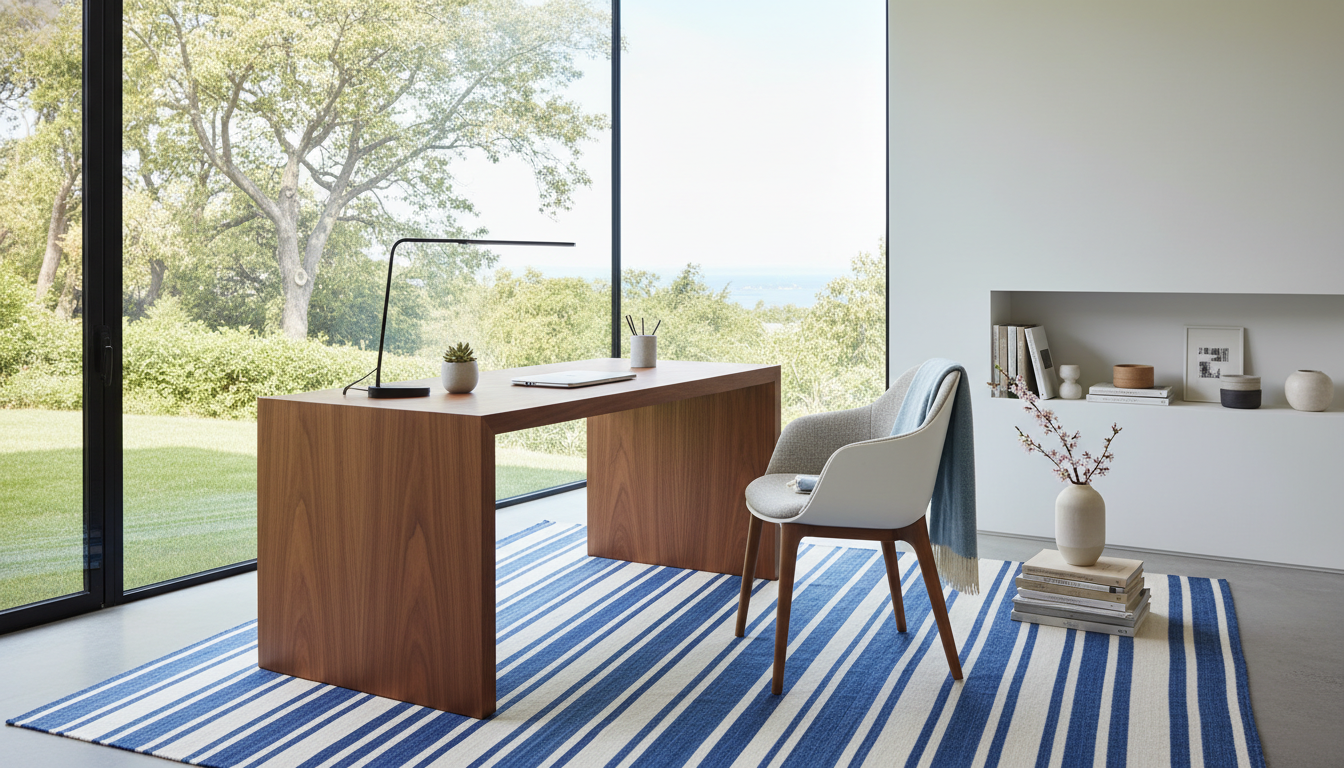
The Psychology of the Power Stripe
In a creative environment, visual stagnation is the enemy of focus. The theatrical nature of Circuscore—specifically the use of high-contrast, wide-width stripes—acts as a visual metronome. When you choose a rug with **alternating 4-inch bands of deep forest green and cream**, you create a sense of forward motion. “We are seeing a massive move toward ‘performative workspaces,'” says **Marcus Halloway, Lead Textile Historian at The Design Collective**. “In 2026, the circuscore aesthetic isn’t about looking like a child’s playroom; it’s about the tension between structure and play. Using a hand-tufted rug with a high **Light Reflectance Value (LRV)** in the lighter stripes ensures the room stays bright, while the bold pattern keeps the brain engaged during those mid-afternoon slumps.”Materiality Meets Movement
For the 2026 home office, the choice of fiber is as critical as the pattern. We are seeing a surge in **Bio-Acetate blends mixed with premium New Zealand wool**. This combination provides the matte, sophisticated finish required for a luxury interior while offering a slight, silk-like shimmer in the “tent-pole” stripes that catches the morning light. When styling this look, consider the orientation of your rug. To make a narrow office feel expansive, run the stripes perpendicular to the longest wall. If you want to emphasize a majestic desk, place a **circular sunburst-patterned rug** directly underneath to create a “center stage” effect. The goal is to make every Zoom call feel like a curated set and every brainstorming session feel like a headline act.When selecting a Circuscore rug for an office with a rolling chair, look for a low-pile height (3mm–5mm) or a flat-weave construction. This ensures your chair moves freely without catching on the theatrical textures. For ultimate durability and a touch of artisanal luxury, explore the hand-knotted striped collections at thebohorugs.com, which offer the necessary structural integrity for high-traffic workstations.
Curating the Creative Atmosphere
To prevent the room from feeling chaotic, balance the rug’s energy with “quiet” furniture. Think of your rug as the lead performer and your desk as the supporting cast.- The Desk: Opt for a desk in a dark walnut or a matte black finish to provide a sophisticated weight that anchors the playful stripes.
- Lighting: Use a sculptural brass floor lamp that echoes the curves of a traditional circus silhouette.
- Wall Color: Pull a secondary, muted tone from the rug’s pattern—perhaps a dusty terracotta or a soft sage—and apply it to the walls to create a cohesive “color-drenched” box.
Material Science: Why Performance Fibers Matter
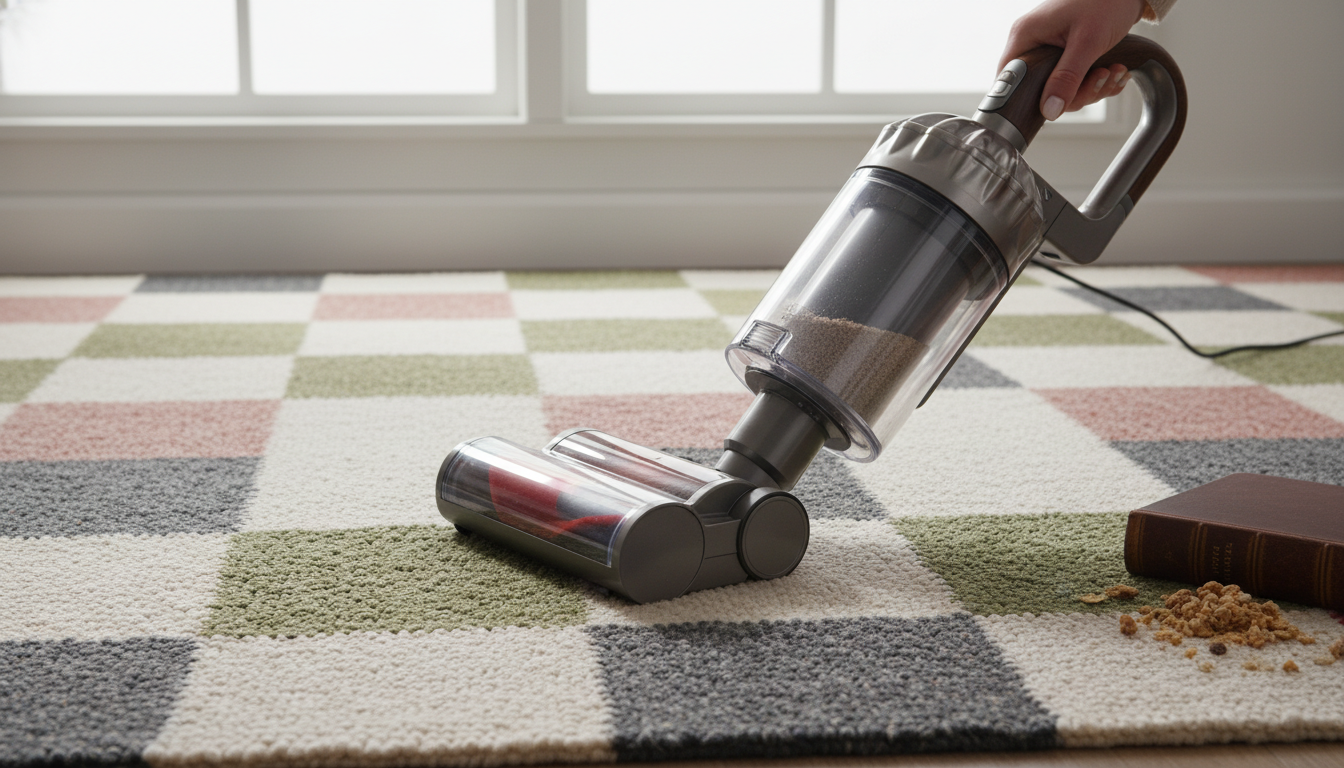
The Architecture of a Visual Spectacle
In the world of Circuscore, the rug acts as the stage floor—it has to withstand the “performance” of daily life without losing its theatrical luster. When you’re dealing with the high-contrast palettes typical of this trend—think stark obsidian blacks paired with optic whites or deep oxblood reds against cream—the integrity of the fiber is what keeps the room looking sophisticated rather than sloppy. In 2026, we’re seeing a significant pivot toward Bio-Acetate fibers and high-twist yarns that provide the sheen of silk with the structural resilience of a gallery-grade textile.
The magic of a bold stripe or a radial tent pattern lies in the sharpness of the lines. If the fibers “bleed” or shed excessively, that crisp architectural edge is lost. This is why material science is currently the secret weapon for interior designers. By utilizing New Zealand wool blends with a high lanolin content, rugs from thebohorugs.com naturally repel stains while maintaining a Light Reflectance Value (LRV) that keeps those vibrant reds and yellows from looking muddy under evening LED lighting.
Engineered Vibrancy: The 2026 Fiber Palette
- Refined PET Yarn: Not to be confused with entry-level plastics, the 2026 iteration of recycled PET mimics the hand-feel of mohair. It’s the gold standard for circuscore rugs in dining rooms, where the drama of a spilled Cabernet shouldn’t end the show.
- High-Twist New Zealand Wool: By increasing the “twist” count of the yarn, weavers create a denser surface that prevents furniture indentations—essential when you’re pairing a heavy, sculptural 2026-era sofa with a bold striped rug.
- Bio-Acetate Accents: Often used for the “white” portions of a circus-inspired pattern, this plant-based fiber offers a luminous, silk-like glow that catches the light, mimicking the satin sheen of vintage big-top costumes.
There is a specific psychology to the materials we choose for high-energy spaces. We want the visual thrill of the circus, but we require the tactile groundedness of a luxury estate. Designers are increasingly layering these performance-driven pieces in high-traffic zones like entryways and creative hubs because they offer a rare combination: a “wow factor” that doesn’t come with a fragile “don’t touch” warning.
“The longevity of a Circuscore aesthetic depends entirely on color separation. In 2026, we are looking for ‘solution-dyed’ fibers where the pigment goes all the way through the yarn. This ensures that the deep navy stripes stay navy and the white stripes stay white, even in sun-drenched penthouses. Without this material precision, the theatricality fades into a muted memory within two seasons.” — Julian Thorne, Senior Textile Analyst & Historian
Maintaining the Performance
Beyond the initial aesthetic, the physics of the rug determines how it ages. A theatrical home decor moment requires a pile height that balances comfort with clarity. A 10mm-12mm cut pile is the “sweet spot” for 2026; it’s deep enough to feel indulgent underfoot but short enough that the graphic geometry of a bold stripe rug remains legible from across the room.
It’s also worth noting the role of backing materials. We are seeing a move toward natural latex and recycled cotton backings that allow the rug to breathe. This prevents the “bubbling” often seen in cheaper synthetic alternatives, ensuring your circus-inspired stripes stay as flat and focused as a freshly painted canvas. When sourcing from curated collections like those at thebohorugs.com, the focus remains on these invisible technical details that elevate a “trend” into a long-term heirloom.
When styling a Circuscore rug in a room with low natural light, choose a rug with a high-luster Bio-Acetate blend. The fiber’s ability to reflect light (LRV) will prevent the bold patterns from “closing in” the space, keeping the energy playful and expansive rather than heavy.
Curating the Palette: Sophisticated Tones for 2026
Elevating the Spectacle: The 2026 Circuscore Color Story
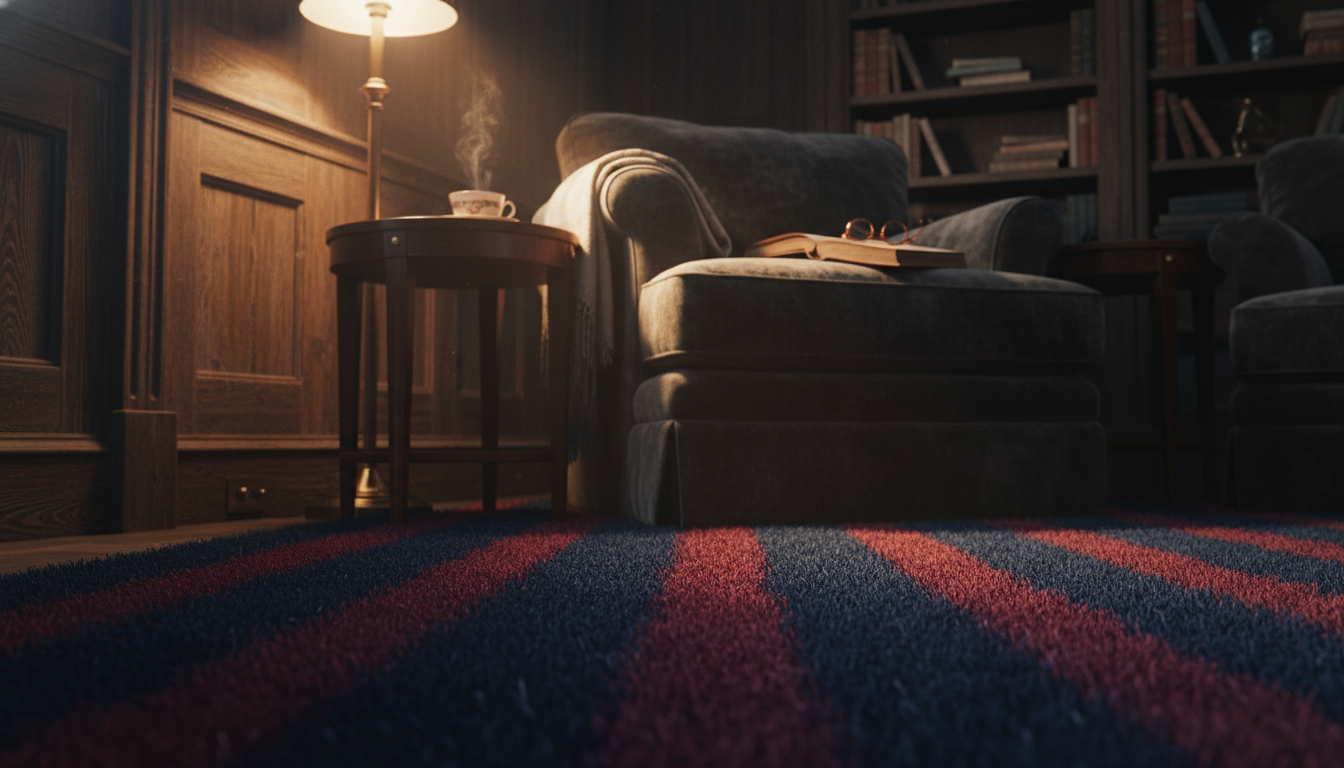
Moving away from the primary-color chaos of traditional big-tops, the 2026 iteration of Circuscore embraces what designers are calling “Theatrical Sophistication.” It is a palette that feels curated rather than cluttered, leaning into high-contrast pairings that ground the room while maintaining a sense of performative wonder. We are seeing a departure from flat, synthetic dyes in favor of pigments that possess historical weight—think deep madder root reds, oxidized ochres, and shadowed indigos. What makes this trend particularly potent for 2026 is the strategic use of Light Reflectance Values (LRV). While a standard white stripe might feel too stark, designers are opting for “Antique Parchment” or “Mushroom” tones with lower LRV (around 60–65). These creamier off-whites absorb just enough light to soften the transition between bold stripes, preventing the “vibrating” effect that often makes high-contrast patterns difficult to live with in smaller apartments.The New “Primary” Palette
The 2026 Circuscore rug isn’t just about stripes; it’s about the emotional resonance of the colors within those lines. We’re tracking four dominant color stories that define this era:- The Moody Ringmaster: A heavy emphasis on Oxblood Red paired with Charcoal or Midnight Navy. This combination brings a velvet-curtain drama to libraries and dining rooms, especially when executed in high-sheen Bio-Acetate fibers—a sustainable alternative to silk that captures light with theatrical flair.
- The Sun-Drenched Acrobat: Inspired by vintage circus posters, this palette uses Burnt Sienna, Dusty Terracotta, and Sage Green. It’s a softer, more organic take on the trend that pairs beautifully with the hand-knotted textures often found in the Atlas Mountains regions, where weavers are increasingly experimenting with linear, circus-inspired motifs.
- The High-Contrast Harlequin: The classic black-and-white reimagined. Instead of a sterile aesthetic, 2026 uses Espresso and Clam Shell. This slight shift toward warmer neutrals allows the rug to anchor a room without feeling cold or clinical.
- Pistachio & Plum: A rising favorite among Millennials, this unexpected pairing offers a “whimsical-chic” vibe. It’s playful enough for a creative home office but sophisticated enough to sit under a mid-century teak desk.
To keep a circus-inspired rug from overwhelming your space, look for designs where one color occupies roughly 70% of the visual field. Whether it’s a wide “tent-stripe” or a variegated pattern, having a dominant hue allows the eye to rest. If you’re sourcing from a curated collection like thebohorugs.com, look for pieces that utilize “mélange” yarns—where multiple shades are spun into a single thread—to add depth and prevent the stripes from looking like flat, digital prints.
Materiality Meets Movement
The allure of a 2026 Circuscore rug lies in its tactile “performance.” This isn’t just a visual trend; it’s a physical one. We are seeing a massive shift toward multi-pile heights. Imagine a rug where the dark stripes are sheared low and dense, while the lighter stripes are left as a high-pile shag or a looped bouclé. This creates a literal stage for your furniture, adding a three-dimensional quality that mimics the architectural draping of a circus tent. “The secret to making Circuscore feel expensive rather than kitschy is the ‘hand,'” says Julianne Vance, Lead Textile Consultant at the London Design Collective. “When you take a bold, performative pattern like a circus stripe and execute it in premium New Zealand wool or a heavy-weight jute blend, the weight of the material grounds the whimsy. It tells the viewer that while the design is playful, the craftsmanship is serious.” In the context of 2026 homes, these rugs serve as the “anchor piece.” Because the palette is so intentional, you can afford to keep the rest of your furniture relatively minimalist. A bold, striped rug from thebohorugs.com can effortlessly bridge the gap between a sculptural, Neo-Deco velvet sofa and a rugged, organic-shaped wooden coffee table, acting as the energetic thread that pulls disparate styles into one cohesive, joyful “show.”Elevate Your Space
Discover the artistry of handmade luxury. Each rug is a masterpiece of tradition and modern design.
Expert Q&A
What exactly is Circuscore rug style for 2026?
Circuscore rug style is a 2026 design trend characterized by theatrical elements like bold stripes, scalloped edges, and geometric motifs inspired by circus tents and performative arts, reimagined for sophisticated modern interiors.
How do you style a bold striped rug without it looking like a child’s room?
The key is to pair the rug with sculptural, high-end furniture and a restrained color palette. Choose sophisticated shades like charcoal, cream, or deep ochre rather than primary colors to maintain a mature aesthetic.
Is Circuscore a passing fad or a lasting trend?
Driven by Pinterest Predicts and a cultural shift toward personality-driven homes, Circuscore is expected to have longevity as it evolves into ‘Theatrical Maximalism,’ focusing on joy and structure.
Which room is best suited for a Circuscore rug?
Living rooms and entryways are ideal for making a statement, while home offices benefit from the energetic flow of striped patterns to improve focus.
Can I mix Circuscore rugs with other patterns?
Yes, but maintain a consistent color story. Pair a bold striped rug with smaller-scale geometric pillows or textured solids to create visual layers without clashing.
What rug materials are best for the Circuscore aesthetic?
High-quality wool provides the crisp line definition needed for stripes, while performance synthetics are excellent for high-traffic ‘theatrical’ spaces like dining rooms.
Does the direction of the stripes matter in a small room?
Absolutely. Running stripes parallel to the longest wall can make a narrow room feel wider, while vertical stripes can draw the eye toward a focal point like a window.
How does Circuscore differ from standard geometric rugs?
Circuscore is more narrative-driven and performative. While geometric rugs are often abstract, Circuscore rugs explicitly evoke the energy of the big top through stripes and tent-like motifs.
Are there muted versions of Circuscore rugs available?
Yes, ‘Quiet Circuscore’ uses the same bold patterns but in tonal palettes like beige and white or navy and slate for a more subtle theatrical effect.
How do I clean a high-contrast striped rug?
Regular vacuuming is essential to prevent dirt from dulling the contrast between light and dark stripes. Professional cleaning is recommended for wool versions to maintain the vibrancy of the colors.
What furniture styles pair best with these rugs?
Mid-century modern, Memphis Milano, and Neo-Deco styles all complement the playful and structured nature of Circuscore rugs.
Why are Boomers and Millennials specifically gravitating toward this trend?
Both generations are moving away from the monotony of ‘minimalist’ interiors in favor of spaces that reflect personal stories, joy, and a sense of occasion.
Written by TheBohoRugs Interior Design Team
Experts in handmade rugs, boho interiors, and modern home decor.
