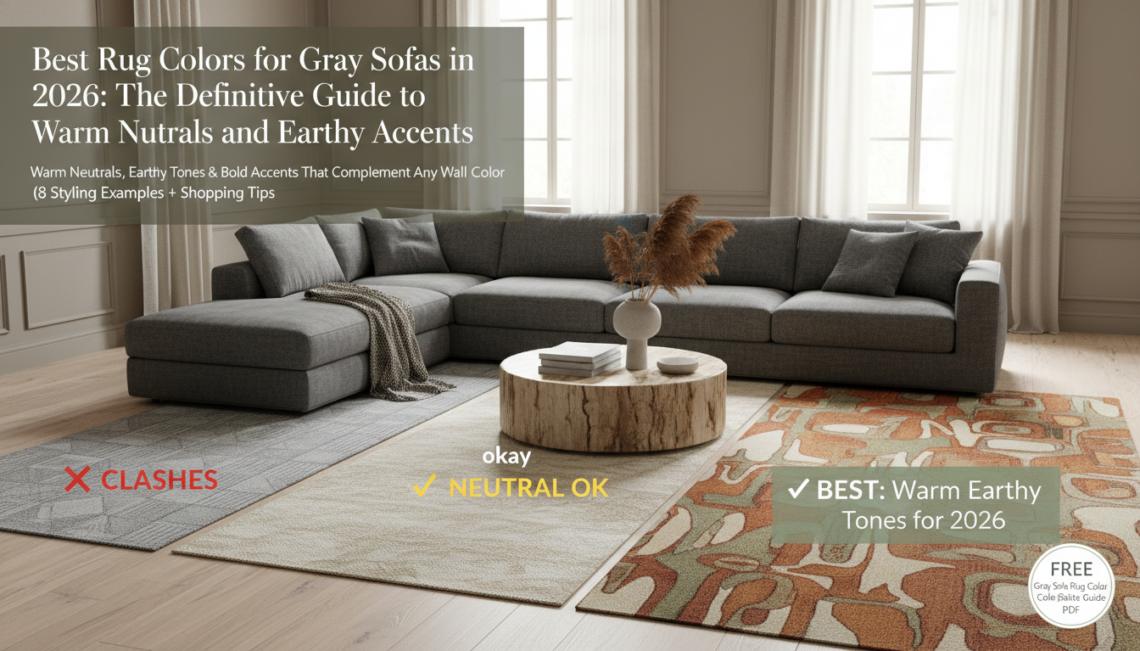
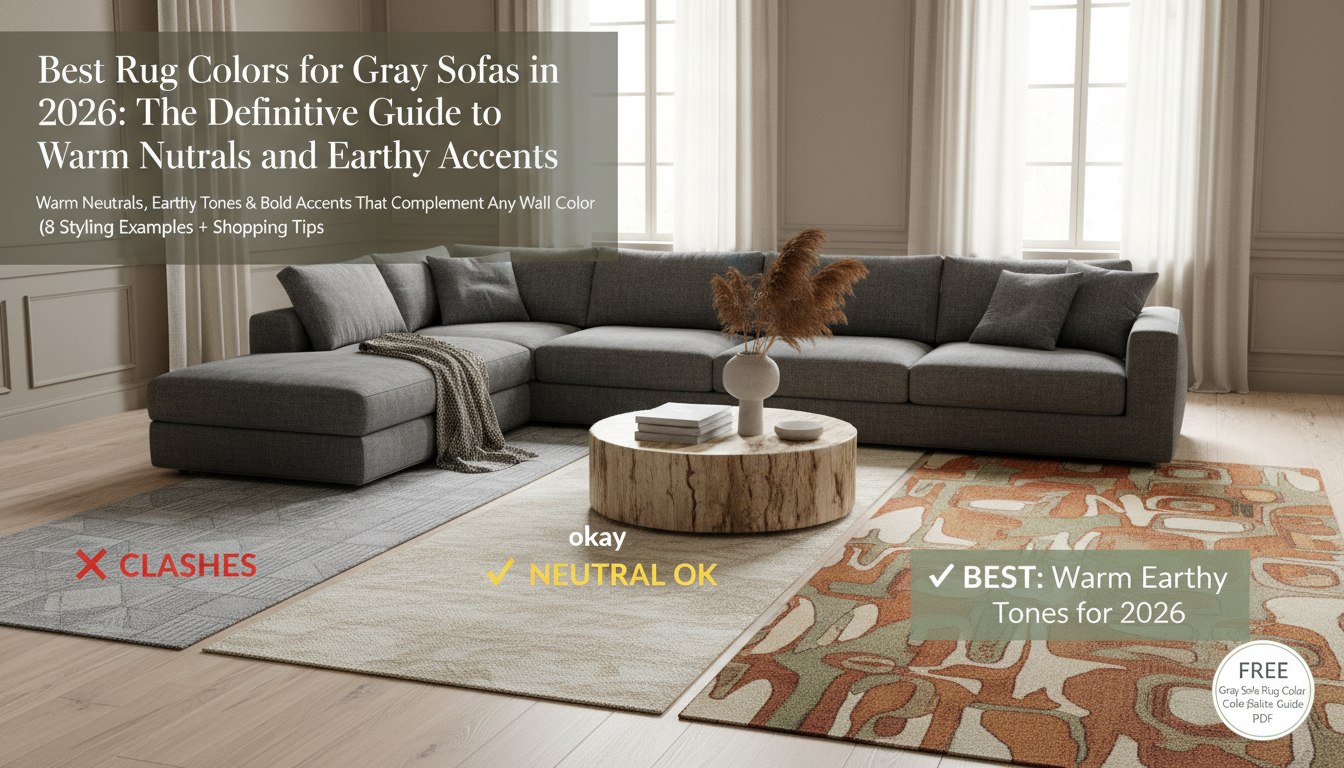
By 2026, the era of the stark, clinical ‘Millennial Gray’ has officially dissolved, replaced by a sophisticated movement toward ‘New Neutrality.’ While the gray sofa remains an architectural staple of the modern home, its role has shifted from a neutral backdrop to a canvas for tactile warmth and chromatic depth. The design dilemma of the decade is no longer about matching gray to gray; it is about breaking the monochromatic spell with rugs that breathe life into a space. Whether your sofa leans toward a cool charcoal or a warm pebble, the choice of floor covering is the singular element that dictates whether your living room feels like a high-end gallery or a cold waiting room. This year, we are seeing a pivot toward organic pigments—terracotta, sage, and mushroom—that harmonize with evolving wall colors to create a sense of grounded luxury.
“The best rug colors for a gray sofa in 2026 prioritize warmth and organic contrast. To elevate a cool gray sofa, opt for earthy tones like terracotta, mustard yellow, or sage green. For warm gray or ‘greige’ sofas, choose light neutrals with high-texture weaves such as creamy oatmeal, toasted almond, or charcoal with a visible raised pile. If your walls are white, a high-contrast rug in navy or forest green provides depth, while darker walls benefit from luminous ivory or champagne silk-blend rugs to reflect light and prevent the room from feeling heavy.”
The Roadmap
Table of Contents
- The 2026 Gray Evolution: From Cool to Kinetic
- Decoding Undertones: Is Your Sofa Warm or Cool?
- 8 Masterful Styling Examples for Any Wall Color
- Material Science: Sustainable Fibers for 2026
- The Palette Cheat Sheet: Matching Rugs to Wall Tones
- Avoid the ‘Flat’ Trap: Common Gray Sofa Mistakes
- Selecting Your 2026 Statement Piece
The 2026 Gray Evolution: From Cool to Kinetic
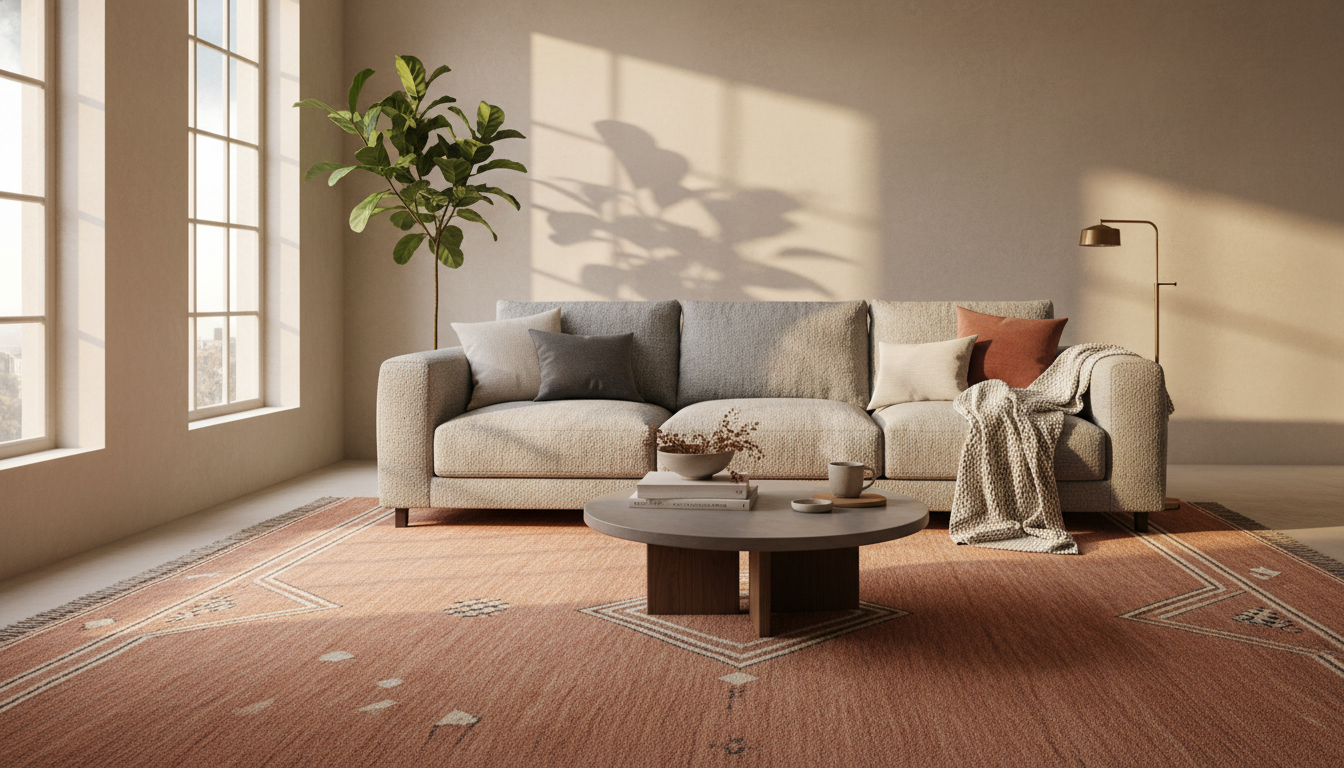
For the better part of a decade, gray was the industry’s “safe harbor.” It was the neutral that required little thought and offered a clean, albeit sometimes clinical, backdrop for modern living. But as we move into 2026, that flat, monochromatic aesthetic has been replaced by what designers are calling Kinetic Gray. This isn’t the static, unyielding charcoal of 2015; it’s a living, breathing palette that shifts with the light and demands a rug that does more than just “match.”
The Architecture of the Undertone
The secret to 2026 design isn’t the color gray itself, but the ghost of the color hidden within it. We are seeing a definitive move away from the “cool” grays—those blue-based tones that can feel icy in northern light. In their place, Stone Grays and Mushroom Neutrals have taken over. These fabrics often have a Light Reflectance Value (LRV) of 30 to 45, meaning they absorb enough light to feel grounded but reflect enough to show off the rug’s intricate textures.
When you pair a gray sofa with a rug today, you are essentially balancing temperatures. If your sofa leans toward a “Pebble” or “Greige,” you want a rug that pulls out those hidden yellow or red pigments. This is where thebohorugs.com has become a vital resource for our editors; their collection of hand-knotted pieces often uses hand-spun wool that retains its natural lanolin, offering a slight luster that prevents a gray sofa from looking like a flat block of color.
“The 2026 evolution is about emotional ergonomics,” says Isabelle Vance, Lead Designer at Studio Althea. “We aren’t just filling a room; we are creating a sensory experience. A gray sofa is a silent partner, and the rug is the soloist. By choosing rugs with organic variations—think ochre silts or oxidized copper tones—you turn a ‘gray room’ into a landscape.”
Materiality: Bio-Acetate and High-Low Relief
In terms of construction, 2026 is the year of Bio-Acetate fibers and high-performance blends that mimic the tactile quality of silk without the fragility. We are seeing a surge in High-Low pile techniques, where the rug features varying heights. When placed under a sleek, minimalist gray sofa, a rug with a 3D topographic weave creates a sense of movement. It’s no longer about a flat pattern; it’s about how the shadow falls into the rug’s fibers at 4:00 PM.
- The Silt Palette: Think of colors found in a riverbed—clays, damp moss, and sun-bleached driftwood. These provide a sophisticated “earthy” anchor for light gray upholstery.
- The Oxidized Look: Rugs that feature “erosive” patterns—where the color looks faded in some areas and deep in others—complement the industrial roots of a gray couch while adding much-needed warmth.
- The Fiber Factor: Look for rugs blending Himalayan wool with Tencel. The matte wool absorbs the “flatness” of the gray, while the Tencel catches the light, creating a shimmering contrast.
To avoid a room feeling “muddy,” use the 60-30-10 rule with a kinetic twist. 60% of your room is your primary neutral (the sofa and walls), 30% is your rug color (we recommend a Terracotta or Sage with a high LRV), and 10% is your “kinetic” accent—metal finishes or glass that reflects the rug’s tones back onto the sofa.
Moving into this new era requires a departure from the “matching” mindset. Instead of looking for a rug that contains gray, look for a rug that needs gray to be complete. Whether it’s a vintage-inspired piece from thebohorugs.com with intentionally “distressed” jewel tones or a modern geometric in toasted almond, the goal is to create a dialogue between the furniture and the floor. The sofa provides the structure; the rug provides the soul.
Decoding Undertones: Is Your Sofa Warm or Cool?
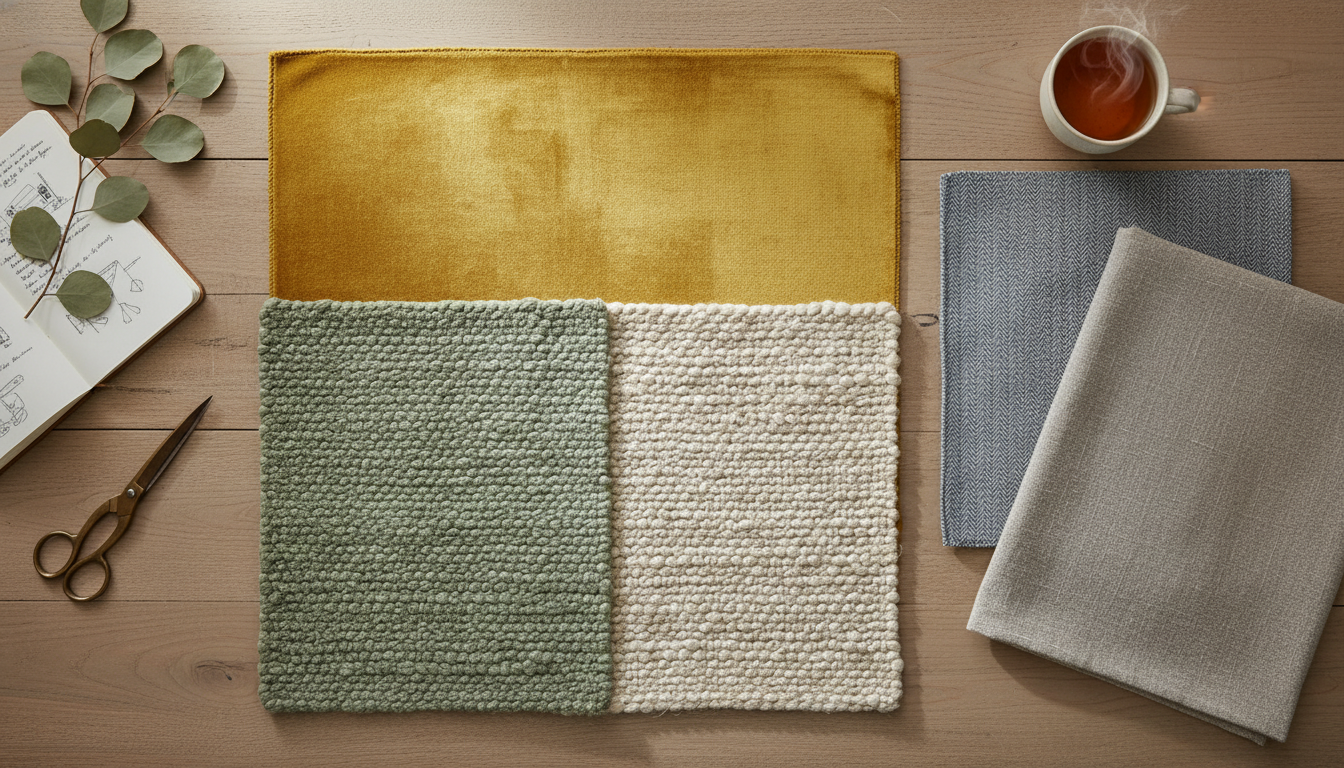
Before you even glance at a swatch book or browse the curated collections at thebohorugs.com, you have to confront the chameleon-like nature of your furniture. Most people think they bought a “gray” sofa, only to realize—once it’s sitting against their specific flooring—that it actually looks a bit lavender, or perhaps strangely green. This isn’t a manufacturing error; it’s the result of complex pigment layering.
In the design landscape of 2026, we are seeing a definitive shift away from the “flat” grays of the previous decade. The industry is moving toward Heritage Grays—shades that possess depth and soul. To choose the right rug, you must first identify whether your sofa leans into the “Cool” or “Warm” camp. This distinction determines whether a rug will create a harmonious sanctuary or a visual clash that leaves the room feeling unsettled.
The White Paper Test: Unmasking the Base Pigment
If you’re struggling to see the hidden tints in your upholstery, try the oldest trick in the editorial styling handbook. Hold a sheet of pure white printer paper against your sofa in the middle of the day. Against that true neutral, the sofa’s “true” personality emerges.
- Cool Grays: These pieces carry blue, purple, or crisp green undertones. They often feel modern, architectural, and slightly detached. Think of a slab of polished slate or a stormy Atlantic sky.
- Warm Grays (Greige): These sofas have a base of yellow, red, or brown. They feel approachable, organic, and cozy. In the 2026 market, these are frequently upholstered in Bio-Acetate blends or high-twist New Zealand wool to emphasize their tactile, “earth-first” quality.
The Light Reflectance Value (LRV) of your sofa also plays a role here. A charcoal sofa with a low LRV (soaking up more light) can handle a high-contrast cream rug with ease, whereas a mid-tone “true” gray might disappear into a similarly valued rug, creating a “flat” aesthetic that lacks the necessary dimension for a luxury space.
“The most common mistake I see isn’t choosing a ‘bad’ color; it’s ignoring the temperature of the weave. A cool, steel-gray sofa paired with a warm, sandy jute rug can sometimes feel like an accidental mismatch rather than a deliberate design choice. In 2026, we are prioritizing ‘intentional friction’—using complementary undertones to create a space that feels curated over time.”
— Elena Rostova, Lead Textile Consultant at The Design Atelier
The 2026 Shift: Why Temperature Matters More Than Ever
As we lean further into Emotional Minimalism, the “all-gray” room is being retired in favor of tonal layering. If your sofa is cool, you might think you need a cool rug to match. However, the 2026 trend guide suggests the opposite: Counter-balancing. A cool charcoal sofa thrives when paired with a rug featuring subtle terracotta accents or a mushroom-toned wash. This prevents the room from feeling like a sterile laboratory.
Conversely, if your sofa is a warm greige, look for rugs that lean into those earthy roots. Hand-knotted techniques from the Atlas Mountains—which often utilize undyed wools—provide those natural creamy yellows and soft browns that make a warm gray sofa feel like an organic extension of the home.
When styling your gray sofa, think of the rug as the “60” in your color story. If your sofa (the “30”) is a cool slate, select a rug with at least 10% of a warm accent color—like a burnt ochre or a sage green with an LRV of around 40—to bridge the gap between your furniture and your flooring. This creates a bridge for the eye and makes the gray feel like a deliberate choice rather than a default.
When you browse the artisanal selections at thebohorugs.com, pay close attention to the pile. A cool-toned gray sofa often benefits from the “visual heat” of a high-pile shag or a textured kilim. The shadows created by the texture add “warmth” even if the color palette remains neutral, solving the riddle of how to keep a modern space from feeling cold.
8 Masterful Styling Examples for Any Wall Color
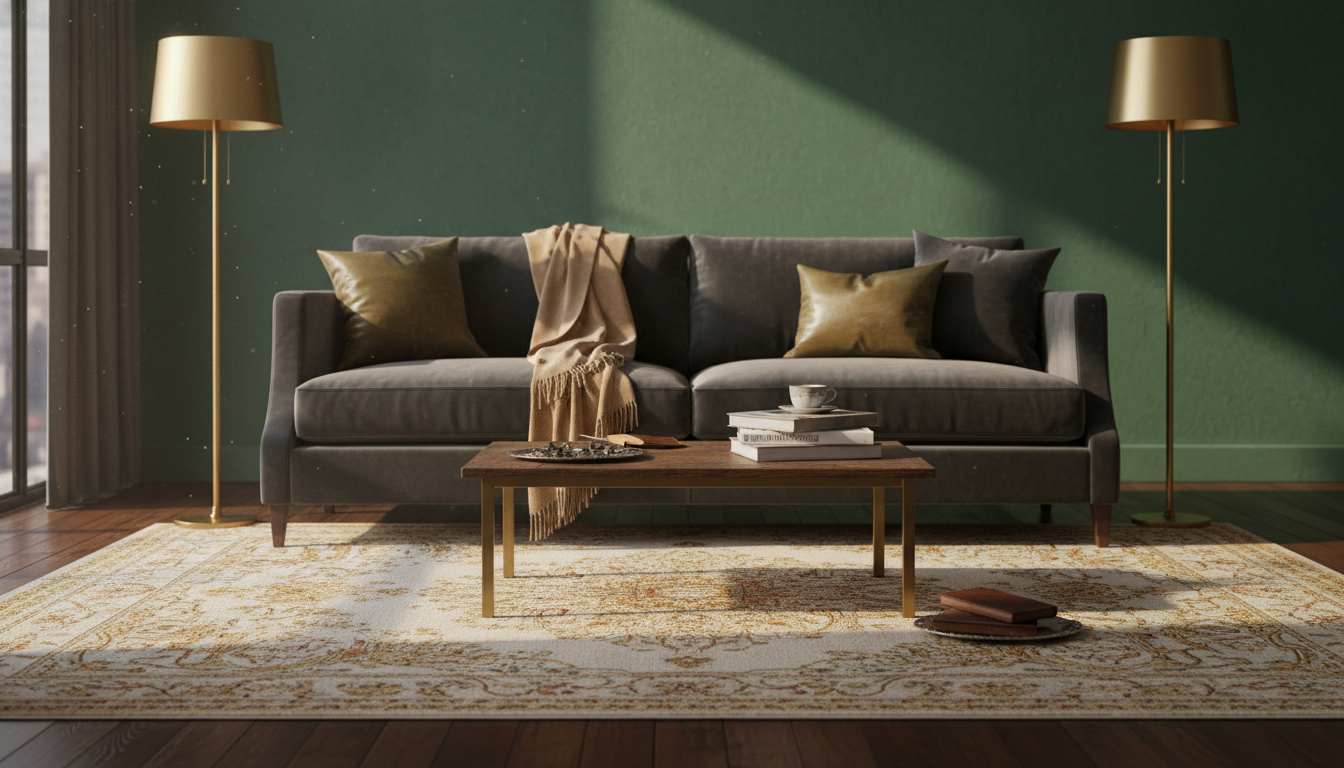
1. The “Scandi-Glow”: Dove Gray + Alabaster Walls + Toasted Oat Rug
For those working with a light, airy gray sofa against crisp white or alabaster walls, the risk is a room that feels “cold” or clinical. The 2026 remedy is the Toasted Oat rug. By selecting a rug with a high-pile texture, perhaps a shag or a high-twist New Zealand wool from thebohorugs.com, you introduce organic warmth.The Designer Secret: Pay attention to the Light Reflectance Value (LRV) of your white walls. If your walls have an LRV above 80, a flat beige rug will look muddy. Instead, choose a rug with subtle flecks of cream and tan to bridge the gap between the gray fabric and the bright walls.
2. The Earthbound Anchor: Charcoal Sofa + Sage Walls + Terracotta Rug
Deep, moody gray sofas demand a rug with enough visual “weight” to ground the room. When paired with Sage Green walls (specifically tones like “Dried Thyme” which are trending for their calming effect), a Terracotta or burnt sienna rug creates a stunning complementary color story.“We are seeing a massive return to pigments derived from the earth—ochres, clays, and oxides,” says Julian Thorne, Lead Textile Historian at the Milan Design Collective. “A hand-knotted rug in a rusted clay hue provides the perfect ‘heat’ to balance the ‘cool’ of a charcoal sofa.”
3. Modern Organic: Silver Gray Sofa + Greige Walls + Olive Moss Rug
Greige (gray-beige) walls are the ultimate 2026 staple, but they can occasionally feel flat. To breathe life into this setup, we recommend a rug in Olive Moss. This isn’t the bright green of a decade ago; it’s a sophisticated, desaturated olive that feels like a forest floor.- Why it works: The green undertones pull out the hidden warmth in silver-gray upholstery.
- The Fiber Factor: Look for Bio-Acetate fibers or silk blends that offer a subtle sheen, mimicking the way light hits damp moss.
4. The Tonal Masterclass: Slate Sofa + Cool Gray Walls + Deep Navy & Pewter Rug
If you prefer a monochromatic look, the key to 2026 styling is gradient depth. Avoid a rug that matches your sofa exactly. Instead, opt for a sophisticated Navy and Pewter pattern. The dark blue acts as a pseudo-neutral, adding a “prestige” feel to the slate sofa. Expert Insight: Use a rug with a low-loop pile. The tight construction reflects less light, making the navy appear deeper and more expensive against the gray floor.5. The Desert Minimalist: Warm Gray Sofa + Sand Walls + Mushroom Rug
For a home that feels like a high-end spa, the “Mushroom” palette is king. This rug color sits perfectly between brown, gray, and lavender. When paired with a warm-toned gray sofa and sand-colored walls, the result is a seamless, architectural flow.To avoid a “flat” look, source a rug from thebohorugs.com that features high-low carving. This technique uses different pile heights to create a pattern without needing a second color, maintaining that minimalist serenity while adding much-needed shadow and light.
6. The Jewel Box: Storm Gray Sofa + Navy Walls + Spiced Ochre Rug
Bold designers are opting for saturated wall colors like Midnight Navy or Deep Plum. To keep the room from feeling like a cave, your rug must act as a light source. A rug in Spiced Ochre or Goldenrod provides a brilliant focal point.Pro Tip: When using bold accents, ensure your rug has a faded or “distressed” finish. A solid, bright yellow rug can feel juvenile; an aged ochre rug with a traditional Persian motif feels like a curated antique.
7. Industrial Softness: Iron Gray Sofa + Exposed Brick or Wood Walls + Slate Blue Rug
In lofts or homes with heavy wood accents, an iron-gray sofa can feel a bit “hard.” A Slate Blue rug—specifically one with hand-spun wool from the Atlas Mountains—softens the industrial edges. The blue-gray fibers in the rug will pick up the cool tones of the sofa, while the natural lanolin in the wool adds a soft, organic texture that contrasts with brick or timber.8. The Neo-Classical: Ash Gray Sofa + Pale Pink/Plaster Walls + Espresso Rug
Plaster-toned walls (think “Setting Plaster” or dusty rose) are the surprise hit of 2026. Pairing this feminine wall color with an Ash Gray sofa creates a beautiful tension. To ground the look, use a Deep Espresso or Bitter Chocolate rug.- The Detail: Avoid black rugs, which can look harsh. Espresso has a red/brown undertone that harmonizes with the pink walls and makes the gray sofa look exceptionally crisp.
- Shopping Checklist: Ensure the rug is at least 24 inches wider than the sofa on both sides to properly frame this specific color story.
As we move away from floating furniture layouts, the 2026 standard is to have at least the front two legs of your gray sofa resting 8 to 12 inches onto the rug. This “locks” the color palette together, preventing the rug from looking like a “postage stamp” in the middle of the room.
Material Science: Sustainable Fibers for 2026
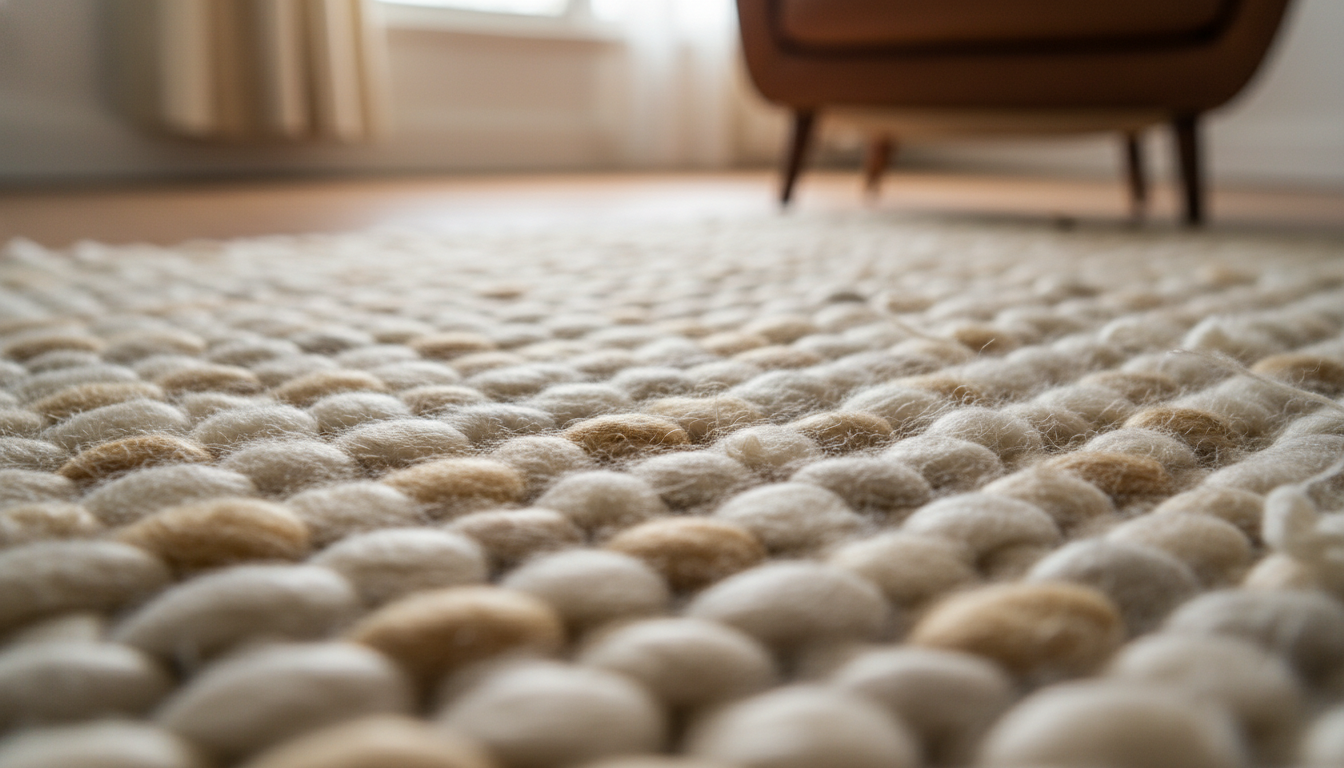
The Rise of High-Twist Organic Wool
While synthetic blends dominated the previous decade, 2026 marks a return to the “living fiber.” High-twist New Zealand wool and hand-knotted techniques from the Atlas Mountains are becoming the gold standard for grounding a gray centerpiece. These fibers contain natural lanolin, which provides an inherent stain resistance—a necessity when pairing lighter rugs with a charcoal or slate sofa. The structural integrity of these wools creates a “micro-shadow” effect within the pile, adding a layer of visual depth that prevents a gray sofa from looking two-dimensional.
Bio-Acetate and the New Silk Standard
For those looking to brighten a cool-toned gray sofa, the 2026 shift toward Bio-Acetate and Tencel Luxe fibers is a game-changer. These botanically derived silks offer a high Light Reflectance Value (LRV), casting a soft, ethereal glow that bounces light back onto the sofa’s upholstery. This is particularly effective in rooms with moody wall colors like forest green or navy, where a matte rug might make the space feel heavy. A blended weave of wool and bio-acetate creates a “high-low” texture that mimics the organic movement of water, a signature aesthetic in the latest collections at thebohorugs.com.
“Texture is the secret language of a monochrome room. When you pair a flat-weave gray sofa with a high-pile organic wool or a refined hemp blend, you’re creating a dialogue between the industrial and the elemental. It’s that tension that makes a design feel curated rather than just decorated.”
— Julian Thorne, Textile Historian & Design Consultant
Regenerative Bast Fibers: Hemp and Jute 2.0
The “earthy tone” trend of 2026 is heavily supported by the use of refined bast fibers. We are seeing a move away from the scratchy, oversized jute weaves of the past toward “soft-washed” hemp and fine-gauge seagrass. These materials naturally lean into the warm neutral spectrum—think mushroom, oat, and sand—which provide the perfect thermal balance to a cool gray sofa. These rugs act as a bridge between the furniture and natural wood flooring, grounding the room in an organic sensibility that feels timeless yet modern.
When shopping for the best rug to pair with heavy gray furniture, check the “knot count” or “gram weight” rather than just the thickness. A high-density, low-pile rug (around 2,500 grams per square meter) will support the weight of a sectional without leaving permanent indentations, while still providing the soft underfoot feel of a much thicker carpet.
The beauty of these sustainable materials lies in their longevity. A hand-tufted rug using recycled PET yarn—which has been refined in 2026 to feel indistinguishable from wool—offers an indestructible option for high-traffic zones. These rugs hold deep pigment exceptionally well, making them the ideal vessel for the terracotta and olive tones that are currently trending. By selecting a rug from an artisanal source like thebohorugs.com, you ensure that the material science behind your floor covering is as sophisticated as the aesthetic you’re building around your gray sofa.
Avoid the ‘Flat’ Trap: Common Gray Sofa Mistakes
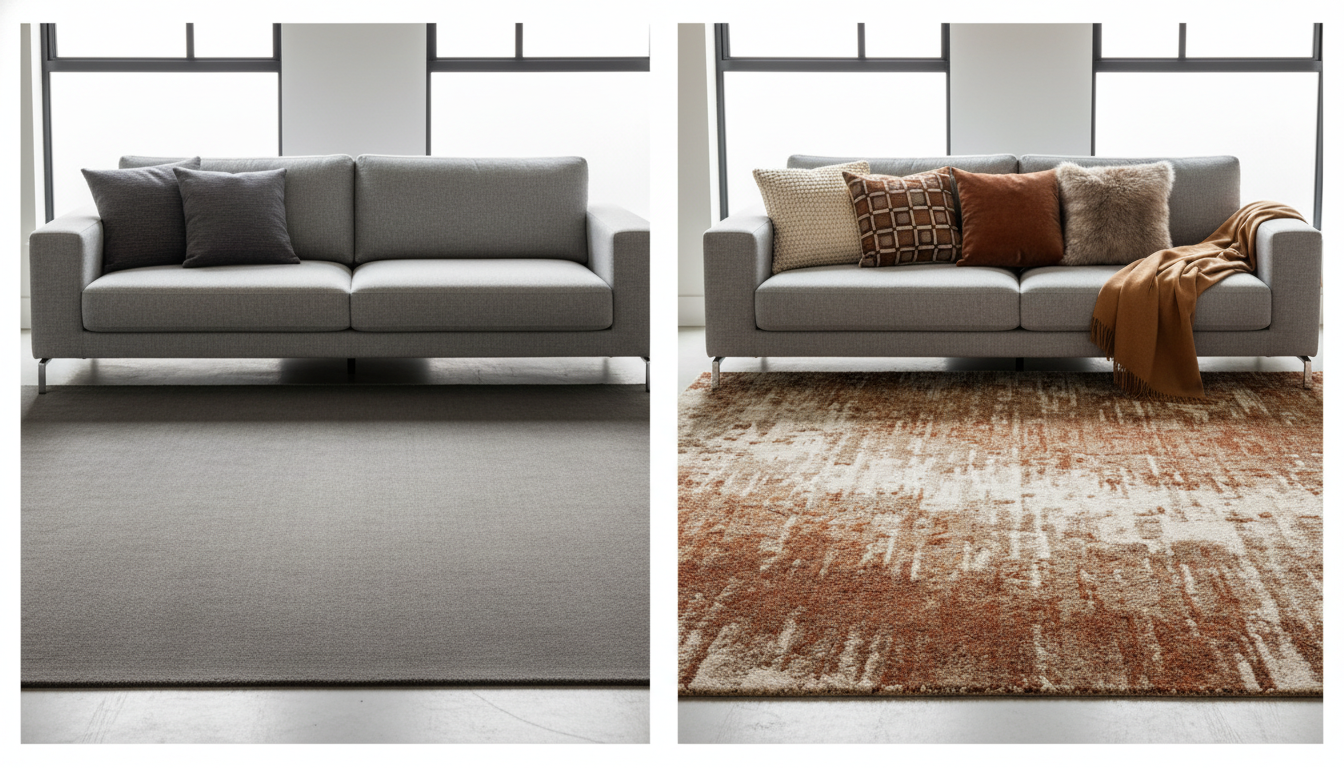
The “Floating Sofa” Phenomenon and Other Scale Blunders
One of the most disheartening sights in high-end residential design is a magnificent, charcoal-velvet sectional marooned on a rug that is simply too small. This creates the “floating sofa” effect, where the furniture feels disconnected from the architecture of the room. In 2026, the trend is moving toward expansive, perimeter-hugging layouts. If your rug ends two inches before the sofa legs begin, you aren’t just missing the mark on scale; you’re visually shrinking your square footage.
To avoid this, ensure at least the front two legs of your gray sofa rest comfortably on the rug. For a truly grounded, “quiet luxury” aesthetic, we recommend a rug that extends 12 to 18 inches beyond the sides of the furniture. At thebohorugs.com, many designers are opting for custom-sized Oushak-inspired weaves that allow for this generous proportion, ensuring the gray upholstery feels integrated rather than isolated.
The Danger of “Tonal Bleed”
The “Flat Trap” usually happens when a homeowner tries to be too safe. Choosing a medium-gray rug for a medium-gray sofa results in Tonal Bleed—a lack of definition where the furniture and floor dissolve into a singular, uninspired mass. This is where Light Reflectance Value (LRV) becomes your best friend.
If your sofa has a low LRV (meaning it’s a deep charcoal or slate), your rug should pivot toward a higher LRV—think shimmering champagnes, silver-washed sages, or unbleached wools. Conversely, a pale dove-gray sofa needs the “weight” of a darker rug to feel intentional. Without this luminance contrast, the room loses its three-dimensional quality, appearing dull in photographs and lifeless in person.
“The mistake isn’t using gray; the mistake is using only one kind of gray. In our 2026 collections, we are seeing a massive shift toward ‘dimensional neutrals’ where we blend high-twist New Zealand wool with matte silk. This creates a high-low effect that catches the light differently than the flat polyester blends of the last decade.”
— Julian Thorne, Senior Textile Historian & Creative Director
Ignoring the “Third Element”: Wall Undertones
A gray sofa doesn’t exist in a vacuum; it sits between the floor and the walls. A common oversight is matching the rug to the sofa while ignoring the wall color. If you have “Cool Gray” walls and a “Cool Gray” sofa, a cool-toned blue or silver rug will make the room feel like a clinical laboratory.
The 2026 design movement is all about Temperature Balancing. If your walls and sofa are cool, your rug is the primary tool to inject warmth. This is why we are seeing a surge in terracotta-infused neutrals and rugs with “Mushroom” or “Taupe” bases. These earthy pigments provide a bridge between the furniture and the architecture, preventing the space from feeling cold or uninviting.
If your sofa fabric is a flat weave or a smooth linen, your rug must have a different tactile profile. Look for high-pile Moroccan styles or rugs featuring raised hand-carved patterns. Using the same texture for both the floor and the seating is the fastest way to make a luxury room feel “contract grade” or commercial.
The Synthetic Sheen Error
In 2026, the discerning eye is moving away from the “plastic” look of high-gloss synthetic fibers like standard polypropylene. These materials often have a specular highlight that looks cheap under LED lighting, clashing with the sophisticated matte finish of a quality gray sofa.
Instead, look for Bio-Acetate fibers or Tencel blends that mimic the luster of silk without the fragility. These materials, often found in the artisanal curated collections at thebohorugs.com, offer a soft, diffused glow. This subtle interaction with light adds depth to the floor, ensuring your gray-on-gray palette looks intentional and expensive rather than flat and dated.
- Don’t: Use a rug with the exact same pile height as your sofa’s seat cushions.
- Do: Create a “texture sandwich” (e.g., smooth leather sofa + chunky wool rug + matte plaster walls).
- Don’t: Forget to check your rug swatches at night. Cool grays can turn “muddy” under warm 2700K lighting if the rug doesn’t have enough chromatic clarity.
Elevate Your Space
Discover the artistry of handmade luxury. Each rug is a masterpiece of tradition and modern design.
Expert Q&A
What is the best rug color for a light gray sofa and white walls?
In 2026, the trend is to introduce ‘Organic Warmth.’ A beige, oatmeal, or soft mushroom rug with a high-pile texture prevents the room from feeling washed out while maintaining an airy, sophisticated aesthetic.
Can I put a gray rug under a gray sofa?
Yes, but only if you play with contrast and texture. Choose a rug that is at least two shades lighter or darker than the sofa, and ensure it has a distinct pattern or material (like a shaggy wool or silk blend) to create visual separation.
Does a navy rug work with a dark gray couch?
Navy is a classic choice, but for 2026, we suggest a ‘Dusty Navy’ or ‘Midnight Teal.’ These shades offer enough cool-toned harmony to feel cohesive while providing a rich, jewel-toned depth that elevates dark gray upholstery.
What rug color goes with a gray couch and tan walls?
Sage green or muted olive rugs are spectacular in this scenario. They bridge the gap between the cool gray of the furniture and the warm tan of the walls, creating a nature-inspired, balanced palette.
Are oriental rugs still in style for gray sofas in 2026?
Absolutely. Distressed or ‘faded’ oriental rugs in terracotta, copper, or indigo are a top choice for adding heritage and soul to modern gray furniture.
What rug color makes a small room with a gray sofa look bigger?
Opt for a light-reflective cream or champagne rug with a subtle, large-scale pattern. The lighter colors expand the floor space visually, especially when paired with light-colored walls.
Should my rug be lighter or darker than my gray sofa?
Both work, but they create different moods. A lighter rug creates a breezy, Scandinavian feel, while a darker rug grounds the room and creates a more intimate, cozy atmosphere.
What are the trending rug materials for 2026?
Sustainability is king. We are seeing a massive rise in Tencel (for silk-like shine), recycled wool, and undyed natural jute which provide raw, organic texture perfect for gray sofas.
Does a yellow rug look good with gray furniture?
Avoid bright canary yellow. Instead, look for ‘Ochre’ or ‘Mustard.’ These earthy yellows add a sophisticated pop of color that feels intentional and high-end rather than dated.
How do I choose a rug for a gray sofa if I have oak floors?
Oak floors add natural warmth. To complement this, choose a rug with ‘Cool Earth’ tones like slate blue or a warm ‘Greige’ that contains both gray and beige fibers to tie the floor and sofa together.
Written by TheBohoRugs Interior Design Team
Experts in handmade rugs, boho interiors, and modern home decor.