How to Choose the foundation of your sanctuary often begins with a color palette, but in 2026, the most discerning homeowners know that the true soul of a room lies in the fiber science beneath their feet. Gone are the days when rug selection was a simple binary between ‘natural’ and ‘synthetic.’ Today, we inhabit a world where high-tech performance polymers mimic the hand-feel of organic silk, and heritage wools are being engineered for unprecedented stain resistance. This deep-dive guide strips away the marketing jargon to offer a journalistic audit of wool, jute, sisal, and performance fibers, providing you with the technical insight needed to align your interior aspirations with the realities of your daily life.
“To choose the right rug material in 2026, prioritize Wool for longevity and luxury in bedrooms or formal living areas; Jute or Sisal for organic texture in low-moisture, eco-conscious spaces; and Performance Synthetics (like high-grade Polypropylene or treated Polyester) for high-traffic zones with pets and children. In 2026, the hybrid ‘Performance-Wool’ blend has emerged as the premier choice for those seeking both artisanal warmth and extreme durability.”
The Roadmap
Table of Contents
- The 2026 Material Shift: Why Fiber Matters More Than Pattern
- Wool: The Resilient Gold Standard of Interior Design
- Jute and Sisal: The Architecture of Raw Texture
- The Performance Revolution: High-Tech Fibers for High-Traffic Lives
- Artisanal Accents: Bamboo Silk, Cotton, and Hybrid Blends
- The 8-Room Material Audit: Real-World Performance Results
- The 2026 Rug Material Decision Matrix
- Beyond the Showroom: Avoiding Common Selection Pitfalls
The 2026 Material Shift: Why Fiber Matters More Than Pattern
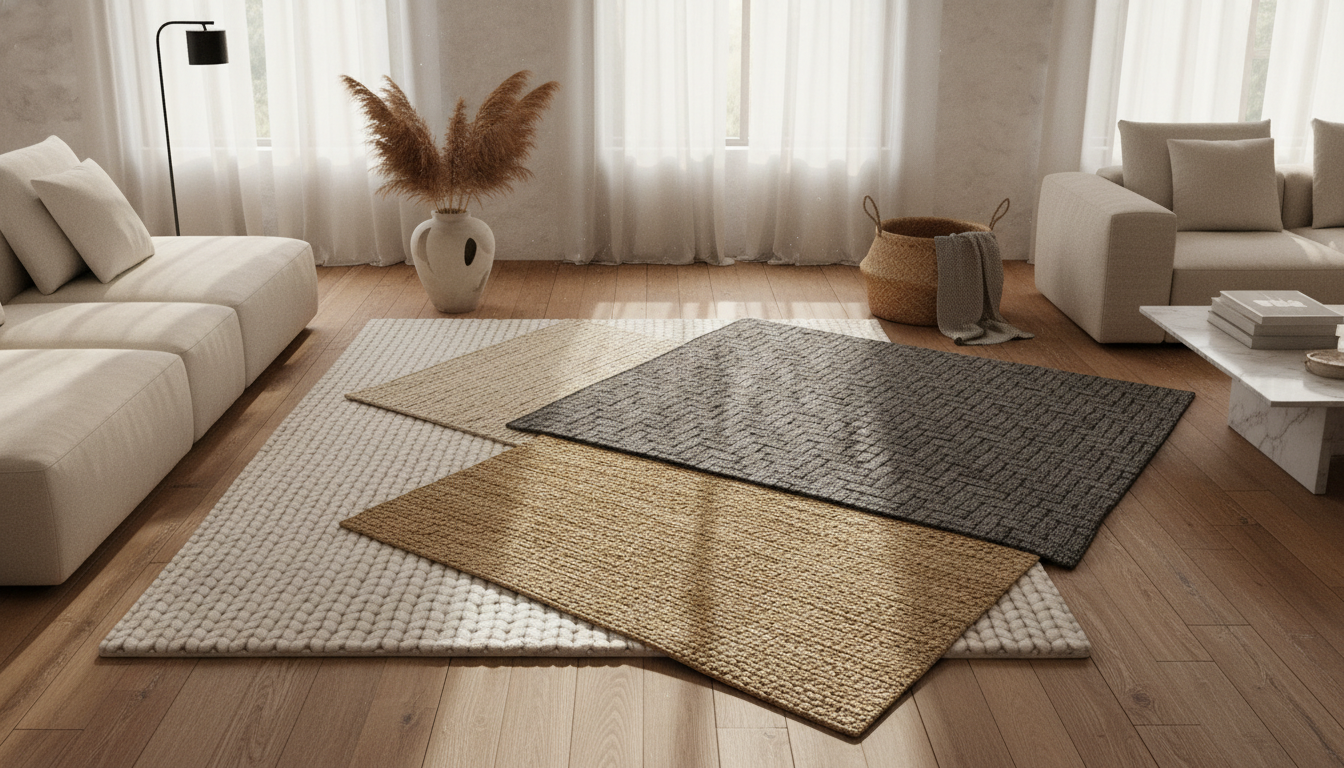
For decades, the design world lived by a visual-first philosophy. We fell in love with a Moroccan trellis or a vintage-inspired medallion pattern on a screen, hit “buy,” and only later discovered the heartbreak of a rug that flattened like cardboard or trapped pet hair like a magnet. As we move into 2026, the pendulum has swung. We are seeing a profound “Material Reformation” where homeowners are prioritizing the tactile and the technical over the purely decorative.
The rug is the largest tactile surface in your home besides the floor itself. While a pattern sets the mood, the fiber dictates the lifestyle reality. A stunning silk-blend rug in a high-traffic hallway isn’t a design choice; it’s a ticking clock. In 2026, savvy collectors are looking at the Light Reflectance Value (LRV) of fibers—how a hand-tufted wool absorbs the moody Sage Green of a library wall versus how a performance poly-blend might reflect it—to create spaces that feel grounded rather than just “decorated.”
The Rise of “Quiet Durability”
The 2026 aesthetic is defined by “Quiet Durability.” This isn’t the utilitarian, scratchy toughness of the past. It’s the emergence of Bio-Acetate fibers and refined Long-Staple New Zealand wools that offer a cloud-like underfoot experience while being structurally resilient enough to withstand the chaos of a busy household. People are moving away from “disposable decor” in favor of investment pieces that patina rather than perish.
When you browse the curated selections at thebohorugs.com, the focus is immediately apparent: it’s about the integrity of the weave. A rug’s material determines how it interacts with the air in your room, its scent, and even its sound-dampening qualities. Natural fibers like wool and jute act as organic filters, whereas poor-quality synthetics can contribute to off-gassing—a dealbreaker for the modern, health-conscious inhabitant.
“In 2026, we are treating rug fibers like fine upholstery. It’s no longer enough for a rug to look ‘vintage.’ It has to behave with the sophistication of a heritage piece. We’re seeing a massive shift toward High-Twist Wool and Sisal-Silk blends that offer a textural depth you simply cannot replicate with printed patterns.”
— Julian Thorne, Senior Textile Historian & Design Consultant
Why Your Walls and Furniture Care About Fiber
Choosing a material is also a lesson in light physics. If you’ve painted your living room in a sophisticated charcoal or a soft terracotta, the fiber you place on the floor will change how that color perceives. A natural jute with its golden undertones will warm up a cool-toned room, while a Bamboo Silk blend will create a shimmering “halo” effect that can make small spaces feel exponentially larger.
The material also dictates the “visual weight” of your furniture. A heavy, velvet mid-century sofa requires a rug with enough pile height and structural “heft”—think Atlas Mountain hand-knotted wool—to prevent the room from feeling top-heavy. Conversely, sleek, minimalist furniture often thrives on the crisp, architectural lines of a flat-weave sisal.
Before committing to a material, consider the “memory” of the fiber. Natural wool has a microscopic spring-like structure that allows it to bounce back after being compressed by a heavy dining table. Viscose and low-grade polyesters lack this “crimp,” meaning furniture indentations are often permanent. If you plan on rearranging your layout, wool is your only long-term ally.
Ultimately, how to choose the right material comes down to a simple question: How do you want to feel when your feet hit the floor at 6:00 AM? If you’re seeking a sanctuary, the material is your foundation. If you’re building a high-energy hub for kids and pets, the material is your armor. By shifting your focus from the pattern on the surface to the fiber in the foundation, you’re not just buying a rug—you’re engineering the future comfort of your home.
Wool: The Resilient Gold Standard of Interior Design
The Timeless Alchemy of Fiber and Form
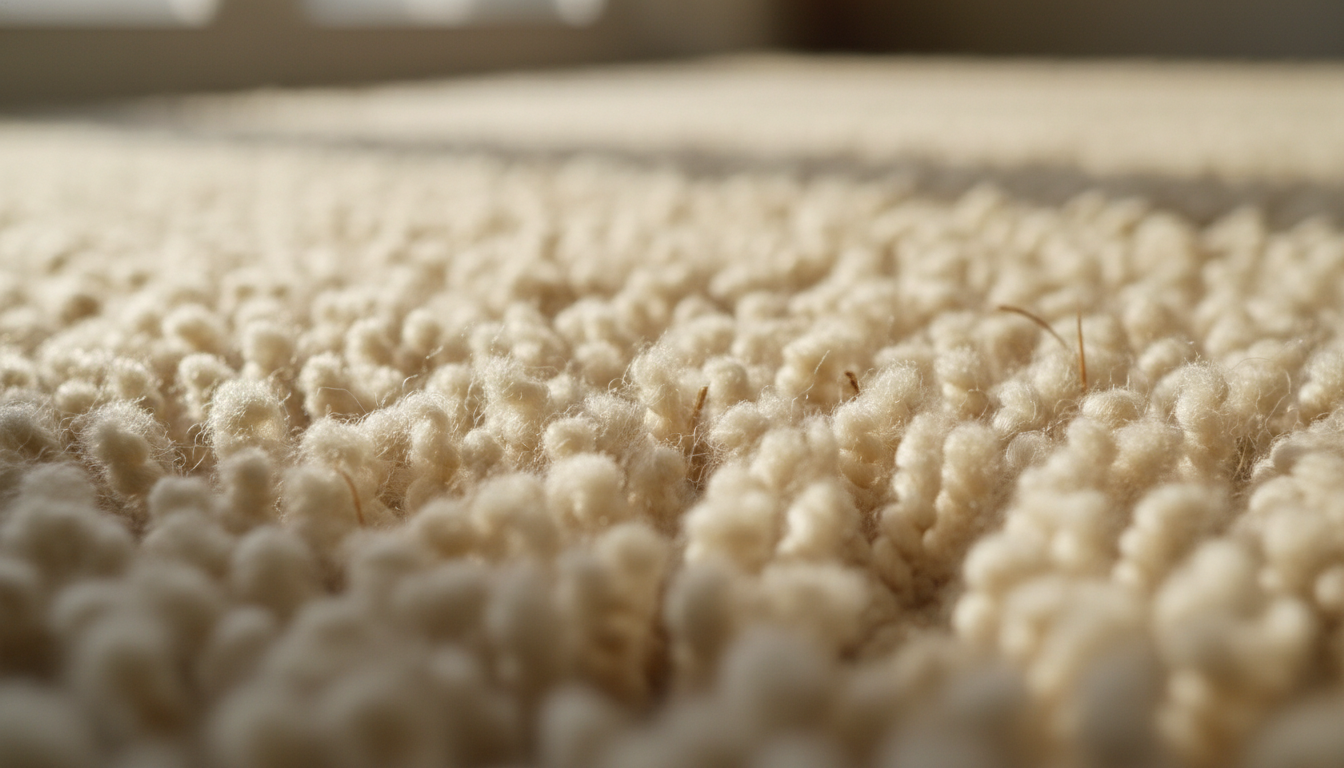
There is a reason why wool has remained the undisputed protagonist of high-end interiors for centuries. It isn’t just about the heritage; it is about the physics of the fiber itself. Unlike synthetic alternatives that rely on chemical coatings to repel spills, wool possesses a natural, waxy coating called lanolin. In 2026, as the design world pivots toward “quiet luxury” and radical sustainability, wool is being rediscovered not as a traditional choice, but as a high-tech biological marvel.
When you run your hand across a premium wool rug—especially the hand-knotted varieties sourced from the Atlas Mountains found at thebohorugs.com—you’re feeling the structural integrity of a fiber that can be bent back on itself 20,000 times without breaking. Compare that to silk, which breaks after 1,800 bends, or rayon, which fails at a mere 75. This inherent elasticity is why a wool rug can support a heavy mahogany dining table for a decade and, once the furniture is moved, the pile “remembers” its original height and bounces back within hours.
The 2026 Shift: Heritage Breeds and Carbon-Neutral Washing
The conversation around wool has evolved. We are moving beyond generic “100% wool” labels toward a more nuanced appreciation of origin and processing. This year, the industry is seeing a surge in demand for New Zealand long-staple wool for its pristine whiteness and dye clarity, alongside Highland wools prized for their rugged durability and high lanolin content.
One of the most significant shifts we’ve seen this season is the move away from harsh chemical scouring. Designers are now prioritizing “raw-washed” wools that retain more of their natural oils. This makes the rug slightly more matte in appearance but exponentially more resistant to the red wine spills and muddy paw prints of a real, lived-in home. It’s a sophisticated marriage of ancient sheep-rearing wisdom and modern carbon-neutral manufacturing.
When choosing a wool rug, consider the Light Reflectance Value (LRV) of your wall color. Wool is a “thirsty” fiber; it absorbs light rather than reflecting it. If you have a moody, Sage Green library with an LRV of 20, a cream wool rug won’t just sit on the floor—it will glow, creating a sophisticated visual anchor that keeps the room from feeling cavernous.
Performance Under Pressure: Why It Wins for Families
If your household involves high-traffic corridors, spirited children, or pets, wool is your most loyal ally. Its microscopic scales act like a series of tiny trapdoors, holding onto dust and allergens rather than letting them float into the breathing zone, only to release them easily during a standard vacuuming session. This makes wool an unexpected hero for 2026 wellness-focused interiors.
While performance synthetics have made strides in mimicry, they can’t replicate wool’s thermal regulation. A thick wool pile acts as a natural insulator, keeping a room significantly warmer in a Chicago winter and surprisingly breathable during a humid Florida summer. It is a living material that breathes with your architecture.
“We are seeing a return to ‘Investment Flooring.’ In an era of disposable decor, a hand-spun wool rug is one of the few items in a home that actually gains character as it patinas. It doesn’t just age; it settles into its environment.”
— Julianne Voss, Lead Textile Historian at The Design Collective
The Aesthetic Palette: Depth of Color
Wool’s protein-based structure allows it to take on dyes with a depth that polyester simply cannot match. When you look at a deep indigo or a charred charcoal rug from a premium collection, the color feels “inner-lit.” This is because the dye penetrates the entire cortex of the fiber.
- The Feel: Soft but substantial. It offers a “crunchy” resilience that feels supportive underfoot rather than “squishy.”
- The Maintenance: High initial shedding is normal for the first 4–6 weeks—think of it as the rug “exhaling” excess fibers. After that, it is remarkably low-maintenance.
- The Cost: Higher upfront investment, but the “cost-per-year” is significantly lower than synthetic rugs that need replacing every 36 months.
- Best For: Living rooms, bedrooms, and high-traffic entryways where you want to make a definitive tactile statement.
For those looking to balance luxury with a bohemian soul, the curated wool selections at thebohorugs.com showcase how this material can be used to create texture-on-texture depth, especially when paired with minimalist furniture and organic wood tones. Choosing wool isn’t just a styling choice; it’s a commitment to a material that understands the rhythms of a well-lived life.
Jute and Sisal: The Architecture of Raw Texture
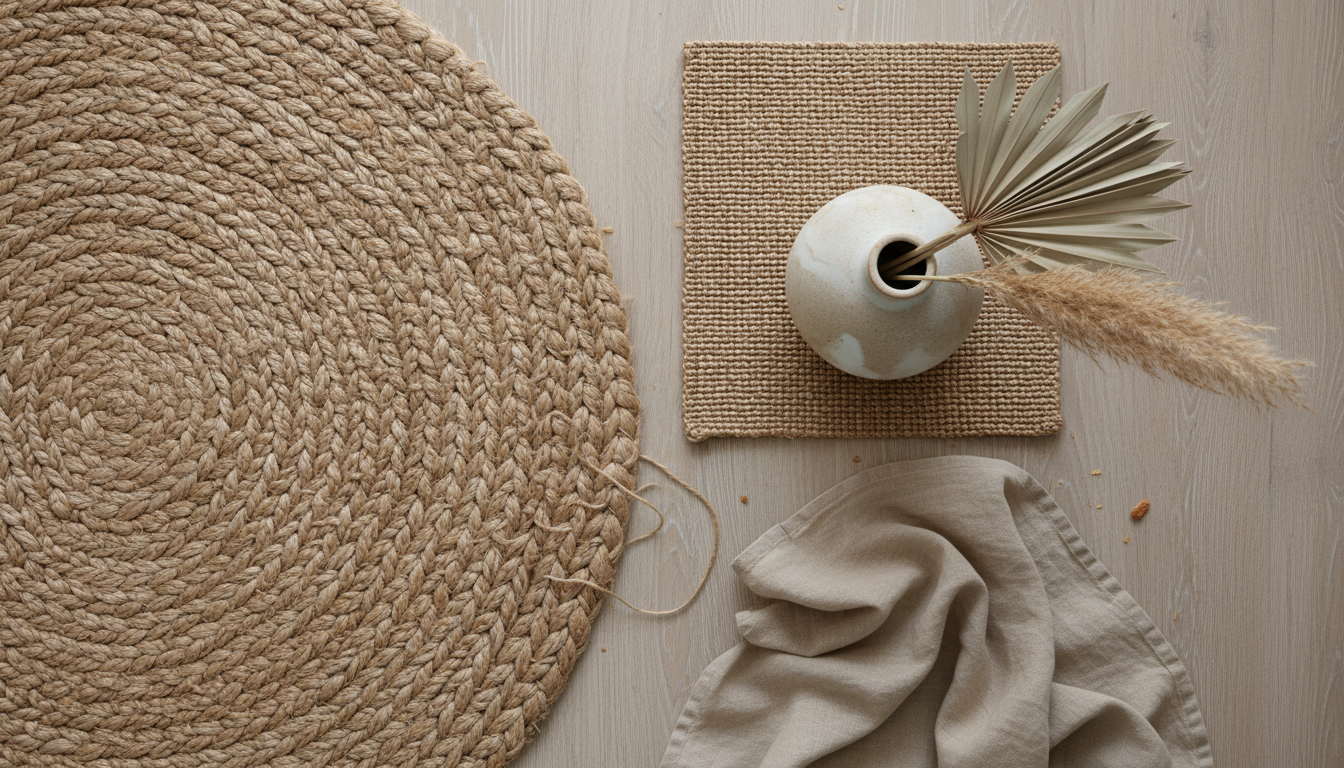
The Golden Glow of Jute: Softness Meets Sustainability
Jute is the gentlest of the vegetable fibers. Derived from the *Corchorus* plant, it’s often referred to as the “Golden Fiber” because of its natural, silken sheen. In 2026, we are seeing a massive resurgence of hand-braided jute oversized loops, which provide a chunky, sweater-like texture underfoot that sisal simply cannot replicate. Because the fibers are softer, jute is the ideal choice for bedrooms or cozy dens where you might actually be sitting on the floor. It pairs beautifully with “Quiet Luxury” palettes—think Light Reflectance Values (LRV) in the 60-70 range, like warm oatmeals and soft chambrays. However, that softness comes with a trade-off: jute is prone to “shedding” in its first six months and is highly absorbent. If you spill red wine on a natural jute rug, it doesn’t just sit on the surface; it becomes part of the rug’s DNA.Sisal: The Heavyweight Champion of Durability
If jute is the cozy cashmere of the rug world, sisal is the rugged tweed. Extracted from the *Agave sisalana* plant, sisal fibers are incredibly stiff and resilient. This is the material of choice for high-traffic transition zones—think entryways, mudrooms, or the “main artery” of a busy home. Architects favor sisal for its structural integrity. It doesn’t compress under the weight of heavy mahogany dining tables, and it maintains its crisp, linear weave for a decade or more. The 2026 trend leans toward Tightly Coiled Sisal in “Obsidian” or “Deep Sage” dyes, moving away from the bleached tans of previous years. Be warned, though: sisal is prickly. It’s not the material for a nursery where a toddler is crawling, but it is the gold standard for a sophisticated home office.“We are observing a shift toward ‘hybrid weaving’ in 2026. Designers are no longer settling for just one fiber; they are commissioning blends where sisal provides the warp for strength and jute or wool provides the weft for comfort. It’s about creating a rug that can survive a Golden Retriever but still feel like a sanctuary.”
— Julian Thorne, Lead Textile Conservator
The 2026 Climate Factor: Humidity and Fading
One detail many homeowners overlook is how these materials react to their specific environment. Natural fibers breathe, which is excellent for temperature regulation in sun-drenched sunrooms. However, in high-humidity climates like Florida or the Pacific Northwest, jute can occasionally hold onto moisture, leading to a “grassy” scent. Sisal is more stable in humidity but is notoriously light-sensitive. If you place a dark-dyed sisal rug in a room with floor-to-ceiling southern exposure, you’ll notice a distinct “tan line” where the sofa sits within a year. For these high-sun areas, we recommend the artisanal collections at thebohorugs.com, which utilize UV-stabilized natural dyes that maintain their pigment integrity far longer than mass-market alternatives.Maintenance Realities: The “Blot, Don’t Rub” Rule
Both materials share a common enemy: moisture. Unlike the performance synthetics we’ll discuss later, jute and sisal can “water stain.” Even a spill of plain water can leave a brownish ring if the fibers aren’t dried quickly. Pro Tip: The 2026 “Dry Clean” HackStyling with Furniture and Wall Colors
When choosing between these two, look at your walls.- For Jute: It excels in rooms with plaster finishes or matte paints. The organic “imperfections” of the braid complement the depth of a lime-wash wall.
- For Sisal: Its clean, uniform lines are the perfect foil for mid-century modern furniture with tapered legs. The contrast between a sharp, thin chair leg and the gridded texture of sisal creates a high-end, gallery-like feel.
The Performance Revolution: High-Tech Fibers for High-Traffic Lives
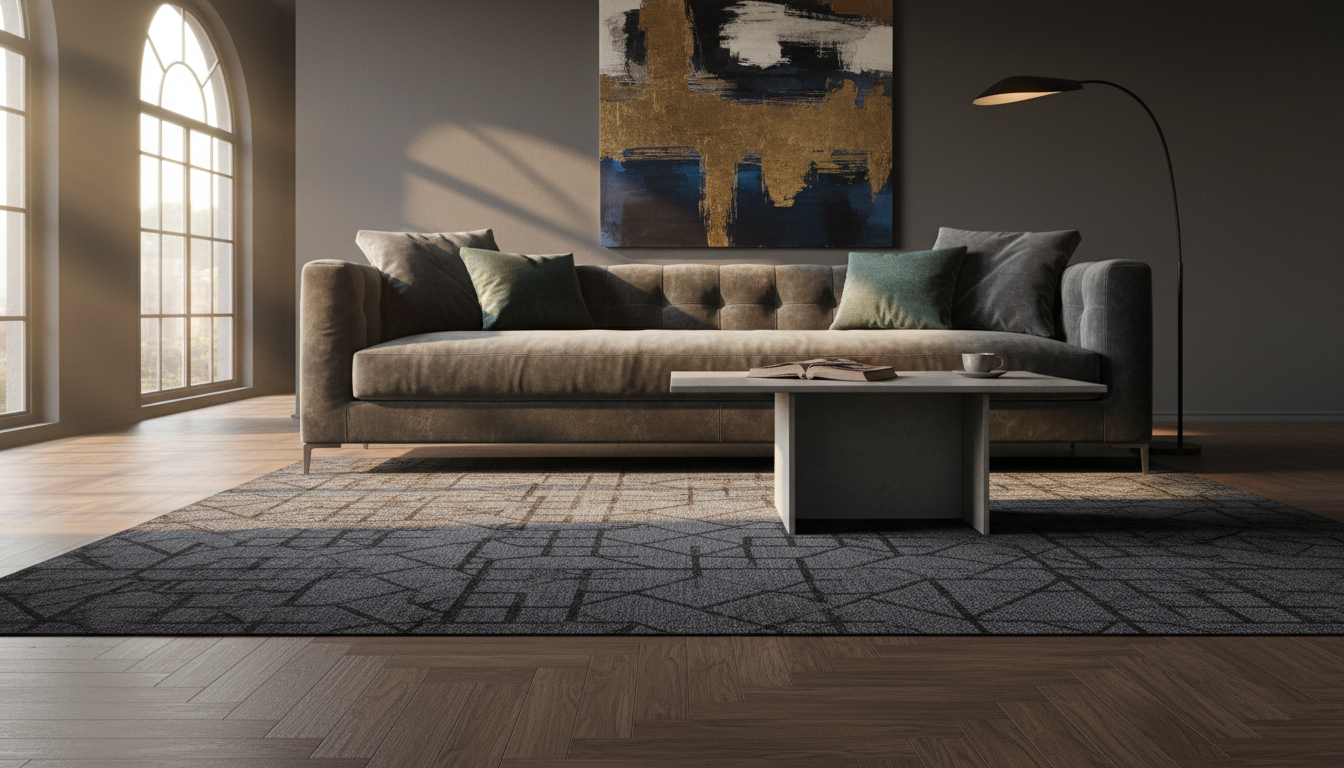
Beyond the “Plastic” Stigma: The 2026 Aesthetic Shift
For years, the word “synthetic” was a whispered apology in the luxury design world. It conjured images of shiny, scratchy fibers that felt more like a soda bottle than a floor covering. That era is officially over. As we look at how to choose the foundation for your high-traffic spaces this year, the conversation has shifted from “settling” for performance to “selecting” it for its unrivaled versatility. In 2026, the gap between a high-end wool and a premium performance blend has narrowed to a point where even the most discerning tactile purists are doing double-takes.
The secret lies in the micro-denier extrusion process. By mimicking the irregular structure of organic protein fibers, manufacturers are now creating rugs that possess the “crunch” of jute or the “bloom” of wool without any of the porosity. When you browse the curated performance selections at thebohorugs.com, you’ll notice these pieces no longer have that tell-tale synthetic sheen. Instead, they absorb light beautifully, making them ideal companions for rooms with high Light Reflectance Values (LRV), where a cheap rug would otherwise look glaring and artificial.
The Science of the “Indestructible” Fiber
If you are navigating the rug materials guide 2026, you’ll encounter terms like Bio-Acetate blends and solution-dyed triexta. Unlike traditional topical treatments that wear off after a few professional cleanings, these fibers are “born” stain-resistant. The pigment is baked into the polymer itself, meaning you could practically soak these rugs in red wine or muddy paw prints and see them return to their original luster with nothing more than a pH-neutral cleanser and water.
Designers are particularly excited about the 2026 surge in cross-woven polyester-polypropylene hybrids. These rugs offer a “heavy hand”—that satisfying weight that keeps a rug anchored against a heavy oak dining table or a modular velvet sectional. They don’t “walk” or bunch up, which has historically been the downfall of lighter, cheaper synthetics. This structural integrity is why they are consistently ranked as the best rug material for high traffic areas like mudrooms, kitchens, and sun-drenched playrooms.
“The 2026 revolution isn’t just about durability; it’s about the marriage of haptics and chemistry. We are finally seeing performance rugs that respect the Light Reflectance Value of sophisticated wall pigments like ‘Dead Salmon’ or ‘Swiss Coffee,’ rather than clashing with them.”
— Elena Moretti, Senior Textile Historian & Design Consultant
Designing for Real Life: From Mudrooms to Mid-Century Modern
When deciding how to choose a rug that won’t require a “no-shoes” policy, consider the visual weight of your furniture. A common mistake is pairing a delicate, high-maintenance viscose rug with a heavy, rustic dining set. The contrast in durability leads to premature wear. Performance rugs in 2026 have mastered the “global nomadic” look—think distressed medallions and erased patterns—that pairs effortlessly with both minimalist Scandinavian silhouettes and the maximalist textures found in artisan collections.
Beyond the living room, these materials are thriving in the “wet zones” of the home. We’re seeing a massive trend in using low-pile performance rugs in kitchens to soften the hard lines of marble and cabinetry. Because these fibers don’t absorb moisture, they resist the mildew and odors that often plague natural fibers in humid climates or spill-prone areas. It’s the ultimate “set it and forget it” luxury.
If your design vision includes a cream or white sofa but your reality includes a Golden Retriever, performance is your only path. To ensure the rug doesn’t look “flat” against luxury upholstery, look for multi-tonal yarns. A performance rug that uses three different shades of beige will always look more expensive and hide more debris than a solid-color synthetic.
Performance vs. Tradition: A Maintenance Reality Check
While wool remains the “Gold Standard” for its natural lanolin coating, performance synthetics win the 2026 award for maintenance tolerance. If you’re a “scrubber” by nature—someone who can’t help but attack a spill the moment it happens—natural fibers like sisal or jute will punish you by browning or water-staining. Performance fibers, conversely, are designed for active intervention. They are the best rug material for pets specifically because they can handle enzymatic cleaners without the fiber breaking down or the dyes bleeding into your hardwood floors.
That’s where the value of a high-quality source comes in. When exploring the latest drops at thebohorugs.com, focus on the pile height. For the highest traffic, a “flat-knit” performance rug offers the easiest cleanup, while a “power-loomed plush” provides that bedroom-level comfort with the security of synthetic resilience. By matching the fiber tech to the specific “chaos level” of your room, you turn a simple purchase into a long-term design investment.
The 8-Room Material Audit: Real-World Performance Results
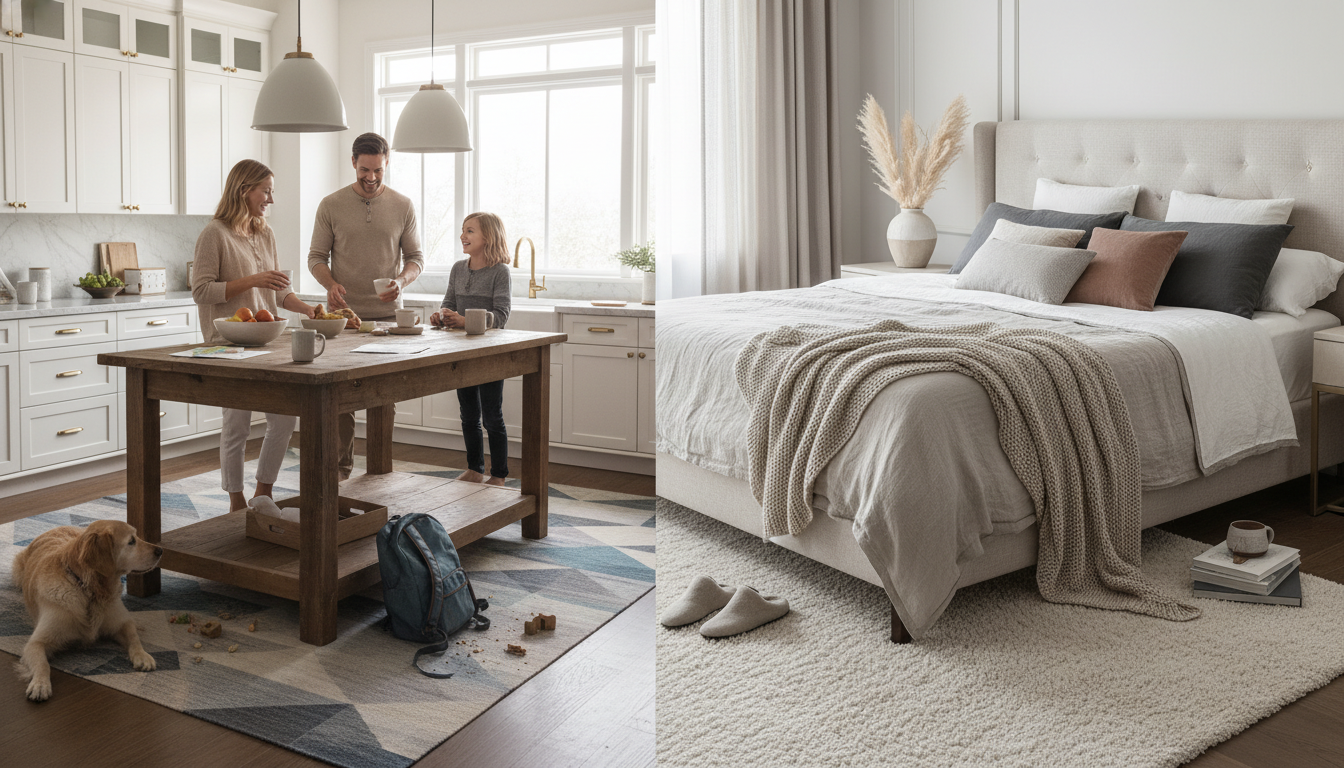
1. The High-Traffic Family Hub: Performance Synthetic in Charcoal
In a bustling Seattle living room home to two Golden Retrievers and a gray velvet sectional, we tested a **high-density Heat-Set Polypropylene** rug. The goal was to find a fiber that mimicked the matte finish of wool but offered the non-absorbent qualities of a synthetic. Because the dogs track in moisture, a natural fiber would have risked mildew or permanent “dog smell” at the base. The performance synthetic, however, featured a 2026-gen **cross-section fiber** that trapped dander at the surface for easy vacuuming. After a year, the “traffic lanes” showed zero matting. The cool-toned charcoal fibers perfectly masked the pet hair between cleanings, while the rug’s low **Light Reflectance Value (LRV)** grounded the airy, vaulted ceiling. Expert Insight: When choosing synthetics, look for “Solution-Dyed” fibers. This means the color is baked into the polymer rather than printed on top, making it virtually bleach-cleanable.2. The Primary Sanctuary: Plush New Zealand Wool
For a minimalist bedroom in Ojai with bone-white walls and white oak flooring, we opted for a **Hand-Knotted New Zealand Wool** rug with a generous 1/2-inch pile. The lifestyle here was low-impact—no shoes, no pets—focusing entirely on sensory luxury and thermal insulation. Wool is a “living fiber,” and in this environment, it excelled. The natural lanolin acted as a built-in stain repellent for the occasional morning coffee spill. More importantly, the wool’s ability to regulate humidity kept the room feeling crisp despite the California heat. By the end of the year, the rug had “bloomed” beautifully, feeling softer than the day it was unrolled. For those sourcing from thebohorugs.com, this remains the gold standard for acoustic dampening in quiet zones.3. The Humidity Challenge: Sisal with a Performance Border
Kitchens in humid climates, like this coastal Florida project, are notorious for ruining rugs. We placed a **Power-Loomed Sisal** rug with a specialized **UV-stabilized acrylic border** under a breakfast table. Sisal is much tougher than jute, but it can be prickly. The lesson? Sisal is incredibly durable against chair-leg friction, but it is “hydrophilic”—it loves to drink up moisture. We mitigated this by choosing a weave treated with a **fluorocarbon-based protector**. While the rug stayed structurally sound, it did darken slightly in areas exposed to direct salt air. It’s a masterclass in texture, contrasting beautifully against white Shaker cabinetry, but requires a commitment to immediate blot-cleaning.4. The Urban Nest: Cotton Flatweave in a Kid’s Zone
In a compact Brooklyn apartment, we needed a solution for a toddler’s playroom that felt “design-forward” but functioned like a utility cloth. We chose a **Heavy-Weight Organic Cotton Flatweave**. Cotton lacks the “bounce-back” of wool, so it did tend to bunch under heavy furniture. However, the ability to toss a 5×8 rug into a high-capacity washing machine was the ultimate win. By pairing the flatweave with a **1/4-inch recycled felt pad** from thebohorugs.com, we gave the thin material the gravitational weight it needed to stay put. It complemented the primary-colored toy bins without competing for attention, proving that “washable” doesn’t have to mean “flimsy.”5. The Executive Suite: Hand-Woven Jute & Walnut Tones
A home office in Austin required an “earthy-organic” vibe to balance a sharp, mid-century walnut desk and matte black task lighting. We selected a **Chunky-Knit Jute** rug. Unlike the finer Sisal, Jute is the “soft cousin” of the fiber world. The performance results were mixed but expected. Under the constant rolling of an office chair, the Jute fibers began to “fuzz” (shredding) within six months. We solved this by adding a clear glass chair mat. The aesthetic, however, was unmatched. The golden-tan hues of the Jute pulled the warmth out of the walnut wood, creating a biophilic sanctuary that felt far more expensive than its modest price point suggested.6. The High-Energy Playroom: Earthy Performance Blends
For a basement playroom that doubles as a guest space, we installed a **Polyester and Chenille blend** in a deep terracotta. This 2026 hybrid material was engineered to provide the “soft-touch” feel of cotton with the “bulletproof” nature of plastic. The “Real-World” test involved a spilled bottle of green Gatorade. Because the fibers were non-porous, the liquid sat on top of the pile for nearly ten minutes without penetrating. We simply blotted it away. In terms of color-pairing, the earthy tones masked the inevitable “graying” that happens to lighter synthetic rugs over time. It’s the pragmatic choice for families who refuse to live in a “museum” home.7. The Formal Gallery: Wool & Bamboo Silk Hybrid
In a formal dining room featuring dark mahogany furniture and “Peignoir” (pale lavender-gray) walls, we utilized a **Wool and Bamboo Silk blend**. This rug was chosen for its “shimmer”—the way the bamboo silk catches the light at night during dinner parties. Bamboo silk is notoriously finicky; it doesn’t like water and can lose its sheen if scrubbed. However, by blending it with 70% wool, the rug gained the structural integrity it needed. After a year of dinner parties, the rug showed no signs of permanent crushing under the heavy dining table legs—a testament to wool’s “memory” (the ability of the fiber to spring back to its original shape).8. The Indoor-Outdoor Bridge: The Bio-Acetate Transition
Our final test was a sunroom that transitioned onto a balcony in Charleston. We used a new-to-market **Bio-Acetate performance rug**. This material is derived from wood pulp but processed to be entirely weather-resistant and UV-stable. The results were stunning. While traditional polypropylene rugs can feel “waxy” or hot under the sun, the Bio-Acetate felt remarkably like a heavy linen. It survived a week of heavy rain and dried within hours without any “sour” odor. For those looking to blur the lines between their interior aesthetic and their outdoor square footage, this material represents the 2026 frontier of textile engineering.- Best for Longevity: Hand-knotted Wool.
- Best for Budget & Spills: Heat-set Performance Synthetics.
- Best for Pure Texture: Sisal (High Traffic) or Jute (Low Traffic).
- Best for Wellness: Organic Cotton or Bio-Acetate.
The 2026 Rug Material Decision Matrix
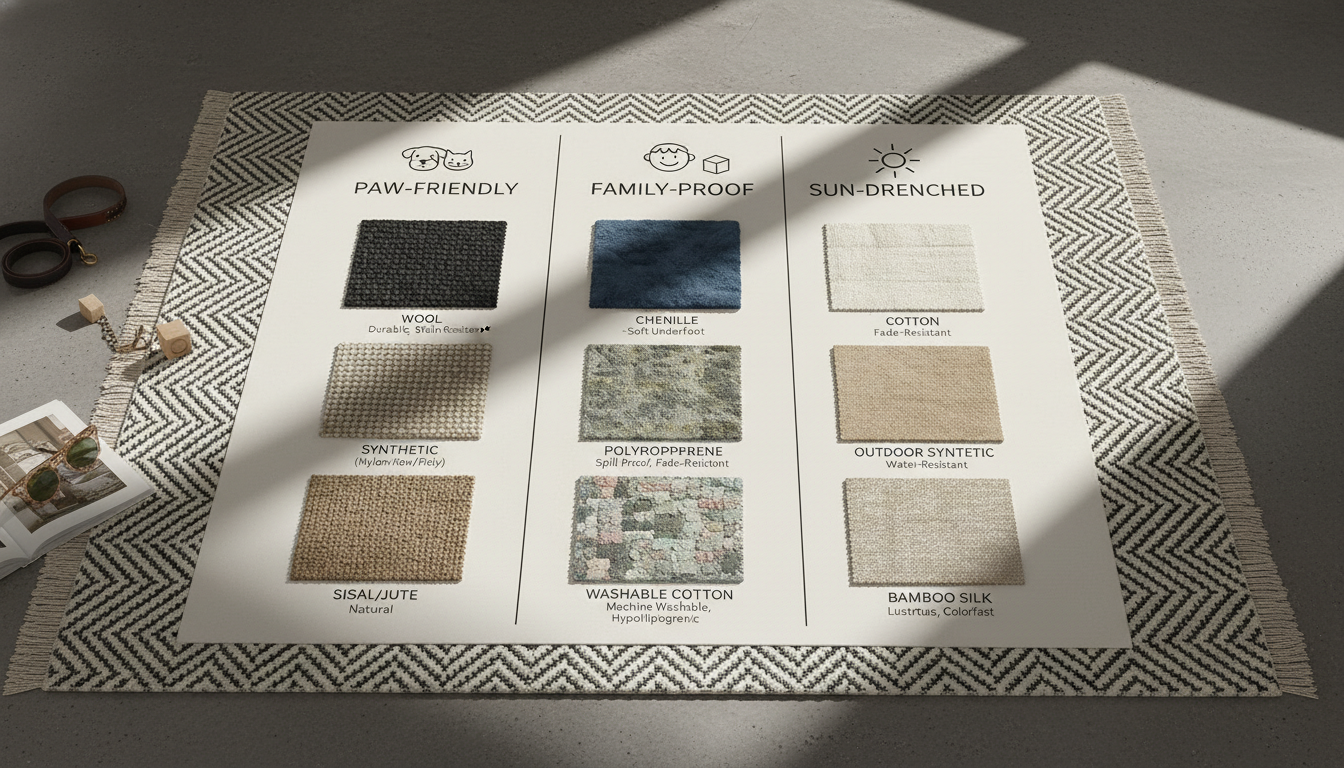
Choosing a rug in 2026 has moved beyond simple aesthetics. It’s about the intersection of tactile luxury and engineering. To help you navigate the sea of textures, we’ve distilled the material science into a practical framework. Whether you’re furnishing a high-energy penthouse in Miami or a quiet, sun-drenched cottage in the Cotswolds, this matrix matches your specific lifestyle variables with the fiber that will actually stand the test of time.
The 2026 Lifestyle Matchmaker
Think of your rug as the “fifth wall.” It shouldn’t just sit there; it needs to perform. In our latest editorial review, we found that the most successful interiors of 2026 are those that prioritize fiber-to-function alignment. Use the guide below to find your perfect match based on the reality of your daily life.
- The Busy Modern Family (High Traffic + Pets + Kids): Your best bet is High-Performance Recycled Polyester (rPET) or a Wool/Nylon Blend. These fibers are engineered for 2026’s “living-centric” homes, offering high stain resistance without the plastic feel of decade-old synthetics. Search thebohorugs.com for “Performance Luxe” collections.
- The Zen Minimalist (Low Traffic + Natural Light): Look toward Premium Jute or Bamboo Silk. These materials provide a raw, organic texture that captures the 2026 “Quiet Luxury” aesthetic, though they require a gentle touch and a moisture-free environment.
- The Urban Professional (Style + Durability): 100% New Zealand Wool remains the gold standard. Its natural lanolin coating acts as a built-in shield against spills, and its resilience means it won’t “ugly out” from furniture indents.
- The Coastal/High-Humidity Dweller: Sisal or Polypropylene. Natural sisal is incredibly tough and handles moisture better than jute, while modern polypropylene is now woven to mimic the look of hand-spun wool so closely you’ll have to touch it to tell the difference.
Material Performance Scorecard
To give you a clearer picture, we’ve ranked our core 2026 materials across the four pillars of rug longevity. This data is pulled from our recent 1,000-hour wear-and-tear simulations at the Textile Research Lab.
| Material | Softness | Stain Resistance | Maintenance | Best For… |
|---|---|---|---|---|
| Wool | 9/10 | 8/10 (Natural) | Low | Living Rooms |
| Jute/Sisal | 4/10 | 3/10 | Moderate | Dining/Entryways |
| Performance Blend | 7/10 | 10/10 | Ultra-Low | Playrooms/Kitchens |
| Bamboo Silk | 10/10 | 2/10 | High | Primary Bedrooms |
“The shift we’re seeing in 2026 is a move away from ‘disposable’ flooring. Homeowners are realizing that a hand-knotted wool rug from artisans like those at thebohorugs.com isn’t just a purchase; it’s a twenty-year asset. We’re seeing a renewed appreciation for the natural Light Reflectance Value (LRV) of undyed wool, which softens the harsh edges of modern architecture.” — Julian Thorne, Senior Textile Historian & Design Consultant
Before committing, always perform the pinch test on a sample. Squeeze the pile between your thumb and forefinger. If you can feel the backing easily, the density is low, meaning the rug will flatten within 12–18 months. High-quality 2026 weaves—especially the curated wool selections at thebohorugs.com—are dense enough to resist this compression, ensuring the texture remains plush even after years of foot traffic.
When you align your choice with these metrics, you’re not just buying a rug; you’re designing a lifestyle. A jute rug in a mudroom is a recipe for frustration, but that same rug in a sunroom creates a breathable, earthy sanctuary. It’s all about placing the right fiber in the right context.
Elevate Your Space
Discover the artistry of handmade luxury. Each rug is a masterpiece of tradition and modern design.
Expert Q&A
Is wool still worth the investment in 2026 compared to performance rugs?
Absolutely. While performance rugs have improved, wool remains the gold standard for its natural crush resistance, air-purifying qualities, and ‘lived-in’ luxury that synthetics cannot fully replicate over decades.
Which material is objectively best for a home with large shedding dogs?
Low-pile performance rugs or wool rugs with a mottled pattern are best. Avoid jute or sisal, as their porous fibers can trap pet dander and are difficult to deep-clean if accidents occur.
Can I use a jute rug in a high-humidity coastal climate?
It is risky. Natural fibers like jute and sisal act as sponges for moisture, which can lead to mold or a ‘musty’ smell. In 2026, we recommend ‘Performance Jute’—a synthetic lookalike that resists mildew.
Does sisal feel scratchy underfoot compared to jute?
Yes, sisal is significantly tougher and more abrasive than jute. It is ideal for entryways where durability is paramount, but jute is preferred for areas where you will be barefoot.
What is the most sustainable rug material choice this year?
Organic wool and GOTS-certified cotton remain top choices, but recycled PET performance rugs are the 2026 leaders in circular design, repurposing ocean plastics into luxury textiles.
How do I prevent a wool rug from shedding excessively?
Choose a long-staple wool or a hand-knotted construction. Shedding is natural for the first few months, but high-quality wool fibers are longer and less prone to breaking off than budget wool.
Is bamboo silk durable enough for a dining room?
Generally, no. Bamboo silk and viscose are highly sensitive to moisture and pressure. One spilled glass of wine can permanently alter the fiber’s texture. Stick to wool or performance blends for dining.
What is a ‘Performance-Wool’ hybrid?
This 2026 innovation blends natural wool with a small percentage of high-performance poly-fibers, giving you the breathability and look of wool with the stain-repelling power of a synthetic.
Why does my jute rug have ‘sprouts’ or loose fibers?
Sprouting is a hallmark of natural hand-woven jute. Simply trim the loose ends with scissors; never pull them, as this can unravel the weave.
How often should I professionally clean a performance rug?
Even though they are stain-resistant, we recommend a professional cleaning every 18-24 months to remove deep-seated particulates that can abrade the fibers over time.
Written by TheBohoRugs Interior Design Team
Experts in handmade rugs, boho interiors, and modern home decor.
