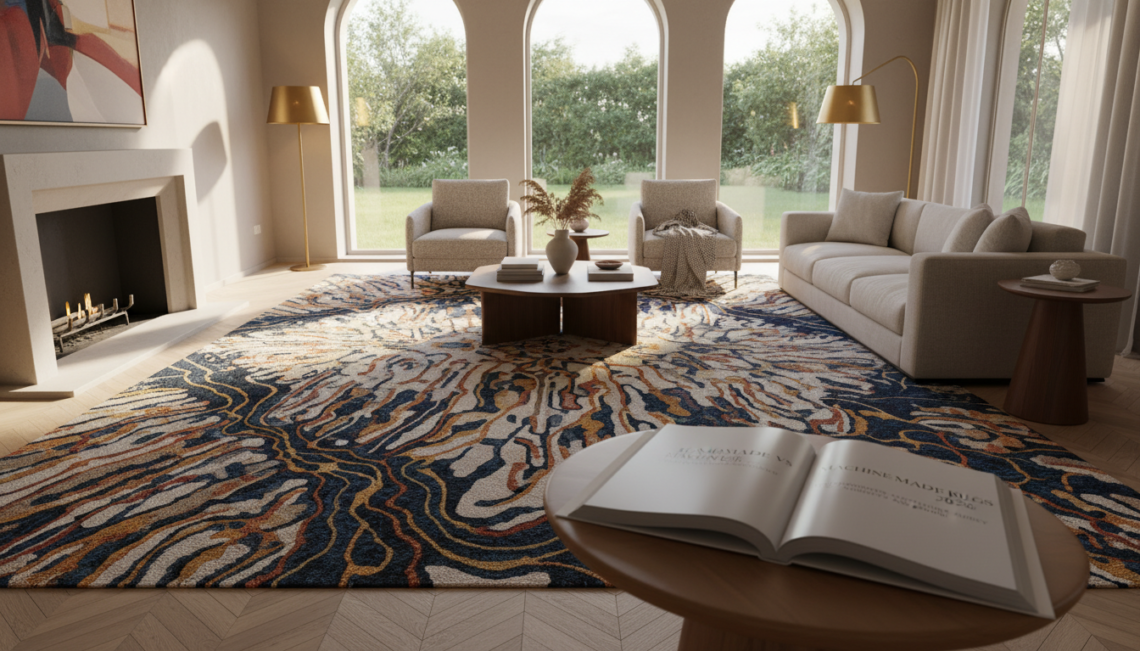
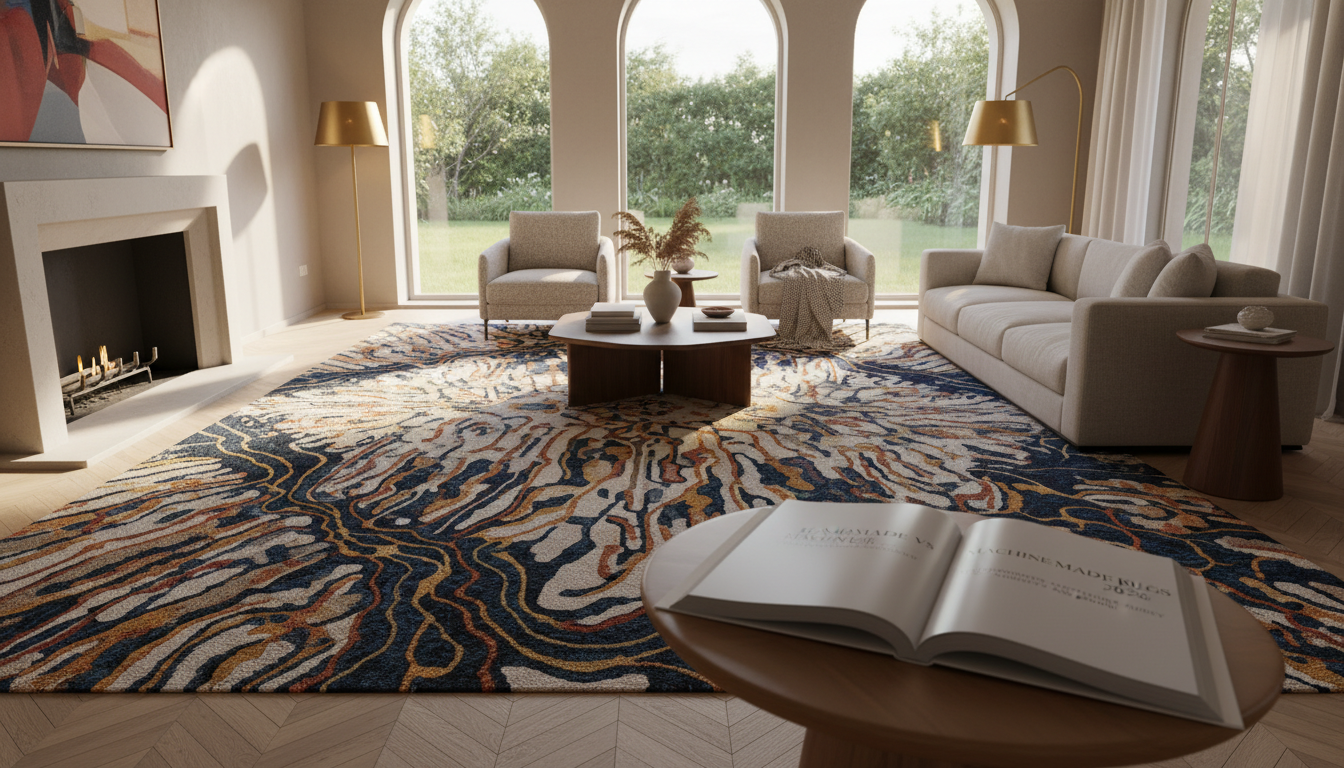
The moment you stand before two visually identical textiles—one retailing for $2,800 and the other for $420—the Handmade vs Machine-Made debate shifts from a simple aesthetic choice to a complex calculation of lifestyle legacy. In 2026, the lines of craftsmanship have blurred; high-precision robotics can now mimic the ‘hand-done’ look with startling accuracy, while traditional artisans are pivoting toward avant-garde, sustainable fibers to maintain their edge. Choosing between them isn’t about finding a ‘better’ product, but rather identifying which construction aligns with your floor’s foot traffic, your home’s architectural soul, and your long-term financial strategy. This guide dissects the intricate engineering of 2026 rug manufacturing, offering a transparent look at durability, ethical sourcing, and the real-world performance of these pieces in modern homes.
“Handmade rugs are crafted by skilled artisans through labor-intensive techniques like hand-knotting or hand-weaving, offering unique irregularities, a lifespan of 50+ years, and high resale value. Machine-made rugs are produced using power looms and synthetic or blended fibers, offering perfect uniformity, lower price points, and a typical lifespan of 3 to 10 years. In 2026, the primary differentiator remains the structural integrity: handmade rugs feature knots that are part of the foundation, whereas machine-made rugs often rely on latex adhesives to secure fibers to a backing.”
The Roadmap
Table of Contents
- The 2026 Manufacturing Landscape: Hand-Knotted vs. Power Loom
- The 8 Crucial Comparison Factors: From Fiber Science to Resale Value
- Real-World Performance: 8 Case Studies in Modern Living
- The 2026 Decision Matrix: Choosing Based on Room Type
- Investing Wisely: How to Spot ‘Machine-Made’ Disguised as Art
- Sustainable Sourcing: The Ethical Footprint of Your Floor
The Structural Soul: How Construction Defines Longevity in 2026
When you peel back the layers of a room’s design, the rug acts as the silent anchor. In 2026, we’ve moved past the era of “disposable decor.” Today’s sophisticated homeowner looks for pieces that don’t just fill a space but evolve with it. To understand why one rug thrives for decades while another sheds its soul in eighteen months, we have to look beneath the pile at the very skeleton of the piece.
The Human Fingerprint: Hand-Knotted Artistry
There is a specific, visceral energy in a rug where every single knot has been tied by hand. When we source artisanal pieces at thebohorugs.com, we’re looking for that “perfect imperfection.” Traditional hand-knotted construction involves a vertical loom where warp threads (the vertical foundation) are intricately interlaced with weft threads. Artisans, often using techniques passed down through generations in regions like the Atlas Mountains, tie individual knots around the warp.
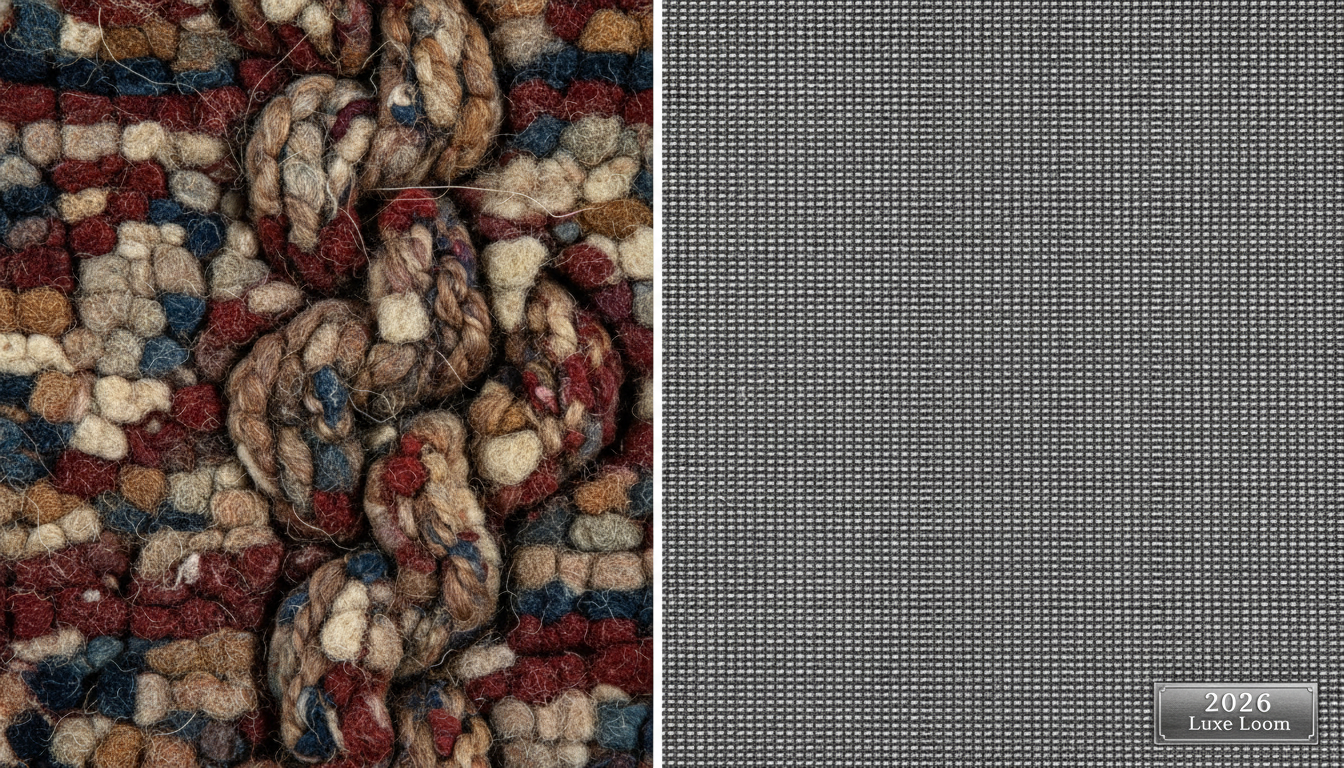
The beauty of this method lies in the structural integrity. Because each knot is an independent unit tied to the foundation, the rug becomes incredibly resilient. If you’ve ever wondered why a 19th-century Persian rug still looks magnificent while a five-year-old department store rug looks “tired,” this is your answer. There are no adhesives to break down, no synthetic backings to crumble, and no shortcuts taken. It is pure fiber and tension.
“In the high-end market of 2026, luxury is defined by provenance. A hand-knotted rug isn’t just a floor covering; it’s a topographical map of the weaver’s year. The slight variations in tension and the ‘abrash’—the natural color shifts in the wool—create a depth that a computer algorithm simply cannot replicate.”
— Elena Vance, Senior Textile Historian & Design Consultant
The Precision of the Machine: 2026’s Technical Leap
Machine-made rugs—often referred to as “power-loomed”—have undergone a massive transformation recently. We aren’t talking about the stiff, plasticky rugs of a decade ago. The 2026 market is dominated by high-speed electronic Jacquard looms that can produce intricate patterns in a fraction of the time. The most significant shift we’ve seen this year is the integration of Bio-Acetate fibers and recycled performance polymers that mimic the Light Reflectance Value (LRV) of organic silk.
These rugs are created by thousands of needles stitching yarn into a pre-made mesh backing simultaneously. While this offers incredible uniformity and a lower price point, it lacks the “knot-memory” of a handmade piece. In a machine-made rug, the pile is often glued or “tufted” into place. Over time, particularly in high-traffic zones, those adhesives can lose their grip, leading to the dreaded “pilling” effect.
Want to know if a rug is truly handmade? Flip it over. On a machine-made rug, the back will be perfectly uniform, often with a visible mesh or a hard canvas backing. On a hand-knotted rug from thebohorugs.com, the back is a mirror image of the front. You’ll see the individual knots and slight irregularities in the weave—this is the hallmark of true luxury and the key to its multi-generational lifespan.
Performance in the Wild: A Tale of Two Households
To see how these construction methods play out in real life, consider a recent project in Austin. A young family with a high-energy Golden Retriever chose a stunning machine-made wool-blend rug for their living room. On day one, against their LRV 65 Sage Green walls and cognac leather sofa, it looked impeccable. However, within two years, the friction from the dog’s paws and frequent vacuuming caused the fibers to “fuzz,” and the edges began to curl because the internal backing lacked the weight of a hand-tied foundation.
Conversely, a neighboring client invested in a hand-knotted wool piece from the same color palette. Five years later, that rug has actually improved. The lanolin in the high-quality wool has developed a soft patina, and the structural knots have only tightened with use. This is the “Structural Soul” at work: one rug was designed to look good in a showroom; the other was built to survive a life well-lived.
Aesthetic Synergy with Modern Interiors
In 2026, we are seeing a move toward “Eclectic Minimalist” interiors. This style relies on the rug to provide the tactile contrast that flat, modern furniture lacks. A machine-made rug offers a “flat” visual—it’s excellent for ultra-modern, clinical spaces where you want zero distractions. But if your goal is to add warmth to a room with matte black accents or natural oak flooring, the organic “wobble” of a handmade rug provides the necessary soul to keep the room from feeling like a computer render.
The choice between the two often comes down to your “forever” factor. If you are styling a rental or a nursery that will be redesigned in three years, a high-quality machine-made piece is a brilliant, budget-conscious move. But for the rooms where memories are anchored—the dining room where family gathers or the primary suite that serves as your sanctuary—the structural integrity of a handmade piece from a curated source like thebohorugs.com is an investment that pays dividends in both beauty and longevity.
Analyzing the 8 Pillars of Rug Performance
1. Construction & The “Soul” of the Weave
The fundamental difference lies in the tension. A handmade rug is a living object, created by an artisan tying individual knots—often upwards of 150 per square inch—around a vertical warp. This process introduces “abrash,” the subtle, intentional variations in color and texture that give a rug its depth. Machine-made rugs, by contrast, use high-speed power looms that operate with mathematical precision. While the 2026 generation of power looms can mimic hand-carved textures, they lack the structural “memory” of a hand-knotted piece. “There is a tangible energy in a rug that has taken six months to weave,” says Elena Vance, a textile historian and consultant for several European design houses. “When you look at a hand-knotted piece from the Atlas Mountains, you aren’t just looking at wool; you’re looking at a narrative of human touch. Machine-made pieces provide the aesthetic, but they lack that singular DNA.” Expert Insight: To spot the difference instantly, flip the rug over. In a handmade piece, the design on the back is as clear as the design on the front. In a machine-made rug, you’ll often see a uniform white mesh or a hard latex backing that hides the construction.2. Durability & Lifespan: The Generational Gap
The 2026 market has seen a massive rise in “Performance Machine-Wovens,” but even the best synthetic fibers struggle to compete with the structural integrity of a hand-knotted wool rug. Because handmade rugs are tied, not glued, they can be folded, rolled, and washed for decades without the backing cracking. Consider a busy family in Toronto: they purchased a high-traffic machine-made runner for their hallway. Within three years, the constant friction caused the synthetic fibers to “track” (flatten out permanently) and the edges to curl. Meanwhile, the hand-knotted Oushak in their dining room—sourced from the curated collections at thebohorugs.com—actually looks better today than it did at purchase, as the wool fibers have “bloomed” and softened with use.3. Feel & Texture Underfoot
Luxury is felt before it is seen. Handmade rugs typically use long-staple New Zealand wool or silk, which are rich in natural lanolin. This creates a “bounce back” effect that feels soft yet supportive. Machine-made rugs often rely on heat-set polypropylene or the new 2026 “Bio-Acetate” fibers. While these feel incredibly soft in the showroom, they can sometimes feel “plasticky” or overly slippery when you’re walking in socks.4. Color Depth & Light Reflectance (LRV)
In interior design, we often discuss the Light Reflectance Value (LRV) of wall paint, but we rarely apply it to rugs. Handmade rugs use small-batch dyed yarns. Because the yarns are irregular, they catch the light at different angles, creating a shimmering effect. If you have a room painted in a trending 2026 Sage Green or a Deep Terracotta, a handmade rug will “pull” those colors into its weave, creating a cohesive atmosphere. Machine-made rugs use digitally printed or vat-dyed fibers that are perfectly uniform; they don’t play with the light as much, which can sometimes make a large room feel a bit “flat.”5. Maintenance: The “Washable” Myth
The 2026 obsession with “washable” machine-made rugs has changed the industry, but there is a catch. Most machine-made rugs use a latex adhesive to hold the fibers to the backing. Over time, heat and water cause this glue to crumble, turning into a fine white powder. A handmade wool rug, however, contains no glue. It can be professionally submerged and deep-cleaned every few years, removing allergens and dust that machines simply can’t reach. Pro Tip: If you have pets or small children, a machine-made rug is an excellent “disposable luxury” for the playroom. However, for your primary living spaces, a handmade rug is actually the more hygienic choice because it can survive a true professional deep-wash.6. Price vs. Value: The Cost-Per-Year Metric
Let’s talk numbers.- The Machine-Made Choice: Costs $500. Lasts 4 years before looking “tired.” Cost: $125/year.
- The Handmade Investment: Costs $3,000. Lasts 30+ years (and often appreciates in value). Cost: $100/year or less.
7. Environmental & Ethical Impact
In 2026, sustainability isn’t just a buzzword; it’s a requirement. Machine-made rugs are largely petroleum-based products. When they wear out, they head to a landfill where they take centuries to decompose. Handmade rugs are biodegradable, made from sheep’s wool, cotton, and vegetable dyes. Furthermore, purchasing handmade supports weaving communities in regions like India, Turkey, and Morocco, preserving an ancient craft that is currently under threat from industrialization.8. Aesthetic Longevity & “The Patina Factor”
Furniture trends change—you might swap your mid-century modern sofa for a more curvilinear 2026 silhouette next year. A machine-made rug is usually designed to fit a specific, fleeting trend. A handmade rug, however, possesses a “timeless neutrality.” Much like a vintage leather chair, a handmade rug develops a patina. It ages gracefully, absorbing the history of your home rather than simply wearing out. Expert Insight: When pairing a rug with furniture, remember that a handmade rug’s slight imperfections act as a “visual buffer.” They make high-end furniture look less “staged” and more lived-in.- Handmade Wins on: Longevity, resale value, texture, and environmental impact.
- Machine-Made Wins on: Initial affordability, design consistency, and “worry-free” placement in spill-prone zones.
Room Study 1-4: The Urban Apartment and the Family Estate
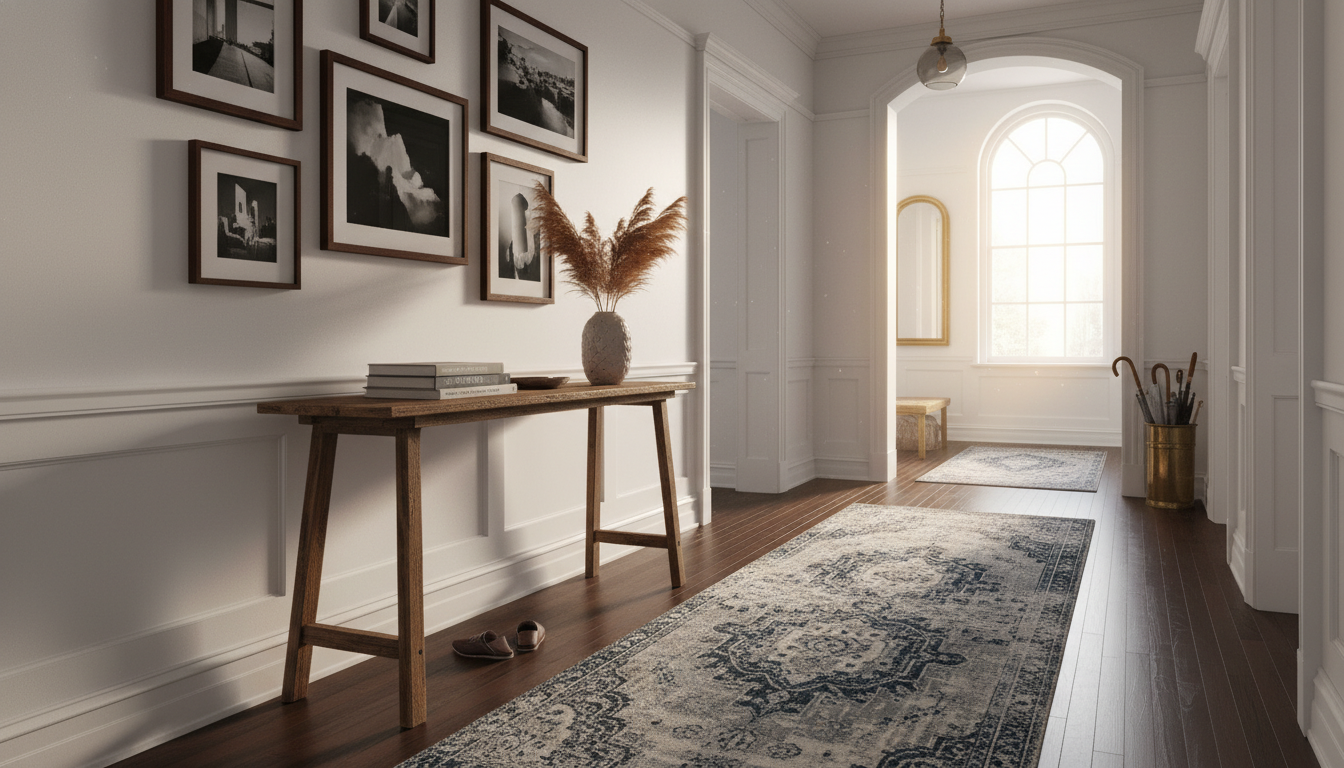
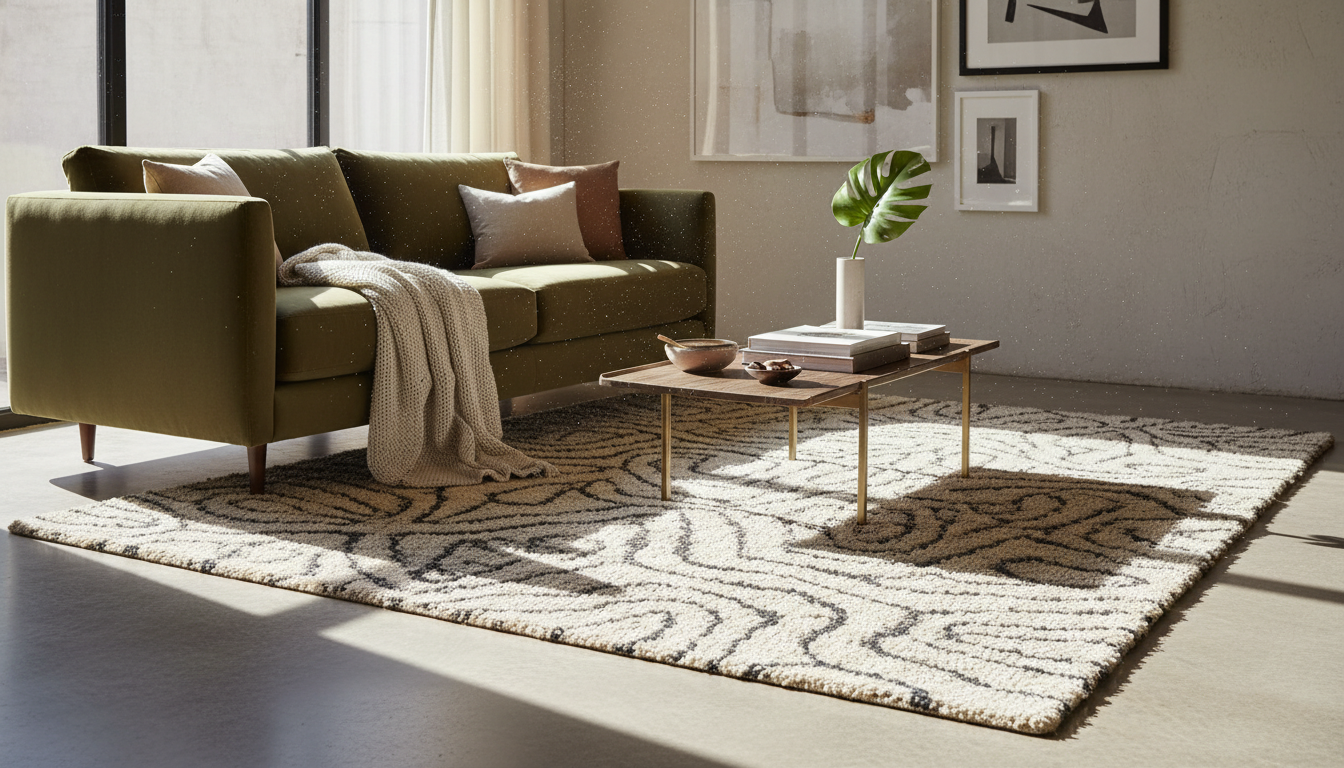
“We are seeing a massive shift in 2026 toward ‘sensory-led’ interiors. A machine can mimic a pattern, but it cannot mimic the way a hand-knotted wool rug interacts with the Light Reflectance Value (LRV) of a room. The slight irregularities in a handmade rug break up light, making a room feel softer and more grounded.”### 3. The Minimalist Retreat: A Manhattan Studio Bedroom Manhattan living is an exercise in editing. In a 600-square-foot apartment with floor-to-ceiling windows and stark white walls, every object must justify its footprint. The homeowner wanted a soft landing for their feet but didn’t want to blow the entire renovation budget on floor covering. We selected a **budget-friendly machine-made low-pile rug** featuring **Bio-Acetate fibers**. This is a 2026 breakthrough—a sustainable, plant-based fiber that mimics the sheen of silk but at a fraction of the cost. The design play: The rug’s perfect uniformity complements the “clean girl” aesthetic of the room. Because machine-made rugs can be produced with incredible precision, the ultra-thin borders and exact dimensions fit the minimalist furniture layout perfectly. It’s a smart, chic solution for renters who want high style without the long-term commitment of a five-figure investment. ### 4. The Sensory Sanctuary: A Melbourne Reading Nook This corner of a home in Melbourne was designed for pure escapism. Featuring a slouchy linen armchair and walls painted in a trending **Sage Green (LRV 42)**, the space needed something tactile to bridge the gap between the organic wall color and the raw fabric of the chair. The solution was a **handmade textured wool rug** with a high-low pile height. In this context, the “flaws” of the handmade process are its greatest strength. The varying thickness of the hand-spun yarn creates a landscape of texture underfoot that feels like a massage. The Verdict: While a machine could attempt this “shag” look, it often ends up looking like “carpet” rather than “art.” The handmade version feels intentional and luxurious. For a small nook, the price jump to handmade is manageable, making it the perfect place to splurge on quality.
— Elena Vance, Lead Textile Historian at The Design Institute
Room Study 5-8: Coastal Sanctuaries and Modern Dining
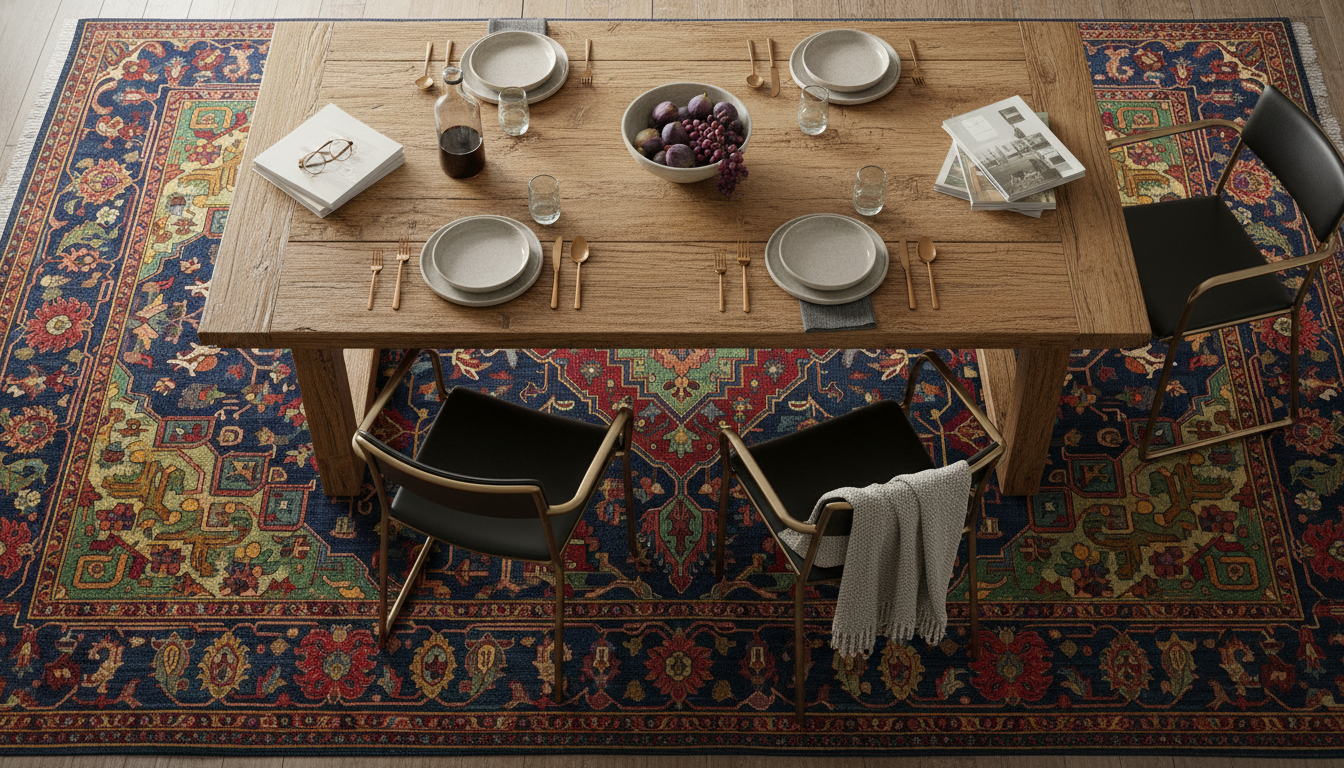
The Great Room Evolution: High-Performance Coastal Living in Austin
In an expansive open-plan home overlooking the Texas Hill Country, the challenge wasn’t just aesthetic—it was environmental. The homeowners needed to anchor a massive 12×15 living area that transitioned directly into a high-traffic kitchen zone. With floor-to-ceiling windows pushing the Light Reflectance Value (LRV) of their Sandstone-colored walls to the limit, they faced a constant battle with UV fading and tracking in grit from the patio. They chose a power-loomed machine-made flatweave featuring a blend of recycled poly-silk and the new 2026-standard Bio-Acetate fibers. While a handmade rug was tempting, the machine-made route allowed for a precision-engineered “low-profile” height that cleared their low-slung Italian leather sofas perfectly. Three years in, the rug’s structural integrity remains flawless. Because machine-made fibers are often solution-dyed, the intense Texas sun hasn’t managed to bleach the earthy terracotta accents.The Biophilic Sanctuary: A Seattle Master Suite
Moving away from the high-energy living zones, we look at a master bedroom in Seattle designed with “Deep Quiet” as the primary objective. The furniture is minimalist—slat-back oak frames and linen drapery—set against walls painted in a muted “Moss Fog” green. Here, the homeowners bypassed the efficiency of a machine and invested in a heavy-pile handmade wool rug sourced from the Atlas Mountains. The difference is felt rather than seen. Each knot was tied by hand, creating a physical “memory” in the wool that absorbs sound far better than a uniform machine-back rug ever could. The slight irregularities in the weave mirror the organic patterns found in nature, a core tenet of 2026 biophilic design. By choosing a piece from the artisanal collections at thebohorugs.com, they ensured that the lanolin-rich New Zealand wool would naturally repel dust mites—a vital feature for a sleep environment.- Room Performance: Exceptional acoustic dampening and thermal insulation.
- Visual Impact: The “perfectly imperfect” edges break up the rigid lines of modern furniture.
- Lesson Learned: In rooms where you are barefoot, the tactile soul of a handmade piece is worth every penny of the premium.
The High-Definition Entryway: Toronto Modernism
Entryways are notorious rug-killers. In a sleek Toronto rental apartment, the inhabitant wanted to elevate a narrow, dark hallway without committing to a $2,000 runner that would be subjected to salt, slush, and snow. The solution was a high-definition printed (HDP) machine-made runner. HDP technology has peaked in 2026, allowing machines to “print” complex, historically accurate Persian motifs onto a durable synthetic base. From eye level, it looks like a museum-quality antique. Underfoot, it’s a rugged, thin-profile workhorse. Because it lacks the thick foundation of a hand-knotted piece, it doesn’t catch on the bottom of the front door—a common frustration with luxury handmade rugs in small urban spaces. It provides the “wow factor” the moment guests walk in, but can be pressure-washed if a winter storm does its worst.The Multigenerational Dining Room: A Sydney Mix Strategy
Our final study takes us to a long-term family home in Sydney, where the dining room serves as the emotional heart of the house. The homeowners adopted what we call the “Investment Anchor” strategy. They chose a large, hand-knotted wool and silk blend rug to sit beneath a heavy reclaimed timber table. Why handmade for a dining room where spills are inevitable? High-quality wool contains natural oils that prevent liquids from penetrating the fiber immediately. Unlike a machine-made nylon rug where a red wine spill can “lock” into the synthetic core, the artisanal rugs found at thebohorugs.com allow for a “grace period” to blot the spill away. They paired this investment piece with machine-made sheer curtains and secondary accents. The rug acts as the room’s “heritage” element, intended to be passed down to the children. It beautifully complements the deep wood grains of the table, with the “Sultana knots” providing a subtle luster that changes as the sun moves across the room.- The Why: Longevity and “cleanability” of natural wool vs. synthetic traps.
- The Result: A space that feels curated and expensive, despite having more affordable furniture.
- Aesthetic Note: The rug’s organic dye variations (abrash) mask minor wear better than the flat, solid colors of a machine-made counterpart.
The 2026 Decision Matrix: A Strategic Framework
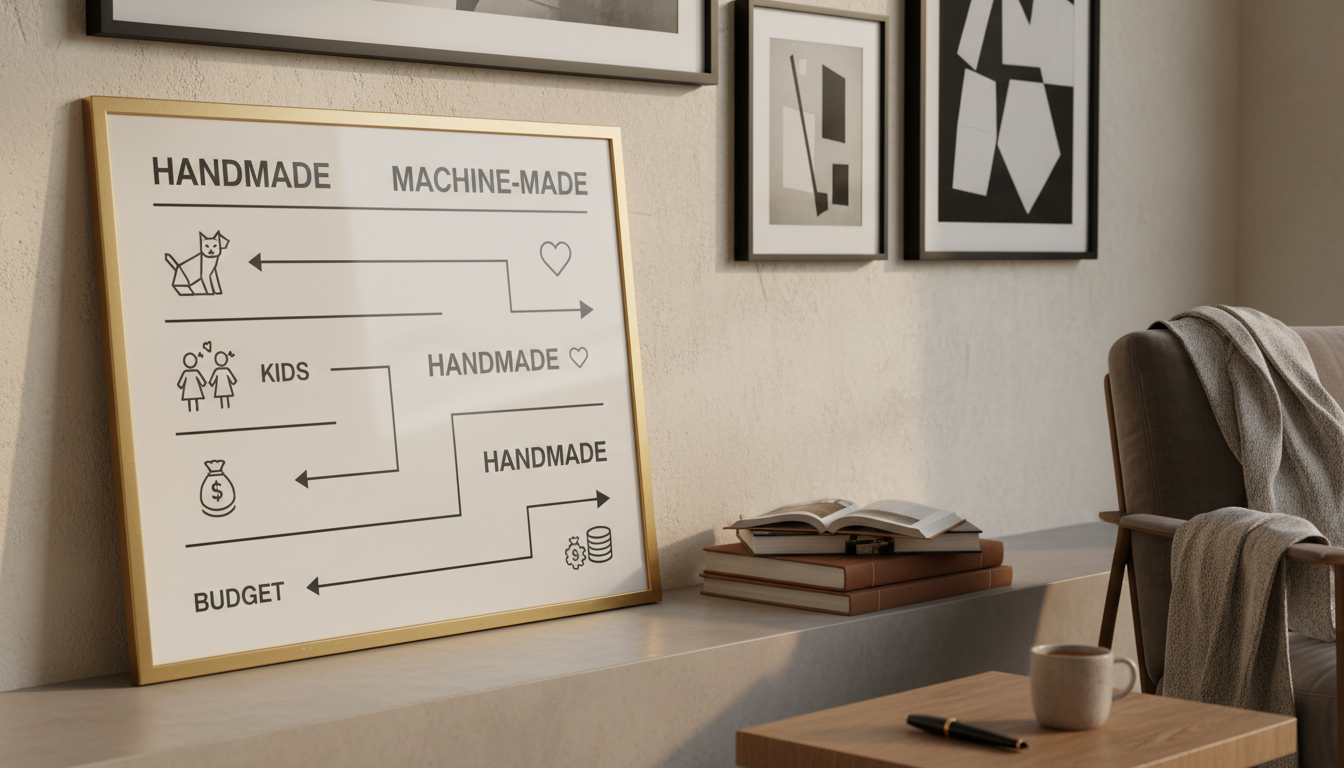
The rug market in 2026 has moved beyond a simple “expensive vs. cheap” binary. As manufacturing technologies reach a point of uncanny mimicry, the choice between handmade and machine-made has become a strategic design decision based on your home’s specific architecture, your long-term wealth-building goals, and your sensory priorities. To find your ideal match, we need to look past the price tag and evaluate how a piece will age alongside your furniture and walls.
Scenario 1: The “High-Traffic Heritage” Home
If you are designing for a central living room or a formal dining area where dinner parties and daily life collide, the handmade route remains the undisputed champion. In 2026, we are seeing a resurgence in hand-knotted techniques from the Atlas Mountains, where the natural lanolin in the wool acts as a built-in stain repellent. These rugs don’t just sit in a room; they anchor it, offering a depth of color that shifts as the sun moves across your space.
A handmade wool rug can easily handle the friction of heavy chairs and the chaotic energy of pets. Because each knot is tied individually, the structural integrity is tied to the fiber’s core. If one thread breaks, the rest hold firm—a stark contrast to the “chain-stitch” failure often seen in lower-end machine alternatives.
When selecting a rug, consider the Light Reflectance Value (LRV) of your wall color. A handmade rug with “abrash” (natural color variations) helps soften a room painted in high-LRV whites or trendy, moody tones like Sage Green. The slight irregularities in the dye prevent the floor from looking flat or clinical under LED lighting.
Scenario 2: The Evolving Rental or Trend-Forward Space
There is a specific brilliance in knowing when to choose a machine-made piece. For a 2026 “flex room” or a child’s nursery, high-end machine-made rugs now utilize Bio-Acetate fibers and recycled PET that offer a surprisingly sophisticated hand-feel. These aren’t the scratchy synthetic rugs of a decade ago. They are precision-engineered to provide 100% uniformity, which is often preferred in ultra-minimalist or “Quiet Luxury” interiors where a single stray knot might disrupt the visual flow.
The cost-per-year ratio for a machine-made rug in a high-spill zone—like a kitchen breakfast nook—is often superior. You get the look of a premium textile without the emotional or financial weight of a five-figure investment. We often point our clients toward the curated machine-made winners at thebohorugs.com for spaces where life is lived at a high velocity and decor changes with the seasons.
“The 2026 shift is entirely about ‘Functional Provenance.’ We are seeing homeowners mix high and low with more confidence than ever. A machine-made runner in the hallway protects the path to a centuries-old hand-knotted masterpiece in the study. It’s about being smart with your textile budget.”
— Julian Thorne, Textile Historian and Lead Designer
Scenario 3: The Sensory Master Bedroom
In the bedroom, the decision matrix pivots toward tactile luxury. This is where the “underfoot experience” outweighs durability. A handmade rug, particularly one with a high knot count or a silk-blend pile, offers a sensory feedback that machines cannot replicate. The way the pile moves and breathes contributes to a room’s acoustic softening, absorbing sound waves in a way that dense, glue-backed machine rugs simply can’t.
- Handmade Selection: Choose this for the primary bedroom to create an “anchor” that increases in value and softness over time.
- Machine-Made Selection: Opt for this in secondary guest rooms where the rug is mostly aesthetic and won’t see daily “barefoot” use.
Always check the underside. A true 2026 investment piece will show the exact mirror image of the pattern on the back. If you see a hard, plastic-like mesh or a canvas backing, it’s a machine-made or hand-tufted piece. While these can be stylish, they lack the breathability and “generational lifespan” of a hand-knotted work of art from thebohorugs.com.
Balancing Your Budget: The 2026 Strategy
Most sophisticated homes today utilize a 70/30 split. Seventy percent of the square footage is covered by durable, high-style machine-made pieces that can be easily cleaned or replaced after five to seven years. The remaining thirty percent is reserved for “soul pieces”—handmade rugs placed in low-moisture, high-visibility areas like the formal lounge or the primary suite. This hybrid approach ensures your home feels curated and “expensive” without the stress of maintaining museum-quality textiles in every single corner of the house.
Elevate Your Space
Discover the artistry of handmade luxury. Each rug is a masterpiece of tradition and modern design.
Expert Q&A
Are handmade rugs always better than machine-made in 2026?
Not necessarily. While handmade rugs offer superior longevity and heirloom value, 2026 machine-made rugs utilize advanced recycled polymers and high-density weaves that perform better in moisture-prone areas or extremely high-traffic commercial zones where frequent professional cleaning is required.
How can I tell the difference between handmade and machine-made at a glance?
Flip the rug over. In a handmade piece, the pattern is just as visible on the back as it is on the front, with slight knot irregularities. Machine-made rugs typically have a uniform backing, often covered by a mesh or latex layer, and the fringe is usually sewn on rather than being an extension of the rug’s foundation.
Do machine-made rugs lose value faster?
Yes. Machine-made rugs are considered consumable goods; they lose the majority of their resale value once used. Handmade rugs, particularly those with natural dyes and high knot counts, often appreciate or maintain their value as vintage collectibles.
Which is better for households with pets?
Machine-made rugs with low piles or ‘washable’ labels are often easier for pet accidents. However, handmade wool rugs contain natural lanolin, which makes them inherently stain-resistant and much easier to professionally restore if damaged by claws.
What is the typical lifespan of a 2026 machine-made rug?
With modern fiber technology, a high-quality machine-made rug lasts 5 to 10 years. In contrast, a well-maintained handmade rug can easily last 50 to 100 years, becoming a multi-generational heirloom.
Can machine-made rugs look as good as handmade with my furniture?
Absolutely. Modern power-loom technology allows for ‘intricate distressing’ that mimics the look of antique rugs. They can complement high-end furniture beautifully, though they lack the tactile ‘soul’ and light-reflecting properties of hand-spun wool.
Is the price difference for handmade rugs truly justified?
Yes, when you consider the labor—a 9×12 handmade rug can take 4 to 10 months of daily labor by multiple artisans. You are paying for months of human expertise, superior natural materials, and a structure that won’t disintegrate over time.
Are there ethical concerns with machine-made rugs?
Machine-made rugs often rely on petroleum-based synthetic fibers and chemical adhesives. However, some 2026 brands focus on carbon-neutral factories. Handmade rugs support traditional artisan communities but require verification of fair-trade labor practices.
What happens to the fringe on machine-made rugs?
On machine-made pieces, the fringe is almost always an afterthought—an aesthetic strip sewn onto the ends. On handmade rugs, the fringe is the actual warp threads of the rug foundation, making it structurally integral.
How does cleaning differ between the two?
Handmade rugs should always be professionally hand-washed by specialists. Machine-made rugs can often handle industrial steam cleaning or, in the case of newer 2026 models, be placed directly into a large-capacity residential washing machine.
Written by TheBohoRugs Interior Design Team
Experts in handmade rugs, boho interiors, and modern home decor.
