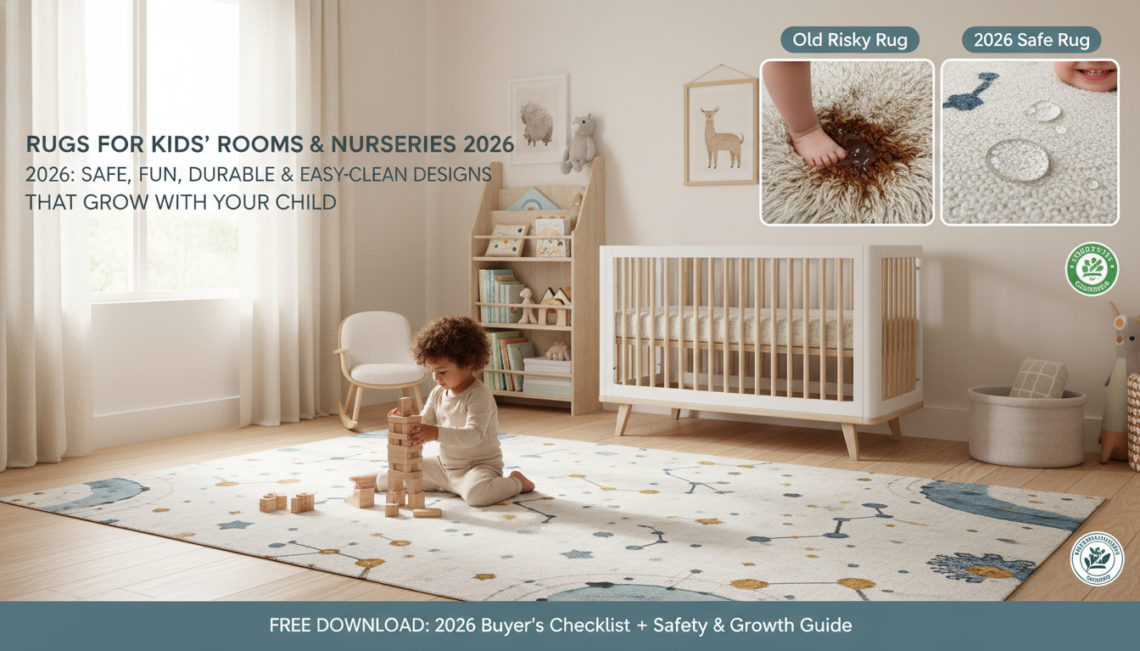
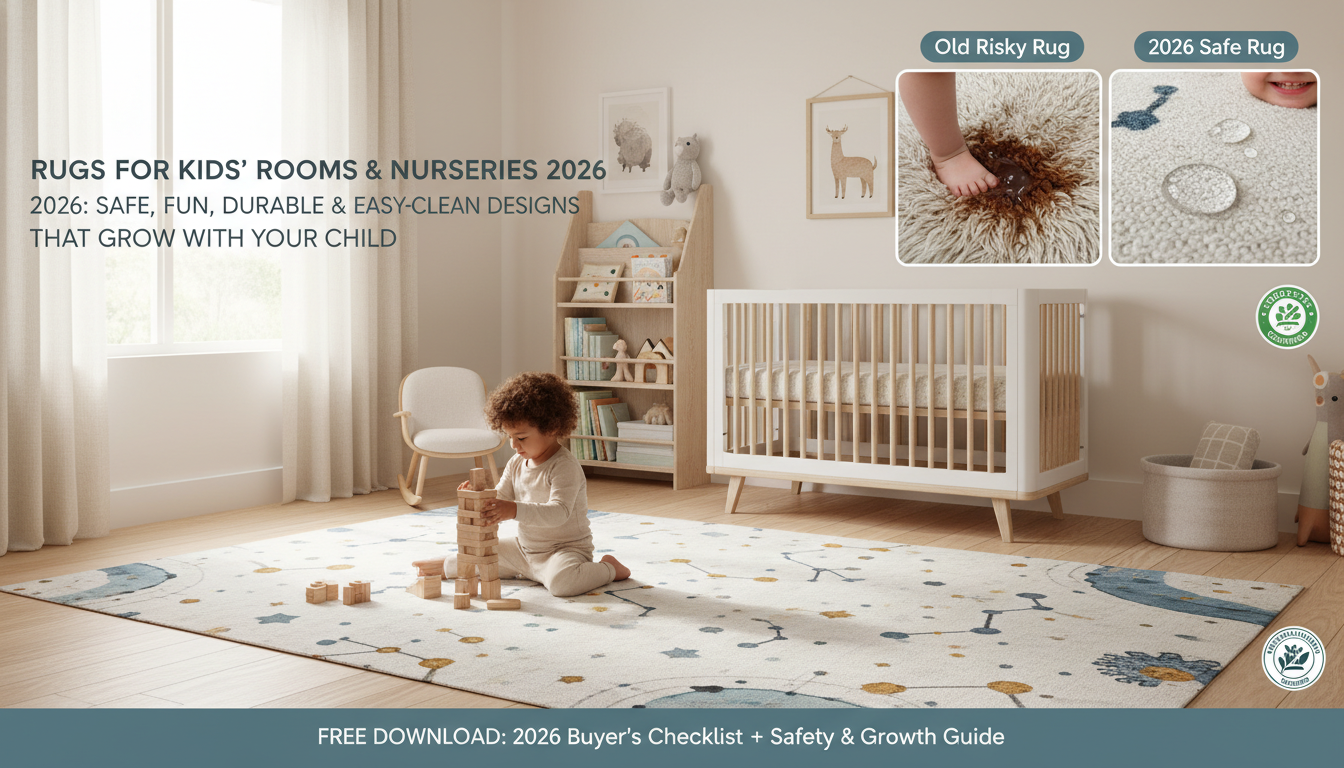
Rugs for Kids’ rooms are no longer just about primary colors and cartoon characters; in 2026, they represent a sophisticated intersection of material science, child developmental needs, and high-end interior design. When my friend Priya in Seattle invested in a plush wool rug for her toddler, she expected comfort, but instead, she faced a nightmare of permanent juice stains and fiber shedding that triggered allergies. This guide is born from those real-world parenting struggles, offering a blueprint for selecting floor coverings that balance aesthetic beauty with the rigorous demands of childhood. We are moving away from disposable, high-maintenance textiles toward performance-driven, non-toxic, and machine-washable designs that transition seamlessly from a newborn nursery to a sophisticated tween retreat. This deep dive provides the safety standards, material insights, and 8 real-room inspirations you need to make an investment that lasts for a decade, not just a season.
“The best rugs for kids’ rooms in 2026 prioritize safety, durability, and growth potential. Look for OEKO-TEX or GREENGUARD Gold certifications to ensure the rug is free from harmful VOCs and chemicals. Opt for low-pile or flatweave constructions (less than 0.5 inches) to prevent tripping and make cleaning easier. Material-wise, machine-washable recycled polyester and high-performance synthetic blends are the gold standard for stain resistance. For longevity, choose sophisticated patterns like subtle geometrics or earthy neutrals that complement nursery furniture today and can adapt to a school-aged child’s changing tastes tomorrow.”
The Roadmap
Table of Contents
- The 2026 Philosophy: Why Modern Parents Prioritize Performance and Purity
- Safety First: Decoding OEKO-TEX, GREENGUARD Gold, and Low VOCs
- The Low-Pile Mandate: Why Texture Beats Shag for Safety and Hygiene
- Washability Redefined: The Rise of Machine-Washable Designer Performance Rugs
- Aesthetic Longevity: Designing Spaces That Transition from Toddler to Tween
- 8 Real-World Room Examples: From Chicago Nurseries to Sydney Playrooms
- Sizing and Placement: Engineering Functional Zones for Play and Sleep
- The Age-by-Age Guide: Tailoring Your Floor Choice to Developmental Milestones
- Common Pitfalls: Why Your ‘Cute’ Rug Might Be a Maintenance Nightmare
- Conclusion: Investing in Your Child’s Health and Your Home’s Style
The 2026 Philosophy: Why Modern Parents Prioritize Performance and Purity
- GREENGUARD Gold Certification: Ensuring the rug contributes to cleaner indoor air by meeting strict chemical emissions limits.
- OEKO-TEX Standard 100: Verifying that every thread and dye is free from over 350 harmful substances.
- Low-VOC Backing: Moving away from toxic latex adhesives toward heat-bonded or natural felt backings that won’t degrade into dust over time.
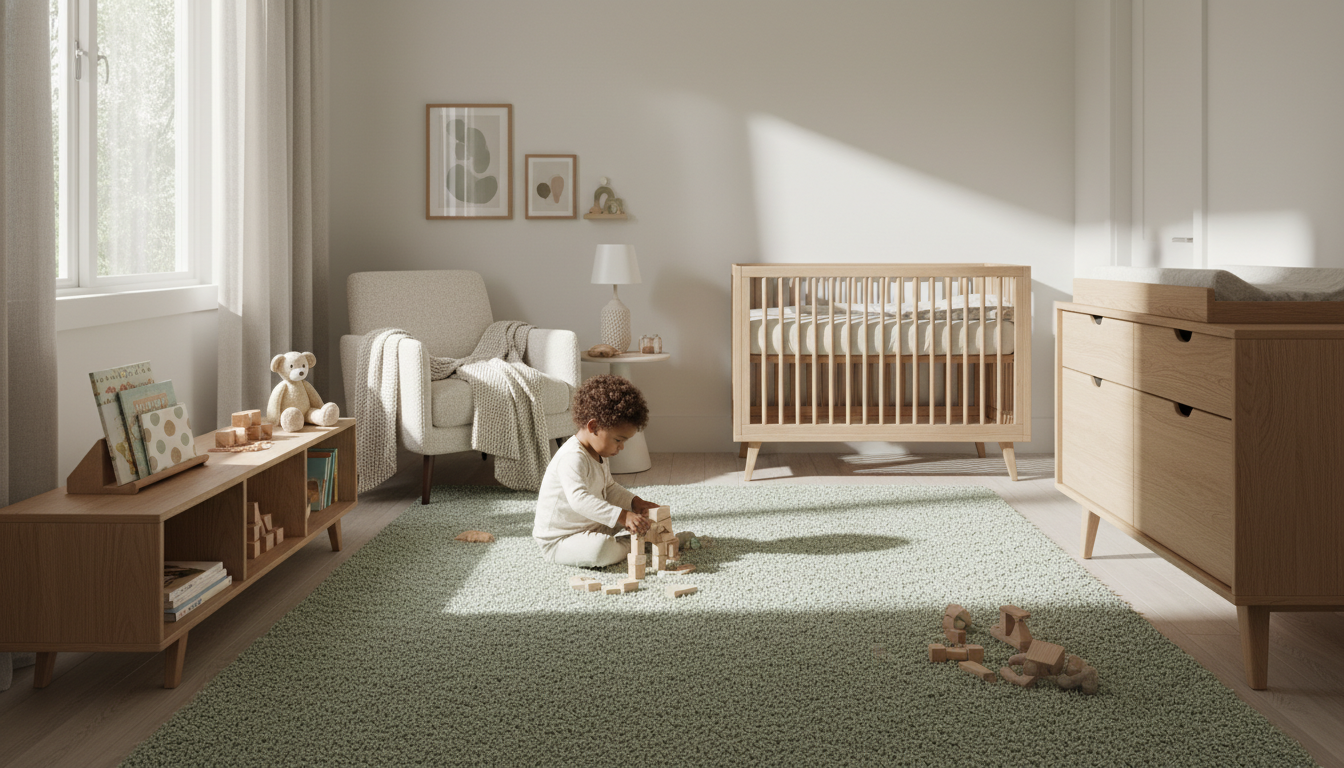
When sourcing for a nursery, don’t just look at the pattern. Check the pile density. A 2026-standard rug should have a low, dense pile (approx. 0.25 to 0.5 inches). This height is the “sweet spot”—it’s soft enough for a crawling infant’s knees but low enough that small toy pieces (like those inevitable LEGOs) won’t get lost in the fibers, and it remains incredibly easy to vacuum.
Safety First: Decoding OEKO-TEX, GREENGUARD Gold, and Low VOCs
The Invisible Architecture of a Healthy Nursery
For decades, that distinctive “new rug smell” was associated with freshness and high-end interiors. In 2026, we recognize that scent for what it truly is: off-gassing. When your child is spending their formative years crawling, tumbling, and occasionally napping directly on a floor covering, the molecular makeup of those fibers becomes just as important as the thread count of their organic cotton sheets. We are moving away from “surface-level” beauty toward what I call the invisible architecture of the home—the chemical safety and air quality standards that define a truly luxury space.
Decoding the Gold Standards: OEKO-TEX vs. GREENGUARD Gold
Navigating the alphabet soup of certifications can feel overwhelming for parents, but these labels are the gatekeepers of your child’s respiratory health. In 2026, high-end collections, such as the curated selections at thebohorugs.com, prioritize these certifications to ensure aesthetic beauty doesn’t come at a biological cost.
- OEKO-TEX Standard 100: Think of this as the “purity test” for the physical rug. This certification ensures that every component—from the pile to the backing and even the dyes—has been tested for over 1,000 harmful substances. It’s particularly vital for infants who explore the world with their mouths; an OEKO-TEX-certified rug means no heavy metals, formaldehyde, or phthalates are present in the fibers.
- GREENGUARD Gold: While OEKO-TEX focuses on what’s in the rug, GREENGUARD Gold focuses on what comes out of it. This standard is the industry peak for low chemical emissions. To achieve “Gold” status, a rug must meet incredibly stringent criteria for Volatile Organic Compounds (VOCs), ensuring it doesn’t degrade the indoor air quality of a small, often closed-door nursery.
“In 2026, chemical transparency is the ultimate luxury. Parents are no longer satisfied with ‘natural-ish’ labels; they are looking for the technical data behind the weave. We are seeing a significant shift toward Bio-Acetate fibers and plant-based polymers that offer the durability of synthetics without the endocrine-disrupting off-gassing of the past.”
— Elena Vance, Senior Textile Safety Consultant
The VOC Conversation: Beyond the “New Smell”
Volatile Organic Compounds (VOCs) are gases emitted from certain solids or liquids. In traditional rug manufacturing, these often stem from petroleum-based backings and synthetic glues. Because infants have a higher respiratory rate and their organs are still developing, they are more susceptible to the effects of poor air quality. This is why the 2026 design ethos leans heavily toward low-VOC water-based adhesives or, better yet, hand-knotted constructions that eliminate the need for glues entirely.
When sourcing for a nursery, look for rugs with a Light Reflectance Value (LRV) that complements a calming atmosphere, but more importantly, verify that the dyes used are GOTS-certified (Global Organic Textile Standard). This ensures that the soft Sage Green or warm Terracotta you’ve chosen for the room isn’t leaching chemicals into the air your baby breathes.
Before placing a new rug in a nursery, even a certified one, I recommend a 48-hour “acclimation period” in a well-ventilated room with a HEPA air purifier running. This allows the fibers to settle and any residual packaging scents to dissipate. If you are opting for a high-performance rug from thebohorugs.com, you’ll find that the absence of heavy latex backings makes this process much faster, as artisanal weaves naturally “breathe” better than mass-produced machine versions.
The 2026 Material Shift: Bio-Acetate and Organic Wool
We are seeing a fascinating marriage of ancient techniques and futuristic science. While organic wool remains a top-tier choice for its natural flame retardancy and soil-shedding scales, the 2026 market has embraced Bio-Acetate. These are fibers derived from wood pulp or cotton linters, providing a silk-like sheen and incredible softness that is completely biodegradable and non-toxic. These materials are the answer for parents who want the sophisticated look of a high-end living room rug with the rigorous safety standards required for a newborn’s sanctuary.
The Low-Pile Mandate: Why Texture Beats Shag for Safety and Hygiene
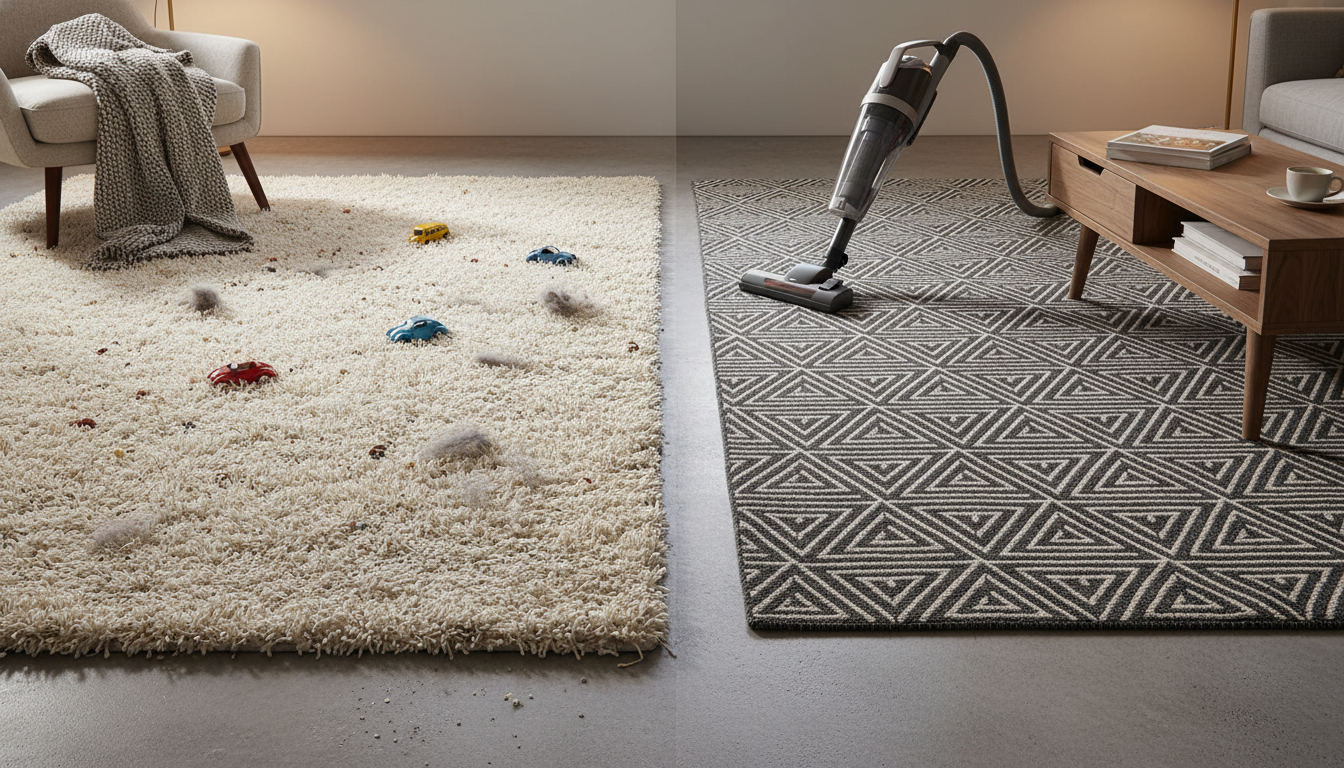
The Tactical Shift: Why Texture Beats Shag for Safety and Hygiene
For years, the “nursery aesthetic” was synonymous with the deepest, cloud-like shag rugs imaginable. We’ve all seen the Pinterest boards: a pristine white sheepskin or a five-inch pile synthetic rug draped across a nursery floor. But as we move into 2026, the design world is witnessing a necessary “Low-Pile Mandate.” The shift isn’t just about a cleaner, more tailored look; it’s a response to the practical realities of modern parenting and a deeper understanding of pediatric indoor air quality.
While high-pile rugs feel luxurious to a literal touch, they act as a massive filter for the home—and not a good one. Deep fibers are notorious for trapping dust mites, pet dander, and microscopic food particles that even the most expensive Dyson can’t quite reach. In a child’s room, where they spend 70% of their time on the floor during the first three years of life, the rug’s surface becomes their primary environment. This is why 2026 trends are leaning heavily toward low-pile performance weaves and artisanal flatweaves found at boutiques like thebohorugs.com, which offer the softness children need without the “trap” effect of traditional shag.
The “Lego Factor” and Developmental Safety
Beyond the hidden allergens, there is the very real issue of “lost and found” safety hazards. Every parent knows the sharp pain of stepping on a stray toy, but for a toddler, a high-pile rug can swallow small objects—choking hazards like bead ties, tiny toy components, or even hair ties—only to reveal them weeks later during tummy time. A low-pile rug provides a stable, high-visibility surface where toys stay upright and small pieces are easily spotted and cleared away before they become a risk.
From a developmental standpoint, texture is vital, but stability is non-negotiable. As infants transition from crawling to those shaky first steps, the “give” of a thick shag rug can actually impede their balance. A denser, low-profile rug provides the tactile feedback necessary for a child to find their footing. Designers are now favoring rugs with a Light Reflectance Value (LRV) that highlights the weave’s texture—think sage greens or warm terracottas—rather than relying on pile height to create visual interest.
“In 2026, we are seeing a massive pivot toward ‘tactile intelligence.’ Parents no longer want a rug that just looks soft; they want a rug that performs under pressure. By utilizing Bio-Acetate fibers and recycled PET blends, we can achieve a silk-like hand-feel in a low-pile construction that is virtually indestructible.”
— Elena Vance, Senior Textile Consultant and Interior Historian
Hygiene Meets High Design
The hygiene argument is perhaps the most compelling reason for the low-pile movement. Traditional wool shags can shed, creating “dust bunnies” that infants often try to taste. Conversely, the 2026 generation of washable, non-toxic rugs utilizes tight-weave technology. These rugs are designed to be hosed off or machine-washed without losing their structural integrity. When a juice box inevitably meets the floor, a low-pile rug allows the liquid to sit on the surface long enough for you to blot it away, rather than disappearing into the backing where mold and odors thrive.
Expert Insight: The “Pencil Test” for Nursery Safety
Before committing to a rug, try the “Pencil Test.” Place a standard pencil vertically into the rug’s pile. If more than half the pencil disappears, the rug is likely too deep for a nursery. It will trap allergens and make it difficult for a toddler to build blocks or walk safely. Aim for a pile height of 0.5 inches or less for the perfect balance of comfort and common sense.
This movement doesn’t mean sacrificing the “cozy” factor. By choosing rugs with hand-knotted techniques or high-density “power-loomed” finishes, you get a plush feel underfoot that remains breathable and easy to sanitize. It’s about creating a foundation that supports your child’s growth—from those first crawls to late-night study sessions—without the hidden baggage of a high-pile hideaway.
Washability Redefined: The Rise of Machine-Washable Designer Performance Rugs
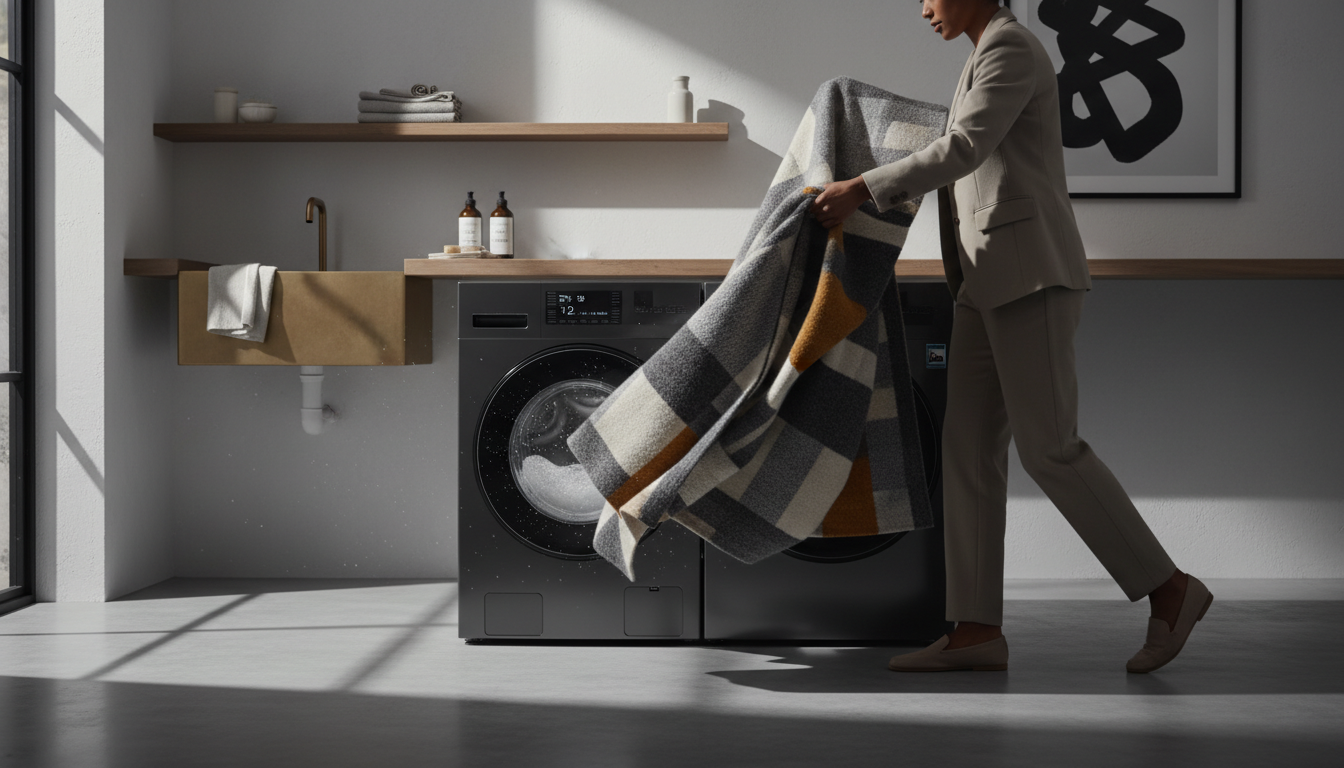
The End of the ‘Plastic’ Feel: Why 2026 Is the Year of Tactile Performance
For years, the phrase “machine-washable rug” was a design compromise. Parents were forced to choose between a gorgeous, high-maintenance wool piece or a thin, polyester mat that felt more like a glorified bath towel than a luxury floor covering. As we move into 2026, that binary choice has finally collapsed. The latest innovation in textile engineering—specifically the integration of Bio-Acetate fibers and cross-woven performance polymers—has birthed a new category: the Designer Performance Rug.
These pieces are engineered to handle the chaotic reality of a toddler’s juice box explosion while maintaining the Light Reflectance Value (LRV) and matte finish of high-end organic cotton. Unlike the shiny, synthetic look of early-generation washables, these rugs feature a “broken-in” softness. When you run your hand across a curated selection from thebohorugs.com, you’ll notice a distinct lack of that tell-tale “crunch” common in cheap alternatives. Instead, they offer a sophisticated pile that mimics the irregular beauty of hand-loomed textiles.
The Science of Stain Release: Beyond Surface Protection
The 2026 shift isn’t just about being able to fit a rug into a washing machine; it’s about how the fibers interact with spills at a molecular level. Older rugs relied on heavy chemical coatings—often containing harmful PFAS—to repel liquids. Modern non-toxic rugs for nurseries now utilize physical fiber structures that prevent liquids from penetrating the core. This means that even after twenty washes, the rug’s “easy-clean” nature remains intact because it’s a property of the material itself, not a temporary spray-on treatment.
“We are seeing a massive movement away from topical treatments toward ‘inherent performance.’ By using a blend of recycled polyester and plant-based acetates, we can create a rug that feels as plush as a low-pile wool but can be stripped of a red wine or berry stain in a standard cold cycle. It’s about longevity—designing a rug that survives the nursery and graduates to the teen room without looking tired.”
— Elena Vance, Senior Textile Consultant & Interior Historian
Practicality Meets the “Stealth Nursery” Aesthetic
The modern parent is moving toward the “stealth nursery”—a space that feels like a natural extension of the home’s overall design language rather than a primary-colored playroom. This is where durable rugs for playrooms in 2026 are winning. We are seeing a surge in muted, earthy palettes: sage greens with an LRV of 45 for a calming effect, terracotta tones, and complex neutrals that hide daily dust effortlessly.
The construction has evolved, too. The most sought-after best washable rugs for children now feature a dual-layer system: a heavy-duty, non-slip base and a lightweight, designer top layer. This prevents the “bunching” that used to cause tripping hazards for little ones just learning to find their feet. By focusing on a low-pile structure, these rugs also ensure that toy cars glide smoothly and building blocks stay upright—a small detail that prevents a lot of toddler frustration.
To preserve the structural integrity of your performance rug, always wash on a cold, gentle cycle with a pH-neutral detergent. Avoid high-heat drying, which can break down the non-slip backing over time. Instead, air-dry or use a “tumble dry low” setting to keep the fibers supple. For a truly professional finish, give the pile a quick brush with a soft-bristle broom once dry to restore its designer volume.
Choosing a rug for a 2026 nursery means looking for that perfect intersection of safety (OEKO-TEX certification) and aesthetic longevity. Because these rugs are designed to be laundered, they are inherently more hygienic, eliminating the buildup of allergens and dust mites that plague traditional thick-pile carpets. It’s a cleaner way to live that doesn’t ask you to sacrifice the soul of your interior design.
Aesthetic Longevity: Designing Spaces That Transition from Toddler to Tween
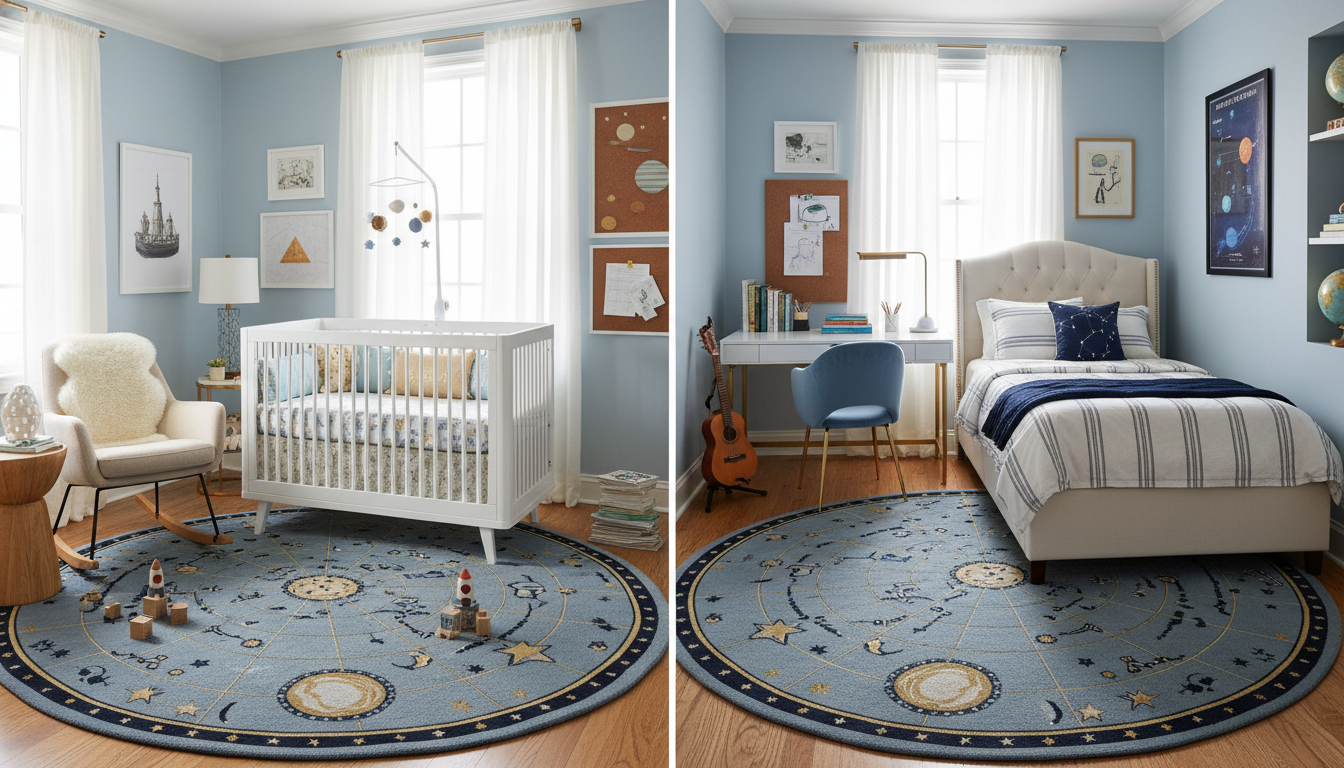
The Secret to the “Ten-Year Rug”: Balancing Whimsy with Sophistication
We’ve all seen it: the nursery that looks like a technicolor explosion, filled with motifs of racing cars or smiling clouds that a child will inevitably outgrow by the time they hit kindergarten. In 2026, the most savvy parents are moving away from “disposable decor” in favor of aesthetic longevity. The goal isn’t just to design a room for a newborn; it’s to lay a foundation for a space that evolves. This starts with the largest textile in the room.
When you choose a rug with a sophisticated design language, you aren’t stripping the joy out of childhood. Instead, you’re creating a versatile canvas. A high-quality, low-pile rug in a muted sage or a warm terracotta provides a sense of calm for a nursing mother, a soft landing for a toddler’s first steps, and eventually, a cool, grounding element for a middle-schooler’s homework nook.
The Pivot Toward “Quiet Play” Palettes
Designers are increasingly looking at Light Reflectance Values (LRV) when selecting rugs for children’s spaces. An LRV between 35 and 50 is the “sweet spot” for 2026—colors that are deep enough to mask the occasional apple juice mishap but bright enough to keep the room feeling airy. Rather than the high-contrast primary colors of the past, we’re seeing a rise in “earth-inflected” tones. Think dusty ochre, slate blue, and sand.
These colors harmonize effortlessly with the evolution of furniture. A soft sand-colored rug from thebohorugs.com pairs as beautifully with a white spindle crib as it does with a black metal teen bed five years later. By leaning into these timeless hues, you avoid the costly cycle of redecorating every time your child discovers a new favorite cartoon character.
“The 2026 shift is entirely about ‘transitional textures.’ We are moving away from literal prints—like a map of the world—and toward abstract, hand-knotted geometries inspired by the Atlas Mountains. These patterns stimulate a child’s imagination without dictating their interests.”
— Julianne Vance, Lead Textile Curator at Studio Heirloom
Texture Over Theme: Why Pattern Maturity Matters
If you want a rug to survive the transition from toddler to tween, focus on the integrity of the pattern. Small-scale, repetitive geometries or faded “broken” motifs are remarkably forgiving. They hide the inevitable wear and tear of a high-traffic playroom while maintaining an upscale, editorial feel.
- The Micro-Loop Advantage: In 2026, we are seeing a massive surge in Bio-Acetate fiber blends. These offer the silk-like softness essential for a baby’s skin but possess the structural “memory” to withstand the heavy legs of a desk or a bunk bed without permanent indentations.
- Distressed Aesthetics: Choosing a rug with a pre-distressed or “lived-in” look is a pro move. It means the first time your child drags a toy truck across the pile, it simply adds to the character of the piece rather than ruining a pristine surface.
- Scale and Proportion: Large-scale patterns tend to feel more “adult” and sophisticated. A giant, oversized diamond weave feels more like a design choice and less like a “nursery item,” ensuring it stays relevant well into the double-digit years.
To achieve aesthetic longevity, follow the 80/20 rule: Keep 80% of the room—the rug, the walls, and the primary furniture—timeless and high-quality. Save the remaining 20% for the “fun” stuff that is easy to swap out, like throw pillows, wall decals, and bins. A sophisticated flatweave from The Boho Rugs provides that 80% foundation, allowing the room’s personality to shift through accessories without requiring a total overhaul.
Future-Proofing Your Layout
Consider the physical footprint of the room. A common mistake is buying a small 5×7 rug that fits perfectly between a crib and a changing table. Fast forward three years: the crib is gone, a full-sized bed is in its place, and that small rug now looks like a postage stamp in the middle of the floor.
Opting for a generous 8×10 or 9×12 size from the start allows the rug to tuck under the front legs of the bed and the dresser, anchoring the entire room. This “wall-to-wall” feel provides more protected floor space for play while ensuring the room feels professionally designed, regardless of how the furniture layout changes as the child grows.
8 Real-World Room Examples: From Chicago Nurseries to Sydney Playrooms
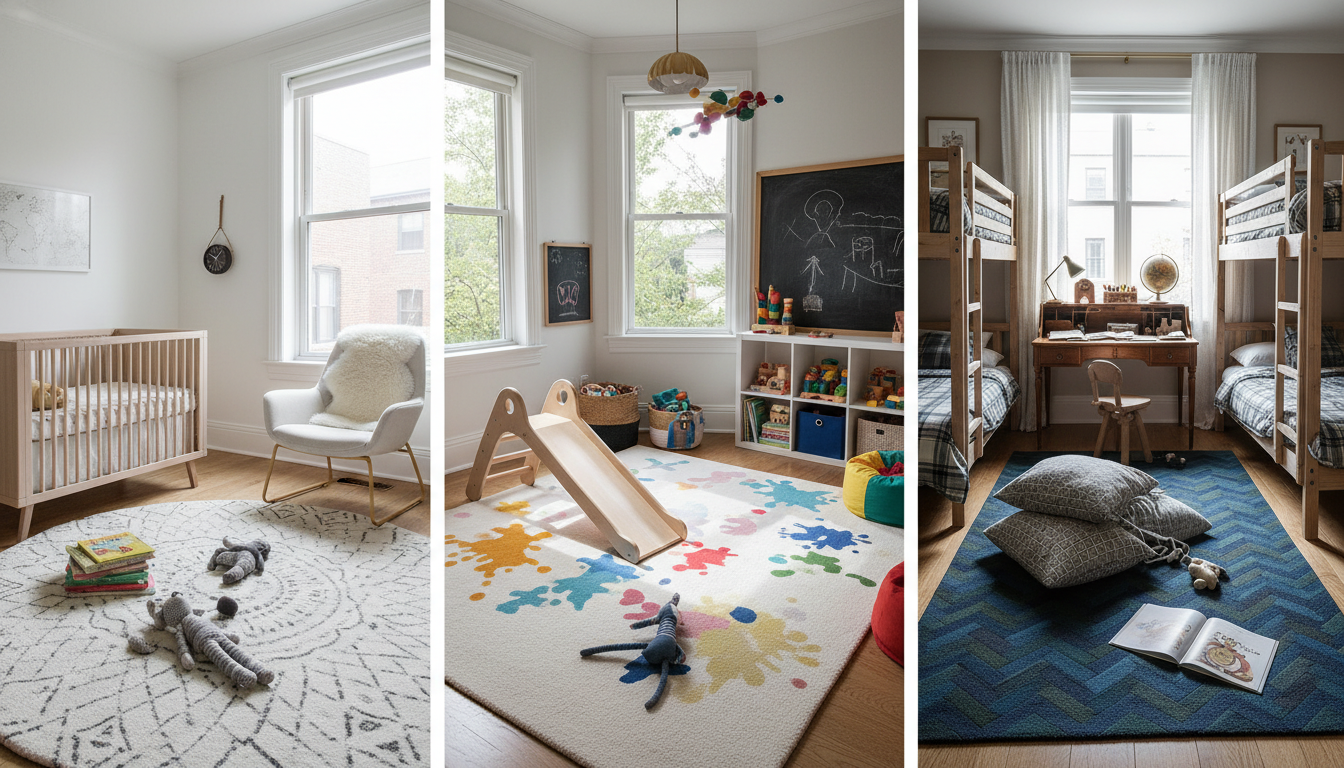
1. The “Cosmic Neutral” Nursery in Chicago
In a sun-drenched Lincoln Park apartment, a newborn’s nursery features walls painted in a soft, misty gray with an LRV (Light Reflectance Value) of 72, creating a luminous yet calm backdrop. The parents chose a white spindle crib as the focal point, but the room needed warmth. They anchored the space with a large-scale, low-pile rug from thebohorugs.com featuring a subtle, tone-on-tone moon and stars motif. Why it works: The rug’s muted palette prevents the room from feeling “over-themed.” By selecting a performance-grade low-pile fiber, the parents ensured a smooth surface for a crawling baby while maintaining the room’s sophisticated, airy feel. Placement Tip: Place the rug so it extends at least 24 inches past the crib on all visible sides. This creates a cohesive “island” of comfort rather than a disjointed patch of carpet.2. The Earthy Activity Zone in Austin
This Texas playroom needed to withstand the high-energy antics of two toddlers. The walls are a warm terracotta, balanced by natural white oak toy storage. The solution was a durable, patterned performance rug in deep ochre and sand tones. Why it works: Pattern is the ultimate camouflage for the inevitable juice spill or crayon mark. The earthy tones complement the “New Mediterranean” trend we’re seeing for 2026, where nurseries feel like an extension of the home’s overall design language rather than an isolated “kids’ zone.” Expert Insight: “For high-traffic playrooms, look for rugs utilizing cross-woven Bio-Acetate fibers,” says Elara Vance, Lead Textile Consultant. “These provide the softness of silk with the molecular resilience of high-end outdoor textiles.”3. Zoning a Shared Sibling Space in London
Shared bedrooms in historic London flats often struggle with “visual clutter.” In this room, twin bunk beds sit against a backdrop of neutral, warm-white walls. To define the shared play area in the center of the room, the designer used a large-scale, flat-weave rug. Why it works: The flat-weave construction is vital here—it allows bunk bed drawers to slide open easily without catching. The rug acts as a “zoning” tool, signaling to the children that the floor space is for collaborative play, while the beds are for individual rest. Pro Tip: When using a rug to zone a room, ensure at least the front feet of all major furniture pieces (bunk beds, dressers) rest on the rug to “lock” the design together.4. The Round “Sage & Oak” Haven in Sydney
A compact Sydney bedroom with sage green walls and an oak bed frame presented a challenge: a standard rectangular rug felt too boxy. Instead, the parents opted for a 6-foot round, washable rug in a cream-and-sage geometric pattern. Why it works: Round rugs are a 2026 designer secret for making small rooms feel larger. The soft curves break up the linear nature of the walls and bed, making the floor space feel more expansive. The sage tones in the rug perfectly mirror the LRV of the walls, creating a seamless, monochromatic “hug” of a room.5. The Growth-First Boy’s Room in Denver
Transitioning from a toddler bed to a “big kid” bed is a major milestone. In this Denver home, the parents skipped the sports-themed rugs and chose a sophisticated geometric performance rug in warm charcoal and oatmeal. Why it works: The rug feels mature enough for a 12-year-old but remains soft enough for a 5-year-old’s LEGO sessions. By choosing high-contrast neutrals, the rug anchors the room’s evolving “active” theme without needing to be replaced every three years. Placement Tip: Position the rug horizontally under the bottom two-thirds of the bed to provide a soft landing spot on both sides when waking up.6. The “Refined Play” Tween Suite in New York
This room serves as a bedroom, study, and social hang-out. With a sleek desk and a velvet upholstered bed, the rug needed to be “grown-up.” A low-pile, vintage-inspired rug with a faded patina from thebohorugs.com provided the perfect bridge. Why it works: The faded aesthetic hides wear and tear from desk chairs, while the low pile allows for easy vacuuming of craft scraps or snack crumbs. It offers a “luxury hotel” vibe that appeals to a tween’s desire for a more adult aesthetic. Expert Insight: “In 2026, we are seeing a shift toward ‘Aged Performance’ rugs,” notes Vance. “These are new, non-toxic rugs designed with a purposeful vintage fade to provide instant character and unparalleled durability.”7. The High-Traffic Family Playroom in Seattle
In a home with three kids and two dogs, “durability” isn’t a suggestion—it’s a requirement. This family playroom features a heavy-duty, hose-off performance rug with a complex navy and forest green pattern. Why it works: Darker colors and intricate patterns are the champions of the “hidden stain.” Because the rug is made from recycled, non-toxic fibers, it can be spot-cleaned with a simple water-and-vinegar solution, maintaining its 2026-fresh look despite the chaos of daily life. Pro Tip: For large playrooms, always choose a rug with a low-profile edge to prevent “edge-flip” trips during games of tag or indoor soccer.8. The Minimalist “Zen” Nursery in Toronto
For the minimalist parent, this Toronto nursery features light-toned wooden furniture and off-white walls. The rug is a premium, GREENGUARD Gold certified low-pile piece in a solid “Greige” with a subtle braided border. Why it works: It proves that “fun” doesn’t have to mean “loud.” The texture of the braid provides tactile stimulation for a baby, while the color palette maintains a tranquil environment. This is a rug that could easily move to a master bedroom or a home office ten years from now. Placement Tip: In a minimalist room, go bigger than you think. A rug that covers nearly the entire floor (leaving only a 6-inch border of wood showing) creates a high-end, wall-to-wall carpet feel without the permanent commitment.Sizing and Placement: Engineering Functional Zones for Play and Sleep
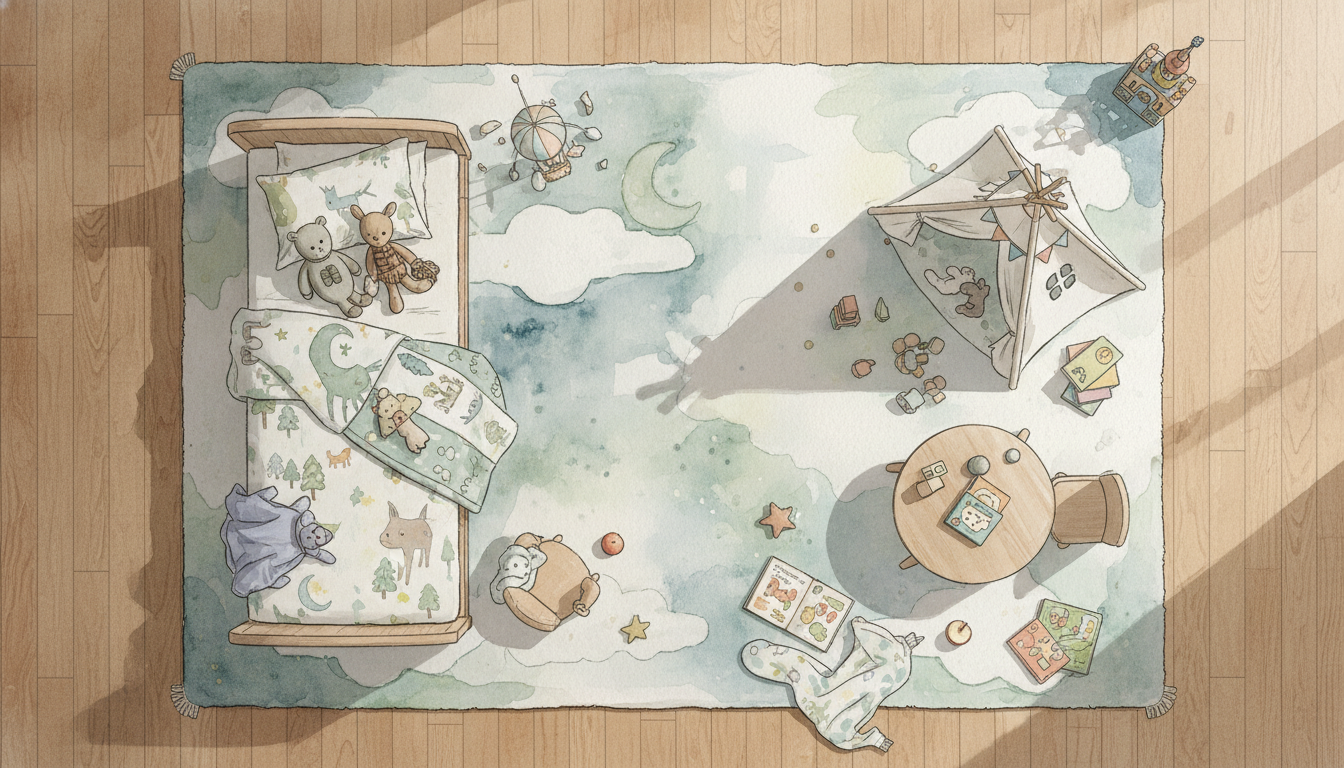
A common mistake I see in high-end nursery designs isn’t a lack of style—it’s a lack of scale. Parents often fall in love with a charming 4×6 accent piece, only to realize that as soon as their toddler starts crawling, that “rug” is more of a decorative island than a functional safety net. In 2026, we are moving away from the “postage stamp” rug trend. The shift is toward integrated floor architecture—using textiles to physically define where sleep ends and play begins.
When you browse the curated collections at thebohorugs.com, you’ll notice that the most successful layouts don’t just “fit” the room; they expand it. Whether you are dealing with a compact urban nursery in Brooklyn or a sprawling playroom in a suburban estate, the geometry of your rug placement dictates the flow of the room’s energy and, more importantly, its safety.
The “Anchor and Overlap” Strategy for Nurseries
In a nursery, the rug’s primary job is to provide a soft landing for parents during those 2 a.m. wake-up calls and a tactile, non-toxic surface for “tummy time.” To achieve this, the rug must be anchored. A rug that sits floating in the center of the room is a trip hazard. Instead, aim for the “Front Feet Rule.” Ensure at least the front two legs of the crib and the glider or rocker are resting firmly on the rug. This creates a unified “sleep and soothe” zone.
Designers are increasingly looking at the Light Reflectance Value (LRV) of rugs in these spaces. For instance, a low-pile performance rug in a soft Sage Green (often sporting an LRV of around 40-50) helps ground the room without absorbing all the natural light, making the space feel airy yet intentional. If you have a larger room, don’t be afraid to go big. An 8×10 rug allows the crib to sit entirely on the textile, which significantly improves the room’s acoustics—a godsend when you’re trying to sneak out of the room without the floorboards creaking.
“The 2026 nursery isn’t just about aesthetics; it’s about acoustic softening. By utilizing high-density, low-pile weaves—like the Tencel-infused Bio-Acetate blends we’re seeing now—we can reduce ambient noise by up to 25%, creating a literal ‘quiet zone’ for the child.”
— Marcus Thorne, Senior Textile Architect
Before you commit to a plush, high-pile rug, check your door clearance. Many modern nurseries feature heavy, sound-dampening doors. Ensure your rug’s pile height (including the rug pad) is at least 1/4 inch lower than the gap beneath your door. In 2026, we recommend low-profile jacquard weaves from thebohorugs.com for this exact reason—they offer designer texture without the door-swing struggle.
Zoning the Playroom: Defining the “Active” and “Quiet” Corners
As your child moves into the toddler and school-age years, the room needs to multitask. This is where modular placement becomes your best friend. Instead of one giant rug that covers every square inch, consider using a large, neutral performance rug as a base, then layering a smaller, more vibrant “activity rug” on top to define a specific area, like a reading nook or a LEGO station.
For high-traffic play zones, placement should be centered around the primary storage units. If you have a wall of Montessori-style toy shelves, the rug should extend at least 3 feet out from the base of the shelves. This ensures that when the bins are pulled down, the “explosion” of toys happens on a soft, easy-to-clean surface rather than a cold hardwood floor.
- The 18-Inch Border: For a classic, high-end look, leave roughly 18 inches of exposed floor around the perimeter of the rug. This frames the room and highlights the quality of your flooring.
- Circular Flow: In smaller rooms, a round rug can “trick” the eye into seeing more floor space. A 6-foot or 8-foot round rug from thebohorugs.com placed slightly off-center under a teepee or reading chair creates a whimsical, non-linear flow.
- Symmetry for Sibling Rooms: In shared rooms, use two identical rugs to define “personal territory.” This provides each child with their own safe, non-toxic play space, which can drastically reduce “he’s on my side” squabbles.
The Safety of Modern Materials: Why Pile Height Matters in 2026
While the “shag” look is tempting for its softness, the 2026 safety standards lean heavily toward performance low-pile and flatweave constructions. High-pile rugs are notorious for trapping small toy parts (a major choking hazard) and harboring allergens. By choosing a rug with a pile height of 1/2 inch or less, you are opting for a surface that is easier to vacuum, more difficult to trip over, and much safer for a child who is just learning to find their footing.
When sourcing from thebohorugs.com, look for rugs that incorporate non-slip integrated backings. In previous years, parents had to buy separate rug pads that often shifted or off-gassed VOCs. The new standard is an all-in-one construction that grips the floor while remaining breathable. This is especially vital in 2026 as we see a rise in heated flooring; your rug placement must allow for heat dissipation while remaining firmly rooted to prevent “surfing” during high-speed play.
Never buy a rug based on a guess. Take a roll of blue painter’s tape and map out the exact dimensions on your nursery floor. Leave it there for 24 hours. Walk around it, open the doors, and move the rocker. If you find yourself constantly stepping off the tape while tending to your child, you need to go one size up.
Ultimately, the goal of smart sizing and placement is longevity. A well-placed 8×10 neutral rug with a subtle geometric pattern will transition seamlessly from a nursery anchor to a tween’s lounge area. By investing in the right scale now, you aren’t just buying a rug for a baby; you’re engineering a space that evolves with your family’s story.
The Age-by-Age Guide: Tailoring Your Floor Choice to Developmental Milestones
The Infancy Phase (0–12 Months): The Breathable Foundation
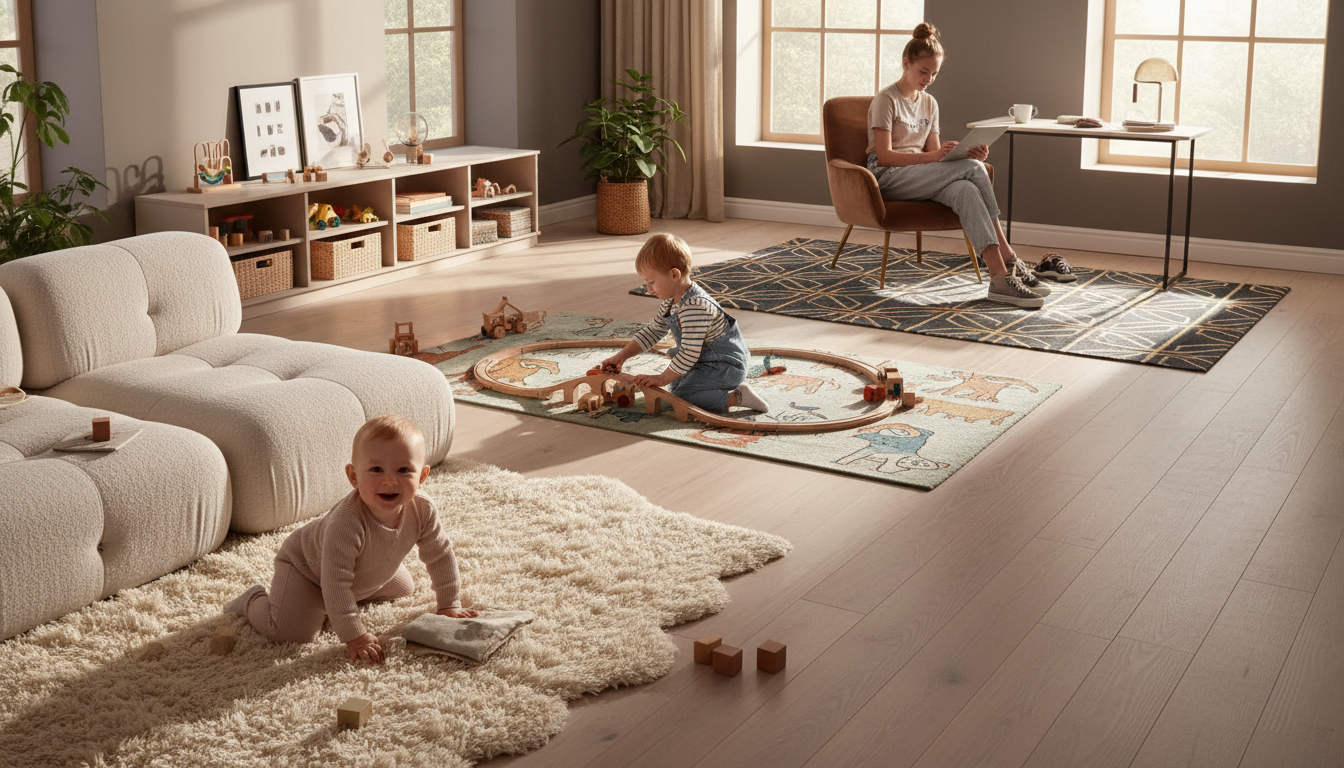
The primary focus during the first year is respiratory safety and tactile softness. Since newborns spend a significant amount of time on their backs or during “tummy time,” the rug acts as their primary interface with the world. In 2026, the gold standard is shifting toward Bio-Acetate fibers and organic cotton weaves. These materials are prized for being naturally hypoallergenic and incredibly soft. When choosing a color palette, look for high Light Reflectance Values (LRV). A soft sage or a warm oatmeal with an LRV of 60 or higher helps bounce natural light around the room, creating a serene, ethereal environment that aids in sleep regulation. At this stage, you want a rug from thebohorugs.com that features a low-pile height (around 0.25 inches). While thick shags look cozy, they can trap dust mites and make it difficult for infants to push themselves up during developmental milestones.The Toddler & Preschool Years (1–4 Years): The High-Performance Proving Ground
Once your child is mobile, the rug’s job description changes overnight. It is no longer just a soft surface; it’s a racetrack, a finger-painting studio, and a snack zone. This is where washable performance fibers become non-negotiable. The 2026 trend for this age group moves away from “kiddy” prints and toward abstracted nature patterns—think soft mossy textures or subtle river-stone shapes. These designs are psychologically grounding for high-energy toddlers and, practically speaking, excellent at camouflaging the occasional stray crayon mark. Choose a rug with a built-in non-slip backing. As children begin to run, a rug that bunches or slides becomes a significant safety hazard. Our collections at The Boho Rugs prioritize these “stay-put” constructions without the need for bulky, separate rug pads that can trap moisture and allergens.The School-Age Explorer (5–12 Years): Zoning and Sophistication
As children enter elementary school, their rooms become multi-functional hubs. They need a space for deep focus (homework) and a space for high-energy play (LEGO builds and sleepovers). This is the perfect time to introduce zoning. Instead of one massive rug, consider layering. A durable, flatweave base rug can cover the high-traffic areas, while a smaller, plush focal rug—perhaps a hand-tufted wool piece from thebohorugs.com—can define a reading nook or a creative corner. Design-wise, look for sophisticated geometrics. Patterns like chevrons, broken stripes, or subtle Moroccan trellises in warm neutrals or “dusty” primary colors (think terracotta instead of bright red) ensure the room doesn’t feel too juvenile as they approach their double-digit years.The Teen Transition (13+): The Curated Sanctuary
By the time your child hits their teens, the “kids’ rug” label should be completely retired. They are looking for an identity-driven space that feels adult-adjacent. Focus on texture over pattern. Distressed aesthetics, vintage-inspired washes, and high-low pile heights provide visual interest without being “loud.” Natural materials like premium jute-blends or 100% New Zealand wool are excellent choices here. They are sustainable, incredibly durable, and carry a certain “design gravitas” that respects the teenager’s maturing taste. If the room has transitioned into a tech-heavy space with gaming chairs and desks, ensure the rug is dense enough to withstand rolling casters. A high-density, low-pile rug from our artisanal collection provides the perfect balance of luxury and utility.- Pro Tip: When transitioning from a nursery to a big-kid room, don’t throw away your high-quality washable rug. These pieces are often stylish enough to be repurposed in a laundry room, an entryway, or even a home office.
- Safety Check: Regardless of age, always verify that your rug carries the GREENGUARD Gold or OEKO-TEX Standard 100 certification to ensure zero off-gassing of VOCs in your child’s sleeping environment.
Common Pitfalls: Why Your ‘Cute’ Rug Might Be a Maintenance Nightmare
The Allure of the “Pinterest Nursery” vs. The Reality of Tuesday Morning
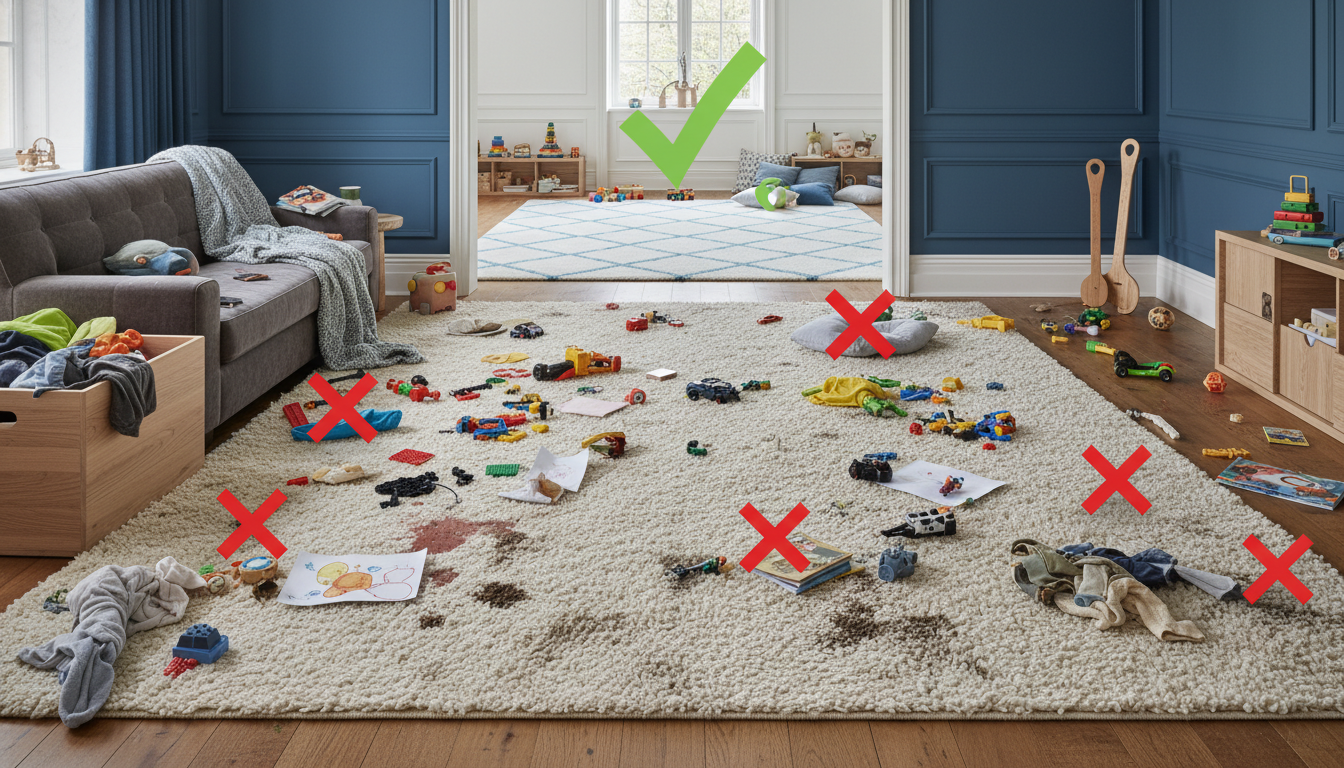
We have all been there: scrolling through a curated feed and falling in love with a high-pile, snowy white Moroccan shag that looks like a literal cloud. In a stylized photo, it is the pinnacle of chic. In a real-world nursery, that same rug becomes a particulate trap within forty-eight hours. The most common mistake parents make is prioritizing “the look” of the moment over the microscopic reality of how a child interacts with a floor. High-pile fibers, while soft, are notorious for hiding everything from microscopic dust mites to those tiny, sharp LEGO pieces that seem to find the arch of your foot in the dark.
Beyond the cleaning headache, there is the “Crumple Factor.” Many budget-friendly “cute” rugs lack a sophisticated backing. Without a high-density, non-slip integrated layer, these rugs bunch up as soon as a toddler starts finding their stride. This creates a tripping hazard that no amount of aesthetic charm can justify. When sourcing for a luxury space, we look for rugs with structural integrity—pieces that lay flush to the floor and stay there, regardless of the zoomies.
The Hidden Toxicity of “Budget” Synthetics
It is easy to grab a cheap, vibrant rug from a big-box retailer, but 2026 standards have raised the bar on what we consider “safe.” Many mass-produced rugs are treated with finishes to make them “stain-resistant,” yet these often off-gas Volatile Organic Compounds (VOCs). If you walk into a room and it smells like “new rug,” you are likely smelling chemicals that shouldn’t be near a developing respiratory system.
Instead, the shift has moved toward Bio-Acetate fibers and rugs that carry the GREENGUARD Gold certification. At thebohorugs.com, the focus is on artisanal construction that bypasses these harsh industrial shortcuts. Choosing a rug is not just about the top layer; it is about what is gassing out from the adhesive holding it together.
“When selecting a rug for a child’s room, pay attention to the Light Reflectance Value (LRV). Rugs with an LRV of 60 or higher reflect more natural light, making a small nursery feel expansive and airy. However, parents often mistakenly choose high-LRV (very light) rugs in low-performance materials. If you want that bright, airy feel, you must ensure the fiber is a non-porous performance blend, or you’ll be replacing it before the child hits their first birthday.” — Julian Thorne, Senior Textile Consultant
The “Age-Out” Aesthetic Error
Designing for a newborn is emotional, which often leads to the “nursery-specific” rug trap. A rug featuring pastel teddy bears or literal alphabet prints has a very short shelf life. By the time the child is four, they want a “big kid” room, and that expensive rug ends up in a landfill or a dusty corner of the garage.
The 2026 design philosophy favors sophisticated whimsy. Think of abstract geometrics, muted celestial patterns, or soft botanical washes that complement a crib today but look equally at home under a teen’s study desk tomorrow. A rug should be an investment in your home’s design equity, not a disposable accessory. By choosing a high-quality, artisanal piece with a timeless palette—like a soft sage or a warm terracotta—you ensure the floor grows with the occupant.
- Avoid: Paper-thin rugs that “creep” across the floorboards.
- Avoid: Looped piles (like Berbers) if you have pets; claws can snag the loops and create unravelling hazards for small fingers.
- Avoid: Rugs that are “dry clean only”—in a child’s room, if you can’t spot-treat it with mild soap and water, it doesn’t belong there.
Conclusion: Investing in Your Child’s Health and Your Home’s Style
The Legacy of the “Fifth Wall” in Modern Parenting
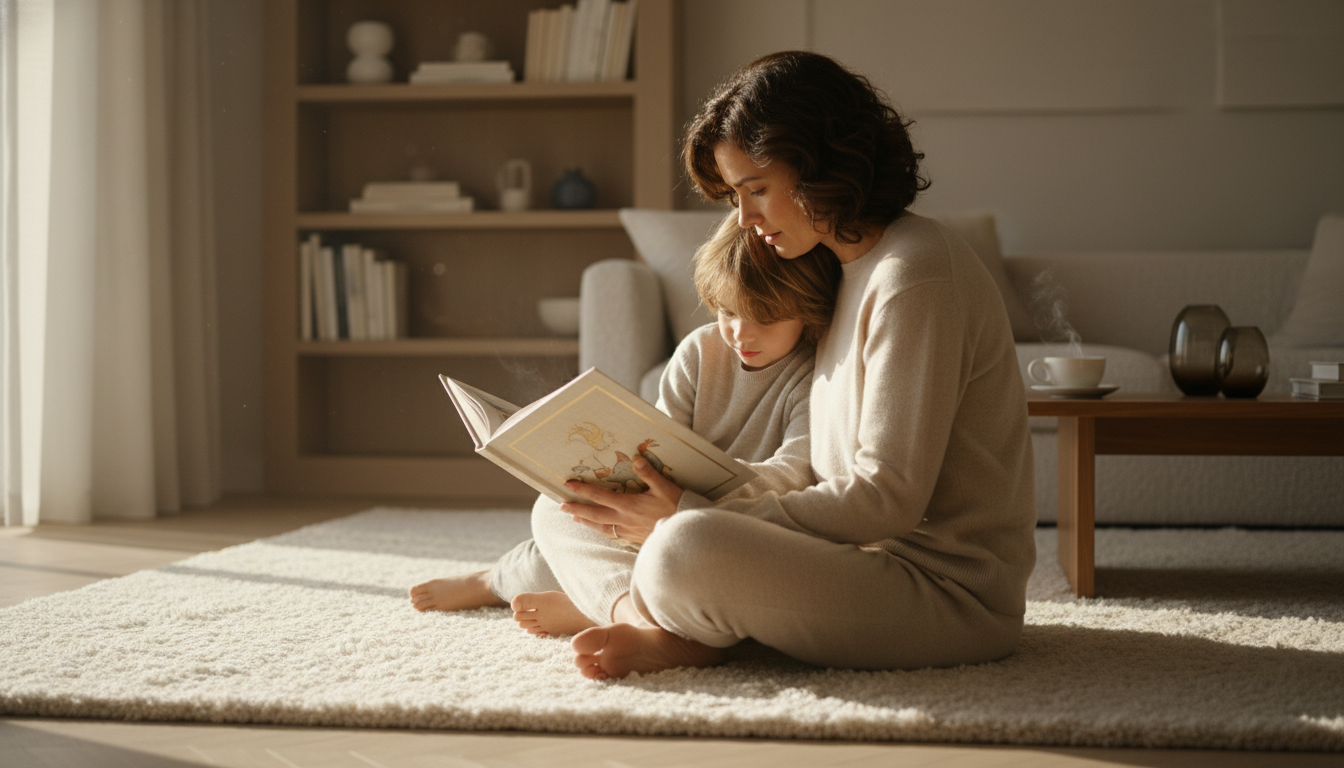
Choosing rugs for kids’ rooms is one of the few design decisions where the stakes feel genuinely high. It isn’t just about matching a swatch to a wall color; it’s about the floor where your toddler will learn to balance, the surface where they will build Lego empires, and the non-toxic environment that protects their developing respiratory systems. As we move through 2026, the industry has shifted away from “disposable” decor. We are seeing a sophisticated return to regenerative textiles—think bio-acetate fibers and high-twist organic cotton—that offer the performance of synthetic materials without the chemical off-gassing that concerned previous generations.
When you select a rug that balances a low Light Reflectance Value (LRV) for a calming nursery atmosphere with the structural integrity of a tight, low-pile weave, you are doing more than just filling floor space. You are creating a sanctuary that simplifies your life. The peace of mind that comes from knowing a spilled bottle of organic juice or a stray crayon mark won’t ruin a major investment allows you to focus on the moments that matter, rather than the maintenance of the room.
“The 2026 nursery is a masterclass in ‘quiet performance.’ We are no longer choosing between a rug that looks like a playground and one that looks like a museum. We are choosing pieces that respect a child’s need for tactile comfort while upholding the architectural integrity of the home.”
— Elena Vance, Chief Textile Curator at The Design Collective
Designing for the Long Game
The most successful rooms we see today are those that anticipate the future. A rug featuring a subtle, hand-drawn geometric pattern in earthy terracotta or sage doesn’t just look beautiful under a white crib; it transitions seamlessly into a workspace for a ten-year-old. By prioritizing OEKO-TEX® certified materials and artisanal construction, you ensure that the rug doesn’t end up in a landfill in three years, but stays underfoot as your child grows.
At thebohorugs.com, we’ve curated our 2026 collection to meet these exact standards. Our focus remains on high-performance, low-pile designs that offer the soft touch of traditional wool with the modern necessity of easy-clean technology. Whether you are prepping for a newborn or refreshing a playroom for an active elementary student, the right foundation makes every other design choice fall into place.
To ensure your high-traffic performance rug wears evenly, rotate it 180 degrees every six months. In kids’ rooms, furniture like toy chests or heavy rocking chairs can create “compression zones.” Regular rotation, paired with a high-quality felt rug pad, can extend the life of your 2,026-standard rug by up to five years, maintaining the fiber’s natural loft and resilience.
Ready to create a space that is as safe as it is stylish? Don’t leave your child’s environment to chance. Browse our curated 2026 Kids & Nursery Rug Collection today. If you’re still narrowing down your choices, download our free “2026 Kids & Nursery Rug Buyer’s Checklist” below. Not only will it guide you through every safety and sizing hurdle, but you’ll also receive an exclusive 10% discount code to help you secure the perfect rug for your home.
Elevate Your Space
Discover the artistry of handmade luxury. Each rug is a masterpiece of tradition and modern design.
Expert Q&A
Are washable rugs safe for newborns in 2026?
Yes, provided they are made from non-toxic materials. Look for OEKO-TEX Standard 100 certification, which ensures every component is tested for harmful substances. Washable rugs are actually safer as they allow you to easily remove allergens, dust mites, and bacteria that accumulate in standard carpets.
What rug colors are best for a calming nursery?
Soft, desaturated tones like sage green, muted lavender, warm sand, and dusty blue are trending for 2026. These colors reduce overstimulation and create a serene environment conducive to sleep, while still offering enough visual interest to feel intentional.
How do I choose a rug that grows with my child from toddler to teen?
Avoid overly juvenile themes like cartoon characters. Instead, opt for sophisticated motifs like stars, subtle geometric patterns, or organic textures. A rug with a neutral base and small pops of color can adapt to changing bedroom themes for a decade or more.
What should I look for in non-toxic rugs for kids?
Prioritize natural fibers like organic cotton or high-quality performance synthetics that are ‘solution-dyed’ to avoid heavy chemical treatments. Always check for GREENGUARD Gold certification to ensure low chemical emissions (VOCs) into your child’s indoor air.
Can performance rugs look as good as wool in a kids’ room?
Absolutely. 2026 textile technology allows for synthetic performance fibers that mimic the matte look and soft feel of wool while offering superior stain resistance and the ability to be machine-washed without shrinking or shedding.
What is the ideal pile height for a playroom rug?
The ideal pile height is between 0.25 and 0.5 inches. Anything higher (like shag) can be a tripping hazard for toddlers and is difficult to clean, while anything lower may not provide enough cushion for playtime.
Do I need a rug pad for a kids’ room rug?
Yes, a non-slip rug pad is essential for safety to prevent the rug from sliding during active play. For nurseries, look for felt-topped pads that provide extra cushioning for tummy time and falls.
How often should I wash a kids’ room rug?
In high-traffic playrooms, a monthly wash is recommended. For nurseries, once every three months or immediately after spills is sufficient. Always follow the manufacturer’s care instructions to maintain the fiber’s integrity.
Are round rugs good for small nurseries?
Round rugs are excellent for small spaces as they break up the boxy lines of furniture and can make a room feel larger. They work perfectly under a crib or as a central play island.
How do I remove heavy stains from a non-washable rug?
Blot immediately with a clean, dry cloth. Use a mixture of mild dish soap and water, but avoid harsh scrubbing. For 2026-standard performance rugs, most stains will lift with a simple damp cloth due to inherent stain-repellent fibers.
Is jute or sisal safe for a nursery?
While natural, jute and sisal can be scratchy on a baby’s skin and are difficult to clean. If you want the look of jute, choose a ‘soft jute’ blend or a synthetic rug that mimics the texture but offers a softer touch.
What size rug is best for a twin bed?
For a twin bed, an 5×8 foot rug is standard, placed horizontally under the bottom two-thirds of the bed. This leaves plenty of soft space on either side for little feet to land in the morning.
Written by TheBohoRugs Interior Design Team
Experts in handmade rugs, boho interiors, and modern home decor.
