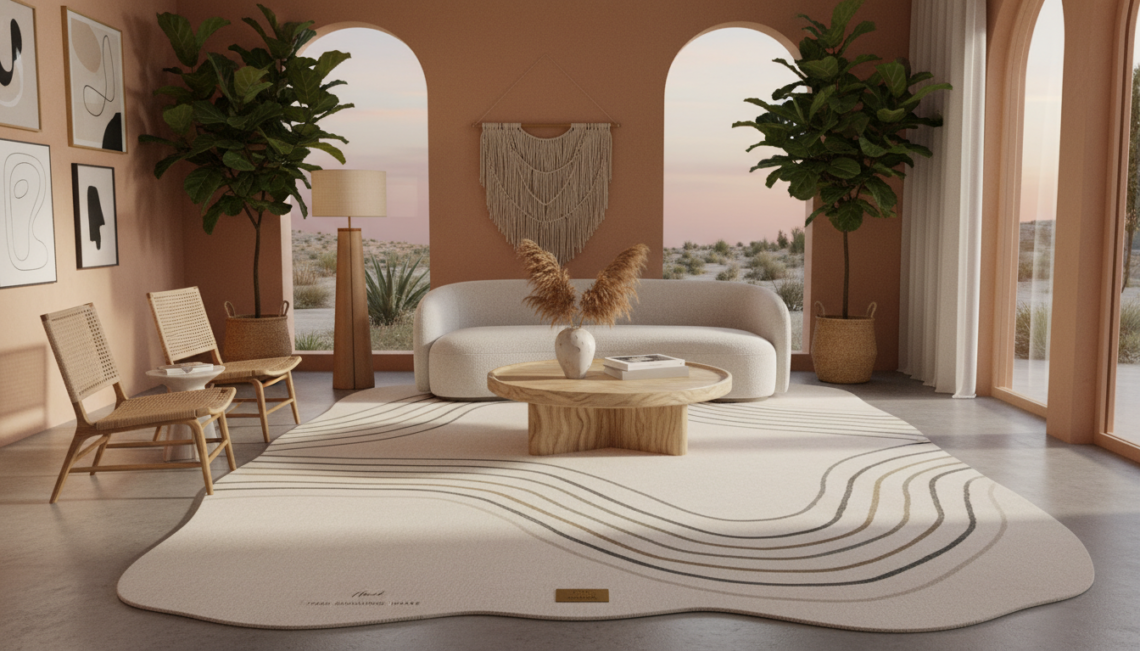
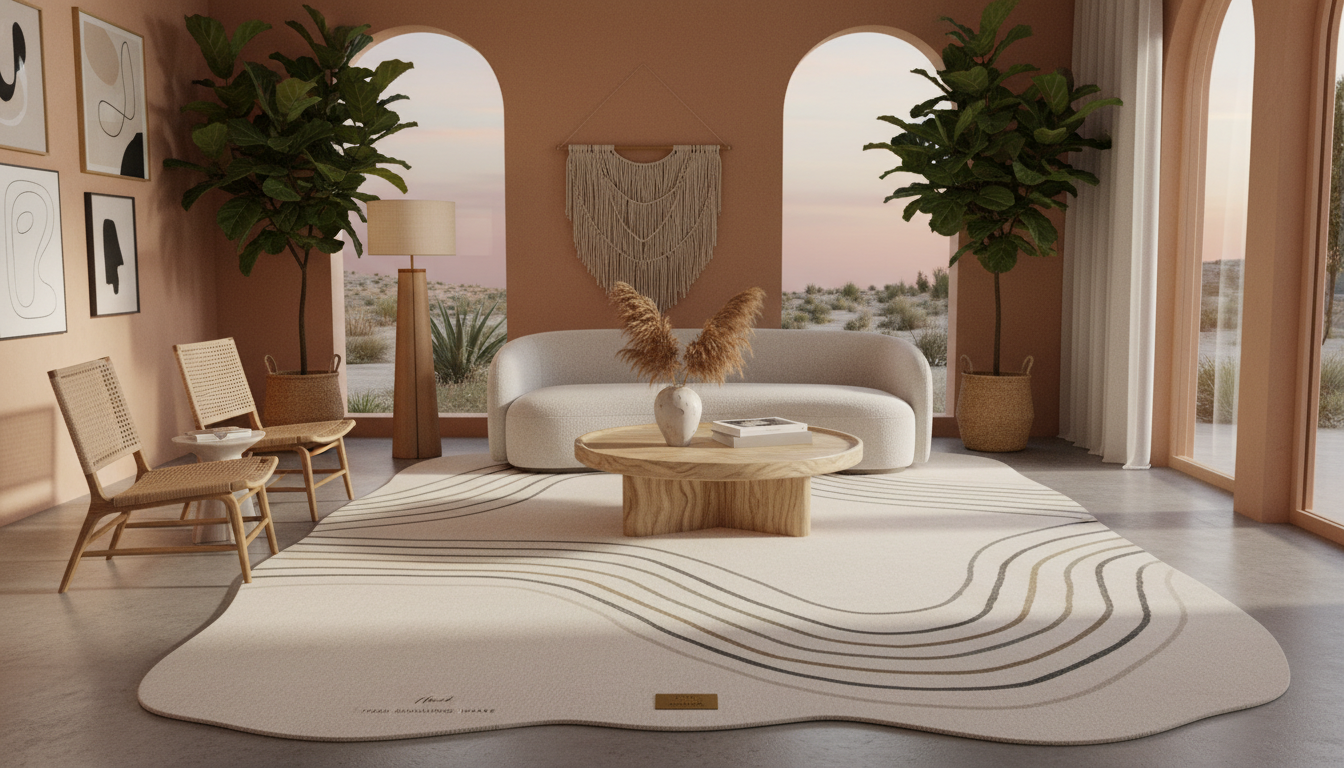
As we pivot toward 2026, the rigid constraints of linear minimalism are dissolving in favor of ‘Soft-Tech’ and ‘Biophilic Flow.’ Leading this movement are undulating wave-edged rugs, a design evolution that treats the floor not as a flat plane, but as a kinetic canvas. This trend report explores how these sculptural silhouettes break the visual monotony of rectangular architecture, offering a sophisticated, organic alternative for the discerning boho enthusiast.
“Undulating wave-edged rugs represent the 2026 interior design shift toward ‘Liquid Architecture.’ Moving away from standard rectangular forms, these rugs utilize scalloped, irregular, and flowing borders to mimic natural elements like coastal tides and rolling dunes. They are increasingly used in curvaceous boho homes to soften modern structural lines and serve as statement ‘Art for the Floor’ through artisanal hand-tufted textures.”
The Roadmap
Table of Contents
- The Evolution of Organic Minimalism: Beyond the Straight Line
- Materiality and Movement: High-Pile Textures Meet Fluid Silhouettes
- The Curvaceous Boho Aesthetic: Integrating Waves into Neutral Palettes
- Art for the Floor: Why Edge Design is the New Focal Point
- Spatial Dynamics: How Wave Edges Soften Modern Architecture
- The 2026 Color Story: Seafoam, Terracotta, and Sandstone Ripples
- Placement Masterclass: Anchoring Furniture with Non-Traditional Shapes
- Sustainability and Sourcing: Hand-Tufted Waves and Regenerative Fibers
The Evolution of Organic Minimalism: Beyond the Straight Line
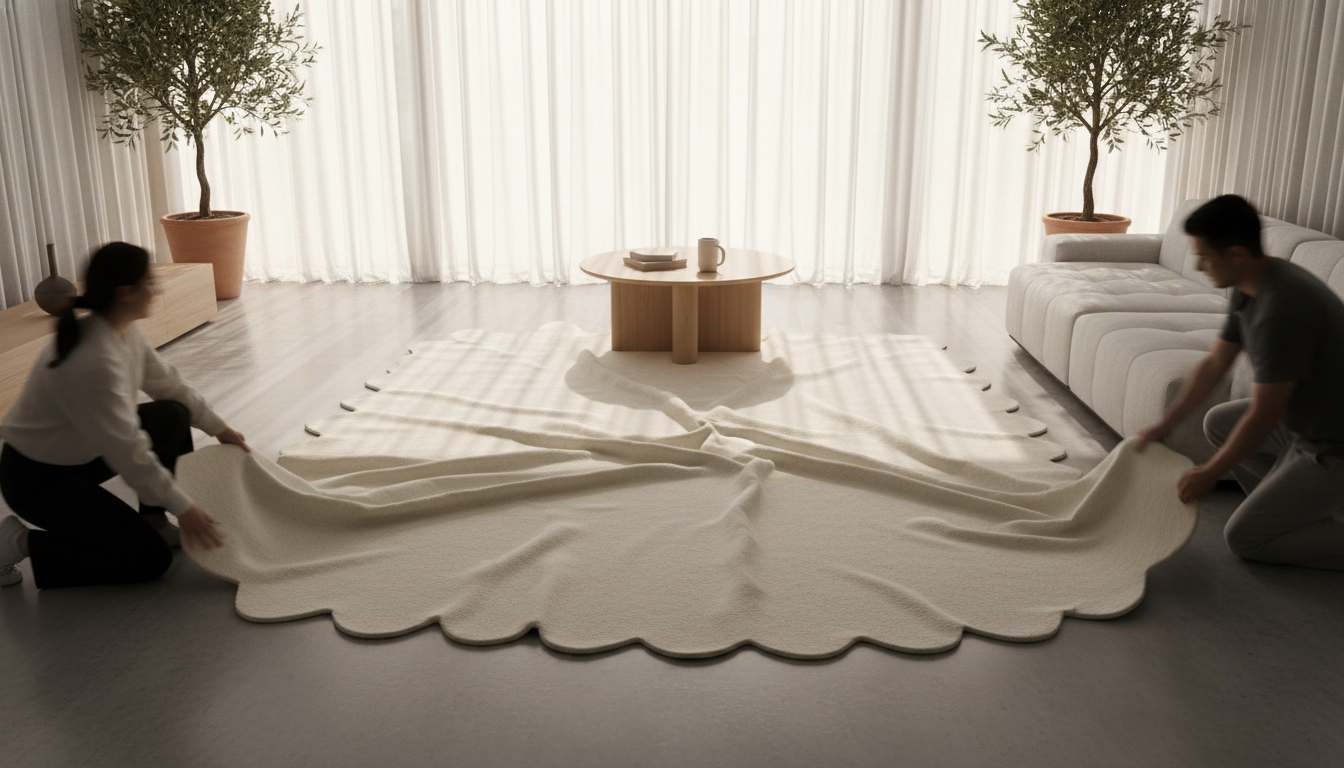
As we approach 2026, the architectural rigidity that defined the early 2020s—sharp steel lines and clinical Scandinavian grids—is dissolving into a more evocative, biophilic aesthetic. Designers are increasingly favoring “Fluidic Romanticism,” a movement that champions the irregular over the symmetrical. At the heart of this transition are undulating wave-edged rugs, which serve as a visual antidote to the boxy confines of modern urban living.
This shift isn’t merely about aesthetics; it is a psychological response to our environment. In a world of digital precision, the human eye seeks the “comfort of the curve.” By introducing floor coverings that mimic the natural ebb and flow of tides or the rhythmic movement of sand dunes, we are grounding our interiors in the organic world.
The Rise of ‘Melted’ Geometrics
The 2026 forecast suggests a move away from standard rectangular or circular silhouettes. We are seeing a surge in what critics call “melted geometrics”—shapes that look as though they have been softened by the elements. These undulating wave-edged rugs act as a bridge between furniture pieces, softening the “dead space” that often exists between a sofa and a coffee table.
- Asymmetrical Flow: Unlike traditional rugs, wave-edged designs don’t dictate a specific orientation, allowing for more creative furniture placement.
- Visual Expansion: The lack of a hard border creates an optical illusion of more space, as the floor appears to bleed into the rug.
- Zonal Definition: In open-plan boho homes, these fluid borders define “islands of rest” without the harsh confinement of a straight edge.
Artisanal Integrity and Tactile Depth
For the discerning collector, the allure of these pieces lies in their complexity. Cutting and finishing a curved edge requires a higher level of craftsmanship than a standard square. At thebohorugs.com, the focus remains on the marriage of traditional hand-knotting techniques with these avant-garde silhouettes, ensuring that the fluid shape doesn’t compromise the structural integrity of the weave.
In 2026, we expect to see these undulating wave-edged rugs rendered in ultra-tactile materials. Think high-low pile heights where the “waves” are accentuated by varying densities of New Zealand wool or recycled silk, adding a three-dimensional topography to the floor.
Styling the Fluid Home: A 2026 Cheat Sheet
Transitioning to a curvaceous boho interior requires a thoughtful approach to layering. The goal is to create a space that feels curated, not cluttered. Consider these professional styling cues for the upcoming season:
- The Layered Ripple: Place a smaller, high-contrast wave-edged rug atop a larger, neutral jute base to add architectural interest.
- Monochromatic Curves: Use a rug in a “dampened clay” or “pistachio” tone that matches your wall color to create a seamless, womb-like environment.
- Contrast with Brutalism: Position a fluid, wavy rug beneath a heavy, concrete coffee table to balance “hard” and “soft” design elements.
Ultimately, the evolution toward organic minimalism is a return to form. By choosing undulating wave-edged rugs, homeowners are rejecting the factory-perfect line in favor of something that feels fundamentally more human, expressive, and serene.
Materiality and Movement: High-Pile Textures Meet Fluid Silhouettes
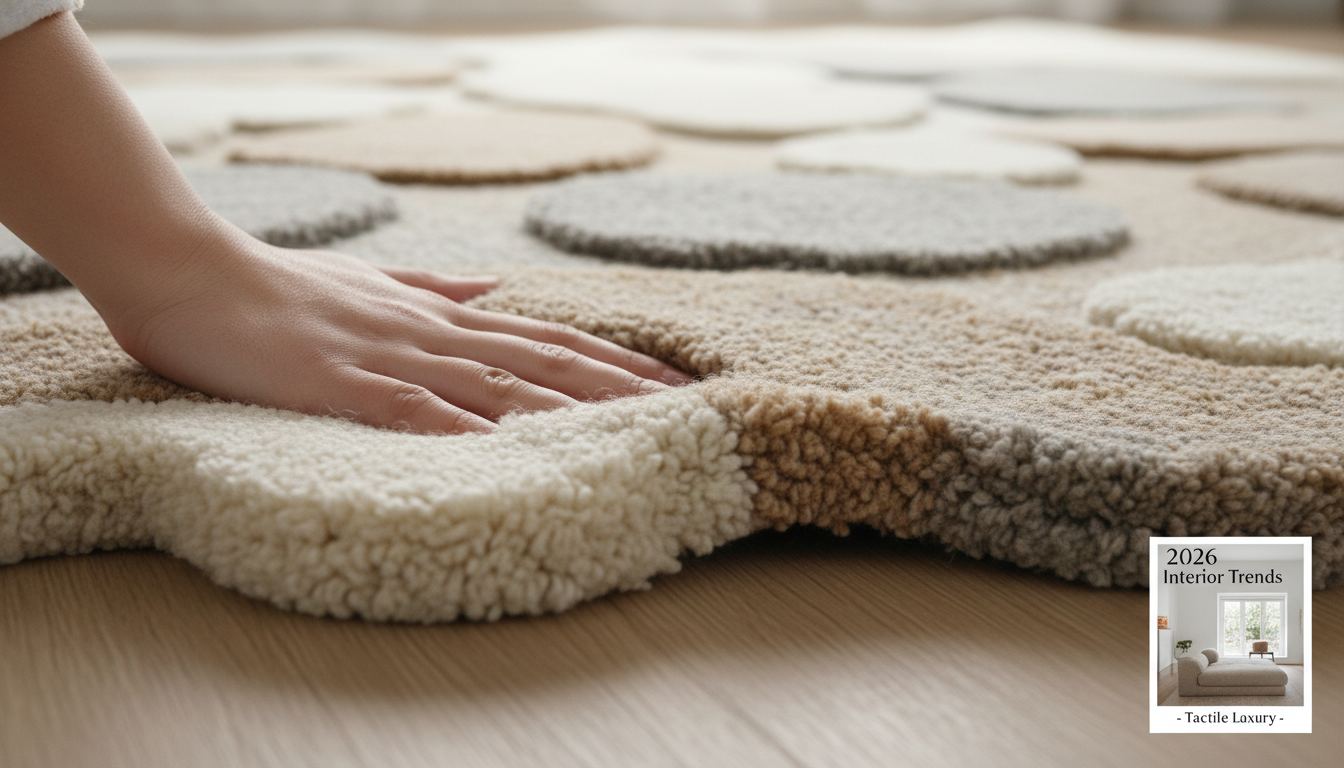
Tactile Dimensions: The Rise of Topographic Pile
As we look toward the 2026 interior landscape, the rigid boundaries of traditional floor coverings are dissolving. The resurgence of undulating wave-edged rugs marks a definitive departure from the mid-century modern obsession with sharp angles, favoring instead a “living edge” that mimics the organic irregularities of nature.
This shift isn’t merely aesthetic; it is deeply tactile. Designers are moving beyond the flat-weave to incorporate variable pile heights that follow the rug’s perimeter. Imagine a deep-pile New Zealand wool that swells at the crest of every curve, creating a 3D topographic effect underfoot.
The 2026 trend focuses on “kinetic stillness”—the idea that a static object can suggest movement. By utilizing carving techniques where the wool is sheared at different depths, undulating wave-edged rugs transform a simple floor covering into a functional sculpture that grounds the room while simultaneously guiding the eye through the space.
The 2026 Materiality Index: Fiber and Form
For the modern boho connoisseur, material choice is the differentiator between a mass-market accessory and a generational heirloom. We are seeing a pivot toward high-luster blends that catch the light along the “waves,” emphasizing the fluid silhouette.
- Hand-Tufted Mohair Blends: Known for their resilience and silk-like sheen, these fibers highlight the radius of the curve with a subtle glow.
- Unfiltered Botanical Silks: Used as accents within the high-pile wool to mimic the shimmering reflection of water on a tide line.
- Sustainably Sourced Jute-Silk Hybrids: A 2026 innovation that provides the raw, earthy texture of traditional boho styles with an elevated, soft-touch finish.
The artisans at thebohorugs.com emphasize that the true luxury of undulating wave-edged rugs lies in the density of the weave. A higher knot count allows for a tighter, more precise curve, ensuring the wave remains crisp over years of foot traffic rather than fraying into an indistinct shape.
Harmonizing Liquid Lines with Architectural Foundations
Integrating these fluid forms requires a sophisticated understanding of balance. In 2026, the trend is to pair the “softness” of the rug with “hard” architectural elements. Think of a wave-edged rug softening the brutalist impact of a concrete floor or a blackened steel fireplace.
- The Mirroring Technique: Align the crest of the rug’s wave with the curve of a velvet kidney sofa or a circular travertine coffee table.
- Zonal Flow: Use the irregular edges to “bleed” into walkways, breaking the traditional grid of a room to create a more intuitive path of travel.
- Monochromatic Depth: Opt for a single tone (such as terracotta or deep sage) and let the varying pile heights and wave edges create the visual interest through shadows rather than patterns.
Ultimately, curating a space around undulating wave-edged rugs requires a rejection of the “fast furniture” mindset. It is about selecting pieces that feel as though they were poured into the room, creating a sanctuary that feels curated, intentional, and unabashedly fluid.
The Curvaceous Boho Aesthetic: Integrating Waves into Neutral Palettes
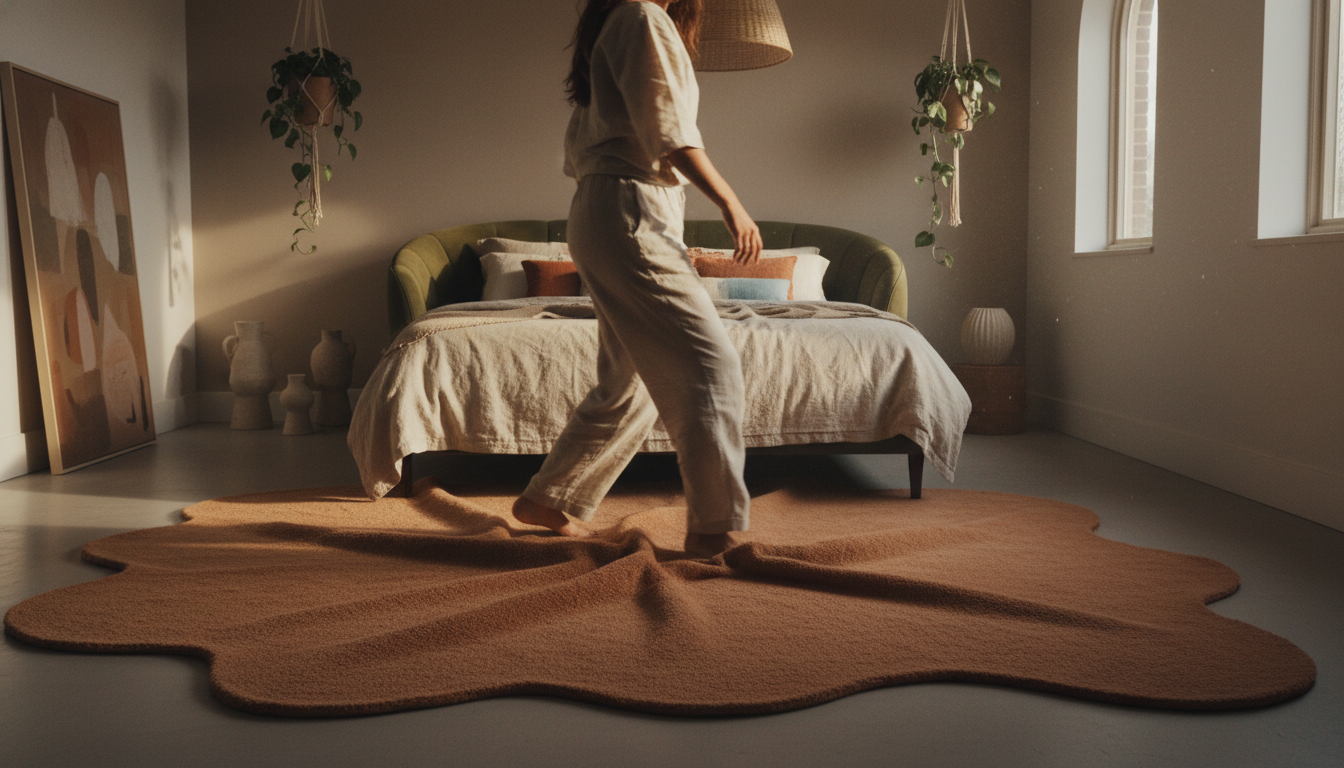
Breaking the Rectangle: The Shift Toward Biomorphic Geometry
As we approach 2026, the interior design landscape is witnessing a definitive departure from the “box” mentality. The rigid, right-angled constraints that defined mid-century and Scandi-minimalism are being softened by a movement toward Biomorphic Geometry. This aesthetic evolution favors forms that mimic the natural world—ripples in sand, the ebb of a tide, and the silhouette of moss-covered stones.
At the center of this fluid revolution are undulating wave-edged rugs. These pieces are no longer viewed merely as floor coverings but as floor-bound sculptures. By breaking the perimeter of the traditional rectangle, these rugs allow the floor to breathe, creating a sense of movement that feels both avant-garde and deeply grounding.
This shift isn’t just about shape; it’s about the psychological impact of softer edges. Designers are predicting that 2026 will prioritize “emotional ergonomics,” where the furniture we choose directly influences our nervous system’s ability to decompress. The gentle rhythm of a scalloped or waved edge provides a visual “calm” that straight lines simply cannot replicate.
Palette Sophistication: From Flat Beige to Layered Mineral Tones
The “sad beige” era is evolving into a more sophisticated “Tactile Neutrality.” For 2026, the palette for curvaceous boho homes is moving away from flat creams toward mineral-inspired tones that offer depth without noise. When integrating undulating wave-edged rugs into these spaces, the focus is on tonal layering.
- Oatmeal and Bone: Layered against white oak flooring for a high-contrast, high-texture look.
- Mushroom and Clay: Ideal for creating a “sun-drenched” warmth that feels curated rather than cluttered.
- Unbleached Wool: Utilizing the natural variations in sheep’s wool to add organic visual interest.
For those seeking high-end artisanal quality, the collections at thebohorugs.com exemplify this marriage of neutral palettes and complex silhouettes. Their focus on hand-finished edges ensures that the “wave” is not just a print, but a structural element of the rug’s construction.
Architectural Styling: Creating a Fluid Dialogue
Integrating a wave-edged piece requires a strategic approach to furniture placement. The goal is to create a dialogue between the rug and the room’s architecture. Rather than centering the rug perfectly under a coffee table, consider an asymmetrical layout that highlights the rug’s unique perimeter.
- Juxtaposition: Pair the fluid lines of the rug with a heavy, brutalist stone table to create a tension between “soft” and “hard.”
- Echoing Shapes: Mirror the rug’s curves with arched doorways, circular mirrors, or “bean” sofas to reinforce the curvaceous boho theme.
- Zonal Transitions: Use the irregular edges to define “islands” of comfort in open-plan lofts, allowing the rug to transition naturally into the surrounding flooring.
The 2026 iteration of the boho home is less about “clutter” and more about “curation.” By selecting undulating wave-edged rugs that lean into high-low pile heights and hand-carved details, homeowners can achieve a space that feels both high-fashion and incredibly livable. It is a sophisticated nod to nature that remains firmly rooted in modern luxury.
Art for the Floor: Why Edge Design is the New Focal Point
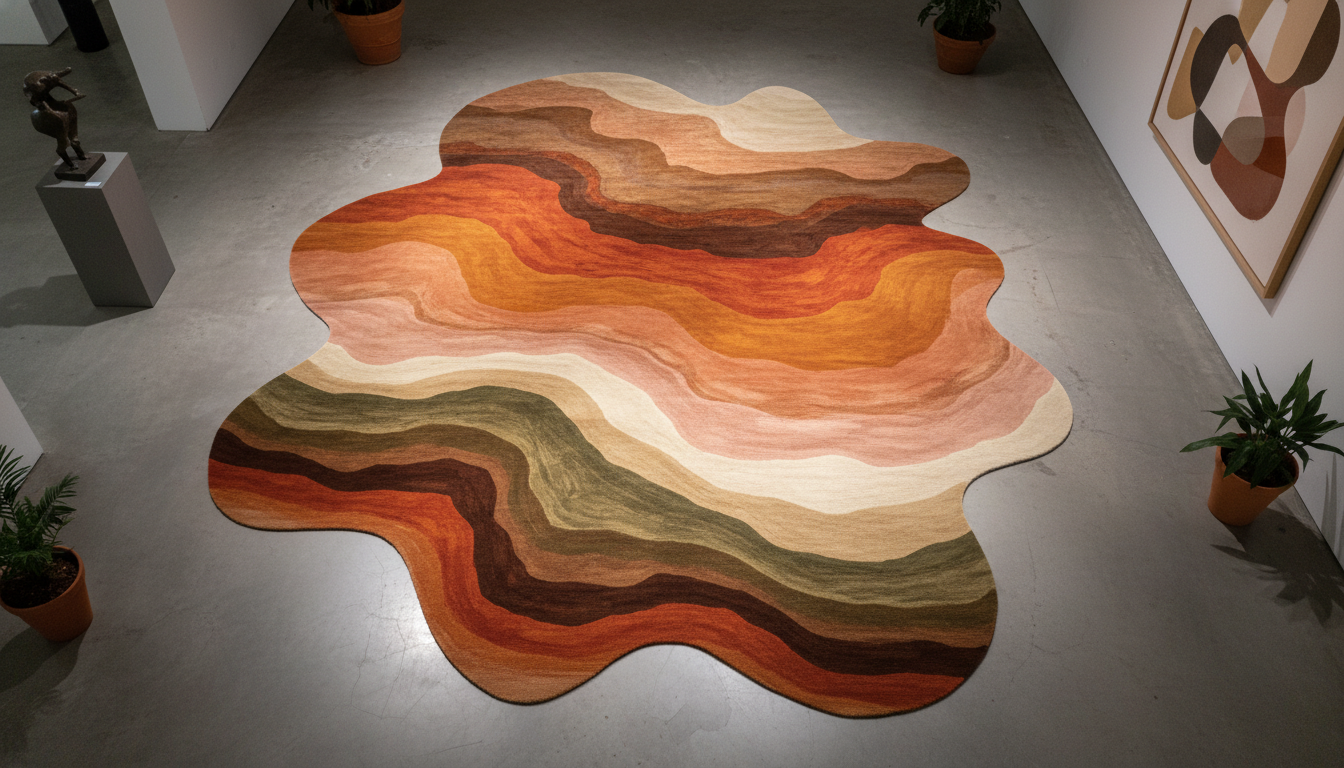
The Evolution from Frame to Fluidity
For decades, the rug served as a rigid boundary—a geometric anchor intended to box in furniture and define space through strict linearity. However, as we look toward 2026, the interior landscape is undergoing a visceral shift. The focus has migrated from the center of the textile to its perimeter, where the “frame” is no longer a boundary, but a rhythmic dialogue with the floor.
The rise of undulating wave-edged rugs signals a departure from the static. These pieces function as architectural interventions, breaking the harsh right angles of modern apartments and injecting a sense of kinetic movement into stationary rooms. It is a transition from mere floor covering to sculptural topography.
The 2026 Aesthetic: Kinetic Calm
By 2026, the “Curvaceous Boho” trend will evolve into what critics are calling “Kinetic Calm.” This aesthetic prioritizes silhouettes that mimic natural phenomena—ebbing tides, desert dunes, and tectonic shifts. The edge of the rug becomes the focal point because it dictates how light and shadow interact with the flooring beneath.
Designers are moving away from flat weaves in favor of varied pile heights that emphasize the scallop. When undulating wave-edged rugs are executed with artisanal precision, the “wave” isn’t just a visual pattern; it is a physical relief that invites tactile exploration. Discerning homeowners are increasingly sourcing these statement pieces from heritage-focused curators like thebohorugs.com, where the emphasis remains on the hand-finished quality of these complex silhouettes.
Why Edge Architecture Matters Now
- Spatial Softening: In open-concept living, organic edges blur the transition between zones, preventing the “choppy” look of traditional rectangular layouts.
- Shadow Play: As the day’s light shifts, the irregular borders of a wave-edged rug cast soft, shifting shadows that create a sense of depth and three-dimensionality.
- The Anti-Digital Sentiment: Fluid edges represent a rebellion against the “pixelated” perfection of digital life, favoring the “perfectly imperfect” lines of the natural world.
Materiality and The Sculptural Border
The 2026 iteration of this trend relies heavily on high-contrast materiality. Look for combinations of matte wool paired with shimmering botanical silk along the crest of the waves. This juxtaposition heightens the visual impact of the edge, ensuring the rug commands attention from every angle of the room.
When selecting a piece for a high-end interior, the craftsmanship of the finish is paramount. A machine-cut curve lacks the soul of a hand-bound edge. The premium collections at thebohorugs.com exemplify this artisanal approach, ensuring that each undulation feels intentional rather than manufactured. As we move into the next design cycle, the floor is no longer the background; it is the masterpiece.
Spatial Dynamics: How Wave Edges Soften Modern Architecture
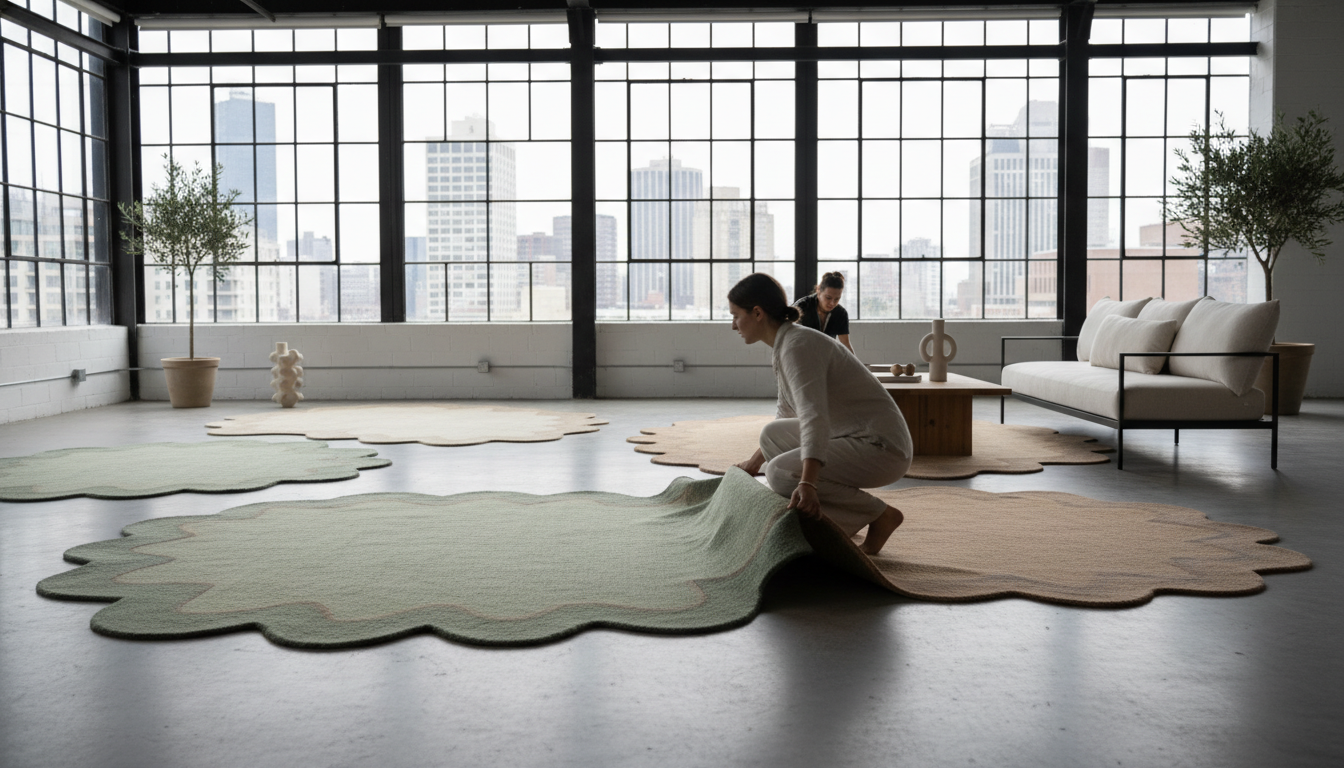
The Geometric Interruption: Breaking the Right-Angle Rule
In the high-stakes world of contemporary architecture, the “box” has long reigned supreme. Glass, steel, and concrete provide a structural rigidity that, while impressive, often leaves interiors feeling clinically detached. As we approach 2026, the design zeitgeist is shifting toward a necessary rebellion against these sharp perimeters.
The introduction of undulating wave-edged rugs serves as a sophisticated spatial disruptor. Unlike traditional rectangular textiles that reinforce a room’s borders, these fluid silhouettes challenge the eye to move beyond the grid. They act as a “softening agent,” bridging the gap between cold industrial materials and the innate human desire for organic form.
By mimicking the natural irregularities of a shoreline or a wind-swept dune, these pieces introduce a layer of architectural tension. This contrast—the precision of a 90-degree corner meeting the rhythmic pulse of a curved hem—is what defines the high-end Boho aesthetic for the coming seasons.
Fluid Zoning: The End of the Invisible Wall
The 2026 home is less about static rooms and more about “liquid transition zones.” Designers are increasingly moving away from using furniture to create hard boundaries. Instead, undulating wave-edged rugs are being utilized to “bleed” one functional area into another, creating a sense of movement that static shapes cannot replicate.
- Rhythmic Anchoring: A wave-edged rug under a dining table softens the heavy legs of a Brutalist oak table.
- Directional Flow: The peaks and troughs of the rug’s edge can subtly guide foot traffic toward natural light sources or entryways.
- Layered Complexity: Overlapping a scalloped or waved piece onto a larger jute base creates a topographical depth that feels curated rather than staged.
For those seeking to implement this trend with artisanal integrity, collections from
thebohorugs.com
provide the necessary craftsmanship to ensure these curves feel intentional and sculptural, rather than merely decorative.The 2026 Forecast: Liquid Brutalism and Bio-Minimalism
As we look toward the mid-decade mark, two specific movements are emerging that prioritize the wave-edged form. The first, “Liquid Brutalism,” pairs heavy, raw materials with the extreme softness of curvilinear textiles. The second, “Bio-Minimalism,” focuses on using earth-toned, undulating wave-edged rugs to simulate natural landscapes within urban high-rises.
- The “Shoreline” Effect: Using varying pile heights within a waved rug to mimic the receding tide, creating a sensory experience underfoot.
- Monochromatic Shadows: A shift toward single-color rugs where the only “pattern” is the dramatic shadow cast by the wave-cut edge against a polished floor.
- Sustainable Sculpting: A priority on hand-carved wool and organic dyes that emphasize the rug as a piece of “floor art” rather than a utilitarian floor covering.
Ultimately, the move toward fluid edges is a move toward a more empathetic architecture. By replacing the harsh stop-and-start of traditional rugs with a continuous, rhythmic line, we create spaces that breathe, flow, and finally feel at ease.
The 2026 Color Story: Seafoam, Terracotta, and Sandstone Ripples
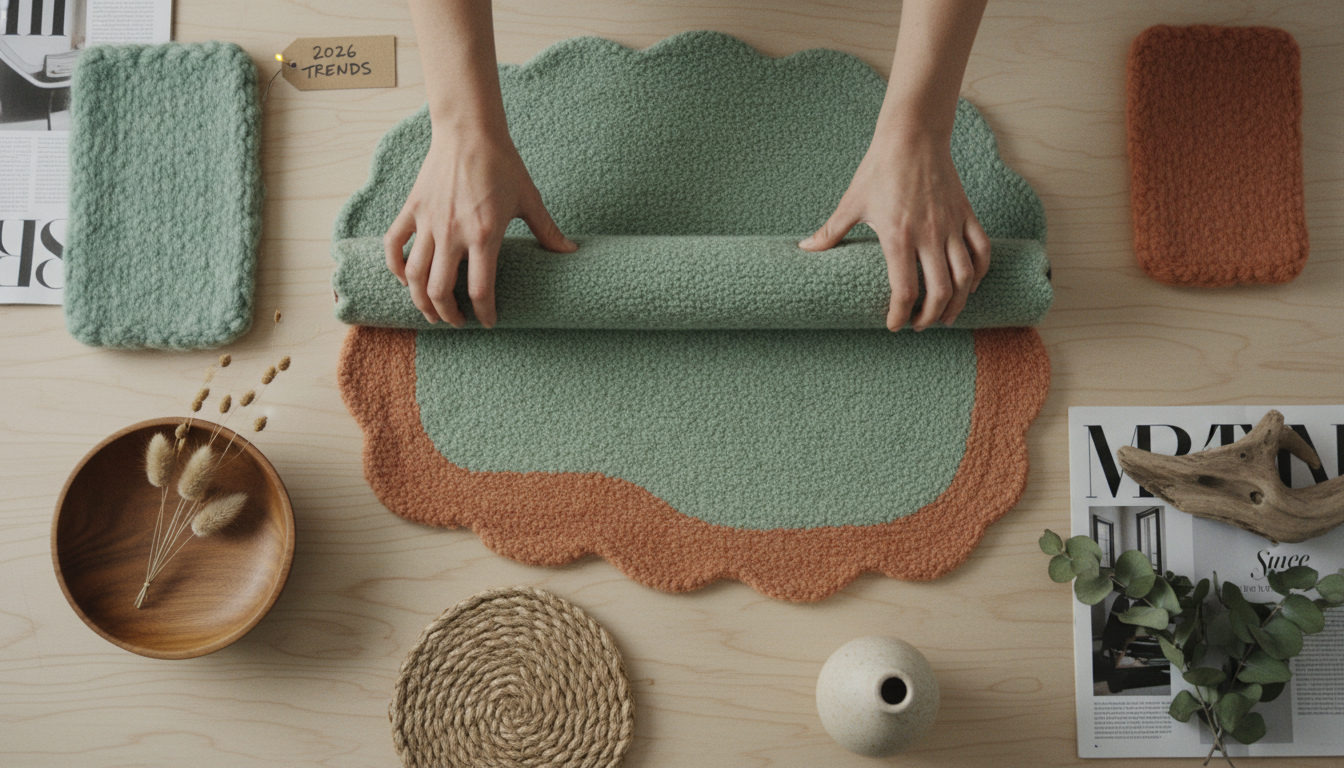
Beyond the Coast: The Rise of Topographical Bio-Mimicry
By 2026, the interior design landscape will shift from static minimalism to what curators are calling “Tactile Fluidity.” At the heart of this movement is a departure from the rigid right angles that have dominated urban lofts for decades. Instead, we are seeing a surge in undulating wave-edged rugs that mimic the irregular, rhythmic boundaries of natural landscapes.
This isn’t merely a coastal aesthetic; it is a sophisticated study in topographical bio-mimicry. Designers are moving beyond literal beach themes to embrace the visceral textures of the earth. These pieces serve as an architectural anchor, breaking the visual monotony of linear flooring and providing a soft, sculptural counterpoint to mid-century modern furniture.
A Palette of Earth and Ether
The color story for 2026 is defined by a grounded optimism. We are seeing a sophisticated interplay between mineral-drenched hues and baked earthen tones. The specific palette centers on three pivotal shades that redefine the bohemian spirit:
- Oxidized Seafoam: A complex, desaturated green-blue that leans into the tonality of weathered copper and deep tide pools, rather than bright mint.
- Ember Terracotta: A shift toward “Canyon Dusk”—a rich, sun-drenched clay that adds warmth without the aggression of true red.
- Grainy Sandstone: The ultimate 2026 neutral, featuring flecks of cream and taupe that provide a tactile, stone-like appearance underfoot.
When these colors are applied to undulating wave-edged rugs, they create a sense of movement. The high-low pile heights often used by artisans at thebohorugs.com allow these colors to shift and shimmer as the light changes throughout the day, effectively bringing a piece of the shifting outdoors inside.
Designing with Sculptural Cadence
Integrating these fluid forms requires a shift in spatial thinking. In 2026, the rug is no longer a background element; it is the primary artistic driver of the room. To master this trend, consider the following structural applications:
- Layering with Negative Space: Place a seafoam-hued wave rug over dark hardwood to emphasize the irregular perimeter, allowing the floor to act as a “shadow.”
- The “Lapping” Effect: Position the rug so its curves “lap” against the legs of a sleek, low-profile sofa, creating the illusion of a soft tide entering the living area.
- Monochromatic Depth: Use a sandstone-colored rug with varied fiber lengths to add visual interest to a cream-on-cream “quiet luxury” bedroom.
As we look toward the future of the home, the rigid boundaries of the past are dissolving. Premium collections found at thebohorugs.com highlight how undulating wave-edged rugs are becoming the essential medium for this transition, offering a tactile bridge between architectural structure and the raw, unscripted beauty of the natural world.
Placement Masterclass: Anchoring Furniture with Non-Traditional Shapes
The Architecture of Fluidity: Beyond the Four-Corner Rule
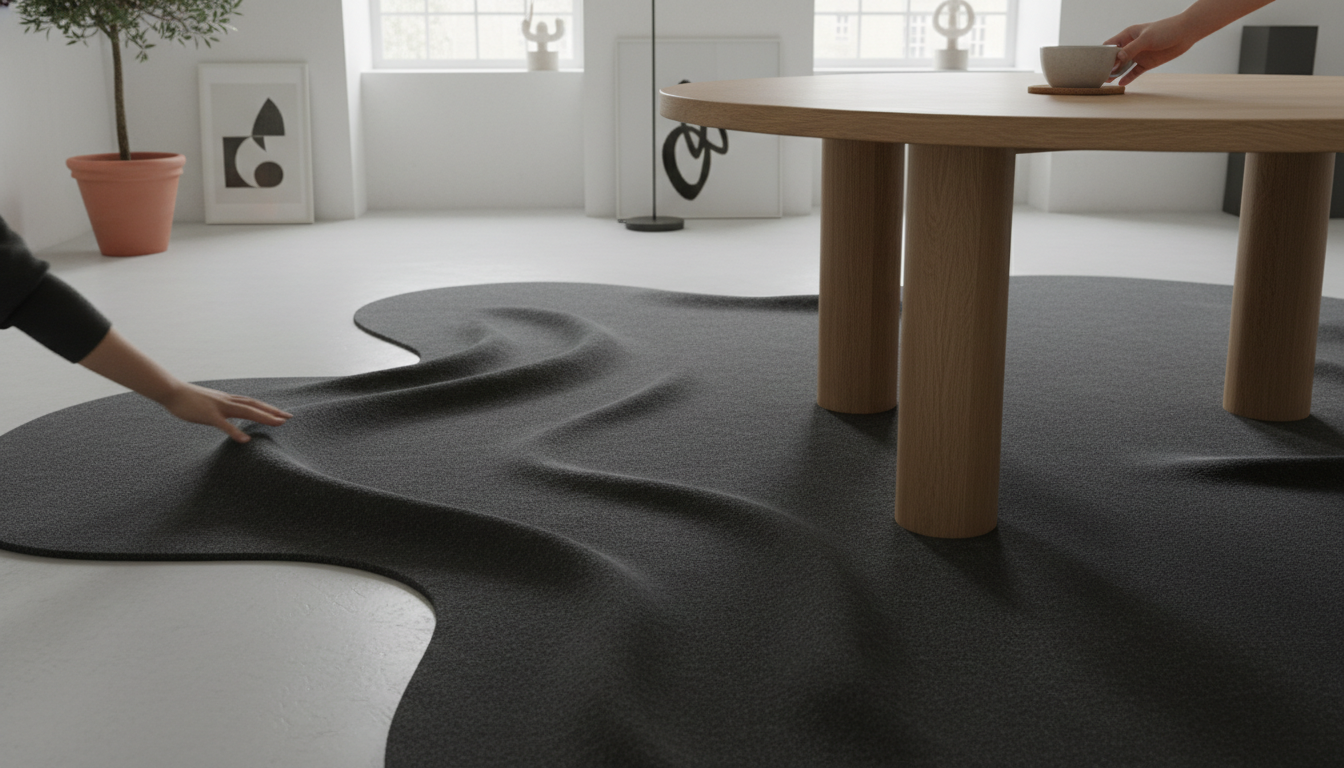
As we approach 2026, the interior landscape is shedding its rigid, modernist shell in favor of “Soft Minimalism.” The rectangular rug, once the undisputed anchor of the living room, is being replaced by silhouettes that mimic the natural ebb and flow of tides. The rise of undulating wave-edged rugs marks a shift toward biomorphic design, where the floor covering is no longer a mere boundary, but a sculptural element that dictates the room’s rhythm.
In high-end curation, the challenge lies in the “anchor.” Traditional placement dictates that furniture must sit parallel to the rug’s edge to create symmetry. However, with fluid shapes, the goal is to embrace asymmetry. A curated selection from thebohorugs.com suggests that these pieces work best when they “interact” with furniture rather than just sitting beneath it, allowing the curves to peek out and soften the heavy lines of a modular sofa or a travertine coffee table.
Mastering the “Overlap and Reveal” Technique
For the 2026 season, top-tier designers are moving away from full-coverage layouts. To properly showcase undulating wave-edged rugs, one must master the art of the reveal. It is no longer about tucking the rug deep under the sofa; it is about strategic layering that highlights the craftsmanship of the border.
- The Asymmetrical Float: Position a curved velvet sofa so only one-third of its base covers the rug, allowing the wave pattern to extend into the walking path.
- The Sculptural Island: Use a smaller wave-edged piece to isolate a reading nook, pairing it with a high-back organic chair to create a “micro-environment.”
- Leading Lines: Align the peak of a wave with the doorway to naturally “pull” guests into the seating area through visual suggestion.
The 2026 Palette: Mineral Tones and High-Low Piles
The upcoming trend cycle prioritizes tactile depth over flat patterns. We are seeing a move toward “monochromatic dimension,” where the wave is defined by varying pile heights rather than contrasting colors. Think deep charcoal, celadon, and sun-bleached terracotta. When sourcing from artisanal houses like thebohorugs.com, look for hand-tufted wool blends that offer a 3D effect, making the waves appear to rise from the floorboards.
In larger open-plan homes, undulating wave-edged rugs act as a visual bridge between different functional zones. By eschewing the harsh perimeter of a rectangle, these fluid shapes allow the eye to glide from the dining area to the lounge without a jarring “stop” in the floor’s narrative. It is a sophisticated approach to zoning that values flow and psychological comfort over strict spatial division.
Precision Pairings for the Curvaceous Interior
To avoid a room feeling too “whimsical,” balance is essential. High-end editorial spaces achieve this by pairing soft floor curves with “hard” materials. The juxtaposition of a fluid rug against a brutalist concrete fireplace or a sharp-edged glass desk creates a tension that feels intentionally designed rather than accidentally eclectic.
- Textural Contrast: Pair a high-pile wave rug with a low-slung, leather-upholstered Daybed.
- Geometric Echoing: Match the radius of your rug’s curve to the diameter of a circular marble coffee table for a cohesive, “nested” look.
- Verticality: Offset the horizontal fluidity of the rug with tall, slim floor lamps or floor-to-ceiling sheer drapery to elongate the room.
Sustainability and Sourcing: Hand-Tufted Waves and Regenerative Fibers
The Materiality of the Curve: Regenerative Fibers
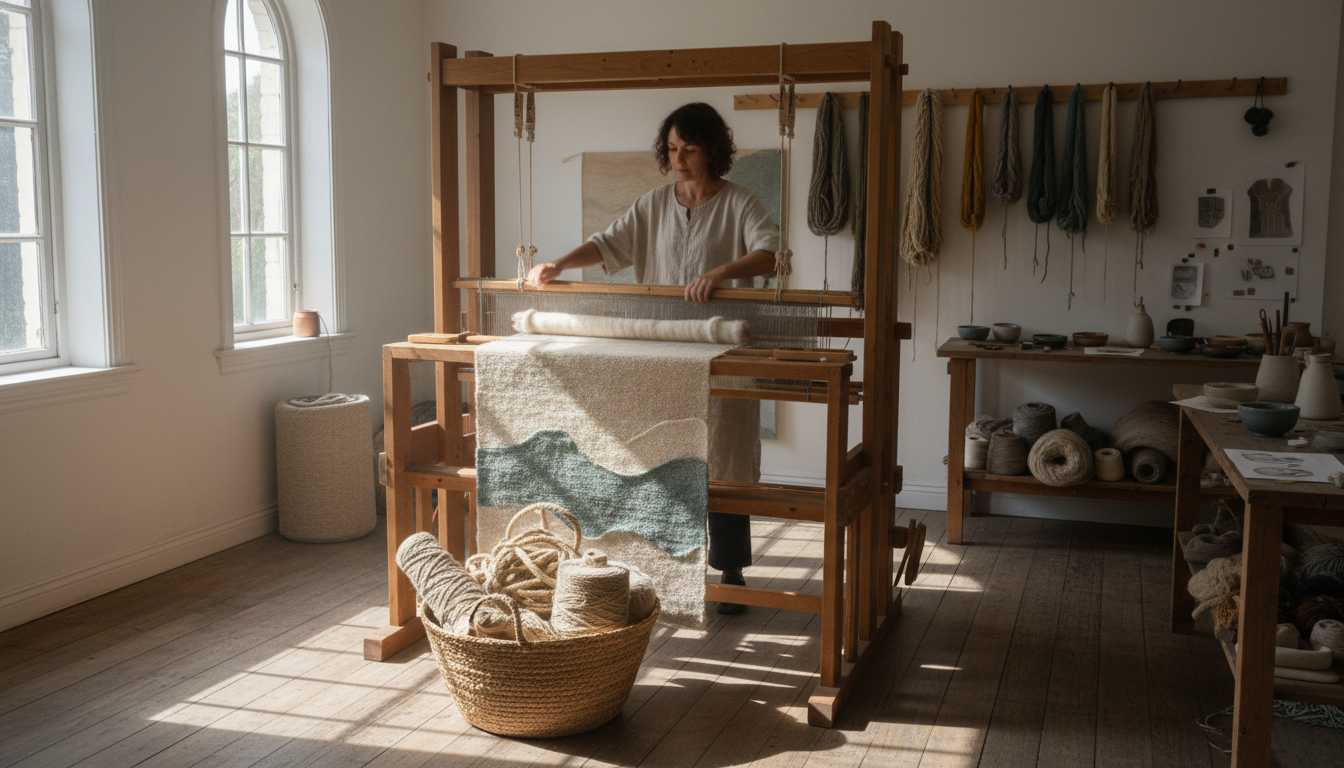
As we look toward 2026, the luxury rug market is undergoing a seismic shift from passive sustainability to active regeneration. The silhouette of undulating wave-edged rugs is more than a visual statement; it represents a return to the organic irregularities found in nature, demanding materials that honor that lineage.
High-end interiors are moving beyond basic recycled plastics, gravitating instead toward “carbon-negative” fibers. We are seeing a surge in New Zealand wool sourced from regenerative farms and innovative silk-blends derived from seaweed and rose petals, which provide a luminous sheen that mimics the crest of a tide.
These fibers are chosen not only for their low environmental impact but for their tactile performance. A wave-edged design requires a material that can hold a crisp, structural border while maintaining the soft, inviting pile essential to the modern “curvaceous boho” aesthetic.
Why Hand-Tufting Defines the Fluid Aesthetic
The intricate geometry of undulating wave-edged rugs necessitates a departure from high-speed machine production. Mass-loomed textiles often struggle with the radial tension required for deep, scalloped perimeters, leading to fraying or structural warping over time.
Hand-tufting remains the gold standard for these fluid forms. By placing each yarn individually, artisans can manipulate pile heights to create a 3D topographic effect, making the rug feel less like a floor covering and more like a functional sculpture. This bespoke approach ensures that the “wave” is purposeful, weighted, and durable.
For those seeking to anchor their space with these artisanal pieces, platforms like thebohorugs.com have become essential resources, bridging the gap between ancient tufting techniques and the avant-garde silhouettes of the 2026 trend cycle.
2026 Sourcing Checklist: What to Look For
- Traceable Wool: Look for certifications that ensure grazing practices actually improve soil health and biodiversity.
- Plant-Based Dyes: The 2026 palette favors “living colors”—pigments derived from madder root, indigo, and ochre that age gracefully.
- Monomaterial Construction: To ensure future recyclability, high-end wave rugs are increasingly made from a single fiber type rather than complex, inseparable blends.
- Artisan Transparency: Prioritize collections that provide insight into the weaving community, ensuring fair wages for the specialized labor required for non-linear shapes.
Ultimately, the move toward fluid, wave-like forms is a rejection of the rigid, industrial grids of the past decade. By choosing rugs that prioritize both regenerative sourcing and hand-tufted integrity, homeowners are investing in a future where design and ecology exist in a continuous, unbroken loop.
Elevate Your Space
Discover the artistry of handmade luxury. Each rug is a masterpiece of tradition and modern design.
Expert Q&A
What exactly are undulating wave-edged rugs?
They are area rugs featuring non-linear, flowing borders that mimic the rhythmic movement of waves rather than traditional straight or circular edges.
Why are undulating wave-edged rugs trending for 2026?
They align with the ‘Biophilic Design’ movement, which emphasizes organic shapes and natural patterns to improve well-being and visual interest in interiors.
Are these rugs suitable for high-traffic areas?
Yes, provided they are made from durable fibers like high-twist wool or premium synthetics that maintain the integrity of the sculpted edges.
How do I clean the irregular edges of an undulating rug?
Vacuum using a handheld attachment along the curves to prevent fraying and ensure the pile is cleaned deep within the wave crevices.
Can I use an undulating wave-edged rug in a small room?
Absolutely; the fluid edges can actually make a room feel larger by breaking the visual box created by walls.
What furniture pairs best with wave-edged rugs?
Curved sofas, round coffee tables, and organic-shaped lounge chairs complement the fluid silhouette perfectly.
What materials are best for this specific trend?
Hand-tufted wool is preferred for its ability to hold complex shapes and offer the density required for ‘Art for the Floor’ aesthetics.
Do I need a custom rug pad for wave-edged rugs?
Yes, it is recommended to trim a standard rug pad to be slightly smaller than the rug’s unique wave pattern for maximum stability.
Can undulating rugs work in a professional office setting?
Yes, they add a touch of modern sophistication and can soften the ‘corporate’ feel of sterile, linear office furniture.
Are wave-edged rugs more expensive than rectangular rugs?
Generally, yes, because the specialized cutting and binding of the irregular edges require more labor and artisanal skill.
What colors are most popular for the 2026 wave trend?
Earthy neutrals, seafoam greens, muted terracotta, and deep ochre are the leading palettes for 2026.
How do undulating rugs fit into the Boho aesthetic?
They enhance the ‘Eclectic Boho’ style by introducing a sense of movement and ‘controlled chaos’ that feels more natural than rigid patterns.
Is layering possible with wave-edged rugs?
Yes, layering a smaller wave-edged rug over a larger, flat-weave jute rug creates a beautiful, multi-dimensional look.
Do these rugs require professional installation?
No, but careful unrolling and flattening are essential to ensure the curved edges don’t trip occupants.
Can wave edges fray more easily than straight edges?
Only if the binding is poor quality. High-end undulating rugs feature reinforced surging to protect the curves.
Are there outdoor versions of undulating wave-edged rugs?
Yes, 2026 collections are introducing polypropylene versions designed to bring fluid design to patios and decks.
How do wave rugs affect spatial perception?
They lead the eye around the room in a fluid motion, often making narrow spaces feel wider.
What is the ‘Art for the Floor’ concept?
It’s the design philosophy that a rug should be as visually significant and carefully crafted as a piece of wall art.
Can I place a rectangular coffee table on a wave rug?
Yes, the contrast between the sharp angles of the table and the soft curves of the rug creates a compelling visual tension.
Are undulating rugs child-friendly?
Yes, their soft edges and typically plush pile heights make them excellent for play areas and nurseries.
How do I choose the right size for an irregular rug?
Measure the widest and longest points of the wave to ensure the rug covers the necessary floor area without hitting walls.
Do wave-edged rugs come in silk?
Some luxury versions use bamboo silk or viscose highlights to accentuate the ‘water-like’ shimmer of the wave patterns.
Is the wave trend a fad or a long-term investment?
Given the move toward organic architecture and biophilic homes, the wave-edge silhouette is expected to remain a design staple throughout the decade.
Can I use wave rugs in a dining room?
It is possible, but ensure the rug is large enough so that chairs remain on the ‘waves’ even when pulled out.
What rug pile height is best for showing off the wave shape?
A medium-to-high pile (10mm to 15mm) provides the depth needed to make the sculpted edges truly stand out.
How do these rugs handle pets?
Wool versions are naturally stain-resistant and durable, though pet claws should be kept trimmed to avoid snagging the tufts.
Where can I source authentic 2026-style undulating rugs?
Artisanal platforms like TheBohoRugs specialize in these forward-thinking, hand-crafted silhouettes.
Do undulating rugs work with minimalist decor?
They are the perfect ‘warm minimalist’ accessory, adding character without cluttering the space with color or pattern.
What is ‘Liquid Architecture’ in interior design?
It’s a design style focusing on continuous, flowing forms and the elimination of harsh right angles in furniture and decor.
Can I find vintage wave-edged rugs?
While rare, some 1970s ‘Pop Art’ rugs featured similar wavy borders, but the 2026 versions are more focused on natural materials and earthy tones.
Written by TheBohoRugs Interior Design Team
Experts in handmade rugs, boho interiors, and modern home decor.
