

In the realm of high-end interior design, a bespoke rug is more than a floor covering; it is a profound expression of heritage and craftsmanship. Often referred to as ‘Art for the Floor,’ these pieces require a level of stewardship that transcends basic housekeeping. As we look toward 2026, the philosophy of rug maintenance is shifting from reactive cleaning to proactive preservation. This editorial serves as The Curated Guide for collectors and enthusiasts who view their textiles as legacy assets. We delve into the sophisticated methodologies required to maintain the structural integrity and aesthetic vibrancy of wool, silk, and rare fiber weaves, ensuring they remain the centerpiece of your home for generations.
“To effectively preserve your art for the floor, experts recommend a three-tiered approach: bi-annual rotation to distribute foot traffic and UV exposure, utilizing high-density felt padding to prevent fiber crushing, and employing professional bio-enzymatic cleaning every 12 to 18 months. The Curated Guide emphasizes that the primary key to longevity is immediate, non-abrasive spill management coupled with a strict ‘no-shoes’ policy in high-traffic textile zones.”
The Roadmap
Table of Contents
- The Materiality of Art: Understanding Fiber Resilience
- Atmospheric Architecture: Managing Light and Humidity
- The Physics of Placement: Traffic Patterns and Compression
- 2026 Innovation: The Rise of Bio-Enzymatic Textile Care
- The Emergency Protocol: Sophisticated Stain Management
- Foundational Support: The Science of Professional Rug Padding
- Seasonal Archiving: The Art of Long-Term Storage
- Selecting a Custodian: When to Engage Professional Restorers
The Materiality of Art: Understanding Fiber Resilience
The Biological Superiority of Highland Wool
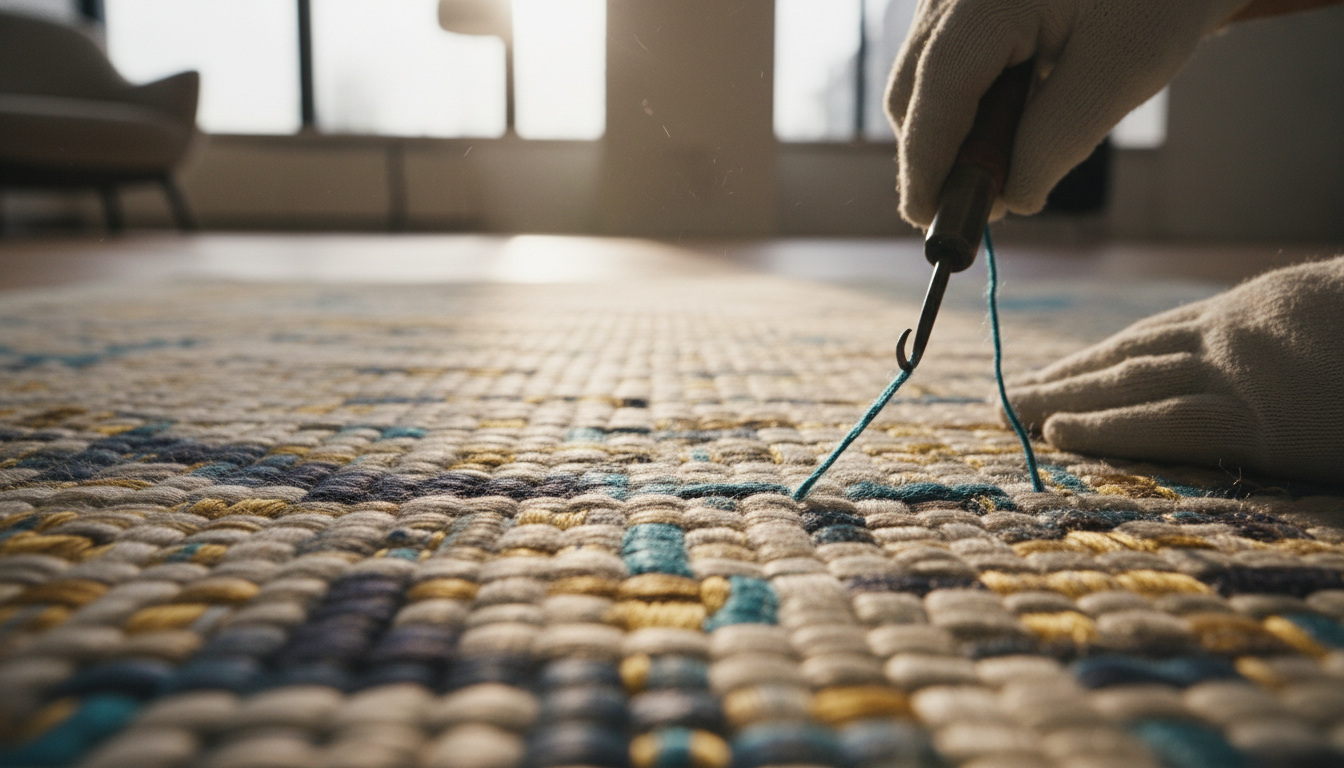
To preserve a masterpiece, one must first understand its DNA. Premium rugs are not merely decorative; they are complex biological structures. High-altitude wool, often sourced for the artisanal collections found at thebohorugs.com, contains a high concentration of lanolin.
This natural wax acts as a molecular shield, repelling liquids and preventing dust from penetrating the cortex of the fiber. Unlike synthetic mimics, authentic wool possesses an evolutionary resilience that allows it to “bounce back” from heavy furniture indentations, provided the structural integrity of the knot remains intact.
Understanding these cellular properties is the cornerstone of The Curated Guide to long-term preservation. When you treat a rug as a living textile rather than a static object, your maintenance strategy shifts from reactionary cleaning to proactive conservation.
The 2026 Forecast: Bio-Polymer Protection and Regenerative Silk
The design world is moving away from harsh fluorocarbon-based stain protectors. By 2026, we predict a definitive industry shift toward “biophilic durability”—the application of plant-based enzyme coatings that mimic the lotus effect to repel contaminants without altering the rug’s breathability.
- Regenerative Silk: Expect a surge in wild-harvested Tussar silk, which offers higher tensile strength than traditional Mulberry silk, making “art for the floor” more viable in high-traffic galleries.
- Enzyme-Based Cleaning: Professional conservators are increasingly utilizing targeted protease enzymes to break down organic proteins without stripping the natural oils essential to fiber suppleness.
- Atmospheric Monitoring: High-end collectors are beginning to integrate discrete moisture sensors within the rug pad to prevent the silent degradation caused by sub-floor humidity.
The Curated Guide to Fiber-Specific Longevity
Different materials demand distinct philosophies of care. To maintain the luster of a high-value investment, one must tailor the intervention to the fiber’s unique porosity and pH sensitivity.
- Hand-Spun Wool: Requires a low-pH surfactant. Avoid high-heat steam, which can “cook” the lanolin and lead to fiber brittleness.
- Pure Silk: Highly sensitive to alkalinity. Professional dry-extraction is the only recommended path to prevent “fiber tilt” or permanent yellowing.
- Sourcing Quality: Resilience begins at the loom. Pieces curated by thebohorugs.com utilize hand-carded fibers that retain the natural scales of the wool, significantly extending the piece’s lifespan compared to chemically processed alternatives.
Ultimately, the longevity of your textile art depends on the synergy between the quality of the original weave and the sophistication of your maintenance ritual. This segment of The Curated Guide emphasizes that true luxury is not just in the acquisition, but in the stewardship of the craft.
Atmospheric Architecture: Managing Light and Humidity
The Alchemy of Light: Neutralizing the Solar Threat
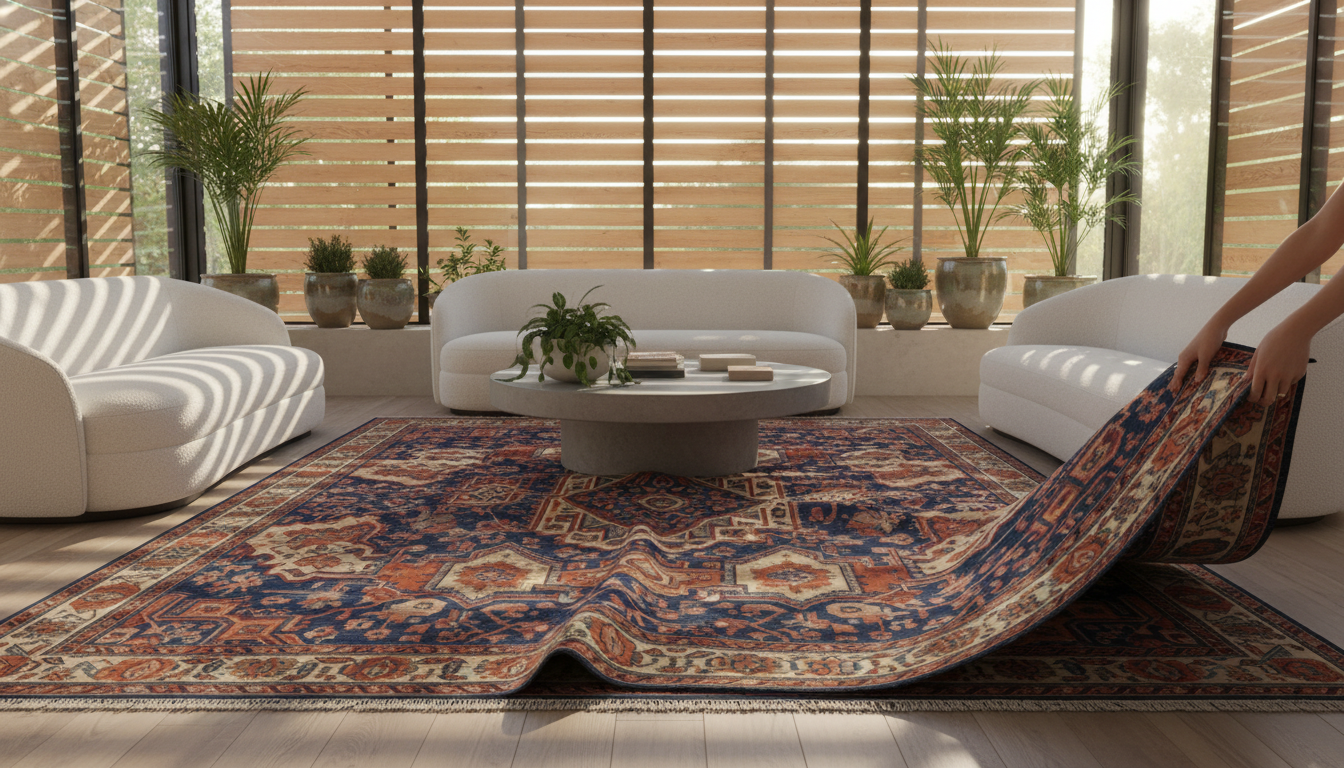
In the realm of high-end interiors, light is the ultimate double-edged sword. While a sun-drenched salon elevates the soul, it acts as a slow-motion solvent on organic dyes. By 2026, we anticipate a shift toward “spectral interiority,” where homeowners move beyond simple curtains to nanotech-treated glass that filters 99% of UV rays without compromising visual clarity.
For those adhering to The Curated Guide for preservation, understanding the “light budget” of a room is essential. Vegetable-dyed masterpieces, such as the hand-knotted heritage pieces found at thebohorugs.com, possess a living color palette that matures over time, but excessive exposure can lead to brittle fibers and irreversible desaturation.
To mitigate photo-degradation, consider these professional strategies:
- Directional Rotation: Rotate your rug 180 degrees every six months to ensure “even maturation” of the pile.
- Smart Glass Integration: Utilizing electrochromic windows that automatically tint during peak UV hours (11 AM – 3 PM).
- The Shadow Play: Positioning heavy furniture or sculptural elements to break direct light paths on sensitive antique wools.
Micro-Climates and the Hydration of Wool
A rug is a respiratory object. Natural fibers like wool and silk are hygroscopic, meaning they absorb and release moisture in a constant dialogue with their surroundings. The 2026 aesthetic trend of “Biophilic Precision” suggests that high-value rugs should exist in a stable humidity range of 40% to 60%.
When humidity drops too low, fibers lose their elasticity and become prone to “dry rot” or shedding. Conversely, excessive moisture invites the silent destruction of mildew and moth larvae. The Curated Guide suggests that serious collectors treat their floor art with the same atmospheric reverence one would afford a Stradivarius or a vintage humidor.
The 2026 Standard: Atmospheric Surveillance
The future of rug maintenance lies in data-driven preservation. We are seeing a rise in discrete, textile-specific humidity sensors that tuck beneath the rug pad, alerting owners via mobile interface when the micro-climate deviates from the “Goldilocks zone.” This level of vigilance is particularly vital for the rare, high-pile artisanal selections curated by thebohorugs.com.
- Dehumidification Zones: Designate specific HVAC zones for rooms housing silk-inlay rugs to prevent fiber swelling.
- Off-Season Storage: Never store a rug in a basement or attic; the “atmospheric volatility” of these spaces is the primary cause of structural failure in antique textiles.
- Air Circulation: Ensure a minimum of two inches of clearance between the rug and heavy cabinetry to allow the underside of the foundation to breathe.
By treating the atmosphere as a structural element of your home’s architecture, you transform a simple floor covering into a permanent legacy. This section of The Curated Guide underscores a fundamental truth: preservation is not an occasional task, but a continuous, invisible curation of the air itself.
The Physics of Placement: Traffic Patterns and Compression
The Kinetic Architecture of the Floor
To preserve a hand-knotted masterpiece, one must view the room not as a static arrangement of furniture, but as a map of kinetic energy. Every footfall acts as a microscopic hammer, compressing the pile and driving particulates deeper into the foundation. This entry in The Curated Guide explores the delicate balance between utilizing a rug as a functional object and protecting it as a legacy investment.
By 2026, we predict a significant shift toward “Zonal Curation.” Interior designers are increasingly moving away from wall-to-wall carpeting in favor of “floating islands” of high-density textiles that serve as acoustic dampeners. For those sourcing high-knot-count pieces from thebohorugs.com, understanding the “crush profile” of your rug is the first step in ensuring its longevity through the next decade.
Managing the Compression Equilibrium
Furniture placement is often the silent killer of artisanal fibers. While high-quality wool has a natural elasticity, prolonged weight from heavy mahogany or steel frames can lead to permanent fiber “bruising.” This occurs when the lanolin-rich scales of the wool are flattened beyond their point of recovery.
- The 180-Degree Pivot: Rotate your rug every six months to redistribute traffic patterns. This prevents the formation of “light paths”—areas where the pile has been flattened and reflects light differently than the rest of the piece.
- Architectural Padding: Use a high-density felt pad rather than rubber. Felt provides a secondary layer of shock absorption, protecting the knots from being crushed against the hard floor beneath.
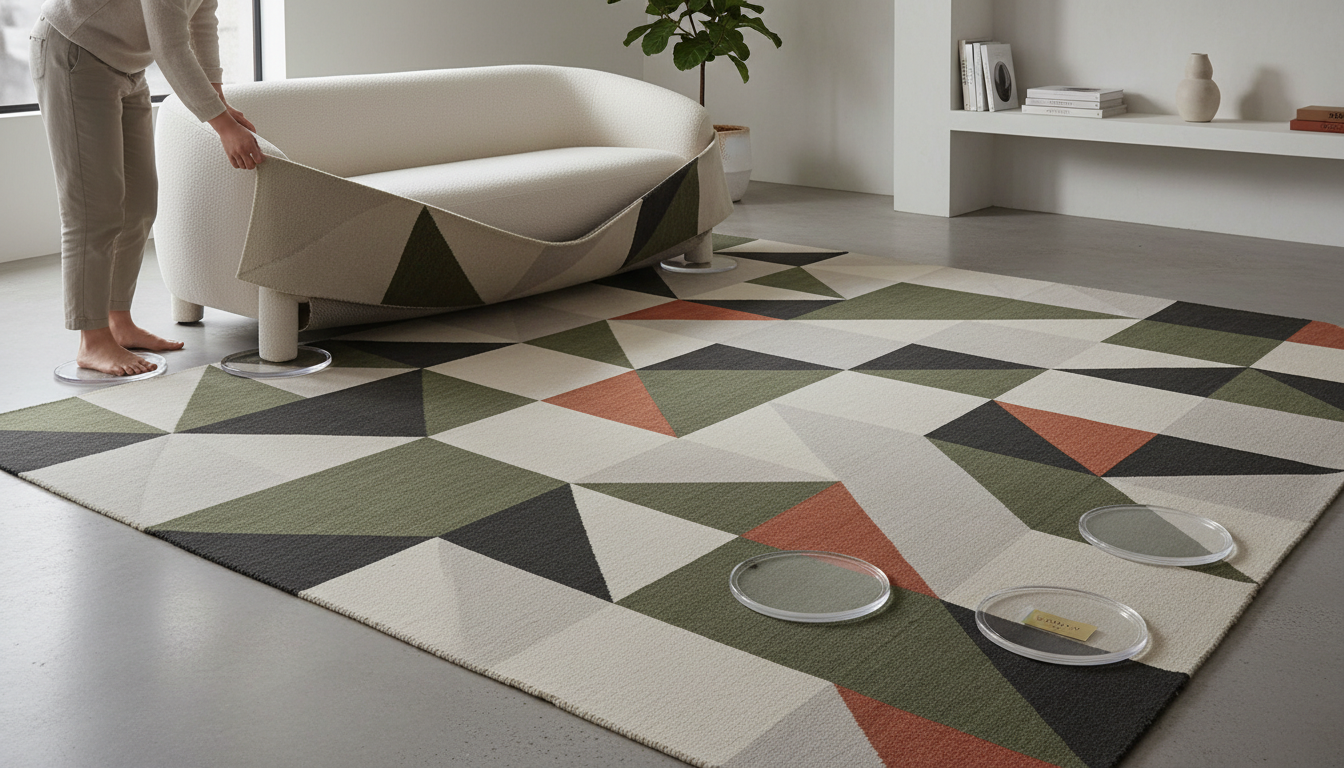
- Caster Discs: For 2026’s trending heavy-set modular sofas, use transparent acrylic discs to distribute weight across a larger surface area of the rug’s pile.
The 2026 Forecast: Acoustic Curation and Fiber Resilience
As residential architecture trends toward harder surfaces—polished concrete, reclaimed stone, and glass—the rug is evolving into an essential tool for “Acoustic Softening.” The Curated Guide suggests that high-traffic zones should prioritize rugs with a higher “twist” in the yarn. A tighter twist offers better resilience against the shearing force of footsteps.
We are seeing a move toward “Tactile Sustainability,” where collectors prioritize the structural integrity of the weave over mere aesthetics. Rugs from thebohorugs.com that utilize hand-spun wool are particularly adept at this, as the irregular diameter of the yarn naturally resists the uniform compression found in machine-made counterparts.
Strategic Placement Protocol
Implementing a sophisticated preservation strategy requires more than just a vacuum; it requires a deep understanding of your home’s flow. Consider these three factors when placing your art for the floor:
- The Pivot Point: Identify where people turn (e.g., at the end of a hallway or around a kitchen island). These areas experience the highest torque on the rug’s foundation.
- Light Osmosis: Position rugs away from direct, unfiltered UV paths. While some “abrash” (natural color variation) is desirable, modern glass can cause uneven “bleaching” that weakens fiber strength.
- The “Transition Zone”: Place a high-quality coir mat at entryways to catch abrasive silt before it reaches your premium rugs. Silt acts like sandpaper on the warp and weft of a fine weave.
2026 Innovation: The Rise of Bio-Enzymatic Textile Care
The Molecular Renaissance of Fibers
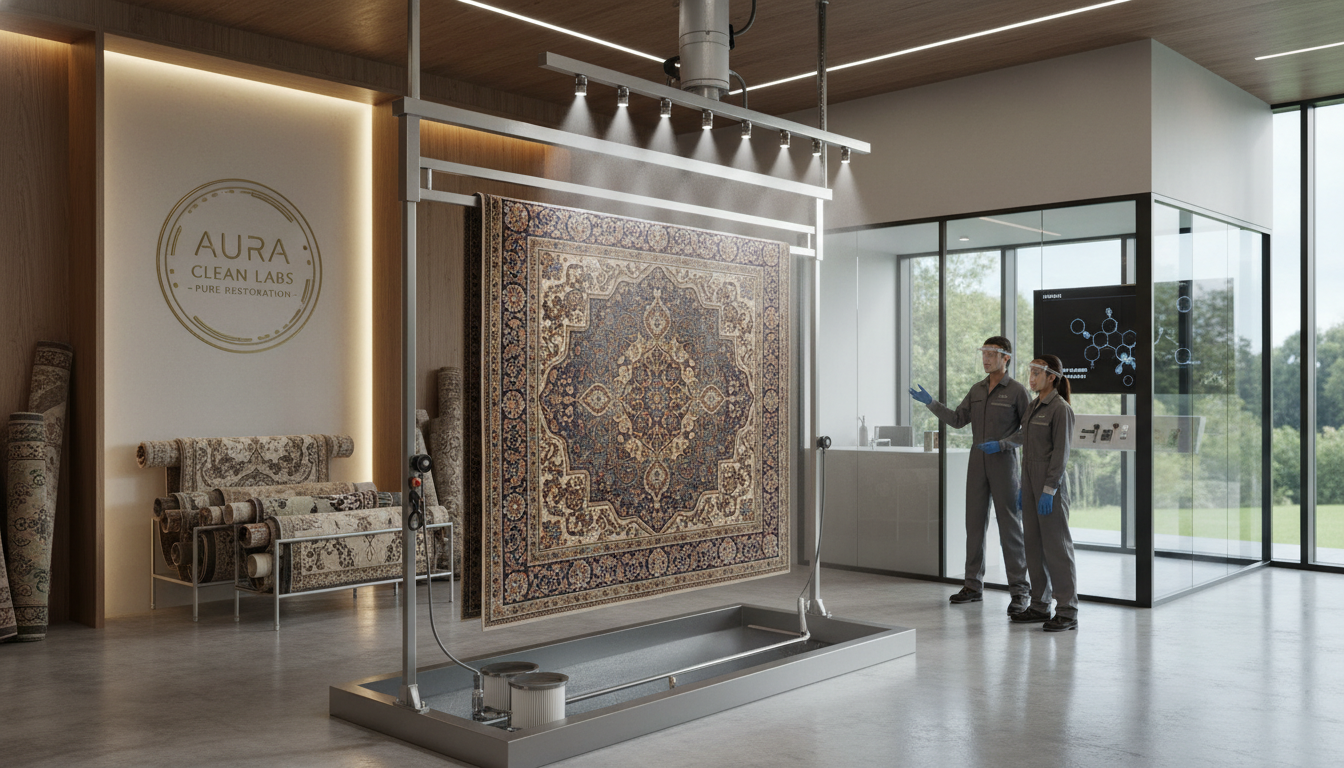
As we approach 2026, the luxury textile industry is pivoting away from aggressive surfactants toward a more sophisticated, biological approach. This shift marks a departure from “cleaning” toward “restoration,” where the goal is to preserve the integrity of high-value natural fibers like hand-spun wool and organic silk.
According to The Curated Guide to modern preservation, bio-enzymatic solutions are no longer just an eco-friendly alternative; they are the gold standard for high-end collectors. These lab-grown enzymes are engineered to target specific organic molecules—such as tannins or proteins—without disrupting the delicate pH balance of vegetable dyes.
For connoisseurs who source their pieces from premium galleries like thebohorugs.com, this innovation ensures that the saturated hues of a vintage Heriz or a contemporary tribal weave remain as vivid decades from now as they were on the loom.
Probiotic Shields and “Living” Textiles
The next frontier in 2026 is the introduction of probiotic textile coatings. Unlike traditional stain guards that coat fibers in a plastic-like polymer, these biological treatments integrate beneficial bacteria into the rug’s pile. These microbes remain dormant until they encounter organic contaminants, at which point they consume the debris at a microscopic level.
This “living” preservation method offers several distinct advantages for the modern home:
- Self-Regulating Odor Control: Enzymes actively break down odor-causing molecules before they can permeate the rug’s core.
- Dust Mite Mitigation: Specific enzymatic strains are being developed to neutralize the allergens associated with fine wool textiles.
- Structural Longevity: By eliminating the need for abrasive mechanical scrubbing, the structural tensile strength of the rug remains uncompromised.
The 2026 Preservation Protocol
Integrating these advancements requires a shift in how we maintain our “art for the floor.” Within The Curated Guide for the next decade, the focus lies on precision over power. Collectors are moving away from steam-based extraction and toward targeted bio-mists that work over a 24-hour period.
- Diagnostic Mapping: Using UV-spectrum analysis to identify protein-based stains that are invisible to the naked eye.
- Enzymatic Pre-Conditioning: Applying a customized enzyme cocktail tailored to the rug’s specific fiber density and dye type.
- Atmospheric Drying: Utilizing controlled humidity environments to allow the biological agents to complete their cycle without fiber shrinkage.
By embracing these biological breakthroughs, we ensure that the artisanal heritage found in the collections at thebohorugs.com is not merely cleaned, but biologically revitalized. This evolution in care represents the ultimate synergy between ancient craftsmanship and future-forward science.
The Emergency Protocol: Sophisticated Stain Management
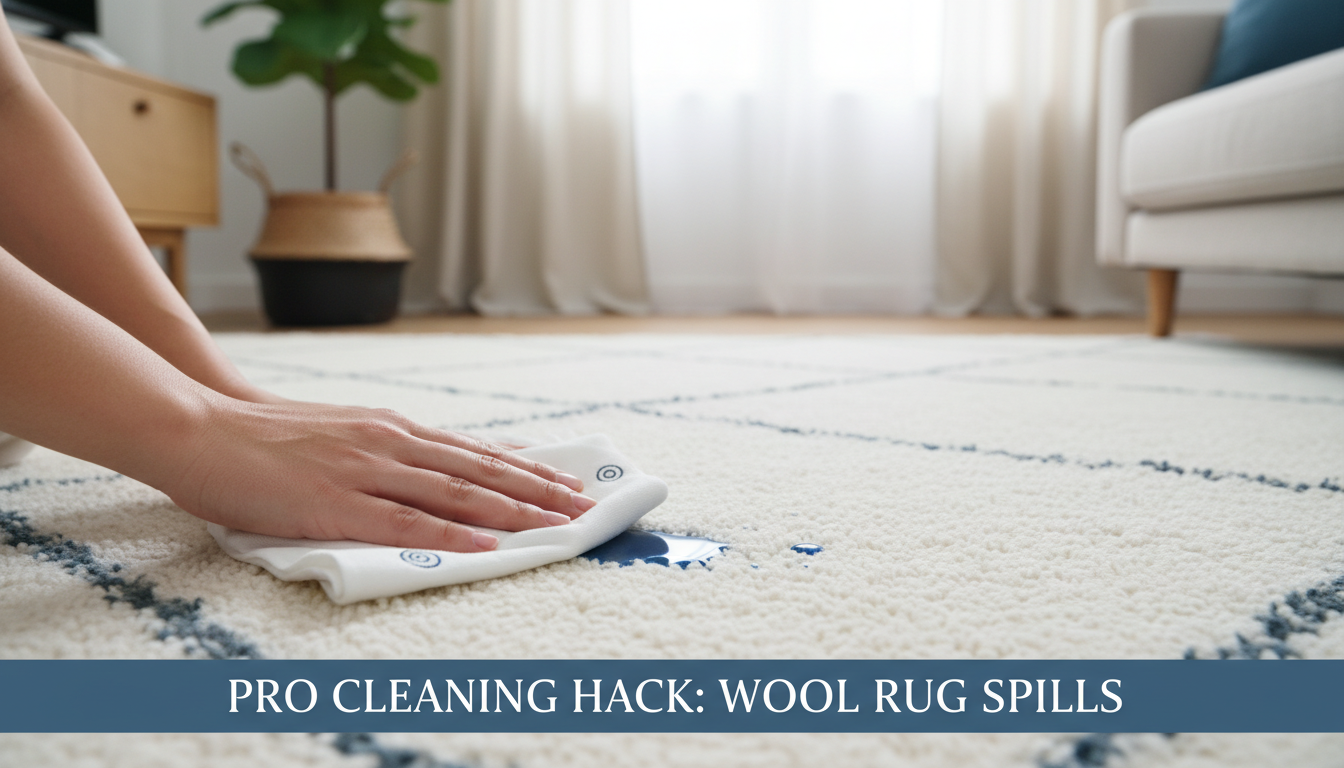
The Golden Hour: Immediate Tactical Response
In the world of high-end interior design, a rug is not merely a floor covering; it is a storied investment. When a spill occurs, the first sixty seconds dictate whether your piece remains a masterpiece or becomes a cautionary tale. According to The Curated Guide to textile longevity, the secret lies in suspension rather than friction.
Avoid the instinct to scrub. Agitation breaks down the delicate lanolin in high-quality wool and can cause permanent fiber distortion in silk-heavy pieces. Instead, use a clean, undyed linen cloth to blot from the outside in, containing the “bleeding” of the stain before it reaches the warp and weft.
For those who source their hand-knotted treasures from thebohorugs.com, maintaining the integrity of natural vegetable dyes is paramount. These organic pigments require a restrained approach, as harsh chemical surfactants can cause irreversible “crocking” or color transfer.
Molecule-Specific Interventions
By 2026, we predict a definitive shift away from all-purpose cleaners toward pH-targeted botanical enzymes. Sophisticated collectors are moving toward “micro-dosing” treatments based on the stain’s molecular profile. The Curated Guide recommends a nuanced approach to common culprits:
- Tannins (Red Wine & Coffee): Use a chilled, pH-neutral saline solution. The cold prevents the heat-setting of the pigments into the fiber’s medulla.
- Lipids (Oils & Fats): A dusting of micro-fine cornstarch or arrowroot powder acts as a desiccant, drawing the oil upward before it can bond with the wool’s natural oils.
- Protein-Based Stains: Emerging 2026 technology favors bio-morphic enzymes that “digest” the stain without altering the protein structure of the wool itself.
The 2026 Preservationist’s Kit
Looking forward, the maintenance of artisanal textiles is moving toward preventative science. High-value homes are increasingly utilizing ultrasonic misting tools for localized spot cleaning, which uses vibration rather than saturation to dislodge particulates.
To align with the standards set by The Curated Guide, your emergency kit should evolve beyond the basic pantry staples. Consider these sophisticated essentials for your preservation arsenal:
- Distilled Deionized Water: Prevents mineral buildup that can dull the luster of premium silk highlights.
- PH-Neutral Botanical Foam: A low-moisture alternative to liquid cleaners that prevents the “wicking” of old dirt from the rug’s foundation to the surface.
- Natural Sea Sponges: These offer a gentler touch for pilling-prone fibers, ensuring the pile remains upright and luminous.
True luxury is found in the endurance of beauty. By adopting these advanced protocols, you ensure that the artisanal soul of your home—whether it be a vintage Persian or a contemporary piece from thebohorugs.com—remains a pristine focal point for generations to come.
Foundational Support: The Science of Professional Rug Padding
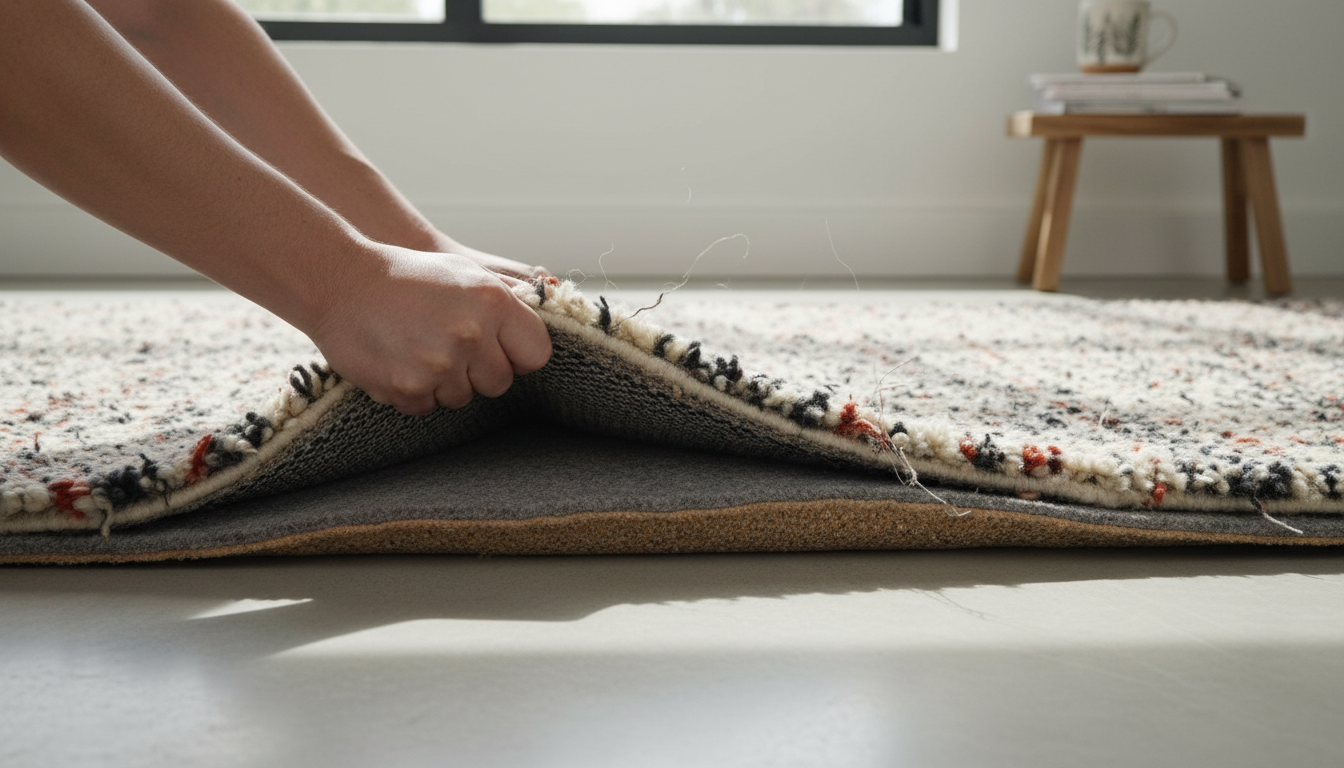
The Hidden Architecture of Textile Longevity
To view a hand-knotted rug merely as decor is to misunderstand its engineering. A masterpiece from thebohorugs.com is a complex lattice of tension and fiber; without a technical foundation, the very act of walking becomes a slow process of erosion. Professional padding serves as the silent partner in preservation, neutralizing the tectonic shifts between the floor and the knot.
In this installment of The Curated Guide, we move beyond the superficial fluff of retail foam. We are entering the realm of high-density polymers and needle-punched felt—materials designed to absorb kinetic energy rather than simply offering a soft footfall. The right pad acts as a shock absorber, preventing the foundation of the rug from being crushed against a hard subfloor.
The 2026 Shift: Smart Substrates and Eco-Polymers
The industry is moving toward “active preservation” materials. As we look toward 2026, the standard for luxury interiors is shifting away from synthetic rubbers that off-gas or degrade. Future-leaning collectors are opting for dual-surface, sustainable compositions that prioritize both the rug’s breathability and the home’s air quality.
- Recycled Technical Felts: Expect to see a rise in heat-pressed, antimicrobial felt pads that offer superior grip without the use of adhesives.
- Micro-Perforation Technology: Advanced padding will feature intricate airflow channels to prevent moisture trapping—a leading cause of dry rot in antique wools.
- Impact-Response Layers: New hybrid pads utilize a firm base to prevent shifting and a “memory” top layer to protect the integrity of delicate silk highlights.
Matching Foundation to Fiber
Just as a bespoke suit requires a specific silhouette, different weaves demand tailored support. A lightweight kilim requires a different grip profile than a heavy-pile Persian weave. High-end curators emphasize that a “one size fits all” approach to padding is the most common mistake in textile maintenance.
To maintain the structural provenance of your investment, consider these professional standards established in The Curated Guide for material selection:
- For Hardwood and Stone: A rubber-backed felt pad is non-negotiable. The rubber provides the “grip” to prevent sliding, while the felt provides the “give” to protect the rug’s knots.
- For Carpet-on-Carpet: Specialized “sticky” polymer pads are required to prevent “creeping”—the wave-like movement that occurs when a rug travels across a carpeted surface.
- For High-Traffic Artisanal Rugs: When sourcing a statement piece from thebohorugs.com, prioritize a 1/4-inch thickness. Anything deeper creates a “trampoline effect” that can actually strain the rug’s internal warp and weft over time.
Ultimately, the science of padding is about managing friction. By eliminating the micro-abrasions caused by the rug rubbing against the floor, you are not just cleaning a rug; you are extending its lifespan by decades. True luxury is found in the details that remain unseen, ensuring your floor art remains a legacy rather than a temporary fixture.
Seasonal Archiving: The Art of Long-Term Storage
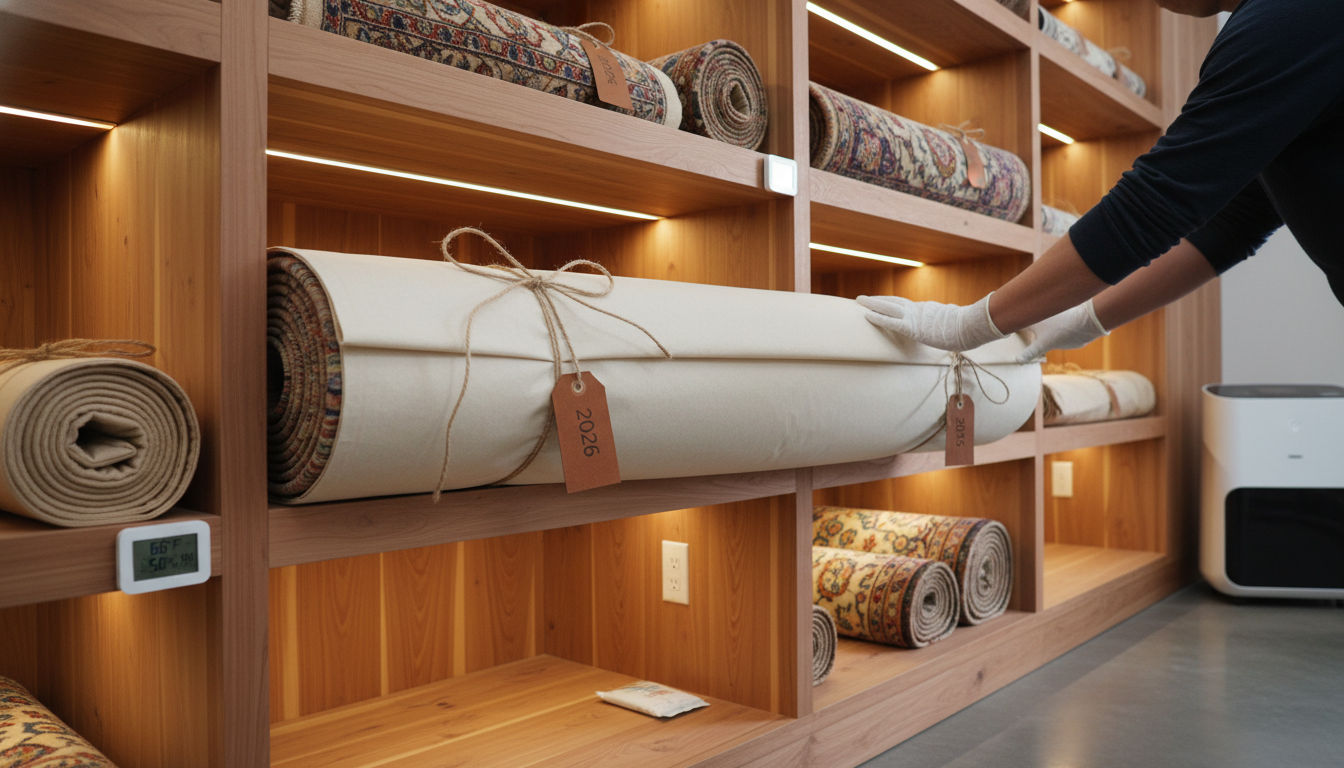
The Pre-Storage Purification Ritual
When an heirloom piece transitions from the floor to the archives, the first step is a meticulous purification. Residual dust and microscopic organic matter are the primary catalysts for fiber degradation during dormancy.
According to The Curated Guide for high-end textile maintenance, a professional deep-clean is non-negotiable before long-term storage. For the artisanal hand-knotted pieces found at thebohorugs.com, this ensures the natural lanolin in the wool remains protected from acidic buildup.
Consider this checklist for an archival-ready rug:
- Vulnerability Inspection: Check the fringe and selvedge for minor frays that could expand under tension.
- Moth Proofer Application: Utilize a scentless, zinc-free repellent rather than traditional mothballs.
- Complete Desiccation: Ensure the foundation fibers are 100% dry to prevent internal mildew.
Advanced Methodology: Roll, Don’t Fold
The structural integrity of a rug depends on how it rests while off the floor. Folding creates permanent creases and can snap the foundation of older, more delicate weavings.
We recommend rolling the rug with the pile facing inward to protect the surface, unless the rug is exceptionally fragile. For silk-heavy or antique fragments, rolling with the pile facing out can actually relieve tension on the knots.
By 2026, we anticipate a surge in “smart-archiving” for private collectors. This includes the use of RFID-enabled inventory tags and pH-neutral archival tubes that allow the fibers to breathe while blocking harmful UV rays and moisture.
Environmental Equilibrium in 2026
The future of rug preservation lies in climate precision. In The Curated Guide to modern estate management, the garage or a damp basement is no longer an acceptable repository for fine art.
True preservationists are now looking toward specialized textile sleeves made from breathable, acid-free polyester (Tyvek). These sleeves prevent “dry rot,” a condition where natural fibers lose their essential oils and become brittle.
To maintain your collection at the highest standard, follow these environmental metrics:
- Constant Airflow: Avoid airtight plastic wraps which trap humidity and cause sweating.
- Elevation: Store your rolled rugs at least six inches off the floor on a dedicated rack.
- Temperature Control: Maintain a consistent 60–70°F with humidity levels between 40% and 50%.
Ultimately, a rug from thebohorugs.com is an investment in heritage. By treating storage as a deliberate act of curation rather than an afterthought, you ensure that the vibrant dyes and intricate patterns remain gallery-quality for the next generation.
Selecting a Custodian: When to Engage Professional Restorers
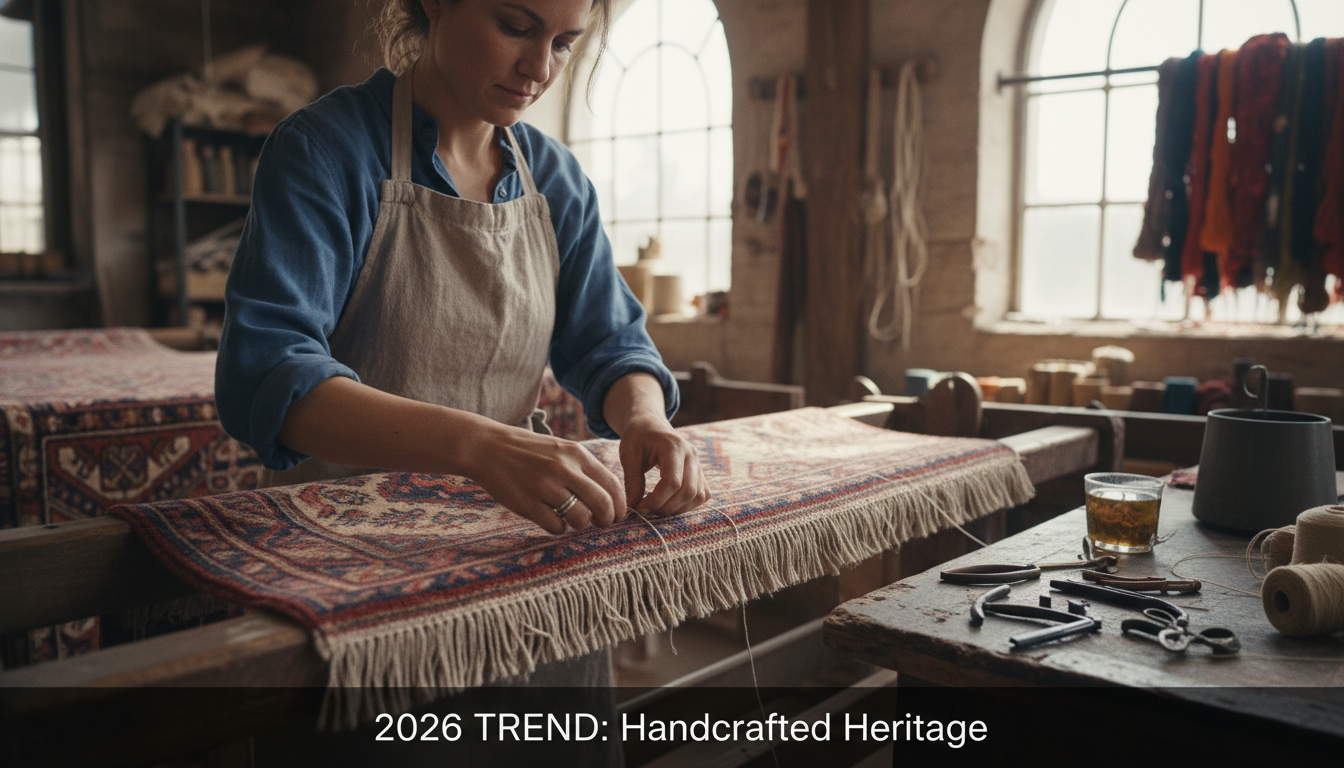
The Threshold of Intervention: Identifying Critical Fatigue
In the realm of high-end interiority, a rug is rarely just a textile; it is a repository of history and a foundational aesthetic statement. While routine maintenance preserves the surface, there comes a point where the fibers require a deeper level of custodianship that only a master restorer can provide.
Discerning the moment for professional intervention is essential. According to The Curated Guide for textile preservation, one should look beyond visible soil. Structural vulnerabilities, such as foundation fraying or the brittle “snap” of aged silk, signal that the piece has moved from functional decor to a conservation priority.
For those who invest in authentic, hand-knotted treasures—such as the vegetable-dyed wool pieces found at thebohorugs.com—maintaining the integrity of the lanolin-rich fibers is paramount. Harsh domestic chemicals can strip these natural oils, leading to permanent desiccation.
2026 Predictions: The Rise of Bio-Restorative Conservation
The landscape of rug restoration is shifting away from aggressive saturation toward precision science. By 2026, we anticipate the mainstreaming of spectroscopic fiber analysis, allowing restorers to identify the exact chemical composition of ancient dyes before a single drop of water touches the pile.
- Enzymatic Ph-Neutral Baths: Moving beyond traditional soaps, 2026 will see the rise of custom-cultured enzymes that digest atmospheric pollutants without affecting organic pigments.
- Micro-Weaving via AI Mapping: High-value restorations will utilize AI to perfectly match the tension and “hand” of a specific weaver’s historical style, ensuring repairs are invisible to the naked eye.
- Carbon-Neutral Drying Chambers: Advanced humidity-controlled environments that prevent the “dry-rot” common in rapid-heat drying processes.
The Vetting Process: Questions for the Master Artisan
Entrusting a heritage piece to a stranger requires more than a cursory glance at a portfolio. The Curated Guide suggests a rigorous interview process to ensure the “custodian” respects the provenance of the work. A true artisan understands that restoration is not about making a rug look “new,” but about stabilizing its current state and honoring its patina.
When selecting your restorer, demand transparency on these three pillars:
- Dye Sourcing: Do they use synthetic pigments, or do they maintain a library of natural madder root, indigo, and pomegranate skins to match original hues?
- Structural Fidelity: Will they utilize a “lock-stitch” to prevent further unraveling, or are they merely patching the surface?
- Reversibility: In the world of museum-grade conservation, every repair should be technically reversible to protect the rug’s future valuation.
Ultimately, professional cleaning is an investment in the longevity of your home’s narrative. Whether you are preserving a family heirloom or a newly acquired statement piece from thebohorugs.com, the right professional ensures that your “art for the floor” remains vibrant for the next generation of collectors.
Elevate Your Space
Discover the artistry of handmade luxury. Each rug is a masterpiece of tradition and modern design.
Expert Q&A
How often should I professionally clean my high-end rug?
For low-traffic areas, every 2-3 years is sufficient; however, for high-traffic zones, The Curated Guide recommends a professional deep clean every 12-18 months.
Can I use a standard upright vacuum on silk rugs?
No. Standard uprights often have aggressive beater bars that can shred silk fibers. Use a handheld suction-only attachment or a soft-bristled broom.
Why is rug rotation necessary?
Rotation ensures that wear from foot traffic and fading from sunlight are distributed evenly, preventing localized ‘dead zones’ in the textile.
What is the best way to handle a red wine spill?
Immediately blot with a clean white cloth to absorb liquid. Do not scrub. Apply a small amount of club soda and continue blotting until the pigment is lifted.
Are rug pads really necessary for large area rugs?
Yes. Beyond preventing slippage, pads act as a shock absorber, protecting the rug’s foundation from being crushed between feet and the hard floor.
How do I identify if my rug is hand-knotted or machine-made?
Turn the rug over. Hand-knotted rugs show the exact pattern on the back with slight irregularities, while machine-made rugs often have a mesh backing.
What temperature is ideal for rug storage?
Maintain a stable environment between 60-70 degrees Fahrenheit with humidity levels around 50% to prevent mold or fiber brittleness.
Is it safe to use baking soda to deodorize a wool rug?
The Curated Guide advises against it. Baking soda particles are abrasive and can get trapped deep in the pile, causing long-term fiber damage.
How do I prevent moth damage?
Frequent vacuuming and light exposure are the best deterrents. Moths thrive in dark, undisturbed areas, such as under heavy furniture.
Can UV window films help preserve rug colors?
Absolutely. High-quality UV-blocking films can filter out up to 99% of harmful rays, significantly extending the life of natural dyes.
What should I do if my rug’s fringe is unraveling?
Seek a professional restorer immediately. Unraveling fringe can lead to the loss of the rug’s actual knots, causing irreversible structural damage.
How do I remove furniture indentations from a rug?
Gently steam the area and use a soft-bristled brush or a coin to lift the fibers. Never use a high-heat iron directly on the pile.
Are ‘stain-resistant’ sprays safe for antique rugs?
Most commercial sprays contain harsh chemicals that can strip natural oils from wool. Consult a specialist before applying any topical treatments.
What is ‘abrash’ and does it affect maintenance?
Abrash refers to natural color variations in hand-dyed wool. It is a sign of authenticity and does not require special cleaning, just standard care.
How can I tell if my rug is bleeding color?
Perform a ‘rub test’ with a damp white cloth on a small inconspicuous area. If color transfers to the cloth, the dyes are unstable.
Is steam cleaning safe for wool rugs?
Generally, no. Excessive heat and moisture can cause shrinkage, color bleeding, and ‘browning’ of the jute foundation.
How should I store a rug during a move?
Roll it tightly with the pile facing inward, wrap in breathable Tyvek or heavy paper, and secure with acid-free tape—never plastic wrap.
Can I use salt to clean a rug?
Salt is an old-world remedy for fresh spills, but it can be difficult to remove fully. Microfiber blotting remains the superior contemporary method.
How often should I flip my rug over and vacuum the back?
The Curated Guide suggests vacuuming the back of the rug at least twice a year to remove deeply embedded grit that acts like sandpaper on fibers.
What are the benefits of lanolin in wool rugs?
Lanolin is a natural oil that makes wool water-repellent and soft. Over-cleaning with harsh detergents strips this oil, making the rug brittle.
Are pet-specific cleaners safe for oriental rugs?
Many contain enzymes that can digest wool fibers. Always look for wool-safe certified products and test on a corner first.
How do I deal with ‘sprouting’ (long yarns sticking out)?
Never pull them. Carefully snip the protruding yarn flush with the rest of the pile using a pair of sharp embroidery scissors.
Is natural light better than artificial light for rugs?
Both can cause fading. LED lighting is the safest artificial option as it emits negligible UV rays compared to halogen or incandescent bulbs.
What is the difference between a rug and a carpet in terms of care?
Rugs are mobile and can be sent to specialized facilities for total immersion washing, which is the gold standard for cleaning, unlike fitted carpets.
Can I use a pressure washer on my outdoor boho rugs?
While tempting, high pressure can blow out the weave. Use a garden hose with a spray nozzle and mild soap for best results.
How do I prevent my rug from curling at the corners?
This is often due to humidity changes. Professional ‘blocking’ or adding specialized leather tension strips to the underside can solve this.
Should I be worried about ‘white knots’ appearing?
White knots are part of the cotton foundation showing through as the pile wears down. They are a sign of a hand-knotted piece and can be carefully re-colored by a pro.
What is the best way to dry a rug if it gets wet?
Elevate the rug to allow airflow to both the top and bottom. Use fans but avoid direct heat sources like hair dryers which can warp the fibers.
Can I use a robot vacuum on my rugs?
Only if the robot allows you to disable the beater bar. Otherwise, the spinning side brushes can unravel the edges and fringe.
What is the future of rug maintenance in 2026?
We anticipate the integration of IoT sensors in rug pads to monitor humidity and dust levels, alerting owners via smartphone when maintenance is due.
Written by TheBohoRugs Interior Design Team
Experts in handmade rugs, boho interiors, and modern home decor.
