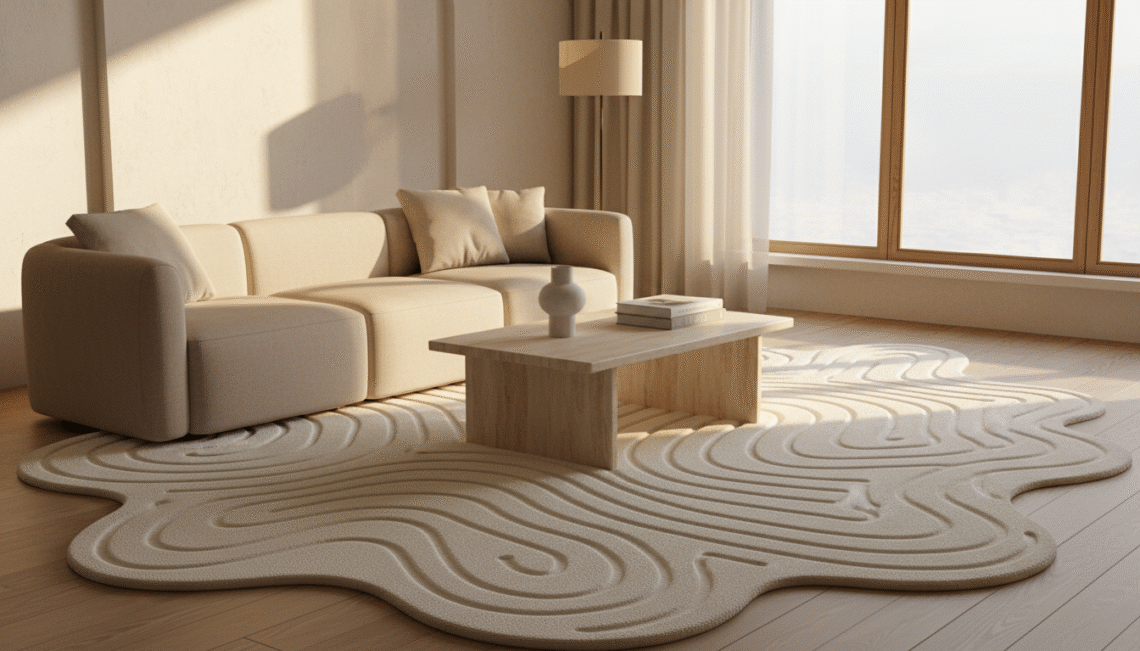
Discover the art of sensory interior design through sculptural textiles and asymmetrical layouts.
1. The Evolution of Texture-Maxxing in 2026
Modern homes are increasingly leaning into the concept of sensory interior design. We are seeing a move toward fibers that tell a story through their height and density. A rug isn’t just a floor covering anymore; it’s a piece of topographical art. When you practice texture-maxxing, you are layering different materials—think matte wool against shimmering tencel—to create visual interest that doesn’t rely on loud patterns or bright colors.
In the coming year, expect to see designers ditching the standard 8×10 rectangle in favor of pieces that have ‘movement.’ The goal is to make the room feel organic. You can browse our latest [curated shop collection](/shop) to see how these textures play out in real-world settings. By choosing pieces with varying pile heights, you add a architectural element to your floor that grounds the entire room’s design.
2. Decoding 3D-Carved Rugs: The New Architectural Floor
These rugs often utilize a blend of materials. For instance, a base of low-pile New Zealand wool might be paired with raised ‘islands’ of plush silk. This contrast isn’t just about looks; it’s about the physical experience of walking across the room. It’s a literal high-low pile rug trend that adds a sophisticated, custom-built feel to any rental or permanent home.
Styling these pieces requires an eye for lighting. Because the pattern is created by depth, side-lighting from floor lamps or low-hanging pendants will accentuate the 3D effect. According to [Architectural Digest](https://www.architecturaldigest.com), sculptural rugs are currently the top choice for designers looking to add character to ‘quiet luxury’ spaces without using busy prints.
Designer’s Hot Take: “Flat-weave rugs are officially ‘out’ for primary living spaces. If your rug doesn’t have at least two different pile heights, it’s not working hard enough for your interior.”
3. Breaking the Grid with Fluid-Shape Rugs
Asymmetrical rug styling is the key to making these pieces work. Instead of centering a fluid rug perfectly under a coffee table, try offsetting it. Let one ‘lobe’ of the rug peek out into the walkway. This creates a sense of flow and movement that leads the eye through the space. It breaks the ‘grid’ of the room and makes the layout feel much more intentional and artistic.
These shapes are particularly effective in small or awkwardly shaped rooms. A rectangular rug often highlights the cramped nature of a small space by echoing the walls. A fluid-shape rug, however, softens those boundaries and makes the floor plan feel more expansive. It’s a trick used by pros to hide uneven floorboards or create ‘zones’ in an open-concept loft.
4. Styling for Warm Minimalism 2026
To achieve this look, focus on a monochromatic palette but vary the materials. Combine a boucle chair, a linen sofa, and a high-low pile rug. This ‘tone-on-tone’ approach keeps the space feeling calm and minimalist, while the heavy textures prevent it from feeling cold or boring. It’s a sophisticated way to embrace maximalism’s spirit without the clutter.
For more inspiration on color palettes that pair well with sculptural textiles, check out our [blog guide on neutral styling](/blog/neutral-rug-guide). The 2026 palette is heavily influenced by ‘Earth-core’—colors that look like they were pulled directly from a geological survey. These natural tones make the shadows in 3D-carved rugs look deeper and more realistic.
5. The Sensory Experience of High-Low Pile
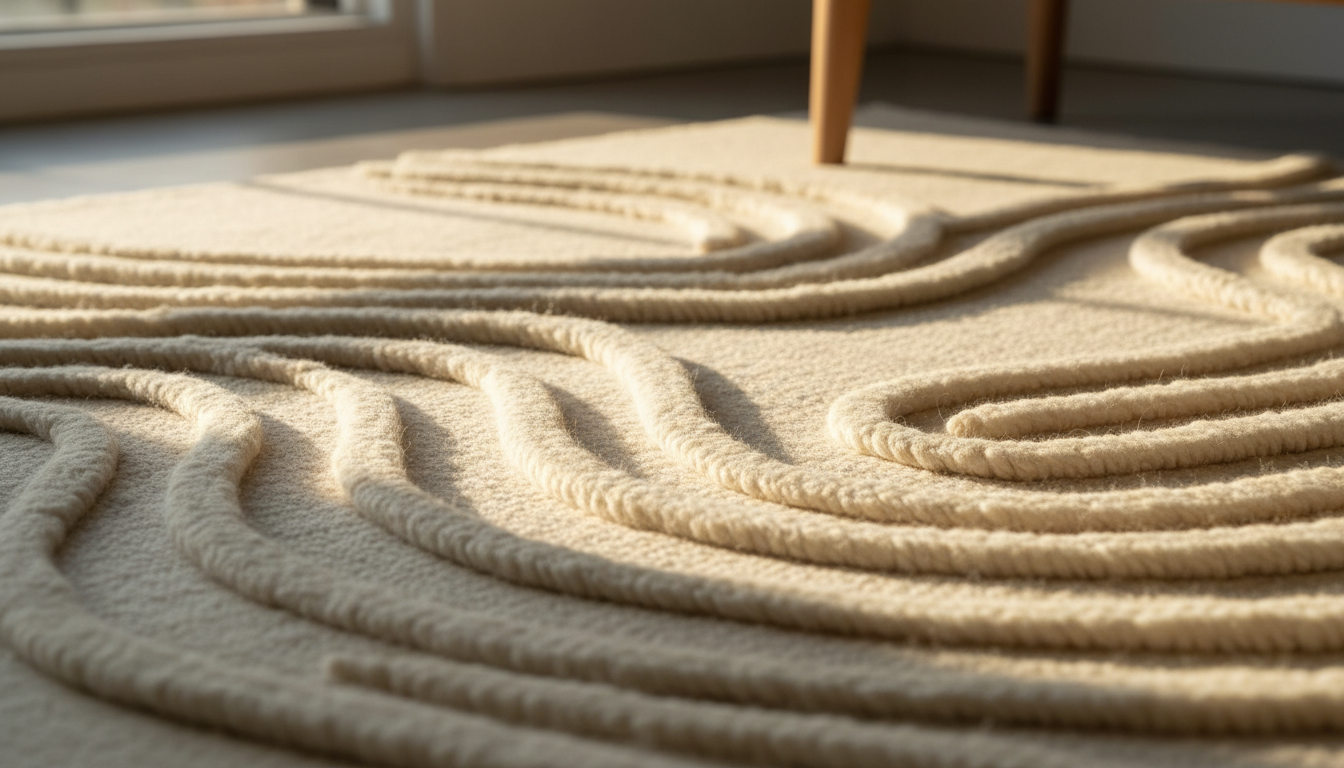
From a tactile perspective, texture-maxxing provides a grounded experience. In an increasingly digital world, having a home that is physically stimulating is a form of self-care. Walking barefoot on a 3D-carved rug offers a subtle foot massage, engaging the nerves and helping you ‘decompress’ after a long day.
When selecting materials for sensory impact, look for natural blends. Wool provides a resilient, bouncy texture, while viscose or silk adds a cool, slippery contrast. This interplay of ‘warm’ and ‘cool’ textures is a hallmark of high-end, custom interiors. Magazines like [Dezeen](https://www.dezeen.com) highlight how ‘haptic’ design is the next frontier for residential architecture.
Designer’s Hot Take: “Texture-maxxing is the only way to make a large room feel cozy without adding more furniture. It’s ‘visual warmth’ that you can actually feel.”
6. Room-by-Room Guide to Asymmetrical Rug Styling
In the bedroom, forget the standard rule of placing a rug two-thirds under the bed. Instead, try a large asymmetrical piece that spills out more on one side than the other. This creates a beautiful ‘landing pad’ for your feet where you need it most. It also allows you to show off more of the rug’s carved details that would otherwise be hidden under the mattress.
For hallways, move away from narrow runners and try a series of small, organic-shaped ‘stone’ rugs. This creates a playful path that feels like a Zen garden. It turns a boring transition space into a destination. The key is to keep the color palette consistent so the different shapes feel like part of a single collection.
7. Maintenance and Care for Your 3D Sculptural Pieces
You should avoid using a ‘beater bar’ on high-low pile rugs, as it can fray the taller fibers and ruin the carved effect. Instead, use the suction-only setting or a handheld upholstery attachment for the deeper grooves. This keeps the ‘peaks’ fluffy and the ‘valleys’ crisp.
For spills, the rules are the same as any high-quality rug: blot, don’t rub. Rubbing will push the liquid into the different pile levels, making it harder to extract. Because these rugs are often made of premium wool, they have natural lanolin that repels stains, giving you a small window of time to clean up messes before they set.
8. The Future of Fiber: Why Texture is the New Color
We are also seeing a rise in sustainable, high-texture fibers like jute, hemp, and recycled PET that are being used to create incredibly intricate 3D designs. This means you can embrace the sculptural trend while remaining eco-conscious. The ‘Warm Minimalist’ home is a thoughtful home, where every item is chosen for its physical impact on our well-being.
By investing in a 3D-carved or fluid-shape rug now, you are future-proofing your interior. These pieces are timeless because they rely on the fundamental elements of design—depth, light, and shape—rather than fleeting color fads. They are the heirlooms of the next generation, blending traditional craftsmanship with modern, organic aesthetics.
Designer’s Hot Take: “In five years, we won’t even call it ‘texture-maxxing’—it will just be called ‘good design.’ The flat-floor era was a fluke.”
Frequently Asked Questions
What exactly is texture-maxxing in interior design?
Texture-maxxing is a design strategy that emphasizes the use of varied, deep, and tactile textures—like 3D-carved rugs—to create visual interest and comfort, primarily in minimalist spaces.
Are 3D-carved rugs hard to walk on?
Not at all! In fact, many people find the varied pile heights of high-low pile rugs to be quite comfortable, providing a soft, massaging sensation for bare feet.
Will a fluid-shape rug look messy in a small room?
Actually, it’s the opposite. Fluid-shape rugs often make small rooms feel larger by breaking the rigid lines of the walls and creating a more organic, flowing layout.
Can I use a robot vacuum on a high-low pile rug?
It depends on the robot. Some advanced models can handle pile transitions, but most will struggle with the deep carving. It’s best to use a manual vacuum with a suction-only setting.
What colors are best for warm minimalism 2026?
Look for earthy, warm tones like sand, terracotta, mushroom, muted olive, and ‘greige’ to create a cozy yet clean aesthetic.
Is asymmetrical rug styling just for modern homes?
While it’s a staple of modern design, asymmetrical styling can soften traditional or eclectic homes by making the furniture arrangement feel more relaxed and less ‘stiff’.
How do I choose the right size for a fluid-shape rug?
Since they don’t follow standard dimensions, aim for a rug that is slightly larger than the footprint of your main furniture grouping to ensure enough of the ‘shape’ is visible.
Are 3D-carved rugs more expensive than flat ones?
Generally, yes, because they require extra labor for the hand-carving process and often use more material to achieve the high-pile sections.
What material is best for texture-maxxing?
Wool is the gold standard for its durability and ‘bounce,’ but silk and viscose are excellent for adding a shimmering contrast in 3D designs.
Do asymmetrical rugs work in dining rooms?
They can, but it’s tricky. Ensure the dining chairs remain level when pulled out. Often, a semi-circular or ‘pebble’ shape works better than a highly erratic fluid shape for dining areas.

