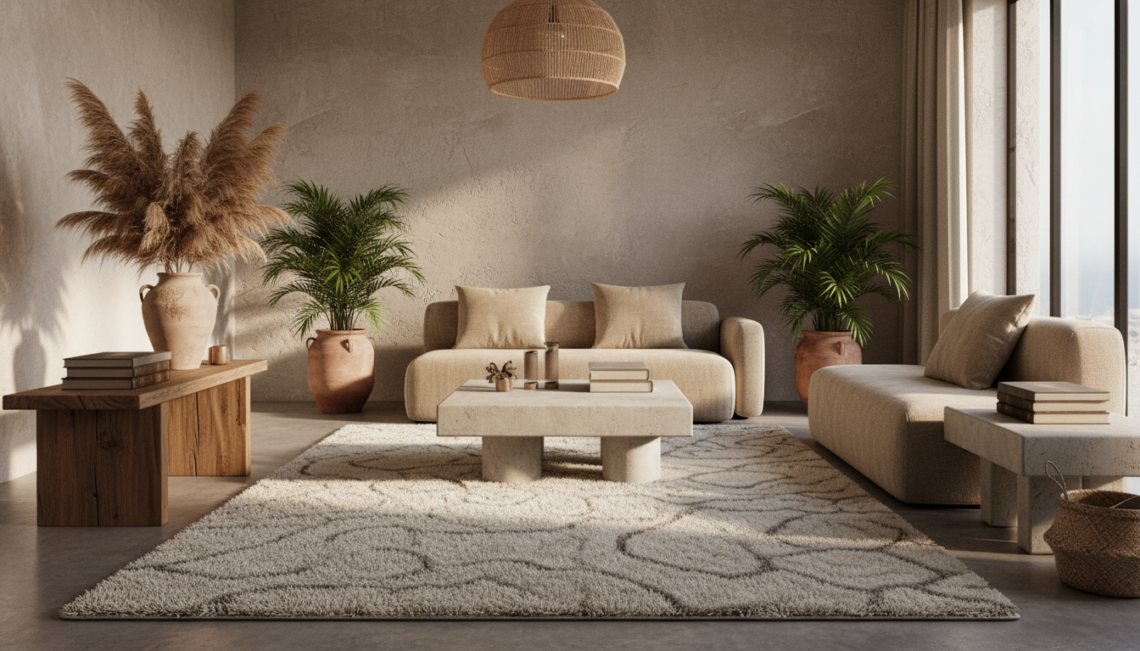
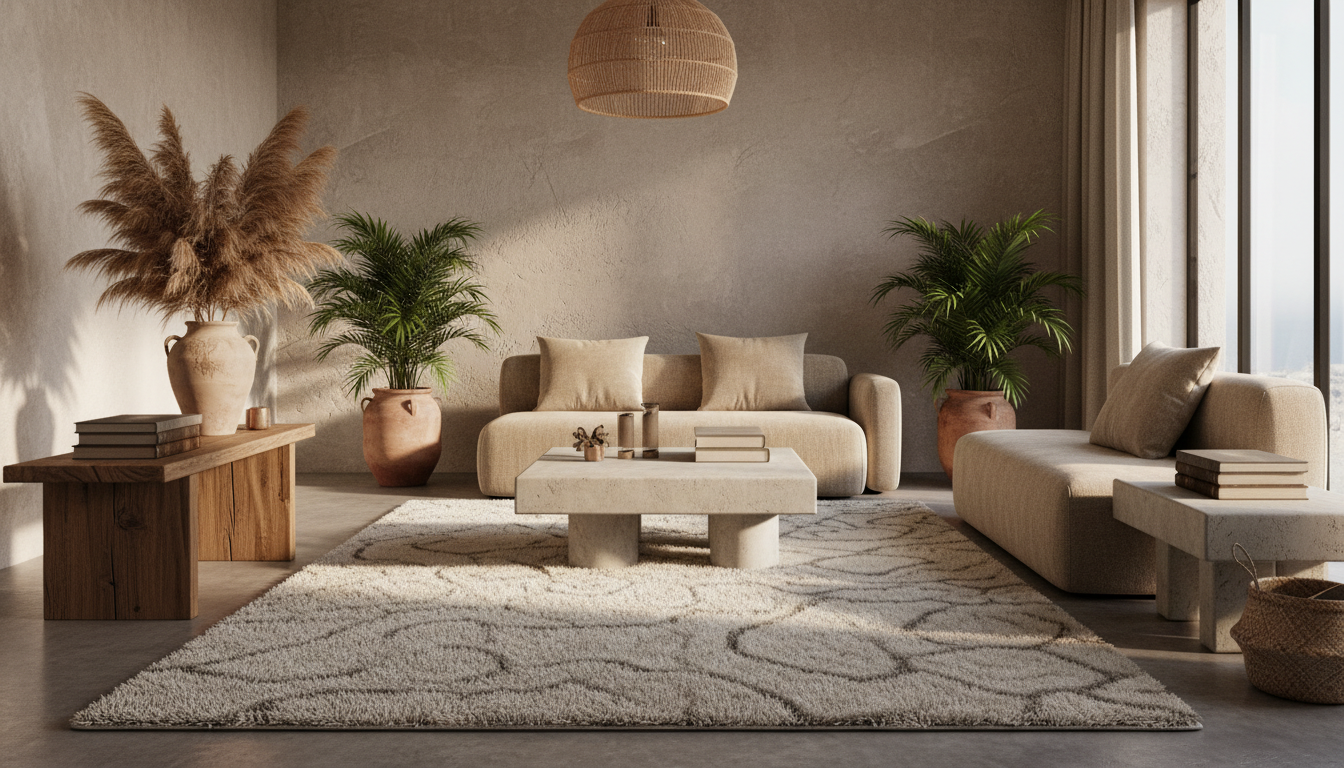
The era of the ‘disposable rug’ has officially collapsed under the weight of its own synthetic flatness. As we approach 2026, the global design community is witnessing a seismic shift toward ‘Haptic Maximalism’—a craving for surfaces that tell a story through touch. Leading this movement are Tadelakt-textured wool rugs, a sophisticated textile evolution that mimics the ancient, lime-plastered walls of Marrakech. These aren’t just floor coverings; they are architectural statements that bridge the gap between the raw, unyielding nature of Organic Brutalism and the soft, soulful layers of contemporary Boho living. By translating the waterproof, polished-stone aesthetic of Tadelakt into hand-sheared wool, designers have created a medium that offers the visual serenity of a monolithic slab with the visceral warmth of high-grade natural fibers.
“Tadelakt-textured wool rugs are a premier 2026 interior design trend characterized by hand-sheared, multi-dimensional wool piles that emulate the smooth, variegated, and slightly luminous finish of traditional Moroccan Tadelakt plaster. These rugs are essential for Organic Brutalist and modern Boho interiors, providing a sustainable, haptic experience that combines the visual language of stone with the thermal and acoustic benefits of premium wool.”
The Roadmap
Table of Contents
- The Haptic Revolution: Beyond Visual Design
- Decoding Tadelakt: From Plaster Walls to Woolen Floors
- Organic Brutalism: The 2026 Context
- The Material Science: Sustainable Fibers and Artisanal Shearing
- Styling the Trend: Anchoring the Modern Boho Space
- Longevity and Care: Investing in Architectural Textiles
The Haptic Revolution: Why Texture is the New Color
The Sensory Shift: From Visual Palette to Tactile Depth
For years, the design world was obsessed with the “perfect” shade of greige. We spent hours debating undertones, yet the rooms often felt sterile—beautiful to look at, but emotionally hollow. As we move toward 2026, the conversation has pivoted entirely. We are witnessing a move away from flat, industrial finishes toward what we call “Haptic Minimalism.” In this new era, the sensory experience of a room is dictated not by the paint on the walls, but by the physical depth of the floor. This is where Tadelakt-textured wool rugs have become the essential foundation for the modern home.
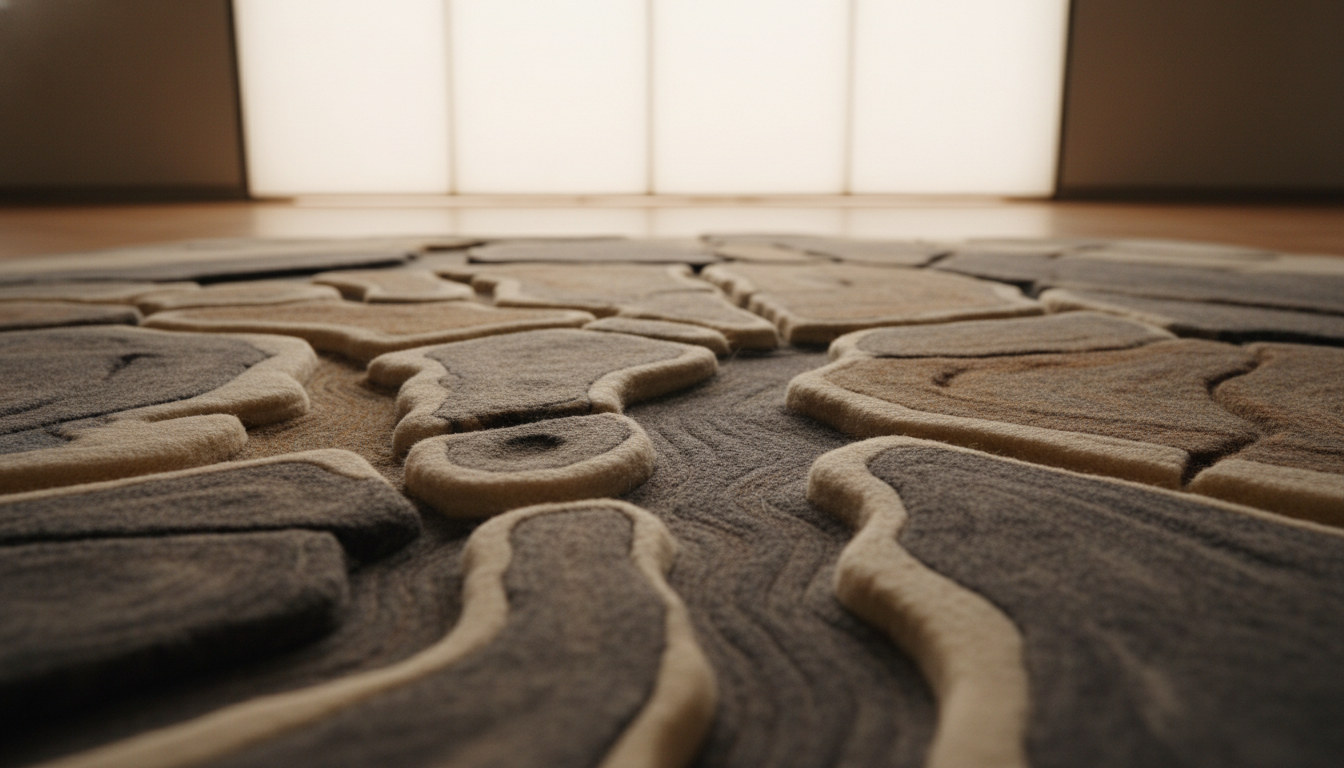
The allure of these pieces lies in their ability to mimic the ancient Moroccan lime plaster technique. Just as a Tadelakt wall feels soft yet stony, these rugs utilize a revolutionary high-low shearing technique. By blending dense, hand-spun New Zealand wool with a subtle 15% infusion of Bio-Acetate fibers, weavers are able to create a surface that catches the light like polished stone while remaining incredibly soft underfoot. It’s a deliberate tension between the rugged and the refined—the hallmark of the Organic Brutalist movement.
Mastering the Organic Brutalist Aesthetic
Creating a space that feels curated rather than “decorated” requires a mastery of shadow. Designers are increasingly looking at the Light Reflectance Value (LRV) of textiles. A flat rug absorbs light uniformly, but the undulating surface of Tadelakt-textured wool rugs creates micro-shadows that change throughout the day. In a room featuring Sage Green accents—a color with an LRV typically between 30 and 40—the rug acts as a grounding element, pulling those earthy tones downward and anchoring the furniture in a way a flat-weave never could.
This artisanal approach isn’t just about aesthetics; it’s about heritage. Many of the most sought-after pieces are utilizing hand-knotted techniques from the Atlas Mountains, where the wool is left in its most natural, lanolin-rich state. This keeps the fibers resilient and gives the rug that authentic, “living” patina that defines luxury in 2026.
“We are seeing a rejection of the ‘disposable’ aesthetic. Clients want pieces that feel like they were unearthed, not manufactured. The rise of Tadelakt textures in weaving is a response to our need for architectural permanence in a digital world. The rug is no longer a backdrop; it’s a sculptural bedrock.”
— Julianne Vance, Lead Textile Historian at the Global Design Institute
When sourcing these pieces, the goal is to find a balance between the raw edges of Boho living and the structural integrity of Brutalism. Whether you are layering textures in a sun-drenched loft or softening a concrete-heavy minimalist space, the curated selections at thebohorugs.com provide that specific, hand-carved feel that defines this movement. They offer a bridge between the ancient craftsmanship of the Maghreb and the sophisticated needs of contemporary interiors.
To maximize the “sculptural” effect of your rug, pay attention to your room’s natural light. Tadelakt-textured wool rugs in bone or oatmeal shades work best in rooms with South-facing light. The high-noon sun hits the raised “plaster” loops of the wool, creating a dramatic 3D effect that makes the rug appear to be part of the home’s actual architecture. If your room is darker, opt for a rug with a Bio-Acetate silk blend; the slight shimmer will bounce light back into the room, preventing the deep textures from feeling too heavy.
- Materiality: Look for “crushed” wool piles that mimic the matte sheen of Moroccan plaster.
- Color Theory: Pair textured rugs with matte black steel or raw oak to lean into the Organic Brutalist vibe.
- Maintenance: Natural lanolin in high-quality wool acts as a built-in stain repellent, making these high-texture pieces surprisingly durable for high-traffic “Boho” communal spaces.
From Marrakech to the Modern Living Room
The Architectural DNA of the Atlas Mountains
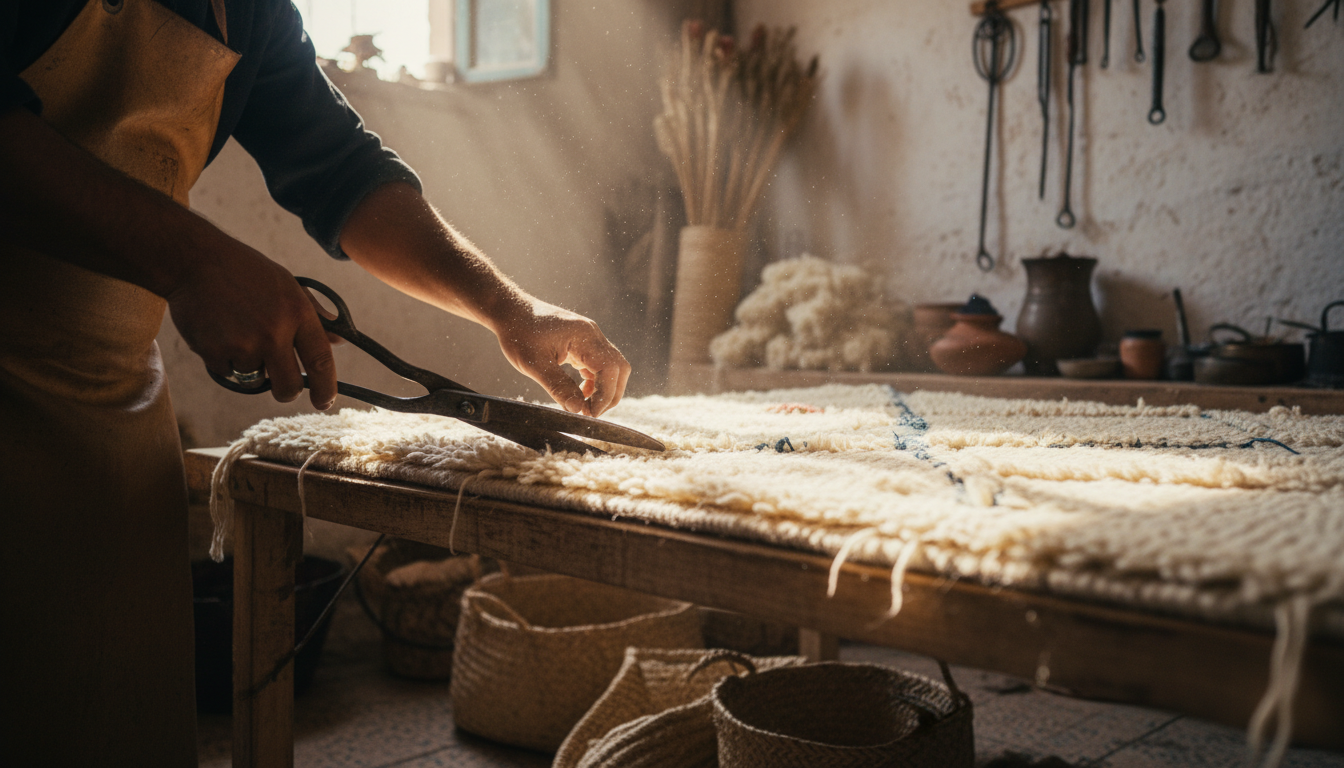
To understand why tadelakt-textured wool rugs are dominating the 2026 forecast, one must look toward the riads of Marrakech. For centuries, Moroccan artisans have used Tadelakt—a lime-based plaster polished with river stones—to create seamless, waterproof surfaces that feel like silk yet look like ancient stone. This “soft-brutalist” aesthetic is now being translated into high-end textiles. By utilizing high-twist New Zealand wool blended with Bio-Acetate fibers, weavers are mimicking that iconic, matte-sheen finish that defines Mediterranean architecture.
This isn’t merely about floor covering; it’s about grounding a room in tactile history. The 2026 shift toward “Tactile Stoicism” favors materials that look immovable but feel indulgent. When you run your hand across a premium Tadelakt-inspired weave, you notice the intentional irregularities—the subtle “pitted” effect that mirrors hand-applied plaster. It provides a visual weight that anchors a bohemian space, preventing “boho-chic” from feeling too whimsical and instead giving it a sophisticated, permanent edge.
Engineering the “Plaster” Feel: A Technical Triumph
The alchemy required to achieve this specific texture involves more than just standard knotting. Master weavers in the Atlas Mountains have evolved their traditional techniques, incorporating un-scoured wools and low-pile shearing to create a surface that catches light exactly like a polished wall. Designers are paying close attention to the Light Reflectance Value (LRV) of these pieces, particularly in shades like “Adobe Dust” or “Mineral Sage.” A rug with an LRV of 35-40 ensures the texture remains visible even in low-light settings, creating shadows within the pile that mimic architectural depth.
- Hand-Knotted Density: High knot counts allow for the precision needed to replicate the “veining” found in natural lime wash.
- Fiber Fusion: The inclusion of silk-like Bio-Acetate provides that signature “shimmer” found on polished Tadelakt surfaces.
- Organic Brutalism: This style bridges the gap between raw, unfinished concrete looks and the warmth required for a lived-in home.
“We are seeing a move away from the ‘shag’ obsession of the last decade. The 2026 client wants a rug that feels like a foundation stone. Tadelakt-textured wool rugs offer that paradox: they look as hard as marble but possess the acoustic softening and warmth of high-mountain wool.”
— Elena Vance, Lead Textile Historian at the Milan Design Collective
To truly showcase the depth of a Tadelakt-textured rug, use directional lighting. A floor lamp with a warm-toned LED (2700K) placed at a 45-degree angle will cast micro-shadows across the wool’s surface, highlighting the artisanal irregularities. For those sourcing from curated collections like thebohorugs.com, look for pieces with ‘pitted’ high-low piles to maximize this architectural effect.
As we move toward more intentional interiors, these rugs serve as the bridge between the structural and the soulful. They take the cold geometry of modernism and wrap it in the organic warmth of traditional Moroccan craft. Choosing a Tadelakt-textured piece isn’t just a design choice; it’s an investment in a texture that will define the next era of high-end bohemian living.
Organic Brutalism: Anchoring the 2026 Aesthetic
The Haptic Shift: Why Tactility is the New Luxury
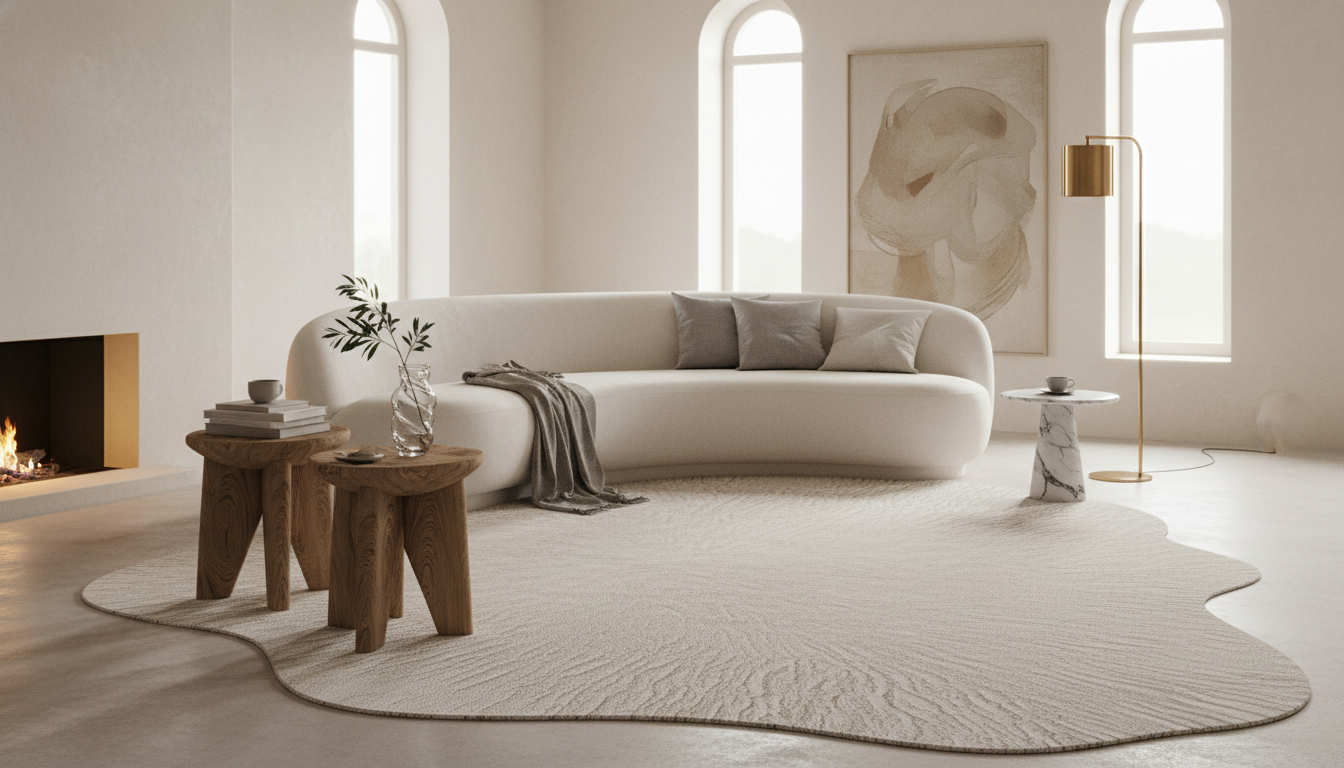
For years, minimalism focused on the “invisible”—clean lines, hidden storage, and surfaces so smooth they almost disappeared. As we approach 2026, the design pendulum is swinging toward Organic Brutalism, a movement that demands to be felt as much as seen. At the heart of this transition are Tadelakt-textured wool rugs. These pieces mimic the ancient Moroccan lime plaster technique, offering a visual depth that feels grounded, monolithic, and deeply artisanal.
This aesthetic isn’t about clutter; it’s about the weight of the material. By utilizing high-twist New Zealand wool blended with Bio-Acetate fibers—a sustainable alternative to petroleum-based synthetics—designers are achieving a matte, stone-like finish that retains the warmth of a textile. It’s a sophisticated contradiction: a rug that looks like a hand-poured floor but feels like a cloud underfoot. When you source pieces from specialist curators like thebohorugs.com, you notice the subtle “chatter marks” in the weave—intentional irregularities that replicate the hand-troweled soul of authentic Tadelakt.
Mastering the Play of Light
What makes these rugs the definitive anchor for 2026 Boho interiors is their interaction with light. Traditional flat-weave rugs can sometimes swallow a room’s energy, but the varied pile heights in Tadelakt-inspired textures create a rhythmic dance of shadows. We are seeing a particular focus on Light Reflectance Values (LRV) within the neutral spectrum. A Tadelakt-textured rug in a “Bone” or “Warm Ash” hue typically sits at an LRV of 50-60, meaning it bounces enough soft light to keep a room feeling airy while providing the visual “heaviness” required to ground floating furniture arrangements.
“We are moving away from the era of ‘perfection’ and toward ‘permanence,'” says Julian Thorne, Lead Textile Historian at the Zurich Design Institute. “The Tadelakt texture in wool is a technical marvel because it captures the wabi-sabi essence of weathered stone. It provides a sense of architectural history to a new build, bridgeing the gap between the raw structural elements of Brutalism and the soft, lived-in comfort of Bohemian styling.”
- Material Integrity: Look for hand-knotted techniques from the Atlas Mountains where the wool is left slightly lanolin-rich to provide a natural, low-sheen luster.
- The Tonal Palette: 2026 is moving toward “Pigment Earth”—think terracotta under-tones and Sage Greens with a greyed-out LRV of 42 for a moody, grounded sanctuary.
- Scale and Proportion: In Organic Brutalism, the rug should act as a second floor. Oversized dimensions that tuck under all furniture legs create a “plinth” effect for the entire room.
To truly accentuate the architectural “peaks and valleys” of a Tadelakt-textured wool rug, avoid harsh overhead lighting. Instead, use floor-level wash lighting or low-slung pendants. Positioning a light source at a 45-degree angle to the rug’s grain reveals the sculptural depth of the wool, making the floor feel like a piece of bespoke masonry rather than just a floor covering.
Integrating these heavy-texture elements requires a balance of “hard” and “soft.” Pair your rug with raw concrete side tables or a charred wood (Shou Sugi Ban) coffee table to lean into the Brutalist roots. The softness of the wool prevents the room from feeling cold, while the Tadelakt-inspired pattern ensures the space remains sophisticated. For those seeking the pinnacle of this craft, the artisanal selections at thebohorugs.com offer the precise density and fiber-blend necessary to achieve this high-end, 2026-ready look.
The Alchemy of Fiber: Wool, Silk, and Sustainability
Beyond the Surface: Engineering the Plaster-Effect Underfoot
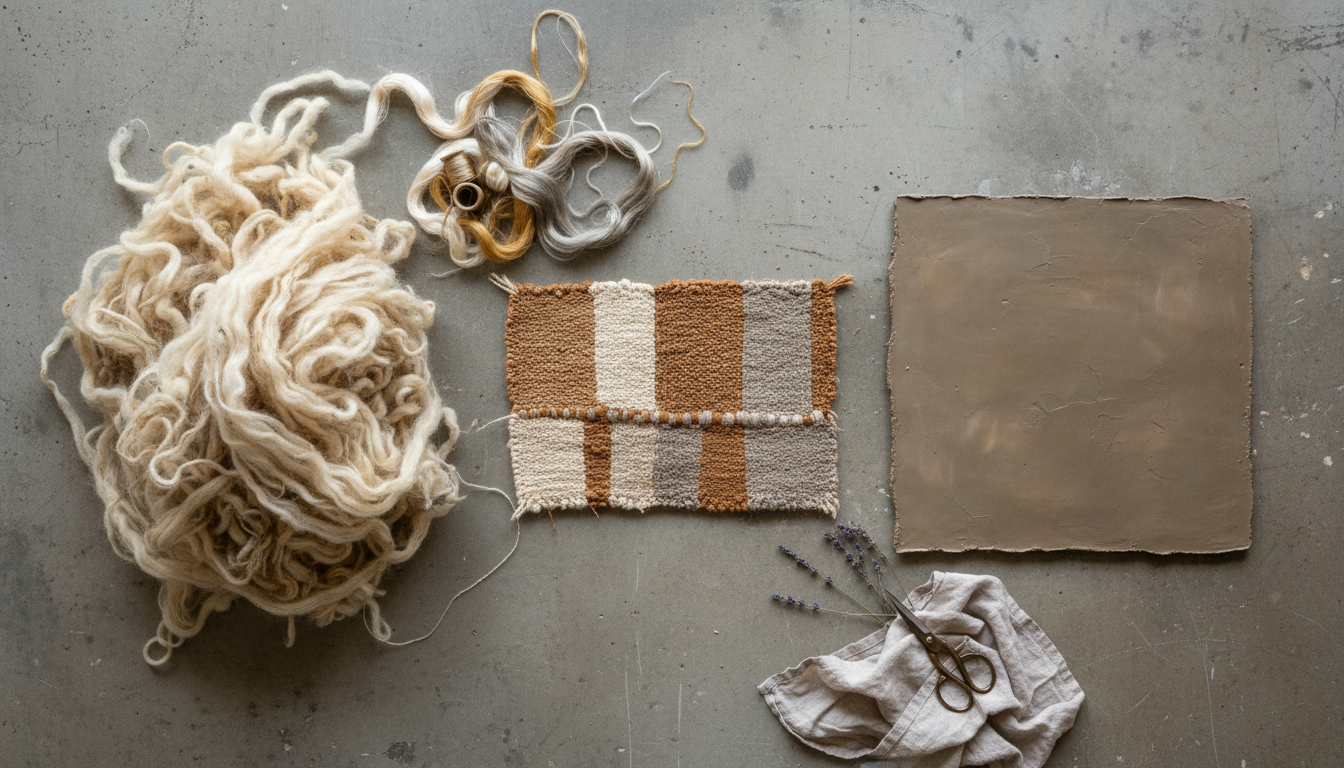
There is a specific tactile poetry found in the transition from hard architecture to soft furnishings. While Tadelakt-textured wool rugs take their visual cues from the ancient Moroccan art of hand-polished lime plaster, achieving that mottled, “living” surface requires a sophisticated understanding of fiber chemistry. In the 2026 design landscape, we are seeing a definitive pivot toward Bio-Acetate fibers—a biodegradable alternative to traditional synthetics that mimics the liquid sheen of wet plaster while maintaining the structural integrity of high-traffic textiles.
The magic happens through a technique known as “selective shearing.” By blending high-twist New Zealand wool with varying percentages of bamboo silk or Bio-Acetate, weavers can create a surface that catches the light unevenly. This mimics the way sunlight hits a hand-burnished wall in Marrakech. When specifying these pieces for a project, the Light Reflectance Value (LRV) is paramount. A Tadelakt-textured wool rug in a muted Sage Green typically carries an LRV of 42 to 48, allowing it to absorb harsh overhead glares while emitting a soft, diffused glow from beneath the furniture line.
“We are moving away from the flat, uniform minimalism of the 2010s,” says Julian Thorne, a prominent Textile Historian and Creative Consultant. “The 2026 aesthetic is about ‘Organic Brutalism’—pieces that feel as though they were pulled directly from the earth. By utilizing heritage hand-knotted techniques from the Atlas Mountains and modernizing them with high-low pile heights, these rugs offer a sensory grounding that machine-made alternatives simply cannot replicate.”
The Sustainable Blueprint for 2026
True luxury in the modern era is inseparable from ecological responsibility. The shift toward these textured masterpieces isn’t just an aesthetic choice; it’s a commitment to “Slow Design.” Designers are increasingly looking for pieces that age gracefully rather than needing replacement every few seasons. To find a piece that balances this longevity with artisanal soul, many industry insiders look to the curated collections at thebohorugs.com, where the focus remains on small-batch production and fiber purity.
- Unprocessed Virgin Wool: Retains natural lanolin, making the rug inherently stain-resistant without the need for toxic chemical coatings.
- Low-Impact Pigments: Utilizing vegetable-based dyes that create the “chromatic vibration” essential for that authentic Tadelakt look.
- Carbon-Neutral Weaving: A focus on hand-loomed production that bypasses the energy-heavy industrial factories.
When shopping for Tadelakt-textured wool rugs, always view the sample under both warm (2700K) and cool (4000K) lighting. Because of the high-low pile structure, the rug will “shift” in color throughout the day. A high-quality blend will reveal deeper “cracks” and shadows in the evening, enhancing the Brutalist architecture of your living space.
The beauty of this trend lies in its versatility. Whether anchored in a stark, minimalist loft or a layered, bohemian sanctuary, the organic irregularity of the weave provides a visual “hush.” It is a return to the tactile, a rejection of the digital, and a celebration of the slight imperfections that prove a human hand was involved in the creation of your home’s foundation.
Curating the Palette: Earth, Ash, and Raw Umber
The Vernacular of Neutrality
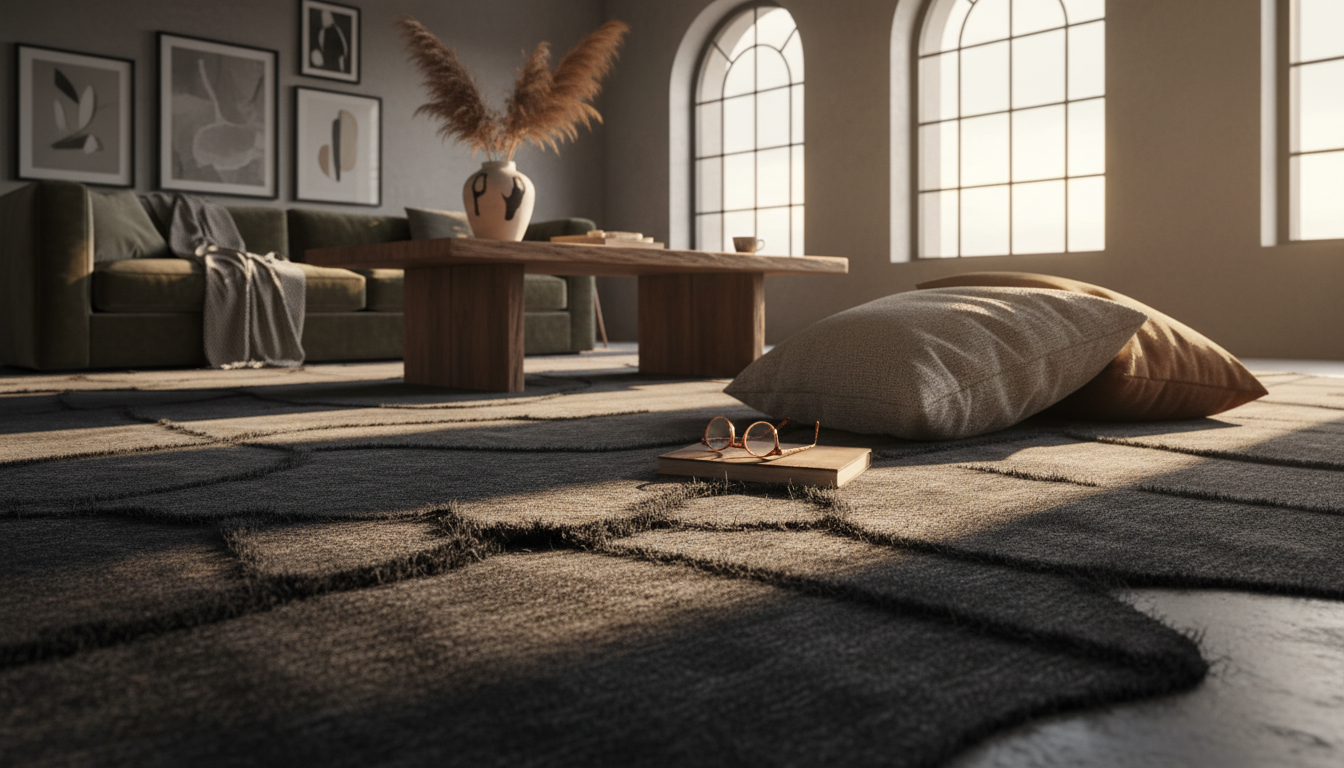
When we look at the trajectory of interior design heading into 2026, we see a definitive departure from the “clinical” minimalism that defined the early 2020s. Today, luxury is measured in tactile depth. This is where Tadelakt-textured wool rugs have found their footing. By translating the ancient Moroccan art of lime plaster—traditionally used on the walls of riads—into a soft-surface medium, designers are achieving a look that is simultaneously monastic and incredibly lush. It’s a study in contradictions: the rug appears as solid as stone but yields like a cloud underfoot.
The magic of this aesthetic lies in its intentional imperfection. To achieve that signature “swirled” plaster look, artisans are utilizing hand-knotted techniques from the Atlas Mountains, blending undyed wool with high-sheen Bio-Acetate fibers. This combination allows the pile to catch light at varying angles, mimicking the subtle sheen of polished lime. This isn’t just a floor covering; it’s a foundational element of Organic Brutalism, providing a grounded, earthy counterpoint to the raw concrete and reclaimed timber common in modern boho spaces.
Chromatics of the High Atlas
Curating the palette for these pieces requires a sophisticated understanding of how light interacts with shadow. We are seeing a move toward “low-contrast complexity.” Instead of stark whites, 2026 is defined by:
- Raw Umber: A pigment-heavy, soulful brown that acts as the anchor for the room. In Tadelakt-textured wool rugs, this shade creates deep “pockets” of shadow that mimic the natural patina of aged Moroccan architecture.
- Volcanic Ash: A grey that refuses to be cold. With a Light Reflectance Value (LRV) of approximately 18, it absorbs enough light to feel cozy while reflecting enough to showcase the intricate directional shearing of the wool.
- Oxidized Earth: Not quite terracotta and not quite beige, this hue brings a warmth that feels ancient. It pairs beautifully with the artisanal collections found at thebohorugs.com, where the focus is on preserving the “hand of the maker.”
Integrating these tones isn’t about matching; it’s about layering. When you place an Ash-toned rug against a dark hardwood floor, the Tadelakt texture creates a visual bridge between the organic grain of the wood and the structured lines of the furniture.
“The beauty of the Tadelakt-inspired weave is its ability to communicate history without saying a word. We aren’t just looking at wool; we are looking at the visual memory of water, stone, and hand-burnished lime. It gives a room a sense of permanence that synthetic fibers simply cannot replicate.”
— Julian Thorne, Lead Textile Historian & Design Consultant
To master this look, apply the palette in ratios. Use 60% Earth tones (your rug and walls) to establish the mood. Introduce 30% Ash through upholstery to ground the space. Reserve 10% for Raw Umber in the form of sculptural accents or heavy drapery. This creates a rhythmic flow that prevents the room from feeling “flat.” If you’re sourcing from thebohorugs.com, look for pieces with high-low pile variations to maximize this light-play.
The shift toward these materials represents a broader cultural desire for authenticity. As our digital lives become more frictionless, our physical environments must become more textured. Choosing a rug with this specific plaster-like finish isn’t just a trend—it’s an investment in a sensory experience. The way a Tadelakt-textured wool rug interacts with the late afternoon sun, casting long, soft shadows across its “troweled” surface, is a luxury that transcends seasonal fads, making it a true centerpiece for the modern, soulful home.
The Future of the Boho Home: Softened Minimalism
Beyond Minimalism: The Evolution of Organic Brutalism
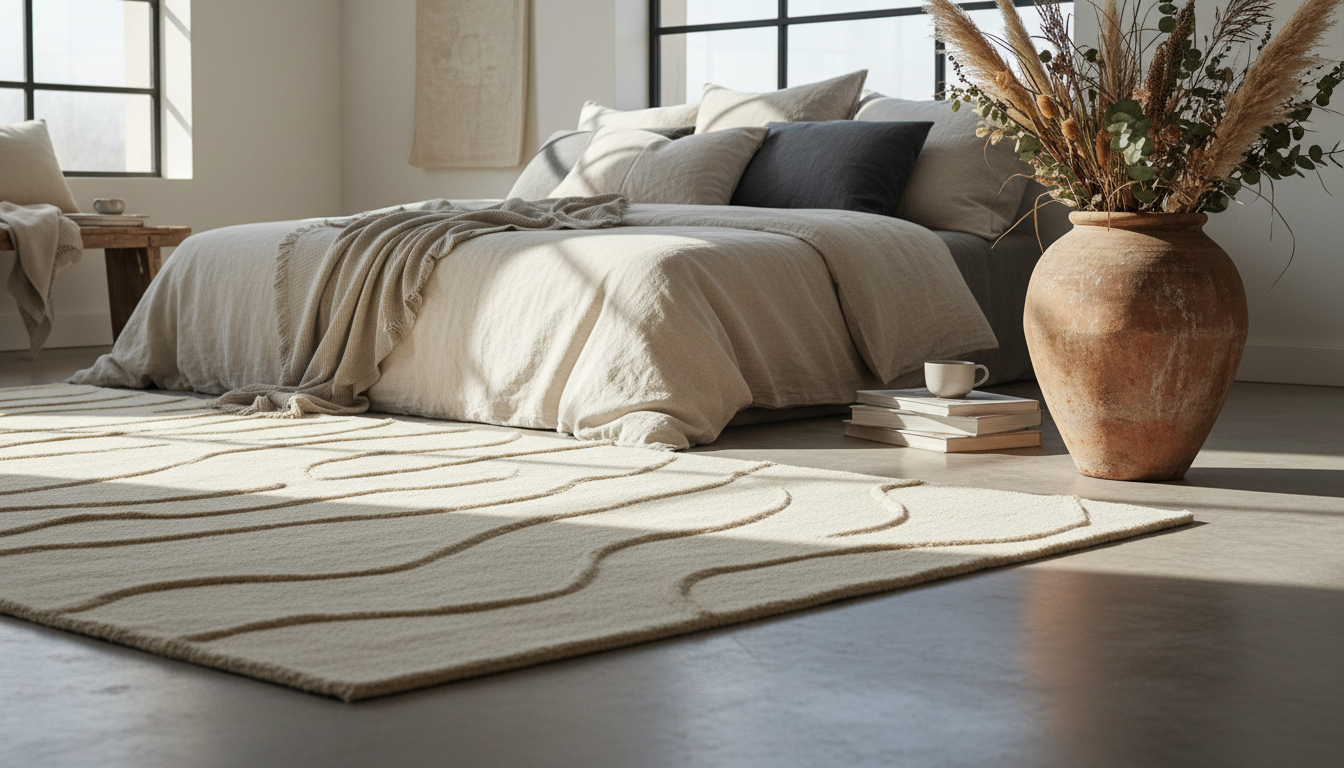
The bohemian aesthetic is undergoing a profound metamorphosis. We are moving away from the “cluttered maximalism” of the 2010s and toward a more disciplined, architectural approach often referred to as Organic Brutalism. This movement prioritizes raw, honest materials and monochromatic palettes, yet it avoids the coldness of traditional modernism by embracing heavy texture. At the heart of this shift lies the Tadelakt-textured wool rug—a floor covering that captures the soul of ancient Moroccan plasterwork and reimagines it for 2026’s sophisticated interiors.
Designers are increasingly looking to the Atlas Mountains not just for pattern, but for structural inspiration. By utilizing a specific hand-knotted technique that varies pile height by as little as 2mm, weavers are able to mimic the subtle, undulating “sheen-and-shadow” effect of lime-based Tadelakt walls. This creates a surface that feels like soft stone underfoot. The innovation for 2026 involves blending high-twist New Zealand wool with Bio-Acetate fibers—a sustainable, wood-pulp-based material—to give the rug a faint, light-catching luster that changes as you move through the room.
“The allure of a Tadelakt-textured wool rug lies in its ability to mimic the permanence of stone while offering the sensory relief of fiber,” notes Elena Moretti, Lead Textile Historian at the Milanese Design Collective. “It provides a tactile ‘anchor’ in a room, allowing the Boho home to feel grounded and expensive rather than transient.”
The Science of Light and Fiber
It isn’t just about the touch; it’s about how these rugs interact with the architecture of a home. When selecting pieces for a curated space, luxury designers are now focusing on the Light Reflectance Value (LRV) of textile dyes. For instance, a Tadelakt-textured rug in “Desert Bone” typically carries an LRV of 72, meaning it bounces significant natural light back into the room, emphasizing the sculptural ridges of the wool. This interplay of light and shadow is what transforms a simple rug into a piece of functional art.
As we look toward the next era of home styling, the focus shifts to longevity and “quiet luxury.” Those searching for these specific, artisanal qualities often turn to curated collections like those found at thebohorugs.com, where the emphasis remains on the heritage of the weave rather than mass-produced trends. These rugs serve as the perfect bridge between the raw, unfinished nature of Brutalist concrete and the warm, inviting spirit of Boho life.
- Materiality: A mix of high-twist wool and organic linen creates the “cracked” visual texture characteristic of aged plaster.
- Palette: Shift toward “Earth-Pigment” tones—think Burnt Ochre and Raw Umber with an LRV between 15 and 30 for moodier, grounded spaces.
- Sustainability: The 2026 standard emphasizes vegetable-based dyes that offer a non-uniform, “living” color that patinas over time.
To ensure your rug achieves that authentic Tadelakt look, view the sample under both warm 2700K LED lighting and natural afternoon sun. A true Tadelakt-textured wool rug should reveal different “veins” of texture as the light angle changes. If the rug looks flat from every angle, it lacks the sculptural shear required for the Organic Brutalist aesthetic.
Elevate Your Space
Discover the artistry of handmade luxury. Each rug is a masterpiece of tradition and modern design.
Expert Q&A
What exactly are Tadelakt-textured wool rugs?
They are rugs designed to mimic the appearance of Moroccan Tadelakt plaster through specialized wool-working techniques like varied pile heights, density mapping, and hand-shearing.
Are Tadelakt-textured wool rugs suitable for high-traffic areas?
Yes, because they are typically made from high-grade, dense wool which is naturally resilient and hides footprints better than flat-weave or high-shag alternatives.
How do these rugs fit into the Boho design style?
They provide a ‘grounded’ architectural base that balances the eclectic and often busy patterns found in Bohemian decor, leaning into the ‘Organic’ side of the 2026 Boho trend.
What is the best way to clean a Tadelakt-textured rug?
Regular vacuuming with a suction-only setting is recommended to preserve the hand-sheared ridges. Professional cleaning is advised for deep stains to maintain the pile’s unique structure.
Why is the Tadelakt texture trending for 2026?
It reflects a broader shift toward ‘Sensory Interiors,’ where homeowners seek materials that offer tactile comfort while maintaining a clean, architectural aesthetic.
Can these rugs be customized in terms of ‘stone’ patterns?
Many high-end artisans offer custom ‘cracked’ or ‘mottled’ shearing patterns that specifically emulate the natural patina of aged plaster.
What colors work best for Tadelakt-textured wool rugs?
Neutral, earthy tones like bone, sand, ash, and terracotta work best, as they most accurately represent the natural lime-plaster finish they are inspired by.
Are these rugs eco-friendly?
Most are crafted from 100% natural wool and organic dyes, making them a sustainable choice compared to synthetic, mass-produced rugs.
Do they shed like typical wool rugs?
Initial shedding is normal, but because the fibers are often densely packed and sheared to create the Tadelakt effect, shedding typically subsides faster than with looser shags.
Is the texture too rough for bare feet?
Not at all. While they look like stone, the use of high-quality wool ensures they remain incredibly soft and comfortable for underfoot use.
How does the ‘Organic Brutalist’ style relate to these rugs?
Organic Brutalism uses raw, heavy materials in soft, natural shapes. These rugs provide the ‘heavy’ visual of a stone floor with the ‘soft’ physical reality of a textile.
Where should I place a Tadelakt-textured rug for maximum impact?
They are most effective in large, open spaces like living rooms or primary bedrooms where the light can play off the varied texture levels.
Written by TheBohoRugs Interior Design Team
Experts in handmade rugs, boho interiors, and modern home decor.