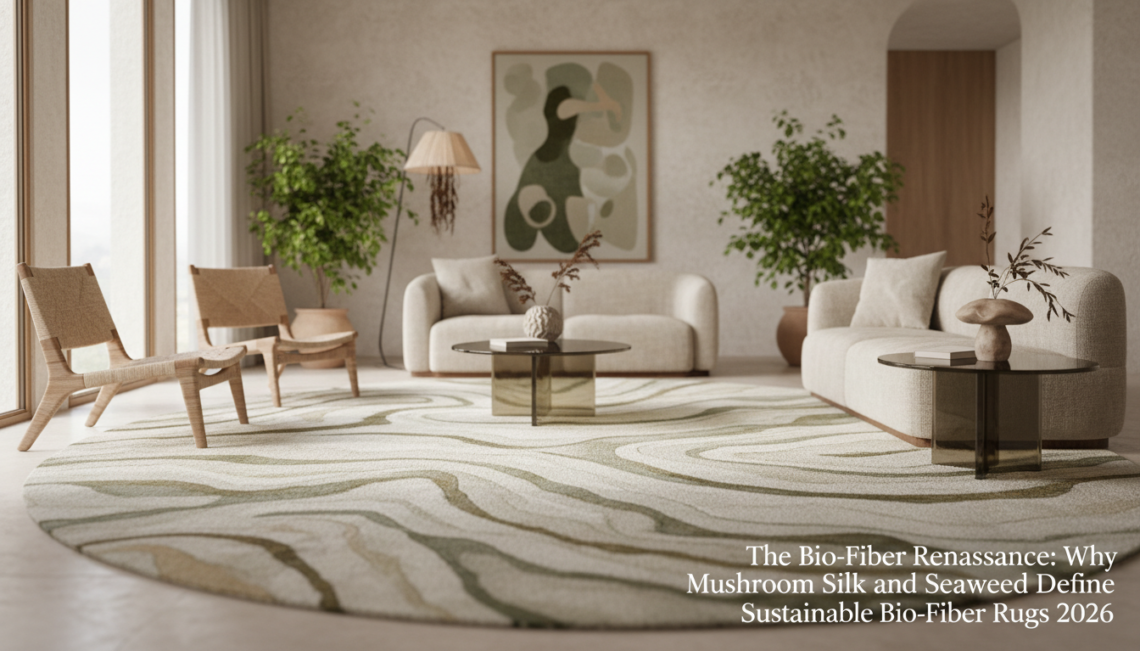
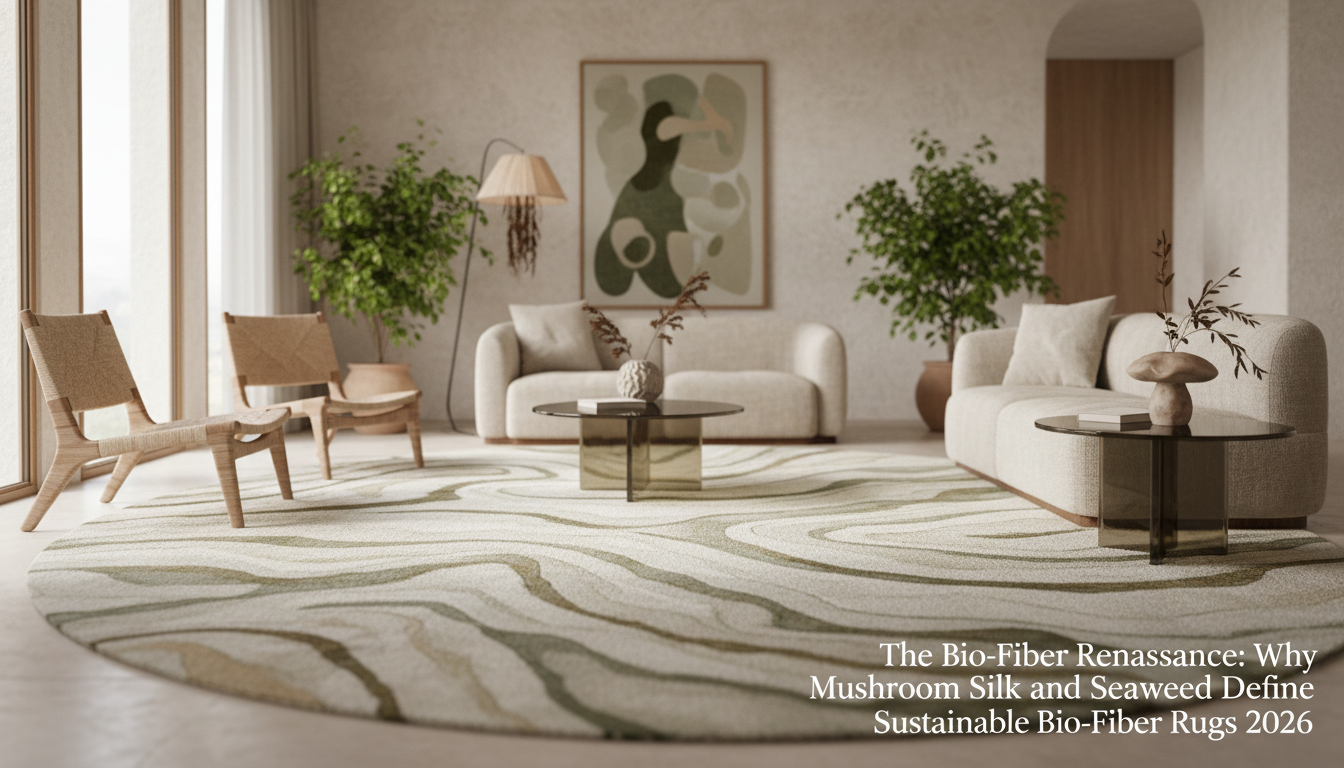
As the interior design world pivots from the era of recycled synthetics toward true biological innovation, 2026 marks a watershed moment for the luxury floor covering industry. The ‘Bio-Fiber Renaissance’ is no longer a niche experimental concept; it is the definitive standard for high-end residential interiors. Moving beyond traditional wool and silk, designers are embracing mycelium-derived ‘mushroom silk’ and kelp-based seaweed fibers to create textures that are as regenerative as they are opulent. This report explores how sustainable bio-fiber rugs 2026 are redefining ‘Art for the Floor’ by merging laboratory-grown precision with the untamed elegance of the natural world.
“In 2026, sustainable bio-fiber rugs represent the pinnacle of eco-luxury by utilizing carbon-negative materials like mushroom silk (mycelium) and seaweed cellulose. These rugs are characterized by their extreme softness, natural antimicrobial properties, and a circular lifecycle that allows them to return to the earth without environmental impact. Unlike previous synthetic eco-options, 2026’s bio-fibers offer a sophisticated luster and durability comparable to traditional silk, making them the premier choice for conscious high-end interior design.”
The Roadmap
Table of Contents
- The Biological Shift: Moving Beyond Recycled Plastics
- Mushroom Silk: The Mycelium Revolution in Textural Luxury
- Seaweed Cellulose: Harvesting Ocean-Born Softness
- Biophilic Brutalism: The 2026 Design Aesthetic
- The Science of Durability: How Bio-Fibers Withstand Modern Life
- Art for the Floor: Why Rugs are the New Carbon-Negative Collectibles
- Pigment Innovation: Dyeing with Bacteria and Botanical Extracts
- Investing in the Future: The Long-term Value of Bio-Fiber Decor
The Biological Shift: Moving Beyond Recycled Plastics
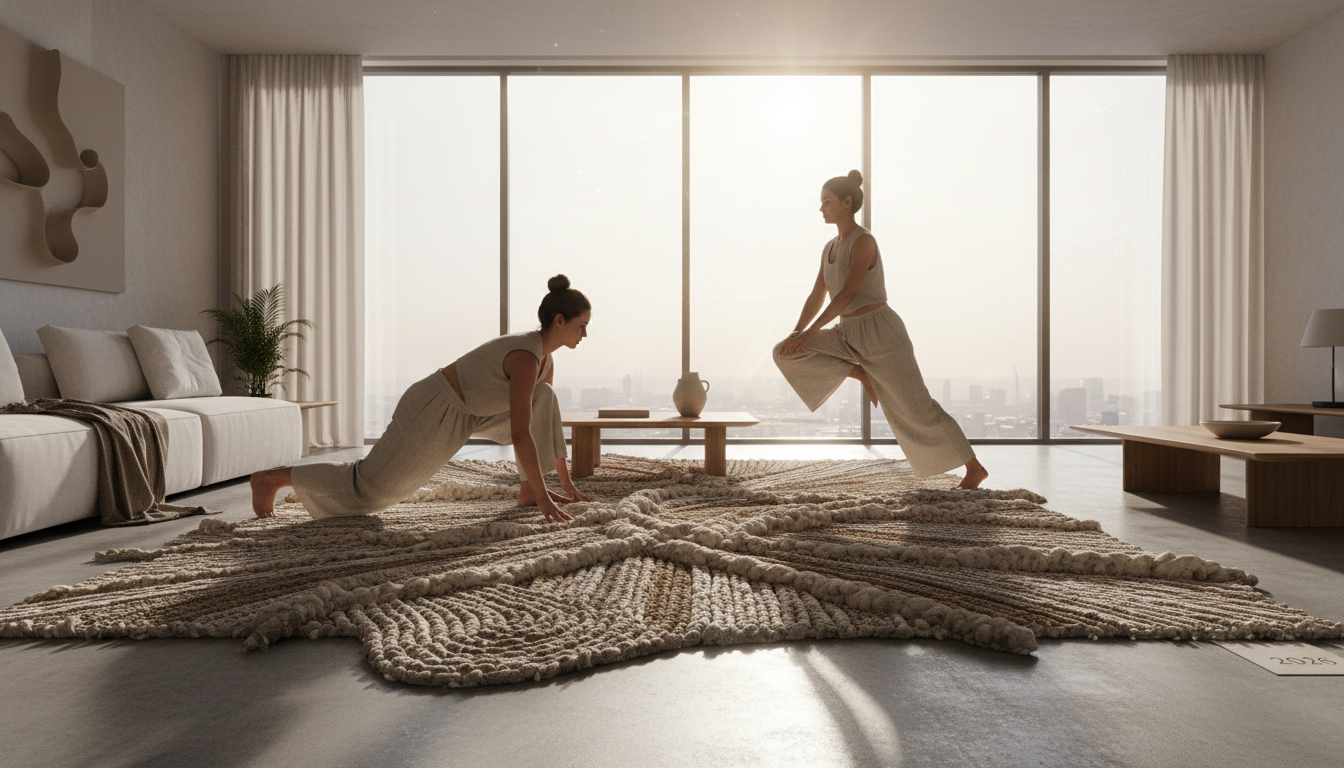
The Era of Regenerative Provenance
For the past decade, the design industry leaned heavily on recycled polyester (rPET) as the gold standard for conscious decor. However, by 2026, the elite design world is pivoting away from “less bad” synthetics toward materials that are inherently restorative. The aesthetic of the coming year is defined by sustainable bio-fiber rugs 2026, where the luxury lies not in the diversion of waste, but in the biological synergy of the material itself.
While recycled plastics struggle with the stigma of microplastic shedding and a finite lifecycle, bio-fibers offer a “cradle-to-cradle” promise. These materials don’t just sit on a floor; they breathe, regulate humidity, and eventually return to the earth without a trace of polymer residue. This shift marks the transition from mechanical recycling to biological fabrication.
Curators at thebohorugs.com are already observing this demand for tactile authenticity. High-net-worth collectors are increasingly prioritizing “living” textiles—rugs woven from mycelium-based silks and seaweed-derived yarns—over the sterile, uniform feel of high-performance synthetics.
From Lab to Loom: The New Materiality
The 2026 aesthetic is rooted in the “Bio-Tech Bloom.” Designers are moving beyond traditional wool and cotton to explore the untapped potential of proteins and carbohydrates. This isn’t just about environmentalism; it’s about a superior sensory experience that synthetic fibers simply cannot replicate.
- Mycelium Silk: Grown from fungal root structures, this fiber offers a luster that rivals traditional mulberry silk but with a carbon-negative footprint.
- Alginate (Seaweed) Yarns: These fibers are naturally fire-retardant and antimicrobial, eliminating the need for toxic chemical coatings often found in mass-produced flooring.
- Kelp-Infused Hemp: A hybrid weave that provides the structural integrity of jute with a soft-touch finish previously unattainable in natural floor coverings.
Predictions for the 2026 Eco-Luxury Market
As we approach the mid-decade mark, several key trends will define the landscape of sustainable bio-fiber rugs 2026. We are moving toward a “Soil-to-Soil” certification process that will become more prestigious than traditional “Recycled” labels.
- The Rise of Biophilic Geometry: Patterns will shift from rigid graphics to organic, cellular-inspired motifs that reflect the cellular structure of the fibers themselves.
- Hyper-Local Harvests: Expect a surge in rugs crafted from invasive plant species or regional algae blooms, turning environmental hazards into high-end floor art.
- Bio-Dye Integration: 2026 will see the death of synthetic pigments, replaced by “living dyes” derived from bacteria that produce vibrant, UV-stable hues without water-intensive processes.
In this new landscape, a rug is no longer a static object. It is a testament to the sophistication of modern bio-engineering. By choosing sustainable bio-fiber rugs 2026, homeowners are investing in a future where the home environment is an extension of the natural world, curated with the artisanal precision found at specialists like thebohorugs.com.
Mushroom Silk: The Mycelium Revolution in Textural Luxury
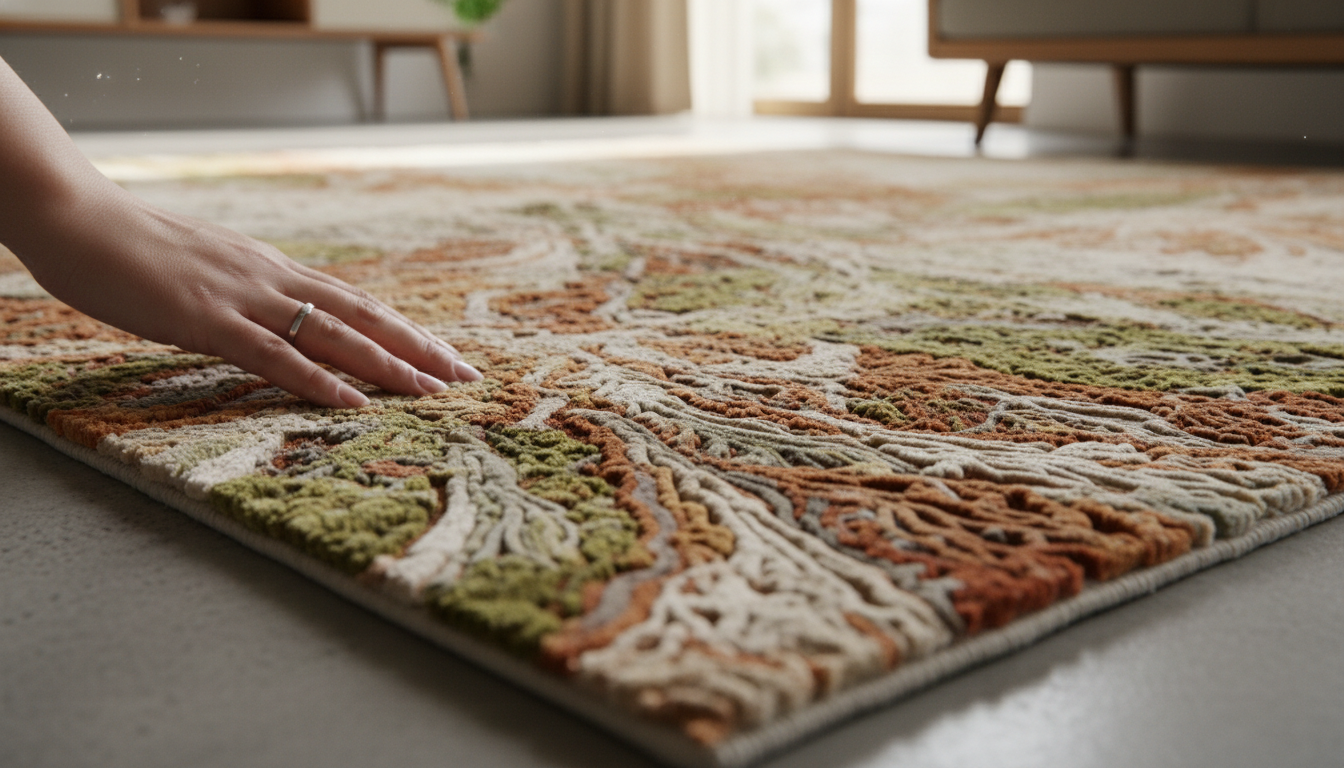
The Molecular Alchemy of Myco-Silk
By 2026, the definition of luxury will pivot from the extraction of rare resources to the sophisticated cultivation of biological organisms. At the forefront of this shift is mycelium—the root structure of fungi—reimagined as “mushroom silk.”
This bio-fabricated material offers a hand-feel that rivals the finest mulberry silk, yet possesses a structural resilience previously unseen in organic textiles. Designers are moving away from the industrial rigidity of the past decade toward a more fluid, “living” interior aesthetic.
The rise of sustainable bio-fiber rugs 2026 marks a departure from traditional wool and synthetic blends, favoring materials that are grown to the exact dimensions of the room, minimizing waste through precision bio-manufacturing.
The Tactile Intelligence of Living Floors
What sets mushroom silk apart is its unique molecular topography. Unlike synthetic fibers that reflect light with a plasticky sheen, mycelium fibers absorb and refract light in a soft, matte diffusion that feels inherently “grounded.”
- Natural Thermal Regulation: Mycelium’s cellular structure acts as a high-performance insulator, keeping floors warm in winter and breathable in summer.
- Hydrophobic Properties: Advanced 2026 cultivars of mushroom silk are natively water-resistant, eliminating the need for toxic “forever chemicals” usually found in stain-resistant treatments.
- Acoustic Dampening: The porous nature of fungal networks provides superior sound absorption, essential for the open-concept, high-ceiling architecture currently dominating high-end design.
The 2026 Aesthetic: From Lab to Loom
We are witnessing a “Biophilic Brutalism” trend, where the raw, irregular textures of fungi are celebrated rather than hidden. These rugs are often left in their undyed, earthen states—ranging from bruised ochre to deep charcoal—showcasing the organic provenance of the piece.
For collectors seeking this intersection of avant-garde science and heritage craft, sourcing is becoming more localized. Platforms like thebohorugs.com are instrumental in bridging the gap between small-scale bio-labs and the discerning homeowner looking for artisanal integrity.
Investing in sustainable bio-fiber rugs 2026 is no longer just an environmental choice; it is an acquisition of a piece of the future. As we move into an era of radical transparency, the luxury of a rug will be measured by its ability to return to the earth as nutrients, leaving nothing behind but the memory of its texture.
In the coming year, expect to see mushroom silk paired with reclaimed stone and raw timber, creating a sensory landscape that feels less like a decorated room and more like a curated ecosystem.
Seaweed Cellulose: Harvesting Ocean-Born Softness
The Alchemy of Mariculture
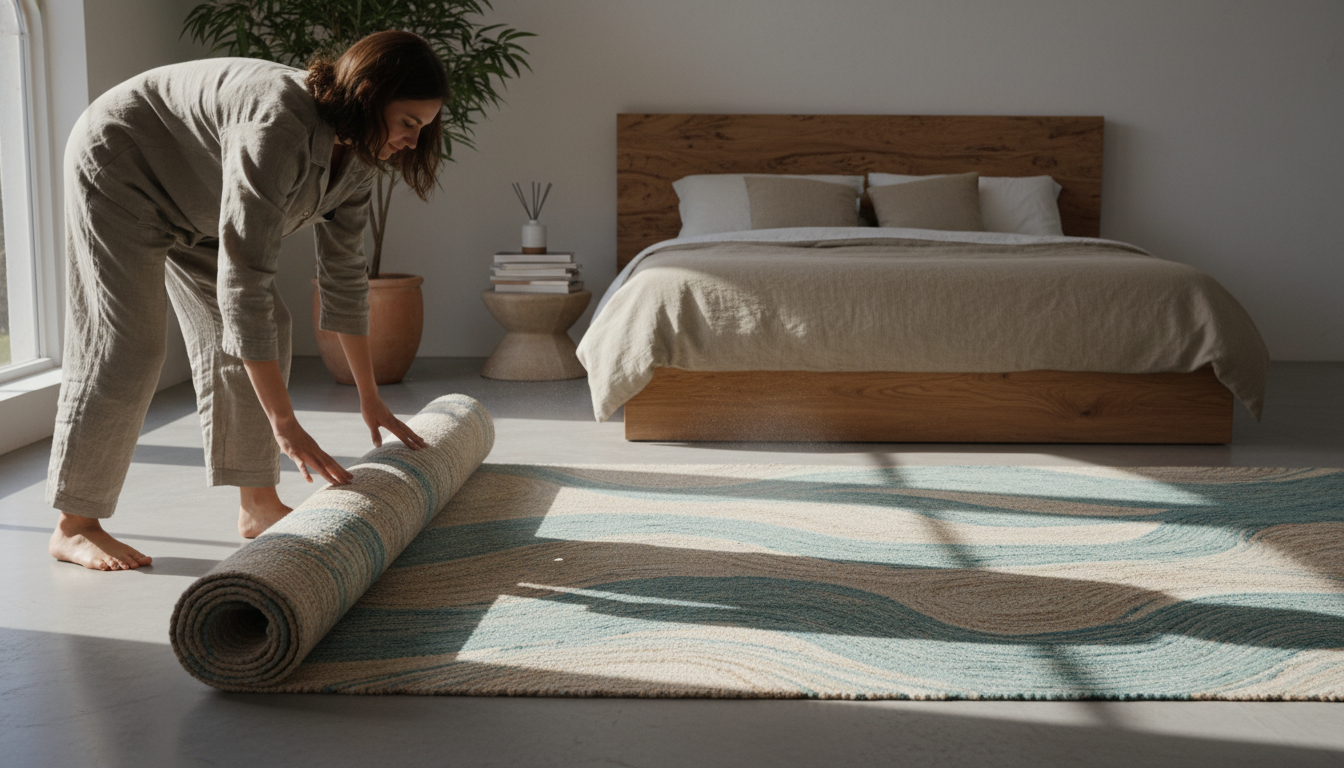
While the previous decade focused on recycling existing plastics, 2026 marks a pivotal transition toward regenerative sourcing. Seaweed cellulose, derived primarily from brown algae (Ascophyllum nodosum), has emerged as the vanguard of this movement. Unlike terrestrial crops, these marine botanicals require no freshwater, no pesticides, and zero arable land, flourishing in “underwater forests” that sequester carbon at rates far surpassing tropical rainforests.
The transformation from slippery kelp to high-luster yarn is a marvel of closed-loop chemistry. By dissolving the seaweed solids into a wood-pulp amine oxide solution, manufacturers are creating a fiber that retains the ocean’s mineral richness. This is not merely a textile; it is a bio-active material that, by 2026, is predicted to become the gold standard for high-traffic, luxury interiors due to its inherent flame retardancy and moisture-wicking properties.
Sensory Sophistication in Sustainable Bio-Fiber Rugs 2026
The aesthetic appeal of seaweed fiber lies in its ethereal, light-refracting quality. To the touch, it mimics the cool fluidity of mulberry silk but possesses a structural “bounce” unique to marine polymers. In the context of sustainable bio-fiber rugs 2026, designers are leveraging these properties to create pieces that offer a subtle, iridescent shimmer, shifting hue as the daylight moves across a room.
Curators at thebohorugs.com have noted a distinct shift in collector behavior: the modern connoisseur no longer settles for static aesthetics. They demand a visceral connection to the source. Seaweed-based weaves provide this, often carrying a faint, clean scent of the salt air and a tactile softness that traditional synthetics or even over-processed wools cannot replicate.
The Performance of Marine Cellulose
Beyond the undeniable “shelf appeal,” the 2026 forecast for interior textiles emphasizes longevity and wellness. Seaweed fibers are naturally rich in vitamins and amino acids, which remain embedded in the cellulose structure even after weaving. This leads to several distinct advantages for the modern home:
- Anti-Microbial Efficacy: Marine ions naturally inhibit the growth of bacteria and dust mites, making these rugs ideal for hypoallergenic environments.
- Thermal Regulation: The porous nature of seaweed cellulose allows for exceptional breathability, keeping floors cool in summer and retaining ambient warmth in winter.
- Bio-Duality: These rugs are fully biodegradable, designed to return to the earth as nutrients rather than lingering in landfills for centuries.
As we navigate the complexities of the climate era, the adoption of sustainable bio-fiber rugs 2026 represents more than a trend; it is a sophisticated reclamation of our relationship with the hydrosphere. By choosing seaweed cellulose, the design world isn’t just decorating a space—it is actively participating in the restoration of our oceans.
Biophilic Brutalism: The 2026 Design Aesthetic
The Architecture of Living Tactility
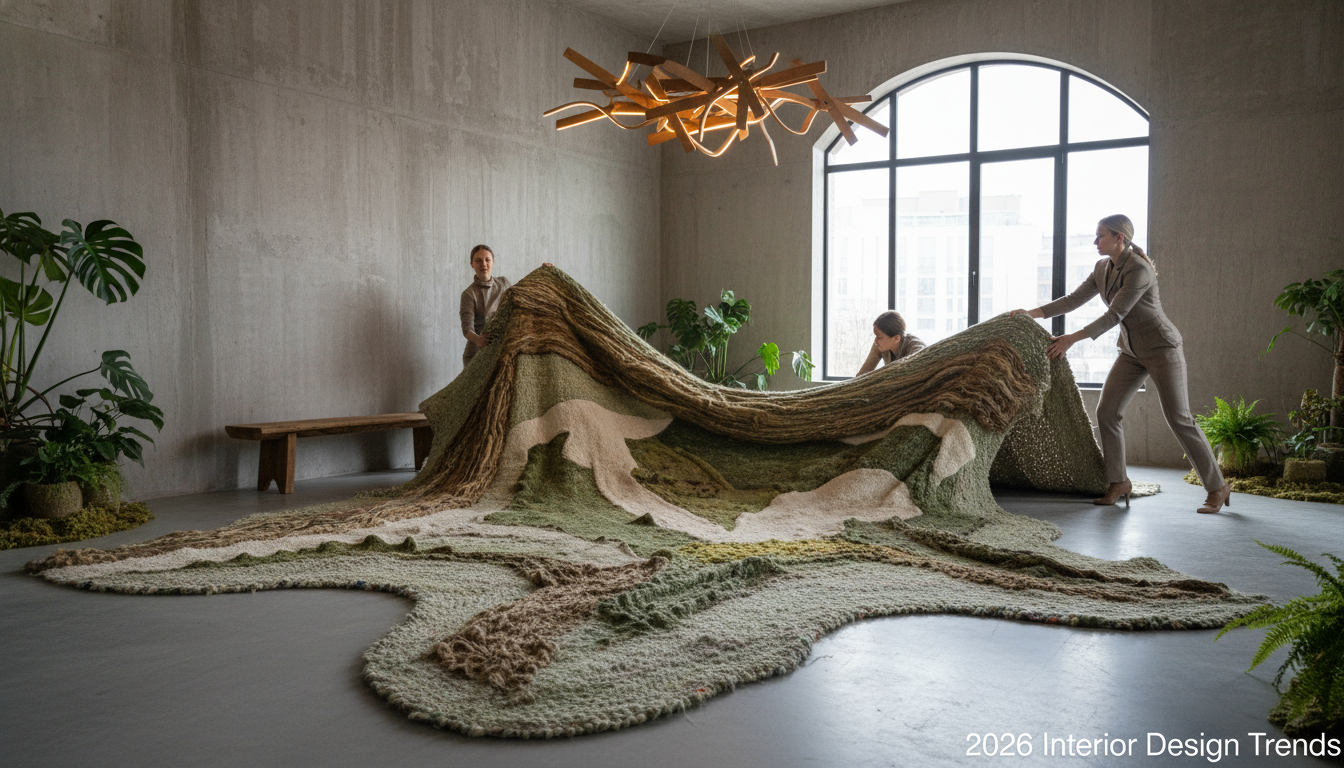
In 2026, the design world is pivoting away from the sterile, clinical minimalism of the early 2020s. We are entering the era of Biophilic Brutalism—a movement defined by monolithic, raw-edged forms executed in materials that breathe, age, and sequester carbon.
This aesthetic rejects the “disposable chic” of previous decades. Instead, it prioritizes a visceral connection to the earth through heavy, structural textiles. Within this landscape, sustainable bio-fiber rugs 2026 have emerged as the definitive anchor for high-end interiors, offering a structural permanence that synthetic fibers simply cannot replicate.
The trend is characterized by a “raw-yet-refined” paradox. Imagine the cold, imposing geometry of a concrete villa softened by the sprawling, irregular texture of a mushroom silk tapestry. This is not just home decor; it is an ecological statement of permanence.
Mycelium and Seaweed: The New Haute-Couture Foundations
The luxury market is witnessing a material revolution where laboratory-grown filaments meet ancient weaving techniques. Designers are no longer satisfied with recycled plastics; they are looking for regenerative cycles that contribute to the home’s microbiome.
The 2026 palette focuses on “Earth-Bound Neutrals”—tones achieved not through chemical dyes, but through the natural tannins of the fibers themselves. Key materials dominating the upcoming season include:
- Mycelium Silk: A leather-adjacent fiber grown from fungal root structures, offering a velvet-like sheen with unparalleled acoustic dampening.
- Desalinated Seaweed Twine: Harvested from invasive kelp blooms, these fibers provide a cool-to-the-touch, fire-resistant surface ideal for high-traffic galleries.
- Fermented Bast Fibers: Traditional hemp and flax re-engineered through microbial fermentation to achieve a softness comparable to high-altitude cashmere.
Curating the Future-Proof Interior
Investing in sustainable bio-fiber rugs 2026 is an exercise in “slow luxury.” Unlike mass-produced alternatives, these pieces are designed to evolve, developing a unique patina as they interact with the light and humidity of a specific space.
For those looking to integrate these avant-garde textures, the selection process is critical. Curation focuses on the “weight” of the weave—the heavier and more structural the rug, the more it aligns with the Brutalist ethos. It is about creating a sensory sanctuary that feels both ancient and futuristic.
As we transition into this more intentional era of design, artisans at thebohorugs.com are leading the vanguard, sourcing premium, hand-knotted pieces that bridge the gap between traditional craftsmanship and the radical bio-material innovations of tomorrow.
The 2026 Aesthetic Checklist
- Irregular Geometry: Look for “broken” silhouettes and asymmetrical perimeters that mimic natural growth patterns.
- Hyper-Texture: Embrace high-low piles where the height variation exceeds 15mm, creating a topographical map underfoot.
- Tonal Honesty: Prioritize “living colors”—unbleached whites, sediment grays, and deep, fungal umbers.
The Science of Durability: How Bio-Fibers Withstand Modern Life
Molecular Resilience: Beyond the Fragility Myth
For decades, the luxury interior market harbored a quiet skepticism toward plant-based textiles, often equating “organic” with “delicate.” However, as we approach a new era of materiality, the narrative has shifted from mere sustainability to high-performance bio-engineering.
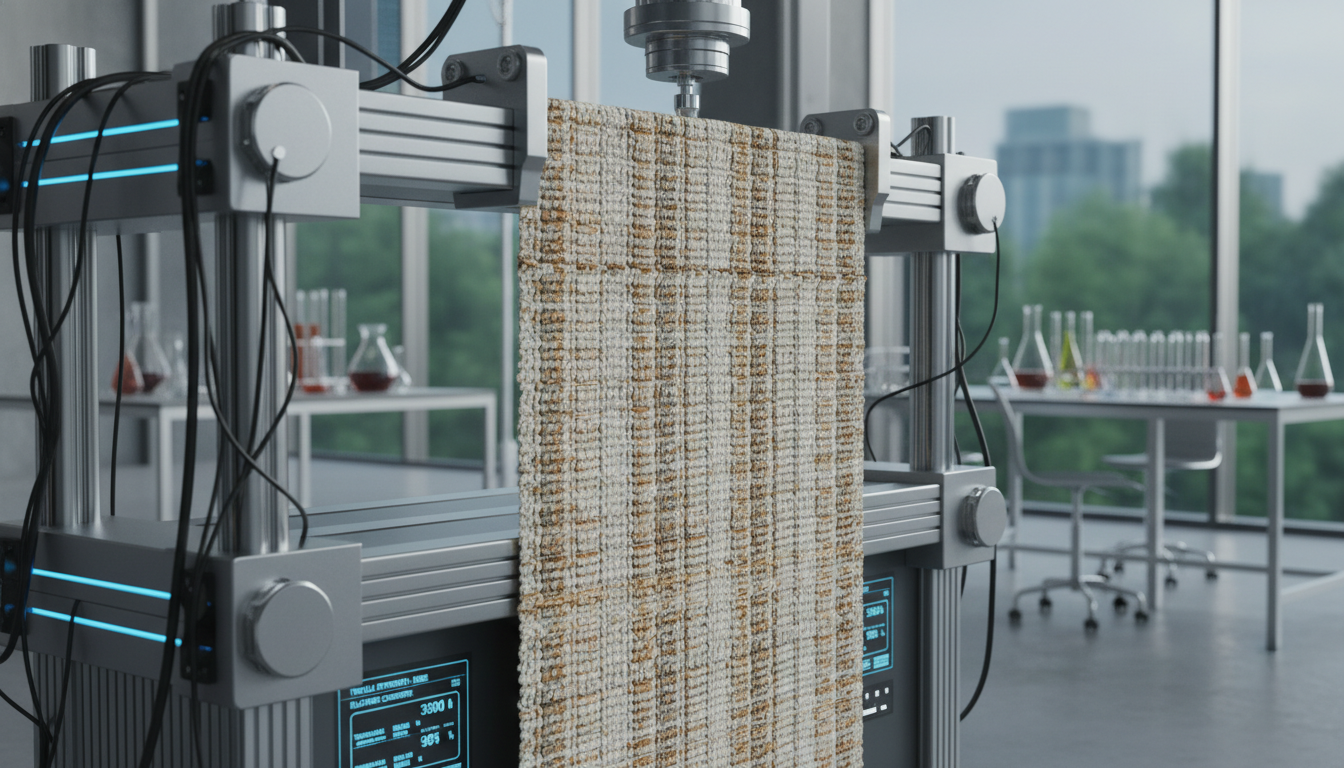
The **sustainable bio-fiber rugs 2026** collections are discarding the fragility of the past. By leveraging the cross-linking properties of fungal hyphae and the cellular density of marine kelp, designers are creating floor coverings that rival—and often surpass—the abrasion resistance of traditional high-traffic wool.
Mycelium Architecture: The Chitin Advantage
Mushroom silk, or mycelium-based textile, is no longer a conceptual art piece. By 2026, refined fermentation processes allow for the cultivation of dense, leather-like fibers that are naturally hydrophobic and fire-retardant. The secret lies in chitin, the same biopolymer that gives crab shells their strength.
When woven into a rug’s foundation, these fungal networks provide a structural “memory” that prevents the shedding and matting common in lower-grade synthetics. This architectural integrity ensures that even in high-traffic salons, the pile remains upright and plush over years of use.
Marine Cellulose: The New High-Tensile Standard
Seaweed-derived fibers are undergoing a similar technological revolution. By extracting alginate from brown algae and blending it with regenerated cellulose, manufacturers have developed a fiber with a tensile strength that mimics long-staple silk but offers the durability of sisal.
- Enzymatic Self-Healing: Advanced bio-fiber rugs in 2026 utilize enzymatic coatings that help fibers “reset” their shape after being compressed by heavy furniture.
- Natural Antimicrobial Barriers: Seaweed fibers inherently resist mold and dust mites, making them a hypoallergenic powerhouse for modern urban living.
- Ion-Bonded Pigments: New dyeing techniques bond natural minerals directly to the bio-fiber’s core, preventing the UV fading that plagues traditional organic dyes.
The Intersection of Bio-Tech and Artisanal Craft
The durability of these materials isn’t solely a result of lab-grown innovation; it is also a testament to the resurgence of complex weaving techniques. We are seeing a hybridization of ancient hand-knotting methods with these futuristic filaments to create pieces that are effectively indestructible under normal domestic conditions.
For those seeking to anchor their spaces with these next-generation materials, the curated selections at thebohorugs.com bridge the gap between high-tech bio-innovation and the timeless allure of artisanal craftsmanship. It is no longer enough for a rug to be green; it must be engineered for a lifetime.
2026 Longevity Predictions
As the industry pivots toward circularity, the “wear-and-tear” philosophy is being replaced by a “patina” culture. Here is how **sustainable bio-fiber rugs 2026** are predicted to age in the modern home:
- Year 1-3: Fibers undergo a “settling” period where the natural luster of seaweed silk deepens, becoming softer to the touch without losing structural density.
- Year 5-10: Mycelium foundations harden slightly, increasing the rug’s resistance to foot traffic and creating a stabilized “vintage” texture that mimics aged calfskin.
- Year 15+: Unlike synthetic polyesters that break down into microplastics, these bio-fibers maintain their molecular bonds, remaining viable heirlooms until they are intentionally composted at the end of their lifecycle.
Art for the Floor: Why Rugs are the New Carbon-Negative Collectibles
From Aesthetic Accents to Atmospheric Activism
For the discerning collector, 2026 marks the definitive end of the petroleum-based textile era. As luxury interiors pivot toward radical transparency, the floor has become a canvas for “living” materials that do more than occupy space—they sequester carbon.
The transition toward sustainable bio-fiber rugs 2026 represents a fundamental restructuring of high-end decor. Designers are no longer satisfied with recycled plastics; the new standard is a “carbon-negative” footprint achieved through regenerative agriculture and lab-grown mycelium.
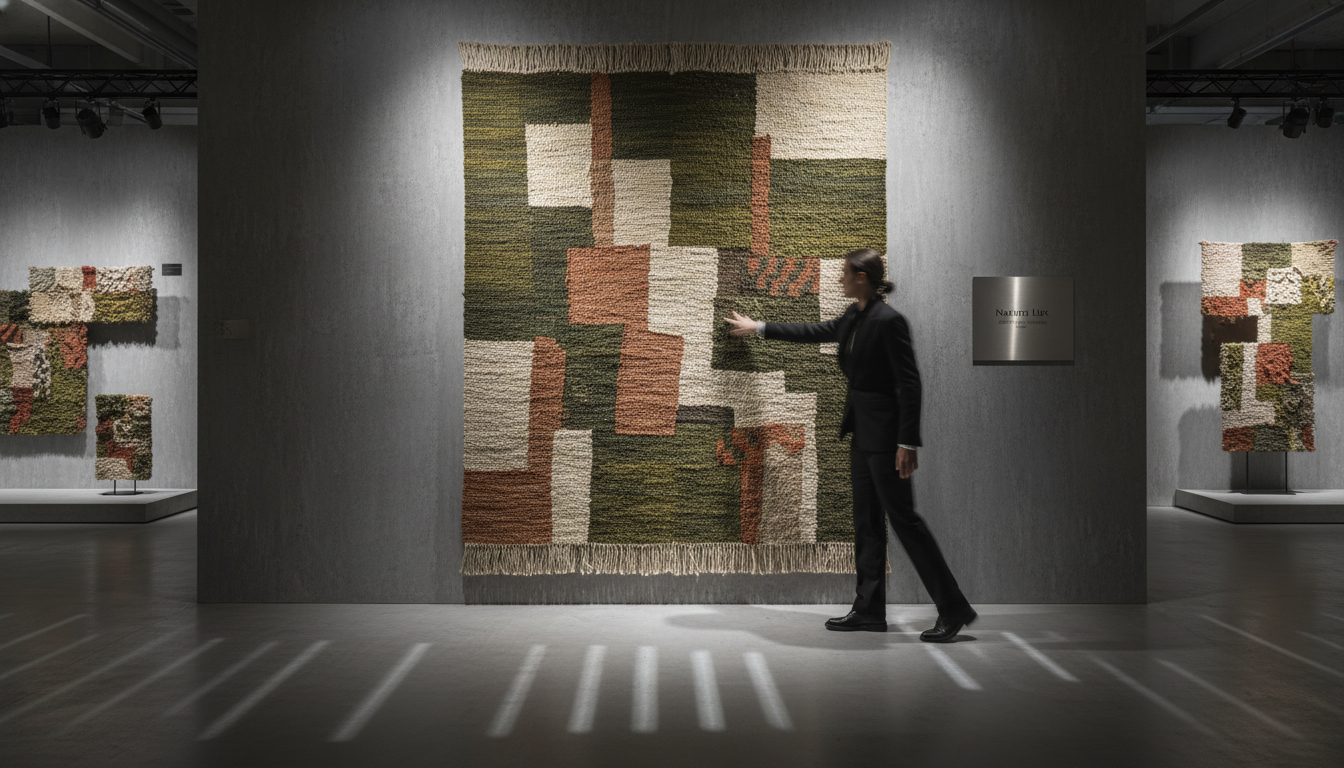
According to trend analysts at thebohorugs.com, these pieces are being treated as archival investments. Much like a limited-edition lithograph, a bio-fabricated rug carries a unique biological signature that evolves beautifully over decades, rather than degrading into microplastics.
The New Textural Vocabulary: Mushroom Silk and Marine Kelp
The 2026 aesthetic is defined by a “raw-refined” finish. Mycelium-based silks provide a buttery, suede-like hand feel that rivals traditional mulberry silk, while seaweed-derived alginates offer a natural flame retardancy and a cool-to-the-touch sensation essential for modern temperate-controlled homes.
- Myco-Silk: Grown in vertical labs, these fibers mimic the protein structure of traditional silk but with zero water waste and high tensile strength.
- Kelp & Seaweed Blends: These marine fibers naturally capture CO2 during growth and release beneficial minerals into the home’s micro-climate.
- Root-Bound Sculpting: A new technique where plant roots are guided into intricate patterns, creating a 3D textural topography underfoot.
Why Sequestration is the New “Hand-Knotted”
In the luxury market of 2026, the provenance of a fiber is its most valuable certificate of authenticity. Collectors are looking for “Cradle-to-Cradle” Gold certified items that ensure the rug can eventually return to the earth as a nutrient, rather than a waste product.
Investing in sustainable bio-fiber rugs 2026 allows homeowners to ground their spaces in materials that act as functional carbon sinks. This isn’t just about environmental responsibility; it is about the prestige of owning a piece of the future—a bio-engineered artifact that bridges the gap between high science and artisanal craft.
- Bespoke Bio-Leathers: Custom-grown textures tailored to the specific dimensions of a room.
- Living Dyes: Utilizing bacteria-based pigments that shift subtly with UV exposure, creating a “breathing” color palette.
- Regenerative Sourcing: Rugs made from invasive species fibers, turning ecological threats into high-design assets.
The shift is clear: the most exclusive floors of 2026 will not be covered in rare wools, but in the sophisticated, lab-perfected outputs of the Bio-Fiber Renaissance.
Pigment Innovation: Dyeing with Bacteria and Botanical Extracts
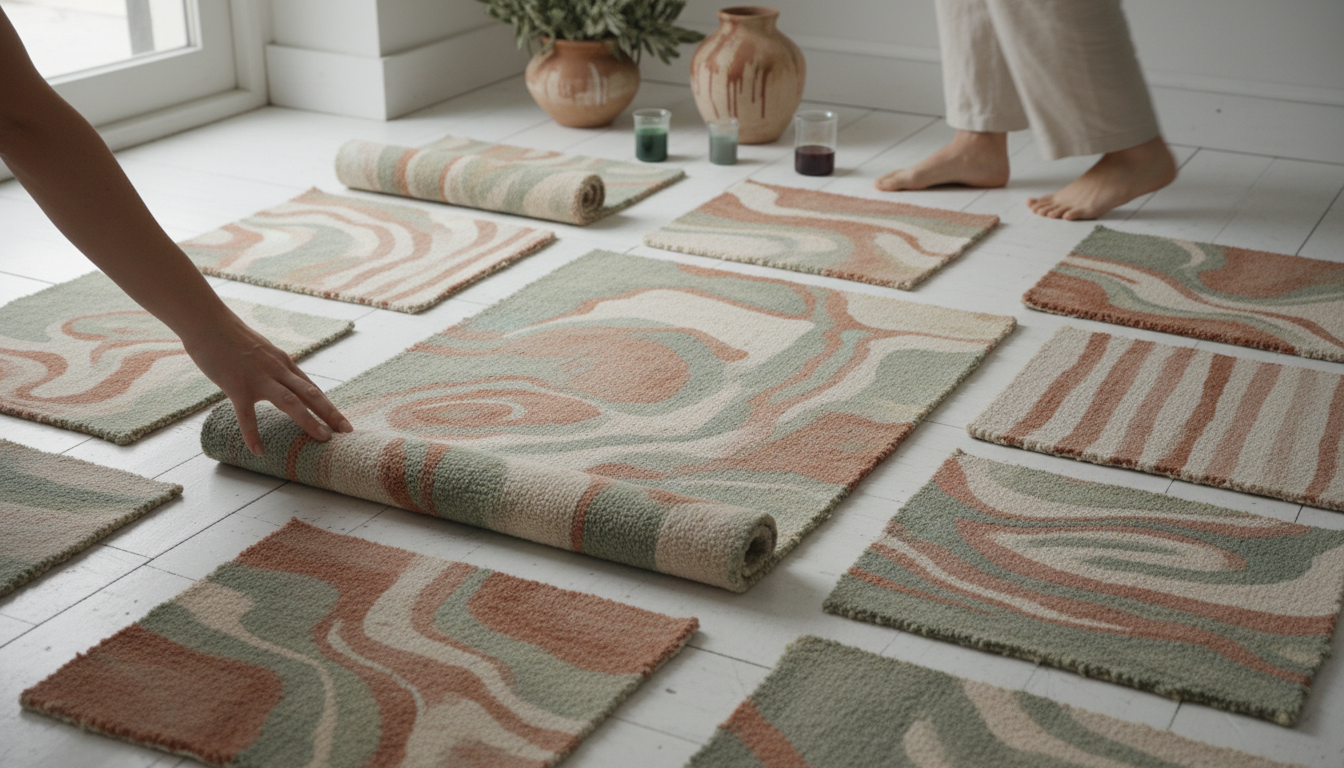
The Alchemy of Living Color
As we approach the mid-decade, the definition of luxury has shifted from the purely visual to the molecular. In the high-end interior space, the aesthetic value of a piece is now inseparable from its chemical footprint. The emergence of sustainable bio-fiber rugs 2026 marks a departure from the heavy-metal toxicity of industrial dyes, favoring instead a symbiotic relationship with living organisms.
Designers are no longer merely selecting colors; they are cultivating them. This transition to “living pigments” represents the next frontier of eco-conscious curation, where the rug underfoot is as biologically active as the fibers from which it is woven.
Microbial Pigmentation: The New Avant-Garde
By 2026, the most coveted hues in the textile world will not come from a laboratory beaker, but from the fermentation of bacteria. Microbes such as Streptomyces coelicolor are being engineered to produce vivid violets, deep indigos, and structural pinks that bond directly to mushroom silk and seaweed fibers without the need for toxic mordants.
- Zero-Waste Fixation: Bacteria dyeing requires 90% less water than traditional methods, as the pigment grows directly onto the bio-fiber.
- pH Sensitivity: These “living” colors can subtly shift tone based on the humidity and light of a room, creating a dynamic piece of art.
- Atmospheric Purity: Unlike synthetic dyes, these biological pigments off-gas zero Volatile Organic Compounds (VOCs), ensuring pristine indoor air quality.
The Botanical Waste Stream: From Vineyard to Floor
The 2026 aesthetic rejects the “granola” beige of the past in favor of high-saturation tones derived from sophisticated botanical upcycling. Premium designers are now harvesting pigments from the dregs of the global wine industry and invasive floral species to create rich, layered palettes. For those seeking this marriage of heritage craft and modern ethics, thebohorugs.com serves as a critical resource, showcasing how artisanal techniques can evolve alongside bio-innovation.
We expect the following botanical trends to dominate the sustainable bio-fiber rugs 2026 market:
- Enzymatic Extraction: Using enzymes to pull deep blacks and charcoals from discarded oak bark and acorn husks.
- Invasive Species Pigments: Utilizing aggressive plants like Japanese Knotweed to create vibrant, stable yellows that promote ecological restoration.
- Closed-Loop Tannins: Utilizing waste-stream nut shells to create self-mordanting earthy tones that improve in luster as the rug ages.
The Aesthetic of Imperfection
In the realm of eco-luxury, uniformity is becoming a sign of mass-production. The sophisticated consumer of 2026 prizes the “biophilic glitch”—the subtle, beautiful variations in color that occur when botanical extracts interact with seaweed or mycelium fibers.
These rugs do not just occupy a room; they breathe with it. By choosing pigments that are grown rather than manufactured, homeowners are participating in a circular design economy that values the lifespan of the planet as much as the longevity of the decor.
Investing in the Future: The Long-term Value of Bio-Fiber Decor
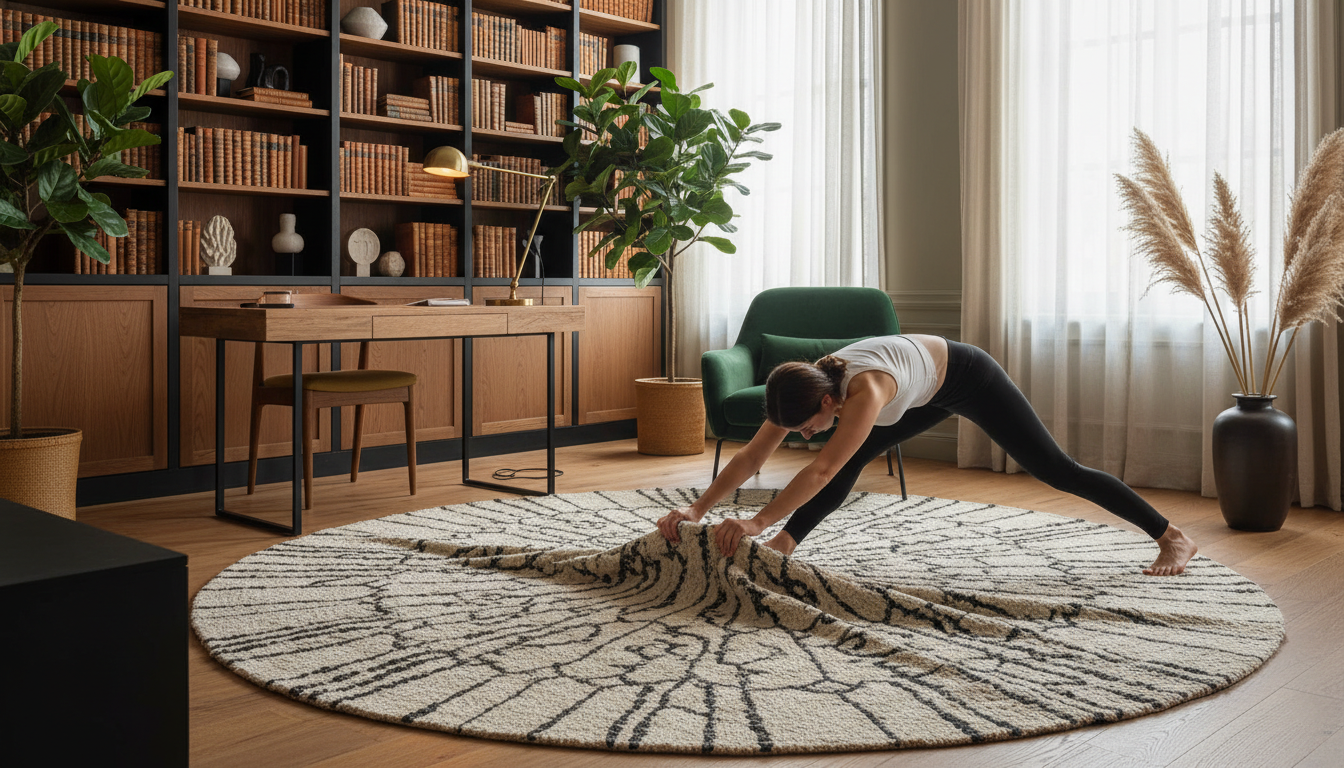
The Shift from Passive Decor to Active Bio-Assets
For the discerning collector, the acquisition of sustainable bio-fiber rugs 2026 represents more than a pivot in taste; it is a calculated investment in the “metabolic home.” We are moving past the era of static furnishings into a period where decor is expected to perform biological functions, from air purification to carbon sequestration.
By 2026, the luxury market will no longer prioritize “recyclable” labels. Instead, the focus shifts to regenerative provenance—materials that don’t just minimize harm but actively restore ecosystems. A mushroom silk rug is not merely a floor covering; it is a high-tech carbon sink designed to age with the grace of a vintage Hermès scarf.
Forward-thinking platforms like thebohorugs.com are already bridging this gap, curating pieces where the intersection of ancient artisanal weaving and modern bio-technology creates a new category of heirloom-quality floor art.
Biological Durability: The New Standard for Longevity
One of the most persistent myths is that bio-fibers are fragile. On the contrary, the 2026 landscape celebrates the structural integrity of lab-grown polymers and seaweed-derived alginates. These materials are engineered for high-traffic endurance while maintaining a soft-hand feel that rivals traditional silk.
- Tensile Strength: Spider-silk proteins and mycelium networks offer a weight-to-strength ratio that exceeds traditional nylon.
- Self-Cleaning Properties: Many seaweed-based fibers possess natural antimicrobial qualities, resisting mold and odors in humid environments.
- Biodynamic Aging: Unlike synthetic fibers that “ugly out” over time, bio-fibers develop a unique patina, increasing their aesthetic value as they interact with the home’s environment.
The ROI of Regenerative Luxury
Investing in sustainable bio-fiber rugs 2026 offers a dual return. Beyond the immediate sensory pleasure of walking on carbon-negative mushroom silk, homeowners are looking at significant long-term value in a market increasingly governed by green building certifications and wellness-centric real estate.
- Resale Value: As petro-chemical textiles face increasing regulation and “plastic taxes,” organic bio-fiber pieces will command a premium on the secondary luxury market.
- Wellness Dividends: By eliminating Volatile Organic Compounds (VOCs) commonly found in synthetic backings, these rugs contribute to lower indoor toxicity levels.
- Carbon Credits: We predict that by the late 2020s, high-end interior designers will provide carbon-offset certificates for every bio-synthetic installation, turning your rug into a literal climate asset.
The transition to these materials is not an aesthetic compromise; it is an aesthetic evolution. As we look toward the 2026 design horizon, the presence of a seaweed or mushroom-based rug in a foyer is the ultimate signifier of a homeowner who understands that the future of luxury is not found in the factory, but in the laboratory and the tidepool.
Elevate Your Space
Discover the artistry of handmade luxury. Each rug is a masterpiece of tradition and modern design.
Expert Q&A
What exactly are sustainable bio-fiber rugs 2026?
These are high-end floor coverings made from lab-grown or naturally harvested biological materials like mycelium (mushroom roots), seaweed, and plant proteins that are fully biodegradable and carbon-negative.
Does mushroom silk smell like mushrooms?
No. The processing of mycelium into mushroom silk removes all organic scents, resulting in a clean, odorless fiber that feels like high-quality velvet.
How durable are seaweed rugs compared to wool?
Seaweed cellulose is remarkably strong; when blended with plant proteins, it offers a durability profile similar to high-end viscose or bamboo silk, though wool remains slightly superior for high-traffic commercial zones.
Are these rugs hypoallergenic?
Yes, bio-fibers like seaweed and mycelium are naturally resistant to mold, mildew, and dust mites, making them ideal for allergy sufferers.
Can sustainable bio-fiber rugs 2026 be cleaned easily?
Most bio-fiber rugs require professional dry cleaning or specialized pH-neutral spot cleaning to maintain the integrity of the organic proteins.
Do seaweed rugs feel rough like seagrass?
Quite the opposite. While seagrass is stiff, seaweed cellulose is processed into a fine yarn that mimics the softness and sheen of mulberry silk.
Are these rugs suitable for homes with pets?
Yes, provided you choose a higher density weave. Many bio-fibers are naturally antimicrobial, which helps manage pet odors.
How long do bio-fiber rugs last?
With proper care, a high-quality bio-fiber rug can last 15-20 years before naturally beginning to lose its luster, at which point it can be composted.
Why are bio-fiber rugs considered ‘carbon-negative’?
The materials (like seaweed and fungi) absorb more carbon during their growth phase than is emitted during the manufacturing and shipping of the rug.
Will a mushroom silk rug rot if it gets wet?
No. The fibers are stabilized during production to prevent decomposition during use; however, they should not be left in standing water.
What colors are trending for bio-fiber rugs in 2026?
Expect ‘Living Earth’ tones: moss greens, terracotta, soft ochre, and ‘biotech teals’ derived from algae dyes.
Are these rugs more expensive than traditional silk?
Initially, yes. The technology is still emerging, making them a premium ‘eco-luxury’ investment, though prices are stabilizing as production scales.
Where can I buy authentic sustainable bio-fiber rugs 2026?
Look for high-end bespoke designers like TheBohoRugs and specialized bio-material startups that provide certification of fiber origin.
Do seaweed rugs contain salt or iodine?
The purification process removes sea salt and excess minerals, leaving only the soft cellulose fibers.
Is mycelium rug production ethical?
It is considered one of the most ethical forms of textile production as it requires minimal water, no animal products, and grows in controlled, waste-free environments.
Can I use a bio-fiber rug in a bathroom?
Seaweed-based rugs are naturally moisture-wicking and can be used in well-ventilated bathrooms, though mushroom silk is better suited for dry areas like bedrooms.
Do they shed as much as wool rugs?
Bio-fibers tend to shed significantly less than wool due to the continuous filament nature of the spun cellulose or mycelium threads.
What is the ‘Bio-Fiber Renaissance’?
It refers to the 2026 movement where interior design shifts from petroleum-based synthetics to living, regenerative materials that heal the environment.
Are bio-fiber rugs fire-resistant?
Many bio-fibers, particularly those derived from fungi, have natural flame-retardant properties that often exceed the safety standards of synthetic textiles.
Can these rugs be customized in size?
Yes, because many are ‘grown’ to order or woven on modular looms, they are highly adaptable to custom architectural specifications.
What does ‘Art for the Floor’ mean in this context?
It treats the rug as a primary investment piece, emphasizing its unique biological origin and hand-crafted or lab-engineered exclusivity.
Do bio-fiber rugs fade in sunlight?
When dyed with high-quality bacterial pigments, they offer excellent lightfastness, though like all natural fibers, prolonged direct UV exposure should be managed.
How do I verify a rug is truly made of bio-fiber?
Request a ‘Material Passport’ or a third-party sustainability certification that tracks the fiber from lab/harvest to loom.
Is the texture of mushroom silk similar to leather?
While ‘mu-leather’ exists, mushroom silk used in rugs is processed differently to achieve a soft, fibrous, and plush texture similar to velvet or silk.
Are these rugs heavy?
They are generally lighter than traditional wool rugs of the same thickness, making them easier to move and handle.
Do seaweed rugs help with indoor air quality?
Yes, they do not off-gas VOCs (Volatile Organic Compounds) like traditional synthetic rugs and can even help regulate humidity.
Can I vacuum a bio-fiber rug?
Yes, but use a vacuum without a beater bar or on the lowest setting to prevent pulling the delicate organic fibers.
Why is 2026 the year for this trend?
2026 marks the convergence of biotechnology scaling and a global shift in luxury consumer values toward ‘radical transparency’ and planetary health.
Are bio-fiber rugs slippery?
The fibers themselves are not, but like all rugs, a high-quality natural rubber rug pad is recommended for safety on hard floors.
What is the ‘biophilic brutalism’ aesthetic?
It is a design style that pairs the raw, honest textures of bio-fibers with the geometric, heavy forms of modern architecture.
Written by TheBohoRugs Interior Design Team
Experts in handmade rugs, boho interiors, and modern home decor.
