Move over rectangles: the future of flooring is topographic, irregular, and deeply tactile.
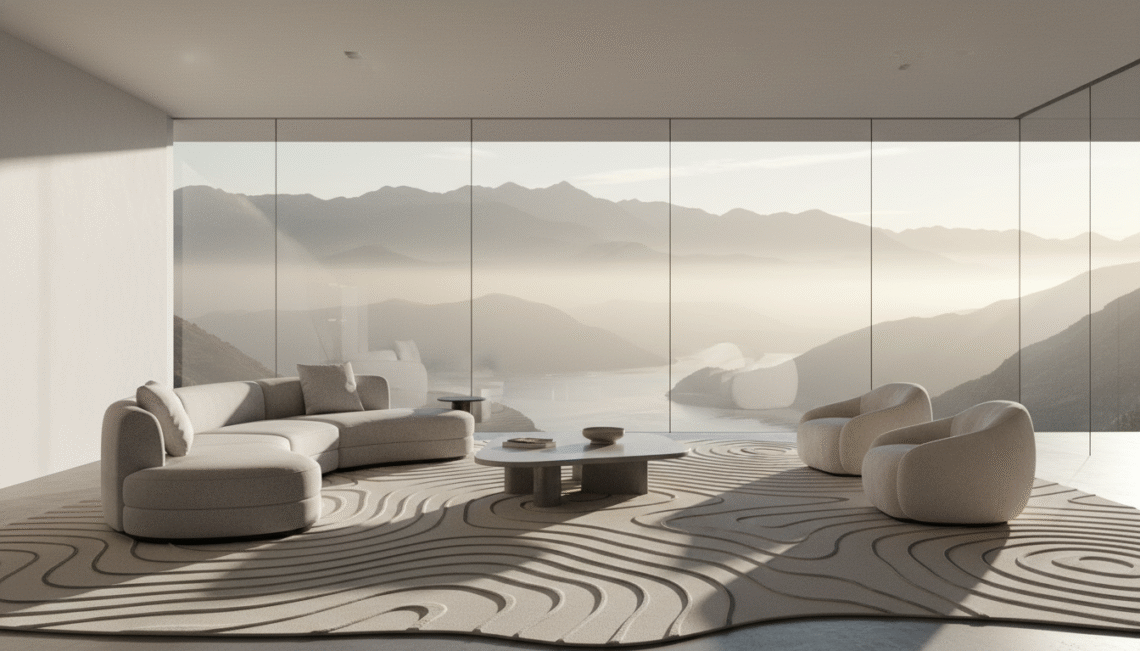
Walking into a home in 2026 feels different. The sharp, rigid lines of the past decade are softening. We are seeing a massive shift toward what designers call ‘Floor Art’—rugs that don’t just sit there but actually live in three dimensions. Sculptural organic rugs have officially dethroned the standard 8×10 rectangle. These pieces use high-low pile heights, asymmetrical borders, and unexpected materials to create a topographical map right in your living room. If you’re tired of ‘flat’ decor, this is your invitation to embrace the curve. At TuftsKnots, we’ve seen a 40% surge in requests for irregular silhouettes this year alone, proving that the floor is no longer an afterthought—it’s the main event.
1. The Death of the Rectangle: Why 2026 is the Year of the Curve
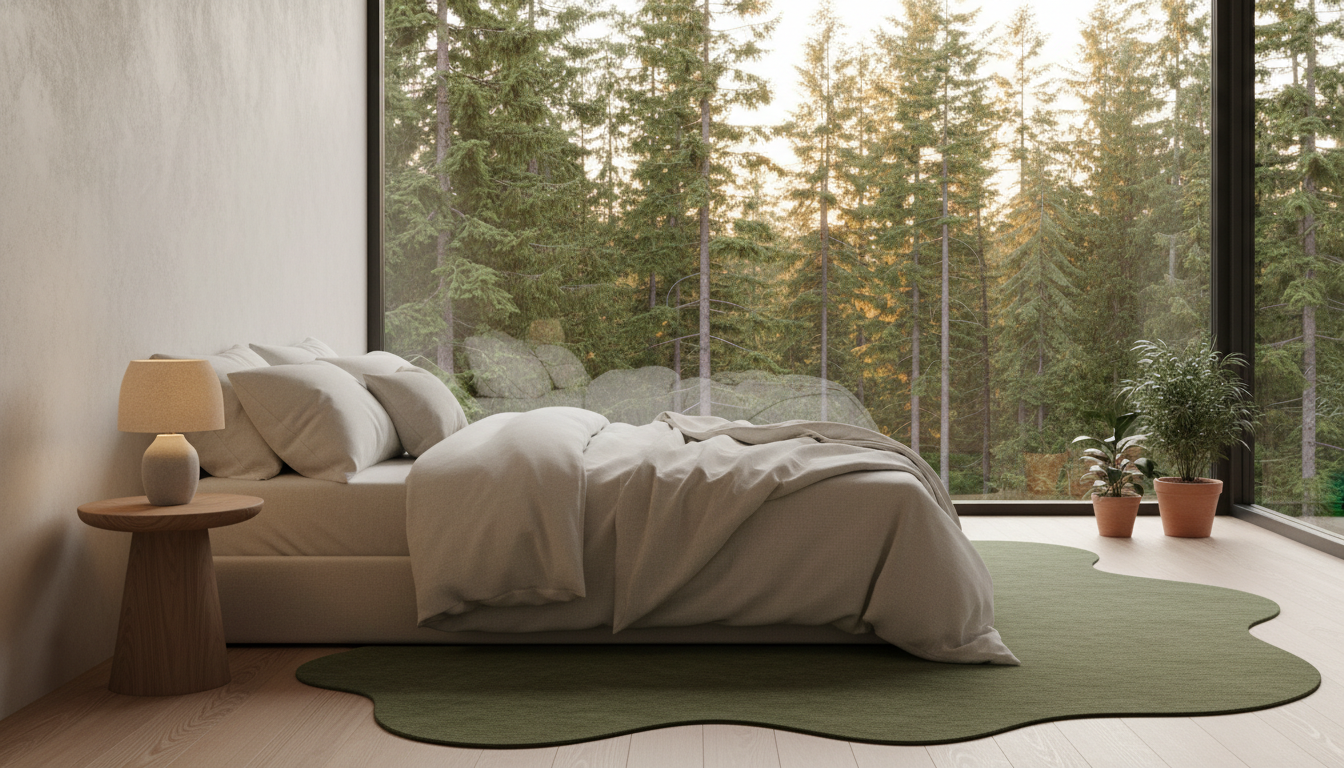
For nearly a century, we’ve been boxed in. Every room was a square, every rug was a rectangle, and every sofa was a straight line. In 2026, homeowners are rebelling against the grid. The rise of ‘biophilic’ design has evolved into something more structural. Organic shapes—mimicking everything from spilled ink to eroded riverbeds—are taking over. These fluid silhouettes break the visual monotony of a room, making small spaces feel larger and large spaces feel more intimate. When a rug doesn’t have a hard edge, your eye doesn’t stop at the corner; it flows around the furniture. This creates a sense of movement that static, geometric rugs simply can’t provide. We’re moving away from ‘filling the floor’ and toward ‘layering the landscape.’
💡 Pro Tip: When styling an irregular rug, let at least one ‘lobe’ or curve of the rug extend past the main seating area to draw the eye across the room. Check out our latest organic drops at tuftsknots.com for inspiration on these borderless beauties.
Designer’s Hot Take: “Rectangles are for offices; fluid shapes are for homes. If your rug has four 90-degree corners, you’re living in 2015.”
2. Texture-Maxxing: The Science of 3D Weaving
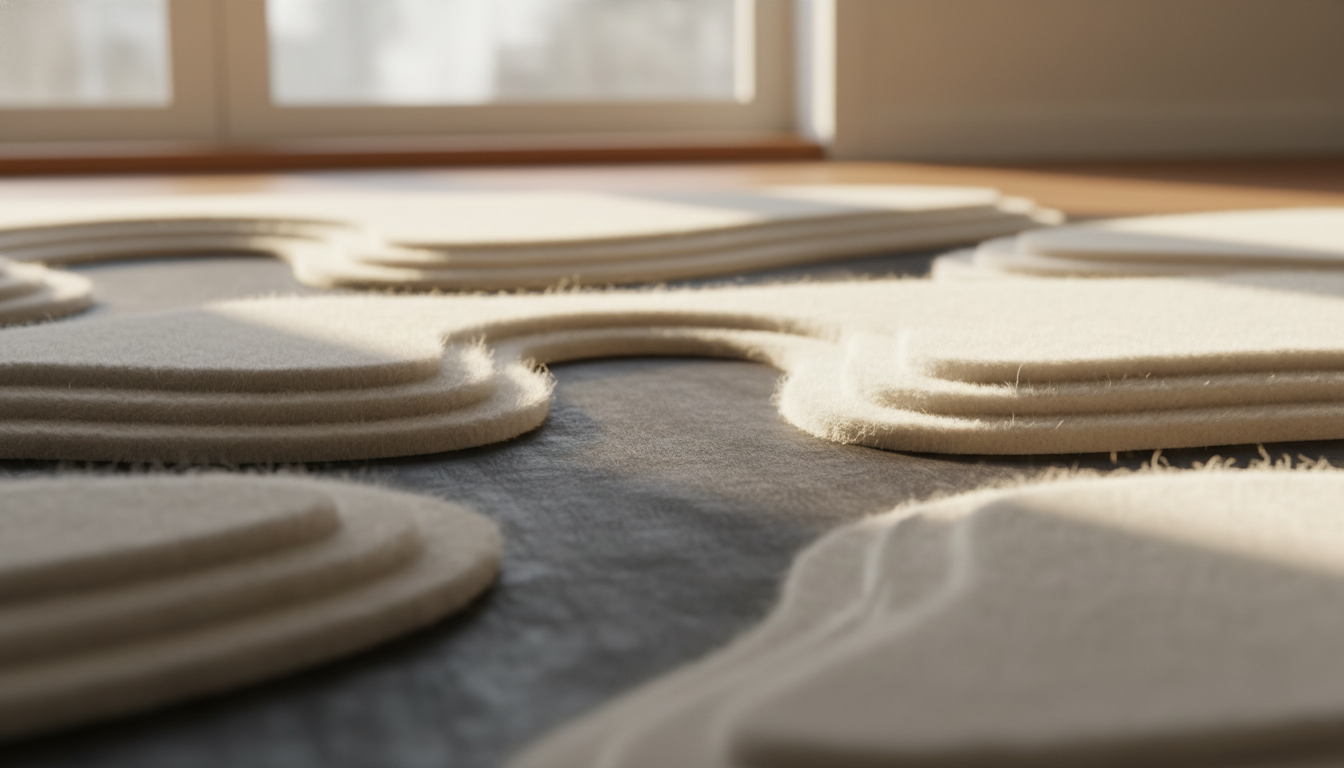
2026 is the year of ‘texture-maxxing.’ This isn’t just about a rug feeling soft; it’s about varying pile heights that create a tactile 3D effect. By using different knotting techniques or varying the yarn thickness, weavers create ‘valleys’ and ‘peaks’ in the rug surface. You might have a base of flat-woven wool with ‘islands’ of plush, 2-inch silk pile. This creates a physical sensation underfoot that grounds you. It’s a reaction to our increasingly digital lives—we want to touch something real. Statistics show that homes with highly tactile surfaces report a 15% increase in ‘coziness’ ratings from inhabitants. It’s about sensory engagement.
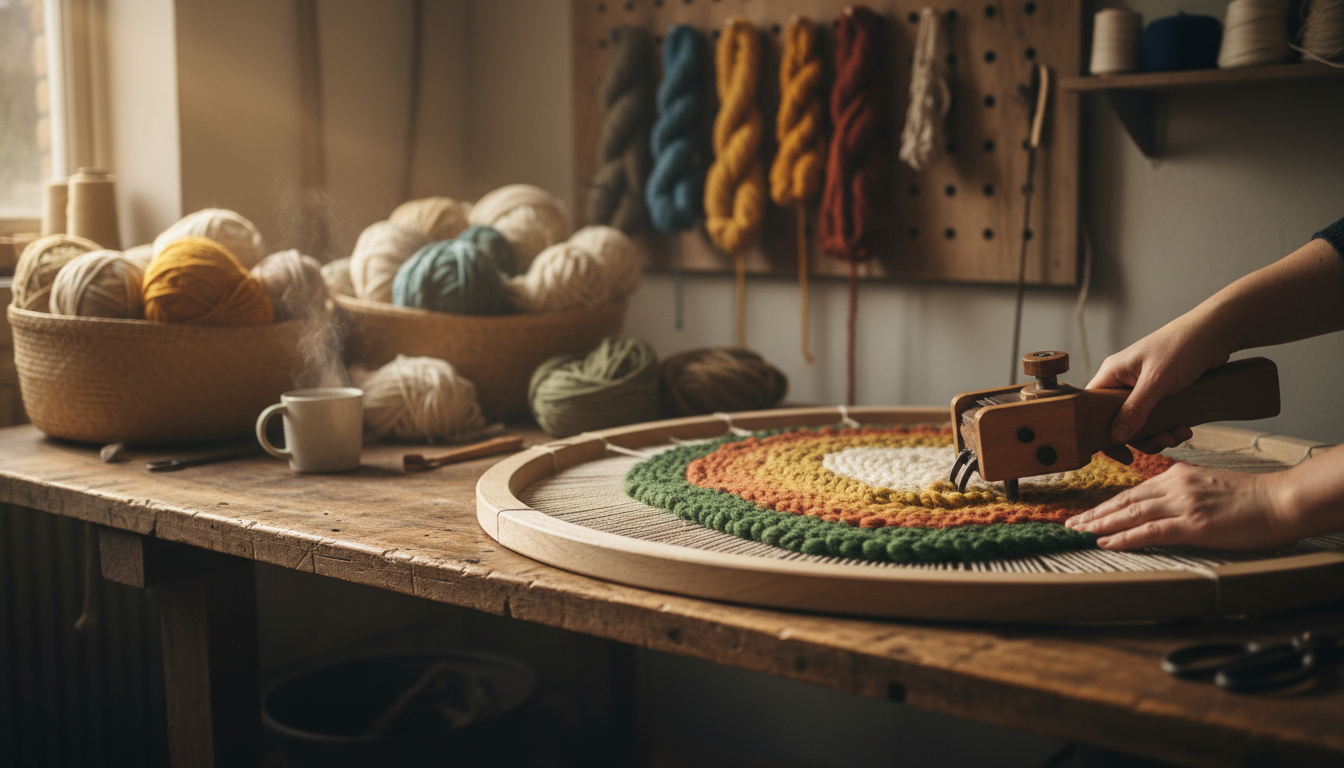
💡 Did You Know? The ‘high-low’ effect is achieved by shearing the rug at different depths after it’s been woven, a process that requires a master artisan’s steady hand.
3. Materials of the Future: Bio-Fibers and Recycled Silk
The sculptural movement is deeply tied to sustainability. In 2026, we’ve moved beyond basic polyester. We are seeing rugs made from mushroom silk, seaweed fibers, and recycled sari silk that catch the light differently at every height. These bio-fibers are naturally stain-resistant and have a ‘bounce’ that synthetic fibers lack. Wool remains the king of the sculptural world because of its ability to hold a shape when sheared into 3D patterns. However, the blending of matte wool with shimmering recycled silk is what creates those breathtaking ‘shadow’ effects in organic rugs. When you walk across these materials, the colors shift subtly, mimicking the way light hits water.
💡 Pro Tip: Mix matte and sheen. A sculptural rug with a wool base and silk highlights will look like it’s glowing under evening lamps. See our ‘Luminous Collection’ at tuftsknots.com for examples.
4. Construction Matters: Choosing Your 3D Build
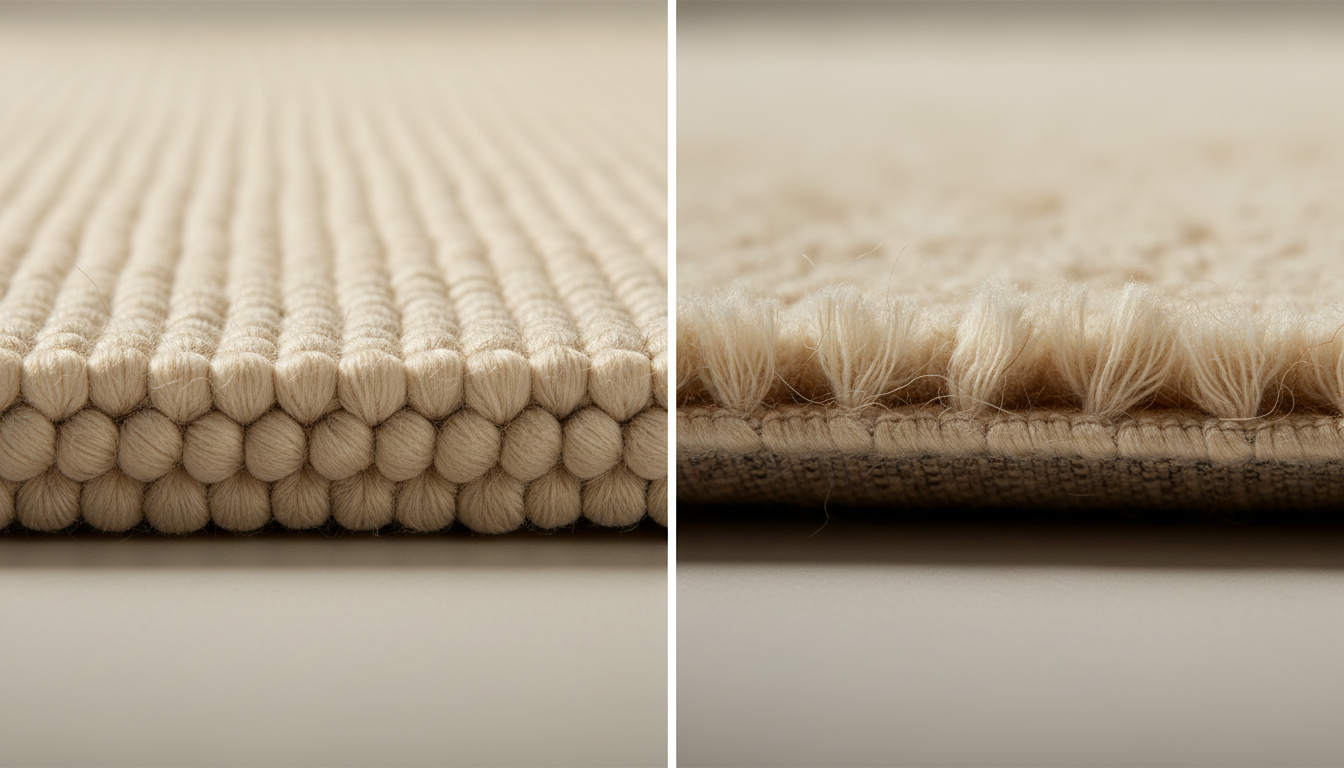
Not all sculptural rugs are created equal. The method of construction determines how long those beautiful 3D ridges will last. Hand-tufted rugs are the most common for sculptural designs because the ‘gun’ allows for easy variation in pile height. However, hand-knotted versions are the heirloom choice. In 2026, ‘hybrid weaves’ are also gaining traction, combining flat-weave sections with plush tufted areas for maximum contrast.
Designer’s Hot Take: “If you’re buying ‘sculptural’ from a big-box store, it’s just a pattern, not a sculpture. Invest in hand-tufted for true depth.”
5. High-Low Pile: Crafting Topographical Landscapes Underfoot
The ‘high-low’ technique is the secret sauce of the sculptural rug world. By leaving some loops long and shearing others to the base, designers create a landscape you can feel through your socks. In 2026, we’re seeing ‘extreme high-low’ where the difference between the peaks and valleys is over an inch. This creates natural shadows that move as the sun travels across the room. It’s essentially a monochrome way to add ‘color’—the shadows act as darker tones. This is perfect for the ‘quiet luxury’ aesthetic where you want a neutral palette but plenty of visual interest. It mimics the look of raked Zen gardens or sand dunes.
💡 Did You Know? Designers are now using ‘high-low’ pile to create ‘invisible patterns’ that only appear when the light hits the rug from a certain angle.
6. Fluid Silhouettes: How to Style Irregular Borders
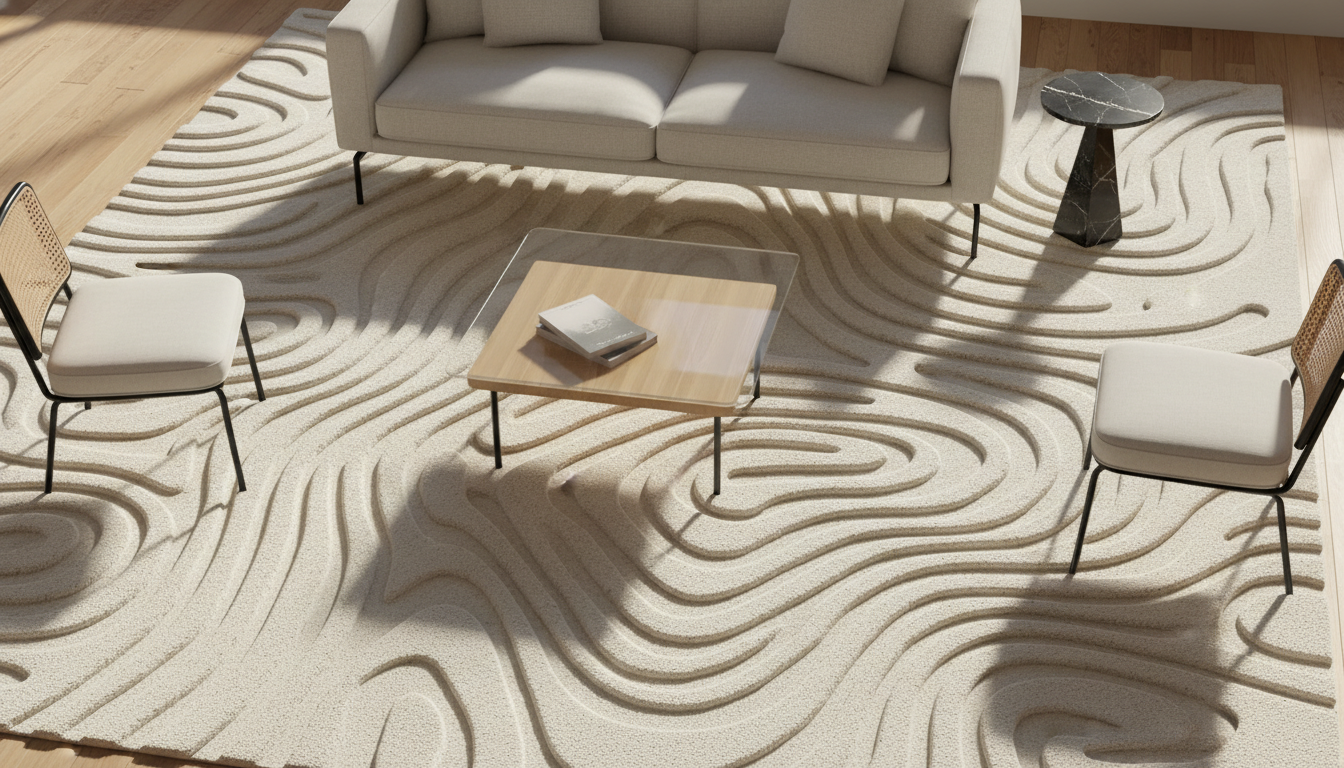
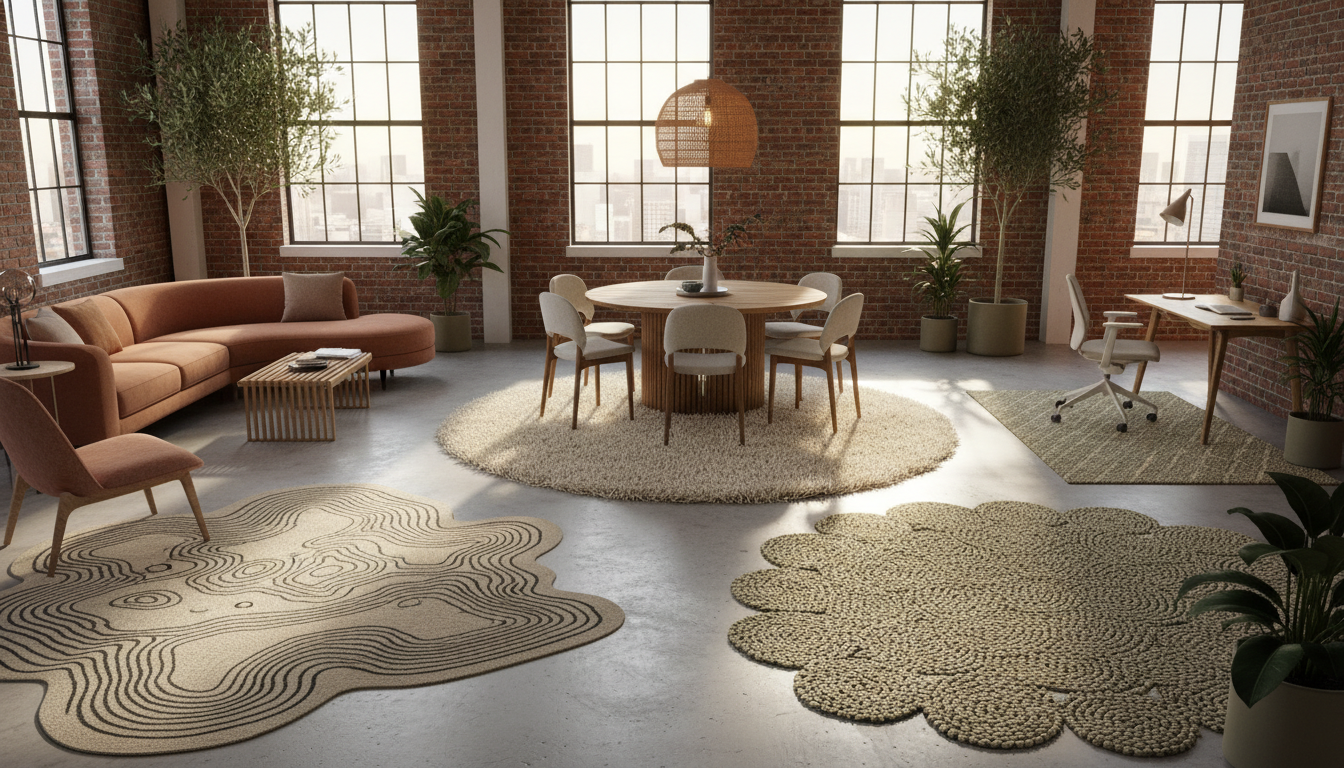
Styling an asymmetrical rug can feel intimidating. Where do you put the sofa legs? The key is ‘intentional overlap.’ Don’t try to center an organic rug. Instead, let it float. Place the front legs of your furniture on the rug and let the ‘amoeba’ tail slide out into the walkway. This creates a bridge between different areas of the room. In 2026, the trend is ‘The Spill’—where the rug looks like it has flowed out from under a heavy piece of furniture like a coffee table. This breaks the rigid ‘furniture island’ look that has dominated interior design for decades.
💡 Pro Tip: Use a clear glass coffee table with an organic rug. You want to see the floor art through the table, not hide it. Explore our ‘Art-Forward’ collection for the best fluid shapes at tuftsknots.com.
7. The Psychology of Organic Shapes in Modern Living
Why are we so obsessed with curves right now? Neuro-aesthetic studies in 2025 and 2026 show that humans find curved lines significantly more relaxing than sharp angles. Hard corners signal ‘danger’ or ‘alertness’ to our primitive brains, while fluid shapes mimic the natural world—clouds, water, hills—triggering a parasympathetic nervous system response. By introducing a sculptural organic rug, you are literally telling your brain it’s time to decompress. It’s ‘wellness decor.’ In a world of sharp screens and square devices, the floor is our last refuge for softness. We’re seeing this trend heavily in bedrooms and meditation corners where ‘softness’ is the primary goal.
💡 Did You Know? Rooms with organic shapes have been shown to lower heart rates compared to strictly geometric rooms in clinical interior design studies.
8. Color Theory for Sculptural Pieces: Beyond Beige
While neutrals are the ‘safe’ choice for sculptural rugs to let the texture speak, 2026 is seeing a surge in ‘Earthy Chromatics.’ Think deep terracotta, sage green, and ‘digital lavender.’ The trick with coloring a 3D rug is to use tonal variations. Instead of one solid red, use three shades of rust. The highest pile should be the lightest color to catch the light, while the ‘valleys’ should be the darkest to enhance the depth. This ‘gradient sculpting’ makes the rug look even more three-dimensional than it actually is. It creates a sense of luxury that a flat-dyed rug simply can’t match. We’re also seeing ‘edge-dyeing,’ where only the tips of the high pile are a different color.
💡 Pro Tip: Try a ‘Shadow Blue’ rug—a deep navy with light blue high-pile accents. It mimics the ocean and adds incredible depth to a white-walled room.
9. Designing for ‘Zoning’: Defining Spaces Without Walls
As open-concept living continues to evolve, we’re moving away from physical dividers. Sculptural rugs are the new ‘walls.’ Because of their irregular shapes, they don’t just mark a spot; they create an atmosphere. A circular, multi-level rug can define a reading nook better than any partition. In 2026, we’re seeing ‘Rug Nesting,’ where a large, flat-weave organic rug is topped with a smaller, highly sculptural piece. This ‘islanding’ effect creates a destination within a room. It tells the eye exactly where to focus. It’s the ultimate tool for loft living or large, multifunctional great rooms.
Designer’s Hot Take: “If you can still see the floorboards around your rug in a perfect border, you haven’t zoned it, you’ve just put a stamp on it. Let the rug breathe and flow.”
10. Maintenance 101: Caring for Multi-Level Textures
Let’s be real: sculptural rugs are more work. You can’t just run a standard robot vacuum over a 2-inch pile peak and expect it not to get stuck. Maintenance in 2026 requires a bit more finesse. The ‘valleys’ in these rugs tend to collect dust and pet hair more than flat rugs. We recommend a vacuum with adjustable height settings. Never use a beater bar on the high-pile sections—it will fuzz the fibers and ruin the ‘sculpture.’ Instead, use the suction-only setting or a handheld upholstery tool for the deep ridges. For spills, the ‘blot and lift’ method is crucial; because of the varying pile, liquid can travel sideways through the fibers more easily.
💡 Pro Tip: Rotate your sculptural rug every 3 months. Because the pile is so varied, foot traffic patterns show up much faster than on flat rugs. Keeping it fresh is key. Find professional cleaning guides at tuftsknots.com.
11. Sustainability and the Sculptural Movement
The move toward organic shapes isn’t just an aesthetic choice—it’s a nod to the ‘Slow Decor’ movement. A sculptural rug takes longer to make and is almost always handcrafted. This means fewer rugs in landfills and more support for artisan communities. In 2026, ‘Traceability’ is the biggest trend in luxury rugs. Buyers want to know the name of the weaver and the farm where the wool was sourced. Sculptural rugs often use undyed wools (creams, greys, and browns), which eliminates the toxic chemical dyeing process. By choosing ‘natural’ 3D textures, you’re making a choice for the planet as much as for your home.
💡 Did You Know? Using undyed wool significantly increases the ‘longevity’ of the fiber because the natural lanolin isn’t stripped away by harsh dyes.
12. Lighting Your Rug: How to Highlight 3D Shadows
Most people forget that a sculptural rug is a 3D object. Just like a statue, it needs the right lighting to truly pop. Overhead, recessed lighting is the enemy of the sculptural rug—it ‘flattens’ the texture. To get that dramatic 2026 look, you need ‘Raking Light.’ This means floor lamps or low-set wall sconces that cast light across the surface of the rug at an angle. This elongates the shadows in the ‘valleys’ and makes the ‘peaks’ glow. It transforms the rug from a piece of floor covering into a dynamic piece of art that changes throughout the day. In the evening, the rug should look like a moonscape of light and shadow.
💡 Pro Tip: Place an adjustable floor lamp about 3 feet away from the edge of your rug. Aim the beam low across the surface to see the 3D texture come alive.
Designer’s Hot Take: “A sculptural rug without proper side-lighting is like a movie without a soundtrack. You’re missing 50% of the experience.”
13. The Evolution: Traditional vs. 3D Organic Rugs
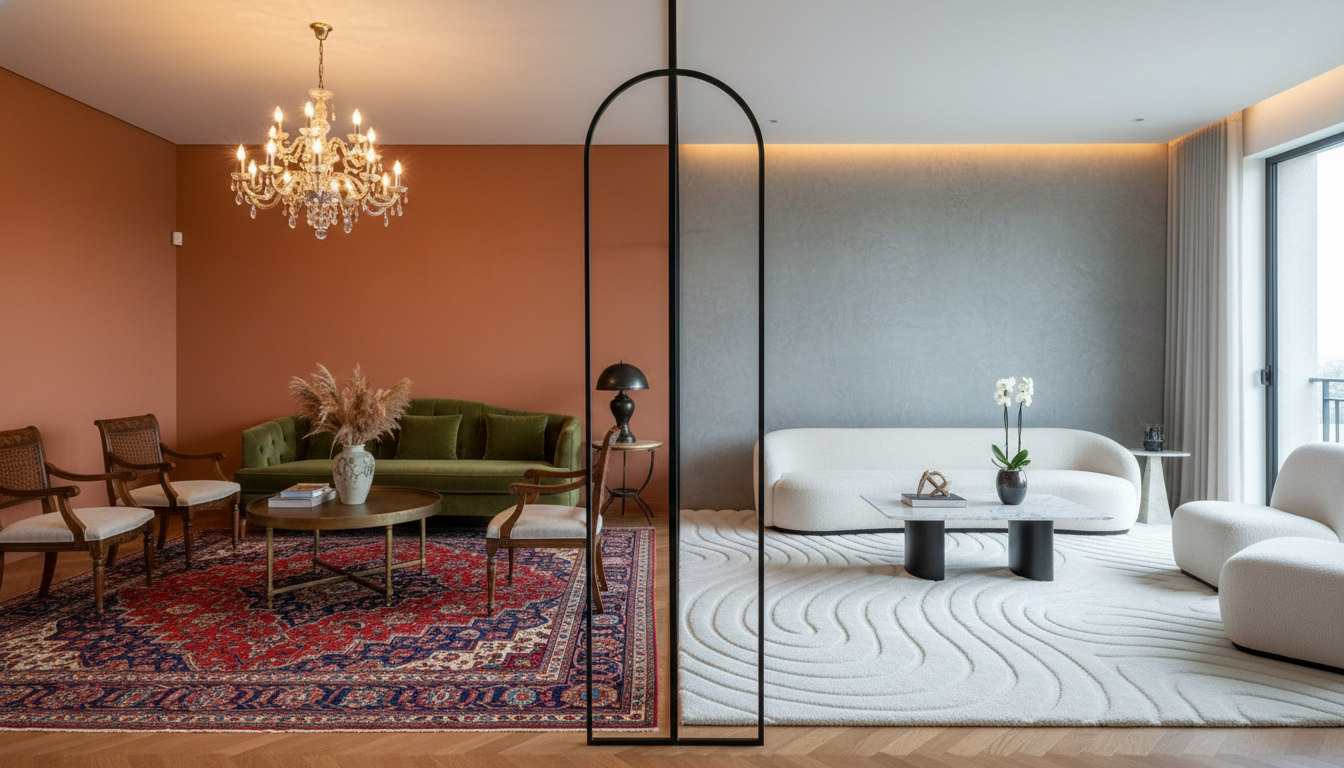
To understand where we’re going, we have to see where we were. The ‘Old School’ rug was about the pattern (the ‘what’). The ‘2026 Rug’ is about the feeling (the ‘how’). We are prioritizing the physical experience of the rug over the printed design. This shift represents a move from ‘visual decoration’ to ‘experiential design.’
14. The Hybrid Home: Mixing Sculptural Rugs with Minimalist Furniture
The ‘Minimalist’ trend of the 2010s was cold. The ‘Sculptural’ trend of 2026 is its warm successor. We’re seeing ‘Warm Minimalism’—a style that keeps the clean lines of furniture but softens the entire vibe with a massive, textured rug. The contrast between a sleek, chrome-legged chair and a chunky, 3D wool rug is design perfection. This ‘Hybrid’ approach prevents a room from feeling like a museum or a hospital. The rug acts as the ‘soft’ element that invites people to sit on the floor, play with the kids, or just kick off their shoes. It turns a ‘house’ into a ‘home’ without sacrificing the modern aesthetic.
💡 Pro Tip: Check out our ‘Minimal-Max’ collection at tuftsknots.com for rugs designed specifically to pair with mid-century modern and minimalist furniture pieces.
15. Investing in Floor Art: Resale Value and Collectibility
In 2026, people are treating rugs like fine art. A hand-knotted sculptural rug from a known designer or a specialized boutique like TuftsKnots isn’t just a purchase; it’s an asset. These pieces are often limited runs or one-of-a-kind. As the ‘Mass Production’ bubble bursts, ‘Artisan-Made’ value is skyrocketing. We are seeing rugs from the early 2020s sculptural movement already appearing at specialty auctions. The key to resale value is the ‘Uniqueness’ factor—irregular shapes and rare fibers (like lotus silk) hold their value much better than standard wool rectangles. If you buy a rug that looks like a sculpture, treat it like one.
💡 Did You Know? The secondary market for ‘Artisan Rugs’ grew by 22% in 2025, outpacing traditional antique rug growth for the first time.
Designer’s Hot Take: “Stop buying ‘disposable’ rugs. If it’s going to be in a landfill in three years, it’s not a deal—it’s a debt. Buy once, buy sculptural.”
16. Customization: Working with Artisans for One-of-a-Kind Shapes
The final frontier of the sculptural rug trend is total customization. In 2026, technology allows you to sketch a shape on your tablet and have it turned into a rug template. You can choose the height of every single section. Want the rug to flow around your specific fireplace hearth? You can do that. This ‘Bespoke’ level of design is becoming the standard for luxury homes. It’s about creating a piece of decor that fits your life perfectly, not trying to fit your life into a standard rug size. At TuftsKnots, we specialize in this ‘Architectural Weaving,’ ensuring that the rug is a literal extension of the room’s floor plan.
💡 Pro Tip: When customizing, bring a sample of your floor material to the designer. The color of the ‘valleys’ in your sculptural rug should complement the floor underneath to create a seamless transition. Start your custom journey at tuftsknots.com today.
Frequently Asked Questions
Are sculptural rugs hard to clean?
They require a bit more attention than flat rugs. You’ll need a vacuum with adjustable suction and height to get into the ‘valleys’ without damaging the ‘peaks.’ We recommend professional cleaning every 18-24 months.
Will 3D textures flatten over time?
High-quality wool and high-density tufting will hold their shape for decades. Cheaper synthetic versions will flatten within a year. Always look for high knot counts or dense wool.
What shape rug is best for a small room?
Organic, irregular shapes are actually better for small rooms! They don’t have hard borders, which prevents the room from being ‘boxed in,’ making the space feel more open and fluid.
Can I put heavy furniture on a high-low pile rug?
Yes, but use furniture coasters to prevent permanent crushing of the high-pile sections. It’s better to place heavy legs on the ‘low’ pile sections if possible.
What is ‘Texture-Maxxing’ in 2026?
It’s the trend of using extreme variations in pile height, fiber types, and weaving techniques to create the most tactile and 3D surface possible on a rug.
Are sculptural rugs pet-friendly?
They can be, but low-pile valleys can trap pet hair. We recommend shorter sculptural heights (0.5 to 1 inch difference) if you have pets that shed heavily.
What color is trending for organic rugs in 2026?
Earthy Chromatics like Terracotta, Sage, and Digital Lavender are huge, but monochromatic Cream remains the gold standard for showing off 3D textures.
Do I need a rug pad for an irregular-shaped rug?
Absolutely. You’ll need to buy a large rectangular pad and trim it with scissors to fit 1 inch inside the irregular border of your rug to prevent slipping.
How do I choose between hand-tufted and hand-knotted?
Choose hand-tufted for bold, high-relief 3D designs at a better price. Choose hand-knotted for heirloom quality, subtle texture, and long-term investment value.
Can sculptural rugs be used in dining rooms?
It’s tricky. Chairs are hard to slide over varying pile heights. If you use one, ensure the area where the chairs move is relatively flat (the ‘low’ part of the high-low).