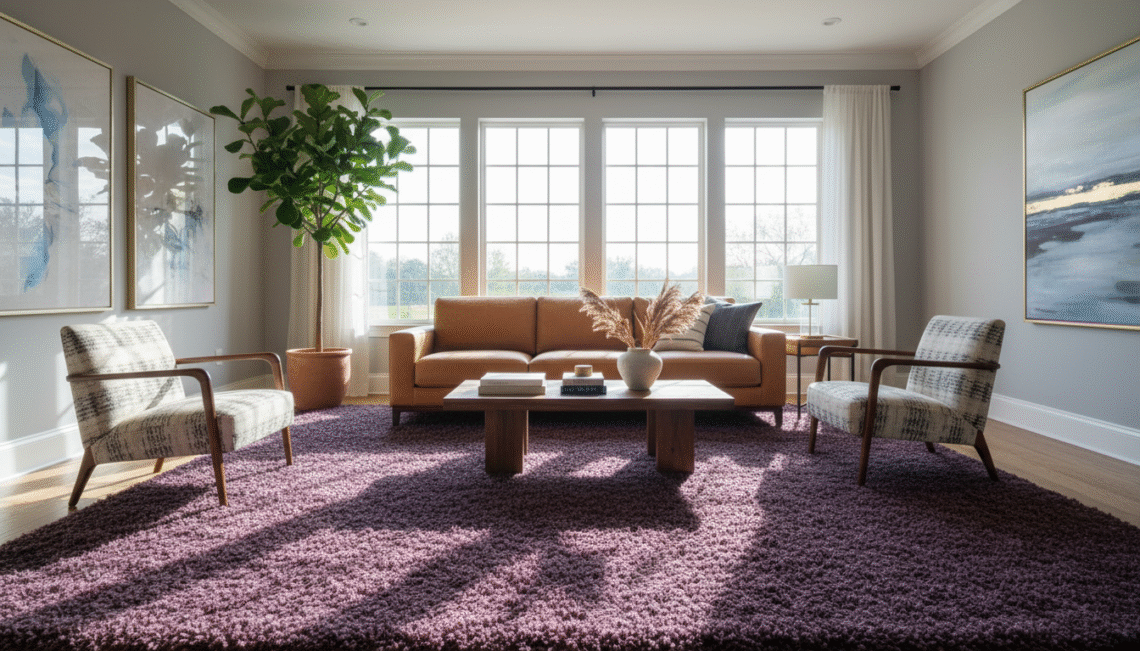
Move over, faded vintage—saturated monochromatic rugs 2026 are reclaiming the floor with deep plums, emeralds, and sapphires.
1. The Decline of Distressed: Why We Are Moving On
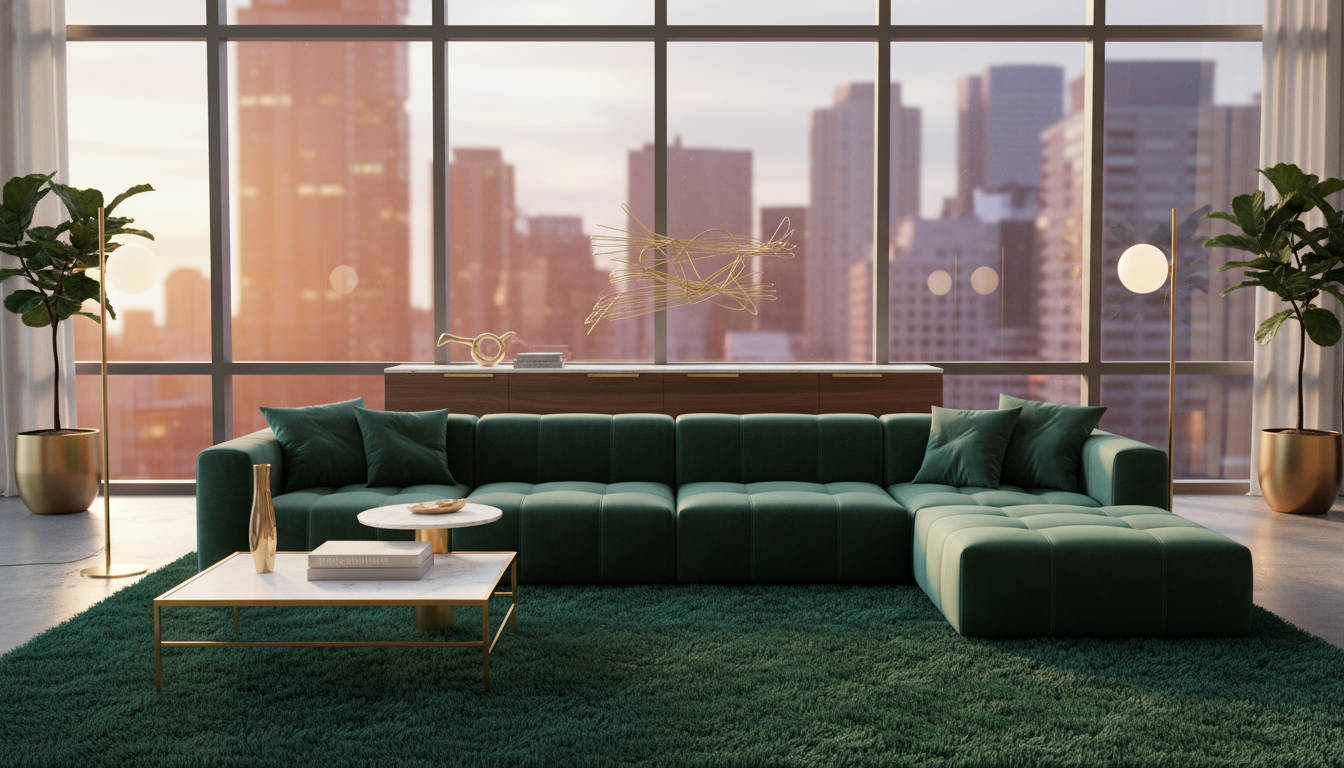
This transition is largely driven by a reaction against the ‘Millennial Grey’ aesthetic. After years of muted palettes and safe choices, designers are leaning into the emotional impact of color. A solid, deep-toned rug provides a sense of grounding that a busy pattern simply cannot. It allows the architecture of the room and the silhouette of your furniture to stand out. When you remove the visual noise of a multi-colored pattern, the eye relaxes, focusing instead on the richness of the material and the depth of the hue.
Modern jewel-tone interiors are taking this a step further by using these rugs as ‘floor anchors.’ By choosing a single, powerful color, you create a cohesive base that makes even the most eclectic furniture collection feel unified. It is about creating a mood—moody, sophisticated, and unapologetically luxurious.
Designer’s Hot Take: “Distressed rugs were the ‘sweatpants’ of decor—comfortable and forgiving, but eventually, you want to put on a tailored suit. Saturated monochromatic rugs are that tailored suit for your floor.”
2. Defining the Saturated Anchor Concept
Think of a deep plum rug in a library or a sapphire blue rug in a bedroom. These aren’t just colors; they are atmospheres. By saturating the floor in one tone, you simplify the room’s color story, which actually allows you to be more experimental with other textures and shapes. You can pair a solid emerald rug with a boucle chair, a marble coffee table, and chrome lighting without the space feeling cluttered. The rug acts as the unifying force.
This trend is also a hallmark of ‘quiet luxury.’ It doesn’t scream for attention with loud graphics. Instead, it whispers quality through the depth of its dye and the richness of its fiber. It is a sophisticated way to handle color that feels mature and timeless rather than trendy.
Designer’s Hot Take: “Patterns tell a story, but a solid, saturated rug sets the stage. I’d rather have a great stage than a confusing story.”
3. The 2026 Palette: Emerald and Deep Plum Rug Styling
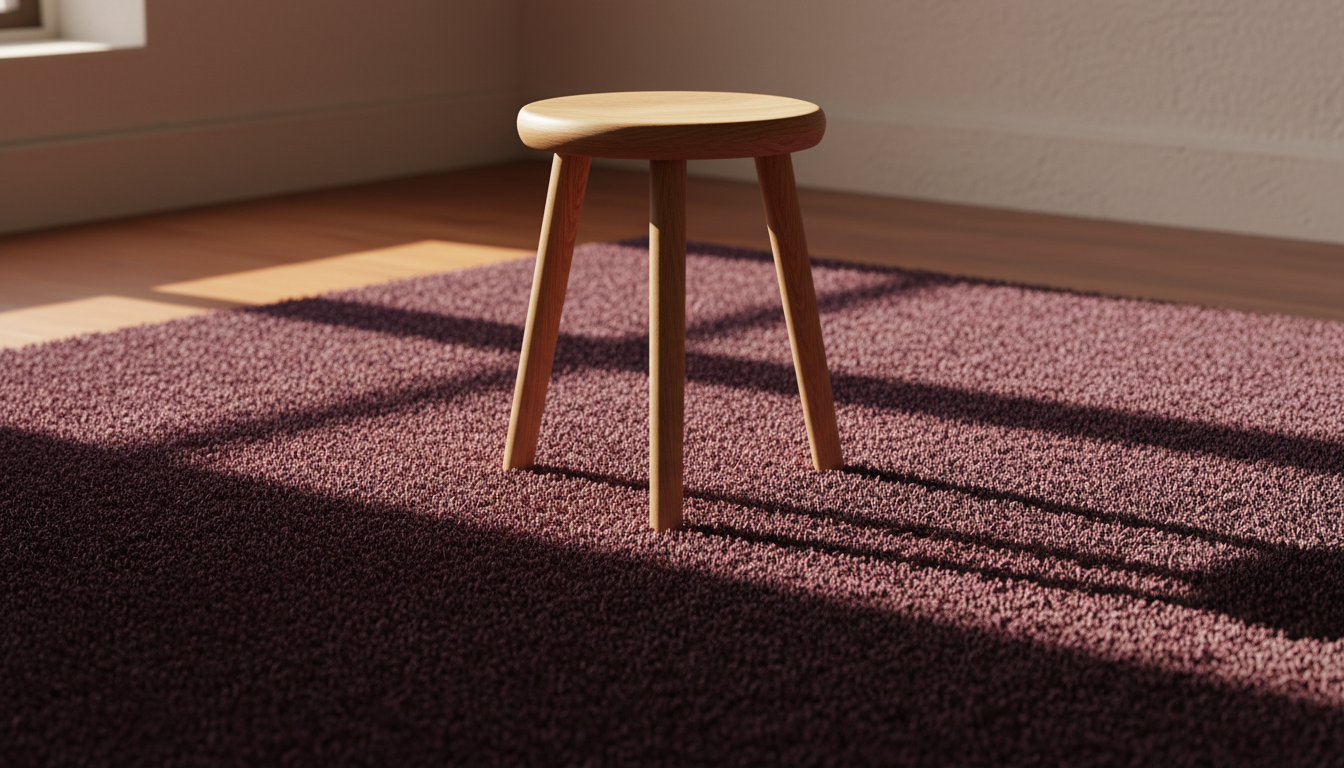
Emerald green works beautifully with natural wood tones. Imagine a solid, hand-tufted emerald rug paired with a walnut dining table. The green pulls out the warmth of the wood, creating a space that feels like a modern forest retreat. It is a ‘new neutral’ that provides color without being jarring. It pairs exceptionally well with brass hardware and cream-colored upholstery, creating a high-contrast look that is still incredibly easy on the eyes.
Deep plum, on the other hand, is for the bold. It is a sophisticated alternative to grey or navy. Plum has a magical quality of shifting under different lighting—looking almost black at night and revealing vibrant violet undertones in the sunlight. Styling a plum rug involves leaning into the ‘moody’ aesthetic. Pair it with charcoal grey, warm oaks, or even pops of mustard yellow for a palette that feels incredibly high-end and custom-made.
Designer’s Hot Take: “Plum is the most underrated ‘neutral’ in design. It’s warm, it’s cool, and it makes every skin tone look better when the light bounces off it.”
4. Material Matters: How Texture Defines the Color
Wool is the gold standard for saturated tones. It takes dye beautifully, resulting in a matte, deep finish that feels incredibly expensive. Wool rugs also have a natural luster that adds dimension to a solid color without requiring a pattern. On the other hand, materials like silk or viscose create ‘shimmer.’ These are perfect for monochromatic looks because as you walk across the rug, the pile shifts, creating natural highlights and lowlights that keep the single color from looking ‘flat’ or ‘plastic.’
For those seeking a more tactile experience, look for ‘sculpted’ solids. These rugs use a single color but vary the pile height to create subtle geometric patterns or organic ripples. It’s the ultimate way to embrace saturated monochromatic rugs 2026 while still having a bit of ‘secret’ visual interest. You get the benefits of a solid color (the grounding effect) with the sophisticated touch of high-end craftsmanship.
Designer’s Hot Take: “A solid color rug in a cheap material is a disaster. If you’re going monochromatic, the quality of the fiber is your only place to hide. Don’t skimp here.”
5. High-Visual Minimalism: The ‘Less but Better’ Philosophy
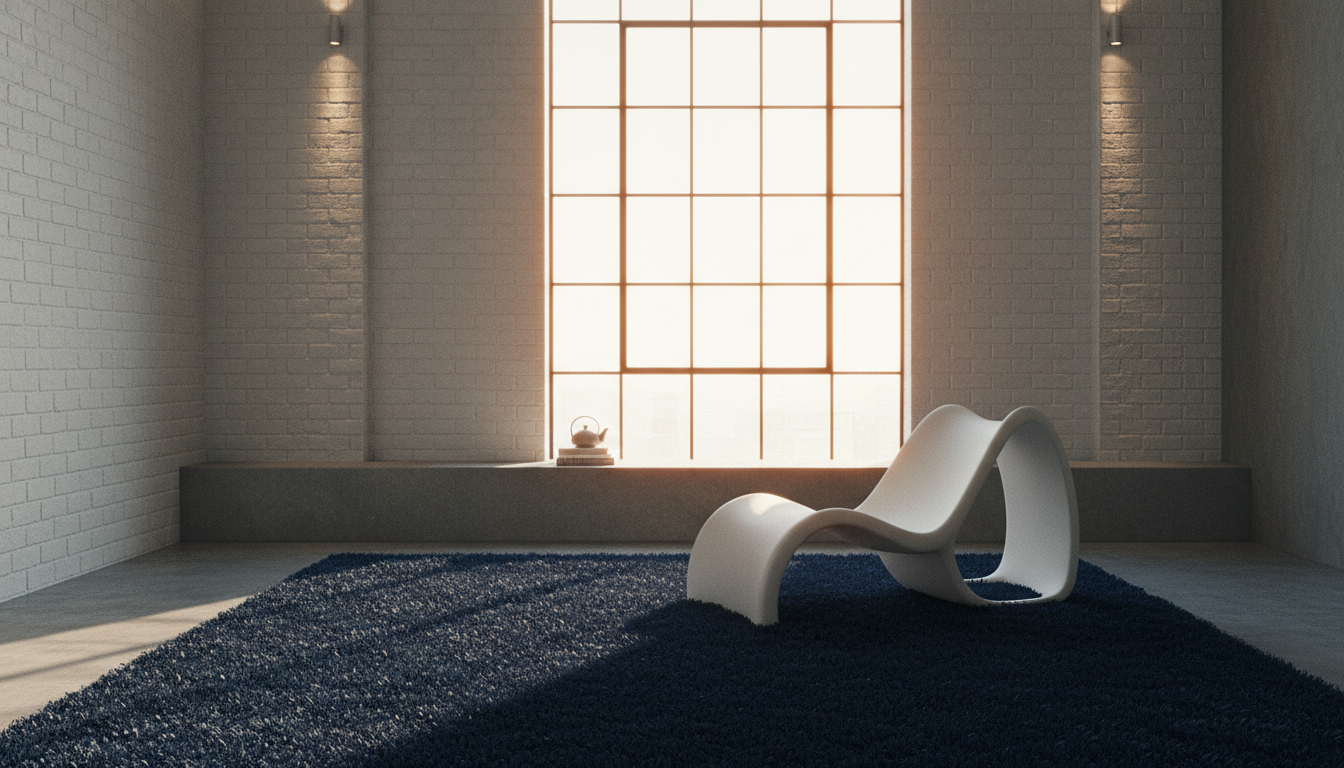
This approach creates a sense of ‘visual silence.’ In a world that is constantly over-stimulating, coming home to a room with a solid sapphire or charcoal floor feels incredibly peaceful. The rug becomes a giant canvas that simplifies the geometry of the room. It allows the eyes to rest and the mind to focus. It is a powerful tool for creating a sanctuary-like environment without sacrificing personality.
To achieve this, you have to be disciplined with your furniture choices. When your floor is a solid block of color, the legs of your chairs and tables become very prominent. This is the perfect time to showcase mid-century modern silhouettes or sculptural contemporary pieces. The monochromatic rug provides the contrast necessary to make these shapes ‘read’ clearly from across the room. It is a sophisticated way to curate a home that feels both modern and deeply comfortable.
Designer’s Hot Take: “Minimalism isn’t about the absence of color; it’s about the absence of confusion. A saturated rug is the clearest statement you can make.”
6. How to Style Modern Jewel-Tone Interiors
For an emerald rug, try an analogous palette of teals, forest greens, and even soft mints. This creates a layered, sophisticated ‘monotone’ look that feels very current. For a deep plum rug, consider ‘tone-on-tone’ styling by using shades of lavender and mauve in your throw pillows and blankets. This softens the drama of the plum floor while maintaining the overall color story. If you want high-drama, pair that plum with gold or mustard accents—the yellow tones will make the purple pop with incredible intensity.
Lighting is your best friend when styling jewel tones. To keep the room from feeling like a ‘dark hole,’ use layered lighting. A mix of floor lamps, table lamps, and wall sconces will create pools of light that highlight the texture of the rug. In the evening, these lights will dance off the saturated fibers, giving the room an expensive, lounge-like atmosphere that is perfect for entertaining or relaxing after a long day.
Designer’s Hot Take: “Stop trying to ‘brighten up’ a dark rug with white furniture. Lean into the mood! Use dark woods and rich metals for a truly high-end feel.”
7. Buying Solid Color Area Rugs: What to Look For
Check the density of the pile. A saturated rug with a low density will show ‘grinning’ (where you can see the backing of the rug when the pile is parted). This makes a rug look cheap. You want a dense, plush pile that remains solid even when walked upon. Furthermore, consider the edges. A hand-bound edge in the same color as the rug provides a seamless, high-end look that is essential for the ‘saturated anchor’ aesthetic.
Finally, consider the maintenance of dark jewel tones. While they don’t show coffee stains as easily as a white rug, they do show ‘white’ debris like lint or pet dander. If you have a white dog, a solid navy rug will be your nemesis. In those cases, look for a rug with a slight heathered effect—where two similar shades of the same color are spun together. It still reads as a monochromatic anchor but provides just enough camouflage for real-life living.
Designer’s Hot Take: “The ‘hand-dyed’ look is everything. If the color is too perfect and flat, it looks like a piece of office carpet. You want those subtle shifts in tone.”
8. The Future of Floors: Beyond 2026
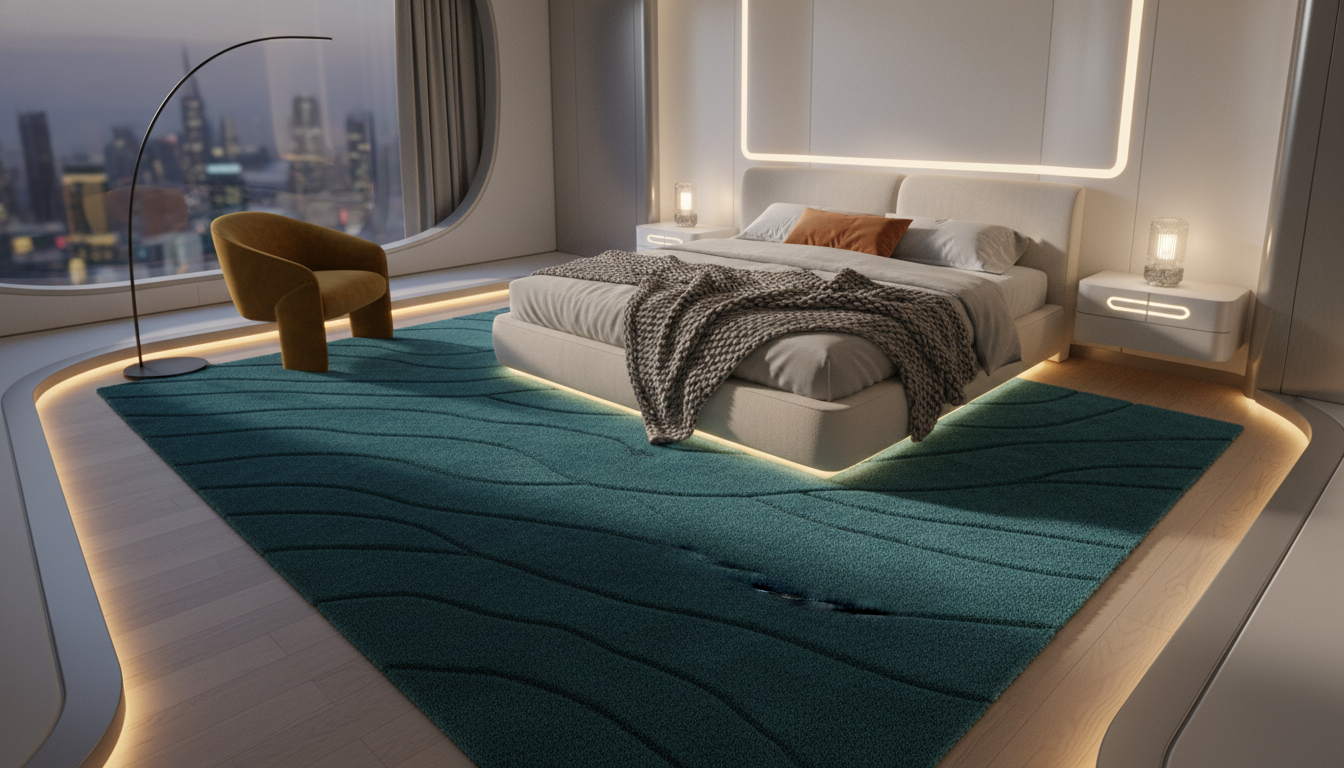
Sustainability is also playing a massive role in how these rugs are produced. The future is in botanical dyes—extracting those deep plums and emeralds from plants rather than synthetic chemicals. This not only makes the rugs eco-friendly but gives the colors a ‘living’ quality that synthetic dyes can’t replicate. Buyers are increasingly looking for ‘floor anchors’ that align with their values, prioritizing ethically sourced wool and non-toxic production methods.
Ultimately, the shift toward saturated solids is a shift toward confidence. It is a sign that we are no longer afraid of color or making a ‘permanent’ style statement. We are moving away from the ‘disposable’ decor era where everything was meant to be swapped out every two years. A high-quality, jewel-toned wool rug is a piece of furniture that can last decades, becoming a beloved part of your home’s history. It is an investment in both style and soul.
Designer’s Hot Take: “Saturated solids are the ‘antidote’ to the digital age. They are physical, heavy, and real. That’s why they aren’t going anywhere.”
Frequently Asked Questions
Are saturated monochromatic rugs 2026 hard to keep clean?
They aren’t necessarily harder to clean, but they show different things. While they hide dark stains perfectly, they show light-colored lint and pet hair more than patterns. Regular vacuuming with a high-quality machine is key.
Will a dark jewel-tone rug make my room look smaller?
Not if styled correctly. A large saturated rug can actually make a room feel more expansive by providing a continuous, unbroken visual plane. Just ensure your walls are a lighter or contrasting tone.
What furniture goes best with an emerald green rug?
Emerald green is incredibly versatile. It looks stunning with walnut or oak wood, brass or gold metals, and neutral upholstery in cream, tan, or light grey.
Is plum a ‘trendy’ color that will go out of style?
While it’s peaking in 2026, deep plum (or burgundy/eggplant) is considered a classic library or study color. In a monochromatic format, it functions as a ‘moody neutral’ that has long-term staying power.
Can I use a monochromatic rug in a high-traffic area?
Yes, but choose wool. Wool is naturally resilient, stain-resistant, and the fibers ‘bounce back’ after being stepped on, which keeps the solid color looking even and plush.
How do I choose between a matte or shiny finish?
Matte (wool) is better for a grounded, cozy, and sophisticated look. Shiny (silk/viscose) is better for a glamorous, high-energy, and formal space.
Do I need to match my curtains to my monochromatic rug?
Not exactly. You can go ‘tonal’ (a lighter shade of the same color) for a cohesive look, or choose a neutral like linen or charcoal to let the rug be the star.
What is ‘high-visual minimalism’?
It is a design style that uses a few very bold, high-impact elements (like a saturated jewel-tone rug) instead of many small, busy decorations to create a clean but dramatic space.
Are solid color rugs more expensive than patterned ones?
The price usually depends on the material, not the pattern. However, because you can’t hide flaws in a solid rug, ‘cheap’ versions look much worse than ‘cheap’ patterned versions, so it’s worth investing in quality.
Can I layer a patterned rug over a saturated monochromatic rug?
Absolutely! A large saturated monochromatic rug makes an excellent base for a smaller, patterned accent rug or a cowhide, adding extra texture and interest.
