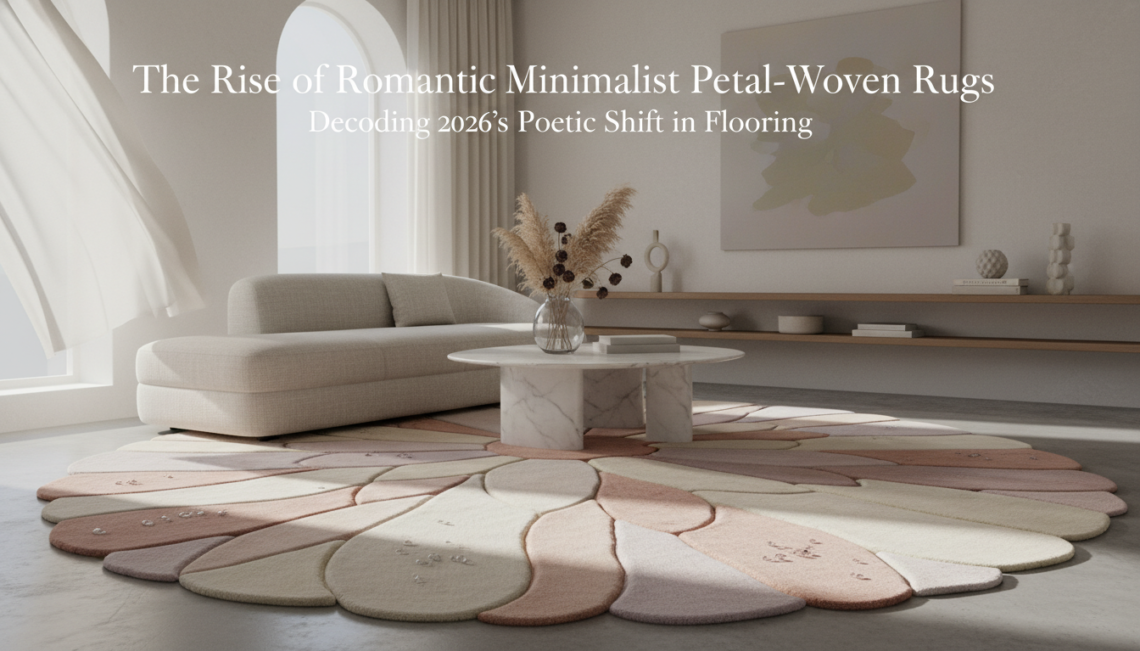
As we approach 2026, the interior design landscape is witnessing a seismic shift away from the clinical sharpness of traditional modernism toward what experts call ‘Romantic Minimalism.’ This movement finds its most profound expression in petal-woven rugs—pieces that function less like floor coverings and more like ‘Art for the Floor.’ This transition marks a departure from rigid polygons to soft-edged floral geometry, solving the long-standing problem of creating spaces that feel both curated and comforting. In this deep dive, we explore how these sophisticated weaves reconcile the austerity of minimalism with the organic warmth of nature, providing a practical blueprint for the modern homeowner to embrace the next era of aesthetic evolution.
“The Rise of Romantic Minimalist Petal-Woven Rugs represents a 2026 design trend that blends the restraint of minimalist color palettes with the fluid, organic shapes of botanicals. Unlike traditional floral rugs, these pieces utilize ‘soft-edged floral geometry,’ where abstract petal shapes are woven with varying pile heights and sustainable fibers to create tactile, sculptural depth. This style solves the problem of visual ‘coldness’ in modern homes by introducing biophilic curves without the clutter of maximalist patterns.”
The Roadmap
Table of Contents
- The Emotional Deficit of Sharp-Edged Minimalism
- Defining the 2026 Petal-Woven Aesthetic
- The Science of Soft-Edged Floral Geometry
- Problem-Solving: Softening High-Traffic Zones with Organic Forms
- Material Innovation: Sustainable Fibers for Artful Textures
- Practical Maintenance for Dimensional Floral Weaves
- Styling Strategy: Balancing Curated Spaces with Romantic Textures
- The Longevity of Art for the Floor
The Emotional Deficit of Sharp-Edged Minimalism
Beyond the Austerity of the Right Angle
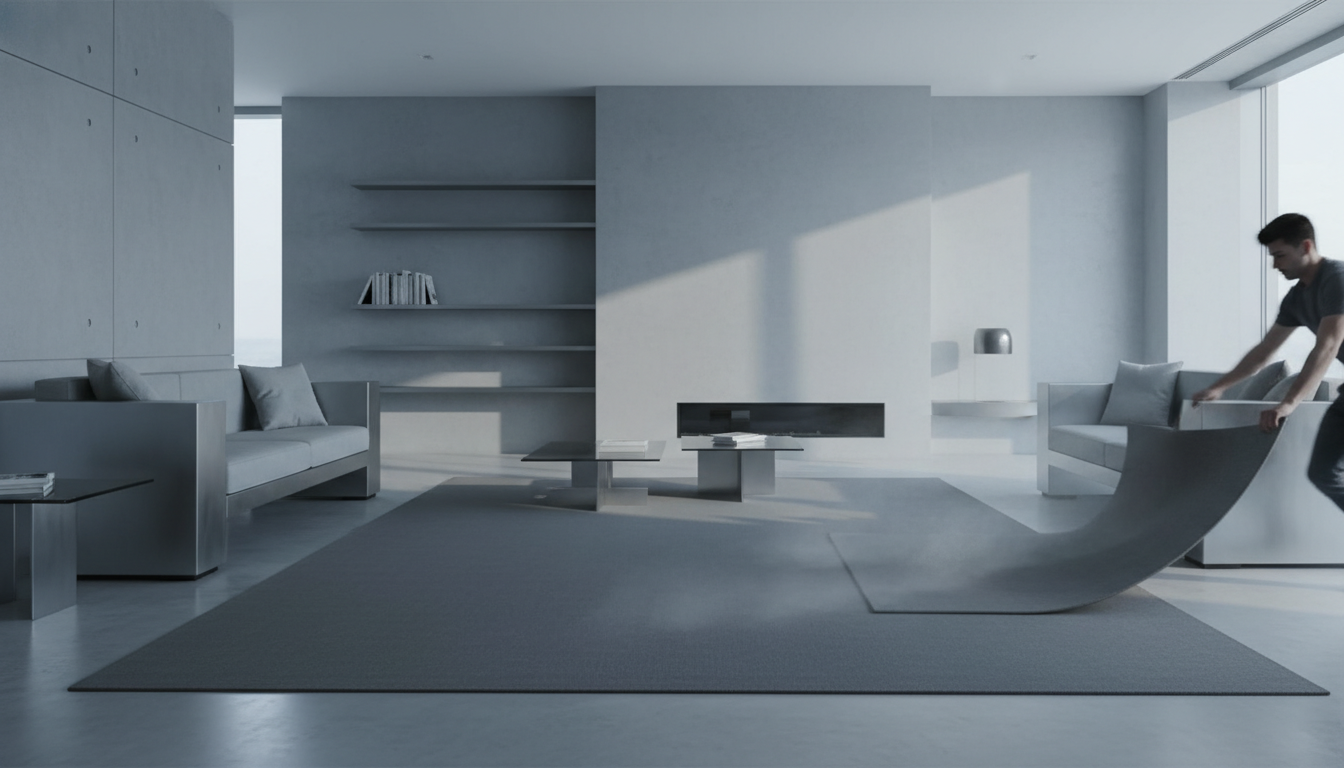
For nearly a decade, interior design has been held captive by the clinical precision of “hard minimalism.” While the clean lines and monochromatic palettes of the early 2020s offered a sense of order, they ultimately birthed an emotional sterility. We have reached a saturation point with the “white box” aesthetic, where living spaces began to feel more like galleries than sanctuaries.
Design anthropologists are now noting a distinct pivot toward what experts call “Emotional Architecture.” This movement prioritizes sensory comfort over rigid symmetry. The Rise of this movement suggests that by 2026, the sharp, unforgiving edges of brutalist-inspired rugs will be replaced by silhouettes that mirror the fluid, imperfect geometry of the natural world.
The Architecture of the “Soft Edge”
The emotional deficit of sharp-edged design lies in its lack of movement. Human psychology gravitates toward biophilic shapes—curves, undulations, and petal-like layers—which lower cortisol levels and foster a sense of domestic safety. In the 2026 design landscape, we are seeing a rejection of the grid in favor of “Petal-Woven” textures.
To understand the shift, consider the primary characteristics of the 2026 Romantic Minimalist aesthetic:
- Deconstructed Botanicals: Moving away from literal floral prints toward abstract, woven shapes that suggest the organic weight of a fallen petal.
- High-Low Pile Relief: Using varying yarn heights to create shadows, giving the rug a three-dimensional, “living” quality underfoot.
- Desaturated Earth Tones: A shift from sterile whites to “clipping” tones—think sun-bleached terracotta, crushed sage, and dusted rose.
The 2026 Forecast: From Minimalism to Poeticism
As we approach the mid-decade, the industry is bracing for a poetic revival. The Rise of soft-edged floral geometry represents a maturation of the bohemian spirit—less cluttered than the “maximalism” of years past, but more soulful than the mid-century modern obsession that preceded it. This is a sophisticated blending of artisanal craft and modern restraint.
Leading the charge in this transition are collections that emphasize tactile storytelling. For instance, the curators at thebohorugs.com have observed an increasing demand for rugs that function as “floor tapestries,” where the weave itself dictates the emotional temperature of the room. This shift isn’t merely about decoration; it is about reclaiming the home as a space for softness.
Why Geometry is Going Organic
Why is 2026 the year of the petal? As our digital lives become more high-definition and “sharp,” our physical environments must compensate with blur and texture. The new “Floral Geometry” follows three specific rules for the modern home:
- Macro-Scaling: Large-scale petal patterns that bleed off the edge of the rug, making small rooms feel infinitely more expansive.
- Fiber Complexity: Mixing matte wool with silk-alternative highlights to mimic the iridescent sheen of real flora.
- Asymmetrical Borders: Abandoning the traditional rectangular frame for scalloped or organic edges that break the monotony of hardwood flooring.
Ultimately, The Rise of Romantic Minimalist Petal-Woven Rugs signals a global desire for intimacy. By trading the cold geometry of the past for the soft-edged poetry of 2026, we are finally designing spaces that breathe, heal, and hold us in comfort.
Defining the 2026 Petal-Woven Aesthetic
The Intersection of Organic Form and Architectural Rigor
As we approach the middle of the decade, the domestic landscape is shedding its clinical edges in favor of a more lyrical silhouette. The clinical “white cube” aesthetic of the early 2020s has finally given way to a softer, more emotive topography.
The Rise of this romantic minimalist movement signifies a collective yearning for spaces that breathe. By utilizing petal-woven textures, designers are bridging the gap between the structured modernism of the past and a new, unfettered botanical fluidity.
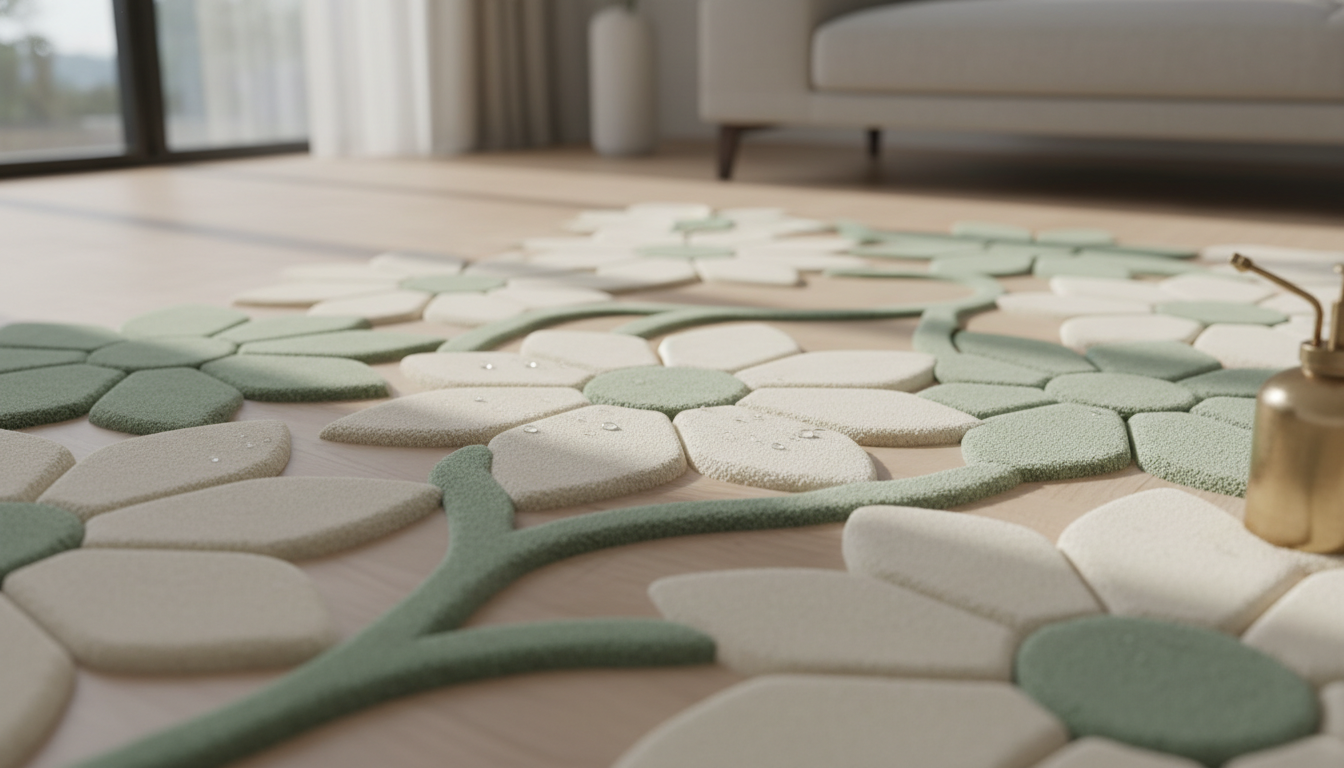
This aesthetic is defined not by cluttered florals, but by “soft-edged geometry”—a design language where the rug functions as a piece of floor-bound sculpture rather than a mere textile covering.
The Architecture of the “Fallen Bloom”
In 2026, the petal-woven rug is distinguished by its rejection of the traditional rectangular frame. Instead, we see a shift toward irregular, layered perimeters that mimic the natural overlap of a blooming peony or the scattered grace of cherry blossoms on stone.
- Negative Space Petals: Utilizing “voids” within the weave to create airy, floating floral shapes.
- Variable Pile Altitudes: Using 3D shearing techniques to create shadows that define the floral geometry without the need for high-contrast colors.
- Fibrous Transparency: Integrating silk-infused wool with matte hemp to mimic the translucent quality of a real petal.
For connoisseurs seeking this specific blend of avant-garde structure and artisanal warmth, thebohorugs.com serves as a primary source for hand-knotted pieces that embody this shift toward poetic materiality.
2026’s Sophisticated Chromatic Shift
The romantic minimalist palette of 2026 moves away from saccharine pastels. Instead, we are observing The Rise of desaturated, “weathered” romanticism. This involves colors that feel as though they have been filtered through a morning mist or aged by the sun.
- Oxidized Rose: A metallic, dusty pink that leans into silver undertones.
- Pressed Fern: A botanical green so deep it functions as a neutral, bordering on charcoal.
- Raw Alabaster: A cream that relies entirely on the texture of the petal-weave to provide visual interest.
This poetic shift is less about decorating a room and more about composing a feeling. It is a movement that prioritizes the haptic experience—the way a foot sinks into a “woven petal”—over the fleeting visual trends of social media.
By focusing on these soft-edged geometries, homeowners are transforming static rooms into living, breathing sanctuaries that honor the delicate irregularities of the natural world.
The Science of Soft-Edged Floral Geometry
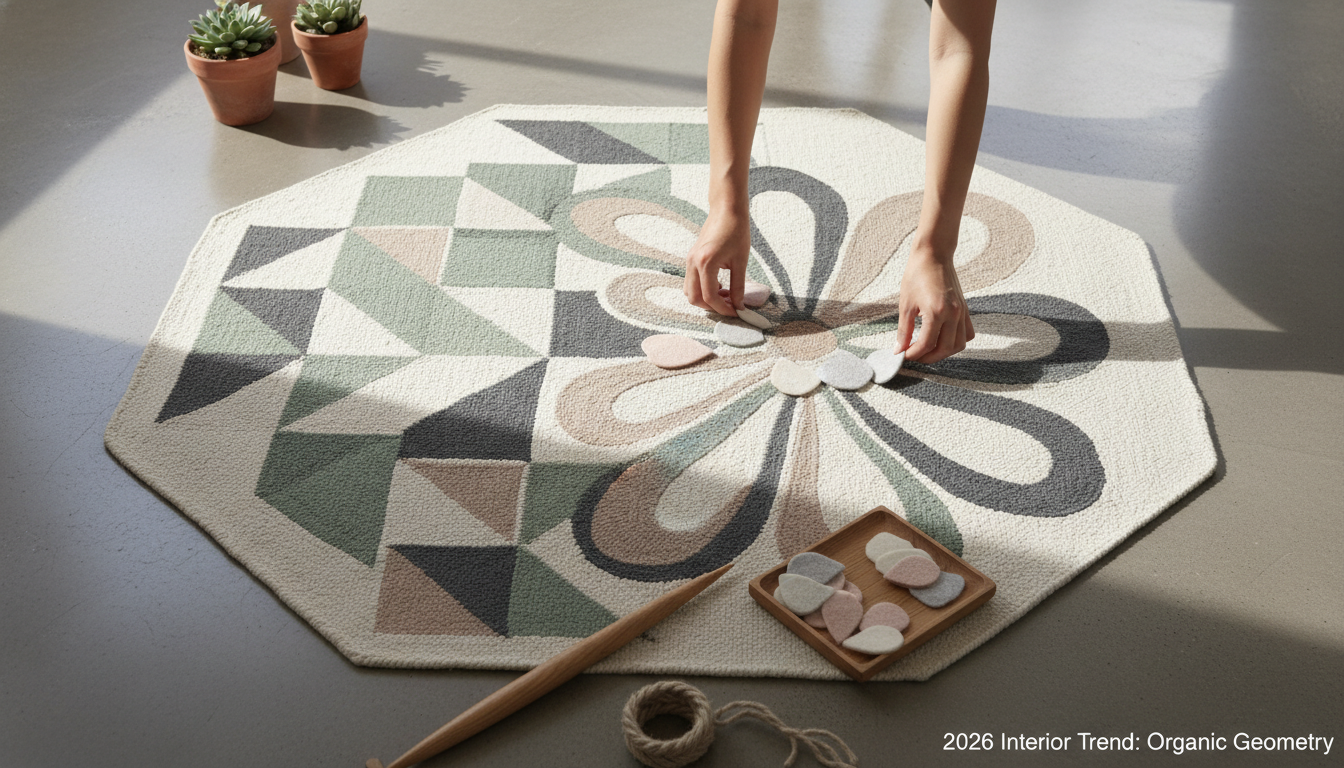
The Evolution of Biomorphic Precision
As we approach 2026, the interior design landscape is shedding the clinical rigidity of mid-century modernism in favor of a more sentient aesthetic. The Rise of soft-edged floral geometry represents a sophisticated pivot toward “biomorphic precision”—a design philosophy where the mathematical accuracy of a rug’s layout is softened by the organic irregularities of nature.
Unlike the chaotic floral chintz of the past, these petal-woven rugs utilize algorithmic patterns inspired by phyllotaxis—the botanical arrangement of leaves. This ensures that every curve feels intentional yet fluid, grounding a room without the harshness of traditional geometric shapes.
The Neuro-Aesthetic of Fractal Fluency
Recent psychological studies into “fractal fluency” suggest that human eyes are hardwired to find comfort in patterns that mimic the natural world. 2026’s poetic shift leverages this by integrating soft-edged motifs that reduce visual fatigue and lower cortisol levels.
By blending romanticism with mathematical symmetry, these rugs serve as more than floor coverings; they act as sensory anchors. Interior architects are increasingly sourcing from specialized collections, such as those found at thebohorugs.com, to bridge the gap between high-concept art and livable comfort.
- Subliminal Symmetry: Using the Fibonacci sequence to dictate petal placement, creating a sense of “hidden order.”
- Edge-Mapping: Transitioning from standard rectangular borders to hand-carved, undulating perimeters that follow the floral silhouette.
- Tonal Diffusion: Moving away from high-contrast palettes toward ombré-dyed yarns that mimic the natural translucency of a flower petal.
Material Innovation: The 2026 Construction Profile
The science of these rugs extends beyond visual geometry into the very fibers used to construct them. The 2026 trend prioritizes “kinetic softness”—materials that respond to touch while maintaining the structural integrity of the design.
- Eucalyptus-Silk Infusion: Provides a natural sheen that catches the light like dew on a petal, enhancing the 3D effect of the weave.
- High-Low Topography: Variable pile heights are used to physically sculpt the “floral” elements, making the geometry tactile rather than just visual.
- Regenerative Wool Bases: Ensuring the structural “bones” of the rug are sustainable and resilient enough to support intricate hand-carving.
The Rise of this movement signals a broader cultural desire for homes that feel curated yet breathable. By prioritizing the “soft edge,” designers are finally allowing the home to breathe, replacing the industrial sharp-cornered past with a future that is unapologetically poetic and scientifically grounded.
Problem-Solving: Softening High-Traffic Zones with Organic Forms
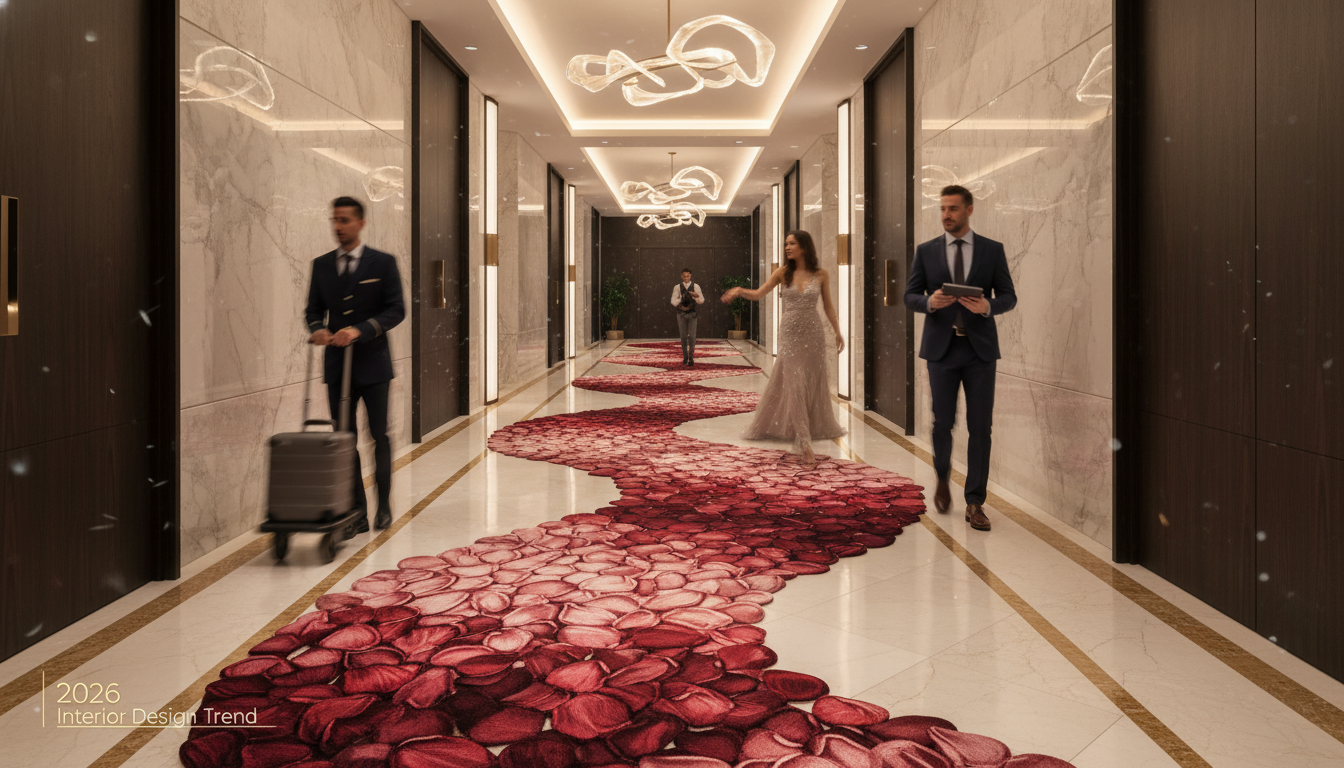
Engineering Ethereal Durability
The interior landscape of 2026 is shedding its sharp corners. For years, the brutalism of “clean lines” dominated the foyer and the hallway, often leaving these high-utilization areas feeling clinical rather than welcoming. The Rise of romantic minimalism signals a departure from this rigidity, favoring a “petal-woven” topography that redirects movement and softens the architectural impact of a home’s arteries.
Designers are increasingly utilizing soft-edged floral geometry to solve the “echo-chamber” effect of modern open-plan living. By replacing the traditional rectangular runner with interlocking organic forms, the eye is led through a space with a sense of rhythm rather than a forced linear path. This shift represents a sophisticated marriage of form and function, where the rug acts as both a visual anchor and a kinetic guide.
The 2026 Materiality: Why Petal-Woven Works
The problem with traditional high-traffic flooring has always been the compromise between resilience and tactile luxury. However, new weaving techniques predicted for 2026 utilize “fractal density,” where the center of the petal motifs contains a higher knot count to withstand heel-strike, while the edges taper into soft, airy textures.
- Hybrid Fiber Blending: Utilizing high-luster agave silk mixed with reinforced New Zealand wool for a shimmering yet sturdy finish.
- Gradient Camouflage: Organic floral patterns naturally disguise the inevitable shading and wear patterns that plague solid-color minimalist rugs.
- Variable Pile Heights: Using 3D-tufting to create a topographical map of soft “petals” that provide acoustic dampening in high-ceiling environments.
Curating the Transitionary Space
The Rise of this aesthetic is particularly evident in the way we now approach the “in-between” spaces of the home. Mudrooms and transit corridors are no longer relegated to industrial synthetics. Instead, homeowners are opting for the nuanced elegance found at thebohorugs.com, where artisanal craftsmanship meets the demands of a high-energy household.
To successfully implement this trend, consider the following tactical applications for 2026:
- The “Overspill” Placement: Position petal-edged rugs so they slightly overlap onto hardwood or stone, breaking the “island” effect and merging the zones.
- Tonal Layering: Select rugs with a monochromatic palette—think oyster, mushroom, or pale terracotta—to allow the complex geometry of the weave to provide the visual interest.
- Asymmetrical Geometry: Move away from mirrored patterns; 2026 is about “controlled chaos,” where floral elements appear to have drifted naturally across the floor.
By prioritizing these organic, petal-woven structures, the home becomes less about static zones and more about a fluid, poetic experience. It is a pragmatic solution to the harshness of modern architecture, proving that even the most heavily-trodden paths can be paved with softness.
Material Innovation: Sustainable Fibers for Artful Textures
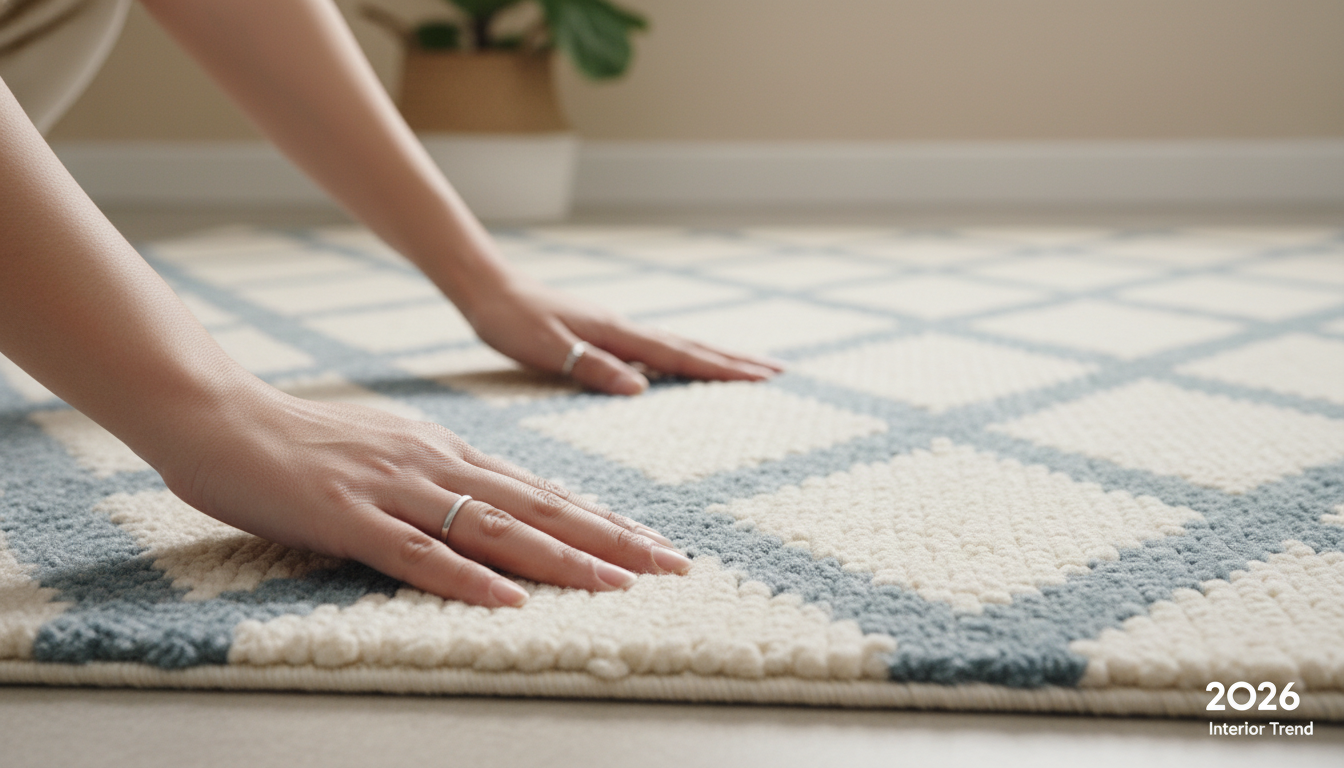
The Advent of Bio-Engineered Silk and Mycelium Weaves
As we approach 2026, the design world is witnessing a profound shift in how luxury is defined. The Rise of bio-engineered textiles has allowed for a “petal-woven” density that was previously impossible to achieve with traditional loom techniques. These fibers, often derived from lab-grown protein silks and mycelium-based threads, offer a structural integrity that supports the intricate, soft-edged geometries of the modern romantic era.
Unlike the coarse jute of previous decades, these new-age materials possess a translucent quality. When light hits a petal-woven rug, the fibers mimic the cellular structure of a flower, creating a shifting, prismatic effect that breathes life into minimalist spaces. This isn’t just floor covering; it is a bio-mimetic installation for the home.
Advanced Textural Topography: High-Low Pile Innovation
The 2026 aesthetic demands more than a flat surface. Designers are utilizing 3D-tufting technology to create “tactile topography.” By blending different fiber lengths—such as recycled lotus silk and cold-pressed eucalyptus fibers—artisans are able to sculpt rugs that feel like walking across a deconstructed rose garden.
This poetic shift is characterized by several key material advancements that prioritize both the planet and the sensory experience:
- Cold-Pressed Eucalyptus: Provides a cool-to-the-touch sensation and a natural sheen that rivals traditional mulberry silk.
- Regenerative Seaweed Fibers: Naturally flame-retardant and carbon-negative, offering a matte finish that grounds the “petal” aesthetic.
- Laser-Cut Organic Edges: Moving away from rectangular constraints to follow the natural, fluid curves of floral geometry.
The Intersection of Heritage and Future-Proof Design
While the technology is cutting-edge, the soul of these pieces remains rooted in artisanal craftsmanship. The Rise of the “slow-decor” movement has led collectors to seek out pieces that marry high-tech sustainability with heritage weaving. It is this specific intersection that defines the most coveted collections of the upcoming season.
For those seeking to anchor their interiors with these ethereal yet durable works of art, platforms like thebohorugs.com provide a curated look at how artisanal methods are evolving to meet these new standards. Their focus on premium, sustainable textures reflects the 2026 shift toward rugs that serve as the poetic heartbeat of a room.
A Predicted Shift: The “Living” Rug
By late 2026, we predict a move toward “living” textures—fibers treated with natural, plant-based dyes that subtly evolve in tone over time, much like the aging of a dried petal. This intentional patina adds a layer of wabi-sabi to the romantic minimalist home, ensuring that no two pieces remain identical as they interact with sunlight and air.
The Rise of this organic evolution marks the end of “disposable” decor. Instead, these petal-woven rugs are being treated as heirlooms. They represent a future where the floor is no longer an afterthought, but a soft-edged canvas of sustainable innovation and architectural grace.
Practical Maintenance for Dimensional Floral Weaves
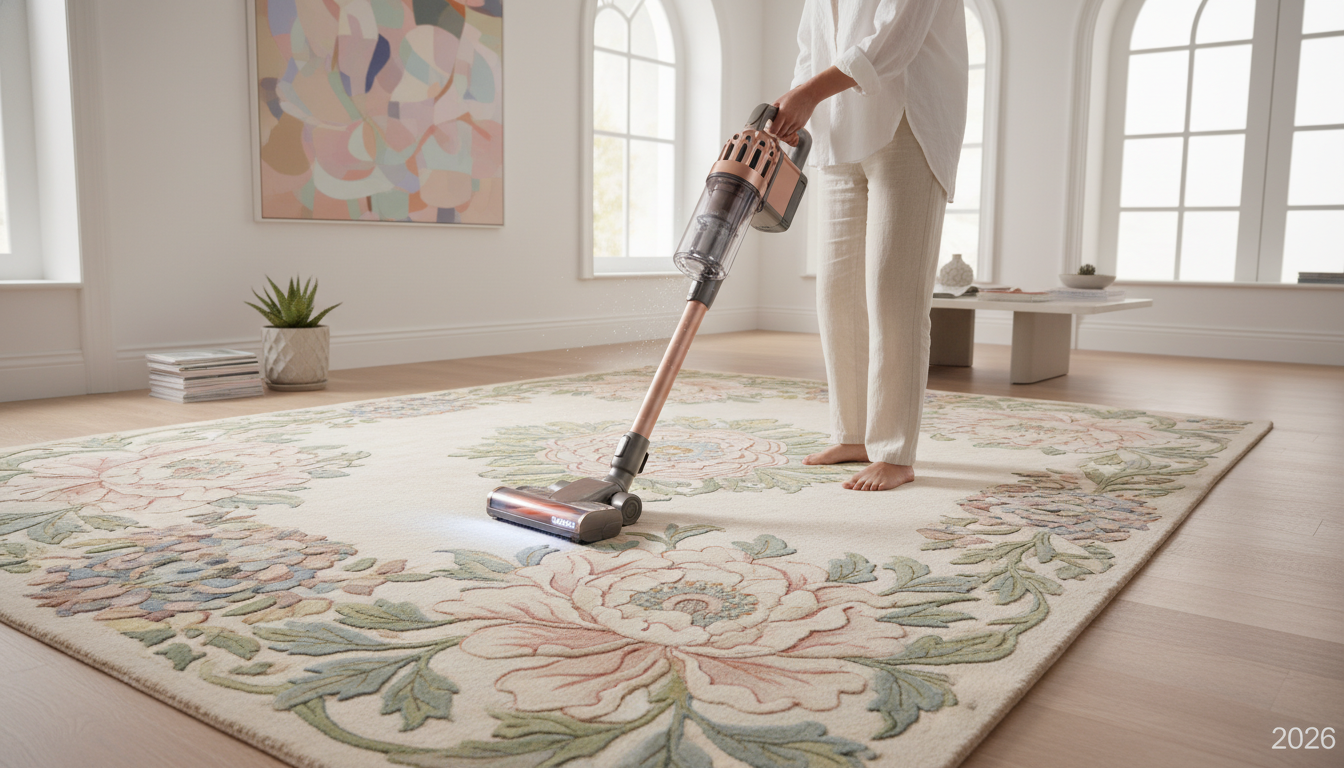
Preserving the Topography of Sculpted Petals
As 2026 approaches, the interior design landscape is trading the austerity of flat-weave minimalism for a more tactile, three-dimensional narrative. The Rise of these dimensional floral weaves introduces a complex topography to the floor, where varying pile heights mimic the natural layering of a blooming peony.
To maintain the structural integrity of these “soft-edged” geometries, traditional heavy-suction vacuuming must be discarded in favor of nuanced care. High-powered beater bars can distress the delicate transition between the high-pile “petals” and the low-sheared base, leading to fiber fatigue.
- Targeted Suction: Use a canister vacuum with a soft-brush attachment to gently lift dust from the recessed “veins” of the floral pattern.
- Directional Grooming: Brush the fibers in the direction of the weave once a month using a professional-grade velvet brush to restore the petal-like lift.
- Strategic Rotation: Because these rugs often feature asymmetrical, organic perimeters, rotating the piece every six months is essential to equalize “crush patterns” caused by foot traffic.
Advanced Fiber Care and Lanolin Restoration
The poetic shift toward petal-woven aesthetics relies heavily on high-luster natural fibers like botanical silk and New Zealand wool. Within the collections found at thebohorugs.com, these materials are prized for their light-refractive qualities, which can be dulled by improper cleaning agents.
We predict that by 2026, luxury homeowners will pivot away from harsh chemical surfactants toward pH-balanced, enzyme-based mists. These “dry-cleaning” sprays break down organic particulates without saturating the core of the weave, which is vital for dimensional rugs that take longer to dry.
- Moisture Management: Never steam-clean a dimensional floral weave; excess moisture can cause the varying pile heights to lose their distinct “relief” effect.
- Lanolin Replenishment: For wool-heavy weaves, use a lanolin-rich finishing spray annually to maintain the fiber’s natural elasticity and resistance to staining.
- Spot Archeology: Treat spills by “blotting and lifting” rather than scrubbing, which preserves the delicate petal-woven geometry.
Curating for Longevity in High-Traffic Zones
The Rise of “living textiles” means our floors are becoming more expressive, yet this artistry requires a defensive placement strategy. In 2026, the most sophisticated interiors will utilize bespoke rug pads that offer varying densities to support the specific pressure points of a rug’s floral geometry.
When selecting a piece from an artisanal source like thebohorugs.com, consider the density of the weave. A higher knot count in the “petal” sections ensures that the 3D effect remains crisp and architectural over years of use, rather than collapsing into a blurred silhouette.
Ultimately, the maintenance of a petal-woven rug is an act of preservation for a piece of floor-bound sculpture. By treating these rugs as tectonic art rather than simple floor coverings, the soft-edged romance of 2026 remains vibrant and structurally sound for decades.
Styling Strategy: Balancing Curated Spaces with Romantic Textures
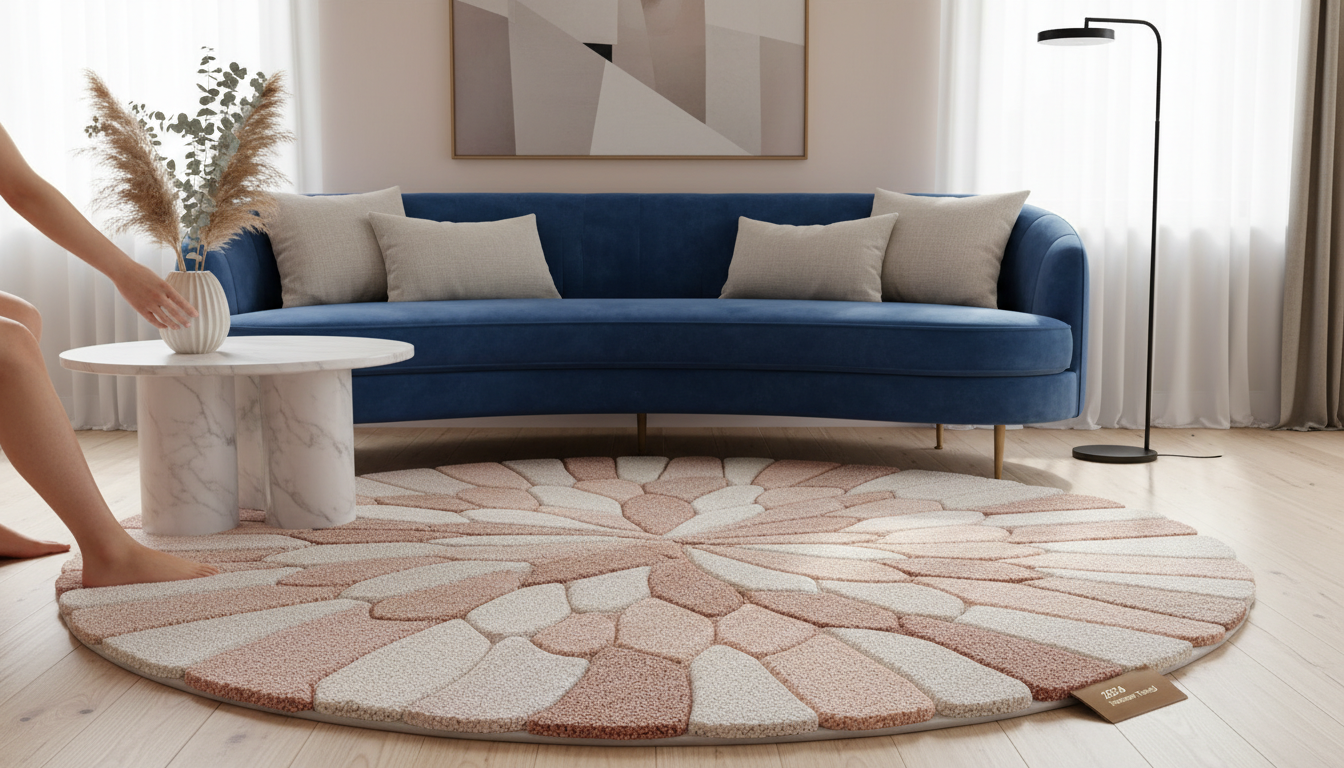
Harmonizing Organic Geometry with Monolithic Forms
To master the 2026 aesthetic, one must treat the floor as a canvas of tactile poetry rather than a mere foundation. The rise of petal-woven textures signifies a departure from the clinical sterility of the early 2020s, favoring a “Romantic Minimalist” approach that demands deliberate contrast.
Pair these soft-edged rugs with monolithic, heavy furniture—think travertine coffee tables or cast-bronze side pieces. The juxtaposition of a rug’s delicate floral topography against the brutalist weight of stone creates a tension that is both sophisticated and serene.
Curators at thebohorugs.com suggest that the key to this balance lies in negative space. Avoid overcrowding the rug; allow the scalloped edges and woven “petals” to breathe, ensuring the floor remains the central narrative of the room.
The 2026 Tactile Palette: Materials and Depth
By 2026, the trend will shift away from flat weaves toward high-relief, multi-dimensional surfaces. We are observing the rise of hybrid compositions where matte New Zealand wool meets high-luster botanical silk, creating a shimmering, dewy effect that mimics a garden at dawn.
Expect to see a specific color shift toward “oxidized neutrals”—shades that feel lived-in yet ethereal. This includes:
- Dusty Rose Quartz: A desaturated, earthy pink that functions as a neutral.
- Silvered Sage: A cool, muted green that anchors organic floral patterns.
- Alabaster Relief: Tone-on-tone whites where the “petal” is defined solely by pile height.
Architectural Counterpoints and Spatial Flow
Designing around a petal-woven rug requires a keen eye for architectural flow. Since these rugs lack the rigid borders of traditional orientals, they tend to “bleed” into the room, softening the sharp corners of modern apartments.
Consider the following placement strategies for high-end residential spaces:
- The Off-Center Anchor: Place the rug slightly askew beneath a modular sofa to emphasize its organic shape.
- The Reflective Layer: Use low-profile floor lamps with warm, directional light to cast shadows into the rug’s carved grooves, highlighting the 3D floral geometry.
- The Threshold Bloom: Position smaller petal-woven pieces in transition zones, like wide hallways or dressing rooms, to act as “tactile bridges.”
As we document the rise of this poetic shift, it becomes clear that the modern home is no longer a gallery for cold objects, but a sanctuary for soft-edged artistry. Exploring the curated collections at thebohorugs.com offers a glimpse into how these artisanal textures can transform a static space into a rhythmic, floral-inspired retreat.
The Longevity of Art for the Floor
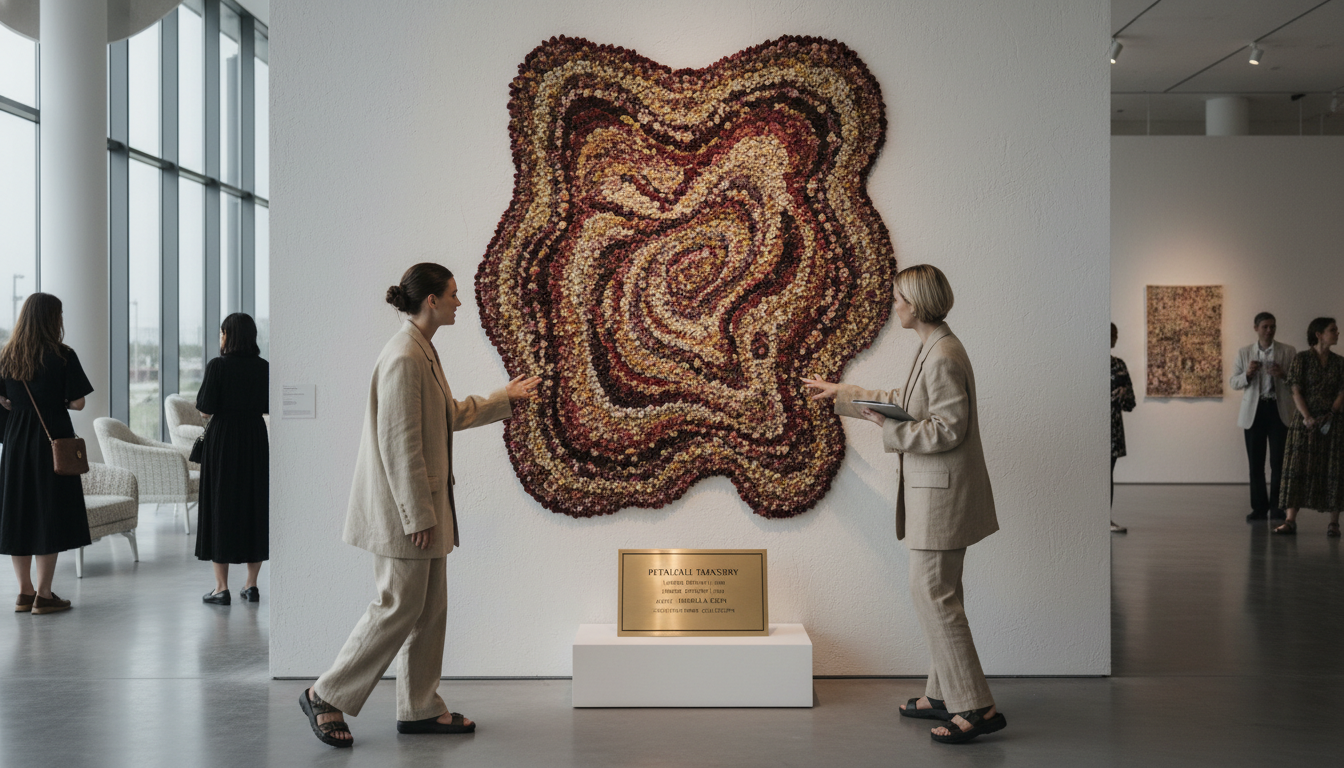
Defining the New Curvature
As we approach 2026, the interior design landscape is shedding the rigid, clinical lines of the past decade in favor of a more lyrical silhouette. The floor is no longer treated as a flat, utilitarian surface but as a canvas for spatial poetry, where the rug dictates the rhythm of the entire room.
The rise of soft-edged floral geometry represents a sophisticated evolution from the stark “Scandi-minimalism” of the 2010s. This shift moves away from mass-produced rectangles toward organic, petal-inspired contours that break the visual monotony of traditional floor plans.
These pieces function as architectural anchors, utilizing asymmetric scalloping and blurred perimeters to soften the harsh angles of modern high-rise living. By merging botanical motifs with a minimalist palette, designers are creating a “curated softness” that feels both ancient and futuristic.
The Technical Mastery of Petal-Weaving
What distinguishes the 2026 aesthetic is the intricate “petal-woven” technique—a method where fiber density varies across the rug to mimic the delicate, overlapping layers of a flower in bloom. This creates a high-low pile effect that offers a multidimensional sensory experience underfoot.
We are witnessing the rise of craftsmanship that prioritizes tactile longevity over fleeting visual shock. According to recent textile forecasts, the demand for these artisanal, bio-morphic structures is driven by a desire for “quiet luxury” that communicates quality through texture rather than loud patterns.
- Dimensionality: Sculpted pile heights ranging from 8mm to 15mm to create natural shadows.
- Chromatic Subtlety: A transition from vibrant florals to “desaturated botanicals” like dusty sage, bone, and muted terracotta.
- Material Alchemy: The strategic blending of raw silk with sustainable New Zealand wool to emulate the sheen of organic petals.
Investing in Textile Heirlooms
The longevity of these rugs lies in their dual identity as both furniture and fine art. As collectors move away from “fast decor,” they are seeking foundational pieces that can adapt to evolving aesthetics without losing their structural integrity or stylistic relevance.
At the center of this movement, curators like thebohorugs.com are bridging the gap between traditional weaving heritage and contemporary romanticism. By sourcing rugs that emphasize this soft-edged geometry, they provide homeowners with a centerpiece that transcends seasonal cycles.
Looking toward 2026, the rise of romantic minimalism suggests that our homes are becoming sanctuaries of intentionality. In this new era, the floor is where the narrative of the home begins—not with a flat textile, but with a petal-woven foundation that invites pause and reflection.
- Fluidity over Formality: Rugs that mirror the erratic beauty of nature.
- Sustainability as Standard: A focus on undyed yarns and biodegradable backing.
- The “Room-Within-A-Room” Effect: Using petal shapes to define zones in open-concept spaces.
Elevate Your Space
Discover the artistry of handmade luxury. Each rug is a masterpiece of tradition and modern design.
Expert Q&A
What defines a petal-woven rug in the 2026 context?
In 2026, petal-woven rugs are defined by ‘soft-edged floral geometry,’ utilizing abstract botanical shapes and multi-level pile heights to create a sculptural, minimalist aesthetic.
How does ‘Romantic Minimalism’ differ from standard minimalism?
Standard minimalism focuses on ‘less is more’ through rigid lines; Romantic Minimalism incorporates organic curves and tactile warmth while maintaining a restrained color palette.
Are these rugs suitable for high-traffic areas?
Yes, provided they are woven with durable sustainable fibers like high-twist wool or reinforced Tencel, which can withstand compression while hiding soil in the textured patterns.
Why is ‘The Rise of’ this trend happening now?
The rise of this trend is a reaction to the over-saturation of digital perfection, leading consumers to seek out ‘imperfect’ organic shapes and artisanal textures for emotional comfort.
What colors are most prominent in this style?
The palette is dominated by ‘New Neutrals’ like dusty rose, sage green, oat, and muted terracotta, often used in monochromatic layers.
How do I clean a rug with varying pile heights?
Use a vacuum with adjustable suction and turn off the beater bar to prevent snagging the higher loops of the floral geometry.
Can I use a petal-woven rug in a small apartment?
Absolutely. The soft edges of the patterns prevent the rug from ‘cutting’ the floor space, often making a small room feel more expansive and fluid.
What materials should I look for for the best texture?
Look for blends of New Zealand wool and bamboo silk to achieve the signature 2026 mix of matte and sheen that defines petal-woven rugs.
Do these rugs shed more than flat-weave rugs?
Initial shedding is common with high-quality wool, but it subsides after 4-6 weeks of regular light vacuuming.
Is floral geometry considered a feminine style?
In its 2026 iteration, it is gender-neutral, focusing on the architectural application of curves rather than traditional dainty floral motifs.
How does rug thickness affect the ‘romantic’ feel?
Varied thickness (sculptural carving) creates shadows and highlights, giving the floor an ethereal, changing appearance throughout the day.
What rug pad is best for sculptural weaves?
A dense felt and rubber pad is recommended to provide stability for the varied heights and prevent the rug from shifting on hard floors.
How can I tell if a rug is truly ‘Art for the Floor’?
Look for hand-finished details, unique pattern asymmetry, and the use of premium natural fibers that gain character over time.
Are petal-woven rugs eco-friendly?
Most premium versions in 2026 prioritize biodegradable fibers and non-toxic dyes, aligning with the trend’s roots in biophilic design.
How do I pair these rugs with patterned wallpaper?
Keep the wallpaper pattern small-scale or purely textural to allow the large-scale floral geometry of the rug to remain the focal point.
What is the lifespan of a high-quality petal-woven rug?
With proper maintenance, a hand-tufted or hand-knotted version can last 20 to 50 years, making it a sustainable investment.
How does lighting affect the look of the rug?
Side-lighting (from floor lamps) emphasizes the 3D ‘petal’ carvings, while overhead lighting softens the overall appearance.
Are these rugs pet-friendly?
Low-loop petal weaves are excellent for pets as they resist snagging; avoid long-shag variants if you have cats prone to kneading.
Can these rugs be used in dining rooms?
Yes, but ensure the floral geometry is subtle enough that chair legs don’t wobble on the varied pile heights.
What is the ‘Soft-Edged’ benefit for kids?
Beyond aesthetics, the thick, varied pile provides a cushioned, sensory-rich surface that is safer and more comfortable for children to play on.
How do I spot a cheap imitation?
Imitations usually have printed patterns rather than woven texture and use synthetic fibers like polyester which lack the depth of wool.
Is the petal-woven trend a micro-trend?
No, it is part of a larger decade-long shift toward ‘Sensory Interior Design’ that prioritizes touch and organic form.
How do I handle spills on a multi-level pile?
Blot immediately with a clean white cloth; do not scrub, as this can distort the delicate orientation of the petal-carved fibers.
Can these rugs be layered?
Yes, they look stunning layered over a larger, flat-weave jute rug to add a ‘romantic’ focal point to a rustic base.
What size should I choose for a living room?
Ensure all front legs of the furniture sit on the rug to anchor the ‘petal’ shapes within the seating arrangement.
Does color fading happen with these rugs?
Natural dyes may mellow over time, which often enhances the ‘romantic’ vintage-minimalist look; use UV-protective window films to slow the process.
Are these rugs suitable for humid climates?
Wool is naturally moisture-wicking, but ensure good airflow to prevent any dampness from being trapped in the thicker ‘petal’ sections.
What is the ‘Geometry’ in petal-woven rugs?
It refers to the mathematical precision used to arrange organic petal shapes into a balanced, rhythmic pattern across the floor.
Do they require professional cleaning?
We recommend a professional deep clean every 12-18 months to maintain the integrity of the varied pile heights.
Why is ‘TheBohoRugs’ leading this trend?
Because of our commitment to blending traditional artisan weaving techniques with futuristic, avant-garde minimalist designs for 2026.
Written by TheBohoRugs Interior Design Team
Experts in handmade rugs, boho interiors, and modern home decor.