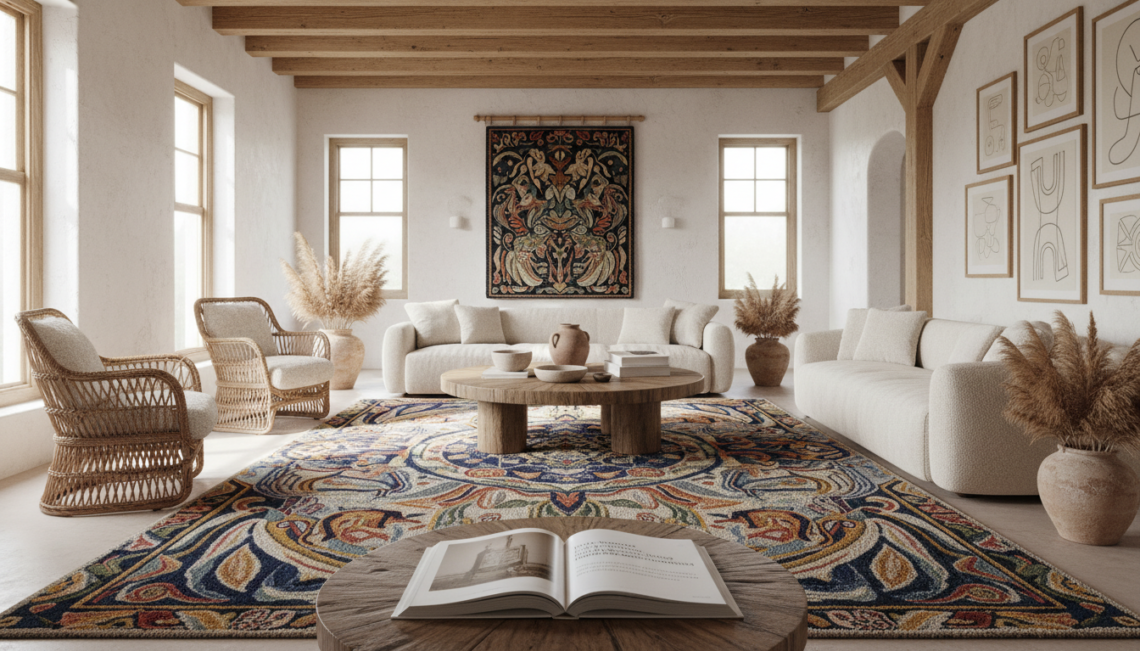
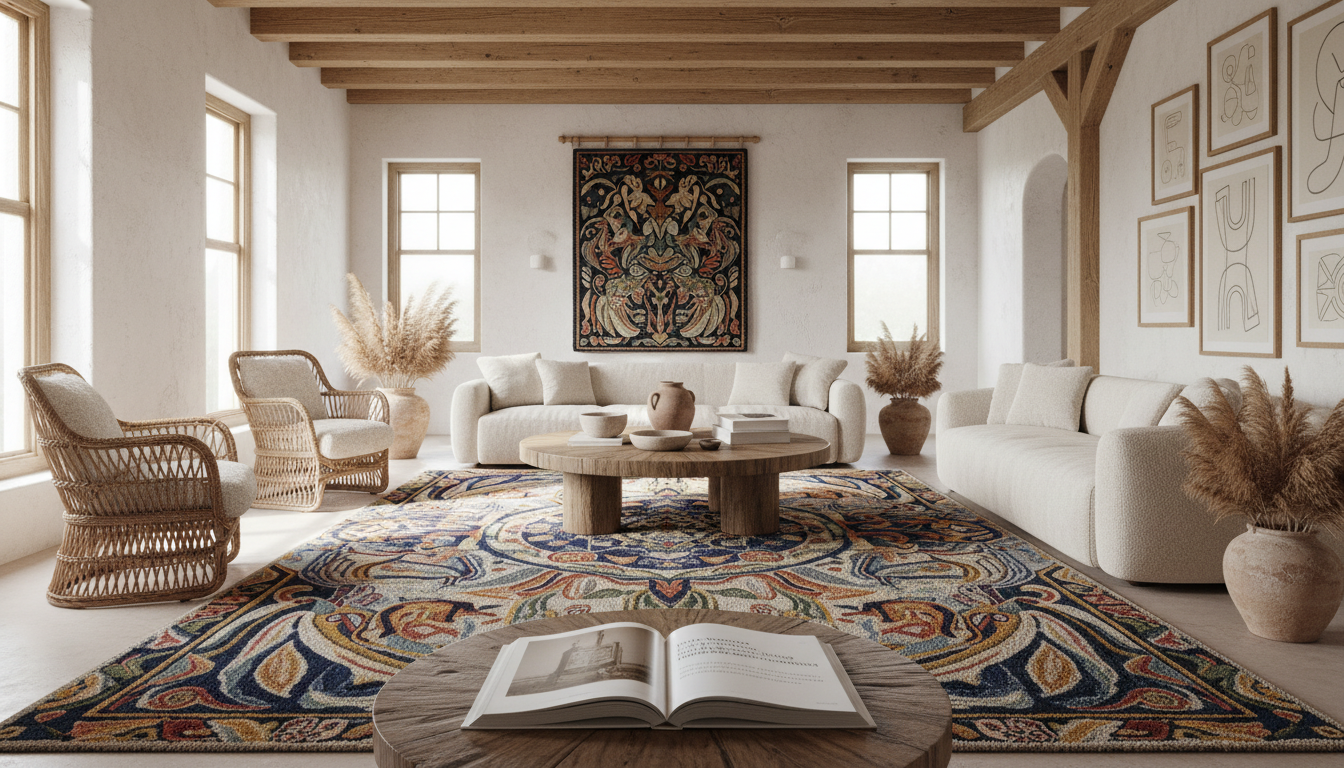
The era of the ‘ghost rug’—those silent, beige rectangles designed to vanish into white oak flooring—has officially reached its expiration date. As we look toward 2026, the interior design world is witnessing a seismic shift away from sterile perfection toward something far more visceral and storytelling-centric. Enter the era of Folk Nouveau rugs. This isn’t just a revival of heritage; it’s a sophisticated collision where the raw, geometric honesty of Eastern European and Scandinavian folk art meets the fluid, organic maximalism of Art Nouveau. For the modern homeowner, these rugs represent a rebellion against the mass-produced, offering a tactile narrative that anchors a room in both history and high-end bohemian luxury.
“Folk Nouveau rugs are a 2026 interior design trend characterized by the fusion of traditional folk motifs—such as Slavic embroidery patterns and Nordic symbols—with the sinuous, organic lines of the Art Nouveau movement. These rugs utilize luxury natural fibers like Himalayan nettle, soy-silk, and undyed wool to create high-contrast, narrative-driven floor coverings that serve as the ‘soul’ of modern bohemian and transitional interiors.”
The Roadmap
Table of Contents
- The Cultural Pivot: Beyond the Beige Horizon
- Anatomy of an Aesthetic: Defining Folk Nouveau
- Material Science: The 2026 Shift to Bio-Luxe Fibers
- Symbolism as Art: Decoding the Narrative Weave
- Styling the Trend: How to Anchor a Modern Boho Space
- The Investment Value of Artisanal Integrity
The Cultural Pivot: Beyond the Beige Horizon
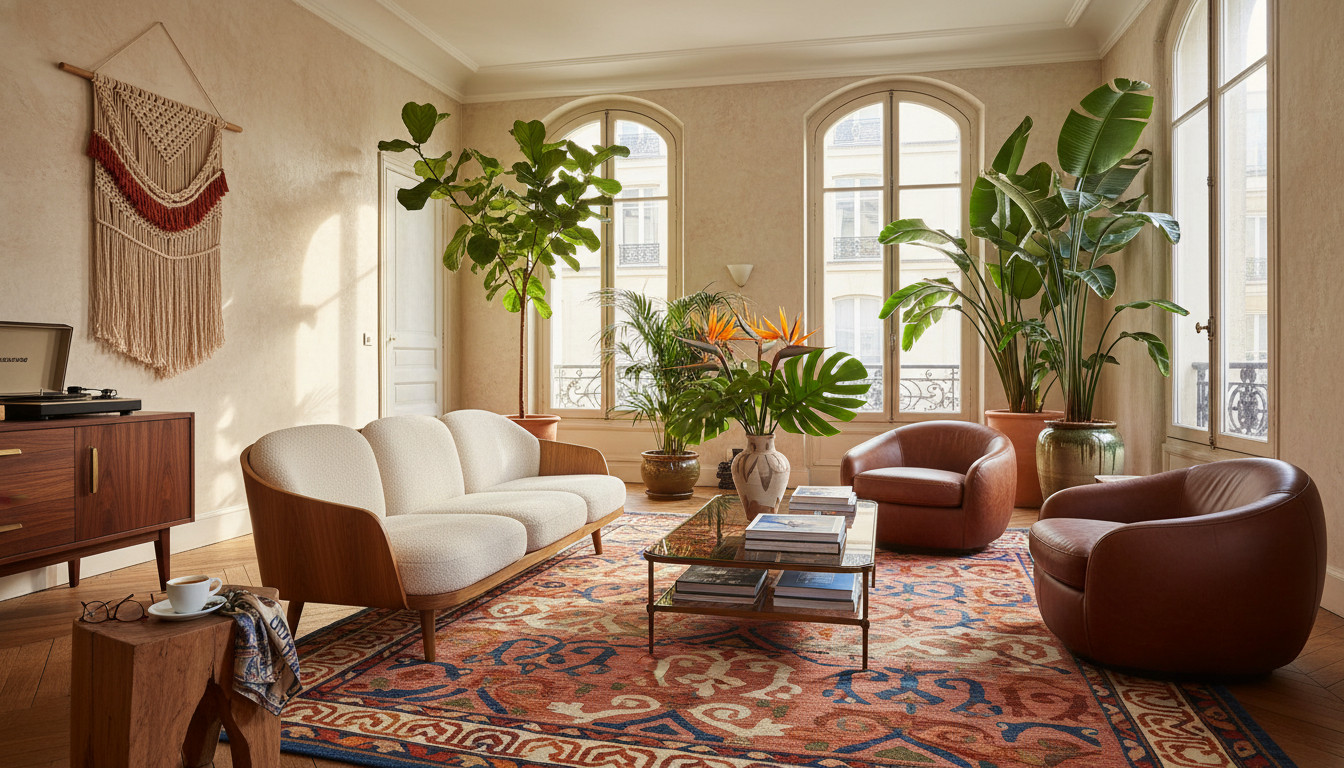
The Death of the ‘Gallery White’ Era
For nearly a decade, luxury interiors were gripped by a hushed, monochromatic restraint. We saw walls of alabaster, furniture in oatmeal, and rugs that were designed to disappear. But as we look toward 2026, that clinical silence is being replaced by a resonant, visual roar. The design world is experiencing a collective exhaustion with “safe” minimalism, pivoting instead toward Folk Nouveau rugs—pieces that function less like floor coverings and more like ancestral documents.
This shift isn’t just about color; it’s about a hunger for friction and history. While the previous era prioritized the mass-produced and the “perfect,” the current movement celebrates the deliberate hand of the artisan. We are seeing a move toward what I call “Maximalist Intent,” where every thread serves a purpose. It’s a departure from the sterile toward the soulful, pulling inspiration from the organic fluidity of the Art Nouveau movement and grafting it onto the raw, geometric storytelling of traditional folk art.
The Symbiosis of Bio-Acetate and Heritage Wool
Materiality is where this trend truly distinguishes itself from the boho-chic of the past. The 2026 iterations of these rugs utilize a sophisticated blend of high-altitude wool—often sourced from hand-knotted techniques perfected in the Atlas Mountains—interwoven with revolutionary Bio-Acetate fibers. This isn’t your grandmother’s polyester; these plant-based filaments provide a silk-like luster and incredible durability without the environmental footprint of petroleum-based synthetics.
The color theory is equally evolved. We are moving away from flat neutrals and into “Living Pigments.” For instance, designers are currently obsessed with Sage Green variants featuring a Light Reflectance Value (LRV) of 42. This specific depth allows the rug to absorb enough light to feel grounded and “earthy” during the day, while maintaining enough luminosity to glow under warm evening lamplight. It creates a sanctuary-like atmosphere that feels both ancient and expensive.
“The modern collector is no longer looking for a rug that matches their sofa; they are looking for a rug that challenges the room,” says Julianne De Marchi, Senior Textile Historian. “Folk Nouveau is the bridge. It takes the whimsical, whiplash curves of the 1900s and anchors them with the tribal motifs of the 12th century. It’s a design language that feels remarkably stable in an unstable world.”
The Psychology of ‘Narrative-Woven’ Design
Why now? The cultural pivot toward these narrative-heavy textiles is a reaction to the digital age. In a world of pixels, the tactile irregularity of a Folk Nouveau rug offers a sensory grounding. When you run your hand across a piece from a curated collection like those found at thebohorugs.com, you aren’t just feeling fiber; you’re feeling the tension of the loom and the intentionality of the weaver. These rugs act as “anchors” for a room, allowing more modern, sleek furniture to feel lived-in rather than staged.
EXPERT INSIGHT: THE “FOUNDATION FIRST” RULE
When styling a Folk Nouveau rug, treat it as the room’s primary art piece. Because these rugs often feature complex symbiosis—think floral vines meeting sharp lozenges—keep your secondary textiles (pillows and throws) in solid, high-texture fabrics like heavy linen or bouclé. This prevents visual clutter while allowing the rug’s heritage motifs to dictate the room’s flow.
The result is a space that feels curated over time, rather than bought in a single afternoon. By embracing these soulful fusions of heritage and luxury, we are finally moving beyond the beige horizon and into a home environment that tells a story worth hearing.
Anatomy of an Aesthetic: Defining Folk Nouveau
The Convergence of Folklore and Fluidity
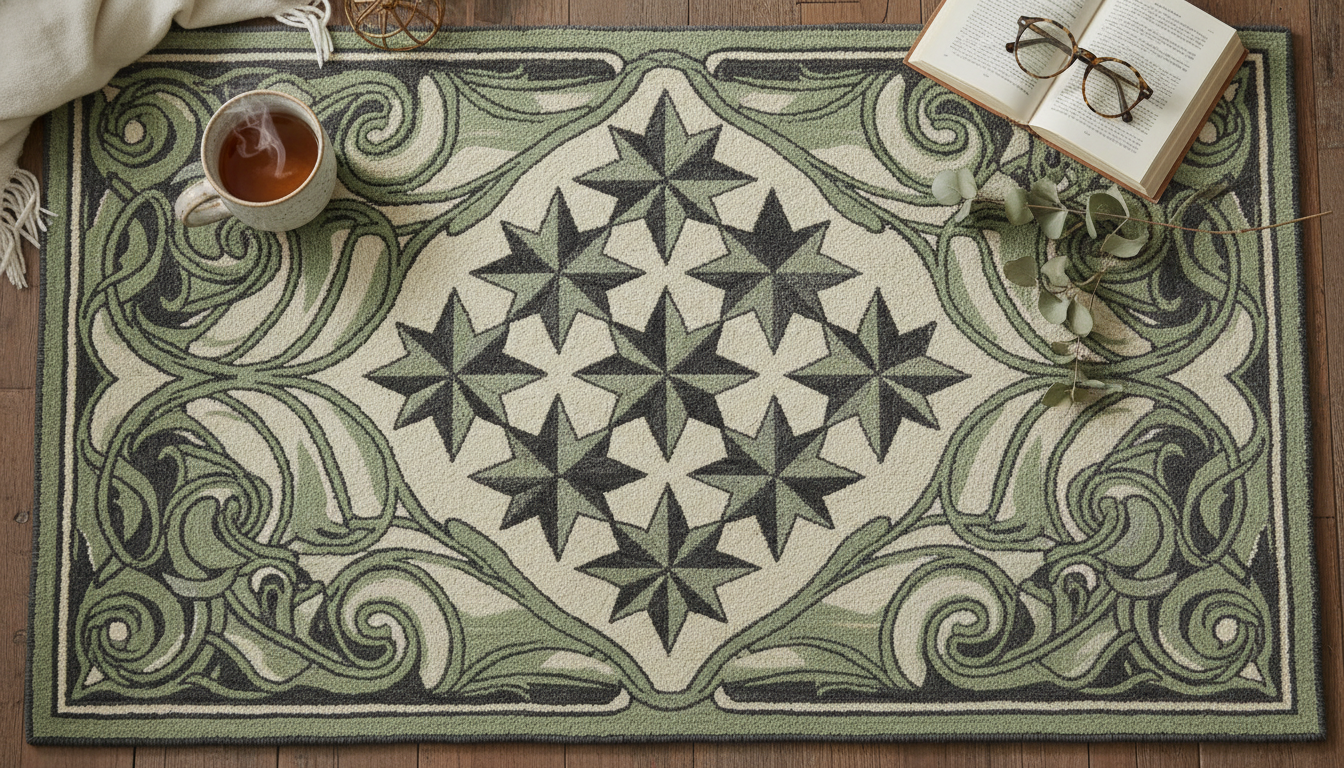
To understand the sudden dominance of Folk Nouveau rugs in high-end interiors, one must look at the tension between our digital lives and our primal need for physical history. This isn’t just another iteration of “boho chic.” Instead, it is a deliberate, sophisticated marriage between the organic, whiplash curves of the 19th-century Art Nouveau movement and the geometric, symbolic storytelling found in ancestral folk weaving. Where traditional minimalism often feels cold, Folk Nouveau offers a “warm maximalism.” It thrives on the 2026 preference for high-chroma earth tones—think ochre, terracotta, and deep forest greens with a Light Reflectance Value (LRV) of 12-15, designed to absorb light and create an intimate, cocoon-like atmosphere. These pieces serve as the literal foundation of a room, grounding modern furniture with a sense of “lived-in” lineage.Materials That Tell a Story
The soul of this aesthetic lies in its construction. We are seeing a significant pivot toward bio-acetate fibers blended with high-altitude wool. This combination provides a silk-like luster that catches the light in the “nouveau” floral patterns while maintaining the rugged, matte durability of traditional folk textiles. At the premium level, the craftsmanship often traces back to the Atlas Mountains or Eastern European villages, where weavers incorporate personal “spirit marks”—intentional, slight variations in the weave that signify the piece was made by human hands. This tactile irregularity is what sets Folk Nouveau rugs apart from mass-produced imitations found in big-box retail.“We are witnessing a departure from the ‘disposable decor’ era. Folk Nouveau is the antithesis of that. It’s about the translation of ancestral memory into a tactile form that feels relevant in a glass-and-steel apartment. It’s less about decoration and more about building a domestic sanctuary.”
— Elena Vassili, Lead Textile Curator and Design Historian
The Visual Vocabulary: Talismans and Tendrils
What defines the “Anatomy” of this style? It is the interplay between asymmetrical organic motifs—vine-like borders and lily shapes—and structured folk symbols like the lozenge (protection) or the tree of life (growth).- Sinuous Borders: Inspired by Alphonse Mucha, these borders break away from rigid rectangles, often featuring slightly scalloped or hand-bound edges.
- Narrative Medallions: Central motifs that aren’t just decorative but represent “narrative weaving,” where each knot acts as a syllable in a larger story.
- Pigment Depth: Using natural dyes like madder root and indigo to achieve a depth of color that synthetic pigments cannot replicate.
To master the Folk Nouveau look without overwhelming a space, utilize the “2/3 Contrast Rule.” If your rug features heavy, intricate folk symbolism, pair it with furniture that leans into Art Nouveau’s fluid, bentwood silhouettes. For a 2026-specific touch, look for rugs with a pile height of 8mm-10mm; this provides enough density for the symbolic patterns to “pop” while remaining sleek enough for modern ergonomic chairs to glide across.
Material Science: The 2026 Shift to Bio-Luxe Fibers
The Tactile Alchemy of Bio-Acetate and SeaCell
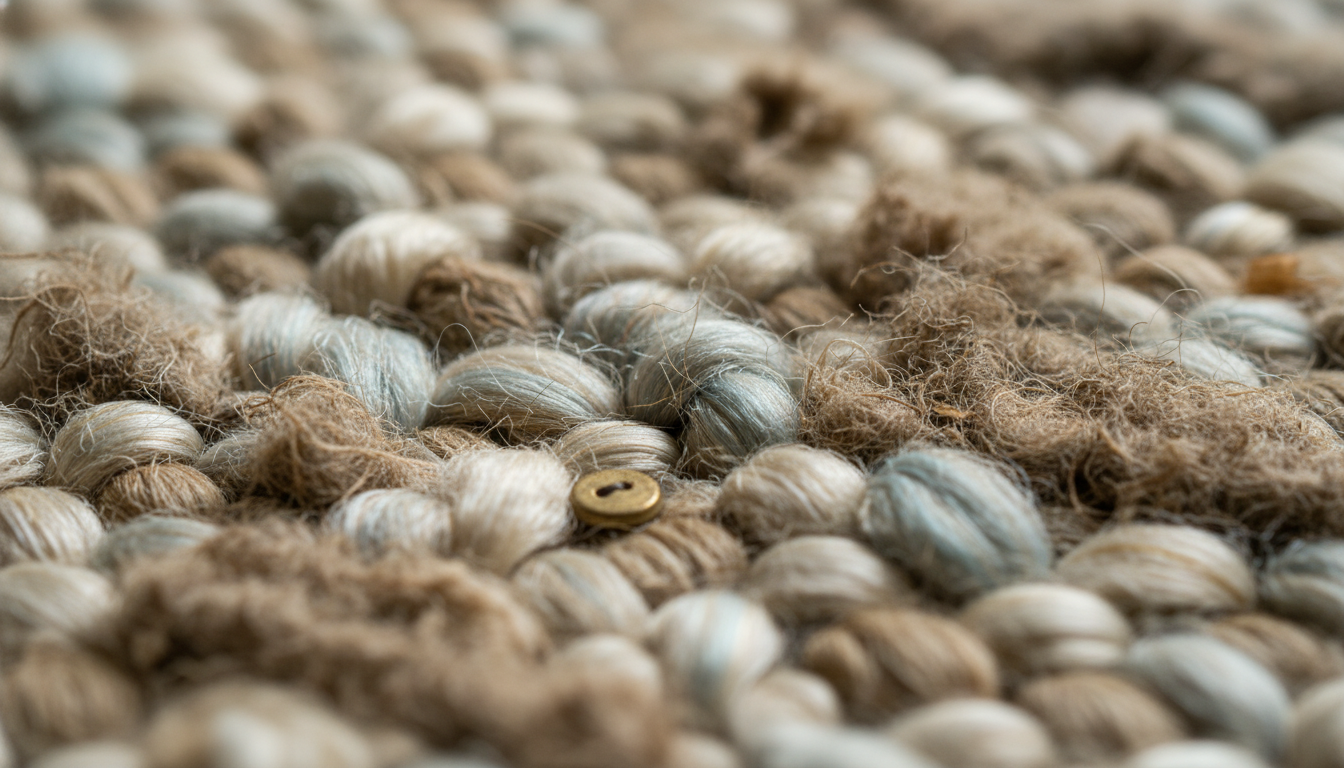
For years, the luxury rug market relied on a binary choice: the durability of traditional wool or the fleeting shimmer of synthetic viscose. As we move into 2026, the Folk Nouveau movement has demanded something more rigorous—fibers that possess the soul of heritage textiles but the environmental intelligence of modern science. We are seeing a definitive pivot toward Bio-Acetate and SeaCell blends. These fibers, derived from wood pulp and seaweed, offer a refractive quality that mimics heavy silk but with a significantly higher tensile strength.
Designers are utilizing these materials to create rugs that react to natural light throughout the day. A Folk Nouveau rug in a deep Sage Green, for instance, might have a Light Reflectance Value (LRV) of 42%, but when woven with Bio-Acetate highlights, the pattern appears to shift from a matte moss to a luminous celadon as the sun moves across the room. This kinetic quality brings the organic, flowing lines of the Nouveau style to life, making the floor feel like a living canvas rather than a static piece of furniture.
The Resurgence of High-Altitude Atlas Wool
While lab-grown luxury is peaking, it is being balanced by a return to “Extreme Provenance.” The most coveted Folk Nouveau rugs of the upcoming season are grounded in hand-spun wool sourced from the Atlas Mountains. This isn’t merely a marketing story; the science lies in the lanolin. High-altitude sheep produce a denser, more wax-rich fleece to survive the cold, resulting in a fiber that is naturally stain-resistant and possesses an incredible “memory”—the ability of the pile to spring back after being compressed by heavy mid-century modern furniture.
What makes this heritage material feel modern is the way it is being processed. Instead of harsh chemical scouring, artisans are using traditional botanical washes that preserve the integrity of the fiber. When you run your hand across a piece from the curated collections at thebohorugs.com, the difference is immediate: it lacks that plasticized “crunch” of mass-produced textiles, offering instead a buttery, velvet-like resistance that only improves with age.
“The 2026 collector is no longer satisfied with ‘natural’ as a vague label. They want to understand the cellular resilience of the fiber. By blending Bio-Luxe botanicals with high-lanolin wool, we are creating Folk Nouveau pieces that aren’t just decorative—they are heirlooms engineered for a century of use.”
— Dr. Julian Thorne, Textile Historian and Lead Material Consultant
Engineering the “Soulful” Pile
The technical construction of these rugs is also evolving. We are seeing a move toward multi-level knotting, where the heritage symbols—the birds, vines, and geometric talismans—are slightly raised using a higher knot count. This creates a 3D topographic effect on the floor. When these intricate folk motifs are rendered in eucalyptus silk against a matte wool backdrop, the visual depth is staggering. It creates a “narrative-woven” experience where the rug tells its story through both shadow and touch.
When investing in a premium Folk Nouveau rug, perform the Recovery Test. Press your thumb firmly into the pile for ten seconds. High-value Bio-Luxe blends or high-altitude wool should “self-correct” and return to their original height within thirty seconds. If the indentation remains, the fiber likely contains high levels of cheap filler viscose, which will lose its luster and structure within three to five years. For authentic, high-performance artisanal pieces, look for suppliers like thebohorugs.com who prioritize high-twist, long-staple fibers.
Ultimately, the shift to bio-luxe materials represents a reconciliation between our digital future and our tactile past. By choosing materials that are scientifically superior yet ecologically grounded, the 2026 home becomes a sanctuary of Modern Boho Luxury—a space that feels as good as it looks, anchored by the enduring strength of the earth’s most sophisticated fibers.
Symbolism as Art: Decoding the Narrative Weave
The Language of the Loom: Beyond Decoration
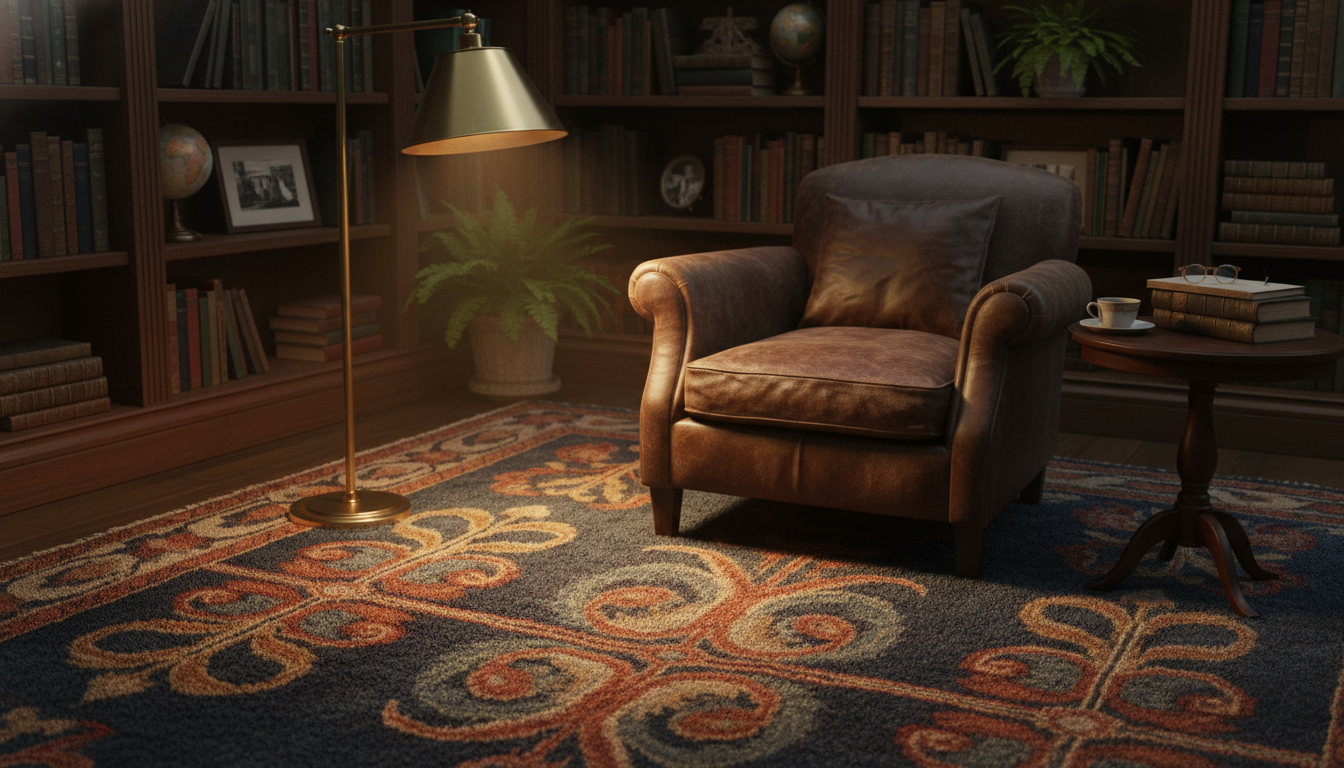
When we look at the evolution of interior design moving into 2026, there is a palpable shift away from the sterile minimalism of the last decade. Homeowners are no longer seeking just a “look”; they are chasing a feeling—a sense of belonging and lineage. This is where Folk Nouveau rugs have become the definitive anchor of the high-end boho space. Unlike mass-produced patterns, these pieces function as visual diaries, blending the fluid, organic lines of the Art Nouveau movement with the raw, geometric storytelling of ancestral tribal weaving.
The magic lies in the subtle dialogue between the motifs. You might find a traditional Moroccan “diamond” (a symbol of protection) softened by the trailing ivy and botanical flourishes typical of early 20th-century Parisian aesthetics. It is a sophisticated tension that works remarkably well in modern interiors. By integrating hand-knotted techniques from the Atlas Mountains with a more curated, European color palette, these rugs bridge the gap between “global traveler” and “refined collector.”
A Masterclass in Technical Artistry
What sets the 2026 cohort of Folk Nouveau designs apart is the material innovation. We are seeing a significant move toward Bio-Acetate fibers blended with high-altitude wool. This creates a finish that mimics the luster of silk but retains the rugged durability required for high-traffic “soulful” living rooms. Designers are also paying closer attention to the optical weight of these pieces. For instance, many new collections utilize a Light Reflectance Value (LRV) of 42 for Sage Green accents—a specific calibration that allows the rug to feel grounded in low-light settings while appearing vibrant and airy under midday sun.
“We are witnessing a return to ‘slow’ interiors,” notes Elena Vance, a leading Textile Historian. “The modern buyer wants to know that the zigzag bordering their rug isn’t just a chevron—it’s a representation of flowing water or a mountain range. The Folk Nouveau rugs movement honors those ancient narratives while refining the silhouettes to fit a minimalist-luxe architecture.”
- Ancestral Geometry: Look for lozenges and “X” motifs that represent fertility and union, reimagined with the soft, curved borders of the Nouveau era.
- Tonal Complexity: 2026 is moving away from stark contrasts. Instead, seek out “mud-dyed” palettes of ochre, terracotta, and dusty charcoal.
- Tactile Depth: High-low pile heights are being used to give the “narrative” a 3D effect, making the symbols literally lift off the floor.
When sourcing these pieces, the provenance of the craft is as important as the design itself. Discerning decorators often turn to specialized curators like thebohorugs.com, where the focus remains on the intersection of artisanal integrity and contemporary luxury. A well-chosen rug from such a collection doesn’t just cover the floor; it dictates the room’s entire energy.
When styling a Folk Nouveau rug, identify the least dominant color in the weave—often a muted thread used in the symbolism. Use this specific shade for your room’s accent pieces (like a velvet throw or a ceramic vase). If your rug features an Earthy Ochre symbol, matching your accents to that exact tone creates a “narrative thread” that makes the room feel intentionally curated rather than just decorated.
Choosing a piece with this level of detail requires a shift in mindset. You aren’t just buying a textile; you are inheriting a story. Whether it’s the way the vegetal-dyed wool patinas over time or the hidden symbols woven into the fringe, these rugs are the new heirlooms of the nomadic-luxury age.
Styling the Trend: How to Anchor a Modern Boho Space
The Art of Grounding: Creating an Emotional Anchor
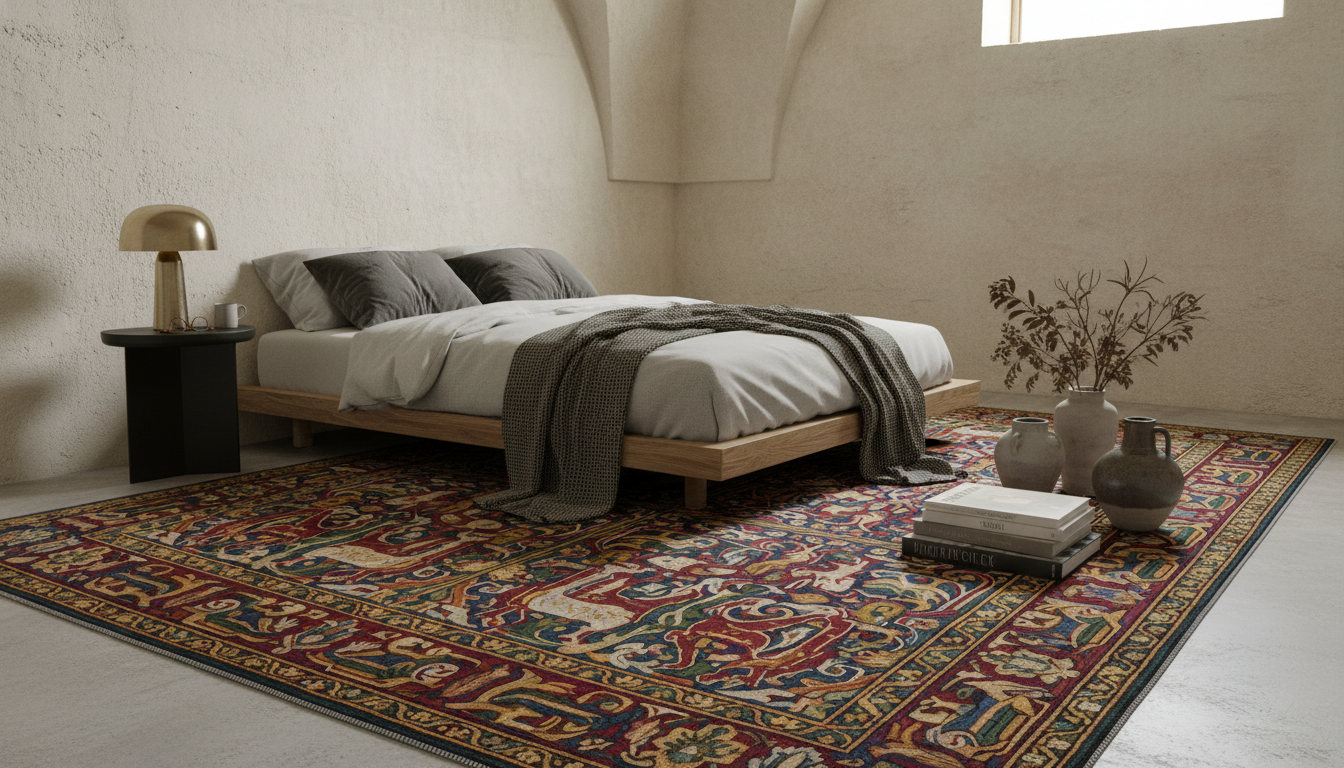
To truly master the Folk Nouveau aesthetic, one must look past the surface-level pattern and understand the rug as the room’s psychological foundation. In 2026, we are moving away from the stark minimalism of previous years, gravitating instead toward “Narrative-Woven” pieces that act as a bridge between ancestral history and contemporary comfort. When styling **Folk Nouveau rugs**, the goal is to create a dialogue between the tactile weight of the textile and the architectural lines of the furniture. Start by considering the “Visual Weight.” A rug featuring heavy symbolic motifs—perhaps a contemporary interpretation of the *Symmetry of the Infinite* common in traditional Berber weaves—requires a breathing room of at least 18 inches of exposed hardwood or polished concrete. This negative space allows the intricate hand-knotted borders to frame the seating area like a piece of gallery art.Texture Play and the 2026 Material Shift
The sensory experience of a modern boho space relies heavily on the juxtaposition of materials. We are seeing a significant industry shift toward **Bio-Acetate fibers** blended with traditional high-altitude wool. This combination offers a subtle, silk-like luminescence that reacts beautifully to natural light, highlighting the high-low pile heights typical of the Folk Nouveau style. “The soul of a home is often found in the tension between the old and the new,” says textile historian Marcus Thorne. “By taking the geometric ‘protection’ symbols found in 19th-century folk art and rendering them in a sophisticated palette of muted ochre and charcoal, we create a space that feels both grounded and ethereal.” When layering furniture atop these pieces, avoid “smothering” the design. Opt for tapered legs on sofas or transparent acrylic coffee tables that allow the **Folk Nouveau rugs**’ narrative to remain visible from every angle.Curating the Palette: LRV and Organic Pigments
Light Reflectance Value (LRV) plays a critical role in how a rug anchors a room. For 2026, the trend leans toward a “Dusk-to-Dawn” palette. Think of Sage Green with an LRV of around 35—dark enough to feel intimate and grounding, but light enough to reflect a soft glow during the golden hour. To achieve a cohesive look, pull one secondary color from the rug’s weave—perhaps a deep Terracotta or a weathered Indigo—and echo it in your soft furnishings. If you are sourcing a piece from a collection like those found at thebohorugs.com, look for those with “lived-in” vegetable dyes. These organic pigments age gracefully, developing a patina that complements raw timber and brushed brass accents perfectly.- The Rule of Thirds: Ensure your rug extends at least 12 inches beyond the sides of your sofa to maintain a sense of luxury and scale.
- Fiber Integrity: Look for hand-knotted techniques from the Atlas Mountains, which offer a 40-year lifespan compared to machine-made alternatives.
- Mixing Eras: Pair your heritage-inspired rug with a mid-century silhouette to prevent the room from feeling like a period piece.
For a truly high-end finish, utilize “directional lighting” focused at a 30-degree angle toward the rug. This accentuates the texture of the hand-carved motifs and creates a ‘halo’ of warmth around the central seating area, a technique used in luxury boutique hotels to evoke an immediate sense of sanctuary.
Harmonizing the Narrative
Ultimately, a Folk Nouveau space is a collection of stories. The rug shouldn’t just sit in the room; it should dictate the room’s energy. By selecting a piece that features authentic symbolism—such as the “Life Tree” or “Diamond Protection” motifs—you are weaving a layer of protection and heritage into your daily life. Whether you are seeking a bold statement or a subtle whisper of the past, the curated artisanal selections at thebohorugs.com provide the necessary soul to transform a house into a curated home.The Investment Value of Artisanal Integrity
Beyond the Loom: Why Provenance is the New Gold Standard
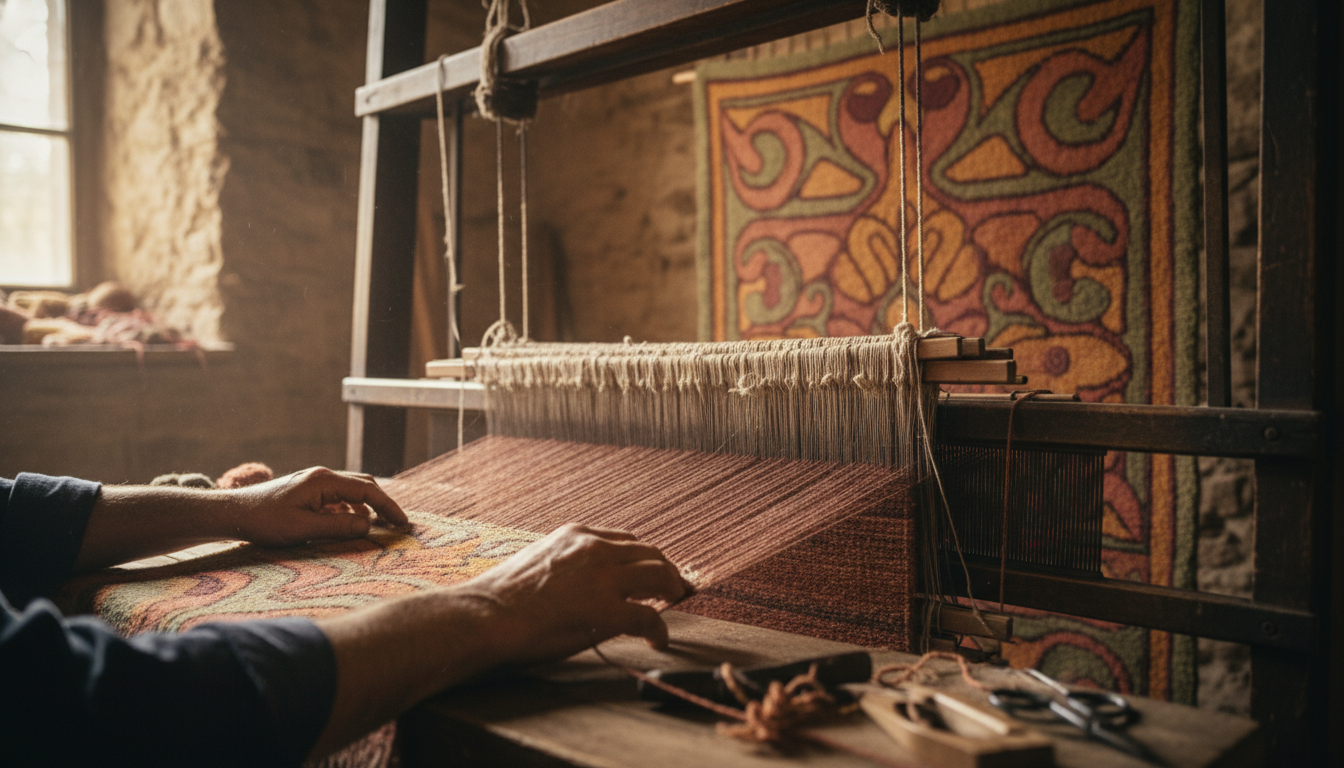
In a design landscape increasingly saturated by fast-fashion homewares, the 2026 market is witnessing a profound “flight to quality.” Discerning collectors are no longer looking for mere floor coverings; they are seeking Folk Nouveau rugs that function as tactile archives of human history. This shift isn’t just about aesthetics—it’s about the tangible appreciation of “slow craft.” When you invest in a piece featuring hand-knotted techniques from the Atlas Mountains, you aren’t just buying wool; you are acquiring a structural masterpiece that typically features a knot density of over 150 knots per square inch, ensuring the piece gains character, rather than shedding it, over decades of use.
The financial logic here is simple: while synthetic fibers degrade under UV exposure and foot traffic, the high-lanolin wools used in premium artisanal rugs develop a sought-after patina. We are seeing a specific surge in the valuation of rugs utilizing Bio-Acetate fibers—a 2026 innovation that blends plant-based silk alternatives with traditional wool to create a shimmering, high-durability finish. These materials hold botanical dyes with remarkable tenacity, maintaining those deep, earthy Sage Greens (specifically those with a Light Reflectance Value of 18-22) that define the modern boho-luxury palette.
“The true value of a Folk Nouveau piece lies in its ‘narrative density.’ We are moving away from sterile minimalism toward spaces that tell a story. A rug woven with heritage symbolism acts as a room’s heartbeat, offering an emotional ROI that mass-produced items simply cannot replicate.”
— Julian Thorne, Lead Textile Historian at the Heritage Craft Council
The Intersection of Sustainability and Longevity
Collectors are beginning to realize that “artisanal integrity” is synonymous with “future-proofing.” The construction of authentic Folk Nouveau rugs relies on traditional carding and hand-spinning, which preserves the fiber’s natural scales. This structural integrity allows the rug to “breathe” and naturally repel stains, a stark contrast to the chemical coatings found on budget alternatives. For those sourcing through curated platforms like thebohorugs.com, the focus is often on this intersection of ancient durability and contemporary design sensibilities.
What sets the 2026 Folk Nouveau movement apart is its refusal to compromise. By integrating heritage motifs—like the stylized “Tree of Life” or geometric protective symbols—into a sophisticated, neutral color story, these rugs bridge the gap between a gallery-worthy investment and a functional household staple. They are designed to be the “red thread” that ties a room together, grounding eclectic furniture with a sense of permanence and intentionality.
When evaluating Folk Nouveau rugs for investment, look at the fringe. In a truly artisanal piece, the fringe is an extension of the warp threads (the vertical bones of the rug), not a strip sewn on afterward. This structural continuity is what allows the rug to withstand professional cleaning for over fifty years, ensuring your investment remains a legacy piece for the next generation.
The choice to go artisanal is also a choice for environmental stewardship. Because these pieces are colored with traditional pigments—think madder root, indigo, and walnut husks—they avoid the volatile organic compounds (VOCs) associated with industrial textile manufacturing. This makes them a cornerstone of the “Wellness Interior” trend, where the air quality of a home is considered just as important as its visual flow. Ultimately, owning a piece of this caliber is a quiet rebellion against the disposable, a commitment to a home that feels as meaningful as it looks.
Elevate Your Space
Discover the artistry of handmade luxury. Each rug is a masterpiece of tradition and modern design.
Expert Q&A
What defines Folk Nouveau rugs compared to traditional Persian rugs?
While Persian rugs focus on classical symmetry and intricate floral medallions, Folk Nouveau rugs prioritize a fusion of ‘naive’ folk motifs—like birds, stars, and totems—with the asymmetrical, whiplash curves typical of Art Nouveau, resulting in a more contemporary, bohemian feel.
Are Folk Nouveau rugs suitable for high-traffic areas?
Absolutely, provided they are crafted from durable fibers like high-altitude wool or nettle. The dense knotting common in these artisanal pieces makes them exceptionally resilient to daily wear.
How do I clean a rug made with soy-silk or nettle?
Professional cleaning is recommended for these specialty fibers. For minor spills, blotting with a damp, undyed cloth and a pH-neutral cleaner is the safest approach to maintain the luster of the soy-silk.
What color palettes are trending for Folk Nouveau rugs in 2026?
Expect to see ‘Earth-Core’ palettes: deep ochres, oxidized copper greens, moody indigos, and terracotta, often balanced by the creamy neutrals of undyed wool.
Can I layer Folk Nouveau rugs over wall-to-wall carpeting?
Yes, layering is a hallmark of the modern boho look. A Folk Nouveau rug adds a necessary focal point and a sense of ‘grounding’ to a carpeted room.
Why is ‘narrative-woven’ a key term for 2026?
Consumers are moving toward ‘slow design.’ Narrative-woven implies that the rug tells a story through its symbols—whether representing protection, fertility, or nature—making the decor feel more personal and less anonymous.
Do these rugs fit in a purely minimalist home?
They are actually the perfect ‘anti-minimalist’ accent for a minimalist home. A single Folk Nouveau rug can provide all the texture and visual interest a sterile room needs without creating clutter.
Are Folk Nouveau rugs considered sustainable?
When sourced from brands like TheBohoRugs that prioritize natural dyes and wild-harvested fibers like nettle and hemp, they are among the most eco-friendly flooring options available.
What size Folk Nouveau rug works best for a dining room?
Ensure the rug extends at least 24-30 inches beyond the table edge so that chairs remain on the rug even when pulled out, allowing the narrative border patterns to be visible.
How do I distinguish a genuine Folk Nouveau rug from a mass-produced imitation?
Look for ‘abrash’—natural variations in color caused by hand-dyeing—and the slight irregularities in the weave that characterize hand-knotted or hand-tufted artisanal work.
Will Folk Nouveau rugs go out of style quickly?
Because they are rooted in historical folk art and classical design movements, they bypass the ‘fast-trend’ cycle. They are viewed as heirloom pieces rather than seasonal decor.
Can these rugs be used as wall hangings?
Due to their high level of symbolic detail, many collectors use smaller-sized Folk Nouveau rugs as textile art pieces for walls to add warmth and acoustic dampening.
Written by TheBohoRugs Interior Design Team
Experts in handmade rugs, boho interiors, and modern home decor.