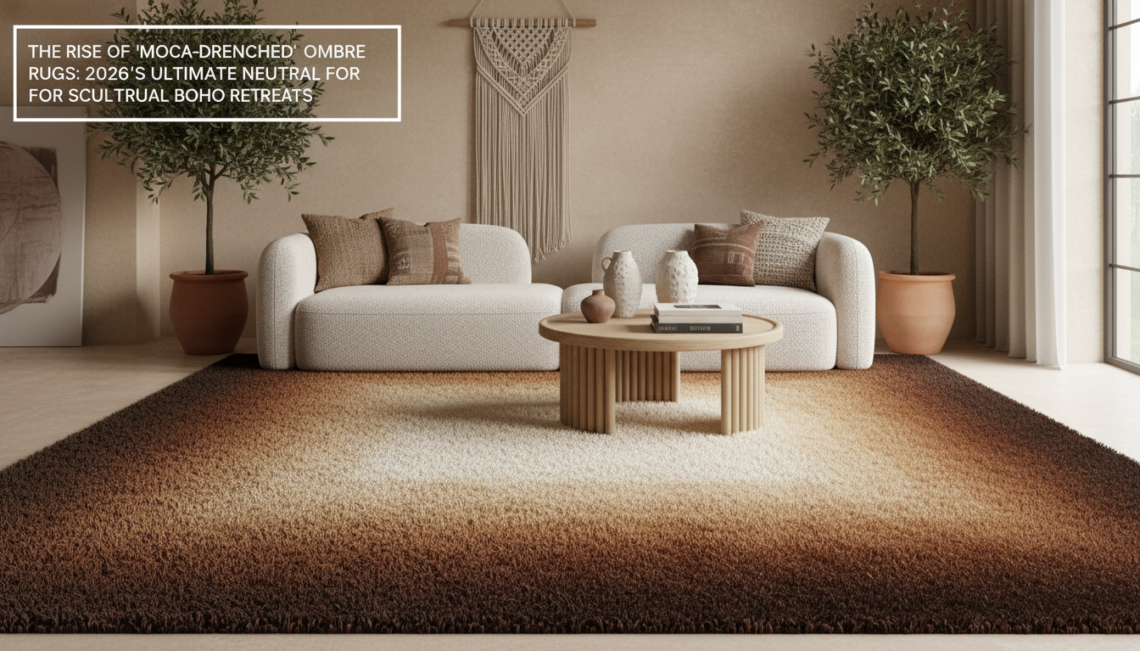
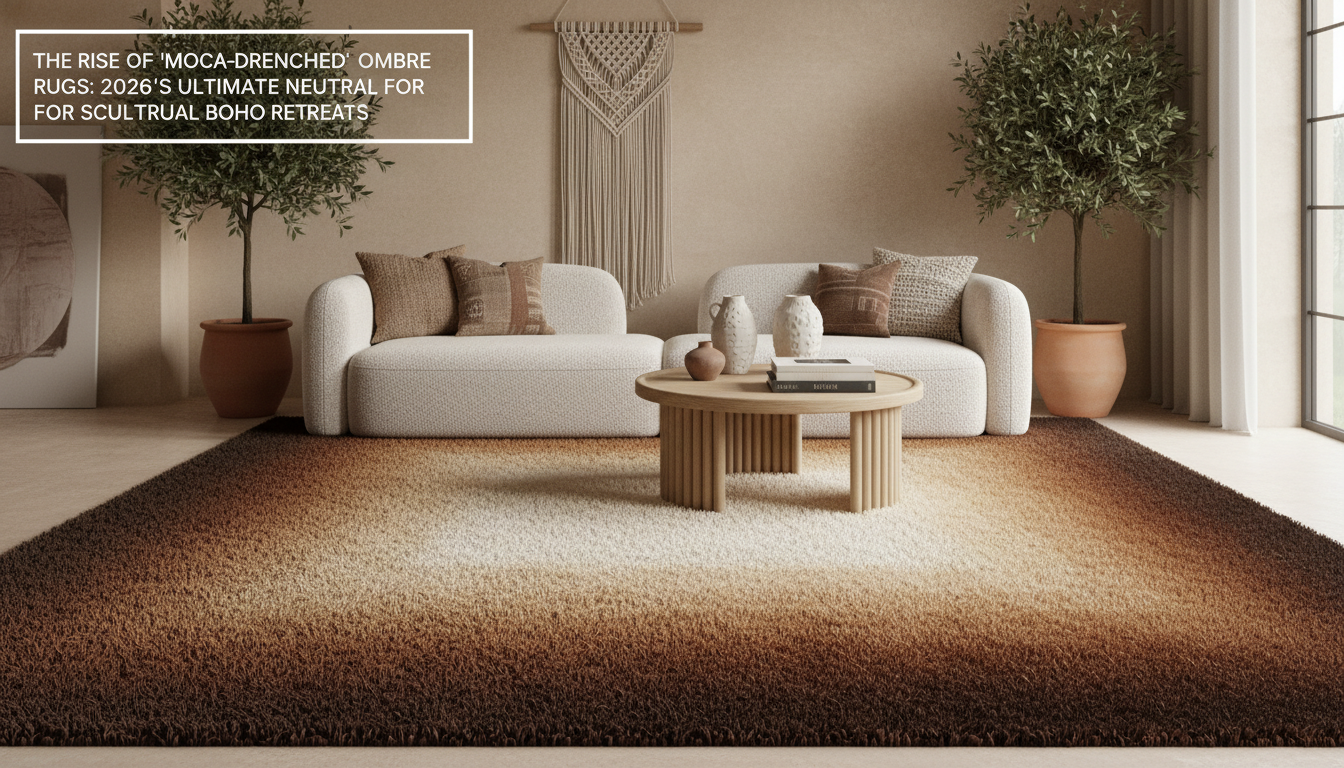
As we pivot away from the clinical whites of the past decade, 2026 marks a definitive return to grounding, earthy sophistication. At the forefront of this movement is the ‘mocha-drenched’ ombre rug, a textile masterpiece that bridges the gap between raw organicism and refined luxury. This trend report explores how these fluid gradients are redefining the ‘Sculptural Boho’ aesthetic, treating the floor as an expansive canvas for tonal depth and tactile expression.
“Mocha ombre rugs 2026 represent a shift toward ‘warm minimalism’ in interior design. Characterized by a seamless gradient of espresso, cocoa, and soft latte hues, these rugs provide the tonal foundation for Sculptural Boho spaces. Unlike static solid colors, the ombre effect mimics natural light and shadow, adding architectural depth to rooms while maintaining a neutral palette that complements curved furniture and sustainable materials.”
The Roadmap
Table of Contents
- The Evolution of Neutrals: Why Mocha is the New Muse
- Sculptural Boho: Defining the 2026 Interior Aesthetic
- The Art of the Gradient: Mastering Ombre in High-End Textiles
- Materiality and Craft: Silk, Wool, and the 2026 Fiber Revolution
- Spatial Harmony: Placing Mocha Tones in Modern Living Rooms
- The Psychology of Coffee Tones: Cultivating a Home Sanctuary
- Styling the Curve: Pairing Ombre Rugs with Organic Furniture
- Investment Value: Why Hand-Knotted Mocha Gradients Endure
The Evolution of Neutrals: Why Mocha is the New Muse
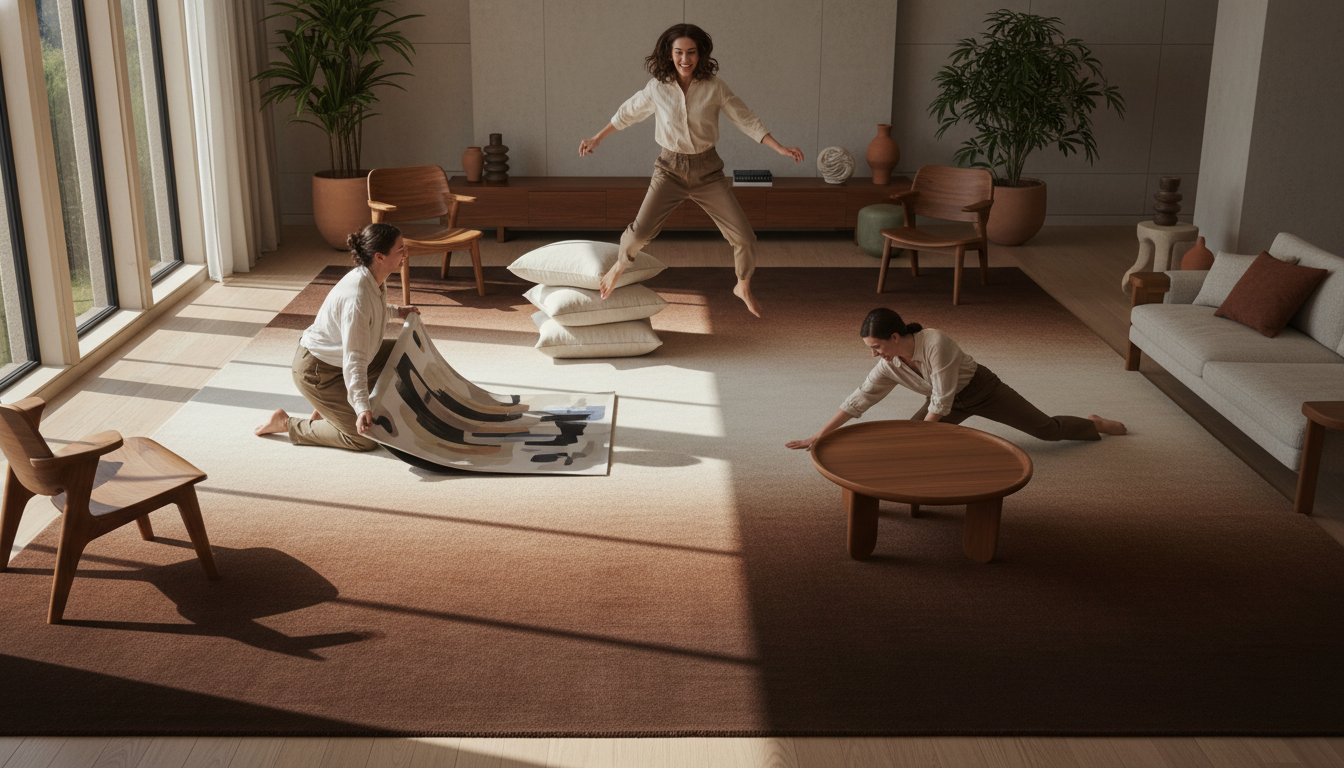
From Sterile Minimalism to Saturated Grounding
For nearly a decade, the design world was held captive by the clinical precision of “millennial gray” and the ephemeral lightness of “oatmeal beige.” As we look toward the mid-decade shift, designers are reclaiming depth. The emergence of mocha ombre rugs 2026 signals a departure from flat, two-dimensional flooring toward textiles that offer tactile gravity and emotional warmth.
Mocha is no longer a mere accent; it is the new anchor. Unlike the harshness of espresso or the predictability of tan, mocha possesses a red-skewed undertone that mimics the organic irregularities of the natural world. This “mocha-drenched” aesthetic serves as the perfect foundation for the sculptural boho retreat—a space where raw wood, curved plaster, and high-pile textiles converge.
The Architectural Gradient: Why Ombre Matters in 2026
The 2026 iteration of the ombre effect is far removed from the digital gradients of the past. Today’s sophistication lies in “chromatic bleeding,” where the transition from deep cacao to frothy latte mirrors the way light hits a canyon floor at dusk. This visual movement is essential for modern layouts where open-plan living requires subtle zone definition without the use of jarring barriers.
- Visual Weight: Darker mocha perimeters ground a room, drawing the eye inward toward lighter, more luminous centers.
- Depth Perception: The gradient creates an optical illusion of varied height, making hand-tufted wool feel like a topographical map.
- Longevity: These tonal transitions hide the wear of daily life, making them as pragmatic as they are poetic.
Materiality and the Artisanal Narrative
In the realm of high-end interiors, the story behind the weave is as vital as the colorway. The demand for mocha ombre rugs 2026 is driven by a desire for “slow decor”—items that feel collected rather than merely purchased. This is where the intersection of heritage techniques and contemporary palettes becomes undeniable.
By sourcing from specialized curators like thebohorugs.com, designers are able to secure pieces that utilize hand-spun New Zealand wool and botanical dyes. These materials ensure that the mocha hues retain a lived-in luster that synthetic fibers simply cannot replicate. The result is a rug that doesn’t just sit in a room, but breathes with it.
Three Predictions for the Mocha-Drenched Era
- Sculptural Borders: Look for rugs where the ombre transition isn’t just color-based, but also texture-based, moving from low-loop piles to plush, shaggy centers.
- Mixed Media: Expect to see mocha wool interspersed with silk or tencel highlights to mimic the shimmer of “wet” coffee beans.
- Monochromatic Layering: The most sophisticated 2026 retreats will layer smaller, darker mocha hides over larger, lighter ombre foundations for a tiered, architectural look.
Ultimately, the rise of these earthy, gradient textiles reflects a broader cultural craving for stability. In an increasingly digital age, the mocha ombre rugs 2026 trend provides a necessary sensory tether, turning the home into a sanctuary that feels both ancient and cutting-edge.
Sculptural Boho: Defining the 2026 Interior Aesthetic
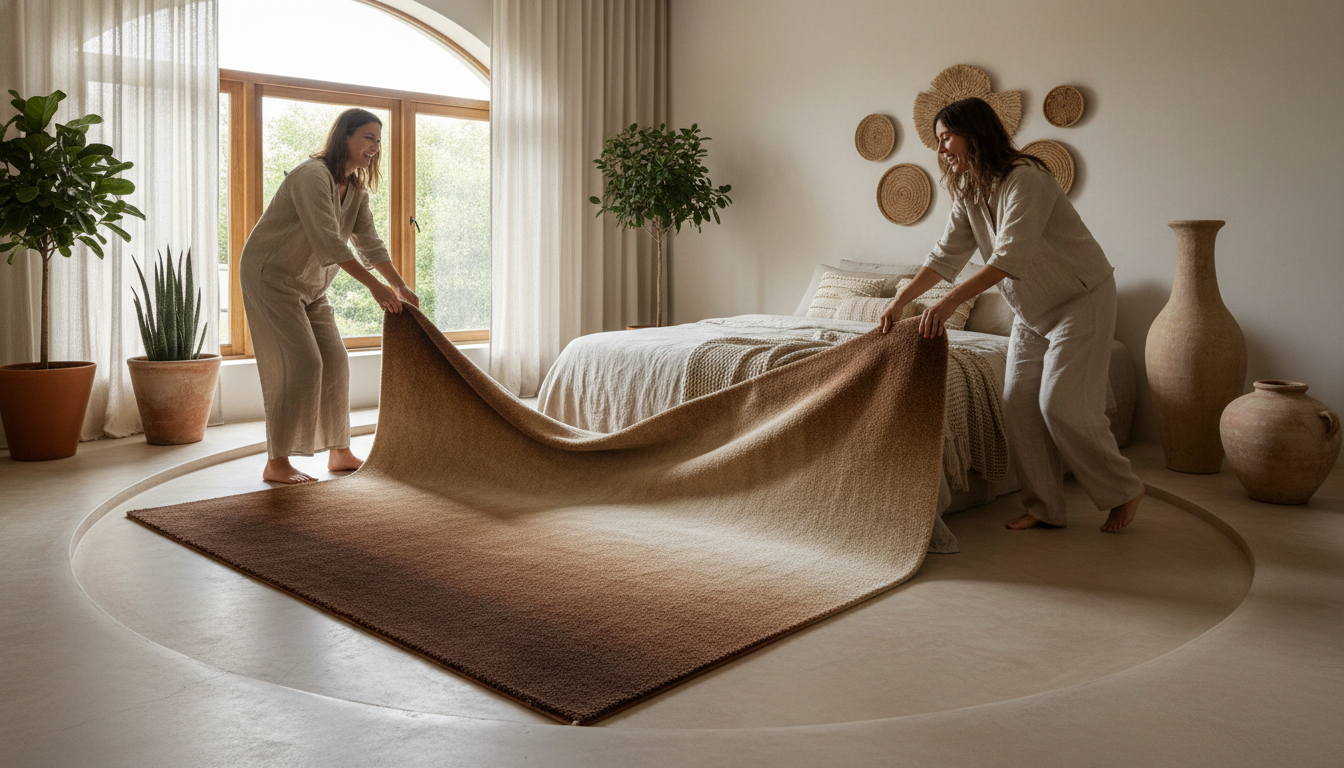
The Evolution of Organic Minimalism
As we approach the mid-decade mark, the design world is witnessing a sophisticated refinement of the bohemian spirit. The eclectic clutter of previous years has matured into “Sculptural Boho”—an aesthetic characterized by monolithic furniture, raw architectural textures, and a strictly curated tonal palette.
This evolution prioritizes visual silence and tactile weight. The trend focuses on “grounding” the home through oversized, low-profile silhouettes that feel as though they were carved from the earth rather than manufactured in a factory.
The Gradient of Grounding: Why Mocha Ombre Rugs 2026 Dominate
Central to this quiet revolution is the floor. Designers are moving away from flat, single-tone textiles in favor of movement. The adoption of mocha ombre rugs 2026 marks a pivot toward “drenched neutrals”—shades that offer the warmth of traditional brown with the sophisticated edge of obsidian and charcoal.
Unlike traditional patterns, the ombre effect provides a soft, atmospheric transition that mimics natural light play. It creates a sense of depth in minimalist rooms, allowing mocha ombre rugs 2026 to serve as an anchor for “floating” furniture arrangements without overwhelming the space with busy motifs.
Materiality and Pairing: The 2026 Toolkit
To achieve the Sculptural Boho look, the interplay of light-absorbing and light-reflective materials is essential. Curating a room around a mocha-drenched base requires a deliberate selection of contrasting elements:
- Travertine and Limestone: The porous, matte finish of stone provides a stark, cool contrast to the warmth of a plush, hand-knotted ombre base.
- Charred Wood (Shou Sugi Ban): Using blackened timber accents draws out the deepest espresso tones in the rug’s gradient.
- High-Pile Artisanal Wool: Texture is the new color. Artisanal sources like thebohorugs.com highlight the importance of high-low pile heights to create a 3D landscape underfoot.
- Malleable Metals: Hand-forged bronze or brushed copper lighting fixtures complement the “mocha” spectrum, adding a hint of luxury to the raw, bohemian vibe.
The New Neutral: Moving Beyond Beige
In 2026, beige is no longer the default for “safe” design. The design community is embracing “Mocha” as the superior neutral because of its ability to hide imperfections while providing a psychological sense of security and permanence.
By integrating mocha ombre rugs 2026 into a retreat-style home, designers are able to bridge the gap between high-concept architecture and livable comfort. These pieces act as a canvas, allowing the structural beauty of a curved sofa or a hand-carved credenza to take center stage against a backdrop of sophisticated, earth-toned gradients.
The Art of the Gradient: Mastering Ombre in High-End Textiles
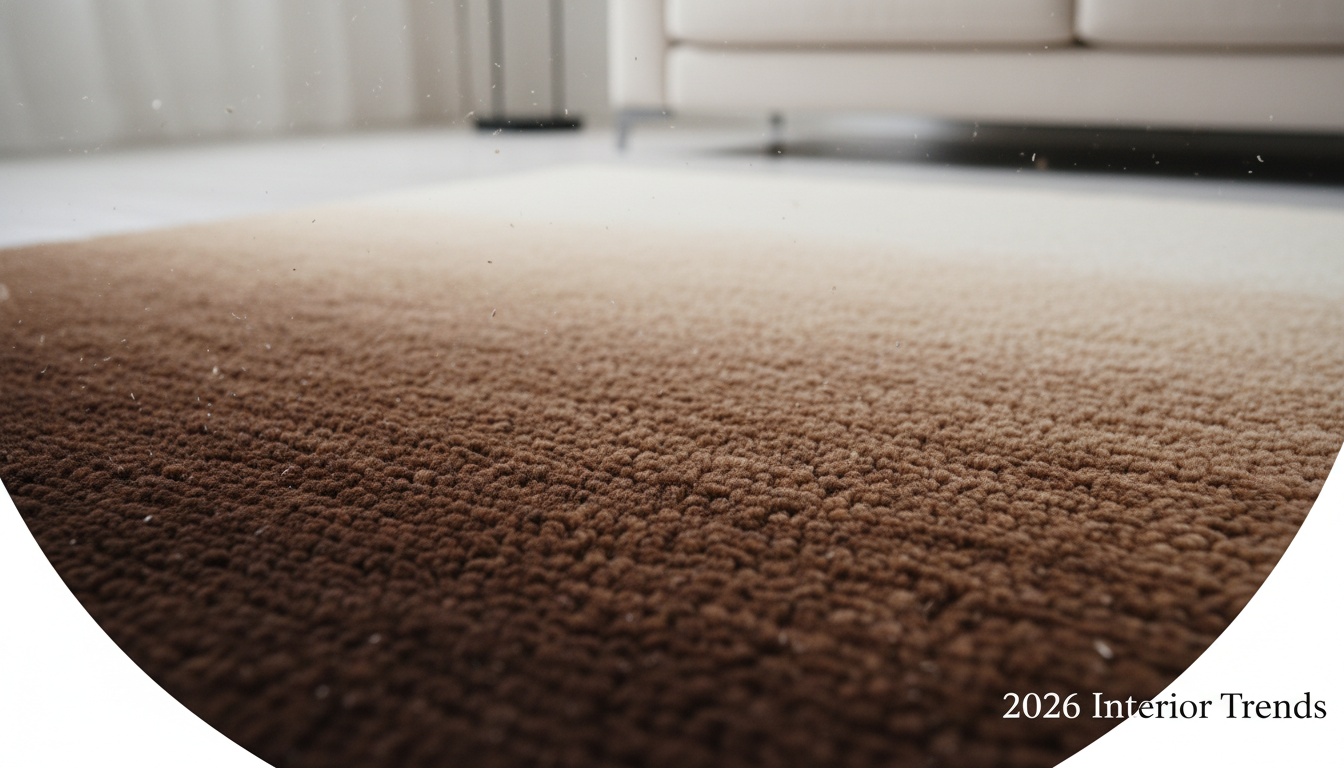
The Technical Evolution of the “Blurred Border”
As we approach the mid-decade shift, the interior design landscape is shedding clinical minimalism for something far more tactile and soulful. The emergence of mocha ombre rugs 2026 represents a pivotal moment where high-end textile engineering meets the warmth of organic modernism. This isn’t the predictable dip-dye of the past; it is a sophisticated study in chromatic weight and fiber density.
In 2026, the gradient is no longer just a visual trick. Designers are utilizing “stutter-step” weaving techniques, where multiple shades of silk and hand-spun wool are intermingled at the junction points. This creates a shimmering, non-linear transition that mimics the way shadows fall across a desert canyon at dusk.
Sculptural Depth: Why Mocha is the New Architectural Anchor
The shift toward mocha as the dominant neutral stems from a collective desire for “grounding” elements in high-ceilinged, sculptural spaces. While gray was cold and beige often felt flat, the specific tonal range of mocha ombre rugs 2026 offers a rich, three-dimensional quality that interacts with natural light.
- The Cocoa Core: Deep, saturated espresso tones at the rug’s center provide a visual “weight” that anchors floating furniture arrangements.
- The Atmospheric Fade: A transition into frothy cream or aged parchment at the edges helps bleed the rug into light-toned hardwood or micro-cement flooring.
- Textural Variance: 2026 trends see a rise in high-low pile heights within the ombre itself, where the darker mocha sections are plush and the lighter tones are sheared flat.
Sourcing Provenance: The Rise of Artisanal Gradients
In a market saturated with mass-produced textiles, the discerning collector is looking for the “perfectly imperfect.” High-end “Sculptural Boho” retreats are defined by pieces that tell a story of human touch. This is why many designers are turning to specialized curators like thebohorugs.com, where the focus remains on artisanal integrity and slow-batch dyeing processes.
When selecting a piece for a 2026 interior, look for these specific characteristics to ensure the rug remains a timeless investment:
- Material Tension: A blend of matte New Zealand wool and luster-wash bamboo silk to highlight the gradient’s movement.
- Irregular Geometry: Ombre patterns that move diagonally or in soft, pebble-like radiuses rather than traditional top-to-bottom fades.
- Earth-First Pigments: Natural dyes derived from walnut husks and mineral oxides, which provide the “mocha” its authentic, non-synthetic resonance.
Ultimately, the mocha ombre rugs 2026 movement is about creating a sanctuary. It is a rejection of the flat-screen aesthetic in favor of a floor covering that feels as if it were carved from the earth itself, providing a sophisticated, tactile foundation for the modern home.
Materiality and Craft: Silk, Wool, and the 2026 Fiber Revolution
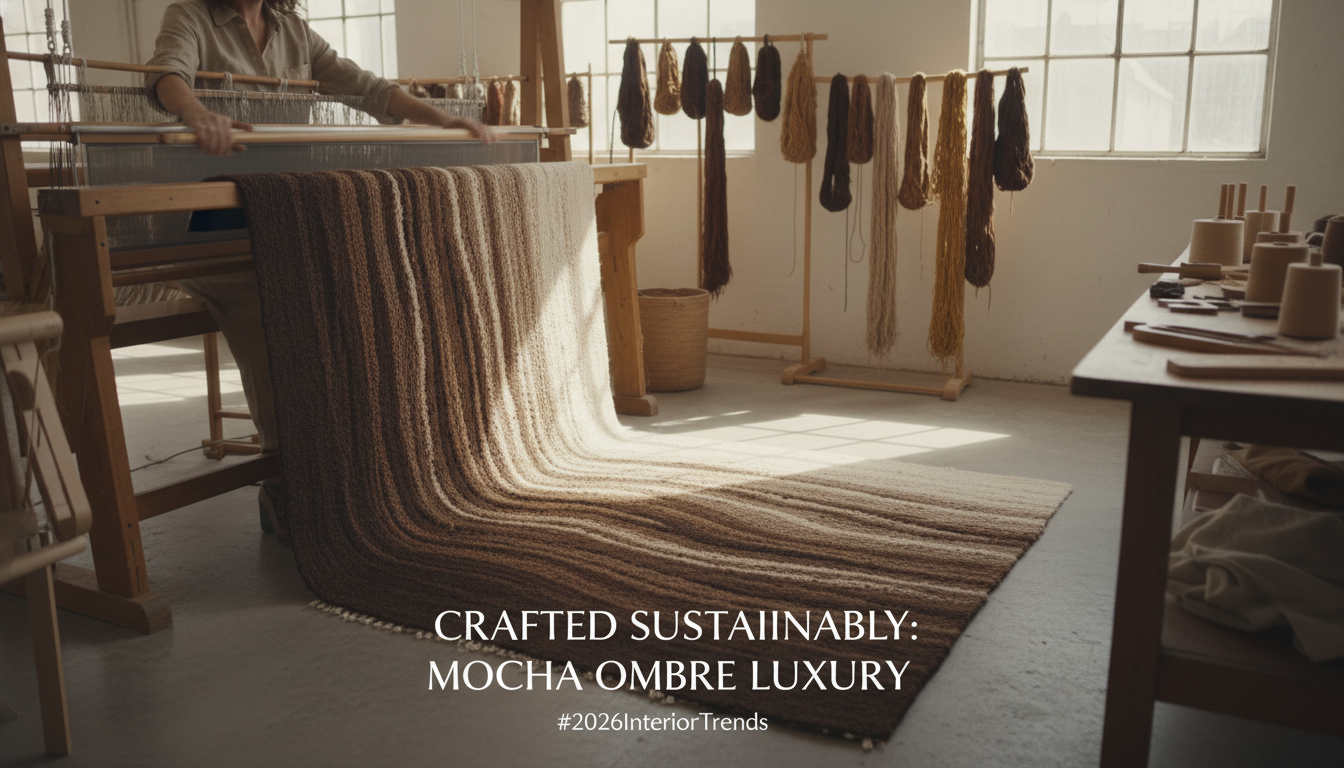
The Alchemical Marriage of Wool and Diaphanous Silk
In the landscape of 2026 interior design, the “mocha-drenched” aesthetic transcends mere color; it is a celebration of tactile complexity. The most coveted mocha ombre rugs 2026 are moving away from monolithic synthetic blends toward a sophisticated interplay of New Zealand wool and hand-spun bamboo silk.
This “fiber-first” approach ensures that the gradient transition—from a deep, espresso-soaked base to a pale, frothy macchiato—feels organic rather than printed. The natural proteins in the wool take the dye with a slight matte grit, while the silk accents catch the light, mimicking the shimmer of a liquid surface.
The 2026 Texture Profile:
- High-Low Relief: Sculptural shearing that follows the ombre transition, creating a physical topography.
- Refined Patina: A deliberate “abrash” effect where slight dye variations suggest a vintage heirloom quality.
- Weight and Drape: Heavy-gauge weaves that anchor the room, moving away from the lightweight “disposable” rug trends of the previous decade.
The Rise of Regenerative Fiber Architecture
Sustainability in 2026 has evolved from a buzzword into a structural requirement. Designers are increasingly looking toward “regenerative protein fibers”—materials that actually improve the soil from which they are sourced. This shift is particularly evident in the artisanal collections found at thebohorugs.com, where the focus remains on long-staple fibers that offer decades of resilience.
The allure of mocha ombre rugs 2026 lies in their use of low-impact, botanical-based mordants. These dyes create a “living color” that interacts with natural sunlight, shifting subtly throughout the day. This creates a sensory experience that generic, mass-produced neutrals simply cannot replicate.
Sculptural Boho: Beyond the Flat Weave
The “Sculptural Boho” movement demands that every piece of furniture—and every textile—acts as a piece of architecture. In this context, the rug is no longer a background element but the foundation of the room’s geometry. The 2026 trend favors over-tufted edges and irregular, organic shapes that break the traditional rectangular mold.
- The Drift Effect: Gradients that move horizontally across the room, elongating small spaces.
- Tonal Layering: Using the rug as a roadmap for the rest of the room’s palette, from walnut cabinetry to travertine coffee tables.
- Sustainable Longevity: A return to hand-knotted techniques that ensure the mocha ombre rugs 2026 will age gracefully, gaining character rather than shedding pile.
By prioritizing materiality over fleeting motifs, these rugs provide a sense of “grounded luxury.” They offer a quiet, monochromatic complexity that serves as the perfect canvas for the curated, sculptural homes of the near future.
Spatial Harmony: Placing Mocha Tones in Modern Living Rooms
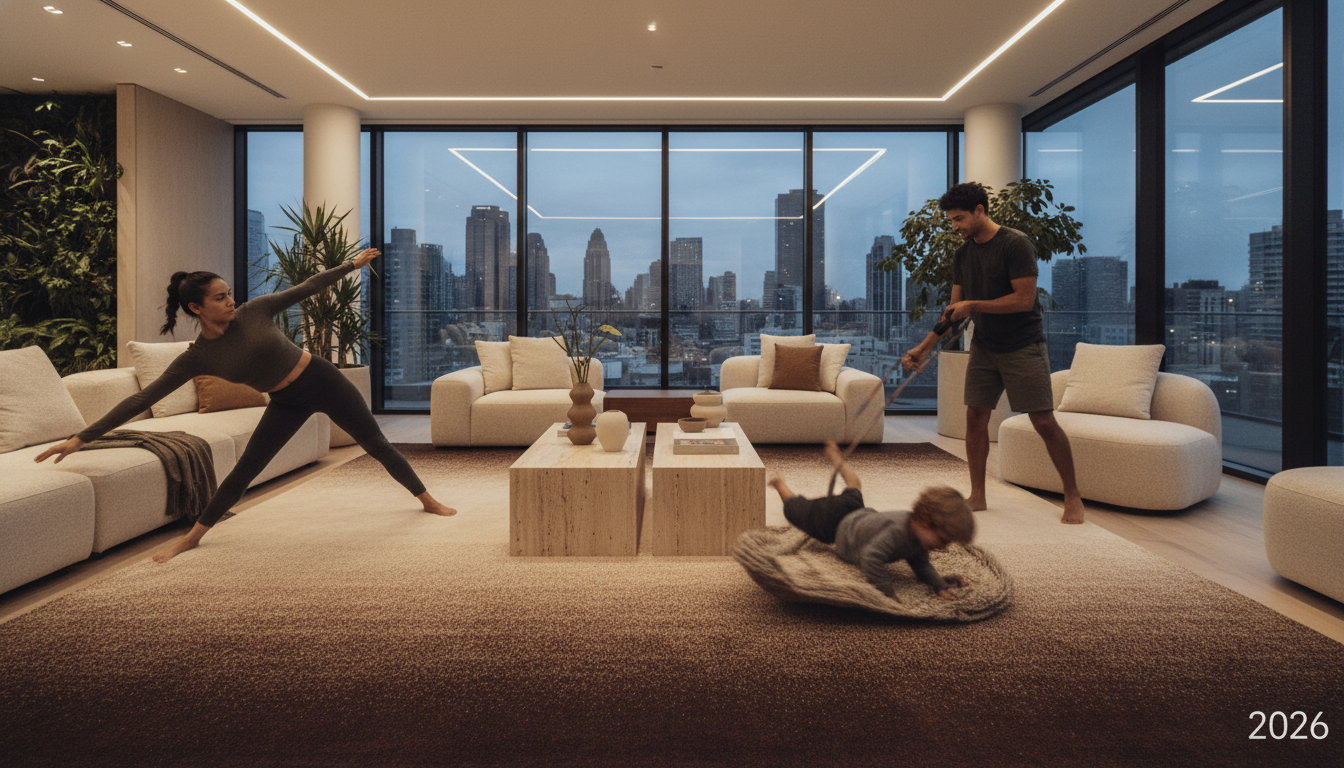
In the evolving landscape of interior design, 2026 marks a definitive shift away from the sterile whites of the past decade toward a more “caffeinated” and grounded palette. The living room has transformed into a sanctuary of tactile warmth, where the floor is treated as a fifth wall. At the center of this movement are mocha ombre rugs 2026, serving as the foundational element for the “Sculptural Boho” aesthetic.
This trend is less about a color choice and more about a spatial philosophy. By utilizing a gradient that transitions from deep, sun-scorched espresso to a pale, creamy latte, designers are able to manipulate the perceived dimensions of a room. This tonal fluidity provides a sense of movement that static, solid-colored textiles lack, making it the ultimate neutral for those who demand both luxury and soul.
The Architectural Gravity of Gradient
Designing with mocha ombre rugs 2026 requires a keen eye for “visual weight.” To ground a modern living space, the placement of the rug’s deepest saturation should correlate with the room’s heaviest architectural features. Positioning the darkest mocha tones under a low-slung, curved bouclé sofa creates a weighted center, allowing the lighter edges of the rug to breathe near the perimeter of the room.
For those curating an artisanal retreat, the source of the textile is as important as its placement. High-end collections, such as those featured at thebohorugs.com, emphasize the hand-knotted imperfections that give these gradients their organic character. In 2026, the trend is moving away from “perfect” machine fades toward “staccato” transitions that mimic the natural erosion of desert landscapes.
- Directional Flow: Align the lightest portion of the ombre toward the primary light source to enhance the room’s natural luminosity.
- Curated Contrast: Pair deep mocha gradients with “bleached” oak or raw travertine coffee tables to create a high-contrast, sculptural look.
- The Perimeter Rule: Ensure at least 12 inches of exposed floor around the rug to let the ombre effect act as a floating island of texture.
Materiality and the 2026 Light Shift
As we look toward 2026, the interaction between light and fiber has become a primary focus for interior architects. A mocha ombre rugs 2026 crafted from a blend of New Zealand wool and botanical silk offers a dynamic surface that changes throughout the day. In the morning, the lighter tones appear crisp and energizing; by dusk, the deep mocha hues absorb the low light, enveloping the room in a cocoon-like atmosphere.
This seasonal and temporal versatility is why the “mocha-drenched” look is eclipsing standard greys. It offers a sophisticated warmth that feels timeless yet distinctly modern. When styling these pieces, consider the following 2026-specific pairings:
- Mushroom-Toned Velvets: Upholstery in muted, earthy purples complements the brown undertones of mocha perfectly.
- Brushed Bronze Accents: Move away from gold; the matte, industrial feel of bronze mirrors the depth of an ombre rug.
- Oversized Greenery: Large-scale foliage like the Ficus Lyrate provides a vibrant organic contrast to the sophisticated neutral gradient.
Ultimately, the rise of mocha ombre rugs 2026 signifies a return to “Quiet Luxury” with a bohemian pulse. It is a design choice that prioritizes the sensory experience of a home, ensuring that the living room remains a curated, sculptural retreat from the digital noise of the outside world.
The Psychology of Coffee Tones: Cultivating a Home Sanctuary
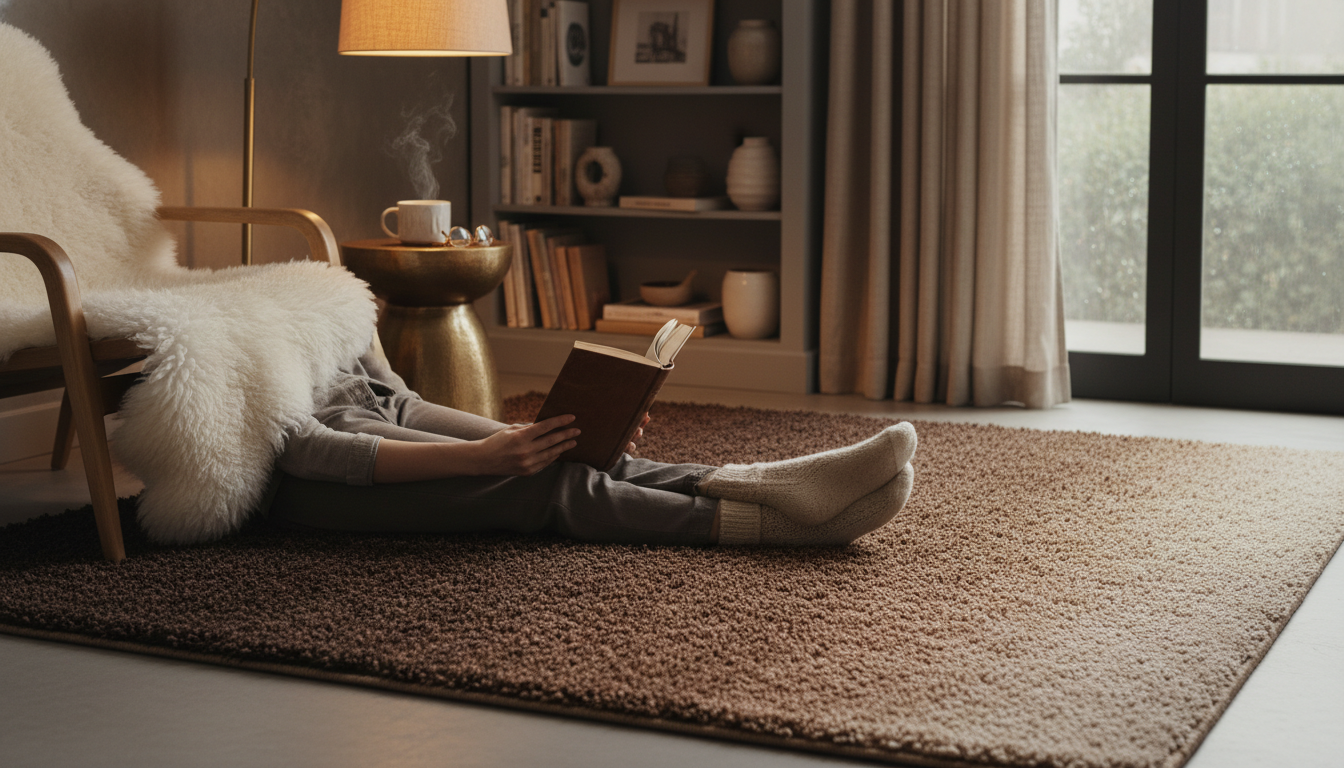
The Evolution of Earthy Sophistication
In the high-stakes world of interior design, 2026 is emerging as the year of “sensory grounding.” We are witnessing a definitive departure from the clinical sterility of previous decades, moving instead toward a palette that feels fermented, aged, and deeply organic. Coffee-inspired tones—ranging from the translucent amber of a pour-over to the dense, velvet weight of a double espresso—provide a psychological safety net that few other hues can replicate.
The allure of mocha ombre rugs 2026 lies in their ability to bridge the gap between architectural rigor and bohemian whimsy. Unlike solid neutrals, which can feel stagnant, the ombre gradient suggests movement and life, mimicking the way light filters through a forest canopy or how cream swirls into a dark roast.
The Chromotherapy of Caffeine Hues
Psychologically, these deep browns offer a sense of permanence. In an increasingly digital landscape, the “Sculptural Boho” movement prioritizes tactile reality. By integrating these gradients into the floor plan, designers are effectively “weighting” the room, lowering the collective heart rate of its occupants through a visual anchor.
- Visual Depth: The transition from dark cocoa to pale latte creates an optical illusion of expanded space.
- Circadian Harmony: The warmth of mocha tones complements natural sunlight during the day and glows under soft, ambient lighting at night.
- Texture Play: 2026 trends emphasize high-pile wools and silk blends that catch the light differently across the ombre spectrum.
Crafting the 2026 Sanctuary
To master this look, the rug must be treated as a piece of floor-bound sculpture rather than a mere floor covering. We predict that the most coveted interiors of the coming year will feature hand-knotted textures that emphasize the artisanal process. This is where the curation at thebohorugs.com becomes essential, offering pieces that respect the slow-craft movement while meeting the modern demand for “quiet luxury.”
When styling mocha ombre rugs 2026, consider the interplay of materials. The “Sculptural Boho” aesthetic thrives on contrast. Pair the soft, fading gradients of a mocha rug with hard-edged elements:
- Poured concrete side tables to contrast the rug’s plushness.
- Unfinished travertine plinths that pick up the lighter cream notes in the ombre.
- Matte black steel accents to pull out the richest, darkest espresso depths of the weave.
Ultimately, the rise of the mocha-drenched floor is a testament to our collective desire for a “retreat” within the home. It is a sophisticated, non-confrontational luxury that prioritizes the inhabitant’s well-being over transient, high-contrast fads.
Styling the Curve: Pairing Ombre Rugs with Organic Furniture
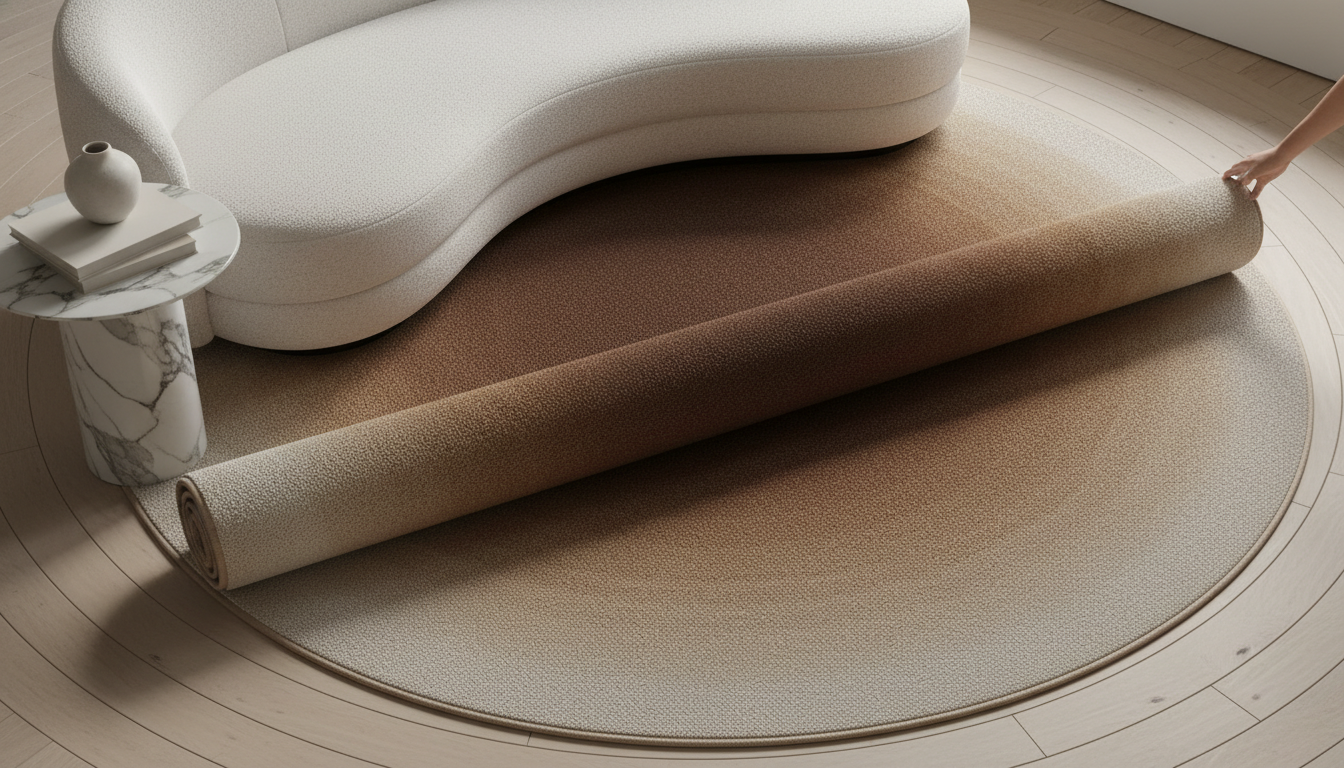
Architectural Fluidity: Anchoring the Curvilinear Sofa
As we pivot toward 2026, the rigid lines of mid-century revival are being replaced by a more sensual, liquid architecture. In this landscape, mocha ombre rugs 2026 serve as the essential foundation, providing a visual “melt” that softens the transition between floor and furniture.
The key to mastering this look lies in the silhouette of your seating. A kidney-shaped sofa in cream bouclé or an overstuffed velvet chaise creates a cinematic dialogue with the rug’s gradient. The darker, espresso-toned edges of the rug should ideally sit beneath the furniture’s heaviest visual points, drawing the eye inward toward the lighter, “creamy latte” center.
For a truly curated feel, consider these sculptural pairings:
- Amorphous Travertine Tables: The matte, porous stone creates a sophisticated contrast against the silky pile of a gradient rug.
- Hand-Carved Totemic Stools: Raw, scorched wood finishes echo the deep chocolate tones found in premium artisanal collections.
- Tubular Metal Accents: Brushed bronze or “antique gold” frames provide a metallic glint that highlights the warmth of the mocha spectrum.
Material Alchemy: Marrying Silk-Wool Blends with Raw Wood
The 2026 aesthetic is defined by “The New Tactility.” It is no longer enough for a room to look curated; it must feel sensory. High-end designers are increasingly sourcing mocha ombre rugs 2026 that utilize a blend of New Zealand wool and botanical silk to create a shimmer that mimics moving water.
When styling these pieces, avoid the temptation to match colors perfectly. Instead, aim for a tonal “bleed.” A dark walnut credenza placed atop a mocha gradient creates a shadow-play effect that adds depth to a room without the need for cluttered decor. This is the hallmark of the “sculptural boho” retreat—minimalist in quantity, but maximalist in texture.
To achieve this balance, professional stylists are following a specific 2026 layering formula:
- The Foundation: A hand-tufted mocha ombre rug to define the “zone.”
- The Mid-Layer: Low-slung seating in organic fabrics like heavy linen or shearling.
- The Apex: Statement lighting, such as oversized paper lanterns or plaster chandeliers, to draw the gaze upward.
The Kinetic Neutral: Why Gradients Outperform Solid Tones
Static neutrals are losing favor to “kinetic neutrals”—colors that appear to change based on light and movement. The obsession with mocha ombre rugs 2026 stems from their ability to hide high-traffic wear while maintaining an ethereal, high-art appearance. Unlike solid brown rugs, which can feel heavy or dated, an ombre transition introduces light into the center of the living space.
For those seeking the pinnacle of this trend,
thebohorugs.com
remains a primary source for designers looking for the intersection of traditional craftsmanship and avant-garde gradients. Their focus on sustainable fibers ensures that the “mocha-drenched” look isn’t just a fleeting aesthetic, but a long-term investment in domestic serenity.By treating the floor as a canvas for tonal exploration, you transform a standard living room into a sanctuary of organic modernism. The result is a space that feels grounded by the earthiness of cocoa and elevated by the weightlessness of cream.
Investment Value: Why Hand-Knotted Mocha Gradients Endure
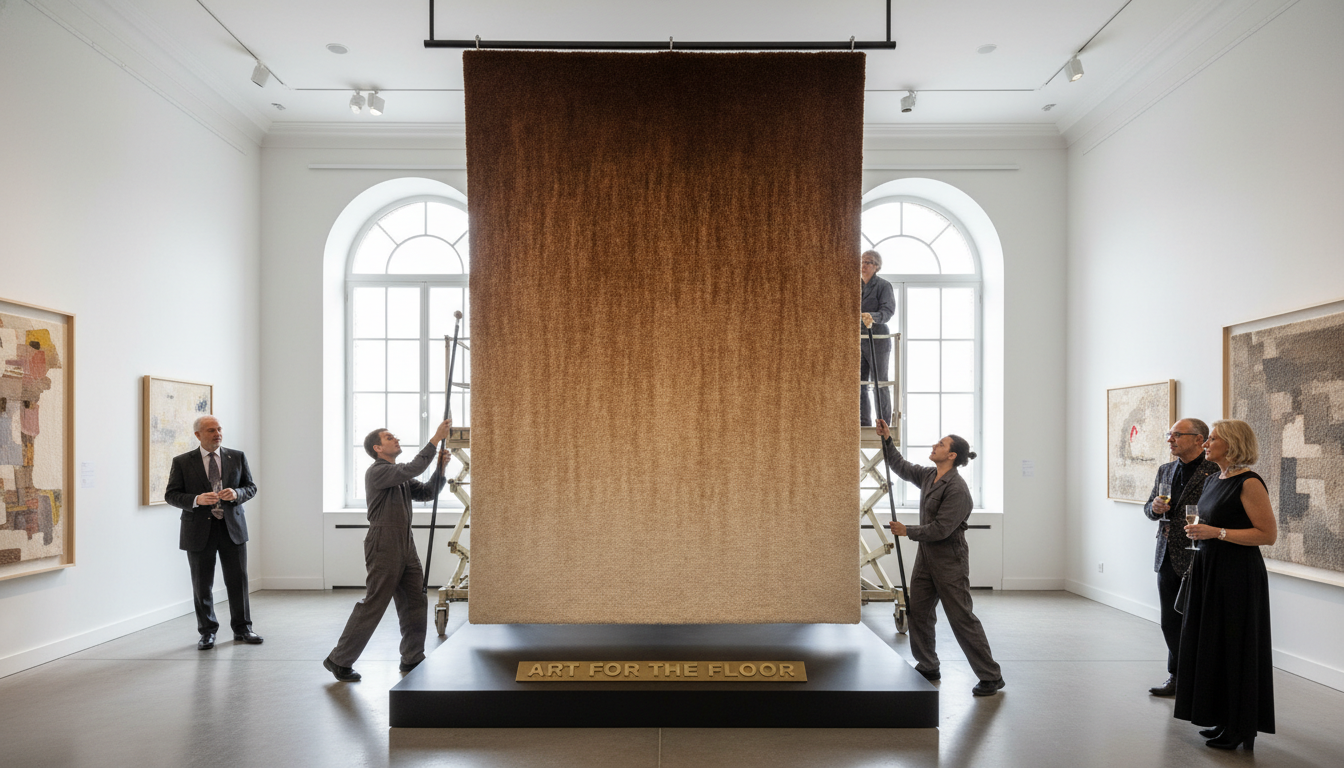
The Shift Toward Chromatic Depth and Tactile Permanence
As the design world moves away from the clinical sterility of “all-white” minimalism, 2026 is ushering in an era of grounded luxury. The industry is witnessing a pivot toward “slow design,” where homeowners prioritize pieces that offer both visual warmth and long-term resale value.
In this landscape, the emergence of mocha ombre rugs 2026 represents a shift toward “quiet luxury” for the floor. Unlike flat-dyed textiles, these hand-knotted gradients utilize variegated wools that mimic the organic flow of natural stone or weathered canyons, providing a sophisticated anchor for sculptural boho interiors.
Why Hand-Knotted Craftsmanship Holds its Value
A hand-knotted rug is more than a floor covering; it is a legacy asset. While machine-made alternatives degrade within seasons, a high-quality hand-knotted piece actually gains character through “patina”—the subtle softening of fibers and colors over decades.
- Lanolin-Rich Wool: Artisanal rugs, such as those curated by thebohorugs.com, utilize high-altitude wool naturally rich in lanolin, making them stain-resistant and incredibly durable.
- Complexity of the Gradient: Achieving a seamless transition from deep espresso to pale latte requires an expert dyer’s touch, a skill that machine looms cannot replicate with the same nuance.
- Structural Integrity: With knot counts often exceeding 100 per square inch, these rugs can withstand high-traffic zones while maintaining their sculptural pile.
The 2026 Aesthetic: From Visual Noise to Earthy Sophience
The “Sculptural Boho” movement of 2026 favors curved furniture, raw timber, and plaster walls. In these environments, a monochromatic rug can feel too stark, while a patterned rug can feel too busy. This is where the mocha ombre rugs 2026 trend finds its niche.
By blending multiple shades of brown—from burnt umber to creamy taupe—these rugs create a sense of movement without the clutter of traditional motifs. They serve as a canvas for high-end furniture, allowing the silhouette of a bouclé sofa or a live-edge coffee table to stand out.
Investment Considerations for the Modern Collector
When sourcing for a curated retreat, designers are looking for pieces that bridge the gap between art and utility. If you are looking to invest in this aesthetic, keep these three criteria in mind:
- Fiber Origin: Look for New Zealand or Himalayan wool blends for the best light-refraction properties.
- Dye Quality: Opt for pot-dyed yarns which offer the “abrash” (natural color variation) essential for the ombre effect.
- Ethical Sourcing: Investing in premium mocha ombre rugs 2026 from reputable sources like thebohorugs.com ensures that the artisanal techniques used to create these gradients are preserved for future generations.
Ultimately, the enduring appeal of the mocha gradient lies in its versatility. It is a neutral that isn’t “safe”—it is a statement of refined, earthy sophistication that promises to remain relevant long after 2026 has passed.
Elevate Your Space
Discover the artistry of handmade luxury. Each rug is a masterpiece of tradition and modern design.
Expert Q&A
What defines mocha ombre rugs 2026 as a specific trend?
The 2026 trend focuses on ‘drenched’ gradients—deeper, more saturated coffee tones that transition into warm creams, specifically designed to complement sculptural and organic furniture.
How do mocha ombre rugs fit into the Boho aesthetic?
They ground the eclectic nature of Boho with a sophisticated, neutral base, moving away from bright patterns toward ‘Sculptural Boho’ which prioritizes texture and form.
What colors pair best with mocha ombre rugs?
Soft terracottas, muted sage greens, travertine beige, and charcoal accents work beautifully to enhance the warmth of mocha gradients.
Are these rugs suitable for high-traffic areas?
Yes, especially those made from high-quality wool or wool-blends, as the darker ‘mocha’ sections of the ombre help mask natural wear and tear.
Can I use a mocha ombre rug in a small room?
Absolutely. Choosing a rug where the lighter part of the gradient is in the center can actually make a small room feel more expansive.
What materials are trending for these rugs in 2026?
Sustainable wool, Tencel, and bamboo silk are the leading materials, offering both durability and a luxurious sheen for the ombre effect.
Is the ombre effect achieved through dyeing or weaving?
In high-end 2026 collections, it is typically achieved through ‘abrash’ dyeing or the strategic blending of different colored yarns during the weaving process.
How do I clean a mocha ombre rug?
Professional cleaning is recommended for high-end fibers, but regular vacuuming without a beater bar will preserve the delicate gradient transitions.
Do mocha rugs make a room look dark?
The ombre effect prevents this by introducing lighter tones, ensuring the rug adds depth without absorbing all the light in the space.
Are mocha ombre rugs considered ‘Art for the Floor’?
Yes, their complex color transitions and hand-crafted nature elevate them from mere floor coverings to statement textile art pieces.
What furniture styles work best with mocha gradients?
Mid-century modern, Japandi, and contemporary sculptural pieces with curved lines are the ideal companions for this trend.
Can these rugs be used in a dining room?
Yes, though it is best to choose a low-pile version to ensure chairs slide easily and to simplify crumb removal from the fibers.
What is the lifespan of a hand-knotted mocha ombre rug?
A high-quality hand-knotted piece can last 50 years or more, often becoming a family heirloom as the colors mellow beautifully over time.
How does lighting affect the look of an ombre rug?
Natural light can enhance the depth of the gradient, while warm LED lighting can make the mocha tones feel richer and more inviting at night.
Are these rugs available in custom sizes?
Most high-end interior design suppliers offer custom sizing to ensure the ombre gradient is perfectly scaled to your specific room dimensions.
Why is ‘mocha’ specifically popular in 2026?
Mocha offers a ‘new neutral’ that provides more warmth than grey but more sophistication than traditional tan or beige.
How do I style a mocha ombre rug in a minimalist home?
Let the rug be the primary source of texture; keep furniture simple and use the rug’s darkest tone for a few accent pieces like pillows or vases.
Is the mocha ombre trend sustainable?
The focus in 2026 is on natural dyes and organic fibers, making many of these rugs an eco-conscious choice for the modern home.
Should the dark or light side of the rug face the window?
Placing the lighter side toward the window can maximize light reflection, while the darker side toward the entrance can hide foot traffic marks.
What rug pad is best for these luxury rugs?
A high-quality felt and rubber pad is recommended to provide cushion and prevent the rug from shifting or stretching over time.
Are mocha ombre rugs suitable for coastal interiors?
Yes, they provide a grounded, ‘driftwood’ feel that offers a more sophisticated alternative to traditional navy and white coastal palettes.
How does the ‘drenched’ look differ from standard ombre?
The ‘drenched’ look features more saturated, deeper tones at one end, creating a more dramatic and architectural visual weight.
Can I layer an ombre rug over carpet?
Yes, but ensure the rug is heavy enough or secured with a specialized rug-to-carpet pad to prevent ripples.
Are these rugs pet-friendly?
Wool-based mocha ombre rugs are naturally stain-resistant and excellent at hiding pet hair due to the varied tonal gradient.
What is the average price range for a quality mocha ombre rug?
Prices vary widely, but for a high-quality hand-tufted or hand-knotted piece in 2026, expect to invest between $1,500 and $8,000.
Does the ombre pattern ever go out of style?
While trends fluctuate, tonal gradients are inspired by nature and have a timeless quality that transcends seasonal fads.
Can I use a mocha ombre rug in an office?
Yes, the grounding coffee tones are excellent for creating a focused, professional, yet warm work environment.
Are there outdoor versions of mocha ombre rugs?
In 2026, manufacturers are producing high-end UV-resistant recycled polyester rugs that mimic the look of luxury interior mocha ombre designs.
What is the best way to orient a rectangular ombre rug?
Orienting the gradient to run parallel with the longest wall usually creates the most harmonious and lengthening visual effect.
Where can I buy the best mocha ombre rugs 2026?
Specialized boutiques like TheBohoRugs offer curated collections that focus on the intersection of craft, sustainability, and 2026 design trends.
Written by TheBohoRugs Interior Design Team
Experts in handmade rugs, boho interiors, and modern home decor.
