In the realm of high-end interior design, rugs are not merely floor coverings; they are ‘Art for the Floor’. However, for the discerning collector, the challenge lies in validating the intrinsic value of a piece beyond its aesthetic appeal. The primary metric for this valuation is Knots Per Square Inch (KPSI). This sophisticated guide serves as a manual for the modern connoisseur, detailing how to count knot density to differentiate between mass-produced items and investment-grade masterpieces. As we look toward 2026, the trend shifts from minimalist aesthetics to dense, narrative-driven weaves where KPSI becomes the language of luxury.
“To learn how to count KPSI (Knots Per Square Inch) on any rug, turn the rug over to view its underside. Using a ruler, count the number of horizontal knots (the ‘weft’) and vertical knots (the ‘warp’) within a one-inch space. Multiply these two numbers together to find the KPSI. For example, a rug with 15 horizontal knots and 15 vertical knots per inch has a KPSI of 225. High-quality rugs typically feature a KPSI of 200 or higher, whereas commercial-grade rugs often fall below 100.”
The Roadmap
Table of Contents
- The Connoisseur’s Dilemma: Decoding Rug Density
- KPSI Explained: The DNA of Hand-Knotted Excellence
- The Precision Method: How to count knots on any rug surface
- Normal vs. High-End: Navigating the Quality Spectrum
- Textural Integrity: Why Material Choice Magnifies Knot Count
- 2026 Trends: The Shift Toward Micro-Knots and Narrative Weaves
- Durability and Value: The ROI of High Knot Density
- Mastering the Acquisition: Curating Your Personal Rug Gallery
The Connoisseur’s Dilemma: Decoding Rug Density
The Geometry of Mastery: Why KPSI Matters
In the world of high-end interior design, a rug is not merely a floor covering; it is a woven narrative of time and technique. Knots Per Square Inch (KPSI) serves as the “resolution” of this textile. Much like the pixels on a digital screen, a higher KPSI allows for intricate, curvilinear patterns that a coarser weave simply cannot replicate.
By 2026, we predict a significant shift in the luxury market toward “transparent provenance.” Discerning collectors are moving away from the ephemeral nature of mass-produced decor, seeking instead pieces where the labor of the artisan is quantifiable through density and detail.
The Artisan’s Blueprint: How to Count Knots with Precision
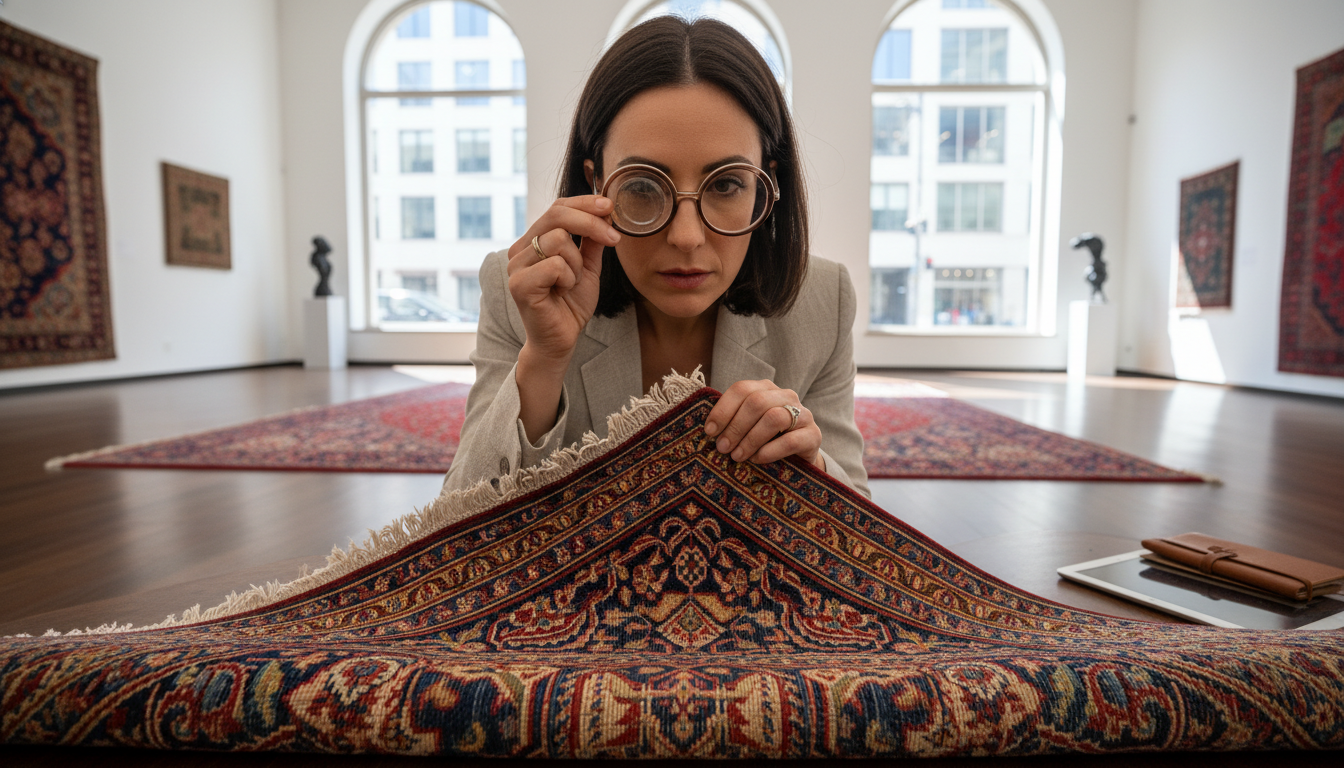
Understanding how to count the weave density is the first step toward true connoisseurship. To determine the KPSI, you must examine the “back” or the reverse side of the rug, where the individual knots are most visible. This process requires a steady hand and a keen eye for the warp and weft.
Follow this professional methodology to evaluate any piece:
- Isolate the Area: Use a magnifying glass and a ruler. Measure one inch horizontally (along the width) and one inch vertically (along the length).
- Count the Nodes: Count the number of “bumps” or knot heads along that one-inch horizontal line, then do the same for the vertical line.
- The Calculation: Multiply the two numbers together. For example, 10 knots wide by 12 knots high equals 120 KPSI.
While the process of how to count remains manual, it is the only way to verify the architectural integrity of the piece. High-quality rugs typically begin at 150 KPSI, while museum-grade masterpieces can soar above 600 KPSI.
Discerning the Exceptional: Normal vs. Investment-Grade
The distinction between a “normal” rug and a high-quality investment piece lies in the clarity of the design and the resilience of the fiber. A standard rug often utilizes thicker, coarser wool to fill space quickly, resulting in a blurred pattern. In contrast, premium artisanal rugs, such as those curated by thebohorugs.com, utilize hand-spun Highland wool or silk, allowing for a tighter, more durable structure.
Consider these three indicators of superior quality:
- Pattern Definition: Flip the rug over. If the pattern on the back is nearly as sharp as the pattern on the front, you are holding a high-density masterpiece.
- Handle and Drape: A high-KPSI rug will feel supple, almost like a heavy fabric, rather than stiff or “cardboard-like.”
- Fringe Integration: In authentic high-quality rugs, the fringe is an extension of the rug’s foundation (the warp), not sewn on as an afterthought.
For those learning how to count for the first time, remember that density is not the only metric of beauty, but it is the primary metric of value. As we approach 2026, the trend of “slow interiors” will continue to elevate these high-density weaves, turning functional items into generational heirlooms that appreciate in both aesthetic and fiscal value.
KPSI Explained: The DNA of Hand-Knotted Excellence
The Mathematics of Artistry
In the world of fine textiles, Knots Per Square Inch (KPSI) is the definitive metric of a rug’s soul. It represents the hours of silent labor, the tension of the loom, and the density of the weaver’s vision. While a standard decorative piece might prioritize color, a true investment-grade rug is defined by its architectural complexity.
Higher KPSI allows for fluid, curvilinear patterns that mimic the delicacy of a painting. When you transition from a “normal” rug—typically ranging from 30 to 80 KPSI—to a high-quality masterpiece exceeding 300 KPSI, you are moving from a floor covering to a textile heritage. Curated collections, such as those found at thebohorugs.com, emphasize this distinction, favoring clarity over mass production.
Precision in Practice: A Step-by-Step Guide
Mastering how to count these intricate intersections requires more than just a ruler; it requires an eye for the weaver’s rhythm. To determine the density of a hand-knotted piece, follow this refined process:
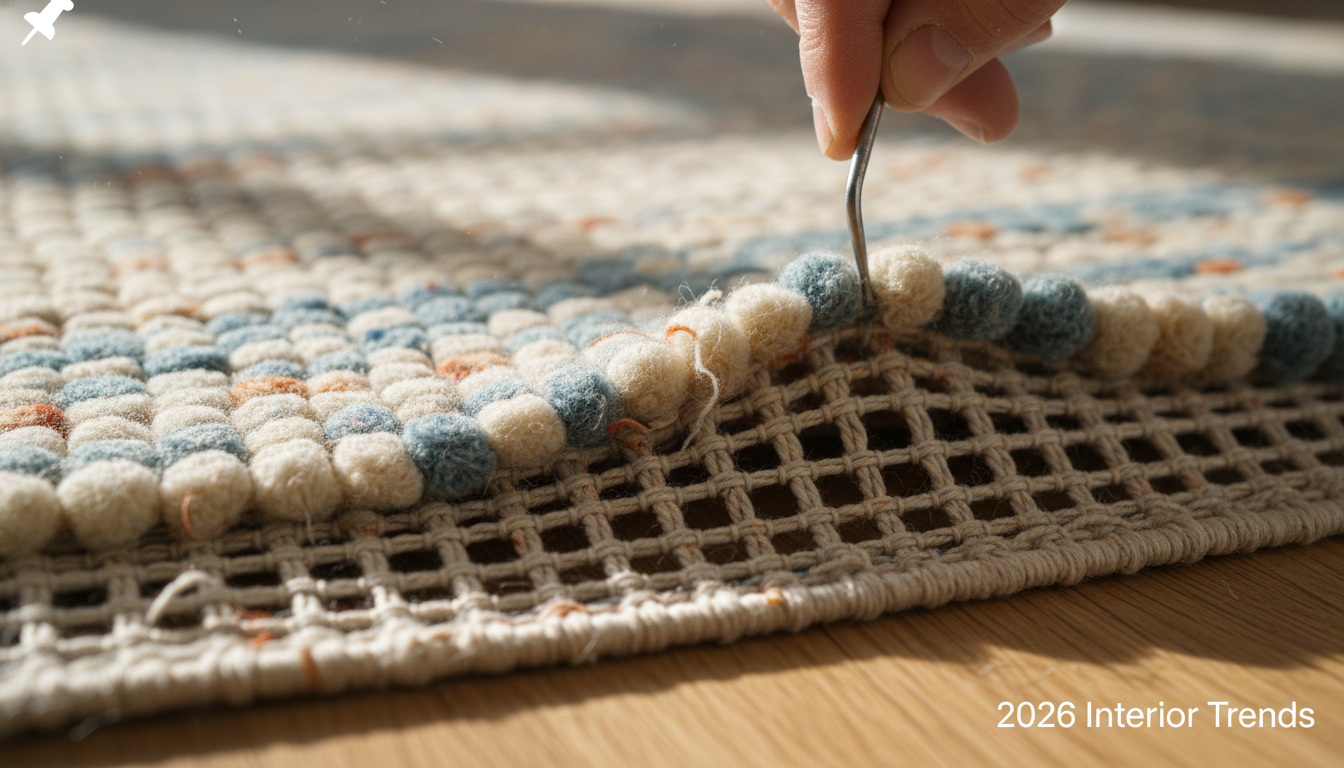
- Turn the rug over: The structure is only visible from the back, where the individual knots appear as small, square-like bumps.
- Isolate a square inch: Use a magnifying glass and a thread counter or a standard ruler to mark a one-inch square area.
- The Horizontal and Vertical Count: Count the number of knots along one horizontal inch and one vertical inch.
- The Calculation: Multiply these two numbers together. For instance, 15 knots across and 15 knots down equals 225 KPSI.
Understanding how to count ensures you are assessing the actual density of the weave rather than the thickness of the pile, which can often be misleading in lower-quality commercial rugs.
The 2026 Horizon: The Return to Hyper-Density
As we approach 2026, the luxury interior market is shifting toward “Haptic Minimalism.” Designers are moving away from the “fast-furniture” aesthetic, instead seeking rugs with ultra-high KPSI that offer a sensory experience. We predict a surge in demand for Persian and fine Turkish weaves where the KPSI exceeds 500, treated not as floor decor, but as “horizontal tapestries.”
This trend is a rebellion against digital saturation. A high-density rug offers a level of detail that cannot be replicated by machinery, making each piece a unique analog record of human capability. Learning how to count the knots becomes an act of appreciation for this slow-craft movement.
Commercial Grade vs. Investment Quality
The difference between a standard rug and a high-quality piece is often found in the “clarity” of the design. In a low KPSI rug, geometric shapes appear pixelated or jagged. In contrast, a high-quality rug from a reputable source like thebohorugs.com will exhibit sharp, defined motifs and a supple handle.
- Hand-Spun Silk & Wool: High-quality rugs use natural fibers that allow for tighter knotting without breaking.
- The “Grin” Test: Fold the rug back on itself. If you see large gaps or the foundation peeking through, it is likely a lower-density commercial piece.
- Pattern Complexity: Complex floral sprays and tiny “boteh” motifs are only achievable with high KPSI, distinguishing artisanal work from mass-market alternatives.
By refining your knowledge of how to count and evaluate these fibers, you transition from a consumer to a connoisseur, ensuring your next acquisition is a piece of enduring value.
The Precision Method: How to count knots on any rug surface
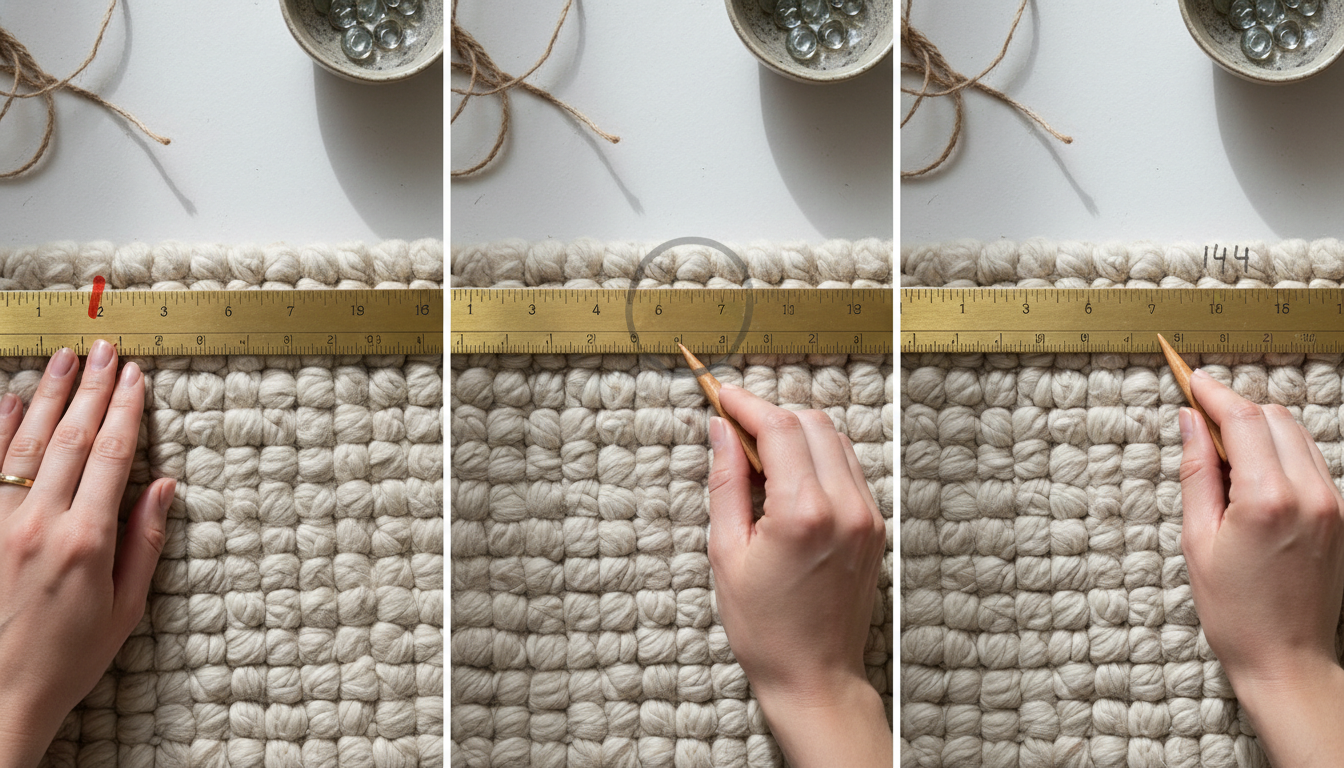
The Weaver’s Ledger: Deciphering the Language of Density
In the realm of textile investment, Knots Per Square Inch (KPSI) serves as the definitive metric of quality, much like the carat weight of a diamond or the thread count of Egyptian cotton. A rug’s density dictates not only its clarity of design but its longevity across generations. To the untrained eye, a rug is merely a floor covering; to the connoisseur, it is a mathematical masterpiece of tension and patience.
Higher KPSI signifies a finer yarn and a more intricate labor process. While a tribal piece might feature 60 to 80 knots, a museum-grade silk investment often exceeds 400. Understanding the nuances of these figures allows collectors to distinguish between a commercially produced piece and an artisanal heirloom found in curated galleries like thebohorugs.com.
The Technical Blueprint: How to count with Accuracy
To evaluate the integrity of a weave, one must look past the pile and examine the “foundations” on the reverse side. Learning how to count these individual nodes requires a steady hand and a jeweler’s eye for detail. The process is a simple calculation of horizontal and vertical density that reveals the weaver’s true skill level.
- Flip and Focus: Always measure from the back of the rug, where the structural knots are visible as small, distinct “bumps.”
- The Linear Measure: Place a transparent ruler horizontally along the weft. Count the number of knots within one linear inch.
- The Vertical Alignment: Rotate your ruler 90 degrees to measure along the warp (the vertical fringe direction) and count the knots in one linear inch.
- The Multiplier: Multiply the horizontal count by the vertical count to achieve your total KPSI.
Mastering how to count the density of a weave is the first step in identifying a high-quality rug. A discrepancy between horizontal and vertical counts often indicates a “lazy” weave, whereas perfectly balanced numbers reflect the precision found in premium artisanal collections.
Distinguishing the Common from the Exceptional
The difference between a “normal” rug and a high-quality masterpiece lies in the resolution of the motif. Low-density rugs (below 100 KPSI) often feature geometric, blocky patterns because the “pixels”—the knots—are too large for fine curves. Conversely, high-quality rugs utilize fine-spun wool or silk to achieve 300+ KPSI, allowing for curvilinear floral patterns and lifelike shading.
Beyond the numbers, quality is felt in the “handle” or the drape of the rug. A high-KPSI rug from thebohorugs.com will feel supple, almost like a heavy fabric, whereas a lower-quality, machine-assisted rug will feel stiff and unresponsive. This tactile feedback is the hallmark of genuine hand-knotted craftsmanship.
The 2026 Outlook: The Rise of “Traceable Tectonics”
As we look toward 2026, the luxury rug market is moving away from the “perfect” uniformity of machine-made pieces. We predict a surge in “Traceable Tectonics”—a movement where high-quality rugs are valued for their intentional, slight irregularities that prove human origin. High-end collectors are increasingly seeking rugs that balance high KPSI with hand-dyed “abrash” (natural color variations).
Furthermore, experts anticipate the introduction of digital “Rug Passports” by 2026. These will use spectral imaging to verify knot counts and wool provenance, making the knowledge of how to count and verify these pieces even more vital for the modern investor. In an era of AI-generated aesthetics, the physical density of a hand-tied knot remains the ultimate proof of authentic luxury.
Normal vs. High-End: Navigating the Quality Spectrum
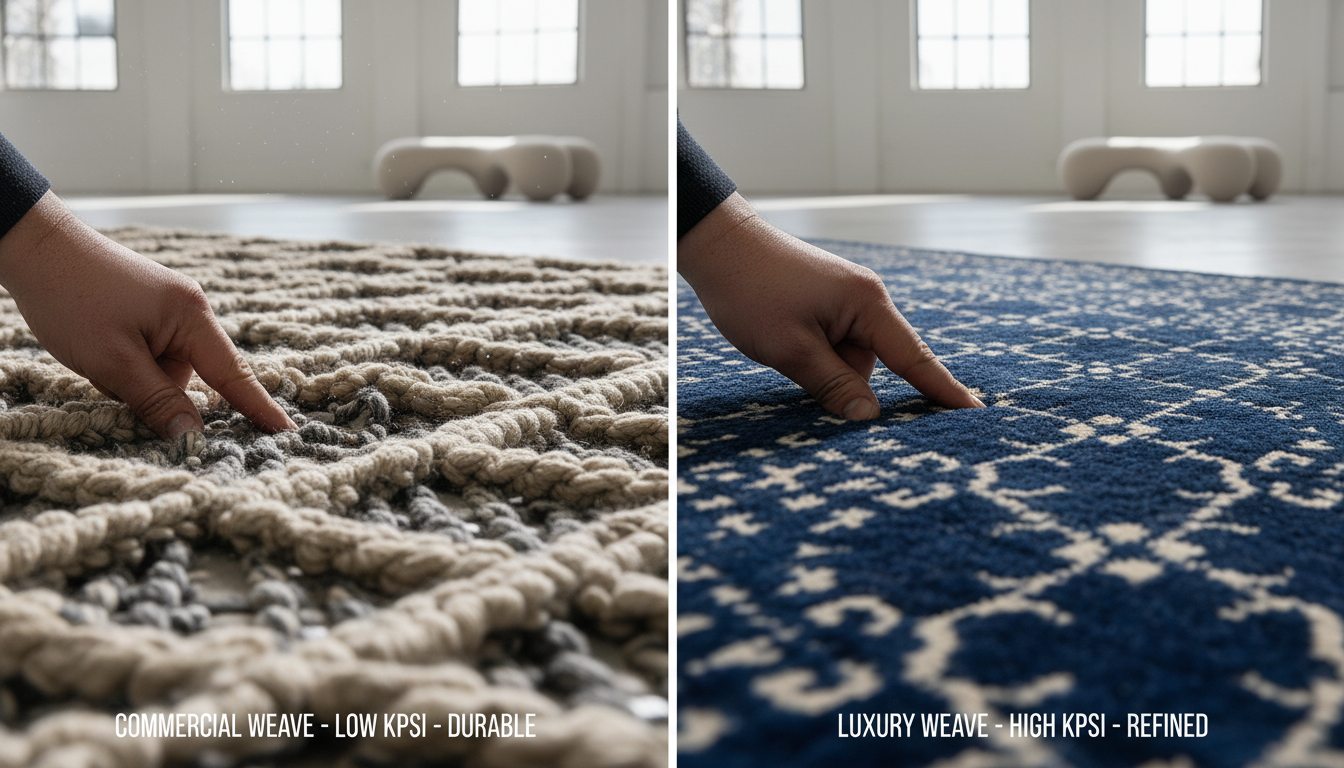
The Anatomy of a Masterpiece
In the world of high-end interiors, a rug is far more than a floor covering; it is a structural foundation that dictates the room’s gravitas. To the untrained eye, a machine-made “normal” rug and a hand-knotted heirloom may appear cousins, but their DNA is fundamentally different. While mass-produced pieces rely on synthetic backings and chemical glues, artisanal selections—such as those found at thebohorugs.com—utilize centuries-old techniques that ensure longevity and depth.
The primary differentiator lies in the KPSI (Knots Per Square Inch). This metric serves as the industry’s “thread count,” signaling the level of detail, labor intensity, and material fineness. As we move toward 2026, the market is shifting away from “fast-decor” toward “quiet luxury,” where the value of a rug is found in its density and the provenance of its fibers.
Mastering the Metric: Knot Density
Learning how to count these intricate intersections is the first step in distinguishing a museum-quality piece from a commercial one. A high-end rug typically starts at 150 KPSI and can soar well above 1,000 for silk-heavy masterpieces. To determine the value of your piece, follow these precise steps:
- Turn the rug over: The truth of a rug is always hidden on its underside, where the individual knots are visible.
- Measure a square inch: Use a ruler to mark one linear inch horizontally (across the weft) and one linear inch vertically (along the warp).
- Perform the calculation: When you understand how to count effectively, you simply multiply the horizontal knots by the vertical knots.
- The 2026 Standard: Look for a result of 200+ KPSI for contemporary investment-grade wool rugs.
The 2026 Horizon: Luxury Beyond the Thread
By 2026, experts predict a significant rise in “regenerative luxury.” Discerning collectors will prioritize rugs that use hand-spun, high-altitude wool dyed with organic vegetable pigments. These materials hold tension differently than synthetic fibers, creating a “living” texture that changes with the light. In contrast, “normal” rugs often use “dead” wool or heat-set polypropylene, which lacks the refractive quality of premium silk or hand-carded fibers.
Understanding how to count the KPSI is just the beginning of your journey into connoisseurship. High-end rugs offer a specific tactile feedback—a density that feels firm yet supple—that machine-made versions cannot replicate. At thebohorugs.com, the focus remains on these artisanal nuances, ensuring that every knot contributes to a narrative of heritage rather than mass production.
Identifying the Quality Tiers
- Commercial Grade (10-50 KPSI): Often tufted or machine-knotted. Expect a lifespan of 3-5 years before the backing degrades.
- Mid-Range Artisanal (60-120 KPSI): Sturdy, daily-use rugs that offer good detail and durability.
- High-End Legacy (150-400 KPSI): Highly detailed patterns, often utilizing fine wool and silk blends. These pieces typically appreciate in value.
- Museum Quality (500+ KPSI): Exceptional fineness, usually reserved for silk Isfahan or Tabriz rugs, where the design mimics the clarity of a high-resolution photograph.
As the interior design landscape moves toward sustainable, heirloom-focused spaces, knowing how to count and verify the density of your rug ensures your investment will stand the test of time, both aesthetically and structurally.
Textural Integrity: Why Material Choice Magnifies Knot Count
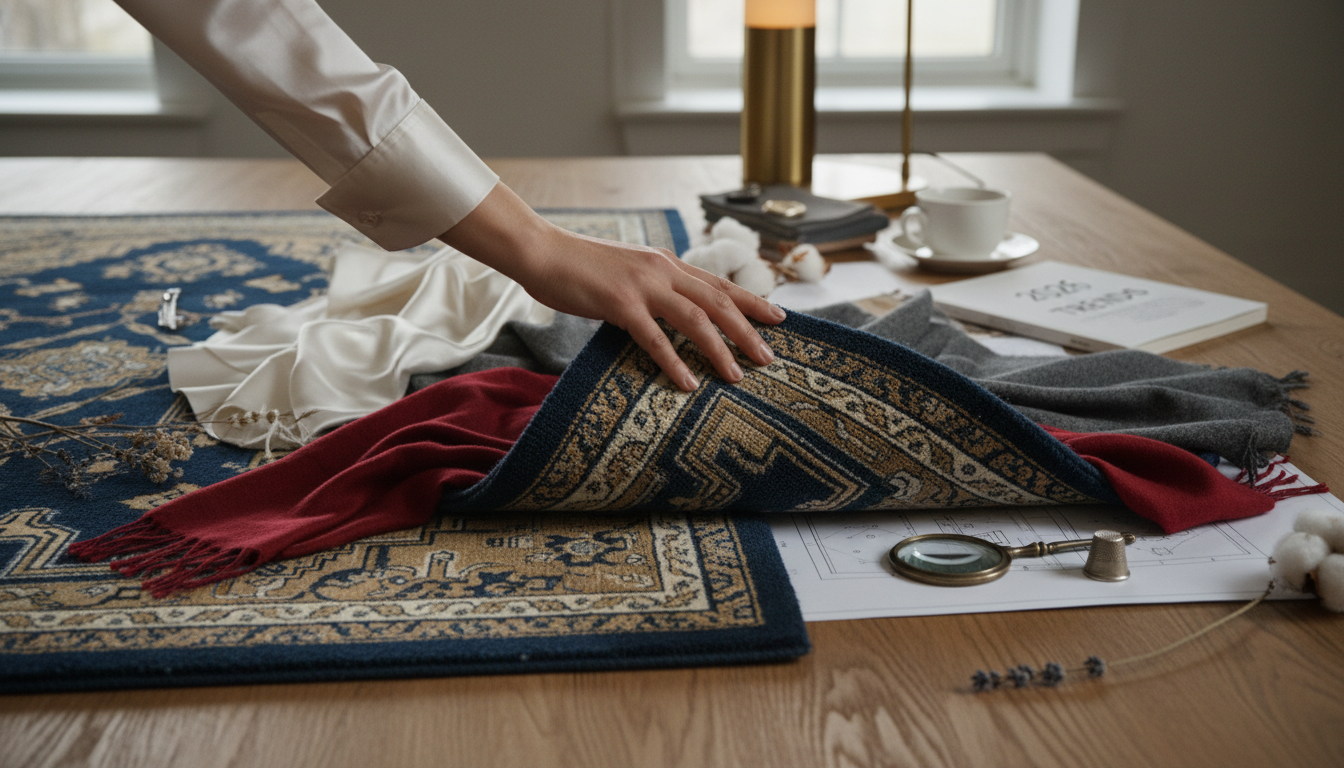
The Alchemy of Fiber and Density
The relationship between material and knot density is the silent differentiator in the world of high-end textiles. While a standard wool rug might plateau at a certain density due to the thickness of the fiber, premium materials like hand-spun silk or high-altitude Himalayan wool allow for a much tighter weave. This is where “resolution” becomes a tangible luxury.
High-quality rugs utilize these finer fibers to create a “canvas” that can support a higher Knots Per Square Inch (KPSI). When determining how to count knots accurately, one must first recognize that the material dictates the threshold of detail. Silk allows for thinner warps and wefts, facilitating a level of intricacy that standard wool simply cannot sustain without becoming structurally brittle.
- Mulberry Silk: Enables KPSI counts exceeding 600, resulting in photographic detail.
- Hand-Spun Wool: Offers a rustic, organic texture with lower KPSI but superior “lanolin-rich” longevity.
- Pashmina Blends: A rising trend for 2026, offering the softness of silk with the resilient memory of wool.
The 2026 Shift: High-Definition Weaving
Looking toward 2026, the industry is pivoting toward “multidimensional weaving.” This technique involves varying KPSI within a single piece to create topographic textures. Collectors are no longer just looking for uniformity; they are seeking pieces where the density fluctuates to highlight specific design motifs, creating a 3D effect that challenges traditional grading.
This shift emphasizes the importance of provenance. Curated collections, such as those found at thebohorugs.com, prioritize these artisanal nuances, where the material choice is deliberately paired with the weaving technique to ensure the rug remains a generational heirloom rather than a fleeting decor piece.
Mastering the Calculation
To differentiate a commercial-grade piece from a masterpiece, you must look at the “back” of the rug—the blueprint of its soul. To understand how to count these intricate grids, use a magnifying glass and a one-inch ruler. Count the vertical warps and the horizontal wefts within that square inch; multiplying these two figures reveals the KPSI.
- Normal Rugs: Typically range from 30 to 100 KPSI. These focus on utility and broad patterns.
- High-Quality Rugs: Usually start at 150 KPSI and can soar to over 1,000 for museum-grade Persian silks.
- The Tension Test: High-quality rugs maintain a consistent tension. If the “count” varies wildly across the rug, it indicates a lack of master-weaver oversight.
In the luxury market, density is not just a metric of labor; it is a metric of clarity. Just as a higher pixel count defines a premium screen, a higher knot count defines the depth and vibrancy of the rug’s narrative.
2026 Trends: The Shift Toward Micro-Knots and Narrative Weaves
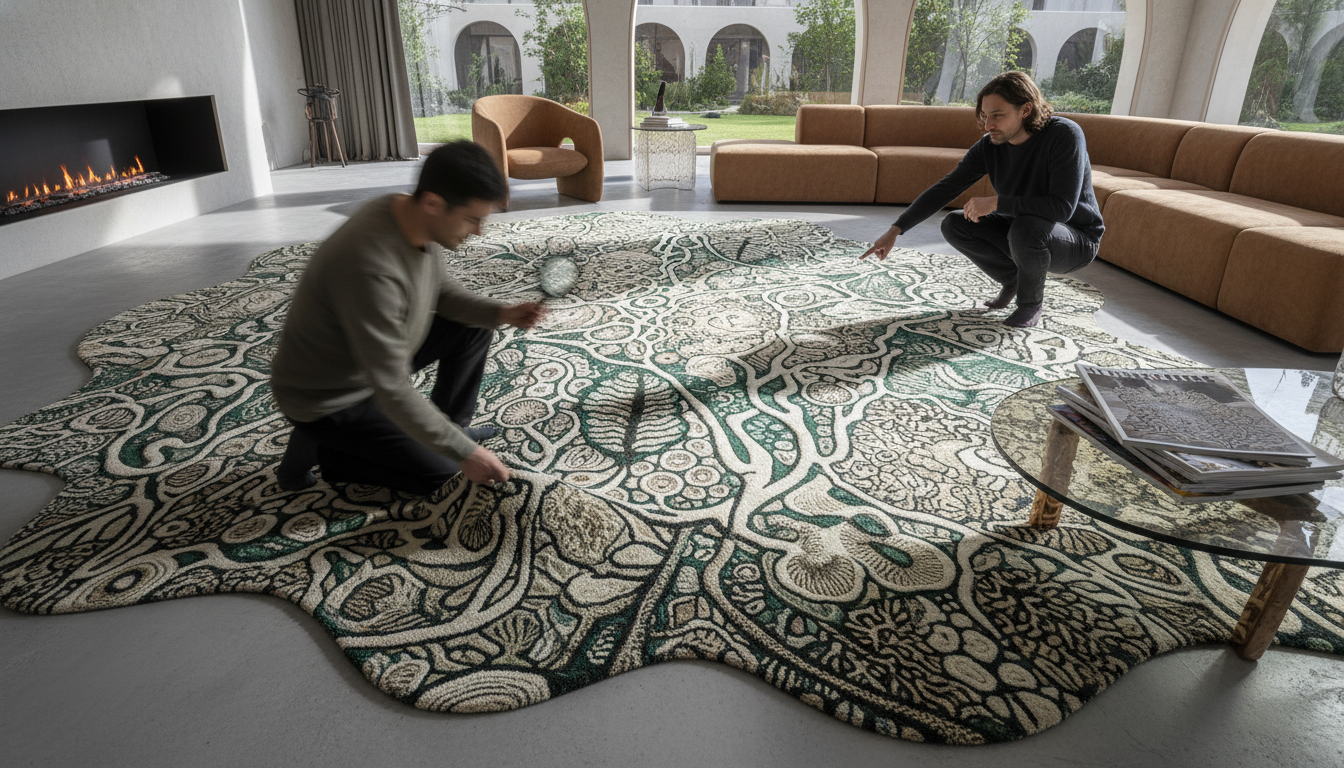
The Renaissance of Ultra-Fine Density
As we approach 2026, the luxury rug market is pivoting away from the oversized, chunky textures that dominated the last decade. The new aesthetic frontier is defined by “micro-knots”—weaves so dense they mimic the fluid drape of heavy silk. This shift is driven by a global desire for “Quiet Technicality,” where the value of a piece is hidden in its mathematical precision rather than loud patterns.
For the discerning collector, high KPSI (Knots Per Square Inch) is becoming the primary metric of investment. Knowing how to count these microscopic intersections is no longer a niche skill for dealers; it is the baseline for high-end procurement. In 2026, we expect a surge in “Hyper-Dense” weaves, where artisan pieces regularly exceed 600 to 800 KPSI to achieve photographic detail in wool and silk blends.
Narrative Weaves: The Floor as a Manuscript
Beyond density, the coming years will prioritize “Narrative Weaves”—rugs that function as biographical or cartographic documents. Unlike mass-produced rugs, these artisanal works use varying knot densities to create 3D topography within the pile. This technique allows weavers to tell stories through subtle shifts in texture and light reflection.
When evaluating these complex works, the methodology remains the same but the stakes are higher. Understanding how to count the knotting across different sections of a narrative weave reveals the intentional “breathing” of the tension, a hallmark of hand-knotted authenticity found in premium collections like those curated at thebohorugs.com.
2026 Quality Indicators: What to Watch For
- The “Silk-Steel” Fusion: Look for rugs using high-tensile botanical silks that allow for thinner warps and higher knot counts without sacrificing durability.
- Variable Pile Heights: High-quality pieces in 2026 will feature hand-carved elevations that accentuate the intricacy of the micro-knotting.
- Organic Imperfection: Despite the high density, true luxury will be marked by “abrash”—subtle color variations that prove the use of small-batch, hand-dyed yarns.
Technical Mastery for the Modern Collector
To differentiate a “normal” rug from a 2026 heirloom, one must look at the reverse. A high-quality piece will show a mirror image of the pattern with startling clarity. Learning how to count the knots on the back of the rug using a one-inch window is the most reliable way to verify if a piece meets the new micro-knot standards.
- Align a physical or digital magnifying ruler against the warp (vertical) and weft (horizontal).
- Identify the individual “squares” or nodes within that one-inch span.
- Multiply the horizontal count by the vertical count to achieve the total KPSI.
In a world of fast-decor, the movement toward micro-knots represents a return to “slow luxury.” At thebohorugs.com, this commitment to high-density artistry ensures that every weave is not just a floor covering, but a sophisticated investment in textile engineering that will endure well past the 2026 season.
Durability and Value: The ROI of High Knot Density

The Structural Integrity of Fine Weaves
In the realm of high-end interior design, a rug is rarely just a floor covering; it is a capital investment. High knot density—often exceeding 300 KPSI—transforms a piece from a functional textile into a durable asset. This density creates a structural “memory” in the fibers, allowing the rug to withstand decades of foot traffic while maintaining the crispness of its intricate motifs.
When assessing a piece for its long-term Return on Investment (ROI), collectors look beyond the initial aesthetic. High-quality rugs utilize tightly packed knots to prevent dirt from settling deep into the foundation. This natural resistance to abrasion is why artisanal pieces from thebohorugs.com are often passed down through generations, retaining their vibrancy and structural silhouette long after machine-made counterparts have succumbed to wear.
Mastering the Technical Assessment
Discerning the difference between a commercial-grade floor covering and a masterpiece requires a tactile investigation of the rug’s reverse side. To truly understand the value of your acquisition, you must master the technicality of the weave. Knowing how to count these minute grids allows you to verify the labor-intensity of the piece before purchase.
To perform a precise evaluation, follow this professional methodology:
- Isolate the Grid: Use a ruler to mark a one-inch section on the back of the rug, both horizontally (along the weft) and vertically (along the warp).
- Identify the Nodes: Look for the small, individual bumps of color. These are your knots.
- The Calculation: Multiply the number of horizontal knots by the number of vertical knots within that square inch to determine your KPSI.
While a “normal” rug may hover between 30 and 80 KPSI, a high-quality investment piece typically starts at 150 KPSI, with museum-quality silks often reaching into the thousands. Mastering how to count these intersections provides the transparency needed to justify the price point of premium hand-knotted art.
2026 and Beyond: The Shift Toward Tangible Heritage
As we approach 2026, the interior design market is pivoting away from “disposable decor” toward a philosophy of quiet luxury and tangible heritage. We predict a surge in “Rug Provenance Digital Passports,” where high KPSI counts will be verified via blockchain to ensure authenticity and ethical labor practices. This transparency will further elevate the resale value of hand-spun, high-density textiles.
For those seeking to curate a home that reflects both sophistication and sustainability, the focus has shifted toward natural dyes and heritage techniques. A rug with a high knot count is not merely a purchase; it is a hedge against the ephemeral nature of modern trends, providing a tactile anchor of quality in an increasingly synthetic world.
Distinguishing Normal vs. High-Quality Rugs
- Design Definition: In high-quality rugs, the design on the back is as sharp and clear as the design on the front. Normal rugs often appear blurry or muted on the reverse.
- Material Resilience: Premium rugs use hand-carded wool or silk which contains high lanolin content, providing a natural sheen and stain resistance that synthetic “high-traffic” rugs cannot replicate.
- Fringe Authenticity: In an artisanal rug, the fringe is an extension of the rug’s internal foundation (the warp). In mass-produced rugs, the fringe is usually sewn on as an afterthought.
Mastering the Acquisition: Curating Your Personal Rug Gallery
The Mathematics of Artistry: Deciphering the KPSI
In the world of high-end textiles, density is the silent language of quality. Knots Per Square Inch (KPSI) serves as the “resolution” of a rug, determining the sharpness of its motifs and the longevity of its pile. For the discerning collector, mastering how to count these intersections is the first step toward verifying a piece’s provenance.
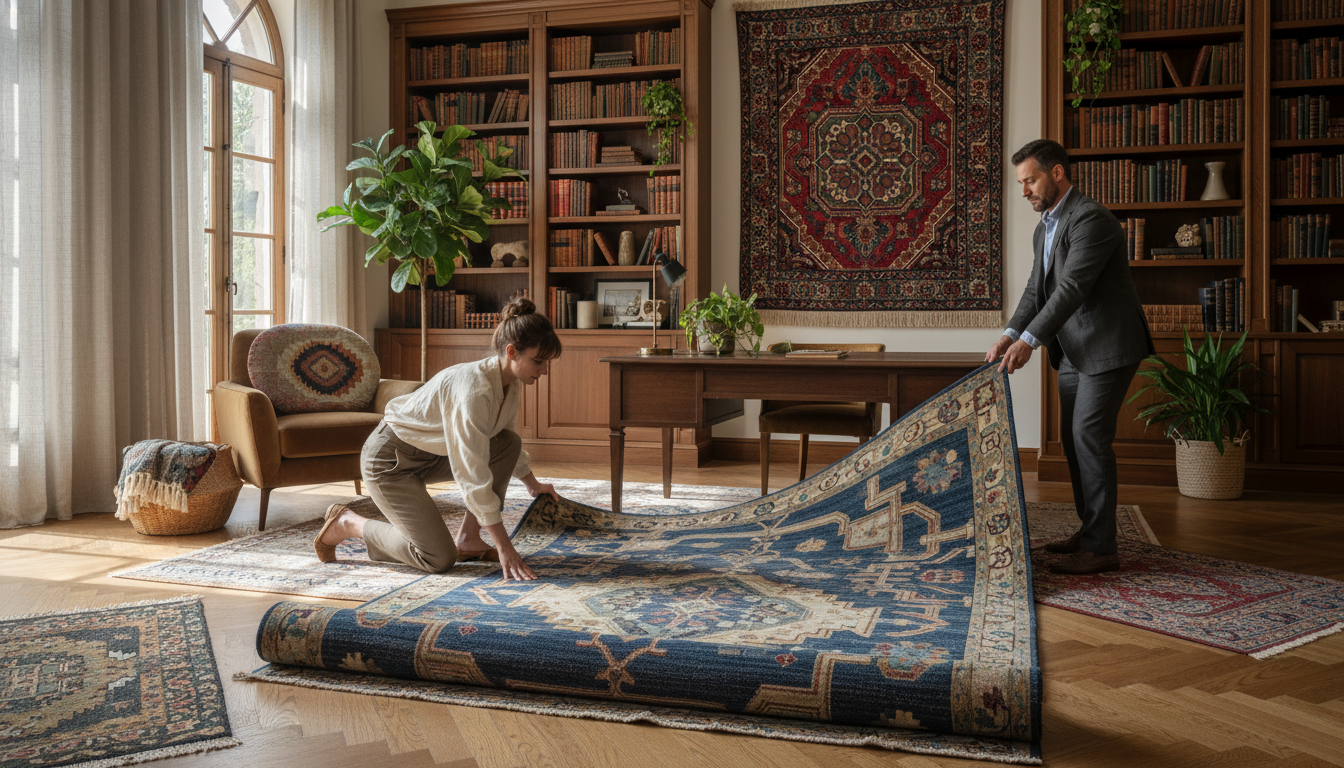
To begin, invert the rug to expose the foundation. Using a professional loom ruler or a standard tape measure, mark exactly one inch of the warp (vertical) and one inch of the weft (horizontal). Count each individual knot loop along both axes. Multiply these two figures to arrive at your KPSI.
While a standard decorative piece may hover between 30 and 80 KPSI, true investment-grade weaves—like those curated by thebohorugs.com—frequently exceed 150 to 300 KPSI. This density allows for the fluid, painterly curves found in Tabriz or fine Isfahan patterns that lower-tier rugs simply cannot replicate.
2026 Predictions: The Rise of “Narrative Tension”
As we approach 2026, the market is pivoting away from machine-perfect uniformity. Sophisticated investors are seeking “narrative tension”—intentional, subtle variations in knotting tension that prove a human hand guided the loom. We predict a surge in value for rugs that balance high KPSI with hand-spun, vegetable-dyed wools that exhibit “abrash” or natural color shading.
Future-proofing your collection involves looking beyond the grid. The luxury buyer of 2026 will prioritize:
- Structural Integrity: Hand-knotted fringes that are an extension of the rug’s internal skeleton, rather than secondary attachments.
- Tactile Complexity: A mix of silk highlights and high-altitude wool that creates a multi-dimensional sheen under natural light.
- Ethical Provenance: Verified artisanal chains where the weaver’s signature is integrated into the border design.
The Anatomy of Excellence vs. The Mass-Produced
Distinguishing a masterpiece from a “normal” commercial rug requires an eye for the structural nuances. A high-quality rug possesses a supple handle; it should feel like heavy silk or soft leather when folded, whereas mass-produced tufted rugs often feel stiff due to latex backings.
When learning how to count and evaluate, look for these three hallmarks of a legacy piece:
- Clarity of Design: On a premium rug, the pattern on the back should be as sharp and vibrant as the pattern on the front.
- Material Memory: High-quality wool contains natural lanolin, allowing the pile to spring back instantly when compressed.
- Edge Finish: Authentic high-end rugs feature hand-overcast edges (selvages) that protect the rug from unraveling, a detail often mimicked by machines in lesser versions.
Ultimately, a rug is not merely a floor covering but an architectural anchor. By refining your understanding of how to count knots and identify fiber quality, you transition from a consumer to a curator of textile history.
Elevate Your Space
Discover the artistry of handmade luxury. Each rug is a masterpiece of tradition and modern design.
Expert Q&A
What exactly is KPSI in the rug industry?
KPSI stands for Knots Per Square Inch, a standard measurement used to determine the density and detail of a hand-knotted rug.
How to count knots if they are very small?
Use a magnifying glass or a specialized thread counter tool (a loupe) with a built-in scale to see the individual knots clearly.
Is a higher KPSI always better for every room?
Not necessarily; high KPSI is ideal for intricate patterns and investment pieces, but lower KPSI tribal rugs offer a charming, rustic aesthetic for casual spaces.
What is considered a ‘normal’ rug KPSI?
Mass-market hand-knotted rugs typically range between 30 and 100 KPSI, which is considered standard or normal.
What KPSI qualifies a rug as ‘high quality’?
Generally, any rug exceeding 200 KPSI is considered high quality, with museum-grade pieces reaching 600 to 1,000+ KPSI.
Can you count KPSI on a machine-made rug?
Machine-made rugs do not have knots; they have ‘points’ or ‘stitches’ which are counted differently, usually per square meter.
Does material affect how to count knots?
Yes, silk allows for much finer knots and higher KPSI than thick wool, making the knots smaller and harder to distinguish without magnification.
Why is KPSI important for the rug’s ‘Art for the Floor’ status?
High density allows for finer detail and more complex designs, similar to pixels in a high-resolution photograph.
What is a Raj in relation to KPSI?
Raj is a Persian term referring to the number of knots in a 7cm span; it is another way to measure density commonly used in Tabriz rugs.
How does KPSI influence the rug’s price?
Higher KPSI requires significantly more labor time; a rug with 400 KPSI takes four times longer to weave than one with 100 KPSI, increasing its value.
How to count KPSI on a rug with a thick pile?
Always count from the back of the rug where the knots are visible and flat, rather than the plush front side.
What tools are essential for a collector to have?
A brass rug ruler, a magnifying loupe, and a bright, neutral-toned LED light are essential for accurate counting.
Do Turkish and Persian knots look different when counting?
Yes, Persian knots (Senneh) are asymmetrical and appear more fluid, while Turkish knots (Ghiordes) are symmetrical and look more like two bumps.
Can a rug have a high KPSI but low-quality wool?
Yes, density is just one factor; the quality of the wool (lanolin content) and the dyes used are also critical to the rug’s total value.
How to count horizontal knots accurately?
Look for the distinct ‘bumps’ along a horizontal line of the warp; each bump represents one knot.
What are the 2026 trends for rug density?
We expect a return to ‘micro-knotting’ where designers use extreme density to create photorealistic organic patterns.
Does KPSI affect the durability of the rug?
Yes, higher density prevents dirt from penetrating the foundation, often making the rug more durable and easier to surface-clean.
How to count knots in a nomadic or tribal rug?
Tribal rugs often have uneven knotting; it is best to take three different counts in different areas and average them.
Does a high KPSI rug feel softer?
Usually, yes, because finer knots require finer materials like silk or high-grade wool, resulting in a more supple handle.
What is the difference between KPSI and KPSM?
KPSI is per square inch, whereas KPSM is per square meter; 100 KPSI is roughly equivalent to 155,000 KPSM.
How to count if the rug has a ‘double warp’?
In double-warped rugs, one knot might look like two bumps vertically; ensure you are counting the knot units correctly based on the specific weave.
Does KPSI matter for flatweave rugs like Kilims?
No, Kilims are not knotted; their quality is measured by the fineness of the weave and the complexity of the interlocking threads.
Can I use a mobile app to count KPSI?
While some AI apps are emerging, manual counting with a ruler remains the gold standard for accuracy in the luxury market.
Why are some 100 KPSI rugs more expensive than 300 KPSI rugs?
Factors like age (antique value), rare natural dyes, and historical provenance can outweigh knot density in valuation.
How to count knots on a silk-on-silk rug?
These require extreme precision as the knots are tiny; use a high-powered loupe and count over a half-inch, then multiply by four.
Is KPSI the only way to know if a rug is high quality?
No, you must also consider the ‘handle’ (flexibility), the clarity of the design on the back, and the quality of the fringe.
How to count knots in a rug with ‘jufti’ knots?
Jufti knots are tied over four warps instead of two; they look larger and indicate a lower-quality, faster production method.
Does the color of the rug affect how to count knots?
Darker colors can hide knot definition; ensure you have a strong, focused light source when counting dark blues or blacks.
What is the relationship between KPSI and rug weight?
High KPSI rugs are often thinner and lighter than lower-density rugs, as they use finer threads, making them feel like a textile ‘fabric’.
How to count KPSI for a 2026 modern design?
Modern designs often use varied textures; count the knots in the most densely woven sections to understand the baseline craftsmanship.
Written by TheBohoRugs Interior Design Team
Experts in handmade rugs, boho interiors, and modern home decor.