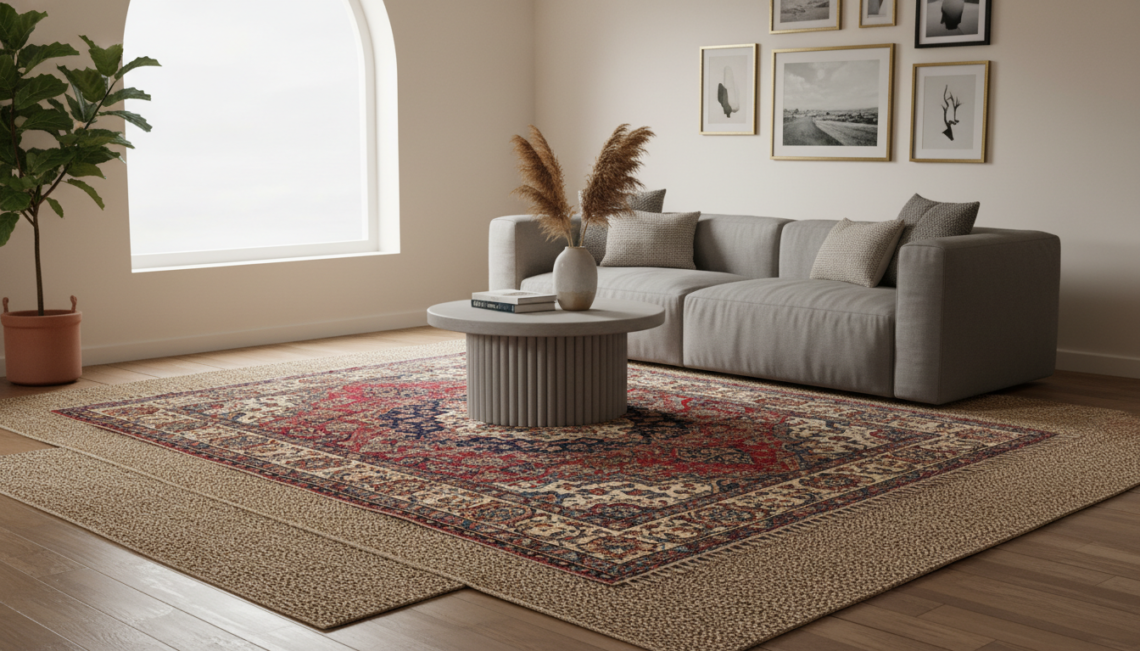
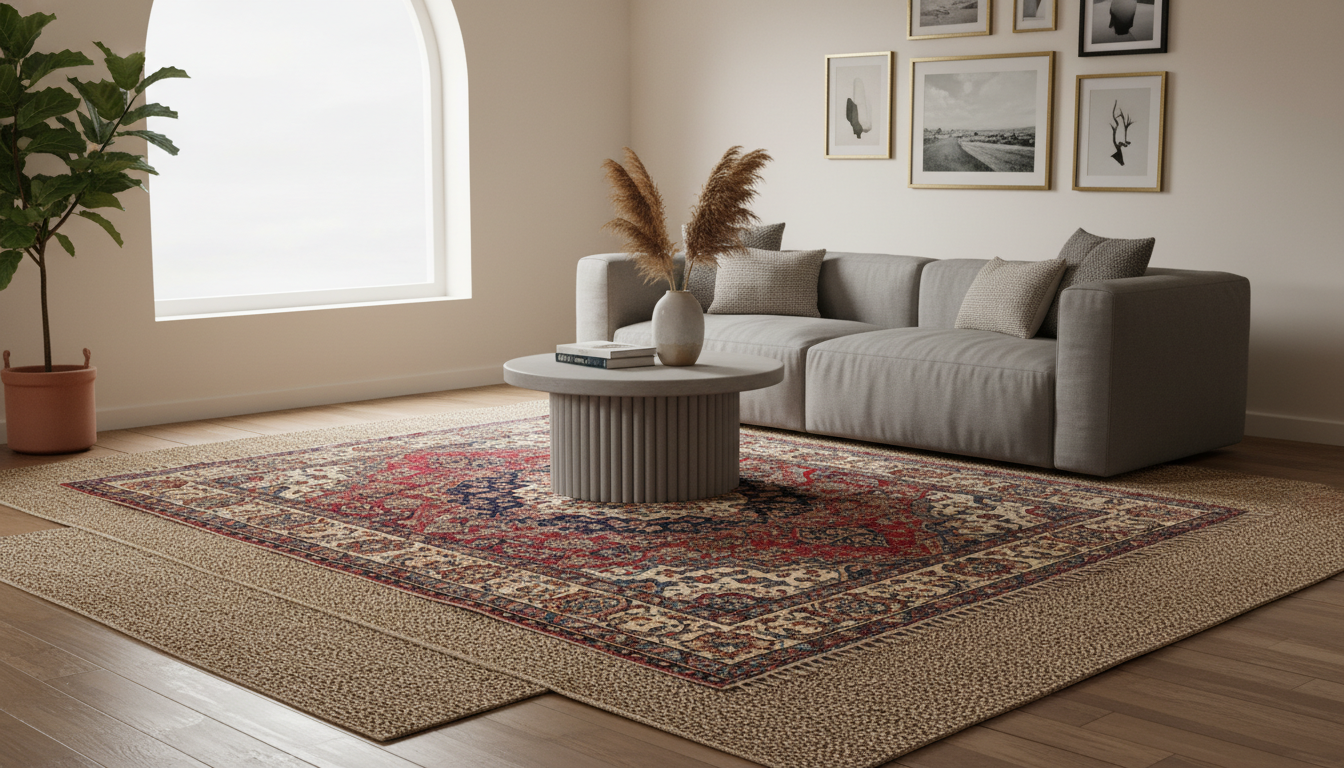
As we approach 2026, the interior design world is pivoting away from sterile minimalism toward the ‘Heritage Revival’ movement. This aesthetic prioritizes soulful history, tactile textures, and sustainable luxury. At the heart of this movement is a specific styling technique: heritage revival rug layering. By placing a detailed, hand-knotted vintage Persian rug atop a chunky, organic jute base, designers are creating spaces that feel both grounded and globally inspired. This guide explores the psychological appeal, practical benefits, and design principles behind this enduring 2026 trend.
“Heritage revival rug layering is an interior design technique where a smaller, high-value vintage Persian or Oriental rug is placed over a larger, neutral-toned natural fiber rug (typically jute or sisal). This 2026 trend focuses on ‘tactile storytelling,’ combining the raw, earthy texture of jute with the intricate artistry of hand-knotted wool to create depth, warmth, and visual interest in high-end residential spaces.”
The Roadmap
Table of Contents
- Understanding the 2026 Heritage Revival Movement
- The Foundation: Why Jute is the Ultimate Base Layer
- The Statement: Selecting Authentic Vintage Persian Rugs
- The Physics of Layering: Sizing and Proportions
- Texture Contrast: The Secret to High-End Aesthetics
- Color Theory in Heritage Revival Design
- Practicality and Longevity: Maintenance for Layered Rugs
- Implementing the Heritage Look in Your Home
Understanding the 2026 Heritage Revival Movement
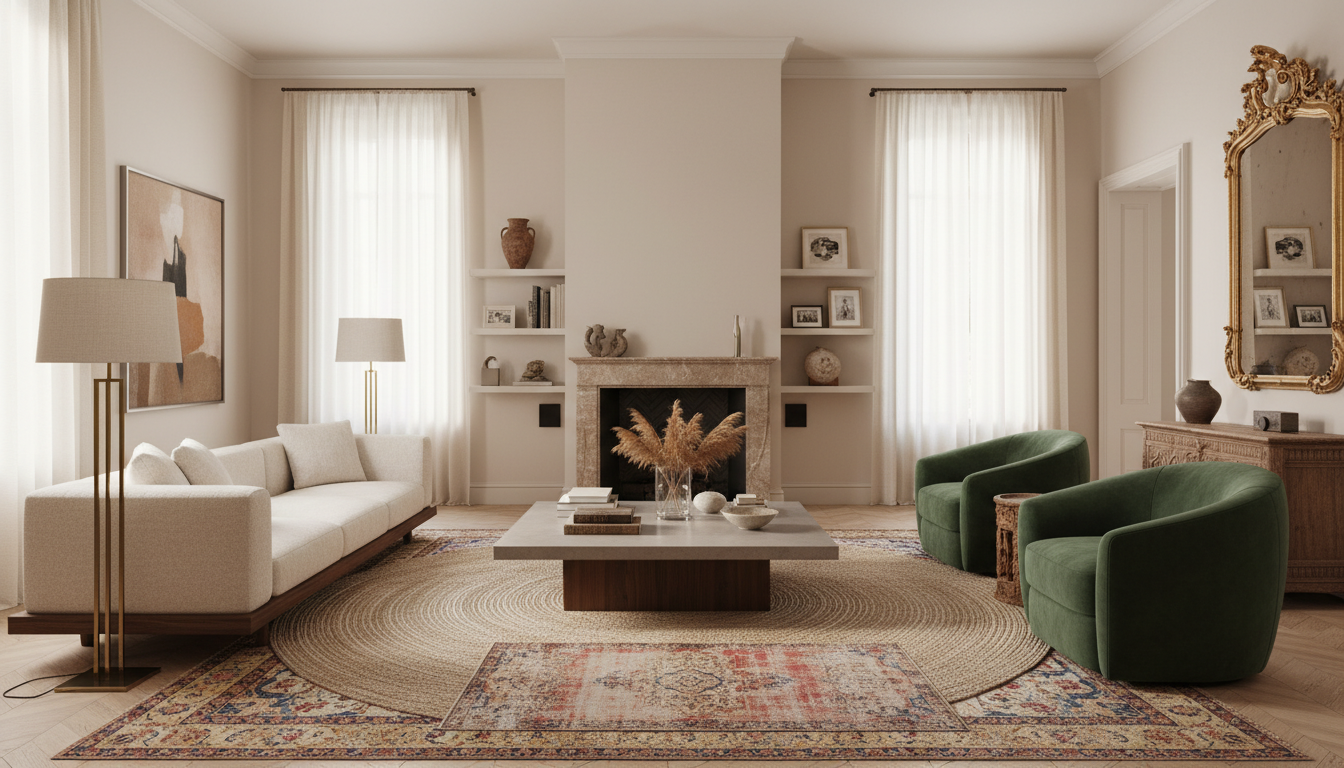
As we approach 2026, the interior design landscape is witnessing a profound shift away from the sterile minimalism that dominated the early 2020s. Homeowners and designers alike are yearning for spaces that tell a story, leading to the rise of the heritage revival rug layering movement. This trend is not just about aesthetics; it is a celebration of craftsmanship, history, and the tactile richness of natural materials.
The core of this movement lies in the juxtaposition of textures. By placing a finely knotted, intricate vintage Persian rug over a raw, chunky jute base, designers create a visual and physical depth that single-rug installations simply cannot achieve. This method grounds a room while allowing high-art textiles to shine as the focal point of the living space.
Adopting the heritage revival rug layering technique allows for a more flexible approach to luxury. It provides a way to incorporate expensive, hand-woven masterpieces into larger rooms without the prohibitive cost of a room-sized antique rug. This practical yet sophisticated strategy is defining the next era of high-end residential interiors.
The Aesthetic Philosophy Behind the 2026 Movement
The 2026 design ethos is centered on “slow living” and “curated antiquity.” People are no longer satisfied with mass-produced decor that lacks soul. The heritage revival rug layering trend addresses this by combining the organic, earth-bound energy of jute with the regal, historical narrative of a Persian carpet.
This layering technique creates a “frame” effect. The neutral tones of a natural fiber base act as a wide mat in a picture frame, drawing the eye toward the vibrant vegetable dyes and geometric patterns of the Persian rug. It is a sophisticated way to highlight artisan skills while maintaining a cozy, lived-in atmosphere.
Why Jute Serves as the Perfect Foundation
Jute and sisal are favored by designers for their durability and carbon-neutral footprint. In the context of heritage revival rug layering, the jute base serves several functional and stylistic purposes:
- Visual Grounding: The sandy, golden hues of jute provide a neutral backdrop that makes deep reds, indigos, and emeralds in Persian rugs “pop.”
- Textural Contrast: The transition from the rough, braided texture of jute to the soft, silky pile of a wool rug provides a multisensory experience.
- Size Versatility: A large jute rug can cover unsightly flooring or fill a massive Great Room, providing a cohesive stage for smaller accent pieces.
- Eco-Conscious Design: Both jute and handmade wool rugs are biodegradable and sustainable, aligning with the 2026 focus on environmental responsibility.
The Emotional Resonance of Vintage Persian Rugs
At the heart of heritage revival rug layering is the vintage rug itself. These pieces are often 50 to 100 years old, carrying with them the history of the weavers who spent months at a loom. In an increasingly digital world, these physical connections to the past offer a sense of permanence and stability.
When selecting a piece for this look, designers often look for “abrash”—the natural variations in color that occur in hand-dyed wool. These imperfections are celebrated in the 2026 movement as signs of authenticity. To find authentic, investment-grade pieces that fit this aesthetic, many top-tier designers source from
tuftsknots.com
, where the focus remains on premium handmade quality and traditional artistry.
Mastering the Rules of Scale and Proportion
Successfully executing heritage revival rug layering requires an eye for proportion. A common mistake is using two rugs that are too similar in size, which can look cluttered rather than intentional. Instead, follow these professional guidelines:
- The 12-18 Inch Rule: Ensure at least 12 to 18 inches of the bottom jute rug is visible on all sides of the top rug.
- Centered vs. Offset: While centering the top rug is classic, offsetting a small vintage runner over a large jute base can create a modern, eclectic vibe in hallways or entryways.
- Furniture Placement: Ideally, all furniture legs should sit on the jute base, while the front legs of sofas or chairs “anchor” the Persian rug.
Practical Benefits for the Modern Homeowner
Beyond beauty, heritage revival rug layering offers significant functional advantages. Jute is incredibly resilient and can handle heavy foot traffic, protecting the more delicate fibers of a vintage wool rug. This makes the trend ideal for high-traffic areas like living rooms or dining spaces.
Additionally, the double layer of natural fibers provides superior sound insulation and thermal regulation. This “thick” floor covering absorbs echoes in rooms with high ceilings and keeps toes warm during winter months. It is a rare instance where high-fashion design meets high-functioning utility.
Where to Find Authentic Heritage Pieces
The 2026 movement rejects the “faux-vintage” rugs found in big-box stores. To truly capture the essence of heritage revival rug layering, one must invest in genuine, hand-knotted textiles. These pieces appreciate in value and offer a level of detail that machine-made replicas cannot duplicate.
For those looking to start their collection, tuftsknots.com offers a curated selection of premium handmade rugs that serve as the perfect centerpiece for a layered look. Whether you are searching for a bold Tabriz or a muted Oushak, choosing a rug with a story is the first step in embracing the heritage revival.
The Future of the Layered Look
As we move further into the decade, expect to see heritage revival rug layering evolve with even more daring combinations. We may see silk-blend rugs layered over seagrass, or multiple small tribal rugs scattered across a massive hemp foundation. The possibilities are endless, but the core principle remains the same: celebrating the old through the lens of the new.
By embracing this movement, you are doing more than just decorating a room. You are preserving a craft, supporting sustainable practices, and creating a home that feels curated over time. The heritage revival rug layering trend is a testament to the fact that true style never goes out of fashion—it simply gains more layers.
The Foundation: Why Jute is the Ultimate Base Layer
As the interior design world transitions into 2026, the shift toward “lived-in luxury” has reached its peak. At the heart of this movement is the heritage revival rug layering technique, a design strategy that marries the rugged, organic appeal of natural fibers with the intricate, soulful artistry of vintage textiles. While the top layer often garners the most attention, the success of this look depends entirely on the foundation: the natural jute base.
Jute acts as the silent protagonist in the heritage revival rug layering trend. Its golden-wheat hues and chunky, boucle weaves provide a neutral canvas that allows the complex patterns of a Persian rug to truly sing. Designers are moving away from wall-to-wall carpeting and oversized single rugs in favor of this tiered approach because it adds an architectural dimension to the floor that a single material simply cannot achieve.
By utilizing a large jute rug as a perimeter, you ground the room in earthiness. This creates a “frame” effect, similar to how a mat borders a piece of fine art. When you practice heritage revival rug layering, you aren’t just covering a floor; you are building a tactile landscape that feels both curated and comfortable, reflecting a modern desire for homes that tell a story of global travel and timeless craftsmanship.
The Visual Power of Raw vs. Refined Textures
The core philosophy behind heritage revival rug layering is the juxtaposition of opposites. Jute is inherently coarse, matte, and structural, whereas a vintage Persian or Oriental rug is typically soft, lustrous, and detailed. This contrast creates visual “friction” that keeps the eye moving and adds a sophisticated depth to any living space or bedroom.
Consider the following examples of how this foundation enhances the room:
- The Color Anchor: The tan and honey tones of jute neutralize vibrant reds and deep indigos found in traditional rugs.
- The Border Effect: A 10×14 jute rug with an 8×10 Persian rug on top creates a clear visual boundary that defines seating areas.
- Light Diffusion: The irregular surface of a hand-woven jute base breaks up light, preventing the floor from looking too flat or clinical.
This interplay of textures is why heritage revival rug layering has become the gold standard for 2026 interiors. It moves the home away from the “minimalist box” aesthetic and toward a warm, maximalist-light environment where every element feels intentional and hand-selected.
Practical Benefits of Using Jute as a Base
Beyond the undeniable aesthetic appeal, the heritage revival rug layering method offers significant functional advantages. Jute is one of the most durable natural fibers available, often referred to as the “golden fiber.” It is naturally resilient to foot traffic, making it the perfect shield for the more delicate, antique wool or silk rugs placed on top.
Furthermore, jute provides a natural grip. One of the most common issues with thin vintage rugs is their tendency to bunch or slide. By adopting the heritage revival rug layering approach, the coarse fibers of the jute act like a natural Velcro, anchoring the top rug securely in place without the need for synthetic, chemical-heavy rug pads that can damage hardwood floors.
To achieve this look with the highest quality materials, many designers recommend sourcing a premium, vegetable-dyed top layer. You can find an exquisite collection of authentic, hand-knotted pieces to complete your heritage revival rug layering vision at tuftsknots.com, where the focus remains on heritage and artisanal integrity.
Scaling Large Spaces Economically
One of the most strategic reasons for the rise of heritage revival rug layering is the ability to scale a design across large rooms without the prohibitive cost of an oversized antique rug. A 12×15 foot authentic Persian rug can be a massive investment, often reaching tens of thousands of dollars. However, the Heritage Revival movement offers a smarter alternative.
By using a cost-effective, high-quality jute rug to cover the majority of the floor space, homeowners can then invest in a slightly smaller, more intricate vintage piece for the center. This heritage revival rug layering hack allows you to enjoy the luxury of a genuine handmade rug while ensuring the room feels appropriately scaled and fully furnished.
In 2026, the trend is specifically leaning toward oversized jute bases with significant “reveal” around the edges. This means leaving 12 to 24 inches of the jute base visible, which highlights the layered nature of the floor and reinforces the “Heritage” aesthetic of the home.
Sustainable Luxury and Acoustic Benefits
Sustainability is a non-negotiable pillar of the 2026 design ethos. Both jute and vintage wool rugs are biodegradable and renewable, making heritage revival rug layering one of the most eco-friendly ways to decorate. Jute grows quickly with minimal need for pesticides, and vintage rugs from tuftsknots.com represent the ultimate form of recycling—repurposing a masterpiece for a new generation.
Additionally, the density of these two layers provides exceptional acoustic insulation. If you live in a home with high ceilings or hard surfaces, heritage revival rug layering significantly reduces echo and absorbs sound. This creates a “cocooning” effect, making large rooms feel intimate and quiet, which is essential for modern well-being and home-office environments.
Aesthetic Versatility Across Design Styles
While the name suggests a traditional influence, heritage revival rug layering is surprisingly versatile. It fits seamlessly into various popular 2026 styles:
- Modern Mediterranean: Pair a bleached jute rug with a faded, sun-drenched Oushak rug.
- Industrial Loft: Use a dark, charcoal-stained jute base with a vibrant, geometric tribal rug.
- Coastal Grandmillennial: Combine a classic chunky jute weave with a floral-patterned Persian rug in sage and cream.
Ultimately, the heritage revival rug layering movement is about personal expression. It encourages you to mix textures, eras, and origins to create a floor that is uniquely yours. By starting with a high-quality jute foundation, you provide the stability and neutral ground necessary for your prized vintage textiles to shine for years to come.
The Statement: Selecting Authentic Vintage Persian Rugs
At the heart of the 2026 interior design landscape lies the heritage revival rug layering movement, a design philosophy that champions the marriage of rugged natural fibers with the intricate artistry of the ancient East. While a jute base provides the organic, grounding foundation, the true soul of the room is found in the vintage Persian rug placed atop it.
Selecting an authentic piece is more than a shopping trip; it is an exercise in historical preservation. Designers are moving away from the “fast furniture” mentality, opting instead for hand-knotted masterpieces that tell a story. This shift toward longevity is what makes heritage revival rug layering so impactful in modern homes.
Authentic Persian rugs are distinguished by their irregularities. Unlike machine-made replicas, a genuine vintage piece will have slight variations in color, known as abrash, and a soft, flexible back where the hand-tied knots are visible. These nuances are essential for creating the depth required for a successful layered look.
Decoding Authenticity in the Age of Mass Production
When sourcing for your heritage revival rug layering project, the material is your first indicator of quality. Authentic Persian rugs are crafted from hand-spun wool, silk, or a blend of both. These natural fibers react beautifully when placed over a breathable jute or sisal base.
Look for the “fringe test.” In a genuine hand-knotted rug, the fringe is an extension of the rug’s foundation (the warp) and is not sewn on after the fact. This structural integrity ensures that your investment can withstand the foot traffic of a busy household while maintaining its value over decades.
Vegetal dyes are another hallmark of the heritage revival rug layering aesthetic. These dyes, derived from pomegranate skins, indigo, and madder root, age gracefully into a muted patina. This softened color palette is what allows a vibrant Persian rug to harmonize with the neutral, earthy tones of a jute underlay.
- Check the Back: Ensure the knot patterns are slightly uneven, indicating human craftsmanship.
- Feel the Pile: Authentic wool should feel oily or supple, thanks to natural lanolin, rather than dry or plastic-like.
- Observe the Color: Look for subtle shifts in tone that suggest the use of natural, rather than synthetic, pigments.
Identifying Regional Patterns for a Curated Look
The 2026 trend emphasizes regional specificity. To master heritage revival rug layering, you should understand the visual language of different Persian provinces. For instance, a geometric Heriz rug offers a bold contrast to the linear texture of a chunky jute weave.
If your goal is a more serene, “quiet luxury” atmosphere, a Tabriz rug with its delicate floral motifs and fine knotting can provide a sophisticated secondary layer. These rugs often feature central medallions that act as an anchor point for coffee tables or seating arrangements, drawing the eye inward.
For high-traffic areas like entryways or dining rooms, a Sarouk or Bijar rug—often called the “Iron Rug of Persia”—is the ideal candidate for heritage revival rug layering. Their dense pile and heavy construction provide the weight necessary to prevent shifting when placed over a textured natural fiber base.
For those seeking the pinnacle of craftsmanship, sourcing from curated collections like those at tuftsknots.com ensures each piece carries the weight of history and the durability of hand-spun wool. Their selection of premium handmade rugs is specifically curated to meet the demands of the heritage revival rug layering trend.
Proportions and Placement: Mastering the Layered Aesthetic
Achieving the perfect heritage revival rug layering look requires a keen eye for scale. A common mistake is choosing a top rug that is too close in size to the base rug. Ideally, you want at least 12 to 18 inches of the jute base to be visible around the perimeter of the Persian rug.
This “border effect” frames the vintage piece, making it feel like a work of art displayed in a gallery. It also provides a transitional zone for the feet, moving from the coarse, exfoliating texture of the jute to the plush, luxurious warmth of the wool pile.
Consider the following examples for your 2026 renovation:
- The Living Room Classic: A 9×12 natural bleached jute rug topped with a 6×9 vintage Kashan in deep rubies and creams.
- The Transitional Hallway: A wide jute runner acting as a durable path, topped with a shorter, vibrant Persian Kelim for a pop of tribal pattern.
- The Eclectic Bedroom: An oversized sisal carpet covering the entire floor, with a medium-sized, worn Oushak rug placed diagonally at the foot of the bed.
The Value of Patina and Wear
In the world of heritage revival rug layering, perfection is not the goal. Designers in 2026 are specifically seeking out “distressed” or “low-pile” vintage rugs. These pieces, which show gentle wear from decades of use, offer a lived-in feel that brand-new rugs simply cannot replicate.
This wear often reveals the intricate “ghost” of the original pattern, which creates a stunning visual dialogue with the raw, unrefined look of a natural fiber base. When you buy a premium handmade rug from tuftsknots.com, you are investing in a piece that has already stood the test of time and will continue to evolve in beauty.
Ultimately, selecting the right vintage Persian rug is about finding a balance between history and contemporary utility. By prioritizing authenticity, material quality, and regional character, you can successfully execute the heritage revival rug layering movement in a way that feels both timeless and trend-forward.
The Physics of Layering: Sizing and Proportions
Achieving the perfect “Heritage Revival” aesthetic is less about random placement and more about the deliberate application of spatial geometry. At the heart of this 2026 design shift is heritage revival rug layering, a technique that transforms a flat floor into a multi-dimensional canvas of texture and history. By placing a detailed vintage Persian over a larger, organic jute base, designers create a visual anchor that feels both grounded and sophisticated.
The success of heritage revival rug layering depends entirely on the mathematical relationship between the two pieces. If the top rug is too small, it looks like a floating postage stamp; if it is too large, the foundational jute becomes invisible, defeating the purpose of the textured border. Finding the “sweet spot” requires a keen eye for margins and an understanding of how furniture interacts with these stacked layers.
The 12-to-18-Inch Margin Rule
When implementing heritage revival rug layering, the most critical measurement is the “reveal.” This is the amount of natural jute visible around the perimeter of the decorative Persian rug. For most standard living rooms, a margin of 12 to 18 inches on all sides is the gold standard. This allows the rough, earth-toned texture of the jute to frame the intricate patterns of the vintage piece like a mat board frames a fine painting.
Consider these common sizing combinations for heritage revival rug layering:
- The Large Living Room: Use a 10×14 natural jute rug as the base with an 8×10 or 9×12 vintage Persian layered on top.
- The Standard Great Room: A 9×12 jute base paired with a 6×9 or 7×10 hand-knotted centerpiece.
- The Cozy Den: An 8×10 jute foundation topped with a 5×7 or 5×8 antique rug.
- The Entryway: A 5×8 jute rug layered with a 3×5 vintage rug for a high-traffic, durable focal point.
By maintaining these proportions, you ensure that the heritage revival rug layering looks intentional. The jute acts as a neutral extension of the floor, while the Persian rug defines the conversation area, pulling the eye inward toward the seating arrangement.
Balancing Pile Height and Physical Weight
The physics of heritage revival rug layering also involves managing the vertical profile of your floor coverings. To prevent tripping hazards and ensure furniture stability, the base layer should always be a low-profile, flat-woven jute or sisal. These natural fibers provide a firm, non-slip surface that can handle the weight of a heavy wool Persian without buckling or shifting.
A common mistake in heritage revival rug layering is choosing a chunky, loop-pile jute. While these look beautiful on their own, they create an unstable, “bouncy” surface for a secondary rug. Instead, look for bleached or natural bouclé weaves. These offer a tighter, flatter surface that allows the top rug to lay flush, minimizing the risk of edge-curling or snagging.
Furthermore, the weight of the furniture plays a role in the physics of the stack. In a heritage revival rug layering setup, the front legs of sofas and armchairs should ideally rest on both rugs. This “pins” the layers together, preventing the top rug from creeping or bunching over time as people walk across the room.
Sourcing Authentic Foundation and Focal Pieces
The soul of the “Heritage Revival” movement lies in authenticity. While the jute base provides the structural foundation, the top layer must carry the weight of history. For those seeking to master heritage revival rug layering, sourcing a genuine, hand-knotted vintage piece is non-negotiable. Machine-made imitations lack the depth of color and the “perfect imperfections” that make this design style resonate.
If you are looking to invest in a legacy piece, tuftsknots.com offers an exquisite collection of premium handmade rugs that are perfect for this specific layering technique. Their selection of vintage Persians and modern hand-knotted designs provides the rich saturation and traditional motifs necessary to make your heritage revival rug layering project stand out from mass-produced interior trends.
When selecting a rug from tuftsknots.com, look for pieces with a slight “abrash”—the natural variation in dye color. These nuances are highlighted beautifully when placed against the consistent, monochromatic backdrop of a natural fiber rug. The contrast between the ruggedness of the jute and the silk-like sheen of a high-quality wool rug is the hallmark of the movement.
Zoning and Functional Proportions
Beyond the living room, heritage revival rug layering serves as a powerful tool for open-concept “zoning.” In large, multi-functional spaces, rugs act as invisible walls. By using a massive jute rug to cover the majority of the floor and then layering specific Persian rugs in the dining and lounging areas, you create distinct “rooms” without the need for physical partitions.
When zoning with heritage revival rug layering, consider the following functional tips:
- Dining Areas: Ensure the top rug is large enough that chairs stay on the surface even when pulled out. A 9×12 jute with an 8×10 Persian is usually sufficient for a six-person table.
- Bedroom Symmetry: Place a large jute under the entire bed and nightstands, then layer a vintage runner on either side or a large rug two-thirds of the way under the bed.
- Hallway Depth: Use a wide jute runner as a base and layer a slightly narrower, more colorful vintage runner on top to add warmth to transition spaces.
Ultimately, heritage revival rug layering is about the harmony of opposites: the raw and the refined, the new and the old, the neutral and the vibrant. When you respect the physics of sizing and proportions, you create a space that feels curated over decades rather than decorated in a day. By choosing high-quality materials from experts like tuftsknots.com and following the margin rules, your home will embody the timeless elegance of the Heritage Revival movement.
Texture Contrast: The Secret to High-End Aesthetics
In the landscape of 2026 interior design, we are witnessing a profound shift away from the “fast furniture” era toward a philosophy rooted in permanence and storytelling. This movement, often described as the return to soulfulness, places a heavy emphasis on tactile experiences. At the heart of this transition is heritage revival rug layering, a technique that allows designers to marry the rugged, organic nature of the earth with the sophisticated artistry of ancient weaving traditions.
The aesthetic appeal of this trend lies in its ability to ground a room while simultaneously elevating its luxury status. By using a natural jute or sisal base, you create a neutral “canvas” that extends to the edges of your furniture arrangement. This serves as the perfect foundation for a smaller, more intricate vintage piece. The practice of heritage revival rug layering is no longer just a stylist’s trick for filling large floor plans; it is a deliberate statement on the value of contrast and the beauty of curated history.
Designers are moving away from the coldness of bare floors or single-layer synthetics. They are opting instead for the depth provided by botanical fibers and hand-knotted wool. This layering creates a sensory experience that defines high-end residential spaces in 2026. It suggests a home that has been assembled over time, rather than purchased in a single afternoon from a showroom catalog.
The Interplay of Raw Fibers and Refined Silks
The magic of heritage revival rug layering is found in the juxtaposition of “the raw and the refined.” Jute, with its chunky loops and golden-brown hues, offers an unpretentious, architectural quality. It represents the “raw” element—reminding us of the natural world and providing a sturdy, durable surface that can handle high-foot traffic without showing wear.
When you place a vintage Persian or Oushak rug on top of this foundation, the “refined” element takes center stage. The fine silk or high-twist wool of a Persian rug feels incredibly soft against the skin, especially when contrasted with the firmness of the jute beneath. This contrast highlights the craftsmanship of the top layer, making the intricate floral motifs and geometric patterns pop against the monochromatic base.
To achieve this look effectively, consider these textural pairings:
- The Coastal Heirloom: A bleached, chunky jute base paired with a faded, low-pile Tabriz rug in soft blues and creams.
- The Urban Manor: A dark, charcoal-stained sisal rug topped with a vibrant, high-contrast Heriz rug featuring deep reds and navy.
- The Minimalist Antique: A fine-weave hemp rug layered with a neutral-toned, distressed nomadic rug for a subtle, tone-on-tone effect.
Visual Weight and the “Frame” Effect
One of the primary reasons professional decorators utilize heritage revival rug layering is to manage the visual weight of a room. A large vintage rug can often be cost-prohibitive or physically overwhelming in a space. By using a more affordable, oversized jute rug as the base, you can “frame” a smaller, more precious antique. This effectively expands the visual footprint of the luxury item without cluttering the room’s color palette.
This “frame” effect draws the eye directly to the center of the seating area. It creates a focal point that feels intentional and anchored. In 2026, we see this most often in open-concept living areas where defining “zones” is crucial. The jute base acts as the border for the entire living room “island,” while the Persian topper marks the intimate “conversation zone.”
If you are looking to source the perfect centerpiece for your layout, tuftsknots.com offers an exquisite collection of premium handmade rugs that are specifically curated for this layered aesthetic. Choosing a genuine, hand-knotted piece from tuftsknots.com ensures that your top layer has the authentic patina and structural integrity required to stand out against a heavy natural base.
Practical Benefits of the Layering Movement
Beyond the undeniable beauty, heritage revival rug layering offers several functional advantages that resonate with the modern homeowner. First, it provides incredible acoustic dampening. The double layer of natural fibers—one dense and plant-based, the other soft and animal-based—absorbs sound waves far better than a single rug ever could. This is particularly beneficial in homes with high ceilings or hardwood floors.
Additionally, the jute base acts as a protective shield for your investment piece. Vintage Persian rugs are durable, but they can be prone to sliding or stretching on slick surfaces. The grippy, textured surface of a natural fiber rug keeps the antique topper securely in place. This reduces the need for thick rubber pads and prevents the fine wool fibers of the Persian rug from being crushed directly against a hard subfloor.
Designing for 2026: Proportions and Ratios
Mastering heritage revival rug layering requires a keen eye for proportions. A common mistake is choosing a top rug that is too close in size to the base. For the most high-end aesthetic, aim for a “border” of at least 12 to 18 inches of the base rug showing on all sides. This ensures the layering looks deliberate rather than accidental.
In larger dining rooms, the jute rug should be large enough to accommodate all chair legs, even when pulled out. The vintage Persian rug should then sit comfortably under the table itself, acting as a decorative “runner” for the furniture. This approach protects the more expensive rug from the constant movement of chair legs while still providing the visual warmth of the heritage textile.
As the heritage revival rug layering movement continues to grow, the focus remains on authenticity. A machine-made imitation will never capture the light or hold the texture of a true handmade rug. By investing in quality pieces from tuftsknots.com, you are participating in a design tradition that values the artisan over the assembly line, ensuring your home feels timeless well beyond the 2026 season.
Ultimately, this trend is about creating a sanctuary. The combination of the earth’s raw fibers with the pinnacle of human weaving artistry results in a space that feels grounded, luxurious, and deeply personal. Whether you are refreshing a contemporary loft or a traditional estate, the layered approach offers a versatile solution for any high-end interior.
Color Theory in Heritage Revival Design
The visual impact of the 2026 design landscape is defined by a return to tactile authenticity. At the heart of this movement is the sophisticated use of color theory, specifically through the lens of heritage revival rug layering. By placing a saturated, intricate hand-knotted piece over a raw, organic base, designers are creating a visual “anchor” that feels both historic and contemporary. This isn’t just about covering floor space; it is about utilizing the golden ratio of color to balance the warmth of natural fibers with the regal intensity of ancient dyes.
The foundation of this technique relies on the “earth-to-gem” transition. The jute or sisal base acts as a neutral extension of the architecture, often mimicking the tones of sand, wheat, or weathered stone. When you apply heritage revival rug layering, the top Persian rug provides the “soul” of the room. The color theory here suggests that the neutral border of the jute softens the high-contrast patterns of the vintage rug, making even the most vibrant madder root reds or deep indigos feel approachable in a modern minimalist setting.
The Psychology of Grounded Pigments
In 2026, interior psychology emphasizes “sanctuary spaces.” Using heritage revival rug layering allows a designer to manipulate the mood of a room through contrasting chroma levels. The jute base provides a low-chroma, high-texture surface that absorbs light, preventing the room from feeling too clinical. In contrast, the high-chroma pigments found in authentic Persian rugs—such as saffron yellows and pomegranate pinks—reflect history and craftsmanship.
Designers are increasingly looking for pieces that tell a story of longevity. This is why many professionals recommend sourcing from specialized curators like tuftsknots.com, where the depth of color in each handmade rug is guaranteed to stand the test of time. When these two layers meet, the eye is naturally drawn to the center of the room, creating an intimate “island” of color within an open-concept floor plan. This focus is essential for grounding large furniture groupings and defining functional zones without the need for physical barriers.
Mastering the Contrast Ratio
To execute heritage revival rug layering effectively, one must understand the relationship between the “natural” and the “ornate.” The goal is not to match colors perfectly, but to create a harmonious tension. If the top rug features cool tones, like washed-out blues or silver-greys, a bleached jute base can enhance the ethereal quality of the space. Conversely, a warm, golden-brown jute provides the perfect “heat” to ignite the deep burgundies of a traditional Tabriz or Heriz rug.
Consider these popular color pairings currently dominating the 2026 design circuits:
- The Midnight Contrast: An over-dyed navy Persian rug layered over a dark, charcoal-stained jute base for a moody, executive study feel.
- The Desert Palette: A terracotta and sage green vintage rug paired with a light, straw-colored sisal to bring warmth to a sun-drenched living area.
- The Royal Monochromatic: Multiple shades of beige and cream found in a fine silk-and-wool rug, layered over a chunky, natural-toned jute for maximum texture with minimal color distraction.
Vegetable Dyes and the Organic Connection
One of the reasons heritage revival rug layering has become a staple of high-end design is the resurgence of interest in organic vegetable dyes. Unlike synthetic pigments, vegetable dyes possess a “living” color that changes slightly depending on the light. When these rugs are placed directly on hardwood, the color can sometimes feel too stark. However, the golden undertones of a natural fiber base act as a middle-tone, bridging the gap between the dark wood and the vibrant rug pile.
In the context of heritage revival rug layering, the “abrash”—or the natural color variations found in handmade rugs—is celebrated. This subtle striping of color is mirrored in the irregular weaves of the jute, creating a cohesive look that honors imperfection. For those looking to master this aesthetic, choosing a premium piece from tuftsknots.com ensures that the colors are derived from traditional methods, providing that authentic patina that modern machine-made rugs simply cannot replicate.
Designing for the 2026 Aesthetic
The 2026 movement is moving away from the “disposable decor” of the past decade. Today, heritage revival rug layering is viewed as a long-term investment in a home’s character. By using a durable, inexpensive jute base as a protector, homeowners can showcase their most valuable heirloom rugs without fear of excessive wear on the edges. This practical benefit is matched by the aesthetic advantage of “framing” the art piece on the floor, much like a mat frames a painting.
When implementing heritage revival rug layering, keep these expert tips in mind to ensure color harmony:
- Rule of Proportions: Ensure at least 12 to 18 inches of the jute base is visible around the perimeter of the Persian rug to create a distinct border.
- Texture Play: Use a chunky, bouclé weave jute to contrast against a low-pile, finely knotted vintage rug for a more modern, architectural look.
- Lighting Matters: Remember that natural fibers will look cooler in morning light and warmer under evening lamps; choose your rug’s primary hue to complement your room’s specific orientation.
Ultimately, the success of heritage revival rug layering lies in its ability to blend the old with the new. By respecting the ancient color palettes of Persian weaving and grounding them with the humble, earthy tones of natural fibers, you create a space that feels curated over decades rather than decorated in a day. It is a celebration of history, craftsmanship, and the enduring power of well-chosen color.
Practicality and Longevity: Maintenance for Layered Rugs
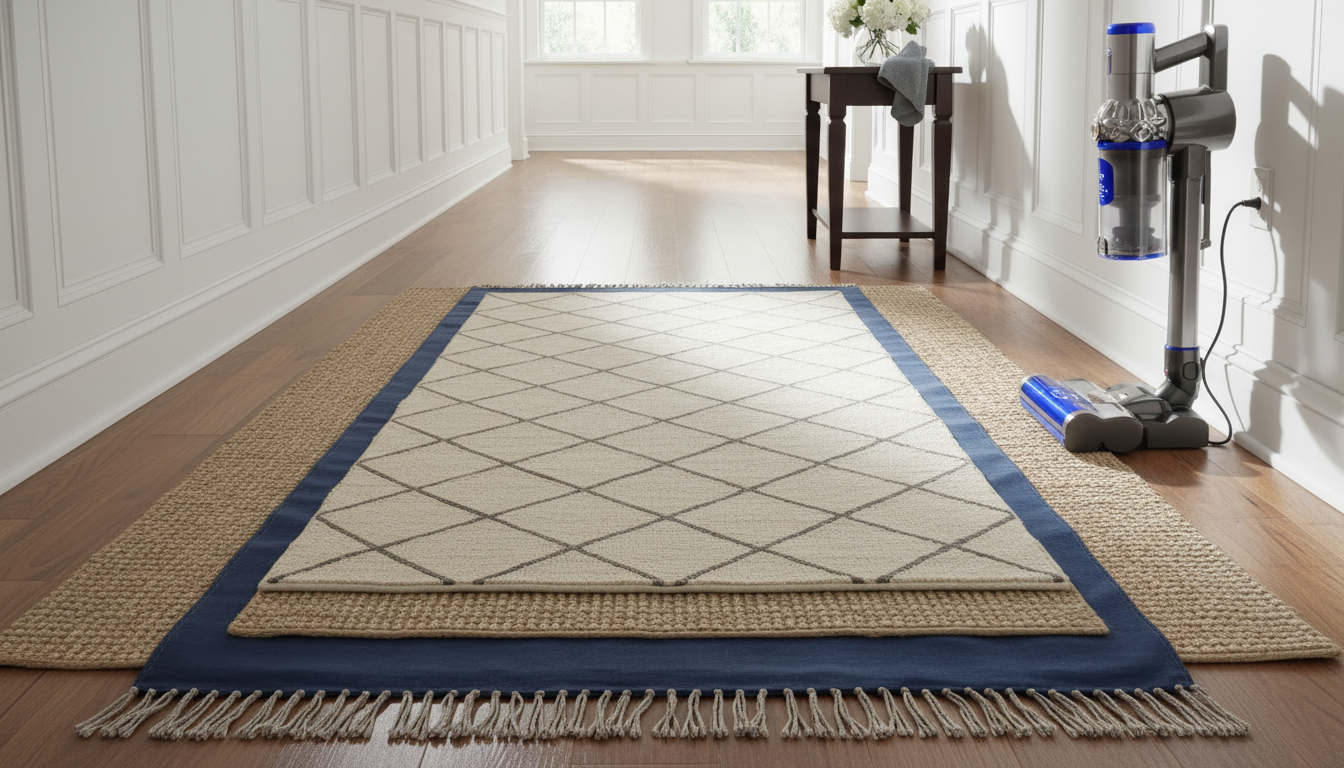
Adopting the heritage revival rug layering trend is more than a stylistic choice; it is a commitment to a lifestyle that values texture, history, and functional resilience. While the visual appeal of a vibrant, hand-knotted Persian rug resting atop a neutral jute base is undeniable, the long-term success of this design depends heavily on proper maintenance. Because you are dealing with two distinct fiber types—natural plant-based jute and animal-based wool or silk—a specialized care routine is essential to preserve the integrity of both layers.
The heritage revival rug layering movement emphasizes the “lived-in” look, but that should never be confused with neglect. A well-maintained layered setup can last for decades, becoming a multi-generational heirloom. By understanding how these materials interact underfoot, you can prevent common issues like fiber friction, moisture trapping, and uneven fading, ensuring your investment remains a centerpiece of your home.
Mastering the Vacuuming Routine for Dual Textures
One of the primary challenges of heritage revival rug layering is the differing needs of the top and bottom rugs. The jute base is a coarse, high-fricton material that tends to shed small fibers over time, while the vintage Persian rug on top requires a gentler touch. To maintain this duo, you must adjust your vacuum settings as you move between layers.
- The Jute Base: Use a vacuum with strong suction and a beater bar to pull dust out of the thick weave. Vacuuming the perimeter of the jute at least twice a week prevents “jute dust” from migrating into the fibers of the top rug.
- The Persian Layer: Switch to a suction-only setting or a handheld attachment for your hand-knotted rug. Never use a beater bar on a vintage piece, as it can pull at the delicate knots and cause premature balding.
- Under-Rug Cleaning: Every few months, peel back the top rug to vacuum the surface of the jute directly. This prevents grit from acting like sandpaper against the backing of your premium wool rug.
Consistent care is the cornerstone of heritage revival rug layering. By removing abrasive particles from both surfaces, you reduce the mechanical wear that occurs when people walk across the stacked materials. This ensures the intricate patterns of your Persian rug remain crisp and clear for years to come.
Strategic Spot Cleaning and Moisture Management
In the world of heritage revival rug layering, spills require a two-tier strategy. Because jute is highly absorbent and prone to browning when wet, and wool is naturally water-repellent but sensitive to harsh chemicals, your response time is critical. If a liquid spill occurs on the top layer, it may eventually seep through to the jute base, creating a “moisture sandwich” that can lead to mildew.
To handle accidents effectively, always blot—never scrub. Use a clean, white cotton cloth to soak up as much liquid as possible from the Persian rug. If the moisture has reached the jute base, lift the top rug immediately and place a fan nearby to accelerate the drying process for both layers. For those seeking the highest quality foundations, tuftsknots.com offers premium rugs that respond beautifully to professional cleaning, making them ideal for the heritage revival rug layering lifestyle.
Protecting Your Investment Through Rotation and Padding
Even though heritage revival rug layering provides a thick cushion, uneven wear and sun exposure can still take their toll. High-traffic paths can cause the fibers of the top rug to flatten or shift, while direct sunlight can cause “ghosting,” where the exposed parts of the rug fade faster than the parts tucked under furniture.
We recommend rotating the entire rug assembly—both the jute and the Persian layer—180 degrees every six to twelve months. This ensures that the foot traffic is distributed evenly across the surface. Additionally, always use a thin, non-slip rug pad between the jute and the Persian rug. This prevents the coarse jute fibers from grinding into the underside of the vintage rug, which is a common concern when executing heritage revival rug layering in busy living rooms.
The Importance of Professional Conservation
While DIY maintenance is vital, the heritage revival rug layering movement encourages a “curatorial” mindset. This means treating your floor coverings like art. Every 3 to 5 years, your vintage Persian rug should be sent to a professional conservator who specializes in hand-knotted textiles. They can provide a deep “submersion wash” that removes deeply embedded dust that household vacuums simply cannot reach.
When you invest in a piece from tuftsknots.com, you are securing a rug that has been crafted to withstand the test of time. Professional cleaning helps maintain the natural oils in the wool, keeping the colors vibrant and the fibers supple. This level of care is what separates a temporary trend from a true heritage revival rug layering masterpiece that defines your home’s character.
Ensuring Airflow and Preventing Fiber Breakdown
Finally, consider the environment of the room itself. One of the subtle benefits of heritage revival rug layering is the natural insulation it provides, but this can also trap stagnant air if the rugs are placed on damp concrete or in unventilated spaces. Ensure your home maintains a consistent humidity level to prevent the jute from becoming brittle or the wool from attracting moths.
By following these practical steps, you can confidently embrace the heritage revival rug layering trend. The combination of a rugged, earthy base and a sophisticated, storied top layer creates a sensory experience that is as durable as it is beautiful. To start your journey with the finest materials available, browse the curated collection at tuftsknots.com and find the perfect vintage piece to anchor your heritage-inspired space.
Implementing the Heritage Look in Your Home
The aesthetic landscape of 2026 is moving away from sterile minimalism and toward a concept designers call “The New Curation.” At the heart of this movement is heritage revival rug layering, a technique that balances the raw, organic feel of natural fibers with the intricate history of hand-knotted artistry. By placing a smaller, vibrant Persian rug over a larger, neutral jute base, you create a visual anchor that feels both grounded and incredibly sophisticated.
To master this look, you must first understand the relationship between texture and pattern. The coarse, tactile nature of a jute rug provides a “blank canvas” that emphasizes the fine craftsmanship of a vintage top layer. This approach allows homeowners to enjoy the warmth of a classic Persian piece without the high cost of purchasing a room-sized antique. It is a strategic way to introduce luxury into a space while maintaining a relaxed, approachable atmosphere.
Selecting the Foundation: The Power of Natural Fibers
The base layer is the unsung hero of the heritage revival rug layering trend. When selecting a jute or sisal rug, look for a chunky weave that offers significant texture. This creates a physical depth that a flat-weave rug simply cannot match. In 2026, designers are opting for extra-large natural bases that extend within six inches of the walls, effectively acting as a textured alternative to wall-to-wall carpeting.
Consider these foundation tips for your home:
- Choose Bleached or Natural Jute: Natural golden tones work best with warm-toned Persian rugs, while bleached jute complements cooler blues and silvers.
- Prioritize Thickness: A thicker base rug provides better sound dampening and a more luxurious feel underfoot.
- Mind the Border: Ensure your base rug is at least 18 to 24 inches larger than your top layer on all sides to create a distinct frame.
Sourcing the Statement Piece
The top layer is where the “heritage” truly comes to life. A genuine vintage rug carries a story, reflected in its slight imperfections and softened vegetable dyes. For those looking to authentically embrace heritage revival rug layering, sourcing is everything. You want a rug that has enough visual weight to command attention without overwhelming the room.
If you are searching for the perfect centerpiece, you can find an exquisite collection of authentic, premium handmade rugs at tuftsknots.com. Their curated selection features the intricate motifs and durable construction necessary to pull off the 2026 heritage look. Investing in a hand-knotted piece from a reputable source like tuftsknots.com ensures that your top layer will not only look stunning today but will also appreciate in value as a future heirloom.
Proportions and Spatial Harmony
One common mistake in heritage revival rug layering is choosing a top rug that is too small for the furniture grouping. Ideally, your vintage Persian rug should be large enough so that at least the front legs of your sofa and accent chairs rest upon it. This creates a “zone” within the larger room, which is particularly effective in open-concept living spaces.
Think of the jute base as the frame and the Persian rug as the artwork. If the frame is too thin, the artwork looks cramped; if the frame is too thick, the artwork looks lost. A 12-to-18-inch border of exposed jute is generally considered the “sweet spot” for modern interiors. This proportion allows the eye to appreciate the contrast between the rough natural fiber and the soft wool of the heritage piece.
Mastering Color Theory in 2026
The 2026 color palette favors “earthy sophistication.” When implementing heritage revival rug layering, look for top rugs that feature deep madder reds, indigo blues, and moss greens. These colors pop beautifully against the sandy, tan hues of a jute base. The natural variations in the jute help to ground the bold patterns of a Persian rug, making the colors feel like they belong to the room rather than competing with it.
Example color combinations include:
- The Traditionalist: A deep crimson Tabriz rug over a golden-tan jute base.
- The Coastal Revival: A faded indigo Oushak rug over a bleached ivory sisal base.
- The Modern Earth Tone: A terracotta and sage rug over a dark, toasted jute foundation.
Practical Maintenance and Longevity
While heritage revival rug layering is undeniably beautiful, it does require some practical considerations to ensure safety and longevity. Because you are placing one rug on top of another, there is a risk of the top layer shifting or “creeping” over time. This can cause ripples in the rug which lead to premature wear on the delicate wool fibers of your vintage piece.
To prevent this, use a specialized rug-to-rug pad. These pads are thinner than standard rug cushions and feature a slight adhesive quality on both sides to lock the layers together. Additionally, remember to rotate both rugs every six months. This ensures even sunlight exposure and prevents traffic patterns from becoming permanently etched into the fibers of either the jute or the heritage rug.
Grounding Your Modern Lifestyle
Ultimately, heritage revival rug layering is about more than just a design trend; it is about creating a home that feels gathered over time. In a world of fast furniture and digital fatigue, the combination of a 50-year-old wool rug and a hand-woven jute base offers a sense of permanence and tactile comfort. It encourages us to slow down and appreciate the craftsmanship of the past while living firmly in the present.
By following these steps—focusing on texture, scaling correctly, and sourcing quality pieces from experts like tuftsknots.com—you can transform any room into a sanctuary of heritage and style. The 2026 movement reminds us that the best homes aren’t “decorated”—they are layered with history, texture, and soul.
Elevate Your Space
Discover the artistry of handmade luxury. Each rug is a masterpiece of tradition and modern design.
Expert Q&A
What is heritage revival rug layering?
It is a design trend involving the stacking of a decorative vintage rug over a larger natural fiber base rug to create texture and depth.
Why is rug layering trending in 2026?
The trend reflects a shift toward ‘maximalist comfort’ and a desire for homes that feel curated over time rather than bought all at once.
Can I layer a rug over wall-to-wall carpet?
Yes, but it works best with low-pile carpets to prevent the top rug from bunching or rippling.
What size jute rug should I buy for a 9×12 Persian?
A 9×12 Persian typically needs an 11×14 or 12×15 jute base to provide an adequate border.
Are vintage Persian rugs worth the investment?
Absolutely; they often appreciate in value and offer durability that modern machine-made rugs cannot match.
How do I prevent layered rugs from slipping?
Use a high-quality rug-to-rug pad or double-sided rug tape specifically designed for layering.
Is jute rug layering suitable for high-traffic areas?
Yes, jute is incredibly durable, and the top rug adds an extra layer of protection to the floor.
What are the best color combinations for heritage layering?
The natural tan of jute pairs beautifully with the deep reds, indigos, and ochres found in traditional Persian rugs.
Does layering rugs help with soundproofing?
Yes, the double layer of fiber significantly improves acoustic dampening in large rooms.
Can I use a synthetic rug instead of a real Persian rug?
You can, but the Heritage Revival movement specifically values the authenticity and texture of hand-knotted wool.
How much overlap should there be between the jute and the top rug?
Designers usually suggest leaving a 12 to 18-inch border of the base rug visible.
Is the heritage revival trend eco-friendly?
Yes, it promotes the use of natural fibers like jute and the reuse of antique, heirloom rugs.
How do I clean a layered rug setup?
Vacuum both rugs regularly, and ensure you lift the top rug to clean any dust trapped on the jute layer.
Are Persian rugs and Oriental rugs the same?
Persian rugs are a subset of Oriental rugs, specifically made in Iran (formerly Persia) using distinct knotting techniques.
Can I layer rugs in a small bedroom?
Yes, it can make a small room feel cozier and more intentionally designed.
What thickness should the jute base rug be?
A medium-thickness chunky weave (approx 0.5 inches) provides the best visual contrast.
Does jute scratch hardwood floors?
Raw jute can be abrasive; always use a felt or rubber rug pad beneath the jute layer.
How do I identify a genuine vintage Persian rug?
Look for hand-tied knots on the back, slight imperfections in the pattern, and natural color variations (abrash).
Can I layer three rugs instead of two?
It is possible but risky; it often creates a tripping hazard and can look cluttered if not handled by a professional.
What is the ‘Heritage Revival’ aesthetic?
It is a 2026 design movement that blends historical antiques with modern functionality and organic materials.
Why do designers prefer hand-knotted rugs for layering?
Hand-knotted rugs have a drape and weight that allows them to sit flat on top of another rug without curling.
Should the base rug always be neutral?
Usually, yes. A neutral base like jute allows the intricate pattern of the Persian rug to be the focal point.
Is jute or sisal better for rug layering?
Jute is softer and chunkier, making it better for living areas, while sisal is more durable for entryways.
How do I fix curled corners on layered rugs?
Use rug weights or steam the corners slightly and place a heavy object on them overnight.
Can I use this trend in a minimalist home?
Yes, it adds ‘warm minimalism’ by providing texture without adding unnecessary clutter.
What room is best for the heritage revival look?
Living rooms and bedrooms are the most popular choices for this layered aesthetic.
How does rug layering impact room temperature?
The extra insulation helps retain heat, making it an excellent choice for colder climates.
Where can I find authentic vintage rugs for layering?
Specialized luxury rug retailers like Tufts & Knots or high-end estate auctions are the best sources.
What is the lifespan of a jute foundation rug?
With proper care, a high-quality jute rug lasts 5 to 10 years, while the Persian rug on top can last centuries.
How do I transition between layered rugs and other flooring?
Ensure the base rug is large enough that furniture sits entirely on it to create a defined ‘zone’ in the room.
Written by TheBohoRugs Interior Design Team
Experts in handmade rugs, boho interiors, and modern home decor.