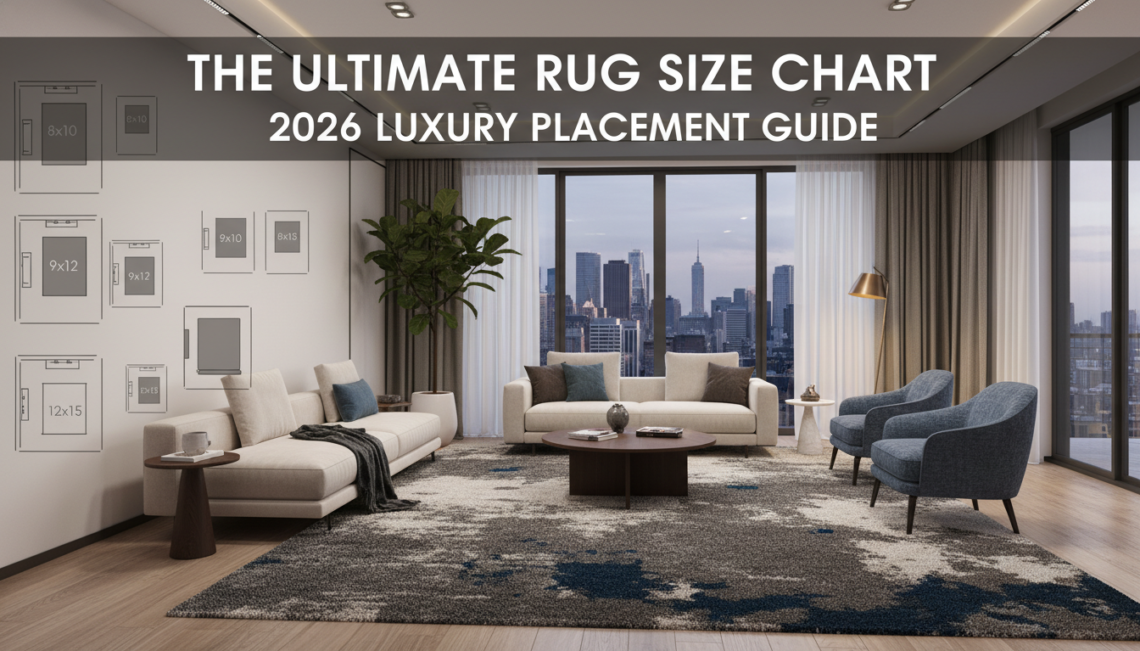
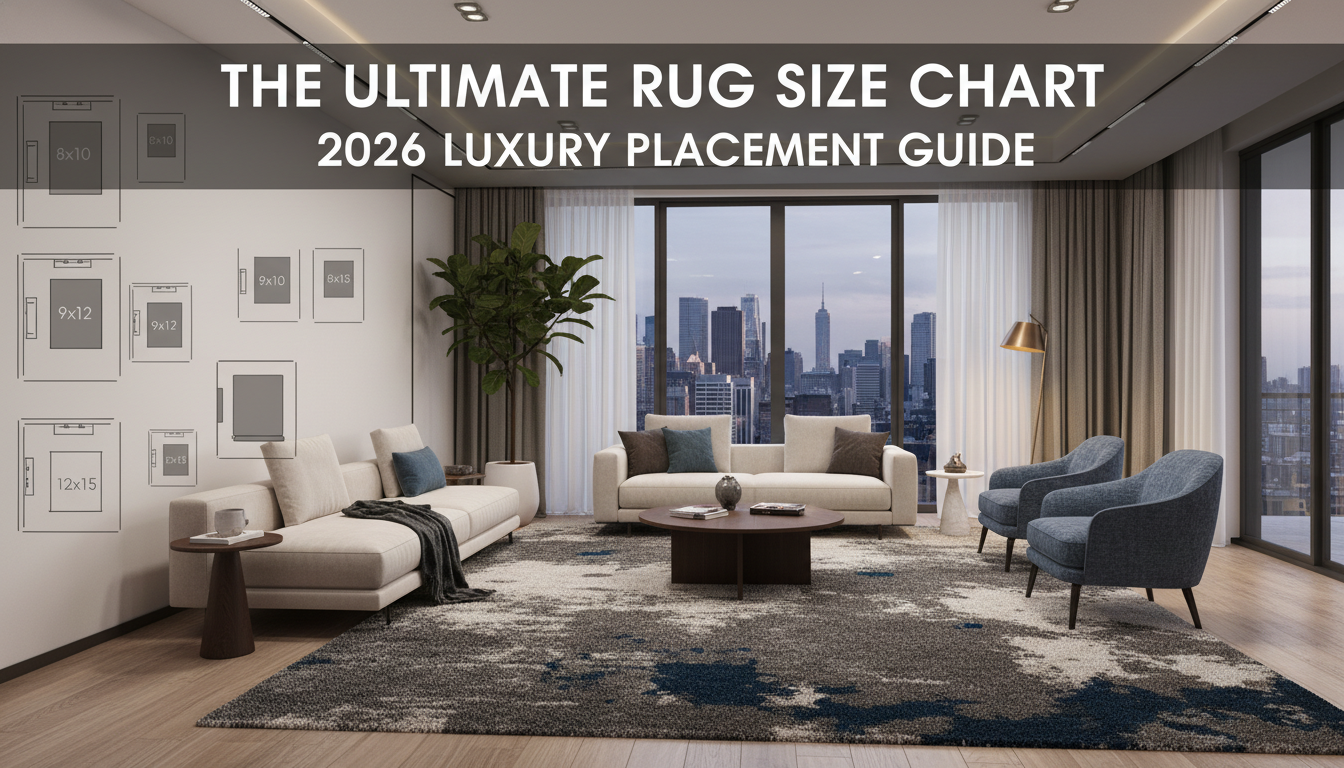
Choosing the correct rug dimensions is the difference between a room that feels disjointed and one that exudes curated luxury. As we look toward 2026 interior trends, the ‘Rug Size Chart’ remains the most critical tool for homeowners and designers alike. At Tufts & Knots, we believe a rug should act as the soul of a room, providing an architectural anchor that balances scale, comfort, and aesthetic harmony. This guide provides an exhaustive breakdown of dimensions, furniture layouts, and expert styling secrets to ensure your next investment fits your space with bespoke precision.
“A rug size chart provides the standard measurements used in interior design to ensure floor coverings correctly scale with furniture. Key dimensions include Small (3’x5′, 4’x6′), Medium (5’x8′, 6’x9′), Large (8’x10′, 9’x12′), and Extra Large (10’x14’+). For a living room, a rug should be large enough to at least have the front legs of all seating resting on it, while dining rugs must extend 24-36 inches beyond the table edge to accommodate chairs.”
The Roadmap
Table of Contents
- Standard Dimensions: The Universal Rug Size Chart
- Living Room Layouts: Creating Visual Harmony
- Dining Room Precision: Scaling for Movement
- Bedroom Sanctuary: Sizing for Comfort and Flow
- The Grand Entry: Hallway and Foyer Dimensions
- Outdoor Living: Scaling for Patios and Terraces
- The Open Floor Plan: Zoning with Different Rug Sizes
- 2026 Trends: Custom Shapes and Oversized Statements
Standard Dimensions: The Universal Rug Size Chart
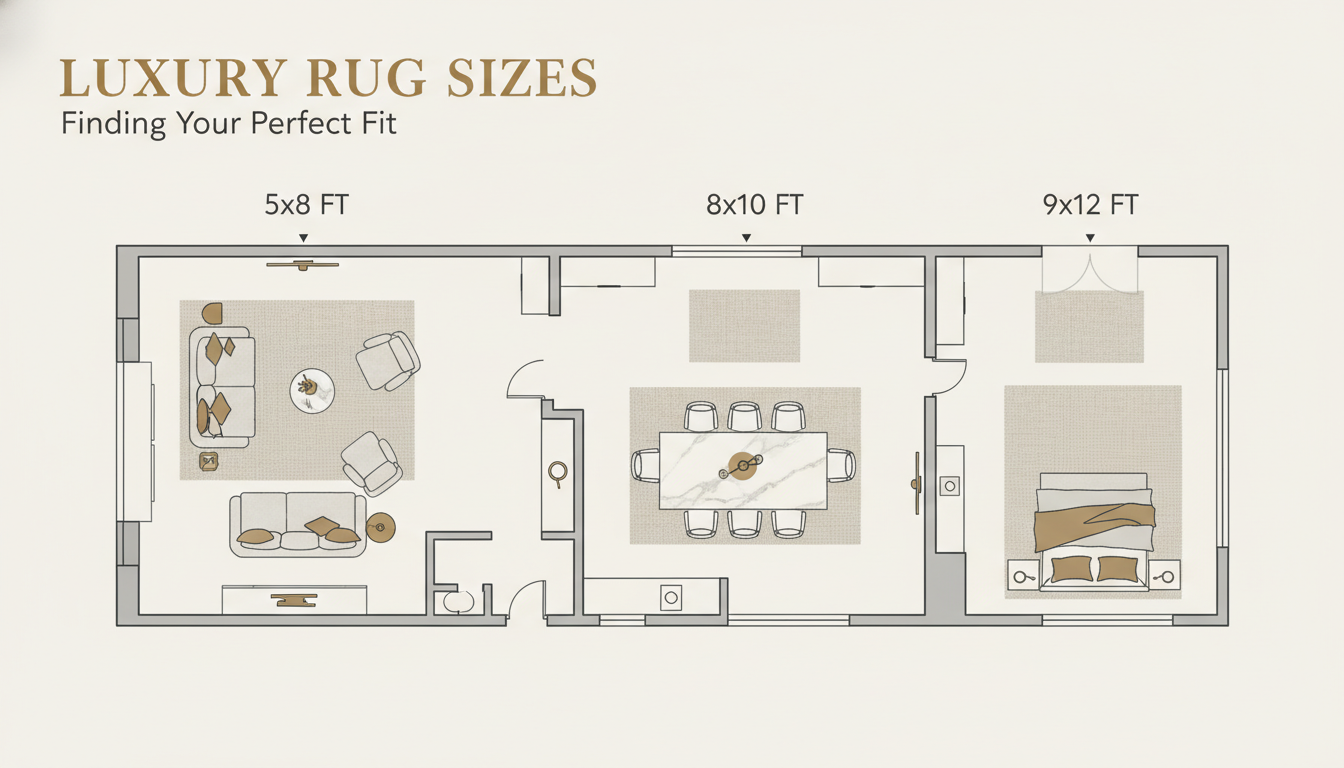
Navigating the world of interior design often feels like a puzzle, and the foundation of that puzzle is your flooring. Choosing the right dimensions for your space is more than just a preference; it is a fundamental design principle that dictates the flow and scale of a room. Without a reliable rug size chart, it is incredibly easy to purchase a piece that either swallows the room whole or looks like a lonely postage stamp in the middle of the floor.
Understanding standard dimensions allows you to visualize how furniture will interact with the rug. Whether you are aiming for a cozy, tucked-in feel or an expansive, luxurious layout, the right measurements are key. In this guide, we break down the most common dimensions found on a rug size chart to help you make an informed investment for your home.
Small Accent Rugs: The 2’ x 3’ and 3’ x 5’ Ranges
Small rugs are often referred to as accent pieces because they are designed to highlight specific, smaller areas rather than anchor an entire room. According to a standard rug size chart, these smaller dimensions are perfect for transitional spaces and functional zones. They provide a touch of comfort underfoot without requiring a massive footprint.
- 2’ x 3’ Rugs: These are ideal for entryways, kitchen sinks, or right outside a shower. They provide just enough surface area to catch dirt or absorb moisture while adding a pop of color.
- 3’ x 5’ Rugs: A slightly larger option that works beautifully at the foot of a twin bed, in a walk-in closet, or underneath a small desk in a home office.
When using these smaller sizes, the goal is to create a focal point. For instance, placing a 3′ x 5′ handmade silk rug from tuftsknots.com in a reading nook can instantly define that space as a separate sanctuary within a larger room. These smaller scales allow for intricate patterns that might feel overwhelming on a larger canvas.
Medium Standard Rugs: The Versatile 5’ x 8’ Size
The 5’ x 8’ rug is perhaps the most common entry on any rug size chart because it bridges the gap between small accents and large anchors. This size is incredibly versatile and fits well in standard apartments or smaller suburban bedrooms. It is the “Goldilocks” of rug dimensions—not too big, not too small.
In a living room, a 5’ x 8’ rug is typically placed so that the front legs of the sofa sit on the edge, or the rug sits entirely in front of the seating. This creates a centered “island” for your coffee table. In a bedroom, this size can be placed horizontally under the bottom two-thirds of a full or queen-sized bed to provide a soft landing spot for your feet in the morning.
Large Statement Rugs: The 8’ x 10’ and 9’ x 12’ Essentials
If you are looking to ground a large living area or a formal dining room, you must look toward the larger end of the rug size chart. An 8’ x 10’ rug is the industry standard for most average-sized living rooms. It is large enough to accommodate most furniture configurations, allowing you to place all four legs of your chairs and sofas on the rug for a cohesive, high-end look.
- 8’ x 10’ Rugs: Perfect for defining a conversation area. This size ensures that the rug doesn’t “float” awkwardly in the middle of the room.
- 9’ x 12’ Rugs: These are best for expansive open-concept spaces. They allow for a significant border of flooring to show around the edges while still covering the majority of the living or dining area.
For those who value craftsmanship and longevity, choosing a large-scale piece is an investment in your home’s atmosphere. At tuftsknots.com, you can find premium handmade rugs in these grand dimensions that serve as the literal foundation of your home’s aesthetic. A large, hand-knotted wool rug in a 9′ x 12′ size can last for generations if maintained properly.
Runner Dimensions for Hallways and Narrow Spaces
Not every space is a perfect square or rectangle, which is why the rug size chart always includes runners. These long, narrow rugs are designed specifically for high-traffic corridors, entry hallways, and even the narrow galley areas of a kitchen. They add warmth to otherwise cold, clinical paths in the home.
Standard runner sizes usually range from 2.5’ x 8’ to 2.5’ x 12’. When measuring for a runner, it is important to leave at least 3 to 4 inches of floor visible on all sides to ensure the space doesn’t look cramped. A well-placed runner can lead the eye through the home, creating a sense of movement and architectural interest.
Oversized and Custom Rug Dimensions
For truly grand rooms or “great rooms” with vaulted ceilings, standard entries on a rug size chart might not be enough. Sizes like 10’ x 14’ or even 12’ x 15’ are used to create a “room within a room” effect. These massive rugs are essential for preventing a large space from feeling cold or echoing.
When shopping at tuftsknots.com, you can explore various styles that cater to these larger-than-life spaces. Whether you need a traditional Persian design to fill a library or a modern abstract piece for a contemporary loft, understanding the dimensions on a rug size chart ensures you never have to deal with the hassle of a return. Always measure your room twice and use painter’s tape to outline the rug’s potential footprint on your floor before making your final purchase.
Summary of the Standard Rug Size Chart
To recap, your choice should always be dictated by the furniture it will support. A rug size chart is a tool to ensure balance. Use 2’ x 3’ for accents, 5’ x 8’ for medium zones, and 8’ x 10’ or larger for primary living areas. By following these standard dimensions, you create a home that feels professionally curated and intentionally designed.
Living Room Layouts: Creating Visual Harmony
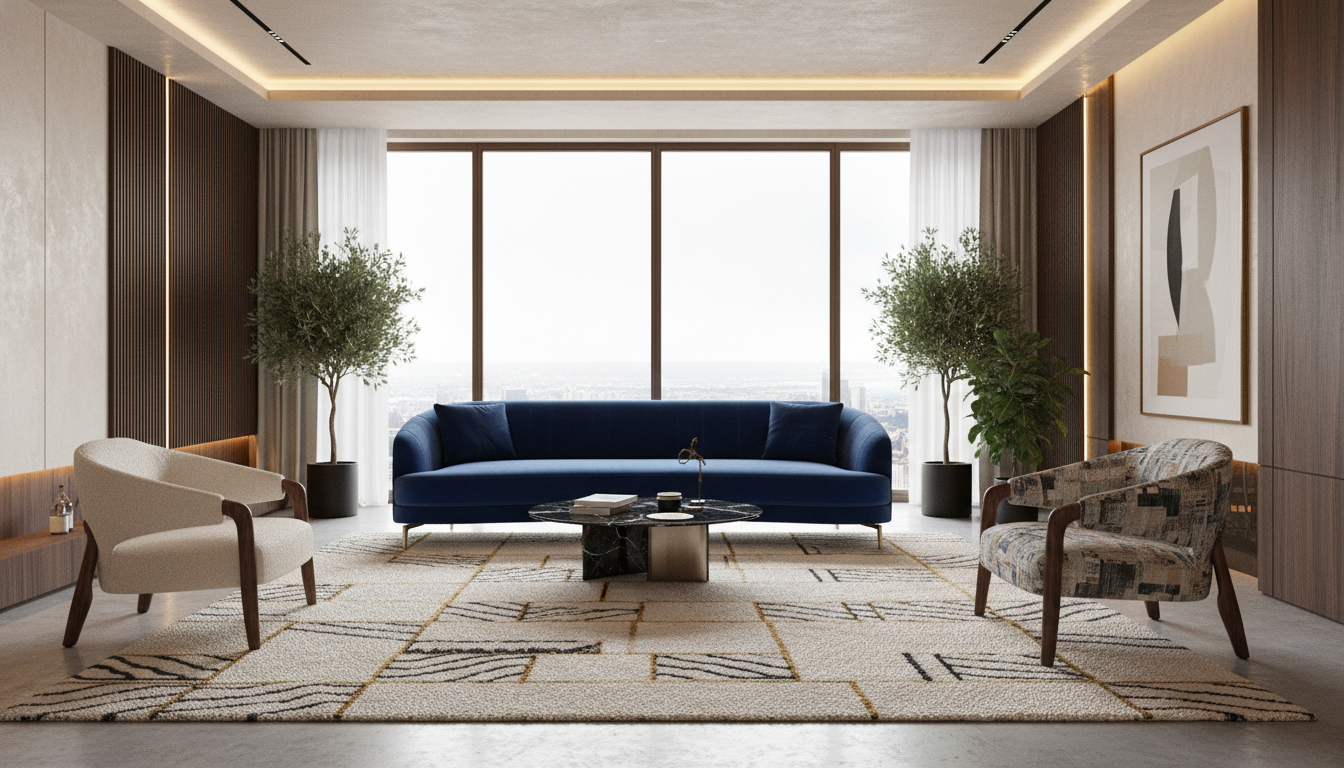
When you begin the journey of transforming your home, the living room often serves as the central hub for comfort and style. Achieving the perfect balance in this space requires more than just picking a beautiful pattern; it demands an understanding of scale. Consulting a professional rug size chart is the first step toward ensuring your furniture and flooring exist in perfect harmony.
The layout of your living room dictates the flow of traffic and the overall mood of the home. A rug that is too small can make a room feel disjointed or “floating,” while a rug that is too large can overwhelm the architecture. By referencing a rug size chart, you can visualize how different dimensions will interact with your sofa, coffee table, and accent chairs.
Designers often suggest that the rug should act as an anchor for the seating area. This means the rug needs to be large enough to touch or sit under all major pieces of furniture. When you look at a standard rug size chart, you will notice that the most common recommendations for living areas include 8×10, 9×12, and occasionally 10×14 for expansive Great Rooms.
The “All Legs On” Arrangement for Large Spaces
For those blessed with a spacious, open-concept living area, the “all legs on” approach is the gold standard for luxury. This layout requires all furniture—sofas, side tables, and armchairs—to sit entirely on the rug surface. This creates a defined “zone” within a larger room, providing a sense of intimacy and high-end curation.
When executing this look, you typically need to look at the larger end of a rug size chart. An 8×10 rug might be too tight for a full sofa and two chairs, whereas a 9×12 or 10×14 provides the necessary breathing room. Pro tip: Ensure there are at least 6 to 12 inches of rug extending beyond the furniture edges to maintain a balanced aesthetic.
- Best for: Large, open-floor plans and formal sitting rooms.
- Rug Sizes: 9×12, 10×14, or custom oversized dimensions.
- Visual Effect: Unifies the room and creates a high-end, “hotel lobby” feel.
The “Front Legs Only” Technique for Versatility
The “front legs only” layout is perhaps the most popular choice for modern American homes. In this scenario, only the front feet of your sofa and accent chairs rest on the rug, while the back legs sit on the bare floor. This technique is highly effective at connecting the furniture pieces without requiring a massive investment in floor coverage.
An 8×10 is often highlighted on a rug size chart as the “sweet spot” for this specific arrangement. It allows the rug to slide under the sofa sufficiently while still reaching the coffee table and any seating placed opposite. This layout is particularly useful if you want to show off beautiful hardwood or tile flooring around the perimeter of the room.
- Example: An 84-inch sofa paired with two 30-inch club chairs fits perfectly on an 8×10 rug using this method.
- Benefit: It makes a standard-sized room feel larger by drawing the eye toward the center.
- Rug Sizes: 6×9 or 8×10.
Strategic Sizing for Compact Living Rooms
In smaller apartments or cozy dens, the rules of the rug size chart shift slightly. You may not have the clearance for an 8×10 rug without it hitting the walls. In these instances, the “floating” layout is common, where the rug sits in the center of the seating arrangement, usually just under the coffee table, without touching the sofa at all.
While this is a valid choice, be careful not to go too small. A 5×7 rug can sometimes look like a “postage stamp” in a room that actually needs a 6×9. Using a rug size chart helps you realize that even in a small room, a slightly larger rug can actually make the floor space appear more expansive and less cluttered.
If you are looking to elevate a compact space with something truly special, consider the tactile beauty of a hand-knotted piece. At tuftsknots.com, we specialize in premium handmade rugs that offer the durability and intricate detail required to make even the smallest living room feel like a designer masterpiece.
The Geometry of Sectionals and L-Shaped Couches
Sectional sofas present a unique challenge when matching them to dimensions found on a rug size chart. Because sectionals have a larger footprint and an asymmetrical shape, they require a rug that can encompass the “L” or “U” shape effectively. Ideally, the rug should be large enough so that the sectional sits entirely on it, or at least has all front legs making contact.
For a standard L-shaped sectional, a 9×12 rug is usually the safest bet. This ensures that the chaise portion of the couch doesn’t “fall off” the edge of the rug, which can create a tripping hazard and a visual disconnect. Always measure the total width and depth of your sectional before referencing your rug size chart to avoid ordering a size that feels undersized.
Measuring Your Space for Accuracy
Before you commit to a purchase, you must move beyond the theory of the rug size chart and apply it to your physical environment. We recommend using painter’s tape to outline the rug dimensions directly on your floor. This allows you to walk through the room and see how the size impacts foot traffic and door clearances.
Keep your rug size chart handy while measuring the distance from your walls. A common designer rule is to leave about 12 to 18 inches of bare floor between the rug and the baseboards. This “border” provides a classic look that frames the room perfectly. In smaller rooms, you can reduce this border to 6 or 8 inches if necessary.
Ultimately, a rug size chart is a guide to achieving balance, but the quality of the rug itself is what provides the lasting impact. For those who value craftsmanship and longevity, choosing a handmade rug from tuftsknots.com ensures that your living room isn’t just well-proportioned, but also filled with artful texture. Whether you are searching for a traditional Persian motif or a contemporary abstract design, the right size paired with superior materials will transform your house into a home.
Dining Room Precision: Scaling for Movement
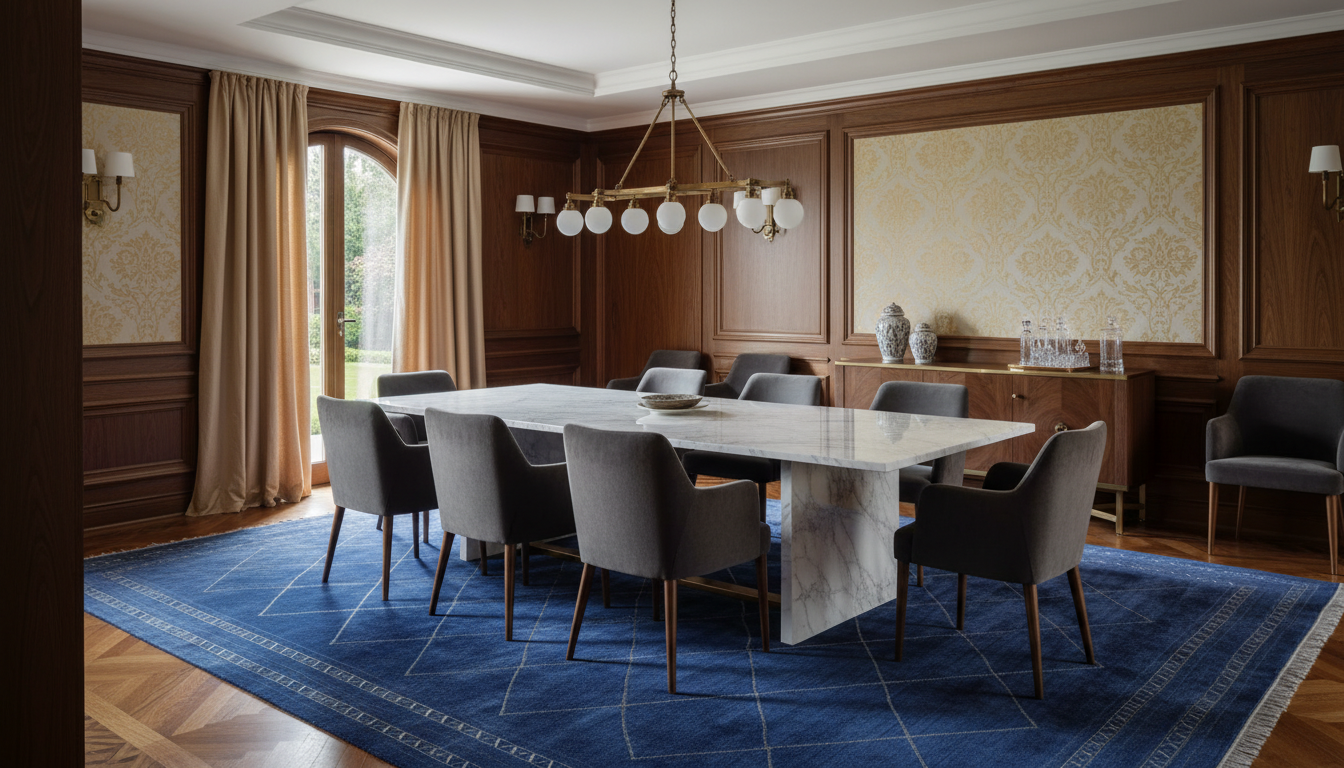
Selecting the perfect foundation for your dining area is a delicate balance between aesthetics and high-level functionality. Unlike a living room where furniture often sits on the perimeter, a dining room requires a rug size chart that accounts for constant movement. When guests pull out their chairs to sit or stand, the legs should never catch on the edge of the rug.
A rug that is too small creates a frustrating tripping hazard and makes the room feel cramped. Conversely, a rug that is too large can swallow the space and interfere with other furniture like sideboards or china cabinets. To master this balance, you must look beyond the table surface and measure the “footprint” of your chairs in use.
Before you make a purchase, consulting a detailed rug size chart is the most effective way to visualize how your furniture will interact with the floor covering. It ensures that your investment not only looks beautiful but serves its practical purpose in a high-traffic zone.
The Golden Rule of Chair Clearance
The primary rule for dining room scaling is the “24-inch extension.” To provide enough room for movement, your rug should extend at least 24 to 30 inches beyond the edge of the table on all sides. This allows a guest to slide their chair back without the back legs falling off the rug’s edge.
When you refer to a rug size chart, you will notice that standard dimensions are designed to accommodate these extra inches. For a standard dining table, this usually means adding 4 feet to both the length and the width of your table measurements to find the minimum rug size needed for comfort.
If you have a particularly tight space, you might be tempted to shave off a few inches. However, professional designers suggest that 24 inches is the absolute minimum for safety and comfort. This is where a premium, flat-weave or low-pile option from tuftsknots.com becomes invaluable, as these handmade rugs offer durability without the bulk that causes stumbling.
Sizing for Rectangular and Oval Tables
Rectangular tables are the most common dining room staples, usually seating six to twelve people. Because the table is elongated, the rug must follow suit to maintain visual harmony. A rug size chart typically suggests the following pairings for rectangular sets:
- 6-Person Table (36″ x 60″): Requires an 8′ x 10′ rug to ensure all chairs stay on the rug when pulled out.
- 8-Person Table (40″ x 96″): Best suited for a 9′ x 12′ rug to provide ample clearance at the heads of the table.
- 10-Person Table (42″ x 120″): Often requires a 10′ x 14′ rug, which is a statement size for grand dining halls.
For oval tables, the same rectangular rug size chart rules generally apply. The soft edges of an oval table contrast beautifully with the sharp lines of a rectangular rug, but the width must still account for the side chairs being pushed back fully.
Perfecting the Circular Dining Nook
Round tables create an intimate dining experience, but they can be the most challenging to fit. Many homeowners make the mistake of placing a square rug under a round table, which can create awkward “dead zones” in the corners. Instead, look at a rug size chart specifically for round dimensions.
A 48-inch round table, which typically seats four, needs at least an 8-foot round rug. This provides a 24-inch border all the way around. If you choose a 9-foot round rug, you create a more luxurious, expansive feel that highlights the symmetry of the room.
For those looking for something truly unique, tuftsknots.com offers exquisite handmade rugs that can serve as the focal point for these circular spaces. The craftsmanship of a hand-knotted piece ensures that the circular pattern remains perfectly centered and structurally sound for decades.
Accounting for Additional Furniture
When using a rug size chart, you must also consider the “fixed” furniture in the room. A common mistake is buying a rug that is so large it bumps into a buffet, hutch, or bar cart. Ideally, there should be a gap of floor space—usually 6 to 12 inches—between the edge of the rug and any other furniture pieces.
This “breathable” space prevents the room from feeling cluttered. If your dining room is small, you might need to prioritize the chair movement over the gap. In these cases, choosing a rug with a thin border or a subtle pattern from a rug size chart can help the room feel more open than it actually is.
Always measure the distance from the wall to the rug as well. Maintaining 12 to 18 inches of exposed hardwood or tile around the perimeter of the rug is a classic design standard that frames the dining area perfectly within the larger architecture of the home.
Why Quality Material Matters for Movement
Precision in scaling isn’t just about the numbers on a rug size chart; it’s also about the height of the rug. In a dining room, you want a low-pile or “hard-wearing” surface. High-pile shag rugs are difficult to clean and make it nearly impossible to slide chairs smoothly.
This is why many interior designers recommend visiting tuftsknots.com to browse premium handmade rugs. Hand-knotted wool rugs are naturally stain-resistant and have a dense, low profile that stands up to the friction of chair legs. They provide the necessary “slide” while maintaining a soft feel underfoot during long dinner parties.
When you combine the accurate dimensions found on a rug size chart with the superior quality of a handmade piece, you create a dining environment that is as functional as it is sophisticated. Whether you are hosting a formal gala or a casual family breakfast, the right scale ensures every movement is effortless.
Bedroom Sanctuary: Sizing for Comfort and Flow
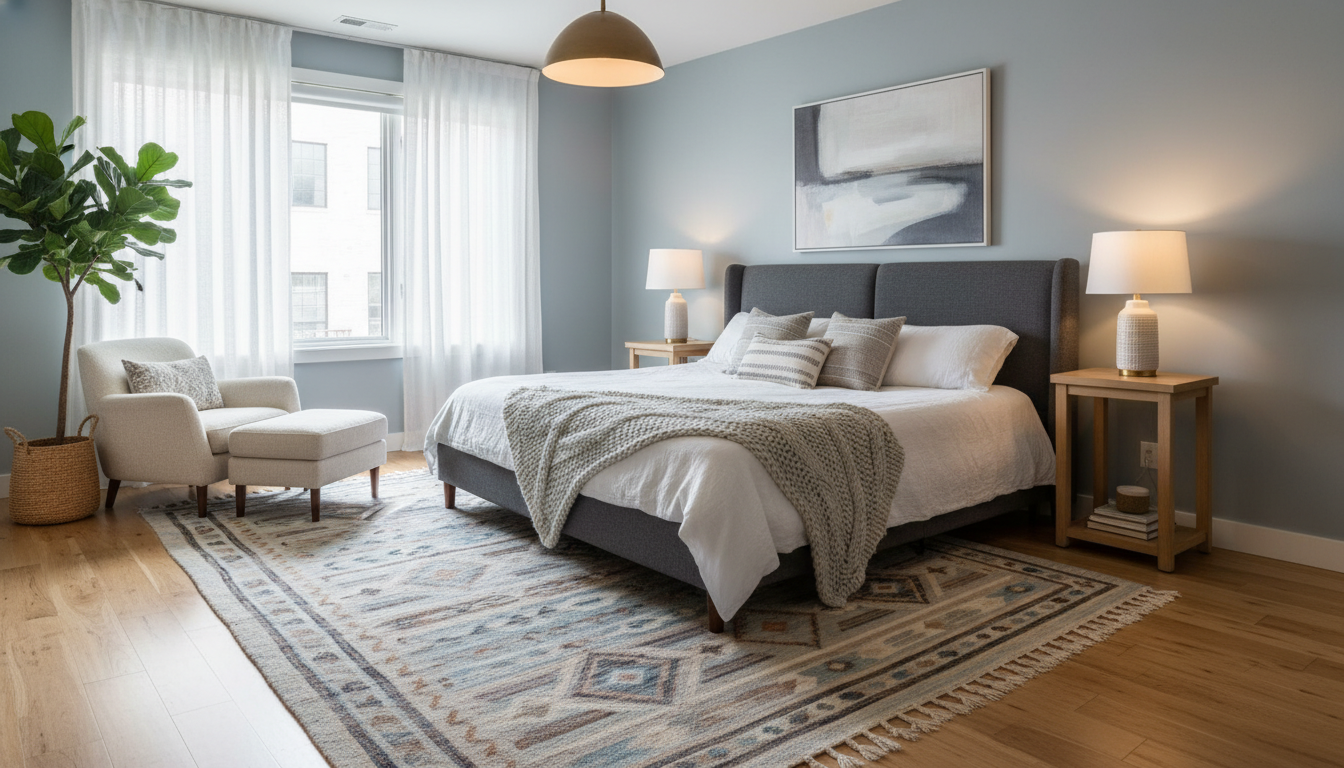
Creating a personal sanctuary begins with the ground up, literally. The bedroom is the one space in your home where comfort is non-negotiable, and nothing anchors that comfort quite like a perfectly proportioned rug. However, many homeowners struggle with scale, often choosing pieces that are either too small for the bed frame or too large for the room’s footprint. This is where a comprehensive rug size chart becomes an essential tool for your interior design toolkit.
The primary goal of a bedroom rug is to provide a soft landing for your feet every morning. When you step out of bed, your feet should land on plush fibers rather than a cold hard floor. By referencing a rug size chart, you can determine exactly how much coverage you need to ensure that the rug extends far enough beyond the sides of the bed to be functional and aesthetically pleasing.
Matching Dimensions to Bed Sizes
The size of your bed is the most significant factor in determining which rug you should purchase. A standard rug size chart typically categorizes recommendations based on Twin, Full, Queen, and King dimensions. For a Queen-sized bed, which is the most common choice for primary bedrooms, an 8×10 foot rug is generally considered the gold standard. This allows for roughly 2.5 feet of rug to show on either side of the bed.
If you are furnishing a King-sized bed, you will likely need to move up to a 9×12 foot option. Using a rug size chart for a King bed helps you realize that smaller rugs, like a 5×7 or even a 6×9, will disappear underneath the massive frame. The result is a room that feels disjointed and cluttered. A larger rug creates a cohesive island that grounds the heavy furniture and makes the entire room feel more expansive.
- Twin Bed: Use a 5×8 or 6×9 foot rug for a balanced look.
- Full/Double Bed: A 6×9 foot rug provides ample “step-off” space.
- Queen Bed: An 8×10 foot rug is ideal for a luxurious feel.
- King Bed: A 9×12 foot rug ensures the room feels proportional.
The Strategic Placement of Your Rug
Once you have identified the dimensions from your rug size chart, you must decide on the placement strategy. The most popular method is the “two-thirds” rule. This involves placing the rug perpendicular to the bed and sliding it under until it reaches the front of the nightstands. This leaves the nightstands on the bare floor but ensures that the area where you walk and sit is fully covered by the rug’s texture.
Another option for larger rooms is placing the entire bed and the nightstands on the rug. This requires a significantly larger piece, often exceeding the standard sizes found on a basic rug size chart. For those seeking this level of luxury, high-end handmade options are often the best route. You can find exquisite, durable pieces that fit these larger dimensions at tuftsknots.com, where premium craftsmanship meets timeless design.
Using Runners for Small or Unique Spaces
Not every bedroom can accommodate a massive area rug. If you are working with a narrow space or a smaller guest room, the rug size chart might suggest using runners instead of a single large piece. Placing two identical runners on either side of the bed provides the same soft landing without overwhelming the floor space. This is a cost-effective and stylish way to bring warmth to a room without covering up beautiful hardwood floors.
Standard runners are usually 2.5 feet wide and 8 to 12 feet long. When choosing runners, ensure they are slightly shorter than the bed frame itself to avoid looking like they are “running away” from the furniture. Consulting a rug size chart specifically for runners can help you visualize how these long, narrow pieces will interact with your existing layout and doorway clearances.
Visual Balance and Room Proportions
The relationship between the rug and the walls is just as important as the relationship between the rug and the bed. A common mistake is pushing a rug all the way against the baseboards. Designers recommend leaving about 10 to 18 inches of “white space” or bare floor around the perimeter of the rug. This creates a frame for the rug and makes the room feel more organized and intentional.
By checking your measurements against a rug size chart, you can ensure you aren’t buying a rug that creates a “wall-to-wall” look if that isn’t your intention. The contrast between the floor material and the rug fibers adds a layer of depth to the room. If your room is particularly small, you might lean toward the lower end of the recommended sizes to keep the space from feeling claustrophobic.
The Importance of Quality and Texture
While size is the focus of any rug size chart, the material you choose will dictate the longevity of your sanctuary. In a bedroom, you want materials that are soft yet resilient. Wool is an excellent choice because it is naturally stain-resistant and holds its shape under the weight of heavy bed frames. For those looking to invest in a piece that lasts for decades, the handmade selections at tuftsknots.com provide the perfect marriage of quality and comfort.
Handmade rugs offer a unique texture that machine-made rugs simply cannot replicate. Because the bedroom is a low-traffic area compared to a living room, you can opt for higher pile heights or more delicate weaves. When you combine the right measurements from a rug size chart with a premium handmade product, you transform a simple sleeping area into a curated retreat.
Final Checklist Before Purchasing
Before you make your final decision, take a moment to perform a quick “tape test.” Use painter’s tape to outline the dimensions you found on your rug size chart directly on your bedroom floor. This allows you to see how the rug will interact with your closet doors, dressers, and walking paths. It is the most reliable way to prevent the hassle of returning a heavy rug that didn’t fit quite as expected.
- Measure your bed frame twice.
- Check for door clearance (pile height matters!).
- Account for nightstand placement.
- Ensure the rug extends at least 24 inches from the sides of the bed.
- Visit tuftsknots.com to find a handmade rug that fits your style.
A well-chosen rug does more than just cover the floor; it ties the entire room together, dampens sound, and adds a layer of sophistication. By following a rug size chart and choosing high-quality materials, you ensure that your bedroom remains a cozy, stylish sanctuary for years to come.
The Grand Entry: Hallway and Foyer Dimensions
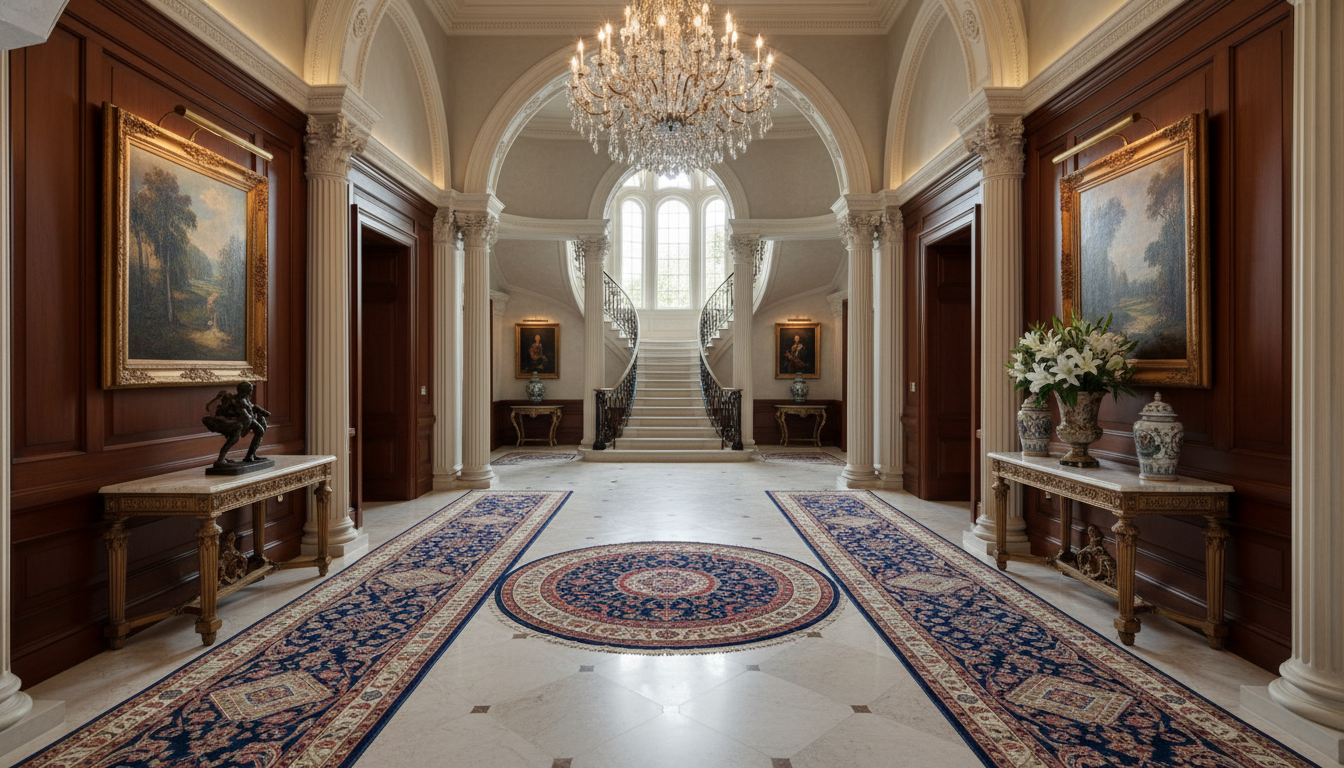
First impressions are lasting, and your home’s entrance serves as the visual handshake for every guest who walks through the door. Selecting the correct dimensions for this high-traffic zone is more than just a design choice; it is a functional necessity. By consulting a rug size chart before you begin shopping, you ensure that the rug neither gets swallowed by a large foyer nor overwhelms a narrow hallway.
The entry area typically dictates the flow of the rest of the house. A rug that is too small can look like an afterthought, while one that is too large might interfere with door clearance. Utilizing a professional rug size chart helps you find that “Goldilocks” zone where the textile frames the architecture of your home perfectly.
Navigating the Rug Size Chart for Foyers
Foyers come in various shapes and sizes, from grand, double-height entrances to cozy, functional mudrooms. The goal is to center the rug under the main light fixture or in the middle of the floor space to create a sense of symmetry. For those with a standard-sized entryway, a rug size chart typically suggests the following dimensions:
- Small Entrances (4′ x 6′ or 5′ x 7′): These sizes work best in apartments or homes where the door opens directly into a small landing area.
- Medium Foyers (6′ x 9′): This size is ideal for rectangular entryways that lead into a wider living space, providing enough surface area to catch dirt while looking substantial.
- Large or Grand Entries (8′ x 10′ or 9′ x 12′): For homes with expansive foyers, these larger rugs anchor the space and allow furniture, like a center table, to sit comfortably on top.
If you are looking for something truly unique to elevate your home’s first impression, consider the premium handmade options at tuftsknots.com. Their collection of artisan rugs provides the durability needed for entryways without sacrificing the luxury of hand-knotted craftsmanship.
Mastering Hallway Runner Dimensions
Hallways are the arteries of the home, and the right runner can transform a dark corridor into a gallery-like experience. When looking at a rug size chart specifically for runners, the width is usually the most fixed variable, typically ranging from 2.5 to 3 feet. The length, however, is where you have the most flexibility to customize the look of your transition spaces.
A common mistake is buying a runner that is exactly the length of the hallway. Instead, your rug size chart should guide you to leave approximately 12 to 18 inches of visible flooring at both ends. This creates a framed look that guides the eye forward. If your hallway is exceptionally long, you might even consider placing two identical runners with a few inches of space between them to break up the visual distance.
The Importance of Shape in the Entryway
While rectangular rugs are the standard, the rug size chart for entryways often includes round and square options. Round rugs are particularly effective in foyers with curved staircases or vaulted ceilings. They soften the hard angles of the walls and create a focal point that feels organic and inviting. A 6-foot or 8-foot round rug can make a dramatic statement in a square-shaped foyer.
Square rugs are less common but are the perfect solution for wide, “boxy” entryways where a rectangular rug would look off-center. When you reference a rug size chart, remember that a square rug should ideally leave at least 6 inches of floor space on all sides to prevent it from looking like wall-to-wall carpeting. For high-end, hand-tufted square rugs that stand the test of time, the curated selection at tuftsknots.com offers various patterns that suit any architectural style.
Functional Tips and Clearance Rules
Beyond the dimensions found on a rug size chart, you must consider the “swing” of your front door. There is nothing more frustrating than a beautiful rug that prevents the door from opening or closing smoothly. Measure the gap between the bottom of the door and the floor before committing to a pile height.
- Low Pile (1/4″ or less): Ideal for doors with low clearance; these are often found in flat-weave or kilim styles.
- Medium Pile (1/2″): Provides a plusher feel underfoot but requires a higher door gap.
- High Pile/Shag: Generally discouraged for entryways as they trap excessive debris and can easily trip guests.
Another rule of thumb often noted in a comprehensive rug size chart is the “border rule.” You should aim to have at least 2 to 3 inches of floor showing between the edge of the rug and the walls or baseboards. This prevents the space from feeling cramped and allows the natural beauty of your hardwood or tile flooring to complement the textile.
Coordinating with Your Interior Design
The entry rug is the prologue to your home’s story. Once you have determined the correct dimensions using a rug size chart, the next step is selecting a style that bridges the gap between the outdoors and your interior aesthetic. Entry rugs should be durable—think wool or high-quality synthetics—to handle the friction of foot traffic and the elements.
By investing in a high-quality piece from tuftsknots.com, you are ensuring that your entryway remains vibrant and structural for years to come. Whether you need a 2.5′ x 10′ runner for a long gallery or a grand 9′ x 12′ masterpiece for a sprawling foyer, checking your measurements against a reliable rug size chart ensures a flawless installation and a warm welcome for everyone who enters.
Outdoor Living: Scaling for Patios and Terraces
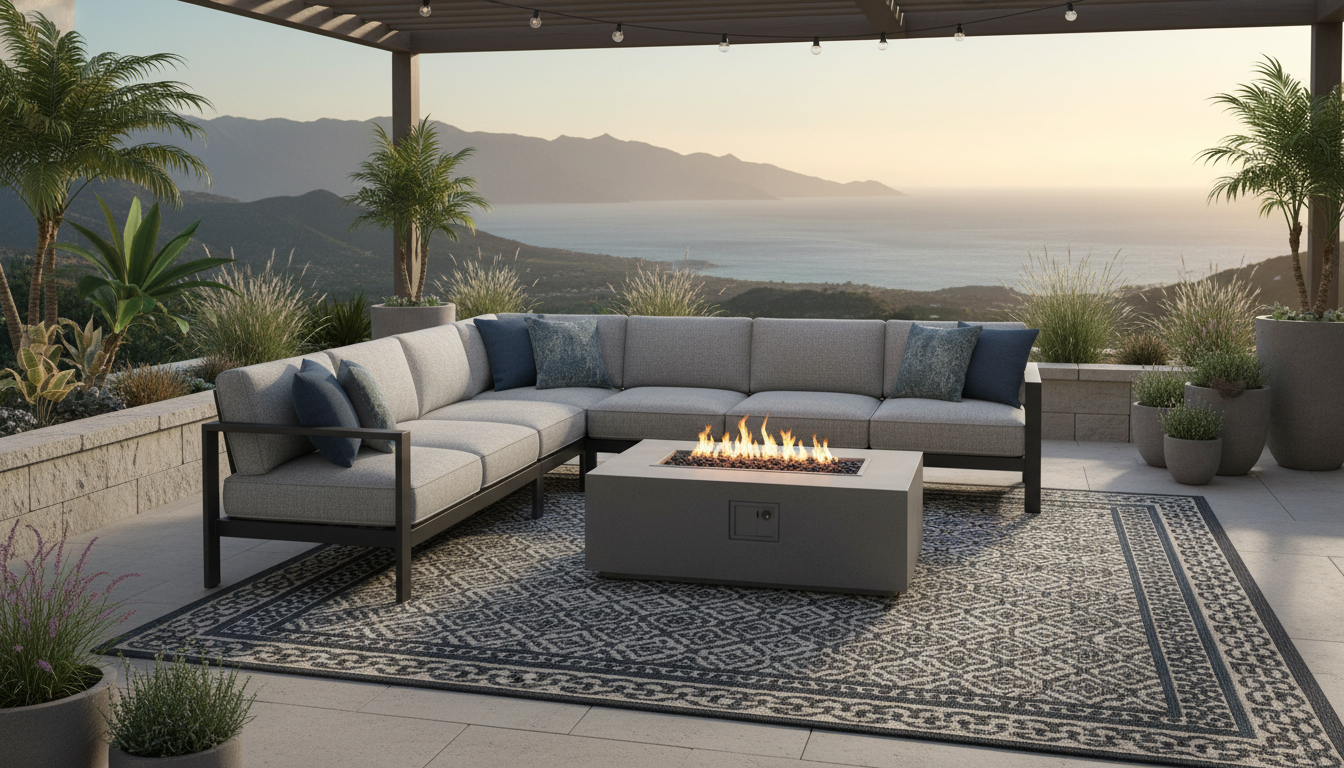
Designing an outdoor oasis requires more than just picking out stylish furniture; it demands a keen eye for proportions. Just as you would for your living room, consulting a comprehensive rug size chart is the first step in ensuring your patio or terrace feels like a cohesive extension of your home. Without the right scale, even the most beautiful furniture can look disjointed or “lost” in the vastness of an open-air environment.
Outdoor rugs serve as the visual anchor for your deck, patio, or poolside lounge. They define functional zones—separating the dining area from the sunbathing spot—and provide a soft, tactile surface underfoot. When you use a rug size chart tailored for outdoor living, you avoid common pitfalls like buying a rug that is too small for your dining chairs to slide out comfortably.
Proportional Planning for Outdoor Dining
When selecting a rug for an outdoor dining set, the most important factor is the clearance of the chairs. According to a standard rug size chart for dining spaces, the rug should extend at least 24 to 36 inches beyond the edge of the table on all sides. This allows guests to pull their chairs out without the back legs catching on the edge of the rug, which can be a tripping hazard.
For a standard rectangular six-person outdoor table, an 8×10 or 9×12 rug is usually the gold standard. If you have a round bistro set for two, a 6-foot or 8-foot round rug creates a charming, symmetrical look. Here are some common outdoor dining examples:
- 4-Person Round Table: Use an 8-foot round or 8×8 square rug to maintain symmetry.
- 6-Person Rectangular Table: An 8×10 rug provides enough “breathing room” for most chair styles.
- 8-Person Extra-Long Table: Opt for a 9×12 or even a 10×14 rug to ensure all legs stay on the surface.
Creating the Ultimate Conversation Pit
In a lounge or conversation area, the rules of a rug size chart shift slightly toward comfort and intimacy. The goal is to “ground” the furniture. For a large outdoor sectional, you generally want the rug to be large enough so that all feet of the sofa rest on the rug. If space is limited, having at least the front two feet of every seating piece on the rug is acceptable.
If you are working with a fire pit, ensure the rug is positioned at a safe distance as recommended by the manufacturer. Typically, an 8×10 rug works perfectly for a standard U-shaped or L-shaped sectional. If you want to elevate your patio with a touch of luxury, consider the premium handmade options at tuftsknots.com, where durability meets artisanal craftsmanship for high-traffic outdoor zones.
Small Terraces and Balcony Scaling
Living in a city often means working with a narrow balcony or a compact terrace. In these scenarios, a standard rug size chart might suggest a 4×6 or 5×8 rug. These smaller dimensions are perfect for adding a pop of color and texture without overwhelming the limited square footage. A long runner can also work wonders on a narrow balcony, creating a “pathway” effect that makes the space feel longer.
When choosing for small spaces, consider these tips:
- The “Centered” Look: Center a 5×8 rug under a small coffee table and two accent chairs.
- The Runner Hack: Use a 2.5×8 runner for long, narrow balconies to provide a soft walkway.
- Layering: Use a smaller, decorative rug over a larger, neutral outdoor carpet for added depth.
Material and Size Interplay
While size is paramount, the material often dictates how the rug sits on your patio. Consulting your rug size chart for specific measurements is step one, but you must also account for the thickness. A thicker, handmade rug—like those found at tuftsknots.com—provides more stability and is less likely to bunch up under heavy outdoor furniture compared to thin, machine-made plastic versions.
Hand-knotted or hand-tufted outdoor rugs offer a weight and density that keeps them flush against the terrace floor. This is particularly important for large 9×12 or 10×14 sizes, where “rippling” can become a safety issue. Always ensure your rug is rated for outdoor use to withstand UV rays and moisture while maintaining its structural integrity and size over time.
The Final Check: Specific Rug Size Chart Recommendations
Before you make your final purchase, visualize the layout with painter’s tape on your patio stones or deck boards. This physical representation of a rug size chart helps you see if the rug will interfere with door swings or grill placements. Remember that in an outdoor setting, it is almost always better to go a size larger than a size smaller.
A rug that is too small makes the furniture look cramped, whereas a larger rug expands the visual boundaries of your “outdoor room.” By relying on a rug size chart and choosing high-quality, weather-resistant materials, you can transform a plain concrete slab into a sophisticated retreat. For those seeking the pinnacle of outdoor elegance, explore the curated collection at tuftsknots.com to find a handmade rug that perfectly matches your patio’s dimensions and your personal style.
By following these scaling rules, your outdoor space will look professionally designed and feel incredibly inviting. Whether you are hosting a summer barbecue or enjoying a quiet morning coffee, the right rug size provides the foundation for every outdoor memory.
The Open Floor Plan: Zoning with Different Rug Sizes
Navigating an open-concept layout requires more than just a keen eye for color; it demands a strategic approach to spatial organization. Without walls to define where the kitchen ends and the living room begins, your flooring choices must do the heavy lifting. Referencing a comprehensive rug size chart is the first step in transforming a vast, echoing hall into a series of intimate, functional “rooms.”
When you zone an open floor plan, you are essentially creating visual islands. These islands tell the eye exactly where to focus and how to move through the space. Without these boundaries, furniture can appear to “float” aimlessly, making even the most expensive decor feel unanchored and chaotic. Using a rug size chart helps you determine the physical footprint required to ground each specific furniture grouping.
Defining the Living Area with Scale
The living room is typically the heart of an open floor plan. To create a sense of enclosure without building walls, you need a rug large enough to encompass all primary seating. Most standard rug size chart suggestions for large open areas recommend an 8×10 or 9×12 rug to ensure the space feels cohesive.
There are three main ways to anchor this zone:
- All Legs On: All furniture pieces sit entirely on the rug. This requires a 9×12 or 10×14 rug for a spacious feel.
- Front Legs On: Only the front feet of the sofa and chairs rest on the rug. An 8×10 is usually the sweet spot for this arrangement.
- Floating Layout: For smaller zones within a larger room, a 5×7 or 6×9 rug can hold a coffee table while sitting just in front of the seating.
Choosing the right scale ensures that your living area feels like a dedicated destination rather than a thoroughfare. If the rug is too small, it will look like a “postage stamp,” making the entire room feel cramped despite the open square footage.
Creating a Distinct Dining Nook
Dining areas in open plans often sit between the kitchen and the lounge. Your rug size chart will indicate that the rug must be significantly larger than the table itself. This is not just for aesthetics but for functionality; you need enough room for chairs to be pulled out without catching on the rug’s edge.
A good rule of thumb is to choose a rug that extends at least 24 to 36 inches beyond the table on all sides. For example:
- Round Tables (4-6 people): Look for an 8-foot or 9-foot round rug.
- Rectangular Tables (6-8 people): An 8×10 or 9×12 rug provides ample clearance for guest movement.
- Small Bistro Sets: A 6×9 rug can define a breakfast corner without overwhelming the surrounding space.
By following these dimensions, you create a dedicated “dining room” that stands independently of the kitchen island or the sofa nearby. For those looking to elevate these spaces, exploring the premium handmade rugs at tuftsknots.com ensures that your functional zones are also works of art.
Managing Transitions and Walkways
In an open floor plan, the space between furniture zones is just as important as the zones themselves. Your rug size chart is essentially a blueprint for traffic flow. You should leave approximately 18 to 36 inches of “white space” (bare floor) between rugs to create clear walkways.
Runners are excellent tools for guiding movement. A 2.5×8 or 2.5×10 runner can lead the eye from the entryway toward the main living area, acting as a visual bridge. If you have a large transition space, consider a small 3×5 rug or an oval shape to break up the linear monotony of the room.
A detailed rug size chart helps prevent the “clutter” effect that occurs when rugs are placed too close together. By maintaining consistent spacing, you allow the architecture of the home to breathe while still providing the comfort of underfoot textiles.
The Art of Layering and Texture
Once you have established your primary zones, you can experiment with layering to add depth. Consulting a rug size chart before purchasing a second layer is vital. Typically, the base rug should be a neutral, low-pile material (like sisal or jute), while the top rug is a smaller, more decorative piece like a plush wool rug or a vintage find.
Consider these layering examples for open spaces:
- The 9×12 Base: A large natural fiber rug that covers the majority of the living zone.
- The 5×7 Topper: A vibrant, handmade pattern from tuftsknots.com placed at an angle or centered under the coffee table.
- The Cowhide Accent: An irregular shape layered over a standard 8×10 to soften the harsh lines of modern furniture.
Utilizing a rug size chart allows you to calculate the necessary overlap so the top rug doesn’t look accidental. Layering is a sophisticated way to introduce color and pattern without committing to a massive, room-spanning design that might clash with other zones.
Finalizing Your Layout for Harmony
Achieving harmony in an open floor plan is a balancing act of scale and style. While each rug defines a different “room,” they should still share a common thread—whether that is a similar color palette, material, or weave style. When you cross-reference your room measurements with a rug size chart, you ensure that no single piece dominates the others.
Remember that rugs are the foundation of your interior design. Investing in high-quality materials is essential for high-traffic open areas. Browsing the curated collections at tuftsknots.com alongside your rug size chart notes will help you find pieces that are durable enough for daily use but elegant enough to serve as the focal point of your home.
A well-utilized rug size chart is the secret weapon of professional decorators. It allows you to visualize the floor as a canvas, where every rug serves a purpose, every boundary is intentional, and every “room” feels exactly where it belongs. By mastering the art of zoning, you turn a house into a home, one rug at a time.
2026 Trends: Custom Shapes and Oversized Statements
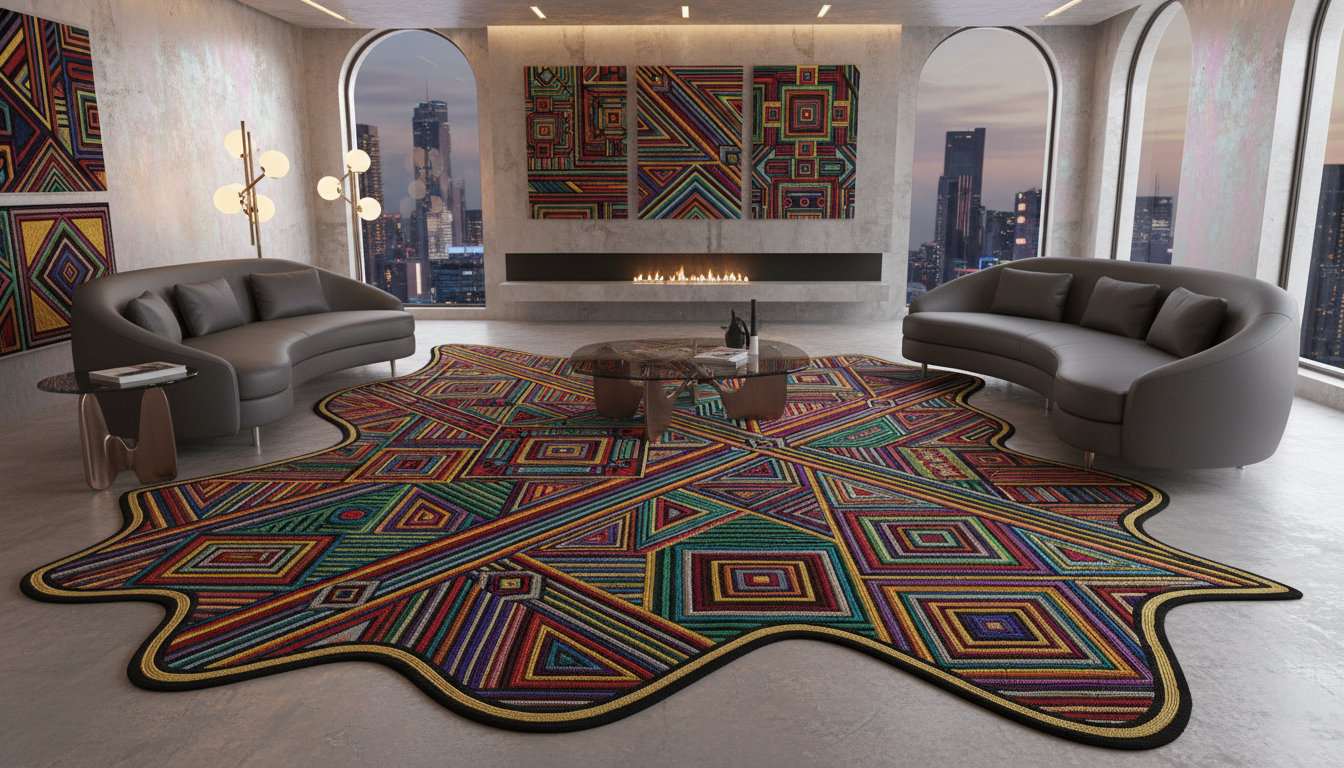
As we approach 2026, the way we perceive interior foundations is undergoing a radical transformation. Homeowners and designers are moving away from “safe” decor and embracing bold, architectural statements. The standard rug size chart, which once dictated a strict adherence to 8×10 or 9×12 rectangles, is being expanded to include more fluid, organic, and oversized options that challenge traditional room layouts.
The upcoming year is defined by a rejection of the “cookie-cutter” aesthetic. Instead, the focus is on creating environments that feel curated and deeply personal. This shift means that the rug size chart you use today must be flexible enough to account for custom silhouettes and scales that were previously reserved for high-end art galleries or luxury hotels.
The Rise of Organic and Custom Shapes
One of the most significant trends for 2026 is the departure from hard angles. While the rectangular rug size chart remains a helpful baseline, we are seeing a surge in “biophilic” shapes—designs that mimic the irregular curves found in nature. Think of kidney-shaped rugs, scalloped edges, and “puddle” silhouettes that flow across the floor like water.
When planning for these unique shapes, the measurement process changes. You are no longer just measuring the length and width of a room; you are measuring the “visual footprint.” For example, an asymmetrical rug in a living room might have a maximum width of 11 feet but a minimum width of only 6 feet. This requires a more nuanced understanding of your rug size chart to ensure the furniture still feels anchored despite the irregular edges.
- Curved Sectionals: Pair these with circular or bean-shaped rugs that follow the sofa’s arc.
- Entryways: Use semi-circle or “half-moon” rugs to create a welcoming transition.
- Workspaces: Hexagonal rugs can define a home office zone within a larger bedroom.
The “Wall-to-Wall” Statement: Why Bigger is Better
For decades, the “18-inch rule”—leaving a border of bare floor around the rug—was the gold standard. However, 2026 is seeing the return of the oversized statement. Designers are now opting for rugs that cover nearly the entire floor surface, providing the cozy, acoustic benefits of wall-to-wall carpeting with the luxury and flexibility of a loose-laid piece.
In this new era, your rug size chart should prioritize “Oversized” or “Extra-Large” categories. A 12×15 or even a 13×18 rug can make a medium-sized room feel significantly larger and more cohesive. When you buy premium handmade rugs from tuftsknots.com, you can find these expansive dimensions crafted with the structural integrity needed to ground a large Great Room without the edges curling or the fibers flattening under the weight of heavy furniture.
Mastering the Layered Dimension Strategy
Layering is no longer just for boho-chic enthusiasts; it has become a sophisticated method for adding texture and adjusting scale in 2026. This trend allows you to use your rug size chart strategically to create a “frame” effect. By placing a smaller, highly decorative rug over a larger, neutral base, you can highlight specific areas of a room while maintaining a sense of warmth across the entire floor.
A common 2026 configuration involves using a flat-weave jute or sisal rug as the base (often a 10×14 or larger) and topping it with a luxurious, hand-knotted statement piece (usually a 6×9 or 8×10). This “step-down” ratio ensures that the top rug is the focal point. To achieve this look perfectly, consulting a rug size chart is essential to ensure the borders between the two rugs are symmetrical and intentional.
- Base Layer: Should extend at least 12 inches beyond the top layer on all sides.
- Top Layer: Should be the “hero” piece, featuring intricate patterns or high-pile textures.
- Function: Use layering to define a conversation nook within a massive open-plan space.
Bespoke Sizing for Modern Architecture
Modern homes are increasingly featuring non-traditional floor plans, such as converted lofts with industrial pillars or open-concept dwellings with diagonal transitions. A standard rug size chart often fails in these environments, leading to rugs that look “lost” in the space. The 2026 solution is the bespoke fit—rugs that are custom-sized to wrap around architectural features.
Investing in custom dimensions allows you to ignore the limitations of mass-produced stock. When you choose to buy premium handmade rugs from tuftsknots.com, you gain access to craftsmanship that respects the unique dimensions of your home. Whether you need a 25-foot runner for a grand gallery or a perfectly square rug for a vaulted dining hall, bespoke sizing ensures the proportions are mathematically perfect for the room’s volume.
The Psychology of Scale in 2026
Finally, the trend toward larger and more custom shapes is rooted in psychology. A rug that is too small for a room creates a “floating island” effect, which can make a space feel disjointed and unsettling. Conversely, an oversized rug from the rug size chart anchors the furniture, lowers the room’s center of gravity, and provides a sense of sanctuary. In 2026, the rug is not just a floor covering; it is an architectural element that defines the emotional tone of the home.
Whether you are experimenting with an organic “blob” shape or committing to a massive 15×20 hand-knotted masterpiece, remember that the rug size chart is a tool for creativity rather than a set of restrictive rules. By prioritizing quality and scale, you can transform any room into a high-design sanctuary that feels both timeless and ahead of its time.
Elevate Your Space
Discover the artistry of handmade luxury. Each rug is a masterpiece of tradition and modern design.
Expert Q&A
What is the most common rug size for a living room?
The 8’x10′ and 9’x12′ are the most common sizes for standard living rooms, allowing for proper furniture anchoring.
Does a rug size chart include custom shapes?
Most standard charts focus on rectangles and rounds, but custom charts at Tufts & Knots include ovals, hexagons, and organic shapes.
How far should a rug extend past a dining table?
A rug should extend at least 24 to 36 inches beyond all sides of the dining table so chairs remain on the rug when pulled out.
Is an 5×8 rug too small for a living room?
An 5×8 rug is typically too small for a main living area but works well for apartments or defined conversation nooks.
What rug size fits under a king-size bed?
A 9’x12′ is ideal for a king bed, though an 8’x10′ can work if placed horizontally and stopped before the nightstands.
Should all furniture legs be on the rug?
In luxury design, having all legs on the rug creates the most cohesive and grounded look for a seating area.
What is a standard runner rug size?
Standard runners are typically 2.5′ to 3′ wide and range from 6′ to 14′ in length.
How do I choose a rug size for a round table?
Choose a round rug that is at least 4 feet larger in diameter than your table to allow for chair clearance.
Can I layer a small rug over a large one?
Yes, layering a smaller patterned rug over a larger neutral base (like sisal or jute) is a trending 2026 design choice.
What size rug do I need for a queen bed?
An 8’x10′ rug is the perfect proportion for a queen-sized bed, providing plenty of soft space on the sides.
How much floor should show around an area rug?
Aim to leave 12 to 18 inches of bare floor around the perimeter of the rug to maintain a balanced look.
What size rug is best for a small entryway?
A 3’x5′ or a small 4′ round rug usually works best for compact entryways.
Should a rug be centered in the room or under the furniture?
A rug should be centered according to the furniture grouping rather than the room’s physical walls.
Can I use two different sized rugs in one room?
Yes, in open-concept spaces, using different sized rugs helps define separate functional zones like dining and lounging.
What rug size works for a home office?
A 6’x9′ or 8’x10′ is common, ensuring the desk and the chair (even when rolled back) stay on the rug.
How do I measure for a custom rug size?
Tape out the desired area on your floor using painter’s tape to visualize the exact dimensions before ordering.
What size rug for a 6-person dining table?
An 8’x10′ rug typically accommodates a standard 6-person rectangular dining table perfectly.
Are square rugs still in style for 2026?
Square rugs are seeing a resurgence, especially in square rooms or to highlight architectural features like a tray ceiling.
How long should a hallway runner be?
A runner should cover about 75% of the hallway length, leaving a few inches of flooring visible at both ends.
What is the best rug size for a kitchen?
Small 2’x3′ mats for sinks or long 2.5’x8′ runners for islands are the most functional kitchen sizes.
Does rug pile height affect the size I should choose?
High-pile rugs can look larger and more imposing, so you might choose a slightly smaller size to avoid overwhelming a room.
What rug size is best for an 8-person dining table?
A 9’x12′ rug is required to ensure all chairs remain on the rug for an 8-person table.
Can a rug be too big for a room?
Yes, if the rug touches the baseboards, it can make the room feel cramped; always leave a border of flooring.
What size rug for a nursery?
A 5’x8′ or 6’x9′ is popular for nurseries to provide a soft play area near the crib and glider.
Should I choose a round or rectangular rug for a foyer?
Choose based on the foyer’s shape; round rugs soften square entries, while rectangles complement long galleries.
How do I size a rug for an L-shaped sectional?
Measure the total length and width of the sectional; the rug should ideally extend at least 6-12 inches beyond both ends.
What is an oversized rug size?
Anything larger than 10’x14′ is generally considered oversized or ‘mansion size’ in the rug industry.
Do rug size charts vary by country?
While measurements may be in centimeters or inches, the standard proportions (2:3 or 3:4) remain relatively universal.
What size rug for a 48-inch round breakfast table?
An 8′ round rug provides the necessary 24 inches of clearance on all sides for the chairs.
Should a rug go under a TV stand?
It is not necessary for the rug to go under the TV stand unless you are using a very large rug to fill the entire room.
Written by TheBohoRugs Interior Design Team
Experts in handmade rugs, boho interiors, and modern home decor.

