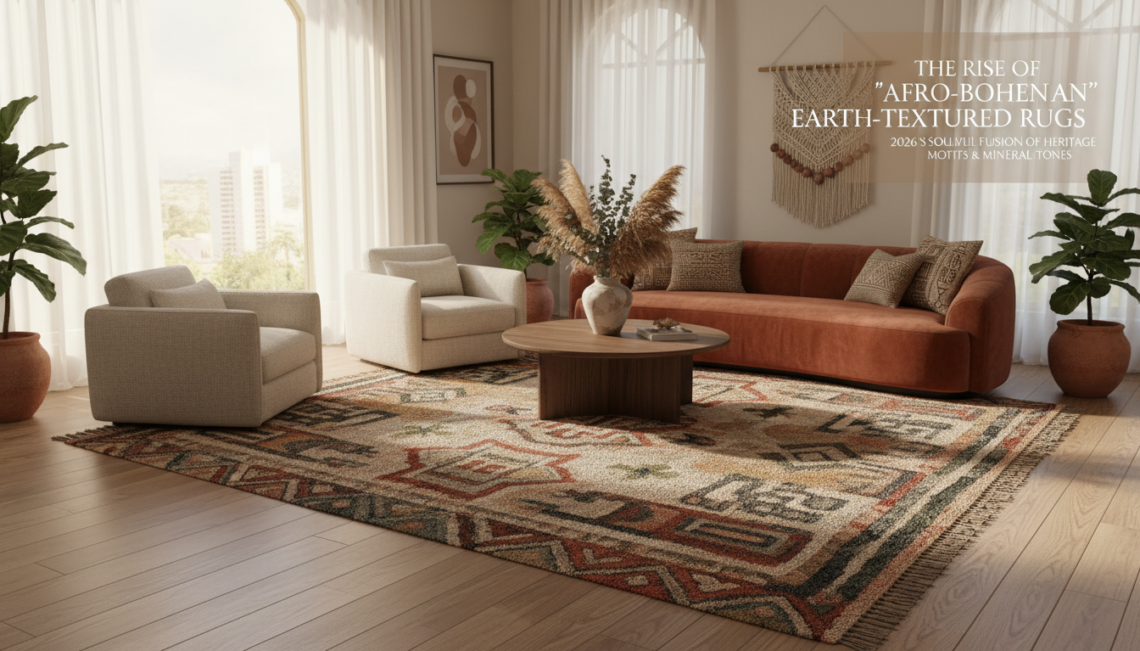
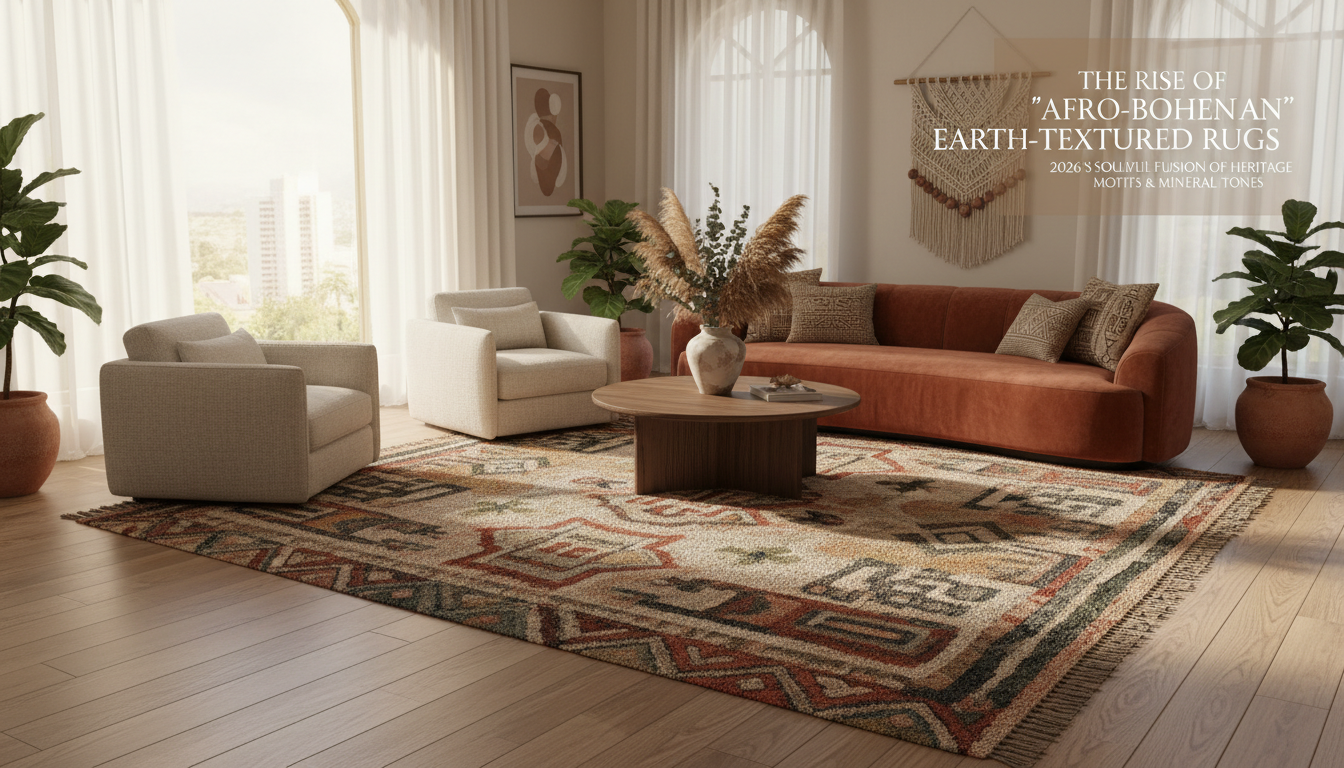
As we approach 2026, the interior design landscape is witnessing a profound shift from sterile minimalism toward ‘Soulful Materialism.’ At the heart of this movement are Afro-Bohemian heritage rugs 2026, which serve as foundational ‘Art for the Floor.’ These pieces represent a sophisticated synthesis of West African geometric precision, North African textural depth, and a contemporary mineral-based color palette. This trend report explores how these rugs are no longer merely floor coverings but are cultural narratives woven from sustainable fibers, designed to ground modern living spaces in history and tactility.
“Afro-Bohemian heritage rugs 2026 are defined by their use of ‘Ancestral Geometry’—traditional motifs like the Bogolanfini patterns—reimagined through high-low pile textures and a mineral-inspired palette of terracotta, basalt, and ochre. The 2026 trend emphasizes ethical craftsmanship, raw organic fibers such as wool and raffia, and a ‘Quiet Luxury’ approach to ethnic motifs that prioritizes depth and history over fleeting fashion.”
The Roadmap
Table of Contents
- The Evolution of the Afro-Bohemian Aesthetic
- Mineral Tones: The 2026 Color Palette for Rugs
- Tactile Narratives: High-Pile and Mixed-Fiber Construction
- Decoding Ancestral Symbology in Modern Weaves
- Sustainability and Ethical Lineage: The New Standard
- Design Integration: From Maximalist Dens to Zen Sanctuaries
- The Art of Layering: Textures Over Patterns
- Investment Value: Rugs as Heirlooms in the Circular Economy
The Evolution of the Afro-Bohemian Aesthetic
From Global Nomadism to Heritage Maximalism
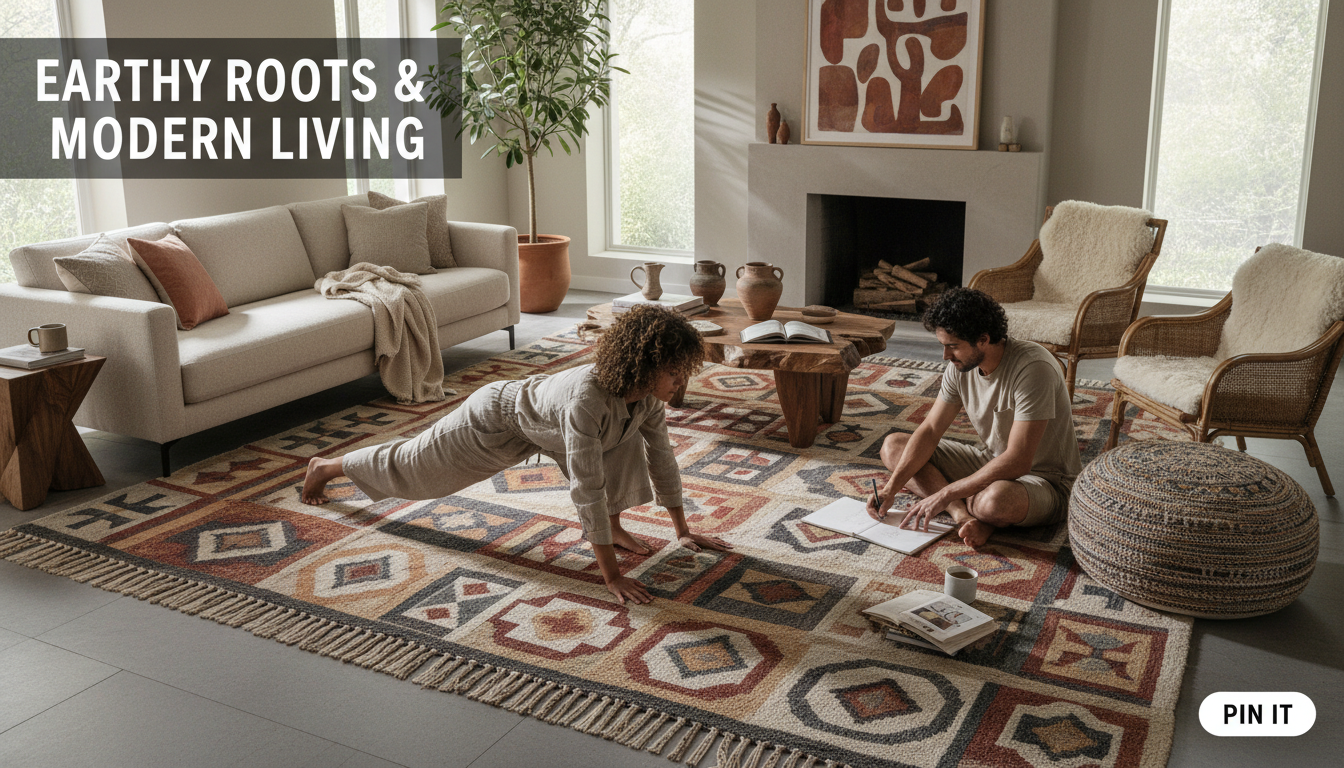
The design landscape of 2026 is distancing itself from the sterile, monochromatic palettes of the early 2020s. In its place, we see the emergence of “Heritage Maximalism”—a movement that prioritizes cultural depth and tactile history over mass-produced uniformity. This shift is most evident in the surge of Afro-Bohemian heritage rugs 2026, where the free-spirited nature of bohemian living meets the structured, ancient symbolism of African weaving traditions.
Designers are no longer looking for “global-inspired” patterns; they are seeking authentic textile narratives. These pieces act as the room’s foundation, utilizing “soulful geometry”—patterns that aren’t perfectly symmetrical, reflecting the hand-loomed imperfections of traditional mudcloth and Kuba cloth techniques.
The Mineral Palette of the Future
Color trends for 2026 have moved away from synthetic pigments toward what trend forecasters call “The New Earth Tones.” This aesthetic focuses on mineral-based dyes that offer a translucent, living quality to the wool and jute. When selecting Afro-Bohemian heritage rugs 2026, expect to see a dominance of the following hues:
- Oxidized Ochre: A deep, metallic gold that mimics the sun-drenched plains of the Sahel.
- Basalt and Obsidian: Matte, porous blacks that provide a grounding, architectural weight to a room.
- Terracotta Raw: A pinkish-brown clay tone that evokes the ancient city of Djenné.
- Verdigris Accents: Subtle hints of oxidized copper that suggest a fusion of natural elements and industrial age history.
Topography Underfoot: Tactile Innovations
Texture in 2026 is not merely about comfort; it is about topography. The latest collections feature “eroded” textures, where high-low pile heights create a three-dimensional map of the weaver’s intent. By blending raw, unprocessed wool with refined silk or recycled hemp, these rugs offer a sensory experience that changes as the sunlight moves across the room throughout the day.
We are seeing a move toward “unapologetic fringes”—long, unspun fibers that spill onto floorboards, breaking the rigid boundaries of modern furniture. This organic edge is a hallmark of the premium artisanal selections found at thebohorugs.com, where the emphasis remains on the intersection of ancient craft and contemporary durability.
Integrating Ancestral Patterns in Modern Enclaves
The evolution of this aesthetic is defined by how it harmonizes with the “smart home.” In an age of high-tech living, the Afro-Bohemian heritage rugs 2026 trend serves as a vital organic counterpoint. To master this look, interior architects are following a three-tiered approach:
- The Anchor Principle: Using a large-scale geometric rug to ground a room filled with glass, steel, and sleek modular sofas.
- Pattern Layering: Overlapping a smaller, high-texture hide or a flat-weave runner over a larger jute base to create depth.
- The Narrative Wall: Treating heritage rugs not just as floor coverings, but as vertical tapestries that improve room acoustics while serving as focal art pieces.
As we move deeper into the decade, the Afro-Bohemian aesthetic stands as a testament to “slow design.” It is a celebration of the human touch, a rejection of the disposable, and a profound investment in the stories we choose to tell through our living spaces.
Mineral Tones: The 2026 Color Palette for Rugs
The Evolution from Neutrality to Geological Depth
As we approach the mid-decade mark, the interior landscape is shedding its preference for sterile, synthetic minimalism in favor of a more visceral connection to the earth. In the realm of high-end flooring, Afro-Bohemian heritage rugs 2026 are emerging as the definitive statement pieces, trading stark whites for a palette rooted in deep, prehistoric mineralogy.
The shift is tectonic. Designers are moving away from “safety beiges” toward colors that look as though they were harvested from a quarry rather than a laboratory. We are seeing a surge in saturated iron oxides, manganese violets, and the dusty, sun-bleached clays of the Sahel region.
This movement isn’t just about color; it’s about the soul of the pigment. By 2026, the trend will lean heavily into “living finishes”—dyes that age gracefully and respond to the natural light of a room, creating a sense of ancestral permanence in modern apartments.
The 2026 Mineral Roster: Beyond the Color Wheel
The upcoming season prioritizes hues that evoke the raw materials of the African continent, filtered through a sophisticated, bohemian lens. Expect to see these primary tonal pillars dominating the luxury market:
- Hematite Black: A softer, more organic alternative to true black, carrying subtle charcoal and blue undertones that ground a room.
- Oxidized Copper: A muted, earthy teal that bridges the gap between traditional indigo dyes and modern mineral aesthetics.
- Raw Terracotta: Not the bright orange of the past, but a desaturated, sun-baked earth tone that pairs seamlessly with natural wood.
- Sulfur Gold: A sharp, sophisticated yellow that mimics natural mineral deposits, adding a “spark” to otherwise grounded palettes.
Curated collections, such as those found at thebohorugs.com, are already beginning to reflect this transition. These pieces act as anchors, using heavy-gauge wool and hemp to give the mineral tones a tactile, three-dimensional quality that synthetic fibers simply cannot replicate.
Materiality and the Alchemy of Dye
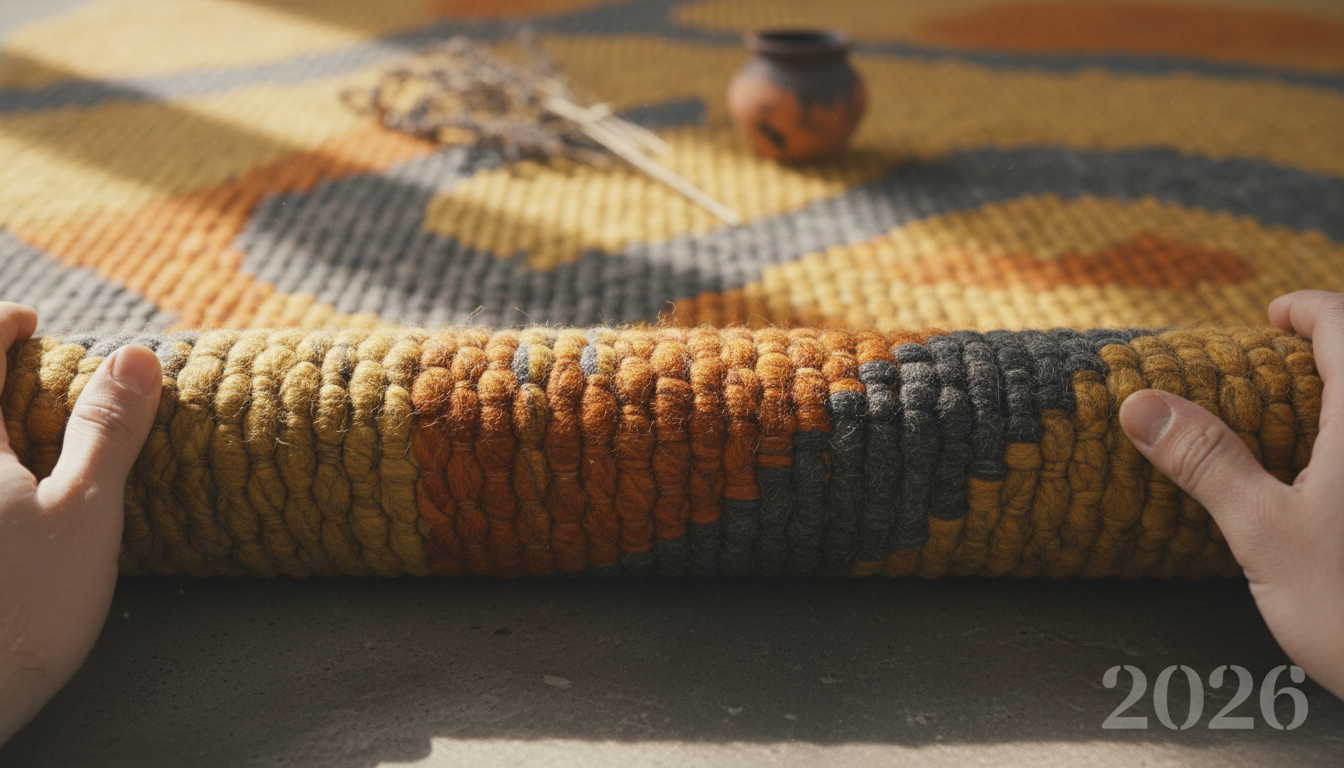
The success of Afro-Bohemian heritage rugs 2026 lies in the alchemy of material and pigment. For 2026, the industry is predicting a “return to the source,” where the physical texture of the rug dictates how the color is perceived. A mineral-toned dye applied to hand-spun highland wool creates a variegated, heathered effect that mimics the natural stratification of stone.
1. Layered Pigmentation: Designers are using “double-dyeing” techniques to create rugs that shift color depending on the angle of the pile.
2. Eroded Textures: Patterns in 2026 will often appear “weathered away,” suggesting a motif that has survived centuries of exposure.
3. Sustainable Sourcing: The mineral palette is naturally supported by botanical and ore-based dyes, aligning with the 2026 mandate for carbon-neutral luxury.
This fusion of heritage motifs and geological color ensures that the rug is no longer a background element. Instead, it becomes a piece of “soft architecture,” providing a foundational weight that allows more eclectic, bohemian furniture to shine without feeling untethered.
Tactile Narratives: High-Pile and Mixed-Fiber Construction
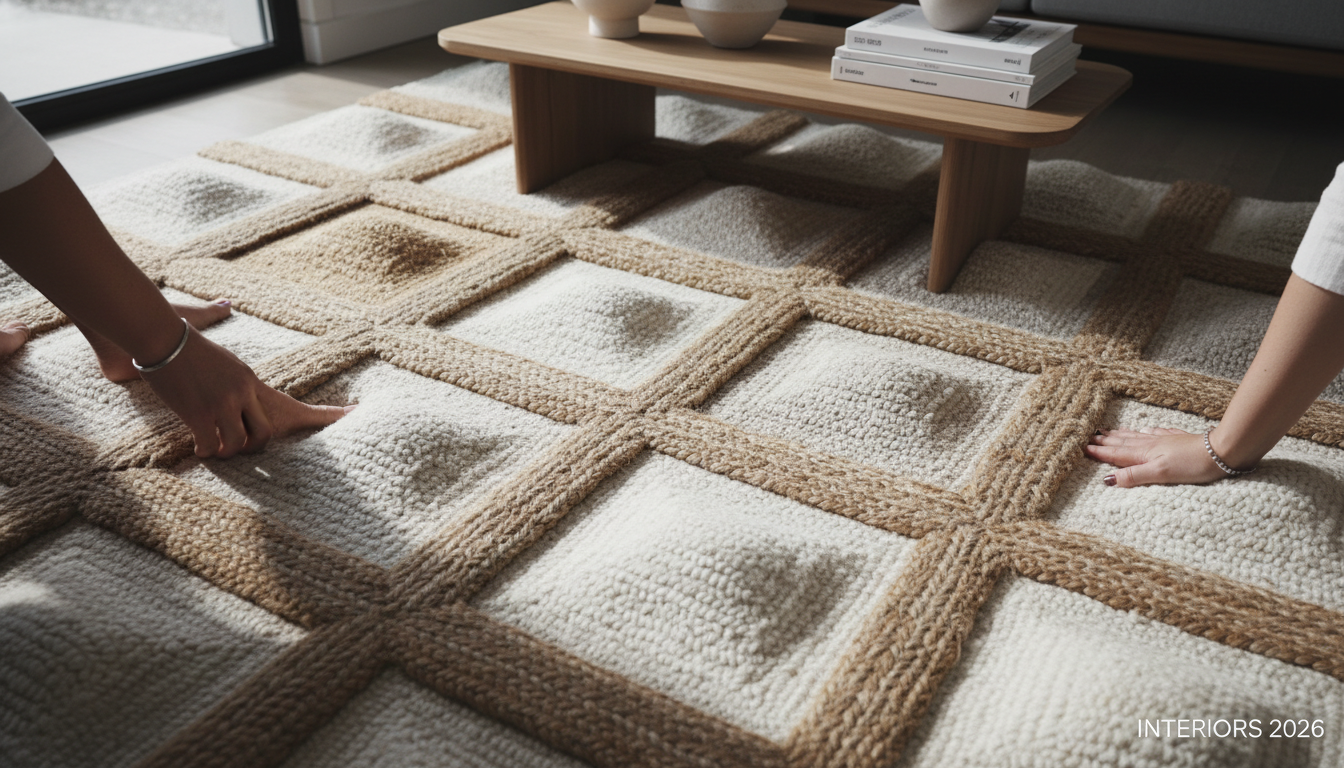
The Intersection of Ancient Craft and Modern Topography
In the evolving landscape of interior design, 2026 marks a departure from the sterile minimalism of previous decades. We are entering an era of “tactile maximalism,” where the floor serves as a topographical canvas. The surging interest in Afro-Bohemian heritage rugs 2026 represents a sophisticated pivot toward floorcoverings that demand to be felt as much as seen.
This movement replaces flat, digital prints with hyper-textural surfaces. Designers are increasingly utilizing high-low pile techniques to create three-dimensional relief patterns. These variations in height don’t just mimic ancient motifs; they give them a physical presence, allowing shadows to play across the rug’s surface as the sun moves throughout the room.
As we look toward the curated home of the future, these rugs act as the foundational “soul” of a space. By blending high-pile comfort with the rugged honesty of earth-toned fibers, they bridge the gap between historical storytelling and the modern desire for a sensory sanctuary.
The Materiality of the Mineral Palette
The 2026 aesthetic is defined by a rigorous commitment to fiber diversity. Gone are the days of uniform wool blends; the new Afro-Bohemian standard requires a “mixed-media” approach to weaving. This results in a complex hand-feel that reflects the raw, unrefined beauty of the natural world.
- Organic Wool and Raffia Hybrids: Combining the softness of hand-spun Highland wool with the structural grit of raffia to create a rugged, grounding texture.
- High-Low Relief Carving: Using varied shearing techniques to make traditional geometric patterns—such as the nested diamonds of West African textiles—stand out in literal 3D.
- Mineral-Infused Dyes: Utilizing pulverized basalt, ochre, and hematite to achieve “living colors” that possess a matte, chalk-like depth.
- Recycled Silk Accents: Insetting small sections of silk within a high-pile wool base to mimic the shimmer of mica found in riverbeds.
For connoisseurs looking to source these complex textures, the artisanal vetting process is key. Specialized curators like thebohorugs.com have become essential resources, offering pieces that prioritize the provenance of the fiber as much as the geometry of the design.
A Curated Sensory Foundation
The allure of Afro-Bohemian heritage rugs 2026 lies in their ability to anchor a room in heritage without feeling like a museum piece. The integration of high-pile construction offers a visceral sense of warmth, while the mixed-fiber approach ensures the rug remains durable enough for the high-traffic, multi-functional homes of today.
We are seeing a trend toward “zonal layering,” where these heavily textured rugs are used to define distinct emotional zones within open-plan living. A high-pile, mineral-toned piece doesn’t just decorate a floor; it creates an acoustic and tactile boundary that encourages pause and reflection.
Ultimately, the move toward these soulful, earth-textured pieces reflects a broader cultural desire for authenticity. In an increasingly digital world, the physical weight and varied topography of a hand-knotted heritage rug provide a necessary, grounding connection to the earth and the human hands that crafted it.
Decoding Ancestral Symbology in Modern Weaves
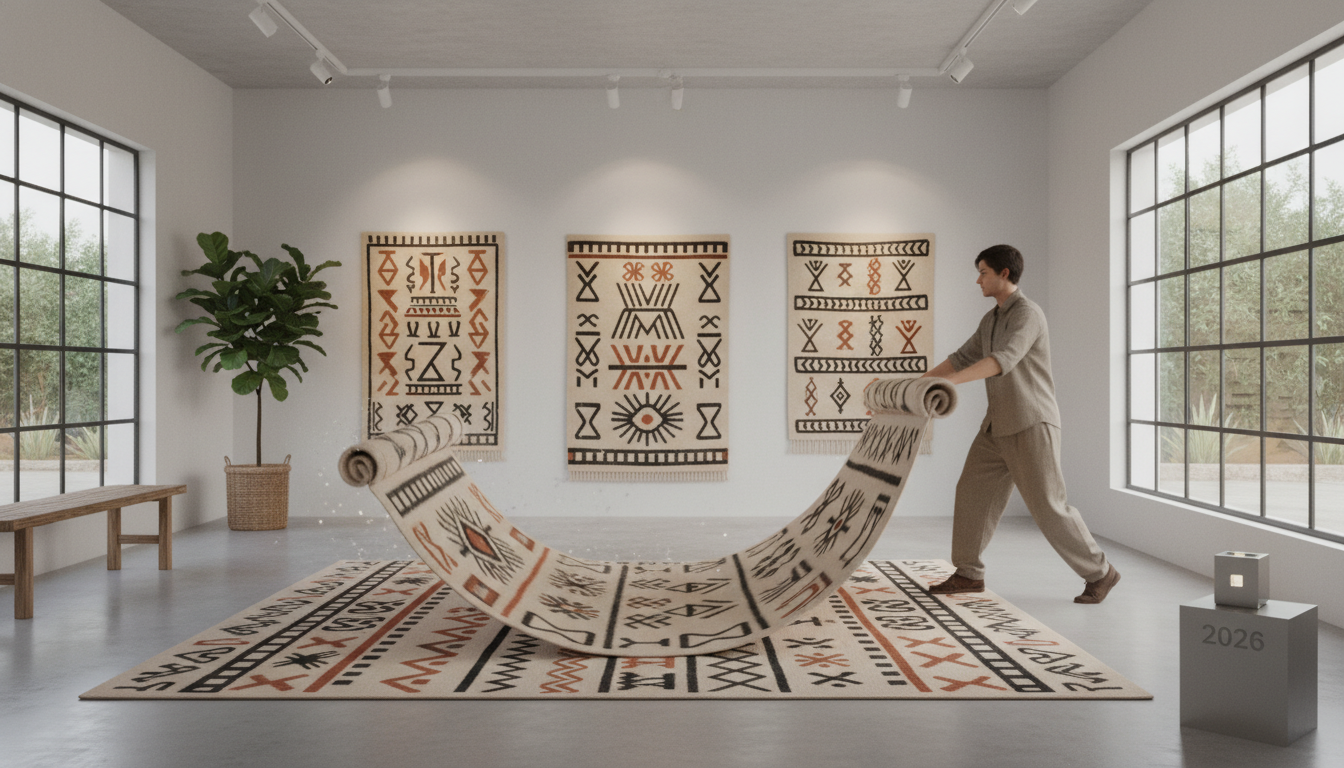
Beyond the Surface: The Semiotics of Sub-Saharan Geometry
In the evolving landscape of high-end interiors, 2026 marks a pivotal shift from purely decorative floor coverings to “narrative textiles.” Designers are no longer satisfied with aesthetic mimicry; they are seeking the visceral weight of history. Afro-Bohemian heritage rugs 2026 are defined by this exact craving for provenance, where every serrated line and geometric diamond serves as a linguistic bridge to the past.
We are seeing a sophisticated reinterpretation of the Bogolanfini (mud cloth) traditions of Mali and the intricate Adinkra symbology of Ghana. Rather than the high-contrast blacks and whites of previous decades, the 2026 aesthetic leans into “ghost patterns”—motifs that are woven with slight height variations in the pile rather than color changes, creating a whisper of heritage that reveals itself only as the light shifts across the room.
As collectors move away from ephemeral trends, the focus has sharpened on pieces that offer both soul and longevity. The curated collections at thebohorugs.com exemplify this transition, bridging the gap between ancestral craftsmanship and the sleek requirements of modern architectural spaces.
The Mineral Palette: Earth-Tone Alchemy
The 2026 iteration of the Afro-Bohemian movement moves away from synthetic dyes in favor of mineral-washed fibers. This “new organicism” utilizes the raw pigments of the earth to create a palette that feels grounded and permanent.
- Ochre and Raw Umber: Providing a sun-drenched warmth that anchors minimalist furniture.
- Hematite Greys: Metallic, stony undertones that replace the “millennial grey” with something more tectonic.
- Oxidized Terracotta: A deep, muted clay tone that mirrors the scorched earth of the Sahel.
These tones are not just visual choices; they are tactile experiences. By using hand-spun wool and untreated jute, these rugs retain a lanolin richness that synthetic alternatives simply cannot replicate. The result is a floor covering that feels less like an accessory and more like an architectural foundation.
Textural Topography: The ‘Haptic’ Luxury Trend
2026 is the year of the haptic interior. The rise of Afro-Bohemian heritage rugs 2026 is largely driven by a desire for “sensory grounding”—using texture to counteract the digital saturation of modern life. We are seeing a move toward varied pile heights and “carved” techniques that mimic the topographical maps of the African Rift Valley.
- Low-Sheen Silk Blends: Integrating cactus silk with raw wool to create matte and luster contrasts.
- Unrefined Fringes: Moving away from neat edges toward braided, heavy-gauge tassels that add a sense of weight.
- Asymmetrical Weaves: Embracing the “perfect imperfection” of the human hand over machine-led precision.
This commitment to tactile luxury ensures that each rug functions as a piece of fiber art. By sourcing from dedicated platforms like thebohorugs.com, interior designers are able to secure pieces where the ancestral symbology is respected, ensuring the “Bohemian” element remains grounded in authentic cultural appreciation rather than mere appropriation.
Sustainability and Ethical Lineage: The New Standard
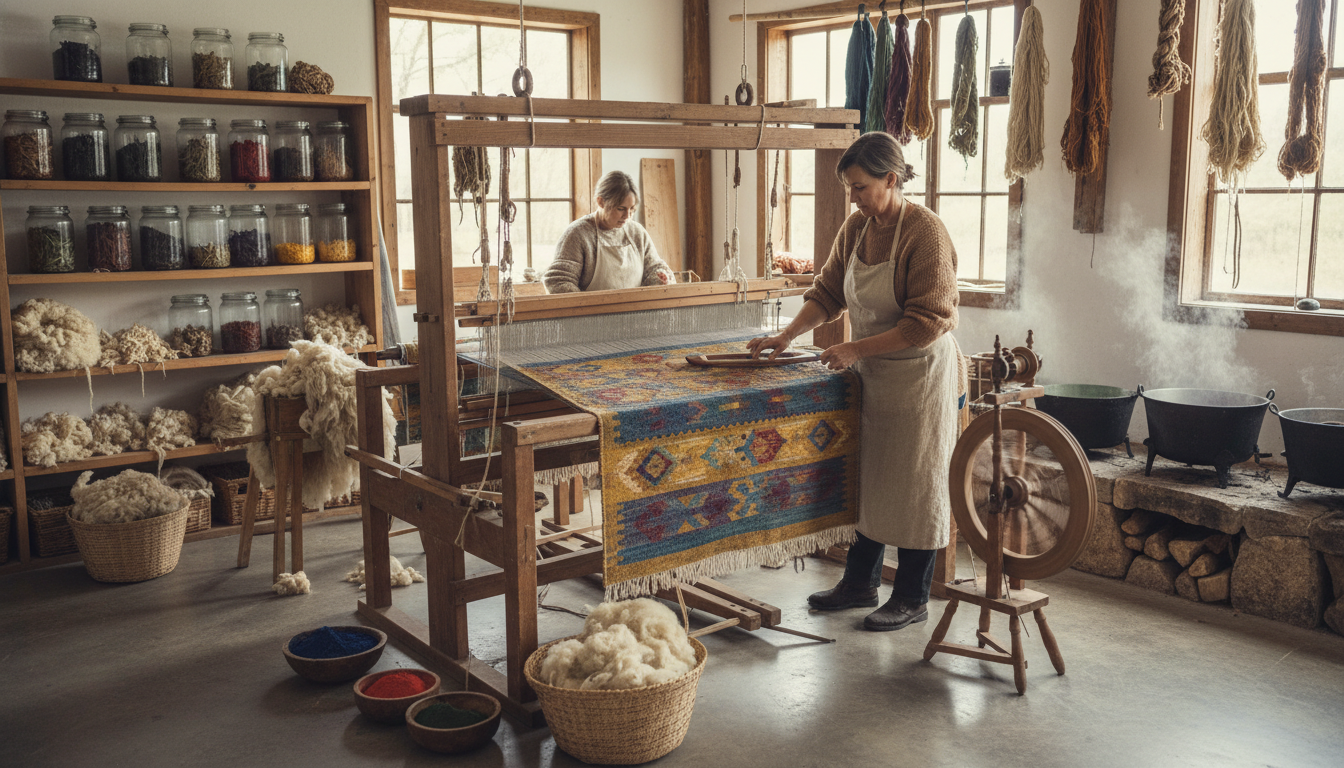
The Evolution of Provenance: Beyond Fair Trade
As we approach the mid-decade, the design world is witnessing a departure from performative environmentalism. In its place, a more profound “Ancestral Tech” philosophy is emerging, where the production of Afro-Bohemian heritage rugs 2026 serves as a bridge between ancient carbon-sequestering techniques and modern architectural needs.
For the discerning collector, the value of a rug no longer lies solely in its aesthetic appeal but in its ethical lineage. This shift prioritizes “Closed-Loop Artistry,” ensuring that every fiber—from high-atlas wool to West African wild silk—is harvested in harmony with seasonal cycles rather than industrial demands.
Leading curators, such as thebohorugs.com, are at the forefront of this movement, emphasizing pieces that celebrate the “unfiltered hand of the maker.” This commitment to radical transparency ensures that the soulful energy of the loom is preserved, making each piece a legacy investment rather than a seasonal trend.
The Bio-Mineral Palette: 2026’s Raw Aesthetic
The color story of 2026 is moving away from synthetic dyes toward a palette dictated by the earth’s own chemistry. We are seeing a surge in “Mineral-Wash” finishes, where Afro-Bohemian heritage rugs 2026 are treated with iron-rich clays and fermented plant matter to achieve deep, resonant hues.
- Ochre & Basalt: Natural pigments sourced from volcanic soils that offer a grounding, weighted feel to contemporary spaces.
- Lanolin-Rich Textures: Utilizing undyed wools to showcase the natural gradients of the flock, reducing water waste by up to 70%.
- Cactus Silk Infusions: Adding a subtle, matte sheen that mimics the play of light on desert dunes without the environmental toll of viscose.
Regenerative Craftsmanship as a Design Pillar
The rise of the Afro-Bohemian aesthetic is inextricably linked to the empowerment of the weaver. In 2026, “Social Sustainability” means moving beyond basic fair wages to a model of economic sovereignty. By investing in Afro-Bohemian heritage rugs 2026, homeowners are supporting the preservation of endangered geometric languages and weaving dialects.
This is not merely about decorating a room; it is about curating a space that respects the symbiotic relationship between the land, the artisan, and the final inhabitant. These rugs are built for extreme longevity, designed to acquire a beautiful patina over decades, effectively ending the cycle of disposable interior design.
- Traceable Fiber DNA: Expect to see digital passports or blockchain-verified origins for premium artisanal pieces.
- Carbon-Negative Looms: A return to traditional hand-treadle and vertical looms that require zero electricity.
- Cultural Custodianship: Collaborative design processes that ensure motifs are used with permission and profit-sharing models.
Design Integration: From Maximalist Dens to Zen Sanctuaries
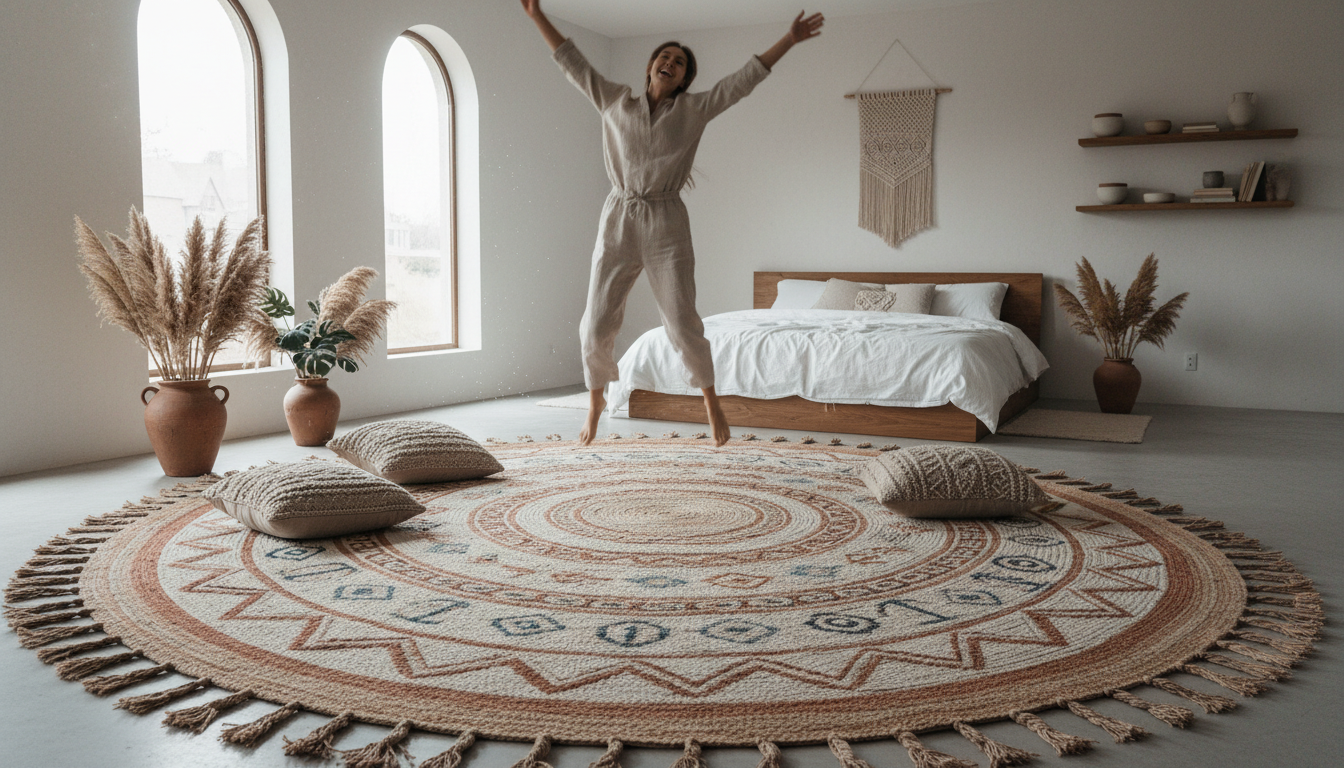
The Curated Chaos of the Afro-Maximalist Den
In the evolving landscape of 2026 interior design, the maximalist aesthetic has shed its cluttered reputation in favor of “soulful density.” Afro-Bohemian heritage rugs 2026 serve as the gravitational center for these spaces, grounding rooms filled with eclectic sculpture and mid-century silhouettes.
The key to this integration lies in the juxtaposition of high-contrast geometries against raw, mineral-toned textures. We are seeing a move toward layering these artisanal pieces over larger, low-pile jute or seagrass foundations to create a multi-dimensional “terrain” within the home.
- Pattern Clashing: Pair bold, oversized Kuba-inspired motifs with delicate pinstriped upholstery for a sophisticated visual tension.
- The Ochre Connection: Use rugs featuring deep iron-oxide and burnt umber pigments to unify mismatched timber furniture, from dark walnut to light white oak.
- Vertical Continuity: Designers are increasingly echoing the rug’s woven narrative by hanging complementary textile fragments as gallery-style wall art.
Quiet Luxury: Heritage Motifs as Visual Anchors
For those leaning toward the “Zen Sanctuary” or minimalist retreat, the Afro-Bohemian heritage rugs 2026 trend offers a necessary tactile warmth that prevents monochromatic rooms from feeling clinical. In 2026, the “soft-minimalism” movement is being redefined by these rugs’ high-low pile heights and hand-knotted irregularities.
Instead of a stark white rug, curators are opting for pieces with “visual silence”—rugs that use a singular mineral tone like basalt grey or weathered clay but feature intricate, debossed heritage patterns. These subtle textures respond dynamically to natural light, shifting the room’s mood from dawn to dusk.
When sourcing these foundational pieces, discerning collectors often look to thebohorugs.com, where the emphasis remains on the intersection of ancient craftsmanship and contemporary durability. This balance is vital for creating a space that feels curated rather than staged.
The 2026 Texture Palette: Bridging Two Worlds
The integration of these rugs requires a thoughtful approach to material pairing. To truly master the Afro-Bohemian fusion, one must consider the “hand-feel” of the entire environment. The 2026 aesthetic is defined by “The Three Ms”: Mineral, Material, and Motif.
- Mineral Pigments: Look for rugs dyed with crushed stone and botanical extracts, which offer a matte, lived-in patina that synthetic dyes cannot replicate.
- Material Contrast: Place a high-pile heritage rug against cool surfaces like polished concrete or travertine to create a sensory dialogue.
- Motif Scale: Use oversized, blown-up versions of traditional tribal symbols to act as a modern graphic element in an otherwise sparse room.
Ultimately, the Afro-Bohemian heritage rugs 2026 movement is not about a temporary fad; it is about the “domestication of history.” Whether placed in a high-rise glass apartment or a sprawling suburban estate, these rugs provide a sense of lineage and permanence in an increasingly ephemeral world.
The Art of Layering: Textures Over Patterns
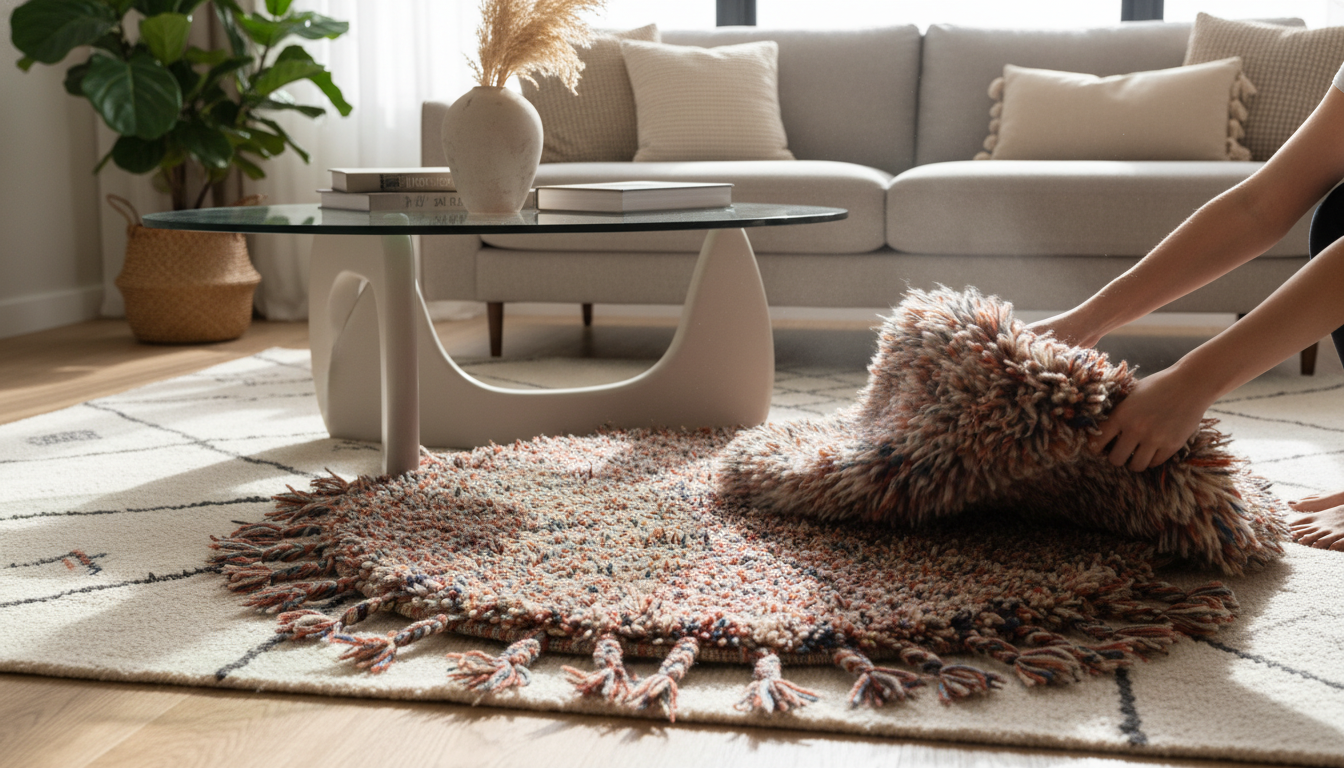
Defining the New Tactility
In the evolving landscape of interior design, 2026 marks a departure from the flat, two-dimensional minimalism of the past decade. The floor is no longer treated as a mere backdrop but as a foundational canvas for “maximalist texture.” This shift is epitomized by the emergence of Afro-Bohemian heritage rugs 2026, where the tactile weight of the material is just as vital as the pattern it carries.
Designers are moving toward “topographical weaving”—a technique where varied pile heights create a 3D landscape underfoot. Imagine the rugged terrain of the High Atlas mountains translated into a textile; these pieces use unrefined agave fibers and high-twist wool to mimic the raw, porous surfaces of the earth. By layering these high-relief textures over traditional geometric motifs, a home gains an immediate sense of permanence and “soul.”
The 2026 Layering Lexicon
To master this look, the industry is looking toward a “rhythmic clash” of eras and origins. The goal is to move beyond the matching sets of yesterday and instead create a dialogue between the artisanal and the architectural. To achieve the definitive Afro-Bohemian aesthetic, consider these three layering strategies predicted to dominate the coming seasons:
- The Mineral Foundation: Start with an oversized, chunky-knit jute or hemp rug in deep slate or oxidized ochre. This provides a raw, mineral-toned base that grounds the room.
- The Heritage Overlay: Place a smaller, pattern-dense rug—featuring Ndebele-inspired geometry or Kuba-cloth-style abstractions—at an intentional angle. These Afro-Bohemian heritage rugs 2026 act as the narrative focal point of the space.
- Material Juxtaposition: Pair a low-pile, hand-knotted heritage piece with a secondary layer of long-fiber mohair or recycled silk. The contrast between the matte, “dry” texture of the heritage rug and the subtle sheen of the silk creates a sophisticated visual tension.
A Curation of Cultural Resonance
The allure of this trend lies in its rejection of mass production. High-end interiors are prioritizing pieces that tell a story of lineage. We are seeing a surge in “bespoke weathered” finishes, where mineral dyes like indigo, madder root, and desert clay are used to create a patina that feels inherited rather than purchased.
For those seeking to anchor their spaces with these storied textiles, sourcing becomes a matter of ethics and aesthetics. Specialized ateliers, including thebohorugs.com, are at the forefront of this movement, offering artisanal pieces that bridge the gap between ancient West African weaving traditions and the contemporary, high-design requirements of 2026’s most refined homes.
Ultimately, the art of layering in the Afro-Bohemian context is about depth—not just of fabric, but of history. By combining the earthen grit of mineral tones with the rhythmic precision of heritage motifs, designers are creating sanctuaries that feel both globally connected and deeply rooted in the soil.
Investment Value: Rugs as Heirlooms in the Circular Economy
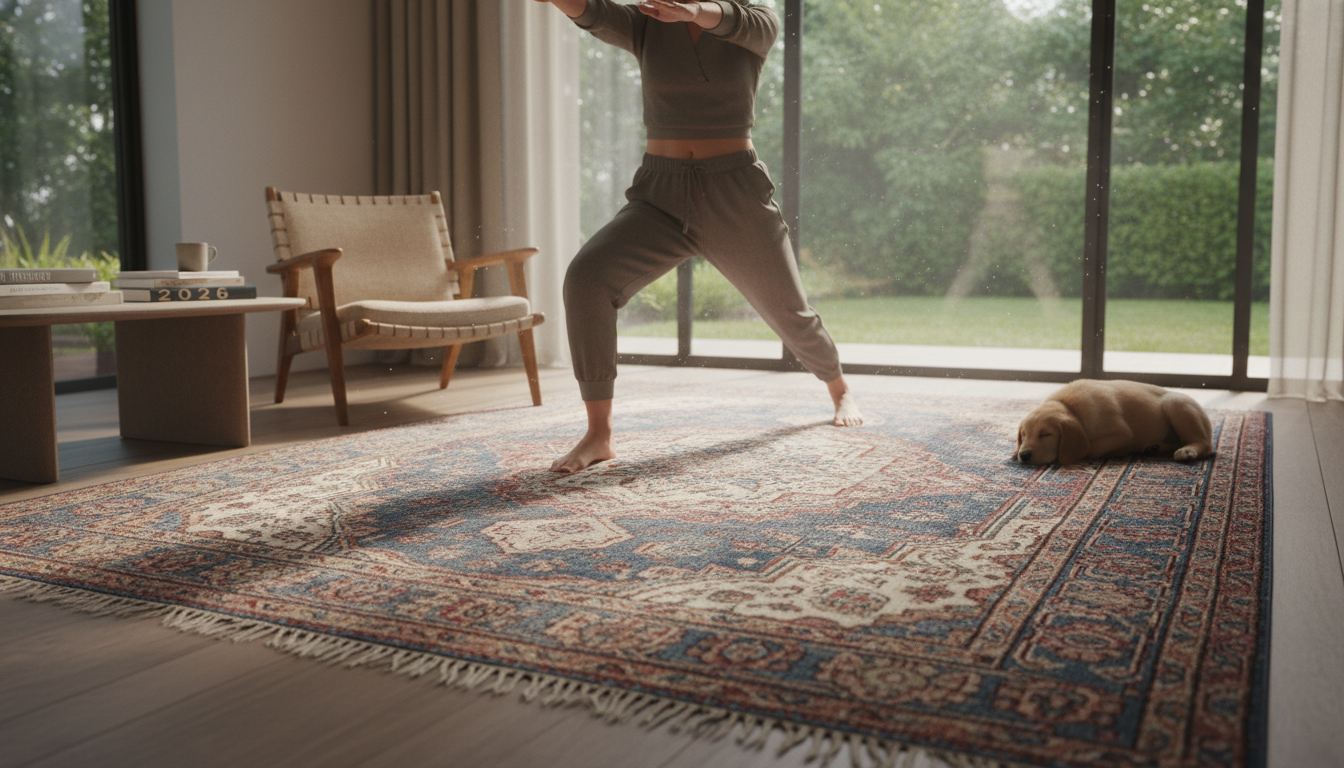
The Shift Toward Curated Permanence
In an era defined by the “slow decor” movement, the design world is pivoting away from the ephemeral. As we look toward 2026, the home is no longer a collection of fleeting trends but a curated gallery of personal history. Afro-Bohemian heritage rugs 2026 represent the pinnacle of this shift, merging the raw, tactile beauty of mineral pigments with the profound narrative depth of ancestral motifs.
Investing in these pieces transcends mere aesthetics. Unlike mass-produced alternatives, these rugs are engineered for the circular economy, utilizing regenerative fibers like high-altitude organic wool and hand-spun nettle. These materials do not merely age; they develop a patina of use that enhances their market value over time.
Provenance as the New Luxury Standard
For the discerning collector, the value of a textile lies in its “traceability.” The 2026 market demands transparency—a digital or physical lineage that connects the weaver’s loom to the final interior space. Premium platforms like thebohorugs.com have become essential conduits for this transparency, ensuring that every knot reflects authentic craftsmanship rather than commercial imitation.
When evaluating Afro-Bohemian heritage rugs 2026 for investment potential, experts suggest looking for three specific markers of longevity:
- Dye Integrity: Look for “live” colors derived from fermented indigo, crushed ochre, and iron-rich clays which retain depth better than synthetic counterparts.
- Structural Density: Hand-knotted techniques that allow the rug to be professionally restored rather than replaced.
- Cultural Synthesis: Designs that successfully bridge West African geometric symbolism with contemporary brutalist or minimalist silhouettes.
The Resale Evolution: Textiles as Assets
We are entering a period where high-end rugs are viewed with the same financial respect as fine art or vintage timepieces. The secondary market for authentic, ethically sourced textiles is burgeoning. A well-maintained Afro-Bohemian piece purchased today is projected to become a cornerstone of the 2030s vintage market.
- Durability: Natural lanolin in high-quality wool acts as a built-in protector, ensuring the rug survives high-traffic environments.
- Scarcity: As traditional weaving communities evolve, the specific hand-loomed techniques used in Afro-Bohemian heritage rugs 2026 become increasingly rare, driving up demand.
- Sustainability: In a carbon-conscious economy, a biodegradable, heirloom-quality rug is a guilt-free asset that avoids the landfill entirely.
Ultimately, choosing a rug from a dedicated purveyor like thebohorugs.com ensures you are acquiring more than a floor covering; you are securing a piece of textile history that honors the past while remaining firmly anchored in the future of sustainable luxury.
Elevate Your Space
Discover the artistry of handmade luxury. Each rug is a masterpiece of tradition and modern design.
Expert Q&A
What defines Afro-Bohemian heritage rugs 2026?
These rugs are characterized by the fusion of traditional African motifs with a bohemian spirit, utilizing high-end mineral colors and sculptural textures.
How do mineral tones differ from standard earth tones?
Mineral tones are derived from specific geological sources like basalt, malachite, and raw ochre, offering more depth and a slightly cooler, more sophisticated undertone.
Are these rugs suitable for minimalist homes?
Yes, they provide a soulful counterpoint to minimalist architecture by introducing texture and history without overwhelming the space with bright colors.
What materials are trending for these rugs in 2026?
We are seeing a rise in high-quality wool, sustainable jute, raffia accents, and recycled silk used to create ‘3D’ textures.
What is ‘Ancestral Geometry’ in rug design?
It refers to the use of ancient symbols and shapes from African cultures that carry specific meanings, reimagined for modern aesthetic sensibilities.
How can I tell if a rug is ethically produced?
Look for certifications regarding fair wages, natural dye usage, and transparent supply chains that credit the cultural origins of the designs.
Can I layer an Afro-Bohemian rug over carpet?
Absolutely. A high-textured heritage rug can add visual weight and a focal point to a standard carpeted room.
What is the primary color palette for 2026?
The 2026 palette is dominated by ‘Clay and Coal’—muted terracottas paired with deep charcoal and sandy beiges.
How do these rugs fit into the ‘Quiet Luxury’ trend?
Through the use of superior materials and subtle, sophisticated patterns that whisper rather than scream their cultural heritage.
Are high-pile rugs difficult to clean?
While they require more frequent vacuuming, high-quality wool fibers naturally repel stains, making them durable for long-term use.
What size rug is best for a living room?
In 2026, the trend is ‘oversized,’ where the rug extends beyond the furniture to create an expansive, cohesive ‘zone’.
How do these rugs support the circular economy?
By being crafted from natural, biodegradable fibers and designed for longevity, they avoid the landfill cycles of synthetic fast-homeware.
Can I use an Afro-Bohemian rug in a dining room?
Yes, but opt for a low-pile or flat-weave version to ensure chairs can move easily and crumbs are easier to remove.
What is the significance of the Bogolanfini pattern?
Historically known as ‘Mud Cloth,’ these patterns represent traditional Malian culture and add a layer of narrative and history to the rug.
How do mineral-textured rugs affect room acoustics?
The varied pile heights and dense natural fibers are excellent for sound absorption, making rooms feel quieter and more intimate.
Is it okay to mix different cultural motifs in one room?
Yes, as long as they are unified by a consistent color palette, mixing motifs creates a sophisticated, globetrotting aesthetic.
How do I maintain the color of naturally dyed rugs?
Avoid direct prolonged sunlight which can fade natural pigments, and use professional cleaning services that specialize in organic dyes.
Why is raffia being used in indoor rugs?
Raffia adds a unique, raw texture and a sense of ‘outdoor-in’ luxury that aligns with the 2026 focus on organic materials.
What is the best way to style a rug as wall art?
Use a specialized rug hanger that distributes weight evenly to prevent stretching, and place it in a spot where its texture can be appreciated at eye level.
Are these rugs pet-friendly?
Wool rugs are surprisingly pet-friendly due to their natural oils, though high-pile sections may attract pet hair more than flat weaves.
What is the ‘Soulful Materialism’ movement?
It is a design philosophy that prioritizes items with history, craftsmanship, and a tangible connection to the earth.
How does 2026 design differ from 2024 trends?
2026 moves away from the bright ‘maximalism’ of previous years toward a more grounded, monochromatic, and textured ‘heritage’ look.
Can these rugs be used in an entry hall?
A durable flat-weave Afro-Bohemian rug is perfect for high-traffic entryways, providing a warm and textured first impression.
Are synthetic versions of these rugs available?
While available, they lack the textural depth and environmental benefits of the authentic natural fiber heritage rugs.
What lighting works best with earth-textured rugs?
Warm, layered lighting (floor lamps and sconces) highlights the 3D textures and mineral tones better than harsh overhead lights.
How often should I rotate my heritage rug?
Rotate every 6 to 12 months to ensure even wear, especially if part of the rug is under furniture or in a sun-drenched area.
Do Afro-Bohemian rugs work with Mid-Century Modern furniture?
Yes, the organic patterns provide a beautiful contrast to the clean, geometric lines of Mid-Century Modern pieces.
Where should the pattern be centered in a room?
Centering the most intricate part of the motif under a glass coffee table allows the ‘art’ to be seen while anchoring the seating group.
What makes a rug an ‘investment piece’?
The combination of hand-knotted construction, high-grade natural fibers, and timeless cultural design that appreciates in value.
How does BohoRugs ensure the authenticity of these designs?
We collaborate directly with artisans who understand the historical context of the motifs, ensuring respect and credit are given to the source cultures.
Written by TheBohoRugs Interior Design Team
Experts in handmade rugs, boho interiors, and modern home decor.
