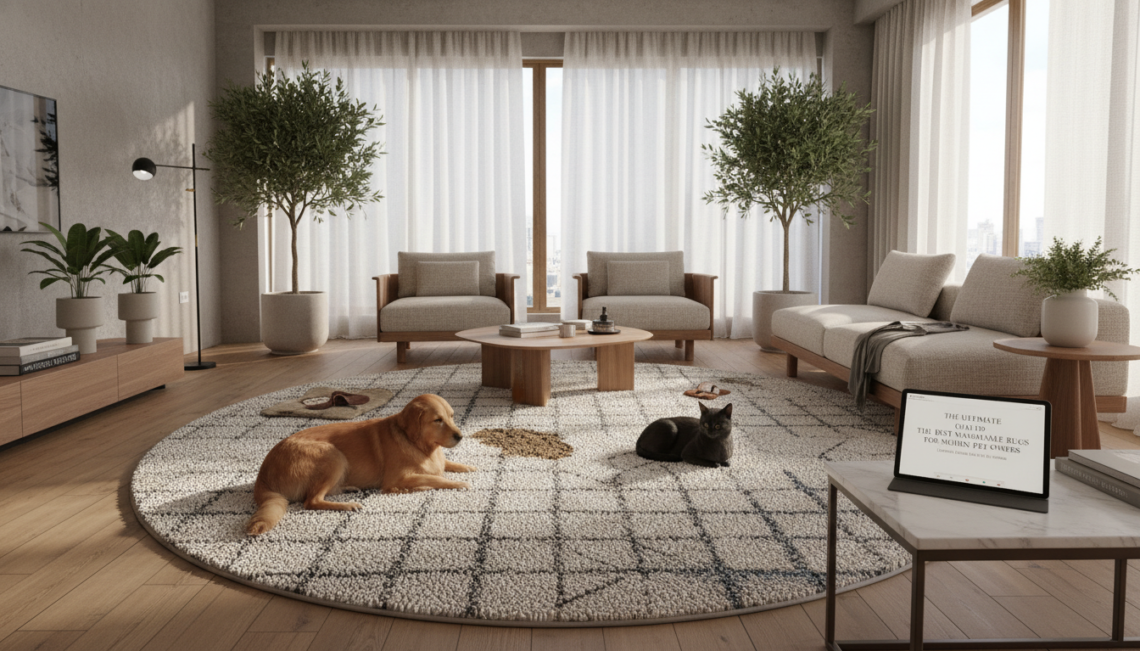
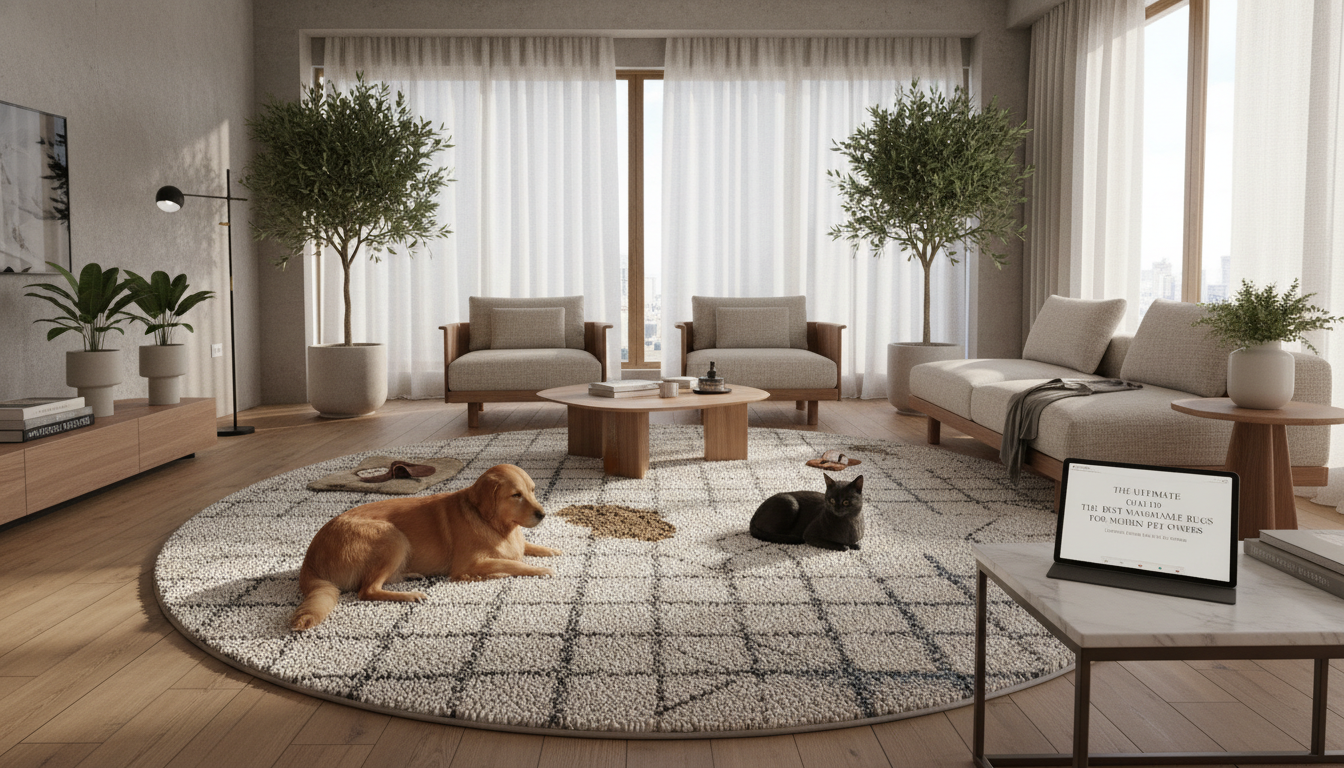
Finding the best washable rugs shouldn’t mean sacrificing your high-end aesthetic just because your golden retriever thinks the living room is a mud pit. For pet owners, the struggle between maintaining a pristine home and loving a furry companion is real, but the evolution of machine-washable textiles has finally bridged the gap between luxury and utility. This guide explores the most stylish, durable, and easily cleaned floor coverings that allow you to say goodbye to professional steam cleaning fees and hello to a fresh, fur-free home.
“The best washable rugs for pet owners are those made from low-pile synthetic fibers like polyester or chenille, which resist snagging and trap less dander. Look for rugs with a two-piece system (a rug cover and a non-slip pad) or integrated rubber backing to ensure the rug stays in place during ‘zoomies.’ Key features include liquid-repellent coatings, fade resistance for frequent washing, and a weave tight enough to prevent claws from pulling threads.”
The Roadmap
Table of Contents
- 1. The Mud-Defying Distressed Medallion in a Modern Farmhouse Entryway
- 2. High-Contrast Charcoal Geometric for Shedding-Heavy Living Rooms
- 3. Indigo Persian Runner for Kitchens and Messy Eaters
- 4. Muted Sage Low-Pile Chenille for Relaxed Master Bedrooms
- 5. Navy Herringbone Flatweave for High-Traffic Home Offices
- 6. Sand-Toned Neutral Weave for Accident-Prone Dining Areas
- 7. Terracotta Clay Rug for Sun-Drenched Napping Nooks
- 8. Deep Emerald Traditional Print for Fur-Disguising Elegance
- 9. Graphite Grey Runner for High-Speed Hallway Paws
- 10. Sky Blue Lattice for Indoor-Outdoor Pet Versatility
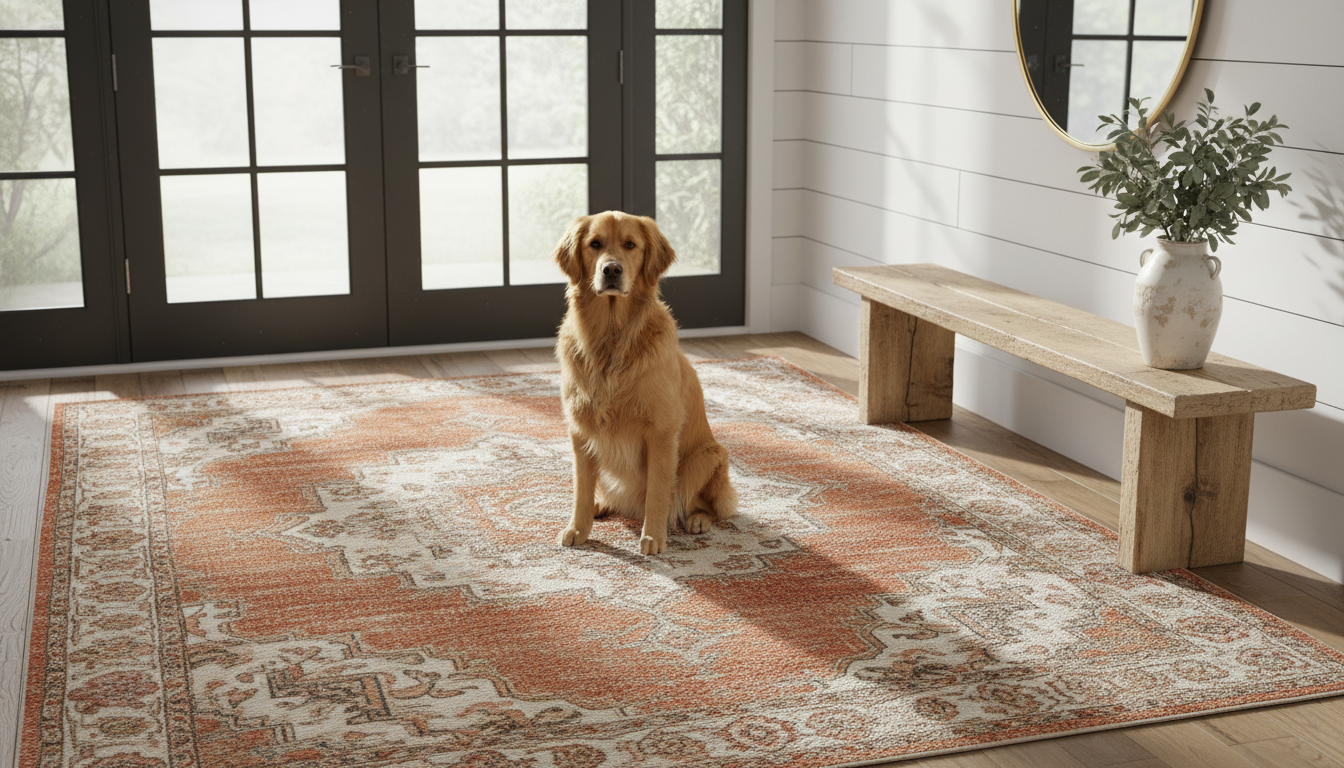
1. The Mud-Defying Distressed Medallion in a Modern Farmhouse Entryway
The Art of Architectural Pairing
To elevate the entryway from a mere transit point to a destination, the furniture must mirror the rug’s textural narrative. A reclaimed white oak bench, stripped of heavy varnishes to reveal its raw, honeyed grain, provides a sturdy, organic counterpoint to the rug’s geometric precision. The wood’s natural imperfections—small knots and hairline cracks—echo the distressed finish of the medallion, creating a sense of historical continuity. Beside it, a tall, hand-thrown ceramic vase in a matte charcoal finish holds stalks of dried eucalyptus, bringing a vertical element that draws the eye upward toward the soaring ceilings typical of the farmhouse vernacular.
- Primary Seating: A minimalist reclaimed white oak bench with a spindle back or a monolithic block design to emphasize raw materiality.
- Accent Hardware: Brushed oil-rubbed bronze or matte black coat hooks to coordinate with the industrial frame of the glass door.
- Textural Accents: A chunky, hand-knit wool throw in a deep oatmeal hue draped over the bench to soften the transition from wood to rug.
- Greenery: Eucalyptus or olive branches in heavy stoneware to introduce an earthy, aromatic element that complements the rust tones.
The Nuanced Color Palette
The success of this space hinges on a tonal balance that feels both warm and expansive. By pulling the cream from the rug’s border and applying it to the walls in a soft, lime-wash finish, the room feels illuminated even on overcast days. The rust tones find their siblings in leather accents—perhaps a vintage briefcase left on the bench or a leather-bound tray for keys—creating a cohesive environment where the rug acts as the connective tissue between the architecture and the objects within it.
- Base Tones: Warm Ivory, Alabaster, and Pale Linen to maintain a bright, airy atmosphere.
- Core Accents: Burnt Sienna, Terracotta, and Muted Rust to pull from the rug’s medallion.
- Grounding Elements: Charcoal and Carbon Black, used sparingly in door frames and light fixtures to provide a modern, sophisticated edge.
2. High-Contrast Charcoal Geometric for Shedding-Heavy Living Rooms
High-Contrast Charcoal Geometric for Shedding-Heavy Living Rooms
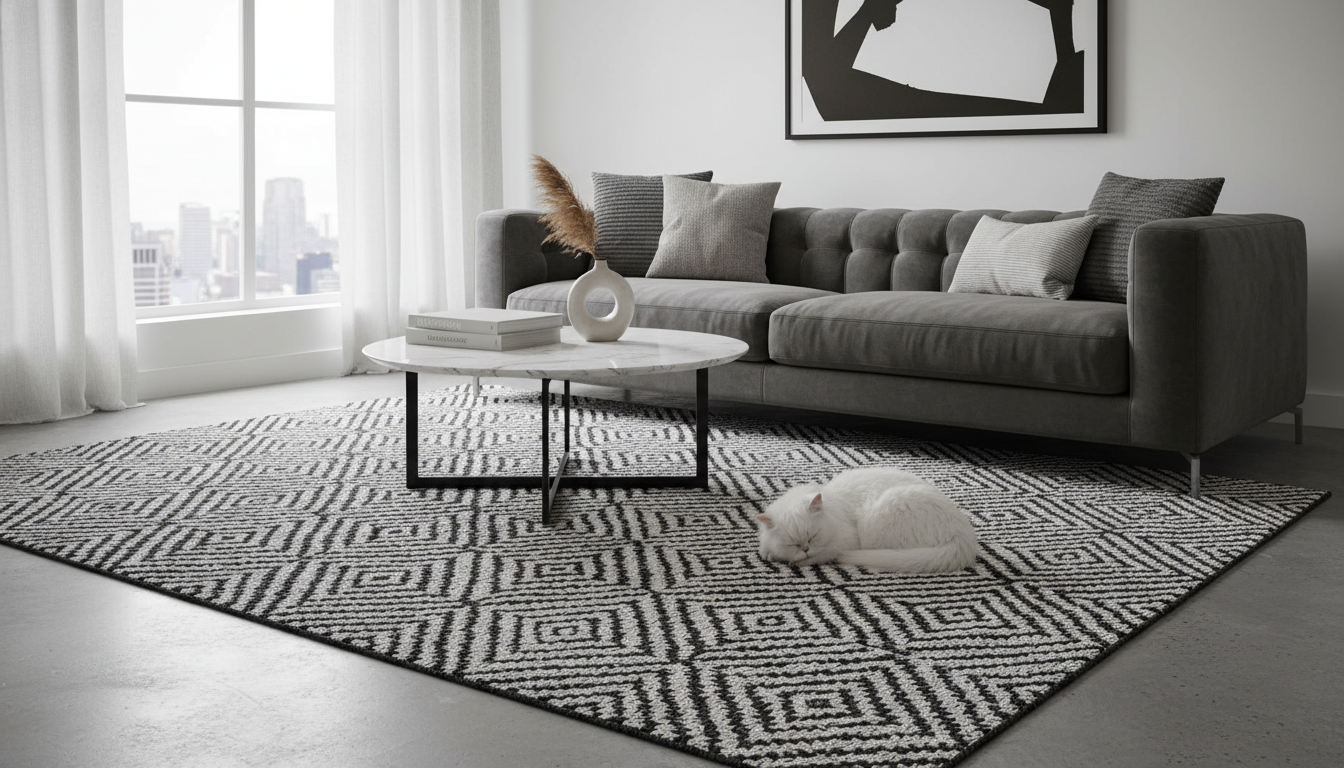
The morning sun crests over the skyline, pouring through expansive floor-to-ceiling glass apertures to illuminate a living space defined by its breathtaking composure. At the heart of this monochromatic sanctuary lies a visual anchor that defies the traditional anxieties of pet ownership: a high-contrast charcoal and white geometric rug. In a room where the architecture is minimalist and the standards for cleanliness are uncompromising, this rug serves as both a graphic masterpiece and a tactical genius. The deep, obsidian-toned base provides a moody, sophisticated foundation, while the crisp white linework creates a rhythmic energy that dances across the floor. For the homeowner accompanied by a snowy-furred companion—perhaps a majestic Persian or a sleek Siberian cat—this rug is a revelation. The intentional high-contrast pattern performs a brilliant optical sleight of hand, allowing loose white fibers to settle into the ivory geometric paths, rendering them virtually invisible until the next scheduled wash.
The interplay of textures within this scene elevates the space from a mere room to a curated gallery of comfort. A plush, slate-grey velvet sofa stretches across the rug’s perimeter, its subtle sheen catching the light in a way that complements the matte finish of the rug’s performance fibers. The weight of the velvet provides a grounded, tactile contrast to the sharp, clean edges of the rug’s pattern. Centered atop the weave sits a heavy, circular marble-top coffee table, its grey veining mimicking the fluid motion of the rug’s more rigid geometry. This juxtaposition of natural stone and high-performance textile creates a dialogue of luxury, proving that a space designed for a “shedding-heavy” lifestyle can remain an exercise in elite aesthetic discipline. The rug’s low-profile pile ensures that the furniture sits with unwavering stability, avoiding the unsightly indentations often left by heavier traditional carpets.
The Architecture of the Arrangement
To master this specific aesthetic, one must look beyond the rug itself and consider the sculptural silhouettes that surround it. The goal is to create a “layered monochrome” effect that feels intentional rather than cold. The charcoal rug acts as the darkest value in the room’s spectrum, allowing lighter elements to pop with architectural precision. Consider the following pairings to achieve this level of high-end styling:
- The Primary Seating: Opt for a low-profile, Italian-style sofa in a deep smoke or pewter velvet. The fabric’s nap should be dense enough to resist claw snags while offering a decadent softness that invites lounging.
- Metals and Accents: Integrate brushed nickel or polished chrome floor lamps. The cool-toned metallic surfaces reflect the rug’s white geometric lines, tying the vertical and horizontal planes together.
- Organic Geometry: Contrast the rug’s sharp angles with a soft, organic element, such as a large-scale white ceramic vase or a collection of smooth, matte-black basalt stones arranged on the marble table.
- The Foliage Factor: A single, structural plant—like a tall Dracaena or a Fiddle Leaf Fig in a slate-colored concrete planter—adds a burst of life that softens the monochromatic rigor without disrupting the color story.
Living with pets often necessitates a compromise between style and utility, but the modern evolution of washable luxury textiles has erased that boundary. This charcoal geometric rug is not simply a floor covering; it is a high-performance canvas designed to withstand the rigors of high-traffic paws and the inevitable drift of fur, all while maintaining the crisp, sharp focus required of professional interior photography. When the white cat curls into a contented ball on the dark fibers, the image is one of pure, unadulterated serenity—a testament to a home where design and life coexist in perfect, washable harmony.
3. Indigo Persian Runner for Kitchens and Messy Eaters
3. Indigo Persian Runner for Kitchens and Messy Eaters
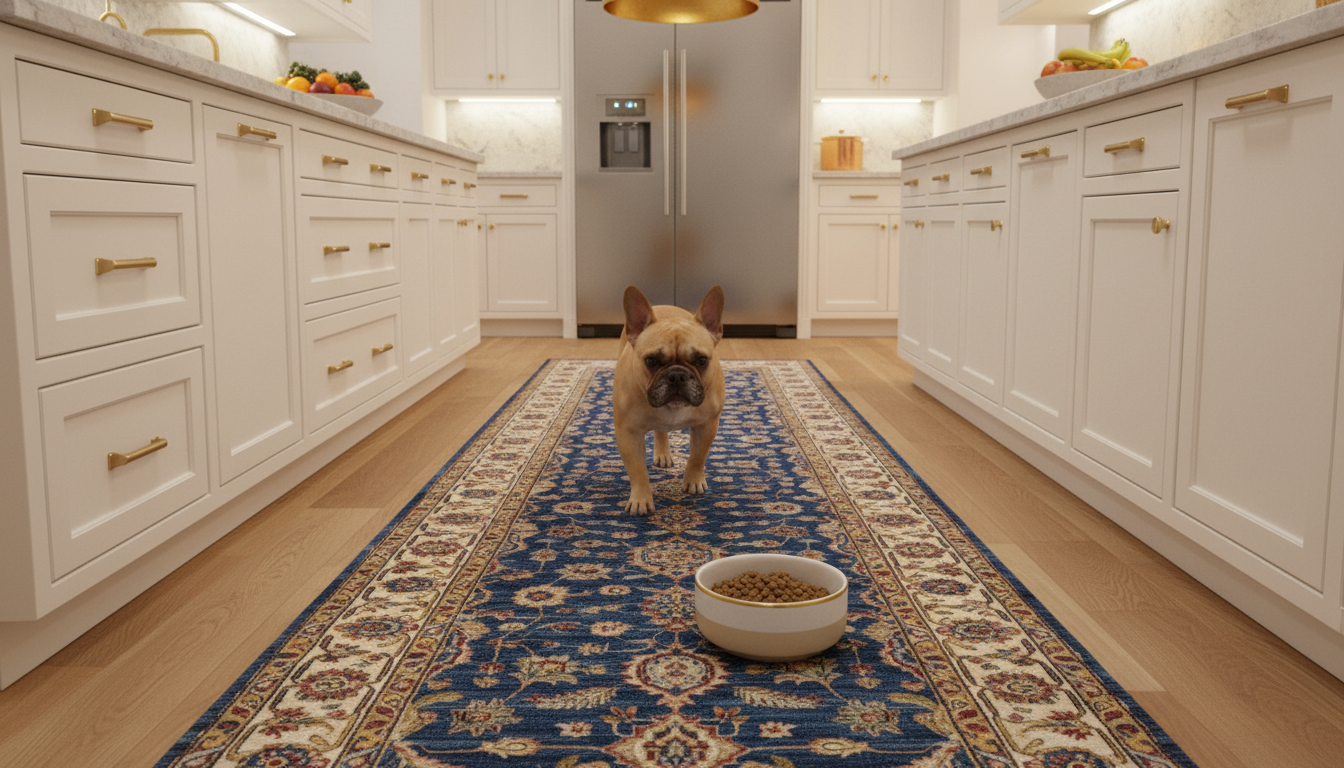
Morning light filters through the paned windows of a high-ceilinged culinary sanctuary, catching the deep, ink-wash tones of a Persian runner that stretches the full length of the galley. This is not merely a floor covering; it is a grounding element that bridges the gap between the clinical precision of a modern kitchen and the warmth of a lived-in home. The rich indigo base, punctuated by intricate floral motifs in cream, sapphire, and charcoal, creates a visual anchor against the pristine expanse of white shaker-style cabinetry. As a French bulldog trots confidently down the length of the fibers, the rug remains unfazed, its dense, low-pile construction designed to withstand both high-speed paws and the inevitable spills of a gourmet life.
The architectural magic of this specific layout lies in the contrast. The cool, nocturnal depth of the indigo blue provides a sophisticated counterpoint to the bright, reflective surfaces of polished marble countertops and the warm glow of unlacquered brass hardware. While kitchens are traditionally dominated by hard surfaces—stone, wood, and tile—this runner introduces a much-needed layer of softness and acoustic dampening. It transforms the kitchen from a purely utilitarian workspace into a textured extension of the home’s social core. Even with a food bowl positioned directly atop its ornate border, the rug exudes an air of untouchable elegance, disguising stray kibble or water droplets within its complex, vintage-inspired geometry.
The Art of the High-Contrast Culinary Palette
To master this look, the surrounding elements must be curated with a focus on material integrity and tonal balance. The indigo Persian runner acts as the “hero” piece, allowing other luxury finishes to shine without competing for attention. Consider these sophisticated pairings to elevate the scene:
- Cabinetry & Hardware: Crisp, matte white shaker cabinets provide the perfect canvas, while oversized brass pulls and bridge faucets introduce a jewelry-like shimmer that echoes the warm highlights in the rug’s pattern.
- Countertops: Calacatta marble with subtle grey veining or thick, honed white quartz creates a seamless transition from the vertical planes of the cabinets to the horizontal richness of the indigo runner.
- Furniture Accents: Pair the runner with mid-century modern walnut bar stools or a reclaimed white oak island to introduce organic wood grains that soften the blue-and-white color story.
- Lighting: Large-scale glass globe pendants with antique gold stems ensure the space remains airy, casting a gentle, diffused light that brings out the shimmering sapphire undertones of the rug’s weave.
The genius of the modern washable Persian is its ability to mimic the “distressed” patina of a centuries-old heirloom while offering the resilience required by high-traffic households. For the pet owner who refuses to sacrifice style for sanity, this runner is the ultimate solution. The intricate patterns are strategically designed to camouflage pet hair and minor spills, while the advanced synthetic fibers ensure that the deep indigo dyes remain vibrant through countless wash cycles. It is a testament to the fact that a home shared with animals can—and should—look like it belongs on the cover of a premier design quarterly.
4. Muted Sage Low-Pile Chenille for Relaxed Master Bedrooms
The Poetry of a Muted Sage Sanctuary
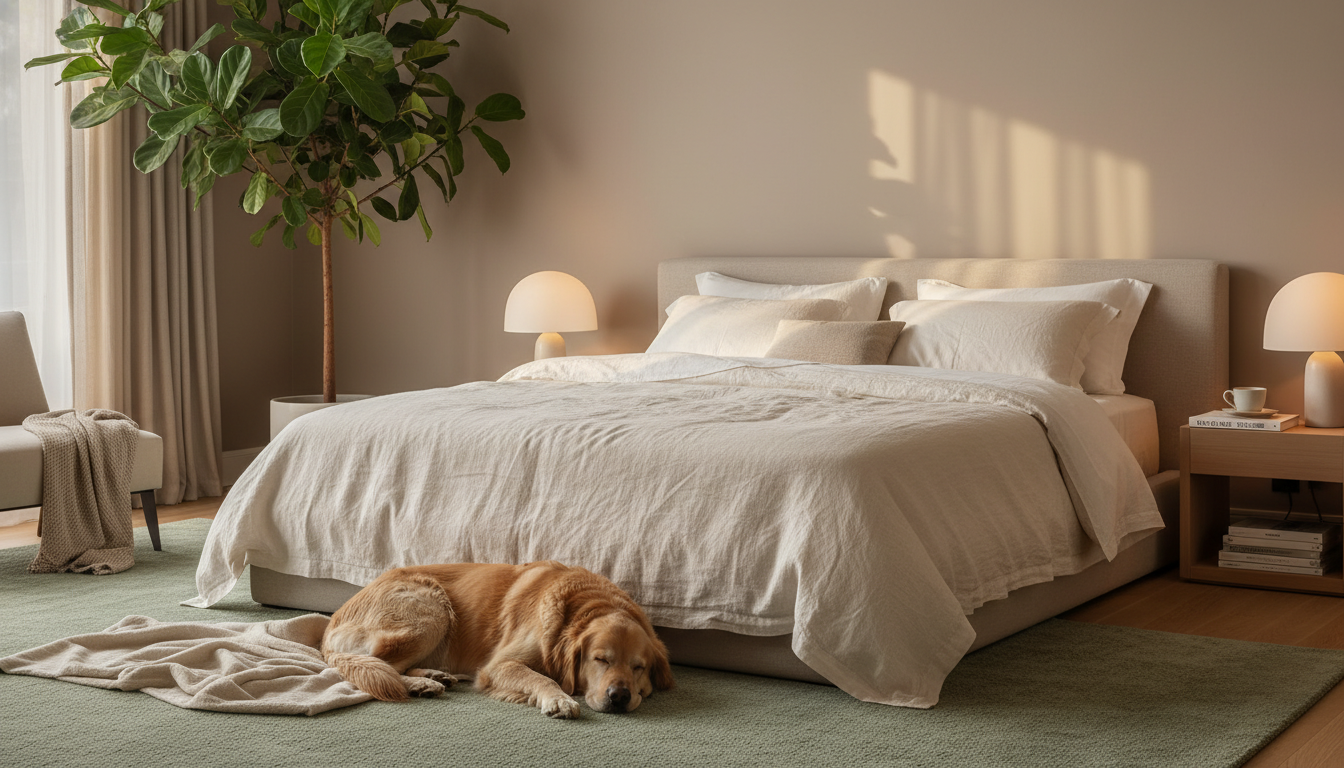
Morning light filters through sheer, floor-to-ceiling drapery, casting a soft, cinematic glow across a room designed for deep restoration. At the heart of this retreat lies the muted sage low-pile chenille rug, a piece that serves as the room’s tonal anchor. The color is not a vibrant, forest green, but rather a weathered, silvery sage—a “new neutral” that breathes life into the space without demanding the spotlight. This rug provides a sophisticated foundation that bridges the gap between the organic world outside and the curated luxury within. Under the weight of a heavy, solid white oak king-sized bed, the chenille offers a subtle, velvet-like shimmer that catches the low-angled sun, creating a visual depth that masks the everyday realities of life with a canine companion.
The choice of a low-pile chenille is a deliberate masterstroke for the discerning pet owner. While traditional high-pile rugs often trap dander and snag under active claws, this tightly woven surface allows for effortless movement and maintenance. It is a surface where a fluffy Samoyed or a golden retriever can sprawl in total comfort, their fur blending seamlessly into the heathered tones of the sage. The texture is deceptively soft, offering that coveted “barefoot luxury” sensation upon waking, yet its structural integrity remains uncompromised by the occasional high-speed dash toward the door.
A Masterclass in Textural Layering
To achieve this level of serene sophistication, the rug must interact with a specific lexicon of materials. The bed is dressed in layers of raw Belgian linen in shades of cream, oatmeal, and toasted almond. The tactile nature of the linen—crisp yet invitingly wrinkled—complements the smooth, matte finish of the chenille rug. By keeping the bedding monochromatic and light, the sage of the rug becomes a soft “pop” of color that feels grounded rather than jarring.
- Wall Color: Soft taupe with warm undertones (think Benjamin Moore’s “Edgecomb Gray”) to create a cocoon-like environment that doesn’t compete with the greenery.
- Furniture Finishes: Nightstands in a light-washed cerused oak or minimalist plaster-coated pedestals to maintain a sense of airy lightness.
- Metallic Accents: Brushed champagne bronze or matte black iron for a hint of modern architectural definition.
- Botanical Elements: A singular, towering fiddle leaf fig in a weathered terracotta or matte grey stone pot to pull the green tones upward into the vertical space.
The architecture of the room—defined by soft taupe walls and perhaps a subtle crown molding—frames the rug as if it were a piece of floor-bound art. Because the rug is washable, the fear of “bedroom-only” stains is eliminated. Whether it is the remnants of a morning coffee spilled during a bedside cuddle or the inevitable trail of garden debris brought in by a pet, the rug’s low-profile construction allows for a quick, high-performance clean that restores its original luster without the need for professional intervention. This is luxury that doesn’t demand tiptoeing; it is luxury meant to be lived in, played on, and enjoyed at the most intimate level.
5. Navy Herringbone Flatweave for High-Traffic Home Offices
Sophisticated Material Pairings
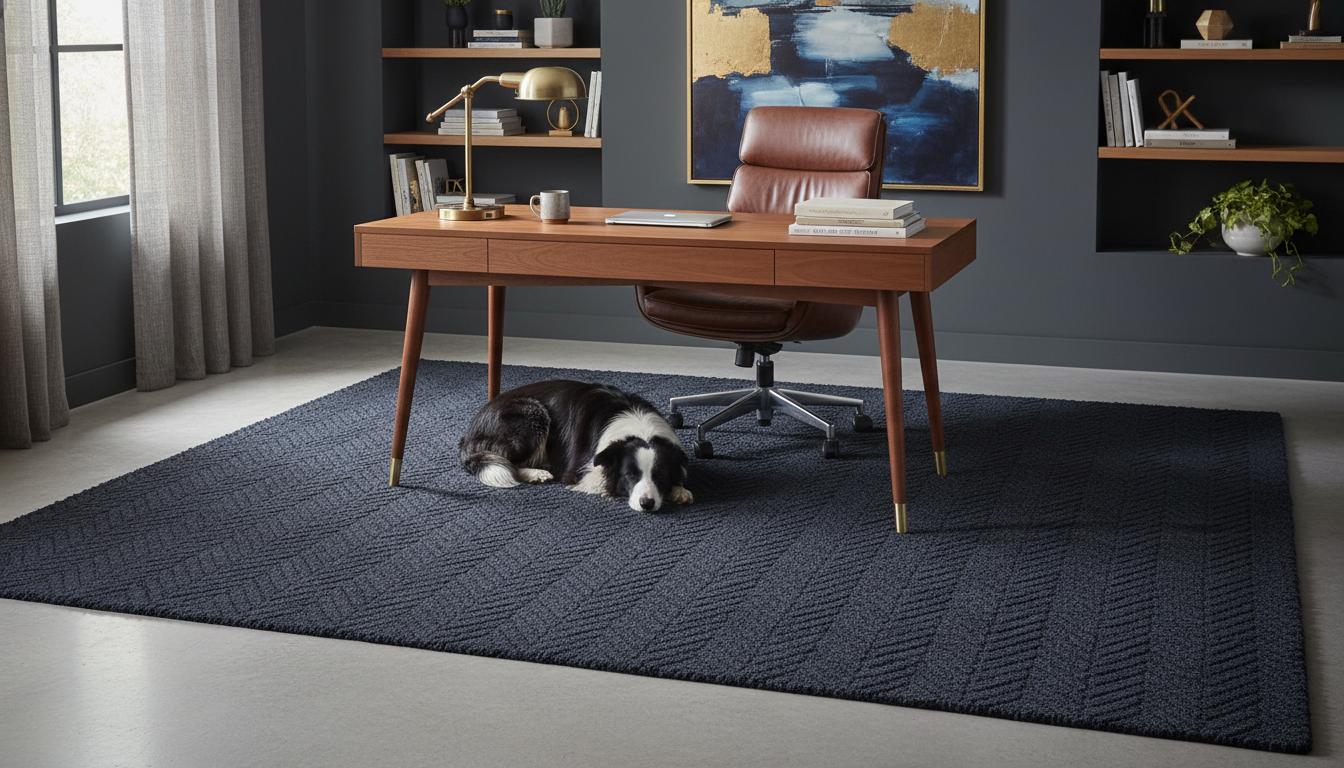
To elevate this navy foundation, one must curate a palette that leans into the richness of the blue while balancing it with organic textures. The interplay of materials is what transforms a functional workspace into a design-forward sanctuary.
- Primary Furniture: A mid-century modern teakwood desk with tapered legs and integrated brass hardware creates a stunning warmth against the cool navy.
- Seating: A cognac or tobacco-colored leather executive chair provides a classic “library” feel, with the leather’s patina mirroring the rug’s durability.
- Accent Textures: Incorporate matte black metal shelving or a charcoal-gray velvet occasional chair to add layers of tonal depth without competing with the herringbone pattern.
- Lighting: Focused, directional lighting in aged bronze or polished brass helps highlight the intricate weave of the rug during evening hours.
The Intersection of Performance and Aesthetics
While the aesthetic is undeniably upscale, the engineering of this washable flatweave is what makes it indispensable for the modern pet owner. The Border Collie, with its striking black-and-white coat, finds a comfortable resting place beneath the desk, yet the rug remains pristine. The navy-and-white weave is naturally adept at disguising stray hairs between washings, while the low-pile construction ensures that dander and dust are easily lifted by a vacuum. The rug’s ability to be stripped from the floor and laundered back to its original vibrancy means that even the most demanding high-traffic environments never lose their professional edge. It is a rare design solution that treats “washable” not as a compromise, but as a premium feature of a well-lived, high-functioning luxury lifestyle.
6. Sand-Toned Neutral Weave for Accident-Prone Dining Areas
Architectural Contrast and Material Harmony
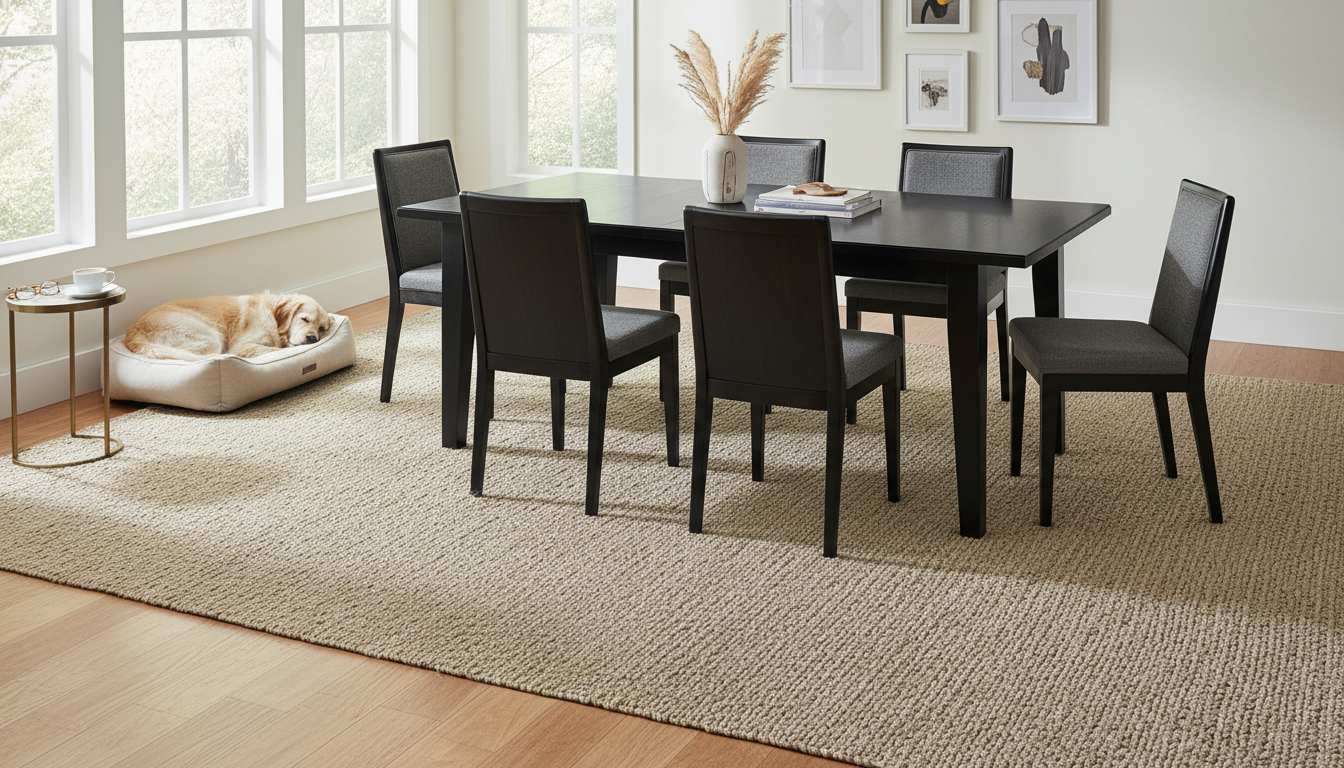
The visual success of this space hinges on the deliberate tension between the dark, dense walnut and the ethereal, light beige of the rug. The weave itself is tight and low-profile, offering a sophisticated texture that mimics the organic irregularities of raw silk or hand-spun flax, yet it possesses a resilient spirit. In a dining environment where chairs are frequently tucked and untucked, the durability of a flat-weave construction prevents the unsightly “crushing” common in high-pile alternatives. By opting for a sand-toned palette, the rug cleverly disguises light pet dander and fine hairs that would otherwise be glaringly obvious on a darker surface, maintaining a pristine appearance even between deep cleans.
Curated Furniture Pairings
To elevate the sand-toned foundation, the furniture selection must feel intentional and textural. We recommend pairing this rug with:
- Black Walnut & Matte Steel: A heavy timber table with slim, industrial legs creates a floating effect over the light rug.
- Textured Charcoal Seating: Six minimalist dining chairs upholstered in a performance charcoal linen or a soft, pebbled leather offer a sharp, sophisticated contrast to the beige tones.
- Brushed Bronze Accents: Incorporating a linear bronze chandelier or oversized bronze floor vases pulls the warm undertones from the “sand” weave, creating a cohesive, golden-hour glow.
- Smoked Glass Cabinetry: A sideboard with smoked glass doors and a travertine top provides a secondary texture that plays off the rug’s matte finish.
The Intersection of Luxury and Longevity
Designers often fear placing light colors in “accident-prone” zones, but the evolution of high-performance, washable fibers has rewritten the rules of the luxury interior. This specific weave is engineered to be non-absorbent, allowing liquid to bead on the surface for immediate intervention, while the entire piece remains thin enough to fit into a standard large-capacity home machine. The result is a dining room that remains perpetually “photo-ready,” unburdened by the stress of permanent stains. The neutral palette serves as a canvas, allowing the changing seasons—and the changing sunlight—to shift the mood of the room from a cool, crisp morning white to a warm, honeyed amber by dusk.
7. Terracotta Clay Rug for Sun-Drenched Napping Nooks
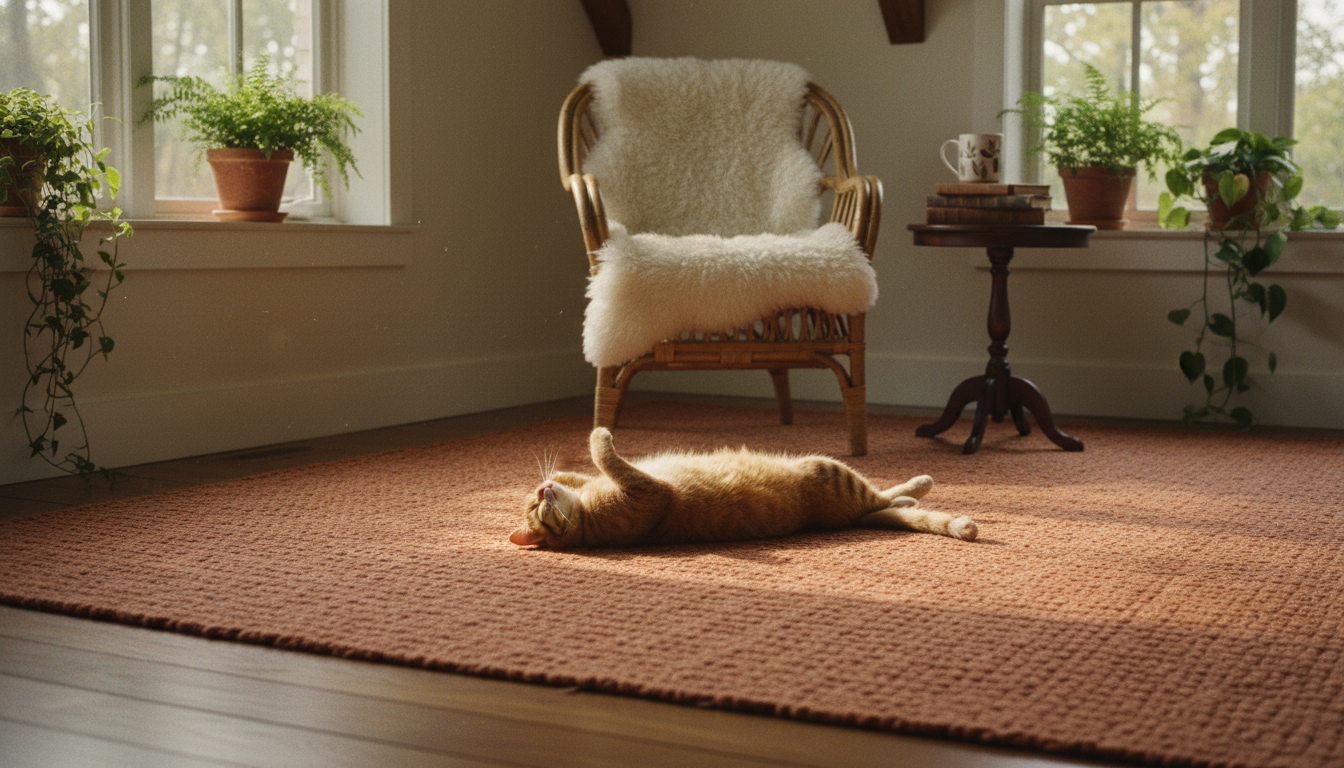
Golden hour transforms a home into a living canvas, and nowhere is this more evident than in a sunroom designed around the grounding warmth of a terracotta clay rug. As the late afternoon light pours through floor-to-ceiling glass, it ignites the deep, earthy pigments of the weave, casting a hum of amber and sienna across the space. This isn’t merely a functional floor covering; it is the soul of the room, providing a rich, tonal anchor that feels both ancient and remarkably contemporary. The subtle woven texture mimics the organic irregularity of hand-loomed kilims, yet it hides a sophisticated secret: the ability to emerge from a high-capacity wash cycle looking as pristine as the day it was unrolled. For the pet owner who refuses to compromise on the integrity of their interior palette, this rug serves as a masterclass in blending high-end aesthetics with the realities of life with a feline companion.
The Architecture of the Napping Nook
In a space dedicated to rest, the layout must prioritize tactile comfort and visual silence. Positioning the terracotta rug beneath a vintage-inspired wicker armchair creates a structural dialogue between the airy, skeletal frame of the furniture and the solid, saturated presence of the floor. To soften the rigidity of the wicker, a plush, snow-white sheepskin throw should be draped artfully over the seat, providing a high-contrast texture that draws the eye. When a tabby cat stretches out within a sunbeam on the rug, the orange and brown tones of its fur harmonize effortlessly with the clay-colored fibers, turning a mundane moment into a cinematic tableau. The rug’s low-pile construction ensures that claws won’t snag, while the dense weave prevents pet hair from becoming embedded deep within the foundation.
Curated Material Pairings & Color Palettes
Achieving a professional, designer-grade look requires a careful curation of materials that complement the heat of the terracotta. Consider these pairings to elevate the sunroom’s atmosphere:
- Primary Furniture: A natural rattan or honey-toned wicker armchair provides an artisanal, breathable feel that mirrors the rug’s organic roots.
- Textile Accents: Layering is key. Pair the rug with ivory linen curtains that filter the sun, and oversized floor cushions in muted ochre or burnt umber to create a monochromatic gradient.
- Structural Accents: Incorporate a small, reclaimed teak side table or a matte-finished terracotta planter to reinforce the earthy theme.
- Cooling Elements: To prevent the room from feeling overly “hot,” introduce a single oversized architectural plant, such as a Strelitzia (Bird of Paradise), whose deep green leaves offer a sophisticated visual reprieve from the warm clay tones.
The beauty of the terracotta clay rug lies in its ability to mask the inevitable “beauty marks” of pet ownership—stray tufts of fur and the occasional dusty paw print are swallowed by the complex, multi-tonal depth of the clay hue. Unlike stark neutrals that betray every imperfection, this rug embraces the lived-in nature of a luxury home. It invites the pet to claim their territory in the warmest corner of the house without the owner ever fearing for the longevity of the decor. When the light fades and the cinematic grain of the evening settles in, the rug remains a soft, inviting sanctuary, proving that high-performance textiles can indeed possess a soul.
8. Deep Emerald Traditional Print for Fur-Disguising Elegance
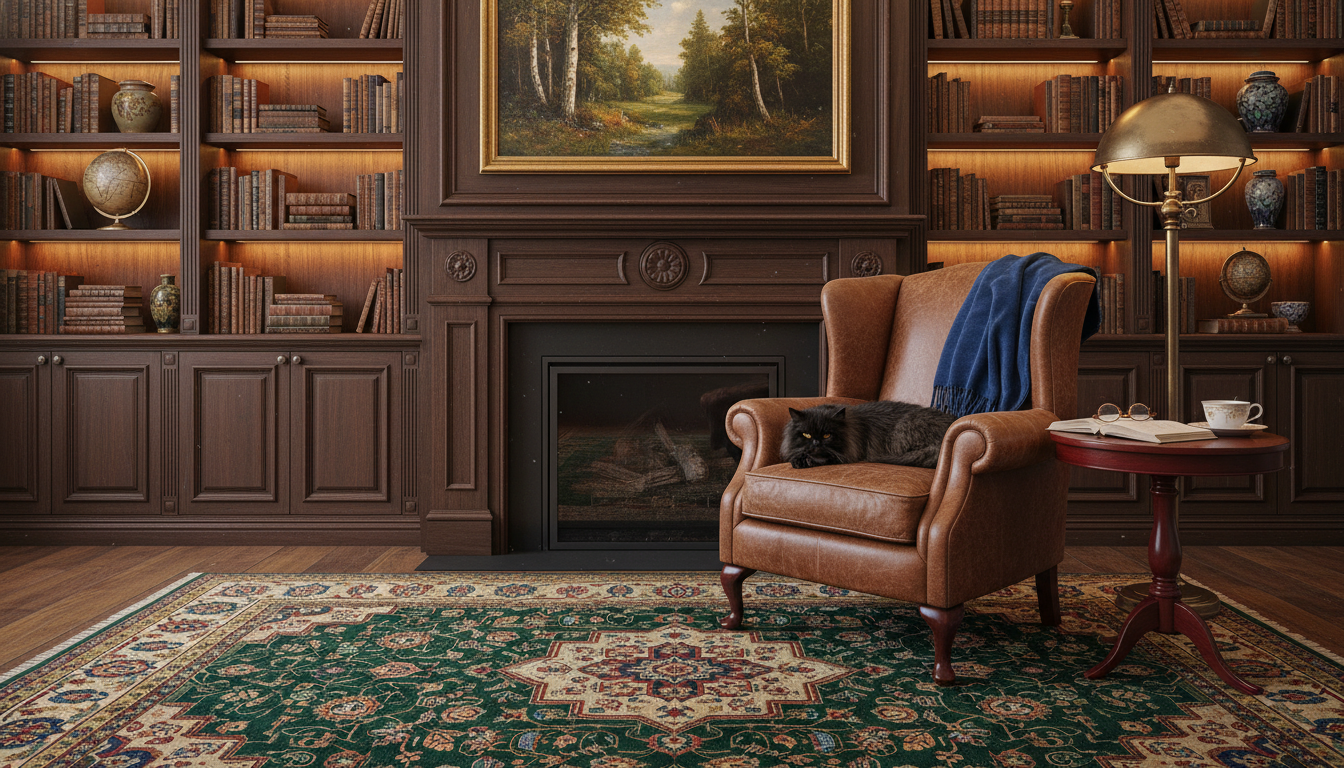
The Architecture of a Sophisticated Sanctuary
In a room defined by dark mahogany or walnut bookshelves that stretch toward the ceiling, this rug acts as the connective tissue between the vertical wood grains and the horizontal floor space. The atmospheric lighting of a library—perhaps the warm, amber glow from a brass picture light or a low-slung green glass banker’s lamp—catches the highs and lows of the rug’s emerald fibers, creating a sense of movement and mystery. To achieve the peak of editorial styling, one must lean into the “Moody Academic” aesthetic:
- The Anchor: A cognac-hued or oxblood leather wingback chair, aged to perfection, provides a masculine contrast to the plush, velvet-soft texture of the rug.
- The Accents: Brushed bronze or antique gold side tables to hold a glass of Scotch or a ceramic tea set, echoing the warm undertones found in the rug’s border.
- The Textures: A heavy wool throw in charcoal or forest green draped over the chair to mirror the rug’s tonal density.
- The Palette: Deep teals, burnt umbers, and faded gold accents that pull from the rug’s secondary colors, creating a cohesive, immersive environment.
Elevated Color Dynamics and Layout
The success of this layout depends on the interplay between the dark floor and the surrounding furniture. The rug should ideally sit partially tucked under the front legs of the heavy leather chair, extending outward to create a “zone” of comfort within the larger room. Because the emerald is so saturated, it pairs beautifully with walls painted in matte charcoal or even a deep navy, though it finds its most natural home against the organic warmth of natural wood. The dense, traditional print ensures that the rug doesn’t get lost in the shadows; rather, it provides a luminous focal point that draws the eye downward, grounding the entire architectural space in a sense of timelessness.
9. Graphite Grey Runner for High-Speed Hallway Paws
9. Graphite Grey Runner for High-Speed Hallway Paws
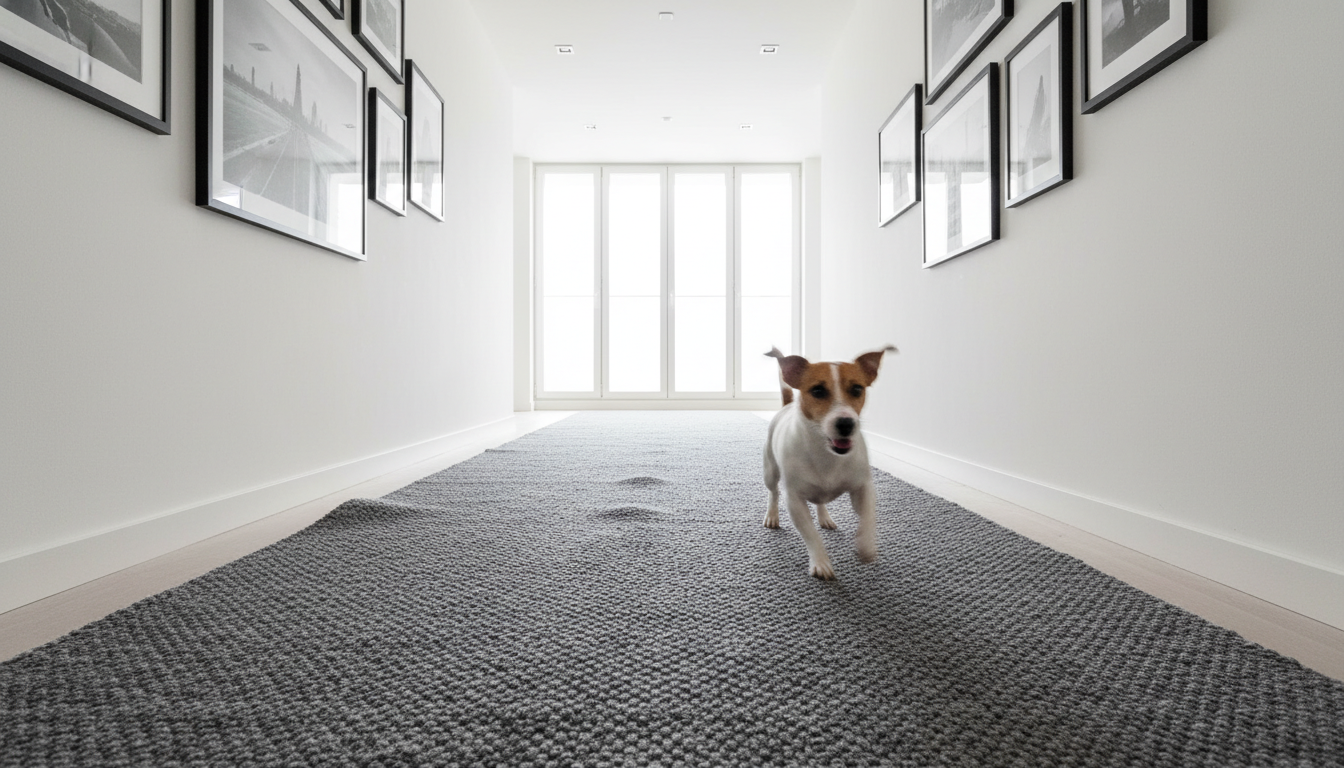
The hallway is the architectural artery of the home, a transitional passage where light, motion, and perspective converge into a single, breathtaking vista. In this high-velocity corridor, a graphite grey runner acts as more than just a floor covering; it is a sophisticated anchor that defines the spatial rhythm of the house. Imagine a long, sun-drenched gallery where the walls are finished in a crisp, museum-grade white, serving as a pristine canvas for a curated series of oversized, black-and-white architectural photographs. Beneath this canopy of light, the runner stretches toward the vanishing point, its deep, obsidian-infused tones providing a sharp, grounding contrast to the airy volume of the space.
For the spirited pet owner, this runner represents the ultimate intersection of high-performance engineering and haute couture aesthetics. As a Jack Russell Terrier ignites into a full-tilt sprint—a blur of white and tan fur against the stillness of the gallery—the rug remains unyielding. The secret lies in its advanced, integrated non-slip backing, which ensures the textile stays perfectly centered even under the centrifugal force of high-speed paws. The graphite hue is a masterstroke of practical luxury; its heathered, textured weave possesses an innate ability to camouflage the inevitable signs of life, from stray paw prints to the shedding of a coat, all while maintaining its saturated, charcoal-rich appearance.
The Art of Monochromatic Movement
In a minimalist or contemporary home, the graphite grey runner serves as the connective tissue between rooms, harmonizing disparate design elements through a shared tonal language. The texture of the weave is critical here—a subtle, low-pile relief that catches the shifting afternoon shadows, adding a tactile dimension to the floor that feels substantial yet streamlined. This specific shade of grey isn’t just neutral; it is authoritative, pulling the eye forward and lengthening the perceived dimensions of the hallway. When paired with the motion of a pet, the rug transitions from a static design choice to a dynamic stage for the home’s daily choreography.
To elevate this transitionary space, consider the following curated pairings that complement the cool, slate undertones of the graphite runner:
- Furniture Accents: A slim, wall-mounted console table in matte black powder-coated steel or a singular, brutalist-inspired reclaimed travertine block at the hallway’s midpoint.
- Lighting: Burnished brass or antique bronze wall sconces positioned at eye level to cast warm, rhythmic pools of light across the rug’s textured surface.
- Art Direction: Uniform, oversized gallery frames in thin black oak, featuring high-contrast photography or charcoal sketches to echo the rug’s monochromatic depth.
- Natural Elements: A single, tall ceramic vessel in a matte sand finish holding a sculptural dried branch or a singular monstera leaf to introduce an organic silhouette.
- Palette Synergy: Complement the graphite with wall colors like ‘Cloud White’, ‘Paris Rain’, or a soft ‘Pewter’ to maintain a sophisticated, tonal gradient.
Resilience Beneath the Surface
True luxury is the absence of worry. While the visual impact of this setup is undeniable, the true brilliance lies in the rug’s washable soul. In a household where the hallway serves as a primary racetrack for four-legged family members, the ability to lift, launder, and relay the runner is transformative. The high-density fibers are designed to resist the abrasive nature of claws while maintaining a soft, underfoot feel that invites a barefoot stroll through the gallery. This is design that respects the reality of a lived-in home without ever compromising the pristine, high-end aesthetic of an elite interior.
10. Sky Blue Lattice for Indoor-Outdoor Pet Versatility

Sky Blue Lattice for Indoor-Outdoor Pet Versatility
The threshold between a manicured garden and the inner sanctum of the home serves as a vital transition point, a space where the elements meet architecture. In this luminous sun-drenched mudroom, the sky blue lattice rug acts as a visual bridge, reflecting the expansive horizon of the patio while grounding the room with a disciplined, geometric grace. This is not merely a utility space; it is a curated entry where the vibrancy of a cerulean sky is woven directly into the floor. The light floods through floor-to-ceiling glass doors, catching the crisp white of the lattice pattern and making the blue tones resonate with a refreshing, coastal energy that feels both airy and intentional.
Designed for the sophisticated pet owner who refuses to compromise on aesthetics, this rug thrives in the high-stakes environment of a transition zone. Beside a pair of well-worn leather field boots and a hand-braided leather dog leash, the rug stands as a testament to high-performance luxury. The material is engineered to withstand the enthusiastic homecoming of a retriever or the steady traffic of garden-weary feet, offering a durable surface that can be effortlessly hosed down without losing its saturated brilliance. The sky blue hue is particularly adept at camouflaging the fine, light-colored fur of popular breeds like Samoyeds or Labradors, while the geometric structure of the lattice provides a sophisticated backdrop that elevates the practical nature of the room.
Curated Furniture & Architectural Pairings
- The Bench: A custom-built, floating white oak bench with a natural oil finish provides a warm, organic contrast to the cool blue of the rug.
- Hardware Accents: Matte black wrought iron hooks and door handles offer a sharp, modern edge that defines the space against the softer lattice pattern.
- Flooring Context: Large-format slate tiles in a deep charcoal or weathered limestone pavers create a dramatic, textured frame for the vibrant blue and white weave.
- Textural Layers: Oversized woven sea-grass baskets tucked beneath the bench house pet toys and garden shears, adding a layer of tactile, earthy luxury.
The Coastal Sophistication Palette
The color dynamics of this scene are rooted in a “New Coastal” philosophy. To complement the sky blue lattice, the surrounding walls should be finished in a soft, chalky white—think “Swiss Coffee” or a very pale “Cloud White”—which allows the rug to be the undisputed protagonist of the floor. Incorporating accents of navy blue through ceramic garden stools or outdoor planters creates a sophisticated monochromatic gradient that feels expansive and serene. To prevent the space from feeling too cool, introduce warmth through “Sand-Toned” linens or a “Weathered Teak” side table, which mimics the natural patina of a seaside boardwalk. This interplay of cool cerulean and warm, sandy neutrals creates a space that feels perpetually touched by the morning sun, regardless of the season.
Lighting plays a pivotal role in this setting. The rug’s fade-resistant fibers are designed to embrace direct UV exposure, making it the perfect choice for sunrooms or mudrooms with southern exposures. During the golden hour, the low-angled sun elongates the shadows of the lattice, creating a rhythmic, architectural dance across the floor. This rug doesn’t just sit in a room; it interacts with the movement of the day, providing a clean, vibrant foundation for the beautiful chaos of a life shared with pets.
Elevate Your Space
Discover the artistry of handmade luxury. Each rug is a masterpiece of tradition and modern design.
Expert Q&A
Are washable rugs really durable enough for large dogs?
Yes, the best washable rugs are typically made from power-loomed synthetic fibers that are specifically engineered to withstand heavy friction and frequent machine cycles without fraying.
How do you get pet odors out of a washable rug?
Most washable rugs can be laundered with a cup of white vinegar or a pet-safe enzymatic cleaner added to the wash cycle to completely neutralize odors rather than just masking them.
Will a washable rug slide when my pet runs on it?
Most modern washable rugs come with an integrated non-slip rubber backing or a separate silicone-based rug pad system to ensure they remain anchored even during high-speed pet activity.
Can I put a washable rug in the dryer?
While some brands allow for low-heat drying, it is generally recommended to air dry your washable rugs to preserve the integrity of the non-slip backing and prevent shrinkage.
Written by TheBohoRugs Interior Design Team
Experts in handmade rugs, boho interiors, and modern home decor.