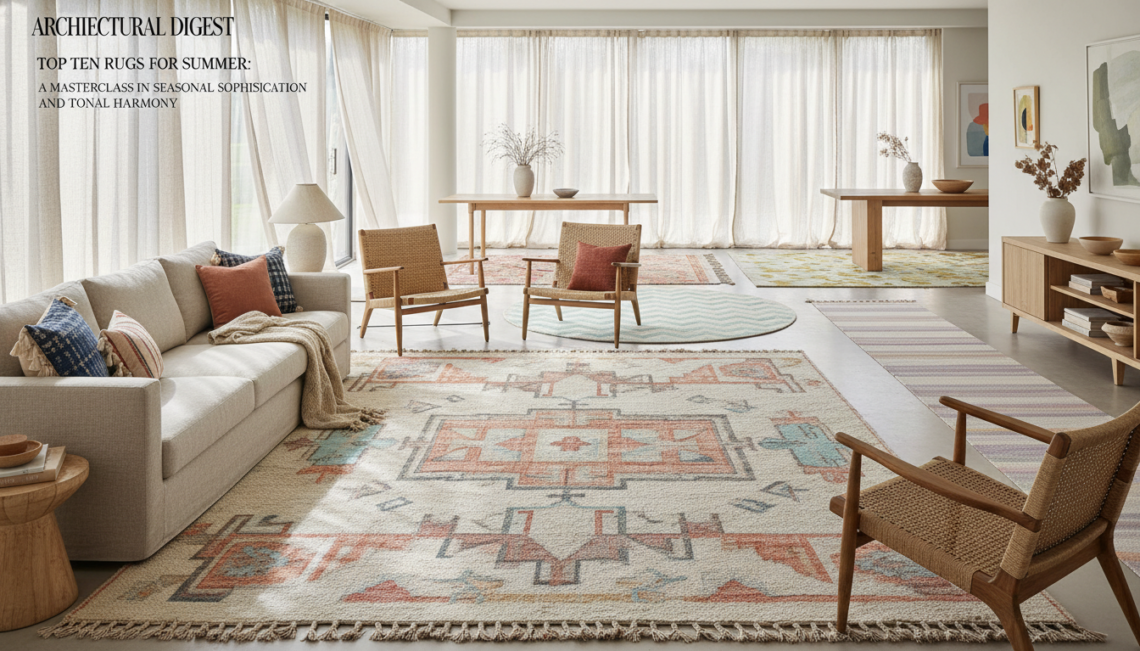
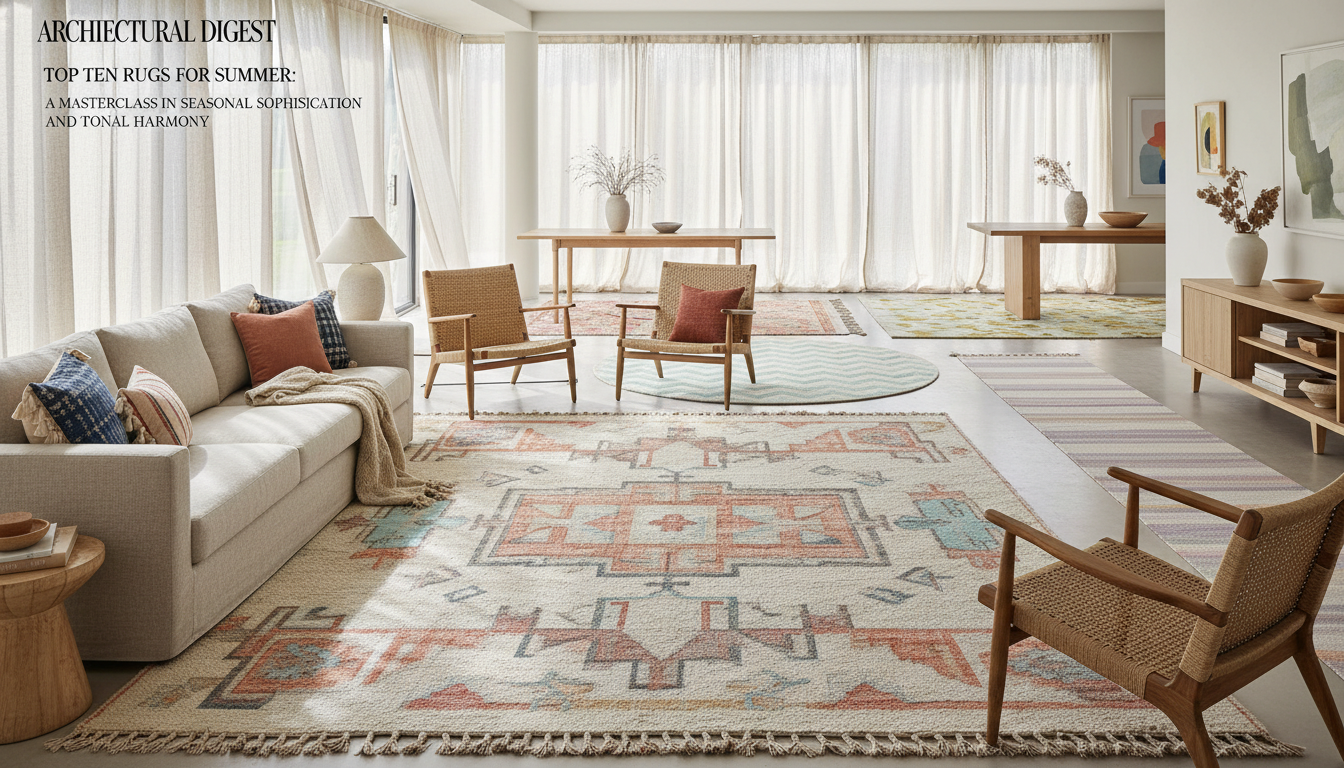
Curating the top ten rugs for your summer sanctuary requires a discerning eye for breathability and tonal harmony as the heavy wools of winter give way to the crisp elegance of natural fibers. This season, the dialogue between flooring and furniture shifts toward an airy, light-filled aesthetic that demands more than just a surface-level change. As we look toward 2026, the trend landscape favors ‘biophilic luxury’—a movement where artisanal craftsmanship meets sustainable material science to create spaces that feel both grounded and ethereal. Moving beyond mere utility, selecting the right summer textile involves a complex understanding of how light interacts with texture and how specific color palettes can visually lower the temperature of a room.
“The top ten rugs for summer are defined by lightweight, breathable materials like organic jute, sisal, flatweave cotton, and bamboo silk. To decorate them perfectly, pair natural fiber rugs with mid-century modern wood furniture for warmth, or use vibrant flatweave Kilims to anchor minimalist white upholstery. Ensure a cohesive look by choosing rugs that either contrast with your floor texture or mirror the secondary accent colors found in your seasonal soft furnishings.”
The Roadmap
Table of Contents
- The Material Science of Summer Comfort
- Organic Textures: The Rise of Jute and Sisal
- Flatweave Mastery: Why Kilims Are Essential
- Color Theory: Utilizing Cool Tones to Chill a Space
- Furniture Integration: Pairing Textures with Timber and Steel
- The 2026 Forecast: Sustainable Silk and Bio-Fibers
- Maintenance Secrets for High-Traffic Summer Zones
The Architectural Foundation: Why Material Matters
The Sensory Shift: Beyond Aesthetics
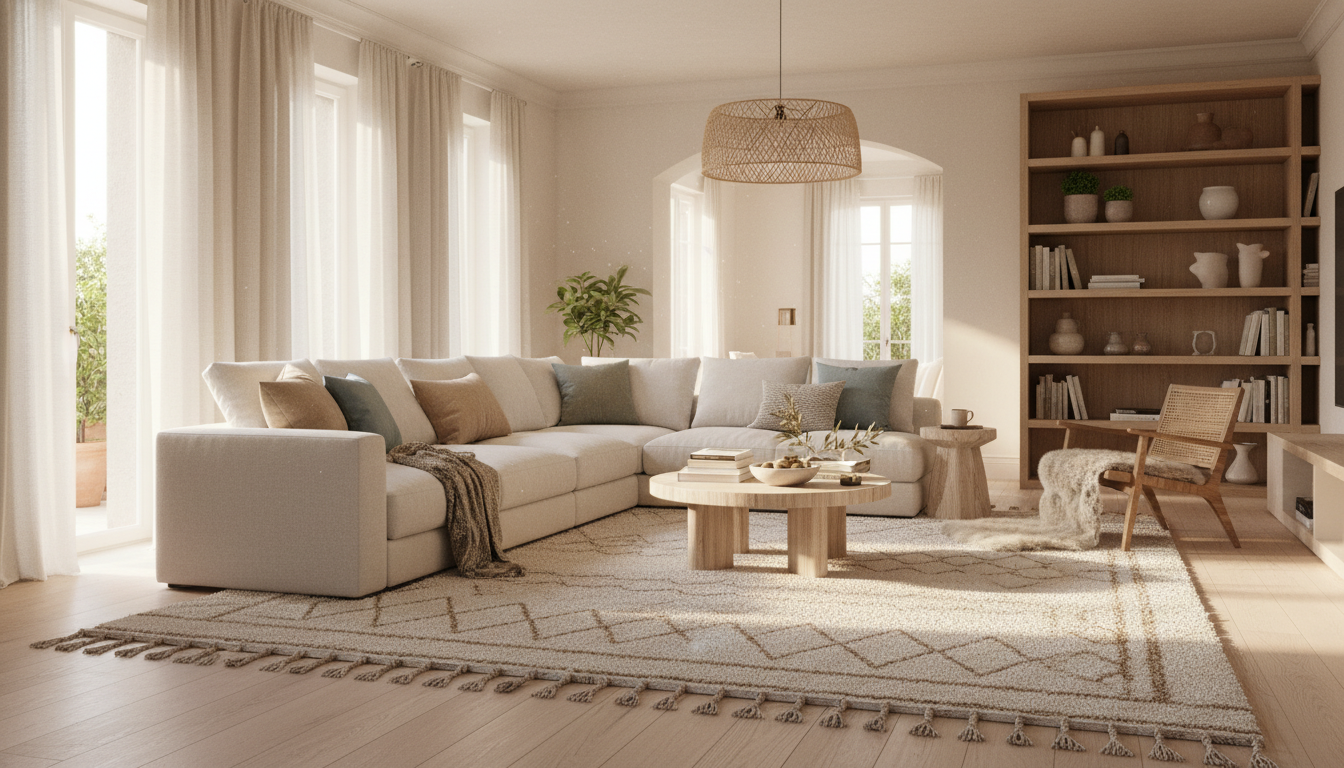
When we curate the top ten rugs for a summer refresh, we aren’t just looking at patterns; we are managing the thermal and visual weight of a room. In the design world, the floor acts as a heat sink. During the warmer months, the heavy, high-pile Persians that felt like a warm embrace in January suddenly feel oppressive. The transition to summer décor begins with a fundamental understanding of breathability. We are seeing a significant move toward high-performance, sustainable fibers—specifically a 2026 shift toward Bio-Acetate fibers blended with traditional silks. These materials offer the cooling touch of stone with the luminous sheen required for a luxury finish.
The secret to a successful summer layout lies in the tactile “crunch” of natural fibers versus the liquid drape of hand-knotted botanicals. If your living space features heavy mahogany or velvet upholstery, a flatweave jute rug acts as a visual palate cleanser. It strips away the formality and introduces an organic, coastal equilibrium. For those sourcing from artisanal collections like thebohorugs.com, the focus is often on the tension between raw texture and refined furniture silhouettes.
The Science of Light and Fiber
Color choice in summer is rarely about “brightening” a room; it’s about managing Light Reflectance Values (LRV). A rug with a high LRV, such as a pale Sage Green (often sitting around an LRV of 60-65), doesn’t just look cool—it literally reflects more solar radiation than a deep navy or burgundy. This helps maintain a lower ambient temperature in sun-drenched sunrooms or open-plan lofts.
- Hand-knotted techniques from the Atlas Mountains: These rugs utilize a specific “loose” knotting style that allows air to circulate through the warp and weft, preventing the “stagnant heat” feel of machine-made synthetics.
- The Hemp Revival: Often overlooked, hemp has a natural resistance to mildew, making it the premier choice for humid coastal climates where moisture management is as important as style.
- Sisal and Silk Blends: This pairing is the “linen suit” of interior design. The sisal provides the structural integrity, while the silk adds a soft-focus glow that mimics the late-afternoon July sun.
“We are moving away from the idea that a rug is a static object. In the contemporary summer home, the rug is a living component of the architecture. By utilizing low-density weaves and protein-based fibers, we can actually lower the perceived temperature of a room by several degrees.”
— Julian Thorne, Senior Textile Historian
Matching these foundations with your existing furniture requires a keen eye for contrast. A rugged, textured sisal rug from thebohorugs.com provides the perfect “grit” to offset the “glam” of a glass-topped coffee table or polished brass accents. The contrast creates a sophisticated, layered look that feels curated rather than staged. Instead of matching colors perfectly, aim for a tonal shift—pair a sand-colored rug with oatmeal linen sofas for a monochromatic, high-end resort aesthetic.
When selecting your summer foundation, perform the palm test. Natural protein fibers (like silk or bamboo viscose) will feel cold to the touch even in direct sunlight, whereas petroleum-based synthetics will retain heat. For maximum summer comfort, prioritize rugs with a pile height of 5mm or less to ensure maximum airflow across the floor surface.
The architectural weight of your rug dictates how the rest of the room breathes. By choosing a material that honors the season—moving toward those Bio-Acetate blends or the timeless reliability of Atlas Mountain wools—you set a stage that is both visually light and physically refreshing. It’s not just a floor covering; it’s the thermal soul of your summer home.
Organic Jute and Sisal: The Earthy Neutrals
The Breathable Foundation of a Summer Sanctuary
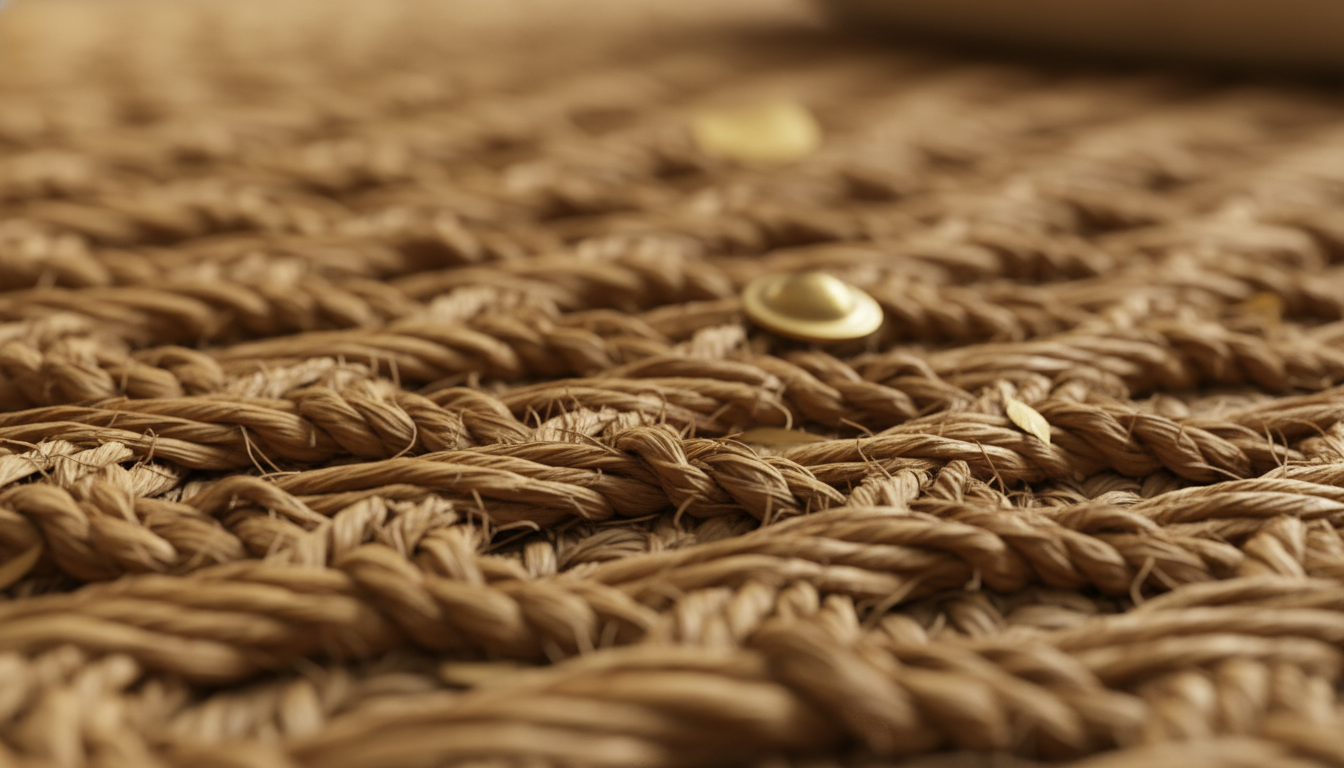
When the mercury rises, our homes should feel like an exhale. The heavy, high-pile wools that comforted us through winter suddenly feel claustrophobic, prompting a shift toward the “Top ten rugs” list for those who prioritize both aesthetic and thermal comfort. For the discerning homeowner, Organic Jute and Sisal are not merely floor coverings; they are a textural dialogue between the landscape and the interior. These fibers possess a unique cellular structure—particularly Sisal, with its high silica content—that naturally resists humidity, making them indispensable for coastal estates or sun-drenched urban lofts.
As we look toward the 2026 design shift favoring Bio-Acetate and high-density plant proteins, the industry is seeing a return to the “Double-Weave Bouclé” technique. This method provides a sophisticated, pebbled texture that feels remarkably soft underfoot compared to the scratchy sea-grass rugs of a decade ago. To master the look, consider the Light Reflectance Value (LRV) of your chosen weave. A bleached jute rug in a “Sand-Dune” hue typically holds an LRV of around 65, which helps bounce natural sunlight into the corners of a room, instantly making a space feel more expansive and airy.
Styling these earthy neutrals requires a keen eye for contrast. To avoid a monochromatic “beige-out,” pair a chunky-knit jute rug with furniture that features sharp, clean lines—think a matte black steel coffee table or a mid-century sofa upholstered in a cool, sage-green linen. The juxtaposition of the raw, organic fiber against the refined metal or fabric creates a curated, architectural tension that defines modern luxury.
“The beauty of a hand-loomed sisal rug lies in its inherent imperfection. It provides what I call ‘biophilic grounding’—a way to anchor a room in the physical world while the rest of our lives are increasingly digital. It’s the ultimate canvas for a high-summer interior.”
— Julian Thorne, Principal Designer at Studio Thorne London
If you are searching for pieces that embody this artisanal spirit, sourcing becomes the most critical step. High-end collections, such as those found at thebohorugs.com, often feature the superior Hand-knotted techniques from the Atlas Mountains or the Ganges Delta, where the quality of the raw fiber is treated with the same reverence as fine silk. These pieces age gracefully, developing a golden patina over several summers that synthetic alternatives simply cannot replicate.
Refining the Palette: Beyond Beige
- The Indigo Contrast: Deep navy accents in your throw pillows or ceramic vases will make the honey-gold tones of a natural fiber rug pop with Mediterranean energy.
- Veridian and Terracotta: To lean into a more “desert-chic” aesthetic, layer your jute rug with furniture in burnt orange hues and potted olive trees.
- Tonal Layering: Don’t be afraid to place a smaller, colorful vintage runner directly on top of a large sisal base. This adds a “Top ten rugs” level of sophistication while protecting the more delicate fibers underneath.
When selecting a jute rug for high-traffic summer areas, look for ‘Sultan-grade’ fibers. These are harvested earlier in the season, resulting in a finer, silkier strand that doesn’t shed or prickle. To maintain the rug’s structural integrity, rotate it every three months to ensure even UV exposure, preventing the ‘shadowing’ effect that occurs when furniture blocks the sun’s natural bleaching process.
Ultimately, the goal is to create a space that feels curated yet effortless. By choosing a foundation rooted in the earth, you provide your furniture with a stage that is timeless, sustainable, and perfectly attuned to the slow, golden rhythm of the season.
Kilim and Dhurrie: The Art of the Flatweave
The Breathable Foundation: Why Flatweaves Rule the Heat
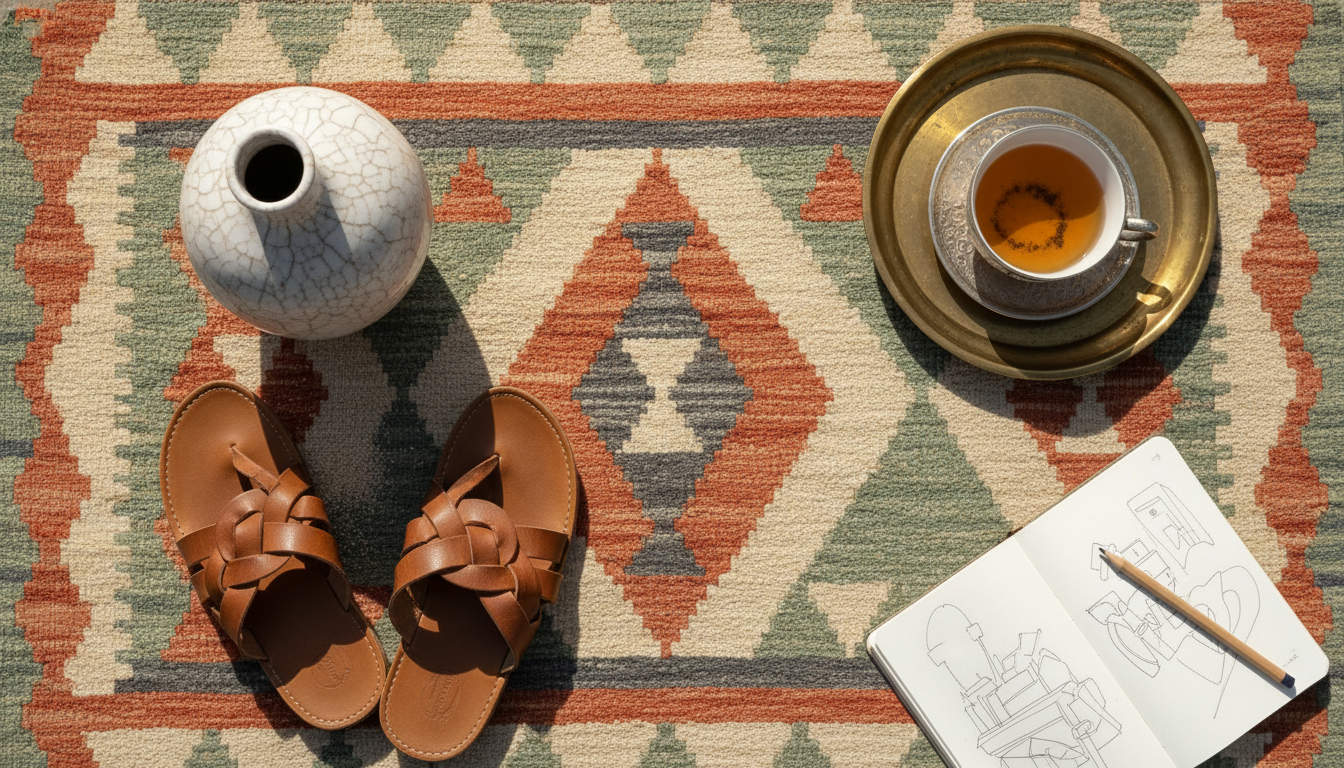
When the mercury rises, the heavy, high-pile shags that felt like a warm embrace in January suddenly feel oppressive. This is the moment where the top ten rugs list pivots toward the architectural precision of the flatweave. Unlike their knotted cousins, Kilims and Dhurries are woven on a loom without a pile, resulting in a thin, reversible textile that allows air to circulate freely. It is a functional choice, certainly, but in a luxury context, it is a stylistic statement of “less is more.”
The distinction between the two is vital for a curated home. Kilims, traditionally from Turkey and the Caucasus, use a slit-weave technique that creates sharp, geometric patterns and a slightly firmer hand. Dhurries, hailing from India, often utilize high-grade cotton or jute, offering a softer underfoot feel that is ideal for barefoot summer living. As we look toward the 2026 shift in interior textiles, we are seeing a move away from synthetic blends toward long-staple organic cotton and mercerized wool, which provides a subtle sheen reminiscent of silk without the heat retention.
Mastering the Palette: Sage, Ochre, and Light Reflectance
Decorating with flatweaves requires an understanding of how light interacts with a room during the golden hour. To keep a space feeling airy, designers are currently obsessed with Light Reflectance Values (LRV). A Dhurrie in a muted Sage Green—specifically one with an LRV of 55 or higher—can actually make a sun-drenched sunroom feel five degrees cooler visually.
- The Modern Organic Look: Pair a geometric Kilim featuring burnt ochre and cream with white oak furniture. The contrast between the sharp angles of the rug and the soft grain of the wood creates a sophisticated tension.
- The Coastal Minimalist: Opt for a striped Dhurrie from thebohorugs.com in indigo and flax. Position this under a glass-topped coffee table to let the craftsmanship of the weave remain the focal point.
- The Maximalist Veranda: Don’t be afraid to layer. A large, neutral jute rug acts as a canvas for a smaller, vibrantly colored vintage Kilim placed at an intentional 45-degree angle.
“The beauty of a flatweave lies in its honesty. You can see every pass of the shuttle, every decision made by the weaver. In a world of mass production, a hand-woven Kilim brings a sense of ‘slow luxury’ that ground-up pile rugs simply cannot replicate.”
— Julian Thorne, Senior Textile Historian
The Dialogue Between Fiber and Furniture
Success in summer decorating hinges on the “weight” of your furniture. Because Kilims and Dhurries are physically thin, they can be swallowed by oversized, overstuffed sofas. To achieve a balanced aesthetic, lean into Mid-Century Modern silhouettes or spindled Scandinavian chairs. The “leggy” nature of this furniture allows the intricate patterns of the rug to flow uninterrupted across the floor plan.
When selecting your pieces from a collection of the top ten rugs for the season, consider the “S-twist” of the yarn. A tighter twist often indicates a more durable rug that won’t “creep” or bunch under the movement of dining chairs. If you are placing a flatweave in a high-traffic area, a premium non-slip felt pad is non-negotiable; it adds just enough weight to give the rug a bespoke, “planted” feel while protecting the integrity of the hand-woven fibers.
When sourcing for summer, look for flatweaves incorporating Tencel or Bamboo Silk accents. These fibers have a naturally high thermal conductivity, meaning they draw heat away from the skin. For an authentic artisanal touch, the curated selections at thebohorugs.com often feature these breathable blends, ensuring your space stays as cool as it looks during the August humidity.
Cooling the Palette: Blues, Greens, and Ivory
The Alchemy of Summer Underfoot
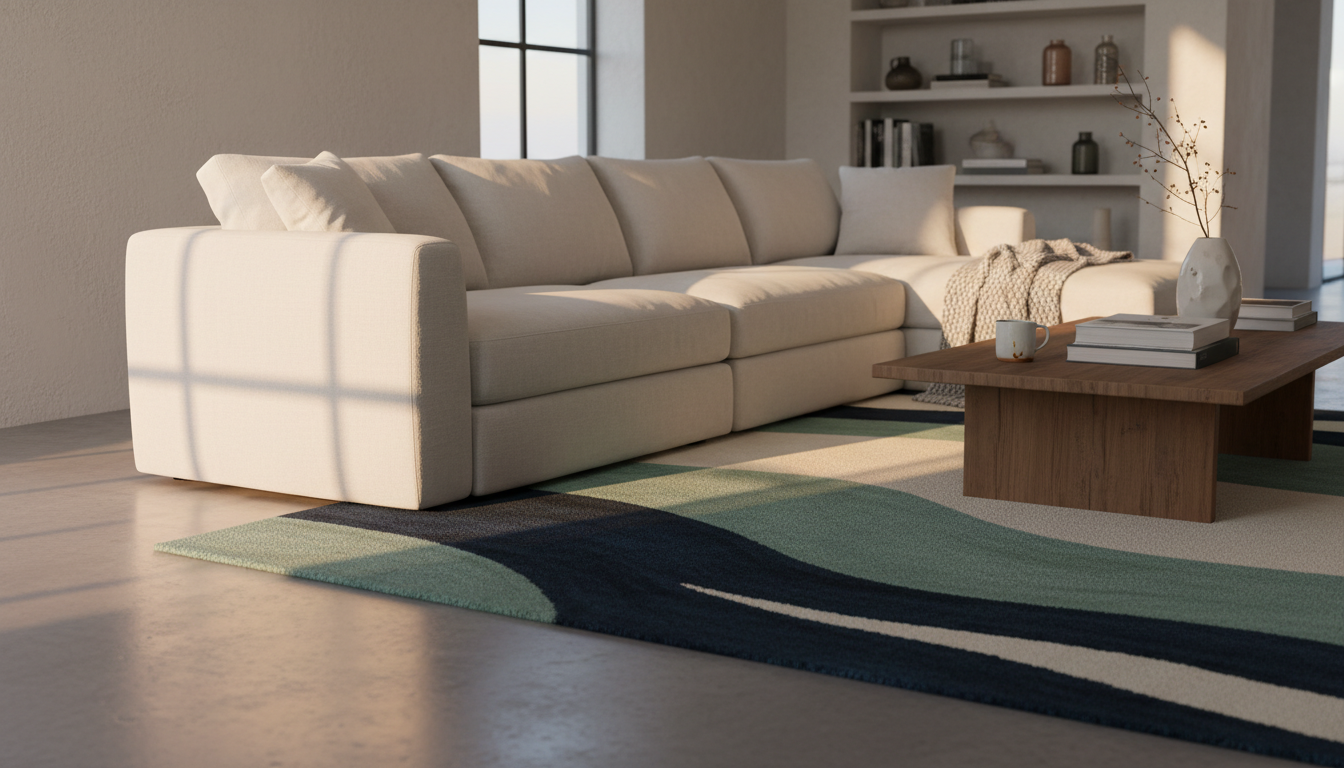
When the mercury rises, the psychological weight of a room shifts. We move away from the heavy, cocooning textures of winter and toward an aesthetic that feels like a sharp intake of sea air. In our curated selection of the top ten rugs for the season, the transition isn’t just about weight—it’s about the science of color. Designers are increasingly obsessed with Light Reflectance Values (LRV); an ivory rug, for instance, can have an LRV as high as 85, meaning it literally bounces heat and light back into the room rather than absorbing it like a dark charcoal or navy might.
This season, we are seeing a sophisticated pivot toward Bio-Acetate fibers and silk-blends that mimic the cooling touch of water. Imagine a living room anchored by a hand-knotted piece from the Atlas Mountains, where the wool hasn’t been stripped of its natural lanolin, offering a slight sheen that catches the afternoon sun. By layering these with “Cooling Neutrals”—think sea-foam greens, dusty eucalyptus, and the translucent blues of a Mediterranean grotto—you create a sanctuary that feels ten degrees cooler the moment you step inside.
“The most successful summer interiors treat the floor as a reflecting pool. By utilizing pale ivories and diluted teals, we aren’t just decorating; we are managing the ‘thermal visual’ of the space. A high-quality rug serves as the foundation for this atmospheric shift.”
— Julian Thorne, Lead Textile Historian at The Global Weave
Mastering the Furniture Pairing
Decorating with these tones requires a delicate hand to avoid looking “beachy” in a clichéd sense. To achieve a high-luxury finish, pair a sage green rug with raw white oak or bleached teak furniture. The organic grain of the wood provides a grounding element to the ethereal nature of the green. For those gravitating toward deep cerulean or navy-flecked ivories, the secret lies in the upholstery. A washed linen sofa in “Oatmeal” or “Bone” creates a seamless transition from the floor upward, preventing the room from feeling disjointed.
For those seeking that elusive blend of artisanal heritage and modern coolness, sourcing is everything. We often look to collections like those found at thebohorugs.com, where the focus on hand-knotted, natural-dye processes ensures that your ivory or blue rug has the tonal depth of a fine painting rather than a flat, machine-made alternative. These rugs don’t just sit in a room; they breathe with it.
- Ivory & Bone: Best for high-traffic sunrooms where you want to maximize natural light.
- Sage & Eucalyptus: Ideal for bedrooms to promote a restorative, bio-mimetic environment.
- Aegean Blue: Perfect for dining areas paired with mid-century modern walnut chairs for a sharp, sophisticated contrast.
Looking ahead, the design world is moving toward “Living Textures.” When selecting your next piece, look for high-low piles where the ivory sections are slightly raised in a silk-blend, while the blues are recessed in a flat-weave wool. This creates a tactile landscape that feels incredible under bare summer feet while adding a three-dimensional architectural element to your floor.
Natural transitions in the home often follow the light. As the sun moves through your space, a rug with varying shades of celadon and cream will transform, appearing vibrant at noon and calmingly muted by dusk. This versatility is exactly why these specific palettes dominate our list of the top ten rugs—they offer a living, breathing luxury that adapts to the rhythm of a summer day.
Furniture Synergy: Bridging the Gap Between Rug and Sofa
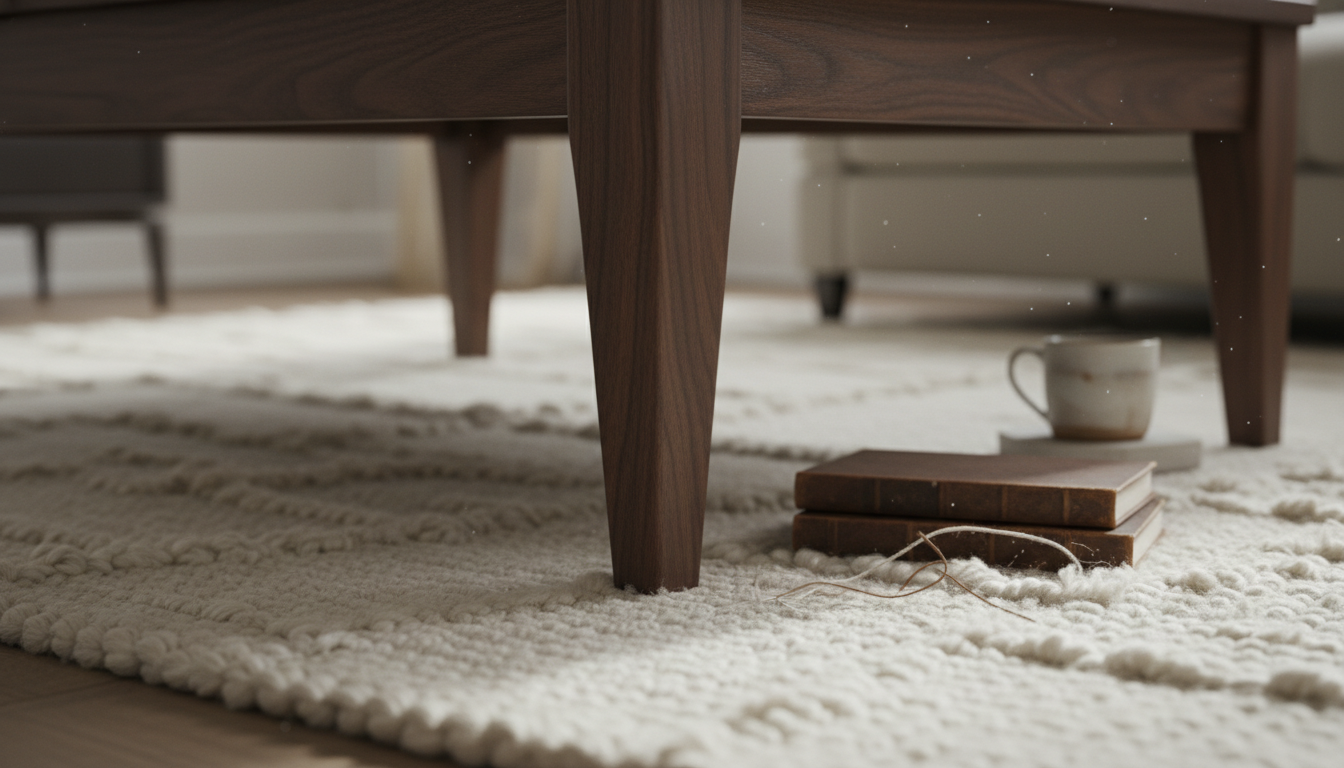
A living room is essentially a dialogue between its two largest inhabitants: the sofa and the floor covering. In the peak of summer, this conversation needs to shift from the heavy, cocooning whispers of winter to something far more breathable and light-filled. Achieving that “editorial” look isn’t about matching colors—it’s about creating a tactile bridge that makes the transition from hardwood or tile to the seating area feel intentional rather than accidental.
The Architecture of Summer Texture
The industry is currently witnessing a significant 2026 shift toward Bio-Acetate fibers—a sustainable, wood-pulp-derived material that offers the cooling touch of silk with the durability of synthetic blends. When selecting from your top ten rugs for the season, look for these high-performance fibers or traditional 120-knot count hand-knotted techniques from the Atlas Mountains. These pieces provide a low-profile pile that won’t trap heat against the base of a heavy linen sectional.
Think of the rug as the “negative space” that allows your furniture to pop. A deep, navy velvet sofa becomes a summer centerpiece when paired with a flat-weave Oushak featuring a high Light Reflectance Value (LRV). For instance, a rug in a muted Sage Green with an LRV of 60 or higher will bounce natural sunlight upward, softening the shadows beneath your furniture and making the entire room feel ten degrees cooler.
“A rug is the foundation of a room’s acoustic and visual gravity. In summer, we look for ‘chromatic breathing room’—the art of using pale, desaturated tones to ground heavy furniture without overwhelming the senses.”
— Julian Thorne, Lead Textile Curator
Mastering the Color Dialogue
The secret to synergy lies in the “Two-Tone Rule.” Rather than trying to match your rug to your sofa exactly, aim for a tonal distance. If you have a tan leather sofa, avoid a beige rug. Instead, opt for a washed-out terracotta or a sun-bleached indigo. This creates a visual layer that defines the seating zone.
The artisanal collections at thebohorugs.com excel here, offering hand-dyed gradients that bridge the gap between organic wood textures and modern upholstery. By choosing a rug with a subtle border or a faded geometric pattern, you provide a frame for the sofa legs, anchoring the piece in the center of the room.
To achieve a professional, high-end aesthetic, ensure your rug extends at least 8 to 12 inches beyond the sides of your sofa. This “border of breathability” prevents the furniture from looking like it’s floating on a small island and creates a cohesive flow that draws the eye across the room.
Practical Geometry and Placement
- The All-Legs-On Approach: Best for open-concept lofts where the rug defines the “room” within a room.
- The Front-Legs-Only Trick: Ideal for smaller apartments, as it connects the furniture to the rug while leaving more floor visible, creating an illusion of space.
- Layering Sisal and Silk: Place a smaller, vibrant hand-knotted piece over a larger jute base to add depth without adding thermal mass.
Ultimately, the connection between your floor and your seating is what dictates the “vibe” of your home. By prioritizing natural light-reflecting colors and cooling fibers, your summer decor won’t just look beautiful—it will feel like a curated sanctuary.
The Indoor-Outdoor Transition: Performance Luxury
Elevating the Threshold: The Art of the Performance Foundation
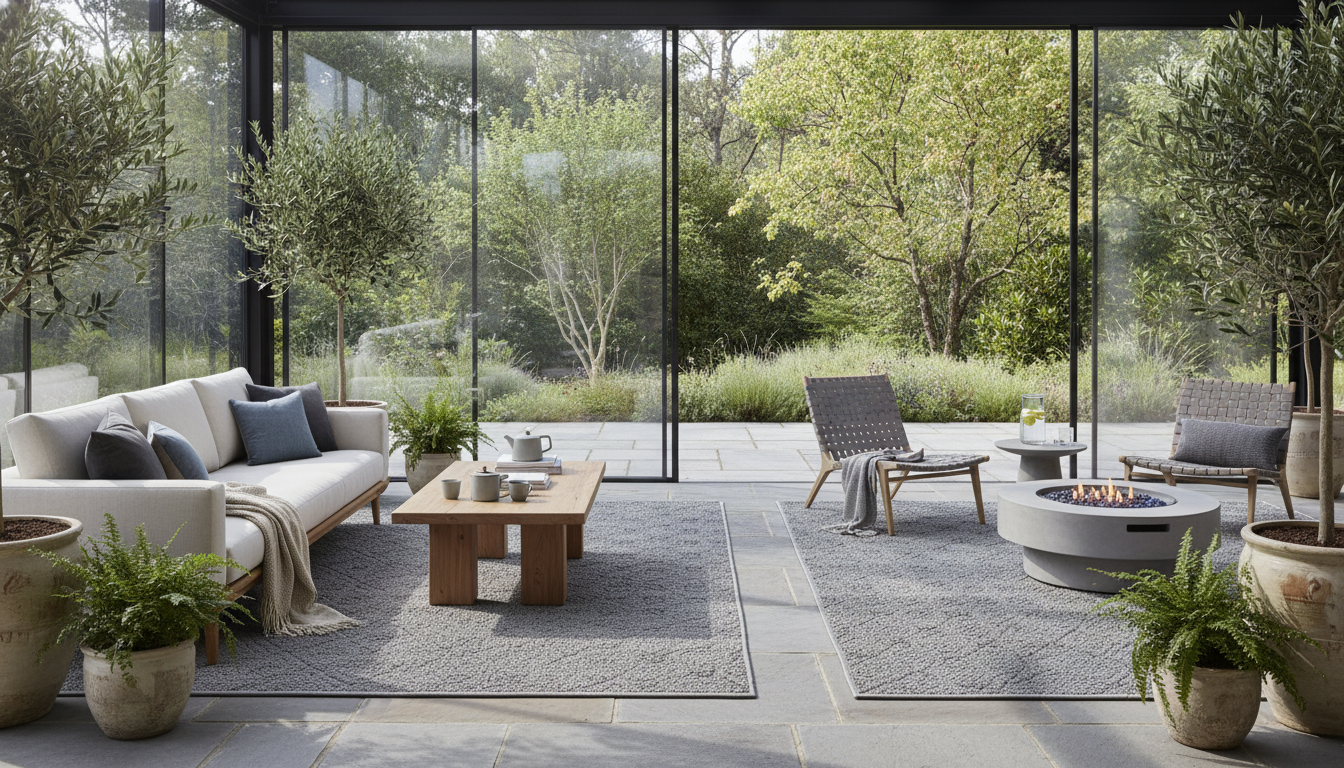
Summer design isn’t merely about swapping heavy velvets for linens; it’s about a psychological shift toward fluidity. As we open our French doors and floor-to-ceiling sliders, the distinction between the curated interior and the wilder garden scape should vanish. This is where the top ten rugs of the season truly earn their keep. We are seeing a sophisticated evolution in “performance” textiles—moving away from the plastic-heavy finishes of the past toward what we call Performance Luxury.
The current trend honors the 2026 industry shift toward Bio-Acetate fibers and high-grade PET yarns recycled from ocean plastics, which mimic the silk-like luster of viscose but offer the UV stability required for a sun-drenched sunroom. When selecting a piece to bridge these spaces, consider the architectural “weight” of your furniture. A heavy, teak outdoor sectional requires a rug with enough visual gravity to anchor it, whereas airy, wrought-iron bistro sets pair beautifully with the intricate, flat-weave geometries found at thebohorugs.com.
Expertly curated spaces this season are leaning heavily into the Light Reflectance Value (LRV) of their floor coverings. A rug in a Muted Sage Green (LRV 48) doesn’t just look cooling; it physically alters the perception of temperature by absorbing less radiant heat than deeper charcoals. This makes it an ideal candidate for a transitional porch that receives direct afternoon light.
“The modern luxury rug is no longer a fragile heirloom kept behind velvet ropes. We are seeing a demand for ‘life-proof’ elegance—textiles that can withstand a spilled glass of chilled Rosé or the tracked-in sand of a summer afternoon without sacrificing the hand-knotted soul of the piece.”
— Elena Moretti, Lead Textile Historian
Curating the Palette: Natural Tones and Furniture Synergy
Achieving a seamless flow requires a disciplined approach to color theory. To make your top ten rugs feel like a natural extension of your architecture, follow these pairing strategies:
- The Desert Ochre & Mid-Century Oak: Use a high-texture flatweave in ochre or burnt sienna to complement the warm undertones of honey-oak or walnut furniture. This creates a sunset-glow effect that feels intentional and warm.
- The Coastal Bone & Bleached Teak: For a monochromatic, high-end resort feel, pair a cream or “Bone” colored performance rug with weathered grey teak. The key here is texture—look for hand-knotted techniques from the Atlas Mountains that provide a raised pile to contrast the smooth wood.
- The Indigo Wash & White Lacquer: Contrast a deep, variegated blue rug with crisp white furniture. This mimics the classic nautical aesthetic but feels contemporary when the rug features an abstract, watercolor-wash pattern rather than traditional stripes.
For those seeking a truly bespoke feel, the artisanal collections at thebohorugs.com offer the kind of nuanced tonal variations that mass-market rugs simply cannot replicate. These pieces act as the connective tissue between your indoor comforts and the organic randomness of the outdoors.
When placing a performance rug in a high-humidity transition zone, avoid heavy rubber backings. Instead, opt for an open-weave waffle pad. This allows for airflow between the rug and the floor, preventing moisture trap and ensuring the fibers—and your hardwood or stone floors—remain pristine through the humid dog days of August.
The beauty of a well-chosen summer rug lies in its ability to withstand the elements while remaining soft enough for bare feet. Whether it’s a sophisticated sisal-blend or a high-tech synthetic, the goal is a space that feels curated, not fragile. By focusing on high-performance luxury, you ensure that your home’s transition to the outdoors is as effortless as the season itself.
Elevate Your Space
Discover the artistry of handmade luxury. Each rug is a masterpiece of tradition and modern design.
Expert Q&A
What are the best materials for summer rugs?
Natural fibers like jute, sisal, and seagrass are ideal for their breathability and durability, while cotton flatweaves and bamboo silk offer a softer underfoot feel without retaining heat.
How do I choose the right size rug for a summer layout?
In summer, you want a ‘breathing room’ effect. Choose a rug that allows at least 12 to 18 inches of exposed flooring around the perimeter to enhance the sense of space and airflow.
Can I layer rugs during the summer months?
Yes, but keep the base thin. A large, low-profile jute rug topped with a smaller, vibrant cotton Kilim creates visual depth without adding the thermal mass of heavy wool.
How do I match a summer rug with dark wood furniture?
Opt for light-reflecting colors like ivory, champagne, or pale grey. The contrast will highlight the grain of the dark wood while keeping the room from feeling heavy.
What colors are trending for summer 2026 rugs?
Expect to see ‘Neo-Mint’, muted terracotta, and deep ‘Oceanic Teal’ paired with undyed, raw natural fibers.
How do I prevent summer rugs from fading in direct sunlight?
Look for UV-stabilized synthetic blends or choose natural undyed fibers like sisal which gracefully patina rather than losing vibrant dyes.
Are flatweave rugs comfortable enough for a main living area?
While thinner, high-quality flatweaves can be incredibly comfortable when paired with a premium felt rug pad, which provides cushioning without trapping heat.
How do I clean a jute rug if it gets dirty?
Avoid saturation. Use a dry extraction powder or a damp cloth with a mild detergent for spot cleaning, as excessive moisture can weaken natural plant fibers.
Should my rug match my outdoor view?
Mirroring the colors of your garden or local landscape—such as sandy beiges or leafy greens—creates a seamless ‘indoor-outdoor’ flow that defines summer design.
What is the most durable summer rug for high-traffic areas?
Sisal is the most durable of the natural fibers, making it perfect for hallways and entryways where sand and summer activity are frequent.
Written by TheBohoRugs Interior Design Team
Experts in handmade rugs, boho interiors, and modern home decor.