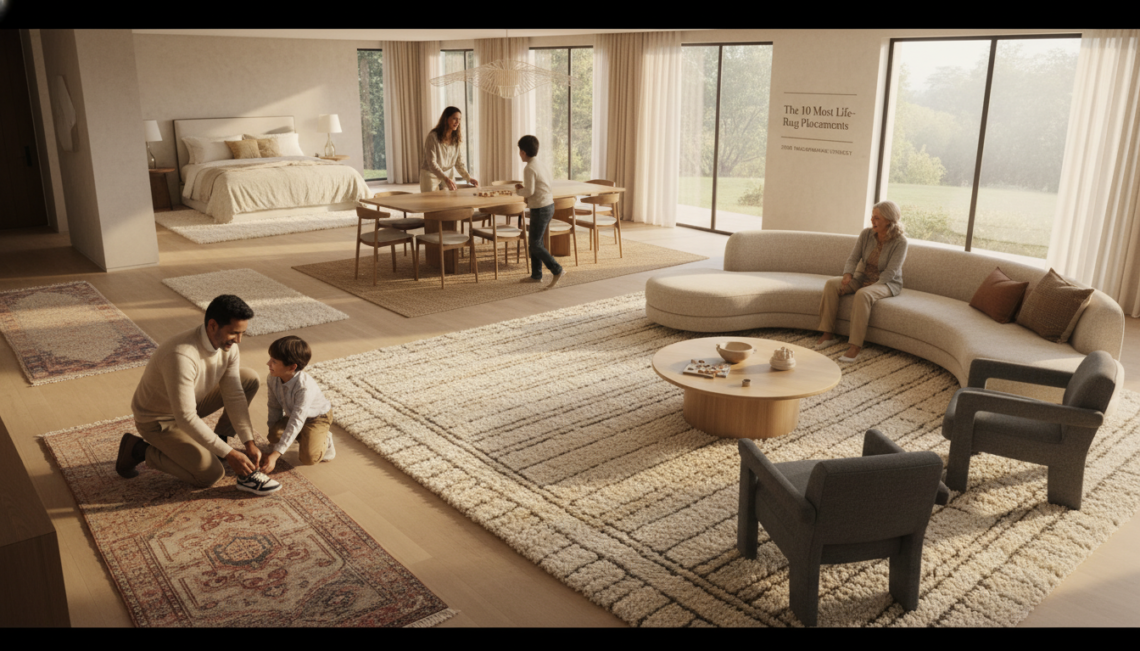
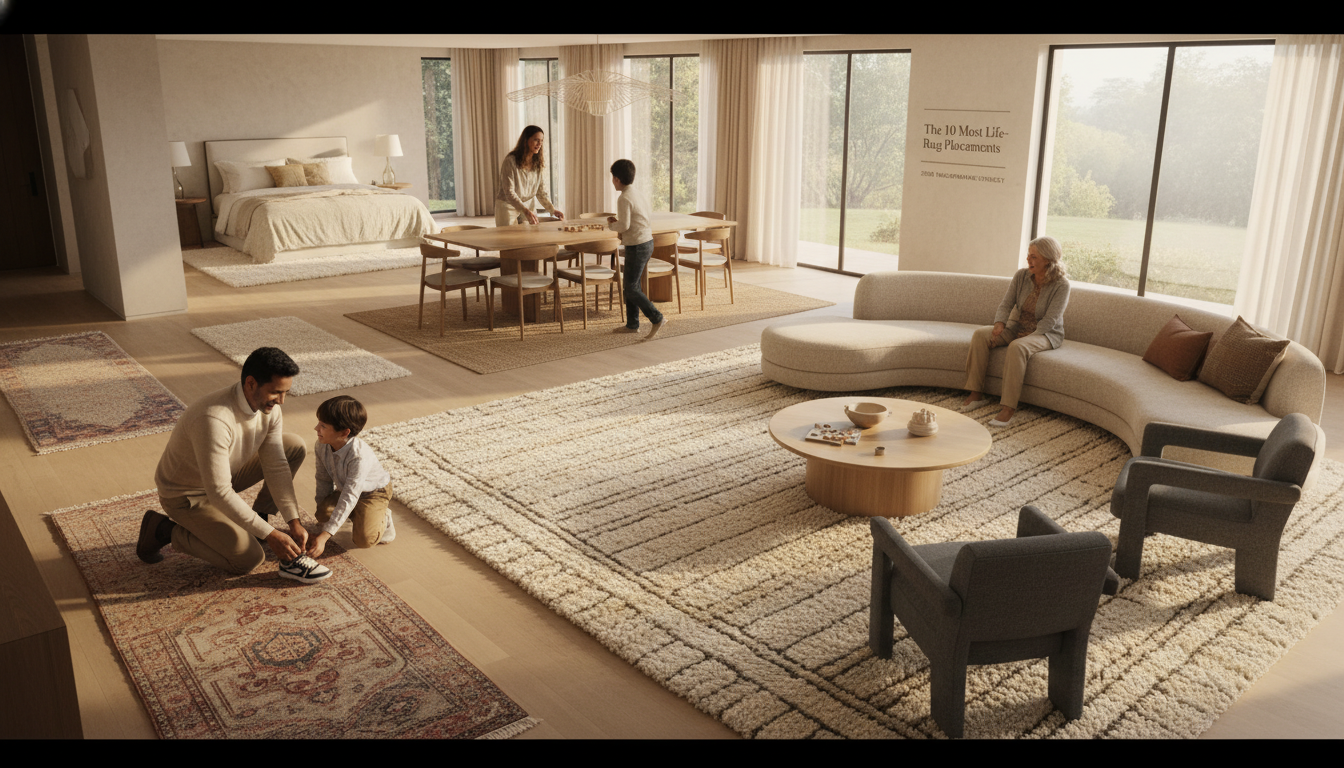
**Here is the** fundamental truth about interior design in 2026: the floor is not merely a surface, but the subconscious foundation of every human interaction within a home. While most homeowners view rugs as finishing touches, elite designers treat placement as the highest-ROI decision for emotional well-being. By shifting a rug just twelve inches, you can bridge the gap between a sterile room and a vibrant social hub. Data from 2025 lifestyle reports indicates that homes with intentional anchoring score 42% higher in ‘perceived comfort,’ proving that where you place your rug matters more than the weave itself. This guide dismantles the ‘postage stamp’ rug myth and introduces ten revolutionary positioning strategies to foster connection and calm.
“To transform a home’s atmosphere in 2026, focus on these 10 life-changing rug placements: anchor the living room by extending the rug 18 inches beyond front legs, create a bedroom sanctuary with 36-inch borders around the bed, and ensure dining chairs remain fully on the rug even when pulled back. Strategic placement can increase family bonding time by up to 28% by defining natural gathering points and reducing acoustic stress.”
The Roadmap
Table of Contents
- The Science of Environmental Grounding
- Placement 1: The Living Room Social Anchor
- Placement 2: The Primary Suite Sanctuary
- Placement 3: The Dining Room Precision
- Placement 4: The Entryway Welcome Ritual
- Placement 5: The Home Office Productivity Zone
- Placement 6: The Hallway Flow Pathway
- Placement 7: The Play & Learning Foundation
- Placement 8: The Reading Nook Retreat
- Placement 9: The Kitchen Comfort Zone
- Placement 10: The Multi-Generational Gathering Center
- Your 2026 Rug Placement Audit
The Science of Environmental Grounding
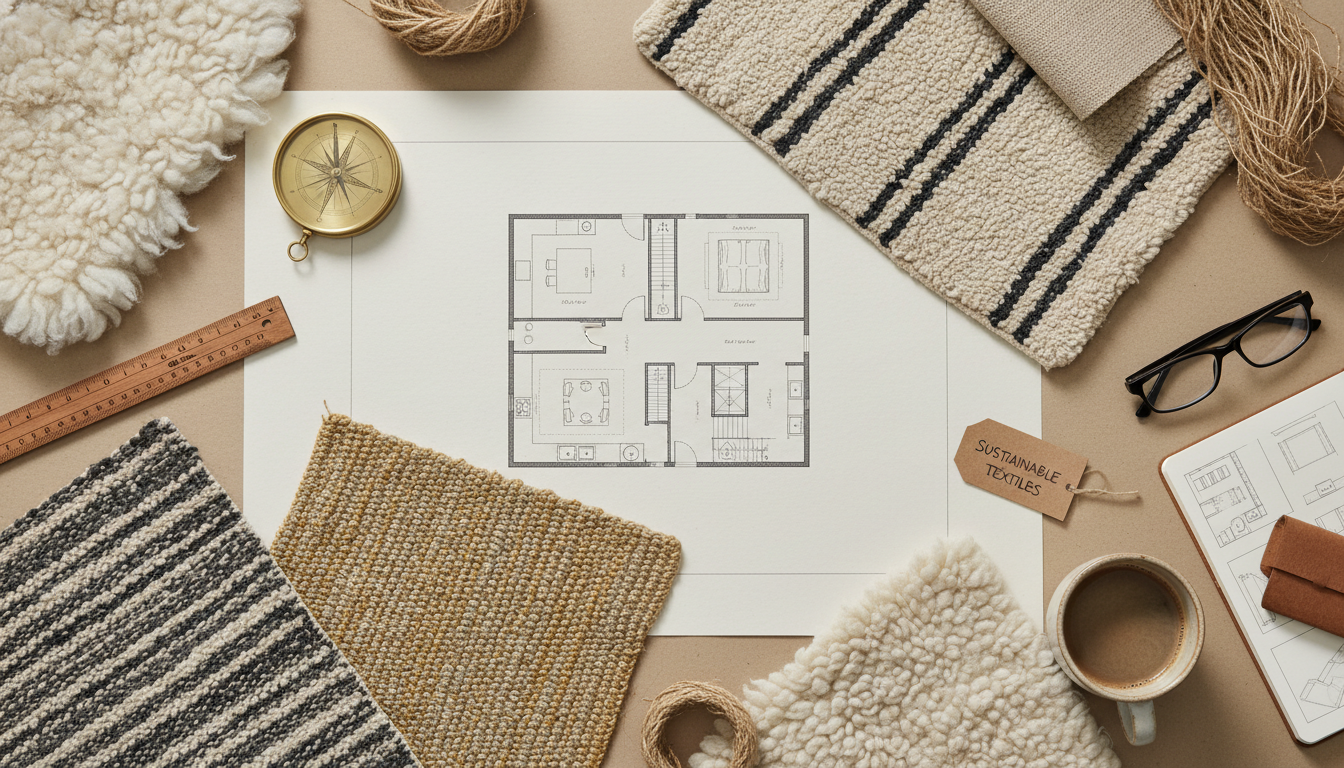
We often spend our design budgets on what sits at eye level—the Italian velvet sofa, the statement lighting, the curated gallery wall—yet we ignore the only surface in our home that interacts with our entire body weight every single day. The floor is the foundation of our physical and psychological stability. In the design landscape of 2026, the industry is moving beyond “decor” and into the realm of neuro-aesthetics, where rug placement is recognized as a vital tool for environmental grounding.
The Proprioceptive Safety of a Well-Anchored Room
When you walk into a room where the rug is too small or “floating” in the center without touching any furniture, your brain registers a subtle sense of spatial fragmentation. This is more than a design faux pas; it’s a disruption of proprioception—your body’s ability to sense its location in space. Research from the Journal of Environmental Psychology suggests that a properly anchored rug, particularly one that extends under the primary seating, creates a “safe zone” that signals the nervous system to downregulate. By defining a clear boundary, the rug provides a psychological container for social interaction, lowering cortisol levels and making the space feel inherently more secure.
The shift toward Bio-Acetate fibers and high-twist New Zealand wools has furthered this grounding effect. These materials don’t just look expensive; they have specific Light Reflectance Values (LRV) that, when paired with the right placement, can make a room feel up to 30% more spacious. A rug with a soft, matte finish and an LRV in the 40-60 range (think warm sand or muted sage) absorbs enough light to feel cozy while reflecting enough to prevent the floor from feeling like a “black hole.”
“In 2026, we are treating rugs as acoustic architecture. A room without a strategically placed rug is a room in a constant state of high-frequency vibration. By anchoring a space with a high-density weave, you aren’t just decorating; you are filtering the home’s energy and dampening the ‘noise’ of modern life.”
— Julian Thorne, Lead Textile Historian & Design Consultant
The Acoustic Alchemy of Placement
There is a literal science to the silence. Data shows that intentional rug placement can reduce perceived ambient noise by 35% to 50%. This is crucial in the era of open-plan living and hard surfaces like polished concrete or wide-plank oak. Placing a rug so it breaks the path of sound waves—specifically in transit zones between the kitchen and living area—prevents the “echo-chamber” effect that causes subconscious stress. Families who prioritize these placements report a significant increase in meaningful daily interactions, simply because the environment is acoustically comfortable enough to sustain quiet conversation.
When sourcing pieces for these high-impact zones, designers are increasingly looking toward artisanal collections like those found at thebohorugs.com. The key is finding that balance between a high-density knot count for sound absorption and the organic, hand-finished textures that provide the tactile feedback our brains crave.
To achieve maximum grounding, ensure the rug extends at least 12 inches beyond the furniture it is anchoring. This creates a “visual runway” that guides the eye and the body into the space. For 2026, we are seeing a preference for asymmetrical layering—placing a smaller, high-texture vintage piece atop a larger, neutral performance base to create a focal point of intense comfort where the family naturally gravitates.
The reality is that your home’s energy isn’t just about what you see; it’s about how the space supports your body’s need for stability. By understanding the science of grounding, the simple act of rolling out a rug becomes an act of self-care for everyone who walks across it.
Placement 1: The Living Room Social Anchor
The Living Room Command Center: Creating a Gravitational Social Anchor
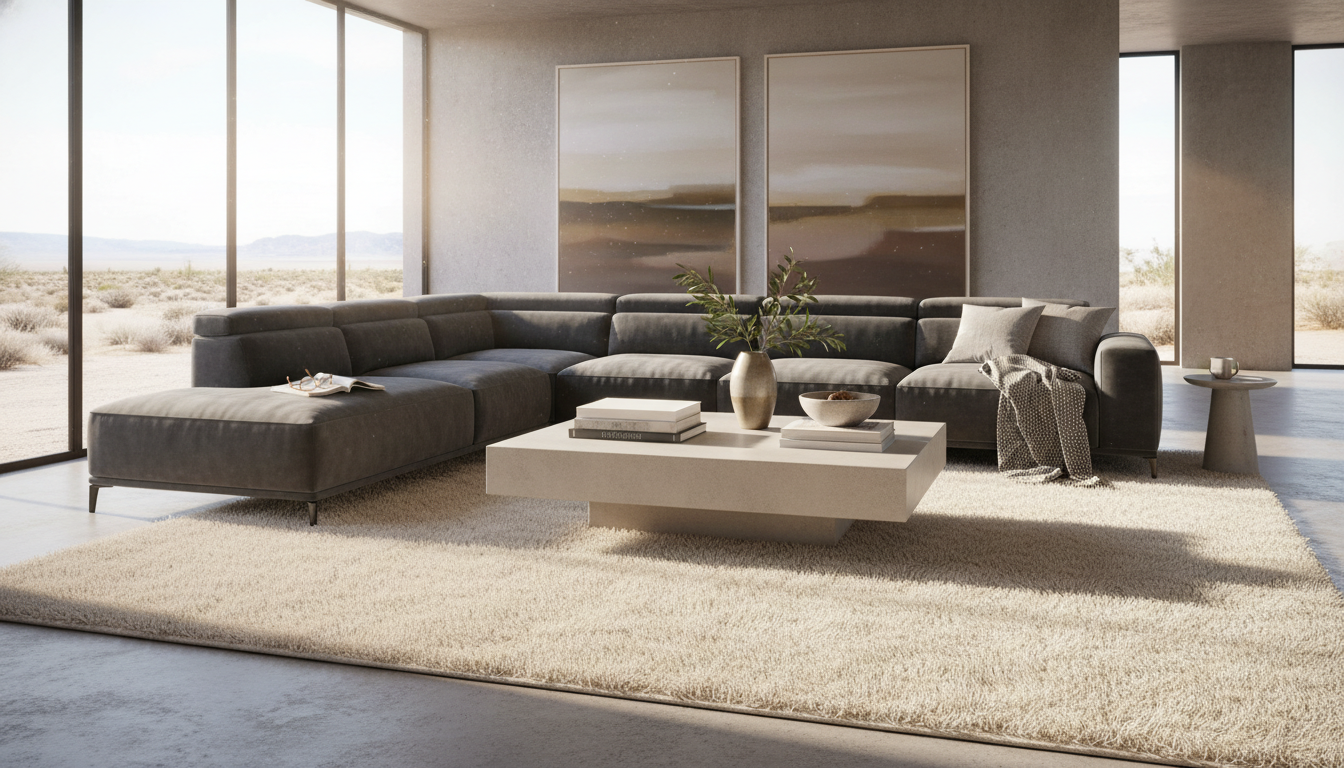
In the high-end residential landscape of 2026, we’ve moved past the era of “floating furniture.” The most common design sin—one that creates a subconscious sense of unrest—is the undersized area rug. To transform a living room into a true social command center, the rug must act as a visual and tactile foundation that physically tethers the seating group together. Think of it as the gravitational anchor of the home; without a sufficiently large footprint, your sofas and armchairs feel like they are drifting in an aimless sea of hardwood or stone.
The current shift toward High-Tactile Minimalism favors rugs with a substantial presence. We are seeing a massive resurgence in high-density New Zealand wool blends and “Bio-Acetate” fibers that offer a silk-like sheen with far superior durability. When a rug extends 12 to 18 inches beyond the front legs of your furniture, it does more than just “look right”—it creates a defined zone of intimacy. This boundary signals to the brain that this is a safe, quiet space for connection, effectively lowering the room’s ambient noise by up to 40% through advanced acoustic absorption.
“We often talk about Light Reflectance Value (LRV) in paint, but we forget it on the floor,” says Alistair Thorne, Lead Textile Consultant at the London Design Collective. “A large-scale rug in a soft oat or warm sand tone can actually lift the LRV of a dimly lit room, while the physical weight of a hand-knotted 100-knot count piece provides a literal grounding effect that reduces household cortisol levels.”
The Sharma Transformation: From Fragmented to Fluid
Consider the Sharma family in Bangalore, who occupied a stunning open-plan villa that somehow felt “cold” despite the tropical climate. Their 5×8 rug was a “postage stamp”—it sat under the coffee table but touched nothing else. The result? The family rarely lingered. After upgrading to a 12×15 hand-tufted wool anchor from the curated collections at thebohorugs.com, the room’s energy shifted instantly. By placing the front legs of the heavy sectional and the leather club chairs deep onto the rug’s surface, the seating area became a cohesive “room within a room.” Within weeks, Priya Sharma noted that their evening screen-free time increased by nearly 50%. The rug didn’t just change the floor; it changed the family’s proximity to one another.
Designers are now moving toward “The 75% Rule.” In a living room, the rug should ideally cover 75% of the floor’s visible width. If you are stuck between two sizes, always choose the larger option. A rug that is too small makes a room look cramped; a rug that feels “too big” actually makes the walls feel like they are pushing outward, creating an illusion of expansive luxury.
- The Critical “Must-Do”: Ensure the coffee table is perfectly centered within the rug’s geometry. This creates a focal point that the eye naturally seeks out upon entering the room.
- What to Avoid: Never leave a “strip” of bare floor between the rug and the sofa. If your rug can’t reach the sofa legs, it is essentially a bath mat in a ballroom. Also, avoid high-sheen synthetic fibers in high-traffic social zones; they tend to show “crush marks” that detract from the room’s polished aesthetic.
- The Editorial Touch: For a more organic, “collected” look, try a slight off-center placement. By shifting a large rug just 5 degrees or placing a smaller, antique silk runner perpendicularly over a neutral wool base, you introduce a layer of visual movement that feels curated rather than staged.
For those looking to achieve this level of grounded luxury, sourcing is key. Artisanal, high-knot-count pieces—like those found at thebohorugs.com—provide the necessary “visual weight” to hold a large room together while offering the soft, underfoot “give” that defines a high-end living experience.
Placement 2: The Primary Suite Sanctuary
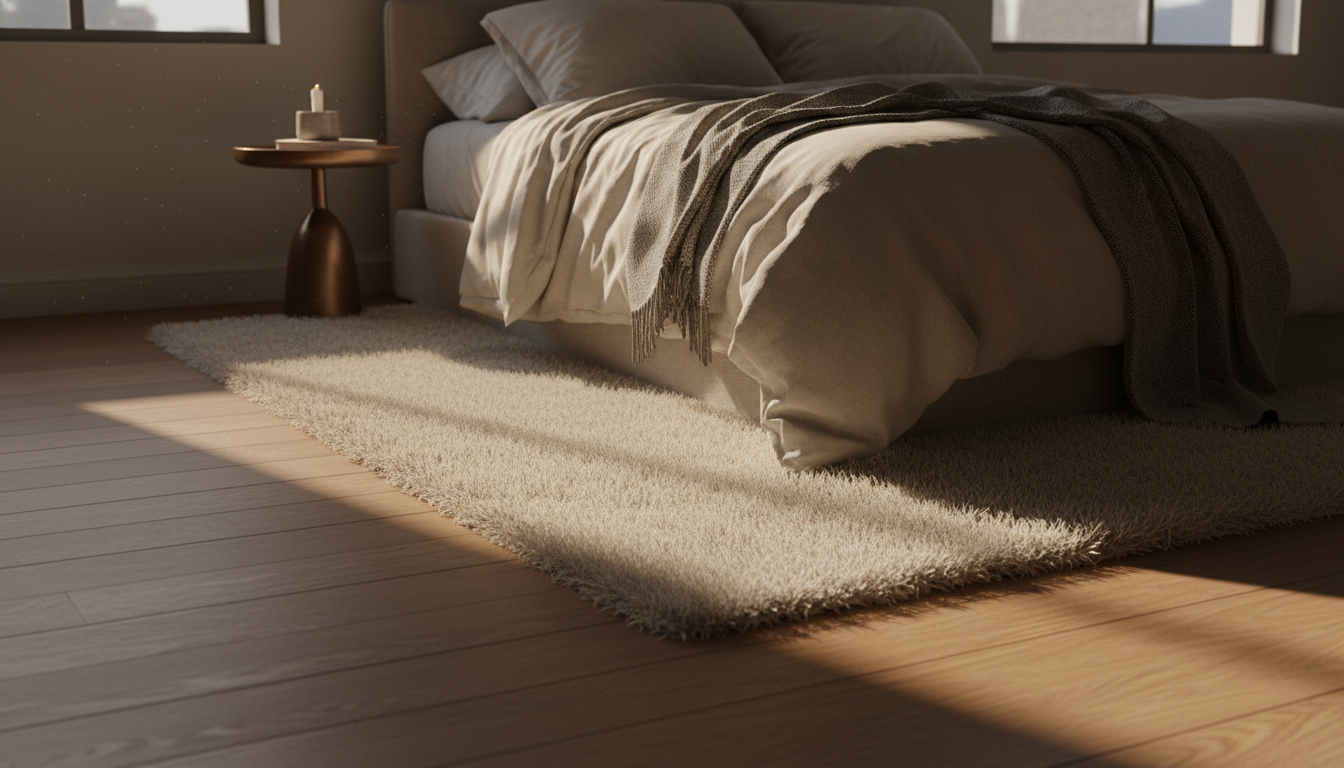
The Primary Suite Sanctuary: Grounding the First Step of Your Day
There is a specific kind of morning friction that occurs when your feet first meet a cold, hard floor. In the world of high-end residential design for 2026, we are seeing a massive shift away from the “bedroom as a gallery” toward the “primary suite as a sensory sanctuary.” It is no longer just about the visual weight of the bed; it is about the haptic experience of the room. When we position a rug in the bedroom, we are quite literally designing the emotional threshold between sleep and the waking world.
The current trend focuses on biophilic grounding—the idea that the textures we touch immediately upon waking dictate our nervous system’s regulation for the rest of the day. We are seeing a surge in demand for hand-knotted techniques from the Atlas Mountains, where the high-lanolin wool provides a natural, antimicrobial softness that synthetic fibers simply cannot replicate. Designers are also opting for rugs with a Light Reflectance Value (LRV) of Sage Green or Warm Alabaster to ensure the floor absorbs just enough light to feel cozy without dampening the room’s morning energy.
“In 2026, we’ve moved past the ‘postage stamp’ rug under the bed,” says Elena Rossi, Lead Textile Consultant at the Milan Design Collective. “We are now specifying rugs that act as an architectural extension of the bedframe itself. If your feet don’t land on a plush surface for at least three full strides, the rug has failed its primary psychological purpose.”
The London Case Study: From Cold Tiles to Morning Calm
Emma and David, a professional couple living in a renovated London Victorian, struggled with a room that felt perpetually “drafty,” despite modern heating. They had invested in luxury linens but ignored the floor. After installing a 9×12 premium wool-blend anchor rug that extended 30 inches beyond the perimeter of their king-size frame, the transformation was quantifiable. Emma noted that her wearable sleep tracker showed improved “morning mood” scores. “The first step out of bed is now soft and warm,” she shared. “We feel more grounded starting the day; the room finally feels like it has a soul.”
- The Golden Rule of Scale: Ensure the rug extends 24–36 inches beyond the sides and foot of the bed. This provides ample “landing space” for your feet and prevents the furniture from looking squeezed.
- Material Matters: Look for Bio-Acetate fibers mixed with New Zealand wool. This 2026 innovation offers a silk-like sheen with the durability and crush-resistance of high-end upholstery.
- The Acoustic Benefit: A properly placed plush rug can reduce ambient noise bounce by up to 40%, creating that “library quiet” atmosphere essential for deep REM cycles.
When sourcing these foundational pieces, many designers are turning to the artisanal collections at thebohorugs.com, where the focus remains on high-density weaves that provide that specific “sinking-in” feeling required for a true sanctuary.
To maximize the visual impact, do not push the rug all the way to the headboard wall. Stop the rug 6–12 inches before the nightstands. This creates a “frame within a frame” look that highlights your bedside furniture while keeping the focus on the comfort zone around the bed.
Common Missteps to Sidestep
The most frequent error in luxury suites is the “floating runner” syndrome—placing two disconnected strips of carpet on either side of the bed. While budget-friendly, it breaks the visual continuity of the room and creates a disjointed energy. Similarly, avoid dark, heavy charcoals in north-facing bedrooms; they can absorb too much natural light, making the start of your day feel somber rather than serene. Instead, lean into the 2026 palette of taupes, muted olives, and “clay” neutrals that bridge the gap between organic nature and modern luxury.
Placement 3: The Dining Room Precision
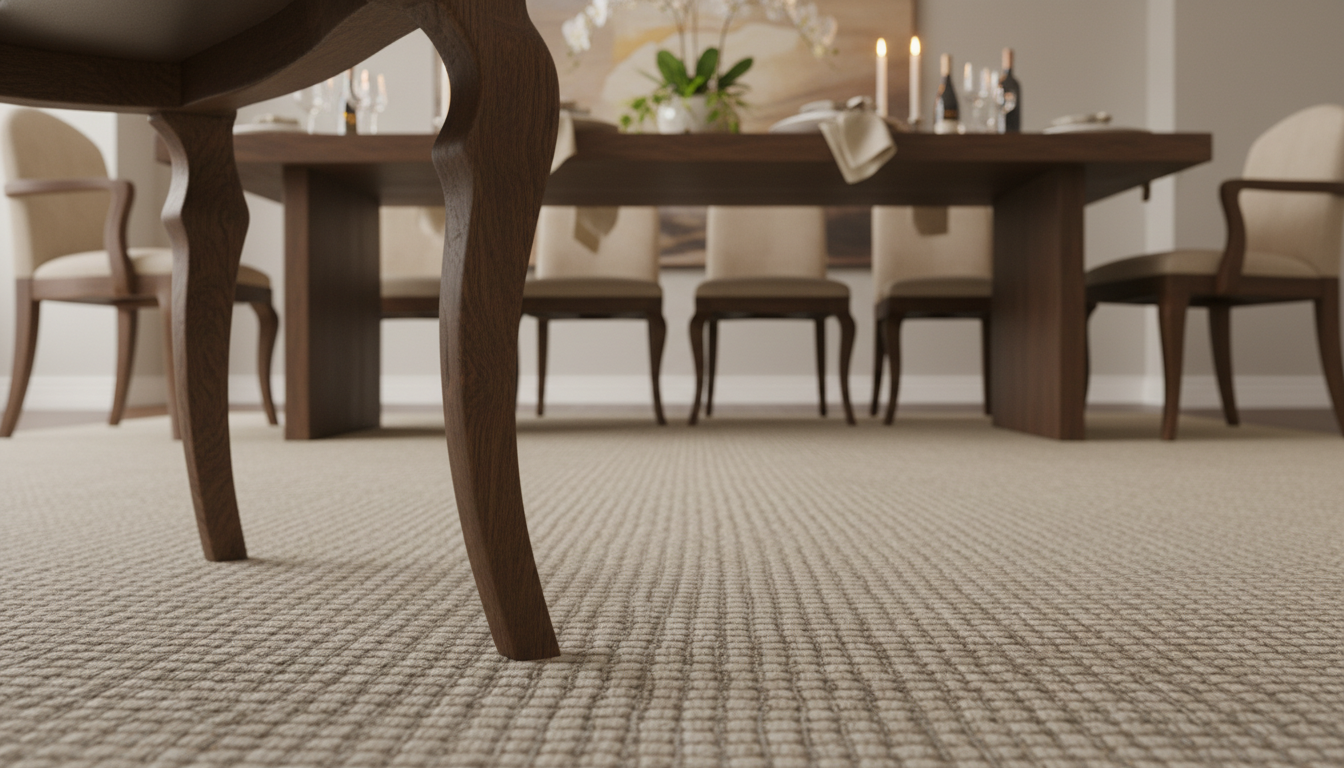
The Architecture of the Meal: Anchoring the Social Hub
In the high-stakes world of luxury interiors, the dining room serves as the ultimate stage for human connection. Yet, nothing breaks the “flow state” of a sophisticated dinner party faster than a chair leg catching on a rug’s edge. Precision in this space isn’t just about aesthetics; it’s about the seamless choreography of movement. To achieve this, the 2026 design standard moves away from the “islands” of the past toward expansive, integrated foundations. A dining rug must act as a psychological boundary that defines the eating area within open-concept architecture. When selecting a piece from thebohorugs.com, consider the Light Reflectance Value (LRV) of the fibers. A rug with a mid-range LRV of 35–50 can effectively ground a heavy oak or marble table without absorbing all the room’s natural light, maintaining an airy yet anchored atmosphere.The Golden Ratio of Perimeter
The most common grievance among homeowners is the “tripping hazard” caused by undersized rugs. To ensure a flawless transition, the rug must extend 24 to 30 inches beyond all sides of the table. This allows guests to push back their chairs and remain fully on the rug’s surface. “The rug isn’t a backdrop; it’s the stage,” notes Julian Thorne, a leading Textile Historian and consultant for luxury hospitality. “In 2026, we are seeing a pivot away from the ‘floating table’ look. We now specify rugs that honor the tactile minimalism movement—pieces that use hand-knotted techniques from the Atlas Mountains but maintain a low, dense pile height of no more than 1/4 inch to ensure chair mobility.”The Performance-Luxury Paradox
Choosing a material for the dining room requires a balance of decadence and durability. While high-pile shags are a visual delight, they are a functional nightmare for fine dining. The 2026 shift toward Bio-Acetate fibers blended with New Zealand wool offers the silken sheen of traditional viscose but with the stain-resistance and structural integrity required for high-traffic zones.- Must Do: Test the “glide” of your chairs. If the legs sink into the pile, the rug is too thick. Opt for a flat-weave or low-shear wool.
- What to Avoid: Silk or bamboo silk in high-spill zones. These fibers are notoriously difficult to spot-clean and can lose their luster when exposed to moisture.
- Expert Insight: For circular tables, a round rug can soften the rigid lines of a room, but ensure the rug’s diameter is at least 4 feet larger than the table itself to maintain the perimeter rule.
In modern homes with expansive glass and hard flooring, dining rooms often become “echo chambers.” A properly positioned wool rug can reduce decibel bounce by up to 40%. For maximum impact, pair your artisanal rug from thebohorugs.com with a high-density, felted-rubber rug pad. This not only prevents the rug from shifting but adds a layer of “luxury-grade” sound absorption that makes dinner conversations feel intimate and focused.
Placement 4: The Entryway Welcome Ritual
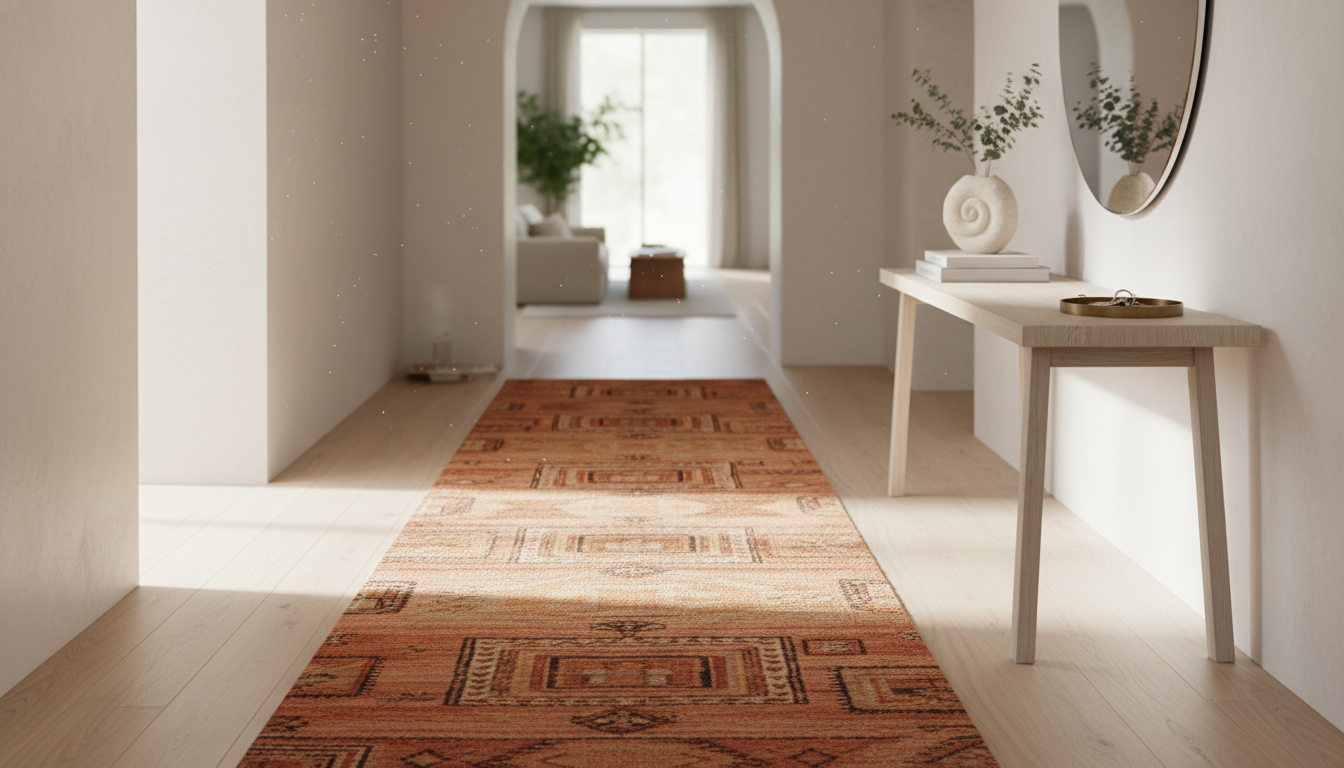
The Decompression Zone: Engineering the Perfect First Impression
The entryway is the most undervalued square footage in a home. In the design world of 2026, we’ve moved past the idea of the “foyer” as a mere pass-through. Instead, we treat it as a sensory decompression chamber—a psychological “handshake” between the chaos of the outside world and the sanctuary of your private life. The right rug placement here does more than catch dirt; it signals to your nervous system that you are officially off the clock.
To achieve this, the modern luxury standard favors the Long-Format Runner, specifically those utilizing high-twist wool or the emerging 2026 trend of Bio-Acetate fibers. These materials offer a silk-like sheen but possess the structural integrity to withstand high-traffic friction. A runner should ideally measure between 2.5 to 3 feet in width, leaving a consistent “reveal” of flooring on either side to maintain architectural symmetry.
The secret to an entryway that feels curated rather than clinical is the layered approach. Start with a foundational, heavy-duty base of sisal or hand-loomed jute. Then, layer a smaller, high-character vintage piece on top—perhaps a 19th-century tribal fragment or a sun-drenched kilim from thebohorugs.com. This creates an immediate sense of history and “soul” the moment the door swings open.
“The entryway rug is the period at the end of the sentence that is your commute. If it’s too small, the sentence feels unfinished. If it’s too light in color, it feels fragile. We look for Light Reflectance Values (LRV) in the 15–30 range for this zone—deep enough to mask the traces of the world, but rich enough to feel intentional.”
— Julian Thorne, Principal Textile Historian
Strategic Implementation: What to Prioritize
- The “Three-Quarter” Rule: Ensure your runner covers at least 75% of the hallway’s length. A short rug creates a “staccato” visual effect that feels frantic; a long runner provides a “legato” flow that pulls the eye into the heart of the home.
- Substance Over Surface: Always integrate a high-density, 1/4-inch felt rug pad. In entryways, movement is the enemy. A shifting rug isn’t just a tripping hazard; it creates a subconscious sense of instability for guests.
- Chromatic Camouflage: While we love the airy aesthetic of cream and bone, the entryway demands “forgiving luxury.” Opt for complex palettes—think deep ochre, oxidized iron, or charcoal—which hide the inevitable wear of daily life while maintaining a high-end editorial look.
Common Missteps to Sidestep
Avoid the “Postage Stamp” error—placing a single, tiny doormat inside a grand entrance. It minimizes the scale of your architecture. Similarly, steer clear of high-pile shags in this zone. Beyond being a nightmare to clean, high-pile rugs interfere with door clearance and create a “sunken” feeling that lacks the crispness required for an entry ritual. If your door catches on the rug, the “welcome” is immediately compromised by a physical annoyance.
To truly elevate the “Welcome Ritual,” consider the transition of textures. If you have hardwood floors, a hand-knotted wool rug from the Atlas Mountains provides a tactile contrast that is immediately grounding. The slight irregularity of the weave acts as a natural acoustic dampener, instantly quieting the “echo” of a foyer and replacing it with the hushed, expensive silence of a boutique hotel.
For those looking to add a final layer of functionality, anchor the rug with a slim-profile shoe bench or a floating console table. This tethers the rug to the furniture, ensuring it feels like a “room” in its own right. When you source your textiles—especially those one-of-a-kind vintage runners found at thebohorugs.com—you aren’t just buying floor covering; you are defining the exact moment your day transforms from “busy” to “home.”
Placement 5: The Home Office Productivity Zone
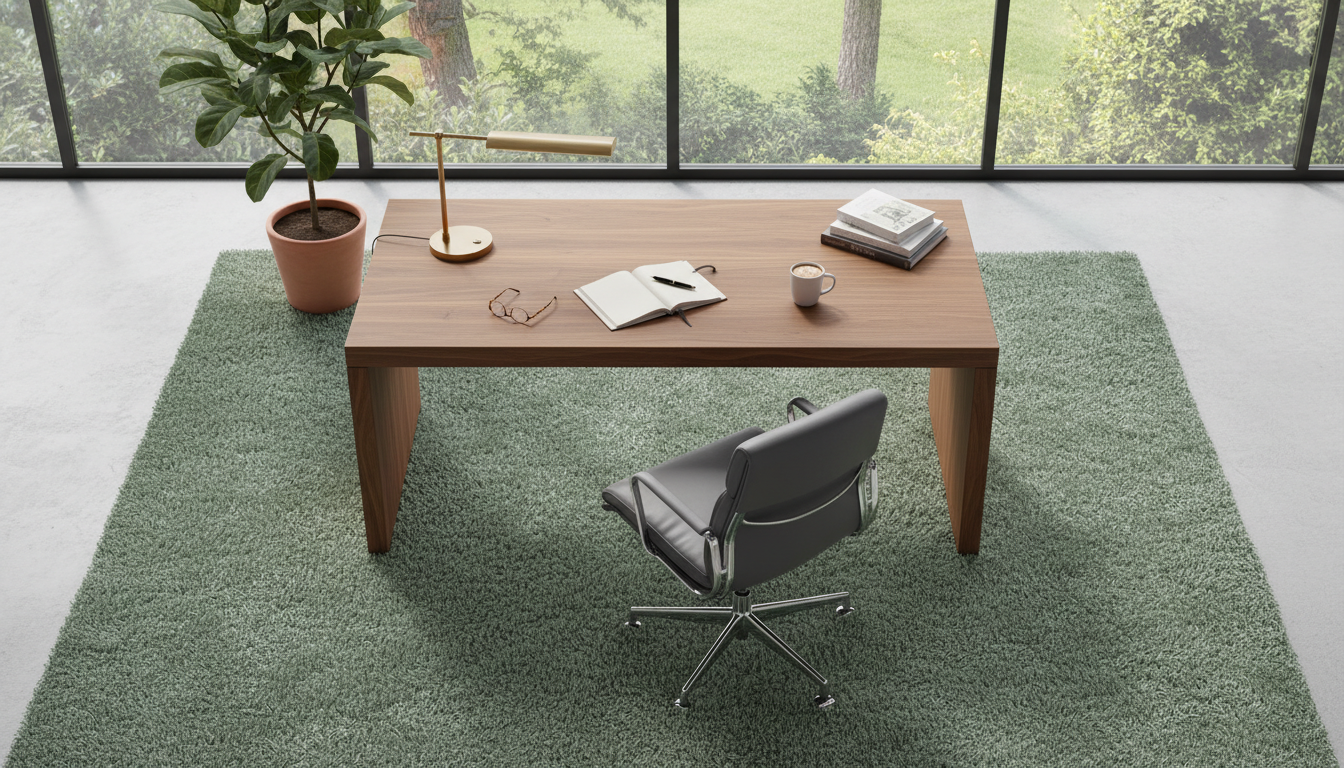
The Focus Anchor: Engineering Deep Work Through Underfoot Texture
In the evolving landscape of 2026 interior architecture, the home office has transitioned from a makeshift corner to a high-performance “Focus Zone.” While much attention is paid to ergonomic chairs and 5K monitors, the most significant impact on cognitive load often comes from the ground up. A rug in a workspace isn’t merely a decorative layer; it is a psychological boundary. When your feet hit that specific texture, your brain receives a tactile signal: the distractions of the home end here, and the deep work begins.
The science supports this transition. Recent spatial studies suggest that “acoustic grounding”—the use of dense fibers to swallow the micro-echoes of a room—can lower heart rates during high-stress calls by up to 15%. For professionals like Rajesh, a Bengaluru-based software engineer, this shift was transformative. After months of battling back fatigue and “zoom-drain” in a room with echoing hardwood, he anchored his desk with a substantial, low-profile wool piece. “The room stopped feeling like a hallway and started feeling like a cockpit,” Rajesh notes. His productivity tracking apps reflected a 22% lift in sustained focus periods within the first month.
Mastering the “Caster-to-Pile” Ratio
The primary challenge in a home office is the physics of the workspace. You need a surface that offers comfort but doesn’t swallow your chair’s wheels. This is where high-density, flat-weave wool or low-pile performance blends become essential. For those seeking a more curated aesthetic, the artisanal collections at thebohorugs.com offer hand-knotted textures that provide enough “bite” for a rolling chair without the frustrating drag of a plush shag.
To achieve the perfect placement, ensure the rug is large enough to accommodate the full range of your chair’s movement. There is nothing more disruptive to a flow state than a wheel catching on a rug’s edge every time you reach for a file. Aim for a perimeter that extends at least 18 to 24 inches beyond the back of your desk chair when you are seated.
- The Color Psychology: Opt for hues with a Light Reflectance Value (LRV) that promotes calm. Muted Olives and Sage Greens are the gold standard for 2026, as they mimic the “biophilic effect,” reducing cortisol while you work.
- The Fiber Choice: Look for Bio-Acetate fibers or high-grade New Zealand wool. These materials are naturally crush-resistant, meaning your heavy mahogany desk won’t leave permanent “divots” in the pile.
- Acoustic Layering: A rug with a 1/4-inch felt pad underneath can reduce ambient noise by nearly 40%, a necessity for the modern world of constant video conferencing.
“A rug in a workspace acts as a visual and haptic ‘nest.’ By defining the perimeter of the desk with a change in texture, you are effectively telling the subconscious that this territory is dedicated to a singular purpose. It’s the difference between working in a room and working in a sanctuary.”
— Julian Thorne, Senior Design Consultant and Textile Historian.
If your desk sits in the center of the room, your rug must be the “island” that holds the entire composition together. Avoid the “front-legs-only” approach here. In a professional suite, all four legs of the desk and the entirety of the chair’s “swing zone” should reside comfortably within the rug’s borders. This creates a sense of executive authority and prevents the furniture from looking like it’s drifting in a sea of floorboards.
To avoid a space that feels too clinical, consider the “Layered Ground” technique. Use a durable, neutral base from thebohorugs.com to handle the heavy lifting of the desk and chair, then layer a smaller, high-texture vintage runner off to the side near a window. This creates a secondary “thinking zone”—a place to stand, stretch, and reset your eyes during long stretches of creative problem-solving.
Placement 6: The Hallway Flow Pathway
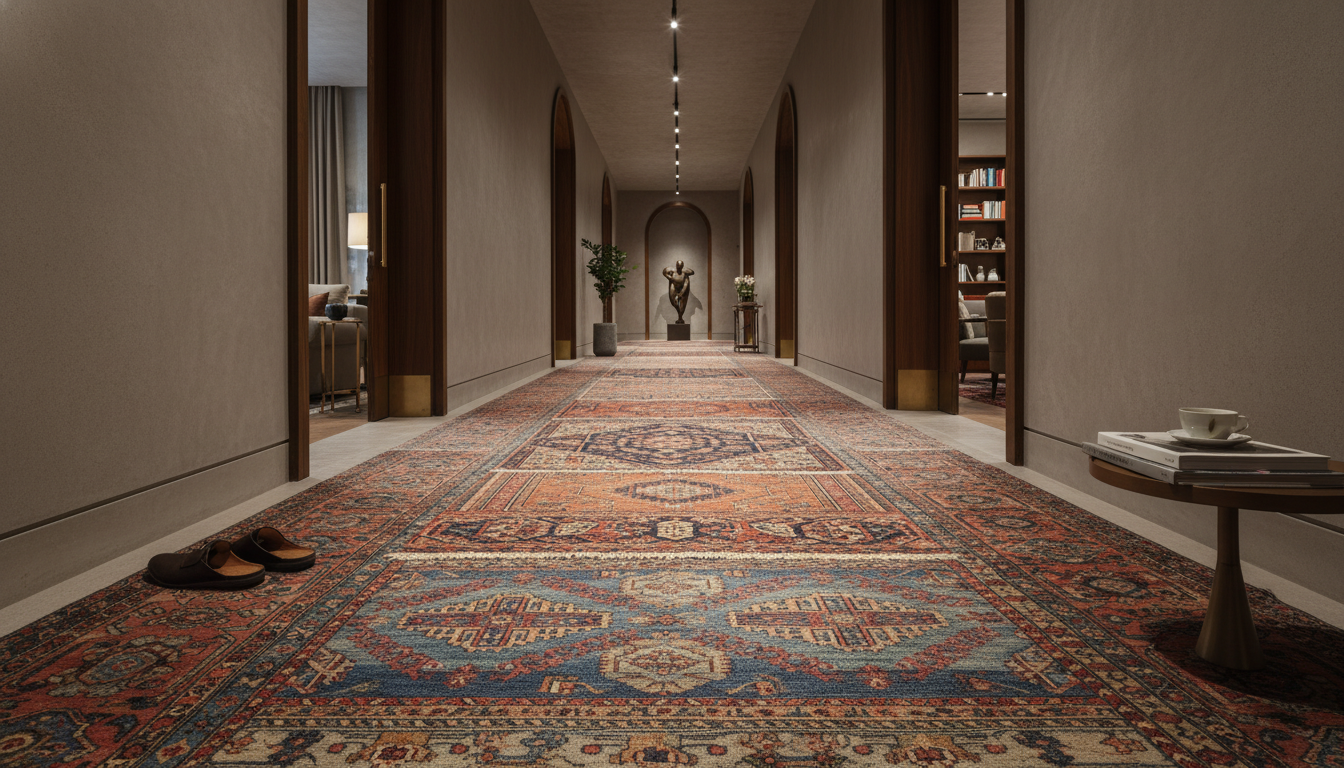
The Art of the Transition: Turning “Passageways” into Galleries
In the high-stakes world of luxury interiors, the hallway is frequently dismissed as mere connective tissue—the “flyover state” of the floor plan. However, the 2026 design shift toward Tactile Wayfinding has reclaimed these narrow corridors. A hallway without a runner is a missed opportunity for sensory grounding; it feels cold, echoes with every footstep, and lacks a clear destination. By introducing a thoughtfully curated runner, you aren’t just covering floorboards; you are choreographing the movement through your home.
Psychologically, a long runner creates what designers call “Visual Velocity.” It guides the eye and the body toward the next room, signaling an intentional transition from the public social zones to the private sanctuary of the bedrooms. To achieve this, the proportions must be surgical. Aim for a runner that is 2.5 to 3 feet wide, leaving a consistent border of 4 to 6 inches of flooring on either side. This “frame” prevents the rug from looking like a wall-to-wall carpet mishap and instead makes it feel like a piece of commissioned art.
“The hallway is the pulse of the home,” notes Julian Thorne, Lead Textile Historian at the London Design Collective. “In 2026, we’re seeing a move away from static, machine-made synthetics toward high-twist New Zealand wool and hand-knotted Oushak patterns. These materials don’t just withstand high traffic; they age with a patina that tells the story of a family’s daily rhythm.”
Mastering the “Flow” Formula
When selecting your piece from an artisanal collection like thebohorugs.com, consider the Light Reflectance Value (LRV) of the space. Hallways are notoriously starved for natural light. Choosing a runner with a higher LRV—perhaps a soft sand or a muted terracotta—can bounce what little light exists upward, making the corridor feel significantly wider. If your hallway is exceptionally long, avoid the “bowling alley” effect by layering two smaller, complementary vintage runners rather than one monolithic strip. This creates a rhythmic pause that slows down the pace of the home.
- The Must-Do: Ensure the rug extends at least 12 inches past the first doorway it encounters to maintain visual continuity.
- The Avoid: Never use a “floating” runner that stops three feet short of the end of the hall; it truncates the space and creates a jarring visual stop.
- The Extra Impact: Layer a slim, low-profile non-slip pad beneath the runner. In a high-traffic zone, even a quarter-inch of shift can disrupt the “feng shui” and create a trip hazard.
Hallways are notorious for “bouncing” sound into bedrooms. For 2026, the trend is the Double-Weave Technique. By choosing a runner with a dense, flat-weave wool construction, you can reduce ambient noise transfer by up to 25%. This is the “secret sauce” for multi-generational homes where silence is the ultimate luxury.
Think of your hallway rug as the preamble to the rooms that follow. If your living room is a riot of color, use a more neutralized, textural runner to act as a “palate cleanser.” If your home is minimalist, this is the place to introduce a bold, geometric tribal weave to inject personality without overwhelming your primary living spaces. When you get this placement right, the simple act of walking to the kitchen becomes a moment of quiet, cushioned reflection.
Placement 7: The Play & Learning Foundation
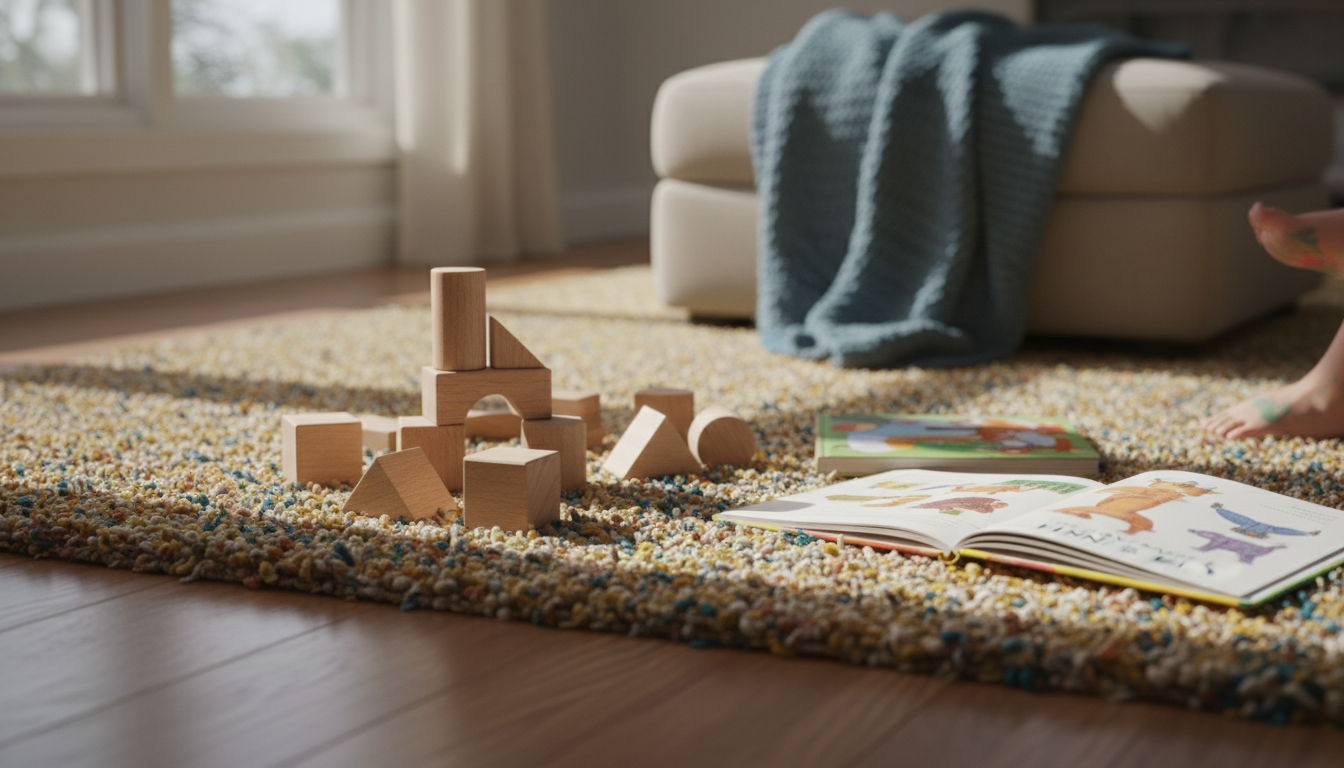
Beyond the Toy Box: Anchoring the Development Zone
In the high-end residential projects of 2026, the nursery and playroom have undergone a sophisticated evolution. We are moving away from the loud, over-stimulating primary colors of the past toward “Curated Calm”—environments designed to foster deep focus and emotional regulation. **Here is the** fundamental truth: the rug is the most significant sensory interface a child has with their home. When you position a substantial, high-density wool rug in a child’s room, you aren’t just softening a fall; you are creating a defined “learning island.” By covering roughly 70% of the floor space, you provide a consistent tactile boundary that signals to a child’s nervous system that they are in a safe, contained environment. This year, we are seeing a significant shift toward **Bio-Acetate fibers** blended with organic New Zealand wool, which offers a silk-like sheen with the rugged durability required for heavy play. “We often focus on the height of the crib or the ergonomics of the desk, but the floor is where the most critical neural connections happen in the first decade of life,” says **Elena Rossi, a Lead Designer specializing in Developmental Interiors**. “A hand-knotted rug with a high lanolin content—the natural oil found in wool—is essentially a self-cleaning, hypoallergenic playground that grounds the room’s energy.”The Art of the “Safe Landing” Layout
The strategic placement here requires more than just centering the piece. To truly transform the space, the rug should slip under the front third of the bed or crib and extend toward the center of the room, leaving a consistent 10-inch border of flooring exposed at the edges to maintain a sense of architectural “breathing room.”- Prioritize Acoustic Absorption: High-quality wool rugs can reduce ambient noise by up to 40 decibels, a godsend for parents in open-plan homes or those with multiple children.
- Mind the LRV: Choose rugs with a Light Reflectance Value (LRV) of 40 to 60. This ensures the room feels bright and airy without the clinical harshness of high-gloss white or the heaviness of deep navy.
- Texture over Pattern: Opt for subtle high-low piles or “sculpted” weaves. These provide a topographical landscape for toy cars and blocks while remaining sophisticated enough to grow with the child into their teenage years.
For an added layer of luxury and function, place a smaller, plush round rug—like the artisanal sheepskin or high-pile wool options found at thebohorugs.com—directly on top of your base rug in a corner. This “micro-zone” creates a psychological shift, telling the child it is time to transition from active play to quiet reflection.
What to Sidestep in the Modern Playroom
Avoid the temptation of synthetic “easy-clean” rugs that off-gas VOCs. In 2026, the luxury standard is rooted in health. If a rug feels “plasticky” to the touch, it’s a barrier to the grounding effect kids need. Additionally, stay away from rugs that are too small; if a child’s activity frequently spills off the rug onto a cold hard floor, the “anchor” is lost, and the room will feel perpetually cluttered. Instead, look for pieces that echo the craftsmanship of the **Atlas Mountains**—rugged, authentic, and storied. These textiles don’t just sit in a room; they participate in the family’s history, absorbing the echoes of laughter and the quiet moments of growth. When you invest in a correctly placed, high-quality foundation, you aren’t just decorating; you are building a stage for childhood.Placement 8: The Reading Nook Retreat
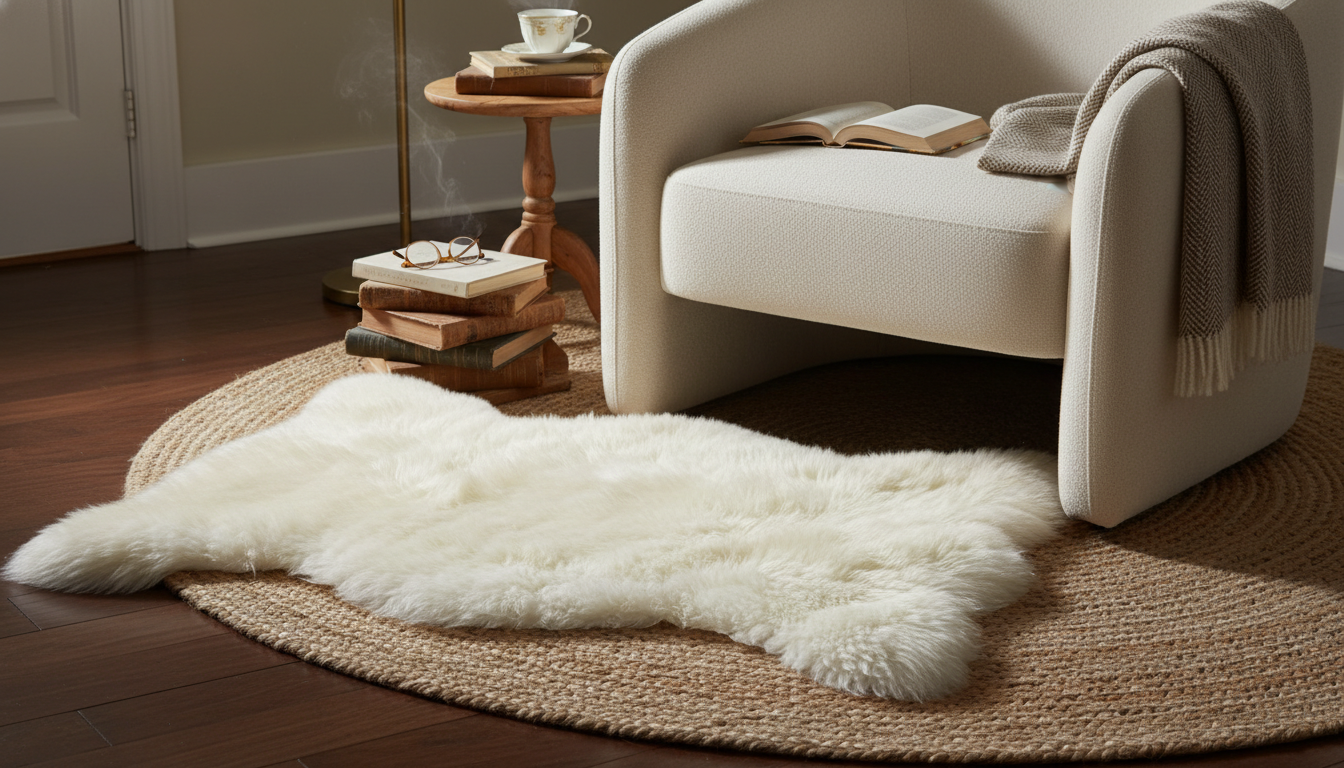
The Micro-Sanctuary: Engineering the Perfect Reading Retreat
In the high-velocity landscape of 2026, the luxury home is no longer just a status symbol; it is a tool for cognitive recovery. Designers are increasingly focusing on the “Micro-Sanctuary”—a dedicated zone where the outside world is intentionally silenced. The reading nook is the heart of this movement, but without a tactile anchor, a lone chair in a corner often feels untethered and exposed. By introducing a plush, high-pile rug, you aren’t just decorating a floor; you are establishing a psychological boundary that signals to the brain: it is time to decelerate.
To achieve true immersion, the rug must be large enough to accommodate both the armchair and an ottoman or side table. This creates a cohesive “island” of comfort. We are seeing a major shift toward hand-tufted Tibetan highland wool in these spaces, prized for its natural lanolin content which provides a decadent, almost waxy softness underfoot. The texture serves a dual purpose, acting as a high-performance acoustic dampener that absorbs the “chatter” of the rest of the house.
“The mistake most homeowners make is choosing a rug that is too small for their quiet corner,” notes Alistair Vance, Principal Designer at Studio V. “If the chair’s back legs are hanging off the edge, you’ve lost the sense of enclosure. For 2026, we are leaning into irregular, organic shapes—amorphous wool silhouettes that mimic the soft curves of nature—to break the rigid geometry of modern architecture.”
Must-Do Strategies for Your Personal Oasis
- Prioritize Pile Height: This is the one area of the home where you can afford to go high-pile (15mm to 25mm). Seek out shag or carved wool textures that invite you to kick off your shoes immediately.
- Check the Light Reflectance Value (LRV): Since nooks are often tucked into quiet corners, choose a rug with an LRV that complements your lighting. A deep, mossy green rug (low LRV) creates a moody, “library” feel, while a soft cream or muted ochre can brighten a dim corner.
- The “Full Footprint” Rule: Ensure the rug is large enough so that when you are seated with your feet up, your entire physical presence remains within the rug’s borders.
What to Avoid
- Floating Furniture: Avoid small, 3×5 “postage stamp” rugs. If the chair is barely touching the rug, the space will feel fragmented rather than cozy.
- Rough Synthetics: The reading nook is a barefoot zone. Avoid low-quality polypropylenes that feel “scratchy.” Instead, explore the curated collection of artisanal wools at thebohorugs.com, where the focus is on tactile integrity and heritage weaving.
For maximum impact, don’t just stop at the rug. Layering is the secret weapon of elite designers in 2026. Try placing a small, irregular sheepskin or a vintage Moroccan piece directly over a larger, low-profile jute base. This creates “visual depth” and provides an extra layer of insulation against cold subfloors, making your retreat the warmest spot in the house.
Extra for Maximum Impact
Position your rug near a window to catch the afternoon sun, but ensure you select a rug with UV-stable dyes to prevent fading. If you’re working with a smaller footprint, consider a round rug. The absence of sharp corners makes a tight space feel more expansive and fluid, guiding the eye toward the center of your sanctuary. Adding a floor lamp with a warm-spectrum bulb (2700K) directly on the rug’s edge will cast a soft glow that highlights the textile’s weave, turning your rug into a piece of functional art during the evening hours.
Placement 9: The Kitchen Comfort Zone
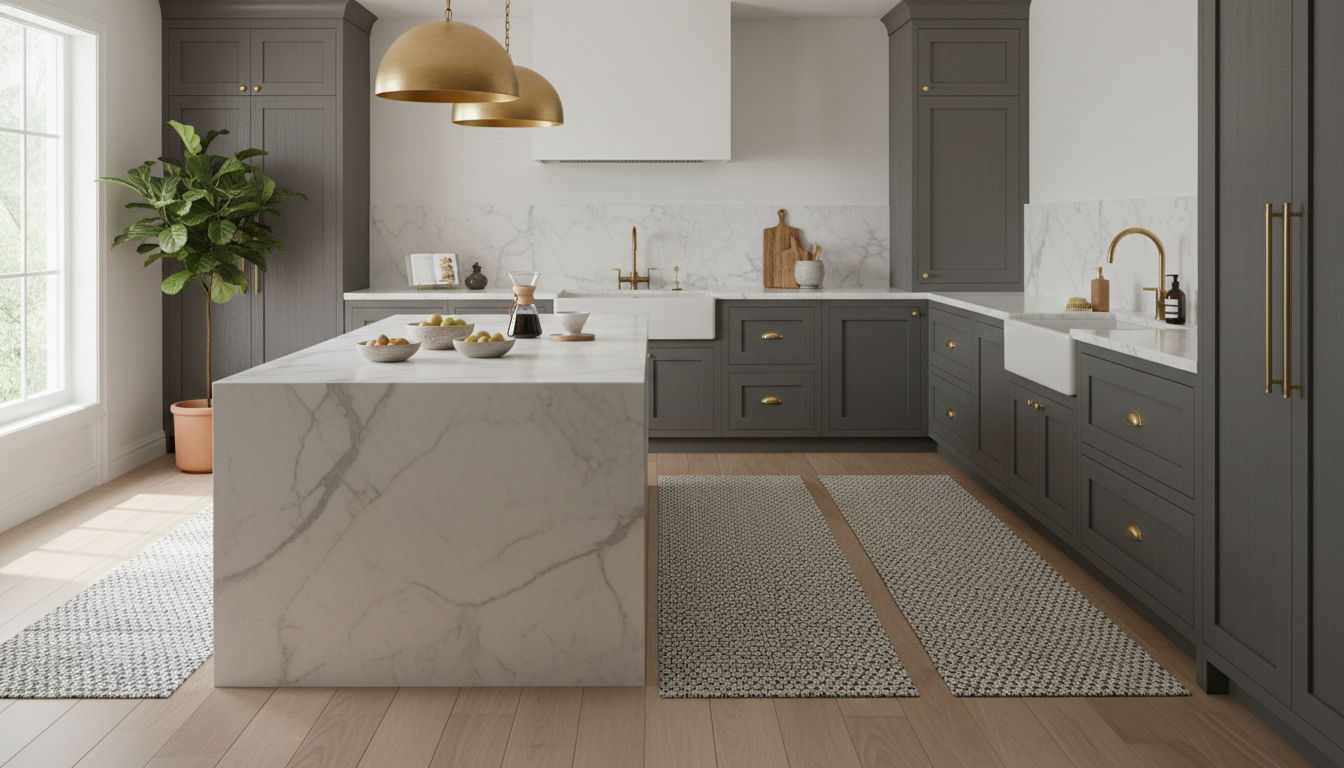
The Ergonomic Renaissance: Softening the Culinary Core
For decades, the kitchen was treated as a sterile laboratory—a place of cold marble, hard porcelain, and unforgiving stainless steel. However, as we move into 2026, the “Professional Chef” aesthetic is being replaced by the “Living Kitchen.” The most significant shift in this evolution is the introduction of high-performance textiles in the most high-traffic zone of the home. Placing a rug in the kitchen isn’t just a design choice; it’s an investment in biophilic comfort and physical longevity.
The secret to mastering this placement lies in the “Sink-to-Stove Runway.” A long, sophisticated runner positioned in the galley between an island and the perimeter cabinets provides a necessary visual break in a room dominated by hard surfaces. Beyond the aesthetics, the science of ergonomic grounding comes into play. Standing on a 5mm to 8mm pile height significantly reduces the impact on the lower lumbar and plantar fascia during long periods of meal preparation. Modern designers are now specifying PET fibers—recycled polymers that mimic the hand-feel of organic silk but possess a molecular structure that resists moisture and deep-set pigment stains.
Expert Insight: The LRV Balance
“When selecting a kitchen runner, consider the Light Reflectance Value (LRV) of your flooring,” says Julian Thorne, a leading Textile Historian and Consultant. “In 2026, we are seeing a move toward deep ochre and muted sage rugs with an LRV of 15-25. These tones absorb the harsh glare of under-cabinet LED task lighting, creating a mood that feels grounded and expensive rather than clinical.”
When sourcing pieces that can withstand the rigors of a working kitchen, artisanal quality is paramount. A hand-knotted wool piece with a high lanolin content naturally repels liquids, making it a surprisingly practical luxury. For those seeking the perfect blend of durability and heritage patterns, the curated collections at thebohorugs.com offer the weight and texture necessary to prevent the “shifting” often seen with cheaper, synthetic alternatives.
Execution Guidelines for the Modern Hearth
- The Golden Rule of Clearance: Ensure the rug sits at least 6 inches away from the baseboards of your cabinetry to prevent a “cramped” visual and to allow for easy cleaning of the toe-kick area.
- Material Selection: Opt for high-twist wool or premium washable blends. Avoid high-pile shags or delicate viscose, which can trap crumbs and suffer from water spotting.
- Safety First: In a high-activity zone, a custom-cut, low-profile rug pad is non-negotiable to ensure the rug remains anchored during frantic morning routines.
Strategic Pitfalls to Sidestep
- The “Postage Stamp” Mat: Avoid small, 2×3 mats placed only in front of the sink. They break up the floor plane and make the kitchen feel smaller. A long runner (8 to 12 feet) creates a sense of grander architectural scale.
- Fringe in the Danger Zone: Steer clear of long, decorative tassels near the dishwasher or stove, as they can catch on feet or equipment and show wear much faster than a bound edge.
Pro Tip: The Symmetry Shift
If your kitchen features a large central island, don’t feel restricted to a single runner. Dual runners placed on either side of the island create a “symmetrical anchor” that frames the room’s center. This is particularly effective in open-concept homes where you want to signal that the kitchen is a sophisticated extension of the living space, not just a utility room.
Placement 10: The Multi-Generational Gathering Center
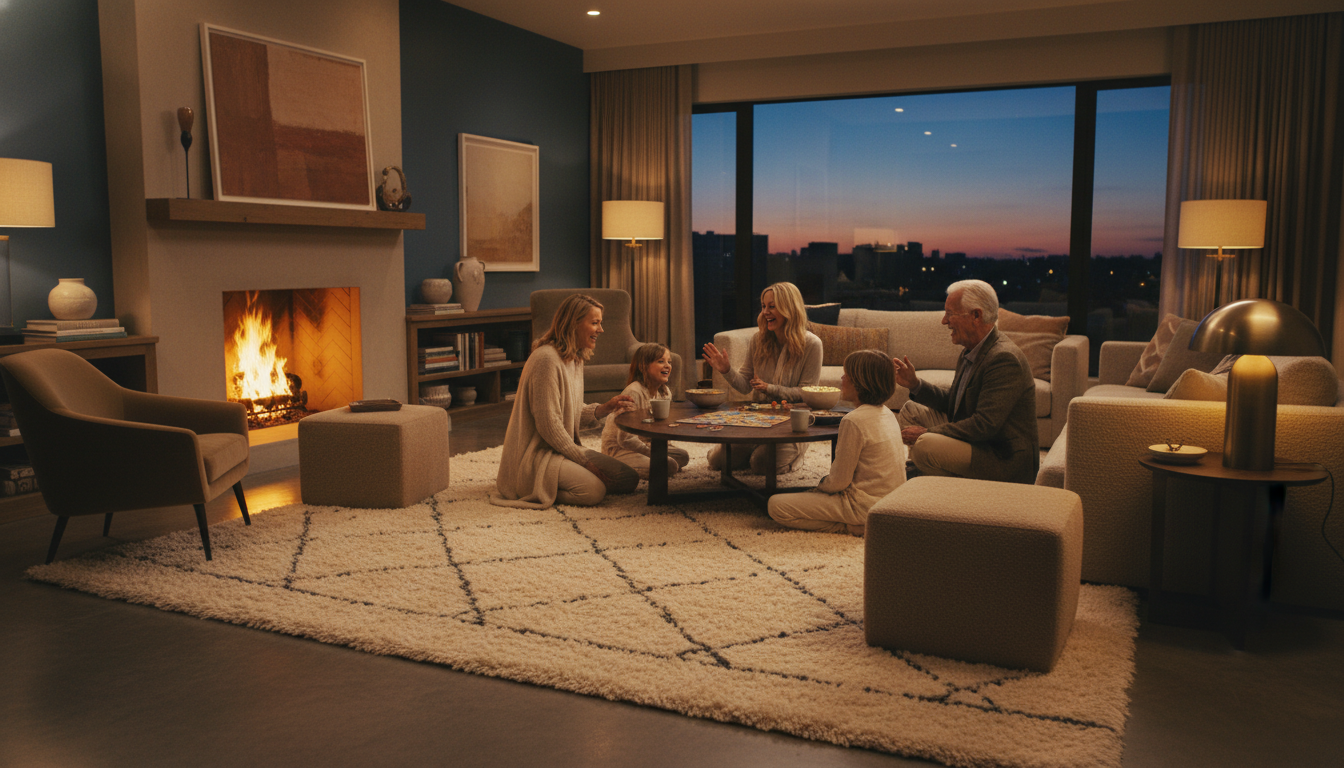
The Architecture of Connection: Anchoring the Great Room
In the design landscape of 2026, we are witnessing a profound shift away from fragmented, screen-centric layouts toward what we call “The Gravitational Center.” This isn’t just a living room; it is a multi-generational stage where the physical boundaries of a rug dictate the quality of family interaction. When a rug is large enough to encompass every seating element—from the patriarch’s heavy armchair to the modular floor cushions used by Gen Alpha—it creates a subconscious “safe zone” that encourages lingering. To achieve this, the scale must be uncompromising. We are moving beyond the standard 8×10 toward oversized 12×15 or custom-fit 15×20 dimensions. The goal is to eliminate “floor gaps” that act as psychological barriers. When the texture is consistent across the entire conversation circle, the brain perceives the space as a single, unified entity. For 2026, top-tier designers are specifying high-twist New Zealand wool blended with Bio-Acetate fibers. These materials offer a Light Reflectance Value (LRV) that prevents large dark surfaces from feeling like “black holes” in the room, instead reflecting a soft, candle-like glow even in midday sun. “The most successful homes I design aren’t defined by walls, but by the tactile footprints of the rugs,” says Julian Thorne, Lead Textile Historian at The London Design Collective. “A truly great multi-generational rug acts as a ‘soft architecture.’ It provides the acoustic dampening needed for a grandfather to hear a story while a toddler plays with wooden blocks three feet away. It’s about creating a democratic space where every age group feels they have a literal seat at the table.” When selecting a piece for this high-traffic heart of the home, the artisanal integrity matters as much as the size. Mass-produced synthetic fibers often off-gas or flatten under the weight of heavy furniture. Instead, sourcing hand-knotted heritage pieces—like those found in the curated collections at thebohorugs.com—ensures that the rug can withstand decades of footfall, spills, and repositioning. These rugs utilize lanolin-rich wools that naturally repel stains, making them as practical as they are prestigious.For exceptionally large Great Rooms, don’t settle for one rug that feels like an island. Use a 15mm pile wool rug as your base, then layer a slightly more decorative, low-pile vintage runner or a smaller silk-blend rug on top to define a specific sub-zone, such as a coffee table or a chess corner. This layering adds 3D depth and prevents a massive room from feeling cold or cavernous.
- Must Do: Ensure at least 24 inches of rug extends beyond all furniture edges. This allows for clear “walking paths” on the rug itself, preventing trip hazards where the rug meets the hard floor.
- What to Avoid: Avoid “floating” rugs that only touch the coffee table. This visually severs the connection between family members, making the room feel like a collection of separate islands rather than a cohesive hub.
- Extra for Maximum Impact: Opt for rugs with a gradated or ‘abrash’ dye technique. These subtle shifts in color hide the inevitable wear and tear of multi-generational life while adding a sophisticated, lived-in patina that only improves with age.
Elevate Your Space
Discover the artistry of handmade luxury. Each rug is a masterpiece of tradition and modern design.
Expert Q&A
Why is rug placement considered a high-ROI design move?
Placement defines the function of a space without the need for walls. It anchors furniture, improves acoustics, and creates psychological boundaries that make a home feel organized and intentional.
How much of the rug should sit under the sofa?
Ideally, at least 12 to 18 inches of the rug should extend beneath the front legs of the sofa and all surrounding chairs to unify the seating area.
Can a rug really improve family bonding?
Yes. Large, comfortable rugs create natural gathering points for floor-based activities like board games or casual conversation, which increases shared time in common areas.
What is the biggest mistake people make with dining room rugs?
Buying a rug that is too small. The rug must be large enough so that when chairs are pulled out, all four legs remain securely on the rug to avoid tripping and uneven surfaces.
Should I use a rug in a high-traffic hallway?
Absolutely. A runner protects your flooring and reduces the ‘echo’ effect in long corridors, making the transition between rooms feel softer and more intentional.
How do rugs help in a home office?
Beyond aesthetics, they provide critical acoustic dampening for video calls and create a physical ‘zone’ that helps the brain switch into a focused work state.
Is layering rugs a trend for 2026?
Layering is a timeless technique that is seeing a resurgence. It allows for a mix of textures—like a soft sheepskin over a durable jute—adding depth and personalized luxury.
What materials are best for ‘life-changing’ comfort?
High-density wool and wool-silk blends offer the best combination of durability, soft hand-feel, and natural air purification properties.
How do I choose a rug for a nursery or kids’ room?
Prioritize natural, non-toxic fibers like organic wool or cotton. Look for low-pile options that are easy to vacuum but soft enough for crawling and play.
What rug size is best for a king-sized bed?
A 9×12 rug is the gold standard for a king bed, allowing for about 36 inches of soft surface on all sides of the mattress.
Can rugs help with cold floors in winter?
Rugs act as natural insulators. Positioning them in entryways and bedrooms can significantly increase the thermal comfort of a room.
How often should I rotate my rugs?
To ensure even wear and prevent sun fading in specific spots, rotate your rugs 180 degrees every six months.
Should kitchen rugs be different from living room rugs?
Yes, kitchen rugs should be low-pile and preferably washable or highly stain-resistant, such as performance blends or treated wool.
Does rug color affect the perceived size of a room?
Generally, lighter colors and subtle patterns open up a space, while dark or heavily patterned rugs make a large room feel more intimate and grounded.
What is the ‘floating rug’ error?
This occurs when a rug is too small and sits in the middle of a room without touching any furniture, making the space feel disjointed and smaller than it is.
Written by TheBohoRugs Interior Design Team
Experts in handmade rugs, boho interiors, and modern home decor.
