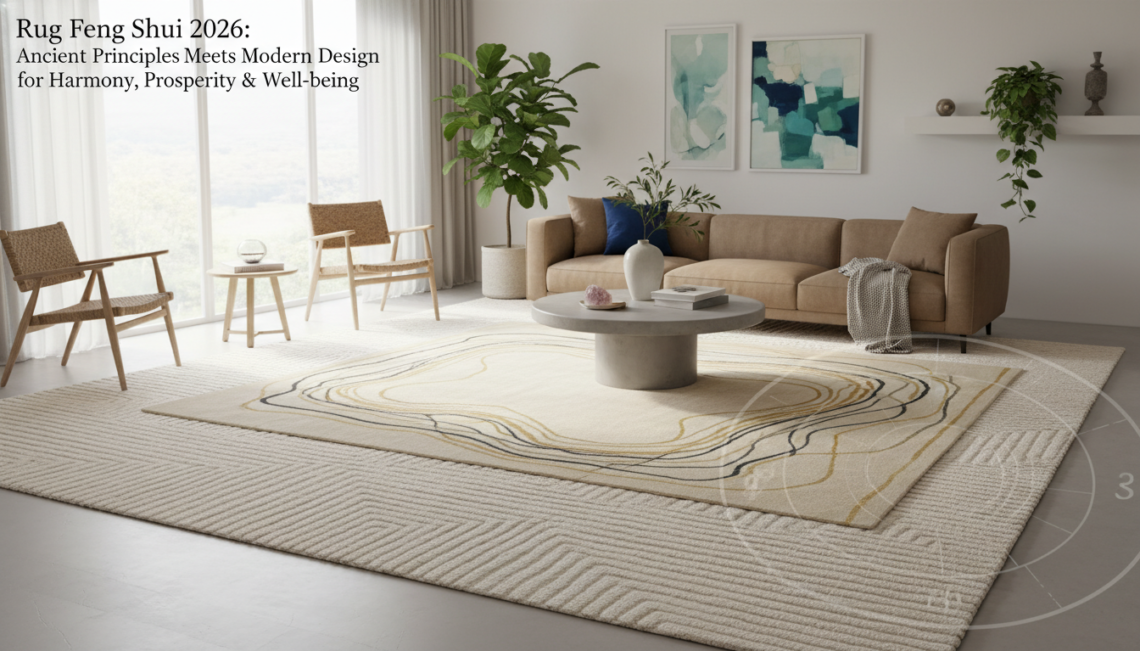
Rug Feng Shui 2026 represents a pivotal shift in modern interior design, where the tactile softness of a floor covering meets the invisible currents of Qi to transform living spaces into energetic powerhouses. As we navigate a world increasingly focused on mindful living, the strategic selection of a rug has evolved from a purely aesthetic choice to a profound architectural grounding. By aligning 2026’s textile innovations with the Bagua map, we can anchor our homes in a way that actively invites prosperity, sleep quality, and emotional balance into our daily experience.
“Rug Feng Shui 2026 is a design methodology that uses floor coverings as energetic anchors to harmonize the home’s Qi through the Five Elements (Wood, Fire, Earth, Metal, Water). Key principles include placing rugs in ‘commanding positions’ to support furniture, choosing colors like emerald for wealth or navy for career based on the Bagua map, and selecting sustainable materials like wool and jute to ground the Earth element. This approach balances 2026 biophilic trends with ancient Chinese wisdom to foster well-being and abundance.”
The Roadmap
Table of Contents
- Understanding Feng Shui Fundamentals for 2026
- The Power of Placement: Commanding Positions
- Color Psychology and the Bagua Map
- Materiality: The Five Elements of Texture
- Wealth and Abundance: The Southeast Setup
- Love and Relationships: The Southwest Harmony
- Career and Life Path: The Northern Flow
- Bedroom Mastery: Anchoring Your Sanctuary
- Avoiding Common Feng Shui Rug Mistakes
Understanding Feng Shui Fundamentals for 2026
The Earth Element: Why Rugs Are Kinetic Anchors
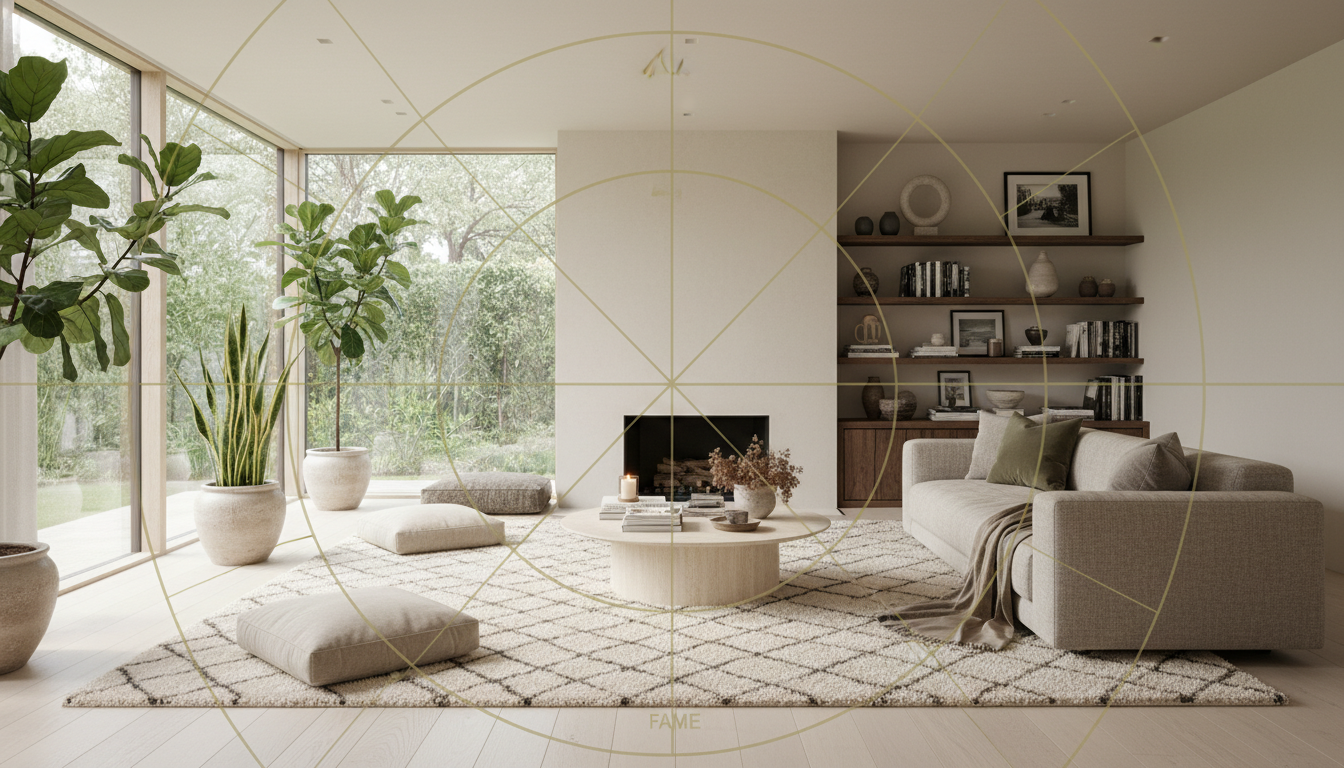
In the traditional Five Element cycle (Wood, Fire, Earth, Metal, Water), rugs are the ultimate expression of the **Earth element**. They provide the literal and metaphorical grounding necessary to stabilize a room’s energy. In 2026, we are seeing a specific lean toward “Raw Earth” aesthetics—textiles that haven’t been stripped of their natural lanolin or character. A hand-knotted piece from **thebohorugs.com**, particularly those utilizing undyed wool from high-altitude regions, acts as a physical weight that prevents *Qi* (energy) from rushing out of a room too quickly. This is especially vital in modern “open-concept” homes where energy tends to feel thin and scattered. Without a rug to anchor the seating group, the energy remains “unsettled,” leading to a space that looks beautiful but feels subconsciously restless.— Soren Kierkegaard-Chen, Lead Textile Historian & Spatial Consultant
Modern Minimalism Meets Intentional Flow
The synergy between 2026’s “Quiet Luxury” and Feng Shui is found in the principle of **Clear Pathways**. Feng Shui teaches us that energy should meander like a river, not rush like a flood or stagnate like a pond. In a minimalist setting, every rug choice becomes high-stakes. We are seeing a move toward rugs with **sculpted piles** and “monochromatic depth”—where the pattern is created by varying heights of the wool rather than jarring color changes. This allows the Bagua principles to work silently in the background. For instance, placing a rug with subtle, flowing wave patterns in your “Career” zone (the North sector) activates the Water element without requiring a literal blue color palette. It’s about the *feeling* of the texture and the intention behind the weave.- The Command Position: Ensure your rug is large enough that all primary pieces of furniture have at least two legs “anchored” on the textile. This creates a psychological sense of security and belonging.
- The 2026 Material Shift: Look for rugs incorporating Bio-Acetate fibers or Tencel blends. These materials offer a silk-like sheen (representing the Metal element for clarity and precision) but maintain the durability required for high-traffic zones.
- Intentional Geometry: Circular rugs are trending for 2026 as they represent “Heaven” and infinite flow, making them ideal for dining rooms where conversation should never hit a “sharp corner.”
Before finalizing a rug for your Wealth or Health sector, perform a “blind touch test.” Feng Shui is deeply rooted in your immediate sensory reaction. If a rug feels scratchy or synthetic, it will create “micro-irritations” in your daily energy. For 2026, we recommend artisanal collections from thebohorugs.com that prioritize high-micron wool counts, ensuring your physical comfort translates into emotional prosperity.
The Power of Placement: Commanding Positions
Mastering the Anchor: Where Energy Meets the Floor
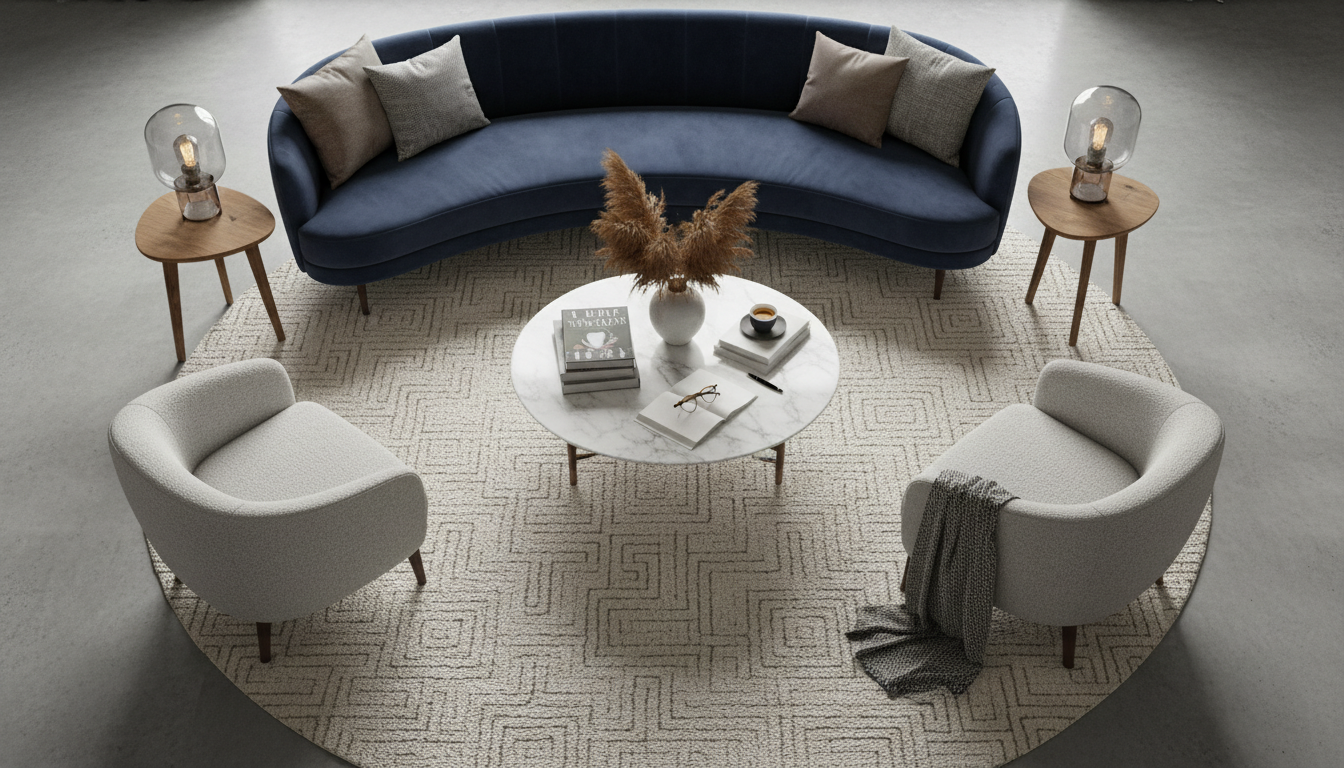
In the world of high-end interiors, we often talk about a rug as the “soul” of a room. But in the context of 2026’s mindful living movement, a rug is far more than an aesthetic foundation; it is a thermal and energetic regulator. The Commanding Position is a cornerstone of Feng Shui that dictates where you sit, sleep, or work to feel most secure and empowered. When you place a hand-knotted piece from thebohorugs.com beneath your furniture, you aren’t just protecting the floor—you are marking your territory in the flow of Qi.
The golden rule for 2026 is physical connection. For a room to feel “commanding,” every primary piece of furniture must have at least its front feet—and ideally all four—resting firmly on the rug. This creates a psychological “island of safety.” If a rug is too small, the energy feels fragmented, as if the room is hovering rather than landing. We are seeing a significant shift toward oversized, high-twist wool rugs that extend well beyond the sofa’s edge, providing a generous border that allows energy to circulate without being cut off by cold floor transitions.
Designing Against “Poison Arrows” and Blocked Pathways
Modern architecture often favors sharp angles and glass, which Feng Shui practitioners refer to as “poison arrows”—harsh lines that direct aggressive energy toward seating areas. You can neutralize these sharp edges by choosing rugs with organic, undulating silhouettes. The 2026 trend toward Bio-Acetate fibers and hand-carded Himalayan wool allows for softer, more fluid shapes that break up the rigidity of a rectangular room.
Consider the pathway from the door to the window. If this path is completely unobstructed, the Qi (and your home’s sense of calm) rushes straight out the window. By strategically placing a runner or a circular accent rug in this “drift zone,” you slow down the energy. This isn’t just spiritual; it’s a design tactic to encourage guests to pause and appreciate the craftsmanship of a distressed Oushak or a minimalist jute weave.
“The most common mistake I see in luxury penthouses isn’t the quality of the rug, but the Light Reflectance Value (LRV) in relation to placement. A rug with a low LRV placed in a career corner can swallow the room’s ambition. We look for a balance where the textile’s weight grounds the space, but its sheen—perhaps from a silk-blend—reflects energy upward.”
— Julian Thorne, Senior Textile Historian & Design Consultant
The Dimensions of Abundance: Size and Qi Flow
Size is the silent communicator of prosperity. In the dining room, the rug must be large enough that when chairs are pulled out, they remain entirely on the textile. This symbolizes that your “seat at the table” is fully supported and stable. When a rug is undersized, it creates a sense of “scarcity” that subtly agitates the subconscious mind.
- Living Room: All furniture should feel “invited” onto the rug. This fosters social harmony and prevents the feeling of isolation between family members.
- The Bedroom: The rug should extend at least 24 inches from the sides of the bed. This “landing strip” for your feet in the morning ensures your personal energy is grounded the moment you wake up.
- The Home Office: Position your rug so your desk chair never rolls off the edge. Staying “on the rug” keeps your professional focus contained and prevents “leaking” productivity.
We are moving away from flat, industrial weaves toward “Topographical Rugs”—pieces with varying pile heights. From a Feng Shui perspective, these mimic the natural earth, stimulating the nerve endings in the feet. This “grounding” effect is scientifically linked to lower cortisol levels. When sourcing from artisanal collections like those at thebohorugs.com, look for sculpted wools that offer a 3D landscape underfoot to maximize this bio-design benefit.
Strategic Flow: Avoiding the “Stagnant Center”
While grounding is essential, you must also leave room for the house to breathe. In the center of your home—the Tai Qi—it is often best to have a clear space or a very low-profile, neutral rug. This area represents your health and overall balance. Heavy, dark rugs here can feel like an anchor in the wrong way, making the home feel “heavy.” Instead, opt for light-filled tones—sands, soft oatmeals, or warm greys—with a high Light Reflectance Value to keep the heart of the home feeling vibrant and airy.
Color Psychology and the Bagua Map
The Chromatic Blueprint: Mapping Energy Through Fiber
When we look at a room through the lens of the Bagua—the energetic map used in Feng Shui—color ceases to be a mere aesthetic choice and becomes a functional tool for atmospheric calibration. In 2026, the intersection of color psychology and textile science has evolved beyond simple “mood boards.” We are seeing a move toward highly pigmented, low-VOC natural dyes that interact with a room’s Light Reflectance Value (LRV) to either amplify or settle the Qi.
Choosing a rug based on the Bagua map isn’t about rigid adherence to primary colors; it’s about finding the sophisticated “bridge” between ancient wisdom and contemporary luxury. For instance, a wealth corner doesn’t require a loud, literal purple. Instead, designers are opting for deep aubergine silks or hand-tufted wools infused with Bio-Acetate fibers that catch the light, mimicking the shimmer of moving water—the traditional symbol of flowing abundance.
Wealth, Prosperity, and the Power of Deep Greens
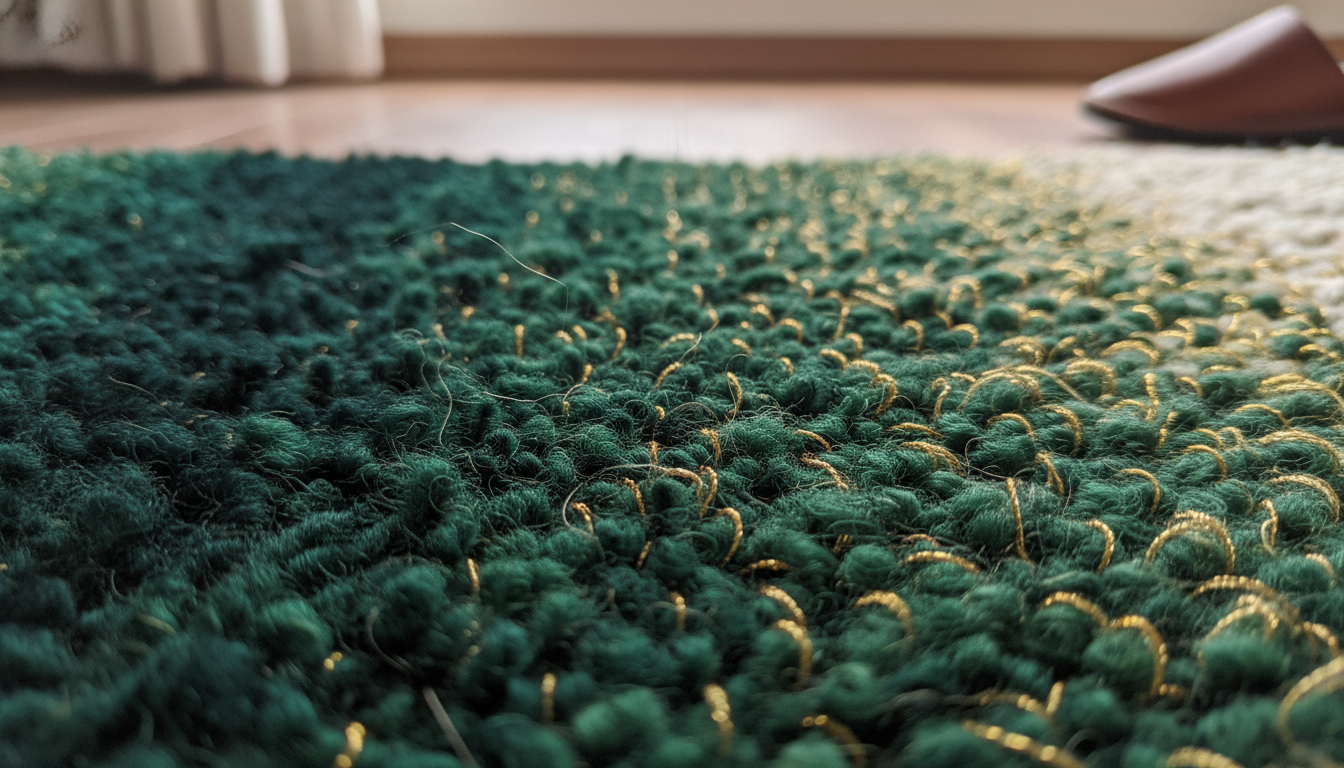
Positioned in the Southeast, the Wealth and Abundance sector thrives on the Wood element. To activate this zone, look for rugs that lean into the lush end of the spectrum. Think forest moss, emerald, and muted teal. A high-density New Zealand wool rug from thebohorugs.com in these shades serves as a literal and figurative “ground” for financial growth.
- The 2026 Shift: We are seeing a departure from flat colors. The trend now favors “living” textures—rugs that use high-low pile heights to create organic shadows, mirroring the floor of a thriving forest.
- Design Tip: Opt for a rug with an LRV of 15–25 in this area to keep the energy grounded yet rich.
Love, Relationships, and the “Sunset Palette”
The Southwest corner of your home governs partnerships. Traditionally associated with the Earth element, the 2026 approach to this sector involves terracotta, dusty rose, and warm peach tones. These colors aren’t just “romantic”—they are biologically soothing, lowering cortisol levels and inviting open communication.
Textile historian Elena Vance notes: “The resurgence of heritage weaving techniques from the Atlas Mountains has reintroduced us to the ‘madder root’ palette. These authentic, earth-derived pinks and ochres provide a primal sense of security that synthetic dyes simply cannot replicate.”
Career and the Flow of Midnight Tones
The North sector represents your life path and career, governed by the Water element. In modern interiors, this translates to deep navy, charcoal, or even obsidian. A rug featuring fluid, undulating patterns—reminiscent of the Sumi-e ink-wash aesthetic—encourages the “flow” of opportunities. Using a rug with a subtle sheen, perhaps one blended with bamboo silk, mimics the reflective surface of a calm lake, bringing clarity to professional decisions.
Health, Family, and the Sage Green Equilibrium
The East and the Center of the home are the heart of well-being. For these areas, the focus is on healing neutrals. Sage green has become the “new white” for 2026 due to its incredible versatility and its association with the Wood and Earth elements. It provides a neutral base that doesn’t feel clinical. When sourcing from artisanal collections like those at thebohorugs.com, look for undyed wools or rugs colored with plant-based pigments to ensure the “breathability” of the room’s energy remains untainted by synthetic chemicals.
In Feng Shui, “clashing” energy is often just a result of poor color saturation. If your Bagua map calls for red (Fame/Reputation) in a room that is meant to be a calm sanctuary, don’t use a bright crimson. Instead, layer a burnt sienna or a deep terracotta rug over a larger, neutral jute piece. This satisfies the “Fire” element requirement while maintaining the visual tranquility required for modern living.
Integrating these principles isn’t about redecorating from scratch; it’s about intentional selection. By aligning the color and material of your rug with the specific needs of each Bagua zone, you transform a decorative item into a dynamic anchor for the life you are building.
Materiality: The Five Elements of Texture
The Wood Element: Vitality and Growth
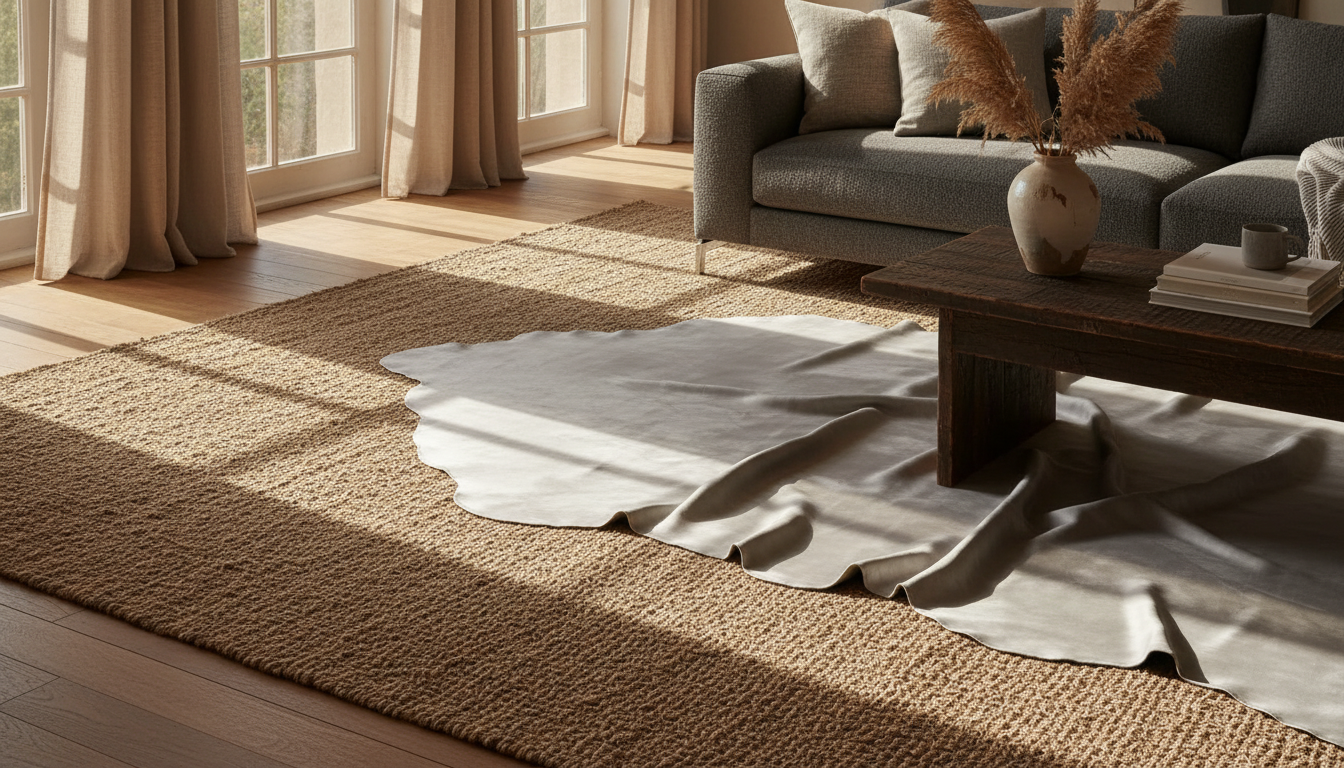
To invite the energy of expansion and health, look toward rugs crafted from regenerative plant fibers. Jute, sisal, and hemp are the purest expressions of the Wood element. For 2026, we are seeing a sophisticated shift toward blending these raw fibers with bio-acetate—a semi-synthetic fiber derived from wood pulp that adds a subtle, silk-like luster without sacrificing the grounding “Wood” properties. These textures are ideal for living rooms where family activity thrives or in sun-drenched breakfast nooks where you want to kickstart your morning energy.
The Fire Element: Passion and Social Radiance
Fire energy is expressed through heat, activity, and high-energy dyes. In textile terms, this translates to high-pile New Zealand wool or rugs featuring hand-tufted “shag” accents. The 2026 trend focuses on saturated chromaticity—think deep ochres and burnt sienna rather than harsh bright reds. A rug with a dense, plush pile naturally holds “Yang” energy, making it a perfect anchor for social hubs. If your dining room feels cold or uninviting, a vibrant, high-textured wool piece can act as a literal hearth, warming the conversation and the spirit.
The Earth Element: Stability and Nurturing
Earth is the ultimate grounding force, critical for bedrooms and meditation corners. This element is best represented by sculpted wool and thick, hand-knotted flatweaves in tones of clay, sand, and taupe. When sourcing for Earth energy, pay attention to the Light Reflectance Value (LRV). A rug in a “Muted Terracotta” or “High-Desert Sage” with an LRV of around 40 to 50 provides enough depth to feel substantial underfoot while still reflecting a soft, nurturing glow. This tactile “heaviness” signals the nervous system to downshift, providing the stability needed for restorative rest.
“The rugs we see trending for 2026 reflect a deep desire for ‘Sensory Sanctuaries.’ By matching the elemental density of a rug—like a heavy-gauge wool—with the specific Bagua area of a room, we create a spatial harmony that guests feel the moment they cross the threshold.”
— Elena Vance, Director of Textile Innovation & Spatial Wellness
The Metal Element: Clarity and Precision
For home offices or areas requiring mental focus, the Metal element provides the necessary edge. This is achieved through rugs with a low profile, tight weaves, and a slight metallic sheen. Look for blends of wool and bamboo silk or Tencel, which catch the light with a crisp, cool elegance. Hand-knotted techniques from the Atlas Mountains that utilize undyed grey wool provide a sophisticated, minimalist Metal energy. These rugs promote “White Space” for the mind, stripping away visual clutter to leave room for sharp decision-making and creative breakthroughs.
The Water Element: Wisdom and Emotional Flow
Water energy is all about depth, intuition, and the “ebb and flow” of life. To bring this into your space, seek out viscose or high-sheen silk blends that mimic the movement of light on a lake’s surface. Pattern plays a huge role here—rugs with organic, undulating lines or “watercolor” dye techniques are powerful conduits for Water. Placing a deep navy or charcoal rug from the artisanal collections at thebohorugs.com in your entryway can help “wash away” the stresses of the outside world, ensuring that only clear, calm energy flows into the heart of your home.
When selecting your rug, perform a ‘blind touch’ test. Feng Shui is as much about how a material makes you feel as how it looks. If a rug feels ‘scratchy’ or ‘plastic,’ it will create stagnant or ‘Sha Qi’ (negative energy) regardless of its color. For the best energetic flow, always prioritize natural, ethically sourced fibers over synthetic polyesters, which can act as energetic insulators rather than conductors.
Wealth and Abundance: The Southeast Setup
Cultivating the “Xun” Energy Through Textile
In the lexicon of 2026 interior design, we are moving past mere aesthetics and into the realm of “energetic architecture.” The Southeast corner of your home—governed by the Wood element and known as the Xun position—is the traditional seat of wealth and fortuitous growth. Unlike the sharp, aggressive pursuit of capital seen in previous decades, the modern approach to abundance is organic and flowing. To anchor this, you need a rug that feels less like a floor covering and more like a fertile foundation.
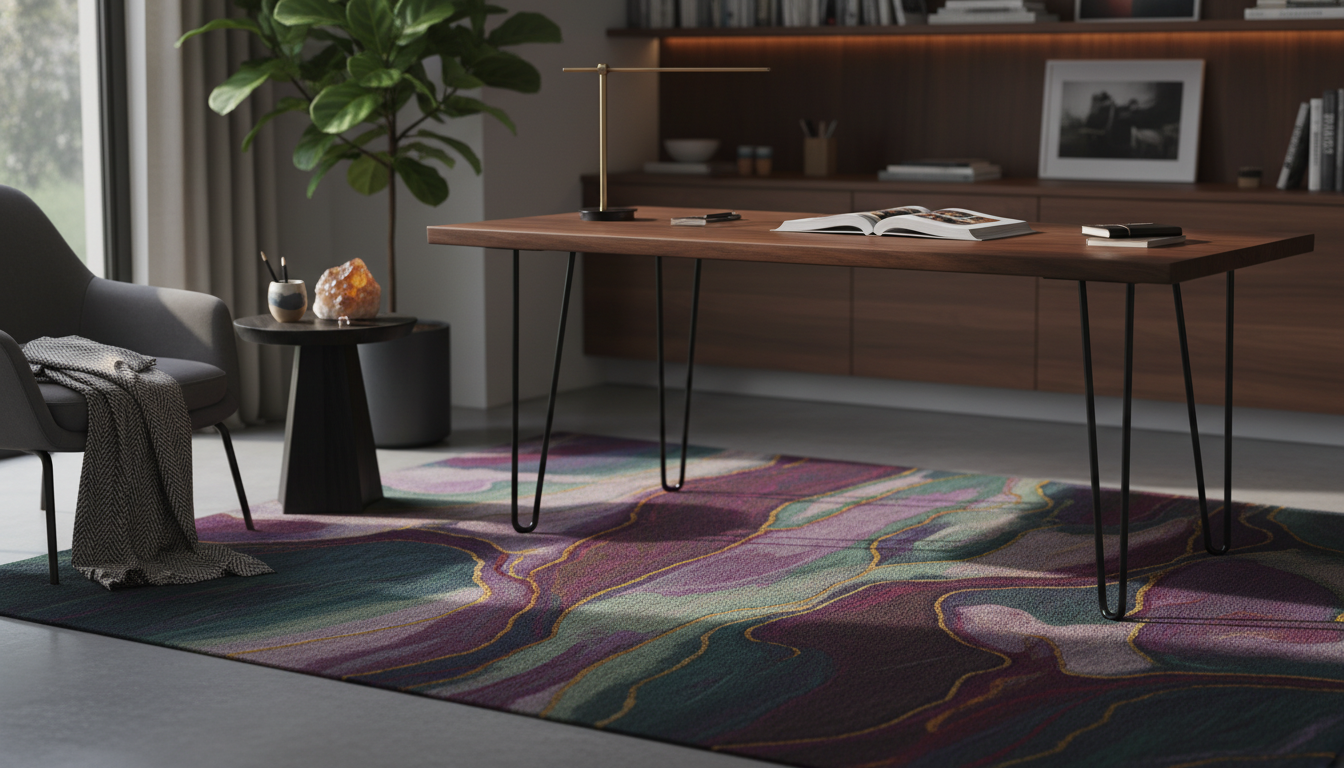
When selecting a piece for this zone, think in terms of “Visual Nutrition.” We are seeing a significant pivot toward high-twist New Zealand wool blended with Eucalyptus silk. This combination offers a Light Reflectance Value (LRV) that captures morning sun without creating harsh glares, simulating the way light filters through a forest canopy. A deep emerald or a rich, regal purple with a low-pile, dense weave acts as a literal “wealth bowl,” catching and holding the Qi as it circulates through the room.
The Prosperity Blueprint: Placement and Palette
To truly activate the Southeast sector, the rug must do more than just sit in the corner; it must command the space. This is where the Commanding Position principle becomes vital. If you’re placing a rug in a home office or living area within this bagua zone, ensure the front legs of your primary furniture—be it a mid-century velvet sofa or a heavy oak desk—are firmly planted on the textile. This creates a psychological and energetic “rooting” effect.
- The Palette of Growth: Look for “living greens”—specifically shades like Malachite or Deep Moss. If your style leans more toward the avant-garde, subtle gold lurex threads woven into a charcoal base can symbolize “buried treasure” without feeling dated.
- The Power of Pattern: 2026 is the year of the Biophilic Curve. Avoid jagged, aggressive geometric patterns which act as “poison arrows” to your prosperity. Instead, opt for flowing, botanical motifs or ripples that mimic water (the element that “feeds” Wood in the generative cycle).
- Material Integrity: Sustainability is no longer a buzzword; it’s a Feng Shui requirement. A rug made from synthetic, petroleum-based fibers carries “dead energy.” To keep the wealth energy vibrating at a high frequency, the artisanal collections at thebohorugs.com prioritize natural, hand-knotted techniques that preserve the life-force of the materials.
“In my work with heritage textiles, we’ve found that the tactile frequency of a rug is just as important as its color. For the Southeast, a hand-carved high-low pile creates a landscape underfoot. It signals to the subconscious that the ground you stand on is rich, varied, and capable of supporting immense growth.”
— Julian Thorne, Lead Textile Historian & Design Consultant
Refining the Flow: What to Guard Against
Even the most luxurious rug can’t perform its energetic duty if it’s surrounded by stagnation. The biggest deterrent to wealth in 2026 is “visual noise.” A rug that is too small for the space creates a sense of “lack” or “shrinking margins.” Ensure your rug extends at least 18 inches beyond the furniture it supports to symbolize expanding horizons.
Natural transitions in the home often lead to “leaking energy” near doorways. If your Southeast corner is near an exit, use a rug with a circular border to help spiral the energy back into the room rather than letting it flow straight out the door. Avoid placing heavy, sharp metal objects directly on the rug; Metal “chops” Wood in Feng Shui, which can symbolically stymie your financial progress.
To maximize the wealth-attracting potential of your rug, place a single piece of Green Jade or a Pyrite cluster under the Southeast corner of the rug. This “layers” the intention of the space. Pair this with a rug featuring a shimmering botanical silk finish to reflect light upward, effectively “lifting” the energy of your bank account and your spirits simultaneously.
Activating the Setup
To complete the transformation, focus on the “Living Synergy” of the area. A rug from thebohorugs.com featuring organic, undyed wool provides the perfect earthy counterpoint to a tall, healthy Fiddle Leaf Fig or a Money Tree placed nearby. This creates a self-sustaining ecosystem of prosperity. When the morning light hits the rich textures of a well-placed rug, the entire room shifts from a mere living space to a sanctuary of abundance, proving that true luxury is always a balance of form, function, and ancient wisdom.
Love and Relationships: The Southwest Harmony
Cultivating Connection in the Southwest Sector
In the geography of the Bagua map, the Southwest corner is the heart of the home’s relational energy. Governed by the Earth element, this zone influences not just romantic partnerships, but your relationship with yourself and your capacity for receptivity. As we move into 2026, the trend of “Tactile Intimacy” is redefining how we ground this space. It is no longer enough for a rug to simply look beautiful; it must serve as a sensory anchor that fosters softness and stability.
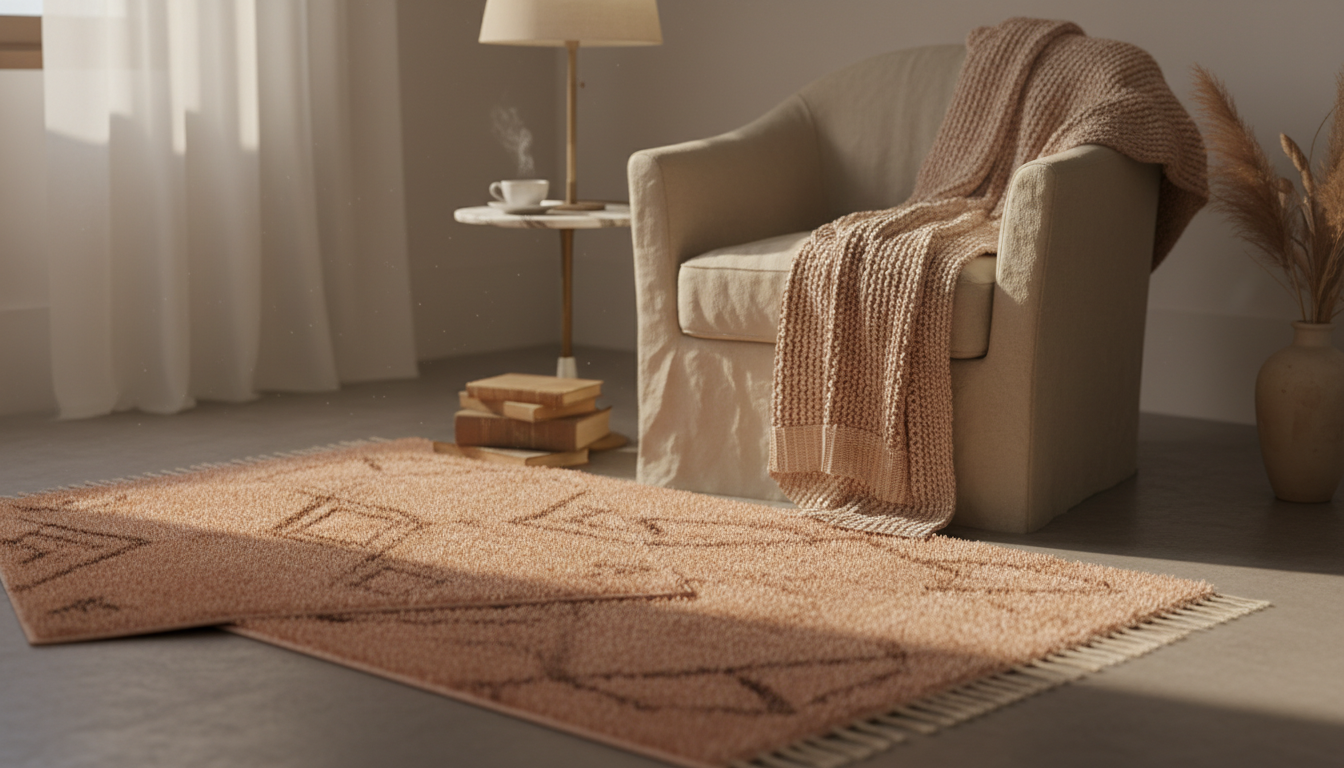
To activate this area, we look toward rugs that embody maternal warmth and groundedness. This means opting for high-pile New Zealand wool or the burgeoning 2026 favorite: Bio-Acetate fibers. These plant-based silks offer a Light Reflectance Value (LRV) that mimics the soft glow of golden hour, casting a romantic, diffused light across the room that immediately lowers the heart rate. When sourcing from artisanal collections like those at thebohorugs.com, look for pieces that utilize hand-knotted techniques from the Atlas Mountains, where the density of the weave provides a literal and metaphorical foundation for the feet.
“The 2026 shift in interior psychology focuses on ‘The Soft Landing.’ In the Southwest sector, we are moving away from rigid geometries in favor of organic, hand-carved edges. A rug with a 120-knot density in a muted ocher or dusty rose doesn’t just decorate a room; it holds the energy of the people within it, creating a container for vulnerability.”
— Elena Vance, Senior Design Consultant & Textile Historian.
The Anatomy of a Relationship-Ready Rug
When selecting your piece, color psychology and elemental balance are your primary tools. Since Earth is the ruling element here, shades of terracotta, warm sand, and blush are essential. These tones provide the “maternal” energy required to nourish a partnership. You want to avoid an overabundance of the Wood element—such as vibrant greens or floral patterns—which can “exhaust” the Earth and lead to instability in relationships.
- The Power of Pairs: Feng Shui thrives on symmetry in the Southwest. If you aren’t using one large rug to anchor the bed, consider layering two identical runners on either side to represent equality and balance between partners.
- Square and Substantial: While round rugs are excellent for flow, a square rug in this sector reinforces the Earth element’s stability. It signals to the subconscious that your foundations are secure.
- Tactile Comfort: Ensure the rug has a plush underlay. A “thin” or “scratchy” rug can translate to a relationship that feels unsupported or abrasive.
What to Avoid in Your Sanctuary
Energy can easily become stagnant or “sharp” if the wrong textures are introduced. Steer clear of oversized geometric triangles or jagged patterns, often referred to as “poison arrows,” which can introduce conflict and “fire” energy that burns through the grounding Earth. Similarly, avoid rugs with dark, watery blues or blacks in this specific corner; in the cycle of elements, too much Water can create an emotional “flood,” leading to instability or a feeling of being overwhelmed by one’s partner.
When choosing a rug for the Southwest, pay attention to the Light Reflectance Value (LRV) of the yarn. For 2026, designers are recommending “Muted Terracotta” with an LRV of around 35. This specific level of light absorption ensures the room feels cozy and “enveloping” rather than stark or clinical, which is vital for fostering intimacy and deep conversation.
Extra Steps for Maximum Relationship Energy
To truly “activate” the rug once it is placed, consider a small ritual of intention. Placing a piece of Rose Quartz or a pair of citrine stones under the corner of the rug that sits in the furthest Southwest point of the room can act as a hidden battery for the space. Ensure the rug is vacuumed regularly with a sense of care; in Feng Shui, dust on a rug represents “old energy” or unresolved arguments. By keeping the fibers clean and the pile “alive,” you allow fresh Qi to circulate, keeping the connection between inhabitants vibrant and renewed. For those seeking a specific aesthetic, the curated Earth-tone collections at thebohorugs.com offer the perfect blend of 2026 design trends and these timeless energetic principles.
Career and Life Path: The Northern Flow
Navigating the North: Movement and Momentum
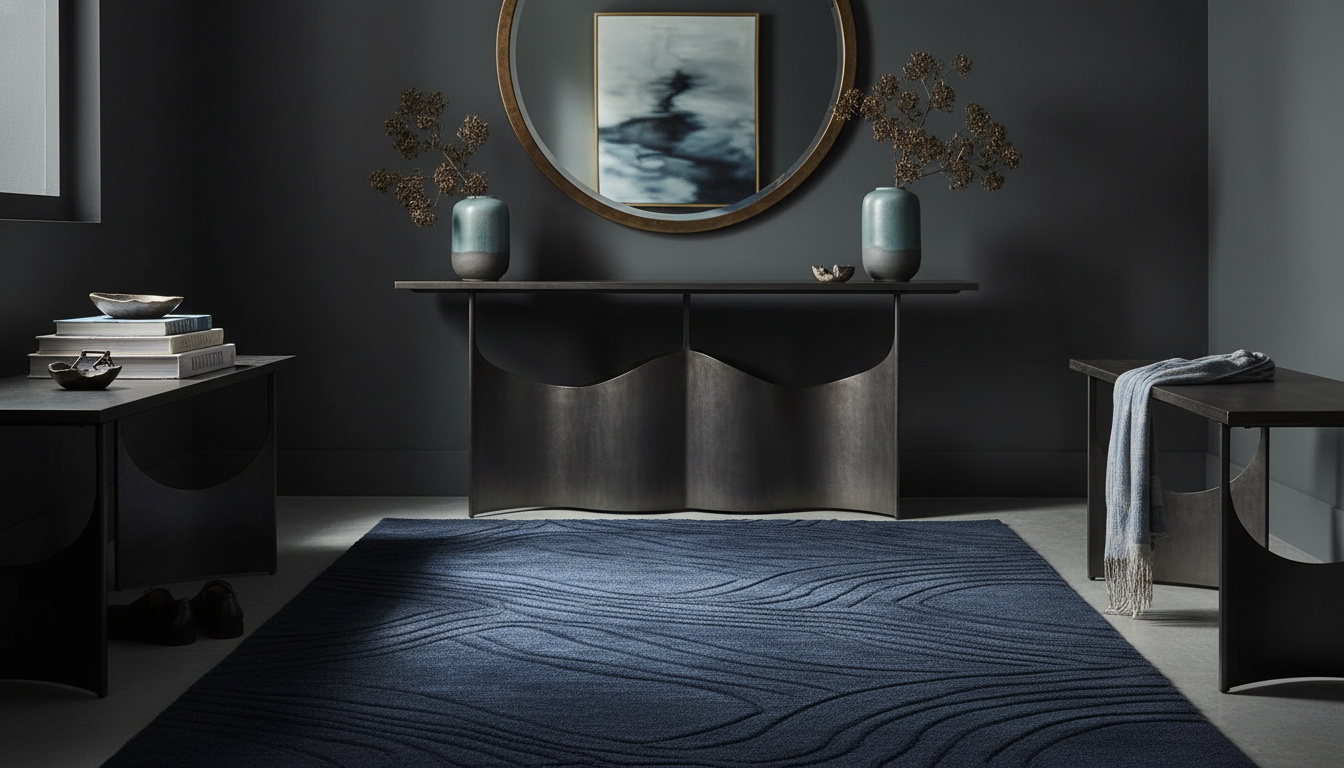
In the map of your home, the North sector governs your Career and Life Path. This isn’t just about your 9-to-5; it’s about your personal trajectory, your calling, and how you flow through the world. In Feng Shui, this area is ruled by the Water element. When we translate this to 2026 design sensibilities, we move away from literal “water features” and toward textiles that mimic the depth, mystery, and movement of the ocean.
To activate this zone, look for rugs that possess a visual “fluidity.” This is where high-sheen materials like Bio-Acetate fibers or hand-tufted Tencel come into play. These materials catch the light in a way that suggests ripples on a lake, creating a sense of “Qi” that is moving rather than stagnant. For a sophisticated professional space, a rug with a Light Reflectance Value (LRV) of under 15—think deep charcoals or midnight indigos—creates a “grounding well” of energy that allows for deep focus and strategic thinking.
“The most common mistake I see in home offices is a rug that is too ‘static’ or rigid,” says Julian Thorne, Lead Textile Historian at the Global Design Collective. “To invite career growth, the floor needs to feel alive. We are seeing a massive shift toward rugs featuring asymmetrical, painterly gradients—styles that don’t have a hard border—allowing the energy of the room to expand outward rather than being boxed in.”
The Setup: Curating the Professional Current
If you are looking to climb the corporate ladder or pivot into a new creative venture, your rug choice acts as the foundation for that transition. The goal is to balance the “yin” of the dark, watery colors with the “yang” of professional activity.
- The Ideal Rug: Seek out a deep navy or “Inkwell” black piece with a subtle high-low pile. The variation in texture creates shadows and highlights that mimic moving water. For a 2026 edge, look for recycled marine-plastic blends which carry the literal vibration of the ocean, adding a layer of authenticity to the Feng Shui practice.
- Placement: Position the rug so that your desk and chair sit entirely on the surface. In Feng Shui, having two legs of a chair on the rug and two off creates “unstable footing” in your professional life. You want to feel fully supported by the Water element.
Strategic Implementation
Must Do:
- Embrace undulation: Choose patterns with soft, curving lines rather than harsh geometric squares. Curves encourage the flow of opportunities.
- Layer for depth: If a solid black rug feels too heavy, layer a smaller, silk-blend rug from thebohorugs.com over a larger, flat-weave wool base to create a “stepping stone” effect.
- Keep it clean: The North area is sensitive to “muddiness.” Ensure the rug fibers are well-maintained; a dusty rug in the career sector can lead to “brain fog” and missed deadlines.
What to Avoid:
- Earth Tones: Since Earth “dams” Water in the five-element cycle, avoid heavy beige, terracotta, or clay-colored rugs here. They will effectively “stop” your career momentum.
- Square motifs: Avoid rugs with repetitive square patterns, as these represent the Earth element and can lead to feeling “stuck” in a dead-end role.
- Frayed edges: A tattered rug in the North suggests a career that is unraveling. Always opt for high-quality, hand-bound edges.
For those seeking a promotion in 2026, I recommend rugs that incorporate metallic silk threads. When silver or mercury-toned yarns are woven into a navy base, they act like sunlight hitting a river. This “reflectivity” helps you get noticed by superiors and “illuminates” your hidden talents to the world. It’s a subtle psychological and energetic “shine” that distinguishes you from the competition.
Extra for Maximum Energy: The “Riverbed” Ritual
To fully charge your career sector, place a small piece of Black Tourmaline or a clear quartz crystal under the North-facing corner of the rug. This acts as a “filter” for the energy flowing into your workspace. Pair this with a high-back “command chair” to ensure you are backed by strength while your feet rest on the fluid, prosperous energy of your chosen textile. When browsing artisanal collections, such as the hand-knotted indigo pieces found at thebohorugs.com, look for rugs that feel cool to the touch—this temperature profile is a hallmark of high-quality natural fibers that resonate with the Water element’s calming, yet powerful, nature.
Bedroom Mastery: Anchoring Your Sanctuary
The Architecture of Rest: Why Your Bedroom Rug is an Energetic Anchor
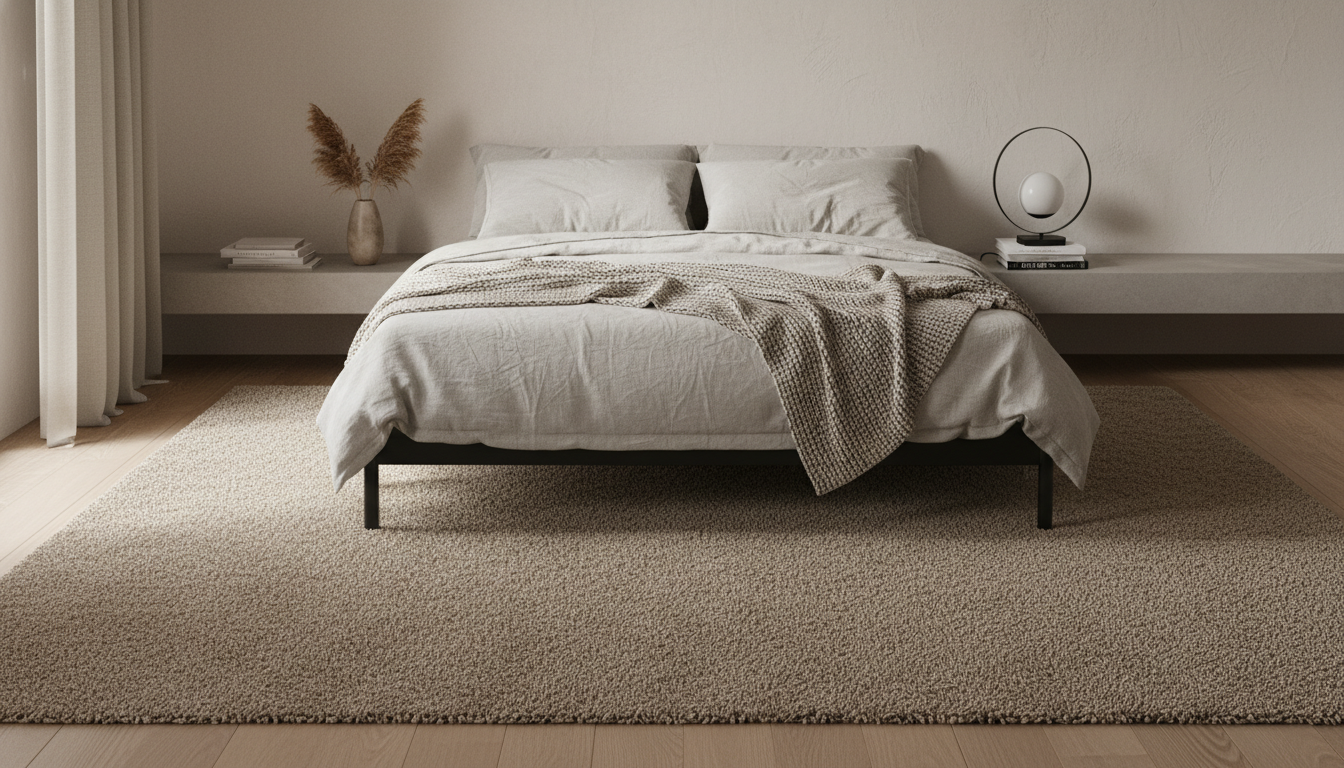
In the high-velocity landscape of 2026, the bedroom has evolved beyond a mere sleeping quarters; it is now a recovery suite for the soul. From a Feng Shui perspective, this is the most critical Yin space in your home. While the bed holds the physical body, the rug holds the room’s Qi. A poorly sized or synthetic rug can leave energy feeling “statched” or ungrounded, leading to restless nights and a sense of drift. To achieve true harmony, we look toward Tactile Grounding. This year, the design world is pivoting away from high-sheen synthetics toward high-twist New Zealand wool and bio-acetate fibers that mimic the luster of silk without the delicate maintenance. These materials don’t just look expensive; they carry a “heavy” energetic frequency that literally pulls the frantic energy of a workday down into the floor, allowing you to decompress the moment your feet hit the pile.“The tactile transition from a hardwood floor to a hand-knotted rug acts as a neurological signal to the brain that the ‘active’ phase of the day is over. In 2026, we are seeing a massive shift toward rugs with a Light Reflectance Value (LRV) of 40 to 50—shades like ‘Muted Clay’ or ‘Dusty Sage’—which absorb enough light to quiet the room without making it feel subterranean.”
— Julianna Mercer, Senior Textile Historian & Design Consultant
Strategic Placement for a Balanced Life
The placement of your rug dictates the flow of intimacy and health. In Feng Shui, symmetry is the language of partnership. A rug that only sits on one side of the bed creates an energetic imbalance, suggesting that one partner’s needs (or one area of your own life) outweigh the other. The most harmonious setup involves a large-scale piece that extends at least 24 to 36 inches beyond the sides and foot of the bed. This creates a “protective halo” around your resting place. If you are working with a smaller footprint, thebohorugs.com suggests using two matching runners on either side of the bed to maintain that essential symmetry, ensuring both sides of the bed are anchored equally.The Essential Checklist for a Zen Sanctuary
- Must Do: Choose natural, “breathing” fibers. GOTS-certified organic wool or hemp-silk blends are ideal for 2026’s wellness-focused interiors. They promote better air quality and a more “alive” energetic field.
- Must Do: Ensure the front legs of your nightstands sit on the rug if possible. This connects your storage and your sleep surface into one unified “island” of stability.
- What to Avoid: Steer clear of aggressive, geometric patterns with sharp angles (known as “poison arrows”). These visually cut through the serenity of the room and can trigger a low-level “fight or flight” response in the subconscious.
- What to Avoid: Avoid “dead” materials like cheap polyester or recycled plastic rugs in the bedroom. While eco-friendly for a mudroom, they lack the life-force (Qi) required to nourish a space meant for human recovery.
Extra for Maximum Energy: The 2026 Sensory Layer
To truly elevate the space into a sanctuary of abundance, consider the “Earth Element” hidden within the weave. For 2026, we are seeing a trend in sculpted pile heights—where the pattern is carved into the wool rather than printed. This creates a subtle topographic map for your feet. Pro Tip: The “Earthing” EffectAvoiding Common Feng Shui Rug Mistakes
The “Floating Island” Dilemma
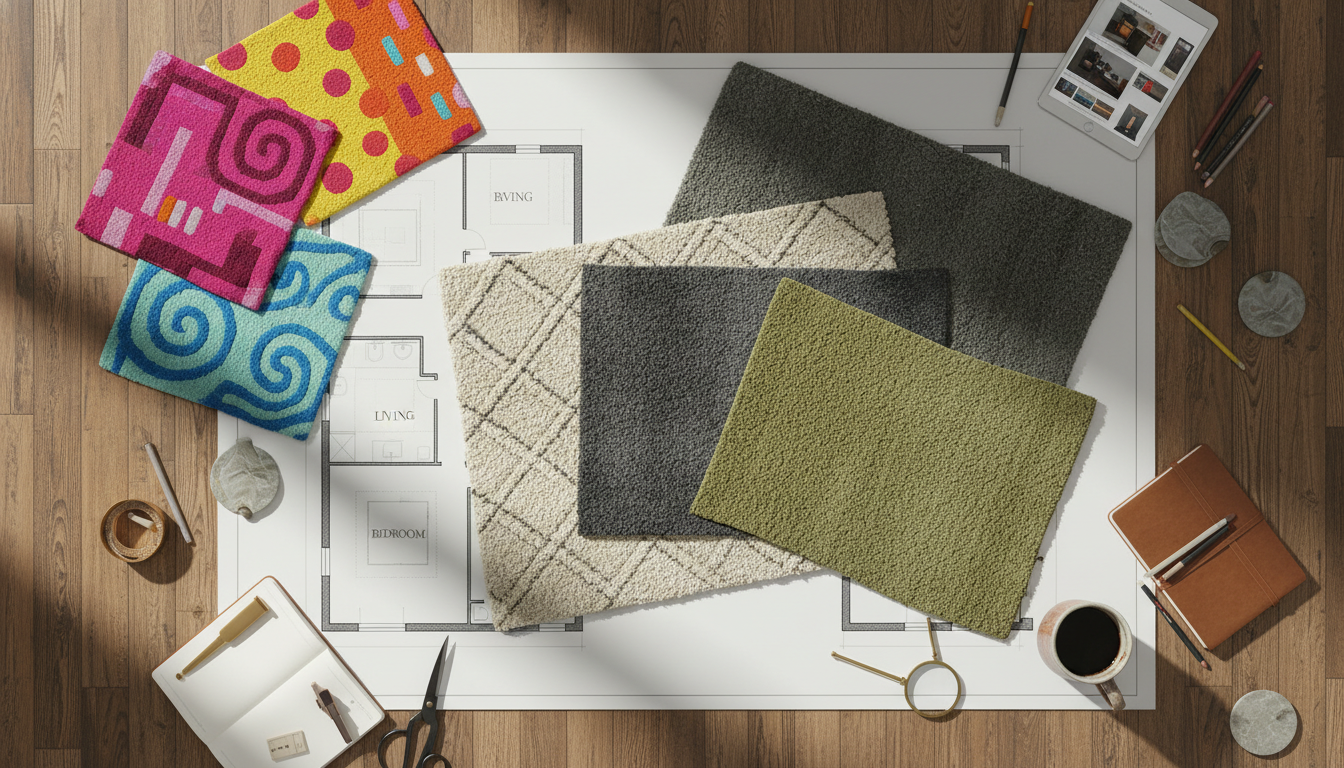
One of the most frequent missteps in luxury interiors isn’t a lack of style, but a lack of scale. In Feng Shui, a rug that is too small for the space creates a “floating island” effect. This visually strands your furniture and, energetically, suggests an unstable foundation. When your sofa or chairs sit entirely off the rug, the *Qi* (energy) leaks out from the seating group rather than being contained and nurtured. To fix this, ensure at least the front legs of all major furniture pieces are anchored on the rug. By 2026, we are seeing a shift toward oversized, bespoke dimensions—think hand-knotted wools from the Atlas Mountains that extend nearly to the walls. This creates a “commanding foundation” that signals security and abundance to the subconscious. If you find yourself with a cherished but undersized heirloom, layering it over a larger, neutral jute or a low-pile Bio-Acetate fiber rug can bridge the gap between aesthetic charm and energetic function.Material Disharmony: Synthetics and Stagnation
The tactile nature of a rug dictates how energy moves through a room. A common mistake is prioritizing “easy-clean” synthetics that feel plastic or “dead” underfoot. From a Feng Shui perspective, petroleum-based fibers often lack the life-force found in organic materials. As we move further into the 2026 wellness-centered design era, the focus has shifted toward high-vibration textiles. “The resonance of a room changes the moment you swap a machine-made synthetic for a piece crafted with intention,” notes Julian Thorne, Lead Textile Historian. “When you walk across a high-twist wool or a hand-loomed Tencel blend, the friction generates a different quality of static and grounding. It’s the difference between a space that feels ‘staged’ and a space that feels ‘alive’.” Choosing rugs from artisanal sources like thebohorugs.com ensures the material—be it silk-soft bamboo or rugged organic cotton—maintains a high Light Reflectance Value (LRV). A rug with a low LRV in a dark corner can “trap” energy, leading to a sense of lethargy in the home.The Misplaced Element: Color Clashes in the Bagua
Color is more than a visual choice; it’s a vibrational frequency. A frequent error is placing a high-energy “Fire” element rug (think vibrant crimsons or sharp geometrics) in the “Career” zone of the home, which is traditionally governed by “Water.” This creates a cycle of destruction where the fire “dries up” the water, potentially manifesting as burnout or stalled professional growth. Instead of fighting the room’s natural elemental needs, look for harmony. If your career sector needs a lift, opt for deep charcoals, navies, or even a sophisticated Sage Green with an LRV of around 45 to bridge the gap between Wood and Water. If you’ve inherited a room that feels “off,” check the Bagua map—you might simply have a “Metal” element rug (whites, greys, or metallics) in a “Wood” area (Health & Family), effectively “cutting” the growth energy of the space.If your rug is placed directly in a high-traffic pathway between two doors, it can act as a “slipway” for energy, causing it to rush through the house too quickly. To slow the Qi and retain wealth energy, choose a rug with a sculpted pile or a subtle circular pattern. This encourages the energy to “meander” rather than bolt, creating a more peaceful, prosperous atmosphere.
Ignoring the Underlay: The Hidden Energy Block
Finally, never underestimate what lies beneath. A rug that bunches, slips, or slides is the definition of “unstable energy.” In Feng Shui, this can correlate to a lack of support in your personal life or career. Using a high-quality, felted rug pad isn’t just about preserving the life of your investment from thebohorugs.com; it’s about ensuring that every step you take in your sanctuary is firm and intentional. A rug that stays perfectly in place allows the mind to rest, knowing the ground beneath is secure.Elevate Your Space
Discover the artistry of handmade luxury. Each rug is a masterpiece of tradition and modern design.
Expert Q&A
How does Rug Feng Shui 2026 differ from traditional methods?
The 2026 approach integrates modern biophilic design and sustainable material science with ancient Bagua principles. It prioritizes the energetic signature of recycled and non-toxic fibers, recognizing that environmental health is the foundation of spiritual harmony.
What is the ‘Commanding Position’ for a rug?
In Feng Shui, the commanding position ensures the rug anchors the main furniture pieces—like the bed or sofa—so that occupants have a clear view of the door without being directly in its path, fostering a sense of security and control.
Can I use synthetic rugs for good Feng Shui?
While natural fibers like wool and silk are preferred for their superior Qi-conductive properties, high-quality recycled synthetics can work if they are kept clean and free of chemical odors, though they lack the grounding ‘Earth’ energy of organic materials.
Which rug shape is best for a central living room?
A square or rectangular rug is best for grounding and stability (Earth element), while a round rug promotes the flow of energy and social interaction (Metal element). For a central room, a rectangular rug usually provides the best structural support for the home’s heart.
How do I use a rug to attract wealth in 2026?
Place a rug with green, purple, or gold accents in the Southeast corner of your home. Ensure the rug is large enough to anchor the space and is kept meticulously clean, as ‘cluttered’ or dirty rugs can trap stagnant energy and block financial flow.
Should a rug go under all four legs of the bed?
Ideally, yes. Placing the rug under all four legs—or at least the bottom two-thirds of the bed—grounds the energy of the sleepers, preventing ‘floating’ energy that can lead to restlessness.
What colors should I avoid in the bedroom?
Avoid overly ‘fiery’ colors like bright red or neon orange, which can overstimulate the energy and disrupt sleep. Instead, opt for ‘skin tones’ or earthy neutrals to promote healing and intimacy.
How do layered rugs affect Feng Shui?
Layering is excellent for Feng Shui as it allows you to combine elements—such as a jute base for Earth and a wool top for comfort—as long as the layers don’t create a tripping hazard, which would represent ‘stumbling blocks’ in your life.
How does rug size impact the flow of Qi?
A rug that is too small for a room makes the space feel fragmented and ‘stingy,’ restricting the flow of abundance. A properly scaled rug that encompasses all furniture legs creates a ‘container’ for positive energy.
What is a ‘poison arrow’ in rug design?
Poison arrows are sharp, aggressive patterns or rug corners that point directly at a seating area or bed. In 2026, we favor rounded edges and organic, flowing patterns to soften these energetic strikes.
Can rugs help with career success?
Yes, placing a navy or black rug in the North sector of your home or entryway activates the Water element, symbolizing the flow of opportunities and professional growth.
How often should I clean my rug for energetic health?
Stagnant dust equals stagnant energy. Vacuuming weekly and professional cleaning annually is essential to keep the Qi fresh and moving, particularly in high-traffic ‘wealth’ or ‘health’ zones.
Written by TheBohoRugs Interior Design Team
Experts in handmade rugs, boho interiors, and modern home decor.
