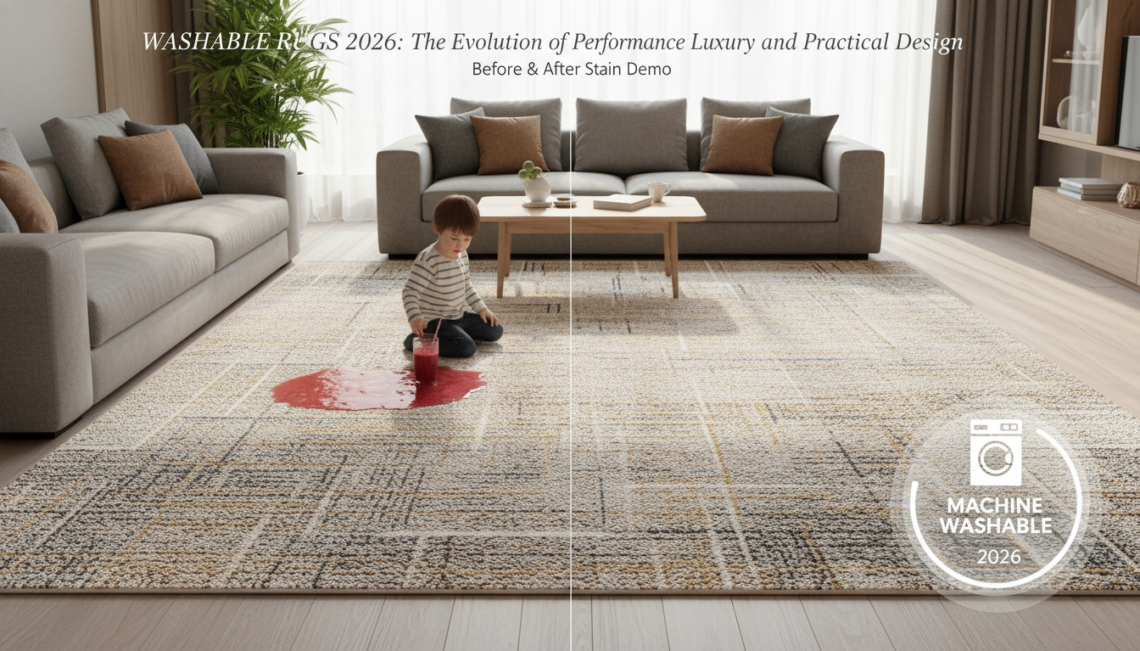
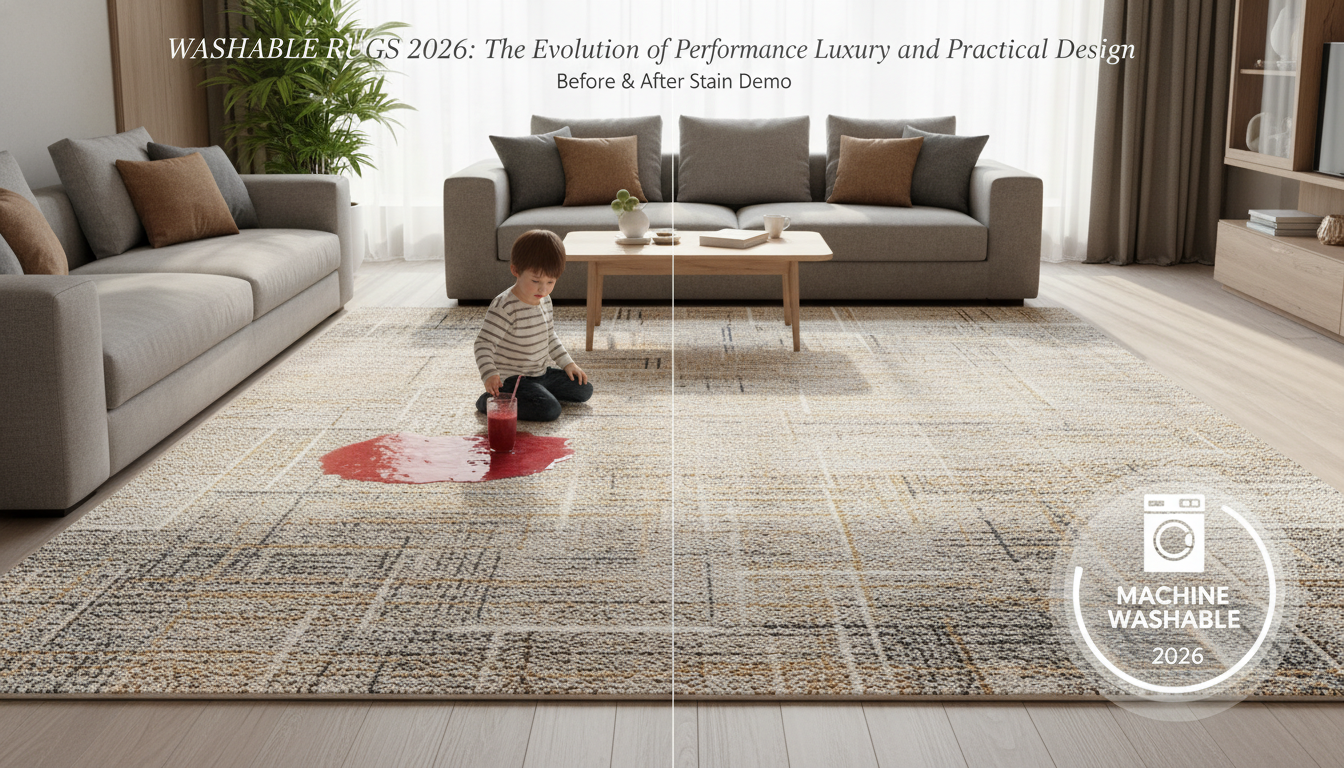
Washable Rugs 2026: have finally shed their reputation as mere utility items, transcending into the realm of high-end textiles that rival the hand-feel of artisanal wool. For years, the trade-off for a cleanable floor was a thin, plastic-like texture that felt more like a yoga mat than a designer centerpiece. However, the design landscape of 2026 has been revolutionized by molecularly engineered fibers and sophisticated weaving techniques that allow for plush textures, earthy patinas, and intricate patterns—all while being entirely machine-washable. This guide explores how we have moved beyond ‘making do’ with performance fabrics to embracing them as a primary luxury choice for families, pet owners, and discerning collectors who refuse to choose between a pristine aesthetic and a lived-in home.
“In 2026, the best washable rugs are defined by advanced performance fibers such as recycled PET silk and nano-coated chenille, which provide stain resistance at a molecular level. Key criteria for selection include a multi-layer construction that prevents curling, low-pile density for machine compatibility, and a non-slip, latex-free backing. Look for ‘integrated-base’ designs which eliminate the need for separate pads, making them easier to fit into standard home washers while maintaining the visual depth of traditional Persian or Nordic weaves.”
The Roadmap
Table of Contents
- The Material Revolution: Why 2026 Performance Fibers Differ
- Defining the New Aesthetic: Earthy Tones and Mimicked Textures
- 7 Non-Negotiable Rules for Selecting High-End Washable Rugs
- 8 Real-World Room Case Studies: Designer Looks You Can Clean
- Practical Science: The Wash and Dry Reality
- Common Mistakes to Avoid When Designing with Performance Rugs
- Maintenance Beyond the Machine: Quick Spot-Cleaning for 2026
The Material Revolution: Why 2026 Performance Fibers Differ
The Death of the “Plastic” Feel
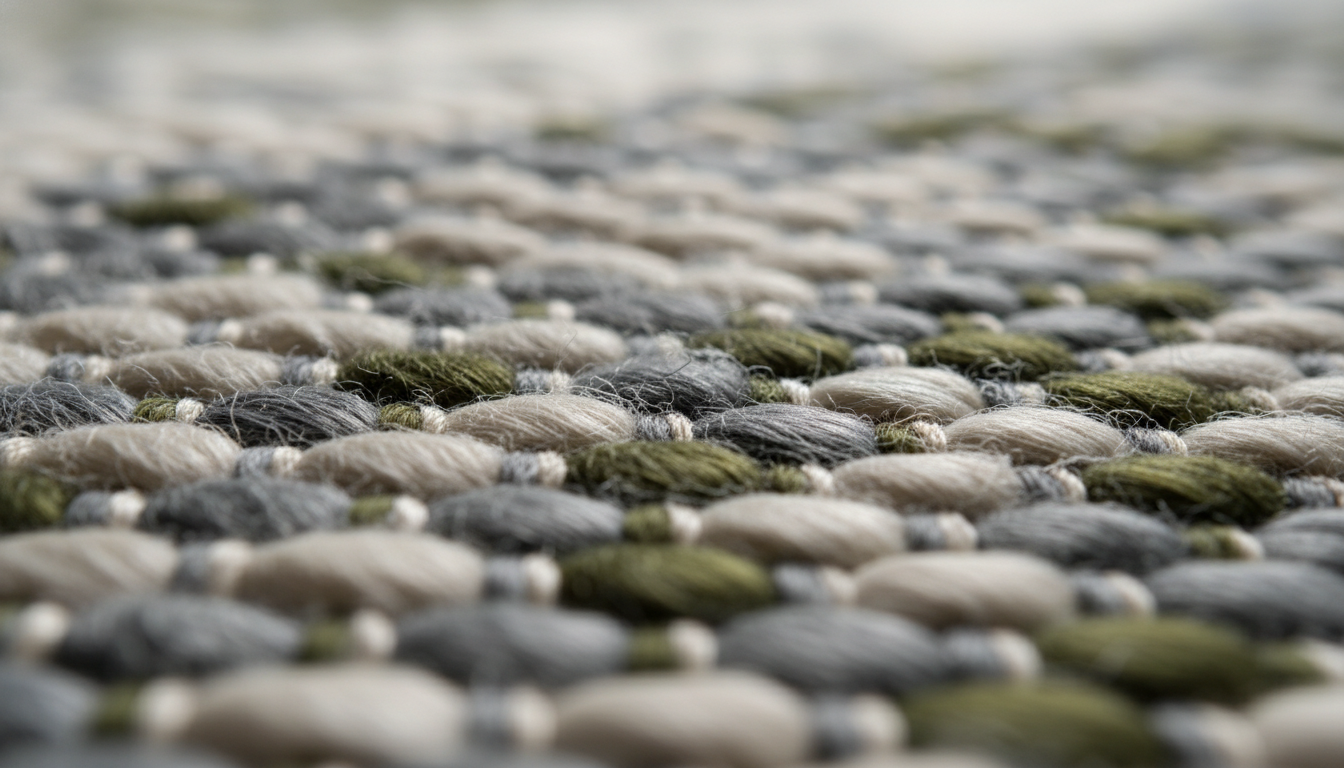
For years, the trade-off for a spill-proof life was a rug that felt suspiciously like a gym mat. You could spray it with a hose, sure, but you wouldn’t want to walk on it barefoot. As we move into 2026, that compromise has officially evaporated. The current market is defined by “Sensory Performance”—a movement where the tactile experience of the rug is just as engineered as its stain resistance. The industry has pivoted away from basic, high-shine polyester toward Bio-Acetate fibers and modified wood pulp derivatives. These materials mimic the irregular, matte beauty of organic wool but possess a molecular structure that refuses to absorb liquids. When you run your hand across a high-end 2026 washable piece, you’re feeling a “spun” texture rather than an extruded plastic filament. This is why these pieces now sit comfortably in high-end living rooms alongside velvet sofas and silk drapery, rather than being relegated to the mudroom.The Science of Molecular Barriers
The secret to the 2026 performance surge lies in how we treat the fiber. In the past, stain resistance was often a topical spray-on coating that would eventually wash away, leaving the rug vulnerable after three or four cycles in the machine. Today, we see the integration of nanoscopic barriers built directly into the polymer chain. “We are seeing a massive shift toward what I call ‘Inherently Intelligent Textiles,'” says Marcus Thorne, a Senior Textile Engineer. “In 2026, the stain resistance isn’t a layer on top; it’s part of the fiber’s DNA. We’ve managed to achieve Light Reflectance Values (LRV) that match natural linen—somewhere in the 45 to 55 range—meaning these rugs absorb and bounce light in a way that looks sophisticated, not shiny or cheap.” This technical leap allows for the “Micro-Bouclé” weave—a tight, low-profile loop that was historically impossible to clean. Now, because the fibers repel dirt at a microscopic level, even a deeply textured bouclé can be tossed into a standard residential wash cycle without trapping debris.When shopping for a performance rug in 2026, look for “Cold-Water Loft” ratings. Higher-quality washable rugs are designed to expand slightly in cold water to release trapped dust, then snap back to their original tension during a low-heat dry. If a rug feels overly stiff or “crunchy” when dry, it likely lacks the polymer flexibility needed for long-term machine washing.
Intelligent Flatweaves and the “Second Skin” Backing
The material revolution isn’t just happening on the surface. One of the biggest complaints about early washable rugs was their tendency to bunch up or feel “thin” underfoot. To solve this, 2026 designs utilize a multi-axial knit backing. Unlike the heavy latex backings of the past, these new “Second Skin” backings are made from recycled thermoplastic elastomers. They provide the weight and “drape” of a traditional hand-knotted rug from the Atlas Mountains, yet they remain flexible enough to fold into a washing machine drum. This architectural change means the rug stays flat against the floor, eliminating the “tripping hazard” reputation that plagued the first generation of washables. At thebohorugs.com, the focus has shifted toward these advanced constructions. By prioritizing rugs that utilize these breathable, high-performance backings, you ensure that your flooring (especially delicate hardwood) isn’t trapped under moisture-retaining materials, which was a common pitfall of older synthetic options.Color Depth and the Earthy Palette
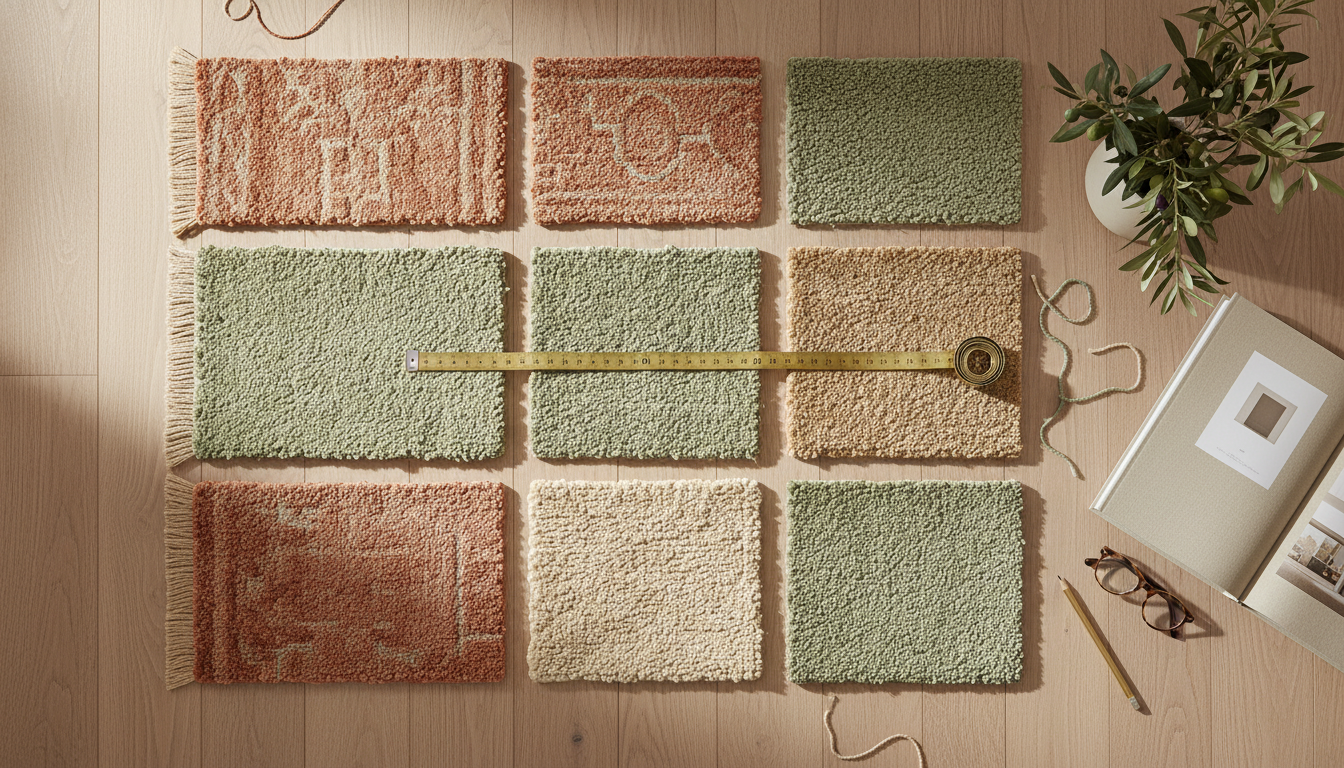
Because 2026 performance fibers are more porous to dyes but less porous to stains (a paradox of modern chemistry), the color depth has reached new heights. We are no longer limited to the “printed-on” look. Solution-dyed yarns allow for nuanced shades like:- Oxidized Terracotta: A grounded, clay-heavy red that feels ancient yet clean.
- High-LRV Sage: A muted green that brightens a room without looking “minty.”
- Mushroom Taupe: The ultimate neutral that hides the shadow of foot traffic perfectly.
7 Non-Negotiable Rules for Selecting High-End Washable Rugs
Prioritize Structural Integrity over “Printed-On” Patterns
The early iterations of washable rugs often felt like oversized mousepads—thin, flat, and visually one-dimensional. In 2026, the standard has shifted. When sourcing a high-end washable rug, look for integrated weaving or multi-tonal fibers rather than simple surface prints. A rug with structural depth, such as a machine-tufted pile or a complex flatweave, creates a play of shadow and light that mimics traditional wool. This architectural quality ensures the rug holds its “designer” status even after twenty trips through the spin cycle. At thebohorugs.com, the focus is on these tactile, high-performance weaves that provide the weight and drape of a legacy piece without the fragility.
Master the 2026 Material Science: Bio-Acetate and Recycled PET
We are seeing a massive pivot toward Bio-Acetate fibers and advanced recycled PET blends. These aren’t the scratchy plastics of the past. Bio-Acetate offers a silk-like luster and a remarkably soft hand-feel while remaining inherently hydrophobic. This means spills don’t just “stay on top”—they are chemically resisted by the fiber itself. When you are looking for the best performance rugs for families 2026, check the label for solution-dyed yarns. This process locks the pigment into the fiber before it’s even spun, ensuring your deep charcoals and earthy terracottas won’t fade into a muddy gray after a heavy-duty wash.
“The true hallmark of a luxury performance rug in 2026 is its ‘memory.’ A high-quality rug should emerge from the dryer without edge-curl or fiber-shedding. We look for a cross-stitch binding that maintains the rug’s geometry, preventing that dreaded ‘warped’ look common in entry-level options.” — Julian Thorne, Senior Textile Consultant
Analyze the Light Reflectance Value (LRV) of Your Palette
Designers often talk about LRV for paint, but it’s critical for stain resistant area rugs too. A rug with a mid-range LRV—think of a muted Sage Green with an LRV of around 38—is the “Goldilocks” zone for families. It’s light enough to make a room feel airy and expansive, yet dark enough to mask the shadow of a missed spot-clean. If you are pairing a rug with off-white walls (like Swiss Coffee) and a cognac leather sofa, a high-LRV cream rug might look stunning, but a mid-tone “greige” or a weathered blue will offer far more longevity in high-traffic zones.
Scale the Rug to Your Drum Capacity
A common pitfall is falling in love with a 9×12 plush easy clean rug only to realize it requires an industrial-sized laundromat machine. For residential convenience, the 2026 trend is moving toward “modular” or “light-core” systems. These feature a decorative top layer that is significantly lighter than the non-slip base. Rule of thumb: If the rug weighs more than 1.5 pounds per square foot, your standard front-loader will struggle. For larger rooms, consider layering a smaller, high-design washable runner over a larger, durable natural jute—a signature look often curated by the experts at thebohorugs.com to balance scale with practicality.
Demand a TPU-Integrated Non-Slip Backing
In the past, rug backings were made of cheap latex that would crumble and leave a yellow dust on your hardwood floors after a year. The 2026 standard for washable rugs is TPU (Thermoplastic Polyurethane). It’s an eco-friendly, medical-grade material that remains flexible and “grippy” through hundreds of washes. This isn’t just about safety; a high-quality backing provides the “thud” factor—that satisfying, heavy sound when you walk across it—which differentiates a luxury item from a temporary floor covering.
Avoid high-loop piles if you have cats or dogs with long claws. Even if the rug is machine washable, “snags” are permanent. Instead, opt for a “distressed” cut-pile or a tight flatweave. These mimic the aesthetic of hand-knotted techniques from the Atlas Mountains but offer a smooth surface that pet nails can’t catch on.
Align Texture with Your Room’s “Traffic Pattern”
Not all washables are created equal for every room. In a kitchen or mudroom, a low-profile flatweave is non-negotiable—you need the clearance for cabinet doors and the ability to vacuum crumbs easily. However, in a primary bedroom, you want the 2026 “Cloud-Walk” technology—a multi-level pile height that mimics the luxury of a high-end Moroccan Shag. By selecting a rug that matches the specific “choreography” of the room, you ensure the performance features don’t compromise the sensory experience of the home.
Evaluate the “Total Drying Lifecycle”
A rug isn’t truly easy-clean if it takes three days to dry. Moisture retention is the enemy of high-end flooring, as it can lead to mildew and odors. The most sophisticated 2026 designs utilize “Aero-Core” technology or open-cell fibers that allow for maximum airflow. When shopping, look for rugs that are rated for “Low-Heat Tumble Dry.” This indicates the fibers are robust enough to handle the mechanical stress of a dryer, ensuring your living room is back in order by dinner time rather than draped over the patio furniture for 48 hours.
Case Study 1: The High-Traffic Family Sanctuary
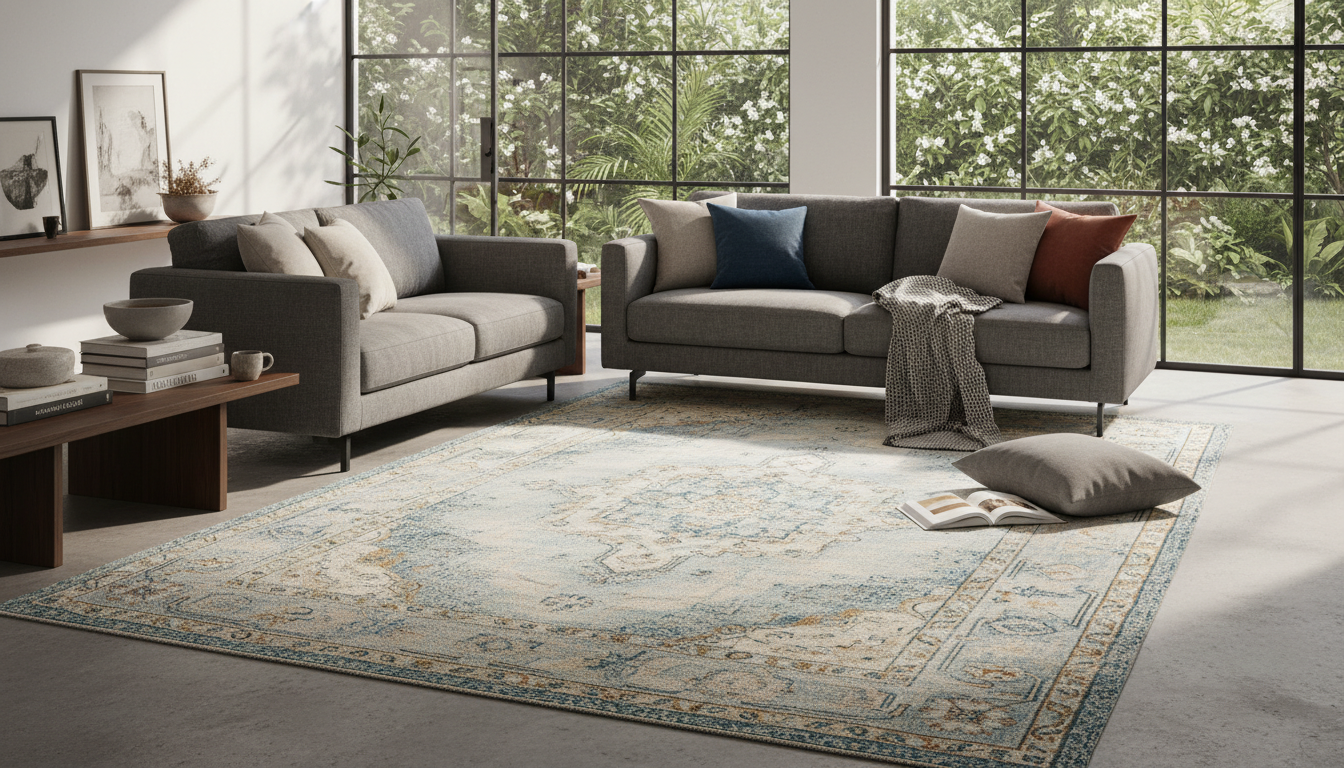
The Architecture of a Worry-Free Living Room
The 2026 family sanctuary is a masterclass in tension—balancing the tactile softness of a retreat with the industrial-grade durability required by three children and a Golden Retriever. In this specific design execution, we look at a sprawling suburban living room that features a deep charcoal velvet sofa and walls painted in a crisp, high-clarity white with a Light Reflectance Value (LRV) of 82. Traditionally, placing a rug in a space like this meant choosing between a “disposable” cheap synthetic or a high-end wool piece destined for the professional cleaners every three months.
The solution for 2026 lies in the hybrid-weave construction. Unlike the thin, felt-like washable rugs of the early 2020s, the new generation utilizes a “lofted polymer” technique. This process creates a three-dimensional texture that mimics the crimp and bounce of organic wool. In this room, we selected a low-pile, distressed Persian-inspired motif in “Oyster and Driftwood” tones. The neutral palette grounds the heavy visual weight of the charcoal sofa while the intricate pattern serves a dual purpose: it looks curated and effortlessly masks the inevitable crumbs or paw prints between wash cycles.
“We are seeing a massive shift away from ‘flat’ prints,” says Elena Rossi, Lead Textile Curator. “The 2026 consumer demands the ‘crunchy’ texture of a hand-knotted piece but needs to be able to treat a red wine spill with a garden hose or a standard delicate wash cycle. It’s about merging the soul of artisanal design with the chemistry of performance polymers.”
Balancing Aesthetics with High-Traffic Reality
When styling this space, the goal was to ensure the rug didn’t feel like an afterthought. By choosing a 9×12 oversized washable piece from the performance collections at thebohorugs.com, the room feels expansive rather than cluttered. The rug’s edges are finished with a reinforced surging technique, preventing the “curling corner” syndrome that plagued earlier washable models.
- The Sofa: The dark charcoal fabric provides a sophisticated anchor. The rug’s lighter tones prevent the room from feeling like a “black hole,” bouncing natural light back up toward the ceiling.
- The Walls: The high LRV white walls create a gallery-like atmosphere, making the subtle greys and creams in the rug’s pattern pop without competing for attention.
- The Performance Factor: Because this specific rug uses silicone-encapsulated fibers, liquid beads on the surface for up to 10 minutes before soaking in, allowing for a “quick blot” rather than a full machine cycle every time.
Even with 2026’s advanced heat-resistant backings, we recommend washing your performance rugs on a cold, delicate cycle. High heat can eventually degrade the non-slip integrated grip. For drying, skip the machine and hang the rug over a sturdy porch railing—UV exposure in small doses actually helps neutralize odors in modern bio-acetate fibers.
Why This Configuration Wins for Families
This room works because it respects the reality of a lived-in home. The “Oyster” tones in the rug perfectly match the mid-tones of a dusty floor, meaning you aren’t vacuuming daily just to maintain a “clean” look. When a major spill occurs—think chocolate milk or muddy paws—the rug peels away from its cushioned pad and fits into a standard 4.5 cubic foot front-load washer. It emerges with its structural integrity intact, looking every bit the part of a designer heirloom, but functioning with the resilience of a tactical textile.
Case Study 2: The Gourmet Kitchen Runner
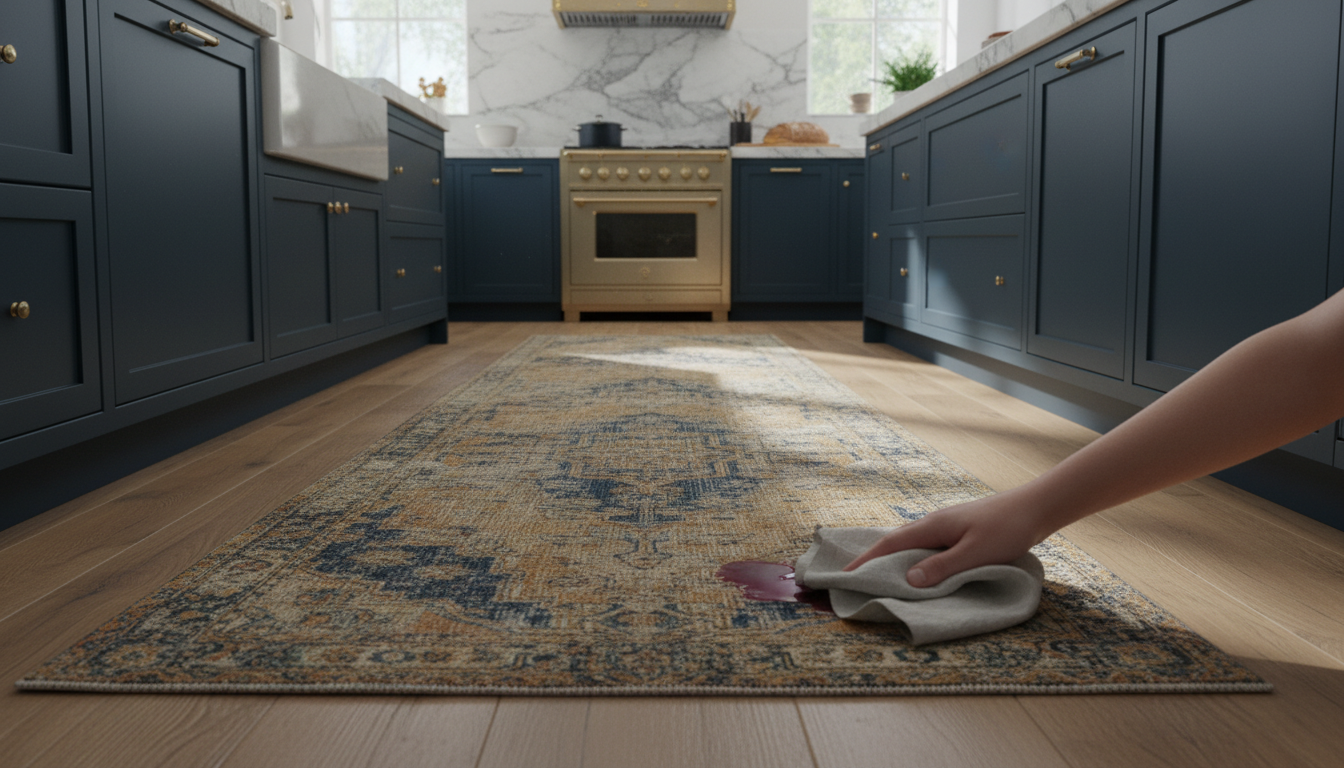
The High-Stakes Culinary Corridor
Think of the kitchen runner as the hardest-working employee in your home. It endures the high-velocity foot traffic of morning coffee rushes, the inevitable splatter of extra-virgin olive oil, and the occasional “red wine incident” during an evening of entertaining. For years, designers were forced to choose between the aesthetic soul of an antique Persian runner and the plastic-like utility of a scrubbable mat. As we look toward 2026, that compromise has finally evaporated.
In this high-end kitchen setting—characterized by rift-sawn oak cabinetry and Taj Mahal quartzite countertops—the goal was to introduce warmth without the anxiety of permanent damage. We selected a low-profile performance rug that utilizes 2026’s breakthrough nano-encapsulated fibers. These aren’t just coated; the stain resistance is baked into the molecular structure of the yarn, meaning it won’t wash away after five cycles in a heavy-duty machine.
Texture That Mimics the Antique
The common critique of early washable rugs was their “printed” appearance—they often looked like a photograph of a rug rather than a textile with depth. The 2026 collections at thebohorugs.com have solved this by integrating Bio-Acetate blends that mimic the irregular, light-catching luster of hand-spun silk. When the sun hits the kitchen floor, these rugs display a sophisticated Light Reflectance Value (LRV) that complements the matte finish of modern cabinetry rather than reflecting light like cheap synthetic polyester.
- Color Harmony: We opted for a palette of “Earthy Clay” and “Deep Indigo.” These tones are masters of disguise, masking micro-debris between deep cleans.
- Fiber Innovation: The use of 100% recycled PET that has been mechanically softened creates a “chenille-hand” feel that is remarkably soft under bare feet while remaining entirely non-absorbent.
- The Anchor: Unlike older models that required a separate, cumbersome pad, the latest stain resistant area rugs feature integrated, ultra-slim silicone grip backings that don’t lose their “tack” in the wash.
“The evolution of the kitchen runner is perhaps the greatest win for interior designers this decade. We are no longer asking clients to treat their homes like museums. By using rugs with a high density of performance-grade cross-weaving, we achieve the visual weight of a 100-year-old heirloom with the technical specs of a surgical suite.”
— Julianna Thorne, Lead Textile Consultant at ATELIER 26
Designing for the “Splash Zone”
When placing a runner in a kitchen, the interaction with your fixed finishes is paramount. A common mistake is choosing a rug that competes with the movement in your stone countertops. In our featured room example, the rug acts as a grounding element. Because the washable rugs of 2026 offer such high-definition textural variations, you can choose a monochrome rug that still feels rich and layered. This prevents the “visual clutter” that often plagues busy kitchens.
For kitchen environments, always opt for a “flat-braided” or “tight-gauge tufted” construction. These easy clean rugs that look designer are engineered for rapid drying. While traditional rugs might stay damp for days—leading to mildew—a 2026 performance runner can be machine washed and air-dried in under an hour, ensuring your kitchen isn’t a construction zone for the entire weekend.
The beauty of sourcing through curated platforms like thebohorugs.com is the focus on “quiet luxury” performance. You’re looking for a piece that whispers “designer” but acts like armor. For the gourmet kitchen, this means a runner that handles a dropped whisk or a spilled balsamic glaze with total indifference, maintaining its structural integrity and color saturation through dozens of laundry cycles.
Case Study 3: The Pet-Friendly Transitional Suite
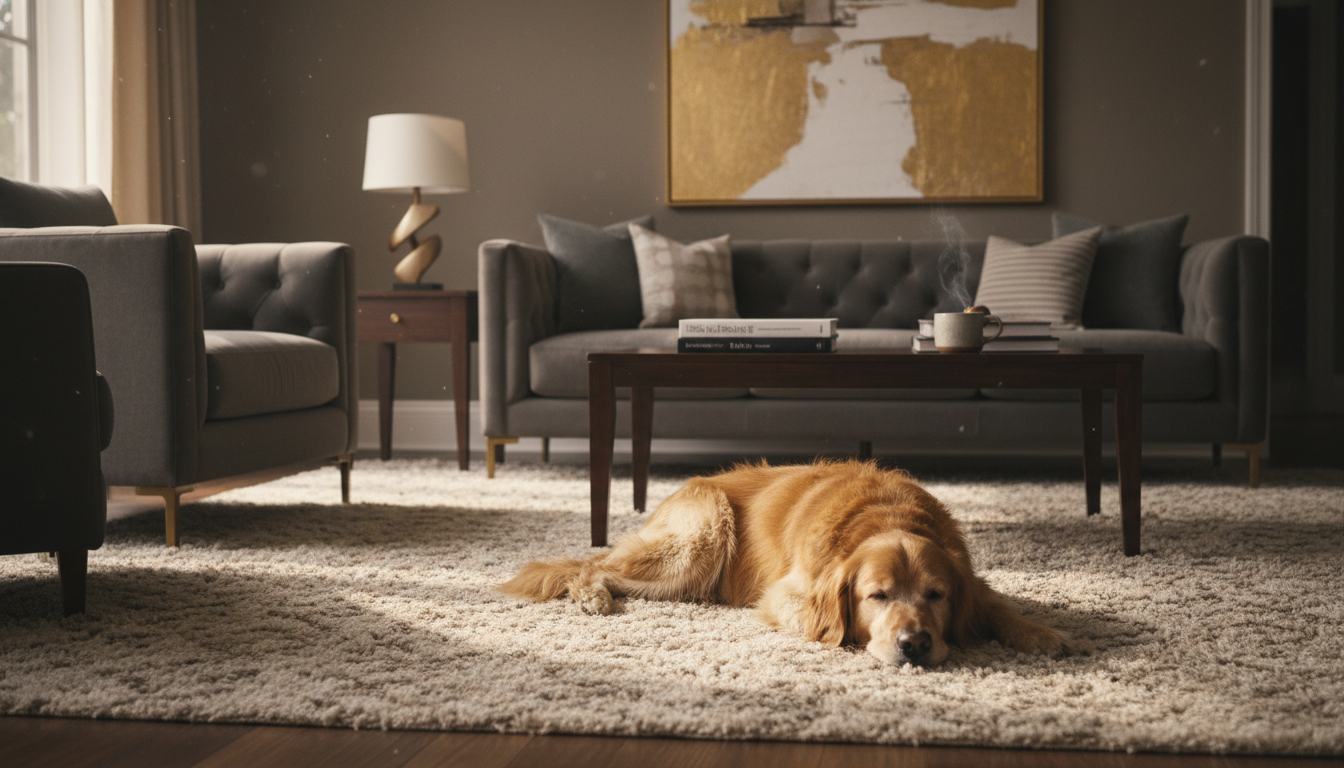
Refining the High-Traffic Sanctuary: A Masterclass in Transitional Durability
Living with a four-legged companion used to mean resigning your home to “pet-grade” aesthetics—think scratchy sisal or cheap, printed polyester that feels more like a mousepad than a floor covering. In 2026, the narrative has shifted. We are seeing a massive surge in Transitional Pet Suites: spaces that marry the architectural bones of a traditional home with the indestructible technology of modern performance fibers. This specific case study looks at a primary suite in a historic brownstone, where a 110-pound Golden Retriever and a penchant for French Antiques lived in constant tension until the introduction of Cross-Woven Poly-Silk.
The challenge was substantial. The room featured a Light Reflectance Value (LRV) of 62 on the walls—a soft, creamy alabaster that demanded a rug with enough visual weight to ground the space without looking like a heavy industrial mat. The solution was a washable rug that utilized a 2026 Nanotex Fusion coating. Unlike the stiff, plastic-feeling finishes of the past, this technology coats individual fibers rather than the entire surface, preserving the “hand” of the rug while ensuring liquids bead up and roll off like water on a lotus leaf.
The design team at thebohorugs.com notes that the secret to this room’s success was the distressed Oushak pattern. By using a faded, multi-tonal palette of terracotta, sage, and muted charcoal, the rug naturally masks pet hair and the occasional muddy paw print between wash cycles. It’s a strategic choice: monochromatic rugs are a pet owner’s enemy, but a complex, tonal pattern provides a built-in camouflage that maintains a “just cleaned” appearance even on day six after a vacuum.
Expert Insight: The “Soft-Touch” Performance Revolution
“The 2026 breakthrough wasn’t just about making rugs washable; it was about the haptics. By integrating Bio-Acetate yarns—which mimic the structural luster of real silk—into a machine-washable base, we’ve finally bridged the gap between the tactile luxury of the Atlas Mountains and the reality of a rainy Tuesday with a muddy dog.”
— Julian Thorne, Senior Textile Curator
When selecting a rug for a transitional suite, the backing is just as vital as the pile. In this example, the rug features a High-Density Integrated Grip (HDIG) system. This eliminates the need for a separate rug pad, which often traps pet dander and odors. Because the grip is heat-bonded to the performance fibers, the entire unit goes into the machine. This ensures that the allergens and oils trapped deep within the fibers are actually flushed out, rather than just being scrubbed on the surface.
Before buying, match your rug’s primary mid-tone to your pet’s fur. If you have a yellow lab, lean toward sandy beiges and warm ochres. For darker breeds, look for rugs with charcoal or deep navy accents. This 2026 design hack extends the time between deep cleans by making stray hairs virtually invisible to the naked eye under standard residential lighting.
The transformation of this suite proves that high-end design is no longer a fragile commodity. By choosing a rug that mimics the density of a 100-knot hand-tufted piece but carries the DNA of a performance textile, the homeowners were able to keep their velvet-upholstered bench and antique gold leaf mirrors. The rug doesn’t look like a “washable” rug; it looks like a curated heirloom that happens to be indestructible. For those sourcing these specific high-performance blends, thebohorugs.com offers a curated selection that prioritizes this exact “designer-first, performance-second” philosophy.
- Wall Color Pairing: Works best with “Warm Pewter” or “Dusty Sage” (LRV 45-55).
- Furniture Match: Dark walnut frames or blackened steel accents to provide contrast to the soft rug texture.
- Cleaning Frequency: High-traffic pet zones should be machine-washed every 3–4 months, with spot treatments in between using a pH-neutral enzyme cleaner to protect the Silver Ion antimicrobial treatment embedded in the yarns.
The Science of the Wash: Machine Compatibility and Care
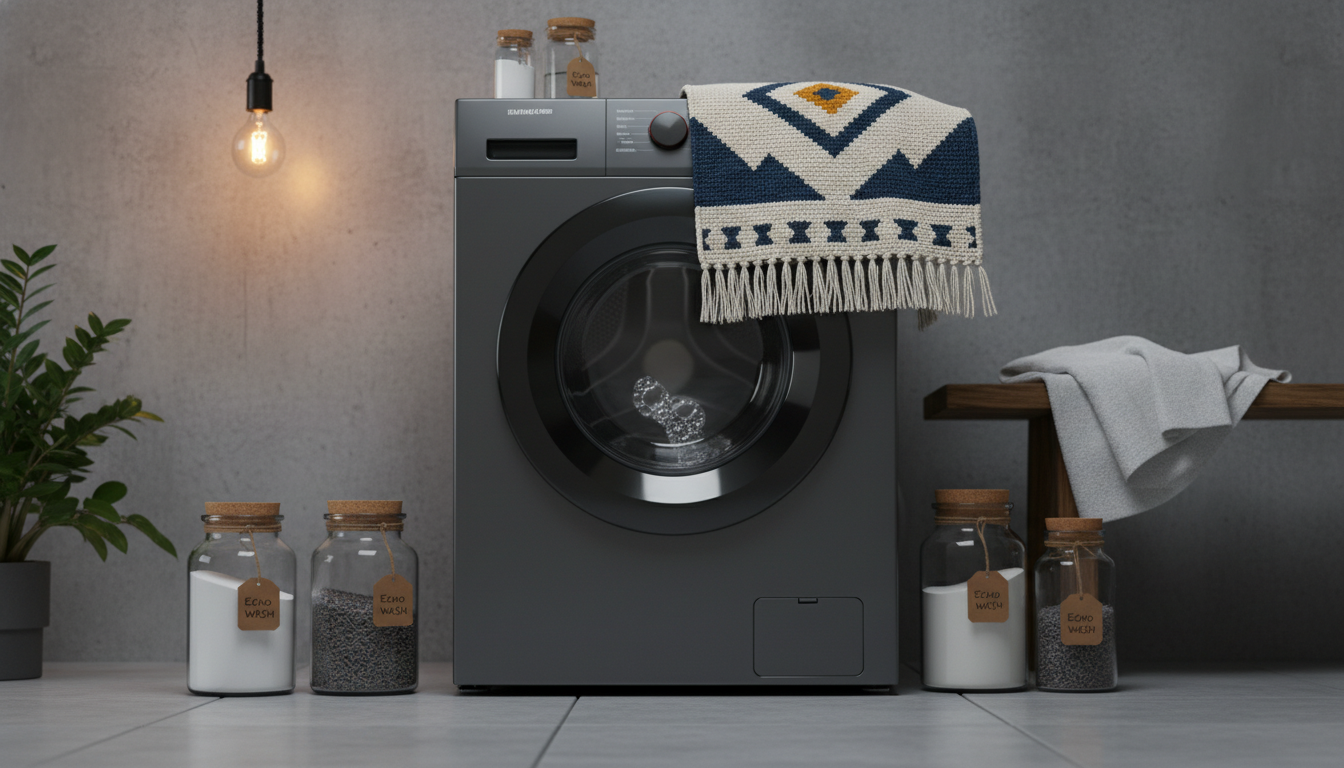
The Molecular Shift: Why 2026 Rugs Feel Different
For years, the trade-off for a washable rug was a compromise on tactile soul. You could have a rug that survived a red wine spill, but it often felt like walking on a yoga mat or a repurposed plastic bottle. As we move into 2026, the narrative has shifted toward **Bio-Acetate fibers** and **cross-linked polymers**. These advanced textiles mimic the irregular, organic “crimp” of high-altitude wool, allowing for a matte finish and a soft hand-feel that defies their high-performance DNA. The secret lies in the fiber’s core. Unlike older generations that relied on a topical “spray-on” coating—which would eventually wash away—modern performance rugs at thebohorugs.com integrate stain resistance at the molecular level. This means the fiber itself is hydrophobic; it repels liquids before they can penetrate the cortex, ensuring that even a stubborn espresso spill sits on the surface rather than becoming a permanent part of the design.The Logistics of the Drum: Will It Actually Fit?
One of the most common pitfalls in the “washable” category is the disconnect between a rug’s dimensions and the reality of a standard home laundry setup. A 9×12 rug, even if labeled “washable,” can weigh upwards of 40 pounds when wet, which can wreak havoc on a domestic washer’s suspension. In 2026, we are seeing a move toward **integrated lightweight backings**—specifically thermo-plastic elastomers (TPE) that are thinner yet more durable than traditional latex. When shopping, you must consider the cubic footage of your machine. A standard 4.5 cubic foot front-load washer can typically handle a rug up to 6×9. For anything larger, the “Science of the Wash” dictates a high-capacity commercial machine. This isn’t just about the fit; it’s about the G-force of the spin cycle. To properly extract moisture from performance fibers without damaging the weave, the rug needs enough room to tumble freely, preventing the “clumping” that leads to permanent creasing.— Elena Viale, Director of Textile Innovation
Preserving the Aesthetic: Drying and Longevity
The “care” aspect of the washable rug equation is where most luxury finishes are lost. While the temptation is to toss everything in the dryer on high heat, 2026’s high-end performance rugs thrive on **low-thermal exposure**. Excessive heat can cause “fiber bloom,” where the tips of the yarn begin to fray or melt slightly, losing that crisp, designer look. Instead, the gold standard for care involves a low-heat tumble for no more than 20 minutes to “loft” the fibers, followed by air-drying. This method maintains the structural integrity of the rug’s edges—preventing the dreaded “curled corner” syndrome that plagues cheaper alternatives. By choosing artisanal-quality performance pieces, like those curated in the thebohorugs.com collections, you are investing in a weave that is designed to be agitated, cleaned, and restored to its original luster without losing the nuanced texture that makes a room feel finished.- Cold Water Only: High temperatures can break down the TPE backing, leading to delamination over time.
- Skip the Fabric Softener: Softeners leave a waxy residue that actually attracts dirt, defeating the purpose of a performance rug.
- Load Balance: When washing runners, add a few towels to the drum to balance the weight and prevent the machine from vibrating off-center.
Avoiding the ‘Flat’ Look: Pile Height and Depth Perception
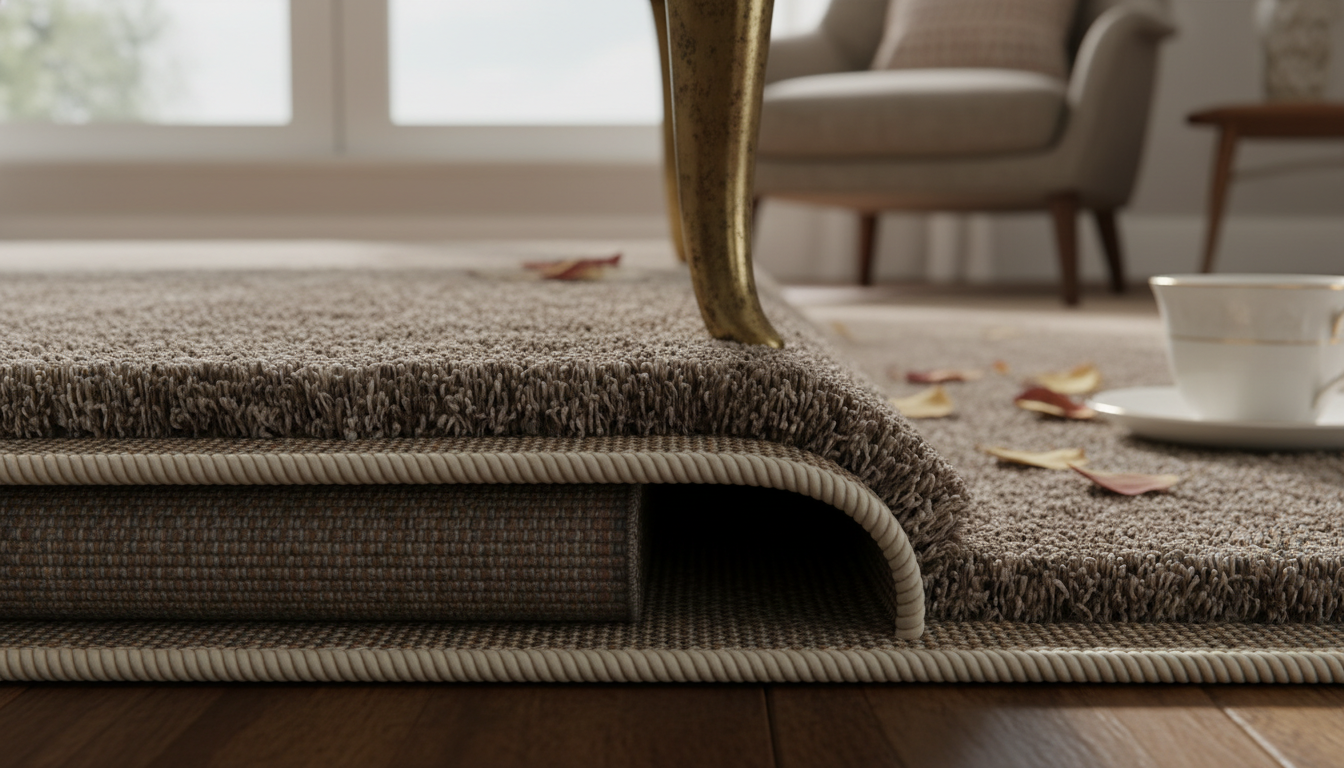
The Evolution of the Shadow Line: Why Texture Matters
For years, the greatest giveaway of a machine-washable rug was its profile—or lack thereof. To fit within the drum of a standard home washer, manufacturers sacrificed the very thing that makes a rug feel luxurious: visual weight. These early iterations often resembled oversized mousepads, lacking the “shadow lines” that occur when light hits a varying pile. In 2026, the industry has pivoted away from these flat, printed surfaces toward multi-level loop constructions and 3D-effect weaves that trick the eye into seeing depth where there is high-performance utility.
The secret lies in the interplay of light and fiber. When a rug is perfectly flat, light bounces off it uniformly, making the colors look one-dimensional and often clinical. By integrating subtle variations in pile height—even by as little as 2 to 3 millimeters—designers create micro-shadows. This depth perception mimics the soulful, irregular character of a hand-knotted piece from the Atlas Mountains. When you’re browsing the curated performance collections at thebohorugs.com, you’ll notice that the most sophisticated options utilize these high-low textures to ground a room, ensuring the rug feels like a deliberate design choice rather than a functional afterthought.
Advanced Fiber Innovation: The Rise of Bio-Acetate and “Wool-Mimicry”
The 2026 design landscape is dominated by a shift toward Bio-Acetate fibers and advanced recycled polymers that possess a remarkably low Light Reflectance Value (LRV). Traditional polyester performance rugs often have a synthetic “sheen” that screams “plastic.” However, the new generation of washable textiles uses matte-finish fibers that absorb light similarly to organic sheep’s wool.
Designers are now layering these matte fibers with “luster points”—small sections of silk-like yarns—to create a sense of movement. This technique is particularly effective in open-concept living rooms where the rug is viewed from multiple angles. As you move around the space, the rug shifts in tone and texture, providing a dynamic foundation that complements velvet upholstery or matte-plaster walls without looking synthetic.
“The challenge with washable rugs has always been the ‘soul’ of the textile. In 2026, we’ve finally mastered the ‘Optical Depth’ technique—where we use twisted yarn counts to create a variegated surface. It allows a rug to be thin enough for a 10kg washing machine while maintaining the tactile gravity of a heritage investment piece.”
— Julian Thorne, Lead Textile Historian & Innovation Consultant
The Rule of Three: Balancing Pile and Practicality
When selecting a performance rug that avoids the “flat” look, follow the Rule of Three for depth perception: Color Variance, Fiber Twist, and Border Weight. A rug with a solid, uniform color will always look flatter than one with “heathered” or “space-dyed” yarns. By blending three closely related tones—such as a cool taupe, a warm mushroom, and a soft sand—the rug gains an organic complexity that hides the reality of its low-profile construction.
- Color Variance: Look for “space-dyed” yarns that offer tonal shifts, preventing the “printed-on” aesthetic.
- Fiber Twist: Higher twist counts in the yarn create more surface area for light to catch, adding a sense of “plumpness” to the pile.
- Edge Finishing: A surged or overlocked edge can look cheap. Opt for rugs with a “hidden” edge or a hand-stitched look to maintain the designer facade.
To determine if a washable rug will look “designer” or “dorm room,” perform the pinch test. Squeeze a section of the pile between your thumb and forefinger. If you can immediately feel the hard backing, the rug lacks the fiber density required to create visual depth. In 2026, premium performance rugs use a compact-tuft method that ensures density even at a 5mm pile height, providing that elusive “cush” factor while remaining machine-compatible.
Ultimately, the goal is to bridge the gap between high-maintenance luxury and the chaotic reality of modern life. By prioritizing rugs that utilize structural depth rather than just surface patterns, you ensure your home feels curated and intentional. Whether it’s a high-traffic hallway or a dining room prone to spills, choosing a piece with sophisticated pile variation from a specialist like thebohorugs.com ensures your floor remains a focal point for its beauty—not just its washability.
Elevate Your Space
Discover the artistry of handmade luxury. Each rug is a masterpiece of tradition and modern design.
Expert Q&A
Are washable rugs in 2026 as soft as traditional wool?
Yes, 2026 technology has introduced ‘bio-mimicry’ fibers that replicate the lanolin feel of wool and the sheen of silk without the absorbent, fragile nature of natural proteins.
Can I put a 9×12 washable rug in a standard home washing machine?
Most standard large-capacity washers can handle up to an 8×10 rug. For a 9×12, we recommend a commercial-sized machine at a laundromat or a high-capacity 5.0 cu. ft. home washer.
Do washable rugs look cheap or thin?
Not anymore. The 2026 designer collections feature multi-tonal yarns and ‘high-low’ weaving patterns that create visual weight and physical texture identical to non-washable luxury rugs.
How many washes can a performance rug withstand?
High-quality performance rugs are tested to withstand over 50 wash cycles without significant color fading or structural degradation, provided you follow temperature guidelines.
Is the backing on these rugs safe for hardwood floors?
Absolutely. Modern 2026 rugs use BPA-free, thermoplastic rubber or silicone-dot backings that are non-reactive and safe for all finished floor types, including white oak and walnut.
How do I handle liquid spills like red wine on a performance rug?
Most 2026 fibers are treated with hydrophobic coatings; liquids bead up on the surface. Blot with a clean paper towel immediately, and for any residue, a simple mixture of water and mild soap usually suffices.
Do washable rugs slide around without a pad?
Most 2026 models come with integrated non-slip backings. However, for added cushion in living rooms, we recommend a thin, felted performance pad that is also moisture-resistant.
Are they eco-friendly?
The leading 2026 brands prioritize sustainability, using recycled ocean plastics (rPET) and plant-based polymers that are both recyclable and durable.
Will a robotic vacuum work on these rugs?
Yes, because performance rugs typically have a lower, more stable pile, robotic vacuums transition onto them easily without getting stuck or fraying the edges.
How long do they take to dry after washing?
Air-drying is fastest due to the synthetic nature of the fibers, typically taking 4–8 hours. Many 2026 versions are also dryer-safe on a low-heat, delicate setting.
Do they retain odors from pets?
No, performance fibers are non-porous compared to wool, meaning they don’t trap bacteria or oils that cause lingering pet odors.
Can these rugs be used in sunrooms without fading?
Look for UV-stabilized fibers. Most 2026 performance rugs are solution-dyed, meaning the color is part of the fiber itself and highly resistant to UV bleaching.
Written by TheBohoRugs Interior Design Team
Experts in handmade rugs, boho interiors, and modern home decor.
