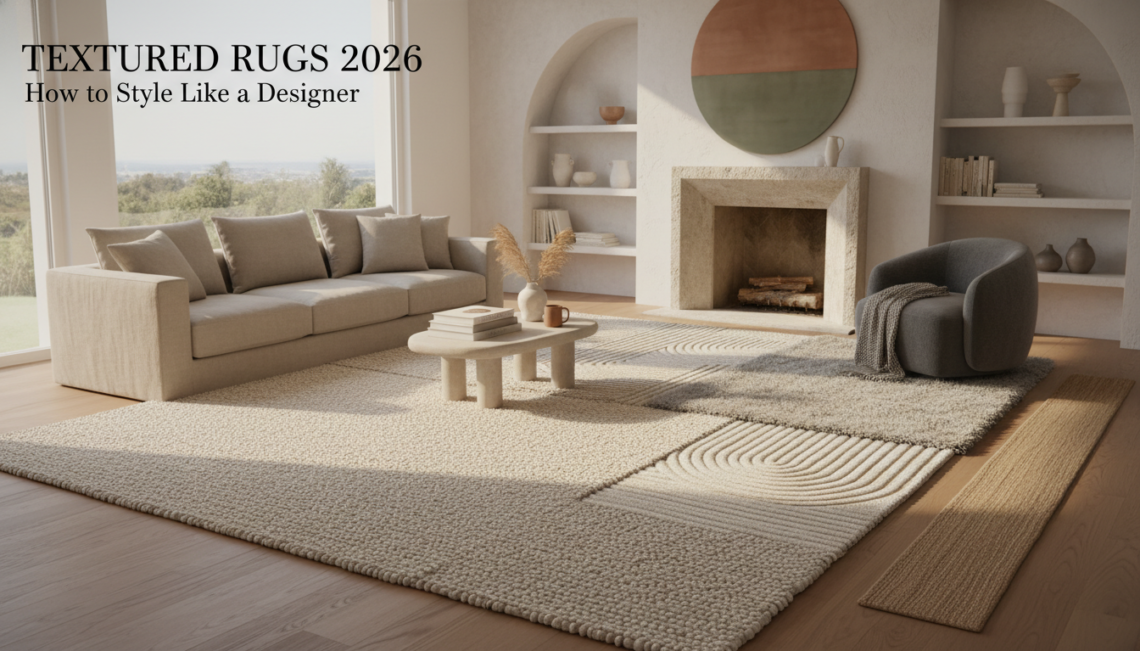
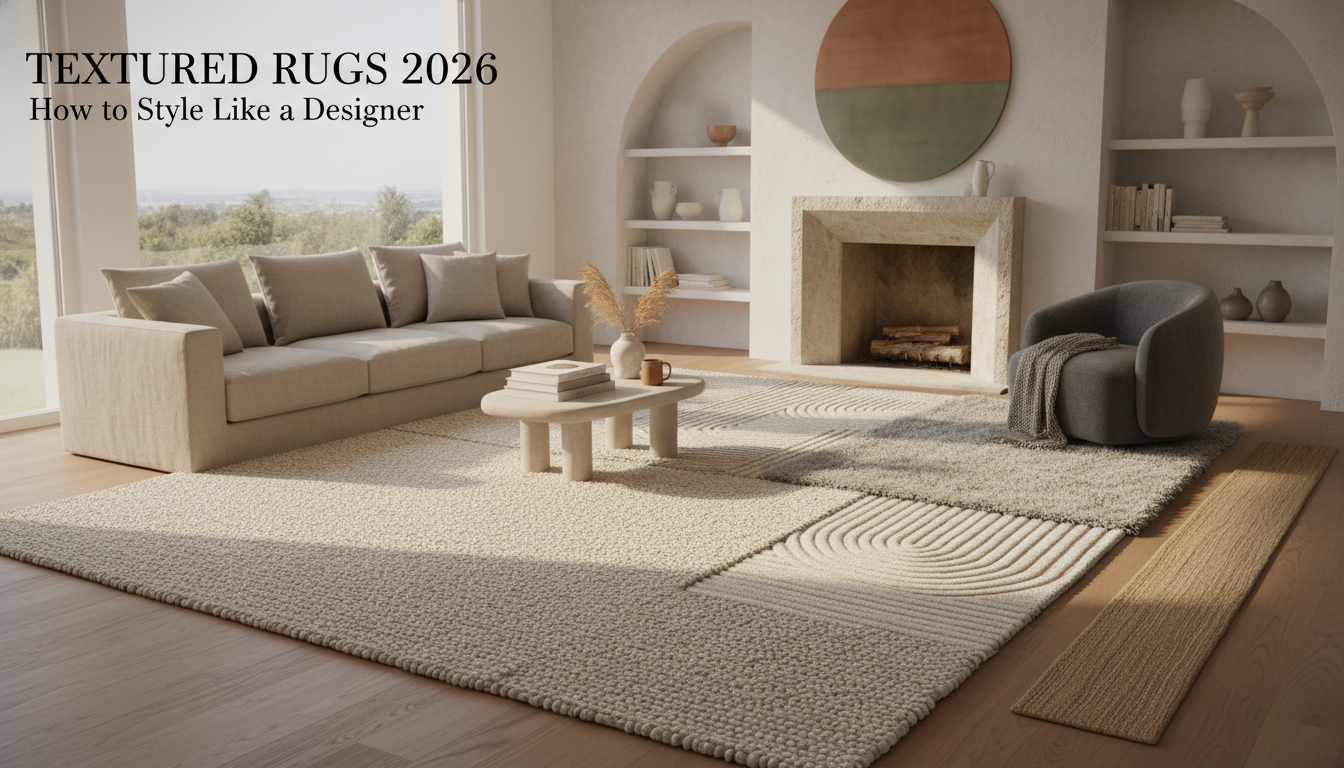
In 2026, the most expensive-looking rooms aren’t the ones with the biggest rugs—they’re the ones you want to touch. After a decade of flat-weave minimalism, the design world is pivoting toward a ‘sensory-forward’ philosophy. We are seeing a total rejection of the sterile in favor of ‘Texture-Maxxing,’ a movement that prioritizes tactile depth, sound absorption, and lived-in luxury. Whether it is the cloud-like embrace of a high-pile shag or the architectural rhythm of a hand-sculpted bouclé, the rugs of 2026 are no longer just floor coverings; they are the kinetic pulse of the room. This shift toward materiality allows homeowners to create visual interest through shadow and height rather than just color, making any space feel curated and inherently warm.
“Styling textured rugs in 2026 focuses on ‘Texture-Maxxing’—the strategic use of high-low piles, organic bouclé wool, and hand-sculpted fibers to create architectural depth. To style these pieces like a designer, use a high-pile rug to define a ‘soft zone’ like a bedroom, pair a sculptural bouclé with clean-lined furniture to balance the visual weight, and always layer high-texture pieces over neutral flat-weaves to anchor the space. Designers recommend high-low pile contrast to hide footprints and maintain a sophisticated, 3D aesthetic in high-traffic living areas.”
The Roadmap
Table of Contents
- The 2026 Shift: Why Texture is the New Color
- The 6 Designer Rules for Styling Textured Rugs
- Materiality and Craft: The Science of Sustainable Texture
- 8 Trending 2026 Room Looks to Copy Today
- Designer-Approved Texture Pairings
- Preserving the Pile: Maintenance for 2026 Materials
The 2026 Shift: Why Texture is the New Color
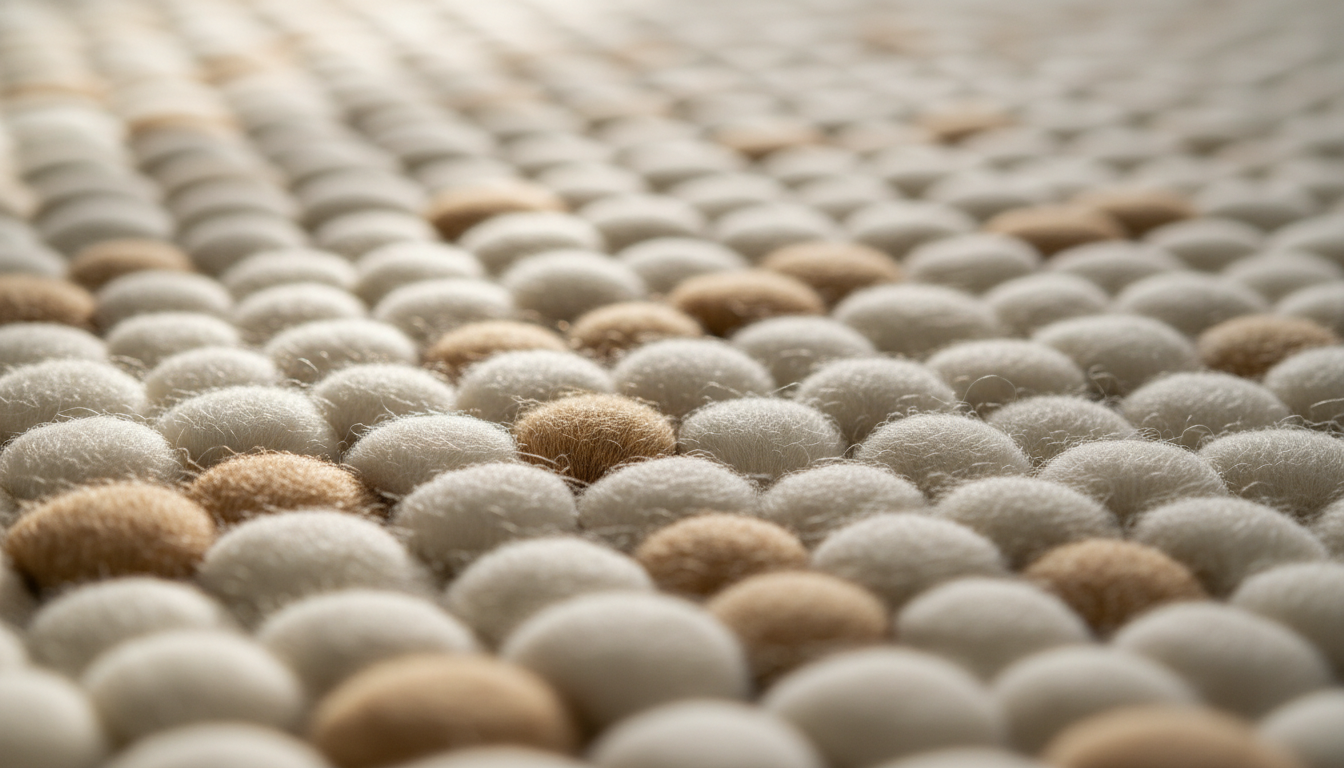
The Science of Softness: Bio-Acetate and Light Reflectance
One of the most significant technical drivers of this trend is the emergence of Bio-Acetate fibers blended with traditional New Zealand wool. These sustainable fibers allow designers to create rugs with a silk-like luster and incredible pile height without the fragility of traditional silk. Designers are also looking closely at Light Reflectance Values (LRV). In 2026, we aren’t just choosing a “gray” rug. We are choosing a ribbed, multi-level weave in a Slate Gray with a low LRV to absorb shadows, creating a sense of intimacy in oversized Great Rooms. By varying the pile height—sometimes by as much as 15mm within a single piece—the rug creates its own pattern through shadow and light rather than relying on high-contrast dyes.“We’ve moved past the era of ‘flat’ decorating. In 2026, the floor is the fifth wall, and it requires just as much architectural integrity as a coffered ceiling. By utilizing ancient hand-tufting techniques from the Atlas Mountains and reimagining them with modern, sculptural shearing, we give a room a heartbeat. Texture is the secret language of luxury.”
— Julian Thorne, Senior Textile Historian & Creative Director
Why Your Eyes Crave “Touch of Texture”
The reason bouclé rugs and heavy shag textures are dominating 2026 mood boards is simple: they ground a room. In an open-concept floor plan, a flat rug can often look like a “sticker” placed on the floor. A textured piece from the curated collections at thebohorugs.com, however, creates a physical boundary. The physical height of the rug acts as a soft architectural element, signaling a transition from a high-traffic hallway to a cozy, conversational sanctuary. We are also seeing a resurgence in organic, unrefined finishes. This isn’t the messy shag of the 1970s; it’s a refined, intentional “luxury raw” look. Think oversized loops, braided borders, and sculpted edges that break the traditional rectangular mold.When styling a highly textured rug, consider your light source. High-pile and sculptural rugs look most dramatic when placed perpendicular to a window. The low-angle morning or evening light hits the “peaks” of the fibers and casts tiny shadows into the “valleys,” making a neutral rug look like a piece of 3D art. If your room lacks natural light, use a floor lamp with a warm-toned bulb to mimic this depth.
The 6 Designer Rules for Styling Textured Rugs
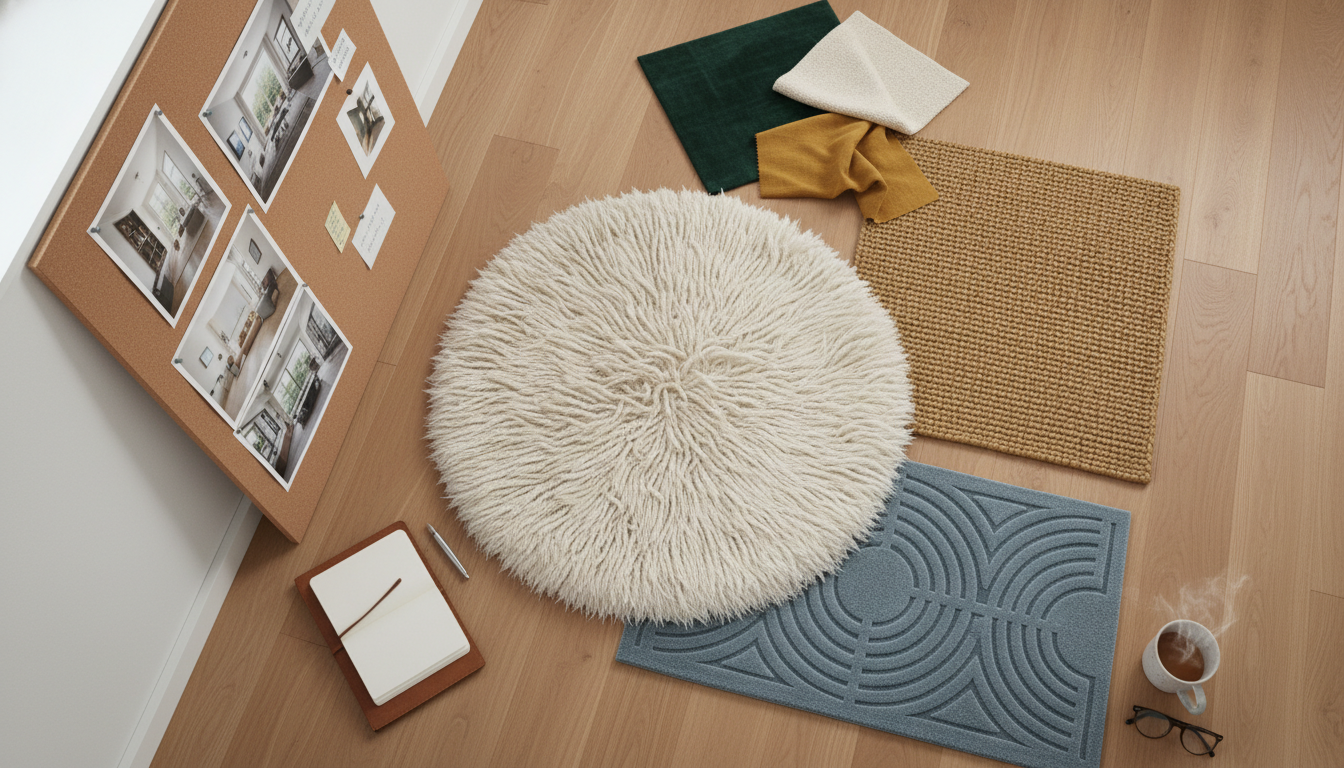
1. Prioritize the “Topography” of the Room
In 2026, designers are moving away from flat, one-dimensional surfaces in favor of what we call “Micro-Landscapes.” The secret to an expensive-looking space isn’t just a high pile; it’s the deliberate use of High-Low Contrast. By choosing a rug where the wool is sheared at varying heights—sometimes referred to as “drop-stitch” or “sculpted” techniques—you create shadows that shift throughout the day as the sun moves across the room.
When you browse the artisanal collections at thebohorugs.com, look for pieces that utilize hand-carved channeling. These grooves aren’t just decorative; they provide a structural foundation that makes a neutral cream or “Parchment” rug feel as complex and interesting as a multi-colored Persian. This visual depth allows the rug to act as a piece of floor-art without competing with your wall decor.
When styling a deeply textured rug, consider its Light Reflectance Value (LRV). High-pile shags and bouclés absorb more light than flatweaves. If you’re styling a moody, north-facing library, opt for a textured rug with a high silk content or “Bio-Acetate” fibers. These materials catch the light on the “loops” of the texture, preventing the floor from looking like a dark void.
2. Match the “Twist” to the Traffic
Not all textures are created equal when it comes to the physics of daily life. For 2026, the trend is moving toward High-Twist Wool and Bouclé loops for high-traffic zones like living rooms and entries. A tightly twisted yarn has more “spring-back” than a loose, fluffy fiber. This prevents that dreaded “crushed” look that often plagues lower-quality shags after six months of use.
For private sanctuaries like the primary suite, designers are leaning into long-staple New Zealand wool with a pile height of 30mm or more. This creates a cloud-like sensation underfoot that signals a transition from the “work” world to the “rest” world. If the rug is going under a heavy bed frame, ensure the texture is consistent so the furniture doesn’t sit at an awkward tilt.
3. Master the Art of Texture-Clashing
One of the biggest mistakes in modern design is “Matching Fatigue.” If you have a bouclé sofa, do not buy a bouclé rug. Instead, focus on Textural Antagonism. Pair the nubby, rounded loops of a bouclé chair with a ribbed, linear-textured rug. The juxtaposition of the soft curves against the sharp, architectural lines of the rug creates a sophisticated tension that defines the 2026 aesthetic.
“We are seeing a massive resurgence in Atlas Mountain hand-knotted techniques,” says Elena Vance, Lead Textile Curator. “The beauty of these rugs lies in their ‘perfect imperfection.’ By pairing a rugged, organic texture with sleek, mid-century modern furniture, you create a dialogue between the ancient and the futuristic. It’s that contrast that makes a room feel curated rather than just ‘bought.'”
4. Let Texture Dictate the Color Palette
In 2026, texture is the color. We’re seeing a shift toward “Tactile Neutrals”—rooms where the entire palette stays within five shades of sand, stone, and mushroom, but the textures vary wildly. When you use a rug with a sculptural 3D effect, you don’t need a loud pattern to make a statement. The texture provides the “movement” that a print usually would.
If you do want color, designers are opting for over-dyed high-low piles in shades like “Earthed Terracotta” or “Deep Forest.” The way the dye takes to the different pile heights creates a natural ombre effect that feels organic. You can find these nuanced, earth-toned textures in the curated drops at thebohorugs.com, which focus on natural pigments that won’t fade into a flat, dull grey over time.
Watch for rugs blending Jute with Tencel. The Jute provides a rugged, matte grit, while the Tencel adds a shimmering “liquid” texture. This pairing is the 2026 “IT” combo for dining rooms, as it’s durable enough for chairs to slide over but soft enough for bare feet.
5. Use Strategic Layering to Define Zones
Large open-concept homes can often feel cold or cavernous. Texture is the ultimate tool for “zoning.” A popular 2026 designer move is to place a massive, flat-weave sisal or seagrass rug as the base (the “foundation”) and then layer a thick, plush shag or sculptural wool rug directly on top in the seating area.
This “rug-on-rug” technique works best when the top layer is significantly more textured than the bottom. Ensure the top rug is at least 18 inches smaller than the base on all sides. This creates a visual border that anchors your furniture and makes the “touchable” area of the room feel like a cozy island of luxury within the larger space.
6. Scale for the “Breathing Room”
With high-pile and textured rugs, Scale is everything. Because these rugs have more “visual weight” than a flat flatweave, a textured rug that is too small will look like a stray bathmat in the middle of your living room. However, you also don’t want it to run wall-to-wall, which can make a room feel claustrophobic.
The 2026 rule of thumb: Leave exactly 10 to 12 inches of bare floor visible around the perimeter. This “negative space” acts as a frame for the texture. It allows the eye to appreciate the height of the pile against the smooth surface of your hardwood or polished concrete, emphasizing the rug’s thickness and premium quality. For oversized spaces, look for the 10×14 or 12×15 artisanal weaves available at thebohorugs.com to ensure your texture has the room it needs to breathe.
The Sculptural Shift: Rugs as Floor Art
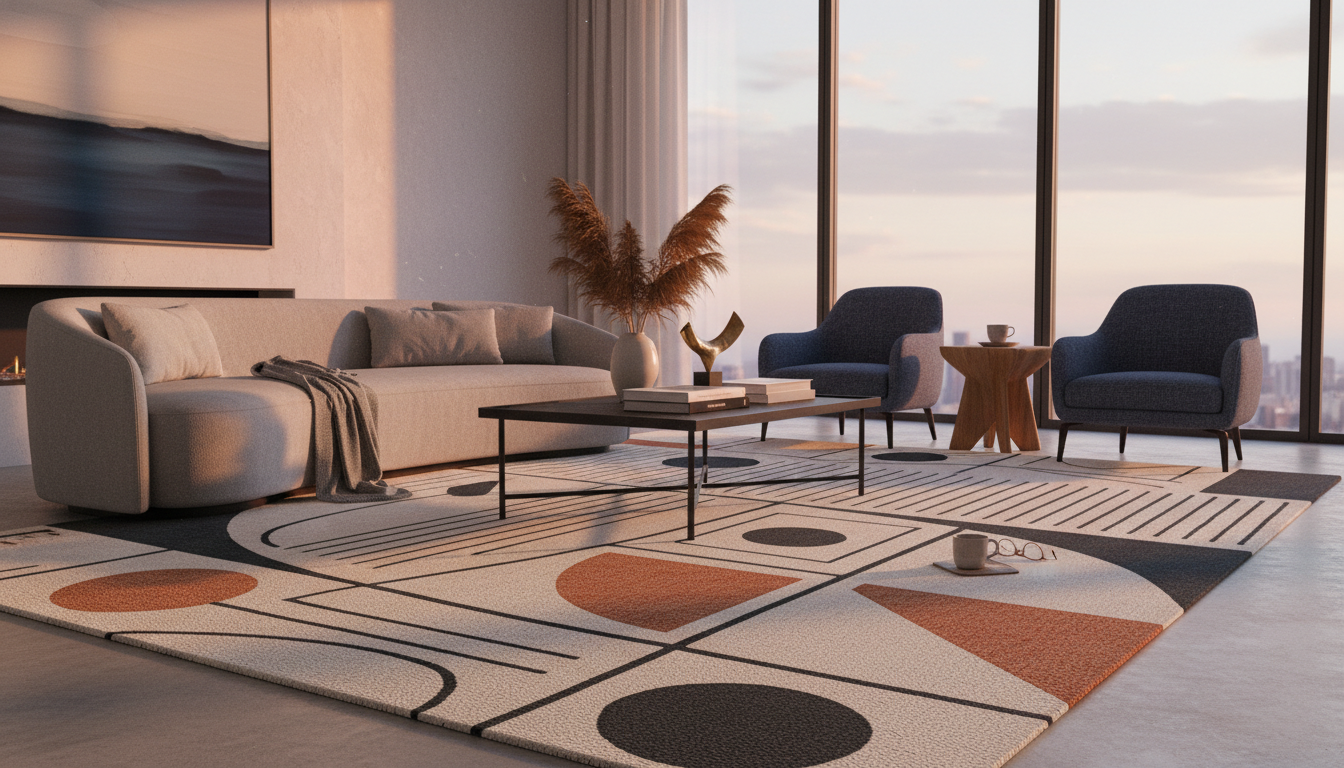
The Architecture of the Underfoot: High-Low Topography
The most significant hallmark of this sculptural movement is the intentional use of negative space within the weave itself. Rather than relying on color to create a pattern, 2026’s most coveted rugs use “shearing” techniques to carve motifs directly into the pile. Imagine a monochromatic cream rug where the “pattern” is actually a series of raised, 15mm bouclé ridges set against a 5mm sheared base. This creates a 3D topographical effect that changes throughout the day. When the sun hits these rugs at an angle, the shadows lengthen, making the rug look like a different piece of art at 10:00 AM than it does at 4:00 PM. Designers are increasingly looking at the Light Reflectance Value (LRV) of these textures; a high-pile wool in a soft Sage Green can look three shades darker in its recessed “carved” sections, providing a complex, multi-tonal look without using a single drop of extra dye.Beyond the Four Corners: Organic Silhouettes
The “sculptural shift” isn’t just about what’s happening on the surface of the rug—it’s about the shape of the rug itself. The rigid 8×10 rectangle is being replaced by amoebic, fluid, and architectural silhouettes. These rugs often mimic natural formations: the curve of a riverbed, the jagged edge of a cliffside, or the soft overlap of fallen leaves. “We are seeing a move away from rugs that ‘fit’ a room toward rugs that ‘define’ the architecture of a room,” says Marcus Thorne, Lead Textile Historian. “The 2026 client isn’t looking for a rug that disappears under a sofa. They want a piece that looks like it was hand-knotted in the Atlas Mountains and then curated specifically for their space. It’s about the soul of the craftsmanship being visible in every uneven edge and hand-carved ridge.”Material Innovation: The 2026 Fiber Revolution
While traditional wool remains the gold standard for its natural resilience and lanolin-rich “bounce,” the sculptural trend is being propelled by fiber blending. By mixing matte wool with high-shine Bio-Acetate or recycled PET yarns, weavers can highlight specific “sculpted” areas. At thebohorugs.com, the focus has shifted toward these artisanal blends that allow a rug to feel incredibly soft underfoot while maintaining the structural integrity needed to keep those “sculpted” edges crisp over years of foot traffic.When styling a sculptural or high-low pile rug, lighting is your most important tool. To maximize the “floor art” effect, avoid harsh overhead lighting which flattens the texture. Instead, use low-level floor lamps or directional sconces. Positioning a light source at a 45-degree angle to the rug’s pile will emphasize the carved ridges, creating the dramatic depth that defines the 2026 designer look.
How to Style the Sculptural Look
To pull this off without making the room feel cluttered, follow the “Quiet Surroundings” principle. Since the rug is functioning as a piece of art, the furniture that sits atop it should have clean lines and minimal ornamentation.- Leggy Furniture: Use sofas and chairs with slender legs (mid-century or minimalist metal) to allow the rug’s topography to be visible underneath.
- Color Blocking: If your rug has heavy sculptural texture, stick to a tonal color palette for your throw pillows and curtains. Let the 3D shadows of the rug provide the “visual noise.”
- The Layered Approach: For an ultra-luxurious feel, place a smaller, highly-sculpted organic-shaped rug over a larger, flat-weave jute or sisal base. This frames the “art” and grounds the space.
8 Trending 2026 Room Looks: The Bouclé Living Room
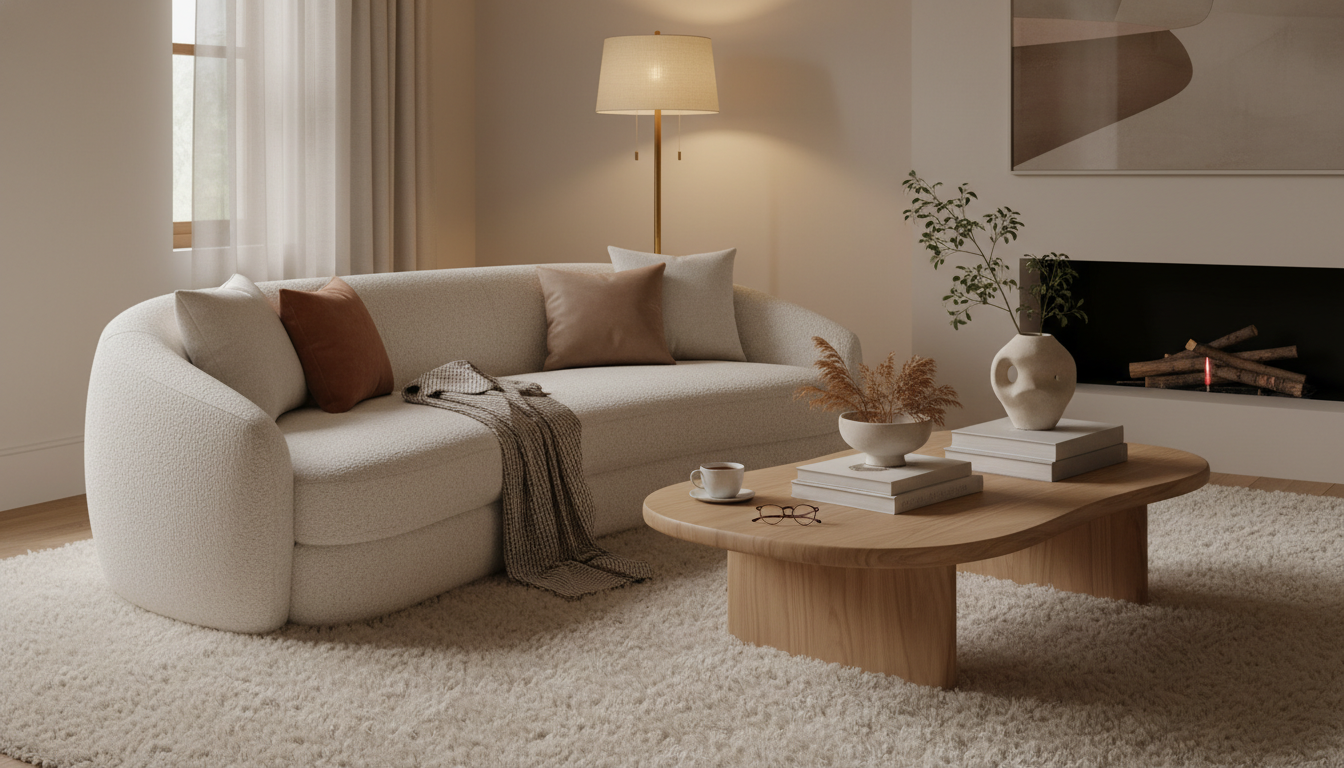
The Architectural Allure of the Bouclé Centerpiece
If 2025 was the year of the minimalist flatweave, 2026 is the year the living room regains its soul through tactile depth. We are seeing a definitive departure from “museum-style” rooms that feel untouchable. Instead, the modern luxury living room is anchored by the nubby, irregular charm of a oversized bouclé rug. This isn’t the fragile bouclé of a decade ago; the 2026 iteration is a masterclass in high-twist New Zealand wool blends that offer a resilient, “poodle-knit” texture capable of handling real life while looking like a gallery piece.
In a sun-drenched living area, a bouclé rug acts as a light-trap. Because of the looped pile’s varied heights, the rug catches shadows and highlights throughout the day, creating a dynamic floor choice that feels like it’s breathing. To master this look, designers are pairing these rugs with curvilinear furniture—think kidney-shaped sofas and travertine coffee tables. The soft loops of the rug mirror the organic silhouettes of the furniture, creating a cohesive, “sculpted” environment that feels intentional and grounded.
“The magic of a premium bouclé rug lies in its ‘visual weight’ without the clutter of a loud pattern,” says Julianne Vance, a Senior Textile Historian. “By utilizing un-dyed, long-staple wool, the 2026 collections at thebohorugs.com emphasize the raw, architectural beauty of the fiber itself. It’s a return to honesty in materials—where the luxury is felt in the density of the loop rather than the complexity of the print.”
Expert Insight: The LRV Secret
When selecting a cream or ivory bouclé rug for 2026, pay attention to the Light Reflectance Value (LRV). To achieve that coveted ‘Quiet Luxury’ glow without the rug looking ‘yellowed’ under evening LEDs, aim for a wool blend with an LRV of 75 or higher. This ensures the rug remains a crisp, neutral anchor even when the natural daylight fades.
The Styling Formula: Balancing the “Loop”
Achieving the “Bouclé Living Room” look requires a careful balance of finishes. To prevent the space from feeling too “soft,” introduce high-contrast materials. A heavy-looped bouclé rug from the artisanal collections at thebohorugs.com creates a stunning juxtaposition when placed under a matte black steel coffee table or alongside a cognac leather lounge chair. This interplay between the rugged texture of the wool and the smooth, cold surfaces of metal or leather is what separates a DIY effort from a professional design project.
- The Placement: In 2026, we are going bigger. Ensure the rug extends at least 12 inches beyond the sides of your sofa to create an ‘island’ of comfort.
- The Color Palette: Move beyond basic white. Look for “Almond,” “Oatmeal,” and “Muted Sage 400″—the standout hues for 2026 that offer more warmth and hide the occasional spill better than stark ivory.
- The Layering Trick: For added dimension, try placing a smaller, sculptural high-low rug with a geometric pattern directly on top of a larger, neutral bouclé base.
This approach transforms the floor into a 3D landscape. As we move further into the decade, the focus remains on “Texture-Maxxing”—the art of layering different tactile sensations to create a home that feels like a sanctuary from the digital world. A well-chosen bouclé rug is the foundation of that sanctuary.
8 Trending 2026 Room Looks: The Shag Bedroom Sanctuary
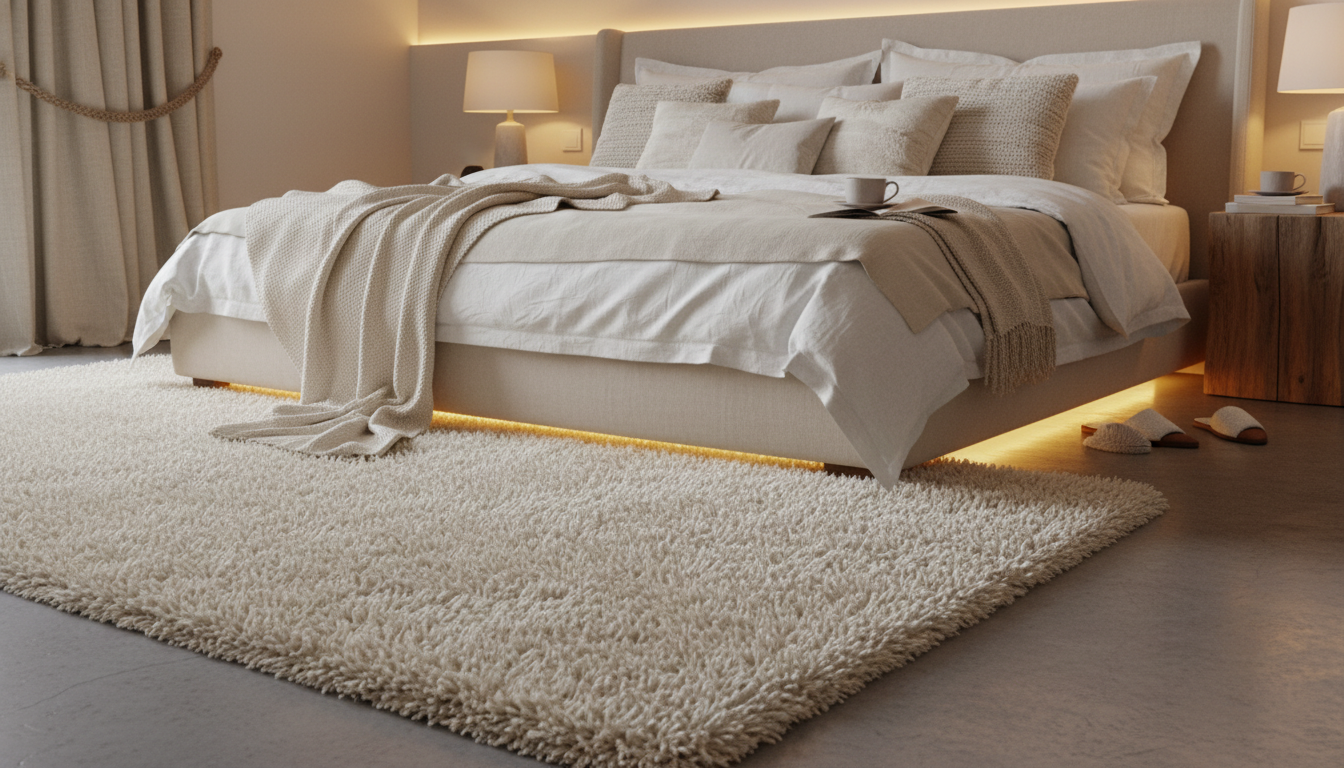
The Architecture of the “Soft Landing”
In a “Shag Bedroom Sanctuary,” the rug serves as the room’s acoustic dampener. The deep, irregular piles of a premium shag rug from **thebohorugs.com** absorb sound frequencies that flatweaves simply can’t touch, creating that “hushed luxury” feel found in five-star boutique hotels. For 2026, we are seeing a shift toward **undyed, organic tones**—think oatmeal, mushroom, and deep clay—which allow the texture to do the talking rather than a loud pattern. The styling secret here lies in the “Oversized Anchor.” Rather than placing a small rug on either side of the bed, designers are opting for 9×12 or 10×14 shags that extend at least 36 inches beyond the foot and sides of the bedframe. This creates a continuous visual plane of softness that makes the room feel expansive yet intimate.“We are moving toward ‘Sensory Architecture’ in the bedroom. A high-pile shag isn’t just a floor covering; it’s a grounding tool. By using long-staple fibers like those found in the Atlas Mountain-inspired collections, we create a literal cushion between the dweller and the stress of the day.”
— Elena Vance, Principal Textile Consultant
Material Matters: Why Fiber Choice Defines the Trend
The 2026 shag is more sophisticated because of the **twist-and-set technique**. This involves twisting the wool fibers more tightly before setting them, which prevents the “matted down” look that killed the shag trend in the early 2000s. Look for rugs that incorporate **Lanolin-rich wools**; these natural oils provide a built-in stain resistance and a subtle sheen that interacts beautifully with low-LRV (Light Reflectance Value) bedroom paint colors like charcoal or deep forest green. When sourcing from artisanal collections like those at **thebohorugs.com**, you’ll notice the difference in the backing. A flexible, hand-knotted cotton back allows the high-pile fibers to breathe, ensuring the rug remains plush for a decade rather than a season.To keep your 2026 high-pile rug looking editorial-ready, avoid the heavy beater bar on your vacuum, which can fray the delicate long-staple fibers. Instead, use a suction-only attachment once a week. Every six months, give the rug a light mist of distilled water and a gentle “fluff” with a wide-tooth grooming rake to reset the pile’s bounce and volume.
Styling the Shag with Minimalist Furniture
Because the rug is so visually heavy, the rest of the room should embrace “structural lightness.” Pair your high-pile shag with:- Low-profile platform beds in walnut or blackened oak to emphasize the rug’s height.
- Floating nightstands that leave the floor space clear, allowing the texture of the rug to flow uninterrupted to the walls.
- Monochromatic bedding in heavy linens or matte silks to create a layered “tone-on-tone” look that feels expensive and intentional.
The Materiality of 2026: Eco-Wool and Tactile Performance
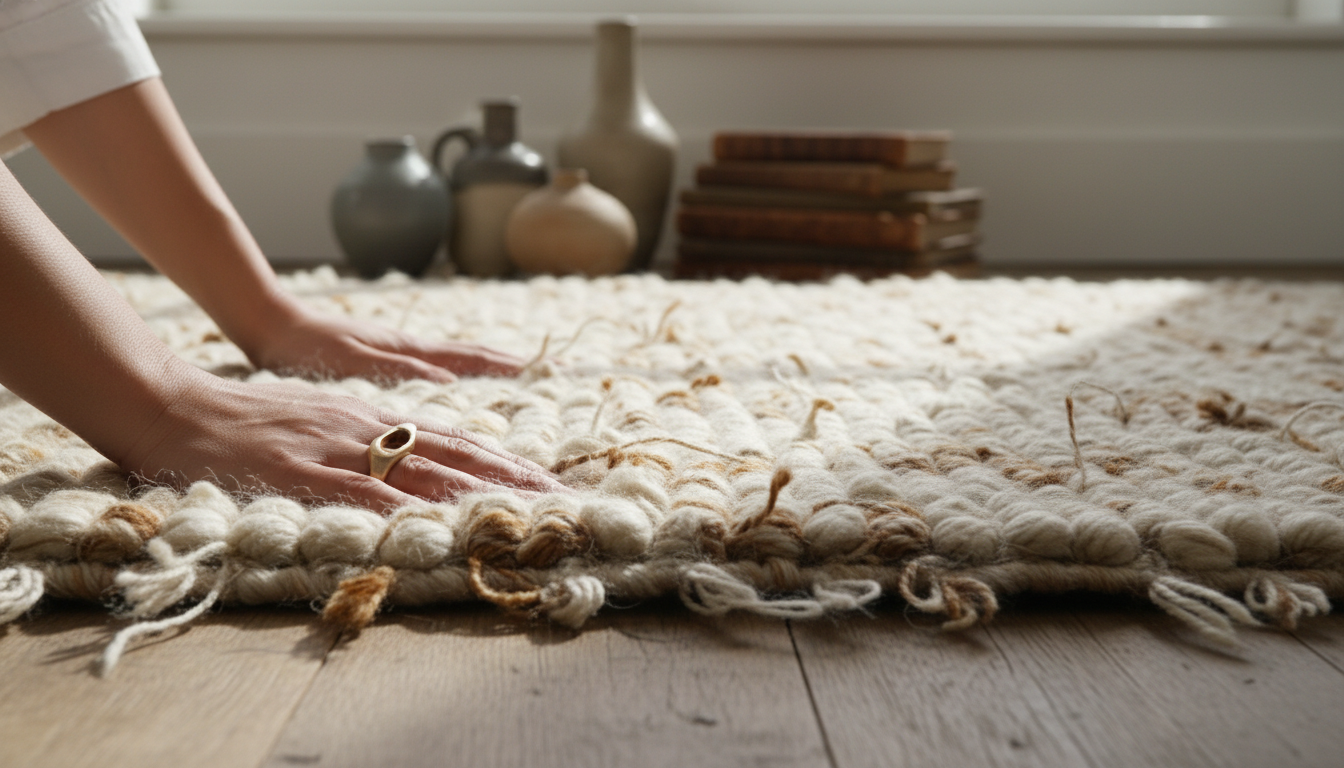
The New Frontier of Fiber: Regenerative Wool and Bio-Acetate
As we move into 2026, the conversation around textured rugs has shifted from how they look to how they are grown. We are seeing a definitive pivot toward “traceable tactile luxury.” Designers are no longer satisfied with generic wool; the focus is now on regenerative Merino and undyed New Zealand wool that retains its natural lanolin. This isn’t just a sustainability flex—it’s a performance one. Natural lanolin acts as a built-in stain repellent, giving these high-pile and bouclé pieces a longevity that synthetic mimics simply can’t match.
One of the most exciting breakthroughs hitting the market this year is the integration of Bio-Acetate fibers. Derived from wood pulp and acetic acid, these fibers are being blended into sculptural texture rugs to provide a silk-like shimmer with a much lower Light Reflectance Value (LRV). This means your rug doesn’t “glare” under LED lighting; instead, it glows. When you run your hand across a 2026-era bouclé, you’re feeling a complex architectural weave that balances the “crunch” of raw wool with the velvet-softness of bio-synthetics.
The “Living” Pile: Why Construction Matters More Than Color
In 2026, the rug is the architecture of the floor. We are seeing a massive resurgence in hand-knotted techniques from the Atlas Mountains, where the tension of the weave is intentionally varied to create “organic peaks.” This creates a high-low pile contrast that feels like walking on a cloud but behaves like a high-traffic workhorse. At thebohorugs.com, the shift toward these artisanal, heavy-weight textures is evident in collections that prioritize the “honesty” of the fiber over synthetic dyes.
- High-Twist Wool: Used in 2026 shag rugs to prevent shedding and matting, ensuring the rug looks fresh even after years of foot traffic.
- Cross-Weave Bouclé: A technique where wool loops are intertwined with jute or recycled PET for a “tactile performance” that handles pets and kids with ease.
- Felted Textures: Large-scale felted wool “stones” are being woven into rugs to create a 3D landscape underfoot.
“We are witnessing a return to ‘Material Honesty.’ In 2026, luxury is defined by the provenance of the thread. A rug isn’t just a floor covering; it’s a carbon-sequestering piece of functional art. When we use high-pile textures, we aren’t just adding softness—we are adding acoustic dampening and thermal mass to a room.”
— Julian Thorne, Textile Historian and Lead Designer
Designing for the Senses: The Performance Factor
The “Texture-Maxxing” trend isn’t just about aesthetics; it’s about creating a sensory sanctuary. People are exhausted by the “flatness” of digital screens and are seeking out ribbed rugs and sculpted textures that provide a grounding, haptic experience. However, the 2026 iteration of these rugs comes with a “tactile performance” guarantee. Gone are the days when a shag rug was a nightmare to clean. Modern spinning techniques allow fibers to be tightly bound, meaning you get that high-pile trend without the dread of the vacuum cleaner.
When styling these pieces, think about the interaction of light. A deep, forest-green bouclé rug with a low LRV will absorb light, making a large, cold room feel intimate and “wrapped.” Conversely, a cream-colored sculptural rug with high-low silk accents can brighten a dim home office without the sterile feel of a flat-weave.
Editor’s Pro Tip: The “Shadow Test”
Before committing to a sculptural textured rug, check how it reacts to your room’s specific lighting. Place a sample where the afternoon sun hits. Because 2026 textures rely on 3D depth, the “shadow play” created by the pile height can change the color of the rug by up to two shades throughout the day. For a sophisticated look, choose a rug where the “valleys” (the lower pile) are one shade darker than the “peaks” (the high pile) to emphasize the architectural depth.
This movement toward materiality is about more than just a fleeting look. It’s about investing in pieces from curators like thebohorugs.com that understand the intersection of ancient weaving traditions and modern living requirements. Whether it’s a ribbed sisal for your entryway or a cloud-like shag for the primary suite, the goal for 2026 is clear: if it doesn’t beckon you to take your shoes off, it’s not the right rug.
Designer-Approved Pairings: Layering for Impact
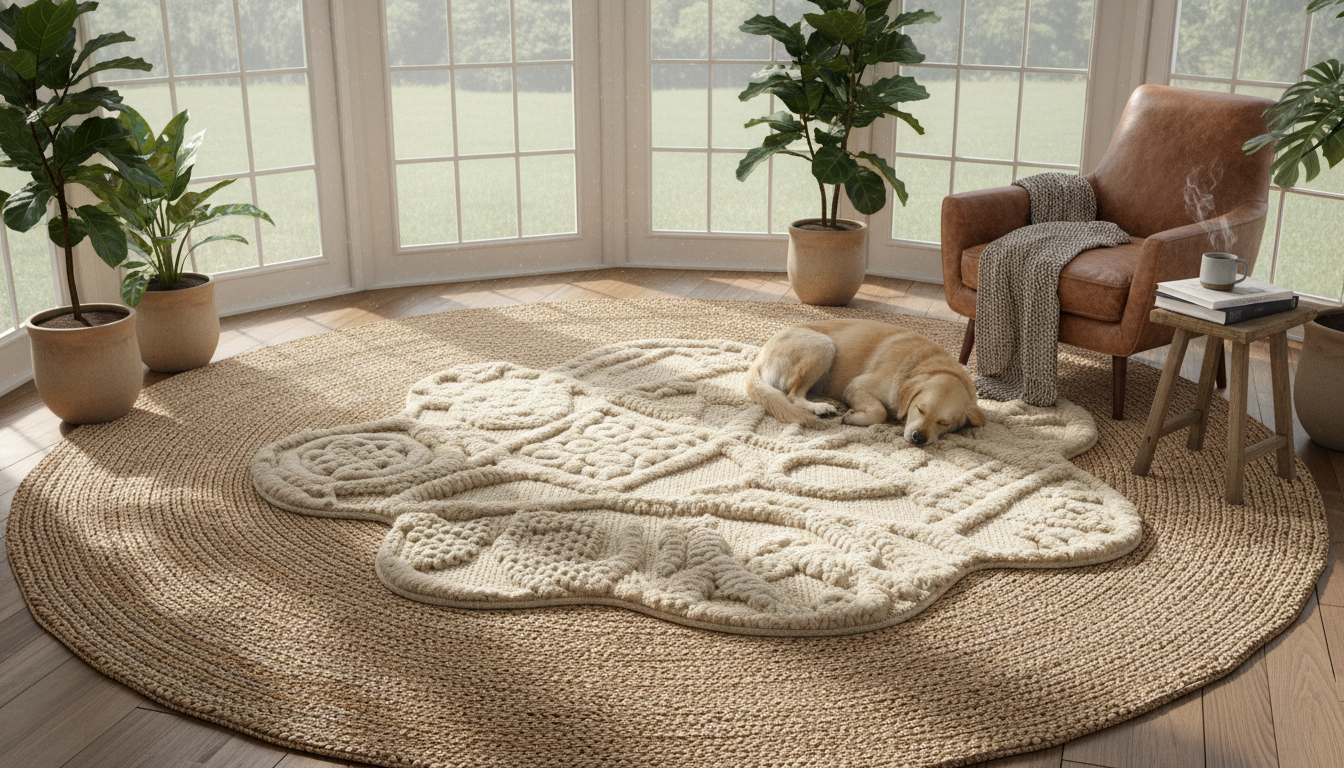
The Organic Foundation: Bouclé Wool Over Chunky Jute
This is the 2026 evolution of “Quiet Luxury.” To pull this off, start with a low-profile, hand-loomed jute or sisal base—ideally something with a slightly higher Light Reflectance Value (LRV) to keep the room from feeling grounded in “muddy” tones. Over this, center a smaller, cloud-like bouclé rug. The juxtaposition works because the grit of the jute provides a structural counterpoint to the soft, looped curls of the wool. At thebohorugs.com, we’ve observed that designers are increasingly opting for bouclé rugs infused with Bio-Acetate fibers—a sustainable silk alternative that adds a subtle shimmer to the loops, catching the afternoon sun in a way that standard wool cannot.The Global Collector: High-Pile Shag Over Vintage Flatweaves
For those who want a home to tell a story, this pairing is unmatched. Take a weathered, low-pile vintage Persian or Turkish Kilim and top it with a plush, high-pile shag. The trend for 2026 pulls specifically from hand-knotted techniques found in the Atlas Mountains, where the pile is purposefully uneven to emphasize its artisanal roots. The vintage rug provides the “frame” and the color story, while the shag provides the “destination”—a soft island for the coffee table or a reading nook. This “texture-maxxing” approach keeps the vintage rug from looking too formal and the shag rug from looking too utilitarian.The Architectural Edit: Ribbed Sisal + Sculptural Abstract Toppers
If your aesthetic leans toward the brutalist or modern, look for ribbed textures. A wide-ribbed base rug creates a sense of linear direction, almost like floorboards. When you place a sculptural high-low rug—one where the pattern is physically carved into the pile—on top, the result is deeply architectural.“We are moving toward ‘sensory zoning.’ In 2026, we don’t use room dividers; we use the transition from a flat-ribbed weave to a three-inch shag to tell the brain it’s time to shift from work to rest. It’s a physical boundary that feels like a hug for your feet.”
— Marcus Thorne, Textile Historian and Interior Consultant
2026 Pairings Cheat Sheet
To make your selection easier, follow these designer-approved combinations currently dominating the high-end residential circuit:- The Sophisticate: A charcoal ribbed wool base with an asymmetrical, cream-colored silk-blend sculptural rug.
- The Earth Mother: A deep forest green jute base topped with a bone-white, high-pile Moroccan-inspired shag from the thebohorugs.com artisanal collection.
- The New Minimalist: A tonal “sand-on-sand” look featuring a flat-weave linen rug under a thick, hand-tufted bouclé circle.
To avoid a room feeling “shaggy” or disorganized, stick to the 80/20 rule. 80% of your floor coverage should be a stable, low-profile texture (ribbed, flatweave, or tight jute), and 20% should be your “hero” texture (high-pile, bouclé, or sculptural). This ensures the room feels grounded and the high-texture rug feels like a deliberate piece of art rather than a carpet remnant.
Maintenance: Preserving the 2026 Tactile Feel
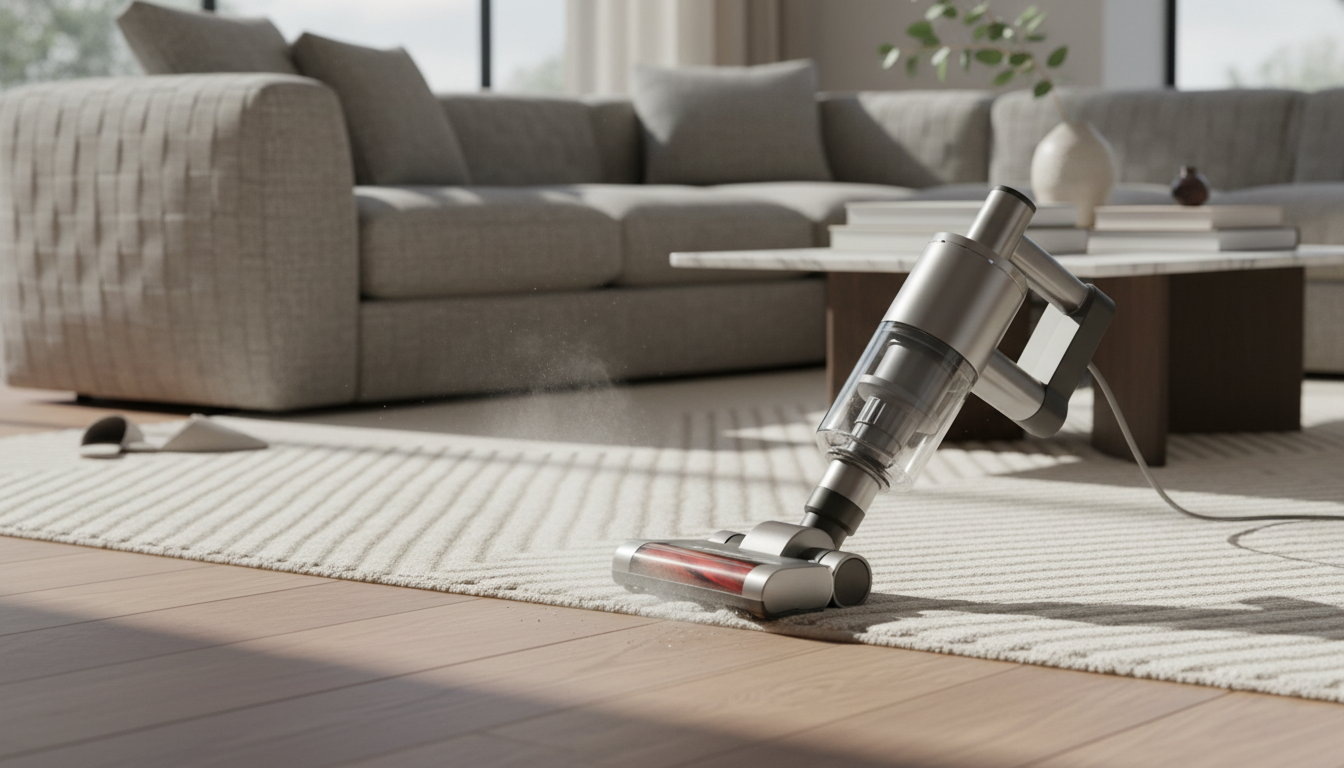
The Golden Rule of Suction: Ditch the Beater Bar
The most common mistake that ruins a **high-pile rug trend** aesthetic is aggressive vacuuming. Modern textured rugs, especially those with the intricate high-low topography popular this year, are often handcrafted using delicate loops. Using a vacuum with a rotating beater bar is the fastest way to “frizz” the fibers and destroy the sculptural definition. For the **bouclé rugs 2026** designers are currently obsessed with, switch to a canister vacuum with a floor brush attachment or set your upright to the highest pile setting with the brush roll turned off. This allows you to lift dust from the base of the pile without snagging the delicate wool loops or pulling at the hand-knotted foundations found in the premium collections at thebohorugs.com.Managing the “Patina of Use” in High-Traffic Zones
Texture is a living thing. Over time, even the most resilient textured rugs of 2026 will experience “shading” or “pooling”—those areas where the pile leans in different directions based on foot traffic. Instead of seeing this as wear, designers view it as a luxury patina. However, to keep the look intentional rather than messy, rotate your rug 180 degrees every six months. This is particularly vital for sculptural rugs with high Light Reflectance Values (LRV), such as cream or “Oatmeal” tones, where shadows cast by crushed pile are more visible.“The beauty of 2026’s textural movement lies in the depth of the weave. When we look at hand-tufted sculptural pieces, we’re looking for a play of light and shadow. To maintain that, you must allow the fibers to breathe. Regular ‘fluffing’ with a soft-bristle grooming rake can restore the verticality of a high-pile shag, keeping the room looking curated rather than lived-in.”
— Isabella Chen, Lead Textile Consultant
The Science of Fiber Recovery
Natural fibers like wool and silk-blends have an inherent “memory,” but they can be overwhelmed by heavy furniture. If you’re placing a heavy marble coffee table atop a **high-pile rug**, use wide furniture coasters to distribute the weight. If a dent occurs, a professional secret involves a handheld steamer. A light application of steam (never touching the fiber directly) followed by a gentle agitation with a blunt spoon will usually encourage the wool to spring back to its original 2026-spec height.Because many 2026 textured rugs utilize organic dyes and untreated fibers to maintain their tactile softness, chemical cleaners are often too harsh. If a spill occurs on a bouclé or ribbed rug, never scrub. Scrubbing forces the liquid into the twist of the fiber, causing it to “bloom” and permanently change texture. Use a clean white cotton cloth to blot from the outside in. For luxury investments, like the artisanal pieces from thebohorugs.com, keeping a pH-neutral wool rinse on hand is the best way to ensure the fiber’s natural lanolin remains intact.
Dealing with Shedding in High-Pile Textures
It is a biological reality: high-quality wool rugs shed. This is not a defect; it is a sign of a natural, plastic-free product. During the first few months of styling your **textured rugs 2026** centerpiece, you may notice small “pills” or fluff. Avoid the urge to vacuum more frequently. Instead, let the rug go through its natural shedding cycle. Quality pieces from reputable sources are designed with enough density that this initial loss won’t affect the visual weight or the “squish factor” of the rug. Any stray yarns that rise above the pile height should be “shorn” with sharp shears rather than pulled, protecting the integrity of the weave.Elevate Your Space
Discover the artistry of handmade luxury. Each rug is a masterpiece of tradition and modern design.
Expert Q&A
What are the best textured rugs for 2026?
The most sought-after styles for 2026 include heavy-weight bouclé, high-low sculptural wool, and sustainable shag rugs made from recycled organic fibers.
How do you clean bouclé or high-pile rugs?
Avoid using a beater bar vacuum; instead, use a suction-only setting or a handheld tool. For bouclé, spot clean immediately with a wool-safe detergent and a dabbing motion to avoid fraying the loops.
Can you layer textured rugs effectively?
Yes, layering is a 2026 staple. Use a flat-weave jute or sisal rug as a base and place a smaller, highly textured piece like a shag or bouclé rug on top to define a seating area.
Are shag rugs still trendy in 2026?
Absolutely, though they have evolved. The 2026 shag is more sophisticated, using varying pile heights and matte wool rather than the shiny synthetic textures of the past.
Which textured rug is best for high-traffic areas?
Ribbed wool and low-loop bouclé are best for high-traffic zones like hallways, as they provide tactile interest while resisting the crushing often seen in high-pile shag.
Does texture help with room acoustics?
Textured rugs, especially high-pile and high-density wool pieces, are excellent for sound absorption, making them ideal for open-plan living or home offices.
How do I choose between bouclé and shag?
Choose bouclé for a modern, architectural, and clean aesthetic. Opt for shag when the goal is maximum comfort and a cozy, bohemian-luxe atmosphere.
What furniture pairs best with sculptural rugs?
Clean-lined, minimalist furniture with smooth surfaces (like stone, wood, or glass) pairs best, as it creates a contrast against the rug’s three-dimensional surface.
Are high-pile rugs hard to maintain with pets?
They can be, but many 2026 designers recommend ‘Performance Shag’ or high-low piles with variegated colors that help hide pet hair and small debris between professional cleanings.
What color palette works best for textured rugs?
Earthy neutrals—cream, oatmeal, sage, and terracotta—work best because they allow the shadows created by the texture to be the primary design feature.
Can textured rugs make a small room look smaller?
Not necessarily. A large, light-colored textured rug can actually make a room feel more expansive by adding depth and visual interest without the clutter of patterns.
How do I prevent a high-pile rug from shedding?
Shedding is common in new high-pile wool rugs. Regular gentle vacuuming and choosing a rug with a high ‘knot count’ or dense tufting will reduce shedding over time.
Written by TheBohoRugs Interior Design Team
Experts in handmade rugs, boho interiors, and modern home decor.