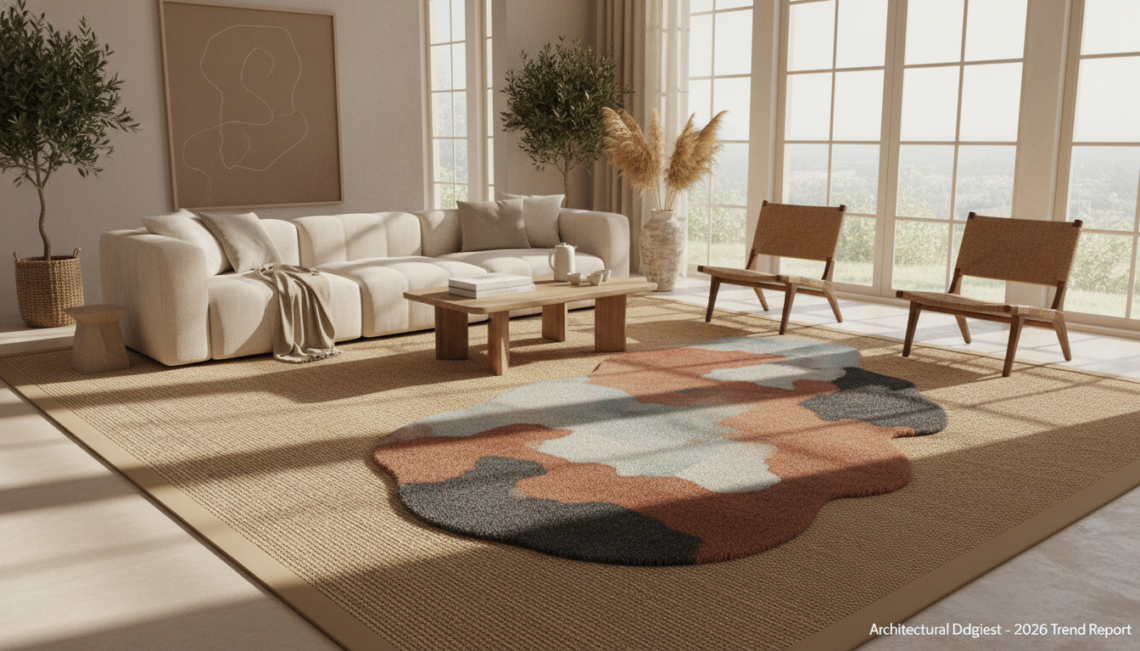
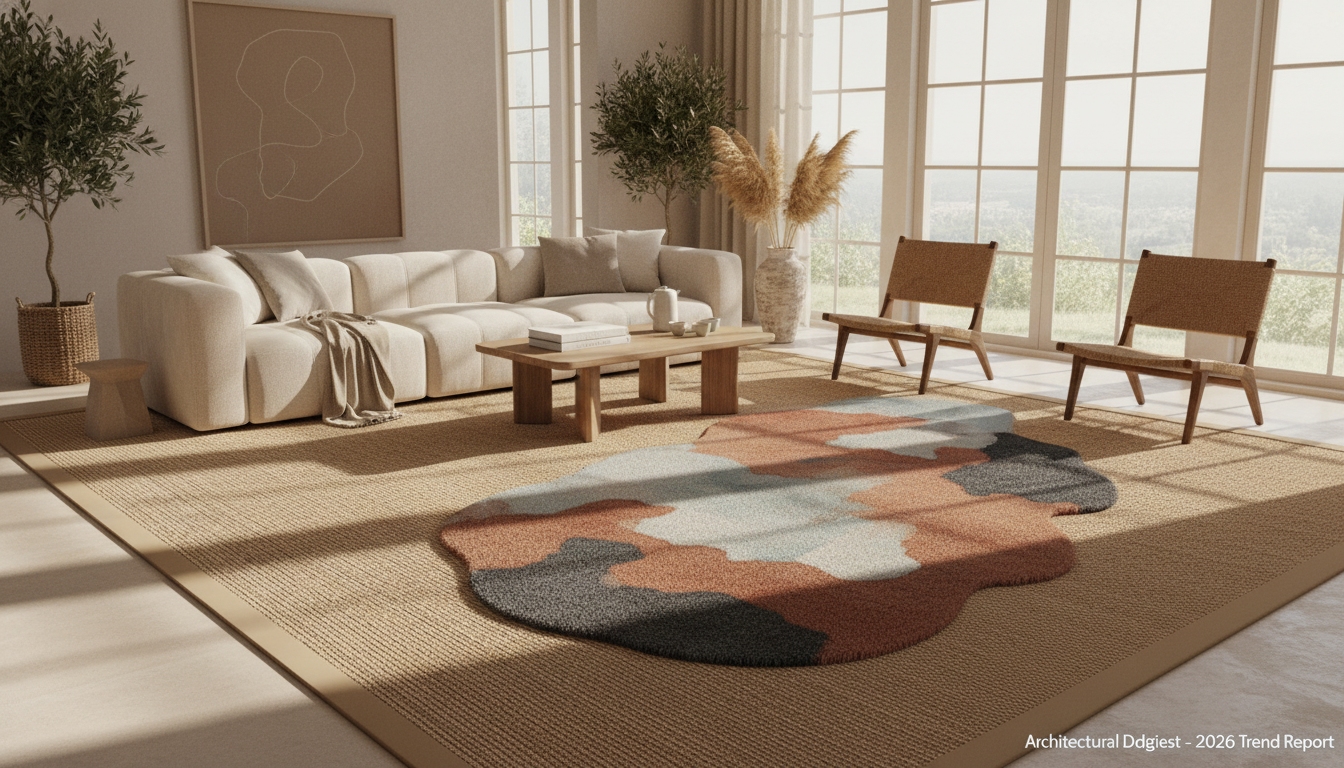
The era of the ‘floating island’ rug is officially over. For years, interior designers defaulted to a single, oversized rectangle to anchor a room, but in 2026, that approach feels stark and unfinished. Today’s most sophisticated spaces—those curated for the pages of Veranda and Architectural Digest—embrace a more complex, tactile narrative. Layering is no longer just a clever trick to hide a stain or stretch a budget; it has evolved into a high-art form that defines the modern home. By stacking textures, contrasting pile heights, and playing with organic silhouettes, you transform a flat surface into a multidimensional landscape. This guide dismantles the mystery of the ‘double-rug’ look, offering a blueprint to master 2026’s most dominant trend with surgical precision and effortless flair.
“To layer rugs like a designer in 2026, start with a low-profile, neutral base—typically a natural fiber like jute or sisal—that is large enough to touch all major furniture pieces. Overlay this with a smaller, high-texture accent rug, such as a vintage Persian, a plush bouclé, or an asymmetrical sheepskin. Ensure the top rug covers approximately 60-70% of the base rug, leaving an 8-to-12-inch border to create depth and visual framing without overwhelming the floor space.”
The Roadmap
Table of Contents
- The 2026 Aesthetic Shift: From Minimalism to Maximalist Texture
- Rule 1: The Foundation of Natural Fibers
- Rule 2: The Art of the ‘Wrong’ Ratio
- Rule 3: Mastering the High-Low Pile Contrast
- 8 Trending Layered Looks for Every Room
- The 2026 Material Palette: Sustainable and Sensory
- Maintenance Secrets for Multi-Level Floors
- Common Pitfalls: Why Your Layers Feel Messy
The 2026 Aesthetic Shift: Beyond the Single Surface
The Death of the ‘Flat’ Room
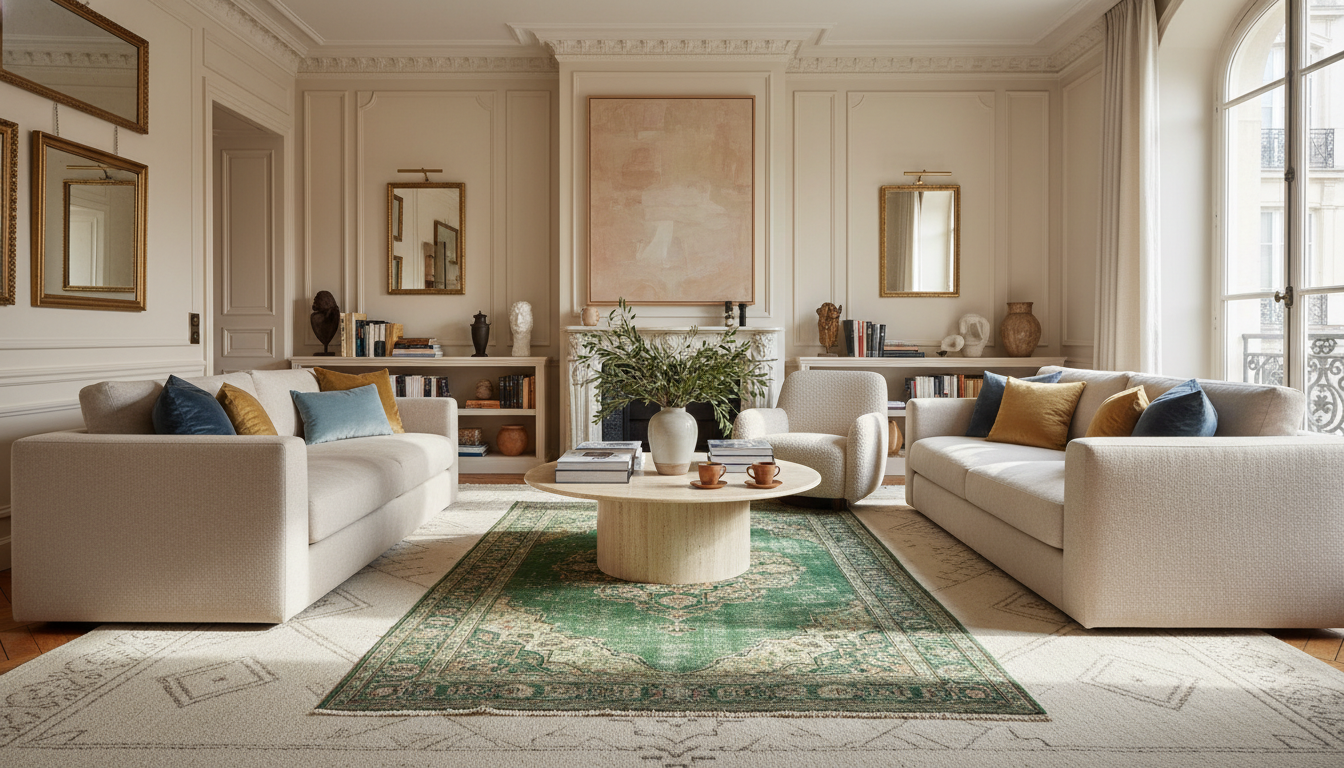
The shift toward layered rugs in 2026 is driven by a collective desire for “Rich Minimalism.” It is no longer enough for a room to simply look expensive; it must feel curated, quiet, and deeply tactile. By layering a smaller, high-character piece—perhaps a vintage hand-knotted find from the Atlas Mountains—over a broad, neutral foundation, designers are creating a visual anchor that a single rug simply cannot achieve. This technique provides a sense of permanence and “weight” to furniture groupings, preventing them from feeling as though they are floating in an empty void. To understand why this is dominating current trends, one has to look at the materials. We are seeing a massive surge in Bio-Acetate fibers and undyed Highland wools that offer incredible depth. When you place a high-luster silk-blend rug atop a matte, chunky jute base, you create a play of light that changes throughout the day. This isn’t just decorating; it’s a sophisticated manipulation of the room’s Light Reflectance Value (LRV), using the floor to bounce or absorb light in ways that make a space feel more expansive yet intimate.Expert Insight: The Psychology of the Layered Floor
“In 2026, we are designing for the ‘tactile mind.’ A single rug is a statement, but layered rugs are a conversation. By mixing a low-profile flatweave with a plush, organic-shaped accent, we’re tapping into a primitive need for soft boundaries and nesting. It’s about creating a sanctuary within the home that feels protected from the digital noise outside.”
— Julian Thorne, Lead Curator at The Design Collective
Texture as the New Neutral
The most successful rug layering ideas this season move away from bold, clashing colors and instead focus on “tonal friction.” This involves staying within a tight color palette—think warm ochres, weathered clays, or a sophisticated Sage Green with a low LRV—while varying the pile height and weave density. At thebohorugs.com, the focus has shifted toward these artisanal “foundation pieces.” Their latest collection of oversized, hand-spun hemp rugs provides the perfect architectural base for the smaller, more intricate nomadic weaves that are defining the 2026 look. This combination allows homeowners to protect their investment in high-quality flooring while showcasing the artistry of smaller, collectible textiles.To master the designer look, follow the 80/20 ratio. Your base rug (the foundation) should cover roughly 80% of your seating area and be a low-profile, natural material like sisal or a fine-count flatweave. The top 20% is where you inject personality—use a rug with a significantly different pile height, such as a bouclé wool or a shag accent, to create that coveted 2026 depth. This contrast is what prevents the layers from looking messy and instead makes them look intentional.
Material Science: Choosing Your 2026 Base Layer
The Return of High-Integrity Natural Fibers
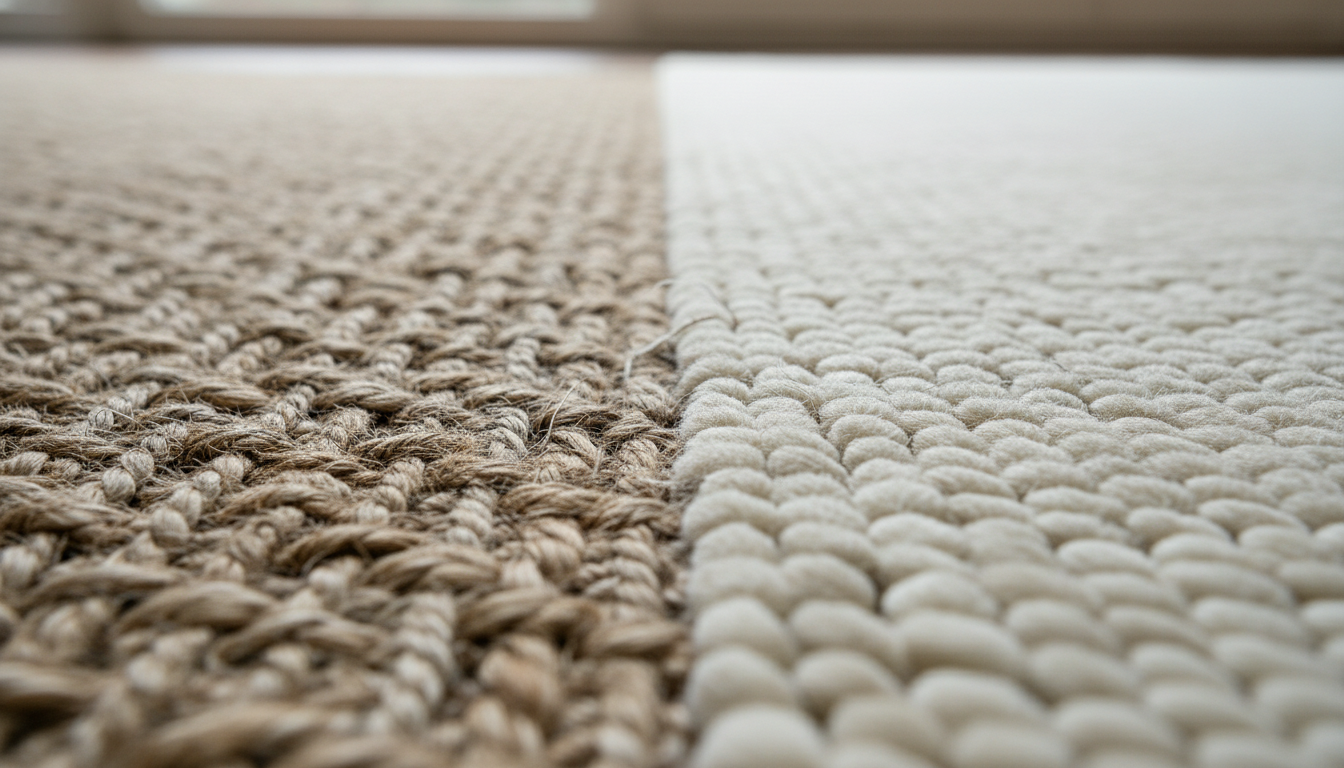
The design world’s current obsession with “Quiet Luxury” has brought raw, organic materials back to the forefront, but with a sophisticated 2026 twist. We are seeing a significant pivot toward Premium Grade Jute and Agave-based Sisal. Unlike the scratchy, shedding versions of a decade ago, today’s luxury base layers utilize “Golden Fiber” jute, harvested in specific regions of Bangladesh and hand-spun to ensure a silk-like sheen and softer underfoot feel. These materials offer a neutral Light Reflectance Value (LRV) that sits typically between 40 and 55, making them the perfect middle-ground—they don’t swallow the light in a room, but they don’t bounce it harshly either. For those sourcing from artisanal collections like thebohorugs.com, look for hand-loomed flatweaves that showcase slight “abrash” or natural color variations. These imperfections are the hallmark of luxury in 2026, proving the piece wasn’t churned out by a machine.The 2026 Shift: Bio-Acetate and Regenerative Blends
One of the most exciting developments in textile science this year is the integration of Bio-Acetate fibers and recycled performance yarns into base layers. These are particularly vital for high-traffic zones like entryways or dining rooms where a traditional wool rug might be too precious. “We are seeing a massive movement away from petroleum-based polyesters,” notes Julian Thorne, Senior Textile Historian and Design Consultant. “In 2026, the ‘it’ base layer is often a blend of regenerative wool and bio-sourced polymers. It mimics the matte finish of a hand-knotted rug from the Atlas Mountains but offers the durability of an industrial textile. It’s the ultimate marriage of heritage aesthetics and modern chemistry.”Mastering the “Low-Profile” Mandate
To master the layered look, your base rug must be a flatweave or a low-pile construction. If your base layer is too plush—think a heavy shag or a thick tufted wool—the top rug will “float” awkwardly, creating a tripping hazard and a visual disconnect. The most successful 2026 designs utilize a tight-loop boucle or a herringbone weave for the bottom. These patterns provide just enough micro-texture to be interesting up close while appearing as a solid, grounded neutral from a distance. This tactile contrast is what differentiates a professionally styled room from a DIY attempt.When selecting your base layer, designers in 2026 are sticking to the 80/20 rule. Your base rug should cover approximately 80% of the floor’s “visible” real estate, leaving a consistent border of 8 to 12 inches between the rug edge and the wall. This allows the flooring material—whether it’s reclaimed oak or micro-cement—to act as a third frame for your layered masterpiece.
Why Performance Flatweaves are Trending
For families and pet owners, the “Performance Flatweave” has become the gold standard for layering. These rugs are often woven so tightly that dust and dander can’t penetrate the fibers, making maintenance a breeze. When you browse the curated selections at thebohorugs.com, pay attention to the kilim and dhurrie styles. Their lack of pile makes them the ideal steady surface for a smaller, more decorative vintage rug to sit atop without shifting or bunching. By prioritizing the material science of your base layer, you aren’t just buying a rug; you’re investing in the longevity and “breathability” of your room’s design. The base is the silent partner—essential, structural, and when chosen correctly, the secret to that coveted “designer” finish.The Golden Ratio: Sizing for Dimensional Depth
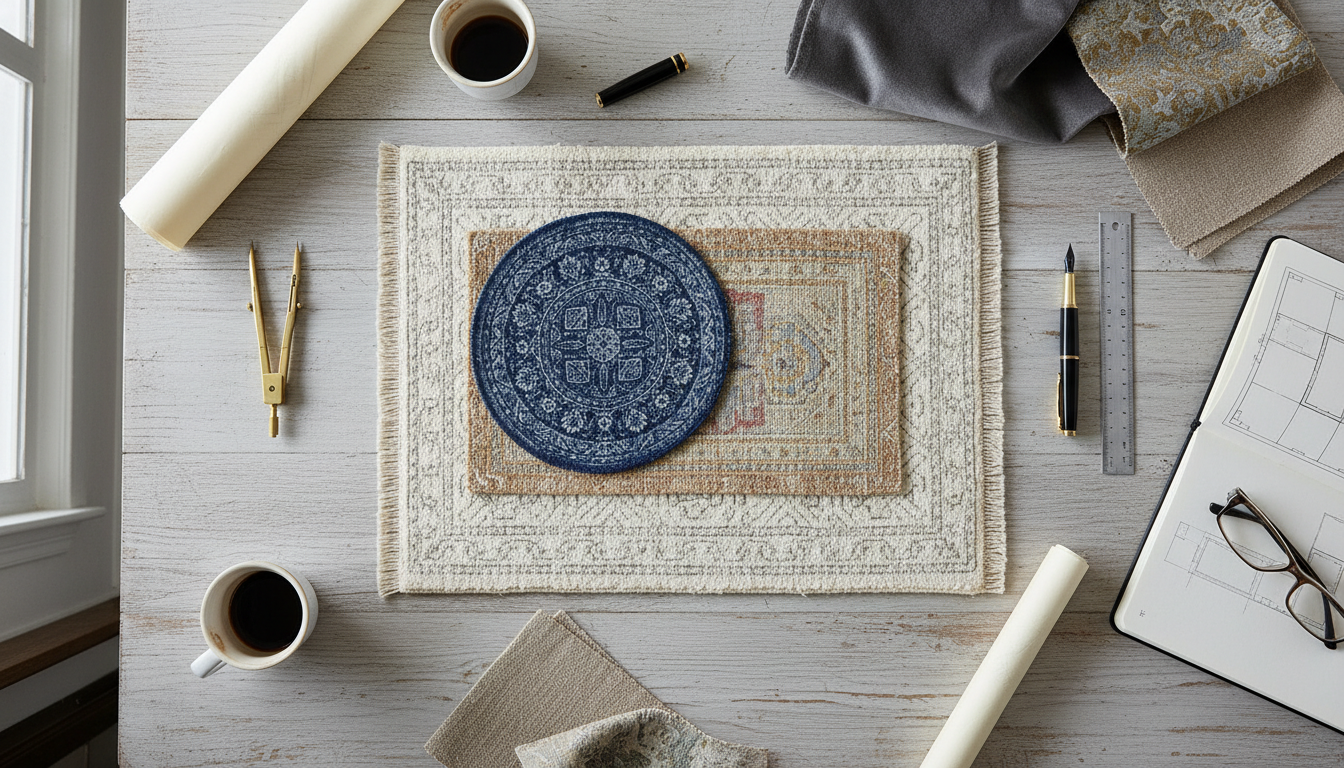
Mastering the Architectural Frame: The Science of the “Reveal”
The most common mistake when experimenting with layered rugs is the “postage stamp” effect—where a small decorative rug sits aimlessly in the center of a room, looking more like an afterthought than a design choice. In 2026, the aesthetic has pivoted toward **architectural framing**. Think of your base rug as the matte in a high-end art frame; its primary job is to provide a grounded, neutral border that allows the top layer’s artistry and texture to sing. To achieve that sought-after designer look, you need to master the **”Reveal Ratio.”** For a standard living room, your base rug (typically a high-durability material like a chunky jute or a flat-weave Moroccan wool) should extend at least 12 to 18 inches beyond the edges of the top rug. This creates a visual “landing strip” that guides the eye. If the border is too narrow, the room feels cramped; if it’s too wide, the top rug looks lost. “We are seeing a massive shift toward what I call ‘topographical layering’ in 2026,” notes **Julian Thorne, Lead Textile Historian**. “Designers are no longer just stacking rectangles. They are using a large, low-profile base—often with a **Light Reflectance Value (LRV) of 40–50** to keep the room bright—and topping it with an organic, hand-knotted piece. The goal is to create a 3D landscape underfoot that feels lived-in yet intentional.” When selecting your pieces from artisanal sources like thebohorugs.com, keep these specific dimensional pairings in mind to ensure your proportions feel balanced:- The Grand Anchor: For a standard 12×15 room, use a 9×12 base rug with a 6×9 or 5×8 decorative top layer. This leaves enough of the base rug visible to define the “zone” while keeping the top layer concentrated under the coffee table.
- The Asymmetrical Edge: In 2026, we are breaking the rules of symmetry. Try placing a smaller, irregular-shaped sheepskin or a vintage **Oushak** at a 45-degree angle over a large sisal rug. This draws the eye diagonally, making smaller urban apartments feel significantly more expansive.
- The Bedroom Nest: Your base rug should sit entirely under the bed, extending 24 inches on either side. Your top layer—ideally something with a high-pile **Bio-Acetate or silk infusion** for softness—should only cover the bottom two-thirds of the bed’s footprint.
Before committing to a high-value top layer, use painter’s tape to outline the dimensions of the smaller rug on top of your existing base. Walk around the space for 24 hours. If the taped area feels like a “trip hazard” visually, you need to go up one size. A designer secret for 2026 is ensuring the top rug touches at least two pieces of furniture—this anchors the layer so it doesn’t look like it’s “floating” in the middle of the room.
Asymmetry and Organic Shapes: The New Frontier
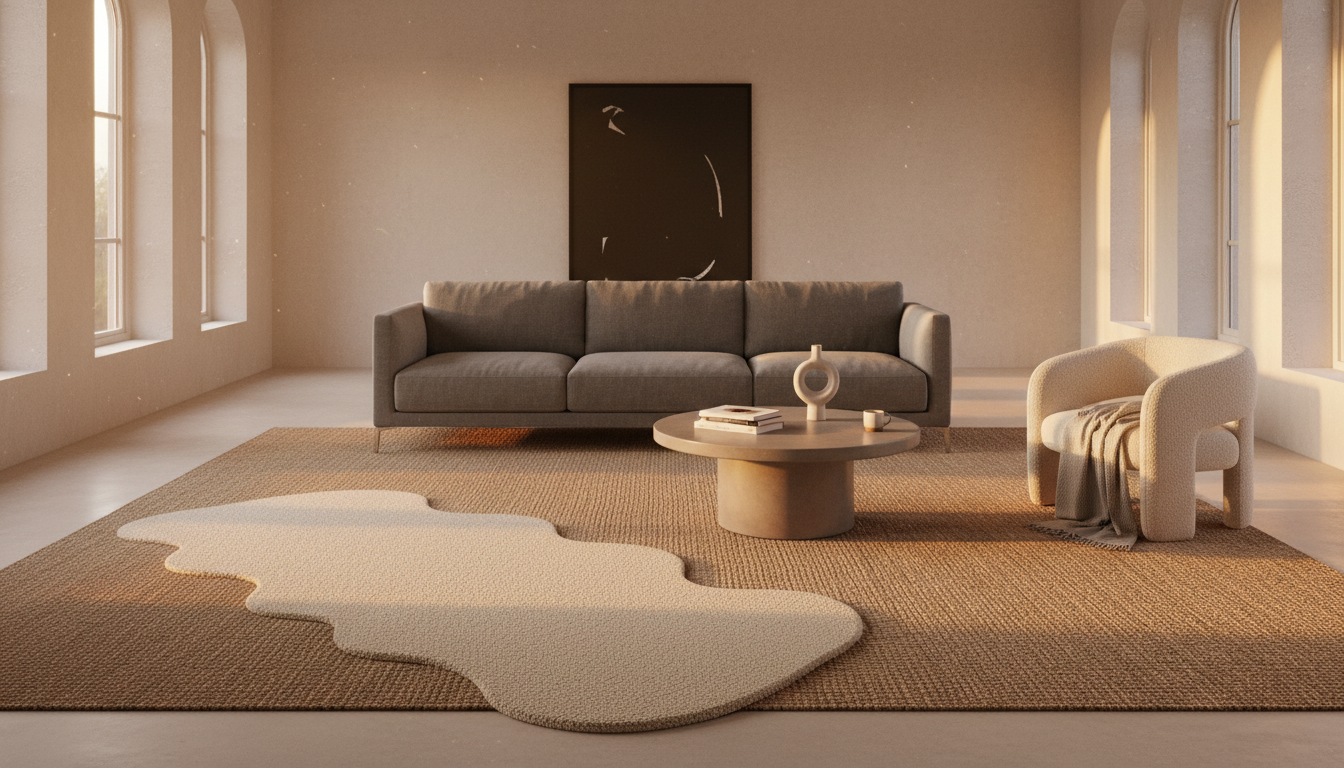
Breaking the Box: Why Fluidity is Overtaking Symmetry
The era of the perfectly centered 9×12 rectangle is fading into the background of design history. In 2026, we are seeing a radical shift toward what designers call **”Curated Tension.”** This movement rejects the rigid borders of traditional floor planning in favor of shapes that mimic the natural world—think river stones, pooling liquid, and soft, eroded embankments. By layering an organic, irregularly shaped rug over a structured base, you immediately soften the architectural “hard lines” of a room, making even a minimalist space feel lived-in and soulful. The secret to mastering this look lies in the **Light Reflectance Value (LRV)** and the tactile contrast of the materials. When you place a high-luster, hand-tufted silk-blend “puddle” rug atop a matte, low-LRV wool base, you create a visual depth that flat rugs simply cannot replicate. It’s less about covering the floor and more about creating a topographical map of comfort.The “Wrong Angle” Strategy
One of the most sophisticated ways to execute this trend is through intentional misalignment. Instead of stacking rugs like pancakes, designers are now placing the top layer at a **15- to 30-degree angle** relative to the base rug. This diagonal energy draws the eye across the room, making small living areas appear significantly more expansive. For 2026, we are seeing a surge in **”Bio-Acetate” fibers**—a sustainable, high-sheen alternative to silk—being used in these organic top layers. When these fluid shapes are layered over a rugged, hand-knotted base from the **Atlas Mountains** (found in the artisanal collections at thebohorugs.com), the juxtaposition of the refined and the raw creates a high-end, gallery-like atmosphere.“We are moving away from ‘decorating’ and toward ‘composing,'” says **Julianne Vance, Lead Textile Historian**. “An asymmetrical rug placement acts as a visual anchor that doesn’t feel heavy. It suggests that the room evolved over time, rather than being bought out of a single catalog. It’s the difference between a house and a home.”
Navigating the Overlap
When working with organic shapes, the “Rule of Three-Quarters” is your best friend. Your top, asymmetrical rug should ideally cover about **75% of the width** of the bottom rug, leaving enough of the base exposed to provide a neutral frame. This prevents the top rug from looking like a lonely island in a sea of floor.- The Foundation: Use a low-profile, high-durability material like jute or a flat-weave wool in a “grounding” tone—think Sage Green with an LRV of around 40.
- The Accent: Layer a “kidney” or “amoeba” shaped rug in a contrasting texture. A high-pile bouclé or a sheared sheepskin works beautifully here.
- The Pivot: Ensure the organic shape “breaks” the edge of the furniture—perhaps tucked under one leg of a sofa but floating freely near a coffee table.
In 2026, lighting is just as important as the rug itself. When layering asymmetrical shapes, use low-level directional lighting (like a floor lamp or integrated LED plinth) to cast a subtle shadow at the edge where the top rug meets the base. This “shadow gap” emphasizes the three-dimensional nature of the layering and highlights the artisanal weave of premium pieces, such as those sourced from thebohorugs.com.
Living Room Luxury: The Wool on Jute Formula
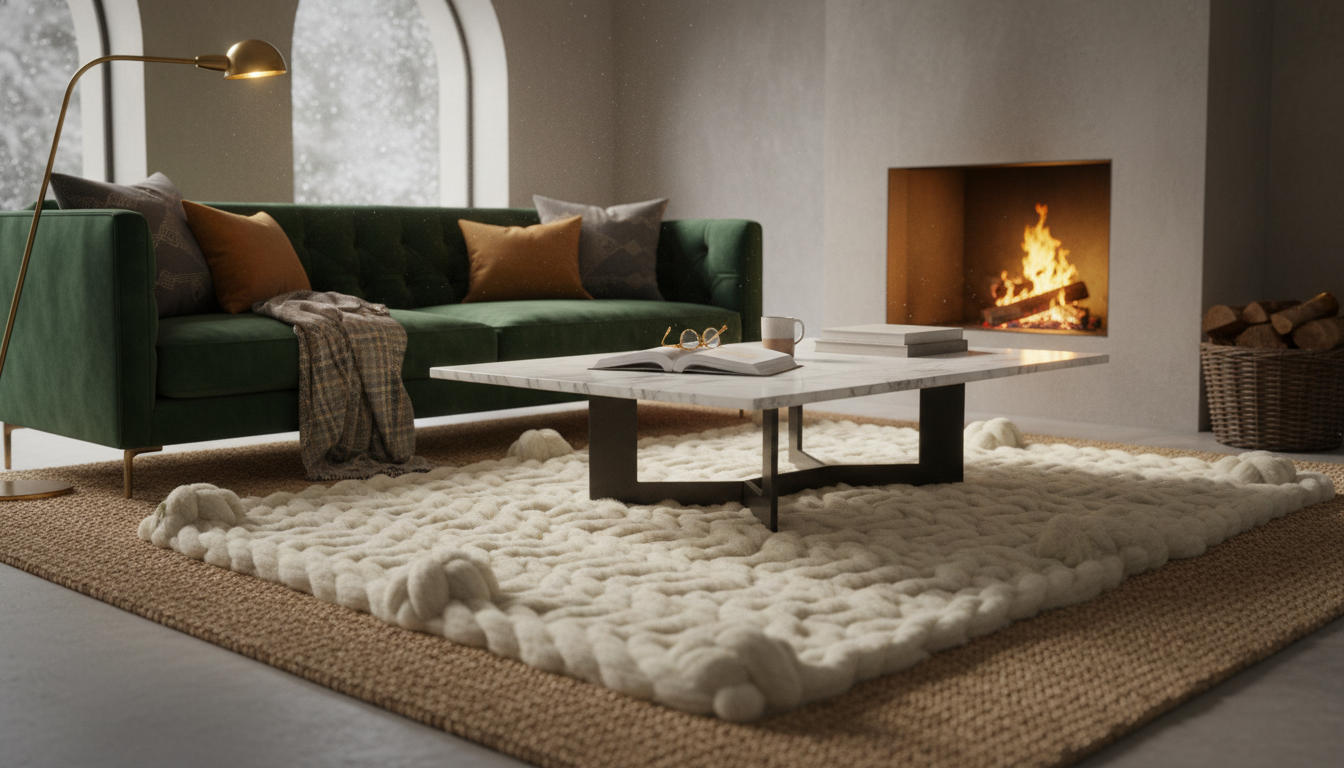
The Foundation: Organic Architecture
The secret to this look begins with the base. In 2026, we are seeing a pivot toward **bleached or “blonde” jute** with a tighter, more sophisticated weave than the chunky, loose loops of a decade ago. This isn’t just about looks; the structural integrity of a high-grammage natural fiber rug provides the necessary “bite” to hold a top layer in place without the constant need for readjustment. When selecting your base from a curated source like thebohorugs.com, look for sustainably harvested fibers that maintain their natural luster. A 9×12 or 10×14 base rug acts as the architectural anchor of the room, extending the visual boundary of the seating area and making even modest floor plans feel expansive.The Overlay: The Soul of the Room
Once the canvas is set, the top layer provides the narrative. The 2026 trend favors **high-lanolin New Zealand wool** or hand-knotted pieces from the Atlas Mountains that offer a stark sensory contrast to the vegetable fibers beneath. By placing a smaller, plush wool rug—typically a 6×9 or 5×8—atop the jute, you create a “zone of intimacy” within the larger living space. “We are seeing a massive shift toward what I call ‘The Sensory Sandwich’,” says Julian Thorne, Senior Textile Curator. “Clients no longer want a room that just looks expensive; they want one that sounds and feels quiet. The acoustic dampening properties of a dense, hand-tufted wool rug layered over a thick jute base are unparalleled. It’s the difference between a room that echoes and a room that embraces you.”Mastering the Proportions
The most common mistake is choosing a top rug that is too close in size to the base. For the 2026 look to land, you need a visible border of at least 12 to 18 inches of jute. This “frame” highlights the texture of both materials. If you’re working with a neutral palette, consider a wool rug with a **Light Reflectance Value (LRV) of around 75**—a soft cream or “parchment” white—to contrast against the deeper, toasted oak tones of the jute.To prevent the top layer from “traveling,” designers in 2026 are eschewing traditional thick pads for the top layer. Instead, use a thin, recycled felt pad between the wool and the jute. This provides just enough friction to lock the fibers together without creating a tripping hazard or a bulky “hump” in the center of your living room.
The 2026 Palette: Beyond Beige
While the classic tan-and-cream combination is timeless, the current year is introducing more adventurous pairings. We are seeing **sage green wool abstracts** layered over dark, charcoal-dyed hemp bases. The key is to keep one element grounded in nature. If your top rug features a bold, geometric pattern or a vibrant vegetable dye, the natural, un-dyed jute base acts as a neutralizer, preventing the space from feeling chaotic. For those looking to replicate this designer-level depth, exploring the artisanal collections at thebohorugs.com allows you to find those unique, hand-finished textures that big-box retailers simply cannot replicate. A hand-knotted wool rug has a “direction” to its pile—often called the “shimmer side” and the “deep side”—and when placed atop a matte jute base, the play of light becomes the room’s primary art piece.The Bedroom Retreat: Softness Upon Softness
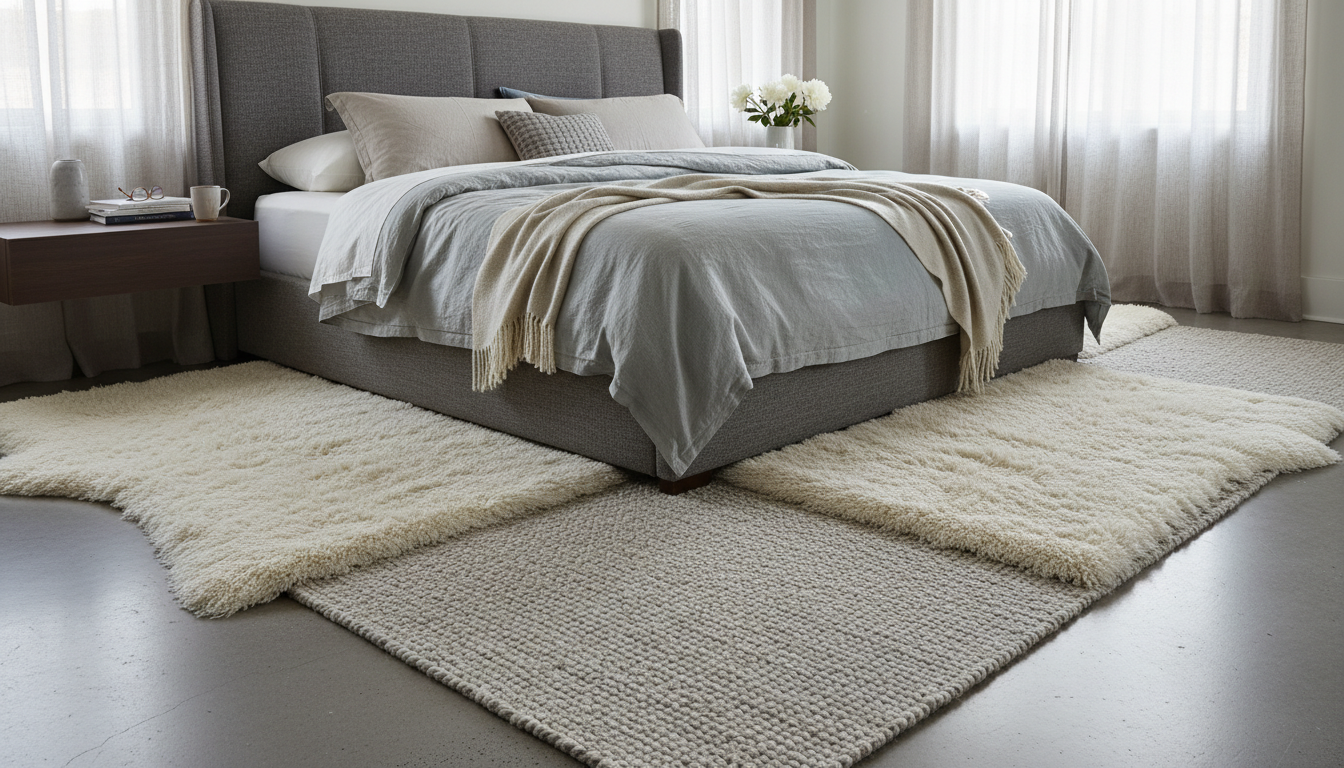
The Sanctuary Shift: Why Double-Layering is the New Bedroom Standard
In 2026, the bedroom has officially transitioned from a mere sleeping quarters to a “sensorial sanctuary.” This shift has moved us away from the stark, cold floors of previous years toward what designers call Quiet Maximalism. The goal isn’t just to fill space, but to create a high-tactility environment where the “barefoot experience” is prioritized. Layering rugs in this space is no longer just a styling choice—it is a functional requirement for acoustic damping and thermal comfort.
The most sophisticated interiors we’re seeing this year utilize a foundation of low-twist New Zealand wool or high-performance bio-acetate fibers. These materials offer a subtle, matte finish that grounds the room without competing with your furniture. By laying a sprawling, neutral base—perhaps something with a high Light Reflectance Value (LRV) to keep the room feeling expansive—you create a canvas for a more expressive, high-pile accent rug near the foot or side of the bed.
The “Cloud-on-Earth” Formula
To achieve that effortless, published-in-Veranda look, the proportions must be deliberate. The process begins with an oversized, flat-weave rug that extends at least 36 inches beyond the sides of your bed. This ensures that when you step out of bed, your feet meet a soft, temperature-controlled surface rather than a cold hardwood or LVT floor.
On top of this foundation, designers are currently obsessed with asymmetrical placement. Rather than centering a second rug perfectly, try offsetting a plush, high-pile Moroccan Beni Ourain or a shimmering silk-blend piece from thebohorugs.com. This creates a visual “island” for a lounge chair or simply adds a decadent layer of depth where you walk most frequently. The contrast between a tight, architectural flat-weave and a wild, organic shag is the 2026 hallmark of a well-curated home.
For a bedroom that feels balanced but never boring, apply the 60-30-10 rule to your flooring textures. Use 60% of the visible floor area for your low-profile base rug (like a fine-mesh jute), 30% for your plush top-layer rug (such as a hand-knotted wool), and 10% of the exposed original flooring to frame the room. This prevents the space from feeling “carpeted” and keeps the design intentional.
Textile historians often point to the nomadic tribes of the Atlas Mountains as the original masters of this craft. “The revival of rug layering in 2026 is a return to our heritage of using textiles for warmth and storytelling,” notes Elena Moretti, Principal Designer at Studio Vellum. “When you place a vintage, hand-dyed Anatolian rug over a modern, sustainable Tencel base, you’re bridging the gap between ancient craftsmanship and contemporary ethics. It gives the bedroom a ‘collected over time’ soul that a single rug simply cannot provide.”
Curating Your Color Palette
Beyond the physical feel, the visual weight of your layers dictates the room’s energy. For 2026, the trend has moved away from high-contrast black and white toward “Earth-Tone Ombrés.” Think of a base rug in a deep mushroom or taupe, topped with a smaller rug in shades of sage green or terracotta. This tonal approach feels grounded and promotes better sleep hygiene by reducing visual noise. If you’re sourcing from artisanal collections like those at thebohorugs.com, look for pieces that utilize natural vegetable dyes, as these offer a chromatic depth that synthetic dyes can’t replicate, catching the morning light with a soft, prismatic effect.
- The Base: Aim for a 9×12 or larger in a neutral flat-weave or sisal-wool blend.
- The Top: A 5×8 or 6×9 high-pile shag, sheepskin, or vintage accent rug.
- The Placement: Pull the top rug two-thirds of the way under the bed, or place it entirely at the foot to anchor a bench or seating area.
- The Grip: Never skip a premium felt rug pad between the two layers to prevent “creeping” and to add an extra 1/4 inch of luxurious cushioning.
Securing the Look: The Invisible Infrastructure
The Art of Structural Stability
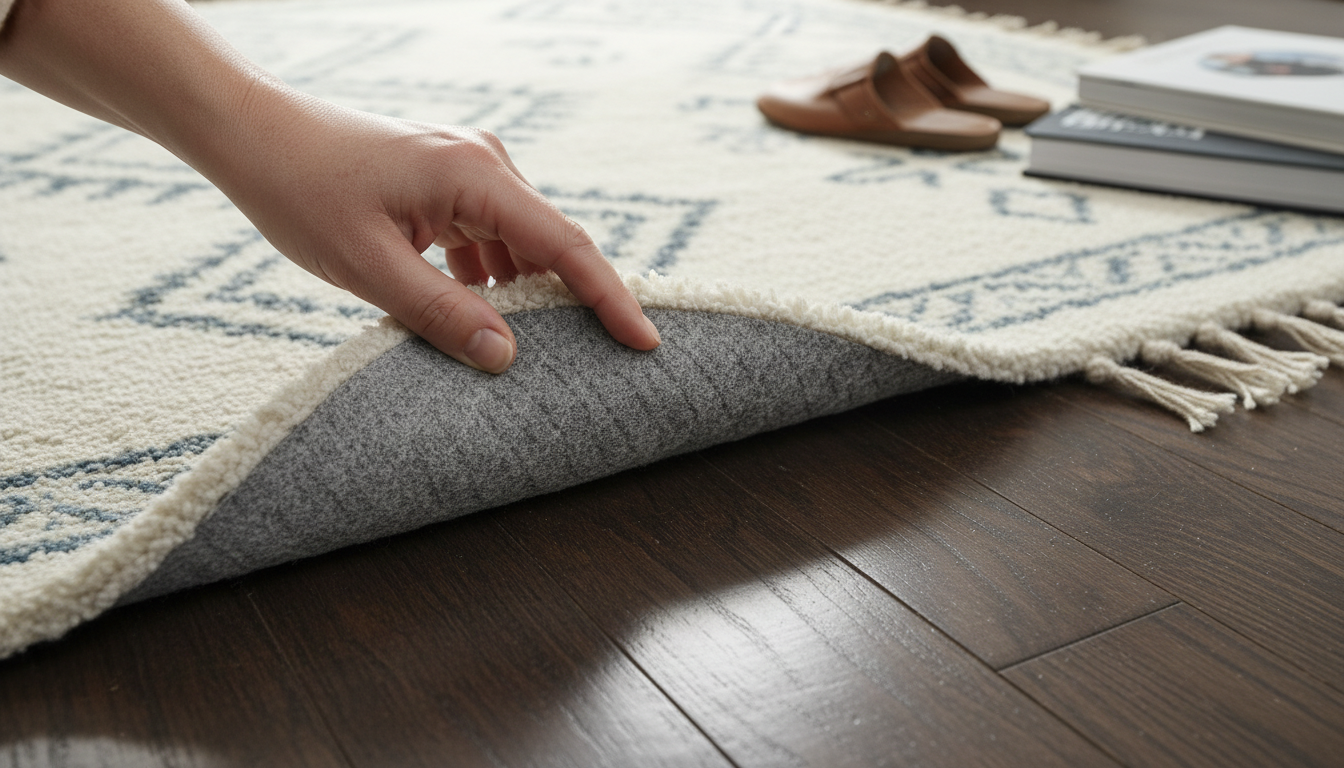
While the visual feast of a **textured layered rug** setup often dominates the conversation, the real magic happens beneath the surface. Nothing disrupts the refined flow of a 2026-inspired living space faster than a top layer that “creeps” or an edge that curls into a tripping hazard. To achieve that effortless, editorial look seen in high-end projects, you must address the physics of the floor. When you are layering a smaller, high-pile vintage piece over a sprawling **low-profile jute** base, you are dealing with two different pile directions. Without intervention, these fibers will naturally work against each other, causing the top rug to migrate toward the nearest heavy furniture leg. This isn’t just an aesthetic annoyance; it’s a matter of preserving the structural integrity of your investment.Advanced Grip Technology for 2026
The industry has moved far beyond the yellowing, sticky tapes of the past. Today’s high-performance interiors rely on ultra-thin, heat-set silicone meshes. These “invisible” anchors provide a high coefficient of friction without adding bulk, ensuring your **layered rugs in 2026** maintain a perfectly flat profile. “In the luxury sector, we view the rug pad and the adhesive mesh as the ‘chassis’ of the room,” says Julian Thorne, Lead Designer at *Atelier V*. “If you’re layering a hand-knotted Oushak over a flatweave, you need a pad with a high Light Reflectance Value (LRV) on its underside to ensure no dyes transfer to the floor, coupled with a secondary mesh between the two rugs to prevent ‘the ripple effect’ during high-traffic gatherings.”Mastering the Double-Sided Connection
To ensure your **rug layering ideas** look professional rather than haphazard, follow this refined installation sequence:- The Primary Anchor: Your base rug (the large neutral) should be secured with a felt-and-rubber hybrid pad. This provides acoustic dampening—crucial for the open-concept layouts dominating 2026 architecture.
- The Friction Interface: For the top layer, ignore standard rug pads. Instead, utilize a “rug-to-rug” pressure-sensitive gripper. These are designed specifically to lock onto the fibers of the base rug at thebohorugs.com, creating a singular, unified textile surface.
- The Perimeter Check: Focus on the corners. Using a professional-grade rug tape on the outermost 2 inches of the top layer creates a seamless transition that looks like a custom-made, single-piece rug.
When choosing the **best rugs to layer in 2026**, avoid using PVC-based rug grippers between your layers. These can trap moisture and cause “off-gassing” that damages natural wool fibers over time. Instead, opt for natural rubber or soy-based polymers. This ensures that your premium artisanal rugs can “breathe,” extending their lifespan while keeping them perfectly aligned.
Long-Term Maintenance of the Layered Aesthetic
Securing the look isn’t a “set it and forget it” task. As you **style layered rugs**, remember that even the most secure setup requires a biannual reset. Every six months, lift the top layer to vacuum the hidden fibers of the base rug. This prevents “fiber compaction,” a common issue where the weight of the top rug permanently flattens the texture of the bottom one. By rotating both layers, you ensure even wear and keep the **textured layered rug** look feeling fresh and intentional for years to come.Elevate Your Space
Discover the artistry of handmade luxury. Each rug is a masterpiece of tradition and modern design.
Expert Q&A
What size rugs should I use for layering in 2026?
The most effective pairing involves a large base rug (e.g., 9×12) that anchors the furniture, topped with a medium rug (e.g., 6×9 or 5×8) that defines the focal point. Aim for an 8-to-12-inch border of the base rug to remain visible.
Can you layer rugs on carpet?
Absolutely. In 2026, layering a flat-weave or vintage rug over wall-to-wall carpeting is a top-tier designer move to add personality and zone a room, provided you use a specific ‘carpet-to-carpet’ rug pad to prevent bunching.
Which materials work best for high-traffic layered rugs?
For high-traffic zones, utilize a durable base like power-loomed sisal or a washable performance fiber, then top it with a patterned low-pile wool rug which naturally hides wear and tear.
Are layered rugs still trendy in 2026?
Layering has moved past being a ‘trend’ to become a foundational principle of modern maximalism and cozy minimalism. It is currently the #1 requested rug styling technique by high-end clients.
How do I prevent layered rugs from tripping people?
Safety is paramount. Use ultra-thin, double-sided rug tape or specialized ‘rug-to-rug’ pads that fuse the two layers together without adding bulk, ensuring the edges lie completely flat.
Can I layer two patterned rugs together?
Yes, provided they vary in scale. Pair a large-scale geometric pattern on the bottom with a small-scale floral or traditional motif on top to ensure the eyes have a place to rest.
What is the ‘Wrong Rug Theory’ in layering?
This 2026 concept involves pairing two rugs that shouldn’t traditionally go together—like a rustic jute rug with a high-glance metallic silk rug—to create a curated, unexpected aesthetic.
How do I clean layered rugs?
Vacuum each layer separately. For the top layer, use a vacuum without a beater bar if it is a delicate material like silk or high-pile shag. Ensure the area between the rugs is cleaned monthly to prevent dust buildup.
Is it okay to layer rugs in a dining room?
It is visually stunning but requires practicality. Ensure the top layer is large enough so that chairs remain on the rug even when pulled out; otherwise, stick to a single high-performance flat-weave.
What colors are best for layering in 2026?
Earthy tones remain supreme. Think terracotta, moss green, and deep ochre layered over sandy beige or charcoal grey bases for a grounded, nature-inspired look.
Written by TheBohoRugs Interior Design Team
Experts in handmade rugs, boho interiors, and modern home decor.
