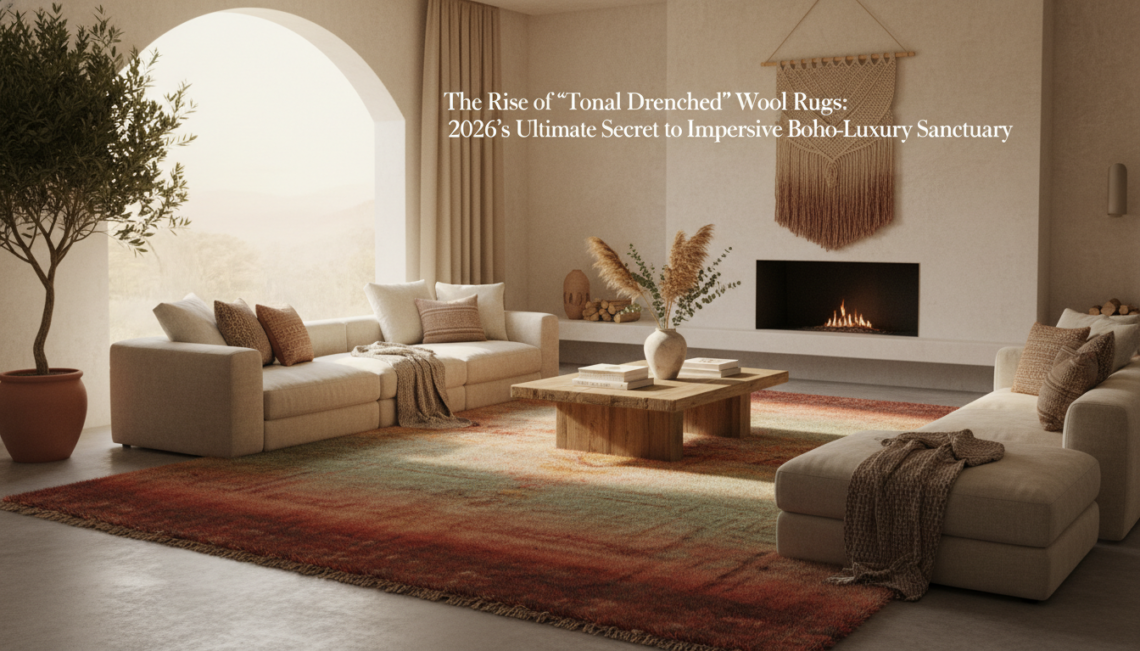
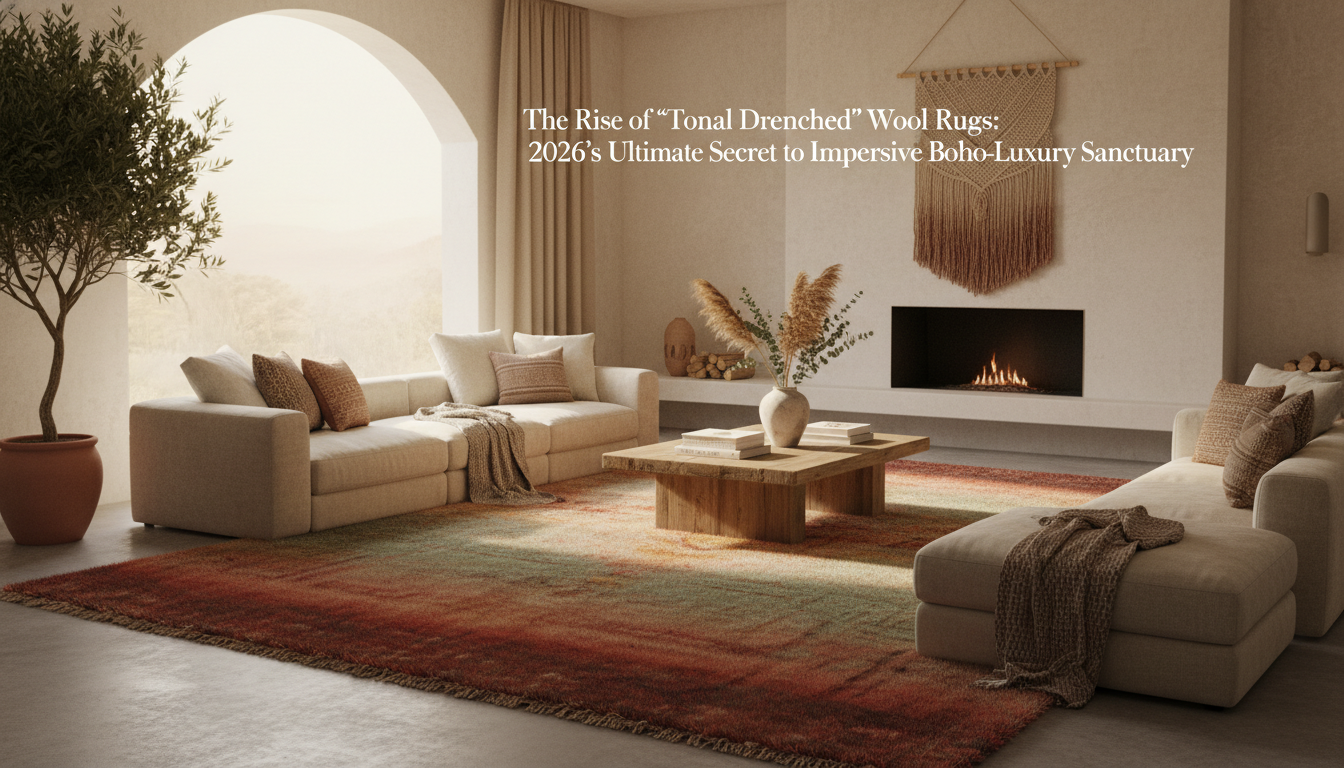
White-box minimalism is officially dead. The design world is surrendering to a saturated embrace where the floor is no longer a separate surface, but a chromatic extension of the architecture itself. By 2026, the most coveted interiors won’t feature high-contrast patterns; they will be defined by ‘Tonal Drenched’ wool rugs. This movement moves beyond the trend of painting walls and ceilings in a single hue, pulling that same intensity down to the very foundation of the room. It is a design philosophy of quiet power, where texture replaces color-blocking to create a sanctuary that feels both infinitely deep and cocoon-like. This is the new boho-luxury: a seamless blend of artisanal heritage and monochromatic obsession.
“Tonal drenched rugs 2026 represent a shift toward monochromatic, high-texture flooring that matches the room’s wall and ceiling colors to create a ‘drenched’ immersive effect. These rugs utilize varying pile heights, material blends like wool and silk, and subtle shifts in shade to provide depth without breaking the visual continuity of a space. In the 2026 boho-luxury market, they are considered the essential anchor for rooms designed as sensory retreats.”
The Roadmap
Table of Contents
- Beyond Color Drenching: The Floor-First Evolution
- Material Science: Why New Zealand Wool and Silk Blends Rule 2026
- The Psychology of the Monochromatic Sanctuary
- Architectural Texture: High-Low Pile and Hand-Carved Depths
- Sustainable Artisanship: Vegetable Dyes and Carbon-Neutral Weaving
- How to Curate the Perfect Tonal-Drenched Living Space
Beyond Color Drenching: The Floor-First Evolution
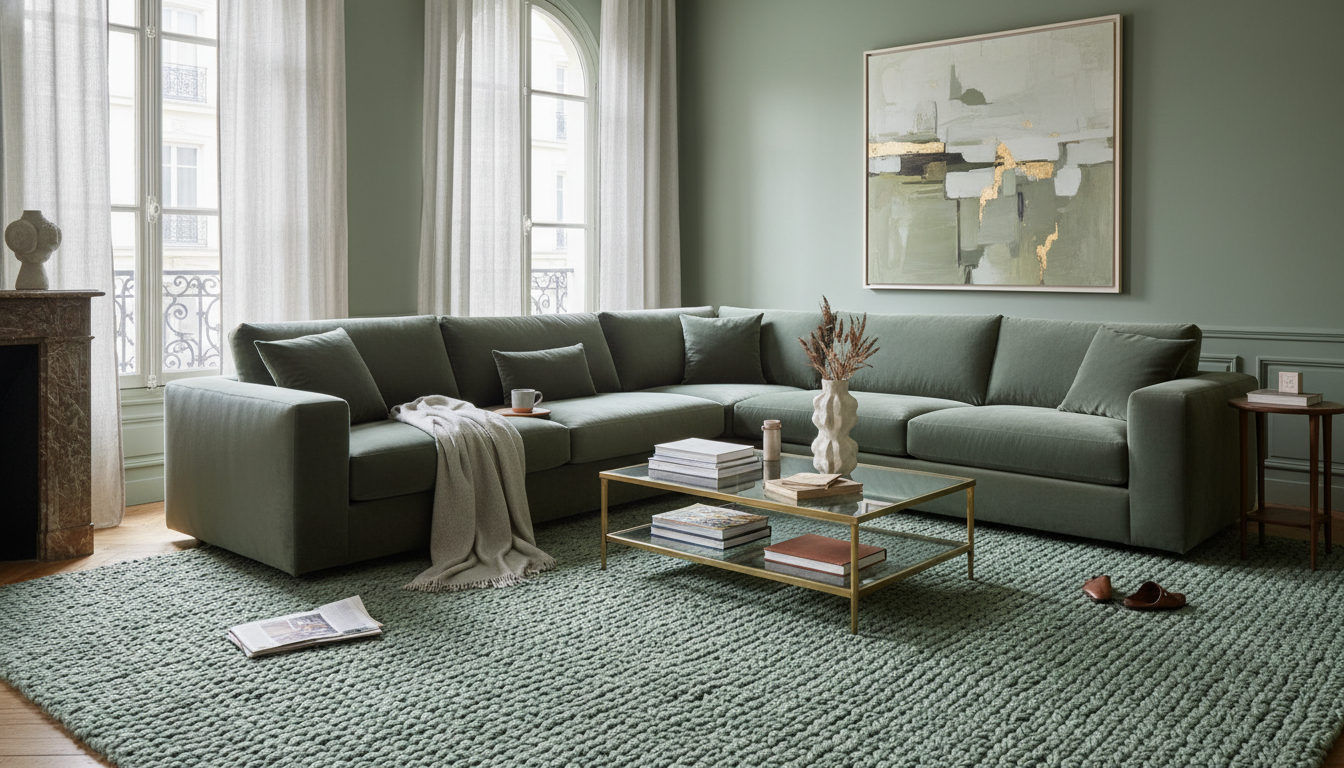
While the early 2020s were defined by the bold, all-encompassing saturation of paint—where ceilings, trim, and walls merged into a single hue—2026 is ushering in a more tactile, nuanced iteration of the trend. We are moving away from the “flat” look of monochromatic paint and toward the visceral depth of the floor-first approach. Tonal drenched rugs 2026 represent this shift, treating the ground plane not as an accessory, but as the foundational anchor of a room’s chromatic identity.
This evolution is less about matching colors perfectly and more about the interplay of light and organic fibers. By starting with the rug, designers are finding they can create an “atmospheric envelope” that feels grounded rather than claustrophobic. It’s a move toward what insiders are calling Sensory Quietude—a design philosophy where the floor dictates the vibration of the entire space.
The Science of Soft Monochromatics
The magic of a tonal drenched space lies in the Light Reflectance Value (LRV). Unlike paint, which has a static LRV, high-quality wool rugs interact with light dynamically. A sage green rug hand-knotted in the Atlas Mountains, for instance, might have an LRV of 45 at high noon but drop to a moody 20 by candlelight, thanks to the way the scales of the wool fiber absorb and deflect shadows. This prevents a monochromatic room from feeling “dead” or two-dimensional.
- Bio-Acetate & Wool Blends: A 2026 hallmark where sustainable plant-based silks are spun with high-lanolin wool to create “shimmer-shadow” effects within a single tone.
- Unfiltered Provenance: High-end curators, such as those at thebohorugs.com, are increasingly sourcing rugs that use undyed wools, relying on the natural variations of sheep coats to achieve tonal drenching without synthetic intervention.
- Structural Variance: Instead of color patterns, the “design” is created through varying pile heights—high-shag sections meeting low-shear borders in the same exact dye lot.
“We are seeing a total rejection of ‘accent’ colors in the luxury sector,” says Elena Moretti, Lead Textile Historian at the Milanese Design Collective. “In 2026, the luxury is the depth. By layering a tonal drenched rug against a similar-toned wall, you remove the visual noise of contrast. It allows the architecture of the furniture to finally breathe.”
Why Wool Remains the 2026 Gold Standard
Synthetic fibers simply cannot hold the complexity of tone required for this look. High-altitude wool, specifically from breeds used in traditional Moroccan and artisanal weaving, possesses a natural luster that mimics the “glow” of a high-end mineral paint. When you step into a room anchored by a premium piece from thebohorugs.com, the floor doesn’t just sit there; it radiates. The slight variations in the dye—known as abrash—ensure that the tonal drenching feels organic and lived-in, rather than clinical or mass-produced.
To master the 2026 look, don’t aim for a 100% color match between your rug and your walls. Instead, aim for a 10% shift in saturation. If your walls are a misty “Ethereal Blue,” select a rug that is exactly 10% darker or heavier in texture. This subtle “drop” in tone creates a visual weight that makes the room feel expensive and professionally curated.
As we lean into this floor-first philosophy, the rug becomes the room’s heartbeat. It’s no longer about finding a piece that “fits” the decor; it’s about choosing a textile so commanding and textured that the rest of the room has no choice but to follow its lead.
Material Science: Why New Zealand Wool and Silk Blends Rule 2026
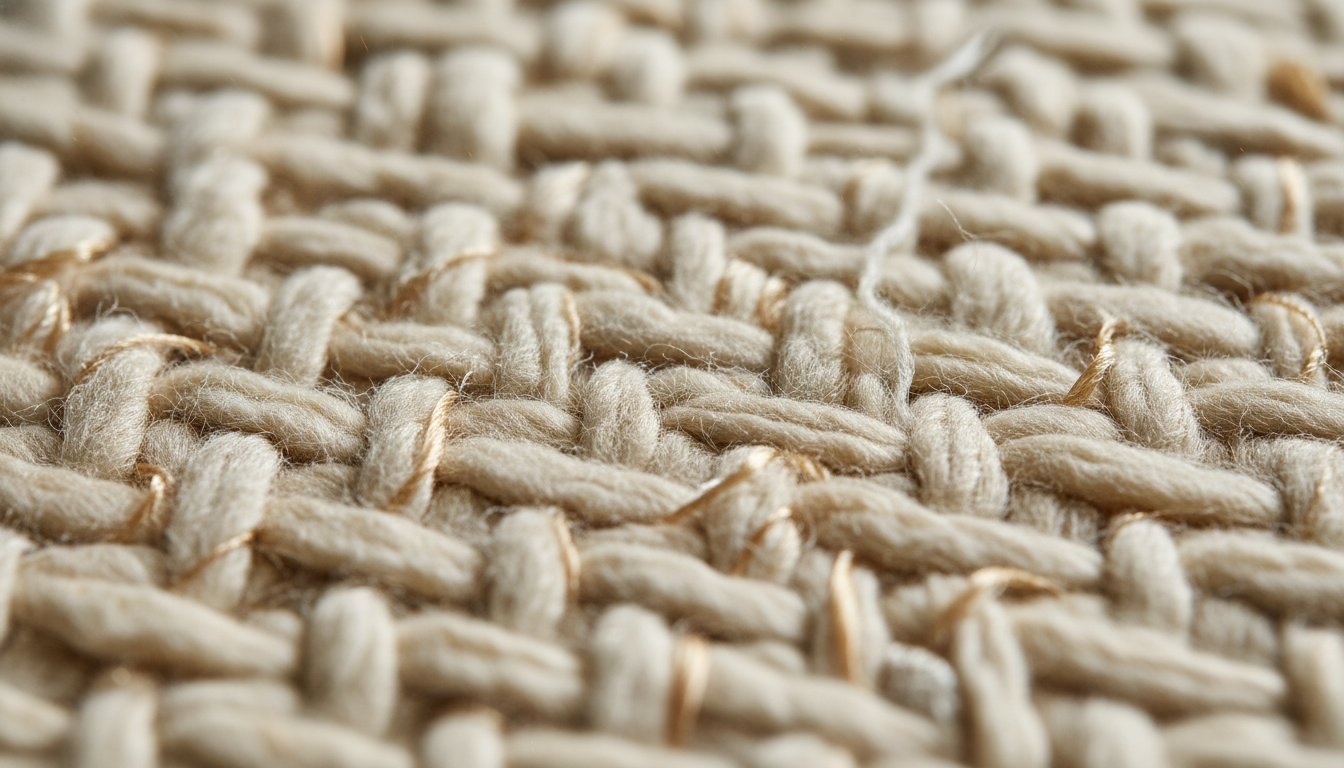
The Alchemy of Fiber: Where Resilience Meets Radiance
In the high-stakes world of luxury interiors, the shift toward tonal drenched rugs 2026 isn’t merely a color trend—it is a feat of textile engineering. For years, the industry leaned on synthetics for durability, but as we move into a design era defined by “Quiet Luxury” and sensory immersion, the focus has pivoted back to the organic. Designers are finding that to achieve that perfect, single-hue saturation without a room feeling flat, the material must possess a natural variance in light absorption. This is where the marriage of New Zealand wool and botanical silk enters the frame. High-altitude New Zealand wool is prized for its exceptionally low levels of vegetable matter and high protein content, which allows it to drink in pigments. When you’re drenching a room in a specific Light Reflectance Value (LRV)—such as a deep, moody Sage Green at an LRV of 18—the wool provides a matte, grounding depth. It anchors the space, absorbing sound and light to create that coveted “sanctuary” feel.The Silk Factor: Manipulating 2026’s Light
While the wool provides the foundation, the integration of silk (and increasingly, Bio-Acetate fibers derived from wood pulp) acts as the highlighter. In the context of tonal drenching, these lustrous fibers are often hand-carded into the wool to create subtle, directional shifts. When the morning sun hits a tonal drenched rug, the silk filaments catch the light, preventing the monochromatic palette from feeling monolithic or heavy. “We are seeing a move away from the ‘flat’ floors of the last decade,” notes Elena Vance, Lead Textile Historian at the Global Design Collective. “The 2026 aesthetic relies on ‘movement within stillness.’ By blending 30% silk into a New Zealand wool base, we create a rug that looks different at 10:00 AM than it does at 6:00 PM. It’s that kinetic energy that makes a monochromatic room feel alive rather than clinical.” The technical superiority of these blends is particularly evident in hand-knotted techniques inspired by the Atlas Mountains. These methods allow for a high-low pile height, where the wool is sheared lower than the silk, creating a 3D topographic map of texture that feels incredible underfoot.- Natural Lanolin Protection: New Zealand wool is naturally coated in lanolin, making these rugs inherently stain-resistant without the need for harsh PFAS chemicals.
- The “Luster-Wash” Effect: Silk blends allow for a post-weaving luster wash that enhances the tonal depth, a hallmark of the premium artisanal pieces found at thebohorugs.com.
- Structural Integrity: Unlike pure silk, which can be delicate, the wool core provides the “memory” needed for the rug to bounce back after heavy furniture placement.
When selecting your tonal drenched rugs for 2026, always view the sample in both direct and indirect light. A true luxury New Zealand wool and silk blend should reveal a ‘secondary color’ in the shadows—a phenomenon caused by the way the silk reflects the surrounding wall color back into the rug’s pile. If the rug looks the same in the dark as it does in the light, it likely lacks the fiber complexity required for a high-end boho-luxury finish.
The Psychology of the Monochromatic Sanctuary
The Art of Visual Silence
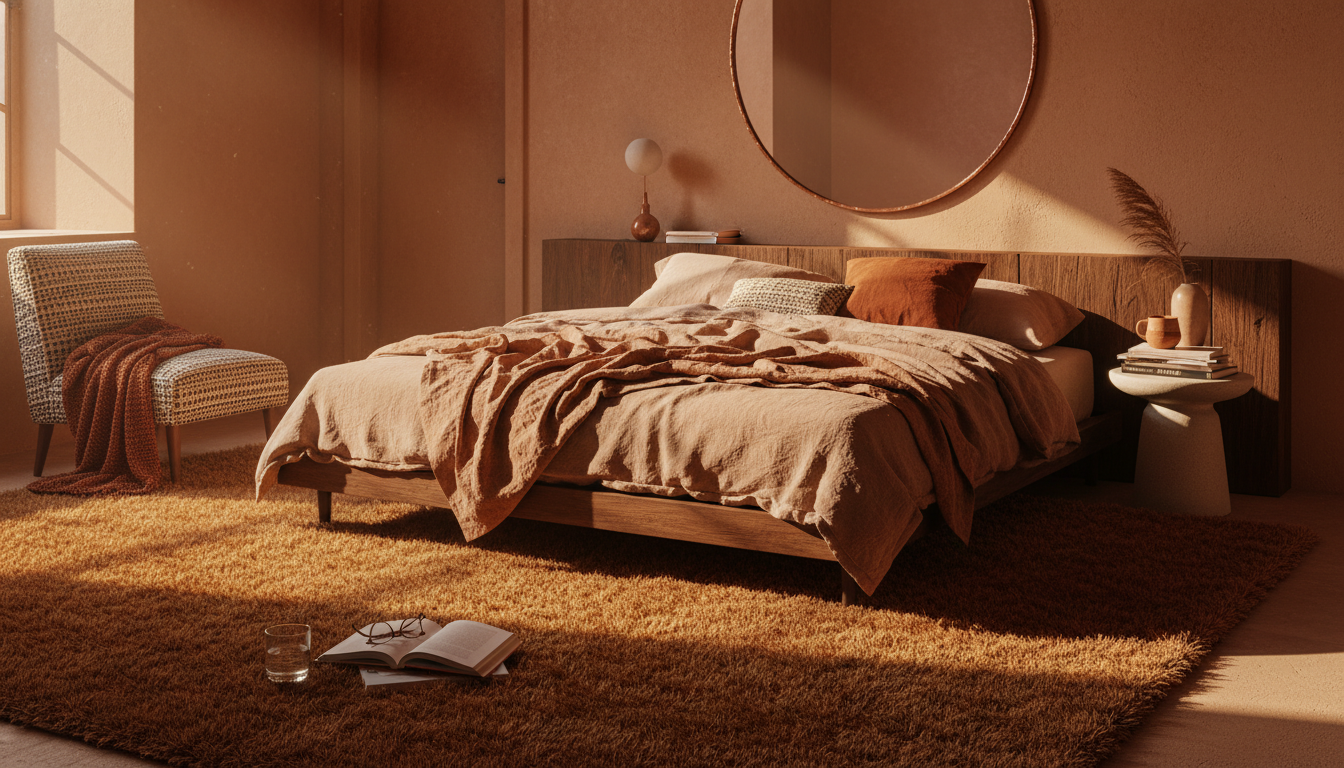
Designers are moving away from the frantic maximalism of previous seasons, pivoting instead toward a concept we call “Visual Silence.” This isn’t about minimalism in its cold, sterile form; rather, it’s about a sensory embrace. When we talk about tonal drenched rugs 2026, we are discussing the deliberate removal of visual friction. By matching the rug’s hue precisely to the wall’s Light Reflectance Value (LRV)—particularly in grounding shades like “Obsidian Clay” or “Warm Bone”—the floor ceases to be a boundary and begins to feel like an expanse.
Psychologically, this creates a “liminal sanctuary.” When the eye isn’t jumping between a patterned rug and a solid wall, the nervous system begins to downregulate. It is a design choice rooted in cortisol reduction. We are seeing a massive resurgence in hand-knotted techniques from the Atlas Mountains, where the wool isn’t dyed in uniform batches but carries the natural, slight variations of the sheep’s coat. These subtle shifts in pigment prevent the room from feeling flat, providing a “living” texture that feels both ancient and cutting-edge.
The 2026 Materiality Shift: Bio-Acetate and Heavy-Gauge Wool
What sets the 2026 aesthetic apart from previous tonal trends is the sophisticated interplay of light-reactive fibers. Top-tier artisans are now blending high-altitude New Zealand wool with Bio-Acetate fibers—a sustainable, plant-based silk alternative that captures light differently than traditional rayon. This blend allows a rug to look matte from one angle and possess a soft, moonlight-sheen from another.
“The magic of a tonal drenched space lies in the tactile hierarchy,” says Julian Thorne, Lead Textile Consultant. “In 2026, we aren’t just looking at a color; we’re looking at the weight of the yarn. By using a heavy-gauge, low-pile weave that matches the wall color, you create a seamless transition that makes even a modest room feel like a grand, immersive suite.”
- Suede-Touch Finishes: Achieving a velvet-like hand-feel without the synthetic shine.
- Organic Pigments: Utilizing madder root and walnut husks to achieve “flat” colors with hidden depth.
- Structural Borders: Using height variation rather than color change to define the rug’s edge.
For those looking to curate this look, sourcing is everything. The curated collections at thebohorugs.com offer a masterclass in this specific aesthetic, focusing on the raw, unrefined elegance of artisanal wool that anchors a monochromatic room without overpowering it. Their focus on high-density weaves ensures that the “drenched” effect holds its integrity even under heavy foot traffic.
To master the tonal drenched rugs 2026 trend, follow the “10% Texture Variance” rule. While your rug should match your walls and upholstery in color, ensure the texture is at least 10% more aggressive than the surrounding surfaces. If you have smooth plaster walls, opt for a high-low pile or a shorn-loop wool rug. This creates “shadow-patterning,” where the design is formed by shadows in the wool rather than contrasting dyes.
This movement toward immersive color-blocking isn’t just a fleeting trend; it’s a response to an increasingly digital world. We are seeking environments that feel tactile and “analog.” By choosing a tonal rug that bleeds into the architecture of the room, you aren’t just decorating—you are creating a cocoon of intentional calm.
Architectural Texture: High-Low Pile and Hand-Carved Depths
The Sculptural Shift: Beyond the Visual Plane
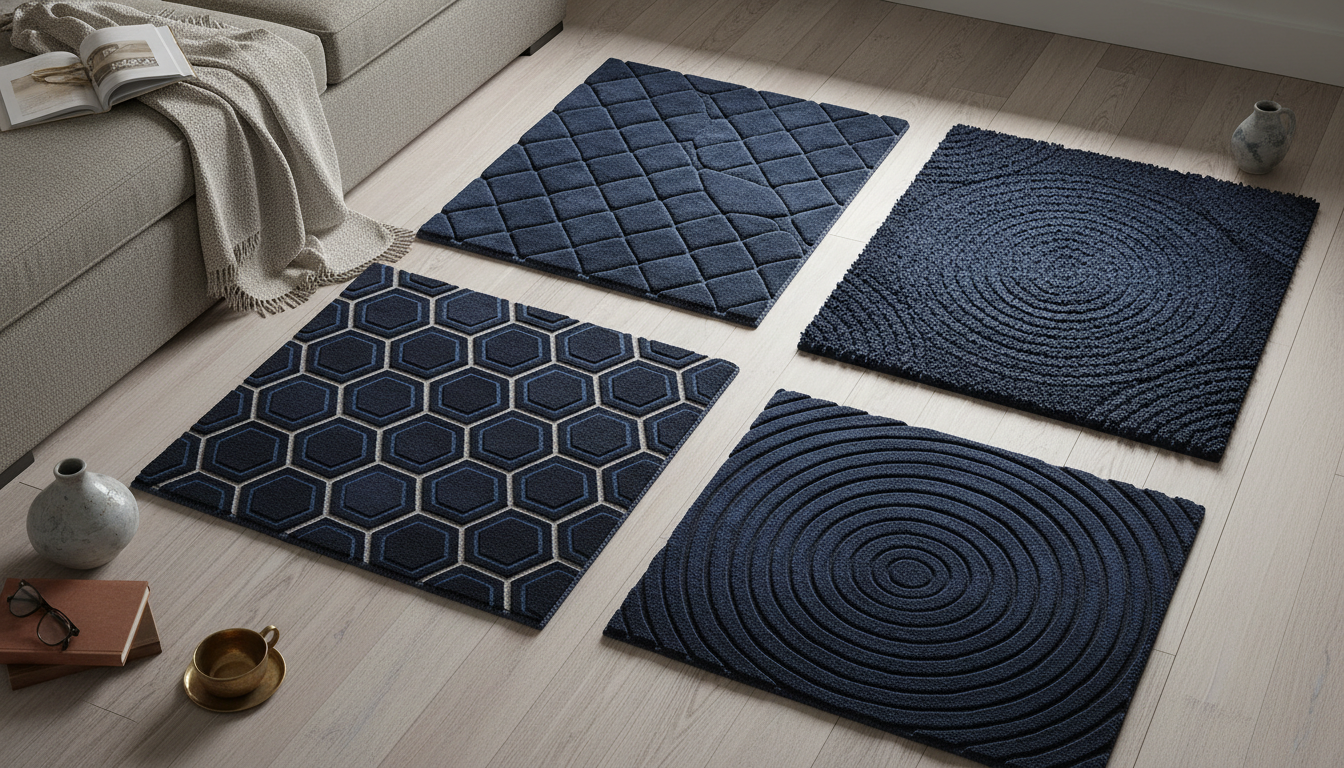
For years, the design world leaned into the “quiet luxury” of flat-weave minimalism, but 2026 signals a definitive move toward what many are calling tactile terrain. In the context of tonal drenched rugs 2026, color is no longer doing the heavy lifting alone. Instead, the magic happens in the three-dimensional space between the fibers. By utilizing varying pile heights—often fluctuating between a 5mm “sheared” base and a plush 15mm “raised” motif—designers are creating shadows and highlights within a single dye lot.
This architectural approach is particularly effective when working with moody, saturated palettes. Take, for instance, a rug in a deep Antique Terracotta. While a flat rug might feel heavy or overwhelming, a hand-carved piece uses texture to break up the Light Reflectance Value (LRV). The recessed “valleys” of the rug hold shadow, appearing darker, while the high-pile “peaks” catch the light, creating a shimmering, kinetic energy that shifts as you move through the room. This interplay is the heartbeat of the modern boho-luxury sanctuary.
“We are seeing a rejection of the ‘flat’ digital aesthetic. Clients want to feel the topography of their homes. By integrating hand-carved depths into monochromatic wool foundations, we’re able to mimic the organic irregularities of the Atlas Mountains, bringing a sense of ancient craftsmanship into the 2026 penthouse.”
— Julian Thorne, Senior Textile Curator
The technical sophistication of these pieces often involves a meticulous blend of materials. To achieve that signature 2026 glow, many artisans at thebohorugs.com are now blending high-mountain Tibetan wool with Bio-Acetate fibers. This combination ensures that the structural integrity of the high-low pile remains resilient underfoot, preventing the “crushing” effect common in lower-quality imitations.
The Anatomy of a High-Low Masterpiece
- Hand-Carved Outlines: Artisans use specialized shears to manually cut “channels” around patterns, giving a 2D design a 3D presence.
- Material Juxtaposition: Combining matte wool with high-luster silk or Tencel accents to emphasize the tonal drenching effect.
- The ‘Living’ Edge: Moving away from rigid, surged borders in favor of organic, hand-bound edges that bleed naturally into the floor.
When selecting these pieces, look for rugs that prioritize fiber density over simple thickness. A high-quality tonal drenched rug for 2026 should feel substantial, not airy. The goal is to create an anchor for the room that feels as though it was carved from the earth itself, providing a grounding element that balances the eclectic “collected” nature of bohemian decor with the polish of high-end luxury.
When placing a high-low pile rug, always consider your primary light source. To maximize the architectural impact of tonal drenching, position the rug so the sunlight hits the pile at an angle. This exaggerates the carved depths and creates a sophisticated “movement” in the color that mimics the shifting sands of a desert—a quintessential boho-luxury vibe.
Sustainable Artisanship: Vegetable Dyes and Carbon-Neutral Weaving
The Alchemy of Earth: Why Pigment Pedigree Matters
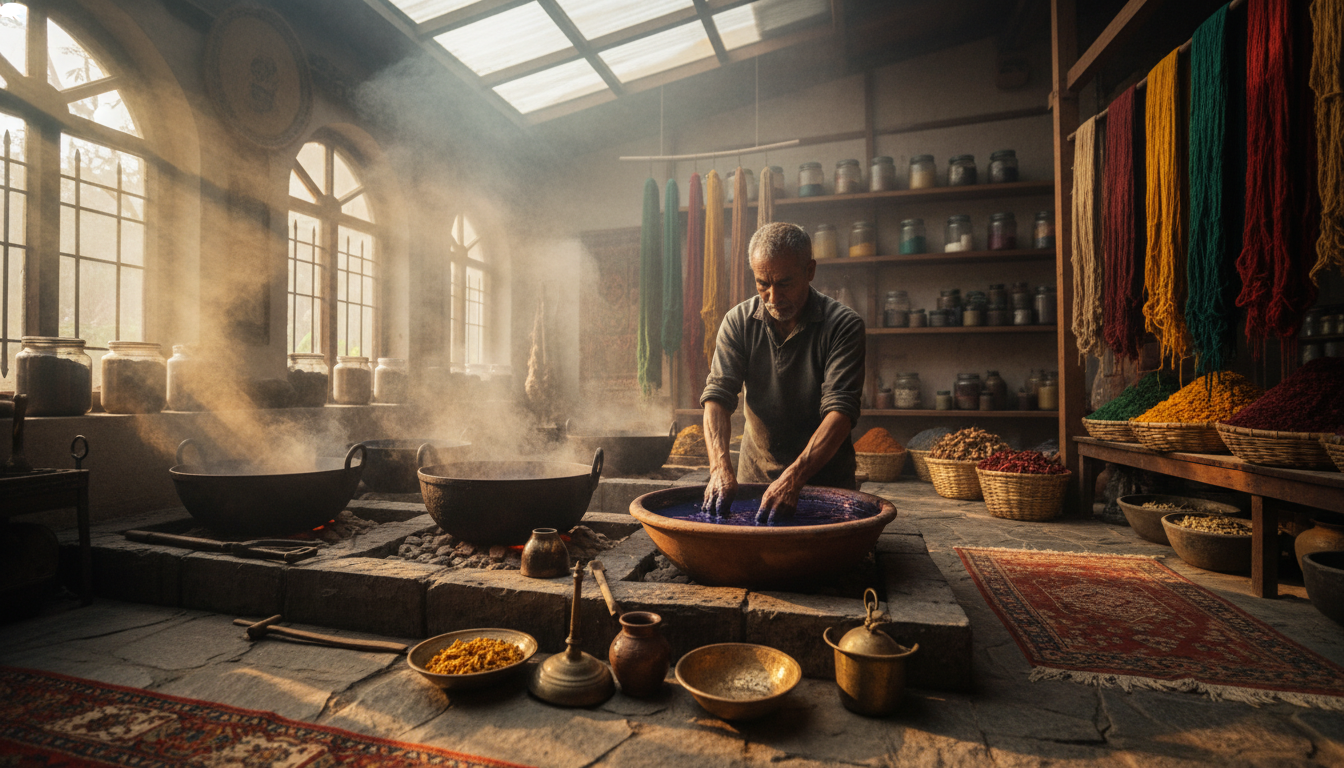
For years, the design world relied on synthetic acid dyes to achieve uniformity. But as we move toward the era of tonal drenched rugs 2026, the luxury sector is returning to the soil. There is a depth to a rug saturated in madder root, indigo, or pomegranate skins that a lab-grown chemical simply cannot replicate. These organic pigments don’t just sit on the fiber; they become part of the wool’s DNA, creating what designers call a “living patina.”
When you walk into a room anchored by a tonal drenched rug, the Light Reflectance Value (LRV) plays a crucial role in the immersive experience. For instance, a deep Sage Green wool rug with an LRV of approximately 32 absorbs enough light to feel grounding, yet the natural variations in the vegetable dye ensure the floor doesn’t look like a flat, painted surface. This subtle movement is what separates a mass-produced item from the artisanal masterpieces found at thebohorugs.com.
The Ethical Loom: Beyond the Aesthetic
The 2026 shift isn’t just about the visual—it’s about the vibration of the home. Carbon-neutral weaving has evolved from a buzzword into a rigorous manufacturing standard. High-end textile houses are now marrying ancient hand-knotted techniques from the Atlas Mountains with modern logistical transparency. By utilizing high-altitude wool—which is naturally richer in lanolin—artisans can reduce the need for harsh scouring chemicals, preserving the fiber’s integrity and natural luster.
- Bio-Acetate Fiber Blends: A new frontier for 2026, these biodegradable fibers are being woven into wool foundations to add a silk-like shimmer to tonal designs without the environmental toll of traditional viscose.
- Solar-Dried Yarns: Eliminating industrial kilns, premium weavers are returning to open-air drying, which allows the UV rays to “set” the vegetable dyes naturally.
- Closed-Loop Washing: Luxury production now often features water filtration systems that recycle 95% of the water used in the final rug wash.
“We are seeing a move away from ‘disposable’ décor toward rugs that carry a narrative. A vegetable-dyed, hand-knotted piece isn’t just a floor covering; it’s a carbon-sequestering investment. In 2026, the true luxury is knowing your rug was washed in mountain spring water and dried by the sun, rather than a gas-fired factory.”
— Julian Thorne, Lead Textile Consultant and Design Historian.
Expert Insight: The “Oxidation” Test
When sourcing tonal drenched rugs 2026, look at the fringe. On a truly vegetable-dyed wool rug, you will notice “abrash”—subtle horizontal color shifts. This isn’t a defect; it’s the hallmark of different dye batches and natural oxidation. These shifts provide the visual “soul” necessary for a high-end boho-luxury sanctuary. If the color is perfectly identical from edge to edge, it’s likely synthetic.
Choosing a rug crafted through these traditional methods means embracing a slower form of luxury. As these pieces age, their colors mellow rather than fade, becoming more beautiful with every decade of use. For those looking to curate a space that feels both modern and timeless, the artisanal collections at thebohorugs.com offer a bridge between ancient craftsmanship and the sophisticated color palettes of the upcoming season.
How to Curate the Perfect Tonal-Drenched Living Space
Mastering the Monochromatic Shift: A Foundation of Fiber
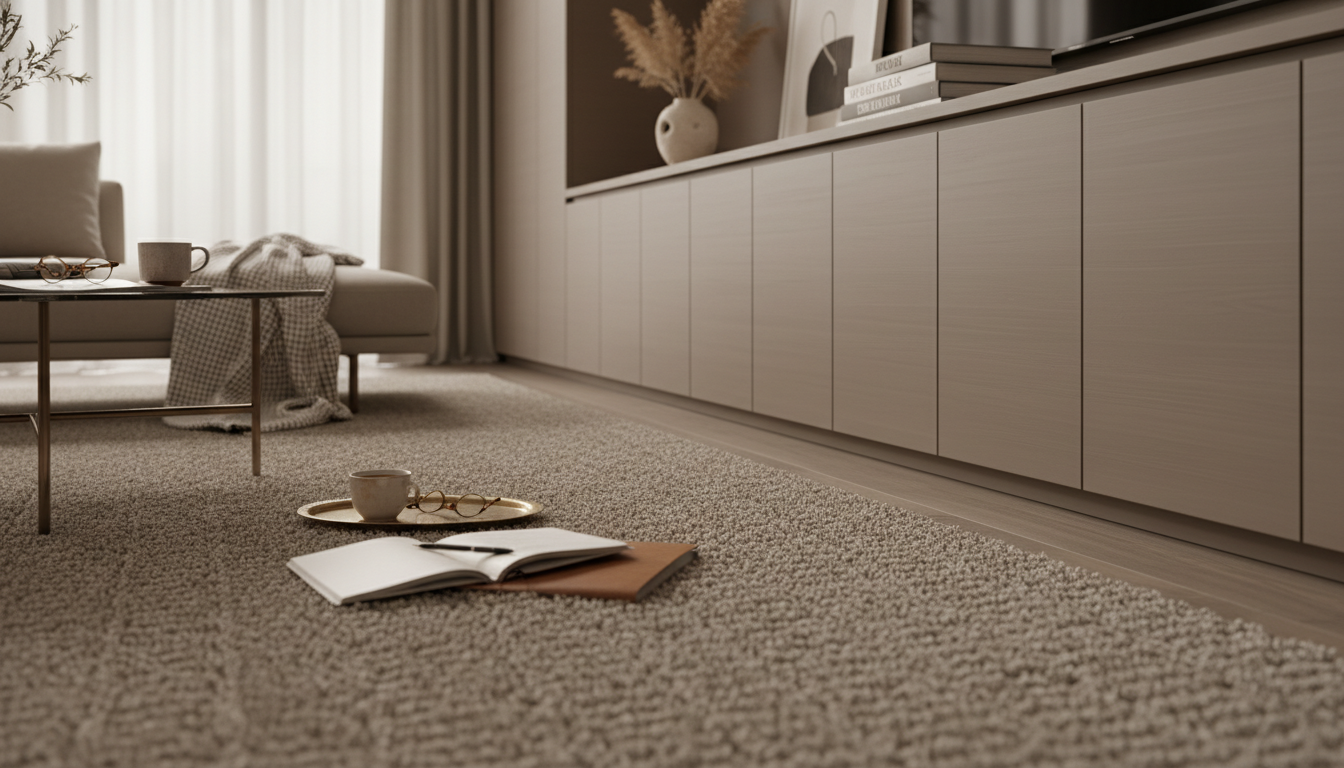
Creating a sanctuary that feels both expansive and intimate requires a departure from the high-contrast palettes of the past decade. The 2026 aesthetic is defined by “Quiet Maximalism,” where the luxury lies not in visual noise, but in the depth of a single, saturated hue. When you introduce tonal drenched rugs 2026 into a room, you aren’t just choosing a floor covering; you are setting the Light Reflectance Value (LRV) for the entire architectural volume. For instance, designers are currently gravitating toward Sage Greens with an LRV of 35 to 45—a “sweet spot” that absorbs enough light to feel cozy while reflecting enough to prevent the space from feeling subterranean.
The secret to keeping a single-color room from feeling flat is the interplay of materials. We are seeing a significant move toward Bio-Acetate fibers blended with high-twist New Zealand wool. This combination creates a “shimmer and matte” effect that allows the rug to change personality as the sun moves throughout the day. By sourcing pieces from collections like those found at thebohorugs.com, which emphasize these intricate fiber blends, you ensure the floor becomes a living, breathing element of the design rather than a static surface.
The Architecture of the Atlas Mountains
The most successful tonal spaces rely on “invisible” texture. This is where the heritage of hand-knotted techniques from the Atlas Mountains becomes indispensable. Traditionally, these rugs utilized variegated wool from local sheep, creating natural striations known as abrash. In 2026, this technique is being repurposed for modern luxury. By using slightly different shades of the same dye lot, weavers create a rhythmic, tonal vibration that feels organic and high-end.
“We are moving away from the ‘pop of color’ era,” notes Julianne Vance, Lead Textile Consultant at the Veridian Design Group. “The 2026 client wants to feel enveloped. By drenching the floor in a deep, textured terracotta or a hushed ochre that matches the walls, you eliminate the visual boundaries of the room. It’s about creating a sensory cocoon where the rug acts as the anchor for the entire atmospheric experience.”
Building Your Immersive Sanctuary
To execute this look without overwhelming the senses, follow these designer-led principles:
- Vary the Pile Height: Choose a rug with carved highs and lows. The shadows cast within the rug itself add a secondary “color” to your tonal palette.
- Match the Millwork: For a true drenched effect, coordinate your rug’s primary tone with your baseboards and crown molding. This creates a seamless vertical flow.
- The 80/20 Rule of Texture: Keep 80% of your surfaces in the same color family, but ensure 20% of them have a contrasting tactile finish—think a matte wool rug against a polished lacquered coffee table.
- Invest in Artisanal Integrity: Look for rugs that show the hand of the maker. The slight irregularities in a premium wool rug from thebohorugs.com provide the “soul” that mass-produced synthetic options lack.
In a tonal-drenched room, the rug should never look like an island. To achieve the 2026 “Sanctuary” look, specify a rug size that sits approximately 6 inches from the walls. This creates the illusion of a wall-to-wall installation while maintaining the sophisticated edge of a bespoke area rug. This extra real estate of wool significantly improves room acoustics, a hidden pillar of luxury living.
The transition into tonal drenching is more than a trend; it is a commitment to a calmer, more intentional way of inhabiting our homes. When the floor, walls, and textiles exist in a singular, harmonious chromatic language, the focus shifts to the quality of light and the richness of the materials. It is a sophisticated evolution of the boho-chic spirit, refined for a new era of elegance.
Elevate Your Space
Discover the artistry of handmade luxury. Each rug is a masterpiece of tradition and modern design.
Expert Q&A
What exactly are tonal drenched rugs 2026?
They are wool or silk-blend rugs designed to match the specific color palette of a room’s walls and furniture, creating a monochromatic, immersive environment through texture rather than color contrast.
How do tonal drenched rugs differ from standard monochrome rugs?
Unlike standard monochrome rugs, tonal drenched versions focus on ‘material depth’—using high-low piles and fiber blends to create shadows and highlights within the same hue.
Are tonal rugs suitable for high-traffic areas?
Yes, when crafted from premium New Zealand wool, these rugs are naturally resilient and hide wear better than flat-weave options due to their dense, textured construction.
Can I use tonal drenched rugs in a small room?
Absolutely. Eliminating the visual break between the floor and walls actually makes a small room feel significantly larger and more cohesive.
What colors are trending for tonal drenching in 2026?
Expect to see ‘Earthbound Ochre’, ‘Deep Forest Moss’, and ‘Quiet Slate’—colors that evoke a sense of grounding and permanence.
How do I choose the right texture for a tonal drenched look?
Look for rugs that combine different techniques, such as loop and cut pile, which allow light to hit the surface at different angles, providing ‘hidden’ patterns.
Are these rugs easy to clean?
Wool is naturally stain-resistant due to its lanolin coating, making tonal drenched wool rugs easier to maintain than synthetic monochromatic rugs.
Do I need to match the rug color exactly to my walls?
In 2026, the trend allows for a ‘half-tone’ difference—staying within the same color family but varying the saturation slightly for a more organic feel.
Is the tonal drenching trend just for modern homes?
No, it works beautifully in historic or boho-style homes by modernizing traditional architectural details through a unified color palette.
What is the lifespan of a luxury wool tonal rug?
A high-quality, hand-tufted or hand-knotted wool rug can easily last 20 to 50 years with proper care, making it a sustainable investment.
How does lighting affect tonal drenched rugs?
Lighting is crucial; warm light will enhance the texture and depth of the rug, while cool light can make the monochrome look appear flatter.
Can I layer other rugs on top of a tonal drenched rug?
While layering is a boho staple, 2026 trends suggest keeping the tonal rug as the singular focus to maintain the ‘drenched’ architectural effect.
Written by TheBohoRugs Interior Design Team
Experts in handmade rugs, boho interiors, and modern home decor.
