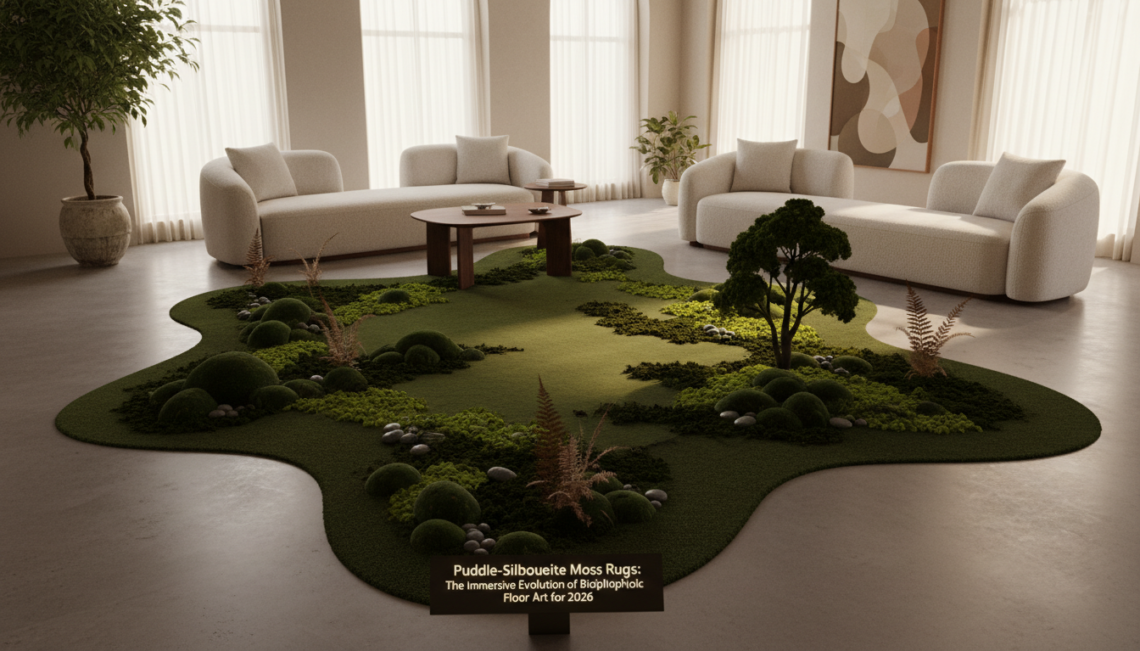
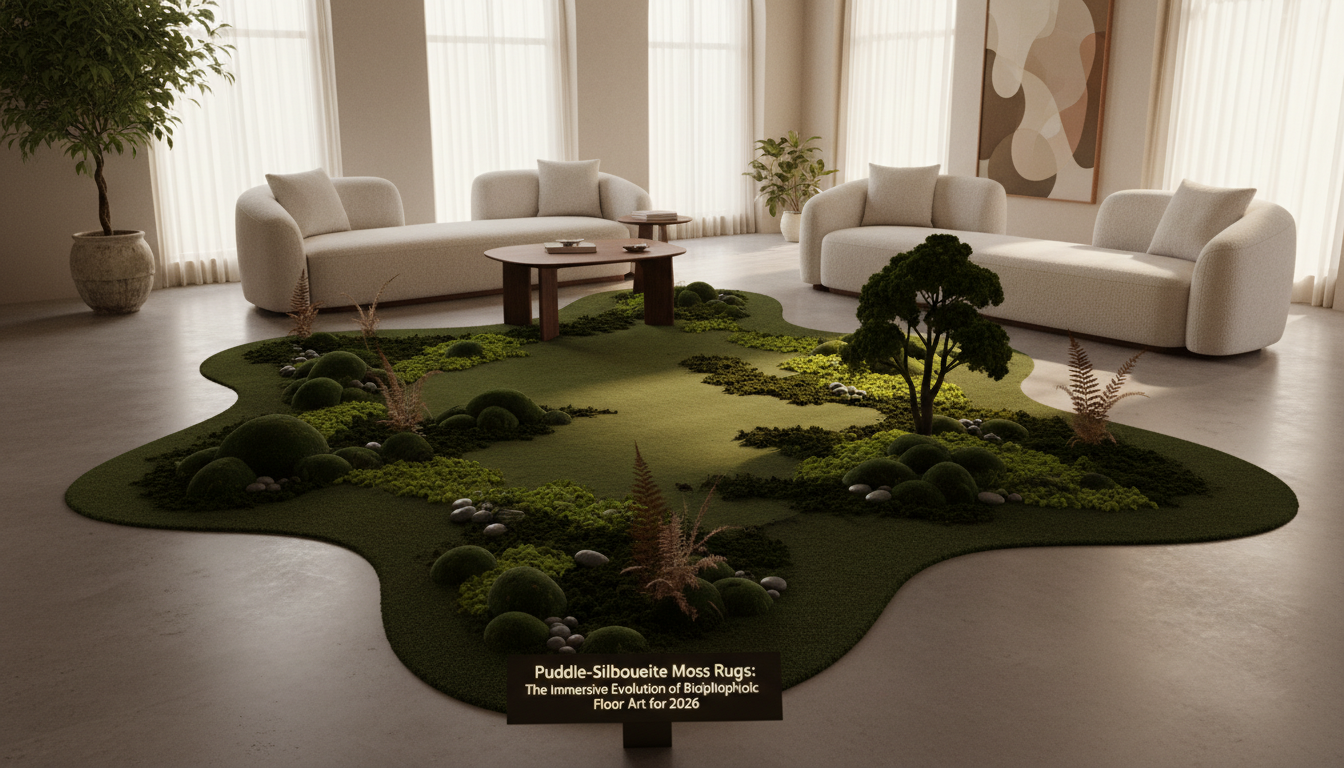
In the rapidly evolving landscape of interior design, 2026 marks a definitive departure from the rigid geometries that have long dominated residential flooring. At the forefront of this shift is the ‘healing boho’ aesthetic, a movement that prioritizes psychological well-being and sensory grounding. Central to this transformation are Puddle-Silhouette Moss Rugs—organic, fluidly-shaped floor installations that treat the ground as a canvas for nature-inspired art. These pieces do not merely occupy space; they cultivate a tactile ecosystem, blurring the boundary between the outdoor forest floor and the indoor sanctuary through advanced fiber technology and biophilic form.
“Puddle-Silhouette Moss Rugs are irregular, fluid-form floor coverings designed to mimic the organic growth patterns and varied textures of natural moss. A primary trend for 2026 interiors, these rugs utilize varying pile heights, botanical color gradients, and non-linear boundaries to create ‘sensory islands’ that promote relaxation and reduce cortisol. Unlike traditional rectangular rugs, the puddle silhouette disrupts architectural rigidity, making it a cornerstone of the Healing Boho and Immersive Biophilic design movements.”
The Roadmap
Table of Contents
- The Genesis of the Puddle Silhouette: Moving Beyond Rectangular Constraints
- Material Innovation: Bio-Engineered Fibers and High-Pile Textures
- 2026 Color Palettes: From Forest Veridian to Sun-Bleached Lichen
- The Psychology of Healing Boho: Why Irregular Forms Reduce Cortisol
- Styling the Living Room: Creating Conversational Islands with Fluid Forms
- Bedroom Transitions: Soft Landings for Mindful Mornings
- Sustainability and Circularity in Moss-Inspired Textiles
- The Future of Biophilic Rugs: Interactive and Multi-Sensory Flooring
The Genesis of the Puddle Silhouette: Moving Beyond Rectangular Constraints
The Deconstruction of Geometric Rigidity
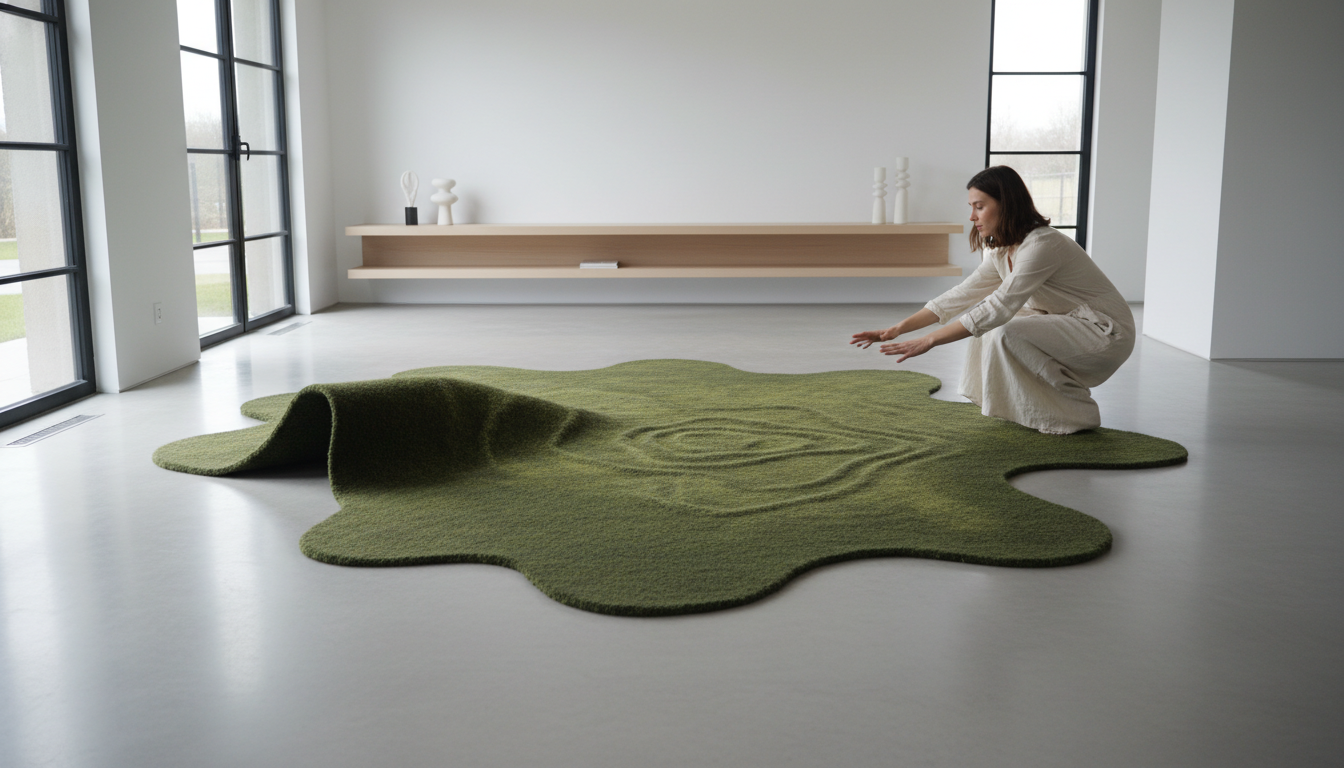
For decades, interior design has been tethered to the “Right Angle Rule”—the assumption that floor coverings must mirror the structural perimeter of a room. However, as we look toward 2026, a profound shift toward organic fluidity is dismantling these constraints. Designers are increasingly viewing the floor as an expansive, topographical landscape rather than a flat surface to be neatly packaged in a rectangle.
This evolution finds its purest expression in the emergence of Puddle-Silhouette Moss Rugs. These pieces reject the predictability of the grid, instead mimicking the uneven, creeping spread of bryophytes across a forest floor. The aesthetic is one of “calculated sprawl,” where the rug appears to have grown naturally within the space, rather than having been placed there.
3D Tufting and Tactile Cartography
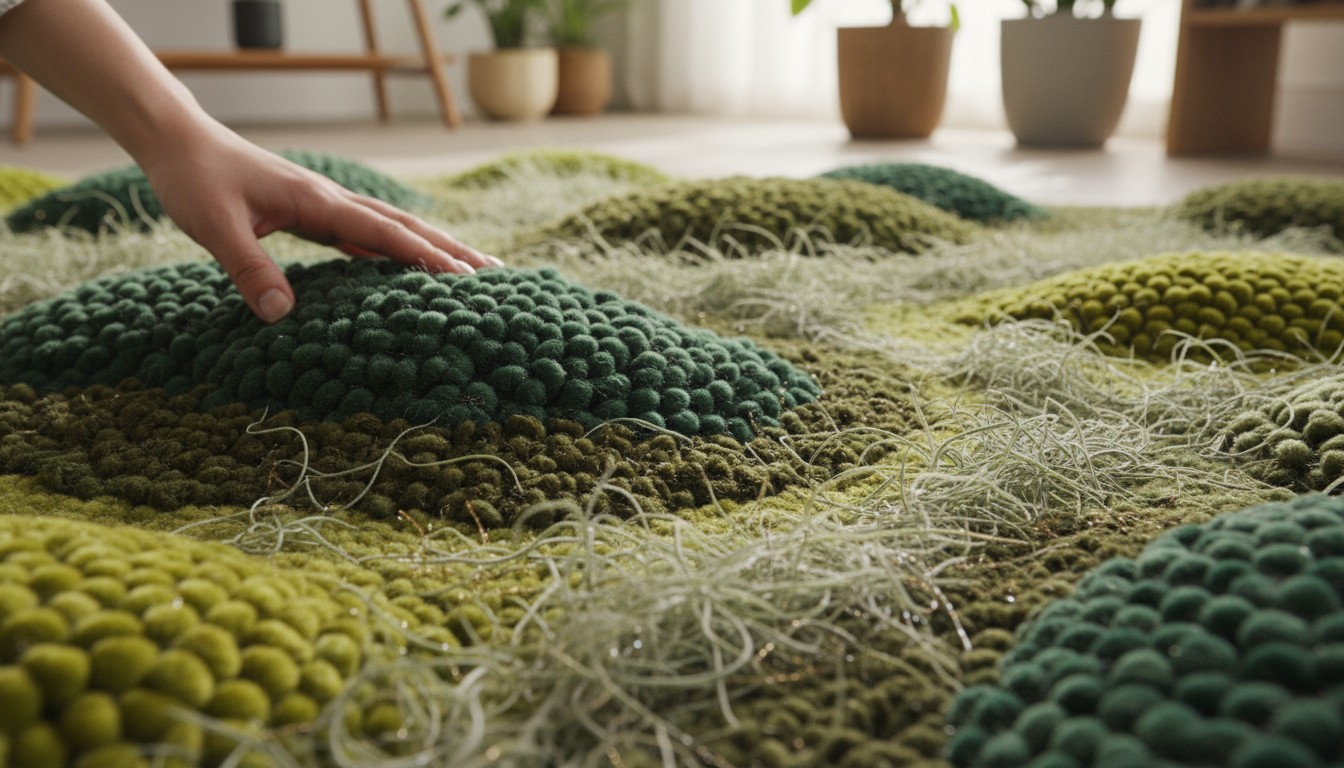
The 2026 iteration of the biophilic trend moves beyond mere visual representation. These rugs utilize advanced, multi-level tufting techniques to create a sensory “micro-climate” underfoot. By varying pile heights from five to fifty millimeters, artisans are able to replicate the irregular elevations of natural moss colonies.
- Variable Density: High-twist wool blends juxtaposed against shaved silk sections to simulate dew-drenched textures.
- Earthen Gradients: A transition from deep forest greens to chartreuse and oxidized lichen tones, avoiding the “monochrome flat” look of previous seasons.
- Edge Asymmetry: Raw, hand-bound perimeters that lack a traditional border, allowing the rug to “bleed” visually into hardwood or stone flooring.
The Curated Wild: Why the Silhouette Matters
In the context of the “Healing Boho” haven, the irregular shape serves a psychological purpose. Sharp corners and straight lines are inherently industrial; they remind the subconscious of the built environment. In contrast, the fluid boundaries of Puddle-Silhouette Moss Rugs encourage a sense of spatial freedom and cognitive ease.
Designers are utilizing these rugs to “soften” the harsh architectural lines of modern minimalist apartments. By placing a sprawling, mossy form beneath a structured glass coffee table, the contrast creates a tension that feels both sophisticated and grounded. For those seeking these specific artisanal textures, the hand-knotted selections at thebohorugs.com offer a bridge between raw nature and high-end interior curation.
2026 Trend Forecast: The Floor as a Living Canvas
- Zonal Fluidity: Using irregular shapes to define “meditation zones” within open-plan living areas without the use of walls.
- Sustainably Sourced Fibers: A move toward regenerative wool and bamboo silk that mimics the soft, damp feel of real moss without the maintenance.
- Interactive Lighting: Placing low-level perimeter lighting around the rug’s edges to highlight the 3D “puddle” contours during evening hours.
As we move further into a decade defined by the “rewilding” of our personal sanctuaries, Puddle-Silhouette Moss Rugs represent more than a floor covering. They are a rejection of the sterile and an embrace of the imperfect, marking a new era where our homes reflect the unscripted beauty of the natural world.
Material Innovation: Bio-Engineered Fibers and High-Pile Textures
The New Tactility: Mycelium-Mimicry and Symbiotic Silks
As we pivot toward 2026, the design world is witnessing a departure from static, flat-weave floor coverings. The evolution of Puddle-Silhouette Moss Rugs is driven by a breakthrough in bio-engineered fibers that do more than just mimic the visual of a forest floor—they replicate its complex haptic feedback.
Leading-edge manufacturers are now utilizing mycelium-derived threads blended with recycled ocean-silk to create a substrate that feels cool to the touch yet incredibly resilient. This “living” texture offers a grounding sensory experience, transforming a standard living space into a restorative sanctuary.
For those curating high-end interiors, the appeal lies in the unpredictability of the weave. Unlike the mass-produced textiles of the last decade, the current collections at thebohorugs.com highlight how these irregular, fluid forms can soften the harsh angles of modern architecture, bridging the gap between clinical luxury and organic warmth.
Sculptural Topography: Engineering the Forest Floor
The visual depth of Puddle-Silhouette Moss Rugs is achieved through a technique known as “Variable-Height Tufting.” By 2026, this has evolved into a precision art form where pile heights vary from 5mm to 45mm within a single piece.
This topographic approach serves a dual purpose: it creates a stunning 3D visual of undulating moss mounds and provides a micro-massage for the feet, stimulating neural pathways associated with stress reduction. The aesthetic is no longer just about “looking” like nature; it is about the physical reclamation of the home as a bio-rhythmic environment.
- Algae-Treated Wool: Naturally flame-retardant fibers that help regulate humidity in “Healing Boho Havens.”
- Photo-Reactive Pigments: Dyes that subtly shift in hue under different lighting, mimicking the way light filters through a forest canopy.
- Acoustic Dampening Substrates: High-density bio-foams that eliminate echo, essential for the quietude required in meditative spaces.
The Fluidity of Form: Why Rectangles are Receding
In the 2026 trend cycle, the “puddle” shape represents a psychological break from the rigid, grid-like constraints of digital life. These rugs do not sit on a floor; they seem to emerge from it. The lack of harsh corners allows energy—and foot traffic—to flow more naturally through a room.
- Negative Space Integration: Allowing the hardwood or stone floor to “peek” through the gaps in the rug’s silhouette.
- Modular Connectivity: Designing multiple small moss clusters that can be “splashed” across a room to create a cohesive trail.
- Zonal Softening: Using the organic edges to blur the lines between a home office and a relaxation zone.
Ultimately, the rise of Puddle-Silhouette Moss Rugs signifies a move toward “slow design.” It is a commitment to materials that respect the planet while providing a sophisticated, tactile escape from the high-velocity outside world.
2026 Color Palettes: From Forest Veridian to Sun-Bleached Lichen
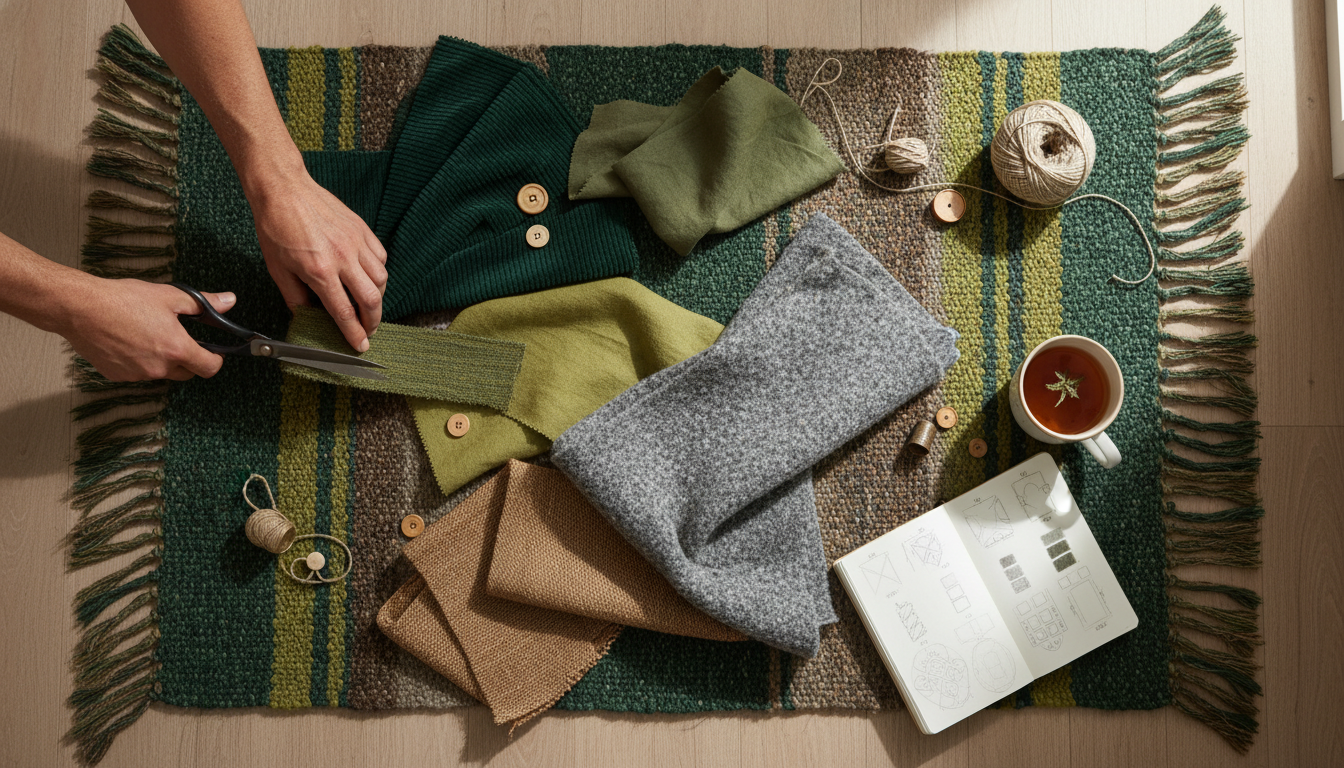
The Veridian Deep: Saturated Forest Floors
In 2026, the biophilic palette matures beyond the safe, monochromatic greens of the early 2020s. We are witnessing a shift toward “Forest Veridian”—a pigment-heavy, oxygen-rich hue that mimics the light-deprived floor of an ancient redwood grove.
High-end Puddle-Silhouette Moss Rugs are increasingly utilizing hyper-saturated botanical dyes to achieve this depth. The goal is to create a visual “anchor” in a room, providing a sense of weighted tranquility that lighter pastels simply cannot offer.
Key accents within this deep-green spectrum include:
- Juniper Shadow: A cool-toned, almost-black green used for tufted depressions.
- Peat Moss Brown: Applied at the rug’s “shoreline” to simulate damp earth.
- Emerald Glint: Silk-blend fibers that catch the light like dew on a fern leaf.
Sun-Bleached Lichen: The New Neutral
Contrast is the soul of the 2026 boho haven. Designers are balancing deep forest tones with “Sun-Bleached Lichen,” a desaturated, sophisticated blend of silver-grey, pale chartreuse, and bone. This palette reflects the resilient flora of high-altitude climates.
When applied to Puddle-Silhouette Moss Rugs, these lighter tones transform the floor into a sculptural element rather than a mere covering. These rugs act as “light wells” in minimalist spaces, drawing the eye toward the organic, flowing perimeter of the piece.
This colorway is particularly effective in “Healing Boho” environments where clarity and airflow are prioritized. The inclusion of these airy pigments allows for a seamless transition between indoor spaces and sun-drenched outdoor terraces.
Chromatic Curation: Texture as Color
In the editorial world of bespoke flooring, color is no longer just about pigment; it is about how light interacts with height. The 2026 trend focuses on “Chiaroscuro Tufting,” where the variation in pile height creates natural shadows, deepening the color without changing the dye lot.
- High-Pile Fern: Long, shaggy fibers in mid-tone greens that sway with movement.
- Low-Loop Fossil: Tight, recycled wool loops in grey-beiges that mimic ancient stone.
- Sheared Velvet Moss: A ultra-soft finish in Veridian that absorbs light for a matte, velvety appearance.
For those seeking to master this aesthetic, sourcing is paramount. Leading design houses and artisanal curators like thebohorugs.com have become the gold standard for these high-concept pieces, offering the textural complexity required to pull off such an immersive biophilic look.
Ultimately, the 2026 palette is a rejection of the artificial. Whether you opt for the brooding depths of a shadowed valley or the ethereal lightness of a sun-kissed cliffside, Puddle-Silhouette Moss Rugs serve as the foundational canvas for a home that breathes.
The Psychology of Healing Boho: Why Irregular Forms Reduce Cortisol
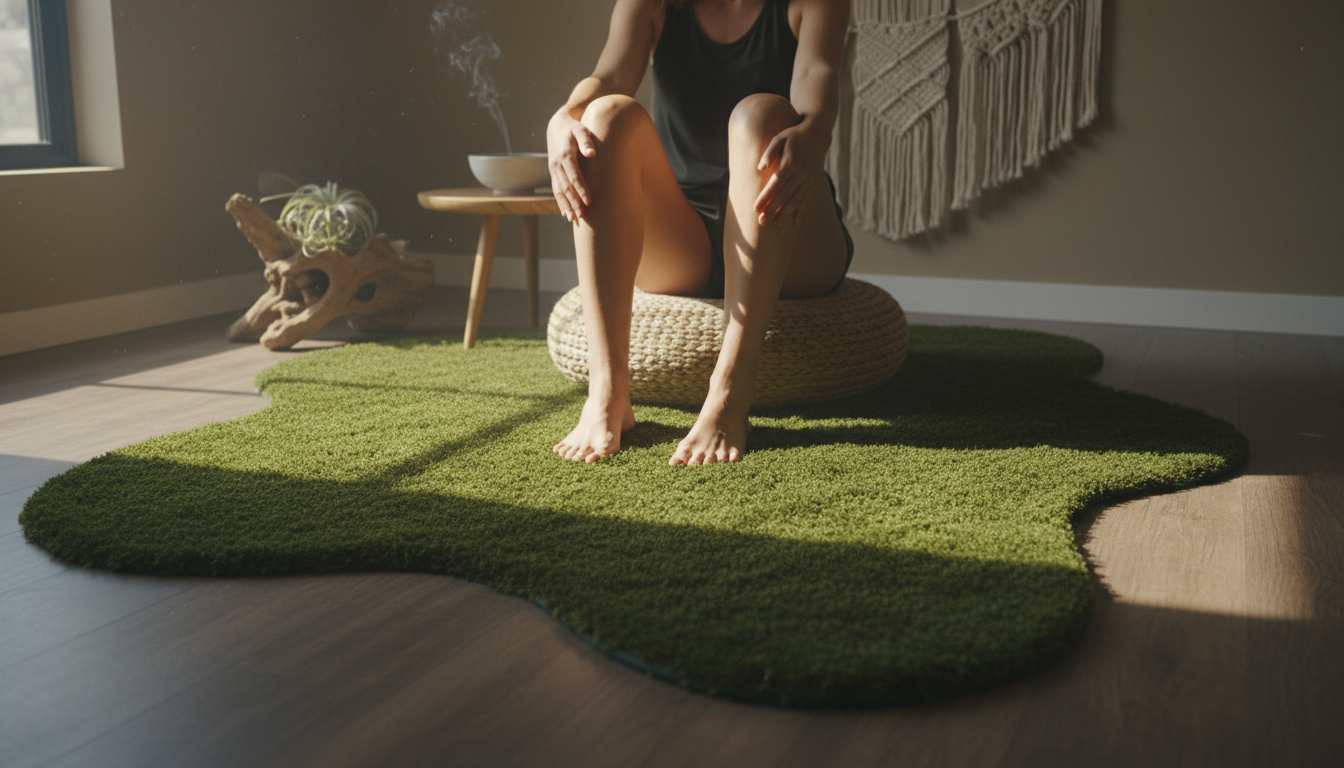
The Neurological Appeal of Organic Geometry
As we pivot toward 2026, the interior design landscape is shedding the rigid constraints of mid-century minimalism in favor of “Adaptive Biophilia.” This movement isn’t merely aesthetic; it is a clinical response to the over-stimulation of urban living. Neurologists suggest that sharp angles and perfect squares require more cognitive processing power, keeping the brain in a state of subtle “high alert.”
In contrast, the fluid, non-linear boundaries of Puddle-Silhouette Moss Rugs mirror the fractal patterns found in forest floors. These irregular forms trigger what environmental psychologists call “Soft Fascination”—a state of effortless attention that allows the prefrontal cortex to recover from digital fatigue. By removing hard edges, we signal to the amygdala that the environment is safe, effectively lowering baseline cortisol levels.
Sensory Grounding and the 2026 “Barefoot” Standard
The “Healing Boho” movement of 2026 prioritizes the somatosensory system. In a world increasingly lived through glass screens, the visceral need for varied topographical textures has become a luxury requirement. Design experts at thebohorugs.com have noted a shift toward multi-dimensional piles that simulate the uneven terrain of a wild meadow.
Why this specific tactile experience matters for wellness:
- Proprioceptive Feedback: Walking on the varied heights of Puddle-Silhouette Moss Rugs stimulates the small muscles in the feet, promoting better posture and physical grounding.
- Micro-Meditation: The transition from a smooth hardwood floor to a lush, tufted moss texture creates a “sensory anchor,” pulling the inhabitant back into the present moment.
- Acoustic Softening: Unlike traditional rectangular rugs, the irregular perimeter of a puddle silhouette disrupts sound waves more effectively, creating the “hushed forest” ambiance essential for a sanctuary.
Curating the Interstitial Space
The 2026 trend isn’t just about placing a rug; it is about “interstitial layering.” This involves using Puddle-Silhouette Moss Rugs to break the flow of a room, creating islands of calm that serve as dedicated zones for breathwork or digital detoxing. We are seeing a move away from “furniture-first” layouts toward “vibe-centric” zoning.
To master this look, consider the following 2026 styling predictions:
- Tonal Asymmetry: Pair your rug with asymmetrical low-slung seating in ochre or terracotta to enhance the “earth-bound” feel.
- Bio-Digital Lighting: Use smart bulbs that mimic the dappled light of a forest canopy, reflecting off the varied green hues of the rug’s pile.
- Negative Space: Allow the “puddle” to breathe by leaving at least 18 inches of exposed natural flooring around its perimeter, emphasizing its organic origin.
By integrating these artisanal pieces, curated by experts such as those at thebohorugs.com, homeowners are no longer just decorating; they are engineering an ecosystem. The result is a home that acts as a biological reset button, where the architecture of the space finally aligns with the architecture of the human nervous system.
Styling the Living Room: Creating Conversational Islands with Fluid Forms
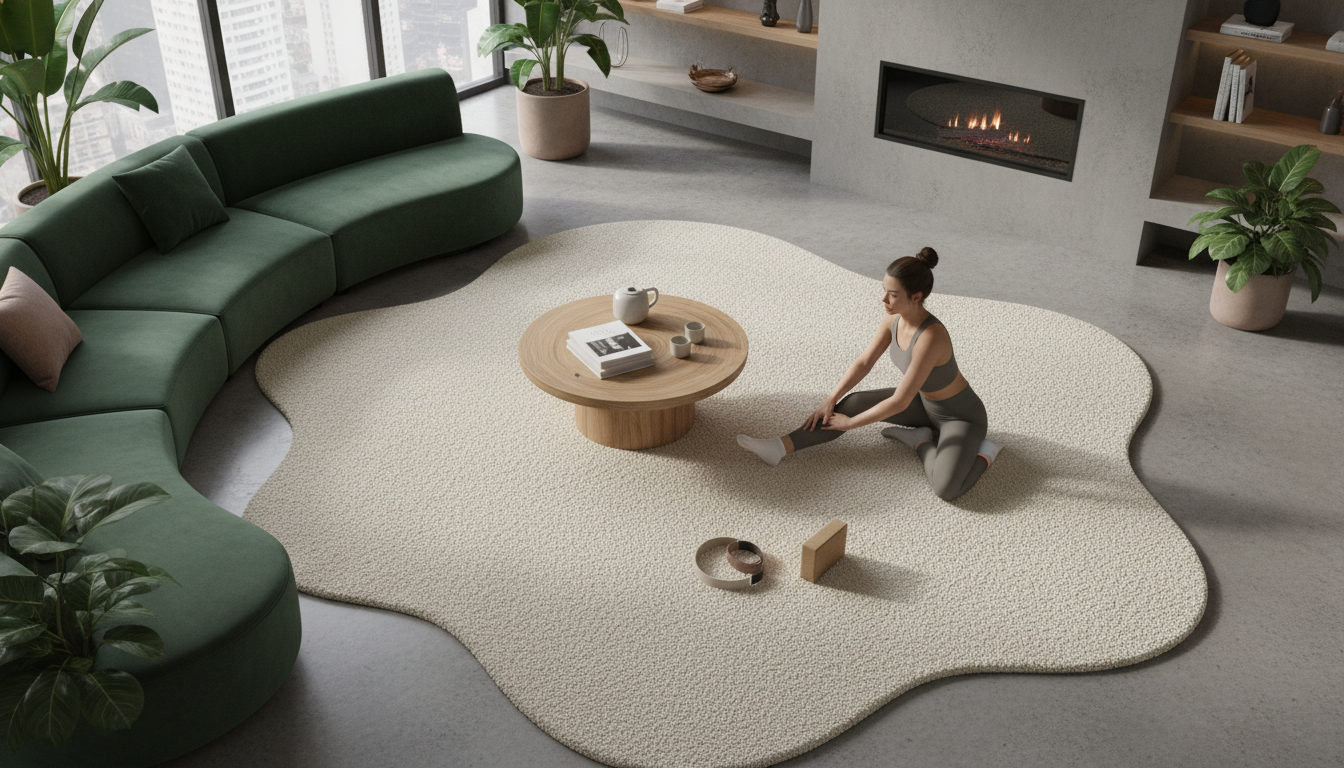
Breaking the Geometric Grid with Liquid Architecture
As we pivot toward 2026, the rigid, rectangular boundaries of traditional interior design are dissolving into “liquid architecture.” The living room is no longer a collection of right angles; it is a landscape. Designers are increasingly utilizing Puddle-Silhouette Moss Rugs to break the monotony of hardwood and tile, introducing organic outlines that mimic the spontaneous spread of nature.
This shift represents a departure from the “staged” home toward a sensory-driven sanctuary. By embracing fluid forms, these rugs act as psychological anchors, signaling a transition from the high-stress digital world to a grounding, tactile environment. The goal is to create “conversational islands”—intimate zones where the floor itself dictates the flow of movement.
The 2026 Aesthetic: Topographical Depth and Varied Pile
The next evolution of the biophilic movement moves beyond mere color palettes into the realm of 3D topography. Premium artisanal collections, such as those curated by thebohorugs.com, are moving away from flat weaves toward multi-dimensional textures. We anticipate a surge in “micro-terrain” surfaces that challenge the traditional barefoot experience.
- Variable Pile Heights: Expect heights ranging from 10mm to 45mm within a single piece to replicate the uneven growth of forest lichen.
- Tonal Complexity: Moving past “flat green,” 2026 trends favor a spectrum of sage, deep forest, and oxidized copper to provide visual weight.
- Edge Dissolution: Instead of bound borders, the edges of these rugs often feature “eroded” fringes that blend seamlessly into the floor.
Curating the “Sunken” Lounge Without the Renovation
One of the most profound predictions for 2026 is the “faux-sunken” lounge. Homeowners are seeking the intimacy of a 1970s conversation pit without the structural commitment. Puddle-Silhouette Moss Rugs provide the visual illusion of depth, especially when paired with low-slung, modular seating that follows the rug’s irregular perimeter.
To master this look, avoid placing furniture entirely on or off the rug. Instead, “bleed” the furniture over the edges. Allow the amorphous curves of the rug to dictate the placement of pebble-shaped ottomans and asymmetrical coffee tables. This layering creates a sense of “controlled wildness” that defines the modern healing boho haven.
Three Essential Styling Rules for Fluid Forms
- The Negative Space Ratio: Leave at least 18 inches of exposed flooring around the widest point of the silhouette to ensure the rug feels like a deliberate “puddle” rather than an ill-fitted carpet.
- Contrast the Substrate: Pair the lush, organic texture of moss-inspired wool with cold, industrial surfaces like polished concrete or matte dark slate for maximum editorial impact.
- Direct the Flow: Position the “tails” or extensions of your Puddle-Silhouette Moss Rugs toward natural light sources, such as floor-to-ceiling windows, to enhance the illusion of indoor growth.
Ultimately, the rise of these fluid forms marks a collective yearning for soft landings. By treating the living room floor as a canvas for botanical expression, we are not just decorating; we are cultivating a living ecosystem that prioritizes human restoration over aesthetic formality.
Bedroom Transitions: Soft Landings for Mindful Mornings
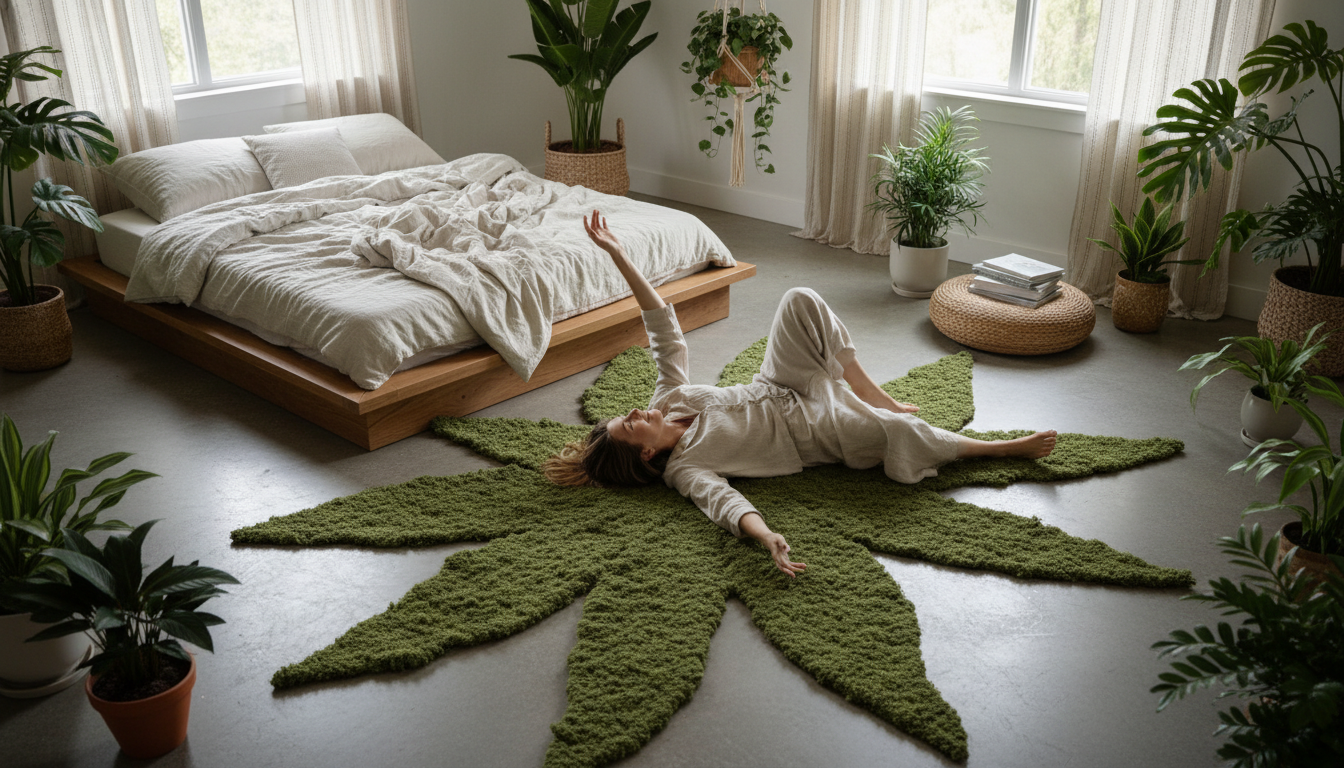
The Sensory Architecture of the First Step
As we move toward 2026, the master suite is undergoing a quiet revolution, transitioning from a mere sleeping quarter into a “cortisol-conscious” sanctuary. The cornerstone of this evolution lies in the tactile transition between sleep and wakefulness. Designers are increasingly discarding rigid, rectangular floor coverings in favor of Puddle-Silhouette Moss Rugs, which mimic the organic, amorphous spread of forest floor greenery.
This shift isn’t purely aesthetic; it is rooted in sensory grounding. By replacing cold, linear floorboards with hyper-textured, irregular tufting, the morning ritual is physically anchored. The undulating pile heights found in premium artisanal collections—such as those curated at thebohorugs.com—provide a micro-massage for the feet, stimulating neural pathways and signaling the body to transition into a state of calm alertness.
Bio-Mimicry and the Death of the Hard Angle
The 2026 “Healing Boho” aesthetic rejects the synthetic perfection of mid-century minimalism. Instead, it embraces the “clutter-free organicism” movement. Puddle-Silhouette Moss Rugs serve as the visual anchor for this look, breaking the harsh, geometric lines of bed frames and wardrobes with fluid, liquid-like forms.
To achieve this immersive biophilic effect, interior architects are layering these rugs to create “topographical islands.” Here is how the trend is manifesting in high-end bedroom design:
- Chiaroscuro Texturing: Utilizing multi-tonal yarns—ranging from deep forest umber to pale lichen—to create the illusion of depth and living moss.
- Negative Space Integration: Placing irregular silhouettes partially under the bed to create the “spill-over” effect of a natural spring.
- The Hybrid Fiber Movement: Combining recycled silk for dew-like shimmer with heavy New Zealand wool for the density of thick turf.
Designing for the Circadian Rhythm
In the coming seasons, color palettes are shifting away from stark “sage” toward more complex, seasonal moss tones. We are seeing a rise in “dormant greens”—hues infused with brown and gold undertones that reflect the natural lifecycle of the forest. This “healing boho” approach prioritizes low-saturation colors that do not overstimulate the visual cortex upon waking.
Integrating Puddle-Silhouette Moss Rugs into the bedroom creates a soft-focus lens for the room. When the first light hits the varying pile heights, it creates a play of shadow and light that mimics a forest canopy. For the modern inhabitant, this isn’t just decor; it is a commitment to a slower, more intentional start to the day, grounded in the timeless textures of the earth.
Sustainability and Circularity in Moss-Inspired Textiles
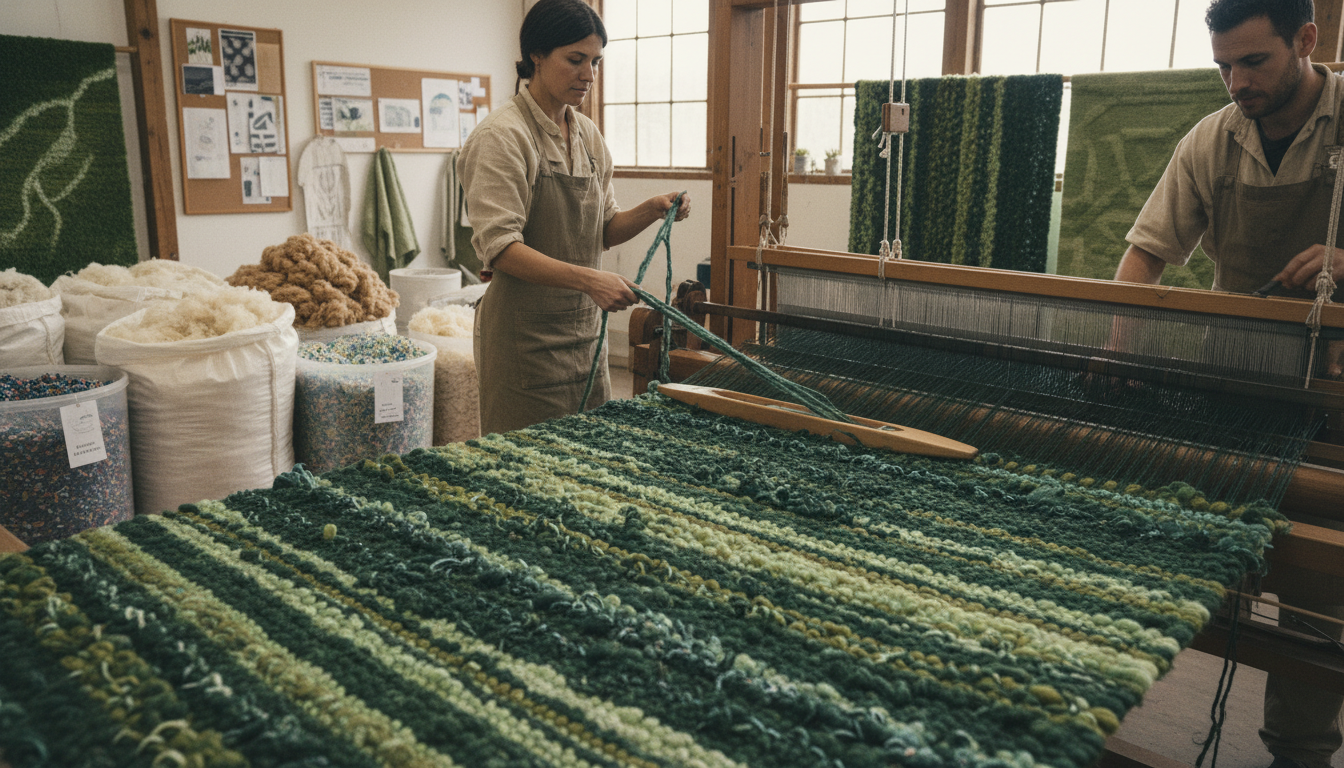
Beyond Synthetic Textures: The Material Science of 2026
As we pivot toward 2026, the interior design landscape is shedding its reliance on petroleum-based synthetics in favor of radical bio-fabrication. The allure of Puddle-Silhouette Moss Rugs lies not only in their verdant, multi-dimensional pile but in their fundamental composition.
The next generation of high-end textiles utilizes regenerative protein fibers and mycelium-based substrates. These materials do more than mimic the forest floor; they breathe, offering a carbon-negative footprint that resonates with the ethos of the modern “Healing Boho” movement.
Key material innovations defining this era include:
- Algae-Injected Pigments: Natural dyes derived from marine flora that provide the deep, nuanced emerald and chartreuse tones found in premium moss-inspired collections.
- Regenerative Wool Blends: Sourced from farms practicing holistic land management to ensure every fiber contributes to soil health.
- Bio-Polymer Backing: Moving away from toxic glues, these rugs utilize sap-based adhesives that ensure the piece is fully compostable at the end of its lifecycle.
The Circular Blueprint of Organic Geometry
The rise of Puddle-Silhouette Moss Rugs signals a definitive departure from the rigid, rectangular constraints of traditional floor coverings. In 2026, luxury is defined by fluidity—an aesthetic rejection of industrial sharp edges in favor of “soft architecture.”
Circularity is intrinsic to this “puddle” geometry. By utilizing modular tufting techniques, designers can now create irregular shapes that minimize fabric waste during production. This shift ensures that the organic contours of a boho haven are as ethically sound as they are visually immersive.
For those seeking the pinnacle of this craft, platforms like thebohorugs.com have become essential curators. Their focus on artisanal integrity ensures that these complex, fluid shapes are achieved through hand-tufted precision rather than high-waste automated cutting.
Future-Proofing the Haven: Longevity and Biodegradability
Luxury consumers are no longer satisfied with “fast-homeware” aesthetics. The 2026 trend focuses on “Heirloom Biophilia,” where a rug is expected to age gracefully, developing a patina of texture much like actual woodland moss.
- Fiber Resilience: High-twist botanical silks are being blended with hardy hemp to ensure the “puddle” maintains its loft under high foot traffic.
- Nutrient-Return Systems: Leading designers are experimenting with textiles that can be shredded and returned to the earth as nitrogen-rich mulch.
- Low-Impact Maintenance: New self-cleaning enzyme coatings reduce the need for harsh chemical washes, preserving the integrity of the natural fibers.
Ultimately, the integration of Puddle-Silhouette Moss Rugs into the home is a sophisticated investment in a circular future. It is a transition from merely decorating a room to cultivating a living, breathing sanctuary that honors the planet as much as the inhabitant.
The Future of Biophilic Rugs: Interactive and Multi-Sensory Flooring
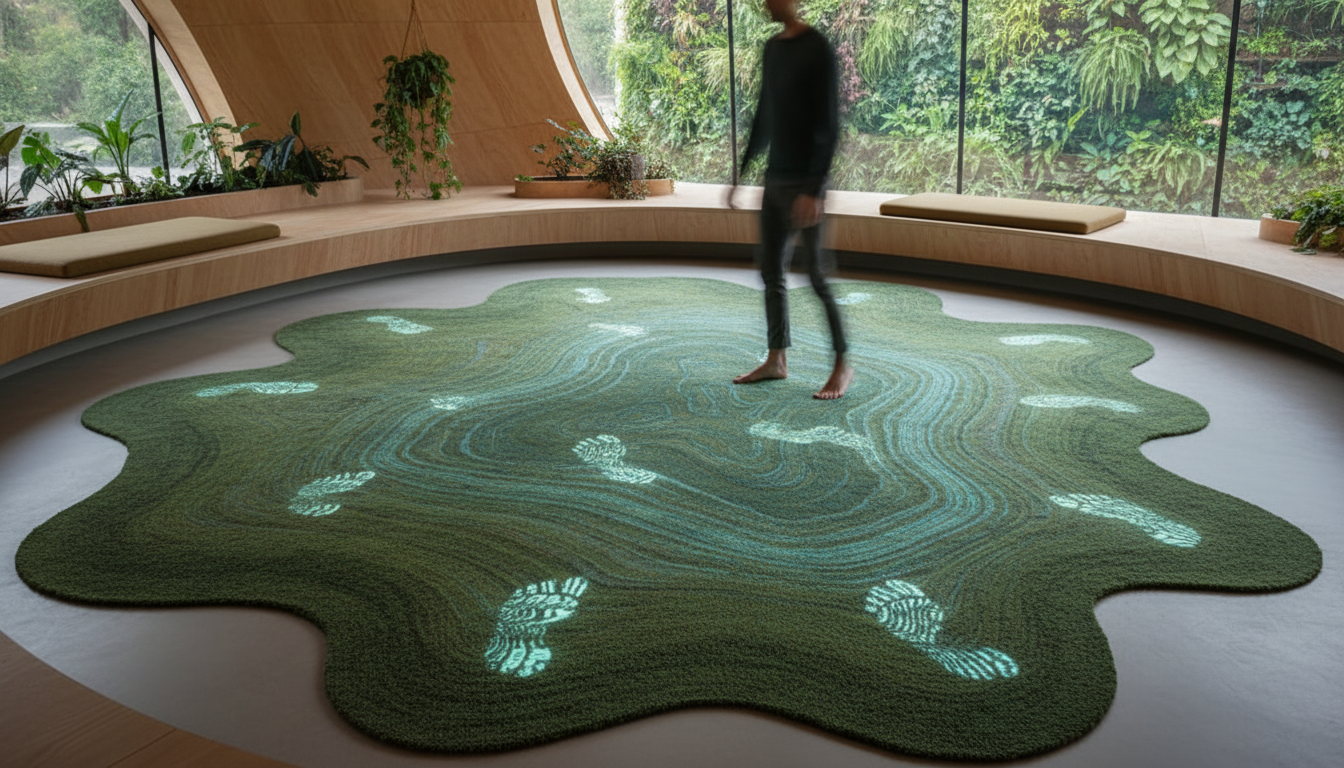
Beyond Geometry: The Shift to Amorphous Fluidity
As we approach 2026, the rigid constraints of the rectangular rug are dissolving into history. The design world is witnessing a migration toward “liquid layouts,” where floor coverings mimic the irregular, soft-edged pools of nature. Puddle-Silhouette Moss Rugs represent the pinnacle of this movement, offering a visual break from the harsh perpendicular lines of modern architecture.
This shift isn’t merely aesthetic; it is a psychological response to our increasingly digital lives. By introducing organic, non-linear forms, these rugs disrupt the “grid” of the home, creating a space that feels spontaneous and alive rather than curated and static. Interior designers are now using these free-form shapes to define zones in open-concept “healing havens” without the need for walls.
The Tactile Topography of 2026
The sensory experience of the upcoming season is defined by “micro-tufting” and varied pile heights. Unlike the flat-weave trends of the past decade, Puddle-Silhouette Moss Rugs utilize 3D-tufting techniques to recreate the uneven, sponge-like sensation of walking through an ancient forest. This tactile variety provides a grounding haptic feedback that has been shown to lower cortisol levels during transitions from work to rest.
- Biomorphic Textures: Expect combinations of botanical silk, recycled wool, and felted eucalyptus fibers to create a “living” sheen.
- Variable Density: Higher densities in the “moss clusters” provide orthopedic support, while lower-pile “clearings” offer cooling sensations.
- Thermal Regulation: 2026’s premium models will integrate temperature-neutral natural fibers that remain cool in summer and retain warmth during winter months.
Acoustic Intelligence and Atmospheric Softening
In the high-end residential sector, the rug has evolved into a piece of functional acoustic technology. The irregular edges and multi-layered surfaces of Puddle-Silhouette Moss Rugs excel at breaking up sound waves, eliminating the echo common in minimalist, glass-heavy homes. This creates a “sonic cocoon,” essential for the immersive boho sanctuary.
Curators at thebohorugs.com are already observing a surge in demand for these artisanal, free-form pieces that bridge the gap between fine art and floor covering. By prioritizing hand-carved edges over industrial binding, these rugs maintain a “wild” fringe that softens the transition between hardwood and textile, further blurring the line between the built environment and the natural world.
Predicting the 2026 Color Palette: The “New Earth” Tones
Forget the flat sages and olives of yesteryear. The 2026 color story for biophilic flooring is rooted in “Chromatic Realism.” Designers are moving toward complex, variegated yarns that capture the nuanced shifts of real forest floors. To achieve this, look for pieces that incorporate:
- Oxidized Copper and Verdigris: To mimic the look of mineral-rich damp earth.
- Deep Lichen and Ochre: Providing warmth and depth in low-light settings.
- Iridescent Spore-Blue: A subtle, light-reflective fiber used to mimic the dew-covered highlights of real moss.
As we lean into more intuitive home styling, these immersive textiles serve as the foundational anchor for a new era of wellness-centric design. By choosing a Puddle-Silhouette Moss Rug, homeowners aren’t just decorating; they are installing a permanent piece of the wilderness, refined for the modern soul.
Elevate Your Space
Discover the artistry of handmade luxury. Each rug is a masterpiece of tradition and modern design.
Expert Q&A
What exactly are Puddle-Silhouette Moss Rugs?
They are floor coverings with irregular, fluid boundaries that mimic the natural, amorphous growth of moss patches in the wild.
How do these rugs fit into the 2026 ‘Healing Boho’ trend?
They emphasize softness, organic forms, and nature-inspired colors to create a space that promotes emotional regulation and tranquility.
Are Puddle-Silhouette Moss Rugs difficult to clean?
Modern versions use stain-resistant, bio-engineered fibers that make maintenance manageable despite the varying pile heights.
Can I use a moss rug in a high-traffic area?
Yes, but look for high-density tufted options specifically designed for durability in hallways or living rooms.
What materials are trending for these rugs in 2026?
Recycled wool, Tencel, and bio-based nylons that offer a soft, mossy feel while remaining eco-conscious.
Do these rugs require a special rug pad?
Because of their irregular shapes, custom-cut non-slip pads are recommended to ensure the edges stay flat.
How do I style an irregular rug with traditional furniture?
Treat the rug as a focal ‘island’ and allow furniture legs to rest partially on the rug to ground the arrangement.
Are these rugs pet-friendly?
Many designs are pet-friendly, though the high pile may require more frequent vacuuming to remove pet hair.
What colors define the moss rug trend for 2026?
Deep forest greens, muted sage, golden ochre, and lichen grays are the dominant shades.
Can I layer a puddle-silhouette rug over carpet?
Yes, layering them over low-pile neutral carpets adds depth and a ‘forest floor’ aesthetic to the room.
Are Puddle-Silhouette Moss Rugs considered ‘Floor Art’?
Absolutely; they are designed to be visual and tactile statements that challenge the traditional utility of flooring.
What is the psychological benefit of organic shapes in rugs?
Curvilinear forms are associated with safety and relaxation in neuro-aesthetic research, unlike sharp, aggressive angles.
How do these rugs improve room acoustics?
The varying pile heights and dense fibers are excellent at absorbing sound, making them ideal for echoing modern spaces.
Where should I place a moss rug for the most impact?
Entryways, under coffee tables, or in reading nooks where the texture can be appreciated both visually and physically.
Can these rugs be customized?
Many boutique designers offer bespoke puddle silhouettes tailored to the specific dimensions of a room.
Do moss rugs work in minimalist interiors?
Yes, they provide a necessary ‘soft edge’ to minimalist rooms, preventing them from feeling too cold or clinical.
How do I prevent the edges from curling?
High-quality moss rugs feature reinforced backing that maintains the organic shape without edge-curl.
What is the ideal pile height for a moss-like feel?
A multi-level pile ranging from 10mm to 35mm creates the most realistic and comfortable moss texture.
Are there outdoor versions of Puddle-Silhouette Moss Rugs?
Yes, made from UV-resistant polypropylene, these can transform patios into green sanctuaries.
How does the puddle shape affect the flow of a room?
It encourages a more fluid, non-linear movement path, making the room feel more spacious and natural.
Is the moss rug trend sustainable?
The trend aligns with circular design principles, often utilizing recycled fibers and natural dyes.
Can I use a moss rug in a nursery?
They are perfect for nurseries as they provide a soft, sensory surface for floor play.
How do I vacuum a rug with varying pile heights?
Use a vacuum with adjustable height settings and avoid the beater bar on the highest pile sections.
Are moss rugs available in different textures?
Yes, from ‘shaggy’ forest moss to ‘flat’ velvet-like lichen textures.
Why move away from rectangular rugs now?
Post-pandemic design favors ‘cocooning’ and soft environments over the rigid formality of traditional layouts.
Can these rugs be used as wall hangings?
Many Puddle-Silhouette rugs are light enough to be mounted as tactile 3D wall art.
Do moss rugs attract more dust?
While texture can trap dust, high-quality anti-static fibers help minimize buildup compared to older synthetic materials.
What size is best for a medium living room?
Look for a rug that covers roughly 60% of the open floor space to maintain the ‘puddle’ effect.
Are these rugs compatible with robot vacuums?
Most can be navigated by robot vacuums, though extremely high-pile sections might present a challenge for some models.
Where can I buy the best Puddle-Silhouette Moss Rugs?
Artisanal retailers like TheBohoRugs specialize in these biophilic, artisan-crafted floor installations.
Written by TheBohoRugs Interior Design Team
Experts in handmade rugs, boho interiors, and modern home decor.