In an era of instant gratification and disposable aesthetics, the hand-knotted rug stands as a defiant monument to the art of the slow. For the discerning homeowner and interior designer, understanding why hand knotted masterpieces demand months—and sometimes years—of labor is essential to appreciating their value as ‘Art for the Floor’. This exploration goes beyond the loom, dissecting the mathematical complexity, material integrity, and artisanal heritage that define these singular investments. As we look toward 2026, the shift toward sustainable, legacy-driven interiors makes the patience required for hand-knotting not just a logistical necessity, but a hallmark of true luxury.
“Why hand knotted rugs take so long to weave is primarily due to the density of the individual knots and the manual nature of the process. A single 9×12 rug can contain millions of individual knots, each tied by hand. Depending on the Knots Per Square Inch (KPSI), a master weaver can typically tie between 6,000 to 10,000 knots per day. When factoring in material preparation, pattern mapping, and the finishing process, a high-quality hand-knotted rug often requires 6 to 12 months of continuous labor, making it a masterpiece of durability and detail that no machine can replicate.”
The Roadmap
Table of Contents
- The Chronology of Craft: Mapping the Weaver’s Timeline
- The Mathematics of Patience: Understanding KPSI and Density
- Material Integrity: How Raw Sourcing Extends the Process
- The Human Element: Why Automation Fails the Nuance Test
- Cultural Preservation: The Narrative Within Every Knot
- Sustainability as a Premium: Why the 2026 Trend Favors Slow Production
- Investment Logic: The Problem with Fast-Decor Alternatives
- The Collector’s Protocol: Authenticating Time-Intensive Artistry
The Chronology of Craft: Mapping the Weaver’s Timeline
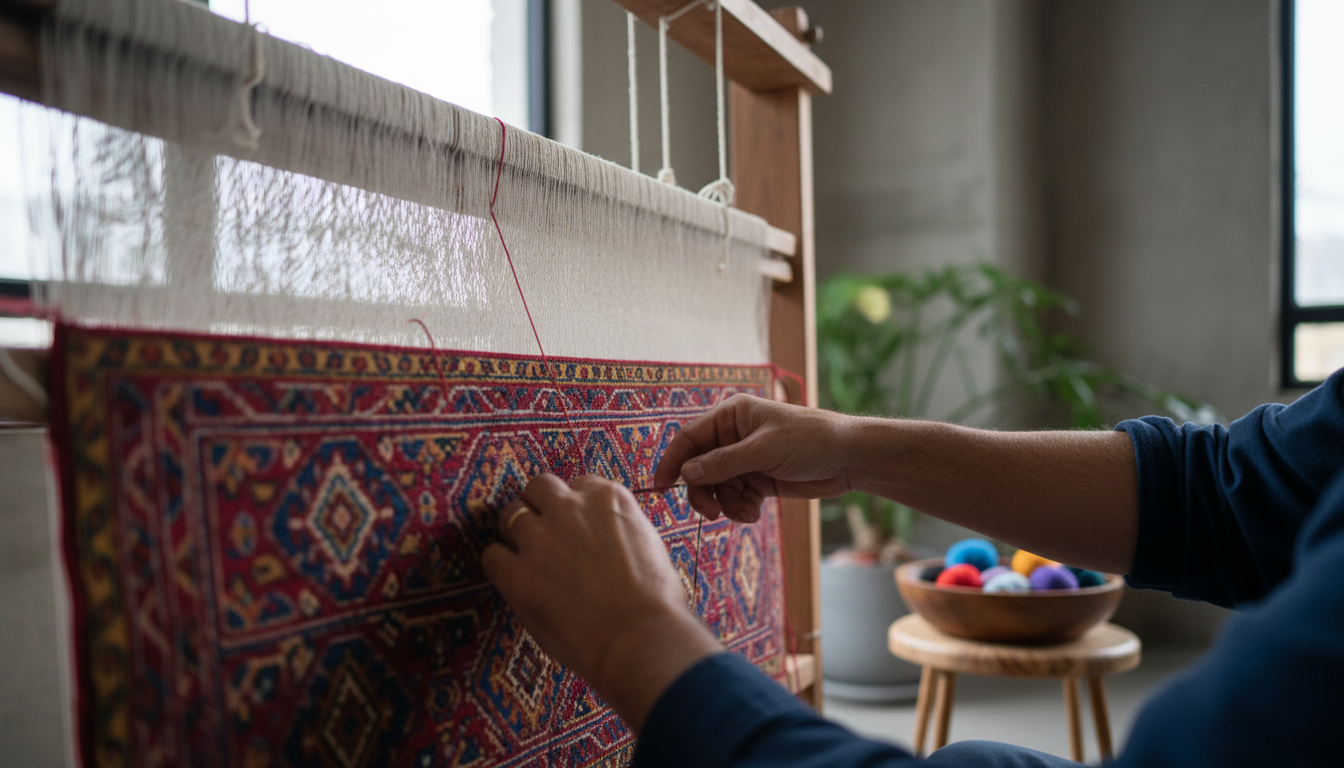
The Geometry of Patience: Calculating the Human Element
To understand why hand knotted rugs command such a significant temporal investment, one must look past the aesthetic and into the architectural marrow of the textile. It is a slow dialogue between artisan and loom, where speed is discarded in favor of structural integrity.
A master weaver typically produces between 6,000 and 10,000 knots per day. In a high-density piece, this equates to progress measured in mere centimeters. This meticulous pace is the only way to ensure the tension of each individual knot remains consistent across months of labor.
The time-intensive nature of this craft is broken down into three distinct phases:
- The Pre-Loom Alchemy: Hand-spinning and vegetable-dyeing the wool can take weeks before a single knot is tied, ensuring the yarn has the “memory” required for intricate patterns.
- The Rhythmic Weave: The physical act of tying Persian or Turkish knots, often involving two to four weavers working in a synchronized choreography.
- The Finishing Ritual: The rug is washed, sun-dried, and sheared by hand—a delicate process that defines the final luster and pile height.
The 2026 Shift: From Fast Decor to Temporal Luxury
As we approach 2026, the interior design landscape is pivoting toward “Provenance-First” sourcing. Discerning collectors are no longer satisfied with instant gratification; they are seeking pieces that document the passage of time through human effort.
Industry experts predict that by 2026, the narrative of “the wait” will become a status symbol in itself. To own a rug that took nine months to breathe into existence is to own a piece of slow-luxury that defies the digital age’s obsession with immediacy.
Curators at thebohorugs.com observe that this shift is driven by a desire for “un-manufactured” flaws. These subtle variations in the weave, known as abrash, are only possible when the process is allowed to unfold over seasons rather than hours.
Why the Physical Limit Cannot Be Rushed
The question of why hand knotted textiles cannot be accelerated lies in the physical limits of the human hand. Unlike machine-made counterparts that use power-looms to mimic the look of a knot, an authentic artisan rug is structurally bound to the warp and weft.
- Tension Management: If a weaver rushes, the tension of the rug fluctuates, leading to “cockling” or uneven edges that ruin the rug’s longevity.
- Pattern Complexity: Intricate floral or curvilinear designs require the weaver to frequently reference a talim (coded script) or map, slowing the physical movement to ensure precision.
- Material Integrity: Hand-knotted rugs often use high-lanolin wools which are tougher on the fingers, requiring a deliberate, measured pace to avoid fiber breakage.
Ultimately, the reason why hand knotted rugs take longer is precisely why they last for generations. At thebohorugs.com, the philosophy remains that a rug meant to last a century cannot—and should not—be rushed into existence in a week.
The Mathematics of Patience: Understanding KPSI and Density
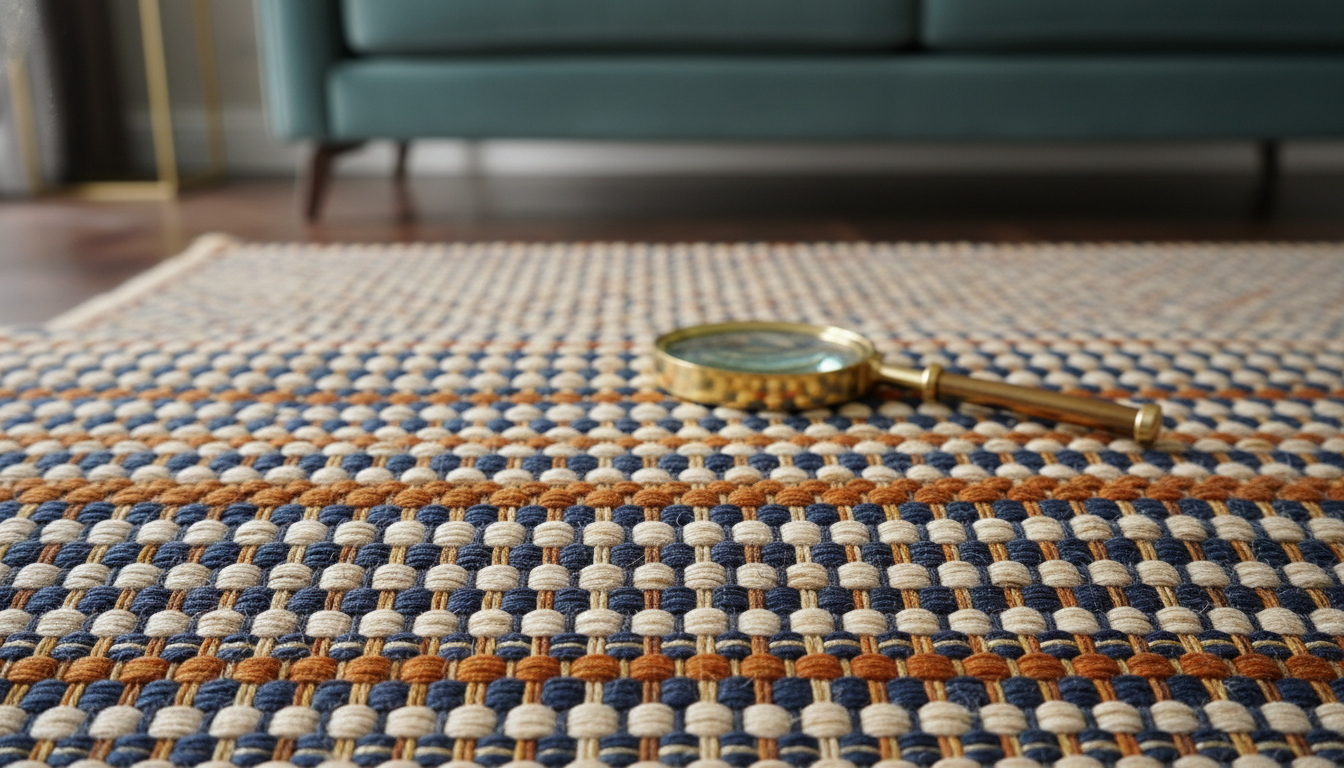
The Micro-Architecture of the Knot
To the uninitiated, a rug is a surface; to the connoisseur, it is a sophisticated mathematical feat. The primary metric of quality, Knots Per Square Inch (KPSI), serves as the definitive gatekeeper of time. A single master weaver can tie roughly 6,000 to 9,000 knots per day—a staggering figure until one calculates the sheer scale of a room-sized masterpiece.
Consider a standard 9×12 rug with a moderate density of 150 KPSI. This translates to over 2.3 million individual hand-tied knots. Understanding why hand knotted production spans months, or even years, becomes clear when you realize that a team of three artisans would require nearly a year of uninterrupted labor to complete such a canvas. Every knot is a deliberate decision, a micro-moment of tension and alignment that no machine can replicate.
2026 Trends: The Rise of “Quiet Permanence”
As we look toward 2026, the interior design landscape is pivoting sharply away from “disposable glam” in favor of “Quiet Permanence.” High-density rugs are being reimagined as liquid assets, paralleling the markets of fine horology and rare vintages. We predict a significant surge in collector interest for “micro-knotting”—densities exceeding 400 KPSI—where the texture mimics the fluid drape of silk velvet rather than traditional wool.
- Visual Fidelity: Higher KPSI allows for organic, curved lines and painterly shading that lower-quality weaves simply cannot achieve.
- Structural Integrity: Density isn’t just about detail; a tighter weave prevents particulates from penetrating the foundation, ensuring the rug remains an heirloom for centuries.
- Tactile Provenance: In an era of AI-generated aesthetics, the slight, soulful variations in millions of hand-tied knots offer a “human thumbprint” that defines true luxury.
The Physics of Density and Light
The nuance of why hand knotted textiles remain the ultimate floor covering lies in the physics of the “pile.” Each row of knots is secured by a weft thread and then compressed with a heavy metal comb. This compression determines the rug’s “handle” and how it reacts to ambient light. A high-density rug from a premium source like thebohorugs.com captures light differently, offering a directional sheen that shifts as you move through the room.
For those discerning the value proposition of why hand knotted excellence remains the gold standard, consider these benchmarks of human endurance:
- Boutique Density (60-100 KPSI): Approximately 4-6 months for a 9×12 rug.
- Gallery Density (150-250 KPSI): Approximately 10-14 months for a 9×12 rug.
- Investment Density (400+ KPSI): Often exceeding 2-3 years for a single 9×12 rug.
In the luxury market of 2026, the scarcity of weavers capable of maintaining this level of mathematical precision will likely drive the valuation of these pieces into the stratosphere. Investing in high KPSI today is not merely a design choice; it is a hedge against a world moving too fast, anchored by a piece of art that refused to be rushed.
Material Integrity: How Raw Sourcing Extends the Process
The Alchemy of High-Altitude Fiber
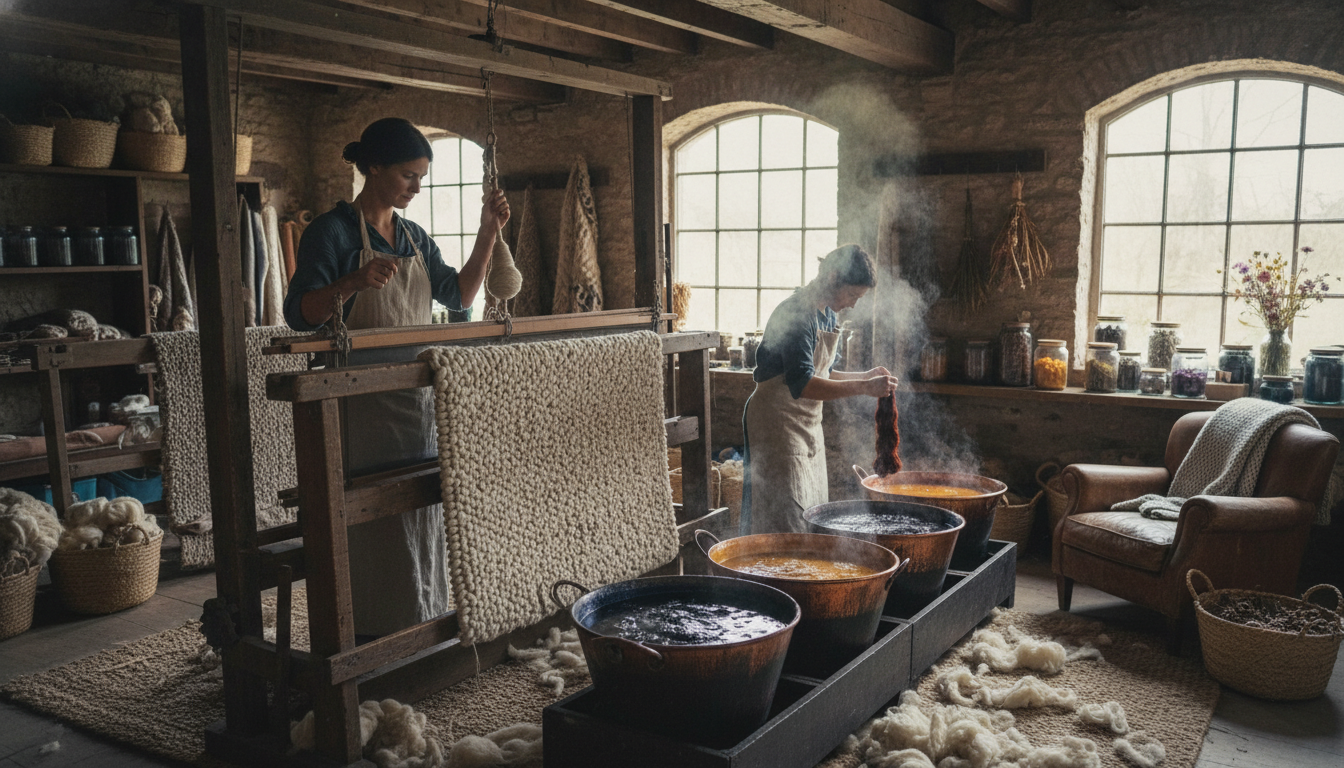
The timeline of a textile masterpiece begins in the craggy elevations of the Himalayas or the Atlas Mountains. Unlike mass-produced synthetics, the wool required for heritage-grade weaving is harvested seasonally, ensuring a high lanolin content that provides natural luster and resilience.
This raw material must be hand-carded and hand-spun, a meditative process that preserves the fiber’s structural integrity. Machine-spun yarn, while faster, strips the wool of its natural oils, leading to a brittle finish that lacks the “soul” of an artisanal piece.
Understanding why hand knotted creations demand such an extensive lead time requires looking at these foundational stages. A single weaver may spend weeks simply preparing the yarn before a single knot is even tied upon the loom.
Chromatic Patience: The Natural Dye Cycle
The vibrant indigos and earthy terracottas seen in premium collections are rarely the result of a quick chemical bath. High-end ateliers, such as those curated by thebohorugs.com, often rely on botanical pigments that require precise environmental conditions to set.
- Madder Root: Requires multiple fermentation cycles to achieve a deep, soulful crimson.
- Indigo: A living vat process where oxygenation determines the final depth of the cerulean hue.
- Pomegranate Skins: Harvested and dried over months to produce sun-fast, golden ochres.
These natural dyes do not just sit on the surface; they bond with the fiber. This chemical harmony ensures that the rug’s palette will evolve beautifully over decades, a hallmark of why hand knotted investments are favored by interior architects over transient floor coverings.
2026 Outlook: The Rise of Regenerative Provenance
Looking toward 2026, the global design market is shifting toward “Regenerative Provenance.” Discerning collectors are moving beyond simple “sustainability” and demanding a documented history of the fiber’s origin, from the specific flock of sheep to the mineral content of the water used in washing.
- Isotopic Mapping: A rising trend where the chemical signature of the wool is used to verify its geographic origin.
- Micro-Batch Dyeing: A return to extremely small dye lots to ensure unique, non-replicable “abrash” or color variations.
- Carbon-Positive Weaving: Utilizing solar-dried wool and zero-waste water filtration systems in traditional villages.
This shift toward hyper-traceability adds another layer to the production schedule. The luxury of the future is defined by the absence of haste. By choosing a piece from a dedicated purveyor like thebohorugs.com, collectors are participating in a cycle of preservation that honors the slow movement of raw material sourcing.
Ultimately, the reason why hand knotted rugs take longer is found in the rejection of the industrial. Every week added to the production timeline is an investment in the rug’s eventual longevity, ensuring it survives as a family heirloom rather than a seasonal accessory.
The Human Element: Why Automation Fails the Nuance Test
The Paradox of the “Perfect” Knot
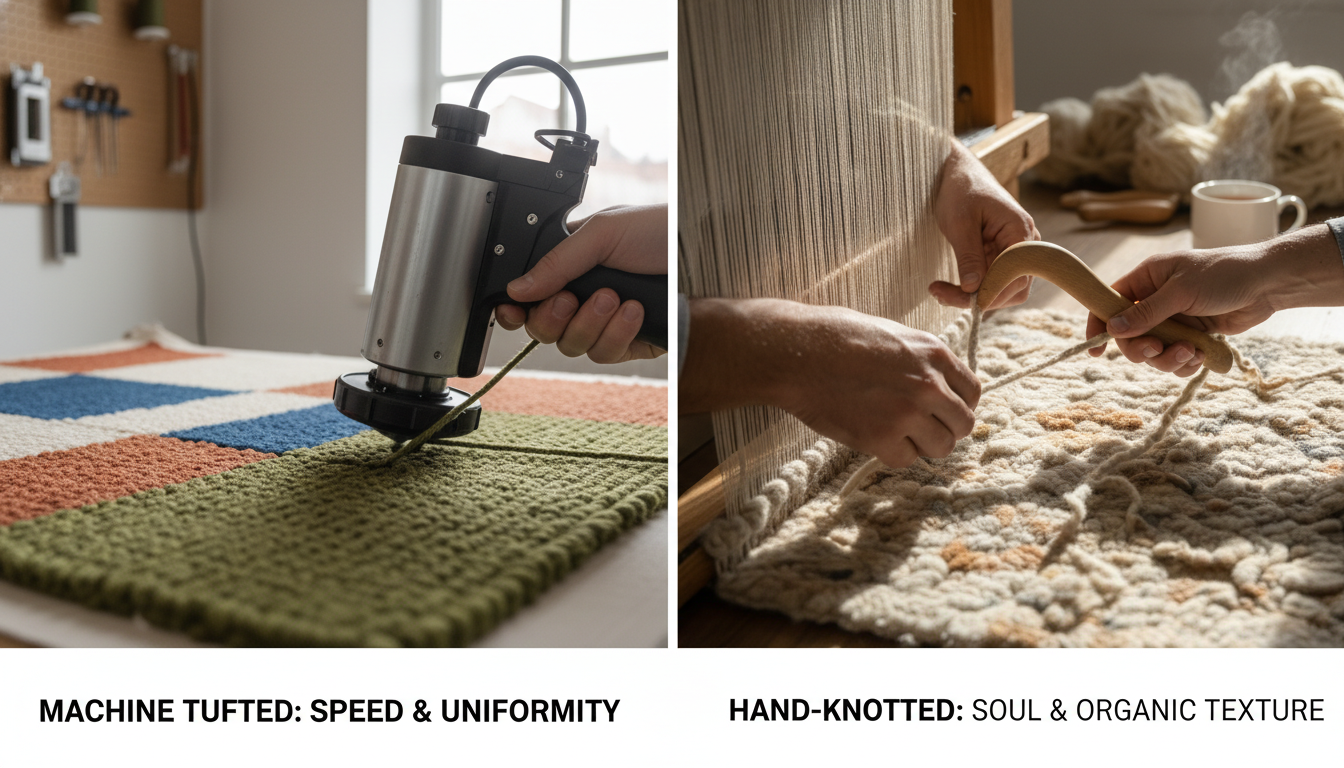
In an era defined by the cold efficiency of algorithmic manufacturing, the deliberate slowness of a loom remains a radical act of rebellion. While a power loom can produce a rug in a matter of hours, it lacks the visceral tension management that only a master weaver provides.
Each knot tied by hand is an individual decision. A weaver adjusts their grip based on the humidity of the room, the elasticity of the hand-spun wool, and the subtle variations in the warp threads. This atmospheric intuition is exactly why hand knotted textiles possess a depth and “memory” that machines simply cannot replicate.
Machines operate on binary logic; they cannot compensate for the organic “give” of natural fibers. This leads to several distinct advantages found in artisanal pieces:
- Structural Integrity: Hand-tied knots wrap around the warp and weft, creating a multidirectional strength that allows rugs to last for centuries.
- The Abrash Effect: The subtle, painterly color variations caused by hand-dyeing wool in small batches—a feature machines try to mimic but often render as “glitches.”
- Individual DNA: No two rows are identical. The slight, intentional inconsistencies give the rug its “soul” and high-end aesthetic value.
2026 Forecast: The Rise of Sentimental Maximalism
As we look toward 2026, the interior design landscape is shifting away from “disposable luxury” toward Sentimental Maximalism. Discerning collectors are no longer satisfied with aesthetic alone; they demand provenance and a tangible human connection.
Industry analysts predict that the market value of authentic, slow-made textiles will surge as consumers reject the sterility of 3D-printed and mass-produced home goods. This cultural pivot is why hand knotted rugs are increasingly viewed as blue-chip investments rather than mere floor coverings.
Collectors frequenting galleries like thebohorugs.com have already begun prioritizing “living” textures—pieces that carry the story of their creation in every intricate centimeter of wool and silk.
The Biological Clock of Artisanal Production
The time investment required for these pieces is dictated by the biological limitations of the human hand and the traditional curing of materials. A single square inch can contain up to 400 knots, and a standard 9×12 rug can require over 1.5 million individual hand-movements.
- The Sorting Phase: Hand-selecting wool based on the sheep’s altitude and diet, which affects the lanolin content and luster.
- The Carding Ritual: Hand-brushing fibers to ensure they retain their natural strength, a process often bypassed by harsh industrial chemicals.
- The Knotting Cadence: A master weaver maintains a specific rhythm that cannot be rushed without compromising the rug’s eventual “lay” on the floor.
Ultimately, the duration of the weaving process is a safeguard of quality. By removing the pressure of the clock, the weaver ensures that the final product is not just a rug, but a legacy piece. This commitment to the slow-burn of artistry is why hand knotted remains the gold standard for those who view their home as a curated sanctuary.
Cultural Preservation: The Narrative Within Every Knot
The Vocabulary of the Loom: Regional Dialects in Silk and Wool
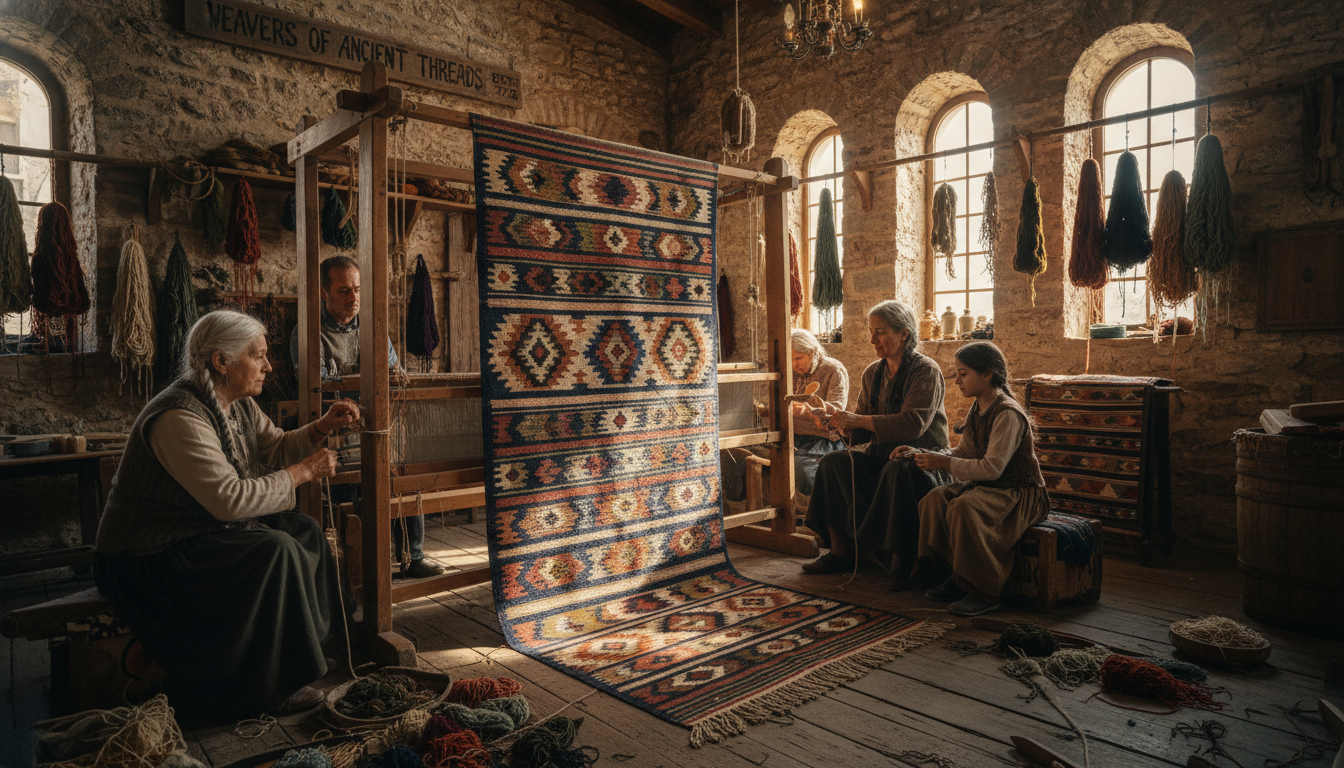
To view a rug simply as floor covering is to miss the silent anthology beneath one’s feet. Each row of knots serves as a linguistic record, documenting the migrations, flora, and socio-political climate of the weaver’s environment. Understanding why hand knotted masterpieces command such temporal respect requires a shift in perspective; we are not merely observing a production timeline, but the transcription of oral history into fiber.
Unlike the clinical precision of machine-loomed replicas, the human element introduces “abrash”—subtle color variations that act as a weaver’s fingerprint. These nuances are intentional markers of authenticity that high-end collectors seek when sourcing from curators like thebohorugs.com. The time required for this process is non-negotiable because each knot is a deliberate choice, often reflecting specific regional traditions:
- The Senneh Knot: An asymmetrical technique allowing for fluid, curvilinear patterns and high knot density, demanding extreme precision.
- The Ghiordes Knot: A symmetrical, double-looped structure that provides exceptional durability, traditionally found in rugged tribal geometries.
- The Narrative Border: Complex margins that often contain hidden symbols—the “Boteh” for eternal life or the “Tree of Life” for the connection between heaven and earth.
2026 and Beyond: The Rise of the ‘Traceable Textile’
As we approach 2026, the luxury market is pivoting away from “fast-interior” trends toward a concept known as Traceable Heritage. Discerning homeowners are no longer satisfied with aesthetic appeal alone; they demand a verifiable provenance that justifies the months of labor involved. This is fundamentally why hand knotted investments are projected to become the ‘blue chip’ assets of the interior design world over the next two years.
We predict a surge in “Slow Decor” movements where the duration of creation is marketed as a luxury feature rather than a logistical hurdle. In this evolving landscape, the value of a rug will be measured by three emerging criteria:
- Carbon Integrity: The zero-electricity footprint of traditional looms as a hallmark of true sustainability.
- Artisan Equity: A transparent look into the weaver’s community, ensuring that the time spent at the loom translates to long-term economic stability.
- Digital Memoirs: The integration of blockchain or digital certificates by premium sources like thebohorugs.com to archive the story of a rug’s creation for future generations.
The extended weaving period is, in essence, a safeguard against the dilution of culture. When a weaver spends six months on a single square meter, they are ensuring that the motifs of their ancestors do not vanish into the vacuum of industrial mass production. Every knot is a stay against time itself.
Sustainability as a Premium: Why the 2026 Trend Favors Slow Production
The Shift Toward Intentional Luxury
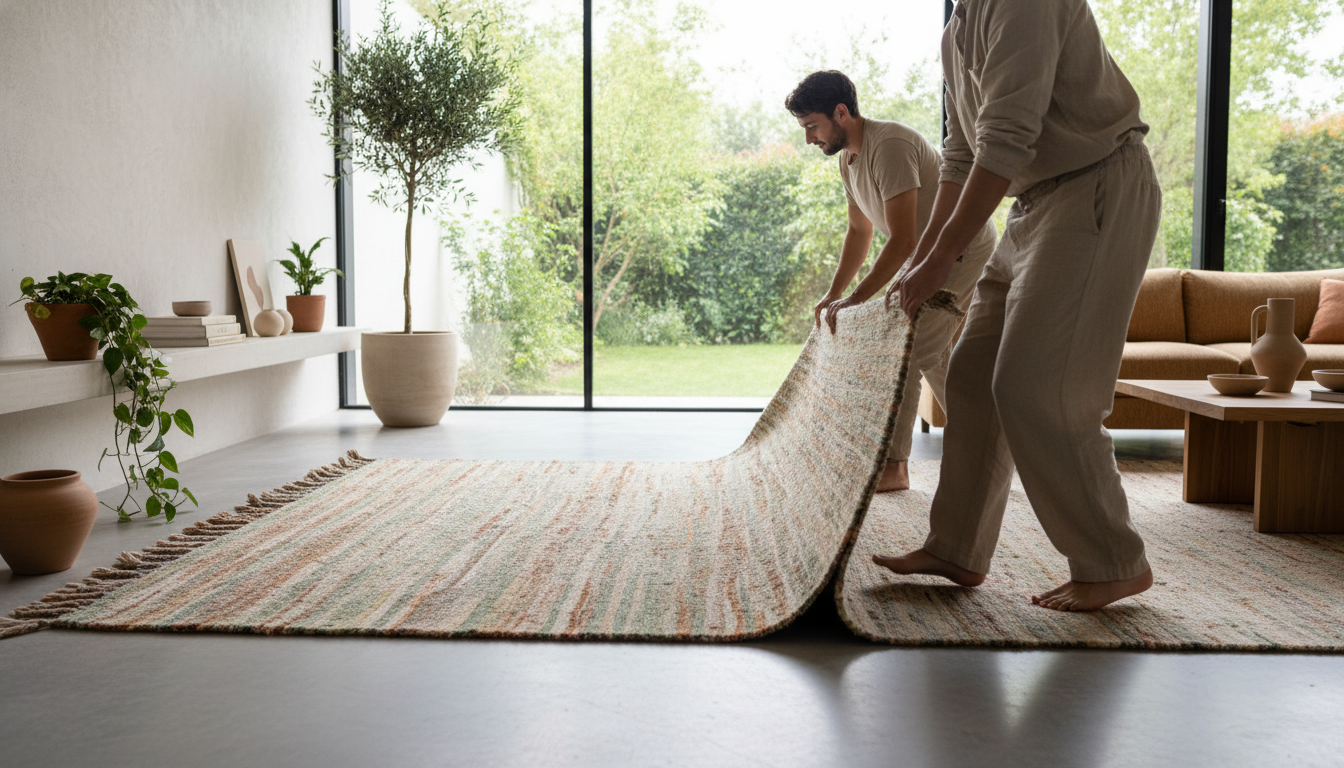
In an era defined by hyper-speed consumption, the interior design landscape of 2026 is pivoting toward “radical patience.” Designers are moving away from the ephemeral allure of machine-made mass production, favoring pieces that carry a soul and a history. Understanding why hand knotted textiles demand such extensive lead times is the first step in appreciating their intrinsic value as sustainable assets.
This shift isn’t merely aesthetic; it is a rejection of the “fast furniture” cycle that has dominated the last decade. As we look toward 2026, the luxury consumer views the months-long weaving process not as a delay, but as a necessary maturation period for a piece of functional art.
The “Zero-Carbon” Weaving Standard
The environmental footprint of a rug is determined long before it reaches the loom. Artisanal production relies on ancient, low-impact methods that simply cannot be rushed. When we analyze why hand knotted rugs are the gold standard for sustainability, several factors emerge as non-negotiable for the eco-conscious collector:
- Hand-Spun Wool: Unlike machine-carded fibers, hand-spun wool retains its natural lanolin, making the rug naturally stain-resistant without the use of toxic PFAS chemicals.
- Vegetal Dyeing: Creating pigments from madder root, indigo, and walnut husks requires weeks of fermentation and sun-drying, a process that ensures no heavy metals enter the local water tables.
- Manual Shearing: The final finish is achieved by hand-clipping the pile, ensuring the texture is nuanced and unique, a level of detail that high-end boutiques like thebohorugs.com prioritize for their curated collections.
The 2026 Trend: Biophilic Longevity
Predictive trends for 2026 suggest a “return to the earth” palette, where textures must feel as organic as they look. This is the core of why hand knotted construction is regaining its status as the ultimate interior investment. A rug that takes six months to weave is designed to last six decades, effectively neutralizing its carbon cost through sheer longevity.
Designers are increasingly specifying these pieces for “forever homes,” where the rug serves as the foundation for a room’s evolving identity. The slight irregularities in a hand-tied knot—often numbering in the millions per rug—create a visual depth that synthetic, perfectly uniform alternatives simply cannot replicate.
The Math of Artisanal Value
To truly grasp the premium of slow production, one must consider the daily output of a master weaver. A single square inch can contain up to 400 individual knots, each tied by hand. This meticulous pace is the primary reason why hand knotted floor coverings are viewed as heirlooms rather than temporary decor.
- Knot Density: Higher densities allow for more intricate, curvilinear patterns that machine looms cannot execute with the same clarity.
- Structural Integrity: Hand-tied knots are self-securing; if one loop breaks, the rest of the rug remains intact, unlike tufted rugs which rely on volatile latex glues.
- Resale Potential: As the global supply of skilled artisans diminishes, vintage and new hand-woven pieces from reputable sources like thebohorugs.com are expected to appreciate in value, much like fine wine or horological staples.
Ultimately, the 2026 market is moving toward a definition of luxury that values the “human touch” over mechanical perfection. By choosing the slower path, homeowners are not just buying a rug; they are preserving a heritage craft and investing in a sustainable future that honors the hands behind the loom.
Investment Logic: The Problem with Fast-Decor Alternatives
The High Cost of Instant Gratification
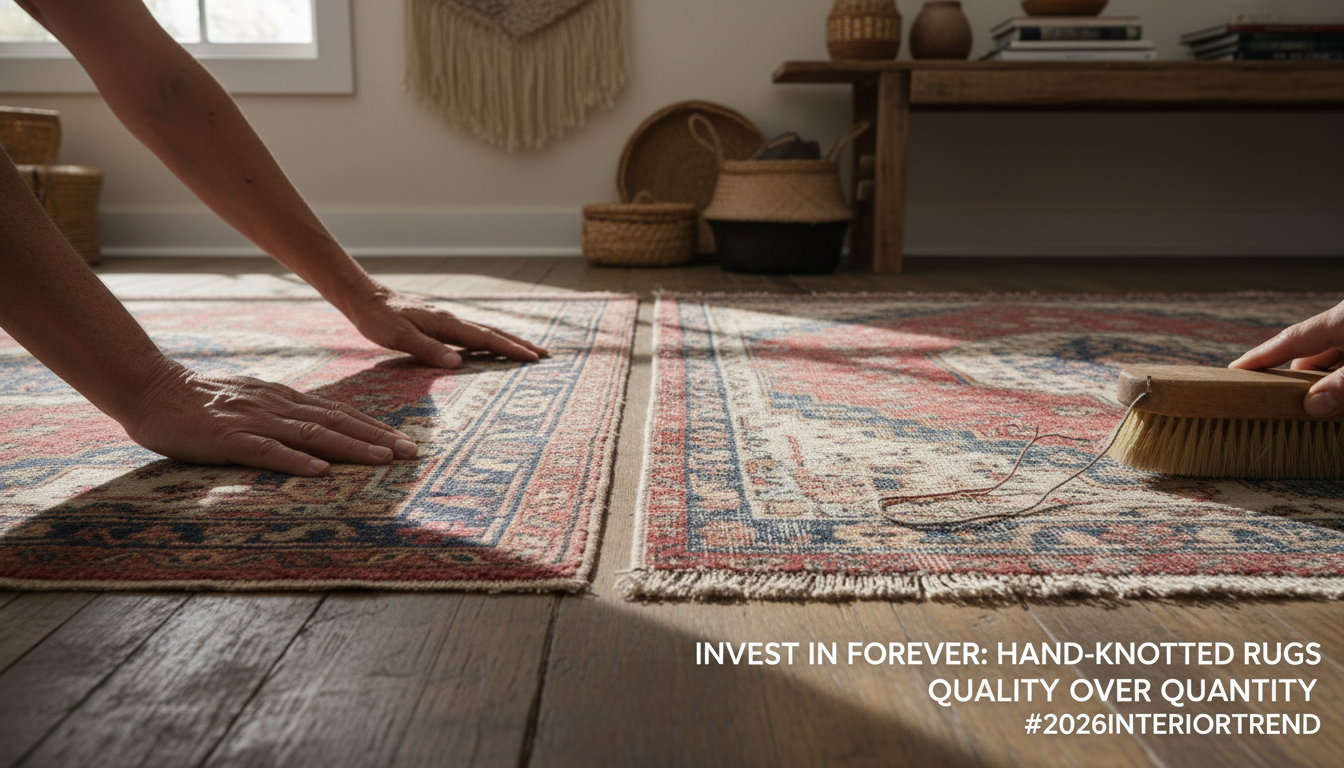
In an era defined by next-day delivery and algorithmic trends, the interior design world is witnessing a quiet rebellion. The “fast-decor” cycle—characterized by mass-produced, chemically glued, and machine-tufted floor coverings—is losing its luster among discerning homeowners. These alternatives offer speed at the expense of soul, often deteriorating within a few years of heavy foot traffic.
Discerning collectors are beginning to ask why hand knotted textiles remain the gold standard despite the arduous wait times. The answer lies in the fundamental shift from viewing decor as a consumable good to viewing it as a generational asset. A rug from thebohorugs.com is not merely a purchase; it is a commitment to a slow-manufacturing process that machines simply cannot replicate.
The Structural Deficit of Machine Alternatives
While power-loomed rugs can be produced in hours, they lack the structural integrity of a hand-bound foundation. Machine-made rugs typically rely on a rigid plastic backing or latex glues to hold fibers in place. Over time, these adhesives dry out and crumble, leading to “off-gassing” and shedding.
Conversely, the investment logic of artisanal weaving centers on the knot itself. Each individual knot acts as an independent anchor. To understand why hand knotted rugs endure for centuries, one must look at the mechanics of the weave:
- Tensile Strength: Hand-tied knots allow the rug to breathe and flex, preventing the fiber fatigue common in rigid, machine-pressed backings.
- Organic Resilience: Using hand-spun wool and natural dyes ensures the rug develops a “patina” rather than simply wearing out.
- Repairability: Because they are constructed knot-by-knot, these rugs can be professionally restored, whereas a damaged machine-made rug is destined for a landfill.
2026 Predictions: The Rise of Slow-Labor Authentication
As we look toward 2026, the luxury market is predicted to pivot toward “Slow-Labor Authentication.” Future consumers will demand transparency regarding the man-hours invested in their home goods. We expect to see a surge in “Provenance Passports” for textiles, where the months of weaving are documented as a mark of high-end status.
The scarcity of master weavers is already driving up the valuation of vintage and contemporary artisanal pieces. This makes the question of why hand knotted quality matters less about aesthetics and more about financial foresight. In a world of fleeting trends, an item that takes 900 hours to produce inherently carries a value that outpaces inflation and seasonal whims.
The Sustainability of the Long Game
True luxury is increasingly defined by environmental impact. Fast-decor alternatives are a major contributor to microplastic pollution and landfill waste. By choosing the slow path of traditional weaving, homeowners opt for a biodegradable, carbon-neutral legacy.
- Reduced Waste: One hand-knotted rug can outlast ten machine-made iterations.
- Artisan Preservation: Supporting this slow process ensures that ancient cultural techniques survive into the next century.
- Natural Materials: The reliance on wool, silk, and cotton over petroleum-based synthetics ensures a healthier indoor air quality.
Ultimately, the wait for a hand-knotted rug is the price of admission for an object that gains character with age. By sourcing from reputable purveyors like thebohorugs.com, you are investing in a piece where every hour of labor translates directly into decades of durability.
The Collector’s Protocol: Authenticating Time-Intensive Artistry
The Mathematics of Knot Density
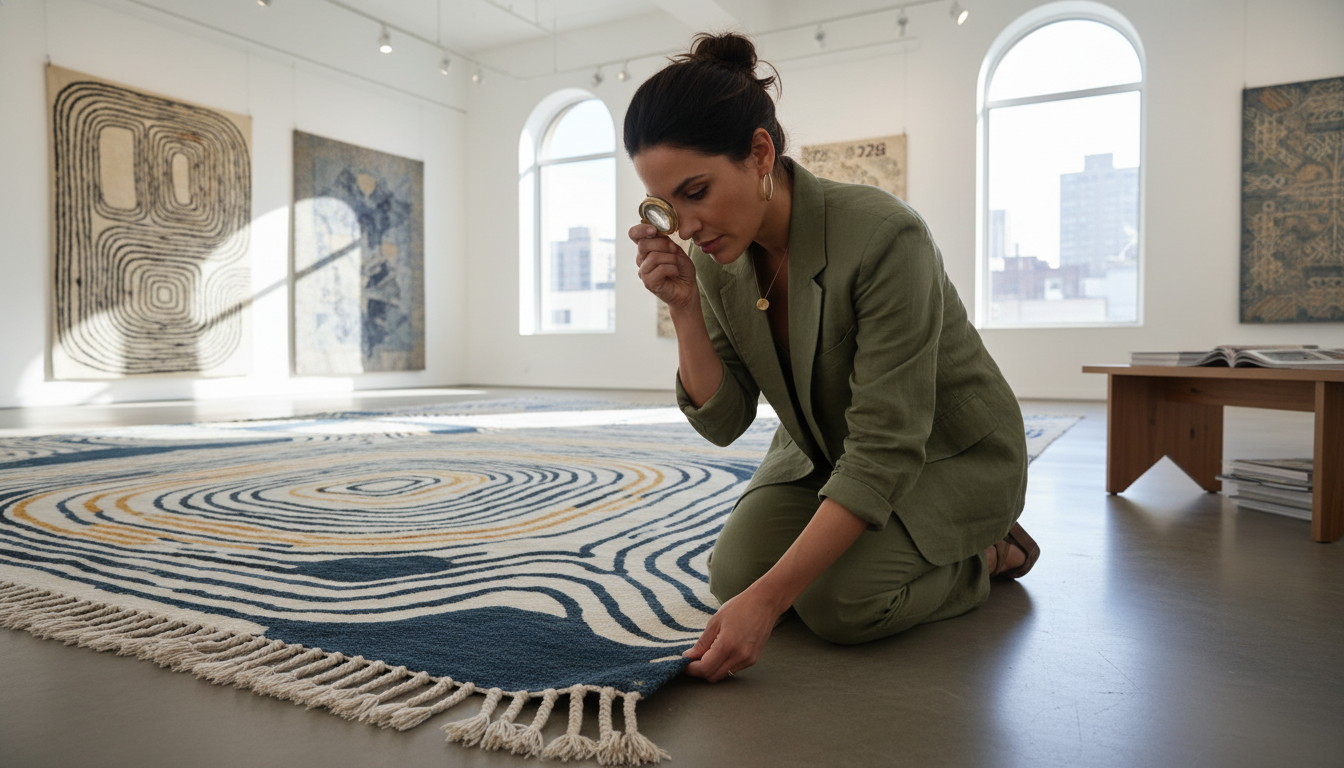
In the realm of high-end interiors, time is the ultimate luxury. A single 9×12 rug can contain upwards of 1.5 million individual knots, each tied by hand with surgical precision. This is fundamentally why hand knotted textiles cannot be rushed; the process is a physical manifestation of patience.
The weaver’s pace is dictated by the KPSI (Knots Per Square Inch). A higher KPSI translates to a more intricate design and a more durable foundation, but it also exponentially increases the production timeline. For a master artisan, a high-density rug might progress by only one to two inches per day.
Beyond the sheer number of knots, the complexity of the “cartoon”—the blueprint of the rug—plays a critical role. Curvilinear patterns, common in Persian or intricate floral styles, require constant mental calculation, unlike the repetitive linear rhythms found in machine-made counterparts.
The 2026 Forecast: Traceable Provenance and Slow Art
As we approach 2026, the luxury market is shifting from “visible wealth” to “auditable craftsmanship.” Collectors are increasingly demanding transparency in the weaving timeline, viewing the months of labor as a badge of ethical authenticity.
- Hyper-Localized Wool: Expect a surge in rugs using wool sourced from specific high-altitude regions, which requires longer scouring and spinning periods.
- The “Human Flaw” Premium: Collectors are beginning to value slight organic variations—abrash—that prove a human hand, rather than a computer, directed the loom.
- Digital Passports: Future high-value rugs will likely come with blockchain-backed timelines, documenting every month of the weaving process.
At thebohorugs.com, the emphasis remains on this slow-burn artistry, where the provenance of the wool and the heritage of the weaver are treated with the same reverence as the final aesthetic.
Material Maturation: Why the Loom Demands Patience
The technical reason why hand knotted rugs take months, or even years, often lies in the pre-weaving phase. Natural dyes, derived from madder root, indigo, and pomegranate skins, require specific atmospheric conditions to set correctly before the yarn even touches the loom.
- Hand-Spinning: Hand-spun yarn retains lanolin, making the rug stain-resistant, but spinning enough yarn for a large-scale piece can take weeks.
- Loom Tensioning: Setting the warp and weft is a structural feat. If the tension is off by a millimeter, the entire rug may skew, requiring the weaver to restart.
- The Finishing Wash: Once off the loom, the rug undergoes multiple washes and sun-drying cycles to settle the fibers and soften the palette.
Understanding why hand knotted creations carry such a premium involves acknowledging that you aren’t just buying floor covering. You are acquiring a record of several thousand hours of human focus—an asset that gains character as it ages, far outlasting the ephemeral trends of mass production.
Elevate Your Space
Discover the artistry of handmade luxury. Each rug is a masterpiece of tradition and modern design.
Expert Q&A
Why hand knotted rugs are more expensive?
The cost reflects the thousands of hours of manual labor, high-grade natural materials like hand-spun wool or silk, and the technical skill required to execute complex patterns that machines cannot replicate.
How long does it take to weave a 9×12 hand-knotted rug?
A 9×12 rug can take anywhere from 6 to 14 months depending on the knot density and the number of weavers working simultaneously.
Does a higher knot count always mean a better rug?
Not necessarily, but it allows for higher detail and greater durability. The quality of the wool and the execution of the knot are equally important.
What is KPSI in rug weaving?
KPSI stands for Knots Per Square Inch. It is the primary metric used to measure the detail and density of a hand-knotted rug.
Can a machine reproduce a hand-knotted rug?
No. Machines use power-looms that loop yarn through a backing, whereas hand-knotting involves physically tying individual yarns to the warp threads, creating a unique structure.
What are the most common types of knots?
The most common are the Senneh (Persian) knot and the Ghiordes (Turkish) knot, each offering different structural characteristics.
Why hand knotted rugs have irregular patterns?
Slight irregularities, or ‘abrash’, are hallmarks of hand-made art. They result from different dye lots and varying tension from the weaver’s hand, adding character and value.
Do hand-knotted rugs appreciate in value?
Yes, well-maintained pieces often appreciate as they become ‘antique,’ especially those with rare patterns or exceptional KPSI.
What materials are best for hand-knotting?
High-altitude wool is preferred for its lanolin content and durability, while silk is used for intricate details and sheen.
How do I tell if a rug is truly hand-knotted?
Check the back; the pattern should be as clear as the front. The fringe should be an extension of the rug’s internal foundation (warp), not sewn on.
Why are natural dyes preferred in hand-knotted rugs?
Natural dyes age gracefully, developing a soft patina over time, whereas synthetic dyes can fade harshly or bleed.
How many knots can a weaver tie in a minute?
An experienced weaver can tie roughly 10 to 15 knots per minute, though this speed fluctuates with the complexity of the pattern.
Does the weather affect the weaving time?
Yes, high humidity can affect the tension of the cotton warp threads on the loom, sometimes slowing production in traditional settings.
What is the ‘warp’ and ‘weft’?
The warp is the vertical set of threads stretched on the loom, and the weft is the horizontal threads that are woven through the warp to secure the knots.
How many weavers work on one rug at a time?
Usually, 2 to 4 weavers work side-by-side on large rugs to ensure consistent tension and progress.
Why hand knotted rugs are considered ‘Art for the Floor’?
Because every rug is a unique expression of the weaver’s skill, often featuring symbolic motifs that tell a story, much like a painting.
Is hand-knotting environmentally friendly?
Yes, it is a low-carbon process using natural fibers and biodegradable materials, making it a cornerstone of sustainable interior design.
What is the finishing process for these rugs?
After weaving, rugs are sheared to level the pile, washed multiple times to soften the wool, and dried in the sun to set the colors.
Can I custom order a hand-knotted rug?
Yes, but you must be prepared for the lead time, which can range from several months to over a year.
Why are hand-knotted rugs better for allergies?
They are made with natural fibers and lack the toxic glues and synthetic backings found in machine-made rugs which can trap dust and off-gas.
What 2026 trends are impacting the rug industry?
We see a massive shift toward ‘Heritage Minimalism’—where the rug is the only high-detail item in a room, emphasizing slow-made quality.
Are hand-knotted rugs difficult to clean?
They are actually easier to deep-clean than machine-made rugs because their open-knot structure allows dirt to be washed out more effectively.
What is the difference between hand-knotted and hand-tufted?
Hand-tufted rugs are made by punching wool into a canvas with a gun and then gluing a backing on, which is much faster but less durable than knotting.
Why do some rugs have silk highlights?
Silk highlights are used to catch the light and add a three-dimensional quality to specific motifs within the wool pile.
How does the preparation of wool impact weaving time?
Wool must be sorted, carded, spun, and dyed before a single knot is tied, which can add weeks to the total production time.
Is a hand-knotted rug a good choice for high-traffic areas?
Absolutely. The structural integrity of the knots makes them the most durable rugs in existence, often lasting generations.
What is ‘shearing’ in the context of rug weaving?
Shearing is the process of cutting the excess yarn off the top of the knots to create a uniform pile height.
How can you tell the age of a hand-knotted rug?
Experts look at the wear patterns, the oxidation of the dyes, and the specific design evolution of the region it originated from.
Why do some weavers use a ‘cartoon’?
A cartoon is a life-sized graph paper map of the rug’s design that weavers follow to ensure the pattern is executed accurately.
What makes TheBohoRugs’ hand-knotted collection unique?
Our collection focuses on blending ancestral techniques with contemporary palettes, ensuring each piece is a relevant 2026 investment.
Written by TheBohoRugs Interior Design Team
Experts in handmade rugs, boho interiors, and modern home decor.