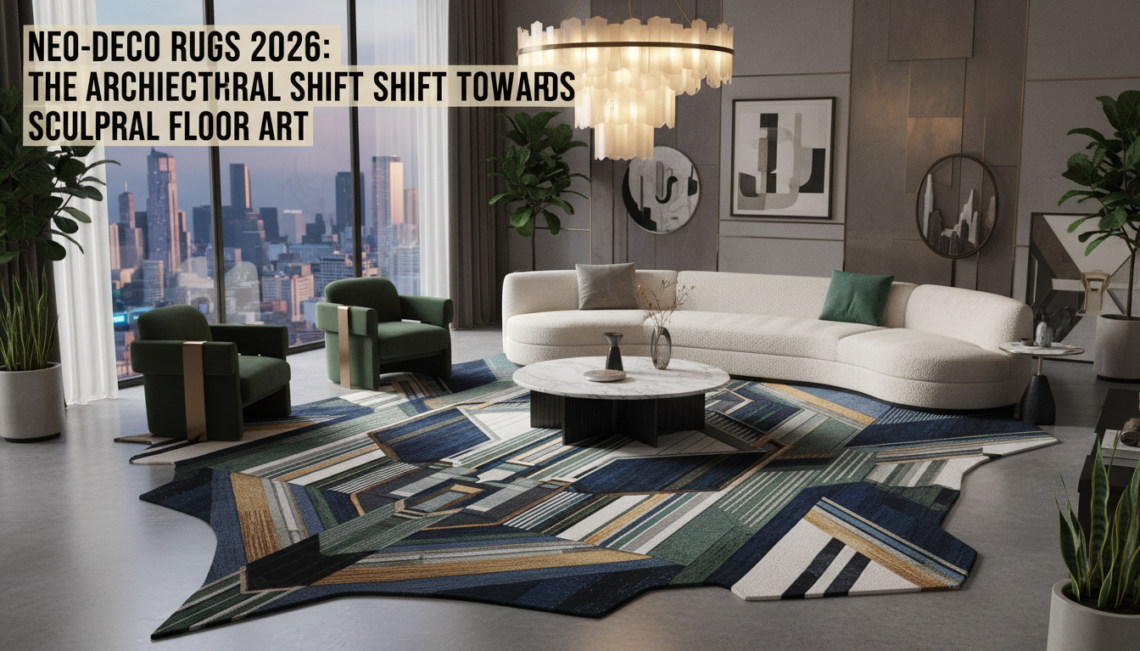
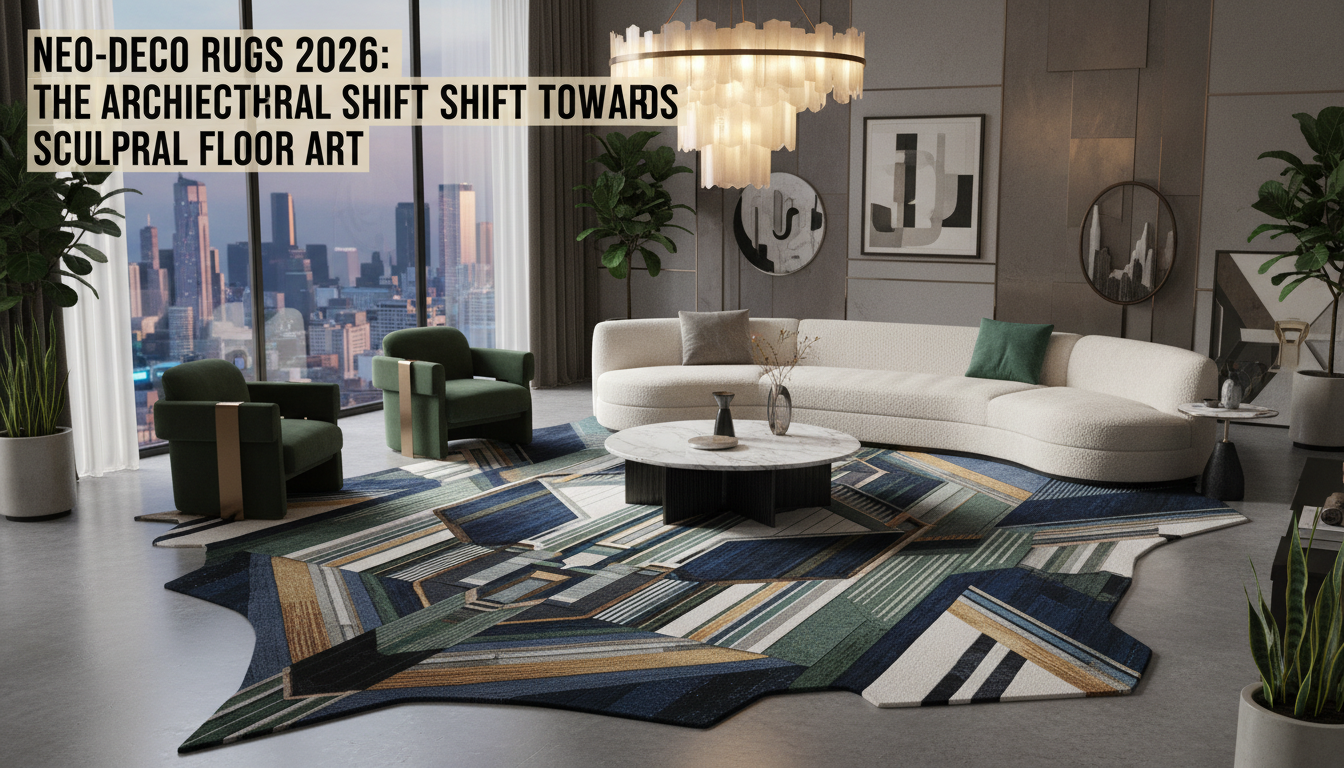
As we approach 2026, the interior design landscape is witnessing a profound metamorphosis. The traditional rug is no longer a mere underfoot accessory; it has evolved into a foundational architectural element. This year, the spotlight falls on ‘Neo-Deco’—a movement that synthesizes the opulent geometry of the 1920s with the fluid, bio-morphic sensibilities of the mid-2020s. We are seeing a departure from standard rectangular formats toward sculptural borders that challenge the spatial limitations of a room. This trend report explores how Neo-Deco rugs 2026 are redefining luxury, focusing on the interplay of high-relief textures and irregular silhouettes that elevate textiles into the realm of three-dimensional art.
“Neo-Deco rugs 2026 represent a sophisticated evolution of interior textiles, characterized by sculptural borders, high-relief hand-tufting, and a fusion of Art Deco’s geometric rigor with modern organic forms. These ‘architectural rugs’ move beyond simple floor coverings to become structural focal points that dictate room flow and tactile depth in high-end residential design.”
The Roadmap
Table of Contents
- The Genesis of Neo-Deco: Beyond Traditional Geometry
- Sculptural Borders: Redefining the Threshold of a Room
- Materiality in 2026: High-Lustre Wool and Silk Reliefs
- The Color Palette: Desaturated Earth Tones vs. Cosmic Metallics
- Integrating Architectural Rugs in Open-Plan Spaces
- The Influence of Bio-Morphology on Art Deco Symmetry
- Craftsmanship: The Artisan’s Role in Hand-Tufted Reliefs
- Future-Proofing Your Space: Why Neo-Deco is the New Classic
The Genesis of Neo-Deco: Beyond Traditional Geometry
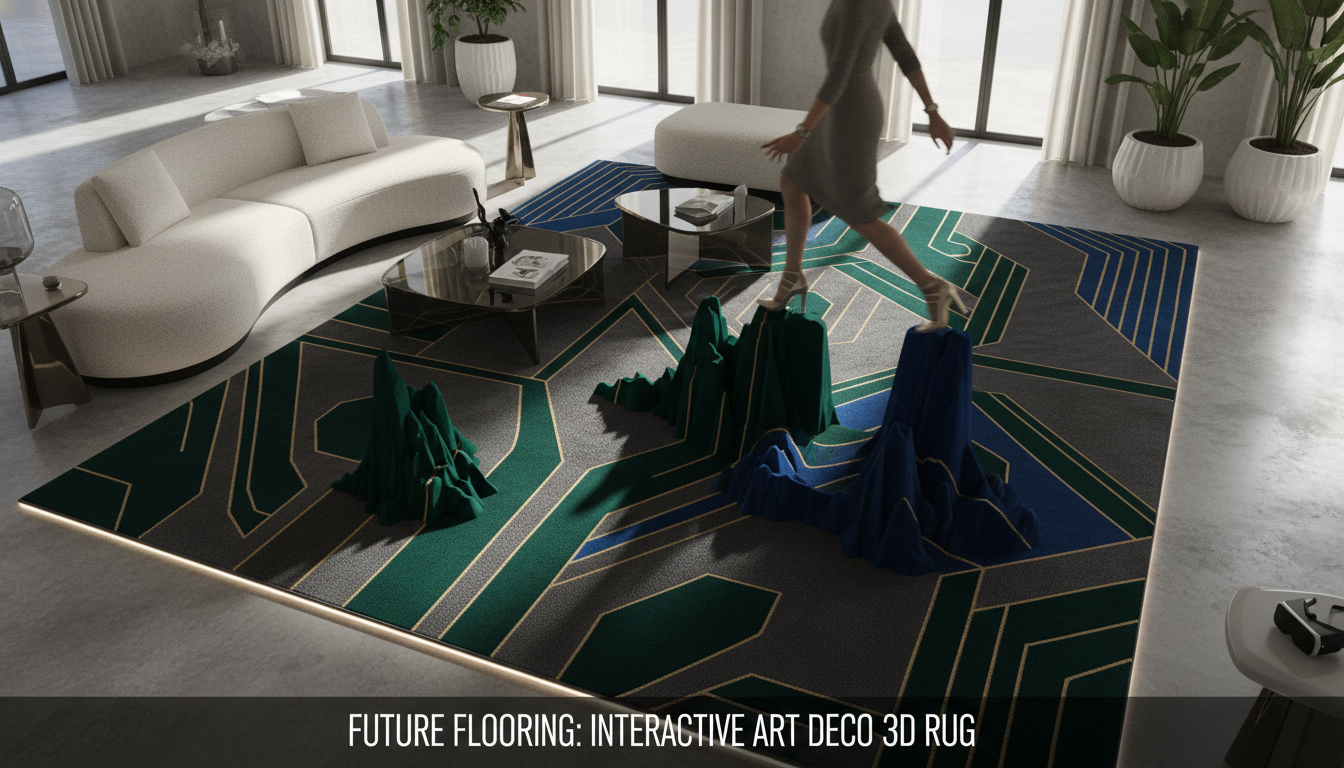
The Architectural Shift: Asymmetry Over Order
The 1920s gave the design world the sunburst and the chevron—symbols of industrial precision and rigid symmetry. However, as we look toward the mid-decade horizon, the aesthetic is softening. The emergence of Neo-Deco rugs 2026 signals a pivot from the strict linear heritage of the Roaring Twenties toward a more fluid, sculptural interpretation of luxury.
In this evolution, the “border” is no longer a frame; it is the focal point. Designers are abandoning the traditional rectangular perimeter in favor of hand-carved, beveled edges that mimic the silhouette of a Brutalist building or the gentle erosion of a canyon wall. This shift represents a move toward rugs as foundational architecture rather than mere accessories.
According to trend forecasters at thebohorugs.com, the demand for artisanal, hand-knotted pieces that utilize varying pile heights—often referred to as 3D shearing—is set to dominate the high-end residential market. These pieces bridge the gap between textile art and structural design, demanding a spatial presence that traditional floor coverings cannot match.
Materiality and Depth: The 2026 Visual Language
The allure of Neo-Deco rugs 2026 lies in their tactile topography. By blending high-luster botanical silks with matte, hand-spun highland wool, weavers are creating a visual “hologram” effect where the pattern shifts depending on the angle of natural light. This interplay of shadow and sheen replaces the loud, contrasting colors of the past with a sophisticated, monochromatic depth.
To identify a true Neo-Deco piece in the coming seasons, look for these specific hallmarks of the 2026 evolution:
- Negative Space Interventions: Rugs featuring “cut-outs” or irregular gaps that allow the flooring underneath—be it marble or reclaimed oak—to participate in the design.
- Metallic Inlays: The subtle integration of recycled copper or muted gold metallic threads woven directly into the sculptural borders to catch late-afternoon light.
- Tonal Terracing: A technique where the rug is sheared at three to five different levels, creating a literal staircase effect underfoot.
The Curated Interior: Defining the Neo-Deco Space
Integrating these architectural elements requires a departure from “safe” interior styling. The Neo-Deco movement encourages the rug to dictate the room’s geometry. In a sophisticated 2026 interior, a rug with an exaggerated, scalloped border might be paired with a curved mohair sofa, creating a dialogue of rounded forms that feels cohesive yet avant-garde.
- The Anchor Effect: Use an asymmetrical rug to ground a floating furniture arrangement in open-concept lofts.
- The Texture Play: Contrast the heavy, 3D shearing of a Neo-Deco border with sleek, glass-topped coffee tables to emphasize the rug’s craftsmanship.
- Monochromatic Layering: Choose rugs in “New Neutral” palettes—think smoked eucalyptus, salted caramel, or deep obsidian—to allow the sculptural silhouette to remain the protagonist.
As we transition into this more expressive era of floor art, Neo-Deco rugs 2026 stand as a testament to the enduring power of the handmade, proving that true luxury is found in the deliberate manipulation of texture and form.
Sculptural Borders: Redefining the Threshold of a Room
The Architecture of the Edge: Beyond Traditional Framing
For decades, the rug border served as a simple visual anchor—a polite frame to contain the pattern within. By 2026, this boundary has been utterly dismantled and reimagined. We are seeing a transition from the rug as a “flat textile” to the rug as a “soft structure.”
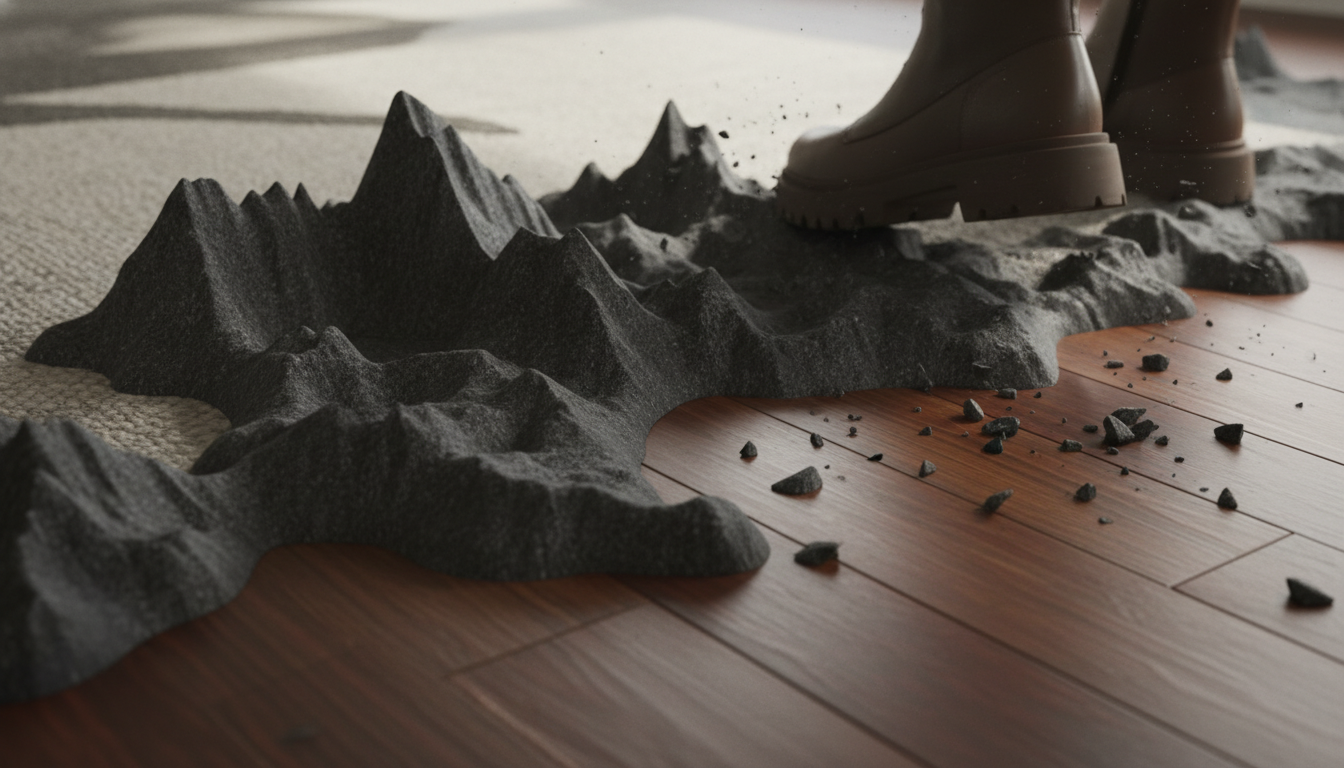
The Neo-Deco rugs 2026 movement emphasizes what designers are calling “topographical perimeters.” These are borders that utilize hand-beveled edges and varied pile heights to create a literal 3D silhouette that interacts with the shadows of a room.
These architectural edges act as a sophisticated threshold. Instead of a hard stop, the rug bleeds into the floor through stepped elevations, mimicking the iconic ziggurat motifs of the 1920s but executed with a 21st-century fluidity.
Three-Dimensional Materiality and Relief
Sophisticated interiors are pivoting away from busy prints in favor of textural depth. In the vanguard of this movement, Neo-Deco rugs 2026 reflect a pivot toward architectural permanence through specific weaving techniques:
- Intaglio Carving: Deeply recessed grooves cut into ultra-dense New Zealand wool to create geometric shadows.
- Mixed-Media Borders: The integration of flat-woven hemp edges against a plush, high-pile silk center.
- Asymmetrical Sculpting: Borders that vary in width and height, creating a sense of movement across the floor.
This tactile evolution transforms the floor into a gallery space. Artisanal purveyors like thebohorugs.com are increasingly focusing on these dimensional narratives, where the heritage of hand-knotted craft meets the precision of modern architectural lines.
The ‘Soft-Scaping’ of Modern Living Spaces
As open-concept living matures, the need for “soft-scaping”—using textiles to define structural zones—has become paramount. The sculptural border does the work of a wall without the visual weight. A heavy, hand-carved border creates a “room within a room,” providing an acoustic and psychological sense of enclosure.
The color palettes for Neo-Deco rugs 2026 remain disciplined. Expect to see monochromatic schemes—think “Iron Ore,” “Sediment,” and “Ecru”—where the design is revealed only through the way light hits the raised sculptural elements of the border.
This trend represents a maturation of the rug industry. It is no longer about finding a rug that matches the sofa; it is about selecting a piece of “soft architecture” that dictates the flow and feeling of the entire home.
Defining the New Standard of Luxury
Luxury in 2026 is defined by weight, density, and the invisible labor of the bevel. When selecting a piece for a high-end project, focus on three key indicators of quality:
- Weight-to-Surface Ratio: Look for rugs exceeding 4,500 grams per square meter to ensure the sculptural edges maintain their form.
- Fiber Resilience: High-lanolin wool is essential for maintaining the sharp “peak” of a carved border.
- Edge Finishing: A hand-bound edge that follows a complex, non-linear silhouette is the hallmark of a true Neo-Deco investment.
By prioritizing these structural elements, homeowners move beyond temporary decor and toward a lasting architectural statement that grounds the modern interior in both history and innovation.
Materiality in 2026: High-Lustre Wool and Silk Reliefs
The Interplay of Reflective Fibers and Matte Foundations
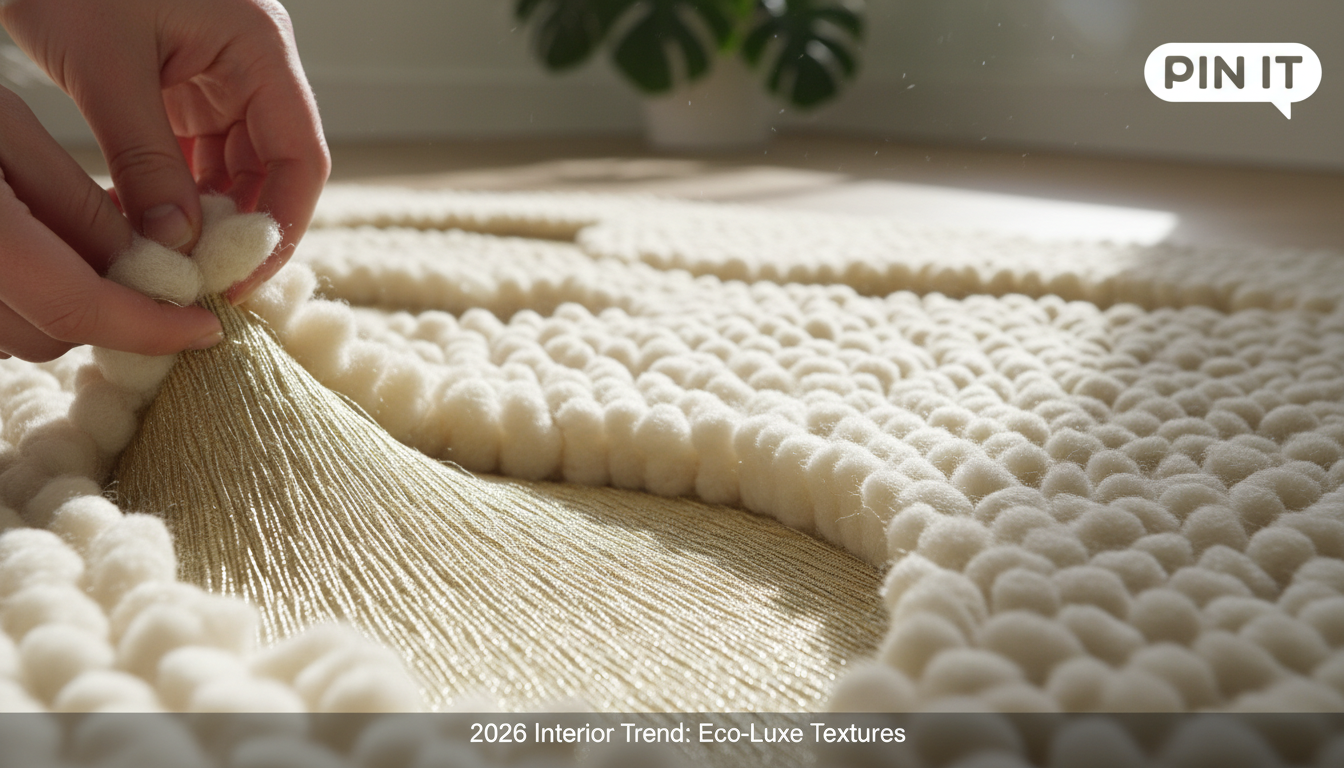
By 2026, the luxury flooring market will move beyond simple patterns, pivoting toward a sensory-heavy exploration of depth. The defining characteristic of Neo-Deco rugs 2026 is the deliberate contrast between high-lustre botanical silks and the grounded, matte finish of highland wool.
This “bi-material” approach creates a dynamic visual experience where the rug’s appearance shifts as the sun moves across a room. High-lustre elements—often achieved through refined Tencel or recycled mulberry silk—act as “highlighters” against the dense, light-absorbing backdrop of lanolin-rich wool.
Designers are increasingly looking to thebohorugs.com for these sophisticated material blends, where artisanal hand-knotting techniques allow for the precision required in such complex, architectural compositions.
The Engineering of 3D Reliefs and Sculptural Borders
The “Neo-Deco” movement of 2026 is less about 2D graphics and more about topographical interest. We are seeing a surge in multi-level shearing, where the rug’s pile varies in height from 8mm to 20mm to create physical shadows on the floor.
- Intarsia Carving: Precise hand-cut grooves that separate color blocks, mimicking the look of inlaid stone or marquetry.
- Organic Borders: A departure from the rectangle, featuring scalloped, stepped, or asymmetrical edges that mirror mid-century architectural silhouettes.
- Metallic Filaments: Subtle inclusions of ultra-fine copper or silver-toned threads woven into the silk reliefs for a subdued nocturnal glow.
Chromatic Depth: Beyond the Monochrome
While the initial waves of the architectural rug trend focused on neutrals, Neo-Deco rugs 2026 embrace a more saturated, “jeweled earth” palette. Expect to see deep oxblood, smoked amber, and celadon green used not as flat colors, but as gradients within the wool itself.
This chromatic sophistication is achieved through small-batch pot-dyeing, ensuring that each fiber holds a slight variation in tone. This nuance is essential for high-end interiors where the floor must command the same respect as a piece of fine art or bespoke cabinetry.
As we move toward a “more-is-more” philosophy in texture, these sculptural pieces serve as the anchor for the modern home, bridging the gap between minimalist architecture and the visceral need for comfort.
The Color Palette: Desaturated Earth Tones vs. Cosmic Metallics
A Dialogue Between the Primal and the Polished
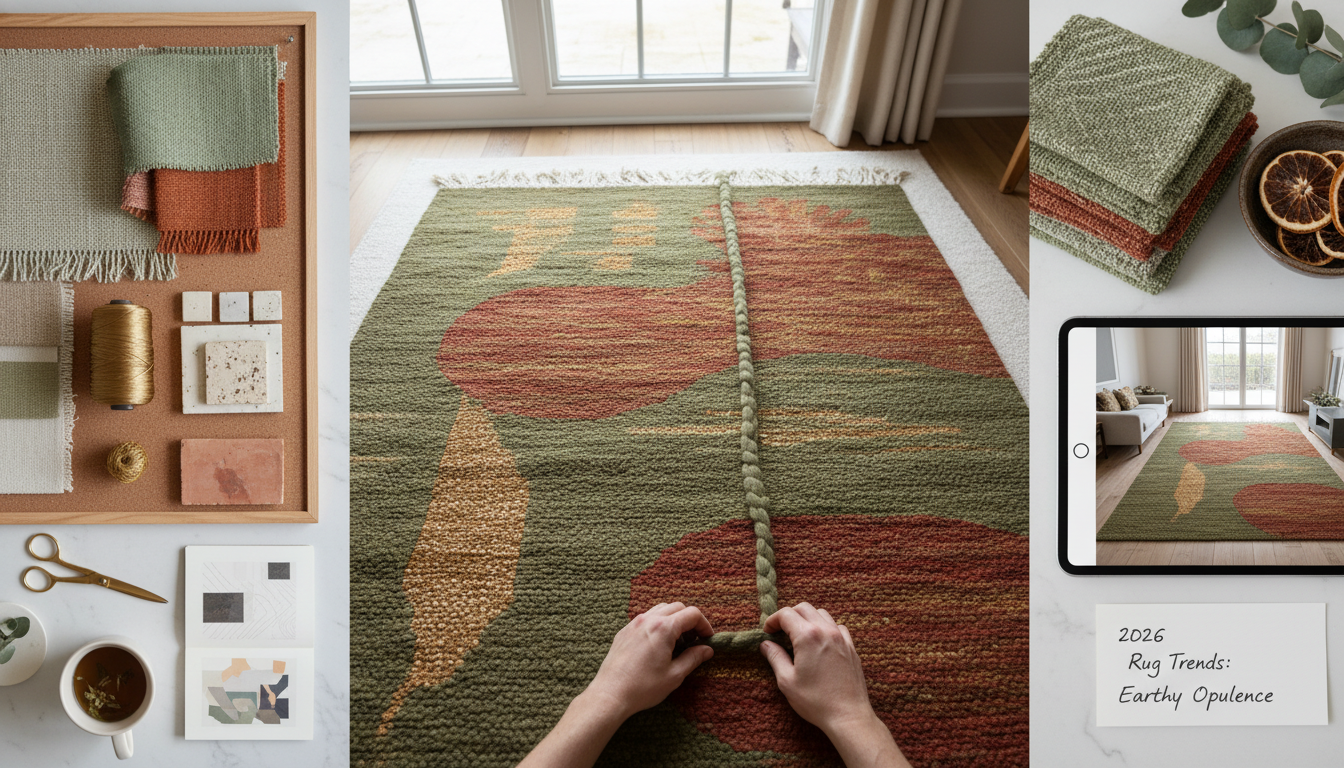
As we approach 2026, the interior landscape is shedding the clinical minimalism of previous years in favor of a more rigorous, architectural warmth. Central to this shift is the chromatic duality defining Neo-Deco rugs 2026: a sophisticated tension between the “soils of the earth” and the “glimmer of the cosmos.”
This evolution moves beyond simple color choices into the realm of atmospheric engineering. Designers are no longer looking for mere floor coverings; they are sourcing monolithic textile foundations that ground a room while simultaneously lifting its visual weight through clever use of light-reflective fibers.
The New Earth: Desaturated Clay and Weathered Stone
The organic half of the 2026 palette is rooted in permanence. We are seeing a move away from the “millennial beige” of the past toward deeper, more complex earth tones that feel as though they were extracted directly from a geological site. These hues provide the necessary “visual weight” for the sculptural borders that characterize the Neo-Deco movement.
- Sienna Dust: A muted, sun-bleached terracotta that replaces traditional reds.
- Oxidized Moss: A green so desaturated it functions as a neutral, mimicking the patina of ancient stone.
- Raw Umber: A grounding, smoky brown that provides a high-contrast shadow for carved silk borders.
These colors are most effective when executed in high-pile wool, where the natural variations in the yarn create a matte, stone-like appearance. For those seeking this specific organic rigor, artisanal collections like those found at thebohorugs.com offer the necessary tactile depth to pull off this grounded aesthetic.
Cosmic Metallics: The Architectural Highlight
The “Deco” in Neo-Deco rugs 2026 manifests through the strategic use of metallic sheen—not as a flashy surface treatment, but as a structural element. By weaving cosmic metallics into the raised borders of a rug, designers are creating “light-traps” that define the geometry of a living space.
These are not the bright golds of the 1920s. Instead, the 2026 metallic palette is cold, lunar, and industrial. Think of the shimmer of mercury or the dull glow of brushed titanium. When these fibers catch the light, they transform the rug from a static object into a dynamic architectural feature that changes throughout the day.
- Lunar Silver: A cool-toned silk or viscose inlay that mimics the glow of moonlight on water.
- Aged Anthracite: A dark, metallic grey with a subtle blue undertone, perfect for defining perimeter borders.
- Molten Champagne: A sophisticated bridge between gold and silver that pairs effortlessly with dark walnut furniture.
The Alchemy of Juxtaposition
The true genius of the Neo-Deco resurgence lies in the collision of these two worlds. The most coveted Neo-Deco rugs 2026 will feature a matte, desaturated earth-toned field surrounded by a precision-carved, metallic-infused border. This creates a frame-within-a-frame effect that anchors furniture arrangements with newfound authority.
This contrast mimics the way modern skyscrapers—all glass and steel—interact with the concrete and stone of the city streets. It is a celebration of the hand-crafted and the high-tech, a sentiment reflected in the curated selections at thebohorugs.com, where the focus remains on the intersection of heritage techniques and forward-thinking silhouettes.
Integrating Architectural Rugs in Open-Plan Spaces
Soft Architecture: Defining the Modern Layout
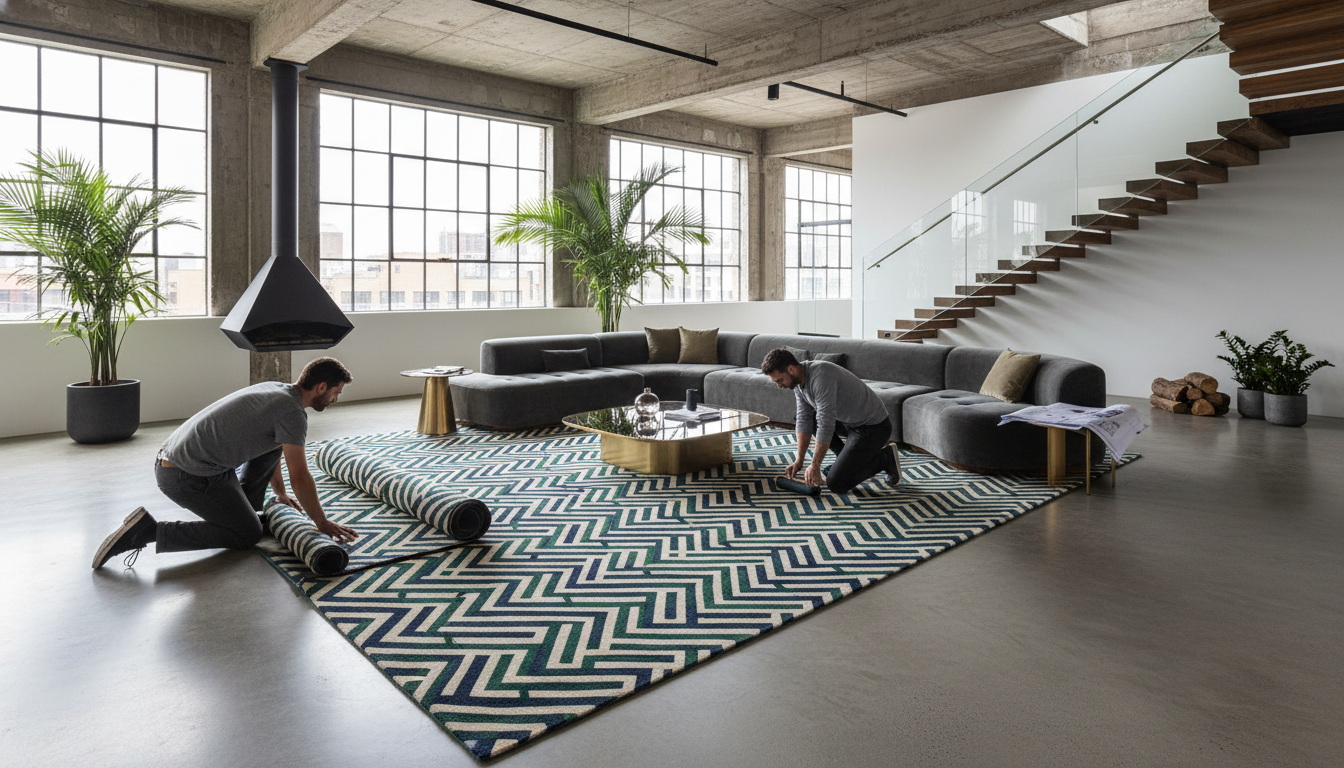
In the vast expanses of contemporary open-plan interiors, the floor is no longer just a surface; it is a canvas for spatial choreography. As we look toward the next design cycle, Neo-Deco rugs 2026 are emerging as the preferred tool for architects to delineate zones without the jarring permanence of walls.
The 2026 aesthetic prioritizes “soft architecture,” where the rug acts as a structural foundation. By utilizing varying pile heights and hand-carved borders, these pieces create a topographical map within a room. This approach allows a dining area to feel distinct from a lounge, even when separated only by a few feet of polished concrete or white oak.
When sourcing these foundational pieces, connoisseurs are turning to artisanal collections like those found at thebohorugs.com, where the emphasis remains on high-density weaving and bespoke craftsmanship that can anchor a sprawling grand room.
The Anatomy of the Sculptural Border
The hallmark of the Neo-Deco rugs 2026 movement is the departure from the traditional rectangular frame. In its place, we see an evolution of the “sculptural border”—a design element that breaks the four-cornered grid to embrace fluid, architectural silhouettes.
- Asymmetrical Relief: Borders that rise and fall in height, mimicking the staggered skylines of Art Deco cathedrals.
- Negative Space: Cut-out sections within the rug’s perimeter that allow the floor beneath to become part of the pattern.
- Embossed Geometry: Tonal patterns that are felt underfoot rather than seen from a distance, favoring texture over loud prints.
These borders serve as a visual anchor. They guide the eye toward the center of a seating arrangement, creating a sense of intimacy within high-ceilinged, industrial-style lofts that might otherwise feel cavernous and impersonal.
Material Sophistication and 2026 Colorways
The 2026 palette is a refined departure from the stark minimalism of previous years. We are seeing a shift toward “oxidized jewel tones”—deep teals, muted ambers, and dusty charcoals—mixed with the raw, undyed luster of New Zealand wool and botanical silk.
- Matte vs. Lustre: Combining flat-weave sections with high-sheen silk accents to create depth.
- Sustainable Sophistication: A move toward regenerative fibers that maintain a heavy, luxurious drape.
- Monochromatic Depth: Using a single color in multiple textures to achieve a “quiet luxury” look.
For designers looking to bridge the gap between historic glamour and future-facing utility, these architectural rugs provide a tactile solution. They offer the acoustic benefits of traditional textiles while maintaining the sharp, clean lines demanded by modern high-end residential projects.
The Influence of Bio-Morphology on Art Deco Symmetry
A Departure from Rigid Linearity
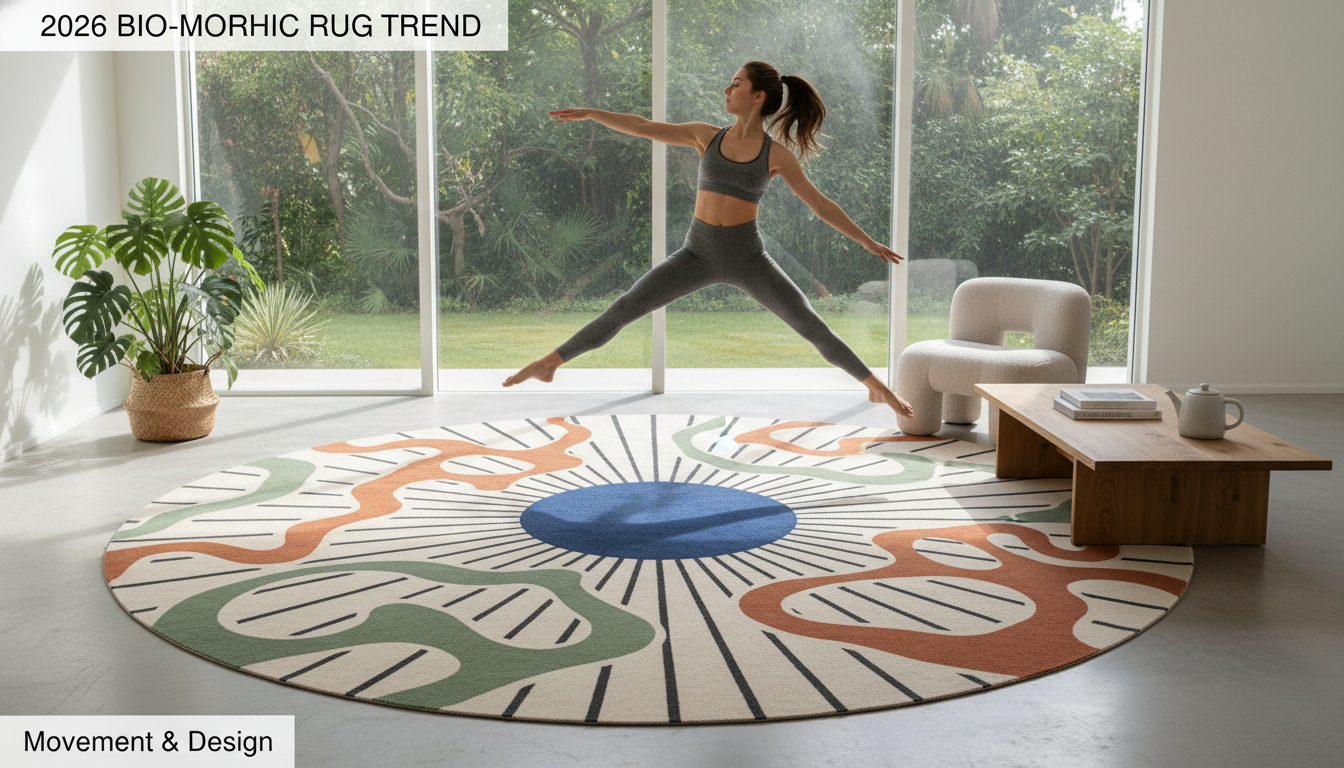
As we approach the mid-decade, the architectural rug is shedding its sharp, machine-age corners in favor of something far more visceral. The 2026 aesthetic is defined by a “softened symmetry”—a deliberate fusion where the rhythmic repetition of 1920s motifs meets the fluid, unpredictable curves of the natural world.
This evolution, often termed bio-morphic Deco, replaces the static rectangle with “living” silhouettes. We are seeing a move toward borders that mimic the irregular growth patterns of lichen or the undulating ripples of a desert dune, yet maintain the luxurious, weighted balance of a classic interior.
In this high-end landscape, Neo-Deco rugs 2026 are no longer just floor coverings; they are grounding elements that behave like low-profile sculptures. They bridge the gap between the structured formality of a Parisian salon and the biophilic warmth of contemporary coastal architecture.
The 2026 Design Markers: Where Biology Meets Brass
The hallmark of this movement lies in the transition from 2D patterns to 3D relief. Unlike the flat-weaves of the past decade, the upcoming season prioritizes physical depth through varying pile heights and mixed-media yarns.
- Topographical Borders: Hand-carved edges that vary in height, creating a “terrace” effect reminiscent of ancient rice paddies but executed in silk and wool.
- Cellular Geometry: Replacing the classic chevron with patterns inspired by microscopic cellular structures, arranged in the strict, rhythmic symmetry of the Jazz Age.
- Earthen Opulence: A shift away from high-contrast black and gold toward “organic metallics”—think mushroom taupe, oxidized copper, and deep charcoal.
Sculptural Integrity in the Modern Home
The allure of these pieces lies in their ability to dictate the flow of a room. By utilizing irregular, sculptural borders, these rugs break the “box” of modern apartments, guiding the eye in a more natural, curvilinear path across the living space.
Designers are increasingly sourcing these avant-garde silhouettes to serve as the primary focal point of a room. For instance, the curated collections found at thebohorugs.com exemplify this shift, offering artisanal pieces that prioritize tactile luxury and hand-knotted precision over mass-produced uniformity.
When selecting Neo-Deco rugs 2026, the focus is on the “metamorphic” quality of the textile. A rug should look as though it has grown into the space rather than being placed upon it. This requires a sophisticated understanding of scale and a willingness to embrace the “perfectly imperfect” lines of organic life within a refined, symmetrical framework.
The Rise of the “Living” Border
- Asymmetrical Symmetry: The rug maintains a balanced weight on either side, but the actual patterns are unique mirror images that vary slightly, much like a human face or a leaf.
- Fringeless Evolution: The traditional fringe is replaced by thick, rolled edges or “scalloped” protrusions that integrate directly into the rug’s primary design.
- Hyper-Tactility: The use of unbleached New Zealand wool paired with botanical silk highlights the contrast between matte and sheen, a core tenet of the Neo-Deco movement.
Ultimately, the 2026 evolution of the architectural rug is a celebration of tension. It is the tension between the man-made and the earth-grown, providing a sophisticated, grounding foundation for the next era of luxury interiors.
Craftsmanship: The Artisan’s Role in Hand-Tufted Reliefs
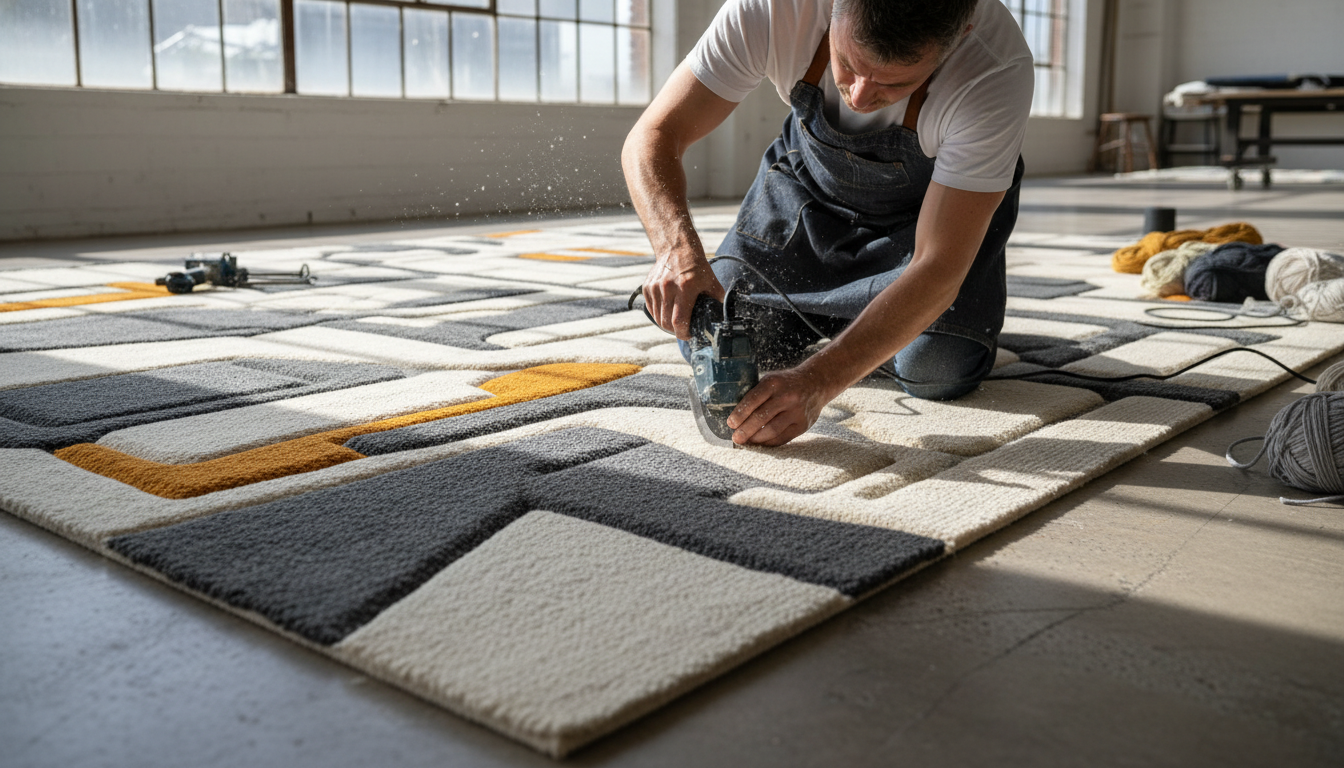
The Architecture of the Loom: Engineering Tactile Topography
As we approach the mid-decade shift, the industry is witnessing a departure from flat-weave minimalism. The allure of Neo-Deco rugs 2026 lies in their structural complexity—a feat that can only be achieved through the meticulous, slow-motion precision of master hand-tufters.
Unlike the industrial replicas flooding the mass market, these artisanal pieces utilize variable pile heights to create a literal “step-up” effect. This technique mimics the tiered setbacks of 1920s skyscrapers, transforming the rug’s border from a simple frame into a three-dimensional architectural plinth.
For the discerning collector, this relief work represents a bridge between floor covering and fine art. The artisans at thebohorugs.com observe that this trend is driven by a desire for “haptic luxury”—pieces that demand to be felt as much as they are seen.
The Sculptor’s Blade: Hand-Carving the 2026 Silhouette
The defining characteristic of high-end Neo-Deco rugs 2026 is the “incised” border. Once the tufting is complete, the artisan begins the delicate process of hand-shearing. Using specialized angled shears, they carve deep channels into the wool and silk fibers.
This process, known as “bevelling,” creates natural shadows that shift throughout the day as sunlight moves across the room. In 2026, we predict three specific carving styles will dominate the editorial landscape:
- The Fluted Radius: Vertical grooves that mimic Greco-Roman columns, often rendered in monochromatic cream or oyster tones.
- The Inverted Ziggurat: A series of recessed geometric steps that create an illusion of depth, making the rug appear as though it is sinking into the floor.
- The Filigree Relief: Micro-carved patterns that replicate the intricate ironwork of the Chrysler Building’s spire.
Material Alchemy: Silk Inlays and Matte Wool Contrasts
The sophistication of the 2026 evolution is found in the juxtaposition of light-reflective materials. Artisans are increasingly blending high-twist New Zealand wool with botanical silk or bamboo viscose to accentuate the sculptural borders.
By placing matte wool in the “valleys” of the rug and lustrous silk on the “peaks” of the carved relief, the artisan creates a shimmering contrast. This technique ensures that Neo-Deco rugs 2026 maintain a sense of movement, even in low-light environments.
This level of craftsmanship requires an intimate knowledge of fiber tension. A single error in the carving process can ruin weeks of tufting, which is why these architectural pieces are becoming the new standard for “investment-grade” interior design. Collectors are no longer just buying a rug; they are acquiring a hand-sculpted textile monument.
Future-Proofing Your Space: Why Neo-Deco is the New Classic
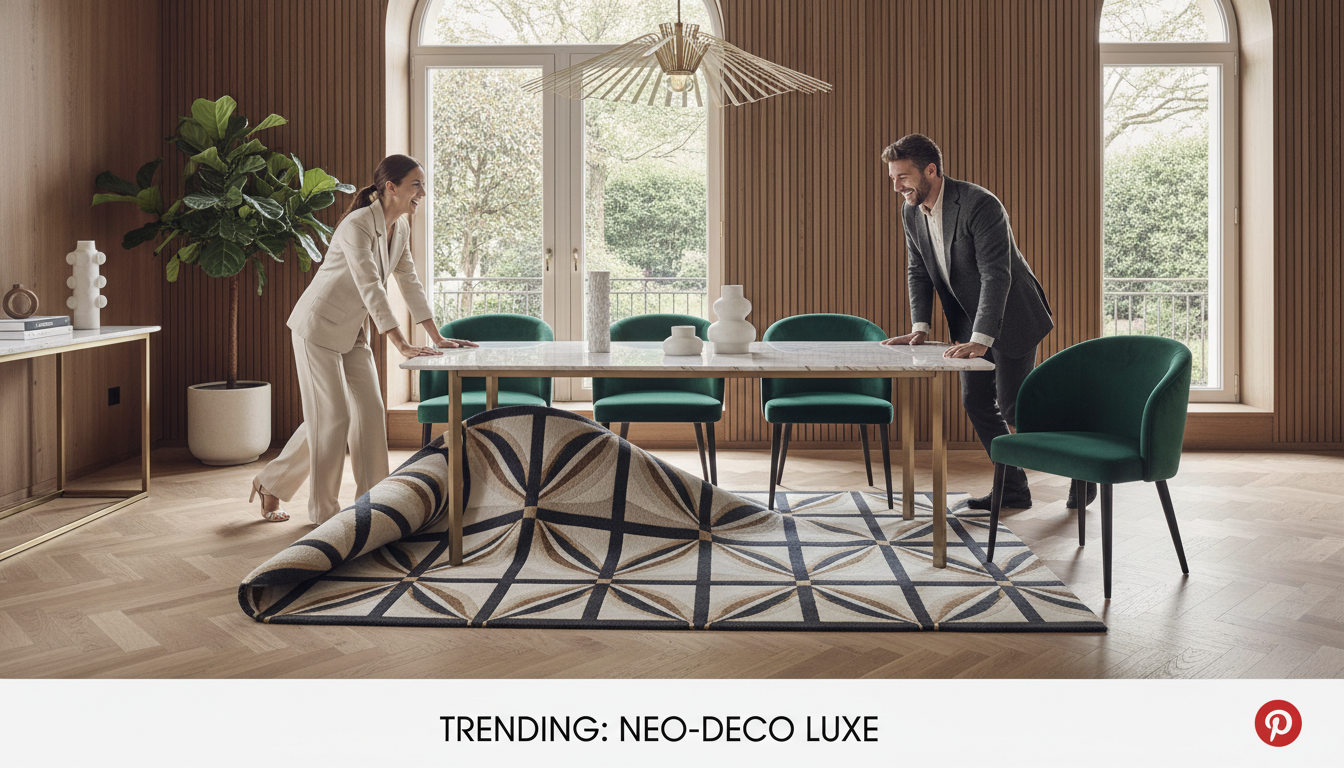
As we approach the mid-decade, the interior design landscape is undergoing a rigorous refinement. We are witnessing the death of the “disposable aesthetic,” replaced by a movement that marries the unapologetic geometry of the 1920s with the structural integrity of modern architecture. The emergence of Neo-Deco rugs 2026 represents more than a fleeting trend; it is a pivot toward permanence, prioritizing pieces that function as both soft flooring and static sculpture.
The Rise of Sculptural Topography
In 2026, the rug is no longer a passive background element. The “Neo-Deco” evolution focuses heavily on 3D carving and varying pile heights to create a literal topography underfoot. Designers are moving away from flat-weaves in favor of hand-tufted silhouettes where the border itself becomes an architectural statement. These Neo-Deco rugs 2026 utilize “drop-stitch” techniques to create deep grooves, mimicking the fluted columns and stepped facades of iconic Manhattan skyscrapers.
This shift toward architectural flooring allows homeowners to define zones within open-concept living spaces without the need for physical partitions. By choosing a rug with a high-relief sculptural border, you are essentially installing a foundational anchor that dictates the flow and energy of the entire room.
Materiality and Tactile Sophistication
The high-end editorial look of the coming years relies on a sophisticated interplay of light and shadow. Artisanal purveyors, such as those curated at thebohorugs.com, are increasingly blending high-contrast materials to accentuate these new geometric forms. We are seeing a move toward “Material Fusion,” where matte New Zealand wool is juxtaposed against the high-luster sheen of botanical silk.
Key design pillars defining the 2026 evolution include:
- Monochromatic Relief: Using a single color—such as bone, slate, or deep tobacco—relying entirely on pile height to reveal the Deco pattern.
- Asymmetrical Borders: Moving away from the traditional rectangle toward rugs with “fractured” or stepped edges that challenge the room’s perimeter.
- Architectural Neutrals: A departure from the vivid teals of the past into a palette of warm ochre, oxidized silver, and “smoked” creams.
Why Neo-Deco is the Ultimate Investment
Investing in Neo-Deco rugs 2026 is an exercise in future-proofing your interior. While minimalism can often feel clinical and maximalism can eventually overwhelm, the Neo-Deco approach offers a “disciplined luxury.” It provides the visual complexity of a pattern with the calming influence of a tonal palette. This balance ensures the rug remains a centerpiece even as your furniture or art collection evolves.
For those looking to elevate a space from a standard dwelling to a curated gallery, these architectural rugs provide the necessary gravitas. They bridge the gap between historical reverence and futuristic vision, proving that true style is a cycle that only grows more refined with time.
Elevate Your Space
Discover the artistry of handmade luxury. Each rug is a masterpiece of tradition and modern design.
Expert Q&A
What defines Neo-Deco rugs 2026 as a specific trend?
The trend is defined by a shift from flat, rectangular rugs to three-dimensional, sculptural pieces that incorporate irregular borders and architectural depth.
How do sculptural borders differ from traditional rug edges?
Traditional edges are straight and bound, while sculptural borders in 2026 feature cut-outs, varying heights, and jagged or organic silhouettes that bleed into the floor design.
What materials are dominant in Neo-Deco rugs for 2026?
Expect a mix of high-quality New Zealand wool for structure and botanical silk or Tencel for high-lustre highlights that create visual depth.
Are Neo-Deco rugs suitable for high-traffic areas?
While highly artistic, rugs made with dense hand-tufted wool are remarkably durable, though sculptural reliefs may require specialized vacuuming.
How do I choose a color for a Neo-Deco rug?
For 2026, look for desaturated earth tones like ‘dusted moss’ or ‘terracotta clay,’ often accented with metallic bronze or silver threads.
Can sculptural rugs work in small apartments?
Yes, an irregularly shaped rug can actually make a small space feel larger by breaking the rigid lines of the walls.
What is the ‘architectural’ aspect of these rugs?
It refers to the way the rug mimics building elements—using pile height and carving to create shadows and structural lines similar to crown molding or masonry.
How does Neo-Deco differ from original Art Deco?
Neo-Deco retains the geometric influence but adds organic, bio-morphic curves and a more muted, naturalistic color palette compared to the 1920s’ high-contrast primary colors.
Are these rugs considered sustainable?
Most high-end Neo-Deco pieces utilize natural fibers and artisanal hand-tufting, which reduces the carbon footprint compared to machine-made synthetic rugs.
What is the ideal pile height for a sculptural rug?
A varied pile height is key, typically ranging from 8mm for the base to 15mm for the sculptural elements to create a noticeable 3D effect.
How do I clean a rug with varying pile heights?
Use a vacuum without a beater bar and utilize the upholstery attachment to gently clean between the carved relief lines.
Do Neo-Deco rugs require a special rug pad?
Yes, because of their irregular shapes and varied weights, a custom-cut high-grip felt pad is recommended to prevent shifting and highlight the borders.
Is hand-tufted better than hand-knotted for this style?
Hand-tufting allows for more precise architectural carving and varied pile heights, which is essential for the Neo-Deco look.
What furniture styles pair best with Neo-Deco rugs?
Minimalist, curved furniture and mid-century modern pieces allow the rug’s sculptural elements to take center stage.
Are irregular rug shapes a passing fad?
In 2026, they are viewed as an evolution of spatial design, providing a permanent alternative to the ‘boxed-in’ feel of rectangular rugs.
Can I layer Neo-Deco rugs?
Layering is discouraged as it can obscure the sculptural borders; these rugs are designed to be standalone ‘Art for the Floor’.
How does the light affect the look of a sculptural rug?
The architectural carving creates shadows that change throughout the day, emphasizing the 3D texture as sunlight moves across the room.
What is ‘bio-morphology’ in rug design?
It is the inclusion of shapes that mimic biological organisms, such as cells or leaves, blended with the straight lines of Art Deco.
Where should I place a sculptural rug in my home?
They are best placed in entryways, living rooms, or under dining tables where the borders are clearly visible and not tucked under heavy furniture.
Are metallic threads scratchy underfoot?
Modern lurex and metallic-blend silks are engineered to be soft, though they are usually reserved for low-traffic decorative accents within the rug.
What is the price range for a quality Neo-Deco rug?
Due to the artisanal carving and premium materials, expect to invest between $2,000 and $10,000 for a medium to large statement piece.
How long does it take to produce a hand-carved rug?
Depending on complexity, a custom Neo-Deco rug can take anywhere from 12 to 20 weeks to tuft, wash, and hand-finish.
Can Neo-Deco rugs be used as wall hangings?
Absolutely. Their sculptural nature makes them ideal candidates for textile wall art, especially in rooms with high ceilings.
What is the ‘sunburst’ motif in 2026 designs?
It is a reimagined Art Deco staple, often rendered in tonal, sheared wool rather than high-contrast colors for a more subtle, modern look.
How do these rugs influence room acoustics?
The varied pile heights and dense wool construction provide superior sound dampening compared to flat-weave rugs.
What is ‘relief carving’ in rug terminology?
It is the process where an artisan uses shears to cut away wool around a pattern, creating a literal 3D ‘relief’ that stands out from the base.
Will these rugs work with traditional decor?
Yes, they provide a sophisticated ‘bridge’ between classic architectural details and modern, avant-garde furniture.
What is the ‘Cosmic Metallic’ trend?
A specific 2026 aesthetic featuring deep indigos and charcoals shot through with shimmering silver threads to mimic the night sky.
Should the rug be the first thing I choose for a room?
For the Neo-Deco trend, yes. Because the rug is an architectural foundation, it’s easier to pull furniture choices from its sculptural cues.
What is the longevity of a wool-and-silk Neo-Deco rug?
With proper care, these high-end materials can last 20-30 years, making them a true heirloom investment.
Written by TheBohoRugs Interior Design Team
Experts in handmade rugs, boho interiors, and modern home decor.