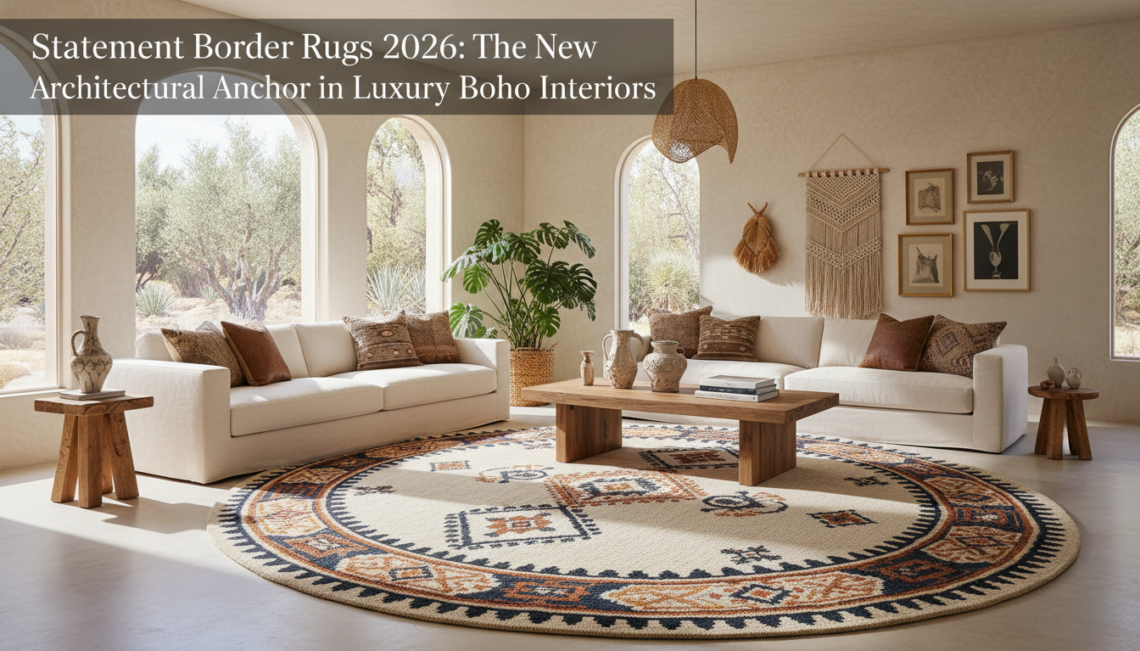
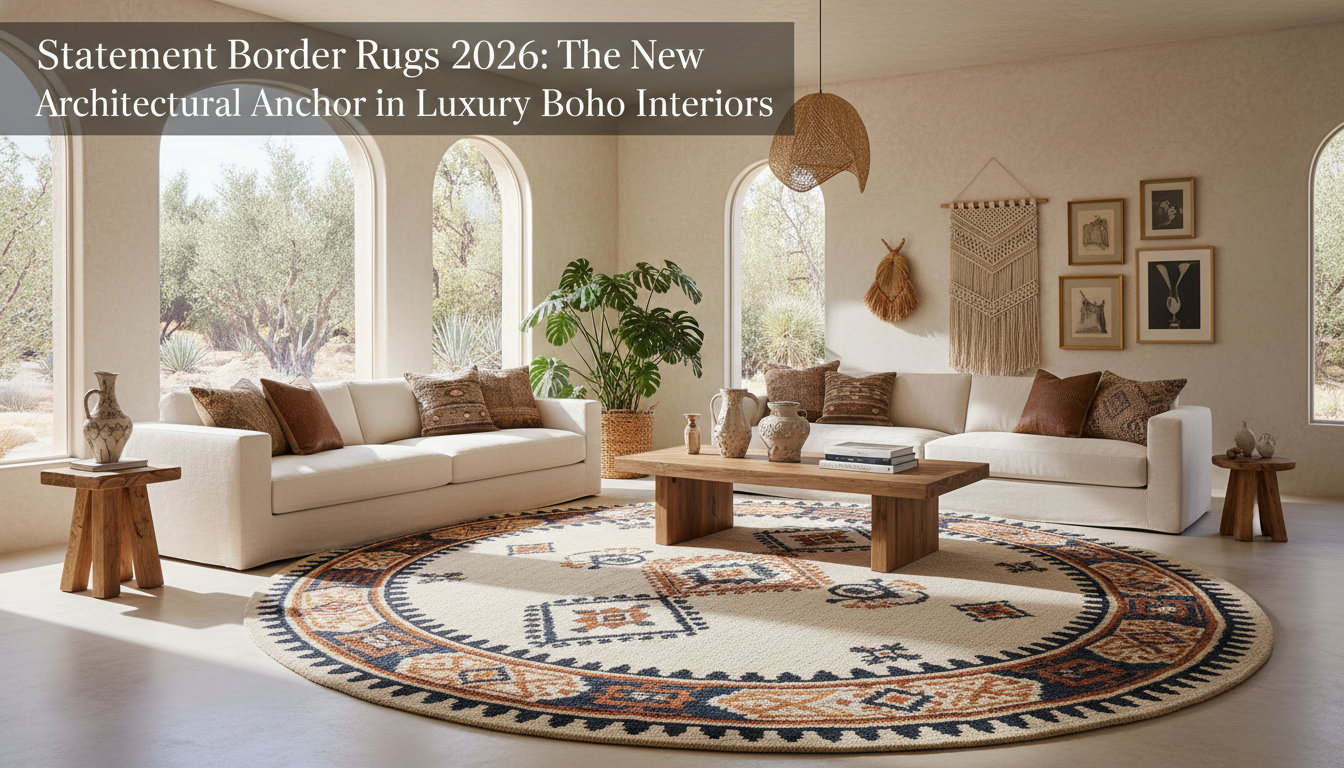
As we approach 2026, the interior design landscape is witnessing a profound shift in how we perceive the ‘fifth wall.’ No longer relegated to a background element, floor coverings are reclaiming their status as central architectural anchors. Leading this movement are Statement Border Rugs 2026, a trend characterized by intentional tonal framing and radical sculptural edges that challenge the traditional boundaries of a room. This report explores the evolution of the rug from a simple functional piece to a curated work of art for the floor, blending high-end materiality with the soulful, eclectic spirit of luxury boho living.
“Statement Border Rugs 2026 represent a design evolution where the rug’s perimeter becomes its most defining feature. Moving away from standard geometric constraints, these rugs utilize tonal shifts, varied pile heights, and irregular, hand-carved edges to create a ‘frame’ that dictates the room’s flow. Key elements of this 2026 trend include high-contrast textures—such as silk borders against wool fields—and organic, asymmetrical silhouettes that align with the sculptural minimalism found in modern luxury boho residences.”
The Roadmap
Table of Contents
- The Evolution of the Border: Architectural Framing
- Tonal Depth: The Sophistication of Monochromatic Borders
- Sculptural Edges: Challenging the Rectilinear Standard
- Materiality as Art: The Contrast of Texture in 2026
- Defining Space: The Border Rug in Open-Plan Luxury
- The Sustainable Border: Eco-Conscious Luxury Materials
- Curating Your Collection: Treating Your Floor as a Gallery
- 2026 Forecast: The Future of Peripheral Design
The Evolution of the Border: Architectural Framing
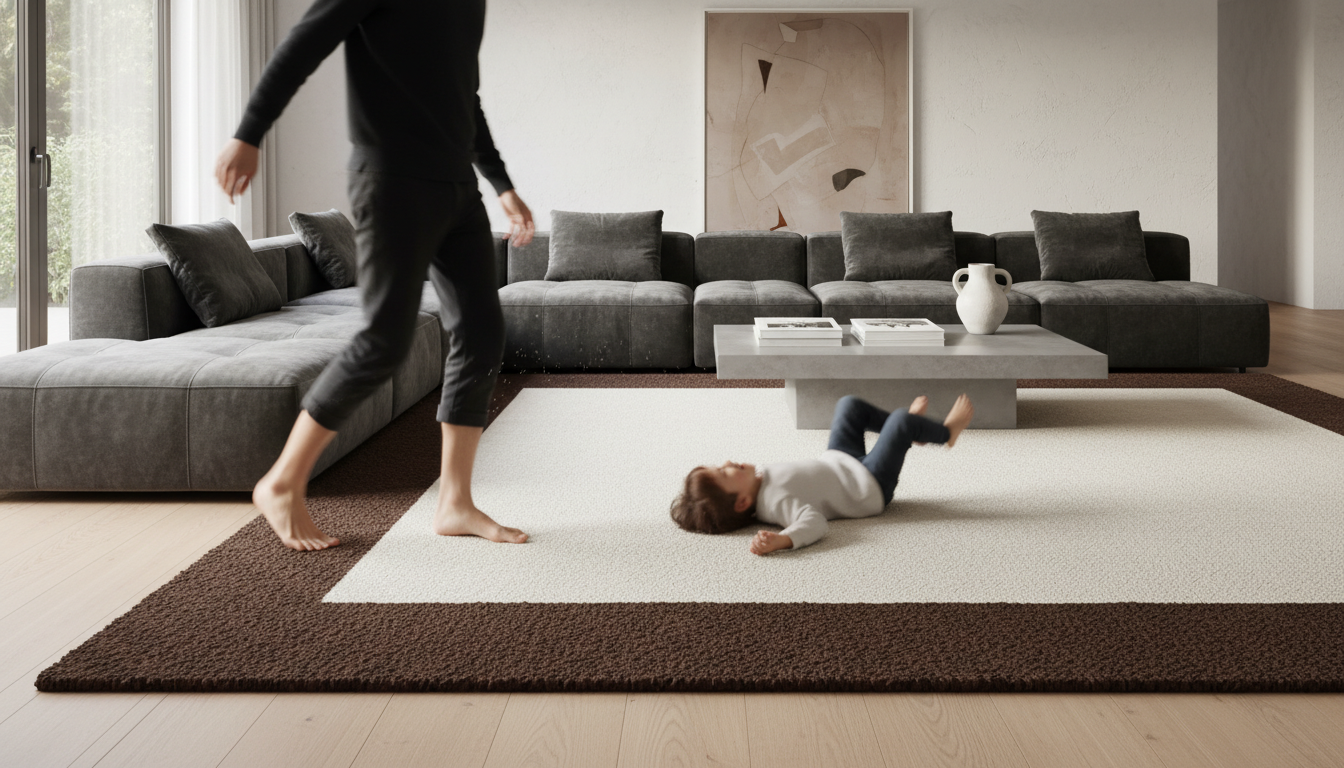
For decades, the rug border functioned as a visual period—a definitive, often rigid “hard stop” to a central pattern. As we pivot toward 2026, this boundary is undergoing a radical metamorphosis. No longer just a frame, the perimeter has become a structural anchor that defines the spatial geometry of the modern home.
The movement toward Statement Border Rugs 2026 reflects a sophisticated shift from flat, two-dimensional designs to what interior architects call “tactile zoning.” By utilizing varying pile heights and fiber densities, the border now serves as a soft-textured wall, grounding furniture groupings within expansive, open-concept luxury layouts.
The Rise of Sculptural Topography
In 2026, luxury is measured by depth. Designers are moving away from contrasting colors in favor of sculptural edges—where the border is defined by a physical “step-up” in the rug’s topography. This creates a shadow play across the floor that changes throughout the day as natural light shifts.
- High-Low Relief: Hand-carved borders in New Zealand wool that sit 5mm higher than the central field.
- Debossed Silhouettes: Sunken perimeter channels that create a “moat” effect around minimalist furniture.
- Biomorphic Perimeters: Moving away from the rectangle, borders now follow organic, undulating paths that mimic natural shorelines.
Tonal Framing and the “Quiet Luxury” Palette
The aesthetic evolution of Statement Border Rugs 2026 is rooted in monochromatic complexity. Rather than using a bold secondary color to frame a room, the new guard of textile designers is opting for “tonal framing”—using the same hue in different materials to create a border.
Imagine a matte wool center framed by a shimmering bamboo silk border in the exact same shade of sand or charcoal. This creates a sophisticated, jewelry-like finish for the floor. For those seeking this level of artisanal precision, the curatorial team at thebohorugs.com has begun sourcing pieces that emphasize these subtle, material-driven transitions over loud, graphic prints.
Functional Art: Why the Edge Matters Now
As our living spaces become more multi-functional, the architectural border serves a psychological purpose. It signals a transition in the home’s “vibe” without the need for physical dividers. A sculptural border acts as a sophisticated threshold between the high-traffic walkway and the sanctuary of the seating area.
- Material Juxtaposition: Combining flat-weave centers with plush, shaggy borders for a sensory experience.
- Exaggerated Proportions: Borders that take up 40% of the rug’s surface area, turning the “frame” into the main event.
- Raw Fringing: Artisanal, unfinished edges that blend the precision of luxury weaving with the “wabi-sabi” ethos of high-end boho living.
Ultimately, the evolution of the border is a move toward intentionality. Whether it is a hand-knotted silk edge or a deep-carved wool channel, the perimeter is now the most important design choice in the room.
Tonal Depth: The Sophistication of Monochromatic Borders
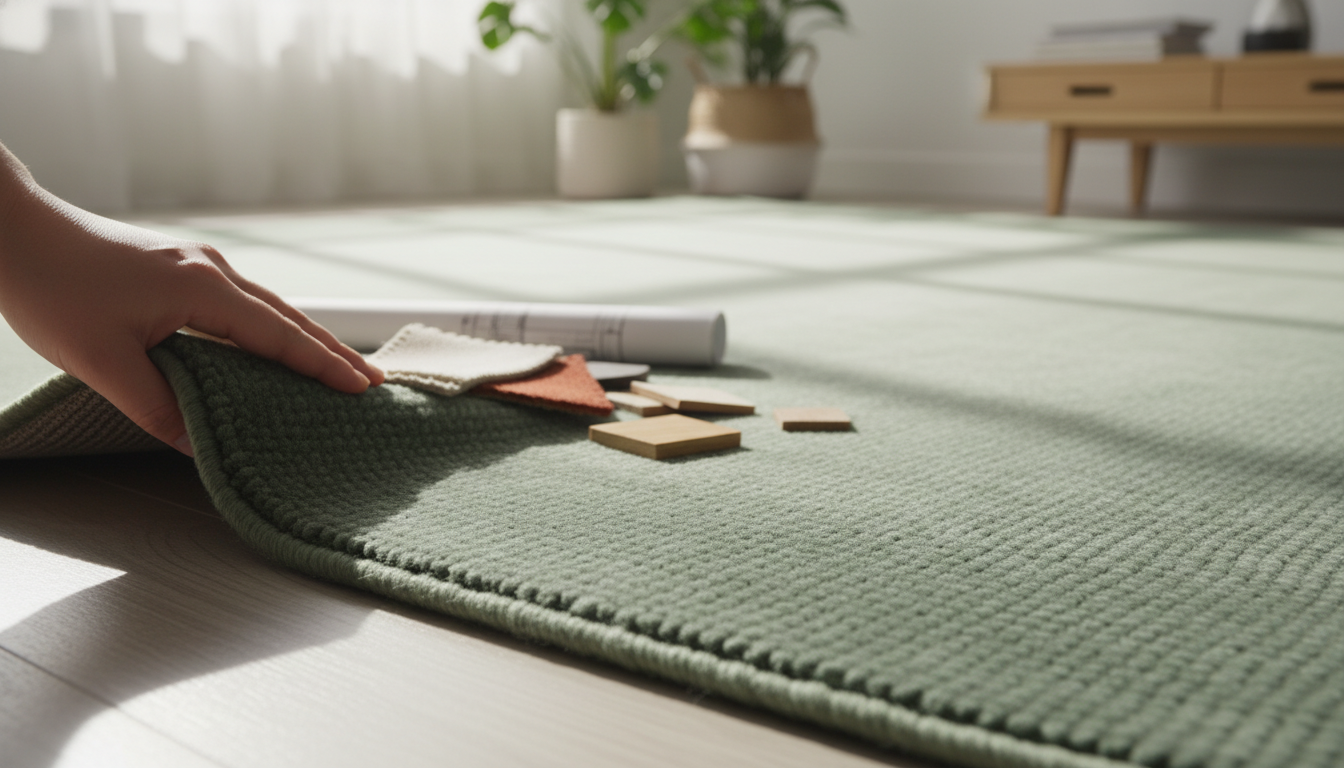
Beyond Contrast: The Shift Toward Chromatic Harmony
In the evolving landscape of high-end interior design, the jarring contrasts of previous decades are yielding to a more nuanced, architectural approach. As we look toward the interior forecasts, Statement Border Rugs 2026 are defined by a move away from bold color-blocking in favor of “chromatic layering”—the art of using subtle shade variations within the same color family to create depth.
This trend represents the maturation of the Luxury Boho aesthetic. Rather than relying on eclectic prints to draw the eye, designers are utilizing monochromatic perimeters to anchor rooms. This technique provides a sense of visual stability, allowing the furniture to “breathe” while maintaining a sophisticated, high-design edge.
Texture as the New Perimeter
The innovation for 2026 lies in how the border is constructed rather than just how it is colored. We are seeing a surge in “tactile framing,” where the border is defined by a change in material or pile height rather than a change in hue. This creates a shadow-box effect that interacts beautifully with natural light.
- Matte vs. Luster: High-sheen silk or viscose borders paired with a matte, hand-spun wool center.
- Sculptural Relief: Hand-carved channels that create a physical 3D boundary between the field and the edge.
- Twisted Yarn Transitions: Utilizing high-twist Moroccan wool for the border to provide a rugged, organic contrast to a plush center.
For those seeking to integrate this look, the artisanal collections found at thebohorugs.com exemplify this shift, emphasizing heritage weaving techniques that prioritize subtle, structural integrity over fast-fashion patterns.
The 2026 Tonal Palette: Desert Mutes and Mineral Tones
The sophistication of monochromatic borders is best realized through a palette of “new neutrals.” These are colors that possess inherent depth and warmth, moving away from the stark grays of the 2010s. The most prominent pairings within the Statement Border Rugs 2026 movement include:
- Oatmeal and Sand: A minimalist’s dream that relies on fiber density to distinguish the frame.
- Terracotta and Burnt Sienna: A nod to Mediterranean roots, offering a grounded, earth-centric Luxury Boho feel.
- Sage and Moss: A biophilic approach that uses tonal greens to bring the fluidity of the outdoors inside.
- Midnight and Charcoal: A dramatic, moody take on monochromatic design that works exceptionally well in formal dining rooms or libraries.
Architectural Intent in Artisanal Weaving
Designers are increasingly viewing rugs not as floor coverings, but as the foundation of a room’s architecture. A tonal border acts as a “soft wall,” defining the perimeter of a seating area without the visual clutter of high-contrast patterns. This intentionality is what separates standard decor from true luxury design.
By focusing on the “quiet” details—the weight of the fringe, the precision of the hand-binding, and the slight variegation of natural dyes—the 2026 aesthetic celebrates the imperfections of the handmade. It is a return to form where the quality of the material is the loudest statement in the room.
Sculptural Edges: Challenging the Rectilinear Standard
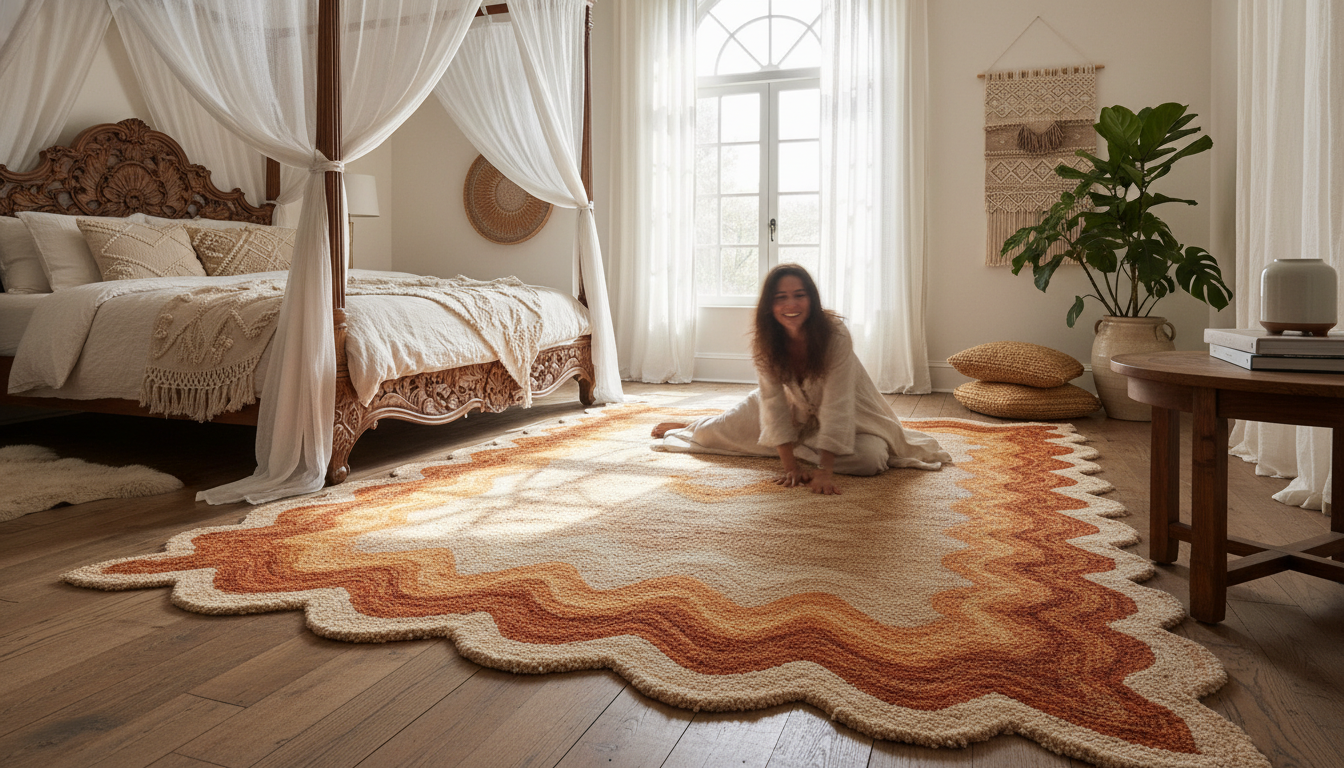
The Biomorphic Breakaway
As we approach the mid-decade mark, the silhouette of the modern interior is undergoing a radical softening. The rigid, 90-degree corners that defined mid-century revivals are yielding to organic forms that mimic the natural world.
The evolution of Statement Border Rugs 2026 marks a departure from the “frame as a box” mentality. Instead, we are seeing “living edges”—undulating, hand-cut perimeters that follow the grain of raw stone or the crest of a tide.
In the realm of luxury boho living, these non-linear boundaries serve a dual purpose: they break the monotony of rectangular architecture and act as a transition between the curated home and the wildness of nature.
The Depth of the Dimensional Border
Sculptural edges in 2026 are not merely about the outer shape; they are about the physical topography of the rug itself. High-low pile heights are being utilized to create “trenches” and “ridges” that define the border through shadow rather than pigment.
This tactile approach creates a sensory experience underfoot, where the transition from a plush center to a densely sheared edge provides a grounding, meditative quality. Leading designers are sourcing these specialized pieces from artisanal hubs like thebohorugs.com, where traditional weaving techniques meet avant-garde silhouettes.
Key sculptural trends for the upcoming season include:
- Scalloped Topography: Graduated pile heights that create a 3D wave effect at the rug’s perimeter.
- Negative Space Inlays: Intentional “cut-outs” within the border that allow the hardwood or stone flooring to peek through, integrating the rug into the room’s architecture.
- Fringe Decoupage: Moving away from standard tassels to irregular, chunky wool braids that extend the rug’s footprint into the walking path.
Curating the Unconventional Floor
When integrating Statement Border Rugs 2026 into a high-end space, the rug is no longer a background player; it is the anchor. A sculptural edge demands breathing room, often requiring a “moat” of floor space to highlight its unique geometry.
Designers are increasingly layering these irregular shapes over larger, flat-weave foundations. This “border-on-border” look adds a sophisticated complexity to the boho aesthetic, moving it away from the cluttered maximalism of the past toward a more refined, architectural “Quiet Luxury.”
By prioritizing the silhouette, homeowners can achieve a bespoke feel that challenges the mass-produced, rectilinear standards of the previous decade, ensuring the floor becomes the room’s most compelling conversation piece.
Materiality as Art: The Contrast of Texture in 2026
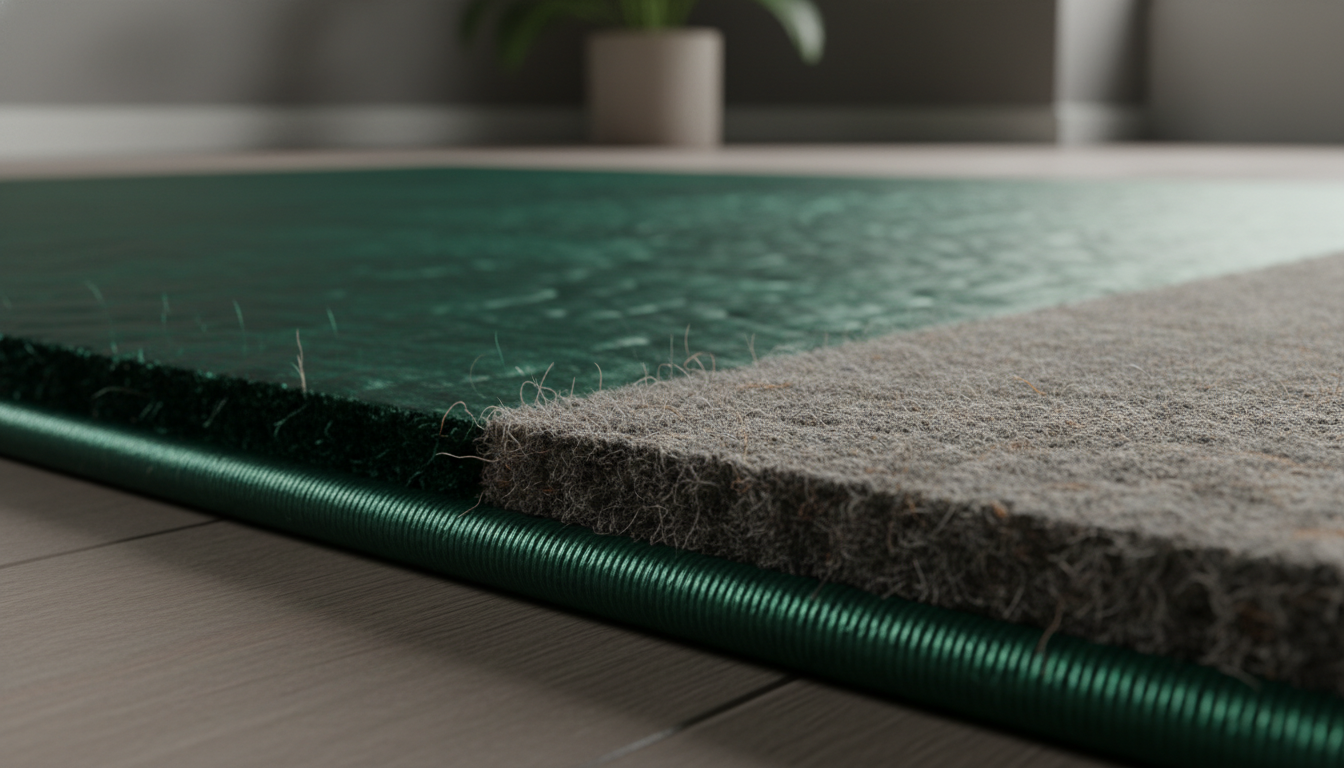
The Tactile Perimeter: From Flatweaves to Plush Reliefs
In the evolving landscape of high-end interiors, 2026 marks a departure from flat, one-dimensional floor coverings. The luxury boho aesthetic is maturing, moving away from frantic patterns toward a more grounded, sensory experience. Here, the border is no longer a decorative afterthought; it is an architectural element that defines the room’s footprint through physical depth.
The trend toward Statement Border Rugs 2026 centers on the “high-low” technique. Designers are increasingly specifying rugs where the central field remains a refined, low-pile weave, while the frame erupts in a lush, hand-tufted relief. This creates a literal step-up in texture that anchors furniture with a sense of permanence and gravitas.
According to the curation experts at thebohorugs.com, this shift represents a desire for “visual silence”—a design philosophy where interest is found in the way light hits a raised edge rather than in a busy color palette.
Topographic Framing and Hand-Carved Topography
Sculptural edges are transcending traditional rectangular bounds. We are seeing a rise in organic, “eroded” borders that mimic natural coastlines or geological strata. These are not merely rugs but soft sculptures for the floor, utilizing variable shearing techniques to create 3D topography.
Key textural elements defining this movement include:
- Chiseled Wool Grooves: Deep, hand-carved channels that separate the border from the primary field, creating a shadow line that mimics architectural molding.
- Fringe Integration: Oversized, braided tassels that act as a structural extension of the rug’s border rather than a flimsy fringe.
- Mixed Gauge Knotting: Utilizing chunky, oversized yarns for the frame while maintaining a fine-spun center for a sophisticated contrast.
Material Curation: Where Raw Meets Refined
The luxury of 2026 is defined by “Material Honesty.” The most coveted Statement Border Rugs 2026 leverage the inherent properties of disparate fibers to tell a story of contrast. By pairing a matte, rustic fiber with a luminous, reflective one, the rug’s border becomes a frame of light.
- Suede-Finished Wool & Silk: A matte New Zealand wool center framed by a shimmering botanical silk border that captures the evening light.
- Unprocessed Jute & Mohair: A rugged, artisanal jute field surrounded by a halo of incredibly soft, high-pile mohair.
- Tonal Terracotta: Using the same dye lot across different fibers (such as linen and wool) to create a border that is “invisible” in color but striking in its textural shift.
This artisanal approach to materiality ensures that each piece feels bespoke. By sourcing from heritage-focused collections like those found at thebohorugs.com, homeowners can achieve a look that feels curated over decades rather than purchased from a catalog, leaning into the soulful, lived-in luxury that defines the modern boho spirit.
Defining Space: The Border Rug in Open-Plan Luxury
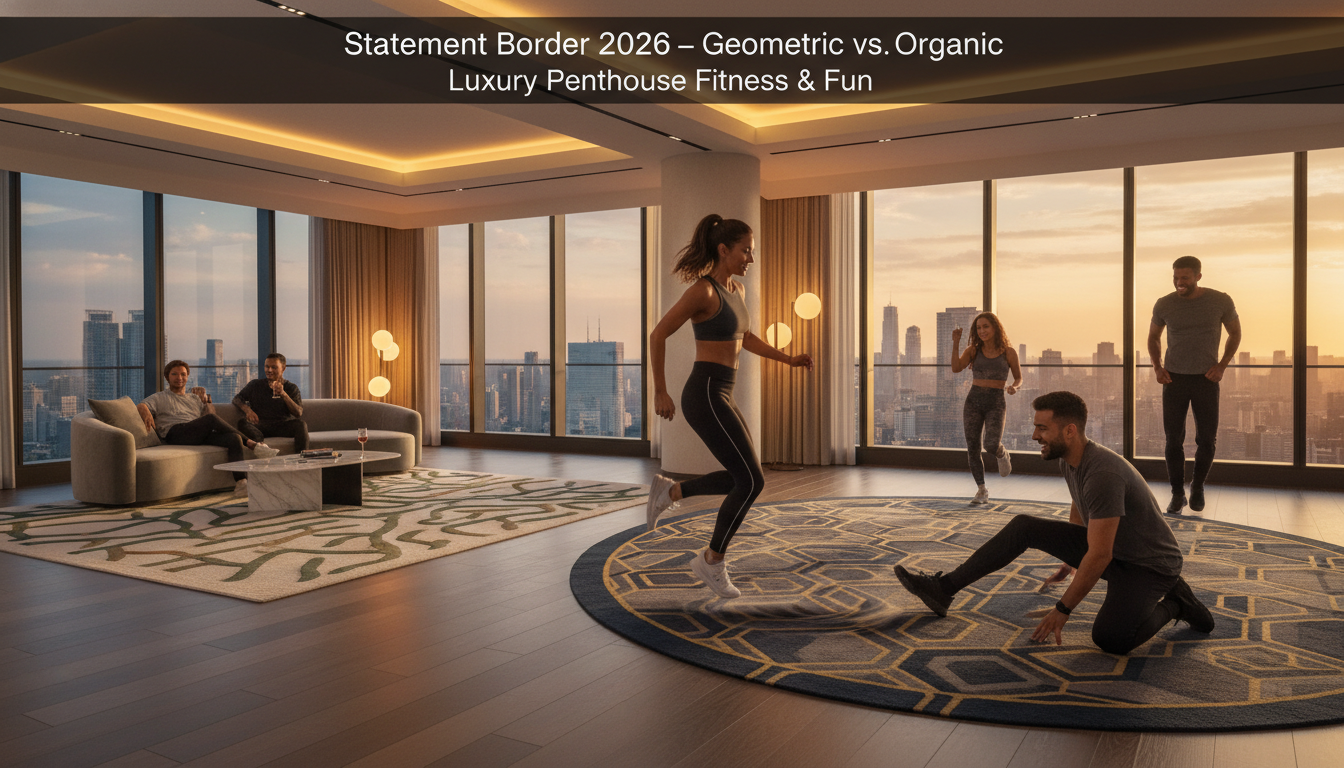
The Architectural Anchor in Fluid Environments
The era of the sprawling, undefined great room is yielding to a more considered, segmented intentionality. As we look toward the design landscape of Statement Border Rugs 2026, the focus shifts from mere floor coverings to “soft architecture”—pieces that act as the invisible walls of a high-end home.
In the modern luxury boho context, the border rug serves as a visual frame that grounds floating furniture arrangements. By utilizing a distinct, heavy-weighted edge, these rugs provide the psychological comfort of an enclosed sanctuary without sacrificing the airy volume of open-plan living.
This evolution represents a departure from the frantic patterns of the past decade. The 2026 aesthetic prioritizes “negative space” within the rug’s field, allowing the border to do the heavy lifting of defining the room’s perimeter and color palette.
Tonal Framing: A Study in Sophisticated Monochrome
The hallmark of Statement Border Rugs 2026 is the shift toward tonal framing. This technique utilizes two variations of the same hue—such as a deep espresso border surrounding a warm oat field—to create depth through subtle contrast rather than jarring color blocks.
To execute this look, designers are moving away from traditional flat weaves toward mixed-media compositions. Consider these emerging material combinations for 2026:
- Matte Wool vs. Luster Silk: A flat-woven wool center framed by a raised, shimmering bamboo silk border.
- Organic Jute vs. High-Pile Mohair: A rugged, earthy perimeter that softens into a plush, decadent interior.
- Serrated Edging: Borders that aren’t straight lines, but rather “bleeding” gradients that mimic natural erosion.
For those seeking to anchor a minimalist space with these artisanal textures, thebohorugs.com serves as a primary source for hand-knotted pieces that prioritize this tactile sophistication.
Sculptural Edges and 3D Geometry
We are witnessing a move toward the “sculptural edge,” where the border is no longer just a color change, but a physical change in elevation. In the forecast for Statement Border Rugs 2026, hand-carving techniques create beveled perimeters that catch the light at different angles throughout the day.
These rugs act as a bridge between the organic irregularities of bohemian design and the sharp precision of contemporary luxury. The 2026 palette is decidedly grounded, favoring mineral tones like hematite, clay, and oxidized copper.
- Sunken Fields: The center of the rug sits lower than the border, creating a “pit” effect that feels inherently cozy.
- Irregular Silhouettes: Expect to see borders that follow the organic curve of a stone or the jagged line of a coastline rather than a perfect rectangle.
- Embossed Motifs: Borders featuring tone-on-tone relief work, such as oversized braided textures or geometric fretwork carved directly into the wool pile.
Ultimately, the rise of the border rug in 2026 signifies a return to craftsmanship where the “frame” is just as important as the “art.” It is an investment in spatial clarity, cementing Statement Border Rugs 2026 as the definitive foundation for the next generation of curated interiors.
The Sustainable Border: Eco-Conscious Luxury Materials
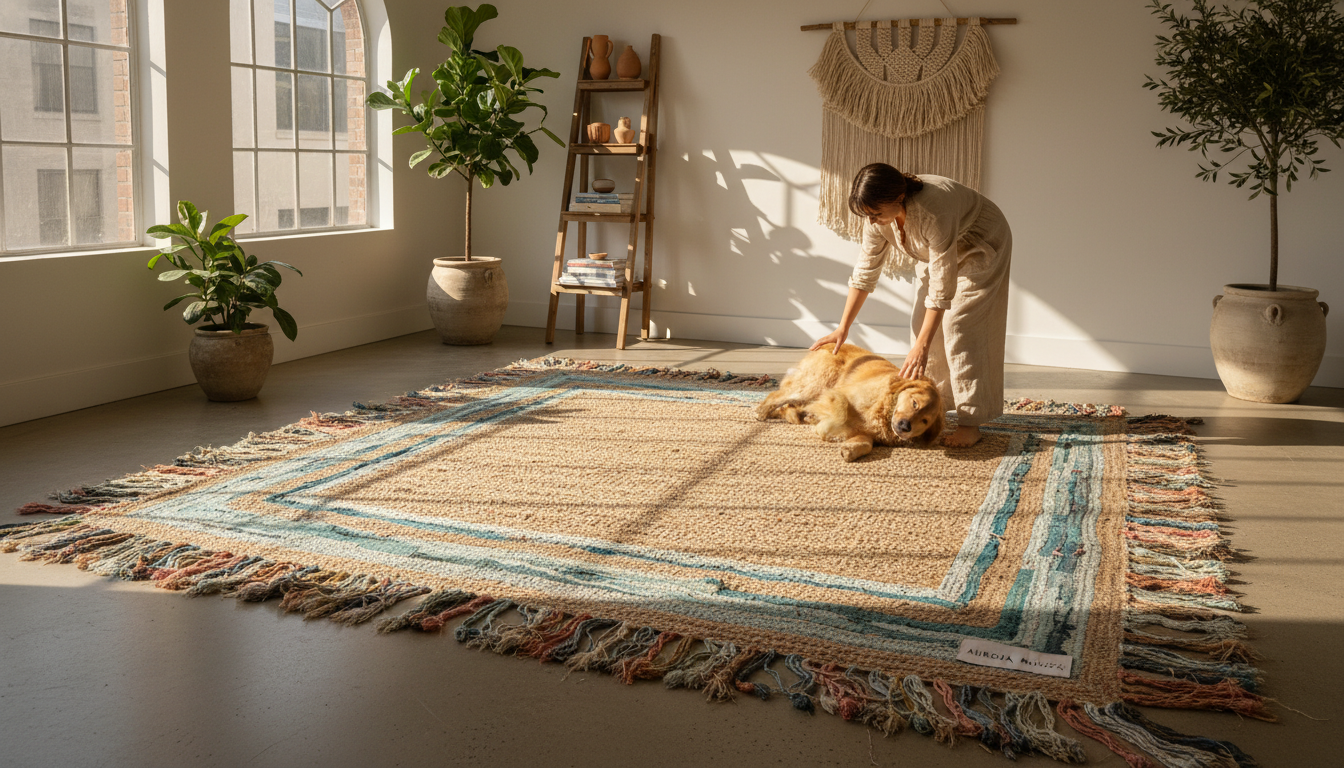
Regenerative Fibers and the New Tactility
In the landscape of high-end interiors, 2026 marks a pivotal shift where ethics and aesthetics converge. Sustainability has evolved from a secondary consideration into the primary architect of form. The frame of a rug is no longer merely a visual boundary; it is a canvas for material innovation.
When curating **Statement Border Rugs 2026**, designers are increasingly turning to bio-based sculpturalism. This involves using high-contrast textures—such as raised mycelium “leather” borders or salvaged agave silk—to create a physical threshold between the rug’s field and the floor it inhabits.
The focus is on “living” materials that age with grace. We are seeing a move toward fibers that offer a sensory experience, where the border provides a structural, almost architectural weight to the softer, plush interior of the piece.
The Rise of Undyed Monochromatic Framing
Luxury boho living in 2026 rejects the neon-bright synthetics of the past decade. Instead, the industry is witnessing a return to the “unfiltered palette.” This trend relies on the natural variances of sheep’s wool and bast fibers to create tonal depth without the use of heavy metals or chemical fixatives.
- Nettle and Hemp Welts: Using rugged, carbon-sequestering stalks to create durable, high-friction edges.
- Alpaca Gradient Borders: Utilizing the 22 natural shades of alpaca fleece to achieve a “sculpted” look through color alone.
- Sourced Upcycling: Integrating vintage textile remnants into the border construction to tell a story of circularity.
These choices ensure that **Statement Border Rugs 2026** are not just floor coverings, but heirloom investments. By stripping away artificiality, the border highlights the raw honesty of the weave, aligning perfectly with the curated, intentional ethos of modern bohemian spaces.
Architectural Longevity and the Artisanal Edge
True luxury is found in the endurance of a piece. The trend toward sculptural edges is as much about structural integrity as it is about visual impact. A reinforced, hand-bound border prevents the curling and fraying common in mass-produced alternatives, extending the lifecycle of the rug by decades.
For those seeking to anchor a room with these eco-conscious masterpieces, the collections at thebohorugs.com exemplify this marriage of ancient technique and forward-thinking sustainability. Their focus on small-batch production mirrors the 2026 shift toward “slow decor.”
Ultimately, the evolution of **Statement Border Rugs 2026** reflects a deeper desire for connection. By choosing borders crafted from regenerative botanicals and undyed proteins, homeowners are framing their lives with the textures of the natural world, creating sanctuaries that are as kind to the planet as they are inspiring to the eye.
Curating Your Collection: Treating Your Floor as a Gallery
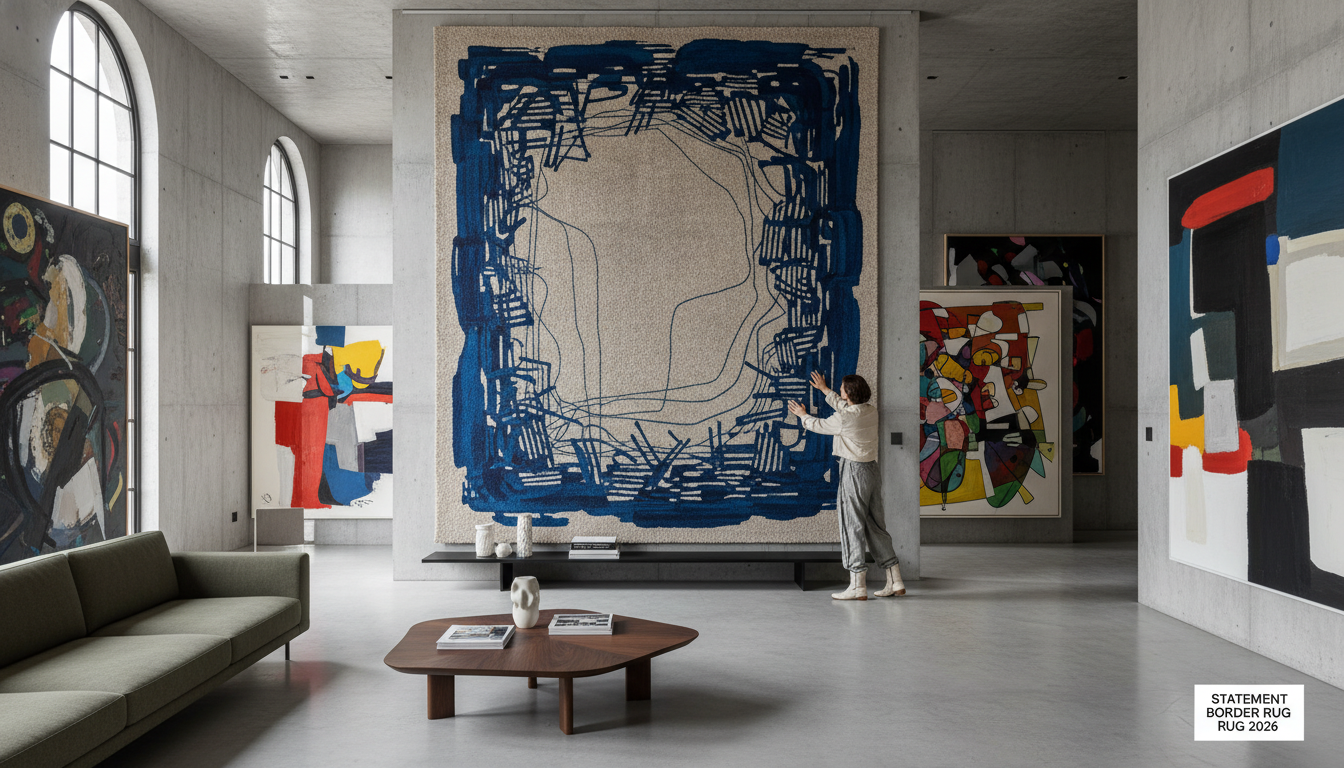
The Architectural Shift: From Backdrop to Centerpiece
For years, the rug was the “quiet companion” of a room—a neutral stage for furniture to perform upon. However, the design landscape of 2026 signals a definitive pivot toward the floor as the primary architectural narrative. We are seeing a move away from wall-to-wall monotony in favor of pieces that command attention through intentionality and form.
Designers are increasingly viewing the rug as a site-specific installation. In this new era, Statement Border Rugs 2026 are not merely floor coverings; they are the anchors of the “fifth wall.” By utilizing high-contrast textures and irregular perimeters, these pieces define the spatial flow of luxury boho interiors, creating a “room within a room” without the need for physical partitions.
Sculptural Edges and the High-Low Topography
The 2026 aesthetic rejects the traditional, flat-weave boundary. Instead, we are seeing the rise of “sculptural edges”—borders that vary in height and density to create a 3D topographic effect. This is achieved through meticulous hand-carving and the juxtaposition of divergent materials.
- Material Fusion: Look for matte New Zealand wool centers framed by lustrous botanical silk borders that catch the light at different angles.
- Organic Perimeters: Moving beyond the rectangle, 2026 favors asymmetrical, scalloped, or “eroded” edges that mimic natural geological formations.
- Debossed Framing: A technique where the border is physically lower than the central pile, creating a shadowed “trench” effect that adds architectural depth.
The Nuance of Tonal Framing
While previous years leaned into loud, maximalist color clashes, the 2026 iteration of the boho aesthetic is more cerebral. Tonal framing—the use of varying shades within the same color family—allows for a sophisticated, quiet luxury. A terracotta center might be framed by a deep umber border, providing structure without breaking the visual serenity of the space.
This subtle shift in palette places the emphasis back on the quality of the fiber and the skill of the weaver. When sourcing these elevated pieces, collectors often look toward specialized curators like thebohorugs.com, where the focus remains on artisanal integrity and the preservation of traditional weaving techniques adapted for modern silhouettes.
Key Design Predictions for 2026
- Hyper-Localized Motifs: Borders that tell a story, featuring woven symbols or patterns inspired by the specific region where the rug was crafted.
- Mixed-Media Borders: The integration of non-traditional elements like braided leather or recycled metallic threads into the rug’s edge for a tactile, avant-garde finish.
- Negative Space: Rugs where the “border” is actually a series of cut-outs, allowing the hardwood or stone flooring beneath to act as a secondary frame.
As we curate our living spaces for the future, the emphasis is on longevity and soul. Investing in Statement Border Rugs 2026 is an exercise in intentionality, transforming a functional necessity into a gallery-worthy foundation that evolves with the home.
2026 Forecast: The Future of Peripheral Design
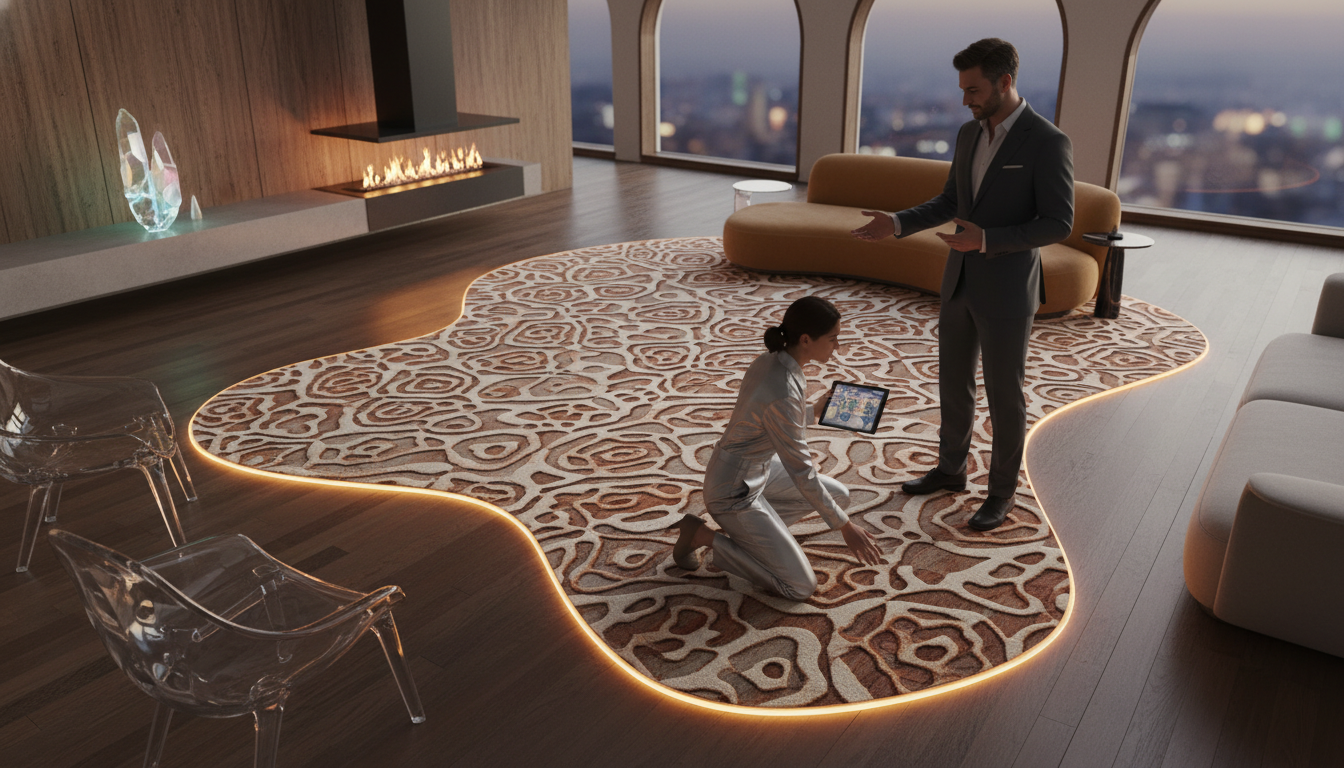
Beyond Contrast: The Tonal Revolution
In the coming seasons, the traditional high-contrast border is evolving into something far more sophisticated. We are witnessing a transition from graphic boundaries to “tonal framing”—a technique where the border is defined by texture and sheen rather than a change in pigment. This subtle shift allows Statement Border Rugs 2026 to anchor a room without dictating the entire color story.
Designers are increasingly favoring “whisper-thin” perimeters that utilize high-low pile heights. Imagine a matte wool center surrounded by a lustrous silk or bamboo viscose edge in the exact same shade of terracotta or sage. This creates a halo effect, giving the rug an architectural gravity that feels both grounded and ethereal.
Sculptural Edges and 3D Perimeters
The “Luxury Boho” aesthetic of 2026 rejects the flat, machine-finished edges of the past. The future of peripheral design lies in sculptural hand-carving. We expect to see a surge in irregular, organic boundaries that mimic natural topographies—think scalloped edges, hand-bound fringe inserts, and asymmetrical mitering.
- Intaglio Borders: Sunken patterns carved into the perimeter to create shadow play.
- Mixed-Media Framing: Integrating sustainable jute cords or braided hemp directly into the wool border for a tactile, artisanal finish.
- Over-Dyed Gradients: Borders that bleed into the central field, creating a “sunset” effect that softens the room’s layout.
The New Materiality of Luxury Boho
As sustainability moves from a trend to a prerequisite, Statement Border Rugs 2026 are being reimagined through the lens of rare, eco-conscious fibers. We are seeing a move toward unbleached Tibetan wool paired with reclaimed sari silk accents along the edges. This juxtaposition of “raw” and “refined” is the hallmark of the modern global nomad.
For those seeking to curate this look, the focus should be on provenance. Artisanal hubs like thebohorugs.com are already pivoting toward these intricate constructions, favoring hand-knotted techniques that allow for the structural integrity required of a 3D border. A rug is no longer just a textile; it is a floor-bound sculpture.
How to Style the Peripheral Trend
- Negative Space: Allow at least 18 inches of hardwood or stone to show around the rug to let the sculptural edge “breathe.”
- Monochromatic Layering: Match your upholstery to the tonal border of the rug for a cohesive, high-end gallery feel.
- Low-Profile Furniture: Use “floating” furniture legs to ensure the intricate border design remains visible from every angle of the room.
Ultimately, the 2026 forecast suggests that the center of the rug is where the comfort lies, but the border is where the soul of the design resides. By focusing on the periphery, homeowners can introduce a sense of curated luxury that feels intentional, quiet, and deeply personal.
Elevate Your Space
Discover the artistry of handmade luxury. Each rug is a masterpiece of tradition and modern design.
Expert Q&A
What defines Statement Border Rugs 2026 specifically?
The 2026 iteration focus on ‘Art for the Floor’ where the border is not just a frame but an active participant in the design through sculptural edges, 3D textures, and tonal variations.
How do statement borders improve room proportions?
A well-defined border creates a visual boundary that can make large rooms feel more intimate or small rooms appear more intentional and organized.
Are scalloped edges still trending for 2026?
Yes, but they have evolved into more irregular, organic ‘sculptural edges’ that mimic natural landscapes rather than perfect repetitive patterns.
What colors are dominant in Statement Border Rugs 2026?
We are seeing a move toward tonal palettes—such as ochre on terracotta or slate on charcoal—to create depth without visual clutter.
Can I layer a border rug over wall-to-wall carpeting?
Absolutely. In luxury boho design, layering a high-texture border rug over a neutral carpet adds architectural interest and zone definition.
What materials are best for a high-traffic border rug?
High-twist wool or a blend of wool and sisal are ideal for maintaining the crispness of a statement border in busy areas.
How do sculptural edges affect furniture placement?
Sculptural edges encourage ‘floating’ furniture arrangements where pieces don’t hide the rug’s unique perimeter.
Is the ‘border’ always a different color?
Not necessarily. In 2026, many statement borders are defined by a change in pile height or weaving technique rather than color contrast.
How do I clean a rug with two different pile heights?
Professional cleaning is recommended, but for routine maintenance, use a vacuum without a beater bar to avoid pulling the fibers of the higher border.
Are these rugs suitable for minimalist homes?
Yes, they provide the necessary ‘visual weight’ that prevents minimalist rooms from feeling cold or unfinished.
How does the ‘Art for the Floor’ philosophy apply here?
It treats the rug as a commissioned piece where the border acts as the frame for the floor’s ‘canvas,’ prioritizing aesthetics as much as function.
What is ‘Tonal Framing’?
Tonal framing is the use of different shades of the same color family to create a subtle yet sophisticated border effect.
Can statement borders work in a small dining room?
Yes, provided the border is visible at least 18 inches beyond the dining chairs when they are tucked in.
What is the lifespan of a luxury border rug?
A high-quality hand-knotted wool rug with a statement border can last 50 years or more with proper care.
Are bold geometric borders out for 2026?
They are becoming more fluid. Instead of rigid lines, expect softened geometries and hand-drawn qualities.
How do I choose the right border width?
For large rooms, a 10-12 inch border creates a grand statement; for smaller rooms, 4-6 inches is usually sufficient.
Do Statement Border Rugs 2026 fit the Maximalist aesthetic?
Yes, they provide a structured anchor that allows maximalist patterns and colors to coexist without looking chaotic.
What is the most popular fiber for 2026 border rugs?
New Zealand wool remains the gold standard, often accented with bamboo silk for a luminous border finish.
How do these rugs integrate with smart home tech?
In 2026, we see some high-end rugs incorporating discrete sensors in the borders for lighting control or security.
What makes a rug ‘Luxury Boho’?
It is the combination of artisanal, hand-crafted techniques with premium, high-end materials like silk and fine wool.
Can I use a statement border rug in a kitchen?
Yes, in a runner format with a low-profile border to avoid tripping hazards while adding a design punch.
Are wide borders better than thin borders?
Wide borders are more ‘architectural’ and are the signature of the 2026 trend, whereas thin borders are more traditional.
How does lighting affect a tonal border rug?
Side lighting or floor lamps emphasize the shadows created by varying pile heights in the border.
What is a ‘disappearing border’?
A 2026 micro-trend where the border gradually fades or bleeds into the main field of the rug.
Are handmade rugs always better for this trend?
Hand-tufted or hand-knotted rugs are preferred for statement borders to ensure the sculptural elements are precise and durable.
Should the border match the wall color?
Matching the border to the walls creates a seamless, expansive look, while contrasting it makes the rug a focal point.
How do border rugs affect acoustics?
The extra density often found in statement borders provides superior sound absorption compared to flat-weave rugs.
What is ‘Sculptural Minimalism’?
It is a design style that uses the shape and form of objects, like rugs, to provide interest rather than using ornate patterns.
Can I custom-design a statement border rug?
Many luxury brands in 2026 offer bespoke services where you can choose the ‘frame’ width and the ‘canvas’ texture.
Why is ‘TheBohoRugs’ leading this trend?
By focusing on the intersection of heritage weaving and avant-garde peripheral design, we redefine the rug as a primary architectural element.
Written by TheBohoRugs Interior Design Team
Experts in handmade rugs, boho interiors, and modern home decor.
