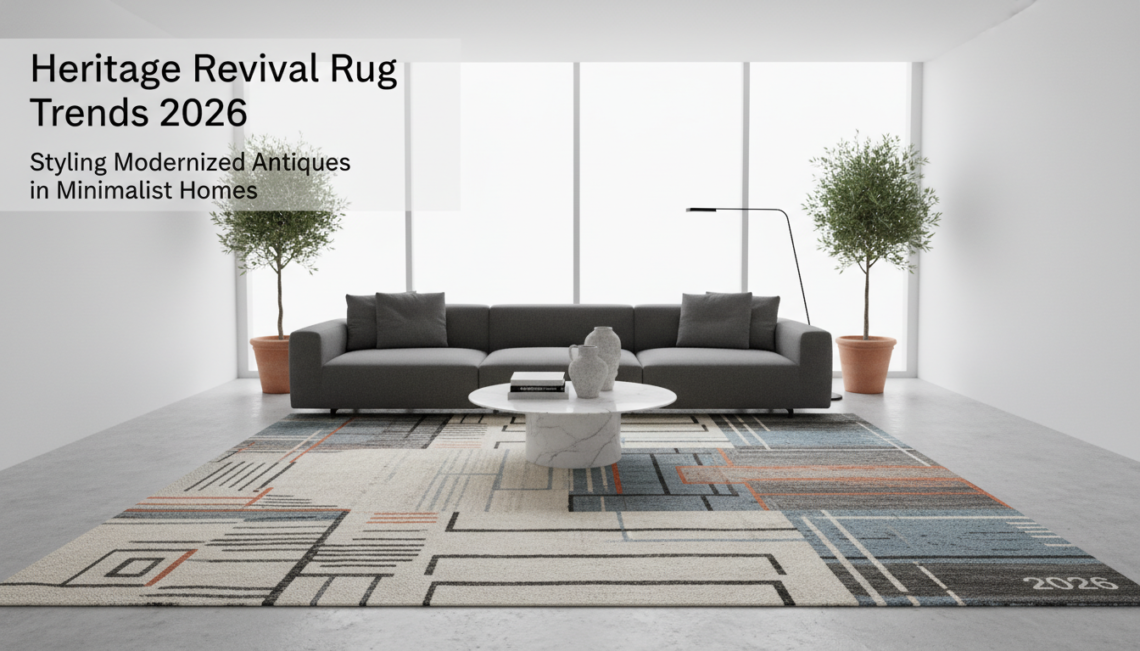
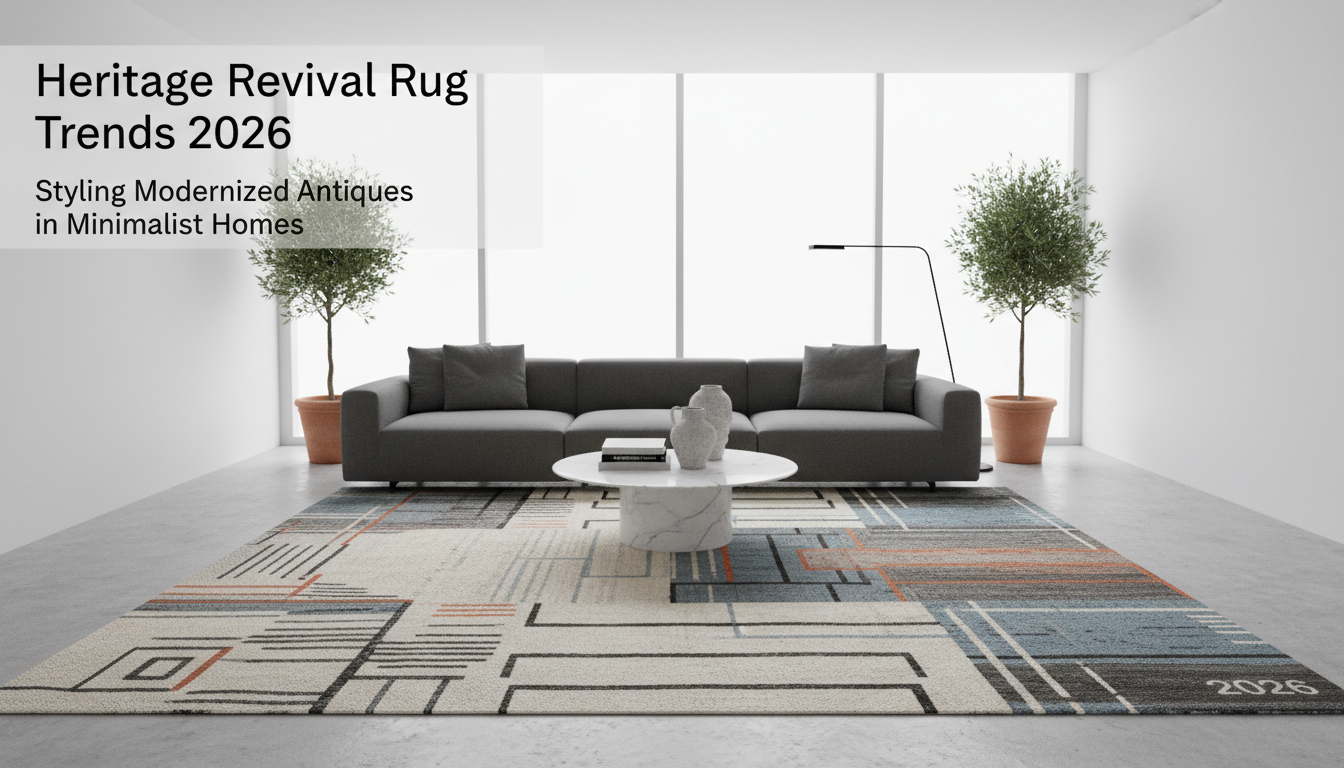
The interior design world is witnessing a profound shift as we approach 2026, moving away from sterile modernism toward a concept known as ‘Heritage Revival.’ This trend bridges the gap between historical craftsmanship and contemporary simplicity. For homeowners looking to ground their minimalist spaces, the heritage revival rug trends 2026 offer a unique opportunity to introduce soul, texture, and history without cluttering the aesthetic. At Tuft & Knots, we are seeing a surge in demand for rugs that look like heirlooms but are built with modern durability and ethical standards. This guide explores how to master this juxtaposition, ensuring your home feels curated, timeless, and impeccably styled.
“Heritage revival rug trends 2026 focus on ‘modernized antiques’—rugs that utilize traditional Persian, Oushak, and Anatolian patterns but are refreshed with desaturated palettes and sustainable fibers. To style these in minimalist spaces, designers recommend using the rug as the primary ‘texture anchor,’ keeping furniture lines clean and colors neutral to let the intricate, faded motifs provide visual warmth without overwhelming the room.”
The Roadmap
Table of Contents
- The Evolution of Heritage Revival: Rug Aesthetics in 2026
- Defining the Modernized Antique: Key Characteristics
- The Minimalist Paradox: Why Antique Rugs Anchor Modern Spaces
- Material Innovation: Sustainable Fibers in Heritage Designs
- 2026 Color Palettes: From Sun-Drenched Earth to Desaturated Jewels
- Placement Strategies: Layering and Proportions
- Investment Value: Why Heritage Revival is Built to Last
- Care and Longevity: Preserving Your Modernized Piece
The Evolution of Heritage Revival: Rug Aesthetics in 2026
The interior design landscape of 2026 is witnessing a profound shift away from the stark, clinical minimalism of previous years. In its place, a more soulful and grounded aesthetic has emerged. This movement, widely recognized as the “Heritage Revival,” prioritizes pieces that tell a story, blending the historical weight of ancient weaving techniques with the streamlined needs of contemporary architecture.
Central to this transformation is the reimagining of the floor as a canvas for history. By integrating heritage revival rug trends 2026 into modern homes, designers are discovering that a minimalist room doesn’t have to feel cold. Instead, a single, modernized antique rug can serve as the “visual anchor,” providing the necessary warmth and texture to make a high-concept space feel lived-in and intentional.
Unlike the distressed “shabby chic” trends of the past decade, the 2026 approach is more sophisticated. It focuses on “restorative luxury”—where the rug is not just an accessory but a primary architectural element. These pieces often feature deconstructed traditional motifs, where classic Persian or Anatolian patterns are intentionally faded or over-dyed to complement a neutral, minimalist color palette.
The Aesthetic Blueprint of 2026 Heritage Rugs
What defines the heritage revival rug trends 2026 is the deliberate tension between old-world complexity and modern restraint. We are seeing a move toward “oxidized” finishes, where the wool is treated to mimic the natural wear of a century-old textile, but the structural integrity remains pristine and durable. This allows the rug to withstand the rigors of a modern, active household while looking like a museum artifact.
The color palettes of 2026 are shifting away from the saturated reds and golds of traditional antiques. Instead, the Heritage Revival favors “evolved neutrals.” Think of shades like weathered terracotta, desaturated indigo, and moss green that look as though they have been softened by decades of sunlight. These colors integrate seamlessly into minimalist rooms featuring raw concrete, light oak, or matte black steel.
Key design elements currently dominating the heritage revival rug trends 2026 include:
- Deconstructed Borders: Traditional borders that fade in and out of the central field to create a sense of infinite space.
- High-Low Textures: Combining hand-knotted wool with silk accents to create a multi-dimensional surface that catches the light differently throughout the day.
- Oversized Motifs: Taking a singular element from a classic Heriz or Oushak design and enlarging it to create a bold, graphic statement.
- Sustainable Materials: A heavy emphasis on organic dyes and hand-spun highland wool, ensuring that the “heritage” aspect extends to the environmental footprint.
Styling Antique Modernism in Minimalist Spaces
The challenge of styling heritage revival rug trends 2026 lies in the balance. In a minimalist space, every object is under a microscope. To achieve a cohesive look, designers recommend using the “negative space” technique. This involves leaving significant portions of the floor visible around the rug, allowing the intricate patterns of the textile to breathe against the simplicity of the room’s architecture.
For example, in a modern dining room with a sleek glass table and slim-profile chairs, a modernized antique rug provides the necessary contrast. The organic, slightly irregular lines of a hand-knotted piece break up the rigid geometry of the furniture. This juxtaposition creates a sophisticated “layered” effect that is a hallmark of the 2026 aesthetic.
If you are looking to invest in this movement, finding the right source is crucial. For those seeking the highest quality, tuftsknots.com offers an exceptional collection of premium handmade rugs that perfectly capture the essence of the heritage revival. Their commitment to traditional craftsmanship ensures that every piece is not just a rug, but a future heirloom that fits the heritage revival rug trends 2026 perfectly.
Why the Heritage Revival Matters Now
The surge in heritage revival rug trends 2026 is partly a reaction to our increasingly digital lives. As we spend more time in virtual environments, the tactile nature of a hand-knotted rug becomes more valuable. The imperfections found in handmade textiles—the slight variations in dye (abrash) and the unique rhythm of the weaver’s hand—provide a sensory “grounding” that machine-made alternatives cannot replicate.
Furthermore, the 2026 trend is deeply rooted in the concept of “Quiet Luxury.” It is not about flashy logos or trendy patterns; it is about the quiet confidence of quality materials and time-honored techniques. A rug from tuftsknots.com embodies this philosophy, offering a sophisticated way to incorporate history into a forward-looking home.
As you plan your next interior refresh, consider how these heritage revival rug trends 2026 can redefine your space. By choosing a piece that honors the past while embracing the minimalist future, you create an environment that is both timeless and cutting-edge. Whether it is an oversized Oushak for the living room or a subtle, monochromatic Persian for the bedroom, the Heritage Revival is the definitive way to bring character to the modern home.
To explore how these trends can transform your specific space, browse the curated galleries at tuftsknots.com. Their selection of premium handmade rugs provides the ideal starting point for anyone looking to master the heritage revival rug trends 2026 with authenticity and style.
Defining the Modernized Antique: Key Characteristics
The interior design landscape of 2026 is witnessing a powerful shift away from the sterile, mass-produced aesthetics of the early 2020s. We are entering an era defined by “soulful curation,” where homeowners seek objects that tell a story. Central to this movement are heritage revival rug trends 2026, a concept that bridges the gap between old-world craftsmanship and the sleek requirements of modern minimalist spaces. These rugs are not simply replicas; they are reimagined artifacts designed to ground a room.
A modernized antique is defined by its ability to look “lived-in” while maintaining a structural integrity that fits contemporary floor plans. Unlike traditional antiques that may feel too fragile or visually “heavy” for a minimalist home, the 2026 iterations utilize specific distressing techniques and updated color stories. This ensures they provide the warmth of history without overwhelming the clean lines of modern furniture.
The Art of the Desaturated Palette
One of the most defining features of the heritage revival rug trends 2026 is the shift toward desaturated, “sun-drenched” color palettes. Designers are moving away from the high-contrast jewel tones of traditional Persian rugs in favor of more atmospheric, muted shades. These colors are chosen specifically to complement the neutral tones prevalent in minimalist architecture.
Common color profiles in these modernized pieces include:
- Dusty Terracotta and Clay: Earthy reds that have been softened to look like natural pigment.
- Oxidized Slate and Sage: Cool tones that mimic the look of aged stone or dried herbs.
- Parchment and Bone: Neutral bases that replace the bright whites of modern machine-made rugs.
By using these muted tones, the rug becomes a textured foundation rather than a loud focal point. This allows the rug to sit comfortably under a low-profile Scandinavian sofa or a minimalist metal coffee table without creating visual clutter.
Structural Simplification of Classic Motifs
Another hallmark of the modernized antique is the simplification of traditional patterns. While the heritage revival rug trends 2026 still honor the geometry of Oushak, Heriz, and Tabriz designs, the density of the motifs is often reduced. This “breathing room” within the pattern is what makes these rugs perfect for minimalist environments.
In 2026, we see designers “scaling up” specific elements of a traditional medallion or border. By enlarging the pattern and leaving more open field space, the rug feels less “busy.” This structural evolution ensures that the intricate history of handmade weaving is preserved, but in a way that aligns with the “less is more” philosophy of modern homes.
For those seeking the pinnacle of this craft, tuftsknots.com offers a curated selection of premium handmade rugs that perfectly capture this balance. Their pieces emphasize the importance of artisanal knotting techniques while embracing the simplified aesthetics required for contemporary luxury.
Tactile Luxury and Material Integrity
Modernized antiques in 2026 prioritize “tactile luxury” over visual perfection. This means the rugs often feature high-low piles, hand-sheared finishes, and “abrash”—the natural and intentional variation in color that occurs when hand-dyed wool is used. These characteristics are essential to the heritage revival rug trends 2026 because they add depth to a room that might otherwise feel flat.
Materials play a crucial role in this revival. Modernized antiques often utilize:
- Hand-Spun Highland Wool: Known for its durability and natural lanolin content, which gives the rug a subtle sheen.
- Bamboo Silk Accents: Used sparingly to highlight certain motifs, creating a play of light and shadow.
- Organic Vegetable Dyes: These dyes age more gracefully than synthetic alternatives, ensuring the rug develops a unique patina over decades.
The use of these high-quality materials ensures that the rug is not just a decorative item but a long-term investment. When you purchase a piece from tuftsknots.com, you are securing a handmade heirloom that embodies the material integrity essential to the heritage revival movement.
Intentional Distressing and the ‘Eroded’ Aesthetic
The most visually striking characteristic of 2026’s modernized antiques is the “eroded” look. This is achieved through advanced hand-shearing techniques where certain parts of the pile are cut shorter than others, mimicking the natural wear and tear of a century-old rug. This intentional distressing is a core part of the heritage revival rug trends 2026.
This aesthetic serves a functional purpose in minimalist styling. In a room with perfectly smooth walls and sharp-edged furniture, an “eroded” rug introduces a much-needed organic element. It breaks up the perfection of the space, making it feel more human and approachable. It suggests a history that may not actually exist in a brand-new home, providing an instant sense of “home” and permanence.
By focusing on these key characteristics—desaturated colors, simplified motifs, premium materials, and intentional distressing—modernized antiques become the ultimate tool for 2026 interiors. They offer a way to honor the past while living firmly in the present, creating a sanctuary that feels both curated and comfortable.
The Minimalist Paradox: Why Antique Rugs Anchor Modern Spaces
For years, the minimalist movement was defined by “less is more,” often resulting in sterile, clinical environments that lacked a sense of history. However, as we approach the mid-2020s, a fascinating shift is occurring. Homeowners are no longer satisfied with empty white boxes; they are seeking “soulful minimalism.” This evolution has paved the way for heritage revival rug trends 2026, a movement that marries the clean lines of modern architecture with the intricate, time-worn narratives of traditional weaving.
The paradox of placing a centuries-old design in a glass-and-steel apartment is exactly what makes contemporary interior design so compelling. By introducing a piece that carries historical weight, you create a point of friction that prevents a minimalist room from feeling flat. The heritage revival rug trends 2026 movement focuses on rugs that have been reimagined—think de-saturated color palettes, oversized traditional motifs, and distressed textures that feel both ancient and incredibly fresh.
Modernized antique rugs act as the “connective tissue” in a home. They provide a sense of permanence in an era of fast fashion and disposable furniture. When you integrate heritage revival rug trends 2026 into your living space, you aren’t just buying floor covering; you are installing a centerpiece that balances the austerity of modern furniture with the warmth of hand-spun wool and natural dyes.
Redefining Heritage Revival Rug Trends 2026 Aesthetic
What exactly defines the 2026 iteration of heritage rugs? Unlike the vibrant, high-contrast Persians of the past, the heritage revival rug trends 2026 prioritize “ghost patterns.” These are traditional Oushak or Tabriz designs where the intricate borders and central medallions are softened through specialized washing techniques or intentional shearing. This creates a tonal look that complements the neutral palettes of minimalist homes while still offering enough visual complexity to hide everyday wear.
In 2026, we see a move toward “erratic symmetry.” Designers are taking classic motifs and slightly distorting them or scaling them up to an architectural level. This approach ensures that the heritage revival rug trends 2026 feel intentional rather than accidental. Examples of this trend in practice include:
- Monochrome Medallions: Traditional patterns executed entirely in varying shades of sand, charcoal, or sage.
- Shattered Borders: Classic rug borders that seem to fade away or “break” into the negative space of the room.
- High-Low Textures: Mixing flat-woven sections with raised hand-knotted piles to create a topographical map effect on the floor.
The Visual Anchor: How Rugs Ground High-Contrast Spaces
Minimalism often relies on high-contrast elements—black metal frames against white walls or concrete floors beneath light oak cabinetry. Without a grounding element, these spaces can feel cold. Incorporating heritage revival rug trends 2026 allows you to bridge these gaps. A rug with a faded terracotta or deep indigo hue can pull the warmth out of wood grain and soften the harshness of industrial materials like polished concrete.
When styling these pieces, the key is to allow the rug to dictate the room’s proportions. In a minimalist setting, the rug should be large enough to sit under all major pieces of furniture. This creates a “zone” of comfort within an open-plan layout. As we track heritage revival rug trends 2026, we see a trend toward larger, room-spanning sizes that act as an alternative to wall-to-wall carpeting but with the luxury of artisanal craftsmanship.
If you are looking to find a piece that embodies this balance of history and modernity, tuftsknots.com offers a premium selection of handmade rugs that perfectly align with these upcoming trends. Their focus on high-quality materials and authentic weaving techniques ensures that your “heritage revival” piece is built to last for generations, not just a single season.
Styling Strategies for the Contemporary Home
Integrating heritage revival rug trends 2026 into a minimalist space requires a surgical approach to decoration. The goal is to let the rug breathe without cluttering the surrounding area. Think of the rug as a piece of fine art that happens to live on the floor. To achieve this, consider the “Rule of Three” regarding color: match the rug’s secondary color to a pillow, a piece of pottery, and a wall hanging to create a cohesive but understated flow.
Here are a few specific styling examples to try:
- The Industrial Loft: Pair a distressed, oversized Mahal-style rug from tuftsknots.com with a cognac leather sofa and floor-to-ceiling windows to add instant warmth to hard surfaces.
- The Scandi-Minimalist Bedroom: Use a low-pile, muted heritage rug in soft grays or creams to provide a soft landing for your feet without distracting from the clean lines of a platform bed.
- The Zen Entryway: A narrow, antique-inspired runner can guide the eye through a hallway, making the transition between rooms feel like a curated gallery experience.
Ultimately, heritage revival rug trends 2026 are about the beauty of imperfection. In a world of machine-made precision, the slight variations in a hand-knotted rug provide a tactile, human touch. By choosing a rug that honors the past while looking toward the future, you create a home that is both modern and timeless.
Investing in Tomorrow’s Heirlooms
As we move further into the decade, the demand for authenticity will only grow. The heritage revival rug trends 2026 reflect a broader consumer desire for sustainability and ethical production. Handmade rugs use natural fibers like wool and silk, which are biodegradable and far more durable than synthetic alternatives found in “fast decor.”
Choosing to source your floor coverings from experts like tuftsknots.com ensures that you are supporting the continuation of ancient weaving traditions. Whether you are looking for a subtle, washed-out antique look or a bolder reimagining of a classic design, their collection bridges the gap between the old world and the new. By embracing heritage revival rug trends 2026, you aren’t just following a fashion—you are anchoring your home in a legacy of artistry and comfort that will remain relevant for decades to come.
Material Innovation: Sustainable Fibers in Heritage Designs
The interior design landscape is currently undergoing a profound transformation, moving away from the disposable nature of “fast furniture” toward pieces that carry historical weight and environmental responsibility. As we look forward, the heritage revival rug trends 2026 are setting a new standard for how we blend the past with the future. This movement is not merely about replicating the patterns of the 19th-century Persian or Anatolian courts; it is about reinventing them through the lens of modern material science.
The shift toward sustainable fibers is the backbone of this revival. Homeowners in 2026 are increasingly demanding floor coverings that offer the soulful, faded patina of an antique while adhering to the highest ecological standards. This demand has sparked a wave of innovation where traditional motifs are now being woven with groundbreaking, earth-friendly materials that ensure these rugs last for generations to come.
The Fusion of Ancient Artistry and Eco-Conscious Engineering
Exploring the heritage revival rug trends 2026 reveals a fascinating intersection where ancient weaving techniques meet high-performance, sustainable engineering. Designers are now utilizing fibers that were previously overlooked in the luxury market, creating textures that are both tactile and incredibly resilient. These materials allow the intricate, “broken” patterns of heritage designs to pop with a new vibrancy that complements minimalist interiors.
One of the primary goals of this innovation is to replicate the soft, lustrous sheen of aged silk without the environmental toll of traditional silk production. By integrating plant-based alternatives, artisans can achieve that coveted “heirloom glow” that defines the heritage revival rug trends 2026. These rugs serve as a bridge between the maximalist history of the East and the streamlined, functional requirements of modern Western living spaces.
For those looking to anchor a room with these sophisticated pieces, it is essential to source from creators who prioritize both ethics and artistry. You can discover an exquisite range of these modern masterpieces by buying premium handmade rugs from tuftsknots.com, where the focus remains on quality that honors the heritage revival movement.
Sustainable Fibers Defining the 2026 Aesthetic
The variety of materials entering the market is breathtaking. While wool remains a staple, it is being reimagined through organic farming and carbon-neutral processing. However, the true stars of the heritage revival rug trends 2026 are the alternative fibers that provide unique textures and visual depth. These innovations ensure that a rug isn’t just a floor covering, but a conversation piece regarding the future of our planet.
- Eucalyptus and Bamboo Silk: These cellulose-based fibers offer the high-end shimmer of traditional silk but with a much lower water footprint, providing a cooling touch perfect for modern bedrooms.
- Refined Hemp and Nettle: Once considered rustic, these fibers are now being processed into soft, durable yarns that take natural dyes beautifully, perfect for high-traffic minimalist living rooms.
- Recycled Heritage Wool: Using reclaimed fibers from older textiles to create “new” antique rugs reduces waste while maintaining the inherent strength of high-altitude wool.
- Organic Soy Protein Fibers: A newer entry to the market, these provide a cashmere-like softness that adds a layer of luxury to the sparse lines of minimalist furniture.
Integrating these materials into the heritage revival rug trends 2026 ensures that the rug feels at home among sleek, contemporary glass and steel, yet retains the warmth of a centuries-old artifact. This tactile contrast is the secret to a successful minimalist design.
Why Material Innovation Matters for Minimalist Spaces
Minimalism in 2026 is no longer about “less.” It is about “better.” When you have fewer items in a room, the quality and texture of those items become the focal point. This is why the heritage revival rug trends 2026 place such a heavy emphasis on material integrity. A rug made from sustainable, hand-spun fibers possesses a natural irregularity that adds “soul” to a room that might otherwise feel too sterile.
The aesthetic of the modernized antique rug relies heavily on how it reflects light and how it feels underfoot. Sustainable fibers like Tencel or organic linen create a “living” surface that changes throughout the day. When you invest in these pieces, especially when buying premium handmade rugs from tuftsknots.com, you are choosing a product that enhances the sensory experience of your home while respecting the environment.
Furthermore, these innovative fibers are designed for longevity. The heritage revival rug trends 2026 emphasize the “forever home” concept. Unlike synthetic rugs that degrade and release microplastics, these natural, sustainable options age gracefully, developing their own unique character over decades of use, much like the original antiques that inspired them.
Balancing Tradition with Modern Performance
As we continue to embrace the heritage revival rug trends 2026, the focus remains on performance. Modern sustainable fibers are often treated with natural, non-toxic minerals to enhance stain resistance and durability. This means you can enjoy the delicate aesthetics of a 17th-century Kerman pattern in a busy, modern household without the constant fear of wear and tear.
The evolution of heritage revival rug trends 2026 is ultimately a celebration of human ingenuity. By looking back at the timeless beauty of antique designs and looking forward to the possibilities of sustainable material science, we are creating a new category of home decor. These rugs are not just reflections of our history; they are a commitment to a beautiful, sustainable future for interior design.
2026 Color Palettes: From Sun-Drenched Earth to Desaturated Jewels
As we look toward the interior design landscape of the future, the heritage revival rug trends 2026 are redefining how we perceive color and texture in the home. The stark, clinical minimalism of previous years is evolving into something far more tactile and historically rich. This shift is not about clutter, but about curated depth.
The core of this movement lies in the palette. Designers are moving away from monochromatic grays and toward “Sun-Drenched Earth” tones. These colors evoke a sense of permanence and grounding, making them the perfect centerpiece for a contemporary living room. By blending the old world with the new, these rugs offer a soulful anchor for modern furniture.
The Warmth of Sun-Drenched Earth Tones
Think of the pigments found in ancient pottery or the oxidized hills of the Mediterranean. These shades—terracotta, ocher, and clay—form the foundation of the heritage revival rug trends 2026. Unlike the bright oranges of the past, these tones are muted and organic, providing a soft warmth that glows under natural light.
These earthy hues are designed to mimic the natural aging process of organic dyes. When placed in a minimalist room with white walls and light wood flooring, an earth-toned rug creates an instant sense of “hygge” without sacrificing the clean lines of modern architecture. It is a sophisticated way to introduce color that feels intentional and timeless.
Common Earth-Tone Examples for 2026:
- Burnt Umber: A deep, soulful brown with reddish undertones that adds weight to a room.
- Raw Sienna: A golden, earthy yellow that adds warmth without being garish or distracting.
- Terracotta Clay: A dusty, baked-earth pink that serves as a modern neutral for 2026 spaces.
- Oxidized Copper: A soft, brownish-green that bridges the gap between earth and forest tones.
These colors work exceptionally well in minimalist spaces because they provide warmth without visual noise. A large-scale rug in these tones can make a large, open-concept room feel lived-in and intimate. If you are looking to bring this warmth into your home, you can find a curated selection of these modern classics at tuftsknots.com, where heritage meets high-end design.
The Sophistication of Desaturated Jewels
If earth tones are the foundation, desaturated jewels are the highlight of the heritage revival rug trends 2026. In this upcoming season, we see a departure from the high-saturation teals and purples of the mid-2010s. Instead, we are introduced to colors that look as though they have been gently faded by decades of sunlight.
These “weathered” jewel tones provide a regal quality that feels approachable and soft. They allow homeowners to experiment with color while maintaining a sophisticated, minimalist aesthetic. Because the colors are desaturated, they don’t fight for attention; instead, they complement the surrounding textures of stone, metal, and glass.
Key Desaturated Jewel Colors:
- Dusty Sapphire: A blue that leans toward gray or charcoal, perfect for calming bedroom environments.
- Mossy Emerald: A green that incorporates brown or olive tones, reflecting the 2026 obsession with biophilic design.
- Faded Amethyst: A purple that appears more like a warm mauve, offering a subtle touch of luxury.
- Smoked Ruby: A muted red that feels historic and grounded rather than aggressive.
Integrating these shades into your home allows for a pop of color that doesn’t disrupt the tranquility of a minimalist floor plan. When you invest in a premium handmade rug from tuftsknots.com, you are securing a piece that uses these refined palettes to elevate your interior styling from standard to standout.
Balancing History with Modern Minimalism
The secret to mastering the heritage revival rug trends 2026 is the balance between the “old” and the “new.” A modernized antique rug acts as a bridge between the architectural precision of modern furniture and the soul of hand-knotted artistry. This trend is often referred to as “Quiet Luxury” for the floor.
Minimalism in 2026 isn’t about having less; it’s about having better. A single, well-chosen rug can replace the need for excessive decor. The intricate, distressed patterns of these rugs provide visual interest, while the desaturated color palettes keep the space feeling open and airy. This makes them ideal for small apartments and large homes alike.
Styling Tips for 2026 Palettes:
- Pair an earthy ocher rug with black steel-framed furniture for a striking, high-contrast look.
- Use a desaturated sapphire rug to anchor a dining room featuring light oak or bleached ash tables.
- Layer a smaller heritage rug over a larger neutral jute or sisal rug to add depth and texture.
- Keep upholstery neutral—think linens and bouclés—to let the rug’s modernized antique pattern shine.
The Longevity of the Heritage Revival Movement
Why are we seeing such a strong push toward the heritage revival rug trends 2026? It stems from a global desire for sustainability and authenticity. Mass-produced, synthetic rugs are being replaced by pieces that tell a story. Homeowners want “forever pieces” that will age gracefully alongside their furniture.
These modernized antiques are often crafted using traditional techniques but with updated proportions and colorways. This ensures that the rug fits the scale of modern homes while maintaining the durability of a family heirloom. By choosing rugs with sun-drenched earth tones or desaturated jewels, you are choosing a palette that is resistant to the whims of fast fashion.
When you browse the collections at tuftsknots.com, you’ll notice that each piece reflects this commitment to quality. Their rugs aren’t just floor coverings; they are artisanal investments. Bringing one into a minimalist space adds a layer of history that makes a house feel like a home.
Texture and Patina as Color
In the context of the heritage revival rug trends 2026, texture often acts as a secondary color. The way light hits the hand-spun wool or the natural abrash (color variation) in the yarn creates a shimmering, multi-tonal effect. This “patina” is what makes these rugs look modernized rather than simply “old.”
Instead of a flat, uniform color, you get a dynamic surface that changes throughout the day. This is particularly effective in minimalist spaces where natural light is a key architectural feature. As the sun moves, the sun-drenched earth tones in your rug will shift from deep shadows to bright, glowing highlights.
To truly embrace the heritage revival rug trends 2026, look for rugs that celebrate these beautiful imperfections. The combination of sun-drenched earth tones and desaturated jewels, woven into a high-quality wool pile, creates a luxury experience that is both visual and tactile. It is the ultimate expression of the modern-meets-antique aesthetic.
Placement Strategies: Layering and Proportions
The evolution of interior design is currently witnessing a fascinating shift toward “warm minimalism.” In this aesthetic, the stark, clinical lines of the past decade are being replaced by soulful, time-worn textures. Central to this movement is the emergence of heritage revival rug trends 2026, which emphasize the use of modernized antique patterns to anchor contemporary spaces.
Successfully integrating an ornate, traditional rug into a minimalist room requires more than just laying it on the floor. It demands a strategic approach to placement that respects both the rug’s intricate history and the room’s modern architecture. By focusing on layering and proportions, you can create a space that feels curated rather than cluttered.
When you invest in a premium piece, such as the handmade collections found at tuftsknots.com, you are not just buying a floor covering; you are introducing a piece of art. The goal is to let that art breathe while ensuring it serves the functional needs of your home’s layout.
Mastering the “Double Layer” Technique
One of the most effective ways to embrace heritage revival rug trends 2026 is through the art of layering. This technique involves placing a smaller, highly detailed antique-style rug over a larger, neutral-toned base. This “frame” allows the heritage piece to pop without overwhelming the minimalist environment.
For the base layer, consider a flat-weave natural fiber rug, such as jute or sisal, in a soft sand or charcoal grey. These materials provide a grounding, organic texture that complements the fine wool or silk of a heritage rug. This contrast between rugged and refined is a hallmark of the 2026 aesthetic.
- The Proportion Rule: Ensure your base rug is at least 12 to 18 inches larger on all sides than the top rug.
- Color Coordination: Choose a base rug that mimics one of the subtle secondary colors in the heritage rug’s pattern.
- Texture Play: Use a low-pile base to prevent the top rug from bunching or becoming a tripping hazard.
This layering strategy is particularly useful in large living rooms where a single antique rug might look “lost.” It fills the floor space while keeping the visual focus on the intricate craftsmanship of the heritage revival rug trends 2026 centerpiece.
Proportional Harmony in Open-Plan Spaces
In modern minimalist homes, open-plan layouts are standard. However, without proper rug placement, these spaces can feel cold and cavernous. Using heritage revival rug trends 2026 to define specific “zones” is the secret to creating intimacy within a large floor plan.
Proportion is everything here. A common mistake is choosing a rug that is too small for the furniture it is meant to anchor. In 2026, the trend is moving toward oversized rugs that allow all furniture legs—sofas, armchairs, and side tables—to sit comfortably on the rug’s surface.
Example Layouts:
- The Living Zone: Use a large, faded Oushak-style rug to encompass the entire seating arrangement, creating a “room within a room.”
- The Dining Zone: A modernized Persian rug should extend at least 24 inches beyond the dining table on all sides to allow chairs to slide out without catching the edge.
- The Entryway: A long, heritage-style runner can guide the eye through a minimalist hallway, adding warmth to a transition space.
By selecting pieces from tuftsknots.com that reflect these heritage revival rug trends 2026, you can ensure your rugs have the durability and scale needed to act as the structural foundation of your interior design.
The “Hero Piece” Placement Strategy
Minimalism is about intentionality. If you have a particularly stunning modernized antique rug, let it be the “hero” of the room. This means keeping the surrounding furniture simple and the color palette restrained. The heritage revival rug trends 2026 movement encourages using the rug as the primary source of color and pattern in the space.
Consider placing the rug slightly off-center in a bedroom or home office to create a sense of dynamic movement. In a minimalist bedroom, a large rug placed horizontally under the bottom two-thirds of the bed provides a soft landing for your feet while showcasing the rug’s border patterns.
When shopping for these “hero” pieces, look for rugs that feature “distressed” or “erased” patterns. These are staples of heritage revival rug trends 2026, as they bridge the gap between old-world charm and modern simplicity. The muted tones ensure the rug doesn’t compete with your minimalist decor but rather enhances it.
Final Tips for Styling 2026’s Modernized Antiques
To truly master the heritage revival rug trends 2026, you must consider the “negative space” around your rug. In minimalist design, the area where the rug meets the bare floor is just as important as the rug itself. Aim for a “border” of at least 8 inches of exposed flooring around the perimeter of the room to maintain an airy feel.
Finally, remember that quality is the ultimate luxury. Premium handmade rugs, like those available at tuftsknots.com, age beautifully and gain character over time. This longevity is at the heart of the heritage revival—creating a home that feels timeless, personal, and deeply connected to the past while looking firmly toward the future.
As you explore the various heritage revival rug trends 2026, prioritize pieces that speak to your personal style. Whether it is a muted Heriz or a vibrant, modernized Tabriz, the right placement and proportion will ensure your heritage rug feels like a natural extension of your minimalist sanctuary.
Investment Value: Why Heritage Revival is Built to Last
The shift toward intentional consumption has transformed the way we view interior design, moving away from “fast decor” and toward pieces with soul. At the heart of heritage revival rug trends 2026 is the rejection of the disposable. Homeowners are no longer satisfied with synthetic, machine-made floor coverings that lose their luster within a few years.
Instead, the 2026 market is seeing a massive surge in demand for rugs that bridge the gap between ancient craftsmanship and contemporary minimalism. These pieces are designed to be “forever” items, offering a unique blend of historical narrative and modern color palettes that fit seamlessly into a clean, architectural home.
Investing in these modernized antiques is not just a stylistic choice; it is a financial and environmental one. By understanding the heritage revival rug trends 2026, you can select a piece that anchors your space while appreciating in value and character over several decades.
The Durability of Hand-Knotted Artisanship
One of the primary reasons heritage revival rug trends 2026 are gaining momentum is the unparalleled durability of hand-knotted construction. Unlike tufted rugs held together by toxic glues, a hand-knotted rug is a structural masterpiece where every individual fiber is tied to the foundation.
This construction method allows the rug to withstand heavy foot traffic, vacuuming, and professional cleaning for generations. In a minimalist home, where fewer items are present, the quality of each piece is under a microscope, making the structural integrity of a premium rug even more vital.
When searching for these enduring pieces, sourcing from specialists like tuftsknots.com ensures you are receiving premium handmade rugs that utilize these centuries-old techniques. Their collection perfectly embodies the “modernized antique” aesthetic, offering the longevity of a museum-quality piece with the design sensibilities required for today’s interiors.
Material Integrity: High-Altitude Wool and Natural Dyes
The heritage revival rug trends 2026 emphasize the use of high-quality, organic materials that age gracefully. While synthetic fibers fray and trap odors, the materials used in heritage revival pieces actually improve with time.
- Hand-Spun Wool: High-altitude wool contains high levels of lanolin, which acts as a natural stain repellent and gives the rug a soft, luminous sheen.
- Vegetable Dyes: Natural pigments derived from madder root, indigo, and pomegranate skins create “abrash”—subtle color variations that prevent the rug from looking flat.
- Organic Cotton Foundations: A strong cotton warp and weft ensure the rug maintains its shape and does not stretch or ripple over time.
Because these materials are natural, they do not off-gas volatile organic compounds (VOCs). This makes them an essential component of the healthy, minimalist home environment that 2026 consumers prioritize.
Visual Versatility in Minimalist Spaces
A common misconception is that heritage rugs are too “busy” for a minimalist aesthetic. However, the heritage revival rug trends 2026 focus on “quieting” the traditional patterns. This is achieved through specific design interventions that make them highly adaptable.
For example, a modernized Oushak or Tabriz might feature a traditional floral border but utilize a monochromatic palette of sand, slate, and bone. By stripping away the high-contrast reds and blues of the past, these rugs provide a sophisticated texture that doesn’t overwhelm a sparse room.
This visual versatility ensures that as your furniture or wall colors change, your rug remains a constant. It acts as an organic anchor that brings warmth to concrete floors, glass walls, and sharp-edged modern furniture without clashing with the “less is more” philosophy.
The Economic Logic of Heritage Revival
In the world of interior design, “value” is often measured by the cost-per-use. When you analyze heritage revival rug trends 2026 through this lens, the investment becomes clear. A high-end, hand-knotted rug can last 50 to 100 years, whereas a synthetic rug often requires replacement every 3 to 5 years.
Beyond longevity, there is the factor of resale value. Antique and semi-antique rugs are among the few household items that can maintain or even increase in value. By purchasing a modernized antique now, you are essentially acquiring a future heirloom.
Examples of investment-grade styles include:
- Muted Sultanabad patterns with oversized motifs for a contemporary feel.
- Distressed Khotan rugs that offer a “weathered” look perfect for Japandi styles.
- Minimalist Moroccan Berber weaves that use traditional tribal symbols in neutral tones.
Sustainability and the Circular Economy
Finally, the heritage revival rug trends 2026 are deeply rooted in the concept of the circular economy. Choosing a rug that is built to last a century is the ultimate form of sustainable living. It reduces the carbon footprint associated with mass production and keeps synthetic materials out of landfills.
Modernized antiques often utilize recycled vintage wool or are produced in small-batch workshops that support artisanal communities. This ethical layer adds a level of “intrinsic value” to the rug that transcends its physical appearance.
To truly future-proof your home, look for pieces that tell a story of cultural history while meeting the rigorous standards of modern design. By embracing these heritage revival rug trends 2026, you aren’t just decorating a room; you are curating a legacy of quality, beauty, and sustainability that will remain relevant for decades to come.
Care and Longevity: Preserving Your Modernized Piece
Investing in a modernized antique rug is more than a simple decor choice; it is a commitment to preserving a piece of functional art. As we navigate the evolving heritage revival rug trends 2026, it becomes clear that these pieces are designed for both aesthetic impact and daily endurance. However, the unique construction of these rugs requires a nuanced approach to maintenance.
The beauty of the heritage revival movement lies in its ability to blend high-twist wools and natural dyes with contemporary structural reinforcements. To ensure your rug remains a focal point in your minimalist home, you must treat it with the respect its craftsmanship deserves. This involves a balance of regular upkeep and preventative measures.
When you source premium handmade rugs from tuftsknots.com, you are starting with a foundation of superior materials. These high-quality fibers are naturally more resilient, but even the finest hand-knotted piece needs consistent care to navigate the high-traffic demands of modern living spaces.
Routine Maintenance for Sustained Elegance
The first rule of preserving rugs within the heritage revival rug trends 2026 framework is gentle, consistent cleaning. Unlike mass-produced synthetic options, modernized antiques feature natural fibers that breathe. Dust and grit are the primary enemies of these fibers, acting like tiny sandpaper particles that grind away at the foundation.
Vacuuming should be done weekly, but with caution. Avoid using heavy-duty beater bars or “power heads,” as these can snag the delicate pile or pull at the fringes. Instead, use a suction-only setting or a handheld attachment to gently lift surface debris without agitating the weave too aggressively.
- Rotate every six months: This ensures even wear, especially in minimalist rooms where furniture placement is often static.
- The “Flip” Method: Once a year, vacuum the back of the rug to vibrate out deep-seated dust trapped in the knots.
- Fringe Care: Never vacuum the fringe; use a soft brush to straighten it manually to avoid tearing the end-securing threads.
By following these steps, you align your home care routine with the longevity goals of heritage revival rug trends 2026. Maintaining the structural integrity of the weave ensures the rug’s pattern remains crisp and the colors stay vibrant against your neutral minimalist palette.
Managing Light and Humidity in Minimalist Spaces
Minimalist architecture often celebrates large windows and abundant natural light. While this creates a stunning environment for showcasing your rug, UV exposure is a significant factor to monitor. A key aspect of heritage revival rug trends 2026 is the use of “lived-in” patinas, which can be unintentionally accelerated by harsh sunlight.
Natural dyes, while more stable than cheap synthetics, will eventually fade if subjected to direct, unrelenting UV rays. To protect your investment, consider using UV-filtering window films or sheer drapery. These tools allow you to enjoy the light without compromising the rich, deep tones of your modernized antique piece.
Humidity also plays a critical role in the lifespan of a handmade rug. Excess moisture can lead to mildew or “dry rot” in the cotton foundation, while overly dry air can make wool fibers brittle. Aim for a consistent indoor humidity level between 40% and 50% to keep the wool supple and resilient.
Professional Care and Strategic Spot Treatment
Even with the most diligent home care, professional intervention is necessary every three to five years. Aligning with heritage revival rug trends 2026 means recognizing that “cleaning” is not just about appearance, but about fiber hydration and structural assessment. A professional rug conservator will use a full-immersion wash that removes contaminants unreachable by a vacuum.
For everyday mishaps, the golden rule is “blot, don’t rub.” If a spill occurs, use a clean white cloth to absorb as much liquid as possible immediately. Rubbing a stain pushes the liquid deeper into the fibers and can distort the pile, permanently damaging the rug’s texture.
- Example: For a red wine spill on a light-toned heritage rug, blot with sparkling water and a clean towel, then call a specialist immediately.
- Example: For dry mud, allow it to dry completely and then gently crumble and vacuum it away rather than wiping it while wet.
When you choose a piece from the curated collection at tuftsknots.com, you are investing in a rug that is built to handle professional cleaning processes. Their commitment to authentic materials ensures that your rug can be restored to its original glory even after years of use, reflecting the true spirit of heritage revival rug trends 2026.
The Essential Role of High-Quality Rug Pads
Often overlooked, the rug pad is the unsung hero of rug longevity. In the context of heritage revival rug trends 2026, the pad serves two vital purposes: protecting the floor-side of the knots from friction and providing a buffer against the hard surfaces typical of minimalist design, such as polished concrete or hardwood.
A high-quality felt or rubber pad prevents the rug from sliding, which reduces the internal stress on the fibers. It also provides a slight cushion that makes the rug more comfortable underfoot while preventing “pitting” from heavy furniture legs. In minimalist spaces, a well-padded rug feels more substantial and luxurious, grounding the room both physically and visually.
Ultimately, embracing heritage revival rug trends 2026 is about more than just following a fad; it is about adopting a sustainable lifestyle where quality outweighs quantity. By selecting premium handmade rugs from tuftsknots.com and following these care guidelines, you ensure that your home remains a sanctuary of timeless style and enduring heritage for generations to come.
Elevate Your Space
Discover the artistry of handmade luxury. Each rug is a masterpiece of tradition and modern design.
Expert Q&A
What is heritage revival in rug design?
Heritage revival refers to the 2026 trend of reinterpreting classic antique motifs with modern colors and sustainable production methods.
How do 2026 rug trends differ from 2025?
2026 focuses more on ‘lived-in luxury’ and desaturated tones compared to the bolder geometric shifts seen in 2025.
Can I use an antique rug in a minimalist living room?
Yes, heritage rugs provide the necessary soul and texture to prevent minimalist spaces from feeling cold or impersonal.
What colors are trending for heritage rugs in 2026?
Expect to see sun-drenched earth tones, muted sage, and ‘ghostly’ indigo that look naturally aged.
Are modernized antique rugs sustainable?
The 2026 revival prioritizes organic wool, vegetable dyes, and hand-knotted techniques that reduce environmental impact.
How do I identify a high-quality heritage revival rug?
Look for hand-knotted construction, natural fiber density, and a pattern that shows slight intentional irregularities.
What is the best rug size for a minimalist bedroom?
An 8×10 or 9×12 is ideal, ensuring the rug extends beyond the bed to create a soft perimeter in a sparse room.
Should I layer heritage rugs over jute?
Layering is a key 2026 trend; placing a detailed heritage piece over a larger jute rug adds depth and coastal-minimalist appeal.
How do I clean a modernized wool antique rug?
Professional cleaning is recommended every 3-5 years, but regular light vacuuming without a beater bar is best for weekly care.
Why are desaturated tones popular in 2026?
They offer a ‘whisper’ of color that complements minimalist palettes without clashing with modern neutral furniture.
What materials are used in heritage revival rugs?
Predominantly highland wool, bamboo silk, and occasionally recycled hemp for added texture.
Can heritage rugs work in industrial lofts?
Absolutely; the warmth of a heritage rug balances the coldness of concrete and metal in industrial settings.
How to balance pattern in a minimalist space?
Keep the surrounding walls and furniture solid-colored to allow the rug’s pattern to act as the room’s central artwork.
Are these rugs pet-friendly?
High-quality wool heritage rugs are naturally stain-resistant and durable, making them excellent for homes with pets.
What is the lifespan of a Tuft & Knots heritage rug?
With proper care, a hand-knotted heritage revival rug can last 50 to 100 years, becoming a true heirloom.
Do heritage rugs increase in value?
Hand-knotted pieces often retain or increase in value as the demand for traditional craftsmanship grows.
How to tell if a rug is hand-knotted or machine-made?
Check the back; a hand-knotted rug will have slightly uneven knots and the pattern will be as clear on the back as the front.
What is the ‘Quiet Luxury’ rug trend?
It is a subset of heritage revival where the rug’s quality and texture speak louder than its brand or bold colors.
Can I mix different eras of rug styles?
In 2026, mixing a heritage rug with contemporary art is encouraged to create a ‘collected’ look.
How does lighting affect heritage rug colors?
Natural light brings out the nuances in vegetable dyes, while warm LED lighting can deepen the ‘aged’ appearance of the motifs.
Are oversized rugs trending for 2026?
Yes, the ‘wall-to-wall’ rug look using large heritage pieces is becoming a staple in luxury minimalist design.
What is a ‘modernized’ antique finish?
It involves special washing techniques that soften the original colors and shear the pile for a low, sleek profile.
How to style a runner in a narrow hallway?
Choose a heritage runner with a central medallion to draw the eye forward and add warmth to transit spaces.
Are silk accents still popular in 2026?
Yes, bamboo silk highlights in heritage rugs are used to add a subtle shimmer that mimics genuine antique wear.
How to choose a rug for a high-traffic minimalist area?
Opt for a low-pile heritage rug in wool, as it is resilient and hides footprints better than high-pile shag.
What is the role of texture in heritage revival?
Texture is the ‘new color’; the tactile feel of hand-spun yarn is a hallmark of the 2026 heritage trend.
Should I choose a fringe or no-fringe rug?
Minimalist spaces often benefit from no-fringe or ‘serged’ edges for a cleaner, more streamlined look.
How to prevent fading in sunny minimalist rooms?
Use UV-protectant window films or rotate your heritage rug every six months to ensure even wear and exposure.
What makes 2026 rugs ‘eco-conscious’?
The use of non-toxic dyes and the support of artisanal communities are core tenets of the 2026 revival.
Where can I buy authentic heritage revival rugs?
Tuft & Knots specializes in curated heritage revival pieces that meet 2026 styling and quality standards.
Written by TheBohoRugs Interior Design Team
Experts in handmade rugs, boho interiors, and modern home decor.

